© Shutterstock
 Votre guide Ryo
Weekend in Arles: 2-Day Itinerary Between Ancient Rome, Van Gogh, and the Camargue (2026)
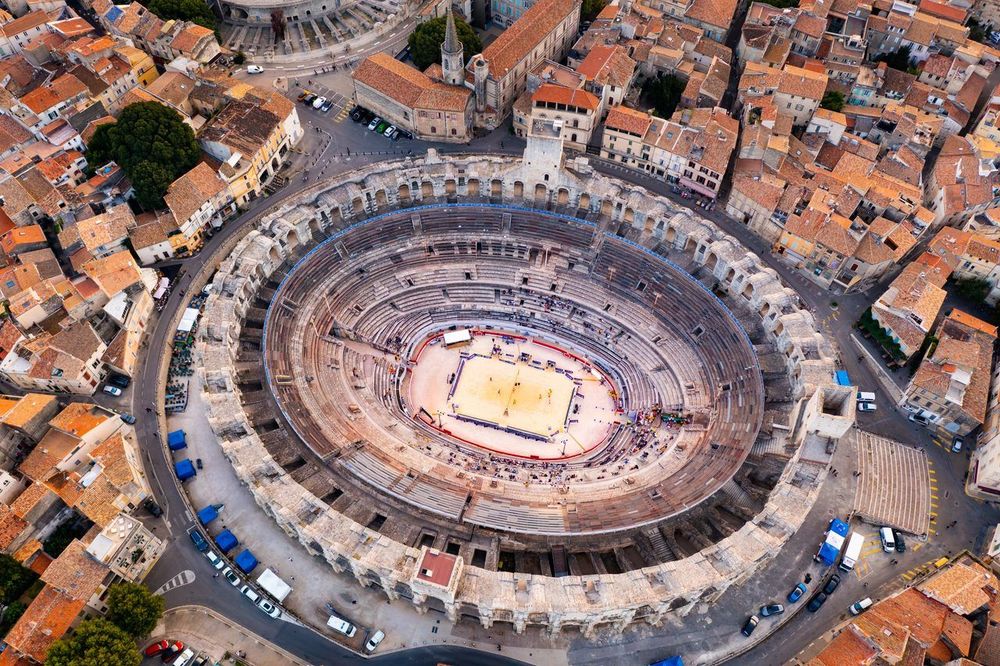
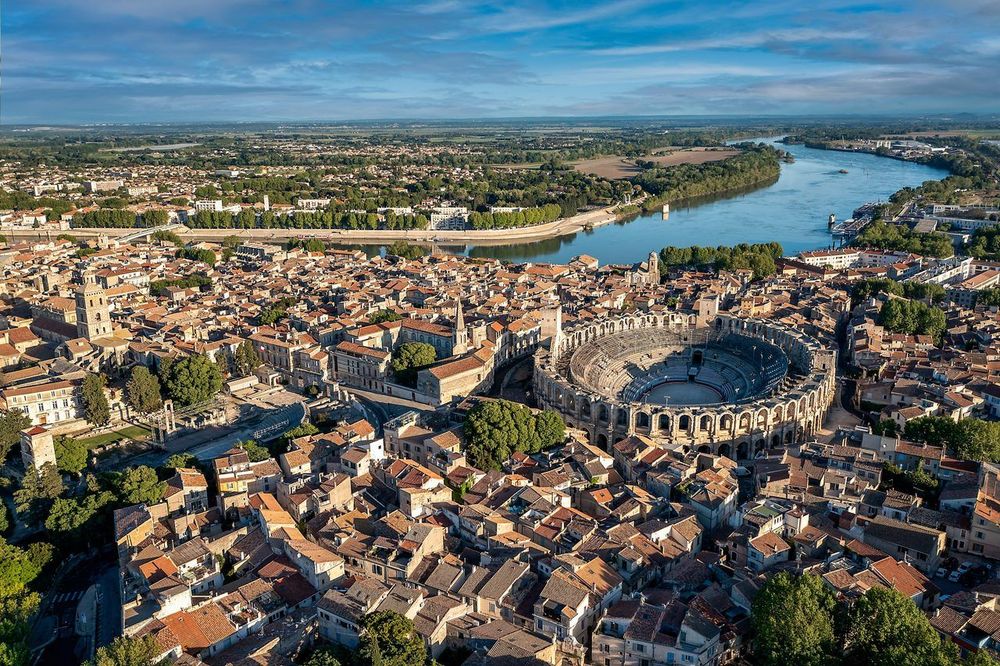
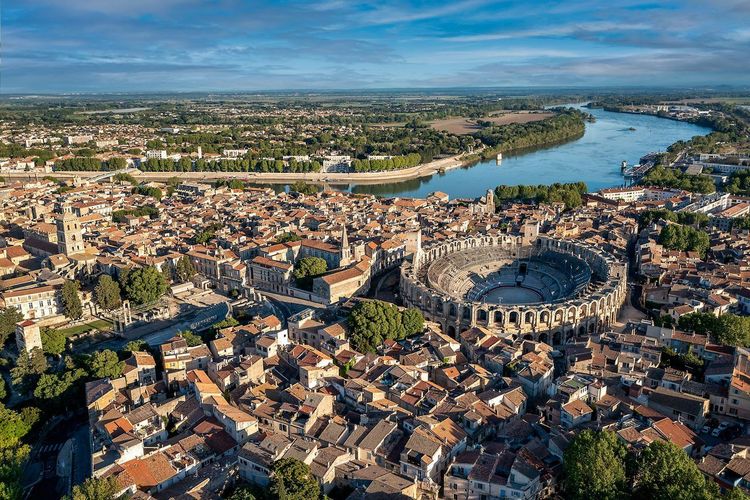
A weekend in Arles can be done entirely on foot, in two days, without ever getting back in the car. The city fits almost entirely within a one-kilometer radius of its Roman arena, and it is precisely this compactness that makes it deceptively challenging for anyone hoping to "get through it quickly": every alleyway in the historic center hides an ancient ruin, a wall Van Gogh once painted, or a shaded terrace where no one seems to be in a hurry. For a successful weekend in Arles, it's best to slow down from the moment you arrive. The Ryo audio-guided tour of Arles helps you find your bearings between the amphitheater and the ancient theater from your very first hours in the city.
A weekend in Arles means a Roman amphitheater still in use today (bulls still run there some Sundays), a hospital room faithfully reconstructed as it looked when Van Gogh painted there after his infamous act in 1888, an ornithological park where flamingos number in the thousands, and a Saturday morning market ranked among the most beautiful in France. Beyond these highlights, the Camargue begins literally at the city's doorstep: fifteen minutes by car from the arena, the asphalt gives way to salt marshes and white horses roaming free. Add to that a golden concrete tower designed by Frank Gehry now towering over former railway workshops, telline clams served in persillade on the banks of the Rhône, and a nightlife scene far livelier than the city's size might suggest.
The itinerary below divides the Arles weekend into two days: the first dedicated to Roman heritage and the historic districts, the second to the Camargue and its landscapes. Each stage can be adjusted if you only have one day, or if you prefer to take your time and stretch the stay to three days. At the end of the article you will also find the practical details: where to sleep, how to get around, what time of year to come to avoid both the crowds and the heat, and what it all realistically costs.
Day 1: Arena, Ancient Theater, and the Historic Heart of Arles
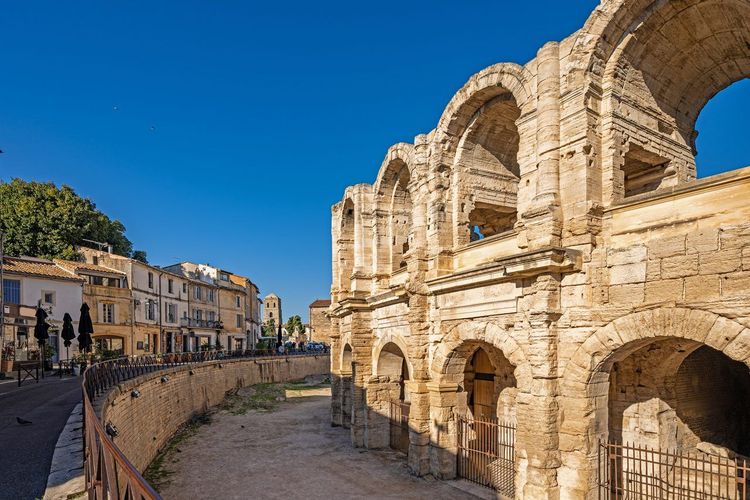
The first day focuses on a compact area: the historic center of Arles, listed as a UNESCO World Heritage Site since 1981 for its Roman and Romanesque monuments. Plan a morning for the ancient ruins and an afternoon to wander the streets without a watch or a strict itinerary. This is also when you will encounter the most people, as most day-trippers concentrate their visit in this same area.
The Arena and the Ancient Theater, Roman Symbols of Arles
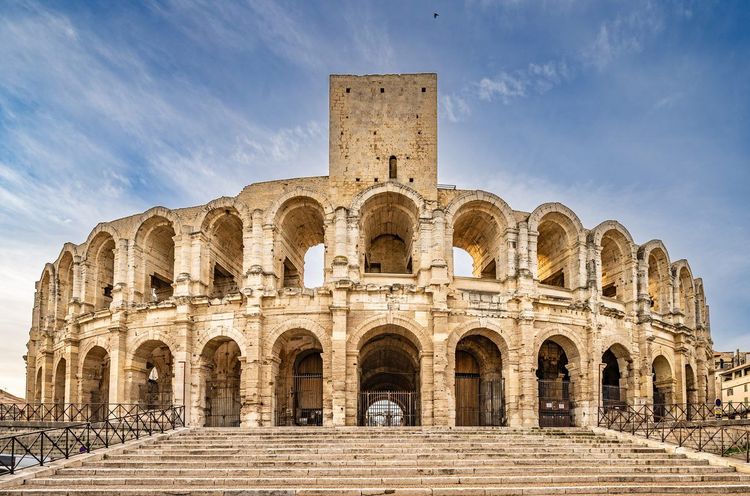
The Arles Arena is the natural starting point: this 1st-century amphitheater, built to hold more than 20,000 spectators in Roman times, remains one of the best-preserved ancient monuments in France. It is still used today for Camargue bull races and a few bullfights, making it one of the rare ancient amphitheaters still in active use on the continent. Climb up to the medieval towers added during the Middle Ages, when the structure served as a fortress and then as a self-contained fortified village housing more than 200 dwellings: the view from the top over the pink-tiled rooftops and the Rhône is worth the climb on its own.
Five minutes' walk away, the Ancient Theater of Arles tells a different story: built during the reign of Augustus, at the end of the 1st century BC, it could hold around 10,000 spectators and long served as a stone quarry for religious buildings before being rediscovered in the 18th century. Only two columns from the stage wall remain, nicknamed "the two widows" by the people of Arles, but the site's natural acoustics are still used every summer for concerts and for the Rencontres photographiques festival. Allow 30 to 45 minutes for the visit, a little more if a concert is being set up and you can watch the stage being assembled.
A combination ticket, sold at the arena box office and at the tourist office, gives access to most of the city's ancient and medieval sites for a flat fee that is far better value than individual tickets if you plan to visit several monuments in a day. Buy it at your first monument to avoid queuing twice. For more on the site's history, our Ryo article on the Arles Arena details seasonal opening hours and the events still held there today.
The Baths of Constantine and the Cryptoporticus
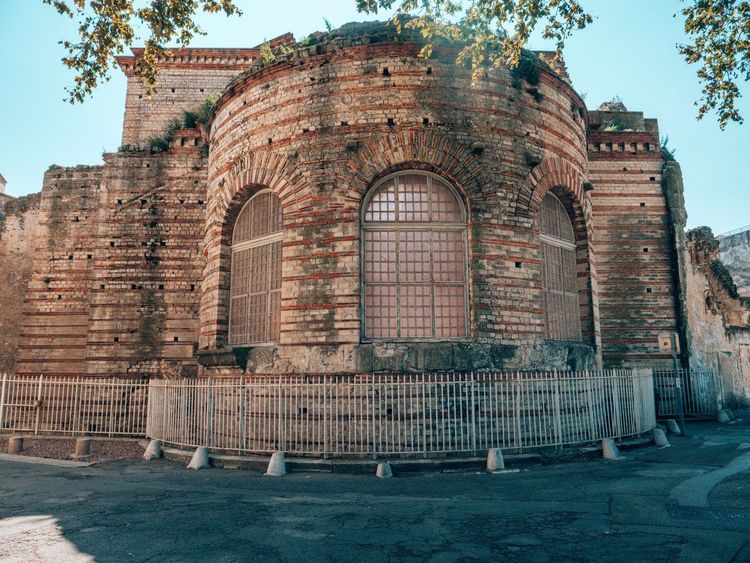
Less spectacular than the arena but equally revealing of Rome's imprint on the history of Arles, the Baths of Constantine once occupied an impressive stretch along the banks of the Rhône, likely reserved for imperial use. Only one heated room, the caldarium, survives today, but the alternating red brick and white stone give a clear sense of the technical sophistication of these 4th-century baths, built during the period when Emperor Constantine made Arles one of his favorite residences in Gaul.
Beneath the Place du Forum, the Cryptoporticus forms a U-shaped network of underground galleries built in the 1st century BC to support the ancient public square on sloping ground. The constant cool temperature is particularly welcome in summer, and the visit, quite short, makes for a good pause between two more imposing monuments. What strikes most is the scale of the infrastructure the Romans deployed for what were merely foundations: these galleries stretch nearly 90 meters in length and could store grain in the event of a siege.
The Alyscamps and a Stroll through the Historic Center
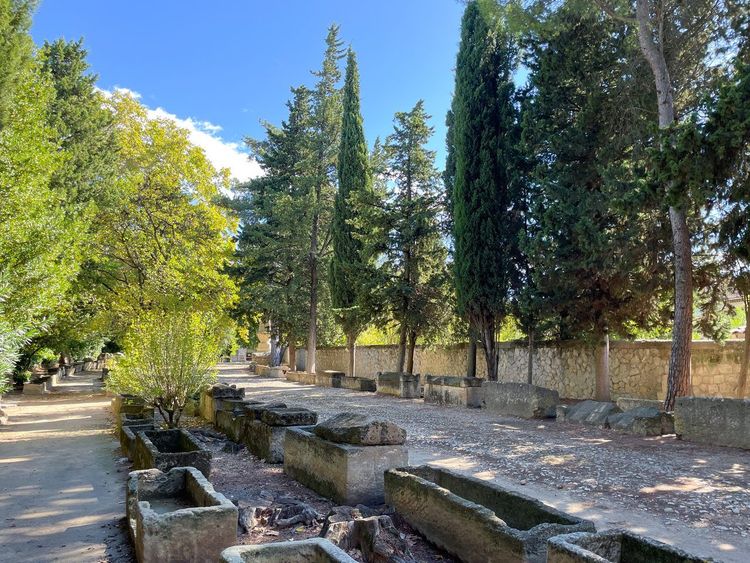
Away from the bustle, the Alyscamps form a long avenue lined with ancient and medieval sarcophagi, long one of the most celebrated necropolises in the Christian West. Local legend has it that bodies were sent there from distant cities, floated down the Rhône in barrels, so great was the site's reputation during the Middle Ages. Van Gogh and Gauguin painted it several times in 1888, drawn by the century-old plane trees lining the main avenue. The light is particularly beautiful in late afternoon, when the low sun filters through the foliage and stretches long shadows across the tombs.
Head back toward the city center afterward for a free-form wander: this is where the historic center best reveals its authentic Provençal atmosphere. The highlights follow naturally: the Place du Forum with its century-old plane trees, lined by cafés — one of which served as Van Gogh's model for his famous Café Terrace at Night; the Place de la République, dominated by the Hôtel de Ville and its fifteen-meter Roman obelisk brought from the ancient circus; and the Saint-Trophime Cathedral (Place de la République, 13200 Arles, rated 4.5/5 on Google with 1,297 reviews), whose 12th-century Romanesque sculpted portal ranks among the finest in all of Provence. Take time to get lost in the surrounding side streets — ochre facades, blue shutters — where it is easy to linger on a terrace after the visit. The Ryo audio-guided tour of Arles follows this very same stretch, handy for not missing a thing between two terraces.
In Van Gogh's Footsteps and through the Districts of Arles
Van Gogh lived in Arles for only fifteen months, between February 1888 and May 1889, yet this period remains the most productive of his entire career: more than 300 works — paintings and drawings combined — were created here. Spending half a day at his key sites, followed by a few less-visited districts, offers a very different perspective on the city from the first day.
The Van Gogh Trail: Sites Painted by the Artist
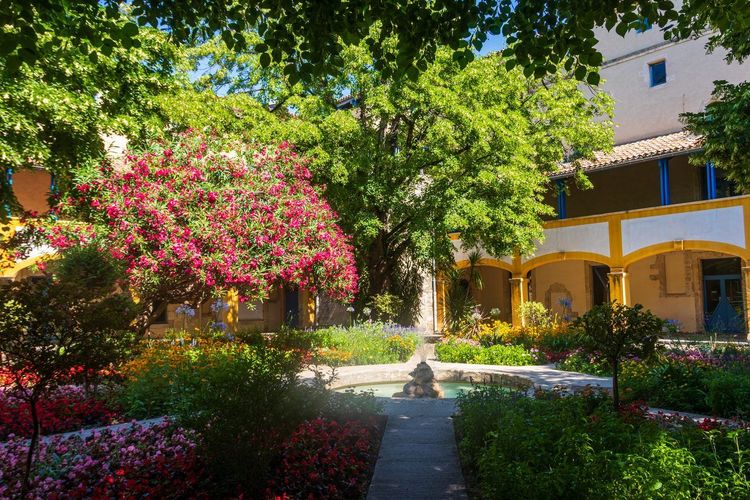
No original Van Gogh painting remains on display in Arles: they are now scattered across major international museums, from Amsterdam to New York. The city has nonetheless created a trail of markers reproducing his canvases at the exact spots where they were painted — a rewarding way to compare today's reality with the artist's vision. The logical starting point for this trail is the Espace Van Gogh, the former hospital where the painter was treated after he mutilated his ear in December 1888. The inner courtyard, restored to match the colors depicted in his painting The Garden of the Hospital in Arles, is free to visit and remains a quiet spot for a break.
On foot or by bike, continue to the Pont de Langlois, reconstructed to match the drawbridge immortalized in several canvases from 1888, the most famous being The Langlois Bridge with Women Washing. The site is a little out of the way — allow about thirty minutes on foot from the city center or fifteen minutes by bike — but the atmosphere remains surprisingly faithful to what Van Gogh described in his letters to his brother Theo: a quiet canal, a few imaginary washerwomen short, and the harsh light typical of the Midi. If you don't have time for this detour, the Fondation Vincent van Gogh Arles (35 Rue du Docteur Fanton, 13200 Arles, rated 3.9/5 on Google with 2,823 reviews), housed in a private mansion in the city center, offers temporary exhibitions that partly compensate for the absence of the painter's permanent works.
To continue exploring the places he painted, our Ryo article Visiting Arles in 2 Days lists lesser-known viewpoints, particularly around la Roquette and the banks of the Rhône where Van Gogh painted his famous Starry Night over the Rhône.
Districts Worth Exploring: La Roquette, Trinquetaille, and Le Méjan
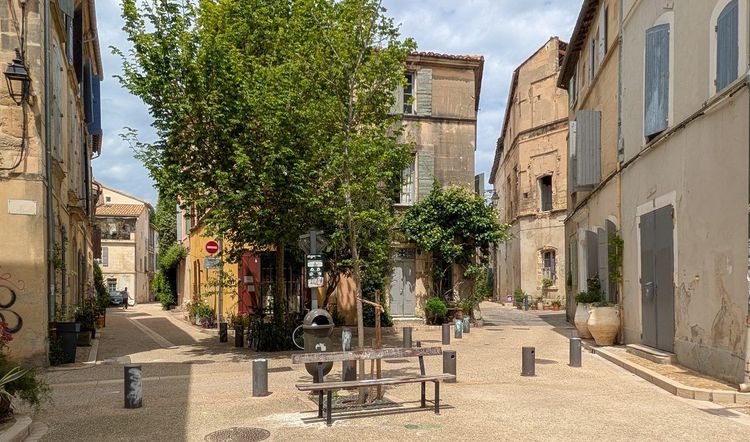
On the neighborhood side, three areas are worth exploring, each with its own identity and pace. La Roquette, once a district of Rhône fishermen and bargemen, has transformed in recent years without entirely losing its working-class character: colorful facades, small shaded squares where local children still play, and discreet artists' studios tucked into former workshops. It makes a good counterpoint to the more touristy historic center, and a pleasant spot for a coffee off the beaten track.
On the other side of the Rhône, Trinquetaille offers a radically different perspective on the city: once a district of shipyards and bargemen, today mostly residential, with fewer monuments but an open view of the riverbanks that is especially worth the trip at sunset. Between the two banks, Le Méjan and the quays run along the river to the former river station, now converted into a cultural space housing a bookshop, a cinema, and a conference hall, driven jointly by the publishing house Actes Sud — founded in 1978 and based in Arles since the early 1980s — and the LUMA Foundation. La Cité, around the Hôtel de Ville, remains the central landmark for navigating between these three areas without getting lost in the maze of alleyways.
Museums and Contemporary Art: Réattu, Museon Arlaten, and LUMA
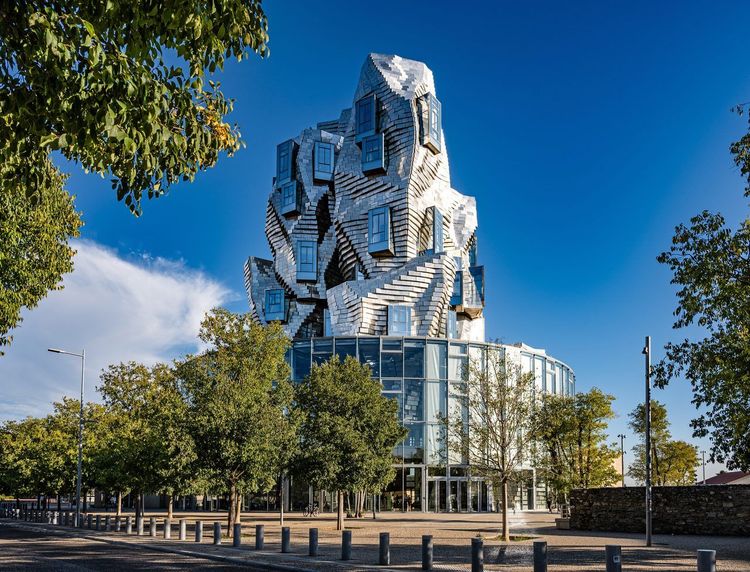
Arles cultivates a striking contrast between its ancient ruins and its contemporary art scene, driven largely since 2021 by the LUMA Foundation. The three institutions below can be visited in half a day if you move at a good pace, or in a full day if contemporary art holds your attention longer than expected.
The Réattu Museum and the Museon Arlaten
Housed in a former priory of the Knights of Malta on the banks of the Rhône, the Réattu Museum takes its name from the Arles-born painter Jacques Réattu, whose studio was converted into a museum after his death. The collection blends classical painting with a Picasso archive of 57 drawings, donated by the artist himself in 1971 as a gesture of thanks to the city that had welcomed him on several occasions. A regularly renewed collection of contemporary photography rounds out the visit nicely for anyone interested in the history of the Rencontres d'Arles festival, which was born in this very city in 1970.
Nearby, the Museon Arlaten, created at the very end of the 19th century by the poet Frédéric Mistral to save Provençal culture from being forgotten, reopened in 2021 after a lengthy renovation with a resolutely modern approach to its displays. Mistral later used his Nobel Prize in Literature money, awarded in 1904, to furnish and expand the collections in a former Jesuit college in the city center. Visitors discover Provençal traditions, hand-embroidered Arlésienne costumes, and the history of the Félibrige movement, which campaigned for the preservation of the regional language. The building itself, constructed over Roman ruins visible in the basement, is worth the visit as much for its architecture as for its collections.
LUMA Arles, the Tower Designed by Frank Gehry
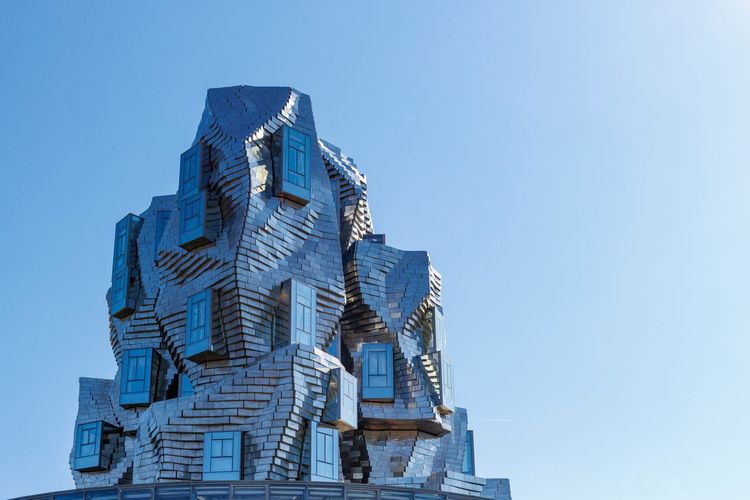
The LUMA Tower is impossible to miss as you approach the city center: this 56-meter structure, clad in 11,000 stainless steel panels, was designed by Canadian-American architect Frank Gehry for the foundation created by Swiss patron Maja Hoffmann, which opened in June 2021. Set on the site of the former SNCF railway workshops, now renamed the Parc des Ateliers, it houses contemporary art exhibitions, international artist residencies, and a Mediterranean garden of several hectares designed by Belgian landscape architect Bas Smets, conceived as a living laboratory of climate resilience.
Even without entering the exhibitions, the free walk around the park and tower is worth the detour in late afternoon: the golden light reflecting off the metal panels at sunset has become one of the most shared images of Arles in recent years. Budget around 15 to 20 euros for full access to the exhibitions if you want to enter the tower itself.
Every summer, Arles amplifies this artistic energy further with the Rencontres d'Arles, an international photography festival born in the city in 1970 and now a global benchmark in its field. The exhibitions, spread across some thirty venues — from former railway workshops to deconsecrated churches — transform the entire city into a vast photographic trail from July to September, offering yet another reason to revisit the ancient monuments seen on the first day from an unexpected angle.
The Musée Départemental Arles Antique, the Key to Understanding the Roman City
Away from the center, on the peninsula wedged between the Rhône and the canal, the Musée Départemental Arles Antique (the "blue museum" to locals, for its distinctive facade) shows everything the morning's monuments can no longer show: mosaics lifted from Roman villas, pagan and Christian sarcophagi, and above all scale models that reconstruct the amphitheater, the circus, and the theater as they functioned under the Empire. Twenty minutes in front of these models often teaches you more than three hours of wandering among the stones.
Two pieces alone justify the trip. The Roman barge Arles-Rhône 3, a 31-meter trading vessel raised from the river in 2011 and painstakingly restored, is displayed in its entirety along with part of its cargo. A few meters away, a marble bust also recovered from the Rhône — in 2007 — is considered one of the very few portraits of Julius Caesar carved during his lifetime: the attribution remains debated among archaeologists, but the face itself is strikingly lifelike.
Allow an hour and a half for the visit, under ten euros for entry, and about twenty minutes on foot from the arena along the riverbanks. If you come by car, this is also one of the rare sites in Arles with a real parking lot right at the entrance.
Day 2: Exploring the Camargue from Arles
The second day brings a completely different setting. The Camargue, a delta formed by the two arms of the Rhône (the Grand Rhône and the Petit Rhône) and listed as a UNESCO Biosphere Reserve since 1977, stretches south of Arles across nearly 100,000 hectares of marshes, salt lagoons, and rice paddies. The Parc Naturel Régional de Camargue, established in 1970, protects most of this territory where traditional farming and exceptional wildlife coexist. A car — or a bicycle for the more intrepid — is strongly recommended for this day: the distances between sites are far beyond what can be covered on foot.
Salt Marshes and Wild Landscapes of the Camargue
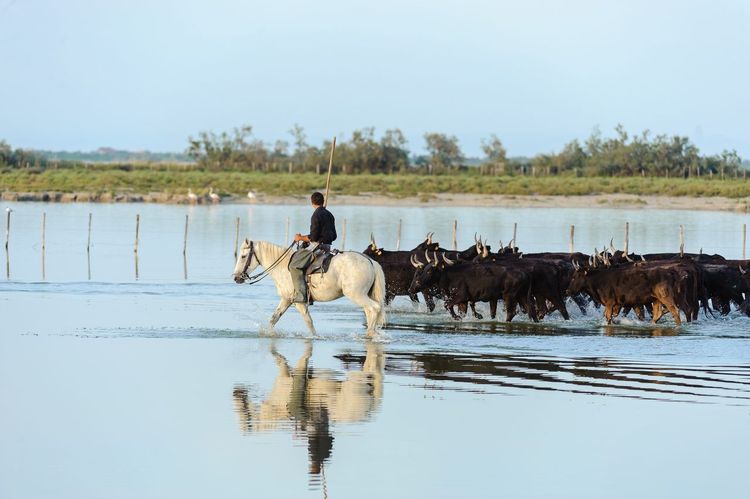
From the moment you leave Arles, the landscape shifts dramatically: rice paddies give way to brackish stretches of water where the region's three living emblems cross paths — flamingos, white Camargue horses, and black bulls raised in manades, the traditional extensive cattle farms unique to the area. Rice growing itself dates back to the reign of Henri IV, though it expanded significantly after the Second World War to desalinate land previously unfit for cultivation, giving rise to the Camargue rice you will find on your plate that very evening.
The bulls and horses are not simply left to graze in peace: they are also the protagonists of the abrivado, a Camargue tradition in which mounted gardians escort a herd of bulls galloping through the streets of a village, to the cries of residents leaning from their windows. This practice, still very much alive during the spring and autumn férias, directly extends the bullfighting culture glimpsed the day before at the Arles arena.
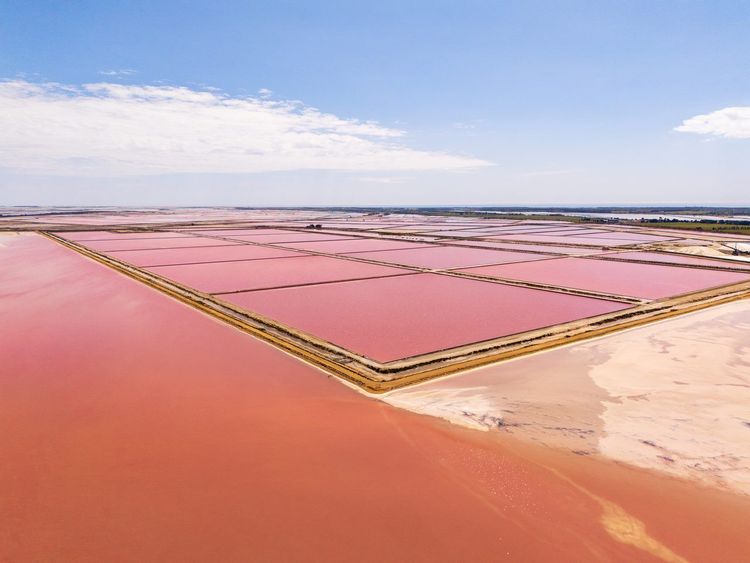
Head next to Salin de Giraud, a former saltworkers' village built in the 19th century around one of the largest salt works in Europe, where the basins tint the horizon pink and white depending on the season and salt concentration — the rosy hue coming from a micro-algae that thrives in highly saline water. The site can be visited freely by car or bicycle along the dikes for much of the year and offers some of the most surprising panoramas in the entire Camargue.
Closer to Arles, the Vaccarès Lagoon, the largest in the Camargue at nearly 6,500 hectares, forms the protected heart of the regional nature park and concentrates most of the area's biodiversity. The marked trails around La Capelière allow you to observe herons, egrets, and occasionally bulls in the distance, without disturbing the wildlife or leaving the marked paths. Allow a good hour for a full loop; binoculars are strongly recommended if you hope to spot a hunting raptor or a bittern — one of the delta's most elusive birds.
To experience the Camargue beyond the car window, our Ryo article on horseback rides in the Camargue lists several manades offering guided outings on Camargue horses — a more immersive and quieter way to cross the marshes than behind a steering wheel. To plan your stops according to the time available, our guide to the Camargue's must-sees details the distances between each site from Arles.
The Pont de Gau Ornithological Park
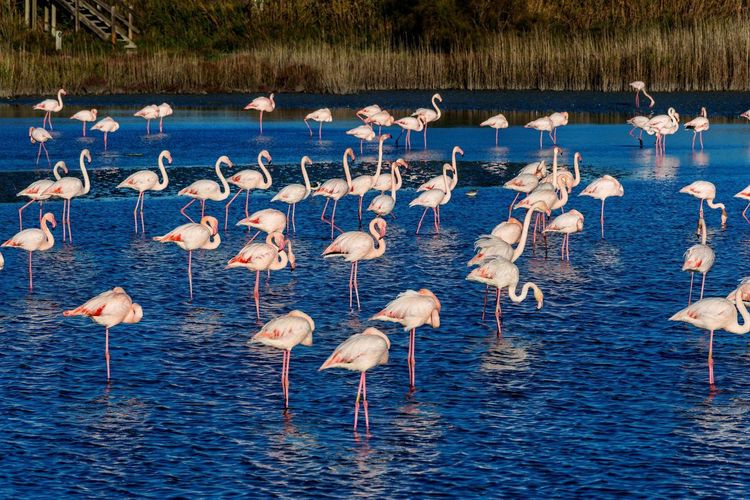
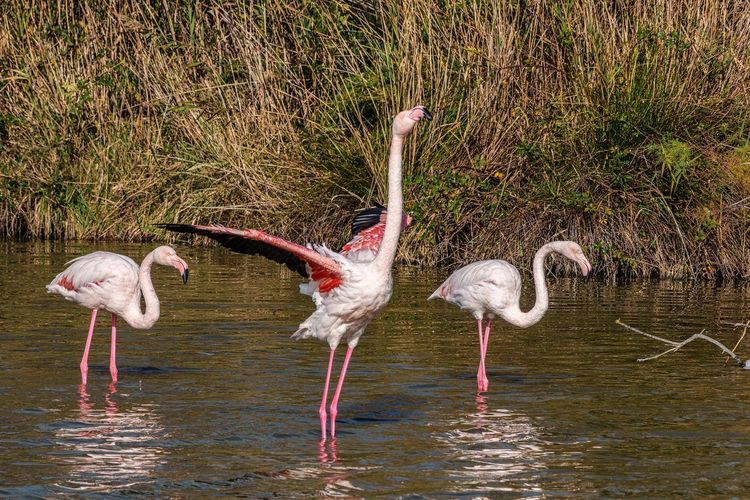
Halfway between Arles and Saintes-Maries-de-la-Mer, the Pont de Gau Ornithological Park (RD570, 13460 Saintes-Maries-de-la-Mer, rated 4.6/5 on Google with 12,725 reviews) — 60 hectares of managed marshland on the edge of the Ginès lagoon — remains the best option for observing flamingos up close without specialized equipment or a long wait. Its trails, several kilometers of dikes and boardwalks in total, run alongside shallow basins where birds pass within a few meters of you, among more than 300 species recorded on site throughout the seasons. The park is open year-round, but the best observation window runs from April to September, the nesting and migratory rest period.
Entry is paid — around ten euros per adult, with a reduced rate for children — and the park is far more than a roadside viewpoint: allow at least an hour and a half if you want to complete the short circuit, two and a half to three hours for the full loop. With children or in strong heat, stick to the first section of the trail, which offers the richest birdwatching for the least effort, and arrive early in the morning when birds are most active.
Saintes-Maries-de-la-Mer, a Seaside Escape
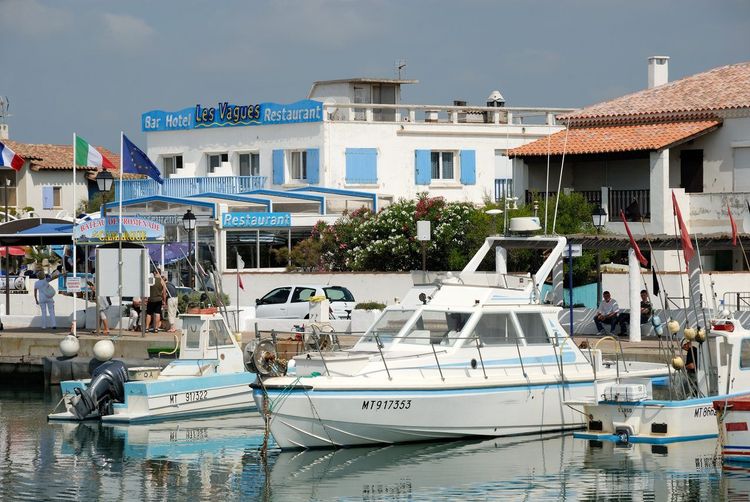
End the day in Saintes-Maries-de-la-Mer, a small fishing town that has become a major Romani pilgrimage destination every 24th and 25th of May, in honor of Sara, the patron saint of the Romani people, whose statue is carried down to the sea in a procession followed by thousands of participants from across Europe. The 12th-century fortified church, whose crypt houses the venerated statue year-round, looks out over a seafront where fine sandy beaches and gardians' huts follow one another for several kilometers, all the way to the tip of the Petit Rhône.
Climb to the church's rooftop terrace — access costs just a few euros — for a 360-degree panorama over the marshes on one side and the Mediterranean on the other. This is also where the tourist route through the Camargue's wildest landscapes begins or ends, depending on the direction of your loop, dotted with birdwatching observatories along the way.
Extending the Trip: Alpilles, Les Baux-de-Provence, and Saint-Rémy
Arriving on Friday evening or leaving on Monday? The Alpilles make the most natural extension, just twenty or so kilometers northeast of Arles, and the change of scenery is total: after the flat horizons of the Camargue, a small white limestone range, olive groves, and hilltop villages.
Les Baux-de-Provence draws most of the attention, between the spectacular ruins of its medieval fortress suspended above the valley and the Carrières des Lumières, a former limestone quarry transformed into a monumental projection space where artworks are displayed across walls several meters high. In Saint-Rémy-de-Provence, the Saint-Paul-de-Mausole monastery directly extends the Van Gogh trail from the previous day: the painter had himself committed there from May 1889 to May 1890 and produced several of his most celebrated canvases there, including The Starry Night. The ancient site of Glanum, directly opposite, completes the picture with its excavated Roman streets at the foot of the Alpilles.
Allow a minimum of half a day for Les Baux, a full day if you add Saint-Rémy and an olive oil tasting at one of the valley's mills. Our selection of Alpilles villages details the quieter stops if you prefer to avoid the summer crowds at Les Baux.
Local Specialties and Good Addresses in Arles
The cuisine of Arles draws equally from Provence and the neighboring Camargue, with a strong identity built around rice and lagoon produce. It would be a shame to leave without sampling at least two or three local specialties during your weekend.
Provençal and Camargue Specialties to Try
Camargue rice, grown in the flooded rice paddies south of Arles, has held a Protected Geographical Indication (PGI) since 2000 guaranteeing its origin. It most often appears alongside gardiane de taureau, a stew slow-cooked in red wine and Provençal herbs that is the signature dish of the entire Camargue region. The meat comes from bulls raised in manades using extensive farming methods that have remained virtually unchanged for generations.
On the seafood side, tellines, small clams gathered from Camargue beaches at low tide, are traditionally prepared with persillade — plenty of garlic and a drizzle of olive oil. They appear on almost every restaurant menu during the warm season. A local anecdote worth knowing beyond the purely culinary: several artisanal soap makers in the region still produce savon de Marseille using the traditional cauldron method with olive oil, a production that long benefited from Camargue salt and Arles's river trade for its distribution to Mediterranean ports.
Where to Eat in Arles: Good Addresses
For a quick and affordable meal, the Arles market, held every Saturday morning on the Boulevard des Lices, is the ideal place to sample goat's cheese, local olives, and artisan charcuterie on the spot without sitting down in a restaurant. Plan to arrive before noon to catch the best stalls before closing time, and note that a smaller market also runs on weekdays on the other side of the center.
For a more elaborate meal on the Camargue side, La Chassagnette (Route du Sambuc, 13200 Arles, rated 4.7/5 on Google with 501 reviews), a biodynamic farm-restaurant in open countryside south of Arles, grows much of its own produce in a vast kitchen garden visible from the dining room. Reservations are essential, especially at weekends, and the setting — a large glazed room opening onto the garden — fully justifies the drive out of the city center.
In town, the terraces of the Place du Forum and the Place Voltaire offer a good option for dinner without advance booking, with several addresses specializing in traditional Provençal cuisine at reasonable prices, between 20 and 35 euros for a full menu. For a more gastronomic dinner in the city center, several ambitious tables have opened in recent years around la Roquette, buoyed by the city's growing reputation.
Arles After Dark: Nightlife and Local Atmosphere
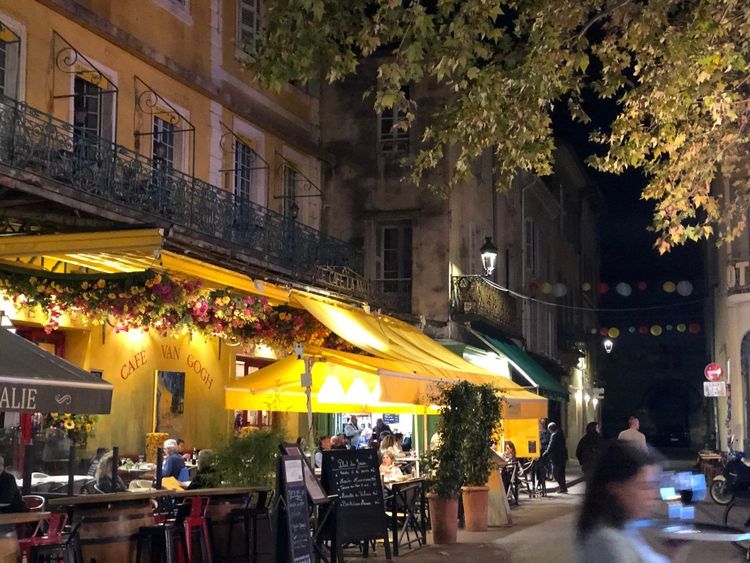
Arles is by no means a city that goes to sleep once night falls, even if what's on offer is naturally more modest than in a nearby metropolis such as Marseille or Avignon.
Concerts, Shows, and Exhibitions
The Cargo de Nuit (7 Avenue Sadi Carnot, 13200 Arles, rated 4.6/5 on Google with 271 reviews), a concert venue in a former warehouse near the train station, programs concerts and club nights year-round that draw audiences from well beyond the city. In summer, the ancient theater reclaims its original purpose for a handful of open-air concerts — a rare enough experience to flag for anyone planning their stay around a cultural program. The temporary exhibitions at the LUMA Foundation and at the Rencontres photographiques festival also animate summer evenings, with vernissages often open to the public free of charge.
Bars and Terraces for a Provençal Apéritif
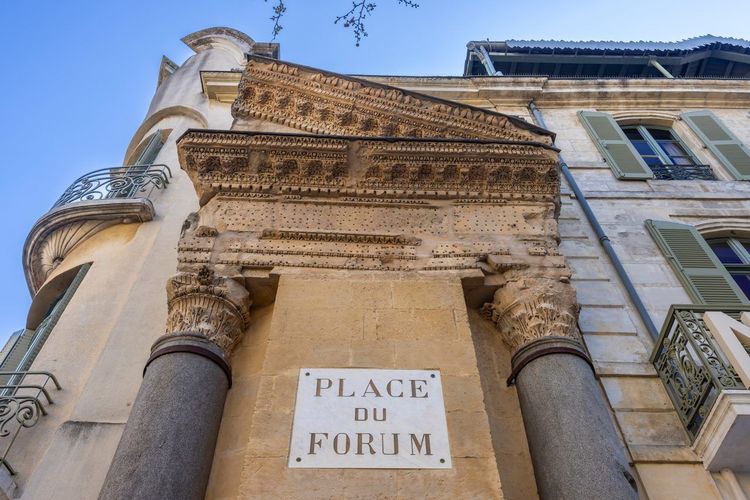
For a classic Provençal aperitif, the terraces around the Place du Forum and along the banks of the Rhône remain the natural evening gathering point, especially lively from Thursday to Saturday. Several wine bars showcase local Côtes du Rhône and rosés produced in the nearby Alpilles — a pleasant way to extend the day's gastronomic discoveries without necessarily committing to a full dinner. The spring and autumn férias, with their street entertainment and impromptu concerts, periodically turn the entire city into one big popular celebration.
Along the Boulevard des Lices, several restaurants and bars keep their terraces open late in summer, carried by the warmth of Provençal nights. Regulars also gather for impromptu games of pétanque on the shaded squares of the center — an evening ritual that speaks volumes about the local pace of life, far removed from the tourist hustle of the middle of the day.
Practical Information for Planning Your Arles Weekend
A few concrete pointers to help you plan your stay before you leave, from choosing a neighborhood to transport options once you arrive.
Where to Stay in Arles by Budget
The historic center concentrates most of the charming accommodations, often installed in former private mansions with inner courtyards and sometimes a pool. Expect to pay between 90 and 150 euros a night for a decent room in the city center during high season, and closer to 60 to 90 euros off-season, between November and March. Those who appreciate stylish interiors will head for addresses near the Place du Forum, while budget travelers will find solid options in Trinquetaille, a few minutes' walk from the center but considerably cheaper. For families or longer stays, several campsites with pools also line the road to the Camargue, an affordable option less than ten minutes by car from the center.
How to Get to Arles and Get Around
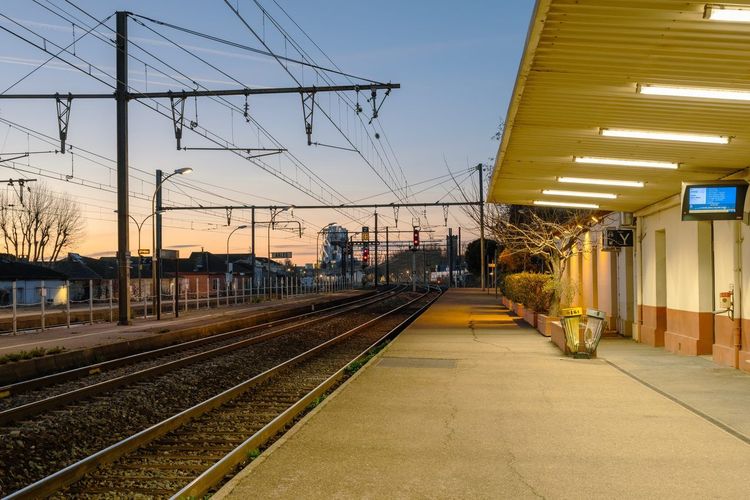
Arles has its own SNCF train station: a few direct TGV services connect it to Paris in around 4 hours, while other journeys require a connection at Avignon TGV for a total travel time of 4 to 4.5 hours. From Marseille, count under an hour on a direct train. From Marseille-Provence Airport or Nîmes-Alès-Camargue Airport, allow around 45 minutes by rental car. By coach, regional lines also link Arles to Avignon and Nîmes at fares often lower than the train.
Once there, the historic center is entirely walkable — no car is needed or particularly useful. Only the Camargue calls for a car or bicycle: the distances between sites, ranging from 15 to 40 kilometers depending on where you are headed, are well beyond what is reasonable on foot. A regular bus service does, however, connect Arles to Saintes-Maries-de-la-Mer for visitors without a vehicle, with stops close to the ornithological park. Bicycle rentals are also available in town, making it easy to explore once you arrive.
When to Go and How Many Days to Plan
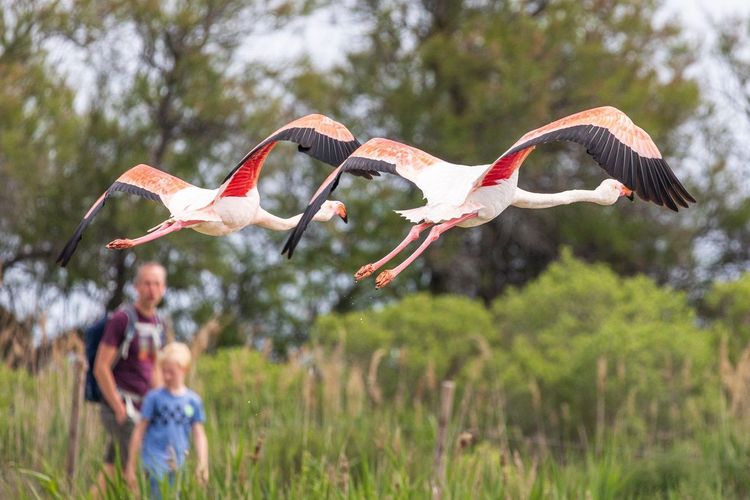
Spring, from April to June, and early autumn, in September and October, offer the best balance between mild weather and manageable visitor numbers — with the added bonus of the flamingo nesting season at the Pont de Gau park. Summer, very busy and sometimes crushingly hot (over 35 degrees on some days, made worse by the absence of any breeze when the mistral stops blowing), is nonetheless the season of the major cultural events, from the Rencontres photographiques to open-air music festivals. Winter, quieter and often swept by the mistral, suits those who prioritize museums and a more intimate atmosphere away from the crowds.
Two full days are enough to cover the essentials described in this itinerary, but three days allow you to add an Alpilles excursion without rushing or sacrificing part of the program. For a first visit, the Ryo audio-guided tour of Arles is a great way to structure your first half-day without losing time navigating the maze of alleyways: the Ryo audio walking tour of Arles covers the main sites of the historic center, directly through our Ryo app.
How Much Does a Weekend in Arles Cost?
Two nights, two dinners, a few monuments, and a day in the Camargue: the budget for a weekend in Arles most often falls between 150 and 250 euros per person, including accommodation, for two people traveling together in high season. The lower end assumes a simple hotel or campsite, midday meals from the market, and the combination monument ticket rather than individual entries.
The item that really tips the bill is transport on the second day: a 24-hour car rental, fuel included, easily adds 60 to 80 euros to the total. A bicycle, weather permitting, cuts that cost by five but limits your range to the area around the Pont de Gau. Add around ten euros for the ornithological park, a few euros for the church rooftop terrace in Saintes-Maries-de-la-Mer, and around fifteen for the LUMA exhibitions.
On the other hand, several of Arles's great pleasures cost nothing: the garden of the Espace Van Gogh, the Parc des Ateliers around the LUMA tower, a sunset walk along the banks of the Rhône, the summer vernissages, and the Saturday market, where you can put together a full lunch for the price of a restaurant starter. A horseback ride in a manade or a gastronomic dinner will, however, push the total well beyond 250 euros.
FAQ
How Many Days Do You Need to Visit Arles?
Two full days are enough to cover the ancient historic center, the sites connected to Van Gogh, and a day trip into the Camargue. A third day allows you to add the Alpilles or explore the museums at a more leisurely pace — a worthwhile option if you're traveling from far away and want to make the most of the journey.
What Is the Best Time of Year to Visit Arles?
Spring and early autumn offer the best balance between pleasant weather and manageable crowds, with mild temperatures ideal for walking all day. Summer remains very busy and hot, but it coincides with the major festivals and Camargue bull races in the arena — a real draw if a festive atmosphere matters more to you than staying cool.
How Do You Get to Arles from Paris or Marseille?
From Paris, a few direct TGV trains take around 4 hours; other journeys go via Avignon TGV with a connection, totaling 4 to 4.5 hours. From Marseille, a direct train takes under an hour, making Arles reachable as a day trip from the Phocaean city — though a proper weekend lets you get far more out of it.
Where Should You Stay in Arles for a Weekend?
The historic center, around the Place du Forum, is home to the most charming addresses, ranging from 90 to 150 euros per night in high season. Trinquetaille, just across the Rhône, offers lower rates a few minutes' walk from the heart of the city, and the campgrounds along the Camargue road are well suited for tighter budgets.
What Is There to Do in Arles with Children or as a Family?
The Pont de Gau ornithological park is generally a big hit with children, thanks to the up-close flamingo encounters and easy walking trails. The arena, with its history of gladiators and Camargue bull races still active today, also works very well with a young audience curious about ancient history. The scale models at the Musée Départemental Arles Antique and guided horseback rides in the Camargue round out the family program nicely.
Do You Need to Book the Arena and the Ancient Theater in Advance?
Outside of event days — such as a Camargue bull race or a concert — advance booking is not essential for a self-guided visit to the monuments. It does become strongly recommended in high season for performances held in the amphitheater, as tickets sell out quickly, sometimes weeks ahead.
Arles defies any simple checklist of monuments to tick off. It is a city where, within just a few hundred meters, you encounter two thousand years of Roman history, the trace of a painter who gave everything here in barely fifteen months, and a wild natural landscape that begins literally at the city's edge. Between the still-living arena, the contemporary towers of LUMA, and the flamingos of the Camargue, it is hard to be bored in such a compact territory.
Whether you stay two days or stretch the visit to three, the Ryo audio-guided tour of Arles remains a good starting point to begin your visit without losing time getting your bearings, before letting the Camargue and its landscapes take over for the second day.
À lire également