© Shutterstock
 Votre guide Ryo
The Most Beautiful Villages Around Auxerre: 15 Stops in Yonne in 2026
Yonne is not a department you pass through — it's one you discover by accident: a winding road between two vineyards, a church steeple rising from a wooded hill. Forty minutes from Auxerre, medieval villages so well preserved that you instinctively look for an information panel at the entrance to the village. This guide brings together the 15 most beautiful villages around Auxerre, from must-see UNESCO-listed sites to wine-growing hamlets barely mentioned in printed guides. You'll find a 12th-century fortress that volunteers are still rebuilding today, a village where Colette was born and whose house still stands, and 17th-century locks that nearly changed the course of European trade. To explore Auxerre before or after your excursions, the Ryo audio guide 'In the Footsteps of Cadet Roussel' covers 21 points of interest in 1 hour 15 minutes on foot — an excellent starting point before heading out to explore the surrounding area.
Vézelay: the Eternal Hill
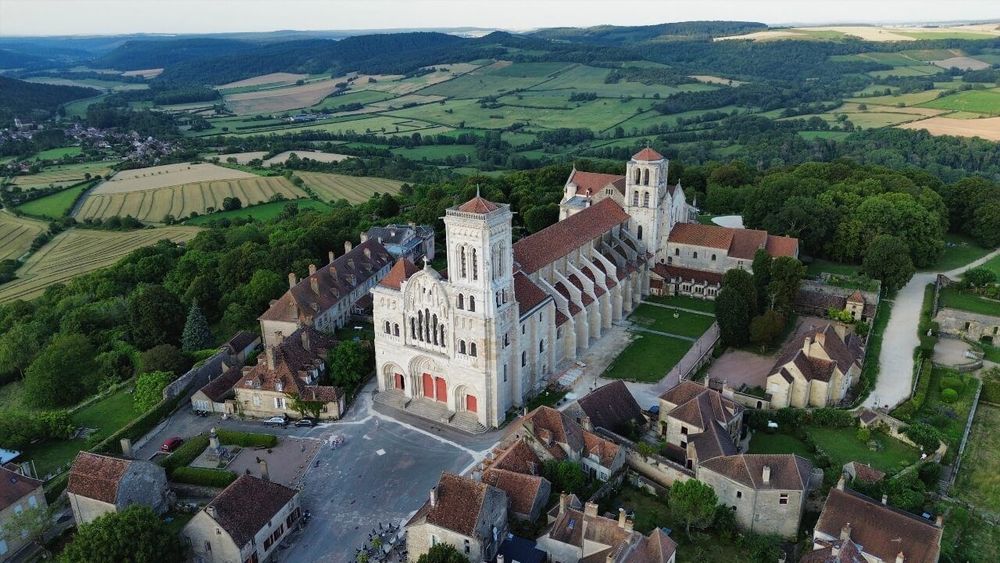
Vézelay (Place du Champ-de-Foire, 89450 Vézelay, rated 4.8/5 on Google with 3,200 reviews) has been a UNESCO World Heritage Site since 1979, and a visit confirms that this designation is anything but honorary. The village perched on its hilltop 52 km south-east of Auxerre is one of the most important Romanesque sites in Europe, and you understand this the moment you begin the climb up rue Saint-Pierre.
The basilica of Sainte-Marie-Madeleine dominates everything. Built between the 11th and 13th centuries, it was for centuries the starting point of one of the four great pilgrimage routes to Santiago de Compostela. Bernard of Clairvaux preached the Second Crusade here in 1146 before a crowd so large it spilled into the fields below. The nave measures 62 metres long, and there are 99 historiated capitals, each depicting a different scene — from vices to Gospel episodes. Allow at least an hour for the basilica alone.
The village itself deserves a full half-day. The medieval houses along rue Saint-Pierre and rue Saint-Etienne have kept their ashlar limestone façades; some craft shops and art galleries occupy 15th-century buildings. On a clear day, the view from the basilica terrace stretches out to the Morvan plain.
A practical tip: come on a weekday if possible — between May and October, weekends can resemble a reverse procession, with modern-day pilgrims arriving by car. On Wednesday mornings in season, a local market sets up on the Place du Champ-de-Foire. At lunchtime, restaurants on rue Saint-Pierre offer decent Burgundian cuisine; avoid the terraces facing the basilica where prices rise with the altitude.
Vézelay is often combined with the medieval city of Avallon, just 15 km away, for a full day in the Auxerrois Morvan.
Noyers-sur-Serein: the Middle Ages Under Glass
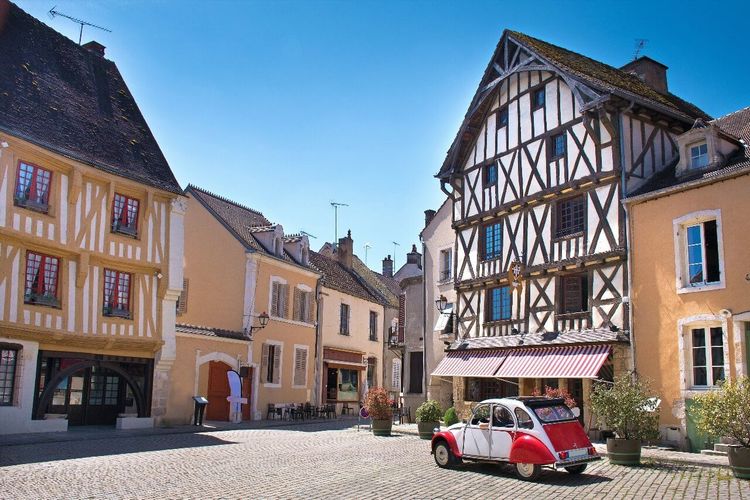
Noyers-sur-Serein is a member of the 'Most Beautiful Villages of France' association, a distinction awarded under strict heritage and upkeep conditions. In this case, it is well deserved. The village of 650 inhabitants sits in a meander of the Serein river, 37 km south-east of Auxerre, and its 14th-century ramparts still stand along most of their perimeter.
16 towers punctuate the medieval walls. Entering through the painted gate, you emerge directly onto the Place de l'Hôtel-de-Ville, surrounded by half-timbered houses and arcades that have barely changed since the 15th century. The Place du Grenier à Sel (Place du Grenier à Sel, 89310 Noyers-sur-Serein, rated 4.5/5 on Google with 320 reviews) may be the most picturesque: its medieval covered walkways (timber arcades) are unique in Yonne.
The Municipal Museum of Naïve Art is worth an hour's visit: housed in a former granary, it holds a surprising collection of naïve art from around the world, including works by Séraphine Louis. Noyers also hosts a well-regarded early music festival each summer.
Allow two hours for a leisurely stroll. The Serein river can be walked along its banks, accessible near the mill. If you're driving, the main car park is located before the rampart entrance — the village interior is pedestrianised. The same approach works in Auxerre, where our audio-guided tour runs past Place Saint-Nicolas and the banks of the Yonne.
Chablis: Where Limestone Makes the Wine
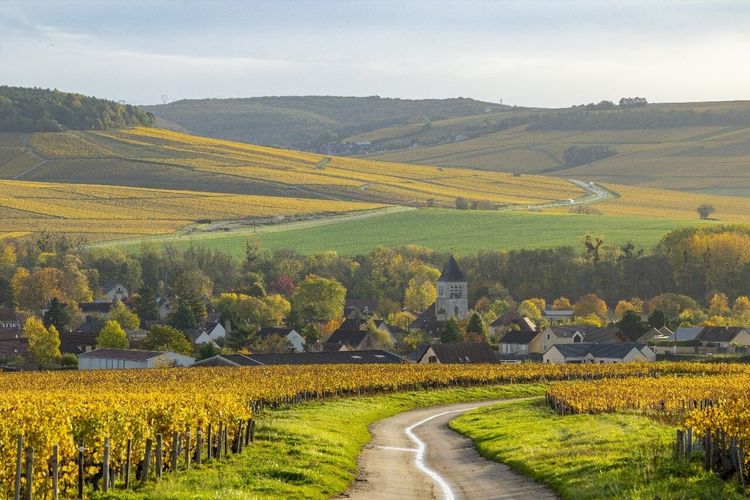
Chablis (Place Charles de Gaulle, 89800 Chablis, rated 4.4/5 on Google with 980 reviews) is first and foremost a name on a wine label, world-famous for its white wines with a distinctive dryness and minerality. But the town itself, 18 km east of Auxerre, is worth far more than its wine reputation.
The historic centre revolves around the collegiate church of Saint-Martin, a Romanesque-Gothic building from the 12th century whose side portal retains remarkable horseshoes — ex-votos left by travellers passing through the town on the road to Sens. Legend has it that the church once sheltered the relics of Saint Martin of Tours, which explains the influx of medieval pilgrims.
The Kimmeridgian — the limestone soil formed from Jurassic oyster fossils — is the real star of Chablis. The Grand Cru vineyards are terraced across the hillsides above the village, and several estates offer cellar tours with tastings. Maison Laroche and Domaine William Fèvre both run guided visits; booking is recommended in high season.
For those exploring these villages of the Auxerrois without a particular interest in wine, Chablis pairs well with Noyers-sur-Serein (25 km apart) for a lovely loop through the Serein valley.
Montréal: the Forgotten Castle Overlooking the Valley
At 33 km south of Auxerre, Montréal (Place de l'Église, 89420 Montréal, rated 4.6/5 on Google with 96 reviews) is a feudal village perched on a limestone promontory overlooking the Serein valley. Unlike places of the same name on other continents, this one has 150 inhabitants and a Gothic collegiate church whose carved wooden choir stalls are listed as historic monuments.
The collegiate church of Notre-Dame dates from the 13th century, but it is the interior furnishings that command attention: the 26 oak choir stalls depict scenes from the Old and New Testaments with an iconographic precision rarely seen in a rural setting. The 15th-century Flemish alabaster altarpiece, the centrepiece of the chancel, is one of the few sculptures of this type preserved in France.
From the ruins of the medieval castle crowning the village, the panorama stretches across the Serein valley as far as the Chablis vineyards on a clear day. The walk up from the car park below takes about ten minutes and gives access to the old fortifications. Montréal can easily be visited in an hour and a half, ideally in the morning before heading to Noyers-sur-Serein for lunch.
Irancy: the Discreet Red of the Auxerrois Vineyard
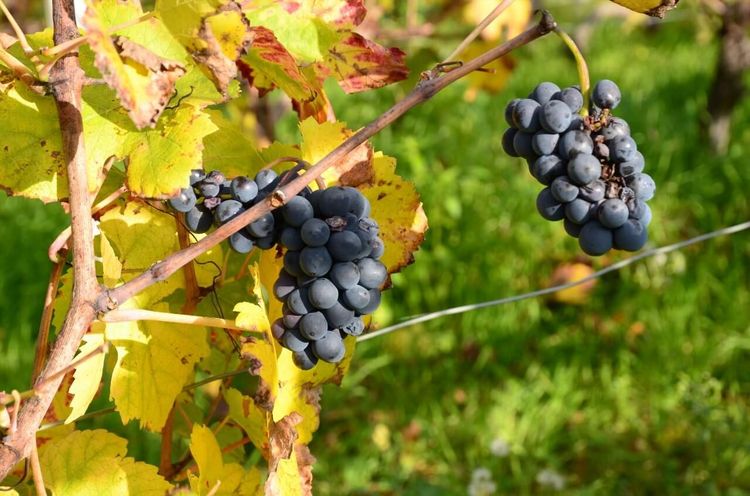
Irancy (Route des Caves, 89290 Irancy, rated 4.9/5 on Google with 108 reviews) doesn't feature in mainstream travel guides. Yet this village of 350 inhabitants, 14 km south of Auxerre, produces one of the rare red wines of Yonne with its own appellation — Irancy AOC — made from Pinot Noir grown on vertiginous limestone slopes.
The village nestles in a natural amphitheatre formed by the vine-covered hills. In autumn, the colours of the vines make the place feel almost unreal. Several independent wine cellars welcome visitors without an appointment: Domaine Anita Cantin and Domaine Léon Bienvenu are two addresses recommended by local enthusiasts. Expect tannic, fruit-forward wines with a more pronounced acidity than their Côte-d'Or counterparts.
Irancy can be visited in an hour, ideally combined with Saint-Bris-le-Vineux (6 km away) for a morning in the Auxerrois vineyard. Both villages make for a perfect mini wine circuit, easily accessible from Auxerre by bicycle along the greenway following the Yonne.
Châtel-Censoir: Between River and Cliff
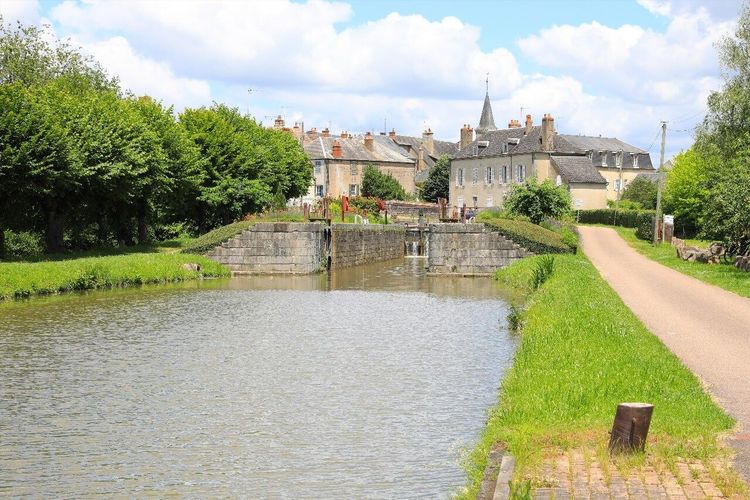
Châtel-Censoir owes its charm to its dual nature: the lower town developed around the Canal du Nivernais and its river port, while the medieval upper town, with its stepped alleyways and Romanesque priory, looks down over everything from the limestone cliff above.
The priory of Saint-Potentien (Rue du Prieuré, 89660 Châtel-Censoir, rated 4.3/5 on Google with 16 reviews), dating from the 12th century, is one of the oldest Romanesque examples in Yonne. The interior has the particular austerity of buildings that have never been refurbished: bare barrel vaults, foliage capitals, and filtered light that shifts with the hour.
Below, the Canal du Nivernais is a playground for leisure barges and cyclists following the Yonne valley greenway. In summer, the Châtel-Censoir lock is one of the liveliest spots on the waterway. Allow two hours to explore both levels of the village, and if you feel like it, a 3 km walk along the canal to the hamlet of Lucy-sur-Yonne.
Saint-Bris-le-Vineux: the Overlooked Aligoté
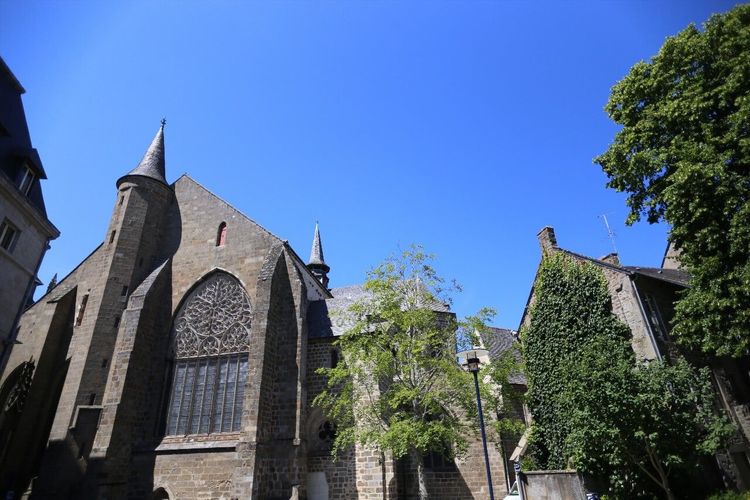
Saint-Bris-le-Vineux, 11 km south of Auxerre, produces the only Aligoté AOC in Yonne — a dry, crisp white wine that natural wine enthusiasts are beginning to rediscover. The village itself conceals a 14th-century Gothic church whose fresco of Saint Christopher (dating from the 15th century) is remarkably well preserved for a rural building.
The troglodyte cellars carved into the Kimmeridgian limestone are another draw: some wine estates open their stone cellars for tastings in a cool underground setting even in the height of summer. Cave de Bailly-Lapierre (Hameau de Bailly, 89530 Saint-Bris-le-Vineux, rated 4.6/5 on Google with 1,120 reviews), a few kilometres away, is the most impressive in the area — a former quarry converted into a wine cellar with 6 km of galleries.
Saint-Bris-le-Vineux can be visited in an hour, easily incorporated into a loop with Irancy and Cravant for a full day in the Auxerrois vineyard.
Cravant: the Medieval River Port of the Yonne
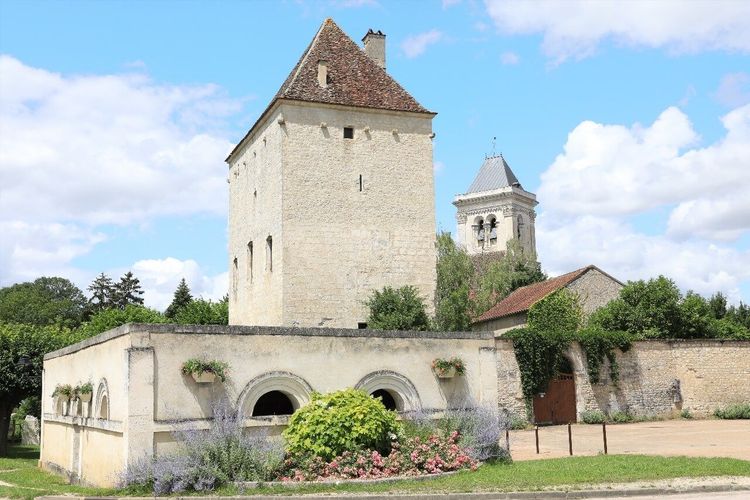
Cravant (Place de la Mairie, 89460 Cravant, rated 2/5 on Google with 4 reviews) is one of the former river ports on the Yonne, 17 km south of Auxerre. In the Middle Ages, this village at the confluence — where the Yonne and the Cure meet — was a strategic crossing point for the trade of Burgundian wines towards Paris.
The remains of the medieval ramparts from the 12th century can still be traced along the riverbank. The clock tower, the sole survivor of the original fortifications, dates from the 14th century and dominates the main square. The church of Saint-Pierre-et-Saint-Paul retains a Romanesque portal and historiated capitals worthy of attention.
Cravant retains a genuinely lived-in feel that Vézelay or Noyers have somewhat lost under the flow of tourism: here, residents do their shopping and local bars serve lunch without a tourist menu in sight. An hour is enough to walk around, but the banks of the Cure invite you to linger.
Saint-Père: the Road to Compostela in Grey Stone
Saint-Père, nestled in the Cure valley 53 km south-east of Auxerre and just 2 km from Vézelay, often has to play second fiddle to its illustrious neighbour. Unjustly so: the church of Notre-Dame de Saint-Père (Place de l'Église, 89450 Saint-Père-sous-Vézelay, rated 4.5/5 on Google with 335 reviews) is a masterpiece of 13th-century Rayonnant Gothic, with a sculpted portal that rivals many urban buildings.
The village is also home to the Fontaines Salées, a remarkable archaeological site revealing salt-water springs used since the Bronze Age. Excavations have uncovered Gaulish ex-votos and Gallo-Roman basins. The adjacent museum, modest but well executed, puts the site in context.
Saint-Père is naturally visited in combination with Vézelay during the same half-day. Walk down from Vézelay (a 2 km marked path with views over the Cure valley) and take the bus or a taxi back up.
Mailly-le-Château: the Balcony Over the Yonne
Mailly-le-Château occupies a spectacular position: the medieval village is perched 45 km south of Auxerre on a limestone cliff that drops sharply into the Yonne valley. The panorama from the castle viewpoint is one of the finest in the entire Yonne department.
The medieval castle itself is not open to visitors (private property), but the ruined keep and remnants of the ramparts make for a striking photographic setting. The church of Saint-Adrien (Rue de l'Église, 89660 Mailly-le-Château, rated 4.5/5 on Google with 4 reviews), from the 12th century and situated in the lower part of the village, contains partially restored Gothic wall paintings.
Mailly-le-Château is often paired with Châtel-Censoir (9 km to the north) on the Yonne valley circuit. In summer, boatmen offer barge trips between the two villages.
Druyes-les-Belles-Fontaines: the Fortress at the End of the World
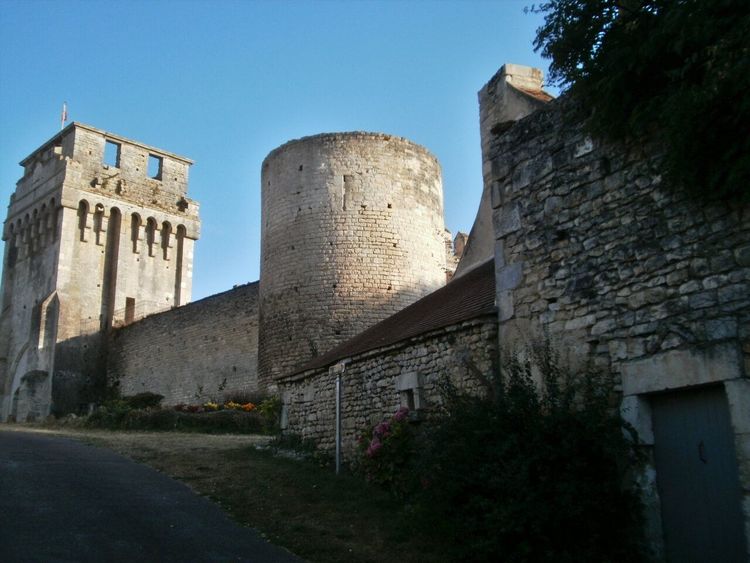
Druyes-les-Belles-Fontaines is the most discreet village in this selection, and perhaps the most surprising. 36 km south of Auxerre, it takes its name from the springs that bubble up at the foot of a 12th-century fortress — one of the best-preserved medieval castles in Burgundy.
The castle of the Counts of Auxerre and Nevers, built around 1170, retains its round towers, curtain walls and dry moat in exceptional condition. Open to the public in season (April to October), guided tours provide access to the wall walk and the square keep, offering sweeping views over the Burgundian countryside.
The springs themselves are worth a detour: the main spring feeds a natural pool surrounded by vegetation, accessible on foot from the castle car park. In April and May, the flow is particularly impressive. The village has a few dozen houses and a deep rural atmosphere that has nothing in common with the structured tourism of Vézelay — which is precisely its charm.
For those curious about medieval castles and fortified heritage, our article on visiting the medieval castle of Guédelon perfectly complements a day trip around Druyes.
Saint-Sauveur-en-Puisaye: in the Footsteps of Colette
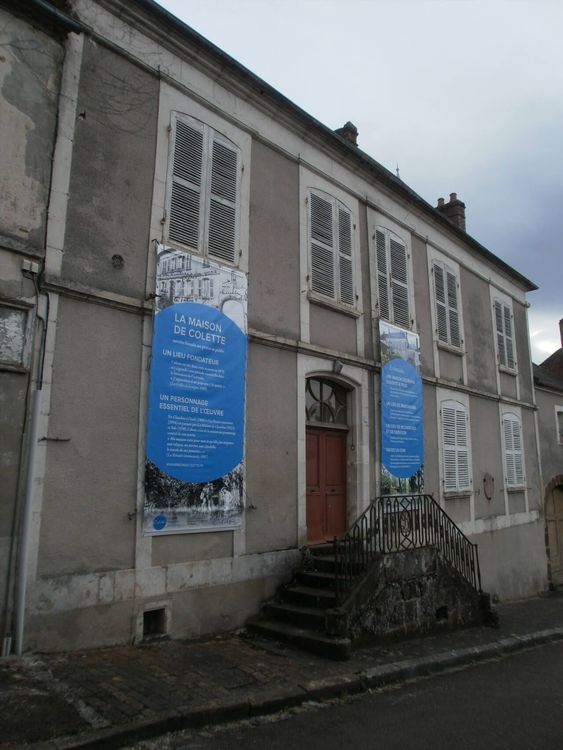
At 40 km south-west of Auxerre, Saint-Sauveur-en-Puisaye owes its fame to a native daughter: Gabrielle Colette, born here in 1873, who immortalised the landscapes of the Puisaye in Claudine at School, My Mother's House and Sido. The writer's birthplace is open for guided visits and recreates the bourgeois provincial atmosphere of the late 19th century.
The village is also dominated by a 17th-century castle that now houses the Musée départemental Colette, a richly documented collection on the life and work of the writer, featuring personal objects and photographs. Admission is €8 (reduced rate €5) and the visit lasts approximately an hour and a half.
The Puisaye is a region of wooded hills, ponds and dense forests — a landscape very different from the vineyard limestone of the Serein valley villages. Saint-Sauveur pairs ideally with Saint-Fargeau (17 km) for a full day in this lesser-visited part of Yonne.
Villeneuve-sur-Yonne: the Royal Bastide of Saint Louis
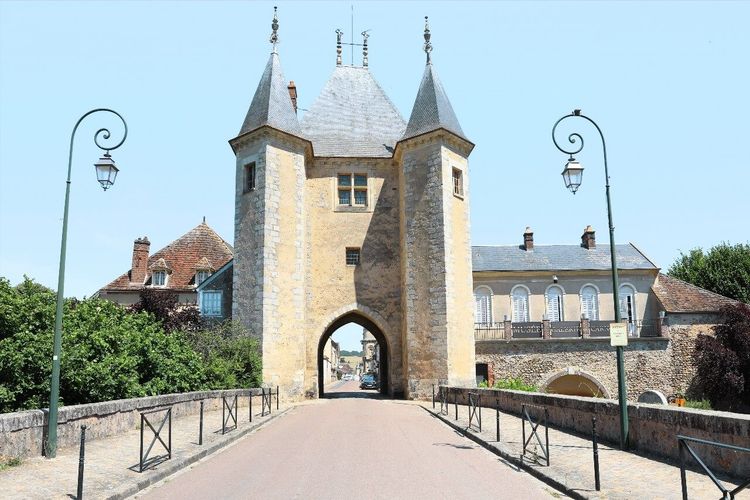
Villeneuve-sur-Yonne (Rue Carnot, 89500 Villeneuve-sur-Yonne, rated 4.3/5 on Google with 380 reviews) is the town of the lower department, 51 km south of Auxerre. Founded in the 12th century by Louis VII as a royal bastide, it retains a legible orthogonal street plan and two monumental fortified gateways from the 13th century — the Porte de Sens and the Porte de Joigny — which still flank rue Carnot, the former royal road running through the town.
The Tour Louis-le-Jeune, a remnant of the royal castle, dates from the 12th century and marks the site of the former Capetian royal residence. The church of Notre-Dame (14th–16th century) is a composite building blending Rayonnant Gothic and Renaissance styles; the western portal is one of the most elaborately crafted in Yonne.
Unlike the villages in this selection, Villeneuve-sur-Yonne is a genuinely active town: markets twice a week, open shops, restaurants without an exclusively tourist focus. It makes a good base if you are exploring the lower Yonne, with several hotels and bed-and-breakfasts in the historic centre.
Saint-Fargeau: the Inhabited Castle
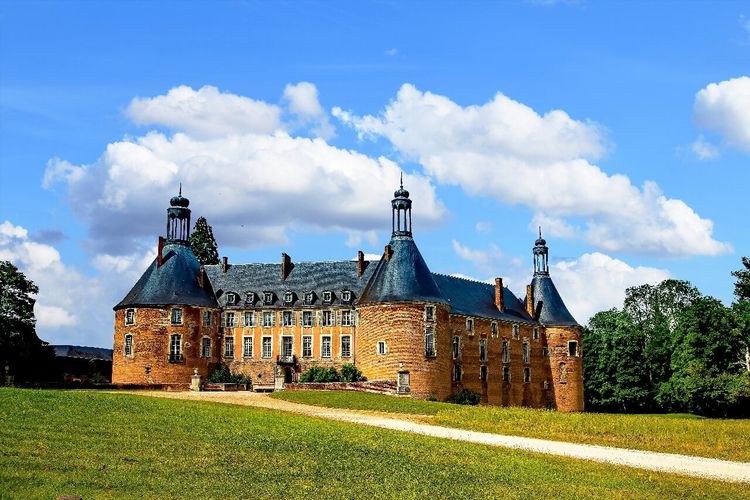
Saint-Fargeau is a small town of 1,700 inhabitants located 57 km south-west of Auxerre, and its castle is one of the most distinctive addresses in Yonne. The building, in pink brick and limestone, dating from the 15th century and remodelled in the 17th, has been inhabited by the same family for generations and remains a private property — which gives it a far more vibrant atmosphere than national monuments managed by public bodies.
The evening shows staged in July and August — the 'Falconry Show' and above all the grand historical pageant '1,000 Years of History' with 600 cast members and horses — draw tens of thousands of visitors every summer. Outside these events, the castle can be visited during the day for €12 (standard adult admission).
The lake of Saint-Fargeau, 2 km from the castle, is set up for summer water activities — sailing, canoeing, supervised swimming. A possible stop for those exploring the Puisaye with children.
Rogny-les-Sept-Écluses: 17th-Century Engineering
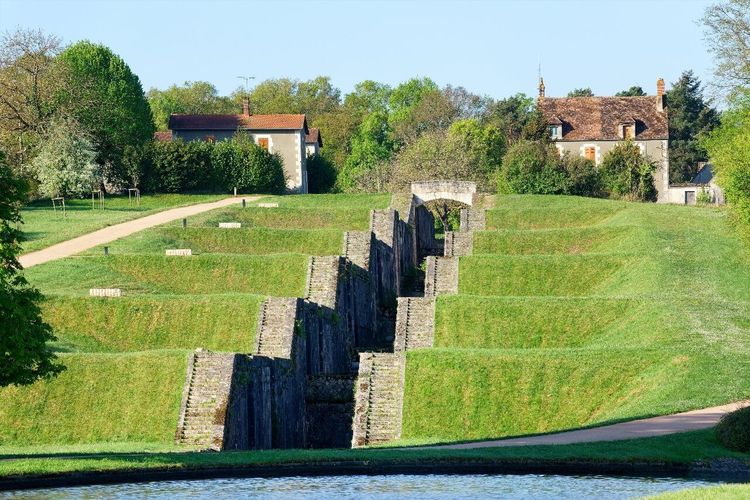
Rogny-les-Sept-Écluses may be the most unusual village on this list. 60 km south-west of Auxerre, it takes its name from the seven locks built between 1604 and 1642 to allow boats to navigate a 24-metre change in elevation on the Canal de Briare — a feat of hydraulic engineering from the reign of Henri IV, listed as a historic monument.
The original locks (decommissioned in 1887 and replaced by a modern system) are still visible below the village. Their limestone architecture, with sills and inverts still perfectly legible, offers a lesson in engineering history that few museums can match. A footbridge overlooks the whole structure for a panoramic view from upstream.
The village itself is modest, but the hydraulic site alone justifies the detour — especially as part of a Puisaye circuit including Saint-Fargeau and Saint-Sauveur-en-Puisaye.
How to Plan Your Circuit Through Yonne
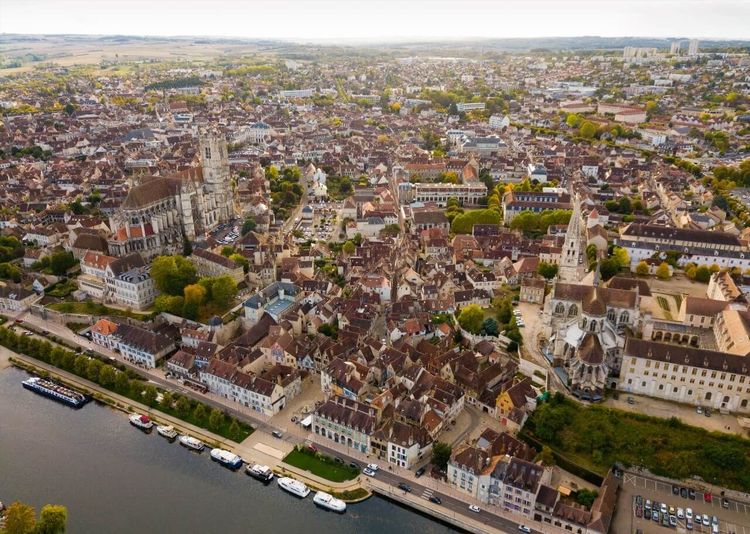
These 15 villages of Yonne cannot be visited in a single weekend — and that is part of their charm. Here is how to group them intelligently according to your interests:
Medieval Circuit (2 days): Auxerre → Chablis → Noyers-sur-Serein → Montréal → Vézelay → Saint-Père. The loop covers approximately 120 km and revolves around the Serein valley and the Auxerrois Morvan.
Wine Circuit (1 day): Auxerre → Saint-Bris-le-Vineux → Irancy → Cravant → Chablis. Allow 45 km with cellar stops and tastings. Designate a driver.
Puisaye Circuit (2 days): Auxerre → Druyes-les-Belles-Fontaines → Saint-Sauveur-en-Puisaye → Saint-Fargeau → Rogny-les-Sept-Écluses. Approximately 130 km through the wooded, rolling part of Yonne.
River Circuit (1 day): Auxerre → Châtel-Censoir → Mailly-le-Château → Villeneuve-sur-Yonne. The Yonne valley over 50 km, partly cyclable on the greenway.
For more excursion ideas from Auxerre, see our guide on what to see and visit around Auxerre.
FAQ
Which are the most beautiful villages around Auxerre that are absolutely worth visiting?
The must-see selection includes Vézelay (UNESCO-listed, the basilica of Sainte-Marie-Madeleine is a Romanesque masterpiece), Noyers-sur-Serein (14th-century ramparts, half-timbered houses, labelled 'Most Beautiful Village in France') and Chablis (a wine-growing village with a 12th-century Romanesque collegiate church). To venture off the beaten track, add Druyes-les-Belles-Fontaines with its perfectly preserved 12th-century medieval castle, and Saint-Sauveur-en-Puisaye for Colette's birthplace and museum.
What is the best season to visit the villages of Yonne?
The May–June period offers a decisive advantage: sites are open, vines are green, and tourist numbers remain manageable. September is also excellent for the vineyards (autumn leaf colours) and temperatures. July–August is peak season in Vézelay and Saint-Fargeau (evening shows), but also the busiest time. Winter closes many wine cellars and some rural museums, but Chablis and Villeneuve-sur-Yonne remain accessible and infinitely less crowded.
Can you visit the villages of Yonne without a car?
It's difficult, except for villages close to Auxerre. Irancy, Saint-Bris-le-Vineux and Cravant are reachable from Auxerre by bicycle via the greenway (10–20 km). Regional coaches serve Chablis, Tonnerre and Vézelay from the Auxerre bus station, but with limited frequency outside weekends. For Noyers-sur-Serein, Druyes and the Puisaye, a car is practically essential. Electric bike rental in Auxerre allows you to comfortably cover the Yonne valley as far as Châtel-Censoir.
Where is Guédelon, and is it worth the detour from Auxerre?
The medieval building site of Guédelon is located 50 km south-west of Auxerre, in the Puisaye. It is a unique project in Europe: since 1997, teams of builders have been constructing a 13th-century medieval castle using only the techniques and materials of the period. The visit lasts around 3 hours and is suitable for all ages. Open from April to November, it is one of the most original outings in the region. Our article on visiting the medieval castle of Guédelon covers everything you need to know before you go.
What is there to do in Auxerre between excursions to the villages?
Auxerre is a city in its own right that deserves at least half a day. The Saint-Étienne cathedral (10th-century Romanesque crypt, 12th-century stained glass) and the Saint-Germain abbey (9th-century Carolingian frescoes) are the two major landmarks. To explore the old town at your own pace, the Ryo audio guide 'In the Footsteps of Cadet Roussel' takes you through 21 stops over 3.1 km across medieval lanes and the banks of the Yonne. Our article on the top 5 things to do in Auxerre rounds out the picture for optimal trip planning.
Are there charming villages in the Puisaye, away from the medieval area?
Yes, the Puisaye is a world apart within Yonne: wooded landscapes, ponds, clay and dense forests replace the limestone and vines. The most remarkable villages in the Puisaye are Saint-Sauveur-en-Puisaye (Colette), Saint-Fargeau (castle and shows), Rogny-les-Sept-Écluses (17th-century hydraulic heritage) and Mézilles (a farming village with several fords on local rivers). The Puisaye lends itself better to a two-day stay than to a day trip from Auxerre. Auxerre remains the handiest base: Saint-Germain abbey and the half-timbered houses fit into a 3 km audio-guided loop before you take to the road.
Conclusion
Yonne offers a rare concentration of medieval, wine-growing and natural heritage within a 60 km radius around Auxerre. From the ramparts of Noyers to the castle of Druyes, from the cellars of Chablis to Colette's house, each village adds a different nuance to the portrait of this secret Burgundy that trains between Paris and Lyon pass through without stopping.
If you are looking for a thread to start with, begin in Auxerre and follow the Ryo audio guide 'In the Footsteps of Cadet Roussel' to put the city in context, then head out to discover the villages in concentric circles. This Auxerre loop, with its 22 audio-guided stops, is the ideal starting point before exploring the department as a whole.