Créé par Romane, le 17 nov. 2026
Votre guide Ryo
Auxerre, France
In the Footsteps of Cadet Roussel
Parcours audioguidé pour visiter Auxerre en 1 jour
This visit invites you to an immersion into the heart of a City of Art and History, whose majestic silhouette is reflected with poetic grace in the tranquil waters of its river. Let yourself be charmed by the harmony of a city rising like an amphitheater, offering a maze of cobblestone streets where half-timbered houses whisper centuries-old tales. Between the verticality of its Gothic steeples piercing the sky and the gentleness of its quays perfect for daydreaming, this Burgundian city reveals a character that is proud, serene, and deeply authentic. An exploration on foot, balancing secret gardens and stone panoramas, to capture the full nobility of a stopover where culture and nature meet.
Quand partir à Auxerre ?
Jan.
7°
11
Feb.
8°
9
March
13°
9
April
16°
9
May
20°
11
June
24°
9
July
26°
8
Aug.
26°
8
Sept.
22°
8
Oct.
17°
10
Nov.
11°
11
Dec.
7°
12
Auxerre enjoys a modified oceanic climate, characterized by warm summers around 26°C and cool winters fluctuating between 1°C and 7°C. The ideal period runs from May to September to stroll along the quays of the Yonne River and admire the silhouette of the Saint-Germain Abbey. The month of September is particularly charming for the harvest atmosphere in the nearby Auxerrois vineyards, while spring offers perfect mildness for exploring the medieval narrow streets of the city center.
Départ conseillé
No need to worry about where to begin! Our tours are designed as a loop, so you can jump in wherever you are. The navigation system and audioguide will automatically adjust to your location. However, if you happen to be nearby, we do have a preferred starting point: on esplanade Irène Jolliot-Curie
Parking à proximité
Parking République : quai de la République
Découvrez 22 lieux d'intérêt pour visiter Auxerre






What to see in Auxerre on your 1h15 tour?
This 3 km loop takes about 1 h 15 and links 20 stops. It follows the Yonne quays and the old Marine district, crosses the Gallo-Roman remains and Place Saint-Nicolas, climbs toward Saint-Germain abbey and its tower, runs past the cathedral and the half-timbered houses, reaches the central squares and the Saint-Eusèbe and Saint-Pierre churches, before returning to admire the town from the Paul-Bert bridge. With the Ryo app in your ears, every square tells of boatmen, monks and Burgundian poets.
Information checked in November 2026 and subject to change.
1 - Quay of the Yonne River
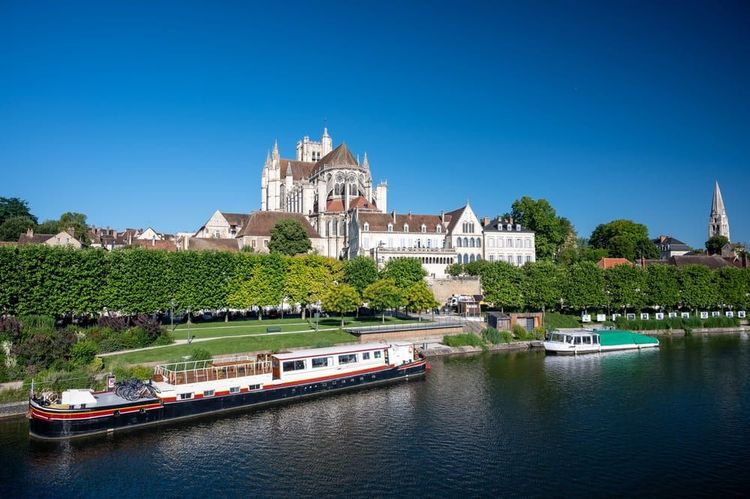
The quays lining this river give their name to the whole département. Its source lies hidden in the Morvan hills, and it joins the Seine a little further on; yet at that meeting point, it actually carries more water, which would make it, by flow alone, the true river running through Paris. History, trade and an ancient reverence decided otherwise, much as with other paired rivers elsewhere in the world. Strolling these banks remains, just steps from the centre, a thoroughly pleasant walk.
Free entry · Best late in the day
2 - The Marine District
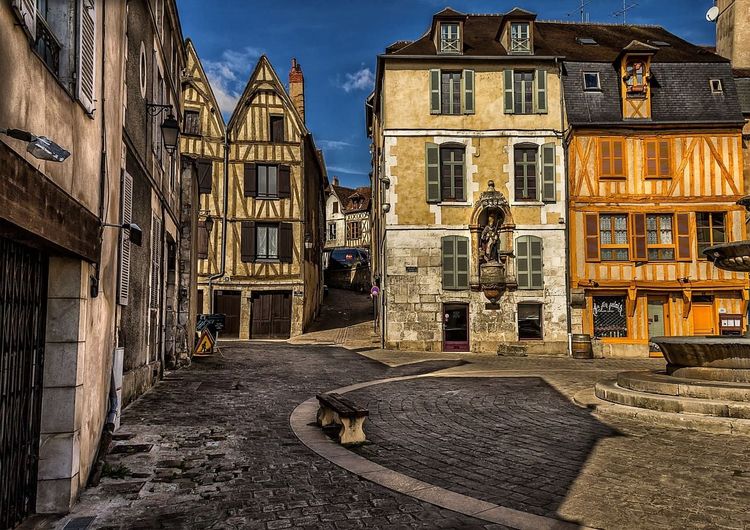
This district took its name from the boatmen who came and went here constantly, loading and unloading goods bound for Paris and other large towns. Fishermen, tanners, watermen and merchants crossed paths in a permanent bustle, making the place one of the liveliest in town. The rise of the railway, followed by the opening of a nearby canal, put an end to this river trade in the 19th century. The district nonetheless keeps all its charm and the quiet traces of that bygone era.
Free entry
3 - Gallo-Roman Remains
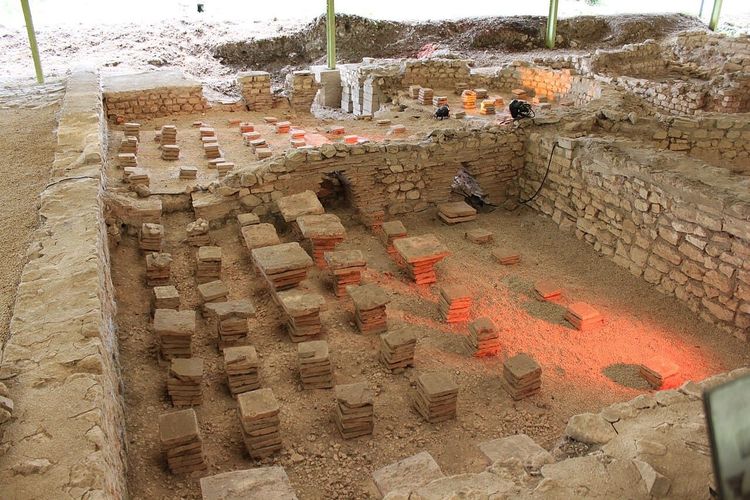
These thick walls lining the street date from Roman antiquity and reveal a city already fortified to protect itself and control the flow of goods. The settlement, inhabited since the Bronze Age, grew under the Empire into a genuinely prosperous city open to trade. The corner tower still visible today, remarkably well preserved, lets you picture what the place looked like nearly eighteen centuries ago, under its ancient name. The windows and slate roof were added much later.
Free entry
4 - Place Saint-Nicolas
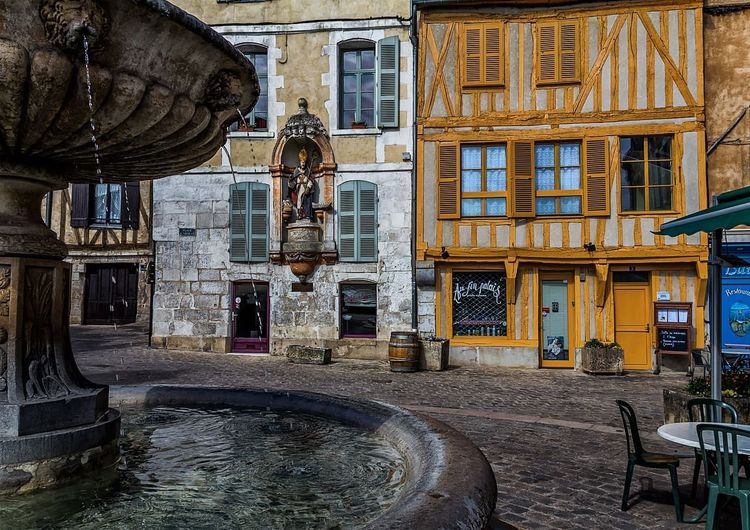
This square marks the boundary between the riverbanks and the old town, and takes its name from the patron saint of boatmen, whose statue watches over it, set into a building right opposite the central fountain. Goods were once stored here before being shipped on to other towns, which is why the local harbour long carried this very name. Surrounded by colourful half-timbered houses, bars and small restaurants, it remains one of the most popular spots today for a drink just steps from the water.
Free entry
5 - Saint-Jean Tower
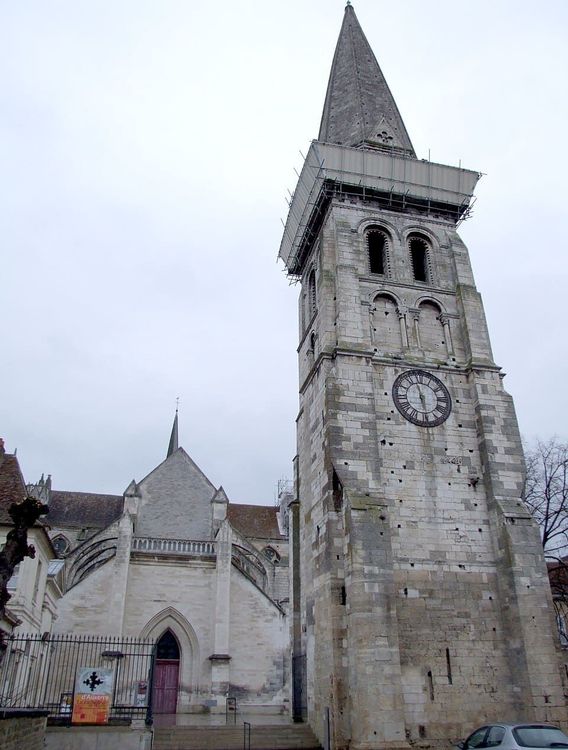
This tower was added in the 12th century against a neighbouring abbey, and when the abbey itself was later rebuilt, the tower became the only remnant of the monastic complex. Standing about fifty metres tall, it ranks among the town's highest buildings. Its Romanesque style shows in its convex octagonal spire and its carved animal motifs. Separated from the abbey since the façade was rebuilt, in the 19th century, and inspired by a famous cathedral's bell tower, it in turn influenced several towers in the region.
Free to see from outside
6 - Saint-Germain abbey
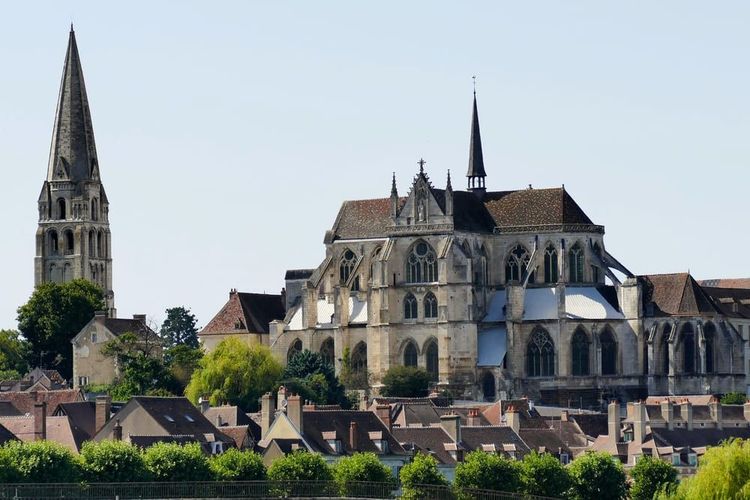
This monastery was founded on the tomb of a 5th-century bishop, whose cult later drew a Merovingian queen who built him a sanctuary worthy of his standing. Destroyed in the 9th century, it was rebuilt under a Carolingian king: all that remains are crypts built around the tomb and a few foundations. These crypts, open for guided visits, hold wall paintings among the oldest in France. Restored in Romanesque and then Gothic style, the complex houses a museum devoted to local history.
Paid entry (about €8) · Allow 40 min
7 - Tour des Prisons
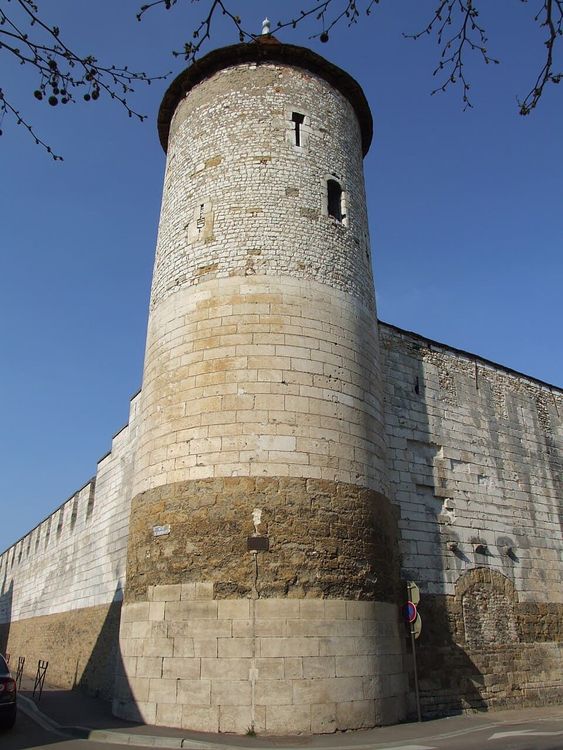
This tower was once part of the fortified enclosure surrounding the nearby abbey, built in the mid-12th century and linked to the town's ramparts some twenty years later. Beyond its defensive role, it also housed, at different times, a windmill and then a prison, where inmates carved inscriptions into the walls, hence its present name. This medieval remnant now ranks among the town's protected historic monuments.
Free to see from outside
8 - Séminaire Chapel
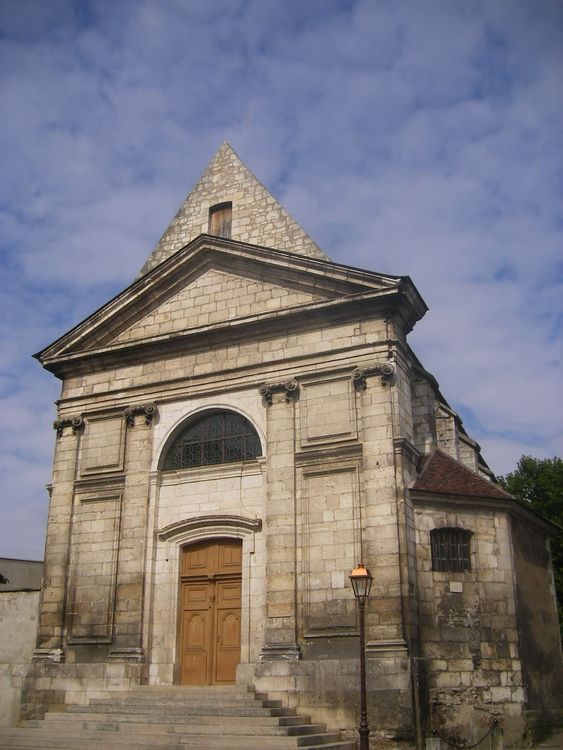
Closed to visitors, this chapel still reveals, from the street, a fine example of early 18th-century architecture, funded by one of the town's bishops. Such seminary chapels once trained future priests in the fundamentals of Catholic worship, but sometimes also welcomed lay pupils in a more school-like setting, which explains why a secondary school now stands right next door. Carefully restored, the building has kept intact the trace of this dual religious and educational calling.
9 - Viewpoint of the Cathedral
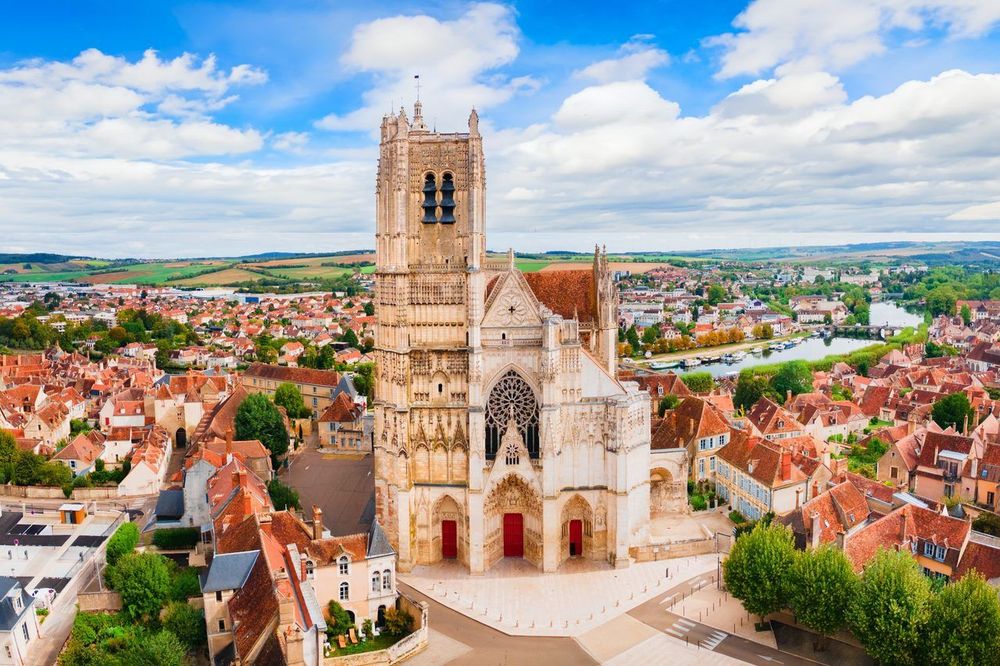
This viewpoint offers a first glimpse of the cathedral's imposing tower, rising some sixty metres above the rooftops. It was originally meant to have a twin, as is customary for this type of building, but work on the second tower stopped for lack of money and never resumed. This unexpected asymmetry, far from being a flaw, gives the whole structure a unique character that will soon be seen up close, facing its façade.
Free entry · Best late in the day
10 - Saint-Étienne Cathedral
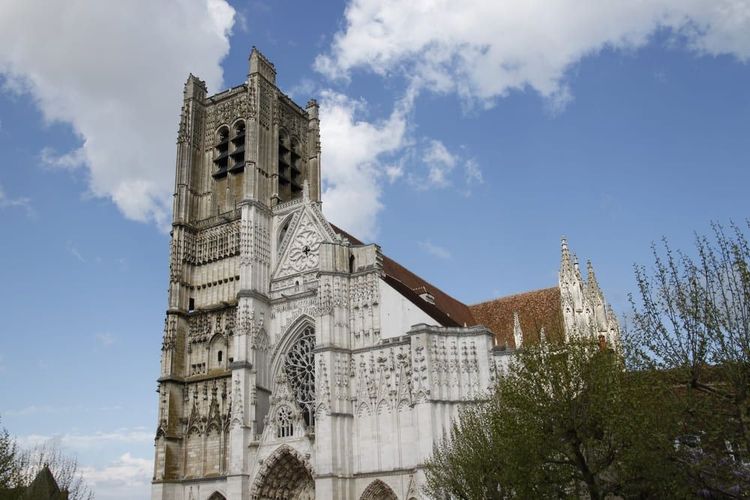
The tallest building in town, this cathedral was hailed as one of the finest examples of Gothic art in France. Its history remains turbulent: two earlier sanctuaries were destroyed by fire, a third in Romanesque style left only its crypt behind, and the one standing today was not finished until the mid-16th century, after three centuries of work. Its single tower gives it an asymmetrical silhouette, while carvings, old stained glass and a painting of Christ on horseback, one of a kind, make it an essential visit.
Free entry
11 - Half-timbered Houses
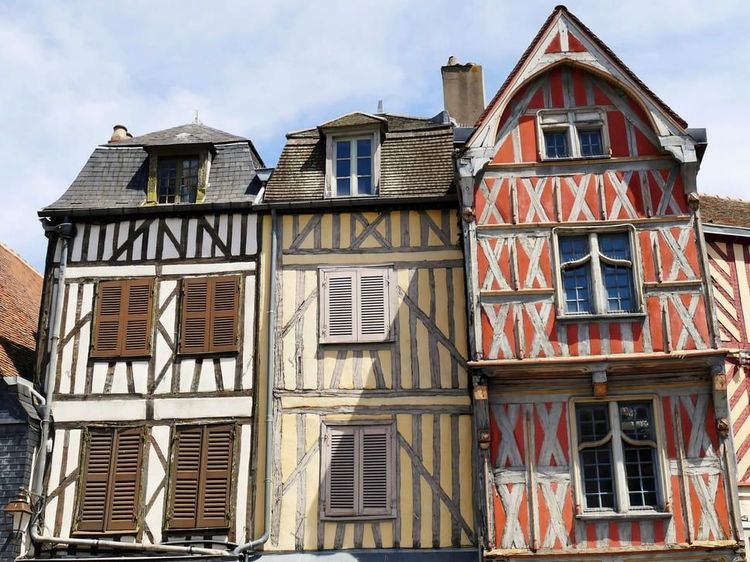
These half-timbered houses, built with wood from the nearby forest, were originally made entirely of timber, a material easy to work with but unfortunately highly vulnerable to fire. After several blazes, residents rebuilt their homes in stone, while keeping, out of habit, these half-timbered façades so characteristic of the Middle Ages. This heritage, sometimes brightly coloured, remains remarkably well preserved today and gives real character to the old town's cobbled lanes.
Free entry
12 - Place des Cordeliers
This vast square once held a convent belonging to an order of monks recognisable by the rope they wore as a belt, an order that counted nearly three hundred such convents across the country before the Revolution. Once the building vanished, a covered market took its place, becoming a gathering spot for everyday shopping. Though that market is long gone, the square now hosts shops, bars and restaurants, and remains one of the liveliest spots to end a walk through town.
Free entry
13 - Place de l'Hôtel de Ville
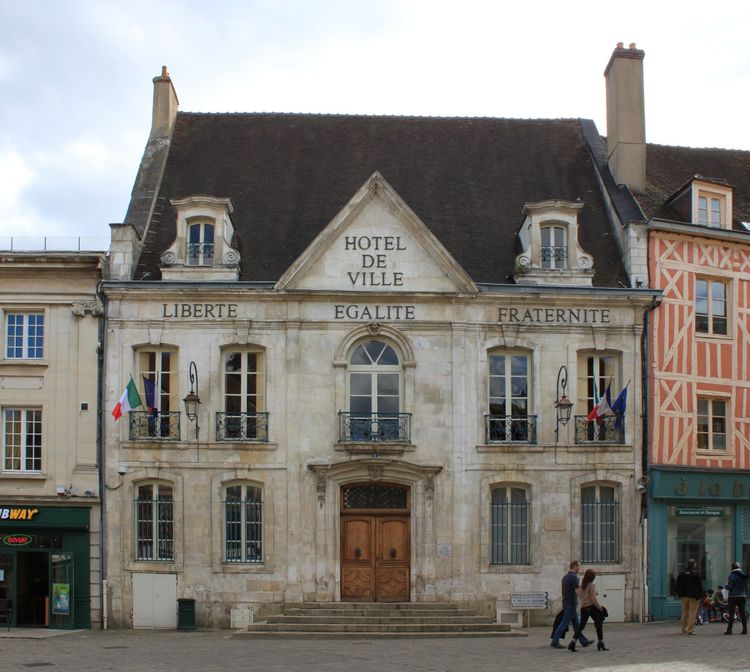
Facing you stands the town hall, built in the mid-15th century to give town officials an official place to deliberate, with a grand hall for assemblies and receptions. A count's castle, now vanished, once stood right next to it. In the neighbouring street hides a 19th-century shopping arcade, still walkable even though its shops are gone, while a statue pays tribute to a local poet you'll meet again further on, in front of her former house.
Free entry
14 - Clock Tower
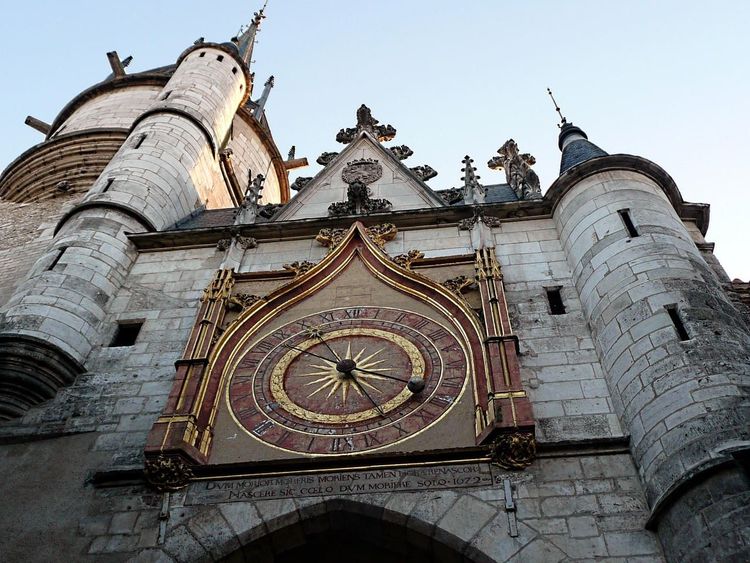
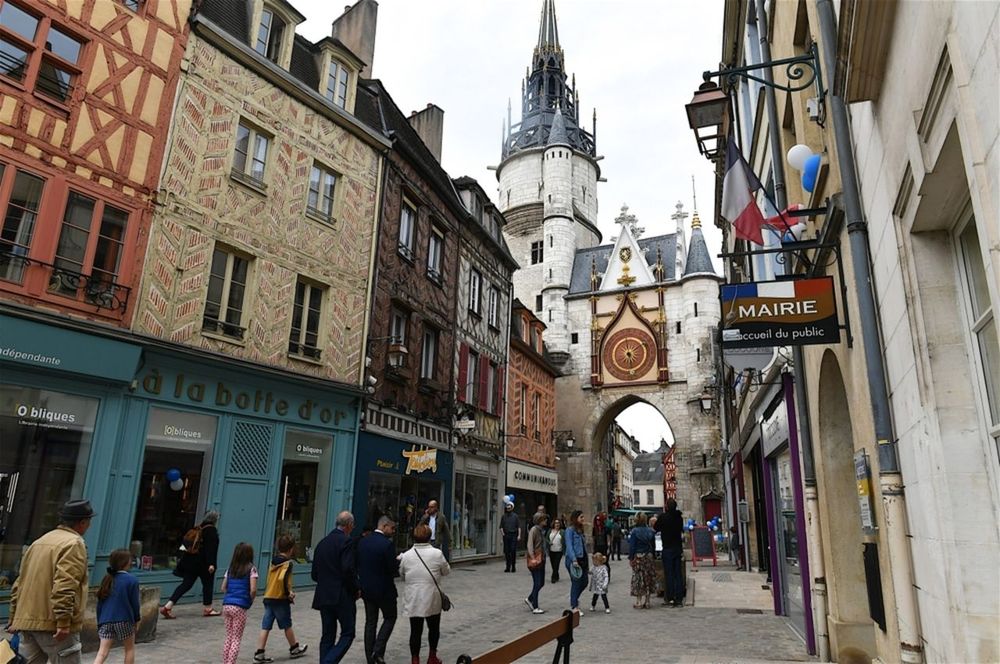
Turned into a clock tower in the 15th century, so residents could know the time without relying on church bells, this tower is actually much older: it was already part of the Roman fortifications, back when the town carried a different name, and then marked the entrance to the city. Restored over the centuries, it carries a dual legacy, ancient for the tower and medieval for its clock face, and has ranked among the protected historic monuments since the end of the 19th century.
Free to see from outside
15 - Place Charles Surugue
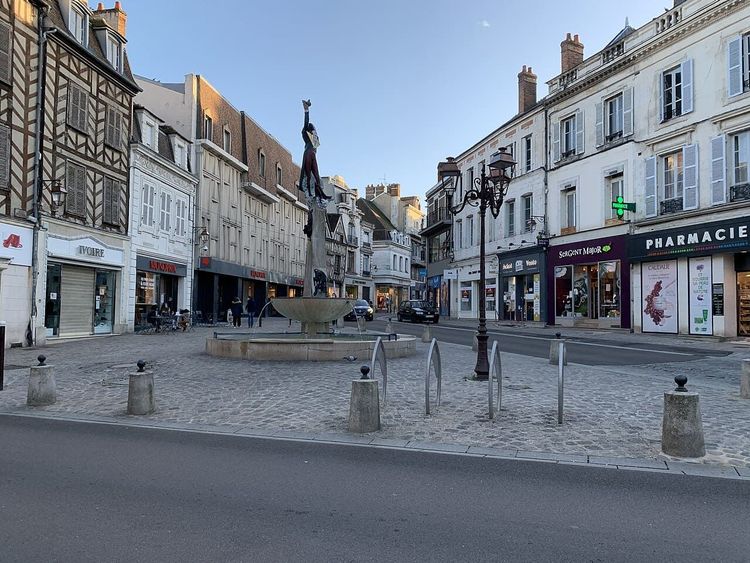
The statue adorning this square depicts a very real person, immortalised by a children's rhyme known to every French schoolchild. Having moved here at twenty, he made his fortune through an advantageous marriage, became a clerk and later a court officer, and remarried, after being widowed, a woman much younger than himself. Seen as eccentric, he was mocked by a rival who, amid the revolutionary wars, wrote the still-famous song about him. Opposite stands the former wheat market, topped with a clock.
Free entry
16 - Saint-Eusèbe Church
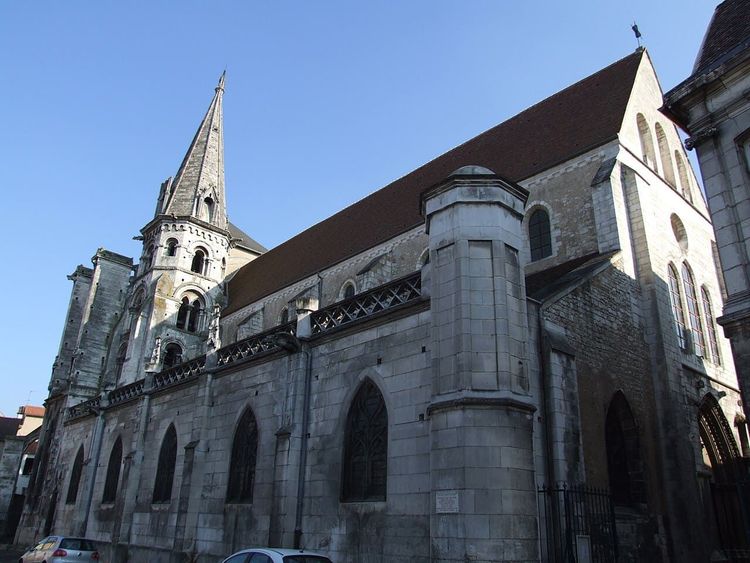
Raised on the site of a monastery dating back to the 7th century, this church took more than four centuries to complete. Its nave, among the oldest parts, sits alongside a later Romanesque bell tower, while its chevet, which collapsed in the 16th century, was rebuilt in Gothic style with Renaissance additions, including fine stained glass donated by wealthy parishioners. Turned into a prison during the Revolution, it has since regained its original purpose and now ranks among the must-see monuments.
Free entry
17 - Marie Noël’s House
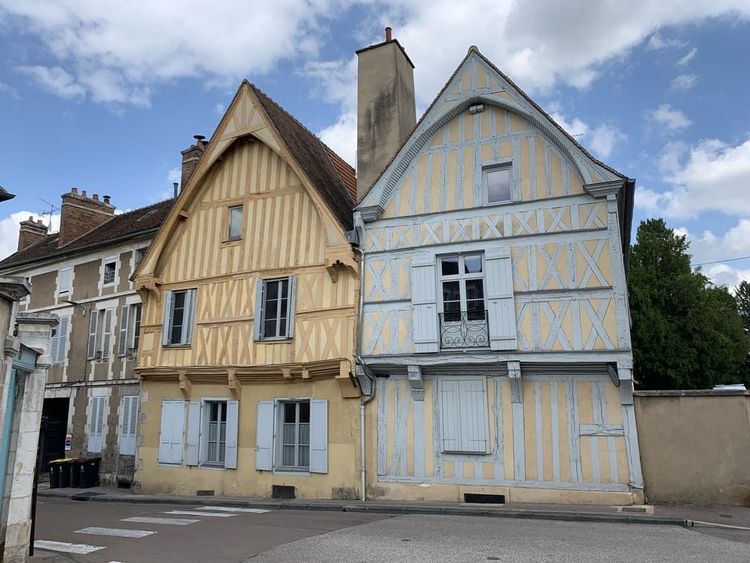
In this house lived and wrote, under a pen name inspired by her brother's death the day after Christmas, a poet who remained deeply attached to her hometown all her life. Honoured with a major literary prize from the Académie Française in the 1960s, she touched many readers with work that swung between darkness and light, mirroring a passionate soul tormented by life's hardships. Having lived here as a recluse for many years, she left such a strong mark that the street itself now bears her name.
18 - The Auxerre Theatre
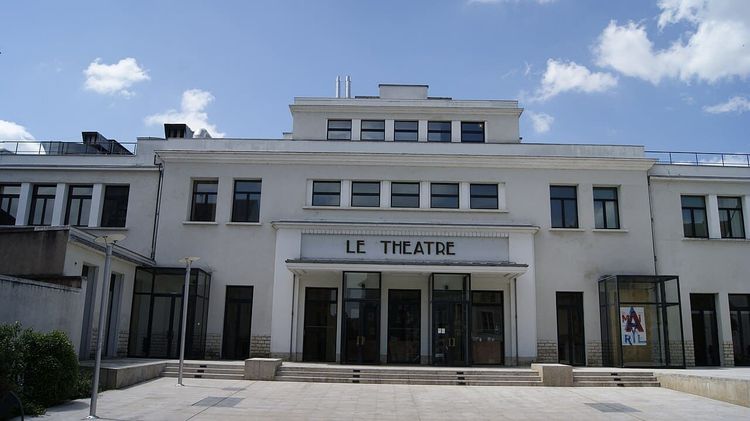
This building, whose construction began in the late 1930s, was meant to house a people's hall. The war changed its purpose, and it later served as a festival hall before being inaugurated as a theatre in 1953, with a performance by the national theatre company. Renovated at the end of the 20th century, it now holds two venues with a varied programme. Its main hall is decorated with frescoes by a local artist, as much a decorator as a painter, which earned the place its listed status in 2012.
Free entry
19 - Saint-Pierre Church
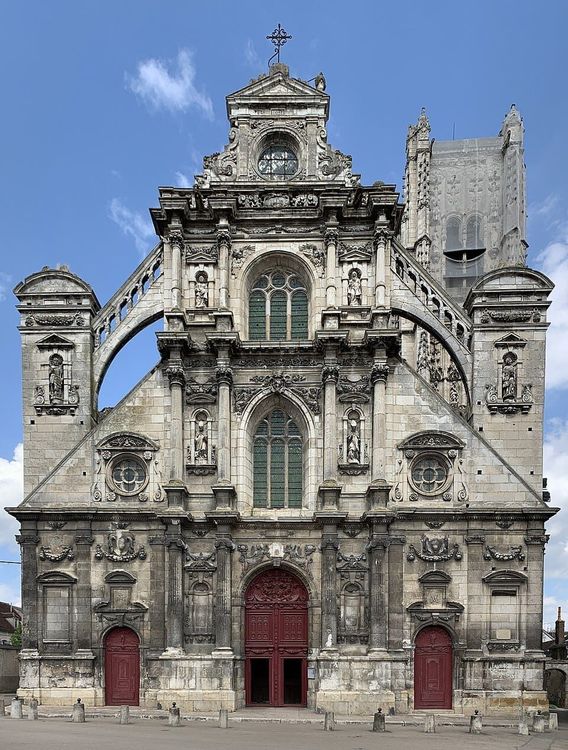
First mentioned in the 6th century, outside the city walls, this church was destroyed by invaders in the 8th century, then razed and rebuilt several times during the wars of religion that marked the town. Its classical 17th-century façade bears two statues honouring the patron saints of local guilds, one for winemakers, the other for butchers. This blend of Gothic and Renaissance architecture, the result of its many restorations, has earned it protected historic-monument status since the 1960s.
Free entry
20 - Viewpoint from Paul Bert Bridge
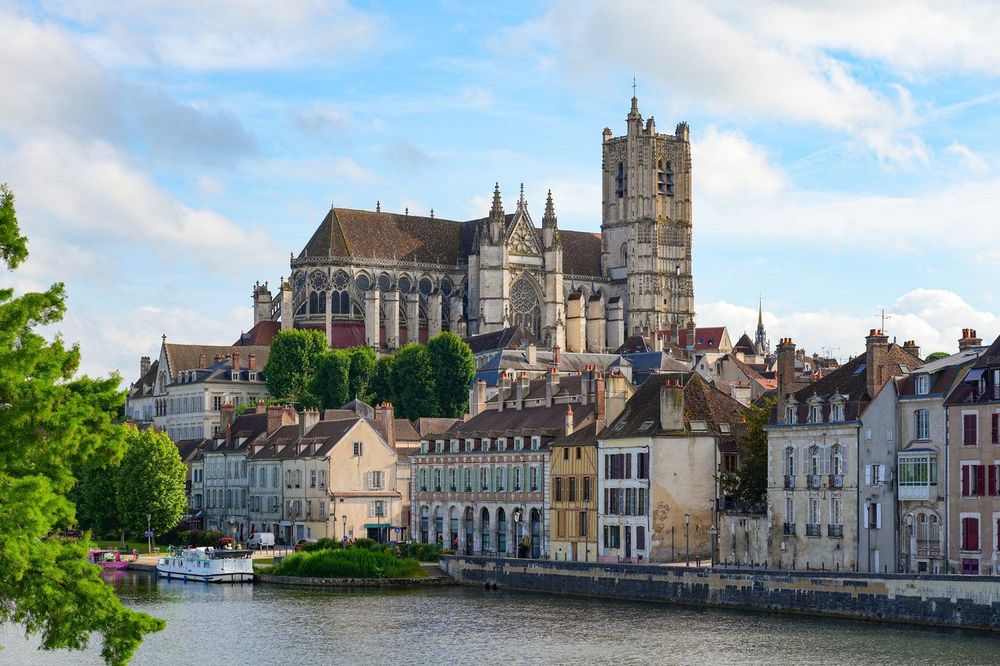
This bridge offers one of the town's most iconic views: the cathedral rises on one side, the octagonal spire of the tower seen earlier pierces the sky right ahead, and the abbey dominates the opposite bank. Here too stands the statue of a physician and politician born in the town, a key figure in establishing free, secular education at the end of the 19th century, resting here before the finest monuments of his hometown.
Free entry · Best late in the day
What to do in Auxerre in 2 or 3 days?
This walking tour takes about 1 hour 15 minutes: 3 km and 20 stops, from the quays of the Yonne to the Paul-Bert bridge. With 2 or 3 days in town, there is much more to explore around the old centre.
The next day, step inside Saint-Germain abbey, which the tour only shows from the outside (stop 6), to see its Carolingian crypts and their frescoes, among the oldest in France, on a guided visit. In the afternoon, visit the Leblanc-Duvernoy museum, devoted to decorative arts in a former townhouse, or, for football fans, the AJA Experience behind the scenes at the Abbé-Deschamps stadium. Late in the day, the terraced gardens of the former bishop's palace give another view over the valley.
On the third day, leave town for the vineyards: Chablis lies about twenty kilometres to the east, and Saint-Bris-le-Vineux, whose appellation is the only one in Burgundy devoted to sauvignon, opens its medieval cellars for tastings. These days are covered in detail in our guide to visiting Auxerre in 2 days and in our 3-day itinerary, which goes as far as Vézelay.
Which neighbourhoods does the tour cross?
In one loop, the walking tour links the districts that built Auxerre's fortune and then its charm, from the boatmen's quays to the half-timbered squares of the centre.
It starts on the quays of the Yonne, enters the old Marine district where boatmen and bargemen once lived, runs past the remains of the Gallo-Roman wall and reaches Place Saint-Nicolas, dedicated to the patron saint of boatmen (stops 1 to 4).
The route then climbs towards the abbey quarter: the Saint-Jean tower, the only trace of the old abbey church, the Saint-Germain abbey and its crypts, the Tour des Prisons and the Séminaire chapel (stops 5 to 8).
It reaches the monumental heart of town next, with Saint-Étienne cathedral and its single tower, the half-timbered houses lining the cobbled streets, Place des Cordeliers and Place de l'Hôtel de Ville, then the Clock Tower and Place Charles Surugue (stops 9 to 15).
The last stretch passes the Saint-Eusèbe church and the house of the poet Marie Noël, goes by the theatre and the Saint-Pierre church, before one last look at the town from the Paul-Bert bridge (stops 16 to 20).
How much does it cost to visit Auxerre?
None of the 20 stops requires a ticket to follow the tour. Fourteen are free to explore, along the quays, the squares and the half-timbered facades; the Saint-Jean tower, the Tour des Prisons and the Clock Tower are seen from outside, the Séminaire chapel is closed to visitors and Marie Noël's house only opens for guided visits.
At Saint-Germain abbey, the courtyard, museum and exhibitions are free; only the guided visit to the Carolingian crypt is paid, at €8. The nave of Saint-Étienne cathedral is free to enter, while its Romanesque crypt and treasury charge a small fee.
Information checked in November 2026 and subject to change.
Where to stop for a bite along the tour?
The route runs past three squares with café terraces right on the way: Place Saint-Nicolas, a step from the water, Place des Cordeliers, where shops, bars and restaurants have replaced the old covered market, and Place Charles Surugue, lined with half-timbered houses. It is a good moment for a glass of chablis, the renowned wine made some twenty kilometres away.
What to do in Auxerre with children?
The tour suits a family outing well, especially along the quays: flat and free of the uneven cobbles found in the historic centre, they are easy to cover with a pushchair.
On Place Charles Surugue (stop 15), the statue of Cadet Roussel amuses children: this character really lived in Auxerre in the 18th century, and a nursery rhyme still sung today keeps his name alive.
What should you know before visiting Auxerre?
Saint-Germain abbey is generally open from 10 am to 1 pm, then from 2 pm to 6 pm: ask about crypt tour times as soon as you arrive. Bring closed shoes and a jumper, as its steps are uneven, slippery after rain, and it stays cool even in August.
The Séminaire chapel (stop 8) is closed to visitors: it is admired from the street. The Tour des Prisons (stop 7) can only be visited inside by groups, when access allows.
What to see around Auxerre?
Auxerre is a good base for getting away, between Burgundy vineyards and neighbouring towns with their own walking tour.
Several day trips lie less than an hour away: the Chablis vineyard, Joigny, Sens, Vézelay and Avallon, all covered in our walk through Auxerre.
Troyes, 67 km away, has its own walking tour too, in a historic centre shaped like a champagne cork, between half-timbered houses and the stained glass of its cathedral. Further out, 119 km away, Bourges offers its own, around its UNESCO-listed cathedral and the Jacques Cœur palace.
What's on in Auxerre right now?
This time of year brings one sporting date to the streets of Auxerre.
On 5 December, the Corrida d'Auxerre, a popular running race, takes place in the town centre.
Information checked in November 2026 and subject to change.
Le plein d'inspirations
Explorez le monde en totale liberté, à pied au cœur des villes ou au fil des routes. Nos guides audios transforment chaque destination en une découverte culturelle immersive et unique.
FAQ for visiting Auxerre
When is the best time to visit Auxerre?
The ideal time to discover Auxerre runs from May to September, when the region's semi-oceanic climate offers its finest sunny days with temperatures around 26°C. Spring will win you over with its mildness, perfect for wandering the medieval lanes without the summer crowds. Summer lets you make the most of the banks of the Yonne and the lively café terraces. September remains particularly enchanting, with the atmosphere of the grape harvest in the surrounding Auxerre vineyards. Winter, cooler with temperatures between 1°C and 7°C, still keeps its charm for lovers of a more intimate atmosphere, even though some tourist sites may have reduced opening hours.
How much time do you need to visit Auxerre?
A full day will let you discover the essentials of Auxerre at a pleasant pace. You'll be able to explore the historic centre with its half-timbered houses, visit Saint-Étienne Cathedral and Saint-Germain Abbey, then stroll along the banks of the Yonne. For a deeper immersion and to fully savour the Burgundian atmosphere, a two-day weekend is ideal. This will give you time to explore the less touristy neighbourhoods, sample local specialities in the city-centre restaurants and perhaps even venture into the surrounding vineyards. History and architecture enthusiasts could easily devote three days to it.
How do you get around Auxerre?
The historic centre of Auxerre is best explored on foot, its modest size and cobbled lanes naturally inviting a leisurely stroll. The town's amphitheatre-like layout offers lovely views but involves a few climbs, which nonetheless remain accessible to everyone. For the more outlying neighbourhoods, or if you'd like to save your energy, the urban bus network efficiently serves the whole conurbation. Self-service bike stations are also available for those who prefer to pedal along the Yonne. Parking in the town centre can prove tricky in high season, so opt for the park-and-ride car parks on the outskirts, connected by free shuttles.
Which monuments are must-sees in Auxerre?
Auxerre will amaze you with the richness of its architectural heritage. Saint-Étienne Cathedral, a Gothic gem with exceptional stained-glass windows, majestically dominates the town. Saint-Germain Abbey, with its Carolingian crypt adorned with thousand-year-old frescoes, is a rare testament to medieval art. Don't miss the Clock Tower, the city's symbol, or the half-timbered houses on Place de l'Hôtel de Ville. Saint-Pierre Church also deserves your attention for its Renaissance façade. For an enriching discovery of these treasures, the Ryo audioguide offers a narrated tour that reveals the secrets and anecdotes of each monument while guiding you through the loveliest lanes.
Where is Auxerre and how do you get there?
Auxerre lies at the heart of Burgundy, in the Yonne department, about 170 kilometres south-east of Paris. The town enjoys excellent rail links, with direct trains from Paris-Gare de Lyon usually in under two hours. By car, the A6 motorway takes you there easily; allow around two hours from the capital depending on traffic. From Lyon, plan on about three hours' drive via the A6. The bus station also handles regular services to neighbouring towns such as Dijon, Troyes and Sens. The nearest airport is Paris-Orly, roughly two hours away by road.
What can you visit around Auxerre?
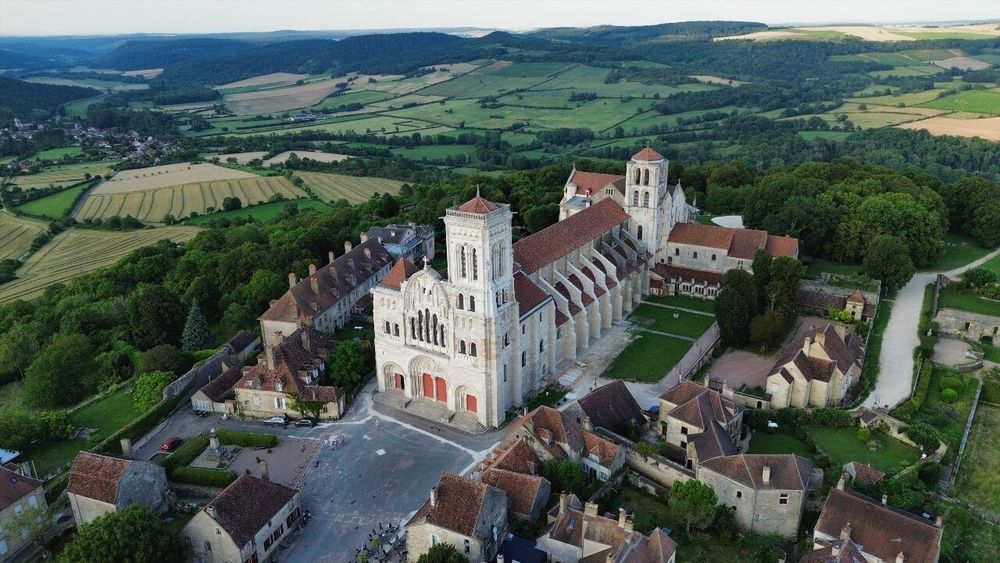
The area around Auxerre is brimming with wonders to discover. About twenty kilometres away, the medieval village of Vézelay, a UNESCO World Heritage Site, will transport you with its Sainte-Marie-Madeleine Basilica. Wine lovers will appreciate Chablis, just twenty minutes away, for tasting its prestigious vintages in centuries-old cellars. The Château de Tanlay, a Renaissance masterpiece surrounded by moats, is well worth the detour. Closer by, the Arcy-sur-Cure caves reveal fascinating prehistoric paintings. The Nivernais Canal offers lovely outings by bike or barge. Not forgetting Pontigny Abbey, one of the largest preserved Cistercian churches.
What are the typical wines of the Auxerre region?
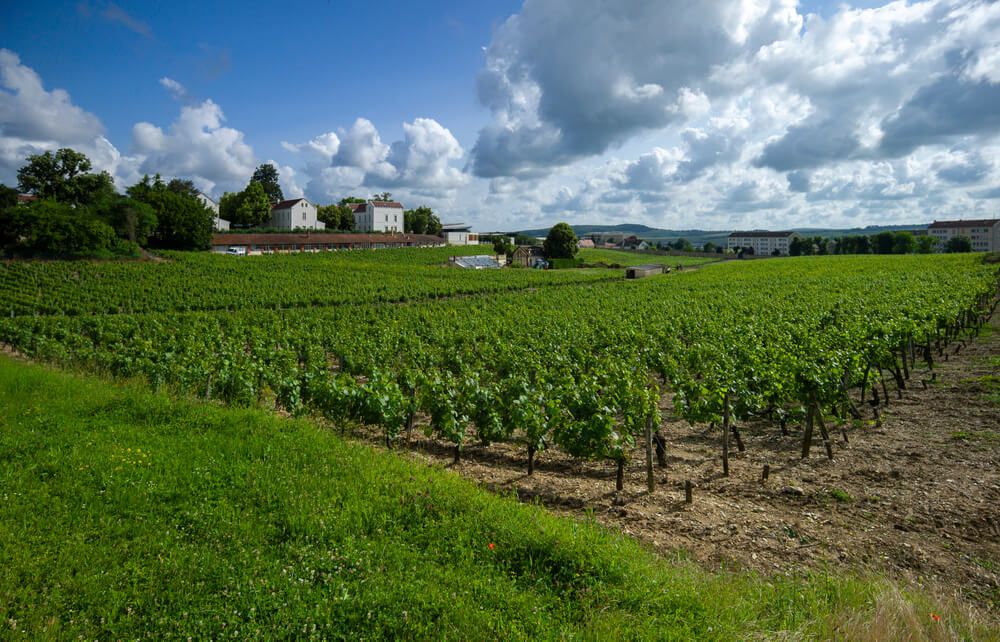
The Auxerre region will charm you with its characterful wines, heirs to a thousand-year-old winemaking tradition. The wines of the Auxerrois, a little-known but flavoursome local appellation, offer fresh, mineral whites made mainly from Chardonnay and Sauvignon. The reds, produced from Pinot Noir, offer finesse and elegance. A few kilometres away, the prestigious Chablis vineyard produces whites renowned worldwide for their purity and minerality. Irancy, a neighbouring village, makes Pinot Noir reds with cherry notes that are particularly prized. Crémant de Bourgogne, a festive sparkling wine, harmoniously rounds out this palette. Many estates offer tastings to discover these treasures.
Where can you eat in Auxerre?
Auxerre will delight you with its many gourmet spots blending Burgundian tradition and contemporary creativity. The cathedral district is home to several charming restaurants set in old half-timbered houses, serving classics such as snails, bœuf bourguignon and melting Époisses cheese. The banks of the Yonne offer pleasant terraces on fine days for enjoying market cuisine paired with local wines. Place Saint-Nicolas and its adjacent lanes hide convivial bistros where you can savour an authentic gougère. For a sweet break, the town-centre pâtisseries offer the traditional cerise d'Auxerre. The covered market, open several mornings a week, lets you put together a picnic with the finest regional produce.
What is there to do along the Yonne in Auxerre?
The quays offer the finest view of the town: from the right bank, Saint-Étienne cathedral, Saint-Germain abbey and Saint-Pierre church line up above the rooftops, a panorama that photographers and painters seek out especially at the end of the day, when the stone warms up. Along the water, moored barges, the marina and the terraces give Auxerre a holiday feel as soon as the fine weather arrives.
You can follow the bank on foot or by bike, as the cycle route running along the Yonne and the Nivernais canal starts from the centre, and boat trips are offered in the warmer months. The Ryo audio guide offers a dedicated Auxerre route linking the quays to the historic heart and its half-timbered houses.
What should you know about Saint-Germain abbey in Auxerre?
Founded on the tomb of Saint Germanus, bishop of Auxerre in the 5th century, the abbey was one of the great intellectual centres of the early Middle Ages. What remains of the monastic complex is a Gothic church, a cloister and, above all, a Carolingian crypt dug beneath the chancel, whose frescoes are among the oldest surviving wall paintings in France.
The crypt is usually seen with a guide, which helps you make sense of the layout of the galleries, the original oak beams and the painted scenes devoted to Saint Stephen. The conventual buildings also house the town's archaeological and historical collections, from prehistory to the Middle Ages. Set aside a proper amount of time: few places let you get this close to Carolingian art.
Which unusual activities can you try in Auxerre, between vineyards, football and bungee jumping?
Wine lovers can tour Burgundy vineyards with a tasting of five wines, or explore them by bike with a picnic along the way. Football fans can watch an AJ Auxerre match at the Abbé-Deschamps stadium, the club shaped by Guy Roux, its coach from 1961 to 2005.
For an adrenaline rush, a bungee jump of more than 30 metres awaits at the Druyes-les-Belles-Fontaines viaduct, half an hour's drive away. More peacefully, the treasury of Saint-Étienne Cathedral displays carved ivories, Limoges enamels and manuscripts.
Discover all five ideas in our top 5 activities to do in Auxerre.
How should I plan a two- or three-day stay in Auxerre?
Whether you have two or three days, start with the historic centre on foot, within 800 metres: Saint-Étienne Cathedral, the crypt of Saint-Germain Abbey, the Clock Tower, half-timbered houses and the banks of the Yonne.
With three days, add a day in the Chablis and Saint-Bris-le-Vineux vineyards, then a trip to Pontigny Abbey and Vézelay, about 50 minutes from Auxerre. A 21-stop audio route also follows in the footsteps of Cadet Roussel.
Find the full itinerary in our guide to visiting Auxerre in 3 days and in our two-day plan.
Which walk should you take through old Auxerre, and which trips can you make from the town?
Start at Saint-Étienne Cathedral, with its asymmetrical silhouette and rare Romanesque crypt, then climb Rue de la Draperie and its half-timbered façades. The 15th-century Clock Tower bears a double astronomical dial tracking the sun and the moon. Without stopping, the loop takes 35 to 40 minutes; allow a full day with the riverside and Saint-Germain Abbey.
Less than an hour away, Chablis and its vineyards, Joigny, Sens, Vézelay and Avallon make great add-ons.
Plan your stroll with our guide to walking in Auxerre.
Vos commentaires, idées et suggestions
Aucun avis pour le moment