© Shutterstock
 Votre guide Ryo
Avignon Neighborhoods: the 2026 Guide, from the Palais des Papes to the Barthelasse
Avignon fits within a handful of square kilometers, yet each of its neighborhoods sets its own pace, its own prices, and its own way of life. Step through the ramparts at the porte de l'Oulle and you walk on cobblestones that witnessed seven popes; step back out to the north and you find 1960s apartment towers, community gardens, and an entirely different daily life. It is this diversity, so often reduced in guidebooks to a simple intra-muros versus extra-muros divide, that we explore here in detail, drawing on the Ryo audio-guided tour of Avignon, which covers the historic city step by step.
A few key reference points to set the scene: the historic center fits within just over 150 hectares enclosed by ramparts, the Île de la Barthelasse, one of the largest cultivated river islands in Europe, lies less than ten minutes on foot from the Palais des Papes, and Montfavet, often mistaken for a separate town, is very much a neighborhood of Avignon. From the tranquility of Saint-Ruf to the buzz of the Teinturiers during the Festival and the more affordable rents in the north of the city, each neighborhood in Avignon tells a different story. Here is everything you need to choose yours.
How Avignon Is Organized: Intra-Muros, Extra-Muros, and the Outskirts
Before going into detail on each area, it helps to understand the overall logic. The neighborhoods of Avignon can be read as four concentric circles, defined by very real boundaries: the medieval ramparts, the Rhône, and the ring road that encircles the city.
The first circle is the intra-muros: the historic center enclosed within its 14th-century ramparts, where the Palais des Papes, the pedestrian lanes, and the majority of tourist accommodation are concentrated. The second circle groups the suburbs just outside the ramparts, urbanized during the 19th and 20th centuries: Saint-Ruf, Monclar, and Saint-Chamand. The third circle corresponds to the outskirts beyond the ring road, where residential areas and business zones such as Agroparc intermingle. The Rhône finally draws a fourth territory, that of the Île de la Barthelasse and the neighboring Gard communes, Villeneuve-lès-Avignon and Les Angles, connected to Avignon by bridges but administratively distinct.
The map of Avignon's neighborhoods is hard to summarize in a single image, given how much daily life varies from one area to the next. To find your bearings without a screen, keep this circle-by-circle list of neighborhoods in mind:
- Intra-muros: the Hypercentre and the Palais des Papes, the Carmes, Vernet-Banasterie, the Teinturiers, the Corps Saints.
- Extra-muros suburbs: Saint-Ruf, La Trillade, Monclar, Nord Rocade, Saint-Chamand, la Croix des Oiseaux.
- Outskirts and riverbanks: Montfavet and Agroparc to the east, la Croisière and the Rhône quays to the west, the Île de la Barthelasse to the northwest.
- Right bank, in the Gard: Villeneuve-lès-Avignon and Les Angles.
This organization is more than a guidebook convenience: it directly conditions prices, atmosphere, and walking distance to the Palais des Papes, the landmark that every visitor ends up using, consciously or not. We follow this logic, from the historic core outward to the periphery, in the sections that follow.
The Intra-Muros: the Palais des Papes and the Historic Core
The Palais des Papes and the Hypercentre
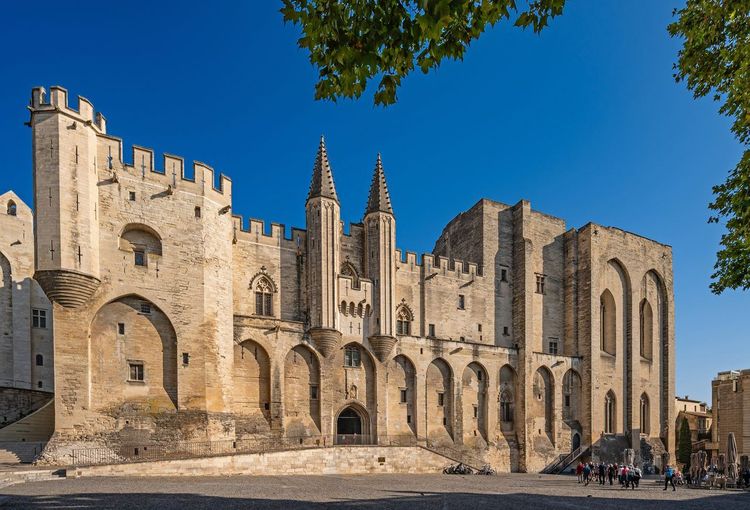
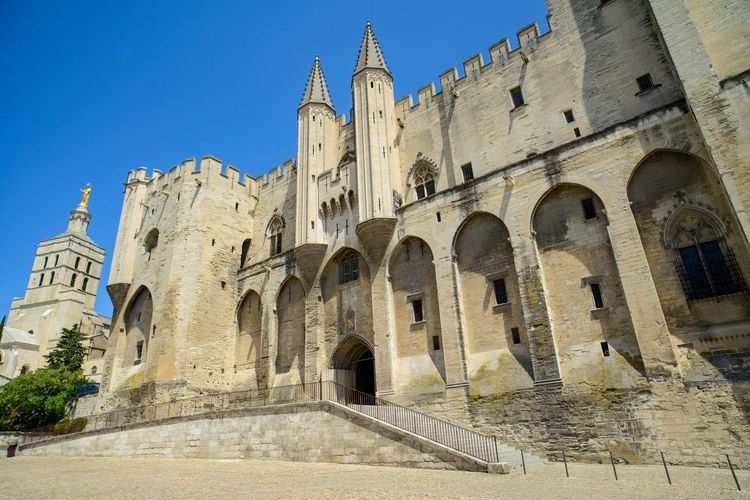
The Palais des Papes literally dominates the neighborhood to which it gave its name: the Hypercentre, the beating heart of the intra-muros. Built for the most part between 1335 and 1352, it is the largest Gothic palace in Europe, and alone accounts for a large share of the city's tourist footfall.
Around it, the Hypercentre unfolds a dense network of commercial streets: the rue de la République linking the train station to the palace, the place de l'Horloge with its town hall and café terraces, and the Petit Palais, a former episcopal palace converted into a museum of Italian painting. This is the neighborhood with the highest concentration of restaurants, shops, and accommodation, and the first one most visitors walk through when stepping off the TGV.
Living or staying here means accepting heavy daytime footfall, especially between April and September, in exchange for immediate proximity to everything. In the evening, once the tour groups have left, the Hypercentre regains a quieter atmosphere, perfect for a leisurely stroll up to the gardens of the Rocher des Doms.
The Carmes and Vernet-Banasterie, Authentic Old Avignon
A different atmosphere awaits just a few hundred meters to the east. The Carmes neighborhood is organized around its square and its market, one of the most authentic in the city, far removed from the tourist traps of the Hypercentre. Residents still do their daily shopping here, and property prices remain noticeably lower than around the place de l'Horloge.
Continuing northeast, Vernet and Banasterie form a cluster of more residential streets, dotted with the façades of private mansions and small inner courtyards. This is where part of old Avignon's least-visited corners hide, appreciated by residents for their relative quiet despite the immediate proximity of the Palais des Papes.
The Musée Angladon, housed in a former private mansion a stone's throw from the Carmes, holds the only Van Gogh painting on display in Provence. A detour that takes barely thirty minutes and helps explain why this area attracts both Avignon locals and visitors keen to venture off the beaten path.
The Teinturiers and the Corps Saints, between Canal and Alleyways
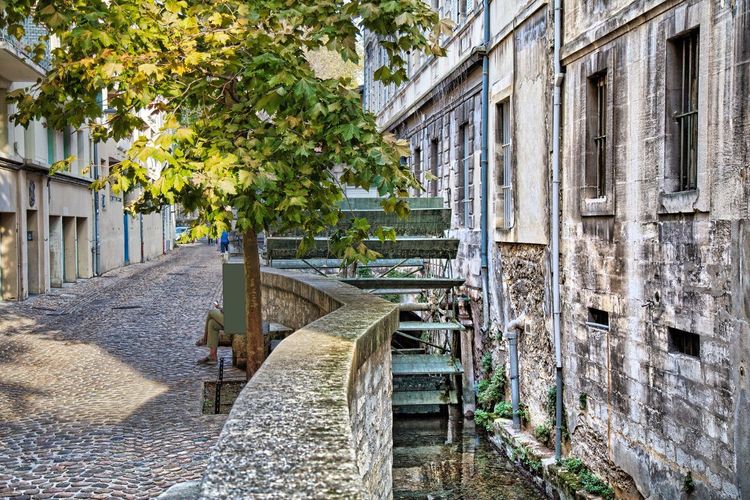
The rue des Teinturiers, paved and bordered by the canal de Vaucluse, owes its name to the craftsmen who once worked the printed cotton fabrics that made the neighborhood's fortune in the 18th century. The paddle wheels, still visible along the canal, keep that memory alive. Today it is one of the most sought-after spots in Avignon's nightlife, with bars and concerts spilling out onto the street during the Festival.
A few minutes away, the Corps Saints area is centered on its plane-tree-shaded square, one of the liveliest in the city on summer evenings, inherited from the former Célestins convent whose cloister and church still stand. Renovated old buildings and more modest pockets sit side by side here. Between the two, the Halles d'Avignon and their spectacular living wall open every morning except Monday on the place Pie, and offer a fine taste of Provençal gastronomy before heading out to explore the rest of the city.
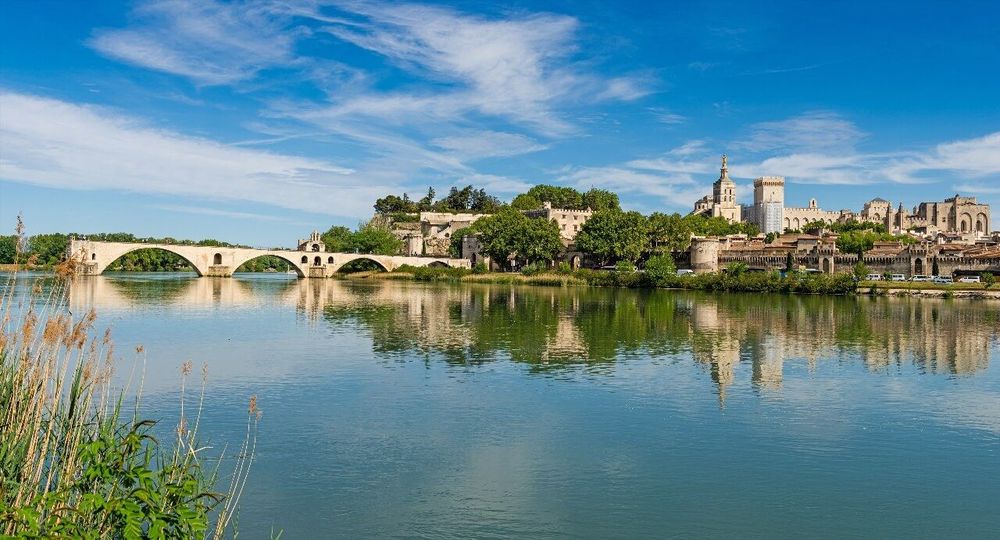
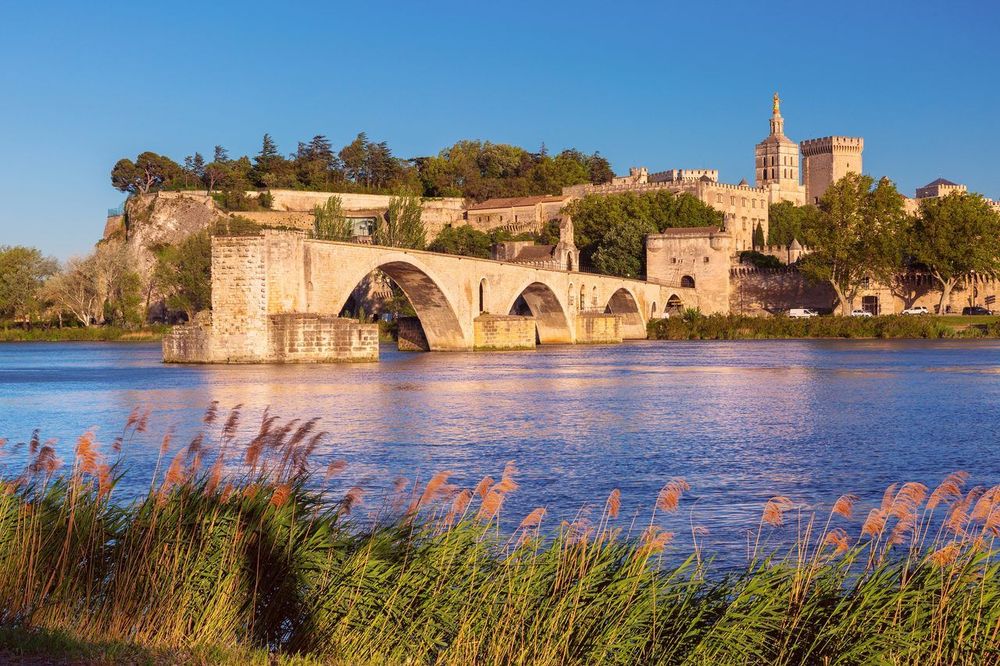
To continue discovering the intra-muros heritage street by street, our Ryo guide to visiting the pont d'Avignon rounds out the loop nicely, as the pont Saint-Bénézet is about a ten-minute walk from the Corps Saints.
The Residential Suburbs: Saint-Ruf, Monclar, and Saint-Chamand
Saint-Ruf and La Trillade, the Southern Edge of the Center
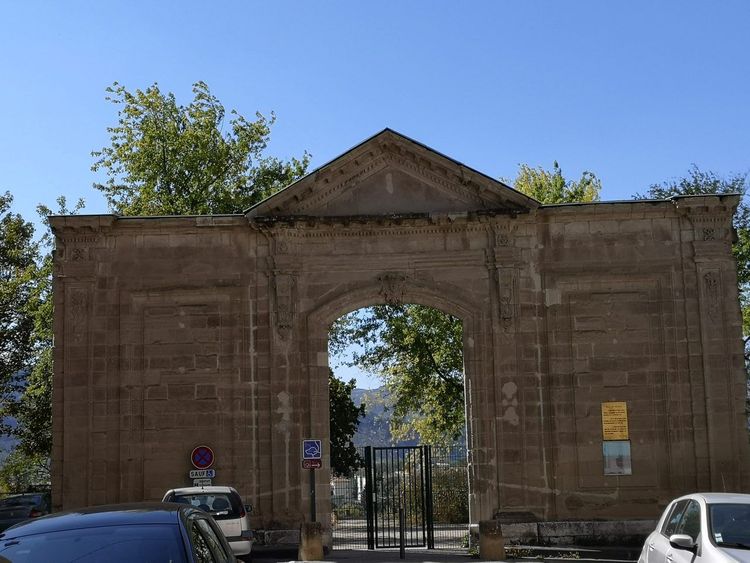
Just south of the ramparts, Saint-Ruf grew up around its former Augustinian abbey, of which only remnants survive, embedded in the more recent urban fabric. The neighborhood has a dual identity: on one side, quiet residential streets close to the city center; on the other, more functional amenities such as the stadium and the commercial area around the gare Centre.
La Trillade, extending Saint-Ruf to the south, illustrates the transformation underway in these suburban residential neighborhoods: former social housing blocks stand alongside new developments, supported by a long-running urban renewal policy. Recent construction around the avenue Eisenhower has reshaped part of the area, bringing green spaces and local shops that were previously lacking. For a visitor, the main appeal is the proximity — roughly fifteen minutes on foot from the Palais des Papes — at rates noticeably lower than those of the intra-muros.
Monclar, Nord Rocade, and Saint-Chamand, Working-Class Neighborhoods in Renewal
To the north and east of the city, Monclar and the Nord Rocade area concentrate a significant share of Avignon's social housing stock. These are priority urban policy neighborhoods, a classification that has channeled substantial investment in recent years: rehabilitation of la Croix des Oiseaux, upgrading of public spaces around the barrière de Monclar, renovation of several school buildings.
Saint-Chamand, further east, follows a similar trajectory, with an urban renewal project that has demolished some of the old tower blocks to replace them with more open housing. The reputation of these neighborhoods in the local press is often harsher than the reality experienced day to day by their residents, and it would be reductive to define them solely by their social challenges: they are also home to lively markets and a particularly active network of community organizations.
For a visitor passing through, these areas have no real tourist vocation, but they offer a window into the Avignon that lives year-round, far from the Festival's stage sets.
The Île de la Barthelasse, Avignon's Green Lung
Nature, Beaches, and Walks on the Island
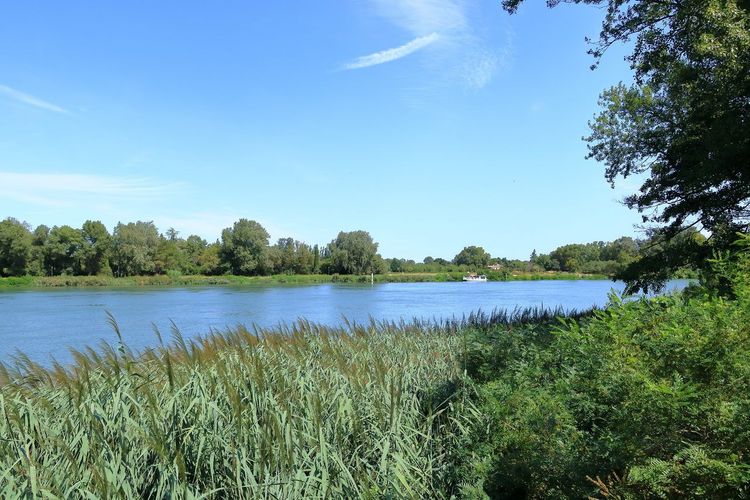
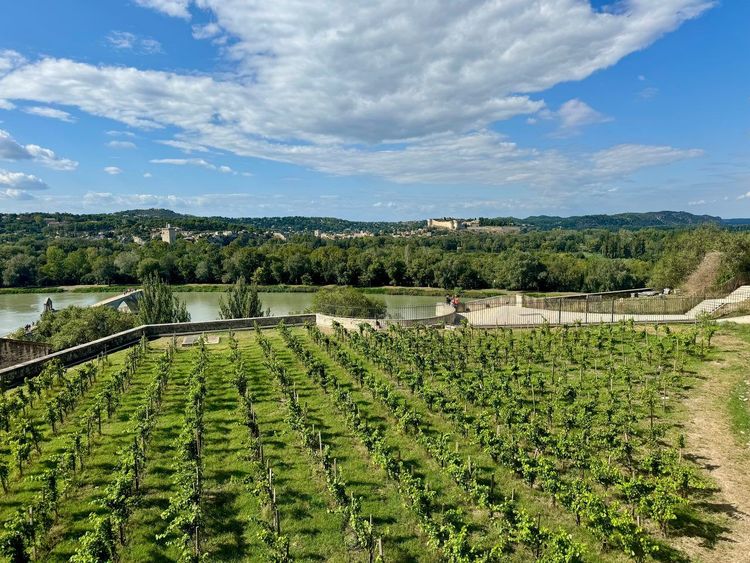
Less than ten minutes on foot from the Palais des Papes, crossing the pont Édouard-Daladier, and the scenery changes completely. The Île de la Barthelasse (Île de la Barthelasse, 84000 Avignon, rated 4.5/5 on Google based on 123 reviews) ranks among the largest cultivated river islands in Europe, with hundreds of hectares of market gardens, orchards, and meadows tucked between the two arms of the Rhône.
People come here to walk or cycle along the embankments, with the silhouette of the Palais des Papes and the ramparts as a backdrop — a viewpoint that many visitors miss simply because they do not know the island exists. Those who enjoy an impromptu swim can also take advantage of a few pebble beaches along the arms of the Rhône, though swimming is unsupervised and inadvisable when the current picks up. Local producers have farmed melons, asparagus, and strawberries here for generations, sold directly on the island or at Avignon's markets — an urban agriculture that the flood-risk zoning has shielded from property development pressure.
Riverside Guinguettes and the Art of Living by the Rhône
Come evening, the Barthelasse takes on yet another face. Several open-air riverside cafés set up along the Rhône from spring onward, with wooden tables and impromptu concerts — an atmosphere rarely associated with a Unesco World Heritage city just a few hundred meters away.
A free river shuttle connects the island to the Avignon bank for much of the year, handy for those staying in the city center who want to escape the summer heat without taking the car. You can also camp on the island: several sites offer mobile homes by the week, a popular formula in summer. The striking contrast between nature and heritage, rarely found less than a kilometer from such a dense historic center, makes for an experience that is hard to replicate elsewhere.
To extend your exploration beyond the island, discover our Ryo top 5 things to do in Avignon.
La Croisière and the Rhône Riverbanks, the Contemporary Promenade
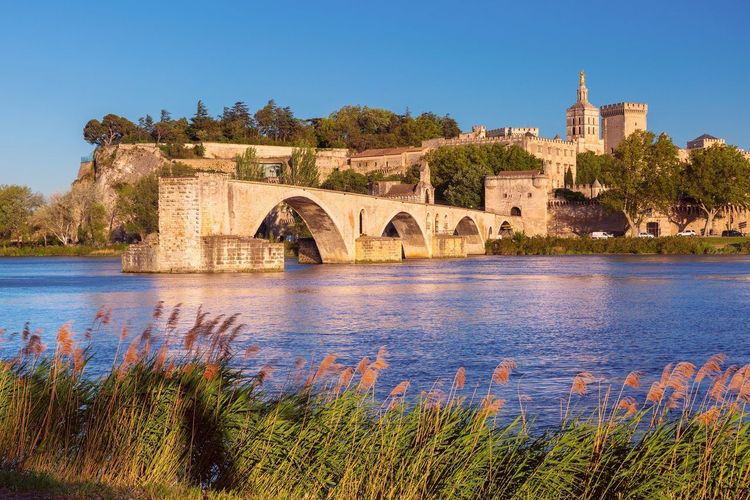
The name la Croisière does not appear on every official map, but it comes up regularly in property listings and in conversation among Avignon locals: it refers to the riverside area on the porte de l'Oulle side and the quays that have been redesigned as a promenade. Long dominated by parking and traffic, this riverfront has become more inviting thanks to the requalification of the allées de l'Oulle and the ferry landing for the shuttle to the Barthelasse.
It is a singular area within Avignon's geography: neither entirely intra-muros nor a historic suburb, but an urban fringe oriented toward the water rather than the ramparts. It features a continuous cycle path to the pont Daladier, a few recent apartment buildings with views of the Rhône, and a tranquility absent from the tourist streets. For a visitor, the appeal lies mainly in the end-of-day stroll, when the sun drops behind the fort Saint-André.
Montfavet and the Neighboring Communes, beyond the Ramparts
Montfavet, between Nurseries and the Agroparc Technopole
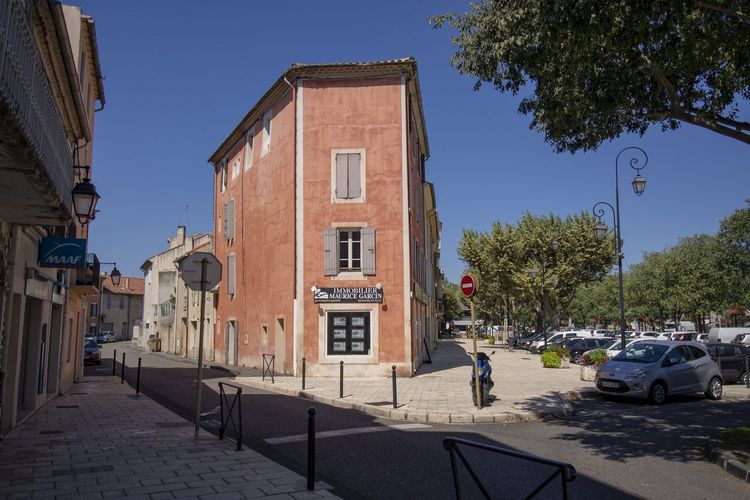
To the east of the city, Montfavet often surprises visitors, who take it for an independent municipality when it is in fact a fully-fledged neighborhood of Avignon. The village has retained its own center, its 14th-century church, and its market, while having expanded considerably through successive residential extensions.
The area has historically been home to plant nurseries and horticultural operations, an agricultural tradition that long shaped its identity. Part of the territory has since been transformed into the Agroparc technopole, today one of the main employment hubs in the greater Avignon area: agri-food companies, research laboratories, and nearby, the Avignon Université campus dedicated to agri-science programs. This dual identity, combining a rural heritage with a knowledge economy, sets Montfavet apart from the rest of Avignon's periphery.
For a resident, Montfavet is appealing for its significantly more affordable prices than the intra-muros, good bus connections to the center, and a greener living environment, with several parks and gardens inherited from its market-gardening past.
Villeneuve-lès-Avignon and Les Angles, on the Other Bank
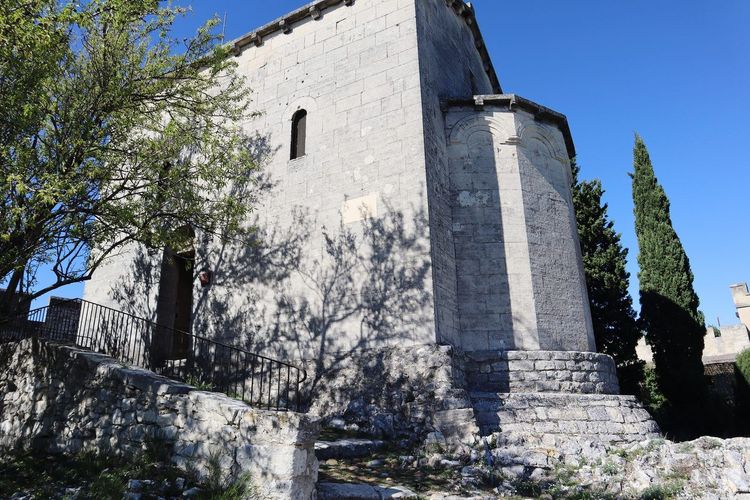
On the other side of the Rhône, two communes in the Gard department complete the Avignon geography without being part of it administratively. Villeneuve-lès-Avignon long served as the royal counterpart to the papal power established in Avignon, as witnessed by the chartreuse du Val de Bénédiction, one of the largest in France, and the fort Saint-André (Montée du Fort, 30400 Villeneuve-lès-Avignon, rated 4.4/5 on Google based on 2,571 reviews) overlooking the town from its hilltop.
Les Angles, more residential in character, plays the card of peace and proximity, a few minutes by car or bus from the historic center. Less known to tourists, the commune appeals mainly to families who work in Avignon but prefer residential neighborhoods, with direct access to the pont Édouard-Daladier and unobstructed views of the ramparts from the heights of the village. For a first look at Avignon itself, the Ryo audio-guided tour of the walled city remains an easy way to get your bearings before settling into any of these outlying communes.
What Is the Best Neighborhood to Stay in Avignon for Your Profile?
For a Short Stay or the Festival d'Avignon
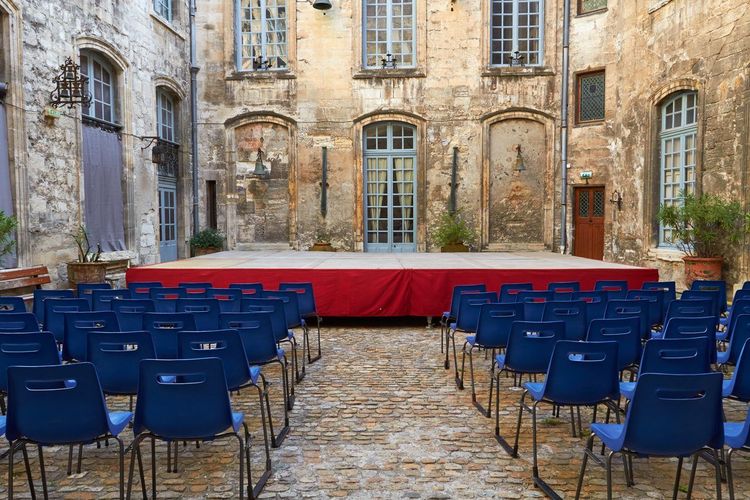
The best neighborhoods in Avignon for sleeping are not the same depending on whether you are staying two nights or two weeks. If you are coming for two or three days, or during the Festival d'Avignon in July, the intra-muros is almost the obvious choice: the Hypercentre, the Teinturiers, or the Corps Saints allow you to reach everything on foot, performances included, without depending on public transport. This is also when accommodation prices climb the most, sometimes doubling or tripling compared to the rest of the year.
To avoid the crowds while staying within walking distance of the venues, the Carmes or Vernet-Banasterie neighborhoods offer an interesting compromise: a few extra minutes on foot, and far less noise in the evening. Our Ryo article on the Festival d'Avignon details the dates and specifics of each edition to help you refine your choice.
For a Family Stay or a Quieter Trip
With children, or simply for a more relaxed stay, suburbs like Saint-Ruf offer a good balance: fifteen to twenty minutes on foot from the Palais des Papes, lower rental rates, and parking that is considerably easier than intra-muros. If you are looking for a quiet neighborhood in Avignon without straying too far, aim for Vernet-Banasterie on the intra-muros side, or Montfavet if you do not mind having a car.
The Île de la Barthelasse is an original option for families who prioritize space and nature, provided you are comfortable having a car or planning carefully around the river shuttle timetable. The island's campsites also offer mobile homes by the week, a popular formula in summer. To explore the city at a leisurely pace once you have settled in, the Ryo audio-guided tour remains the simplest companion, whichever neighborhood you choose.
Neighborhoods to Avoid or More Sensitive Areas in Avignon
The question comes up often: is there a rough neighborhood in Avignon? The reality is more nuanced than some online forums suggest. The areas classified as priority urban policy neighborhoods, around Monclar, Nord Rocade, Saint-Chamand, and la Croix des Oiseaux, do indeed record more difficult social indicators than the Avignon average: higher unemployment, lower median income, and a concentration of social housing.
That does not make them areas to avoid in any strict sense. For a visitor staying intra-muros or in the nearby suburbs, there is no reason to venture there or to worry about them: they are not tourist areas. As in any city, ordinary vigilance is enough in the evening on quiet streets in the Hypercentre and around the train station, where most of the incidents reported by the local press occur, more so than in the northern neighborhoods themselves. The local authority has been running urban renewal programs in these areas for several years, with results already visible in the built environment.
Prices and Daily Life by Neighborhood: What You Need to Know
Without going into per-square-meter price details that shift too quickly to remain accurate from one year to the next, a few underlying trends structure the Avignon property market. The intra-muros, and particularly the Hypercentre and the Palais des Papes area, consistently commands the highest prices, driven by the scarcity of historic buildings and tourist demand. Conversely, the northern neighborhoods and suburbs like La Trillade display significantly lower prices, often in the range of 30 to 40% below the center for an equivalent surface area. It is precisely in this gap that the ranking of the best neighborhoods in Avignon plays out, depending on whether you are looking for heritage or square footage.
Living in Avignon day to day also means enjoying a human-scale city: the entire intra-muros can be crossed on foot in twenty-five minutes, the Provençal climate allows for an outdoor lifestyle for a good part of the year, and the geographical position — less than an hour from Marseille, Nîmes, or Montpellier — makes it a practical base for exploring Provence. Diverse neighborhoods where generations and social backgrounds intermingle remain the norm rather than the exception, particularly in the suburbs close to the center where community life is especially active.
The rental market tightens noticeably during the Festival, with additional pressure on studios and small intra-muros apartments, a portion of which are let as tourist accommodation for a good part of the year.
Getting around between Neighborhoods: Distances and Transport
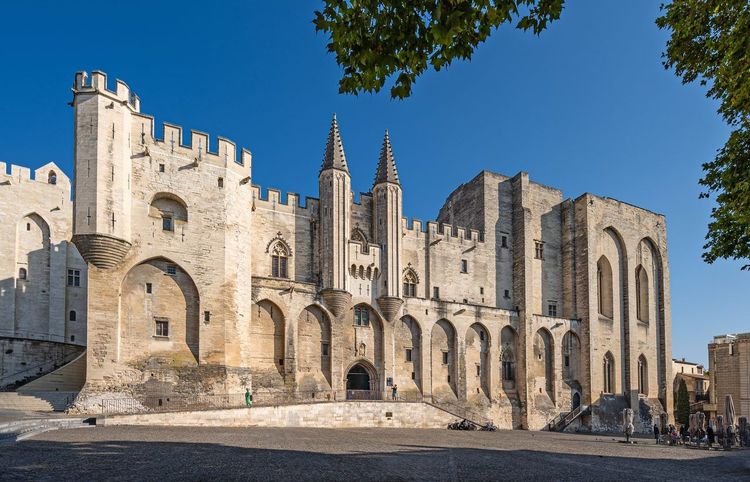
Good news for those staying intra-muros: Avignon is almost entirely walkable. It takes roughly twenty-five minutes to cross the historic center from one set of ramparts to the other, making a car largely unnecessary once you have arrived.
For the suburbs and outskirts, the Orizo bus network serves all of Avignon's neighborhoods, with frequent connections to Monclar, Saint-Chamand, and Montfavet from the gare Centre and the Hypercentre. Cycling is also expanding rapidly, with dedicated routes linking the center to the Barthelasse via the pont Édouard-Daladier. To reach the island, the river shuttle remains the most pleasant option in season, free of charge and running directly from the allées de l'Oulle.
For Villeneuve-lès-Avignon and Les Angles, allow about ten minutes by car or bus from the center, a little more at peak times on the bridges. Enough to organize your stay, or your daily life, without ever being entirely dependent on a vehicle.
FAQ
How many neighborhoods does Avignon have?
It depends on how you divide the city. The historic center can be read as about ten neighborhoods, around the Palais des Papes, the Teinturiers, the Carmes, and the Corps Saints. Adding the extra-muros suburbs such as Saint-Ruf, Monclar, and Saint-Chamand, the Île de la Barthelasse, la Croisière, and Montfavet, you arrive at around fifteen well-identified areas recognized by both residents and municipal statistics.
What are the intra-muros neighborhoods of Avignon?
The main ones are the Hypercentre around the Palais des Papes, the Carmes, Vernet and Banasterie, the Teinturiers, and the Corps Saints. All are located within the medieval ramparts, among the best preserved in Europe, which are part of the Unesco World Heritage perimeter along with the Palais des Papes and the pont Saint-Bénézet.
What is the most expensive neighborhood in Avignon?
The Hypercentre, around the Palais des Papes and the place de l'Horloge, concentrates the highest prices, both for buying and renting. This is explained by the scarcity of available historic buildings, but also by the fact that a portion of the housing stock is rented as tourist accommodation rather than on annual leases.
What is the cheapest neighborhood in Avignon?
The Monclar, Nord Rocade, and Saint-Chamand areas generally display the lowest prices, with gaps that can reach 30 to 40% compared to the intra-muros for an equivalent surface area. These neighborhoods, classified as priority urban policy areas, have benefited for several years from urban renewal programs that are progressively improving the quality of life.
Is Montfavet part of Avignon?
Yes. Despite having its own village center, church, and postal code, Montfavet is a neighborhood of the commune of Avignon, not an independent municipality. It is the largest area of the city, east of the ring road, and is home to the Agroparc technopole.
Is it better to stay intra-muros or extra-muros in Avignon?
It depends on your stay. The intra-muros suits a short visit or the Festival, with everything within walking distance. For a week or more, suburbs like Saint-Ruf or the Île de la Barthelasse offer a good balance between peace and quiet, price, and a reasonable walking or cycling distance from the historic center.
Which neighborhood should you choose for the Festival d'Avignon?
Opt for the Hypercentre, the Teinturiers, or the Corps Saints, within walking distance of the main performance venues. Book early: accommodation prices can triple during the three weeks of the festival in July.
Choosing a neighborhood in Avignon is first and foremost choosing a rhythm: the dense, mineral one of the intra-muros around the Palais des Papes, or the more relaxed one of the suburbs and the Barthelasse. None is objectively better, and the best neighborhoods in Avignon remain those that match the length of your stay, your budget, and your willingness to walk to Festival performances.
To get a sense of this diversity before booking, the best starting point is to walk along the ramparts. The Ryo audio-guided tour of Avignon connects the Hypercentre, the Carmes, and the Teinturiers in a commented loop, neighborhood by neighborhood, giving you a chance to form your own opinion before deciding where to unpack your bags.
À lire également