© Shutterstock
 Votre guide Ryo
15 Free Activities in Avignon in 2026
Avignon has a reputation for being expensive, especially in July when room prices soar during the Festival. Yet searching for "free activities Avignon" before packing your bags reserves a genuinely pleasant surprise: the city of the popes is one of the rare major French tourist cities where the bulk of its heritage can be visited without spending a euro, ramparts and panoramic gardens included. The Ryo audio guide tour of Avignon even links several of these sites in a single commented walk, with no ticketing to manage or queues to anticipate.
The Rocher des Doms towers some thirty metres above the river and offers one of the most photographed sunsets in Provence, with no paywall whatsoever. The rue des Teinturiers still has four paddle wheels turning, remnants of a now-vanished textile craft. Since April 2018, the Musées Calvet, du Petit Palais, Requien and Lapidaire no longer require any ticket, a municipal decision that places Avignon among France's most generous cities for access to culture. And far from the queues of the Palais des Papes, the Île de la Barthelasse, the largest river island in France, can be explored on foot or by bike at no cost whatsoever.
1. The Rocher des Doms and Its Panoramic Gardens
The Rocher des Doms towers above the Palais des Papes and the old town by some thirty metres, on a limestone spur that served as a refuge for Avignon's earliest inhabitants long before the city was founded. Now transformed into an English-style public garden, it offers one of the most spectacular panoramas in Provence, with no ticketing at the entrance: on one side the Rhône and its two arms encircling the Île de la Barthelasse, on the other the hills of Villeneuve-lès-Avignon and the Fort Saint-André.
The garden is laid out around a central pond populated by ducks and swans, shaded by century-old plane trees and cedars planted in the 19th century. You will mostly come across locals on a lunch break or evening joggers, far more than tourist groups: the place remains surprisingly spared from crowds outside July weekends.
An orientation table installed on the upper terrace identifies the summits visible in clear weather, as far as the Ventoux to the east and the Alpilles to the south-west. The rock is said to have housed a Roman temple before becoming, in the Middle Ages, the seat of Avignon's first episcopal palace, several centuries older than the Palais des Papes visited today.
The best time to head up remains late afternoon, an hour before sunset. The raking light then illuminates the stone of the Palais des Papes and the pont Saint-Bénézet stands out against the Rhône. Allow twenty minutes on foot from the station, mostly uphill, or ten minutes from the Place du Palais.
The garden is freely accessible year-round, from 7:30 am to 8 pm in summer, with no ticketing. A drinks kiosk opens in season, but nothing obliges you to stop there to enjoy the site. To extend the walk, Avignon's audio-guided tour starts precisely at this viewpoint and descends back into the historic centre in a commented 2h10 loop, once the app is installed.
The site is well suited to families with children: the paths are wide, a shaded area allows for picnicking, and the duck pond keeps the youngest entertained while parents enjoy the view. Do remain vigilant near the railings on the cliff side, however — the drop towards the Rhône is steep in places.
2. Avignon's Ramparts, a Complete Walk around the City
Avignon is one of the rare French cities to have preserved its entire medieval enclosure: nearly 4.3 kilometres of ramparts, punctuated by around forty towers and several monumental gates, still encircle the historic centre. Built in the 14th century under the pontificate of Innocent VI to protect the papal city, this wall can be walked in its entirety without any entrance fee.
The full circuit, following the boulevards that ring the old town, takes about an hour and a half on foot. The most pleasant stretches run alongside the Rocher des Doms garden to the north and the Porte Saint-Lazare to the east, shadier and less trafficked than the southern section, which is more bordered by road.
Several gates merit a stop: the Porte de la République, facing the station, remains the most frequented entry point; the Porte Saint-Dominique has retained an appearance fairly close to its medieval state, a legacy of the major restoration campaign carried out on the enclosure in the 19th century under the influence of Viollet-le-Duc. A partial wall walk opens on certain weekends during the European Heritage Days, a rare opportunity to walk at height on the rampart itself rather than at its feet.
The towers, once crenellated, lost their machicolations in the 19th century during the city's expansion works, but their original base, in Vaucluse stone, remains intact along virtually the entire circuit. Certain sections, particularly near the Porte Saint-Michel, run directly alongside public gardens open to all, allowing the rampart walk to be combined with a shaded rest stop.
For photography enthusiasts, the best viewpoint over the full fortifications is found from the other bank of the Rhône, on the heights of Villeneuve-lès-Avignon: from there, a single glance takes in the complete line of ramparts, the pont Saint-Bénézet and the Palais des Papes in the background.
This walk is particularly suitable for families or visitors on a brief stopover: it requires no reservation, can be done at any hour and allows you to grasp the city's geography in a single route, before diving into the lanes of the historic centre.
3. The Rue des Teinturiers and Its Paddle Wheels
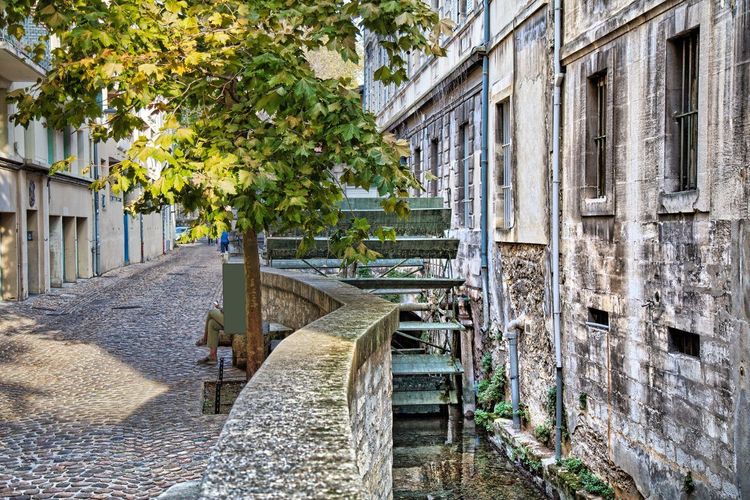
A few minutes' walk from the centre, the rue des Teinturiers runs alongside a branch of the Sorgue beneath a canopy of plane trees, between uneven cobblestones and ochre façades. Its name comes from the dyers who worked there in the 18th and 19th centuries, harnessing the current's force to power their workshops producing printed fabrics — the famous Avignon indiennes.
Four paddle wheels still survive along the canal, some still in motion. They are a reminder of the industrial intensity this street knew at its peak, when dozens of workshops produced fabrics dyed with madder, a root that yielded a deep red highly sought after across Europe.
The textile industry declined in the 19th century with the arrival of synthetic dyes, faster and cheaper to produce than natural madder. The workshops gradually closed, leaving the wheels abandoned until their partial restoration, when the municipality chose to preserve this industrial heritage rather than demolish it.
The stroll is done entirely on foot, at any hour. During the day, the atmosphere remains quiet, almost village-like, conducive to photographing the wheels and the occasionally crumbling façades that add to the charm of the place. In the evening, the street changes character: bars, art galleries and the Chêne Noir theatre attract a more local clientele than at the Place de l'Horloge, without any purchase being required simply to wander.
Unlike the nearby rue de la République, saturated with tourist shops, the rue des Teinturiers retains the identity of a living neighbourhood, frequented by Avignon locals themselves. It is also one of the rare places in the historic centre where the walk takes place in almost continuous shade, a considerable advantage during the intense heat of July and August.
You can push on to the Chapelle des Pénitents Gris at the end of the street, whose 17th-century façade is worth a look even if the interior is only open on rare occasions. Allow around twenty minutes to cover the full length of the street without rushing, longer if you stop in front of each wheel.
4. A Pay-What-You-Wish Guided Tour of the Historic Centre
Several platforms offer pay-what-you-wish guided tours in Avignon: a local guide leads a group through the lanes for about two hours, and everyone pays at the end whatever amount they feel the experience was worth. The concept, born in European capitals some fifteen years ago, has taken firm root in Provence.
The meeting point is most often in front of the Palais des Papes entrance or on the Place de l'Horloge, late morning or early afternoon. The route generally covers the Palais, the square, the Cathédrale Notre-Dame-des-Doms and the Rocher des Doms, with a few anecdotes about the Western Schism and the popes who resided in Avignon in the 14th century.
This format works well for a first visit to the city, to get your bearings and ask questions in real time. It does have its limits, however: fixed schedules, sometimes large groups in high season, and a pace set by the guide rather than your own.
The Ryo audio guide of Avignon addresses these constraints by offering a self-guided alternative: 27 audio tracks totalling 2h10 of listening, to start at the time of your choice and pause wherever you like, without depending on a group schedule or needing to calculate a tip. The commentary follows a 5.4-kilometre route covering the main stages of the historic centre, from the Rocher des Doms to the rue des Teinturiers.
In either case, no paid online booking is required to get started: the free tour is simply joined by showing up at the meeting point listed on the booking platforms, while the audio guide is downloaded directly from the app. For a group or those who enjoy human interaction, the classic guided tour remains unbeatable. For a family with young children or a flexible visiting pace, the self-guided audio tour avoids waiting between explanations.
5. The Musée Calvet, Free All Year Round
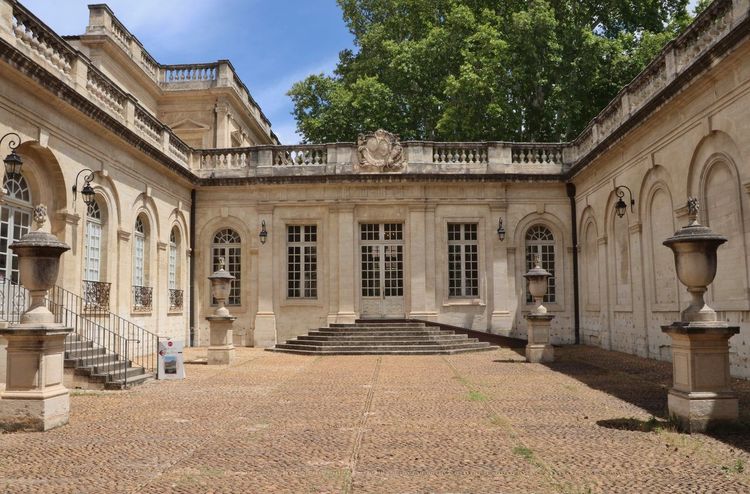
Housed in the Hôtel de Villeneuve-Martignan, an 18th-century mansion listed as a historic monument, the Musée Calvet (65 Rue Joseph Vernet, 84000 Avignon, rated 4.5/5 on Google with 1,042 reviews) takes its name from Esprit Calvet, an Avignon physician and collector who bequeathed his works to the city upon his death in 1810. Since then, the collections have grown continuously, now spanning regional archaeology, goldsmithery and above all painting from the 16th to the 20th century.
The museum holds canvases by Géricault, Manet, Vernet and Bonnard, alongside sculptures and a collection of Provençal ironwork rarely shown elsewhere. The visit unfolds over two levels arranged as an enfilade of salons, with a grand staircase and an inner courtyard that are worth the visit in themselves, even for those who have no particular interest in old painting.
Like all of Avignon's municipal museums, the Musée Calvet has been free all year round since 20 April 2018, with no age, residency or day-of-the-week requirement. Simply turn up at the entrance during opening hours, generally Wednesday to Monday from 10 am to 1 pm and 2 pm to 6 pm, closed on Tuesdays.
This permanent free admission sets Avignon apart from most major French cities, where the door opens freely only one Sunday a month. The municipal decision, driven by a desire to broaden access to culture, places the Musée Calvet among the richest painting collections in France open to all without passing through a ticket desk.
Just nearby, the Ceccano media library occupies a 14th-century cardinal's livery and holds the city's heritage collections — medieval manuscripts and early printed editions — which can be consulted on site without any particular formality. For a peaceful visit, choose a weekday morning outside school holidays: the museum remains largely unaffected by the crowds that concentrate around the Palais des Papes.
6. The Musée du Petit Palais, a Miniature Louvre in Avignon
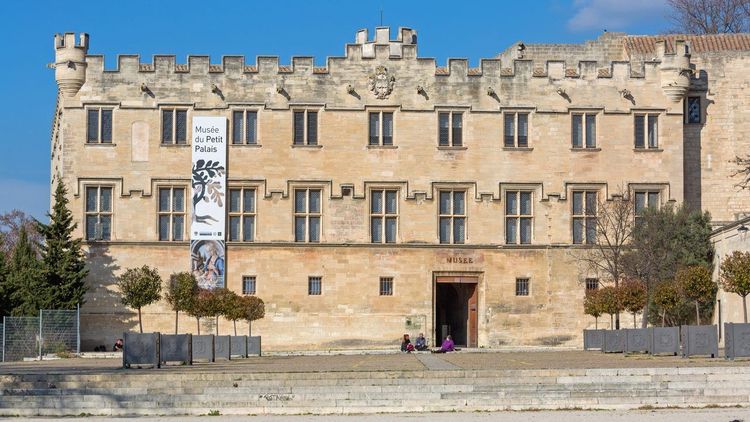
At the northern end of the Place du Palais, in the former palace of the archbishops and then of the papal legates, the Musée du Petit Palais (Place du Palais des Papes, 84000 Avignon, rated 4.3/5 on Google with 490 reviews) holds one of the most important collections of early Italian painting outside Italy. The nickname of "Louvre in Avignon" sometimes attached to it is not an exaggeration: more than 300 paintings and a hundred sculptures cover Tuscan, Umbrian and Venetian painting from the 13th to the 16th century.
The centrepiece is the Virgin and Child by Sandro Botticelli, surrounded by works by Carlo Crivelli, Vittore Carpaccio and Taddeo Gaddi. The route follows a clear chronological order, room by room, allowing visitors to follow the evolution of Italian religious painting from Byzantine rigidity to the early stirrings of the Florentine Renaissance, with no prior knowledge required to appreciate the progression.
The building itself deserves attention: remodelled in the late 15th century for Cardinal Giuliano della Rovere, the future Pope Julius II, it has retained its Gothic façade and an inner courtyard where medieval sculptural elements salvaged from other Avignon buildings demolished over the centuries are still visible.
One room is devoted to medieval Avignon sculpture, with fragments of papal tombs and Romanesque capitals from buildings that no longer exist. The large first-floor windows also offer a direct view of the Palais des Papes façade, an angle few visitors think to seek out, yet accessible without any extra charge.
Like the other municipal museums, admission is free all year round, Wednesday to Monday, generally from 10 am to 1 pm and 2 pm to 6 pm. The museum closes on Tuesdays, like the Musée Calvet, making it easy to plan a cultural day combining both collections on the same day.
Unlike the neighbouring Palais des Papes, where summer crowds sometimes mean a wait at the ticket desk, the Petit Palais remains surprisingly quiet even in July. Allow one to one and a half hours for a complete visit, longer if you linger over the Italian primitive rooms, which concentrate the bulk of the collection's interest.
The museum also organises, several times a month out of season, commented visits included in the admission — so free, since access itself requires no ticket: a good option for going deeper without adding a paid service.
7. The Muséum Requien and Its Natural History Collections
An immediate neighbour of the Musée Calvet on the rue Joseph Vernet, the Muséum Requien (67 Rue Joseph Vernet, 84000 Avignon, rated 4.4/5 on Google with 306 reviews) takes its name from Esprit Requien, an Avignon naturalist whose personal herbarium — more than 200,000 sheets — constitutes one of the largest botanical collections in France preserved outside Paris.
The exhibition rooms display collections of zoology, geology and regional palaeontology: skeletons, Vaucluse minerals, fossils found in nearby quarries, and a set of taxidermied birds typical of the Camargue and the Luberon massif. The whole remains modest in size compared to the great natural history museums of Paris or Lyon, but the density of information per square metre makes for a quick and efficient visit.
It is one of the best-suited venues for families with young children among all of Avignon's municipal museums: the display cases are at child height in several rooms, and the natural history subject matter generally captures attention more easily than a collection of old paintings. Allow thirty to forty-five minutes for a complete visit with young children.
Admission, as for all the municipal museums, is free year-round, with opening days that vary by period. A small adjacent scientific library completes the ensemble, open on request to researchers and curious visitors.
The building itself, a former 18th-century private mansion, retains vaulted rooms that contrast with the classicism of the neighbouring Musée Calvet. Consider combining both visits: they are less than fifty metres apart, allowing you to move from painting to natural sciences in a single outing without any extra travel.
8. The Musée Lapidaire, Ancient Art in a Baroque Chapel
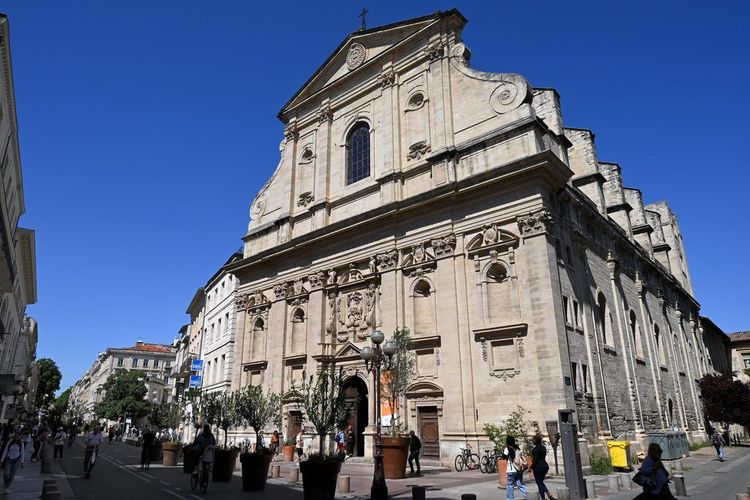
Few visitors think to push open the door of the Musée Lapidaire (27 Rue de la République, 84000 Avignon, rated 4.5/5 on Google with 648 reviews), housed in the former chapel of the Jesuit college, a 17th-century baroque building right in the heart of the rue de la République. The contrast between the religious décor — twisted columns and gilded stucco — and the ancient collections displayed inside gives this museum a rather unique character in Provence.
The rooms bring together Gaulish and Gallo-Roman sculptures discovered in the Vaucluse, including several rare pieces of pre-Roman funerary statuary, a field poorly documented in the major national museums. Sarcophagi, steles and ancient architectural fragments are laid out beneath the chapel's single nave, in a subdued light quite different from the usual museum lighting.
The chapel went through uses far removed from its original purpose after the Revolution, before being restored and entrusted with the archaeological collections of the Musée Calvet. Its interior architecture, still largely unknown to the general public, is worth a visit in itself for lovers of Provençal religious art.
The visit takes around thirty minutes, making it a good addition to a route between the rue de la République and the Musée Calvet, ten minutes' walk away. No ticket is required, as in the other municipal museums, and footfall remains very low even at the height of the tourist season — an advantage for those seeking a quiet visit.
9. The Palais du Roure, a Provençal House and Library
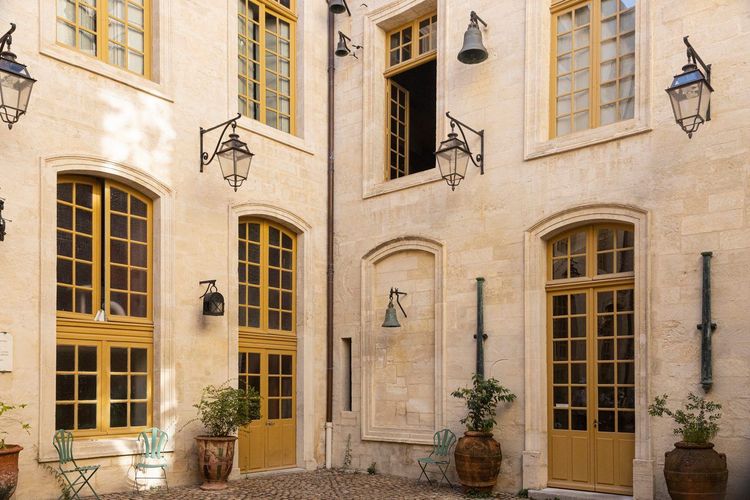
In a discreet lane just steps from the rue de la République, the Palais du Roure occupies a 15th-century private mansion acquired and restored by Jeanne de Flandreysy, who donated it to the city of Avignon. The place has been transformed into a cultural centre dedicated to the Provençal language and traditions, in the spirit of the Félibrige movement championed by Frédéric Mistral in the previous century.
The inner courtyard, with its Gothic portal adorned with sculptures and its Mediterranean vegetation, can be visited freely during opening hours, with no admission charge. The documentary collection — several thousand works on Provence — is available for on-site consultation by anyone interested in regional history.
Temporary exhibitions are regularly organised here free of charge, dedicated to vintage photography, Camargue traditions or the history of the Félibrige. The programming schedule is irregular, so it is best to check dates before making a trip specifically for an ongoing exhibition.
This place, often absent from mainstream tourist guides, mainly attracts a local audience with a passion for Provençal history. For the passing visitor, the courtyard and its late Gothic architecture are already enough to justify a ten-minute detour in the course of a stroll through the historic centre. It sits just off the route of Avignon's On y danse, on y danse ! audio-guided tour, for those who want to fold it into the same walk.
10. The Musée des Bains Pommer, an Overlooked Gem in the Centre
The Musée des Bains Pommer (Avignon, 84000 Avignon, rated 4.8/5 on Google with 333 reviews) is probably one of the least-known sites in Avignon's historic centre, to the point that many locals are unaware of its existence. It preserves a former 19th-century public bathhouse, complete with its original cubicles, tiling and décor, a rare witness to urban hygienism of that era in Provence.
The visit is limited to a few rooms, but it gives a very concrete glimpse into everyday life in 19th-century Avignon, a period far less documented than the medieval papal era. No ticket is required, but opening hours are restricted, often limited to certain time slots or subject to prior booking with the tourist office.
This site is best suited to enthusiasts of lesser-known heritage or visitors who have already seen the major municipal museums and are looking to go off the beaten track. It combines easily with a walk in the neighbouring area, without requiring a significant detour.
Before making the trip, a call or a check with the Avignon tourist office is essential: unlike the four major municipal museums, this site operates with a capacity limit and more restricted time slots, which are subject to change depending on the season.
11. The Best Free Activities in Avignon for Children
Avignon has enough free children's activities to fill several days in a row, as long as you know where to look.
Culture and history for children. The Muséum Requien, already presented above, remains the most natural starting point for young children: short format, concrete topics such as animals, minerals and fossils, accessible display cases. The Musée du Petit Palais, despite its seemingly child-unfriendly theme of religious painting, occasionally offers activity booklets at the entrance that turn the visit into a hunt for details in the paintings. The Palais des Papes offers a child-friendly visit format, but admission to the monument remains paid, unlike the municipal museums. Allow a maximum of twenty minutes of attention for children under 6 in a painting museum: it is better to do two short visits — the Requien then the Petit Palais — than one long visit that will tire them out before the end.
Nature and educational activities. The Île de la Barthelasse, five minutes from the centre via the Pont Édouard-Daladier, concentrates most of the nature activities for families: riverside walking paths, meadows for picnicking, and glimpses of market gardening still active just minutes from the historic centre. The river shuttle linking the island to the city centre adds a touch of adventure much appreciated by younger visitors when it is running, though this service is seasonal and its operating details vary from year to year. The Rocher des Doms garden, with its duck pond, rounds out this list nicely for a nature break right in the centre.
Sports and outdoor activities. The Parc Chico Mendès and several playgrounds dotted along the ramparts offer equipment open to all ages, from slides to pétanque courts, very popular with Avignon families at weekends. The ramparts themselves, with their wide pavements, are well suited to a family outing by bike or scooter, away from city-centre traffic. In summer, the banks of the Rhône near the Pont Daladier also attract families for outdoor ball games. On Wednesday afternoons, several local sports associations sometimes organise frisbee or football initiation sessions in the Parc Chico Mendès, open to visiting families — check with the tourist office depending on the time of year.
Creative and indoor activities. The Ceccano media library, housed in a former cardinal's livery a few streets from the Musée Calvet, has a children's area with picture books, comics and reading corners, accessible even without a library card for on-site use. On mistral days or in intense heat, it is a reliable and cost-free fallback. On certain Saturday mornings, reading workshops for toddlers are organised, open simply by presenting yourself at the front desk. Some city-centre shopping centres also offer occasional activities during school holidays — creative workshops or street performances — to be checked on a case-by-case basis according to the calendar.
For a full family day on zero budget, an effective combination is to start early at the Rocher des Doms before the heat sets in, move on to the Muséum Requien late morning, picnic on the Île de la Barthelasse at midday, then finish the afternoon at the Ceccano media library if the heat or the children's tiredness calls for an indoor break. This loop of free activities in Avignon requires no car journey, as all the sites can be reached on foot or with a short crossing of the Pont Daladier.
12. Events and Festivities Not to Be Missed
July concentrates the bulk of Avignon's cultural calendar, between the Festival d'Avignon and its Off programme, but not everything is paid — far from it. In the streets of the centre, Off companies multiply outdoor performances to draw the public towards their indoor shows: street theatre, dance, circus and music follow one another on the Place de l'Horloge and along the rue de la République, from morning to night, with no ticket required to enjoy these tasters. The Ryo article on the Festival d'Avignon details exactly which Off events can be caught on the fly during this period.
Beyond the Festival, the city organises its own summer programme each year, Un été à Avignon, a series of concerts, open-air cinema and family events spread across July and August in various neighbourhoods, including areas beyond the most touristy part of the historic centre. The full programme, with all dates and times, is published each spring by the city council and updated throughout the season; it is best to check the up-to-date calendar before planning an evening around a specific event, as certain dates may be cancelled in the event of a strong mistral or heat wave.
Outside the summer season, several free events punctuate the year: Provençal markets several times a week on the Place Pie and Place Carnot, Christmas festivities on the Place de l'Horloge in December with an ice rink and artisan market (access to the square and the illuminations is free; only the ice rink itself is paid), and open-door days at several cultural institutions during the European Heritage Days in September — an opportunity to push open the door of usually paid venues such as certain rooms of the Palais des Papes.
Spring brings its share of outdoor events with the flowering of the city's gardens and several Sunday flea markets on the central squares, conducive to a stroll with no obligatory spending. In autumn, the Heritage Days exceptionally open places normally closed to the public, including some private courtyards of historic mansions in the centre.
In the evening, the ramparts and the Palais des Papes benefit from a nocturnal lighting display visible from the street, a simple but effective way to round off a day of sightseeing. On certain summers, a sound and light show is projected onto the Palais façade, also open to all, but its continuation depends on the city's cultural calendar from one year to the next.
To stay up to date, keep an eye on the publications of the Avignon tourist office and the city council website, which announce events several weeks in advance. Many of these events change venue or date from one year to the next, unlike the heritage sites presented earlier, whose access remains stable year-round. If your stay does not coincide with the Festival, do not regret it too quickly: free activities in Avignon remain just as plentiful outside this period, with noticeably lower crowds at the sites already mentioned, from the Rocher des Doms to the rue des Teinturiers.
13. The Most Beautiful Day Trips around Avignon
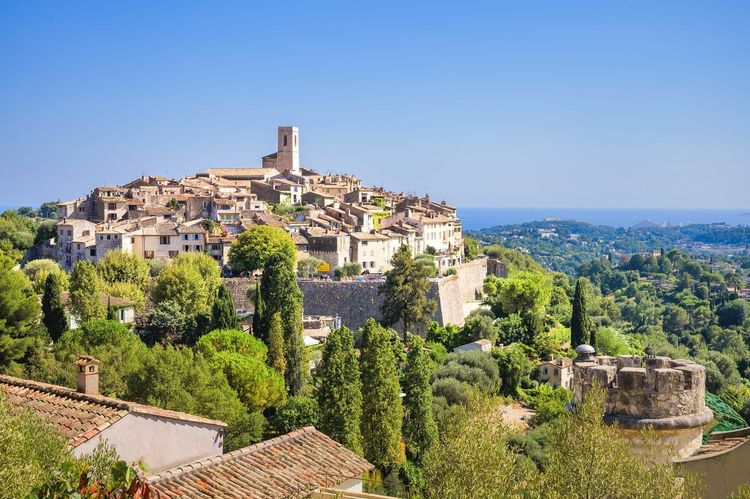
Avignon is less than an hour's drive from several of the most photographed hilltop villages in France, and visiting the villages themselves requires no ticket: only certain specific attractions, such as a local museum or the ochre trail, are paid; wandering through the lanes is free everywhere.
Gordes, 40 minutes by road, stands as the most emblematic excursion in the Luberon. The village, built in tiers on a rocky spur facing the valley, can be explored entirely on foot, with a panoramic viewpoint accessible from the road overlooking the village. The Ryo article dedicated to Gordes details the most efficient itinerary for enjoying the village without unnecessary spending.
Other Luberon villages deserve a visit in the same spirit: Roussillon and its ochre cliffs, where the trail itself is paid but the village and surrounding viewpoints remain free; Ménerbes perched on its ridge; or Lacoste, less crowded, dominated by the ruins of the Marquis de Sade's château. Our Ryo selection of the Luberon's secret villages lists several lesser-known alternatives to Gordes for those looking to avoid summer crowds.
On the other side of the Rhône, Villeneuve-lès-Avignon can be reached in about twenty minutes on foot from the Rocher des Doms via the Pont Édouard-Daladier, or in a few minutes by vehicle. The town retains a peaceful historic core, with cobbled lanes and a panorama over Avignon from the heights of the Fort Saint-André, freely accessible from outside — the interior of the fort and the charterhouse remaining paid. It is undoubtedly the easiest excursion to improvise from central Avignon, requiring no vehicle.
About thirty minutes by road, Fontaine de Vaucluse draws visitors for its namesake spring, one of the most powerful resurgences in Europe, visible from the path that runs alongside the Sorgue up to the foot of the cliff. The flow varies greatly by season: spectacular in spring after snowmelt, the spring can shrink to a mere trickle in midsummer — worth knowing before planning the visit.
Allow half a day for a return trip to a single village, or a full day to link two or three stops in a loop. Without a car, access is more limited: few direct bus routes serve the Luberon from Avignon; car rental or carpooling is preferable for this excursion.
To organise these outings without paying entry fees, opt for mornings: Provençal heat makes walking difficult after 2 pm in summer, and the most popular villages like Gordes or Roussillon see their paid car parks fill quickly after 10 am. Leaving before 9 am guarantees both more photogenic light and significantly smoother traffic on the small Luberon roads.
14. Other Must-See Spots and Walks in Avignon
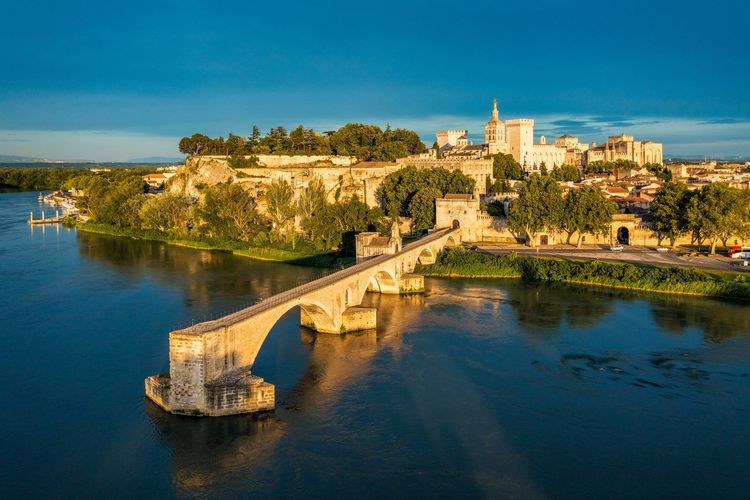
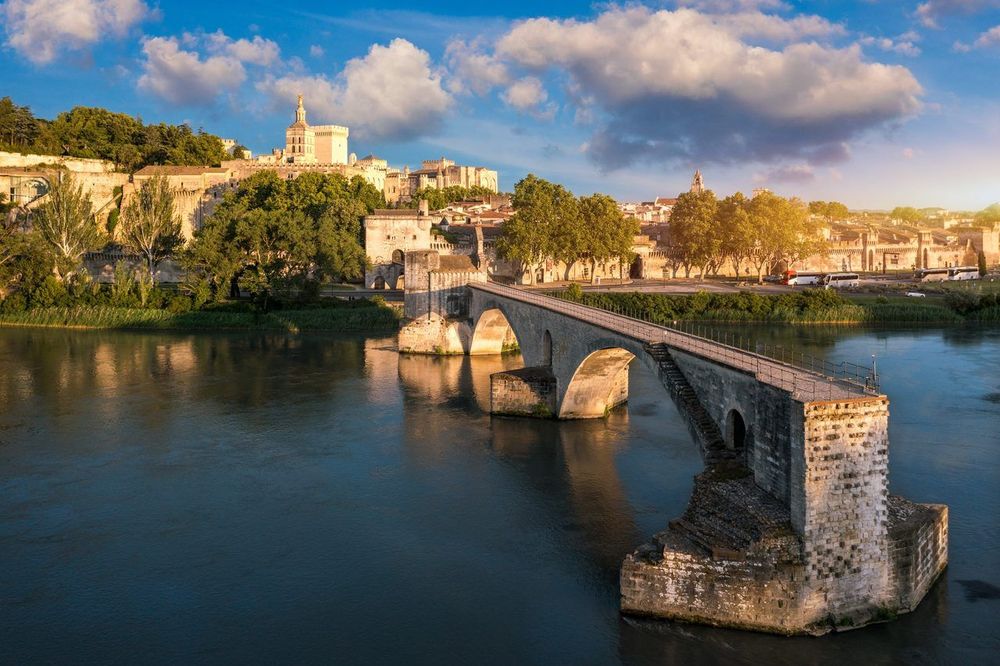
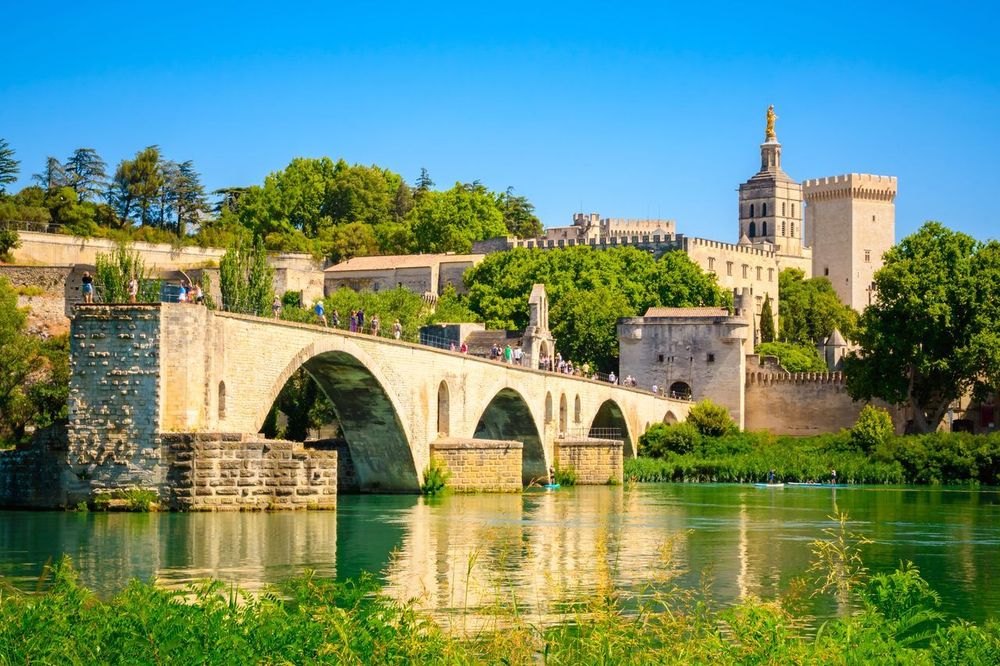
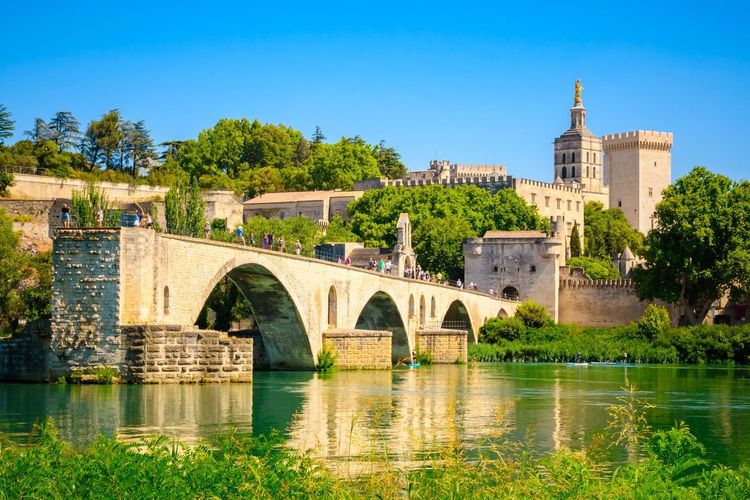
The pont Saint-Bénézet, made famous by the nursery rhyme "Sur le Pont d'Avignon", is without doubt the city's most photographed monument, and there is a common misconception about it: access onto the bridge itself, with its four remaining arches, is paid, but nothing prevents you from admiring it from outside. The best viewpoint is from the Rocher des Doms or from the Rhône quays on the Villeneuve-lès-Avignon side, which offer a complete perspective on the structure and its Chapelle Saint-Nicolas perched on one of the piers. The Ryo article on visiting the pont d'Avignon details the best viewpoints for those who do not wish to pay the entrance fee.
The Place de l'Horloge, the beating heart of the historic centre, can of course be visited at no cost: café terraces, a century-old carousel and the Town Hall façade can all be discovered while strolling, even without stopping at one of the terraces that line the square. In the evening, the square is particularly lively, with occasional street musicians adding to the atmosphere — no participation required from the audience.
The Île de la Barthelasse (Île de la Barthelasse, 84000 Avignon, rated 4.5/5 on Google with 123 reviews), already mentioned in the families section, merits a return mention for its own sake: the largest river island in France, it extends over several hundred hectares between the two arms of the Rhône, largely occupied by market gardens and a few campsites. The walking paths and cycle tracks that cross it are accessible year-round, offering a striking contrast with the density of the historic centre just a few minutes' walk away.
Do not miss the façade of the Halles d'Avignon on the Place Pie, covered by a vertical garden several dozen metres long: this unusual living wall, visible at any hour from the street, has become one of the most shared viewpoints on social media in recent years, yet does not feature in any traditional tourist guide predating the 2010s. Inside the covered market itself, access to the aisles is also free: you can wander among the stalls without any obligation to buy, a pleasant way to discover Provençal gastronomy by sight before, perhaps, returning to cook.
Other public gardens complete the list: the town hall garden, more modest than the Rocher des Doms but pleasant for a shaded break in the city centre, and the Avignon-side banks of the Rhône, laid out as a pedestrian and cycling promenade for several kilometres, from the Pont Daladier beyond the former shipyards.
These places — the bridge seen from outside, the Place de l'Horloge, the Île de la Barthelasse and the Rhône quays — are all less than twenty minutes' walk from one another, making it easy to combine them in a single afternoon without ever getting back into a vehicle. A logical itinerary starts at the Place de l'Horloge, descends to the quays and the bridge, crosses the Rhône to the Barthelasse, then returns via the Pont Daladier at the end of the day, when the raking light glorifies the Palais des Papes façade seen from the island.
15. Practical Tips for Enjoying Avignon on Zero Budget
Unlike many French cities where museums open their doors for free only on the first Sunday of the month, Avignon has removed this constraint for its municipal collections: the Musée Calvet, the Petit Palais, the Muséum Requien and the Musée Lapidaire have been free on every opening day since 20 April 2018, with no need to wait for a specific date in the calendar.
Only the Palais des Papes is exempt from this rule: it is a paid monument, managed by a body separate from the municipal museums, and its occasional free admission is rare, generally limited to a few exceptional dates such as the European Heritage Days in September. Budget accordingly if an interior visit is a priority.
For opening hours, remember a simple rule: most municipal museums close on Tuesdays and open from 10 am to 1 pm then 2 pm to 6 pm for the rest of the week, with reduced hours in winter. The Muséum Requien sometimes differs — it is best to check its opening days before making a trip specifically for it.
The best period to enjoy free activities in Avignon without crowds remains spring, between April and June, or early autumn, in September and October: temperatures are still pleasant for walking the ramparts or climbing to the Rocher des Doms, and the city escapes both the July Festival chaos and the partial closures of January and February. The Ryo route through Avignon, available year-round with no reservation required, is particularly well suited to these in-between seasons, when the raking light enhances the stone of the ramparts without the crushing summer heat.
Finally, pack good shoes: most of these visits — the ramparts, the Rocher des Doms, the municipal museums and the rue des Teinturiers — are done on foot, on sometimes uneven cobblestones. A reusable water bottle and a hat are enough to cover a good part of the day without extra spending, as public fountains remain plentiful throughout the historic centre.



FAQ
What are the free activities for children in Avignon?
For children's activities in Avignon, the Muséum Requien, the Île de la Barthelasse and the Rocher des Doms garden are among the best options. Add the Ceccano media library for hot or windy days, and the playgrounds dotted along the ramparts for an outdoor break.
Which museum is free on the first Sunday in Avignon?
No municipal museum needs to wait for the first Sunday of the month: the Musée Calvet, the Musée du Petit Palais, the Muséum Requien and the Musée Lapidaire have required no ticket since 20 April 2018, a permanent free admission policy broader than in most French cities.
What can you do for free in Avignon in one day?
Start at the Rocher des Doms in the morning, continue along the ramparts and then the rue des Teinturiers, visit two municipal museums in the afternoon, and end the evening on the Place de l'Horloge. This itinerary can be completed entirely on foot in a full day.
Is the Palais des Papes free to visit?
No, the interior visit of the Palais des Papes remains paid year-round. Free admission only occurs on an exceptional basis, during specific dates such as the European Heritage Days in September, depending on the programme announced by the city.
How do you visit Avignon on foot for free?
Two options exist without mandatory spending: a free pay-what-you-wish guided tour offered by several platforms, or a self-guided audio tour to download on your phone to explore at your own pace. The ramparts loop complements either option nicely.
What is the best time to enjoy free activities in Avignon?
Spring and early autumn offer the best balance: pleasant temperatures for walking, limited crowds at the most popular sites, and no Festival crowds in July, a period when accommodation and restaurants also charge their highest prices.
Avignon proves that a history-rich city does not need a large budget to be explored in depth. Between the ramparts, the Rocher des Doms, four municipal museums and a handful of curiosities that even some locals are unaware of, the list of free activities in Avignon is enough to fill several days of sightseeing without ever reaching for a bank card to pay an entry fee.
To organise this discovery without any itinerary missteps, the audio-guided tour of Avignon remains a good starting point: it links several of the sites presented here in a commented 2h10 loop, to be walked at your own pace, without ever depending on a guided tour schedule.
À lire également