© Shutterstock
 Votre guide Ryo
Visiting Avignon for the First Time: The Complete Guide 2026
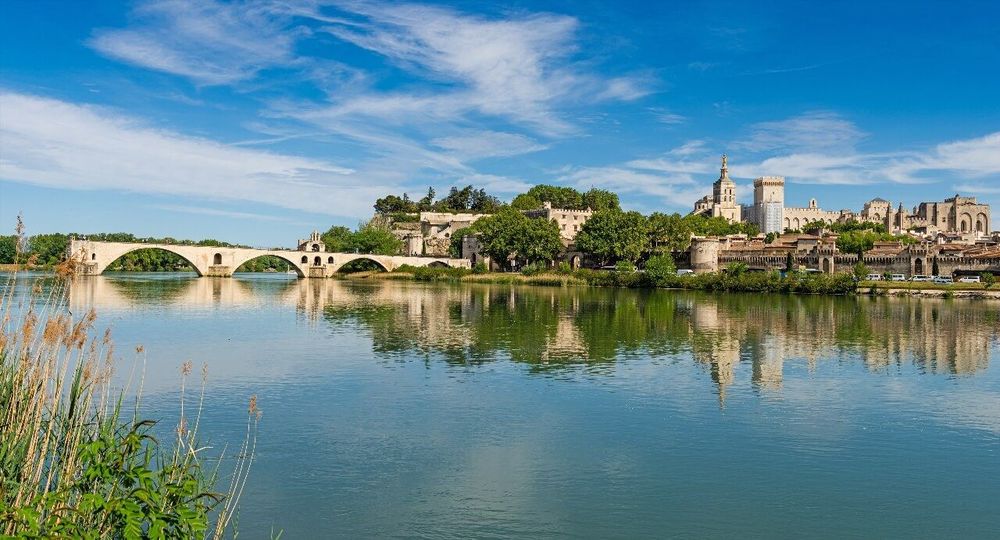
One glance up at Place du Palais, at the foot of the crenellated towers, is enough to understand why Avignon long rivaled Rome. If you plan to visit Avignon for the first time, good news: the city is quickly discovered, since its entire historic center is enclosed within a 4.3-kilometer wall of pale stone, and the essentials can be covered on foot in half a day. You will find a palace large enough to have housed seven popes and their entire court, a medieval bridge that stops abruptly in the middle of the Rhône (and a children's song that explains why), covered Halles behind an immense living wall, and an almost car-free island reachable in a few minutes by free river shuttle. To miss nothing of this wealth of heritage without spending hours planning everything, the Ryo audio-guided tour of Avignon links most of these stops in order, headphones on and with no guide to follow step by step. This guide details, place by place and then hour by hour, how to organize a first visit that misses nothing essential, with 2026 prices and tips for saving money.
The Palais des Papes, Avignon's Must-See Monument
Place du Palais and Its Surroundings
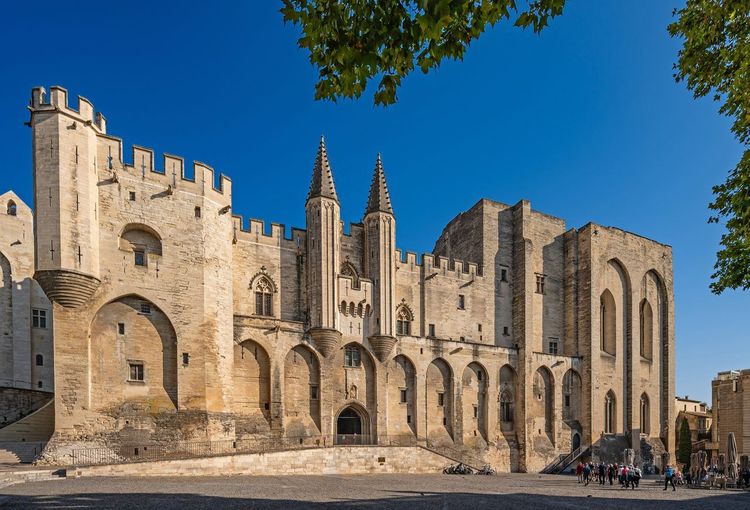
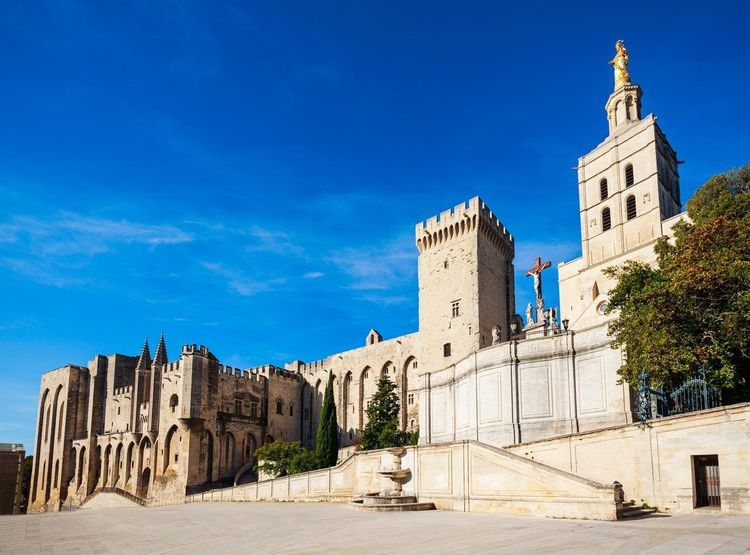
The Place du Palais opens up all at once, without warning, as you leave the narrow lanes of the center. This vast stone expanse is the setting for the largest Gothic palace in Europe: about 15,000 m² of halls, chapels and towers built in under twenty years, between 1335 and 1352, for two successive builder popes, Benedict XII and then Clement VI.
On the square itself, the Hôtel des Monnaies shows off a Baroque facade laden with dragons and garlands that contrasts with the severity of the neighboring palace: it now houses the music conservatory. At the far end of the square, the Petit Palais museum, a former residence of the archbishops, displays a remarkable collection of Italian paintings from the Middle Ages and the Renaissance, including a Madonna and Child by Botticelli. Good news for your budget: like Avignon's other municipal museums (Calvet, Lapidaire), its permanent collections are free.
For photos without the crowds, come early in the morning or late in the afternoon: the palace stone changes color with the light, and the towers cast a long shadow across the paving that nicely opens up the view toward Rocher des Doms, just behind. In July, the square becomes an open-air theater for the festival (more on that below).
Visiting the Inside of the Palais des Papes
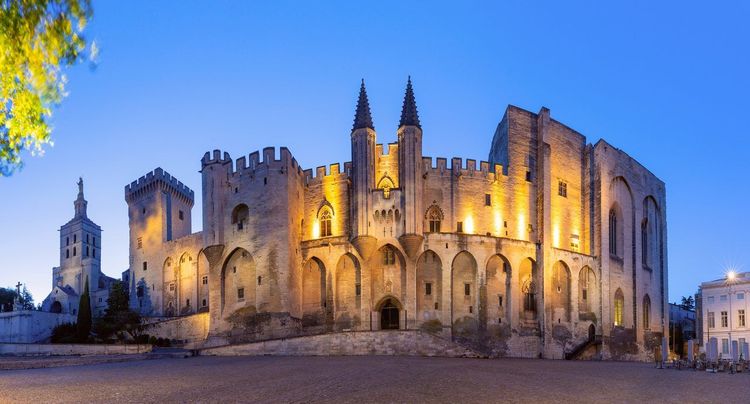
Inside, the palace is divided into two adjoining complexes: the Old Palace, more austere, built under Benedict XII in an almost monastic spirit, and Clement VI's New Palace, far more sumptuous, with its Great Chapel about fifty meters long. You pass through some twenty rooms along a signposted route: the Consistory Hall where audiences were held, the Great Chapel for papal ceremonies, and the Stag Room, decorated with hunting and fishing frescoes that were rare for the period, one of the only rooms to escape the austerity of the rest.
Passing through the palace is also a chance to discover an episode less well known than the simple list of popes: the Western Schism, between 1378 and 1417, when two and then three rival popes contested legitimacy, one sitting in Rome, another right here in Avignon. It is the common thread of the first stops of the Ryo audio guide to Avignon, which starts in front of the palace and details the daily life of the Avignon popes without you having to read signs while walking.
Allow 1.5 to 2 hours for the interior visit, with the histopad (a visitor tablet) included in the ticket. The Palace and Papal Gardens ticket costs €16 at the full rate since August 2026, free for children under 10. Buying online in advance avoids waiting in high season, especially in July when lines build up from 10 a.m. The combined Palace + Bridge ticket, at €19.50, is €2.50 cheaper than the two separate admissions: it is the choice of most first-time visitors.
Money-Saving Tip: The Avignon City Pass
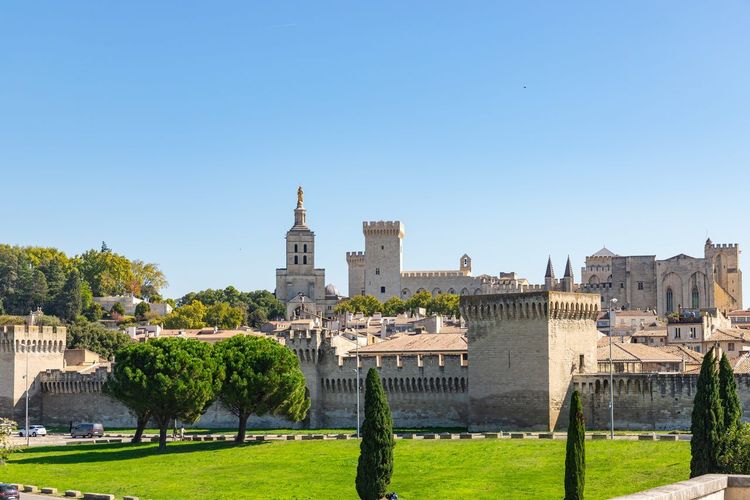
If you plan to visit several paid monuments in a row, the Avignon City Pass deserves a quick calculation. Sold for €24 for 24 hours and €32 for 48 hours, it gives access to about ten sites in Avignon and Villeneuve-lès-Avignon (Palais des Papes (Place du Palais, 84000 Avignon, rated 4.5/5 on Google from 53,811 reviews), the bridge, Collection Lambert, Musée Angladon, among others) and includes the city's public transport. It pays off as soon as you add one or two paid museums to the Palace + Bridge duo. For a stay limited to the palace and the bridge, the combined ticket is enough.
Notre-Dame des Doms Cathedral and Rocher des Doms
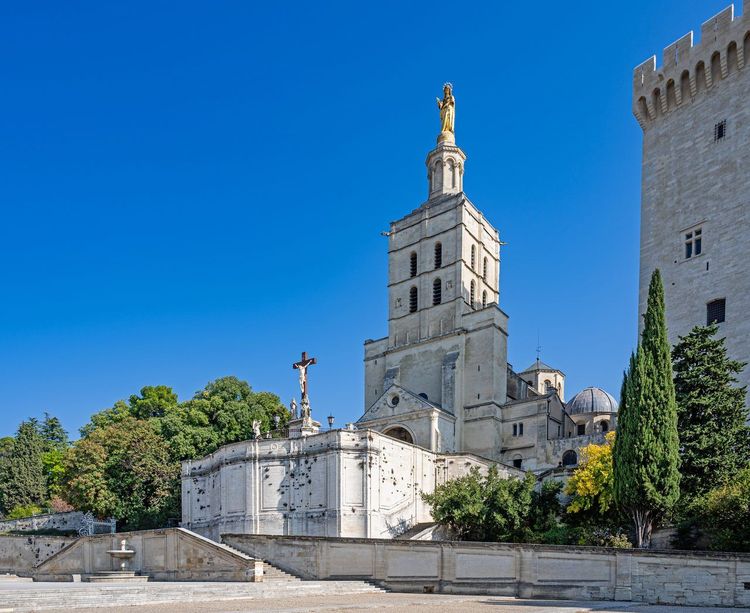
Notre-Dame des Doms Cathedral
Nestled against the flank of the palace, Notre-Dame des Doms Cathedral often goes unnoticed because the mass of the Palais des Papes captures the eye. Yet it is one of the oldest religious buildings in the city, of Romanesque origin (12th century), and since 1859 its bell tower has been topped by a gilded statue of the Virgin 4.5 meters high that you will spot from afar as you arrive along the Rhône.
The interior, more restrained than many Gothic churches in Provence, is still worth ten minutes: the 12th-century white marble episcopal throne and the tomb of Pope John XXII are found in the choir and side chapels. Admission is free, unlike the palace, making it a short and welcome break between two paid visits.
The Rocher des Doms Garden and Its Panorama over the Rhône
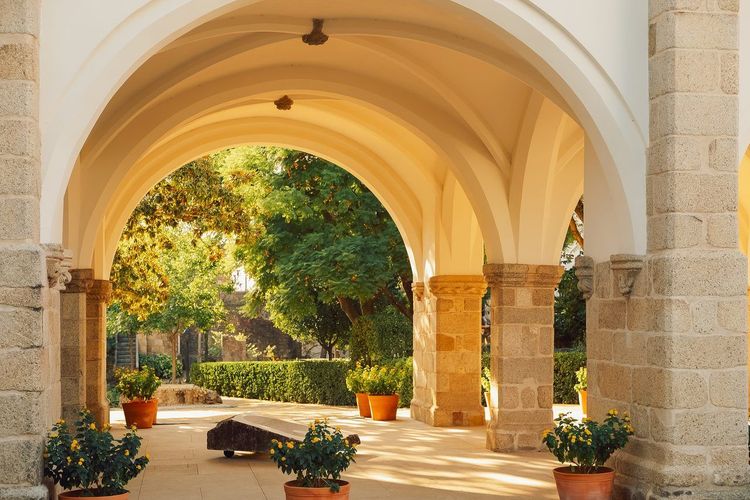
Just behind the cathedral, a ramp leads to the Rocher des Doms garden (Montée du Moulin, 84000 Avignon, rated 4.5/5 on Google from 4,023 reviews), a rocky promontory turned into a public park in the 19th century. It is arguably the most photographed viewpoint in Avignon after the bridge itself: from here, you can see the Rhône split into two arms around the island of Barthelasse, the four remaining arches of the Pont Saint-Bénezet, Fort Saint-André in Villeneuve-lès-Avignon and, on a clear day, the silhouette of Mont Ventoux on the horizon.
The garden mixes pines, cypresses and a small pond home to ducks and swans, peaceful enough to sit in the shade for twenty minutes or so, far from the bustle of Place du Palais below. Looking for a bit of nature without leaving the center? This is the easiest spot: free, open all year, and a five-minute walk from the palace. Families like to come up at the end of the day, when the heat eases and the low light gives the Rhône an almost orange tint.
Pont Saint-Bénezet, the Famous "Pont d'Avignon"
The Legend of Saint Bénezet and the Song
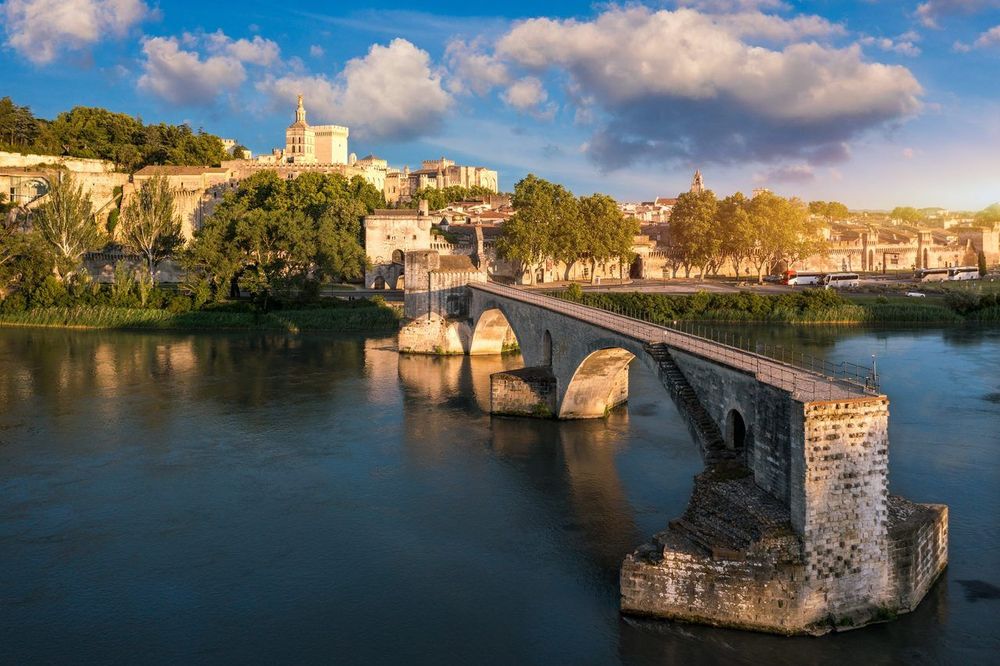
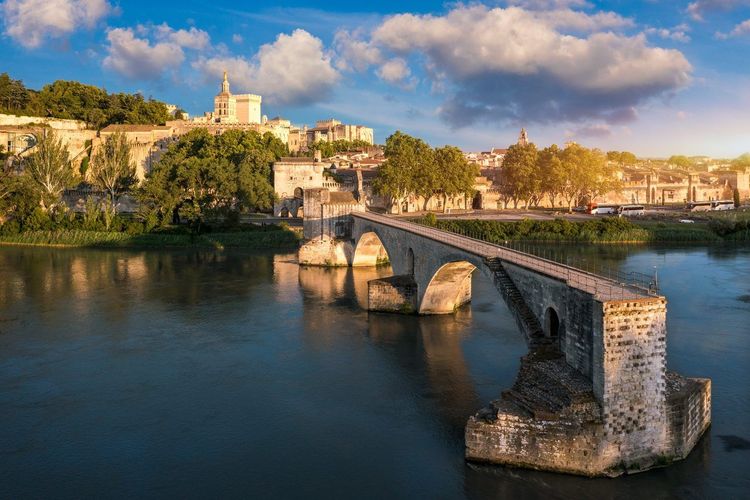
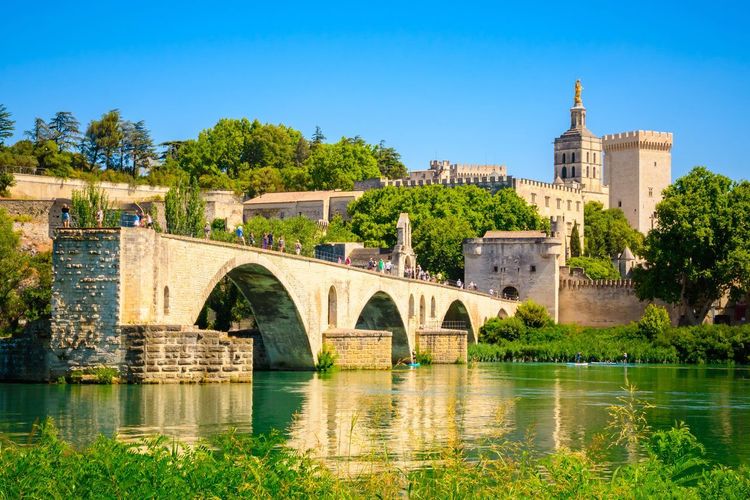
Everyone knows the nursery rhyme "Sur le pont d'Avignon, on y danse, on y danse", long before learning that a real bridge bears that name. Built from 1177, the Pont Saint-Bénezet (Rue Ferruce, 84000 Avignon, rated 4.3/5 on Google from 21,472 reviews) originally had twenty-two arches and crossed the Rhône over about 900 meters, a feat for the time on a river reputed to be untameable.
Legend has it that a young shepherd named Bénezet received a divine order to have this bridge built, and that he lifted an enormous block of stone single-handedly to convince the skeptical townspeople. Swept away several times by floods and rebuilt each time, the bridge was finally abandoned in the 17th century: only four arches remain, suspended above the water. As for the dancing in the song, it probably did not take place on the bridge, which was too narrow, but beneath it, on the island that was there at the time. Facing the bridge, the Ryo audio tour devotes a stop to precisely this story of dancing "under" the bridge, far more vivid than a simple sign.
Opening Hours, Prices and the View from the Bridge
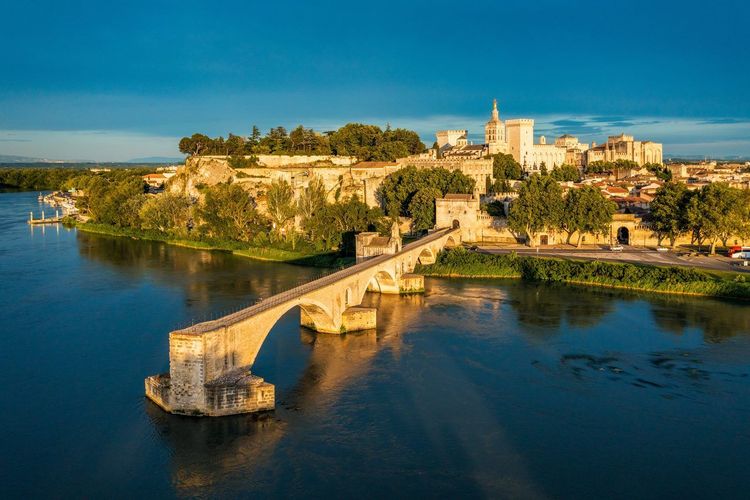
The bridge is open every day of the year: from 9 a.m. to 7 p.m. from March 1 to November 1, then from about 10 a.m. to 5 p.m. in winter (last entry 30 minutes before closing). Admission alone costs €6 at the full rate since August 1, 2026 (previously €5), audioguide included, and it is free for children under 10. The visit takes barely 20 to 30 minutes: the main appeal is the view of the ramparts, the Barthelasse and the Palais des Papes towering over the city in the background.
From the opposite bank, in Villeneuve-lès-Avignon, the photo of the bridge with the palace in the background is well worth the detour, especially at the end of the day when the light illuminates the stone.
The Ramparts and the Lanes of the Historic Center
Avignon's Ramparts, the Long Medieval Wall
Avignon is one of the few French cities to have preserved nearly all of its medieval walls: 4.3 kilometers of ramparts, 39 towers and seven main gates, raised in the 14th century under the pontificate of Innocent VI to protect a then-wealthy and therefore coveted city.
You can walk or cycle along a good part of them, especially on the Rhône side, where the view of the crenellated towers opens up unobstructed. The gates, such as Porte Saint-Lazare or Porte de l'Oulle, give a good idea of the scale of the fortification, restored in the 19th century under the direction of Viollet-le-Duc. A short section of the wall walk can be followed from Pont Saint-Bénezet, included in the ticket.
Strolling the Lanes and rue des Teinturiers
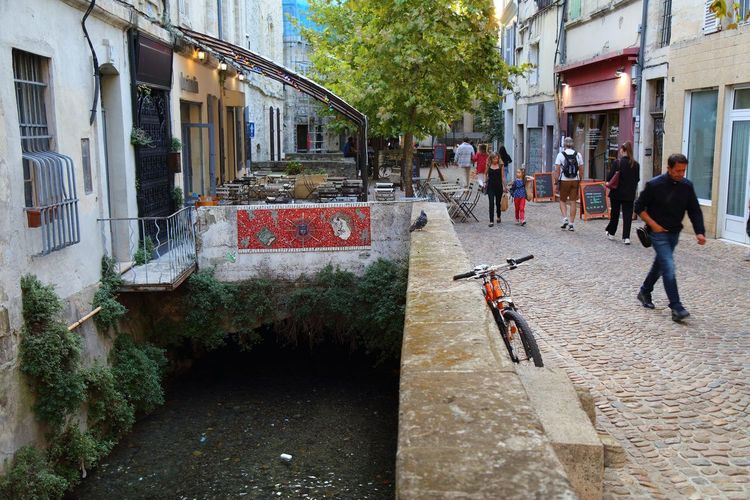
Within the walls, the historic center can be explored without a set route: the cobbled lanes around rue Saint-Agricol and rue du Vieux Sextier are home to shops, bistros and 17th-century town mansions. But it is rue des Teinturiers (84000 Avignon, rated 4.5/5 on Google from 246 reviews) that surprises the most: lined by an arm of the Sorgue, it preserves several waterwheels, remnants of the manufactories that printed and dyed indiennes, the colorful cotton fabrics in vogue in the 18th century.
The plane trees shading the street and the sound of water on the wheels make it a delightful spot in the late afternoon. The Ryo audio-guided tour slips through here between two monuments, and this is where it tells the story of these textile workshops, without you having to pull out your phone to look up the information. Art galleries and small theaters have set up shop here: slow your pace, after the density of the palace and the bridge.
Les Halles d'Avignon and the Market, the Gourmet Break
The Halles Market and Its Producers
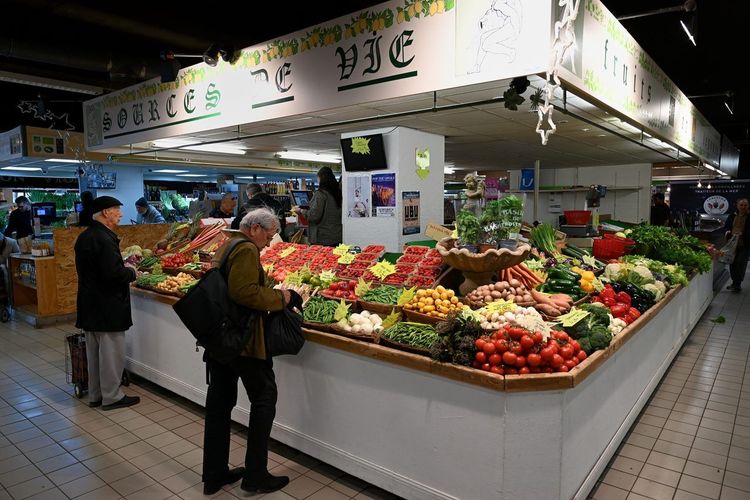
Behind their plant facade designed by Patrick Blanc, a living wall 30 meters long and 11.5 meters high, the Halles d'Avignon (Place Pie, 84000 Avignon, rated 4.3/5 on Google from 7,456 reviews) house about forty stalls open every morning except Monday, from 6 a.m. to 2 p.m. on weekdays and until 3 p.m. on weekends. Cavaillon melons in season, olives, goat cheeses, fruit from the Barthelasse: come early to rub shoulders with the regulars before the crowds.
Every Saturday from 11 a.m. to noon, an Avignon chef comes to cook in public a dish prepared with products from the Halles: a free event that locals enjoy as much as visitors.
Provençal Specialties and Souvenirs to Take Home
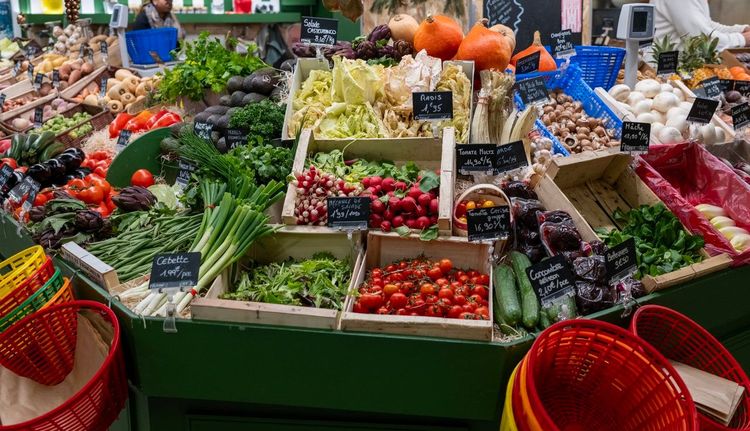
To bring home an edible souvenir rather than a fridge magnet, the Halles and the confectioners of the center remain the best bet: nougat, tapenade, calissons, and above all the papaline d'Avignon, a small chocolate thistle filled with Comtat oregano liqueur, created in 1960 by Vaucluse pastry chefs as a nod to the popes. As for wines, look for Côtes-du-Rhône and Châteauneuf-du-Pape, whose vineyards lie about twenty minutes away by road.
If you prefer to do your shopping at the end of your visit, keep in mind that the Halles close in the early afternoon.
The Island of Barthelasse, a Nature Break along the Rhône
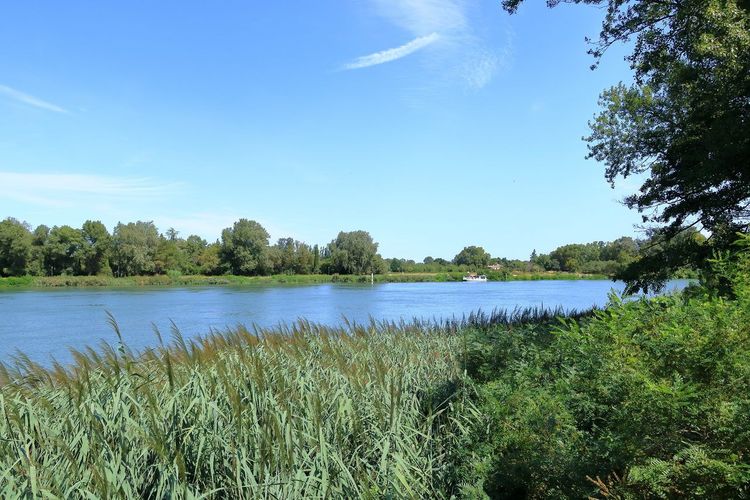
Walking or Cycling on the Island of Barthelasse
A few minutes from the historic center, the island of Barthelasse (84000 Avignon, rated 4.5/5 on Google from 131 reviews) is a complete change of pace: billed as the largest river island in Europe, it is largely devoted to orchards, market gardening and outdoor leisure.
A marked cycling loop of about 13 km winds between the fields, with the ramparts and the Palais des Papes as a backdrop. Many visitors spend an hour or two here to catch their breath after the historic center and picnic by the water (note that swimming in the Rhône is dangerous and not recommended). The bank facing the city offers the finest overall view of the bridge and the palace, especially at sunset.
The River Shuttle and the Cable Ferry
The simplest way to reach the island without a car is the free river shuttle, successor to the old cable ferry (a ferry guided by a cable stretched above the river), which departs from Quai de la Ligne, very close to Pont Saint-Bénezet. It runs from mid-February to December 31, about every fifteen minutes, carries around fifty passengers and a few bikes, and the crossing takes only a few minutes.
If you only have half a day, the island remains optional: it complements a two-day stay well, but is not essential for a quick first introduction.
A Typical Day for Visiting Avignon for the First Time
Morning: Palais des Papes and Rocher des Doms
Start at opening time, around 9 a.m., with the Palais des Papes, before the late-morning rush: allow 1.5 to 2 hours. On leaving, head up to Rocher des Doms past the cathedral, to enjoy the garden and its view while the morning light is still soft. If medieval art appeals to you, the Petit Palais (free) fits in here in 45 minutes.
Midday: Lunch Break and Pont Saint-Bénezet
Head back down to the center for lunch, in the pedestrian streets near Place de l'Horloge where terraces abound, or grab a quick bite at the Halles if you get there before 2 p.m. Then head to Pont Saint-Bénezet: half an hour is enough, after which you can hop on the river shuttle for a quick round trip to the Barthelasse.
Afternoon and Evening: Historic District and Halles
The afternoon is made for strolling the lanes, as far as rue des Teinturiers and its waterwheels, before walking along a stretch of the ramparts. At the end of the day, a drink at one of the wine bars in the center or a cruise on the Rhône is a fine way to close the visit. This typical day follows the Ryo audio tour of Avignon almost exactly: 27 audio stops, 5.4 km and about 2h10 of walking, so you miss nothing without having to plan your own itinerary. Have a full day? Add the Barthelasse late in the afternoon, or see our detailed itinerary for visiting Avignon in 1 day.
Getting to Avignon and Getting Around the City
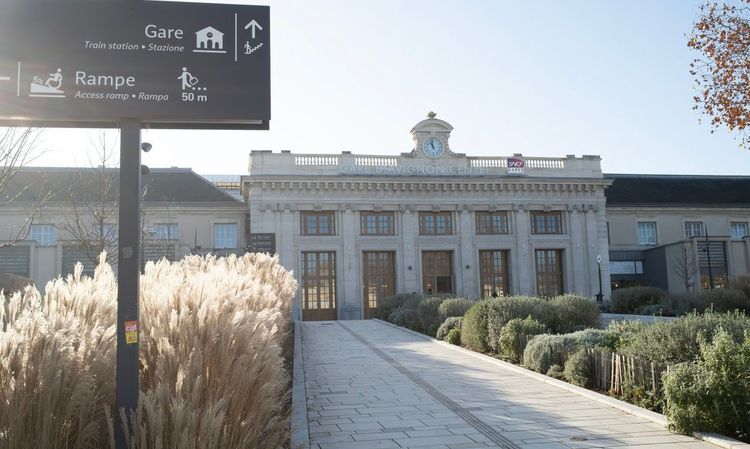
The TGV Station and Avignon's Train Stations
Avignon has two separate train stations, which often trips up first-time visitors: Avignon TGV station, about 4 km south of the historic center, and Avignon Centre station, right opposite the ramparts. From Paris, the direct TGV takes about 2h40.
Between the two, a rail shuttle nicknamed the Virgule drops you at Avignon Centre in about five minutes; a bus and taxis also provide the link. Once at Avignon Centre, the whole historic center can be explored on foot. Coming by car? Leave it in one of the free park-and-ride lots on the outskirts, connected to the center by shuttle or tram, rather than trying to drive inside the walls.
Getting Around by Bike: Vélopop' and the ViaRhôna
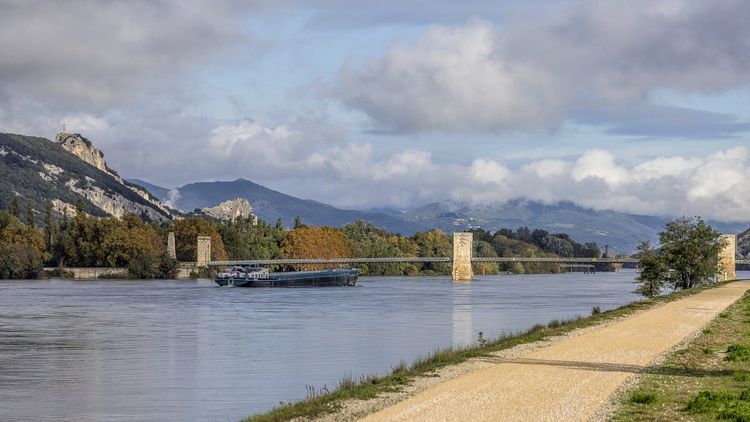
Avignon can be explored almost entirely on foot, but cycling is still pleasant for reaching the Barthelasse or riding along the ramparts. The Vélopop' bike-sharing service has stations spread within and around the walled city, with a day pass designed for visitors.
The ViaRhôna, a cycle route running along the Rhône from Lake Geneva to the Mediterranean, passes through Avignon: handy for heading to Villeneuve-lès-Avignon without a car.
Where to Stay and Eat for a First Visit
Where to Stay to Visit Avignon
For a first visit, staying inside the walls is the most practical: everything is done on foot, including the late walk back after an evening at a restaurant. The area around Place de l'Horloge and the Halles has a good share of the charming accommodations, often in renovated town mansions.
Looking for more calm? The lanes around rue des Teinturiers or the Balance district, at the foot of the palace, offer a more residential atmosphere while staying within walking distance of the essentials. Staying near the TGV station only makes sense if you are leaving early the next day. During the festival, book several months ahead, or look at Villeneuve-lès-Avignon, just across the Rhône.
Our Addresses for Eating Well
Avignon makes the most of Provençal cuisine: tapenade, aïoli, daube, Camargue bull and Côtes-du-Rhône wines appear on most menus. The terraces of Place des Corps-Saints and rue des Teinturiers offer a pleasant setting in the evening, a little less touristy than Place de l'Horloge.
For a quick break between two visits, the counters at the Halles let you put together a lunch with local products, far more affordable than a sit-down restaurant in high season. And for dessert, a handful of papalines will do the trick.
What to Do around Avignon and When to Go
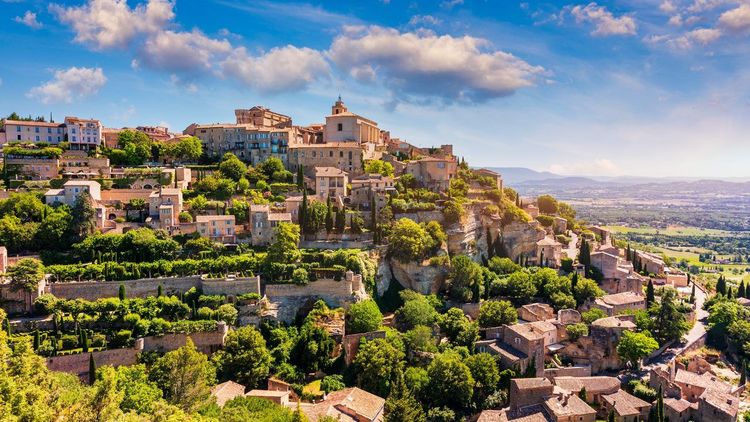
The Most Beautiful Villages of the Luberon and Vaucluse
If your stay lasts more than a day, the surroundings of Avignon are worth the detour. Gordes, perched on its rocky spur about 40 minutes away by road, remains the most photographed village in the Luberon, with its dry-stone houses tiered up the hillside. Roussillon and its ochre cliffs, or Ménerbes and its quiet lanes, round out a half-day excursion.
On the Vaucluse side, Châteauneuf-du-Pape appeals to wine lovers about twenty minutes away, while Fontaine-de-Vaucluse draws visitors for its spring, the largest in France by flow. To go deeper, the villages of the Luberon and Gordes have dedicated guides.
Without leaving the city, you can also see Avignon from the water: Les Grands Bateaux de Provence offer guided cruises and dinner cruises on the Rhône, departing from the quays at the foot of the ramparts, a relaxing way to see the bridge from another angle.
The Avignon Festival and the Best Time to Visit
Every July since 1947, the Avignon festival transforms the city: the Cour d'honneur of the Palais des Papes becomes the main stage of the In, while the Off lines up more than 1,500 shows in theaters, cellars and courtyards. The atmosphere is worth the experience, but beware: accommodations are full months in advance and queues multiply at the monuments. If you want to experience it fully, our guide to the Avignon festival will help you prepare.
Outside the festival, spring (April-June) and early autumn (September-October) offer the best compromise between pleasant weather and reasonable crowds. Summer remains hot, sometimes above 35 °C, and the mistral can blow hard in any season: pack a windbreaker even in spring.



FAQ
What are the best ideas for visiting Avignon on foot?
The historic center can be explored entirely on foot: Palais des Papes, the cathedral, Rocher des Doms, Pont Saint-Bénezet and rue des Teinturiers are all within a fifteen-minute walk of one another. For a guided thread through the city, the Ryo audio-guided tour links these stops over 5.4 km. Bring comfortable shoes, as there are plenty of cobblestones.
How much does it cost to go on the Pont d'Avignon?
Admission to Pont Saint-Bénezet costs €6 at the full rate since August 2026, audioguide included, and the combined ticket with the Palais des Papes costs €19.50. It is free for children under 10. Prices change from one season to the next, so check before you go.
What are the must-sees in Avignon?
The Palais des Papes and Pont Saint-Bénezet remain the two essentials, followed by Rocher des Doms for the view and rue des Teinturiers for the atmosphere. The ramparts, the Halles and the Petit Palais (free) round out the list without taking much time.
What can you do in Avignon in one day?
One day is enough to cover the Palais des Papes, the cathedral, Rocher des Doms, the bridge and the historic center, in the order detailed above. There is even time left for a relaxed lunch and a round trip by shuttle boat to the Barthelasse.
How many days should you allow to visit Avignon and its surroundings?
One day is enough for the historic center alone. Two to three days let you add the Barthelasse, a Luberon village such as Gordes and a few gourmet addresses without rushing.
What is the best time to visit Avignon and avoid the crowds?
Spring and early autumn offer the best balance between weather and crowds. July, during the festival, draws the most people despite a unique cultural atmosphere; August remains hot and very busy.
All in all, visiting Avignon for the first time takes less planning than it seems: a good share of the must-sees are practically within arm's reach of Place du Palais. Whether you follow the detailed itinerary above at your own pace or let our Ryo audio-guided tour lead you between the monuments, the city can be discovered stress-free in half a day, and it richly rewards those who take the time to stay a little longer.
À lire également