© Shutterstock
 Votre guide Ryo
The Most Beautiful Villages around Bayonne: 12 Basque Stops in 2026
There is something strange about Bayonne: the city holds travelers so captivated that they sometimes forget to explore what surrounds it. Yet every village around Bayonne has its own surprise, and within 55 minutes of its ramparts, the Basque Country unfolds a string of towns that rank among the most beautiful in France — some officially labeled, others simply extraordinary. Before setting out to discover them, the Ryo audio guide for Bayonne gives you the cultural and historical keys that connect these villages to one another.
Espelette is not only known for its pepper: the silhouette of its château dominates a village whose red half-timbered houses have been listed as a historic monument. Ainhoa, labeled 'Most Beautiful Village in France', is one of the most photographed stops on the Way of Compostela in the country. Saint-Jean-Pied-de-Port welcomes 35,000 pilgrims every year at the start of the Spanish route to Santiago. More discreet, La Bastide-Clairence brings together craftspeople and galleries in a Gascon bastide that stands in sharp contrast to the surrounding Basque architecture. And Guéthary, suspended between cliffs and the Atlantic, offers one of the most striking coastal panoramas on the shoreline.
This guide takes you through the twelve most remarkable villages around Bayonne, with their must-sees, the best seasons to visit, and the practical details that the usual lists overlook. For the villages of the French Basque Country as a whole, our article on the most beautiful villages of the French Basque Country completes this overview.
Espelette, World Capital of Pepper
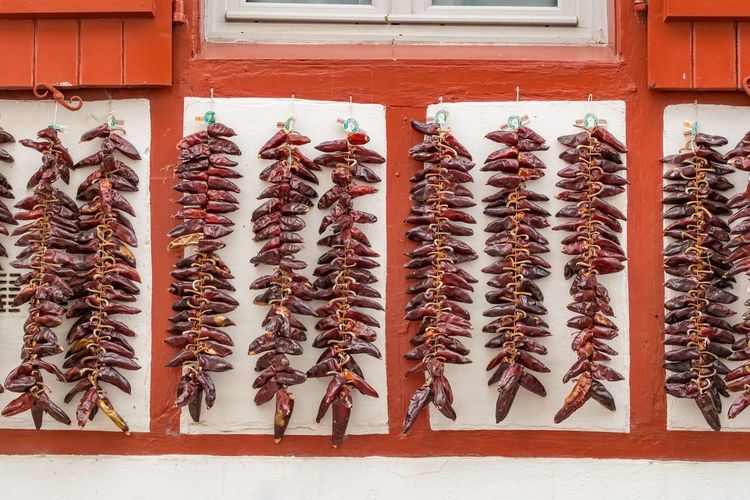
Espelette takes a little effort to reach: you have to leave the main road and climb a route that winds through meadows dotted with pottok cattle before arriving at the village. The first thing you will see are the garlands of red peppers drying on the facades of the houses — hundreds of strings that tint the village in bordeaux-crimson from September to November. This is no artificial postcard scene: it is the drying process of the Espelette AOP pepper (Village d'Espelette, 64250 Espelette, rated 4.7/5 on Google with 3.2K reviews), the only spice with a protected designation of origin in metropolitan France.
The village fits within a few streets lined with red-and-white half-timbered houses, characteristic of the Labourdine style. Walk down the main street to find the shops selling pepper in every form: powder, jam, chocolate, marinated salt. The Eztigar cooperative offers a tour of the production process, short but informative about the drying and grinding process.
The Église Saint-Étienne is worth a visit for its typically Basque architecture: three-level carved wooden galleries, a circular cemetery set against the outer wall, and a baroque altarpiece. Right next to it stands the château des barons d'Ezpeleta (11th century), remodeled over the centuries and now serving as the village town hall: its silhouette dominates the lanes and opens up views of the green hills and surrounding meadows. Allow a few minutes to walk around it from the center.
The last weekend of October marks the high point of the calendar: the Pepper Festival draws 20,000 visitors over two days for the harvest consecration ceremony. Arrive early on Saturday morning or choose another weekend if you prefer the tranquility of deserted lanes.
Espelette is 28 km from Bayonne, about 30 minutes by car via the D918. There is no direct public transport connection from Bayonne; a car is essential.
Ainhoa, a Labeled Gem on the Way of Compostela
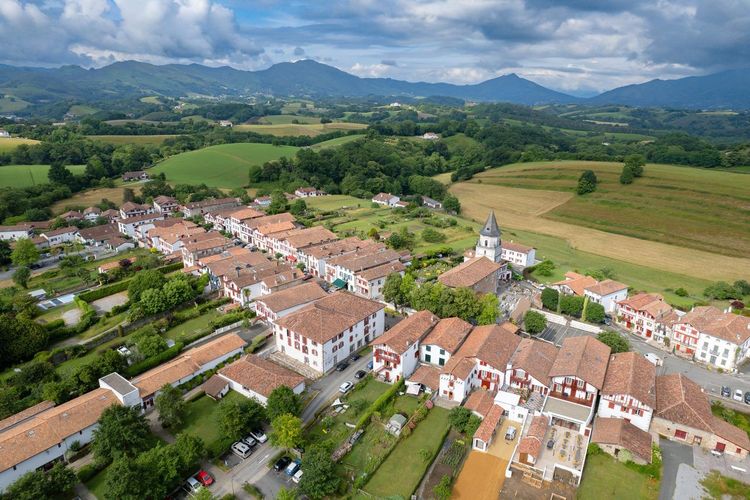
Ainhoa (Rue principale, 64250 Ainhoa, rated 4.8/5 on Google with 2.1K reviews) is the kind of village that makes you slow down. Not only because the road leading to it winds between wooded hills, but because the village itself is designed to be walked through slowly. Its main street — a long, straight thoroughfare lined with houses from the 16th and 17th centuries — earned Ainhoa its 'Most Beautiful Village in France' label, and you understand why within five minutes on foot.
The houses perfectly illustrate the Labourdine style: white facades, half-timbering painted in Basque red, stone lintels engraved with the names of the founding families. Several date from the 13th century, when Ainhoa was a bastide founded to welcome pilgrims on the Way of Compostela. This history of passage can still be read in the architecture: the buildings are wider than in neighboring Basque villages, built to accommodate traveling guests.
The Église Notre-Dame de l'Assomption anchors the village with its three-level wall belfry, a Basque characteristic. Step inside: the painted triptych and carved wooden galleries form a remarkable ensemble, rarely crowded at midday when visitors are concentrated on the main street. Across the road, the village fronton remains active for pelota basque matches — if you are visiting on a summer weekend, there is a good chance of catching a game.
3 km from Ainhoa, the hamlet of Dancharia straddles the French-Spanish border on the Nivelle river. People come here to cross on foot into Spain, to visit the shops on the other side, and to eat at the venta — those Spanish Basque roadside restaurants that serve generous portions at reasonable prices. A quick stop that pleasantly shifts the scale.
Ainhoa is 26 km from Bayonne, about 35 minutes by car. There is no parking in the village itself: park at the village entrance and walk the main street on foot in both directions.
Sare, at the Foot of La Rhune
People come to Sare for two very different reasons that complement each other perfectly. The first: the village itself, labeled 'Most Beautiful Village in France' like Ainhoa, with its houses scattered across the valley and its fronton at the heart of the town. The second: La Rhune, the most emblematic summit of the Basque Country, which peaks at 905 meters and whose departure point is 4 km from the village.
For La Rhune, the Petit Train de La Rhune remains the experience not to miss: a rack railway built in 1924 that climbs to the summit in 35 minutes. The view from the top takes in the Atlantic, the Pyrenees, and green pastures stretching as far as the eye can see. In high season (July–August), book tickets online without fail: seats sell out weeks in advance. The train runs from March to November depending on weather conditions.
The descent on foot from the summit takes about 2h30 along the marked trail. This is the best option if you want to avoid the return queue and discover the pottoks — those semi-wild ponies that have grazed freely on the mountain slopes for centuries.
In the village, the Église Saint-Martin illustrates the Basque architectural characteristics: three-level wall belfry, circular cemetery, interior galleries. The houses around the fronton form one of the best-preserved village ensembles in the region.
Sare is 26 km from Bayonne, 30 minutes by car.
Saint-Jean-Pied-de-Port, the Gateway to the Pyrenees
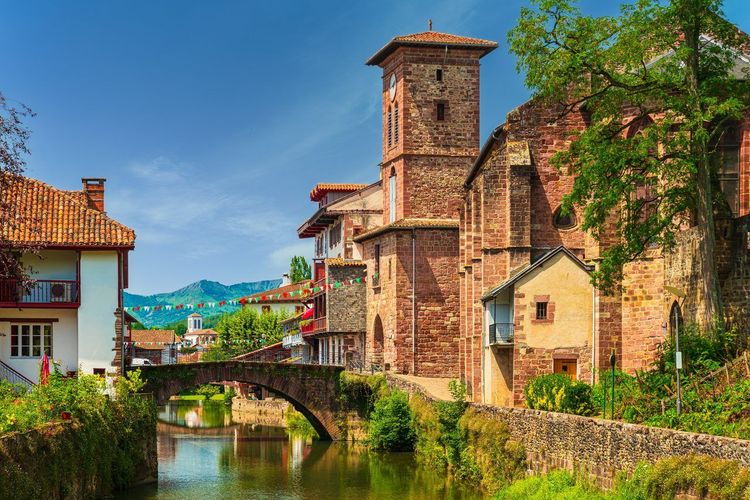
Saint-Jean-Pied-de-Port is an exception in this guide: it is not a quiet postcard village but a crossroads town in perpetual motion. 35,000 pilgrims pass through every year to begin the French route of the Way of Saint James toward Spain. In summer, the medieval town resembles a mountain airport, with groups of hikers carrying trekking poles and colorful backpacks filling every lane.
The old town is nonetheless superb. The Rue de la Citadelle, the most photographed street, slopes down toward the Porte d'Espagne, lined with red sandstone houses from the 15th and 16th centuries. The Porte Saint-Jacques (Rue de la Citadelle, 64220 Saint-Jean-Pied-de-Port, rated 4.5/5 on Google with 19 reviews) has been inscribed on the UNESCO World Heritage List since 1998 as part of the Way of Compostela. Walk through it: on the other side begins the path that leads, 800 km further on, to Santiago de Compostela.
The Vauban citadel has dominated the town since the 17th century. The climb from the Rue de la Citadelle takes 10 minutes and offers a complete panorama over the rooftops of the old town and the Pyrenean valleys. It is not open inside (military property), but its outer ramparts can be walked freely without a ticket.
The Nive river runs through the town and gives rise to one of the most pleasant walks: follow its banks to the mill at the Porte d'Espagne, then return via the lanes of the church district. The Église Notre-Dame du Bout-du-Pont closes the perspective at the bottom of the main street; its wall belfry visible from the river is one of the town's essential photographic landmarks.
Allow at least half a day, a full day if you climb to the citadel and walk along the Nive. Saint-Jean-Pied-de-Port is 54 km from Bayonne, about 55 minutes by car. The Bayonne–Saint-Jean-Pied-de-Port train line is one of the most scenic in France: 1h10 through the Nive valley, with 9 return trips per day on weekdays.
La Bastide-Clairence, a Gascon Village in Basque Country
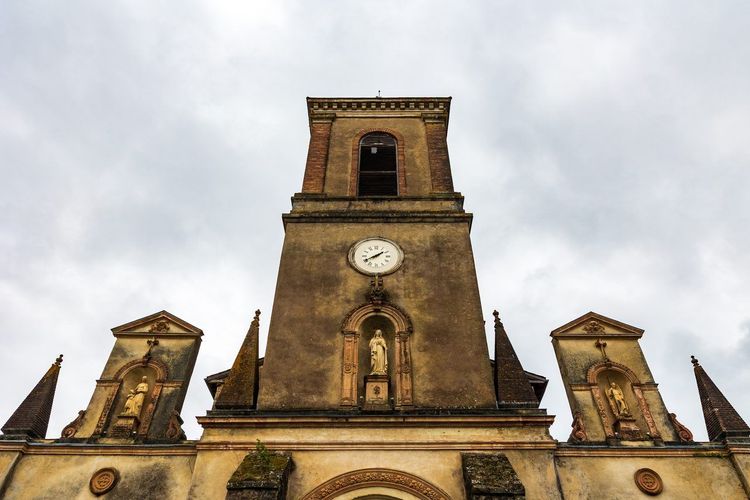
La Bastide-Clairence (Place des Arceaux, 64240 La Bastide-Clairence, rated 4.7/5 on Google with 1.4K reviews) surprises. After the half-timbered houses and Basque wall belfries, this town founded in 1312 displays a Gascon medieval bastide architecture: orthogonal streets, light sandstone houses, and covered arcades that shelter facades from the rain. The Place des Arceaux, lined with these arcades and dominated by a fortified church, is one of the most beautiful village squares in the Basque Country — and one of the least frequented by tourists passing through on the coast.
The village is labeled 'Most Beautiful Village in France' and today hosts an unusually high concentration of craftspeople and art galleries. Potters, painters, sculptors, and cabinetmakers have opened their workshop-shops on the bastide's streets. Even if you are not looking to buy, strolling between these workshops offers a different experience from the surrounding Basque villages — less tourist traffic, more time to talk with the artisans.
The Église Notre-Dame de l'Assomption deserves a stop: its austere exterior contrasts with an interior that preserves the cenotaphs of Judeo-Portuguese refugees who settled in the bastide in the 15th century. A history often overlooked by visitors, yet foundational to the village's identity.
La Bastide-Clairence is 28 km from Bayonne inland, in the direction of Hasparren. Allow 35 minutes by car.
Guéthary, between Cliffs and the Atlantic
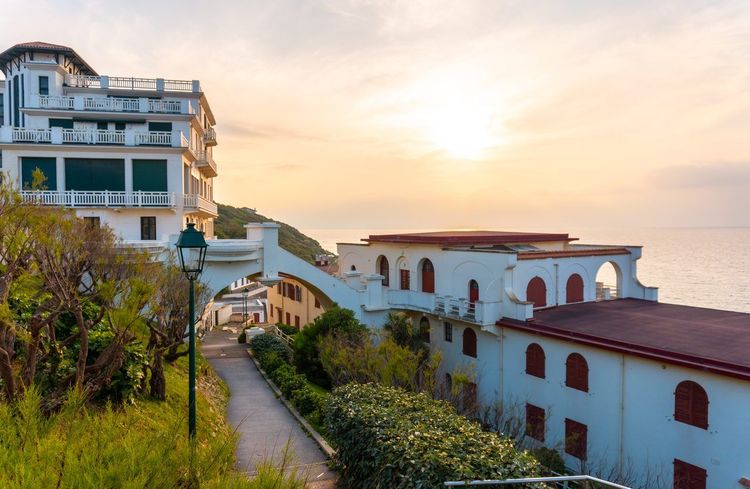
Guéthary sits on a plateau between two cliffs, facing the ocean. It is the smallest village on the French Basque coast with 1,300 inhabitants, making it one of the most unspoiled stops for those wanting to escape the bustle of Biarritz, 8 km to the north. The houses are terraced down to the cliff edges; several villas from the 1920s–1930s are a reminder that Guéthary was an upscale seaside destination even before Biarritz became famous.
The port de Guéthary (Chemin du Port, 64210 Guéthary, rated 4.5/5 on Google with 678 reviews) — more of a boat shelter, really — is the village's postcard image: a few colorful boats, a slipway, and the view of the coastline plunging toward Bidart to the south. The main beach below is popular with surfers. The Parlementia wave, visible from the coastal path to the north, is one of the most technical in the Basque Country — reserved for experienced surfers, but spectacular to watch from the cliffs.
The recommended walk: descend to the port, follow the coast northward along the coastal path for 2 km to Cenitz beach, then return through the village lanes. Allow 1h30 round trip.
Guéthary is 20 km from Bayonne, 20 minutes by car or 8 minutes by train from Biarritz (Guéthary station on the Bayonne–Hendaye line).
Bidart, between Two Cities
Bidart (Bidart, 64210 Bidart, rated 4.6/5 on Google with 1.8K reviews) has the advantageous position of being wedged between Biarritz and Saint-Jean-de-Luz without belonging to either. This in-between status has allowed it to retain an authentic village center with its church, its fronton, and its Thursday morning market, while its neighbors developed into seaside resorts. The Église Saint-Jacques de Compostelle, perched at the cliff's edge, offers one of the most spectacular views on the Basque coast over the open ocean.
The cliffs of Bidart slope down to several beaches that are far less crowded than those of Biarritz. The Plage de l'Uhabia, at the southern end of the village, is the wildest and most appreciated by local surfers looking to avoid the crowds of the Grande Plage. Back in Bayonne, Ryo's 23-stop audio-guided tour offers a more urban way to round off the day.
Bidart is 20 km from Bayonne, 20 minutes by car or 18 minutes by train (Bayonne–Hendaye line).
Saint-Jean-de-Luz, the Grande Dame of the Coast
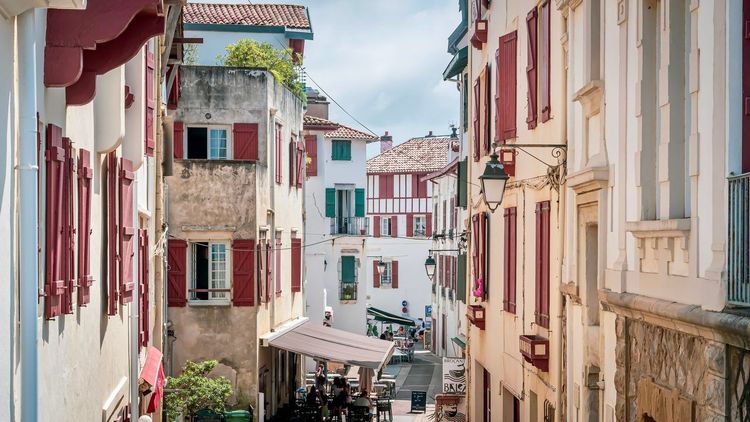
Saint-Jean-de-Luz (Place Louis XIV, 64500 Saint-Jean-de-Luz, rated 4.7/5 on Google with 12K reviews) is not technically a village — with its 13,000 permanent residents (and many more in summer), it is a town. But its pedestrian historic center, its exceptionally sheltered bay, and its preserved atmosphere give it a village-like scale and intimacy that justify its inclusion in this guide.
The Place Louis XIV is the heart of the old town: an arcaded square surrounded by Basque houses, with the Maison Louis XIV where the king stayed before his marriage in 1660 to the Infanta of Spain, Marie-Thérèse. This historic event left a lasting mark on the town. The Église Saint-Jean-Baptiste, in which this royal wedding was celebrated, has the most spectacular interior on the entire Basque coast: three levels of gilded galleries, painted wooden beams, and an imposing baroque altarpiece.
The bay of Saint-Jean-de-Luz is one of the rare naturally sheltered bays on the French Atlantic coast: two breakwaters built in the 17th century stop the swell and create a perfect family beach right in the town center. The fishing port, active year-round, directly supplies the quayside restaurants with bluefin tuna, anchovies, and bonito. The morning fish auction (open to the public on certain days) is an experience that few guides mention.
To enjoy Saint-Jean-de-Luz without the summer crowds: arrive on a weekday morning in May–June or September, when the fishermen bring in their catch early. The covered market, open every morning, is one of the best in the Basque Country for sheep's milk cheeses, marinated anchovies, and Bayonne ham.
Saint-Jean-de-Luz is 25 km from Bayonne, 20 minutes by car or 25 minutes by train (Bayonne–Hendaye line, with numerous departures per hour in summer).
Itxassou, the Village of Black Cherries
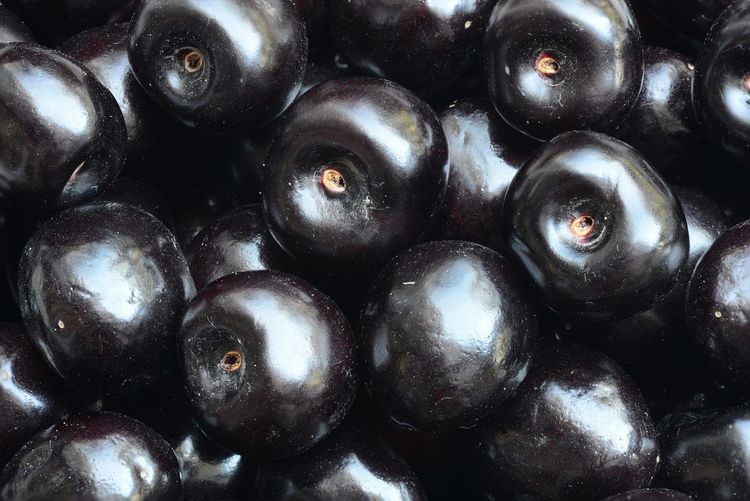
Itxassou is a village that few visitors know about and that locals guard with a certain pride. Nestled in the Nive valley at the confluence of two mountain torrents, it is known throughout the Basque Country for one specialty: the Itxassou black cherry (Itxassou, 64250 Itxassou, rated 4.5/5 on Google with 823 reviews), used in the jam that traditionally accompanies ossau-iraty, the Basque sheep's milk cheese.
The Cherry Festival, held every year in May, draws thousands of visitors over two days of tastings, pelota, and Basque dancing. Outside this event, Itxassou is extremely quiet — which is precisely its appeal. The village is made up of several hamlets scattered across the hills (Laka, Hurrupeko, Basaburua); the walk connecting these hamlets via farmland paths takes 2 hours and offers views of the lush green hills characteristic of the inland Basque Country.
Itxassou is 26 km from Bayonne, 30 minutes by car. There is no restaurant in the village center (one inn in Laka): bring a picnic if you are doing the hamlet walk.
Hasparren and Cambo-les-Bains, Inland
Two inland villages complete the exploration of the area around Bayonne.
Hasparren (Place Verdun, 64240 Hasparren, rated 4.3/5 on Google with 614 reviews) is the 'capital' of inland Labourd, a town of 6,000 inhabitants that is more functional than touristy, but with an authentically Basque atmosphere far from the coastal tourist flows. The poet Francis Jammes lived here and is buried here. The central square is dominated by a massive church that serves as a landmark throughout the valley. Hasparren is an ideal starting point for hikes in the hills of Labourd.
Cambo-les-Bains is known for the Villa Arnaga, built by Edmond Rostand (the author of Cyrano de Bergerac) between 1903 and 1906. The neo-Basque villa and its formal French gardens, open to the public from April to November, represent one of the most unexpected cultural visits in the region. Cambo-les-Bains is also an active thermal spa town since the 18th century, frequented for the treatment of respiratory ailments.
Hasparren: 25 km from Bayonne (30 min). Cambo-les-Bains: 20 km from Bayonne (25 min), accessible by bus from Bayonne on line 816.
Practical Tips for Planning Your Visits
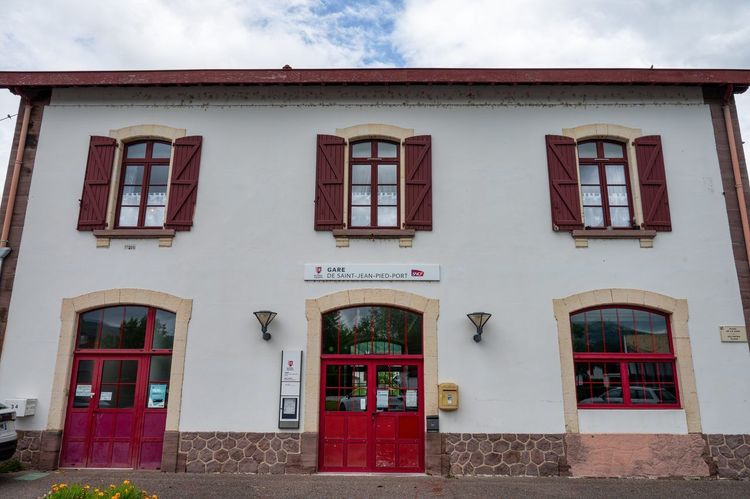
Car or train? A car remains essential for the inland villages: Espelette, Ainhoa, Sare, Itxassou, and La Bastide-Clairence are only accessible by personal vehicle from Bayonne. The coast, on the other hand, is well served: the Bayonne–Hendaye line stops at Bidart, Guéthary, Saint-Jean-de-Luz, and Hendaye with high frequencies in summer. For Saint-Jean-Pied-de-Port, the Bayonne–Saint-Jean-Pied-de-Port line (1h10 journey through the Nive valley) is an experience in itself, not merely a means of transport.
Best season. May–June and September–October offer ideal conditions: golden light, villages less saturated, and local produce at its peak. July–August guarantees fine weather but multiplies visitor numbers by three to four in labeled villages. The Espelette Pepper Festival (last weekend of October) and the Itxassou Cherry Festival (May) are worth a dedicated trip.
Accommodation. Sleeping in a village rather than in Bayonne means having the lanes to yourself early in the morning and in the evening. Ainhoa and Saint-Jean-Pied-de-Port have charming hotels in historic buildings. Saint-Jean-de-Luz offers a full range from campsites to luxury hotels. For articles on activities in Bayonne itself and its gastronomy, see our guide on what to do in the Basque Country.
To complete your exploration with the city of Bayonne itself, the Ryo audio guide for Bayonne guides you through 22 listening points in 1h20, with anecdotes about Basque culture and the history of the region.
FAQ
What are the most beautiful villages around Bayonne?
The most remarkable villages in the area are Ainhoa and Sare (both labeled 'Most Beautiful Village in France'), Espelette for its peppers and its classified Labourdine architecture, Saint-Jean-Pied-de-Port for its medieval citadel and its role on the Way of Compostela, La Bastide-Clairence for its atypical Gascon architecture, and Guéthary for its coastal panorama between cliffs and the Atlantic. Saint-Jean-de-Luz rounds out the list for its pedestrian historic center and its sheltered bay. Itxassou, less well known, is worth a detour in May for the Cherry Festival.
How much time is needed to visit these Basque villages?
A two-day weekend allows you to cover four to five villages without rushing. Allow half a day per inland village (Espelette, Ainhoa, Sare, Saint-Jean-Pied-de-Port) and 1h30 to 2h for the coastal villages (Guéthary, Bidart). A week on-site is more than enough to explore all of these Basque villages without feeling rushed. If you only have one day, the Espelette-Ainhoa-Sare triangle is the best choice.
How do you get between the villages without a car?
The coastal villages (Bidart, Guéthary, Saint-Jean-de-Luz) are accessible by train from Bayonne via the Bayonne–Hendaye line, with frequent departures. Saint-Jean-Pied-de-Port is connected to Bayonne by a tourist railway line (1h10 journey). Cambo-les-Bains is accessible by bus (line 816). The inland villages — Espelette, Ainhoa, Sare, La Bastide-Clairence, Itxassou — require a personal vehicle or a taxi. Local agencies offer organized excursions from Bayonne and Biarritz by minibus to these destinations.
What is the best time to visit these Basque villages?
May–June and September–October are the best periods. The light is superb, the villages are not yet saturated with tourists, and local produce — cherries in May, peppers in October — gives visits an extra dimension. Avoid August in the labeled villages (Ainhoa, Espelette, Sare) if crowds bother you: in high season, these villages are crossed by thousands of visitors daily. May and June are ideal for the coastal Basque Country: the ocean is still cool but the weather is stable.
Can you visit Espelette, Ainhoa, and Sare in a single day?
Yes, easily from Bayonne by car. These three villages form a triangle within a 15 km radius. Start at Espelette in the morning (allow 2h to visit), have lunch at a local restaurant, then continue to Ainhoa in the afternoon (1h30), before finishing at Sare in the late afternoon (1h for the village, not counting La Rhune). If you want to go up La Rhune, book the Petit Train early in the morning before visiting the villages, or plan La Rhune on a separate day to make the most of it.
The Next Getaway Starts in Bayonne
The villages of the Basque Country make for exceptional exploring, but every stop has a tendency to hold you longer than planned. That is a peculiarity of the Basque Country: even villages that look like a one-hour visit on paper end up extending the stay until evening. To plan your day in Bayonne before or after these excursions, our audio walking tour of Bayonne guides you through 23 listening points in 1h20, with anecdotes about Basque culture, the history of the city, and its links to the surrounding villages. Download the Ryo audio guide for Bayonne before hitting the road to the villages: it changes the way you see the whole Basque Country.
À lire également