© Shutterstock
 Votre guide Ryo
Visiting Bayonne with Family: 15 Experiences for Kids and Adults in 2026
Under the arcades of the Quai des Corsaires, little ones watch swans glide along the Nive while parents negotiate one last trip around the covered market. That is what an ordinary morning in Bayonne looks like — a city where 17th-century ramparts stand alongside the shop windows of century-old chocolatiers without ever feeling like an open-air museum. Visiting Bayonne with family is precisely that human scale: short distances between monuments, and fifteen minutes away by road, the ocean, the caves and the villages of the Basque Country ready to extend your stay for as long as you wish.
This guide starts from the historic centre, with the Sainte-Marie Cathedral and its night-time Luminiscence show, before moving on to the curiosities that truly captivate 4–12 year-olds: a tuk tuk ride through the backstreets of Petit Bayonne, a screen-free Terra Aventura treasure hunt, and chocolate-making in the city's oldest workshops. Then it's on to the surroundings: the Biarritz Aquarium and its sharks fifteen minutes away, the supervised beaches from Anglet to Hendaye, and caves that stay cool even in the height of August. To explore the city centre at your own pace, Ryo's audio guide tour of Bayonne tells 23 stories over a 1h20 walk, ideal for filling the time between monuments.
Grand Bayonne's Heritage on Foot
Grand Bayonne can be explored on foot in a morning, ramparts included. The three key monuments that structure the visit are all within less than ten minutes' walk of one another, leaving younger visitors enough time to catch their breath between stops.
Sainte-Marie Cathedral and Luminiscence Bayonne
The Sainte-Marie Cathedral of Bayonne rises with two Gothic spires 85 metres above the rooftops — a remarkable achievement for a building begun in the 13th century. Listed as a UNESCO World Heritage Site as part of the pilgrimage routes to Santiago de Compostela, it houses a Gothic cloister where little ones generally prefer running between the columns to deciphering the historical panels, which is perfectly fine too.
In the evening, the cathedral is completely transformed by Luminiscence Bayonne, an immersive show that projects sound, light and voices onto the stone walls to tell the city's history. In 2026, the experience runs from 22 May to 26 September in the evening: best scheduled at the end of the day rather than after an afternoon outing, even if it means pushing nap time back. Tickets must be booked online and July–August slots fill up fast.
Château Vieux, CIAP and Vauban Ramparts
A five-minute walk away, the Château Vieux has occupied the southern corner of Grand Bayonne since the 12th century. Still in military use, it cannot be freely visited inside, but its imposing silhouette is worth the detour, especially from the gardens that flank it.
The CIAP (Centre for the Interpretation of Architecture and Heritage), located on Rue Marengo, uses scale models and interactive terminals to show how Vauban transformed Bayonne into a fortified stronghold. Entry is free and the format is short — 30 to 40 minutes — making it well suited to younger visitors who are beginning to lose interest in traditional tours.
The Vauban ramparts and fortifications still encircle much of the old town: a walk along the glacis and bastions, accessible via several stairways, offers an open view over the rooftops and the confluence of the Nive and Adour rivers. Allow a good half-hour of easy walking, pushchair-friendly on the flat sections.
Musée Basque and the History of Bayonne
Housed in a 16th-century merchant's townhouse, the Musée Basque and the History of Bayonne (37 Quai des Corsaires, 64100 Bayonne, rated 4.5/5 on Google based on 1,612 reviews) is the largest ethnographic museum devoted to Basque culture. The rooms on pelota, maritime traditions and Labourdine architecture tend to resonate from around age 7–8; allow an hour and a half for the full visit, or 45 minutes for an express version before attention starts to wane.
Ryo's audio-guided tour of Bayonne follows an itinerary close to these three stops, with audio anecdotes about each façade encountered along the way.
Exploring Bayonne: Market, Petit Bayonne and the Botanical Garden
Beyond the monumental heritage, the city reveals itself in a different way: through the smells of the market and the colourful alleyways on the other bank of the river.
Bayonne Market and Its Covered Halls
The Bayonne market halls open every morning except Monday, with hams hanging above the stalls, still-warm Basque cakes and fish landed the previous day. Children usually end up following the stallholders who hand out samples without being asked. It is also the simplest place to put together a picnic to take to the botanical garden or along the quays.
Petit Bayonne Along the Nive
Across the Pont Marengo, Petit Bayonne unfolds with half-timbered façades painted in red and green, the traditional Basque colours. The neighbourhood is home to pelota courts, tapas bars and artisan workshops, giving it a livelier and less museum-like feel than Grand Bayonne. Bayonne au fil de l'eau, the landscaped walkway along the quays, connects both banks without ever losing sight of the Nive, with several benches to rest on and pushchair-friendly crossings.
Our article on the Petit Bayonne neighbourhood details the workshops, bars and shops worth stopping at.
Parc de la Poterne and Botanical Garden
Laid out on the former moats of the old fortifications, the Parc de la Poterne and its botanical garden offer a free green space right in the city centre, with lawns, ponds and hundreds of labelled plant species, from Japanese bamboo to medicinal herbs. It is the perfect place to unwind between two museums: the paths are shaded, benches are plentiful, and the exit leads directly onto the ramparts. The garden closes in winter, so check seasonal opening hours before making the detour.
Bayonne, Capital of Chocolate
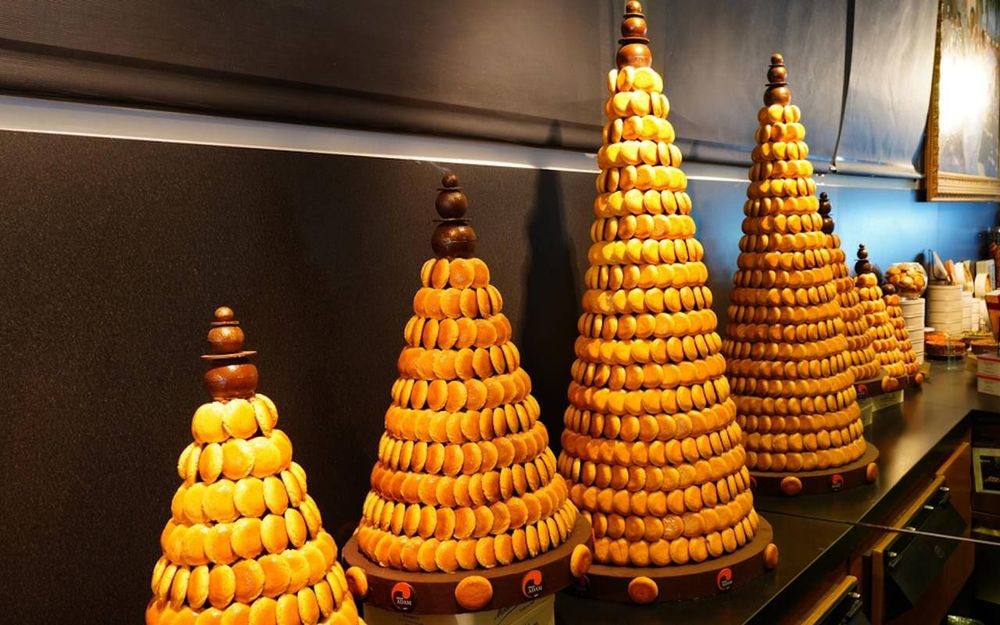
Bayonne has claimed the title of France's chocolate capital ever since Jewish artisans, expelled from Spain and Portugal in the 16th and 17th centuries, brought their craft here. Even today, around a dozen chocolatiers share the streets of the city centre, most of them lined up along the Rue Port-Neuf and its arcades.
Chocolate Museum and Gourmet Guided Tour
The chocolate workshop-museum on Allée de Gibéléou traces this history through several rooms before ending, naturally, with a tasting. The gourmet guided tour goes further: a chocolatier explains tempering and roasting to the group, and younger visitors often leave with the tablet of chocolate they moulded themselves.
Cazenave Chocolatier and Tea Room
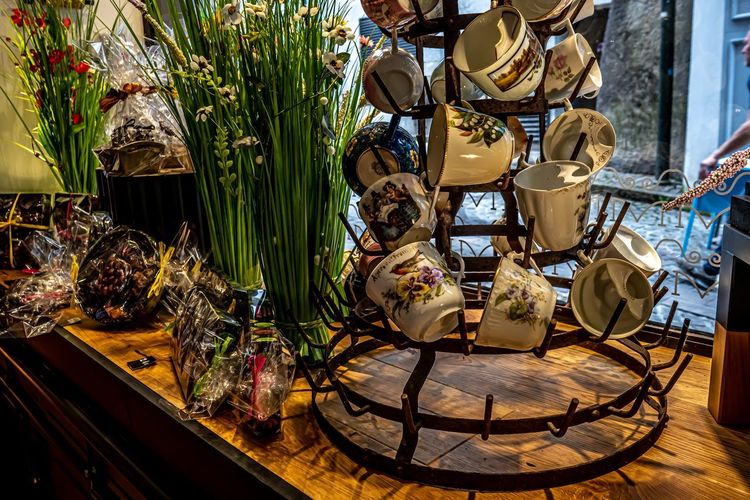
Founded in 1854, the Cazenave house still serves its famous frothy hot chocolate in porcelain pots, a house recipe kept secret for over a century and a half. The dining room and its veranda are worth the stop in their own right, especially on a rainy afternoon, with a buttered toast to dip in.
It is hard to better illustrate why Bayonne, France's chocolate capital, deserves a full half-day rather than a quick glance at a shop window. Our top 10 culinary specialities in Bayonne rounds out this list with more foodie addresses.
Unusual Activities in Bayonne: Tuk Tuk, Geocaching and Escape Rooms
Between heritage visits, Bayonne hides a few more playful activities, perfectly designed to hold the attention of those who are beginning to tire of historic façades.
Tuk Tuk Ride Through Bayonne
A tuk tuk ride through the narrow streets of the city centre completely changes your perspective on the city: the small electric vehicle squeezes into places where coaches cannot go, with a driver who shares local anecdotes as you pass through the different neighbourhoods. Allow about an hour for a tour of the three historic quarters — a format that works particularly well when legs are starting to drag.
Geocaching with Terra Aventura
The Terra Aventura geocaching programme offers a completely free treasure hunt via a mobile app, with riddles solved out in the field rather than staring at a screen. The characters from the series — the famous Poï's — guide players from clue to clue until they find a cache hidden in the urban furniture, and each completed route earns a collectible badge. Allow 1h30 to 2 hours for the Bayonne circuit, suitable from age 6–7 with an adult.
Escape Rooms and L'Hermione at Bayonne Harbour
Several escape rooms have opened in recent years in the city centre and its outskirts, with scenarios suitable from age 8 that rely more on observation than physical strength. Book ahead for busy weekends, as late-afternoon slots go first.
Another curiosity at the harbour: L'Hermione, the replica of La Fayette's frigate, is moored at Bayonne harbour on the Anglet side for a long restoration campaign. Guided tours of the shipyard are available and can be booked through the tourist office — a rare chance to get up close to a 60-metre hull being brought back to life, with shipwrights at work. Our top 6 activities to do in Bayonne lists other options of the same kind if this format appealed to you.
Cycling and Greenways Around Bayonne
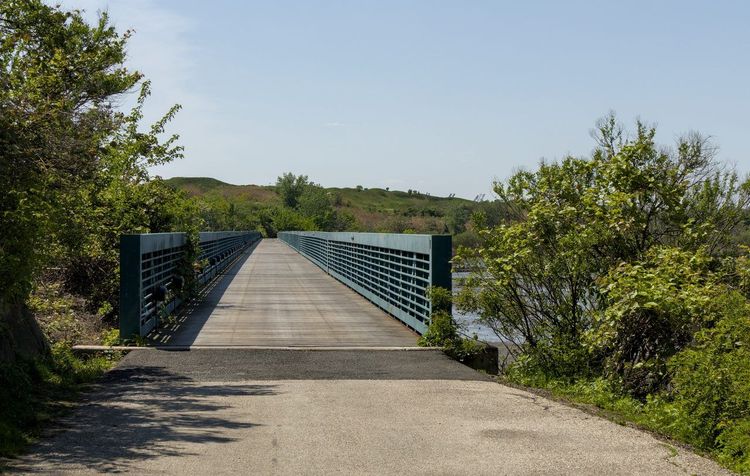
Bayonne lends itself well to cycling: distances are short and several routes avoid traffic altogether.
La Plaine d'Ansot by Bike
The Plaine d'Ansot, to the west of the city, winds flat trails through wet meadows where horses and cattle graze semi-freely, with the Maison des Barthes serving as an information and exhibition point. It makes for a perfect first route ### La Vélodyssée from Bayonne to Biarritz
The Vélodyssée, the French section of EuroVelo 1, connects Bayonne to Biarritz over roughly ten kilometres, mostly on dedicated cycle paths. Allow 45 minutes to an hour at a leisurely pace, with several vantage points over the ocean to justify photo stops, and the option of arriving directly on the Grande Plage.
The Greenway from Bayonne to Ustaritz
Built on a former railway corridor, the greenway from Bayonne to Ustaritz stretches for around fifteen kilometres, flat and shaded for much of the route. It suits longer outings without any elevation gain, with picnic areas along the way and the option of returning by train from Ustaritz if legs give out.
Day Trip to Biarritz: Aquarium and Cité de l'Océan
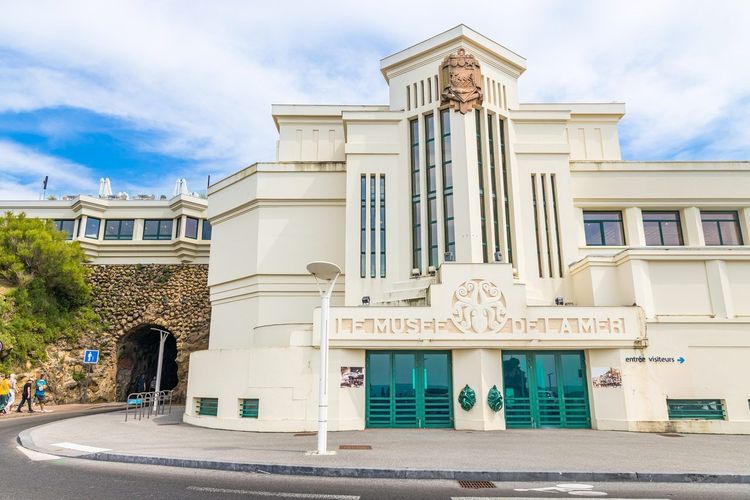
Fifteen minutes away by road, Biarritz naturally complements a stay in Bayonne, especially on rainy days.
Biarritz Aquarium
The Biarritz Aquarium, set opposite the Rocher de la Vierge, displays sharks, seals and tropical fish in a 1930s Art Deco building. The touch pool where you can stroke rays and small dogfish remains the young audience's favourite moment, closely followed by seal feeding on the terrace, which takes place twice a day at fixed times.
Cité de l'Océan
A little further south, the Cité de l'Océan (1 Avenue de la Plage, 64200 Biarritz, rated 4/5 on Google based on 5,583 reviews) offers a more scientific and immersive approach: a surf simulator, 3D films, and workshops on how waves and tsunamis form. Allow 1h30 to 2 hours; a format that works from around age 6, and a combined ticket with the aquarium helps cut costs when doing both.
Our guide to discovering Biarritz with young children covers the rest of the city if you plan to spend a full day there rather than just a quick stop.
The Most Beautiful Beaches of the Basque Country
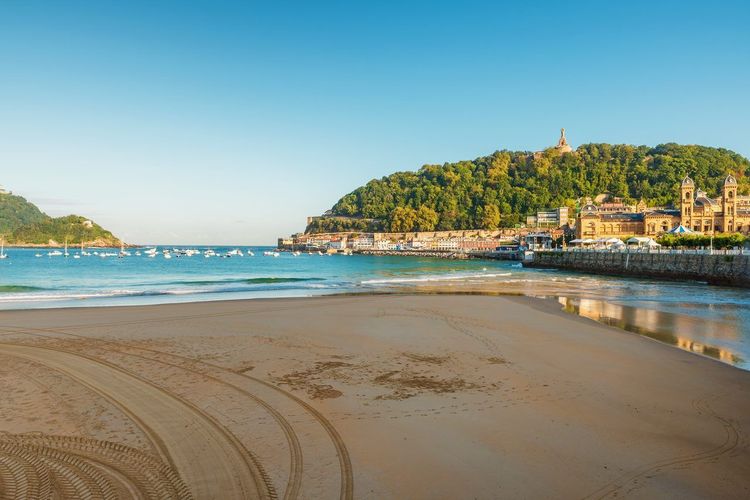
The Basque coastline offers enough variety to find the right beach for every age group.
Anglet and Its Supervised Beaches
Anglet lines up around ten beaches along approximately 4.5 km of sand, from the Chambre d'Amour to the Sables d'Or, all supervised during the summer season. Lifeguard posts are numerous and closely spaced — a reassuring factor with very young children — and the seafront is bordered by a pushchair-friendly promenade.
Saint-Jean-de-Luz, the Sheltered Bay
Saint-Jean-de-Luz benefits from a bay enclosed by three breakwaters that break the Atlantic swell: the water remains calm and shallow over a wide strip, exactly what parents of beginner swimmers are looking for. The beach is right alongside the town centre, so ice cream and toilets are just steps away.
Hendaye and Saint-Pée-sur-Nivelle, Safe Bathing Options
Hendaye stretches over more than 3 km of fine sand — the longest beach on the Basque coast — with a gentle slope that puts parents at ease. For a completely wave-free option, the lake beach at Saint-Pée-sur-Nivelle is the best choice: flat water, shaded areas, supervised swimming in summer and play equipment nearby — ideal for children under 6.
Wildlife Parks and Nature Immersion
For those who prefer observing wildlife to rushing around a theme park, several nature sites are well worth the detour.
Izadia Ecological Park in Anglet
The Izadia ecological park in Anglet protects around fifteen hectares of dunes and wetlands crossed by wooden boardwalks. Free entry, a park house with exhibitions, bird observation hides, and a good chance of spotting herons or dragonflies depending on the season. The full circuit can be completed in an hour without any difficulty.
Etxola Wildlife Park
The Etxola wildlife park in Ahetze operates as an educational farm: ponies, goats, rabbits and poultry to feed directly, play areas for toddlers and a snack bar on site. A short format — one to two hours — that leaves a lasting impression on children under 6.
Rabbit Forest of Itxassou
In Itxassou, also known for its black cherries, the Rabbit Forest (64250 Itxassou, rated 4.2/5 on Google based on 340 reviews) offers an easy walk where you regularly come across free-roaming rabbits along the path, not far from the Pas de Roland site. An hour's walk is enough for the loop, and the shade of the oak trees makes the outing bearable even in August.
Adventure Parks and Thrills
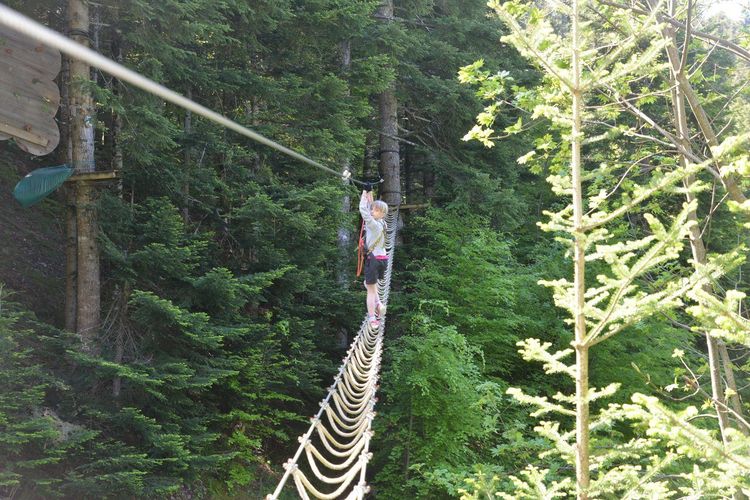
For older children, or those craving measured adrenaline, three venues cover most of the outdoor offering in the Basque Country.
Oihana, the Largest Adventure Park in the Basque Country
Oihana, in Saint-Pée-sur-Nivelle, claims the title of the region's largest adventure park, with graded treetop courses ranging from mini-routes accessible to toddlers to zip lines reserved for adults. The variety of levels means an entire group of siblings can climb in the same place without anyone getting bored or frightened. Plan for a half-day and bring closed-toe shoes.
Via Ferrata of the Baztan Rocks
The via ferrata of the Baztan rocks, on the Navarrese side, offers cable-and-rung-assisted climbing on a spectacular rock face. Some shorter, less exposed routes are suitable for teenagers accompanied by an instructor or experienced adult; harness and lanyards are mandatory.
Wow Parc d'Urrugne and Towable Buoys
The Wow Parc d'Urrugne (Route de Socoa, 64122 Urrugne, rated 4.3/5 on Google based on 1,230 reviews) combines inflatable water structures with greater thrills from its towable buoys, pulled at speed behind a boat. Bring a wetsuit even in summer — the lake water stays cold — and a swimming test is required before accessing the water course.
Surfing and Water Sports
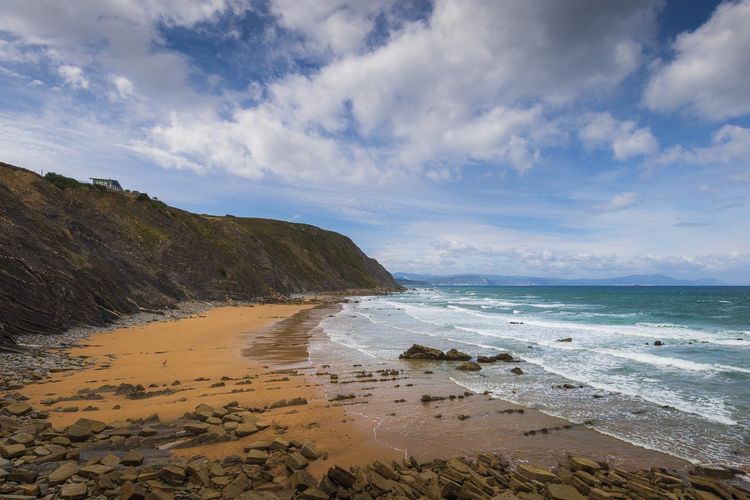
It is impossible to visit the Basque Country without at least trying the activity that earned it its international reputation.
Beginner Surf Lessons
Surfing in the Basque Country is available from age 7–8 at most accredited schools in Anglet, Biarritz or Hendaye, with foam boards sized to each participant. A two-hour discovery session is usually enough to stand up for a few seconds on the white water, which remains the main goal of the first lesson. Schools often offer group discounts from three participants — handy when the whole family signs up.
Canoeing, Canoe Rafting and White-Water Rafting
On the Nive and the Nivelle, canoeing, canoe rafting, white-water rafting and canyoning cover all levels, from gentle two-hour summer floats to more technical runs after heavy rainfall. Instructors adapt the format and craft to participants' ages, generally from age 7 for supervised descent.
Water Sports Base at Lac de Guiche
On completely calm water, the nautical base at Lac de Guiche (Lac de Guiche, 64270 Guiche, rated 4.5/5 on Google based on 1,930 reviews) rents paddleboards, kayaks and pedalos — a reassuring introduction to water activities without having to face ocean waves. The site also has a fishing area and a picnic space.
Basque Villages and Châteaux to Visit
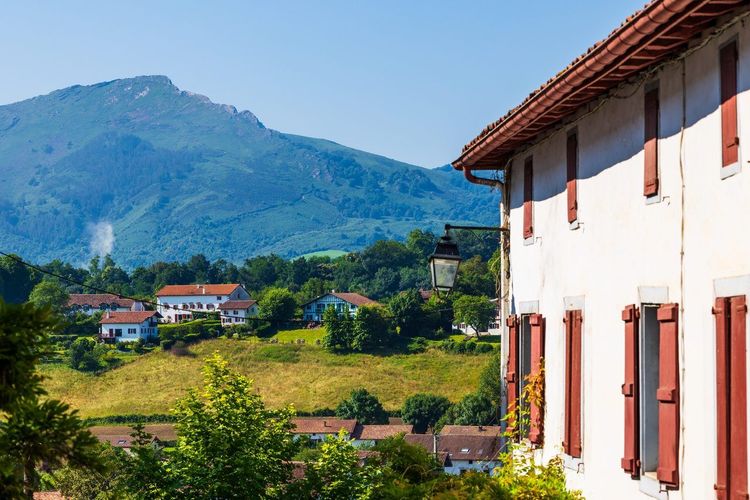
Beyond Bayonne and Biarritz, several villages and historic manor houses make a useful addition to a week-long stay.
Espelette and Its Pepper
Espelette owes its fame to its PDO pepper, whose red strings dry on the façades of the white houses from late August to November. The weekly market is the perfect place to leave with your own cord of peppers — a genuinely original souvenir — and the pepper festival in late October turns the village into one giant celebration.
Villa Arnaga, in the Footsteps of Cyrano
The Villa Arnaga in Cambo-les-Bains was the home of Edmond Rostand, the author of Cyrano de Bergerac. The visit combines a Belle Époque interior with French formal gardens listed as a Jardin remarquable, where children can run freely between the ponds while parents linger over the period furniture. The museum offers children's activity booklets.
Châteaux d'Urtubie and d'Abbadia
Inhabited by the same family since the 14th century, the Château d'Urtubie in Urrugne can be visited fully furnished, with a shaded park where you can picnic afterwards. The rooms are still occupied part of the year, giving the visit the feel of a living home rather than a frozen museum.
Further south, the Château d'Abbadia, perched on the Hendaye coastal cliff, blends neo-Gothic architecture designed by Viollet-le-Duc with an astronomical observatory still in operation. The interiors, populated with sculpted crocodiles and exotic inscriptions brought back by Antoine d'Abbadie, impress children and adults in equal measure.
Saint-Jean-Pied-de-Port
A historic staging post on the Camino de Santiago, Saint-Jean-Pied-de-Port (Place Charles de Gaulle, 64220 Saint-Jean-Pied-de-Port, rated 4.7/5 on Google based on 4K reviews) retains a citadel and ramparts that can be walked in just under an hour, cobbled alleyways and the Rue de la Citadelle included. The climb to the citadel is short but steep: bring a baby carrier for the youngest children.
Our article on the most beautiful villages around Bayonne details several other stops of the same kind if the village format appealed to you.
Caves and Underground Wonders of the Basque Country
For rainy days, or simply to escape the August heat, the Basque underground is full of spectacular sites. The temperature inside hovers around 12 to 14 °C all year round: bring a jumper, even in midsummer.
Sare Caves and the Rhune Rack Railway
The Sare caves use staging and lighting to bring local prehistory and Basque legends linked to the Sorginak to life. Nearby, the Rhune rack railway climbs to the 905-metre summit from the Col de Saint-Ignace in around thirty minutes, offering panoramic views stretching from the ocean to the Pyrenees on a clear day. Advance booking is strongly recommended in summer, as slots fill weeks ahead.
Verna Cave
Accessible via a railway tunnel from Sainte-Engrâce, the Verna cave opens up into one of the largest underground chambers open to the public in the world: approximately 250 metres in diameter and nearly 190 metres from floor to ceiling. The small train that takes you to the chamber is itself part of the experience, and the setting tends to leave visitors speechless — which does not happen all that often.
Isturitz and Oxocelhaya Caves
This network of Isturitz and Oxocelhaya caves (64240 Isturitz, rated 4.6/5 on Google based on 2,182 reviews) preserves some of the region's richest engravings and prehistoric remains, with a guided tour that makes archaeology tangible: tools, bones and walls worked more than 20,000 years ago. Introductory prehistory workshops are offered during school holidays.
Hiking and Nature Reserves
For those who enjoy walking, three destinations cover very different levels.
Marais d'Orx Nature Reserve
The Marais d'Orx nature reserve, just to the north in the Landes, offers flat trails with bird observation hides and no particular difficulty — perfect for a first nature outing with young walkers. More than 200 bird species have been recorded here, and the loan of binoculars at the entrance makes all the difference.
Kakuetta Gorge and Holzarte Footbridge
The Kakuetta gorge is walked on footbridges above a steep-sided torrent, leading to a waterfall of around twenty metres and a terminal cave. Allow about two hours there and back on a wet and slippery route: sturdy footwear is essential, and the site only opens from April to November.
More demanding, the Holzarte suspended footbridge (64560 Larrau, rated 4.7/5 on Google based on 2,247 reviews), suspended approximately 170 metres above the Olhadubi gorge, requires an hour's climb each way and a good head for heights: best reserved for teenagers who are comfortable in the mountains and have no fear of heights.
The GR10 in Short Sections
The GR10 runs across the entire Basque foothills, but there is no need to tackle it in full: several half-day sections, between Ainhoa and Bidarray in particular, give a taste of Pyrenean hiking without excessive commitment. Check water sources in advance, as they are scarce on the ridges.
Where to Eat, Where to Stay and Practical Information

For breakfast, head to a city-centre bakery for a pastis landais — that soft brioche flavoured with orange blossom and rum — before stopping at Coffee Muxu, a popular address known for its generous brunches and its pushchair-friendly welcome.
At lunchtime, the Cantine Dodue (4 Rue des Faures, 64100 Bayonne, rated 5/5 on Google based on 50 reviews) plays the comfort card with generous cooking and fast service — a real bonus when appetites will not wait. The tables in Petit Bayonne, along the Quai Galuperie, offer a tapas alternative if everyone wants something different.
For accommodation, Bayonne city centre puts the museums and market halls within walking distance, while Anglet and Biarritz prioritise direct beach access. Apartments with kitchenettes and campsites on the outskirts remain the most economical options in peak season, with a genuine advantage: the ability to have dinner early without depending on restaurant hours.
As for timing, April–June and September offer the best compromise between mild weather and manageable crowds, with sea water that stays cool until June. July–August guarantees the atmosphere of the Fêtes de Bayonne but requires booking accommodation and restaurants several months in advance. A few practical tips: use the free park-and-ride with shuttle service to avoid driving into the centre, pack a raincoat even in summer, and use Ryo's audio guide to Bayonne to schedule visits without depending on a human guide's timetable — a real asset when nap schedules dictate the programme.



FAQ
What should you visit in Bayonne with children?
The Sainte-Marie Cathedral and its Luminiscence show, the Musée Basque, the chocolate workshop and a tuk tuk ride make up a well-balanced first day combining heritage and fun activities.
What are the top 10 must-do things in Bayonne?
The Sainte-Marie Cathedral, the Musée Basque, the market halls, Petit Bayonne, the Cazenave house, the Vauban ramparts, the botanical garden, a tuk tuk ride, Terra Aventura geocaching and a trip to Biarritz cover the essentials in three days.
Is it worth visiting Bayonne with the family?
Yes: the city combines heritage, gastronomy and fun activities within a compact, pedestrian-friendly centre, while remaining less than twenty minutes from the beaches and the first Pyrenean foothills.
What activities are available for children in Bayonne?
Geocaching, escape rooms, tuk tuk rides, chocolate workshops and the Parc de la Poterne are among the most suitable activities from age 6–7, not to mention excursions to Biarritz or the Sare caves.
When is the best time to visit Bayonne with children?
April to June and September offer a pleasant climate with fewer crowds. July–August remains the liveliest but also the busiest period, so advance booking is essential.
Where should you stay in Bayonne and the Basque Country with children?
Bayonne city centre is ideal for a heritage-focused stay, while Anglet and Biarritz offer direct beach access; apartments with kitchenettes remain the most practical option. The audio-guided tour links Petit Bayonne to the Sainte-Marie Cathedral.
Planning Your Stay in Bayonne
Three days are enough to cover the historic centre and a handful of memorable excursions, but a week allows you to genuinely breathe between caves, beaches and villages without rushing from one site to the next. Alternate a cultural visit in the morning with a physical activity in the afternoon: that is the rhythm that sustains the pace best.
All that remains is to put together your own itinerary — ramparts, chocolate and ocean — safe in the knowledge that in Bayonne there is always a backup activity within pushchair range. For the city centre, Ryo's audio guide to Bayonne walks you through it step by step with its 22 stories, while the rest of the day stays free to improvise according to the weather or the mood of the moment.
À lire également