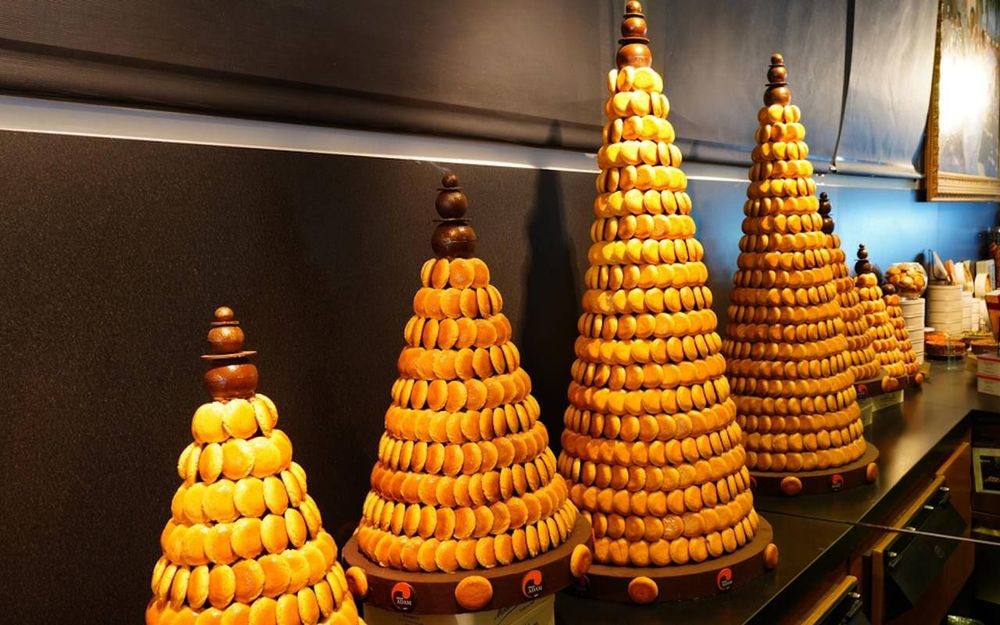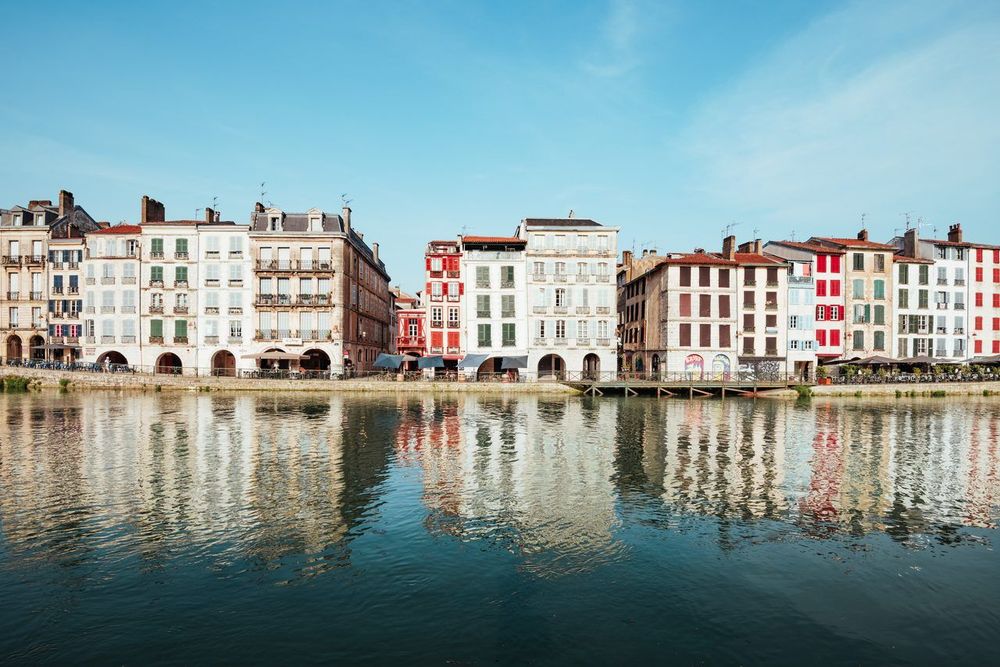
© Shutterstock
 Votre guide Ryo
Bayonne in 2 Days: The Neighborhood-by-Neighborhood Itinerary for 2026
Visiting Bayonne in 2 days means making choices from the very first morning. "It rains in Bayonne," people often say before ever setting foot there, as if the capital of Labourd could be summed up by Atlantic showers. Once past that cliché, the city straddling the confluence of the Nive and the Adour stands among the most captivating in the South-West, with its green-and-red half-timbered façades, its 17th-century arcaded streets and a chocolate tradition introduced in the 17th century by Sephardic Jewish merchants fleeing Spain and Portugal. It is impossible to see everything in a single weekend, but an itinerary planned neighborhood by neighborhood allows you to cover the essentials of Grand Bayonne, Petit Bayonne and Saint-Esprit without ending up on your last legs.
This guide lays out a full two-day programme: a Gothic cathedral listed as a UNESCO World Heritage Site and its silent cloister on the first morning, a hot chocolate at a maker established since 1854 in the afternoon, an evening of pintxos in Petit Bayonne, a bullring from 1893 that still hosts corridas in summer, a botanical garden perched on former military ramparts, and a possible day trip to Biarritz or the villages of the interior Basque Country for those extending their stay. You will also find the practical details most guides overlook: where to park for free, what budget to plan, when you might land in the middle of a festival — or how to avoid one. For a deeper experience on foot, the Ryo audio guide for Bayonne covers many of the places mentioned here, neighborhood by neighborhood.
Day 1 Morning: Grand Bayonne, the Historic Heart
Start with Grand Bayonne, the triangular peninsula wedged between the Nive and the Adour where the medieval city was built. It is the most heritage-rich neighborhood and the logical starting point for any 2-day stay in Bayonne: the rest of the programme radiates outward from its cobbled streets.
Cathédrale Sainte-Marie and Its Cloister
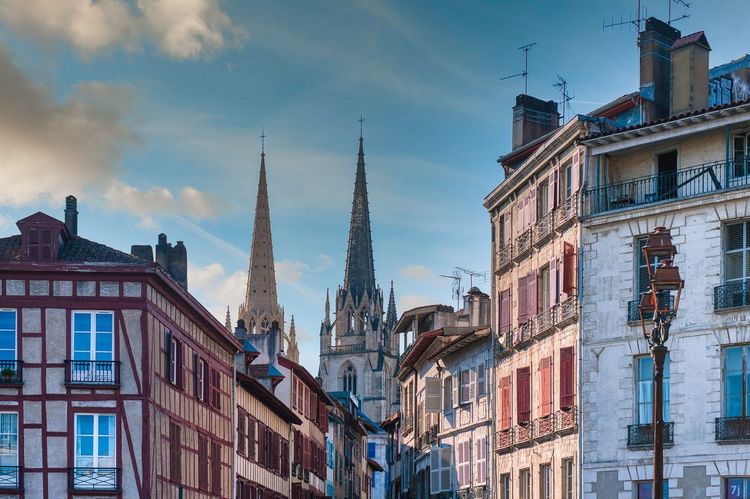
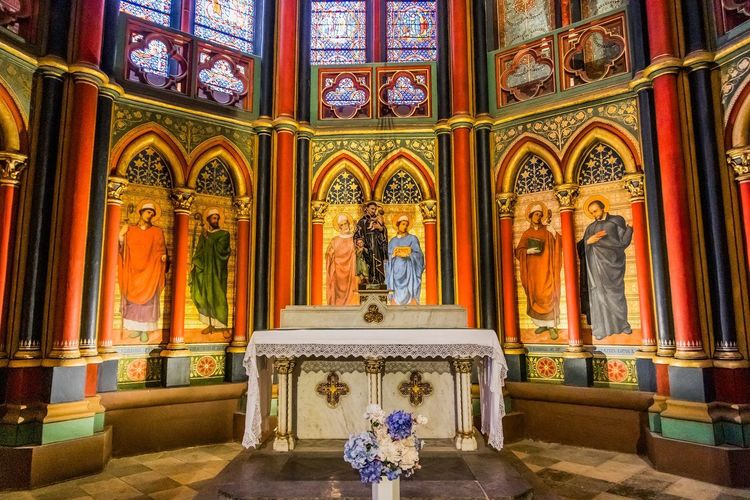
The Cathédrale Sainte-Marie de Bayonne dominates the neighborhood with its two neo-Gothic spires added in the 19th century, while the main body of the building dates to the 13th century and displays a northern Gothic influence far more pronounced than anything else in the region — a legacy of Bayonne's three centuries under the English Crown. The interior, sober and soaring, is worth a twenty-minute pause before the city fully wakes up. Look up at the Renaissance stained-glass windows in the Chapelle Saint-Jérôme, then search the floor for the bronze door knocker and the armorial keystones that recall Bayonne's status as a merchant city in the Middle Ages.
A detail few visitors know: the building has been listed as a UNESCO World Heritage Site since 1998, as part of the Routes of Santiago de Compostela in France. Bayonne was indeed a stop on the coastal path, the Voie de Soulac, before the crossing of the Pyrenees.
Attached to the north side of the building, the cloister offers a striking contrast: Gothic as well, but open to the sky, with arcaded galleries that once served as a burial ground for the city's notables. You will almost always find shade and silence here, even in high summer when the neighbouring pedestrian streets are packed. Admission is free, and it is arguably the best spot in Grand Bayonne to pause for five minutes without spending a penny.
On weekdays, the visit is queue-free. At weekends, it is better to come early in the morning or late in the afternoon to enjoy the space without tour groups. Also watch out for services and ceremonies, which periodically close the nave to tourists: a quick glance at the timetable posted under the porch will save you a wasted trip.
Ramparts, Pedestrian Streets and the Historic Center
Leaving the cathedral, head into the Grand Bayonne historic center: Rue Port-Neuf, Rue de la Salie, Rue d'Espagne. These are the city's historic commercial arteries, lined with half-timbered houses and arcades that shelter shopfronts from the rain — quite fittingly.
Shopping in central Bayonne is concentrated here, among espadrille shops, delicatessens selling vacuum-packed ham and Espelette pepper, and boutiques of Basque linen with their distinctive red or blue stripes. You will also come across a few artisan workshops still working leather or traditional weaving, a rarity at this scale in a city of around 52,000 inhabitants. The shutter colors — Basque green, ox-blood red or blue — are not recent folklore: they derive from the pigments once used to protect the wood, and the local authority now regulates their precise shades within the protected heritage zone.
For a broader view of this geography, climb the Bayonne ramparts (Rue Poissonnerie, 64100 Bayonne, rated 4.5/5 on Google from 312 reviews), particularly those running alongside the botanical garden to the north. Medieval in origin, reworked and considerably reinforced by Vauban at the end of the 17th century, they once encircled the whole of Grand Bayonne, and a good stretch remains walkable as a shaded promenade. The bastioned layout can still be read perfectly from the moats converted into lawns, where locals come to picnic on fine days.
Visiting Bayonne on foot remains by far the best option for this morning: the neighborhood is barely 800 meters long by 400 wide, and most of the streets are closed to traffic. Allow about two and a half hours for the cathedral, the cloister, the historic center and a round trip along the ramparts, not counting shopping stops. Wear shoes with good grip: Grand Bayonne's cobblestones become slippery the moment a shower passes through — and showers pass through often. The Ryo audio guide lets you keep your eyes on the façades rather than on a map during this first loop.
Day 1 Afternoon: Sweet Treats and Basque Specialties
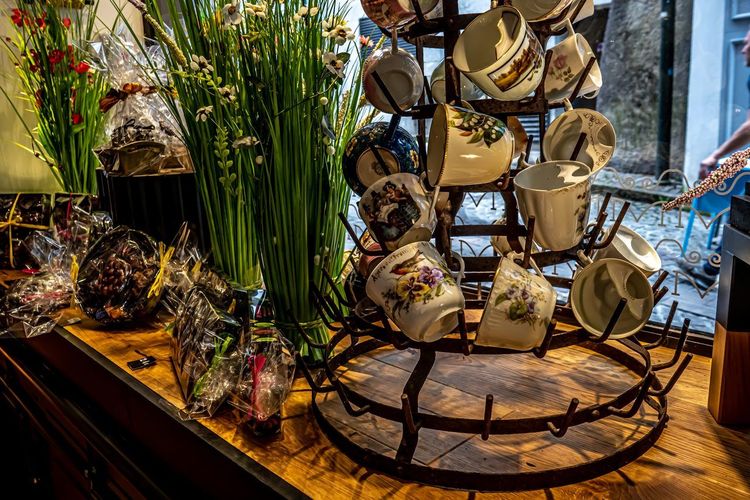
Bayonne has built a food reputation that extends far beyond its borders, and the first afternoon is almost entirely devoted to it. Two institutions structure this gourmet circuit through the city: chocolate and the covered market.
Bayonne Chocolate: Cazenave and the Chocolate Museum
Where to enjoy a proper hot chocolate in Bayonne is rarely up for debate among regulars: Cazenave, established under the arcades of Rue Port-Neuf since 1854, serves a frothy chocolate whisked in a traditional chocolatière to a recipe that has barely changed in a century and a half. It arrives in a porcelain cup, accompanied by a pot of whipped cream and buttered toast, and is savoured in a retro-décor tearoom that fills up quickly in late morning and mid-afternoon. Budget a handful of euros for the full set — a Bayonne ritual rather than a mere drink.
Bayonne's chocolate-making tradition dates back to the 17th century, when Sephardic Jewish families expelled from the Iberian Peninsula settled in the Saint-Esprit neighborhood and introduced cocoa-roasting techniques using cacao brought from the Americas. Bayonne became the first city in France to produce chocolate, long before Paris or Lyon, and chocolatiers formed their own guild there as early as the 18th century.
To understand this history in full, the chocolate museum in Bayonne, housed on Allée de Gibéléou, traces the entire production process from bean to bar, with a tasting session at the end of the tour. Allow an hour for the full visit, slightly less if you head straight to the shop. It is a reliable choice on rainy days and with children, as the tasting workshop holds their attention far better than a traditional museum display.
Halles de Bayonne, the Market and Basque Specialties
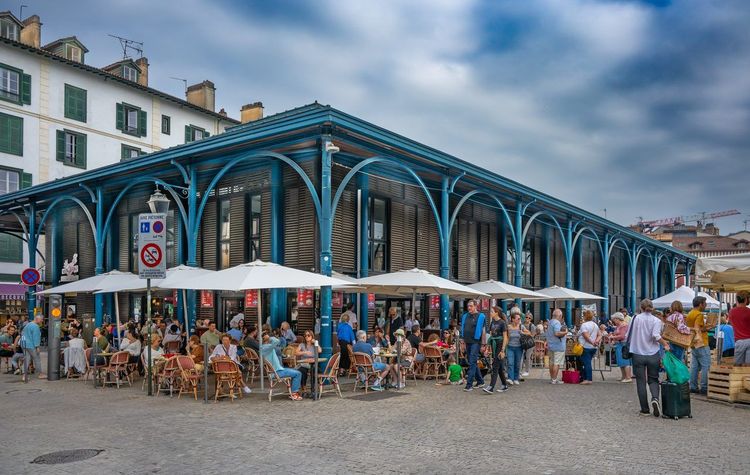
Where to shop for food in the heart of Bayonne comes down to one answer: the Halles de Bayonne. The current glass-and-metal building replaced the 19th-century market halls on the banks of the Nive in the 1990s. It brings together fishmongers, producers of IGP Bayonne ham, Ossau-Iraty sheep's milk cheese makers and market gardeners from Labourd. It is the city's most lively market floor and arguably the best place to taste Basque specialties without booking a table.
A timing tip: the market halls are mainly open in the morning, with extended hours on busier market days towards the end of the week, and the atmosphere dies down noticeably after 1pm. Arrive around 10:30am to find the stalls still well stocked, then settle at a wine bar counter for a plate of ham, a slice of Basque cake with Itxassou black cherry jam or a few pintxos.
Round off with an artisan ice cream in Bayonne: several makers in the city center work with local flavors, from sheep's milk cheese to caramelised Espelette pepper to Basque cake. You can also put together your own gourmet circuit by following a ham-and-cheese board at the market with a coffee at a local roaster, then a final chocolate detour before heading back to the hotel. This culinary trail, condensed into two to three hours, captures a large part of what Bayonne is all about gastronomically. You can also find our selection of the best food addresses in the city to go further than this brief overview.
Day 1 Evening: Bayonne's Nightlife and Atmosphere
As night falls, change pace. When it comes to the conviviality of Bayonne's evenings, everything revolves around Petit Bayonne: the terraces of Place Paul Bert and Rue des Cordeliers fill up from 7pm, often to the sound of an impromptu fanfare or a txalaparta group.
On Saturday evenings, Bayonne's bars become the real show. No reservation needed — just follow the crowd from one bar to the next, picking up a few pintxos along the way. The atmosphere really peaks during the Fêtes de Bayonne at the end of July, but remains good-natured throughout the year, including off the tourist season.
If you are travelling with children or prefer a quieter evening, head instead to the quays of the Nive on the Grand Bayonne side, where a few restaurants offer waterfront terraces without the noise of Petit Bayonne, with the audio-guided tour making a stop here too, weaving in the story of the Fêtes de Bayonne.
Day 2 Morning: Petit Bayonne and Its Cultural Life
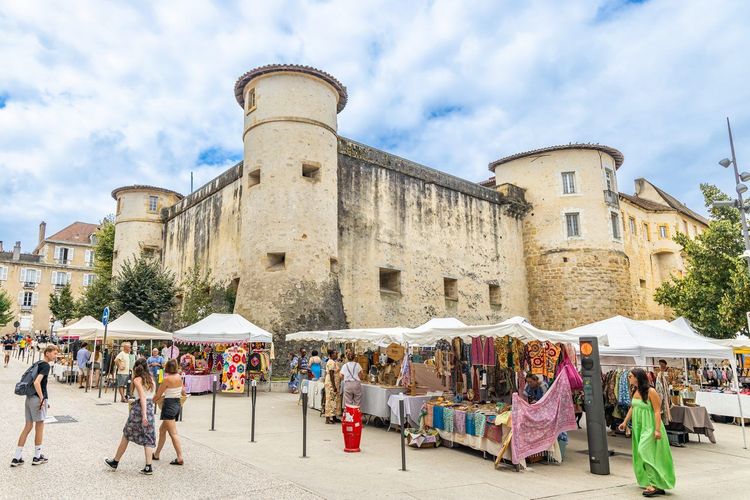
Cross a bridge over the Nive and you enter Petit Bayonne, the city's popular and student soul. The contrast with Grand Bayonne — more commercial and institutional — is striking from the very first streets: façades are narrower, signs more modest, and concert posters cover the walls.
Musée Basque and Musée Bonnat-Helleu
The Musée Basque occupies the Maison Dagourette, a 17th-century shipowner's residence on the Quai des Corsaires. It is the reference museum for Basque culture in France: traditional costumes, musical instruments, furniture and reconstructed peasant interiors, funerary disc-shaped steles, rooms devoted to whale fishing and pelota — a sport born in this very region. Allow an hour and a half for a visit at a relaxed pace, longer if you read all the panels. Admission is modest, just a few euros, and entry is free for under-26s resident in the European Union.
A ten-minute walk away, the Musée Bonnat-Helleu (5 Rue Frédéric Bastiat, 64100 Bayonne, rated 4.5/5 on Google from 369 reviews) holds one of the finest collections of Old Master drawings outside Paris, bequeathed by Bayonne-born painter Léon Bonnat, with works by Rubens, Goya, Ingres and Degas. An important point to know before planning your morning: the museum is undergoing a very lengthy renovation and extension project and remains closed to the public. Its collections resurface intermittently through off-site exhibitions, notably at other institutions in the city. Check its current status before visiting rather than arriving at a locked gate.
In between, a detour to the Église Saint-André, a neo-Gothic building from the 19th century, usefully rounds out the neighborhood's religious picture without requiring more than ten minutes. Right next door, the Trinquet Saint-André keeps pelota alive indoors: if a match is on, go in — access to the stands is usually free and the spectacle is well worth any guided tour.
Street Art and the Backstreets of Petit Bayonne
Bayonne behind its façades reveals itself most clearly here, in the dense network of lanes separating the two museums. Follow the street-art trail through Petit Bayonne: several dozen murals, some signed by well-known local artists, cover entire gable walls, often connected to Basque identity, bullfighting or everyday neighborhood scenes.
This route requires no precise plan — simply wander. The best murals are generally found around Rue des Faures and Place Montaut, but new works appear regularly, making each visit slightly different from one year to the next. For a more in-depth immersion in this neighborhood, our dedicated article on Petit Bayonne details the routes richest in street art.
If time allows, extend your visit by an hour: Petit Bayonne lends itself particularly well to a café terrace break between two visits, far from the commercial bustle of Grand Bayonne. The Bayonne audio-guided tour also tells the story of several of these streets, including the history of the old blacksmiths' workshops that gave Rue des Faures its name.
Day 2 Afternoon: Saint-Esprit Neighborhood and the Banks of the Adour
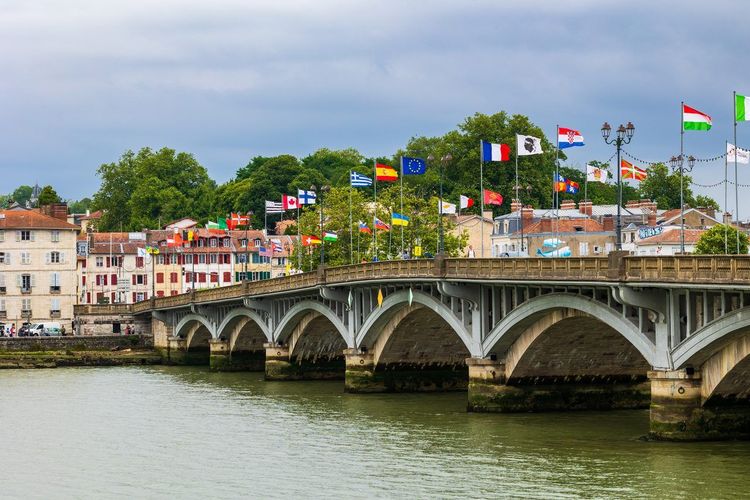
Cross the Pont Saint-Esprit and shift atmosphere once more. The Saint-Esprit neighborhood, on the far side of the Adour, remains the least visited of Bayonne's three main neighborhoods despite a rich history — most notably that of the Sephardic Jewish community that lived here for centuries and turned Bayonne into a chocolate capital. The neighborhood was not even incorporated into the city until the 19th century: it previously belonged to the Landes département, which explains its distinct identity.
Église Saint-Esprit and the Didam
The Église Saint-Esprit, dating from the 15th century, houses a polychrome wooden sculptural group depicting the Flight into Egypt — quite rare in the region — as well as a collection of maritime ex-votos. The building stands next to the former royal hospice that once sheltered pilgrims on the Way of Saint James before their crossing of the Pyrenees, a reminder that Bayonne was long a major stop on the coastal route.
A few hundred meters away, heading down towards the river, the Didam occupies a former maritime affairs harbour building converted into a municipal exhibition space. The programme, free most of the time, deliberately contrasts with the surrounding medieval heritage: contemporary photography, current art, thematic exhibitions on the port and the Adour. It is one of the most underrated sites to discover in the Saint-Esprit neighborhood, often overlooked by visitors who head straight to Petit Bayonne.
Take a moment to look up at the Vauban citadel dominating the neighborhood from the hillside. Still in military use, it cannot be visited freely, but its glacis and the viewpoint from the heights of Saint-Esprit are a reminder of just how strategically important Bayonne was as a fortress facing Spain.
A Walk Along the Adour
A walk along the Adour then allows you to discover the surroundings from a different, less touristy angle. The river, far wider than the Nive, separates Saint-Esprit from the rest of the city, and its quays offer an open panorama over the rooftops of Grand Bayonne, the cathedral spires and the ballet of cargo ships heading upriver to the port. Guided river cruises depart from the city center in the warmer months and run down to the estuary — about an hour and a half to understand the agglomeration's port geography.
Keep an eye on the river schedule: the frigate l'Hermione, a replica of the ship that carried Lafayette to America in 1780, has been linked in recent years to the port of Bayonne, where it has docked and where restoration work has been carried out. A visit to l'Hermione when she is accessible at the quayside makes for a memorable addition for anyone who happens to be there at the right time.
In the late afternoon, stroll back down towards Pont Marengo to return to Grand Bayonne and complete the loop through all three neighborhoods, ideally at the hour when the sun rakes low across the façades on the Nive side.
Bullring, Botanical Garden and Other Must-Sees
If your stay goes beyond the bare minimum or if you are travelling with family, two sites usefully complement the programme of the two historic neighborhoods.
The Bullring Neighborhood and Corridas
What to do in Bayonne's bullring neighborhood? Attend a corrida, quite simply, if the schedule works in your favour. The Arènes de Bayonne, inaugurated in 1893 in the Lachepaillet neighborhood, rank among the oldest permanent bullrings in France and among the country's largest, with nearly 10,000 seats. They still host corridas on festival days, mainly in late July and August, in a city that remains one of France's leading bullfighting venues.
Even outside the bullfighting season, the neighborhood is worth a visit for its calmer residential atmosphere, midway between the station and the city center. Catch a show at the Arènes de Bayonne if the dates align: concerts, equestrian spectacles and sporting events are also programmed there throughout the rest of the year. Nearby, the Stade Jean-Dauger is home to Aviron Bayonnais, and a rugby match on a Saturday evening is in itself an immersion in local culture.
Bayonne Botanical Garden and the Plaine d'Ansot
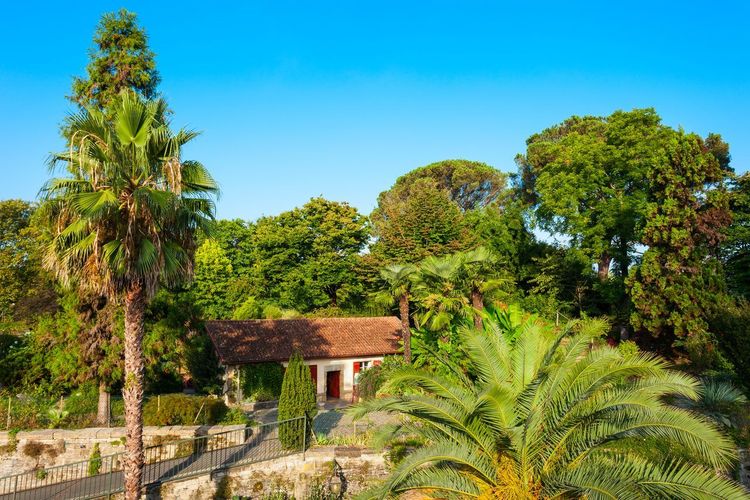
The Bayonne botanical garden (Remparts Lachepaillet, 64100 Bayonne, rated 4.3/5 on Google from 1,828 reviews), laid out along the Lachepaillet ramparts, makes for an unexpected escape in the heart of the city: around a thousand plant species spread across a linear terrace that follows the old fortified line, with views over the rooftops of Grand Bayonne and a distinctly Japanese-influenced planting design. Admission is free and the spot remains surprisingly quiet, even in high season. One thing to check before you go: the garden closes in winter and only opens in the warmer months, generally from spring to mid-autumn.
Further out on the outskirts, the Plaine d'Ansot celebrates biodiversity across several dozen hectares of barthes — the floodable wetlands typical of the Adour valley. Raised boardwalk paths, bird-watching hides and the Maison des Barthes make it an ideal family outing, with free access to the site. Plan to drive or take the bus, as the site is not easily walkable from the center, and wear shoes that can handle mud after a rainy spell. For more ideas in the same vein, this top 6 of things to do in Bayonne explores these nature options in greater depth.
Bayonne's Iconic Festivals and Events
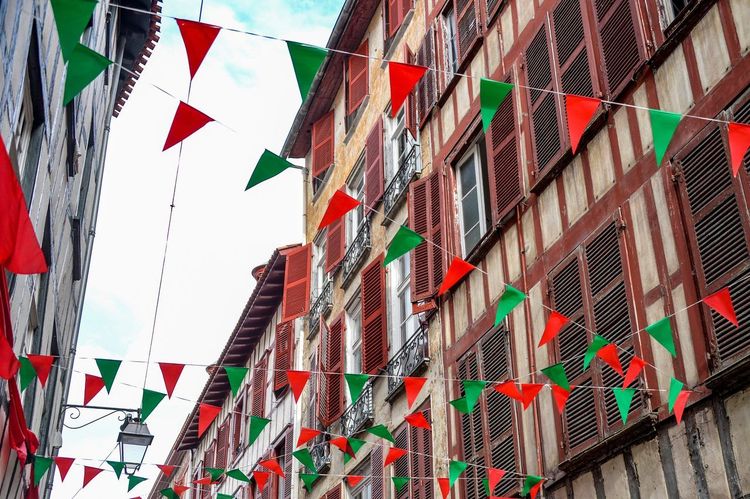
Bayonne's festival calendar can completely transform your 2-day stay, for better or for worse depending on the crowds at the time. Best to know before you book.
The Fêtes de Bayonne (Late July–August)
The Fêtes de Bayonne, born in 1932, rank among the must-see events of the Basque Country and draw several hundred thousand participants each year — up to more than a million cumulative visits over five days, generally from Wednesday evening to the following Sunday, at the end of July. White outfit and red neckerchief are the dress code; the opening ceremony features the handing over of the keys from the town hall balcony, bandas march through every street, bull runs and corridas fill the bullring throughout the days.
When the Fêtes de Bayonne take place: the dates shift slightly each year, but they traditionally begin on the Wednesday before the first weekend of August — in other words, the very last days of July. If you visit Bayonne at this time, expect a city completely transformed: hotels are fully booked months in advance, prices double and traffic is restricted throughout the center. Conversely, if you are looking for peace and quiet, shift your weekend by a week.
Carnival and the Ham Fair
Bayonne's carnival, lower-key than the summer festival, brings the city to life in February or March depending on the year, with costume parades, floats and the trial of San Pantzar — a straw effigy burned at the end of the procession to close the carnival season. It is a good option for experiencing a festive Bayonne atmosphere away from the summer tourist crowds.
The Bayonne Ham Fair, meanwhile, is held every year just before Easter and dates back to the 15th century, making it one of the oldest food fairs in France. IGP Bayonne ham producers, a best-ham competition, tastings and entertainment draw a largely local crowd, quite different from the summer festival. To plan your visit around one of these events, our detailed Bayonne festivals calendar lists precise dates year by year.
Where to Stay in Bayonne for 2 Days
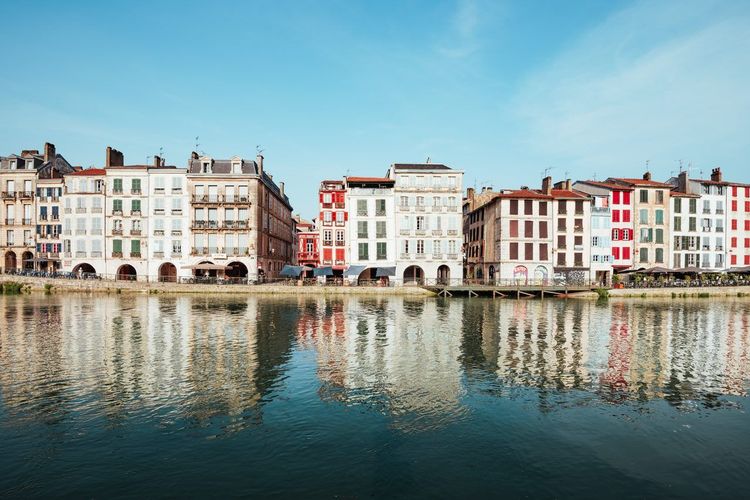
Where to stay in Bayonne depends mainly on the atmosphere you are after: heritage and relative quiet, or nightlife a stone's throw from your hotel. Since the city can be crossed on foot in twenty minutes, no neighborhood is really badly located.
Grand Bayonne and the Arènes Neighborhood
The Grand Bayonne historic center concentrates most of the higher-end accommodation in Bayonne, in renovated half-timbered houses steps from the cathedral. It is the most convenient option for a 2-day stay focused on sightseeing, with everything on foot. One downside to factor in: parking is difficult and paid, and few hotels in the area offer private parking.
The Arènes neighborhood, slightly further out towards the station, offers hotels that are often more affordable and have direct train or car access — useful if you arrive late or leave early the next morning. Expect to pay around 80 to 120 euros per night for a double room outside the high season, with prices soaring in July and August.
Petit Bayonne, Saint-Esprit and Limpou
Staying in Petit Bayonne suits travellers who prioritize atmosphere and nightlife: bars close late and the streets stay lively, which can also mean more noise at night depending on your floor and street. Ask for a room facing the courtyard if you are a light sleeper.
On the Saint-Esprit side, recommended hotels in Bayonne are rarer but tend to be quieter and less expensive, ten minutes on foot from Grand Bayonne via Pont Saint-Esprit, with the advantage of being right next to the station. The Limpou neighborhood, more residential and slightly out of the way, rounds out the offer for those seeking a bed-and-breakfast away from the tourist bustle. The Ryo audio guide for Bayonne is also a good way to get a feel for the neighborhoods before booking, by listening to the commentary on each one.
Practical Info: Transport, Parking, Budget and Weather
A few key figures before you leave, so you can visit Bayonne in 2 days without unpleasant surprises or time wasted hunting for a parking spot.
Getting to and Parking in Bayonne
Where is Bayonne: in the Pyrénées-Atlantiques department, at the far south-west of France, approximately 760 km from Paris by road, 8 km from Biarritz and around thirty kilometers from the Spanish border. Getting to Bayonne is straightforward by train, with direct TGV services from Paris in just over 4 hours, by car via the A63 motorway, or by plane through Biarritz-Pays Basque airport, fifteen minutes from the center.
Once there, a car quickly becomes a handicap. The Txik Txak bus network serves the entire Bayonne-Anglet-Biarritz agglomeration, including the Tram'bus linking the center to Biarritz, and a free shuttle runs within the city center. Shared bikes complete the system for reaching the Anglet beach in around twenty minutes along the cycle path.
Where to park for free in Bayonne is still possible outside the city center: park-and-ride lots on the outskirts, near La Floride or the Saint-Léon neighborhood, as well as certain residential streets beyond the ramparts, allow you to park without charge within a ten-to-fifteen-minute walk. The historic center applies paid parking throughout the day, Monday to Saturday, with meters everywhere.
Where to park a motorhome in Bayonne: several dedicated sites exist on the outskirts and in neighboring communes, equipped with waste disposal and water points. Absolutely avoid the city center, where the narrow streets of Grand Bayonne and the low headroom of certain car parks are not suited to large vehicles.
Budget, Weather and Best Time to Visit
Budget and practical tips for a successful weekend: allow around 100 to 150 euros per person per day for a comfortable stay including mid-range accommodation, meals and a few visits, slightly less outside the high season. Municipal museums are inexpensive — just a few euros — and a good part of the must-sees cost nothing: the cathedral, cloister, ramparts, botanical garden, Petit Bayonne street art and the Adour quays.
On the weather front, Bayonne's oceanic climate brings frequent rain throughout the year, rarely long-lasting, with annual rainfall totals among the highest in France and mild temperatures even in winter, rarely below 5 degrees. Pack a windproof jacket rather than an umbrella — the westerly wind makes short work of spokes. Spring and early autumn offer the best balance between moderate crowds and pleasant conditions for walking all day.
What to do in Bayonne with children: the Musée Basque, the chocolate museum, the botanical garden and the Plaine d'Ansot work particularly well with young children, as does a foodie stop at the Halles or a walk along the Nive quays. The bullring, outside performance days, can be admired freely from outside, and pushchairs get through everywhere in the center despite the cobblestones.
What to See Around Bayonne: Biarritz, Saint-Jean-de-Luz and the Basque Country
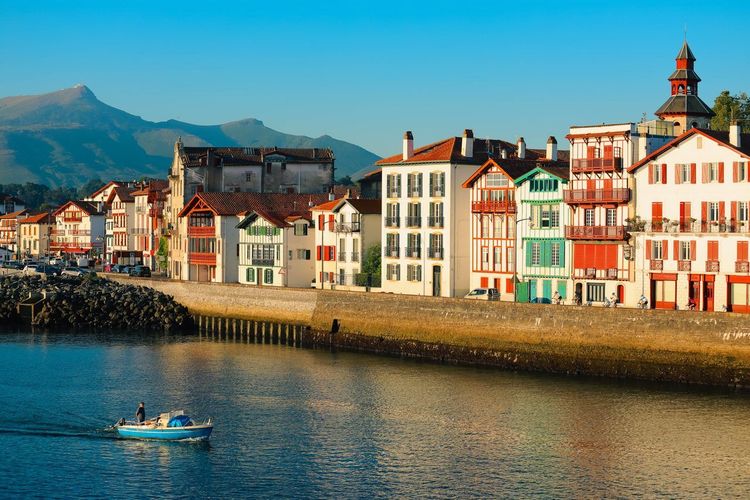
If your stay extends beyond two full days or if you have a car, several destinations we particularly loved are less than half an hour from Bayonne.
Biarritz and Saint-Jean-de-Luz
What to see in Biarritz and Saint-Jean-de-Luz: less than ten kilometers away, Biarritz offers an immediate contrast with Bayonne, between the Grande Plage, the Belle Époque casino, the Pointe Saint-Martin lighthouse and the Rocher de la Vierge, accessible via a metal footbridge suspended above the waves. The town is reachable by bus or bike from Bayonne, without a car, in around twenty minutes.
About twenty minutes further south, Saint-Jean-de-Luz retains a still-active fishing port, a large beach sheltered by breakwaters and an old town where Louis XIV married Marie-Thérèse of Austria in 1660, in the Église Saint-Jean-Baptiste — whose door was subsequently bricked up. Bayonne or Biarritz: which to visit first? For history and gastronomy, go for Bayonne; for the beach and a seaside atmosphere, Biarritz wins hands down.
Iconic Villages of the Basque Country (Espelette and Surroundings)
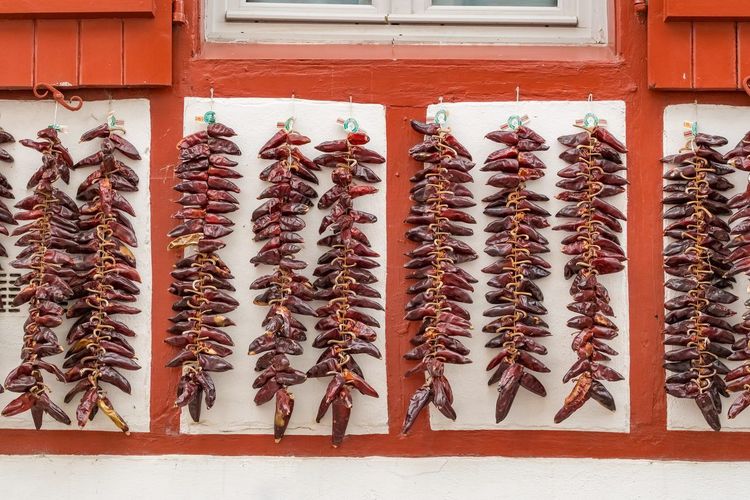
Inland, the iconic Basque Country villages worth discovering follow one another within less than 40 minutes' drive: Espelette with its façades draped in red peppers hung out to dry from late August to November, Ainhoa listed among the most beautiful villages in France, and Sare, clinging to the slopes of La Rhune which you can ascend by a little rack railway.
Espelette and the beach are a popular combination among visitors who pair a producers' market in the morning with a swim in the afternoon. Bayonne and Bilbao — two cities not to overlook for those venturing further: the Spanish Basque metropolis, around 1h30 by road, naturally completes a stay centred on Bayonne for travellers with a week rather than a simple weekend. To help narrow down these choices, our selection of the most beautiful villages in the French Basque Country and this guide to the most beautiful villages around Bayonne detail each possible stop.



FAQ
How Much Time Do You Need to Visit Bayonne?
Visiting Bayonne in 2 days is more than enough to cover Grand Bayonne, Petit Bayonne and the Saint-Esprit neighborhood at a relaxed pace. A single day already allows you to see the cathedral, the market halls and the main streets, but forces you to skip the museums. A third day opens the door to a day trip to Biarritz, Saint-Jean-de-Luz or the villages of the interior Basque Country.
Bayonne or Biarritz: Which Should You Visit First?
It depends on what you're looking for: Bayonne is the place for historical heritage, gastronomy and an authentic Basque city atmosphere, while Biarritz is all about the beach, surfing and a seaside vibe. The two cities, less than ten kilometers apart and connected by the Tram'bus, are easy to combine on a single trip.
What Budget Should You Plan for a 2-Day Weekend in Bayonne?
Budget generally between 100 and 150 euros per person per day for a comfortable stay including accommodation, meals and the main attractions, with the lower end applying mainly outside the summer high season. By staying on the outskirts and focusing on free sites, a weekend for two is still possible for around 250 to 300 euros.
Where Can You Park for Free in Bayonne?
Free parking is mainly found outside the city center: park-and-ride lots on the outskirts, residential areas beyond the ramparts and certain streets in the Saint-Esprit neighborhood, with a ten-to-fifteen-minute walk to Grand Bayonne. In the city center, everything is paid parking on weekdays and Saturdays.
What Is the Best Time of Year to Visit Bayonne?
Spring and early autumn offer the best balance between pleasant weather and moderate crowds. Summer is livelier but also busier, especially during the Fêtes de Bayonne at the end of July, a period when finding accommodation at a reasonable price becomes very difficult.
Can You Get Between Bayonne and Biarritz on Foot or by Public Transport?
The two cities are connected by the Txik Txak bus network, including the Tram'bus line, as well as by continuous cycle paths, with the bike ride taking around twenty minutes. On foot, allow about an hour and a half, which is only worthwhile for dedicated walkers.
What Is There to Do in Bayonne with Children?
The Basque museum, the chocolate museum, the botanical garden laid out along the ramparts and the raised boardwalk trails of the Plaine d'Ansot are particularly popular with children, as is a foodie stop at the Halles de Bayonne. A pelota match at the trinquet court, when the schedule allows, also makes for great memories.
By the end of these two days, Bayonne will have revealed at least three different faces: the institutional and commercial face of Grand Bayonne; the popular and creative face of Petit Bayonne; and the more intimate and lesser-known face of Saint-Esprit. It is this variety, contained within a perimeter you can cover entirely on foot, that sets Bayonne apart from the other regional capitals of the South-West.
If you prefer to explore at your own pace rather than follow a fixed itinerary, the audio-guided tour of Bayonne is available for spontaneous exploration: 23 audio tracks, 1h20 of commentary and 3.4 km of walks to listen to neighborhood by neighborhood, depending on the weather or your mood.
À lire également