© Shutterstock
 Votre guide Ryo
Weekend in Bourges 2026: Cathedral, Marshes and Escapes in the Berry
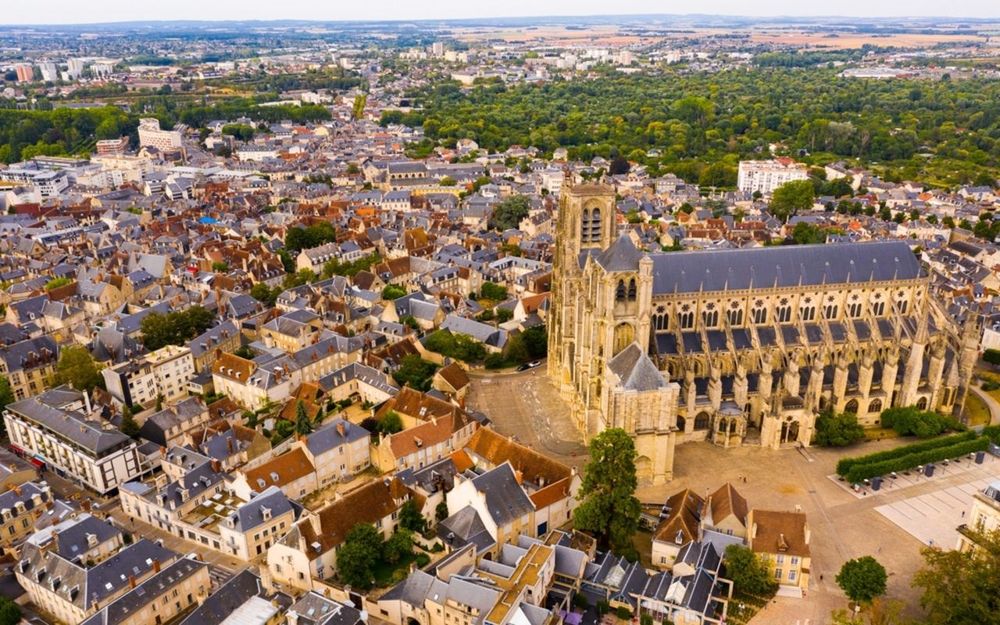
A weekend in Bourges often begins with a surprise: down a half-timbered lane, the north tower of Saint-Étienne Cathedral appears without warning, 65 metres high, and the whole town suddenly seems to arrange itself around it. A UNESCO World Heritage Site since 1992, it is nevertheless only a gateway to a more secret Berry: marshes cultivated since the Middle Ages ten minutes' walk from the town centre, a Gothic palace built for the richest merchant in France in the 15th century, and Sancerre vineyards less than an hour away by car. Bourges is also preparing to become European Capital of Culture 2028, a status that is already accelerating the renovation of its cultural venues and filling its calendar.
In two days, you can wander the old town on foot, follow the marsh canals, visit the Palais Jacques Cœur, push on to the Cistercian abbey of Noirlac and taste the Berry Easter pâté at a spot in the historic centre. This guide details a day-by-day itinerary, possible excursions if your stay stretches out, foodie addresses, unusual accommodation in the Cher (cabin on the water, bubble with spa, dome) and the practical information you need to plan your visit without nasty surprises: how to get there, when to go, how much to budget. For sweet treats, the forestine, a local confection invented in 1879, takes pride of place in every shop window in the centre.
To follow the historic centre without having your nose in a map, the Ryo audio-guided tour of Bourges strings together 22 audio stops over 3.2 km, about 1h20 of guided walking between the cathedral, the medieval lanes and the private mansions.
Day 1 in Bourges: Saint-Étienne Cathedral and the Old Town
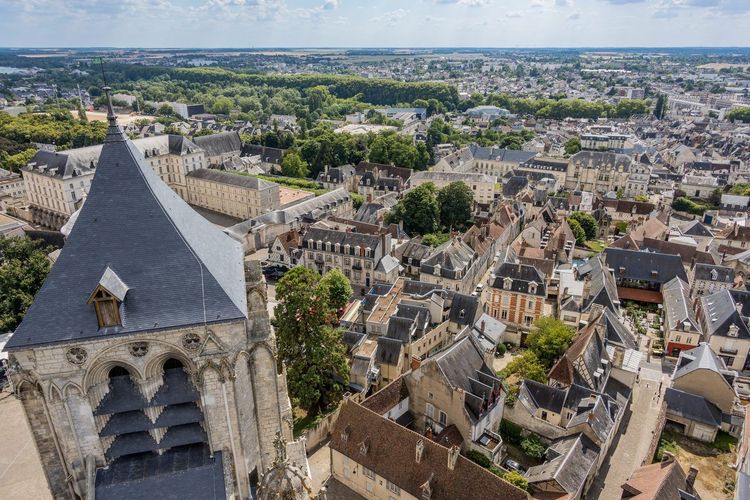
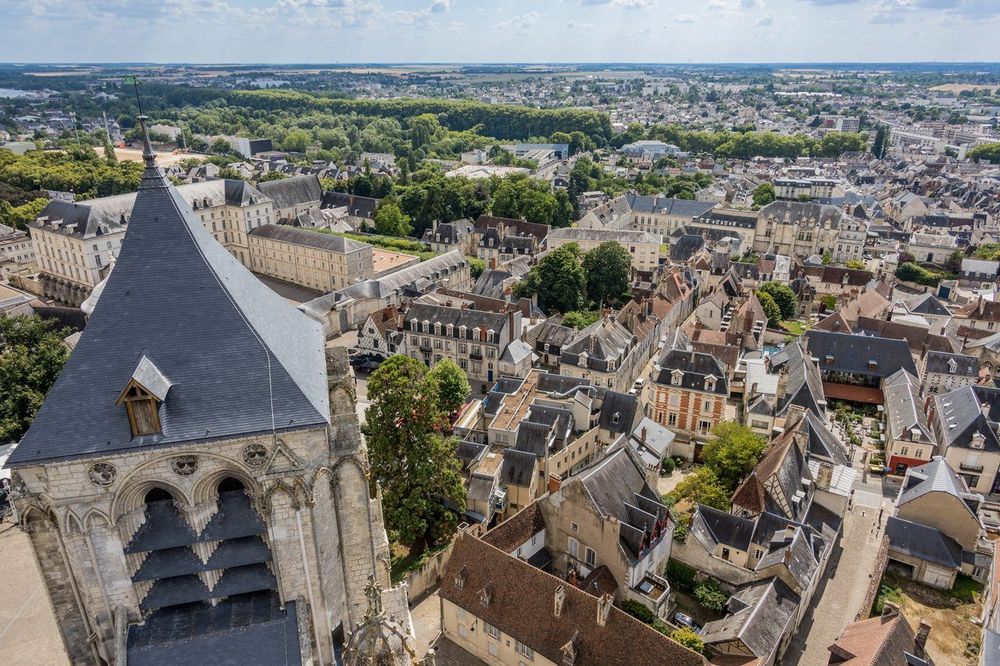
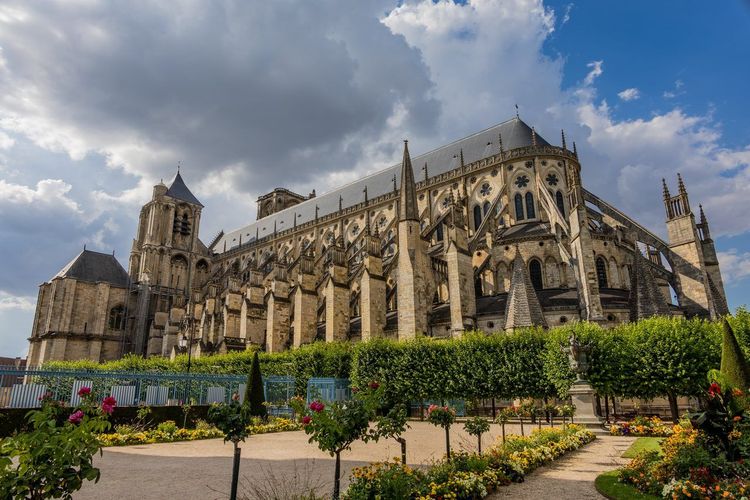
The day logically begins in front of Saint-Étienne Cathedral in Bourges: five naves without a transept, a façade pierced by five sculpted portals and 13th-century stained glass among the best preserved in France. Allow a good hour to go around it. The crypt, accessible on a guided tour, houses the tomb effigy of Duke Jean de Berry and fragments of the rood screen dismantled in the 18th century. Climbing the 396 steps of the north tower, known as the Tour de Beurre (Butter Tower, partly financed by the dispensations granted to worshippers who wanted to eat butter during Lent), opens onto a panorama that reveals the town's geography at a glance: the marshes to the north, the Palais Jacques Cœur to the west, and the roofs of the old town huddled all around.
A tip if you love stained glass: enter via the ambulatory and look up at the low windows of the choir. The biblical scenes can be read at eye level there, which is rare in a cathedral of this size, and the colours, dominated by a deep blue, change markedly between the morning light and that of late afternoon. The crypt and the tower can be visited with a Centre des monuments nationaux ticket, while the nave remains free to enter.
Don't leave without looking for the astronomical clock, installed in 1424 inside the nave. Designed by Jean Fusoris, a canon and scholar of his day, it shows the hours, the phases of the moon and the position of the sun in the zodiac. Its restored painted case stands near the west façade: many visitors walk past without seeing it. Also take a few minutes on the forecourt to read the great central portal devoted to the Last Judgement, whose grimacing devils and processing elect remain astonishingly expressive.
Leaving by the forecourt, you almost immediately step into the old town of Bourges, a maze of lanes that has kept a density of half-timbered houses that is rare in a French prefecture. Rue Bourbonnoux (Rue Bourbonnoux, 18000 Bourges) and Rue Mirebeau have the finest façades: carved beams, jettied upper floors that project over the street, sometimes three or four levels of timber stacked up.
A few landmarks help you get your bearings. The Hôtel Lallemant, on Rue Bourbonnoux, hides a Renaissance courtyard behind a discreet façade and today houses a decorative arts museum. The so-called House of Queen Blanche, on Rue Gambon, owes its name more to a legend than to solid historical evidence. On Place Gordaine, the beating heart of the district, café terraces set up at the foot of the timber-framed façades as soon as the fine weather arrives.
For photos without crowds in the frame, favour the two hours after opening: the low light on the half-timbering is more flattering, and groups generally arrive mid-morning. Schedule this stroll between 10am and 1pm, have lunch in the centre, then tackle the Palais Jacques Cœur in the early afternoon.
This is roughly the route followed by the Ryo audio-guided tour of the town, which starts at the cathedral before heading up the half-timbered lanes: a way of missing nothing without unfolding a paper map every five minutes. In the evening, in summer, save some energy for the Nuits Lumière: blue markings on the ground guide walkers through the illuminated centre, with projections on the façades, and the stroll is free.
The Gardens of Bourges: Archbishop's Garden and Prés Fichaux Garden
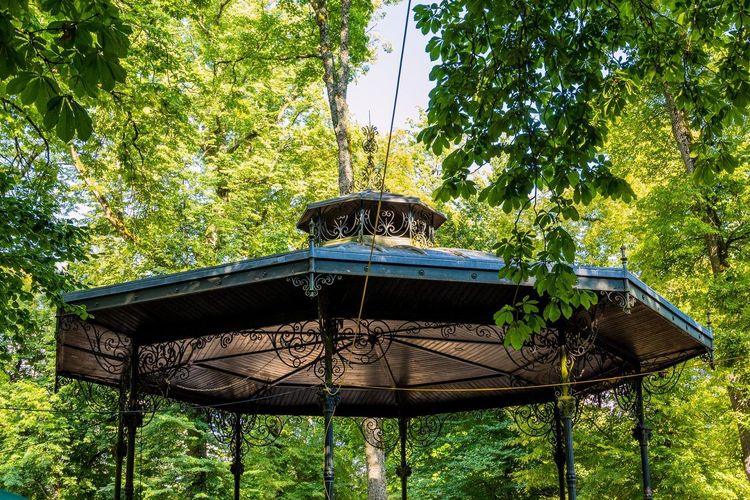
At the foot of the cathedral's apse, the Archbishop's Garden offers the best overall view of the flying buttresses, from formal French-style flowerbeds laid out at the end of the 17th century for the archbishopric. Entry is free, and the contrast between the pale stone and the clipped box hedges deserves a stop, especially late in the day.
On the other side of the centre, the Prés Fichaux Garden (Boulevard de la République, 18000 Bourges, rated 4.4/5 on Google from 2,017 reviews) is a completely different register. Laid out in the 1920s on former wet meadows beside the Yèvre, this Art Deco garden plays on geometric perspectives, ponds, an open-air theatre and statues of the period. Locals (Berruyers) come here with their families on Sundays, and it is one of the few places in the centre where you can sit on a bench without hearing traffic.
With children, this is where you will take your afternoon break: flat paths, lawns and ponds keep the youngest busy while the adults catch their breath between visits.
If you only have time for one garden, choose according to the time of day. In the morning, the Archbishop's Garden fits naturally into the cathedral visit and saves you a detour. In the late afternoon, the Prés Fichaux make an ideal transition to the marshes, located just to the north: you only need to cross the Yèvre to go from a garden laid out with a ruler to a landscape of canals and vegetable plots. Both sites are free to enter, with opening hours that lengthen noticeably between spring and the end of summer.
The Palais Jacques Cœur and the Museums of Bourges
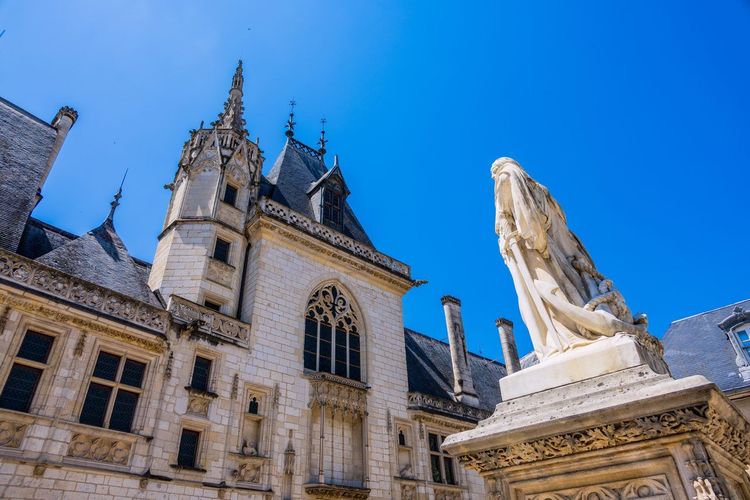
The Palais Jacques Cœur remains the most spectacular monument in Bourges after the cathedral. Built between 1443 and 1451 for the silversmith and financier of Charles VII, it displays an opulence rare for a private residence of the late Middle Ages: mullioned windows, stair turrets, monumental fireplaces, a chapel with a vault painted with angels. Jacques Cœur barely enjoyed it: accused of embezzlement, he was arrested in 1451, the very year the building work was completed. The inner courtyard alone is worth the trip for its bas-reliefs of domestic and mercantile scenes.
Look on the façades for the owner's motto, “À vaillans cuers riens impossible” (“To valiant hearts nothing is impossible”), and his emblems repeated over and over: hearts and scallop shells, a heraldic pun on his name. The son of a Bourges furrier, Jacques Cœur had built his fortune on trade with the Levant, thanks to a fleet of galleys based in Montpellier and Aigues-Mortes, before becoming the king's financier during the final years of the Hundred Years' War. His palace tells the story of that meteoric rise, and of his equally rapid fall.
On the practical side, the palace is run by the Centre des monuments nationaux: admission costs 9 euros at full price and is free for under-26s residing in the European Union. Check the opening hours before you come, as time slots and visiting conditions vary by season.
A few minutes' walk away, the museums of Bourges round off the visit. The Musée du Berry (4-6 Rue des Arènes, 18000 Bourges, rated 4.5/5 on Google from 39 reviews), housed in the Hôtel Cujas, named after the jurist who lived there in the 16th century, holds an important collection of Gallo-Roman funerary stelae and rooms devoted to Berry ethnography. The Musée Estève, dedicated to the painter Maurice Estève, born in the Cher, occupies the Hôtel des Échevins and its spiral staircase tower. The natural history museum, more family-oriented, will appeal above all to children.
Good news for your budget: the municipal museums of Bourges are free. Allow half a day to combine the palace and one or two museums without rushing, which leaves time to head for the marshes and enjoy the evening light on the water.
The Marshes of Bourges: An Unusual Boat Ride in the Heart of the Town
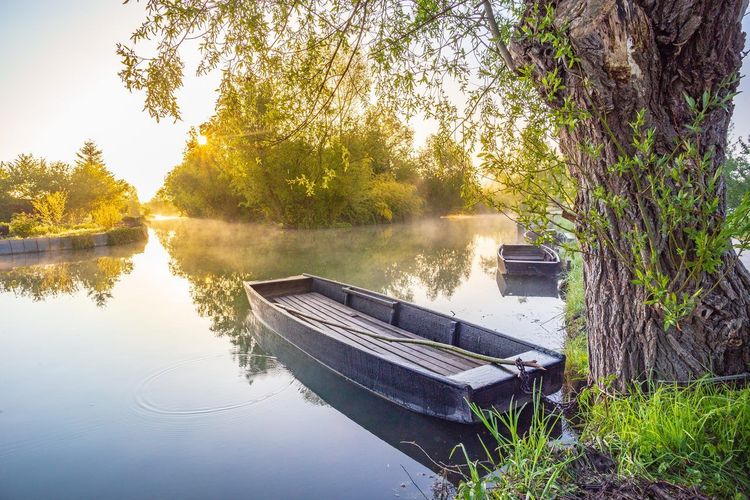
This is the surprise of the stay: a quarter of an hour's walk from the Palais Jacques Cœur, the marshes of Bourges (Rue des Prés Marin, 18000 Bourges, rated 4.6/5 on Google from 848 reviews) unfold about 135 hectares of vegetable plots irrigated by the Yèvre and the Voiselle, cultivated since the Middle Ages on a network of canals, right in the town. Residents still grow vegetables and flowers there on private plots, often accessible only by boat. The atmosphere, half rural and half urban, throws off anyone expecting a simple park.
There are two ways to discover them. On foot, following the public paths that wind between the garden huts, notably along Boulevard de la Chappe and Rue Vieille-Saint-Germain, for a free walk of about an hour. The towpath along the Yèvre, on the edge of the marshes, also allows a loop by bike, flat and away from cars. By boat, on guided outings offered in season by local associations, to glide in a flat-bottomed boat between the plots and watch herons and kingfishers at water level. Ask the tourist office for departure days, as these trips do not run all year.
Spring and early summer remain the best season: the crops are visible, the nesting birds are active, and the evening light on the canals gives the place an almost unreal quality. Respect the fences: behind every gate lies a private garden, sometimes cultivated by the same family for several generations.
Come with good shoes after a rainy spell, as the dirt paths quickly turn muddy. A picnic bought in the morning at the covered market makes an excellent dinner by the water, as long as you stay on public areas. And if you come across a market gardener at work, don't hesitate to strike up a conversation: many enjoy explaining how the banks are maintained and why boats remain indispensable for carrying tools and harvests.
To put these marshes back in the context of the medieval town that shaped them, nothing beats the Ryo audio-guided tour of Bourges: its 22 audio stops explain how the ramparts, rivers and merchant districts shaped the city you have been exploring since morning.
Day 2: Day Trip to Sancerre and Noirlac Abbey
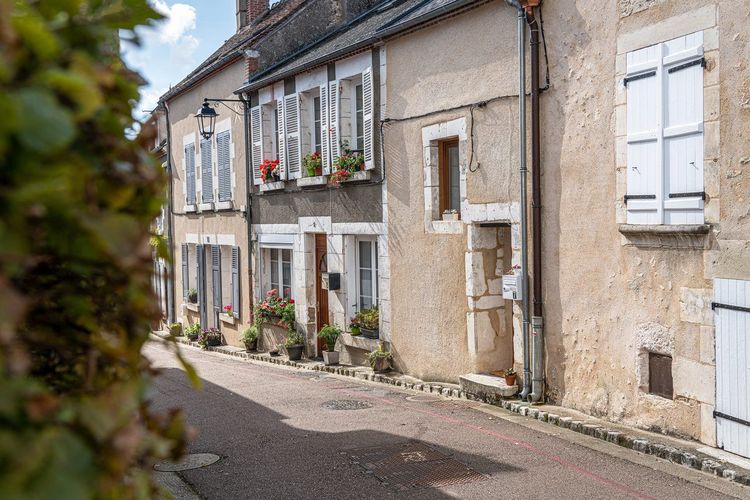
The second day is built around the Cher countryside. First stop, the village of Sancerre, about 50 minutes by road, perched on its hill above the Loire, with cobbled lanes that run back down to the vines. The Tour des Fiefs, a remnant of the medieval castle, offers a panorama over the river and, in clear weather, over the hills of the Sancerrois.
The vineyards around Bourges deserve more than being a passing backdrop. Sancerre and Menetou-Salon produce renowned Sauvignon whites, and many estates open their cellars for tastings, preferably by appointment on Sundays. Choose a small winemaker over a big house: they will be more willing to tell you about their terroir of limestone and flint, which gives the wines their minerality. If you are driving, spit at tastings or appoint a designated driver: the roads of the Sancerrois are narrow and winding. The Maison des Sancerre, at the top of the village, offers a fun introduction to the vineyard before you push open the doors of the cellars. In Chavignol, two kilometres from Sancerre, you can taste the famous crottin directly from the producers.
Heading back south, Noirlac Abbey (Le Bocage, 18200 Bruère-Allichamps, rated 4.6/5 on Google from 1,440 reviews) is a must, about 45 minutes from Bourges near Saint-Amand-Montrond. Founded in 1136 by Cistercian monks in the Noirlac bocage, on the banks of the Cher, it was sold as national property during the Revolution and then turned into a porcelain factory in the 19th century, a conversion that paradoxically saved it from demolition. The abbey church, stripped of all ornament according to the Cistercian rule, offers a silence and an acoustic that still grip visitors. The cloister, refectory and cellar can be toured in about an hour and a half, and the site also hosts a musical programme.
Sancerre to the north-east, Noirlac to the south: the two sites lie in opposite directions. You can do Sancerre in the morning, have lunch on your return to Bourges, then drive to Noirlac in the afternoon. If you only have half a day, choose according to your preferences: wine and panorama, or architecture and silence.
On the road to Noirlac, the Route Jacques Cœur links several châteaux open to visitors. The Château de Meillant, with its flamboyant façade, and the Château d'Ainay-le-Vieil, nicknamed the “little Carcassonne” for its octagonal curtain wall, are easy to combine with the abbey in the same afternoon. If you head towards Sancerre instead, a stop at La Borne, a potters' village set between Bourges and Henrichemont, lets you visit ceramic workshops that are still very active.
More Excursion Ideas Around Bourges: Vierzon, Sagonne and the Apremont Floral Park
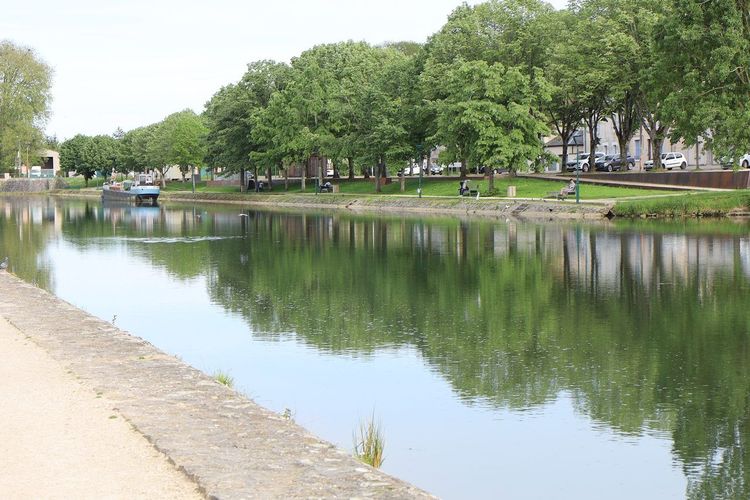
If your stay extends beyond a simple weekend, several excursions round off the visit. Vierzon, about thirty minutes by road, is worth a detour for its industrial heritage: former porcelain and agricultural machinery factories that have been repurposed, and a port on the Berry Canal where you can stroll at the end of the day.
To the east, the Château de Sagonne preserves a 14th-century keep surrounded by a moat. It belonged to Jules Hardouin-Mansart, the architect of Versailles, who had decorations made there that are still visible today. The owners offer guided tours in season.
Twenty minutes west of Bourges, Mehun-sur-Yèvre combines the romantic ruins of Duke Jean de Berry's château, where Charles VII often stayed, with the Pierre-Louis Pillivuyt porcelain museum, a reminder that the Berry was one of the great centres of French porcelain. The village pairs well with Vierzon in the same half-day.
Further south, on the edge of the Allier, the Château de Culan overlooks the Arnon valley from its rocky spur. Its three large round towers topped with reconstructed wooden hoardings give a very concrete idea of what a medieval fortress looked like in battle order. The site, a little over an hour from Bourges, combines with Ainay-le-Vieil for a day devoted to the châteaux of the southern Cher.
The Apremont floral park, about an hour from Bourges, in the village of Apremont-sur-Allier, listed among the Plus Beaux Villages de France, features gardens created from the 1970s around a private château: white garden, waterfalls, pagoda, Chinese bridge. It is one of the most beautiful landscape stops in the region in spring and summer.
More discreet, the Lac de Virlay (Route de Levet, 18340 Plaimpied-Givaudins, rated 4.7/5 on Google from 66 reviews), about fifteen minutes south of Bourges, attracts mainly anglers and walkers around a calm stretch of water. In the same village, the Romanesque abbey church of Plaimpied deserves a look for its carved capitals.
The châteaux and gardens on this list often close in winter and earlier in the day than urban sites: check their opening periods before hitting the road.
What to Eat in Bourges: Berry Specialities and Good Addresses
The Berry specialities rest on a generous country cuisine. The pâté de Pâques (Easter pâté), a pâté en croûte filled with pork and hard-boiled eggs, is eaten cold, as a starter or on a picnic by the marshes. The Berry potato galette often accompanies a glass of local wine, and œufs en meurette, eggs poached in a red wine sauce, appear on many menus. The forestine, a satiny sweet filled with praline created in 1879 by the confectioner Georges Forest, remains the most popular edible souvenir brought back from the town.
As for wine, the whites of Sancerre and Menetou-Salon naturally go with regional goat's cheeses, starting with the crottin de Chavignol and the Valençay.
For foodie spots, the historic centre has most of the good addresses, often set in half-timbered houses. The streets around Place Gordaine and Rue Coursarlon group several restaurants working with Berry produce (poultry, goat's cheese, game in season), with reasonable value for money. For a quick lunch, the Halle Saint-Bonnet and its stalls let you eat on the go.
For an afternoon snack, push open the door of a confectioner's in the centre to compare forestines and other regional sweets, such as croquets or shortbread biscuits. And if you dine on the terrace on Place Gordaine on a summer evening, order a goat's cheese platter with a red Menetou-Salon, rarer than the white but very popular locally. On Sunday lunchtimes, many restaurants in the centre close: book ahead or plan a picnic.
To bring back a souvenir of your weekend in Bourges, the cheese shops and delicatessens in the centre sell aged crottins, green Berry lentils and Sancerrois wines, all easy to carry on the train. Beer lovers will also find several craft breweries from the Cher, often present at the Saturday market. For pastry, ask for the poirat, a pear tart sometimes flavoured with eau-de-vie, which Berry bakers prepare mainly in autumn and winter, when the region's orchards give their best fruit. Served with thick crème fraîche, it ends a festive meal in the style of rural Berry.
Book your table on Saturday evening, especially during an event weekend: the most popular places fill up quickly.
Where to Stay in Bourges: Boutique Hotels and Unusual Nights in the Berry
For a classic weekend, the historic centre remains the most convenient: boutique hotels set in former mansions, within walking distance of the cathedral and the Palais Jacques Cœur. The station district offers gentler rates for those arriving by train. Book several weeks in advance if your visit coincides with the Printemps de Bourges, a period when the town is fully booked.
The Berry also cultivates real expertise in unusual accommodation. A cabin on the water near Bourges lets you sleep beside a pond, on stilts with a private terrace. Around Herry, towards the Loire, a night in a transparent bubble with a private spa is aimed more at couples. Near Châteauroux, to the west, the options multiply: a night in a dome, a night in a wooden barrel, each with its own take on nature accommodation.
Closer to Sancerre, a night in a Finnish kota with a Nordic bath combines a wood stove and a heated outdoor tub, an option popular in autumn and winter. In all, around fifteen unusual offers are spread within an hour's radius of the town.
Torn between the historic centre and nature? Combine both over two nights: the first in the heart of the old town to enjoy the walking visits and the Nuits Lumière, the second in an unusual stay, ideally located on the road to Sancerre or Noirlac.
A few habits help avoid disappointment. Hotels in the centre rarely have private parking: if you come by car, ask in advance where to park. Unusual accommodation often requires a two-night minimum at weekends in high season and a late-afternoon arrival, which fits poorly with a busy day of sightseeing. Finally, for guesthouses in the villages of the Sancerrois, remember to book dinner at the same time as the night: restaurants there are few and close early out of season.
Bourges Events: The Weekend Outings Calendar
The European Capital of Culture 2028 title is already changing the game: exhibitions, concerts and cultural projects follow one another at a brisk pace for a town of 65,000 inhabitants. The Printemps de Bourges, a contemporary music festival founded in 1977, takes over the town every April. From May to September, the Nuits Lumière light up the centre every evening, and a Christmas in the town takes over in December.
Before fixing your dates, consult the Bourges events calendar published by the tourist office, which lists current exhibitions, concerts and markets. On Saturday mornings, the market on Place Saint-Bonnet is a chance to meet producers from the Cher.
The Printemps de Bourges deserves separate preparation: for six days, the town welcomes headliners and young talents in its venues and under big tops, while the streets fill with free concerts. Accommodation and restaurants are fully booked long in advance, and the centre then feels more like a festival than a heritage town. If you want calm for sightseeing, avoid that week; if you like the atmosphere, it is on the contrary the ideal moment.
Another date to note: the European Heritage Days, in September, open private mansions and places usually closed to the public. The run-up to 2028 also brings temporary art installations in public spaces and off-site programmes in the villages of the Cher: a good excuse to come back several times.
Practical Information for a Weekend in Bourges
How to get to Bourges: by train, direct services from Paris-Austerlitz link the two cities in about 2 hours, which makes a car-free weekend realistic if you limit yourself to the historic centre. By car, allow about 2.5 hours from Paris via the A10 then the A71. The station is about a fifteen-minute walk from the cathedral.
When to go: spring (April to June) combines flowering gardens, green marshes and pleasant temperatures for walking. Summer brings the Nuits Lumière and boat trips, with more crowds. Autumn, quieter, colours the Noirlac bocage and opens the grape harvest season in the Sancerrois. Winter is the quietest season: many rural sites close, but the cathedral, the palace and the museums stay open, and accommodation with Nordic baths comes into its own. Berry summers can be hot: schedule the cathedral tower and the marshes early in the morning or in the evening.
Weekend budget: allow about 150 to 250 euros per person for two days, including boutique hotel accommodation, meals and two or three paid visits (Palais Jacques Cœur, cathedral tower and crypt), excluding transport. Since the municipal museums are free and so are the Nuits Lumière, the budget drops quickly if you favour walks and the marshes.
Getting around: the centre can be covered on foot, and a car is only useful for Sancerre, Noirlac or Apremont. The multi-storey car parks around the centre save you from driving around the narrow lanes.
With children: climbing the cathedral tower is often a hit from age 7 or 8, as are the marshes and the ponds of the Prés Fichaux. The natural history museum, which is free, completes the programme in rainy weather, and boat trips appeal to the youngest in summer.
Shopping: around Rue Moyenne and Place Gordaine, independent boutiques, confectioners selling the forestine, and wine shops where you can pick up a bottle of Sancerre or Menetou-Salon.
To get your bearings as soon as you arrive, launch the Ryo audio guide of Bourges on your phone: in 1h20 of walking, it lays the historical foundations that will make the rest of your stay more meaningful. And for an hour-by-hour programme, our dedicated article on a two-day weekend in Bourges details a more precise itinerary, while our selection of the top 5 activities to do in Bourges helps you prioritise if time is short.

FAQ
How many days do you need to visit Bourges?
One day is enough for the essentials of the historic centre: the cathedral, the old town and the Palais Jacques Cœur. A two-day weekend lets you add the marshes and an excursion to Sancerre or Noirlac. To also explore Vierzon, Sagonne and the Apremont floral park, allow three to four days.
How do you get to Bourges from Paris?
The direct train from Paris-Austerlitz takes about 2 hours and drops travellers about a fifteen-minute walk from the cathedral. By car, allow about 2.5 hours via the A10 then the A71.
What budget should you plan for a weekend in Bourges?
Between 150 and 250 euros per person for two days, including accommodation, meals and the main paid visits, excluding transport. The Palais Jacques Cœur costs 9 euros (free for under-26s residing in the EU) and the municipal museums are free.
What is the best time to visit Bourges?
Spring, between April and June, combines flowering gardens, green marshes and ideal temperatures. Summer brings the Nuits Lumière, and autumn colours the Noirlac bocage and the vineyards of the Sancerrois.
What should you see first in Bourges in one day?
Saint-Étienne Cathedral, the half-timbered old town and the Palais Jacques Cœur make up the essential trio. If you have time left, an hour in the Bourges marshes rounds off the day perfectly.
Where can you park in Bourges to visit the historic centre?
Several covered car parks surround the town centre, less than a ten-minute walk from the cathedral. During events, park slightly on the outskirts and walk into the centre, as the old town is largely pedestrianised.
What can you do in Bourges when it rains?
The cathedral, the Palais Jacques Cœur and the free municipal museums (Musée du Berry, Musée Estève, Hôtel Lallemant, natural history museum) are enough to fill a day under cover. Save the marshes and gardens for a break in the weather. The covered market and the tea rooms in the centre also offer good warm stops between visits, and a tasting in a cellar in the town centre makes an excellent replacement for the wine route when the weather turns.
Is Bourges worth the detour for a romantic weekend?
Yes: half-timbered lanes, dinner on Place Gordaine, the Nuits Lumière in summer and an unusual night with a spa in the Cher countryside make for a romantic stay two hours from Paris.
Bourges, a Weekend Between Stone and Water
A weekend in Bourges rarely leaves a lukewarm impression: the contrast between the heritage density of the centre and the breathing space of the marshes, a few minutes' walk away, surprises even visitors who already know the Berry. Add Sancerre or Noirlac, a table of Berry specialities and, in summer, an evening under the Nuits Lumière, and your two days will be well filled.
For the urban part, the Ryo audio-guided tour of Bourges remains the simplest solution: 22 audio stops, 1h20 of walking and 3.2 km to link the cathedral, old town and Palais Jacques Cœur, at your own pace and with no timetable constraints.