© Shutterstock
 Votre guide Ryo
Visiting Calais Solo: Complete Guide 2026
Calais has long had a reputation as a mere transit point, a city you drive through toward the ferry or Eurotunnel without ever stepping on the pavement. Visiting Calais solo completely overturns this preconception: the city can be explored on foot in a packed half-day, with no need to coordinate a group or rent a car. To get a feel for the historic centre without complicated logistics, the Ryo audio-guided tour of Calais (24 audio stops, 2h15, 5.6 km) takes you from one stage to the next, headphones on and at your own pace.
In just a few hours, you encounter a UNESCO-listed belfry dominating the city's rooftops, a Rodin statue that tells the story of the 1347 siege without needing a guide to understand it, and a 59-metre lighthouse where you climb 271 steps to spot the English cliffs on a clear day. Add to that a Second World War blockhouse turned museum, a Cité de la Dentelle housed in a former textile factory, and the cliffs of Cap Blanc-Nez reachable by bus without organising a carpool. Enough to fill one to two days without ever feeling alone in a tourist void.
The Historic Centre of Calais: Hôtel de Ville, Belfry and the Burghers Statue
Everything logically starts here, a few minutes' walk from Calais-Ville station. It is the most natural starting point for a solo visit: compact, easy to navigate, and rich enough in history to fill a good part of the morning without long journeys.
The Hôtel de Ville and the UNESCO-Listed Belfry
The Hôtel de Ville de Calais imposes its neo-Flemish silhouette as soon as you emerge onto the square. Built between 1911 and 1925 to symbolise the union of Calais and Saint-Pierre, merged in 1885, the building blends red brick and white stone in a style that owes as much to Bruges as to northern France.
Its belfry, rising to 75 metres, is one of the 56 belfries of Belgium and France inscribed on the UNESCO World Heritage List, with Calais joining the list during the 2005 extension. It can be visited according to a schedule that varies with the season: check with the tourist office before you go. At the top, the panorama takes in the port, the slate rooftops and, on a clear day, the white line of the English cliffs. Allow 45 minutes to 1 hour for the town hall and belfry combined — a well-calibrated stop when travelling solo, with no waiting for a group.
Rodin's Statue Les Bourgeois de Calais and the place d'Armes
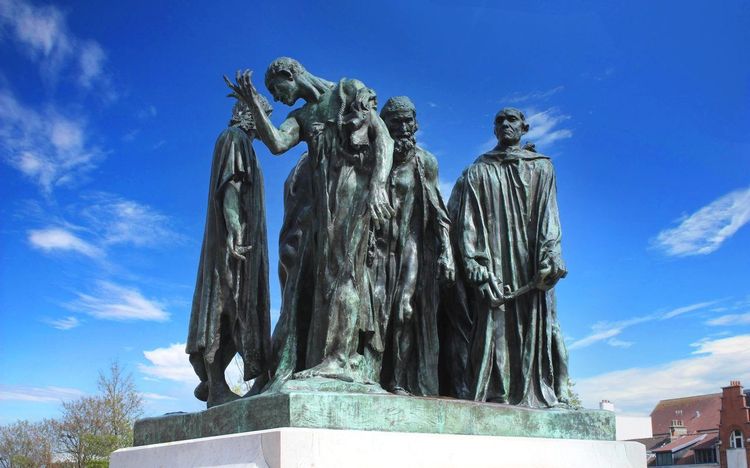
In front of the Hôtel de Ville, where it was relocated in 1924, stands one of Auguste Rodin's most celebrated bronzes: Les Bourgeois de Calais, commissioned by the city in 1884 and unveiled in 1895. The group depicts six prominent citizens of Calais who, in 1347, surrendered themselves to King Edward III of England to spare the city after an eleven-month siege. Rodin portrayed them barefoot, with ropes around their necks, caught between resignation and dignity, far from the heroism expected of an official commission. Walk around the base: each face tells a different reaction to an announced death.
Heading toward old Calais, the place d'Armes (Place d'Armes, 62100 Calais, rated 4.3/5 on Google from 620 reviews) retains traces of the medieval town with its Tour du Guet, one of the few buildings to have survived the destruction of 1940. Sit on a terrace, observe local life and note the streets that lead down toward the seafront. Travelling solo does not mean rushing from one sight to the next without pausing.
The Ryo audio-guided tour of Calais stops right in front of the Hôtel de Ville, the belfry and Rodin's statue to tell the story of the 1347 siege where it left its mark, with no information panel to decipher.
The Cité de la Dentelle et de la Mode, Calais's Textile Identity
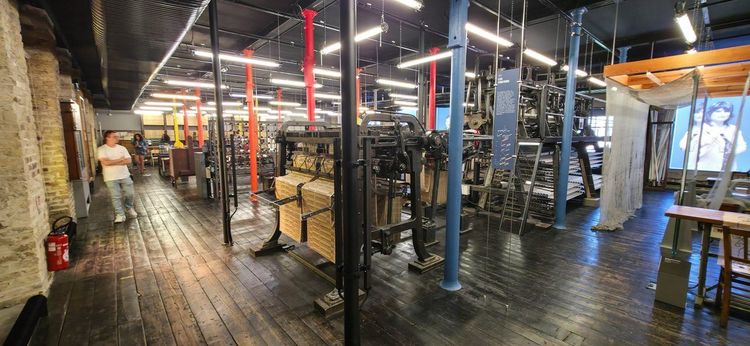
Calais owes much of its prosperity to mechanical lace-making, introduced by English workers at the start of the 19th century. The Cité Internationale de la Dentelle et de la Mode (135 Quai du Commerce, 62100 Calais, rated 4.6/5 on Google from 1,970 reviews), opened in 2009 in a former Boulart factory, traces this history through Leavers looms still in working order and fashion collections that reuse Calais lace.
If you are visiting solo, allow about one hour: the scenography is easy to follow alone, and the loom demonstrations provide a natural rhythm to the tour. It is the ideal stop for understanding what sets Calais apart from a simple port of call, and a good option on a rainy day.
The Seafront: Calais Lighthouse, Beach and the digue Gaston Berthe
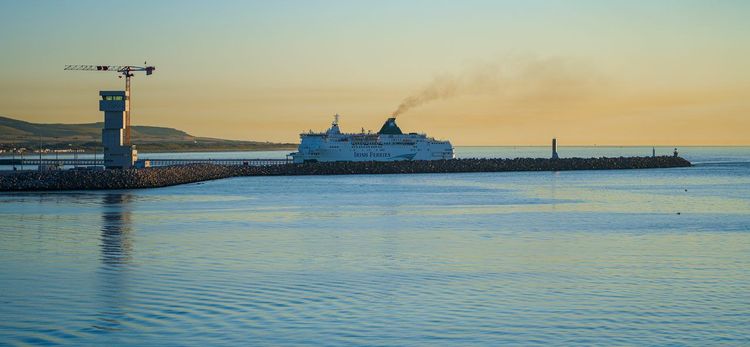
A 15–20 minute walk from the historic centre, the coastline offers a completely different face of the city — more open and airy, ideal for an afternoon stroll.
The Calais Lighthouse and Its Panorama over the Strait
Commissioned in 1848, the Calais lighthouse stands 59 metres tall and is one of the French lighthouses open to visitors. You must climb 271 steps to reach the gallery overlooking the port and the Strait of Dover, one of the busiest shipping lanes in the world. On a clear day, you can make out the cliffs of Dover, some forty kilometres away.
Automated in 1987 and listed as a historic monument in 2011, it succeeded an earlier watchtower that already served as a landmark for ships. The climb takes about twenty minutes return: a short detour, easy to slot in between two visits.
The Beach and the Seafront Promenade
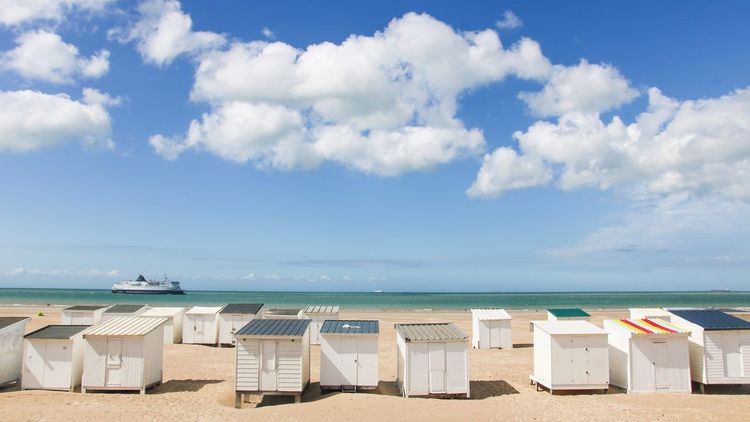
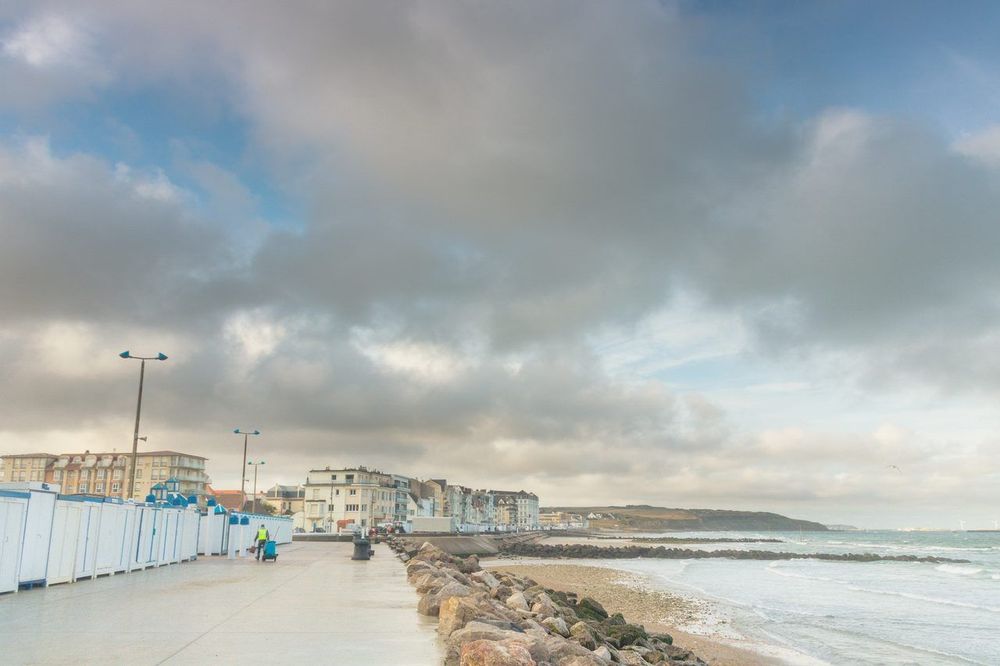
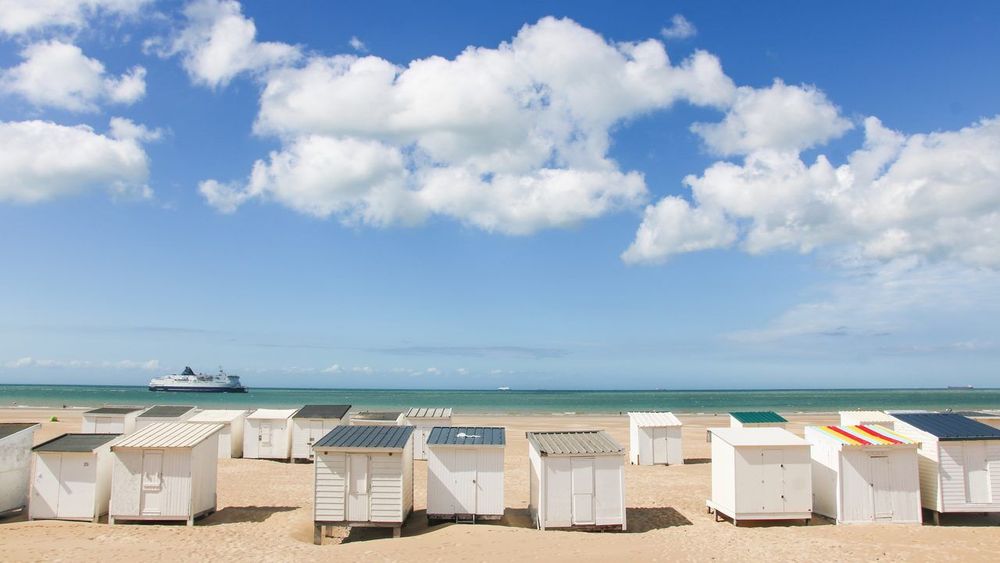
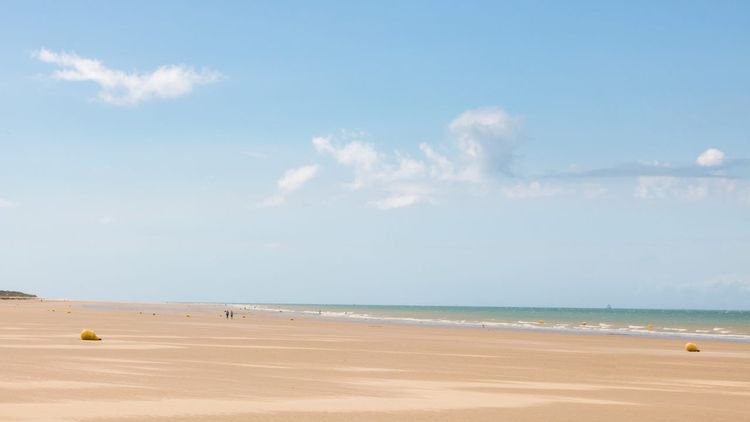
Below, the Calais beach stretches its fine sand, bordered by the digue Gaston Berthe (62100 Calais, rated 4.3/5 on Google from 410 reviews), a promenade that runs along the seafront all the way to Fort Risban. Local joggers and walkers pass by at the end of the day, and it is one of the few places in the city where you can sit facing the horizon with no other goal than watching the ferries go by.
When the north-westerly wind picks up, the beach attracts land-sailing and kitesurfing enthusiasts — a spectacle you can enjoy perfectly well from the promenade. Coming alone at sunset is not at all unusual here: the walkway is busy at all hours and well enough lit to extend your stroll beyond dusk.
War Memory: Fort Risban and Remains of the Atlantic Wall
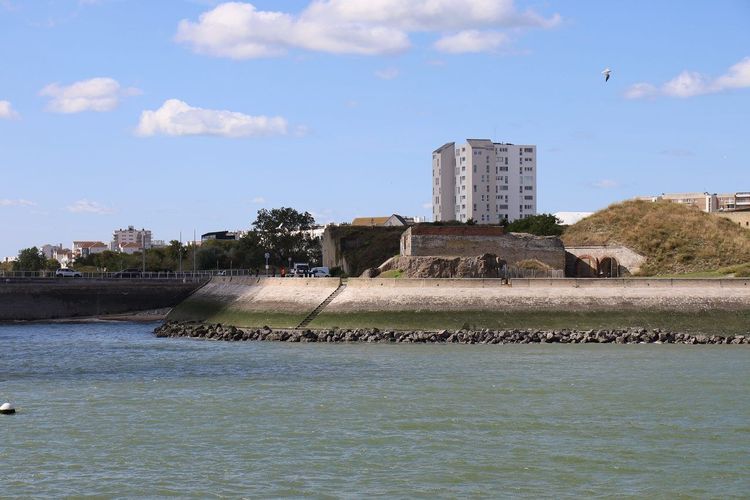
Calais paid a heavy toll in the Second World War: besieged in May 1940, transformed into a coastal fortress by the occupying forces, then largely destroyed by bombing before its liberation in 1944. This memory remains visible in the open air, with no need to book a guided tour.
Fort Risban and the Coastal Blockhouses
At the end of the promenade, Fort Risban has occupied a strategic site since the siege of 1346, when Edward III's troops erected a tower there to cut off the city's supply lines. Rebuilt in 1640 and deemed rather dilapidated by Vauban during his visit, it was fortified again during the Second World War as part of the Atlantic Wall. The surrounding area can be explored freely and lends itself to solo exploration: few visitors, uneven ground that calls for care, and an open view over the channel and the lighthouse.
Seven centuries of military history are layered across just a few hundred metres, and few panels explain them on site. An audio guide saves you from photographing stones without any context.
The Musée Mémoire 1939–1945
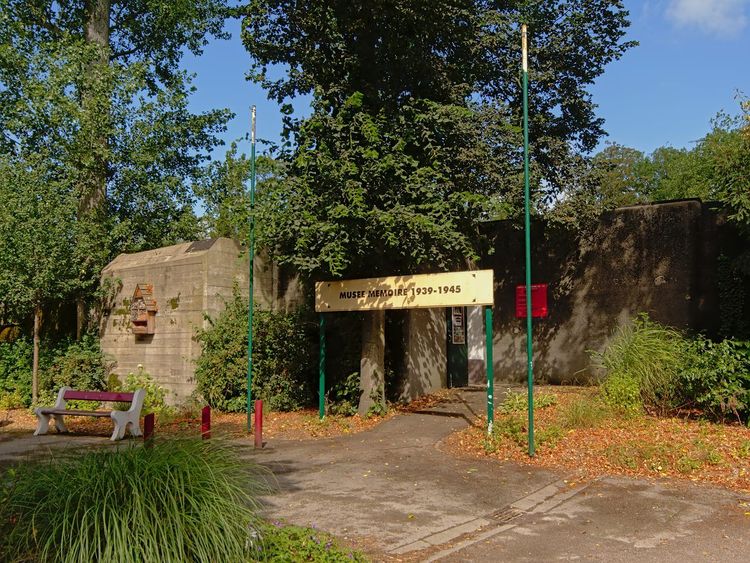
Heading back toward the centre, in Parc Saint-Pierre opposite the Hôtel de Ville, the Musée Mémoire 1939–1945 (Parc Saint-Pierre, 62100 Calais, rated 4.4/5 on Google from 592 reviews) occupies a former German blockhouse that served as a naval command post. The rooms trace the occupation of Calais, the organisation of the Atlantic Wall along this stretch of coastline and the bombing raids that razed much of the city.
Opening hours are seasonal and the museum closes for part of the winter: check before you go. Entry costs a few euros and the visit is self-guided, with no timed slot required. Allow 1 to 1.5 hours in these narrow corridors — a dense experience that works very well solo. To connect these remains to the rest of Calais's history, the Ryo audio-guided tour of Calais tells you on site the story of the "English" city it was for more than two centuries, until its recapture in 1558.
Solo Day Trips: Cap Blanc-Nez and the Côte d'Opale
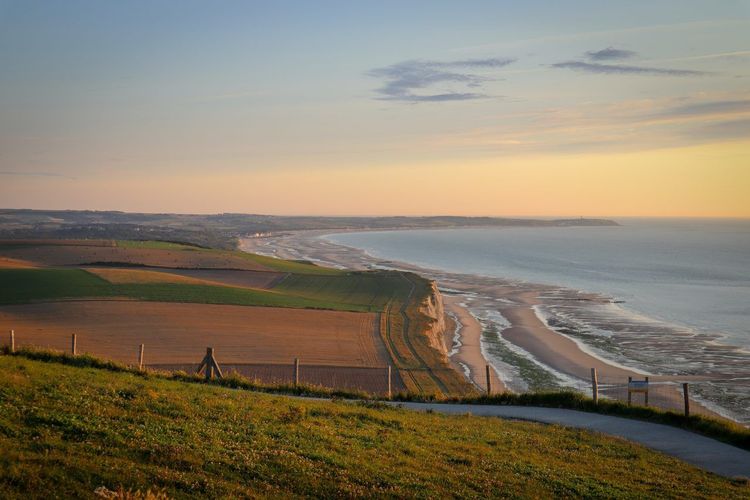
This is arguably Calais's most underrated asset for a solo traveller: the Côte d'Opale can be reached without a car, avoiding the logistics of a carpool or a rental.
Cap Blanc-Nez and the Cliffs: an Easy Solo Hike
At the heart of the Grand Site de France des Deux Caps, Cap Blanc-Nez rises with its chalk cliffs about fifteen kilometres from Calais. The viewpoint, more than 130 metres above the Channel, reaches the English coast on a fine day. The GR120 follows the clifftops for several kilometres — a waymarked and well-frequented trail where a solo hike unfolds without worry.
At the summit, the Dover Patrol memorial pays tribute to the Allied sailors who fell in the Strait during the First World War, a useful landmark for finding your way on the path. Regional buses connect Calais to Escalles and the coastal villages, with a more frequent service in summer: check the timetables the evening before, especially for the return journey. Allow half a day for the round trip, or a full day if you combine it with a nearby village.
Wissant and Sangatte: Short Getaways Without a Car
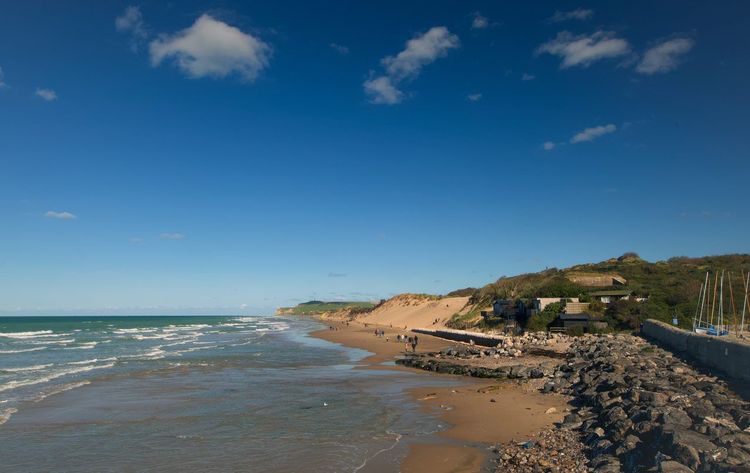
On either side of Cap Blanc-Nez, two villages complete the excursion. Wissant (62179 Wissant, rated 4.5/5 on Google from 780 reviews), a former fishing village, lines a long sandy beach popular with kitesurfers, with a few seafront cafés. Sangatte, closer to Calais, offers direct beach access without the summer crowds of better-known resorts.
You can visit both villages in the same day using coastal buses, with a lunch break in Wissant and a return via Sangatte in the late afternoon. To plan these car-free outings, the Ryo article on the surroundings of Calais reviews the coastal sites, complemented by the hiking guide around Calais for the most accessible walking routes.
One-Day Itinerary for Visiting Calais Solo
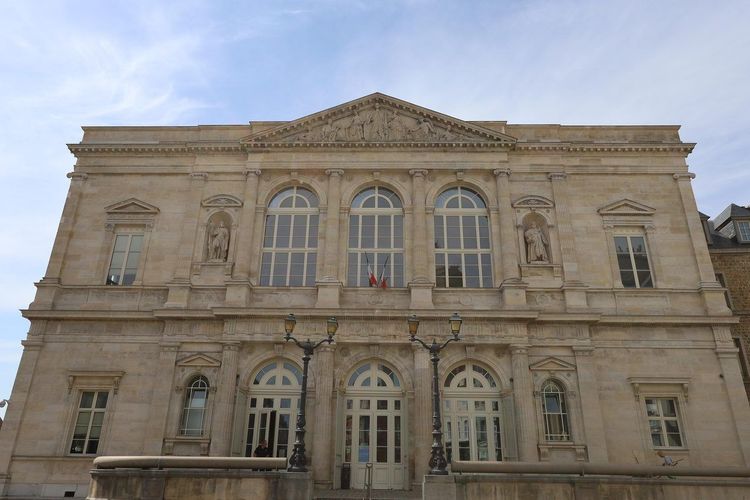
Only have one day? Here is a tried-and-tested sequence to see everything on foot, without retracing your steps.
In the morning, set off from Calais-Ville station toward the Hôtel de Ville, climb the belfry if the schedule allows, then take your time in front of Rodin's Burghers and the Musée Mémoire, just across the way. Head next to the Cité de la Dentelle, a ten-minute walk, before a quick lunch around the place d'Armes.
The afternoon belongs to the coastline: the lighthouse, the digue Gaston Berthe, then Fort Risban at the end of the promenade. The sunset over the Strait brings the day to a close. If you prefer to be guided without following a group, the Ryo audio-guided tour of Calais covers the essentials of this loop in 24 audio stages and 2h15 of walking, launched whenever you like from your phone.
Where to Eat Alone in Calais Without Feeling Isolated

Eating alone is often the most dreaded moment of a solo trip. Calais makes things easier with several formats that avoid the awkwardness of an empty chair opposite you.
The open-air markets at place Crèvecœur and place d'Armes are held several mornings a week and let you put together a simple lunch: northern French cheeses, charcuterie, fish and brown shrimps. An affordable option for a meal on a bench along the seafront.
The brasseries in the centre, around the place d'Armes and boulevard Jacquard, often have counters or high tables where eating alone goes unnoticed. A table for one raises no eyebrows in a city used to passing travellers. For a quick bite, the chip shops and moules-frites spots near the port area are a reliable choice, sometimes available to take away for a picnic on the promenade. Another good option: the terraces facing the basin, where the spectacle of the boats draws more attention than your table.
Where to Stay in Calais for a Solo Trip
Two criteria matter when travelling solo: centrality, to limit late-night journeys, and proximity to transport.
The place d'Armes area and the Hôtel de Ville district concentrate most of the hotels, within walking distance of Calais-Ville station, restaurants and the seafront. This is the most practical area for a short stay without a car. The youth hostel in Calais, located near the beach on avenue du Maréchal de Lattre de Tassigny, is an affordable option appreciated by solo travellers for its communal spaces, which are conducive to meeting people. Book a few days in advance to secure a single room with no single supplement.
Avoid accommodation in isolated port areas or on the industrial outskirts: the historic centre and the seafront are better served on foot and livelier in the evenings.
How to Get to and Around Calais Without a Car
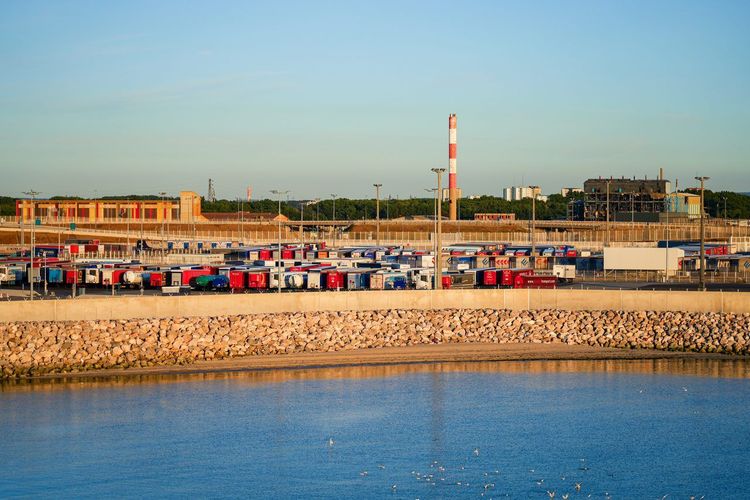
Calais is one of those French coastal cities where everything can be done without a driving licence or a rental, which greatly simplifies solo organisation.
By train, Calais-Ville station (Place du Général de Gaulle, 62100 Calais, rated 3.8/5 on Google from 276 reviews) serves the historic centre directly, a few minutes' walk from the Hôtel de Ville. Calais-Fréthun station, about 8 kilometres away, handles TGV trains and is connected to the centre by bus or taxi. By sea, ferries link Calais to Dover in about 1h30, but only P&O Ferries carries foot passengers on this route; DFDS and Irish Ferries only transport passengers with vehicles. The Eurotunnel (Le Shuttle) is also reserved for vehicles. If you are coming from the United Kingdom without a car, the foot-passenger ferry or the Eurostar to Lille followed by the TER regional train remain the simplest options.
A taxi between Calais-Fréthun and the centre generally costs between 15 and 20 euros — a reassuring option if you arrive late with luggage. Locally, the urban bus network serves the neighbourhoods and part of the coastline, and a few hire shops offer bicycles for reaching the beach. But the bulk of the historic centre, the seafront and the war memory sites are very easily covered on foot, with no more than 2 to 3 kilometres between the main attractions.
Budget, Safety and Best Practices for Visiting Calais Solo
This is often the question that holds people back before booking: is Calais suited to solo travel? The answer comes down to a few concrete reference points.
On the budget side, allow 40 to 60 euros per day as a budget traveller: a night in a hostel or simple hotel at around 30 to 50 euros, meals between 10 and 20 euros. The exterior of the Hôtel de Ville, Rodin's statue, the beach and the surroundings of Fort Risban are free. The lighthouse, the Cité de la Dentelle, the belfry and the Musée Mémoire require a ticket, generally less than 10 euros each.
On the safety front, the city centre, the place d'Armes and the tourist seafront present no particular issue, day or evening, as long as you stay on busy, well-lit streets. As in most port cities, it is best not to linger alone at night near the port facilities or in quiet outlying areas.
As for timing, spring and summer offer the best conditions for the seafront and Cap Blanc-Nez, when coastal buses also run more frequently. Autumn and winter suit a heritage-focused visit (belfry, Cité de la Dentelle), with quieter streets, but bear in mind seasonal closures. One day is enough for the centre and the war memory sites; add half a day to a full day if you want to push on to Cap Blanc-Nez.

FAQ
Is it safe to visit Calais alone?
Yes, the historic centre, the place d'Armes and the tourist seafront present no particular risk, day or evening. It is simply advisable to avoid lingering alone at night in the immediate vicinity of the port or in quiet outlying areas.
How many days do you need to visit Calais solo?
One full day is enough to cover the historic centre, the Cité de la Dentelle, the seafront and the war memory sites. Allow an extra day for an excursion to Cap Blanc-Nez, Wissant or Sangatte.
How do you get to Calais without a car?
Calais-Ville station serves the city centre directly, while Calais-Fréthun station handles TGV trains. From Dover, only P&O Ferries accepts foot passengers; the Eurotunnel is reserved for vehicles.
What should you see in Calais in one day as a solo traveller?
Chain together the Hôtel de Ville and the belfry, Rodin's statue Les Bourgeois de Calais, the Musée Mémoire, the Cité de la Dentelle et de la Mode, then the seafront with the lighthouse and the digue Gaston Berthe before finishing at Fort Risban.
What budget should you plan for a solo visit to Calais?
Allow around 40 to 60 euros per day as a budget traveller, including accommodation and meals. Several sites can be visited for free; the lighthouse, the belfry, the Cité de la Dentelle and the Musée Mémoire are paid attractions.
What is the best time to visit Calais?
Spring and summer are better suited to coastal excursions and Cap Blanc-Nez. Autumn and winter remain suitable for a heritage-focused visit, with quieter streets but reduced opening hours.
Can you visit Cap Blanc-Nez from Calais without a car?
Yes, regional buses connect Calais to Escalles and the coastal villages, with more frequent services in summer. The GR120 then allows you to walk along the clifftops for several kilometres, a waymarked route well suited to a solo hike.
Visiting Calais solo is ultimately less a question of logistics than one of pace: your own, between a listed belfry, a statue that tells the story of a medieval siege and cliffs facing England. To follow this itinerary without missing anything, the Ryo audio-guided tour of Calais remains the simplest way to discover the historic centre in a few hours, without depending on a guide or a group.
À lire également