© Shutterstock
 Votre guide Ryo
20 Must-Do Activities in Chamonix in 2026
What to do in Chamonix without missing the best of a unique Alpine valley in Europe? The answer shifts by season, but one constant stands out: the Mont-Blanc massif at 4,808 metres, the Mer de Glace stretching over 7 kilometres, granite walls that world mountaineering has consecrated since the 18th century. Chamonix is not merely a backdrop frozen in a high-mountain postcard — it is a living town, open twelve months a year, reachable from Geneva in under an hour, where elite skiers rub shoulders with families in search of a quiet trail. To explore the valley's history and sites at your own pace, the Ryo audio guide Where the Earth Touches the Sky offers a narrated tour through Chamonix-Mont-Blanc.
What few guides mention: the Aiguille du Midi cable car lifts visitors to 3,842 metres in twenty minutes from the town centre — higher than the highest point in most European countries. The Musée des Cristaux houses giant quartz specimens extracted from the mineral veins of the massif, some exceeding 30 kilograms. The QC Terme offers outdoor pools at 37°C with a direct view of the glaciers, summer and winter alike. And the Lac Blanc hike, accessible without technical equipment from June to October, delivers one of the most photographed panoramas in the French Alps. Here are 20 activities to make the most of Chamonix, whatever season you visit. And between the Aiguille du Midi and the Mer de Glace, our 23-stop audio-guided tour tells the story of the town itself, the one built by guides and early alpinists.
1. Ride up to the Aiguille du Midi, 3,842 Metres above the Valley
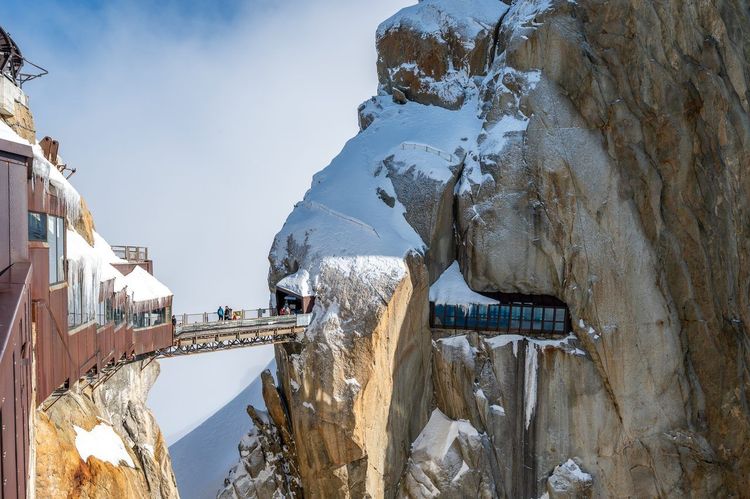
Few mountain experiences give such a raw sense of altitude. The Aiguille du Midi cable car (100 Place de l'Aiguille du Midi, 74400 Chamonix-Mont-Blanc, rated 4.7/5 on Google from 15,889 reviews) departs from the centre of Chamonix at 1,035 metres altitude and reaches the summit station in two stages: first the Plan de l'Aiguille at 2,317 metres, then the Aiguille du Midi at 3,842 metres. The full ascent takes around twenty minutes. When the doors open at the summit, the air noticeably thins, and the panorama spreads across three countries.
From the central terrace, Mont-Blanc rises to 4,808 metres, its hanging glacier visible without binoculars. The north terrace looks out over the Vallée Blanche, a 20-kilometre glacial corridor that experienced alpine skiers descend off-piste every winter with a guide. For non-skiers, the terrace alone conveys the sheer scale of the place: a sea of ice suspended at eye level, granite needles piercing the clouds within arm's reach.
The glass cabin known as "Step into the Void", installed in 2013, lets you step out over thin air with a transparent floor 1,000 metres below your feet. The experience lasts only a few seconds but leaves a lasting impression. Those prone to vertigo can observe the cabin from outside without stepping in — the view from the terrace is already dizzying enough.
Practical tip: book your ticket online several weeks in advance in peak season (July–August), as morning slots sell out first. Bring a windproof jacket even in summer — temperatures hover around 0°C at the summit in the middle of August. The return ticket costs around €83 per adult (check at the time of your visit, as prices have risen in recent years). The two-stage ascent allows for gradual acclimatisation — some people experience mild dizziness or headaches at the summit, especially if arriving directly from low altitude. Take a few minutes to catch your breath before heading up to the terraces.
In winter, guided departures for the Vallée Blanche descent are organised from mid-December. It is the longest accessible off-piste descent in Europe, with 2,800 metres of vertical drop over 20 kilometres. Even as a spectator, watching the roped parties set off from the summit station is a memorable experience in its own right.
2. Discover the Mer de Glace and Its Ice Cave
The Mer de Glace is France's largest glacier: 7 kilometres long with a thickness reaching 200 metres at its deepest point, moving 90 metres per year toward the valley. It has nevertheless been retreating since the 1820s due to climate change. Markers dot the slope to indicate the glacier's level at different decades, and the gap between 1820 and today exceeds 100 metres in height. This visual reference, more than any abstract figure, makes the phenomenon immediately tangible.
To get there, the Montenvers train connects Chamonix station to the panoramic Montenvers station in twenty minutes. This rack railway, inaugurated in 1908, climbs 875 metres of vertical through fir forests. Montenvers station, at 1,913 metres, offers a direct view of the glacial tongue. A short cable car, included in the ticket, then descends to the entrance of the ice cave.
The ice cave is carved each year into the glacier by the site's teams, as the mass of ice is constantly moving and the previous cave is eventually carried away. The walls are a deep blue: the blue of millennia-old compressed ice, which absorbs all wavelengths of light except blue. The interior temperature hovers around -2°C in summer. Bring a warm layer, even if you arrive in shorts from the valley.
The combined ticket for the train, cable car, and ice cave costs around €45 per adult (indicative prices). Allow the entire morning: the train, the glacier visit, the cave, and lunch at the Montenvers mountain hut easily fill three to four hours. On Sunday in summer, queues for the train grow considerably. Opt for a weekday or the first departure of the morning to avoid waiting.
3. Brévent Cable Car: a Bird's-Eye View of Mont-Blanc
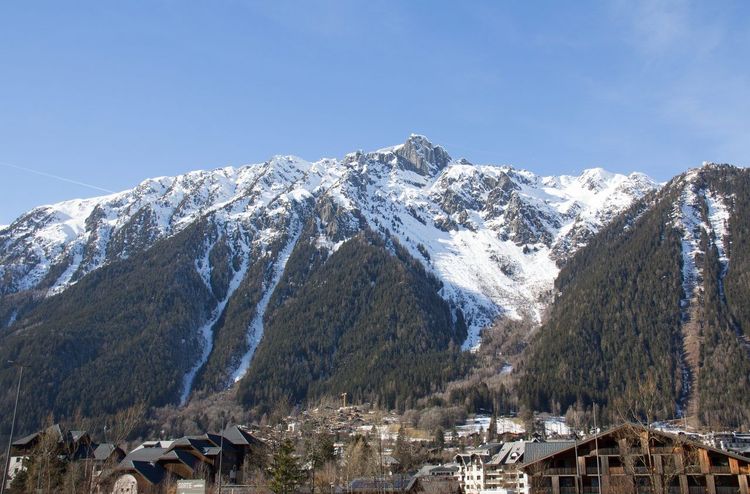
The Brévent (2,525 m) offers something the Aiguille du Midi does not: a face-to-face view of the Mont-Blanc massif from the opposite side of the valley. The Aiguille du Midi sits within the massif; the Brévent stands outside it, and it is precisely this position that provides the most complete perspective on the glaciers and needles of the French side. Photographers wanting to frame Mont-Blanc with the valley below come here.
The cable car departs from the centre of Chamonix in two stages: a stop at Planpraz (2,000 m) then the summit at 2,525 m. The panoramic restaurant at the Brévent serves lunch on a terrace with views of Mont-Blanc. In summer, the Brévent is also the starting point for the link to La Flégère, a ridge trail at 2,000 m that follows the Aiguilles Rouges for several hours of walking.
The Brévent is a well-known site for paragliding: local companies offer tandem flights departing from Planpraz, landing on the Chamonix plain. An hour in the air above the valley with the glaciers as a backdrop. Bookings are essential in summer, as the waiting list grows on fine-weather days.
In winter, the Brévent is part of the Chamonix ski area, linked to La Flégère by aerial cable. Runs descend to 1,035 metres at the resort, for a vertical drop of nearly 1,500 metres on the sector's longest descent.
4. Hiking the Grand Balcon Sud, between Glaciers and Open Sky
The Grand Balcon Sud is one of the valley's most iconic hiking routes. It links Planpraz (reachable by gondola from Chamonix) to La Flégère along a ridge trail at around 2,000 metres altitude, facing the Mont-Blanc massif. The view is head-on throughout the walk, shifting angle at every bend: first the Aiguilles de Chamonix, then the Glacier des Bossons, then the north face of Mont-Blanc.
The total distance reaches around 11 kilometres with limited elevation gain (the ascent is done by gondola). Walking time ranges between 3 and 4 hours depending on pace. The trail is waymarked and accessible to anyone in good physical condition without technical equipment. Marmots frequently cross the path in summer, and groups of chamois regularly gather on the ridges.
The logistics are straightforward: take the gondola up to Planpraz from Chamonix, walk to La Flégère, descend by the La Flégère gondola to Les Praz-de-Chamonix, then return to the centre by shuttle bus. Budget around €30 to €40 for a one-way lift on each side.
Set off before 9am to enjoy the morning light on the glaciers and avoid the midday crowds. Clouds build in altitude during summer afternoons, and visibility can deteriorate noticeably. Bring water: the heat in direct sun at 2,000 metres often catches walkers used to the valley off guard.
5. The Lac Blanc, the Most Photographed Alpine Panorama in the Alps
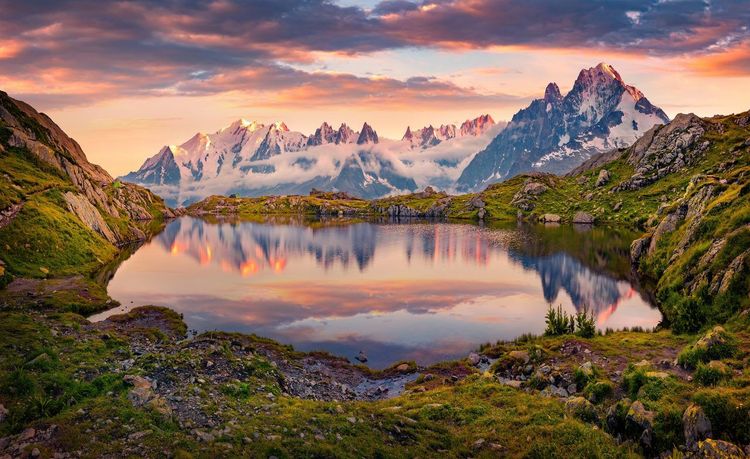
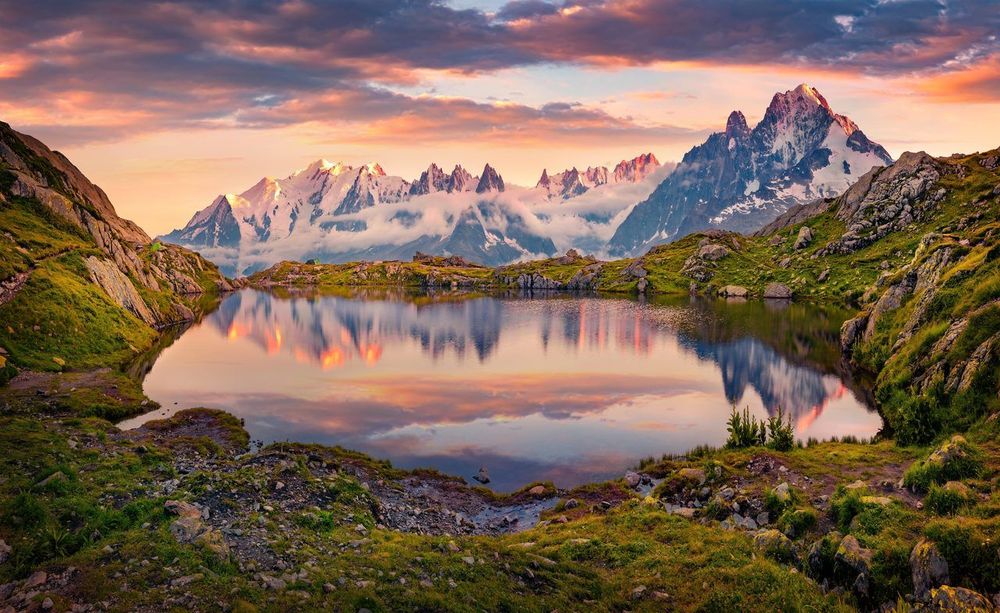
The Lac Blanc (2,352 m) is often described as the finest viewpoint in the Chamonix valley. The lake reflects the Grandes Jorasses, the Aiguille Verte, and the Aiguilles de Chamonix in a slate-grey water that turns turquoise depending on the hour and the light. The photograph you may have seen — granite needles mirrored in the lake — is taken here.
Access is either from the Index (reachable by cable car from La Flégère) or directly from La Flégère on foot. The climb from La Flégère takes between 1h30 and 2h for around 500 metres of vertical gain. The path is well marked but includes some rocky sections near the top — hiking boots are essential, as trainers do not provide adequate grip on wet terrain.
The lake is accessible from mid-June to mid-October depending on snow conditions. Outside this window, snow covers the trail and makes progress dangerous without crampons. Check weather forecasts and trail conditions before setting out — the Lac Blanc refuge regularly posts updates on its social media channels.
The Lac Blanc refuge offers hot meals and overnight stays for those wishing to see the sunrise over the massif. Book several months in advance for July–August nights. The golden morning light on the needles, with the lake in the foreground, fully justifies the early alarm. The return can be made via the Lacs des Chéserys for a longer loop that avoids retracing your steps. Allow 5 to 6 hours of walking for the full loop from La Flégère.
6. QC Terme Chamonix: Thermal Baths Facing the Glaciers
The QC Terme Chamonix (200 Avenue de Courmayeur, 74400 Chamonix-Mont-Blanc, rated 3.8/5 on Google from 6,312 reviews) is an Italian thermal institution established in the French Alps in 2018 — the first centre of this trans-Alpine group to open outside Italy — spread across nearly 4,000 m² dedicated to wellbeing. The concept: outdoor and indoor pools at varying temperatures, panoramic saunas, heated relaxation rooms, and a treatment menu, all facing the Mont-Blanc massif. In winter as in summer, the steam rising from the pools contrasts with the cold or crisp mountain air, and a sense of wellbeing sets in almost immediately.
The site includes several outdoor pools at 37–38°C, a heated indoor pool, Finnish and Italian saunas, a hammam, a salt cave, and relaxation areas. The view from the outdoor pools looks directly onto the glaciers and snow-capped peaks, transforming what might be a simple spa experience into something more singular. On cold winter days, lying immersed at 38°C while snow falls outside is an experience hard to find elsewhere in the Alps.
Entry is paid: expect between €40 and €70 depending on duration (3 hours or full day) and the time of year. Treatments and massages are charged on top of this. The establishment is very busy at weekends and in bad weather. Opt for a weekday to enjoy the pools without waiting. Book online: late-afternoon winter slots and rainy-day sessions fill up quickly.
For those hesitant about spending time indoors in the mountains: the QC Terme is particularly worthwhile after a long day of skiing or hiking. Muscles recover better in sustained warmth, and the alternation between hot and cold pools is well documented for its benefits on muscular recovery. It is also one of the few activities in the valley that is just as enjoyable in the rain as in the sunshine.
To complement your stay, the Chamonix-Mont-Blanc audio-guided tour lets you explore the town's history and iconic sites between spa sessions.
7. Ride the Mont-Blanc Tramway to the Nid d'Aigle
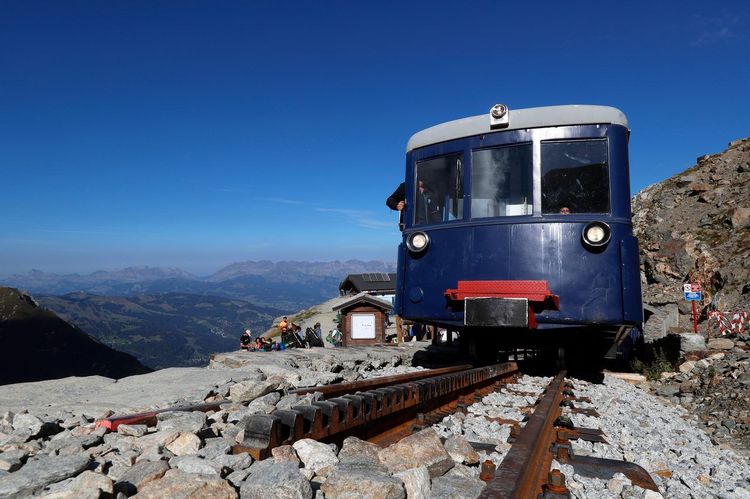
The Mont-Blanc Tramway (Gare du Fayet, 74190 Saint-Gervais-les-Bains, rated 4.6/5 on Google from 728 reviews) is the highest rack railway in France. It connects Saint-Gervais-les-Bains to the Nid d'Aigle at 2,372 metres altitude, passing through forests, alpine meadows, and glacial moraines in one hour and ten minutes of climbing. This is not merely a tourist attraction: it is the historic access route to the Col du Goûter, a mandatory stage for alpinists attempting the normal route up Mont-Blanc.
The terminus at the Nid d'Aigle offers a striking view of the Bionnassay glacier and the glacial couloirs leading toward the normal route of Mont-Blanc. Marked hiking trails depart from the terminus for walkers wishing to continue on foot. An important planning point: the tramway departs from Saint-Gervais-les-Bains, 30 minutes from Chamonix by car or shuttle — not from the centre of Chamonix. Budget around €35 to €45 for a return ticket depending on the season.
8. Parc animalier de Merlet: Alpine Wildlife in the Open
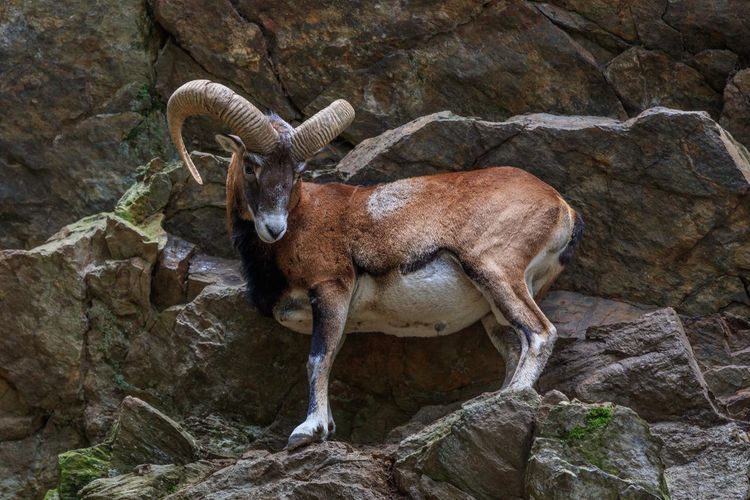
The Parc animalier de Merlet (1 Chemin de Merlet, 74310 Les Houches, rated 4.6/5 on Google from 3,826 reviews) occupies an alpine meadow at 1,562 metres altitude in the commune of Les Houches, about ten kilometres from Chamonix. The site operates as a semi-open nature reserve: ibex, chamois, deer, mouflon, llamas, and marmots live in their mountain-slope enclosures with the Mont-Blanc massif as a backdrop. This is not a conventional zoo — the animals retain wild behaviours and appropriate contact distances are respected.
Access is on foot from the Les Houches car park (20 minutes uphill) or by car to the entrance in peak season. The park is open from mid-May to mid-September. Entry costs around €10 to €12 per adult and €6 to €7 per child. Families easily spend two to three hours here: the terrain is sloped (suitable footwear advised), and children actively hunt for the marmots whistling from their burrows. Ibex are often visible in the morning, when they warm themselves in the first rays of sunshine.
9. Gorges de la Diosaz: a Canyon 8 Kilometres from Chamonix
Just 8 kilometres from Chamonix toward Sallanches, the village of Servoz hides the entrance to the Gorges de la Diosaz (Route des Gorges, 74310 Servoz, rated 4.6/5 on Google from 2,913 reviews). The river has carved a 700-metre-long canyon into the limestone over millennia, with giant potholes and narrow passages where light barely filters between the walls. The laid-out path follows the torrent along footbridges and steps cut into the rock.
The visit lasts 45 minutes to 1 hour and is suitable for children from age 5–6 with close supervision. Entry costs around €8 per adult. The gorges close in winter (generally from November to late April) and during flood periods. Bring a windproof jacket: the coolness inside the gorges can come as a surprise even on a fine summer's day, as the damp walls maintain a temperature noticeably lower than the valley outside.
10. Lac des Gaillands: Swimming, Climbing, and Cliff Faces
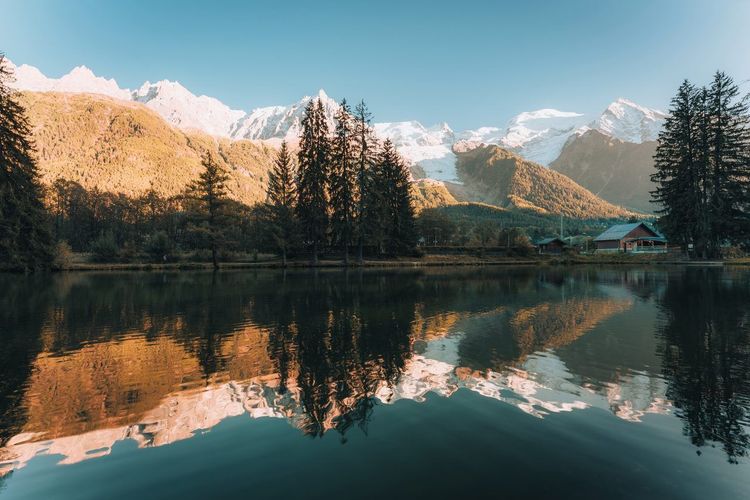
The Lac des Gaillands (Route des Gaillands, 74400 Chamonix-Mont-Blanc, rated 4.5/5 on Google from 800 reviews) is located two kilometres from the centre of Chamonix, reachable on foot in under thirty minutes or by bike. The lake is open for swimming in summer (water temperature 18–20°C in July–August), while the cliffs that overlook it are one of the most frequented climbing introduction sites in the French Alps, with routes ranging from grade 3 to 8a.
Around the lake, local providers offer treetop adventure courses (between €20 and €35), and a children's play area completes the site. The atmosphere is relaxed, away from the tourist bustle of the town centre. Experienced climbers come independently with their own equipment. For beginners, introductory climbing lessons are organised on the cliffs by certified guides and instructors. Budget around €50 for a supervised half-day session.
11. Argentière: the Alpine Village at the Foot of Its Glacier
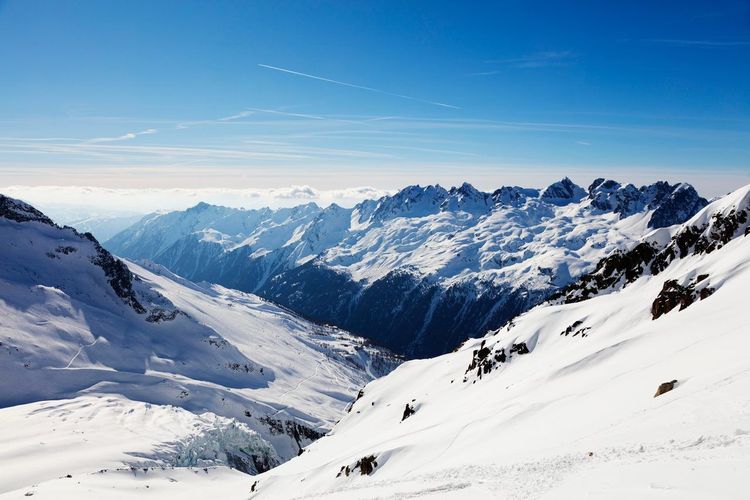
Just 11 kilometres from Chamonix toward the Swiss border, Argentière is worth a detour in its own right. The village's architecture is more authentically Savoyard than the centre of Chamonix: dark timber barns, an old 16th-century church, chalets with geraniums at the windows. The Argentière glacier dominates the end of the valley: it is the third largest glacier in France, 8.5 kilometres long and one and a half kilometres wide at its broadest point.
The glacier is visible from the village without any particular effort. To get closer, the lift up to Lognan (1,970 m) opens summer access to several mid-mountain hikes, including the crossing toward the Lac du Tour. In winter, the lift up to the Grands Montets (3,275 m) was the highest in the French Alps before its recent partial closure; renovation works will determine its future in the coming seasons. Check the status of the sector's lifts before planning a winter visit.
The village of Argentière (Chef-lieu, 74400 Argentière, rated 4.2/5 on Google from 865 reviews) is also recognised for its community of high-mountain guides. This is where some of the alpinists who frequent the north face of the Grandes Jorasses and the routes toward Courmayeur live. The bars and restaurants in the village have a more local atmosphere than those in the centre of Chamonix. An hour is enough for a stroll through the village, but combined with the lift up to Lognan, a half-day fills up quickly. If you have a vehicle, the Col des Montets (2 km beyond Argentière) offers an additional panorama of the Catogne massif and the Swiss border.
12. Musée des Cristaux: the Mineral Treasures of the Massif
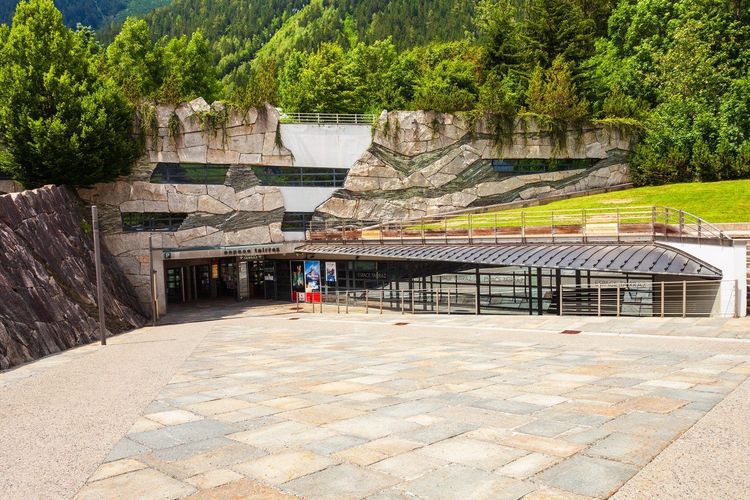
The Musée des Cristaux (100 Place de l'Église, 74400 Chamonix-Mont-Blanc, rated 4.6/5 on Google from 959 reviews) in Chamonix surprises many visitors. The town is in fact the world capital of quartz crystal: mineral veins run through the Mont-Blanc massif over millions of years, and local alpinist-crystaliers (known as "arpalins" in Savoyard dialect) have been working these veins since the 18th century. The museum displays specimens of hyaline quartz, fluorite, amethyst, and barite extracted locally.
The centrepiece of the collection is a quartz crystal weighing 30 kilograms discovered in a vein above 3,000 metres altitude. Some specimens were carried by hand over several days from the veins. The collection holds more than 15,000 minerals, one of the most significant in Europe. The fluorescent crystals under UV light are particularly popular with children. Entry costs around €10 per adult (children free). The visit lasts 45 minutes to 1 hour and makes an excellent option in bad weather.
13. The Espace Tairraz and the Musée Alpin
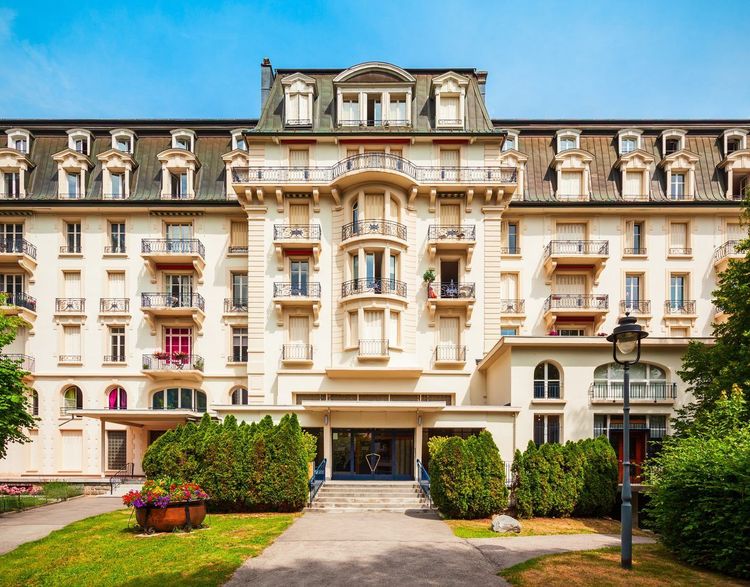
The Espace Tairraz houses both the Musée des Cristaux and the Musée Alpin, dedicated to the history of mountaineering. The latter traces three centuries of Mont-Blanc exploration, from the first ascent by Jacques Balmat and Michel-Gabriel Paccard in 1786 to the Himalayan expeditions of 20th-century Chamonix climbers. The collections include period equipment, historical maps, photographs, and accounts of ascents.
The Ryo audio guide for Chamonix-Mont-Blanc usefully complements a visit to the Musée Alpin by contextualising the history of mountaineering within the very topography of the town. The Espace Tairraz regularly hosts temporary exhibitions linked to mountain photography and Alpine environmental issues. The combined entry for the Musée des Cristaux and the Musée Alpin costs around €12 per adult. Closed on Mondays outside peak season — check opening hours before you go.
14. Strolling through the Centre of Chamonix
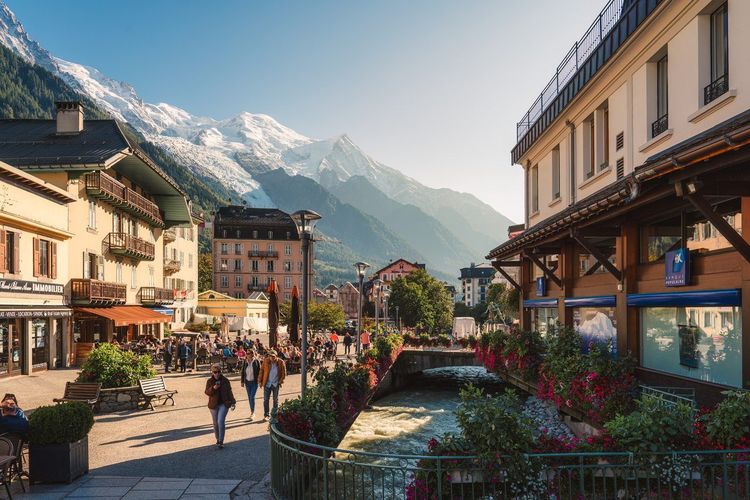
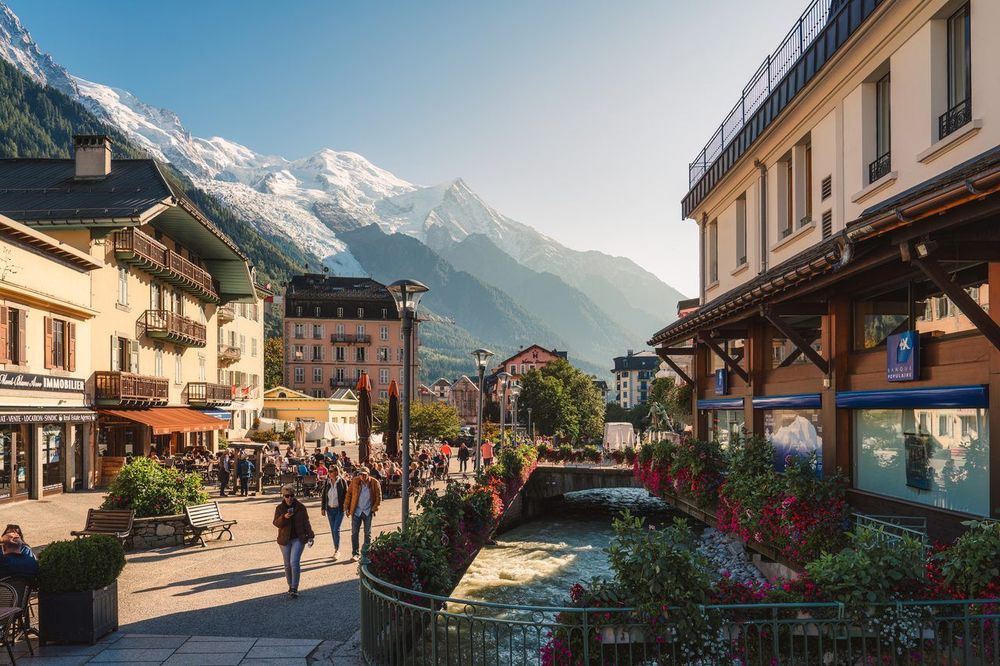
It is easy to forget that Chamonix is a town in its own right, not merely a starting point for cable cars. The town centre gathers pedestrian streets lined with chalets converted into shops, restaurants open into the late evening, and a weekly market on Saturday mornings. The galleries blend Alpine craftsmanship with contemporary mountain-themed art.
The Place Balmat (Place Balmat, 74400 Chamonix-Mont-Blanc, rated 4.6/5 on Google from 500 reviews), in front of the tourist office, is the symbolic heart of the town. The statue of Jacques Balmat pointing toward the summit of Mont-Blanc, unveiled in 1878, has featured on postcards for a century and a half. The Monument aux guides, a few metres away, pays tribute to the high-mountain guides who have fallen on Alpine slopes — a list spanning several decades and a reminder that Chamonix mountaineering carries a very real human cost.
The Arve, the river running through the town, accompanies the shopping streets with a constant sound of rushing water. Cycle paths follow its banks all the way to Les Praz-de-Chamonix and Les Bossons, for valley-floor rides of 10 to 20 kilometres. Electric bike hire shops are found close to the SNCF station. In the evenings, a handful of bars and a permanent cinema bring the centre to life — Chamonix has a modest but genuine nightlife, very different from a resort that goes dead outside ski hours. To choose your accommodation in the valley, our Ryo guide to the best hotels in Chamonix lists the top addresses by budget and neighbourhood.
15. La Flégère Cable Car and the Index
The La Flégère sector is often overshadowed by the Aiguille du Midi and the Brévent, which makes it one of the least crowded areas in the valley during peak season. The gondola departs from Les Praz-de-Chamonix (shuttle from the centre in ten minutes) and rises to La Flégère at 1,894 metres, from where the Index gondola continues to 2,385 metres.
From the Index, the panorama of the Grandes Jorasses and the Aiguille Verte is often judged superior to that of the Brévent by photographers, as the orientation is different. The late-afternoon sun gilds the north faces that remain in shadow from other viewpoints. This is also where the hike to the Lac Blanc begins (see section 5), making it a strategic access point for hikers.
In winter, La Flégère is part of the Chamonix ski area, linked to the Brévent by aerial cable. The runs are fewer than on the Grands Montets side, but the atmosphere is more family-friendly and queues are shorter. Practical note: the gondola may close during strong wind episodes, which can disrupt access to the Lac Blanc in summer. Check lift conditions before heading out on a hike toward the sector's summits.
16. Lac Vert in Passy: the Valley's Secret Retreat
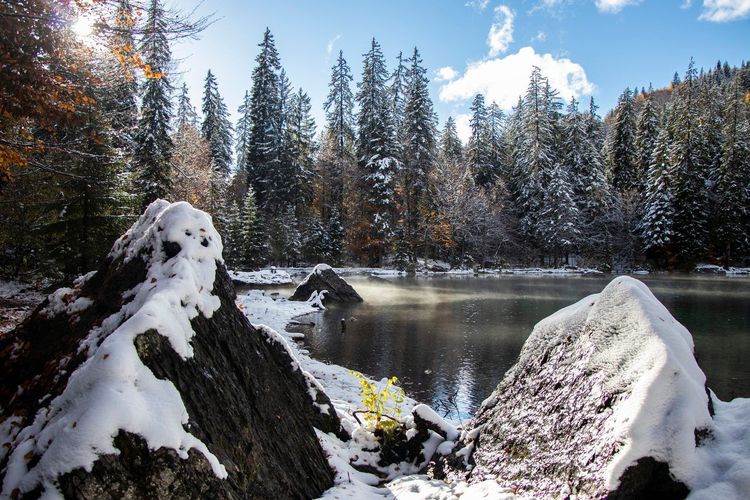
Some 20 kilometres from Chamonix toward Sallanches, the Lac Vert (Route du Lac Vert, 74480 Passy, rated 4.4/5 on Google from 881 reviews) in Passy lives up to its name: a translucent green water fed by limestone springs, surrounded by fir trees. Swimming is possible in summer (cool water, around 16°C in July), and the setting contrasts pleasantly with the bustle of the main valley. No cable cars, no organised groups.
Allow 45 minutes of walking from the car park to reach the lake. The site is free and rarely busy on weekdays. A good option for a calm end of day or for those seeking nature without the crowds. Bring a picnic: the tables at the water's edge invite you to linger, and the mirror of fir trees on the green water shifts in tone as the afternoon progresses. In the low season, you will mostly encounter locals from the Passy valley enjoying the quiet, far from the hum of the lifts.
17. Skiing and Snowboarding: the Chamonix Ski Area in Winter
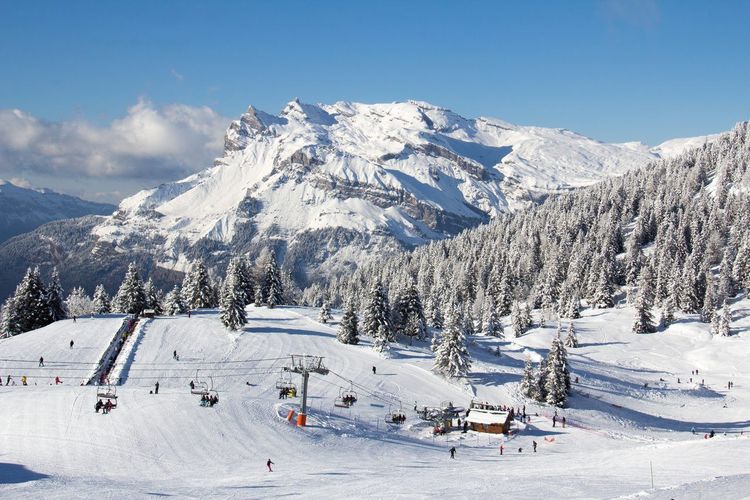
The Chamonix ski area is atypical among the major Alpine resorts. It does not resemble the fully groomed and waymarked domains of family resorts: it is a demanding area, with challenging sectors, links that sometimes require walking with skis on, and off-piste terrain among the most renowned in Europe. Skiers looking for easy, fully groomed runs will find their happiness elsewhere. Those seeking challenges and unspoilt spaces are right at home here.
The area comprises six distinct sectors: the Grands Montets (the most demanding), the Brévent-Flégère (the most family-friendly), Les Houches (ideal for beginners), Les Planards (ski school with drag lifts), the Vallée Blanche (off-piste only, guide compulsory), and Balme (at the edge of the valley). The Chamonix-Mont-Blanc ski pass gives access to all sectors.
For families with children, the Les Houches resort offers green and blue runs accessible from ages 3–4 with an instructor. Chamonix ski schools offer group lessons on weekdays and weekends. Snow quality in Chamonix is generally very good — the predominantly north-facing aspect of the main lifts guarantees more reliable natural snowfall than at lower- or mid-altitude resorts.
In peak season (Christmas holidays, February half-term), plan to arrive at the lifts early and book your pass online in advance. Morning departures between 8am and 9am let you enjoy the best snow conditions and short queues before the sun softens the runs. The pass includes access to the shuttles linking the various sectors.
18. Snowshoe Hiking: a Different Way to Experience Winter
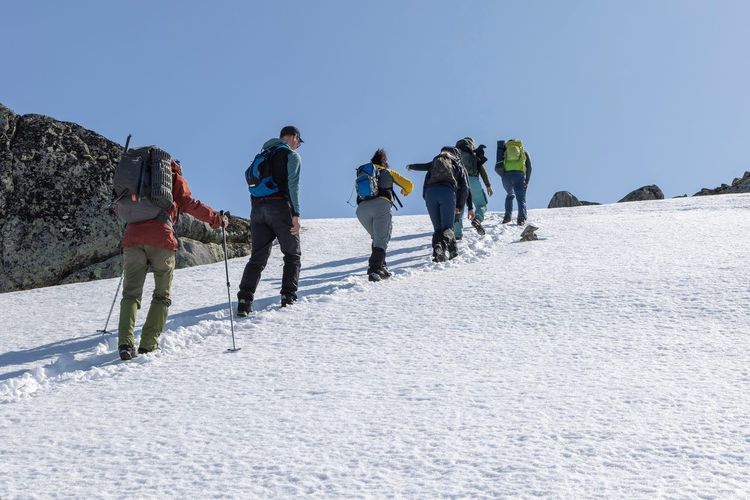
Chamonix in winter is not limited to skiing. Snowshoeing opens access to quiet areas — larch forests, snow-covered alpine meadows, frozen banks of the Arve — without requiring any particular prior sporting experience. The most accessible routes depart directly from the valley: the Joux forest from Chamonix, the alpine meadows of Les Houches, the surroundings of Argentière.
Equipment can be hired in Chamonix for around €15 to €20 per day (snowshoes and poles). Guide offices offer accompanied outings with a mountain guide, strongly recommended for high-altitude routes where avalanche risk exists outside marked areas. A guided outing costs around €50 to €80 per person for a half-day.
The Tines loop, from Les Frasserands toward the Tines quarry, is the most recommended snowshoe route for beginners: a flat, waymarked trail with direct views of the Aiguille du Midi. Allow 2h30 to 3h for the full loop. After a fresh snowfall, this trail offers absolute silence and particularly photogenic winter landscapes.
19. Via Ferrata around Chamonix
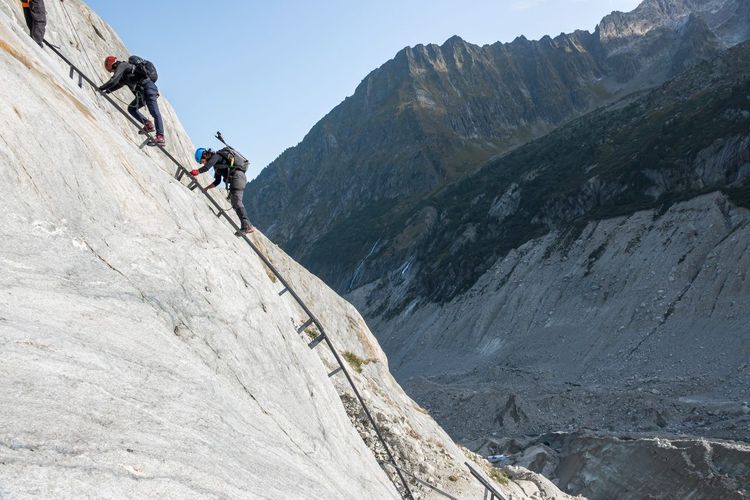
Chamonix offers several via ferrata routes for those seeking a vertical thrill without the technical learning curve of traditional rock climbing. The Planpraz via ferrata (in the Brévent sector) is the most accessible: metal cables and iron ladders allow you to progress along the rock face with a harness and lanyard. Specific equipment can be hired in Chamonix for around €20 to €30 per day. Guidance from a certified guide is strongly recommended for a first experience, as the correct safety technique on the anchors must be mastered before tackling the exposed sections. Budget around €60 to €90 for a supervised half-day outing. If you have never tried it before, start with an easy route: the sensation of exposure, even with the lanyard securing you, takes some getting used to. The reward comes quickly — from the very first metres of progress along the rock face, with the Chamonix valley opening up beneath your feet.
20. Skyway Monte Bianco: Crossing Mont-Blanc into Italy
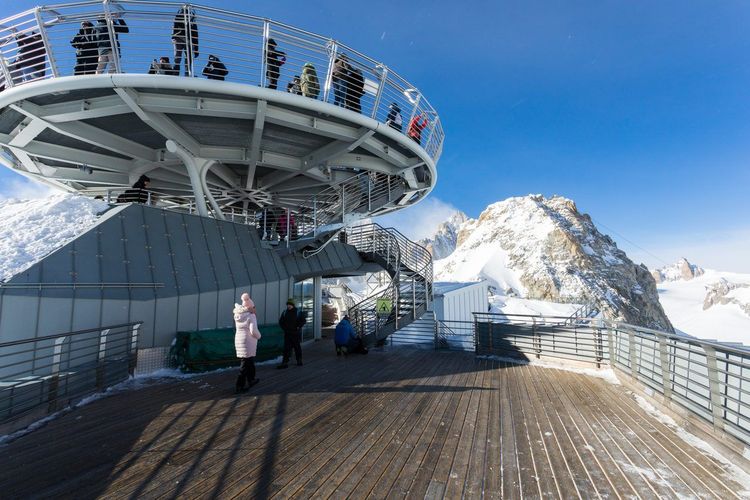
The Skyway Monte Bianco (Via Plan Gorret 22, 11013 Courmayeur, Italy, rated 4.8/5 on Google from 8,103 reviews) is the Italian equivalent of the Aiguille du Midi on the Courmayeur side. This cable car, inaugurated in 2015, is one of the most modern in the Alps: its spherical cabins rotate on their own axis during the ascent, offering a 360° view of the massif without passengers needing to move. The line connects Courmayeur to the Pointe Helbronner at 3,466 metres in two stages.
From the Pointe Helbronner, another cable link leads to the Aiguille du Midi on the French side: this is the complete crossing of the Mont-Blanc massif between France and Italy, passing above the Glacier du Géant at 3,500 metres altitude. This excursion ranks among the most spectacular in the Alps and should be organised as a full-day outing. On a clear day, the Dolomites are visible to the east and the Grand Combin to the north.
The journey from Chamonix takes 45 to 55 minutes by car through the Mont-Blanc tunnel (return toll of around €35 to €50 depending on the vehicle). The Skyway entry on the Italian side costs around €54 return to the Pointe Helbronner. The full Chamonix–Courmayeur crossing via both cable cars can be organised with a return by car or shuttle from Italy.
Check weather forecasts on the Val d'Aoste side before planning the excursion — they can differ considerably from the French side of the massif. The cable car closes in strong winds or poor visibility, and refunds on pre-purchased tickets are not guaranteed. The panoramic restaurant at the Pointe Helbronner serves on a terrace at 3,466 metres: a setting hard to surpass.
FAQ
What to do in Chamonix when it rains?
In bad weather, several options work well. The Musée des Cristaux and the Musée Alpin at the Espace Tairraz will easily fill an hour and a half. The QC Terme Chamonix is particularly enjoyable in the rain, as its indoor pools and saunas are sheltered from the elements. The Chamonix Olympic swimming pool is a less expensive alternative. The Gorges de la Diosaz, partially sheltered by the cliff walls, remain accessible in light rain. Book the QC Terme in advance if you are counting on a rainy day — time slots fill up quickly.
What to do in Chamonix in summer?
Summer (June to September) is the best season for hiking: the Lac Blanc, the Grand Balcon Sud, the hike toward Argentière. The cable cars of the Aiguille du Midi, the Brévent, and La Flégère run at full capacity. The Mer de Glace and the ice cave are accessible. The Parc animalier de Merlet is open from mid-May to mid-September. The valley is very busy in July and August — head out early in the morning for popular activities to avoid queues.
What to do in Chamonix in winter?
In winter, Chamonix becomes a full ski resort with six distinct sectors (Grands Montets, Brévent-Flégère, Houches, Planards, Balme, Vallée Blanche). Snowshoe hiking, the QC Terme, and visits to the Musée des Cristaux and the Musée Alpin round out the programme. The Aiguille du Midi cable car runs year-round and offers even more spectacular views of the snow-covered glaciers in winter.
What to do in Chamonix for free?
Strolling through the town centre, walking along the Arve, and taking in the views of the massif from Les Bossons or Argentière cost nothing. The Saturday morning market is free. Most valley-floor trails (along the Arve, the Tines loop in autumn outside of snow season) are accessible at no charge. The walk to the Lac des Gaillands from the centre on foot is also free — the views of the Aiguilles de Chamonix are worth the trip.
What to do in Chamonix with family?
With children, the Parc animalier de Merlet (from age 4–5) and the Gorges de la Diosaz (from age 6) are the most accessible. The Montenvers train generally fascinates children from age 5–6. The Musée des Cristaux is well suited to ages 7–14 (fluorescent crystals under UV light, touchable stones). In winter, the Les Houches resort offers the best slopes for beginner children. The treetop adventure course at the Lac des Gaillands operates from age 5 with appropriate equipment.
What to do in Chamonix for a weekend?
Over two days, focus on the must-sees: the Aiguille du Midi on the first morning (advance booking is essential), then the Mer de Glace late morning or in the afternoon. On the second day, choose between the Grand Balcon Sud hike or a ride up to the Brévent depending on the weather. In the evening, stroll through the town centre and dine on a terrace if the season allows. The QC Terme is perfect for a final afternoon before heading home, after a night of recovery.
Chamonix is one of the rare Alpine destinations where the intensity of the experience does not diminish with repeated visits. Each return reveals an unexplored sector, a glacier not yet approached, a trail saved for next time, a village at the end of the valley that features in no standard itinerary. The Chamonix-Mont-Blanc audio walking tour, with its commentary on the town's historic and architectural sites, adds a layer of understanding to landscapes one thinks one already knows simply from having photographed them.
Take the time to step off the most-travelled paths: it is often by straying away from the Aiguille du Midi and the Mer de Glace, toward Argentière, the Lac Vert, or the Gorges de la Diosaz, that the valley reveals its most authentic face. For the days spent down in the valley, our audio walking tour covers 2.6 km through the town. Whether for two days or two weeks, winter or summer, the Chamonix valley never fails to give you a good reason to come back.
À lire également