© Shutterstock
 Votre guide Ryo
Visiting Grenoble in 2 Days: Complete Itinerary, Family Tips, and Excursions (2026)
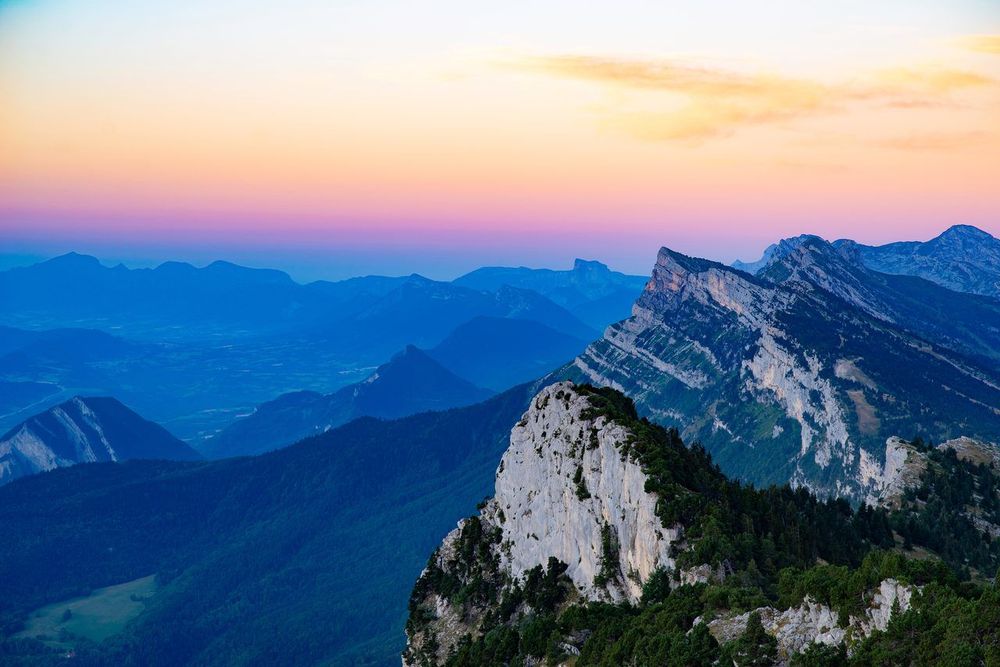
In Grenoble, just look up at the end of any street in the old town to understand why the city calls itself the capital of the Alps: three mountain ranges form a backdrop — the Chartreuse, the Vercors, and Belledonne — visible from almost every axis of the historic center. This rare proximity between urban heritage and high mountains makes visiting Grenoble in 2 days a particularly rich experience: you have a coffee on a terrace at Place Grenette in the morning, take the cable car up to 476 meters above sea level before noon, and come back down for dinner in a medieval alleyway in the evening.
This guide lays out a complete two-day itinerary, from the old town and its free departmental museums to the Bastille and its hiking trails toward Mont Jalla, along with the best local addresses, activities children enjoy on rainy days, possible excursions to the Vizille estate or the Vercors, and even a few spots we recommend skipping to save time. You will also find figures on budget, transport, seasons, and accommodation so you can plan a proper weekend in Grenoble without any unpleasant surprises; budget roughly 150 to 250 euros per person for the entire stay, excluding the return journey — we break that budget down item by item further on. To extend the experience on the ground, the Ryo audio-guided tour of Grenoble accompanies you through the lanes of the historic center all the way to the top of the Bastille.
Day 1 in Grenoble: Old Town, Cathedral, and Museums of the Historic Center
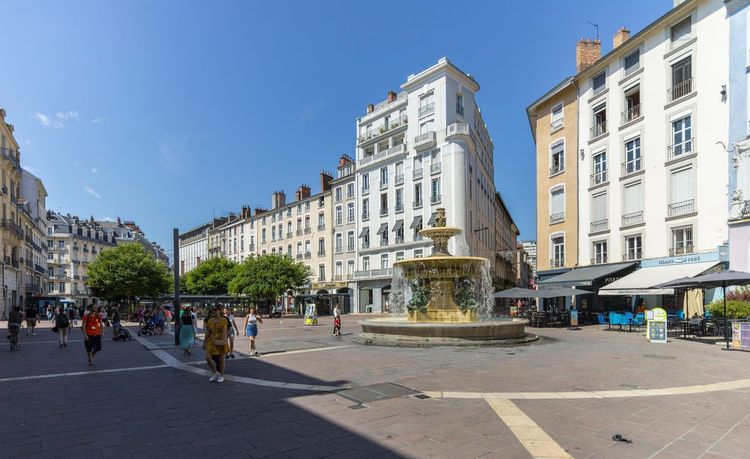
The old town of Grenoble can be explored in a star pattern from Place Grenette, and it is precisely this compactness that allows you to visit the cathedral, museums, and riverside in a single day without ever needing to use public transport.
The Old Town, the Cathédrale Notre-Dame, and the Couvent Sainte-Cécile
Start at the Cathédrale Notre-Dame de Grenoble, on the square of the same name: the building blends layers from the 12th to the 18th century, with a stone ciborium from the 15th century, nearly 14 meters tall, which remains one of the rare pieces of this type preserved in France. The square itself, paved and lined with terraces, serves as a natural starting point for any visit to the historic center. Just opposite, the Musée de l'Ancien Évêché, housed in the former episcopal palace, is free to visit and contains in its basement the early Christian baptistery uncovered during tram construction works.
Five minutes away, the Couvent Sainte-Cécile occupies a 17th-century convent bought and restored by Glénat publishing house, which moved its headquarters there in 2009. The chapel hosts temporary exhibitions open to the public, often focused on comic books or alpine heritage — a twenty-minute detour that most visitors never make, simply because they don't know the place is open to the public.
A few meters away, in a lane of the old town, look for the Sator square (Rue Brocherie, 38000 Grenoble): a Latin palindrome carved in stone (SATOR AREPO TENET OPERA ROTAS) that reads the same in all four directions. This enigmatic formula turns up everywhere from Pompeii to Roman Britain, but examples visible in France can be counted on one hand, making it a curiosity that hurried visitors miss entirely.
The very narrow lanes surrounding the cathedral still follow the medieval street plan: it is impossible to get truly lost, since the pedestrian zone is only a few hundred meters wide, but every street corner reveals a facade or an old shopfront worth looking at. The neighborhood is accessible to pushchairs and people with reduced mobility along most of its routes, with the exception of some uneven cobblestones near the cathedral. Take time for a break: at Place Saint-André, three hundred meters away, the Café de la Table Ronde has been serving coffee since 1739, making it one of the oldest establishments of its kind still operating in France.
The Must-See Museums of the Center: Saint-Laurent, Grenoble, Dauphinois, Champollion
Grenoble has an argument that few French cities can claim: the eleven museums of the Isère department are free, all year round, with no age or residency requirement. Three of them are located within the historic center, and a fourth is just opposite the cathedral. Only the Musée de Grenoble, which belongs to the city rather than the department, charges an entry fee. Allow half a day if you really want to see them all, or pick two if your schedule is tight.
The Musée Archéologique Saint-Laurent occupies a Merovingian funeral crypt considered one of the oldest Christian monuments preserved in France, with sarcophagi visible under glass at the level of the original floor. It stands on the right bank of the Isère, about fifteen minutes on foot from the cathedral, and admission is free.
Crossing back to the left bank, the Musée de Grenoble alone deserves an hour or two: founded in 1798, it holds a collection of old and modern paintings (Rubens, Matisse, Picasso) that is remarkable for a city of this size, on Place de Lavalette. It is the only one in this selection that charges an entry fee, around 8 euros full price, with free admission for under-26s and, for everyone, on the first Sunday of each month.
The Musée Dauphinois (30 Rue Maurice Gignoux, 38000 Grenoble, rated 4.6/5 on Google with 1,496 reviews), housed in the former Couvent Sainte-Marie-d'en-Haut on the slopes of the Bastille, traces the history of skiing and alpine traditions in a remarkable architectural setting — and also free of charge. It can be reached on foot from the center via the Montée de Chalemont, a steep stairway that climbs straight up the hillside, or combined with the cable car ride the following day.
The Musée Champollion is not in the city: it occupies the Champollion family home in Vif, about fifteen kilometers south of Grenoble, and only opened to the public in 2021. Jean-François Champollion, who deciphered the secret of hieroglyphics, spent part of his youth and career in Grenoble, where the city dedicated a statue and a street to him. Allow about thirty minutes by road and a free visit — better saved for an extended stay than for an already packed two-day program. One final tip for this first-day leg: the Musée de Grenoble, the most visited of the group, is more comfortable to explore in late morning than in early afternoon, when school groups and guided tours overlap most. A quick stop at the reception desk avoids dead time in front of the most popular rooms, particularly those dedicated to 20th-century painting.
A Walk Along the Isère and the Canopy District
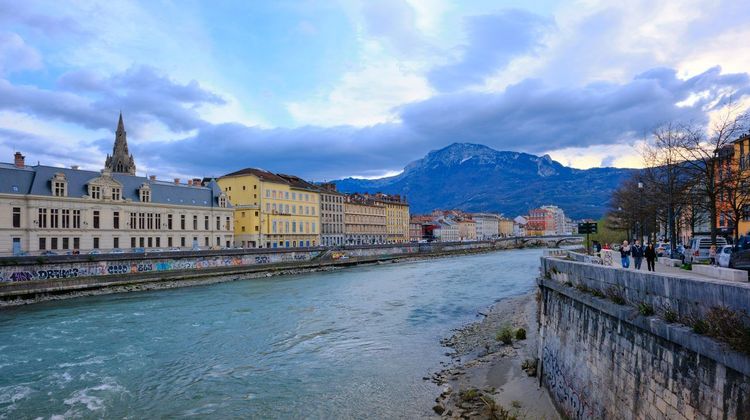
Late in the afternoon, head back down to the riverbanks. The walk along the Isère follows the river for several kilometers, between landscaped embankments and a direct view of the wooded slopes of the Bastille rising on the opposite bank. It is also one of the rare spots in the center where you can hear the water rather than the traffic.
A little further on, heading toward the scientific district of the Presqu'île, the Cambridge district and its Canopée offer a total contrast with the medieval lanes: contemporary research buildings, wood-and-metal structures, and wide open views of the mountain ranges. Architecture enthusiasts will find it rewarding; others can pass through without regret. Allow about twenty minutes on foot from the historic center, or take tram B for direct access.
For dinner on the first evening, the addresses around Quai Créqui and Place Sainte-Claire benefit from their proximity to the Isère: waterside terraces, a quieter atmosphere than in the historic heart, and an open view of the wooded foothills climbing toward the Bastille. It is also the best place to plan the next day's program, since the cable car departure point is just a few minutes' walk away.
Day 2 in Grenoble: the Bastille, Hiking, and Final Museums
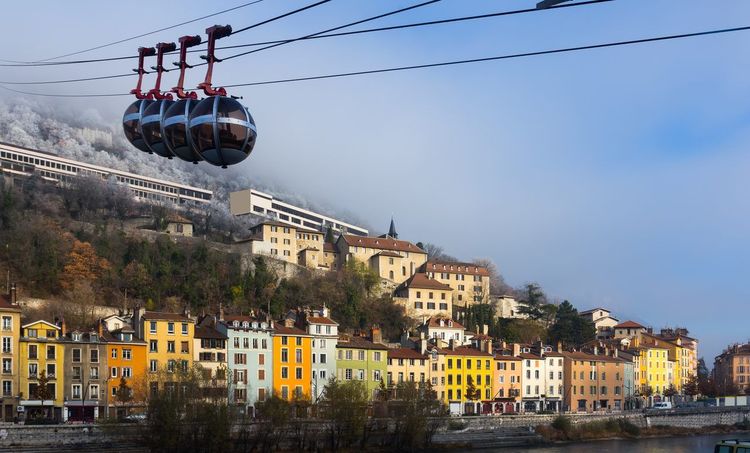
The second day shifts to a completely different pace: head for altitude, with the option of turning a simple sightseeing visit into a real hiking outing if your legs are up to it.
The Cable Car Ride up to the Bastille and the Fort Saint-Eynard
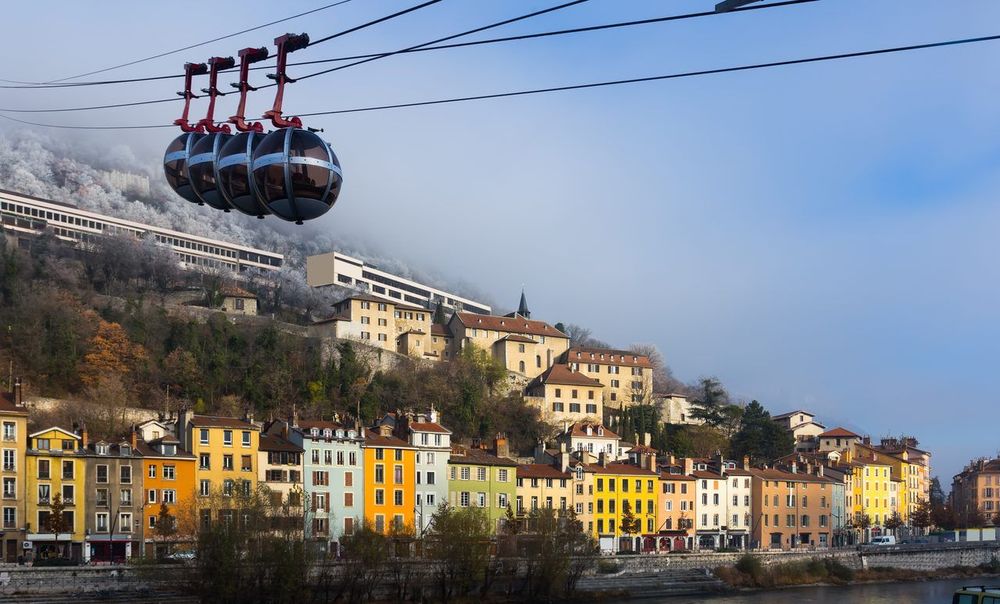
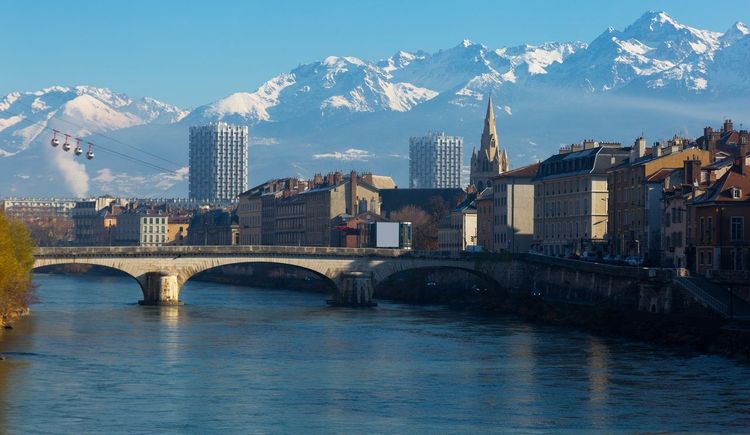
About 370,000 passengers ride this cable car every year, at a Bastille site that welcomes nearly 750,000 visitors in total, without giving a sense of crowding once inside a cabin that holds only five or six people. The cable car ride up to the Bastille remains the activity most associated with Grenoble, and for good reason: put into service in 1934, it is the first urban cable car in France and one of the very first in the world, after Rio de Janeiro and Cape Town. The crossing takes about five minutes, with departures every five to ten minutes, and climbs to 476 meters above sea level, above the fort of the Bastille and its 19th-century fortifications built by General Haxo.
The current cabins, nicknamed "les Bulles" (the Bubbles) by the people of Grenoble because of their spherical shape, replaced the original rectangular cabins in 1976. Local fame is such that the expression has entered everyday language: no one says "take the cable car" anymore, but rather "ride the Bubbles." The journey is suitable for all ages with no particular physical restrictions, making it a more accessible family activity than pure hiking. For those who prefer the effort, a footpath also connects the city center to the fort in just under an hour's climb, via the Jardin des Dauphins and the terraced gardens that run along the cliff.
Once at the top, the panorama spans the three mountain ranges encircling the city: Chartreuse, Vercors, and Belledonne. Stendhal, a native of Grenoble, summed it up in a phrase that has since become famous: "At the end of every street, a mountain." On the pricing side, allow 9.80 euros for an adult round trip and 6.60 euros for a one-way ticket if you walk back down, and 5.10 euros for the round trip for children aged 5 to 15. Book your time slot online in summer, when queues grow noticeably around midday, and note that the cable car ticket is not included in a tram ticket.
For seasoned walkers, a ridge trail continues from the fort to the Fort Saint-Eynard, perched at 1,343 meters at the entrance to the Chartreuse massif. This is no longer a stroll: about 700 meters of elevation gain and three hours of ascent from the Bastille, meaning a full day there and back. Most visitors reach it by car via the road through Sappey-en-Chartreuse, for a bird's-eye view over the Isère valley that rivals the one from the top of the Bastille.
Hiking up to Mont Jalla for the View over Grenoble
If Fort Saint-Eynard takes too much time, Mont Jalla offers a much shorter alternative from the top of the Bastille: twenty to thirty minutes of walking on a shaded path, about 150 meters of elevation gain, and a 360-degree viewpoint that many Grenoble residents consider the most complete view of the city and its three mountain ranges.
The path passes by the Mémorial national des troupes de montagne, a contemporary stele dedicated to the alpine troops, before reaching the summit and its orientation tables. It is the ideal spot for an improvised picnic lunch with a view, especially if you have brought sandwiches bought in the city that morning.
The trail passes through typically Mediterranean vegetation on its south-facing slope — downy oaks and box — before crossing to the north side and a more alpine atmosphere. A diversity of landscapes compressed into less than an hour of walking, which often surprises visitors coming from other French regions.
Musée de la Chartreuse and Musée de la Résistance
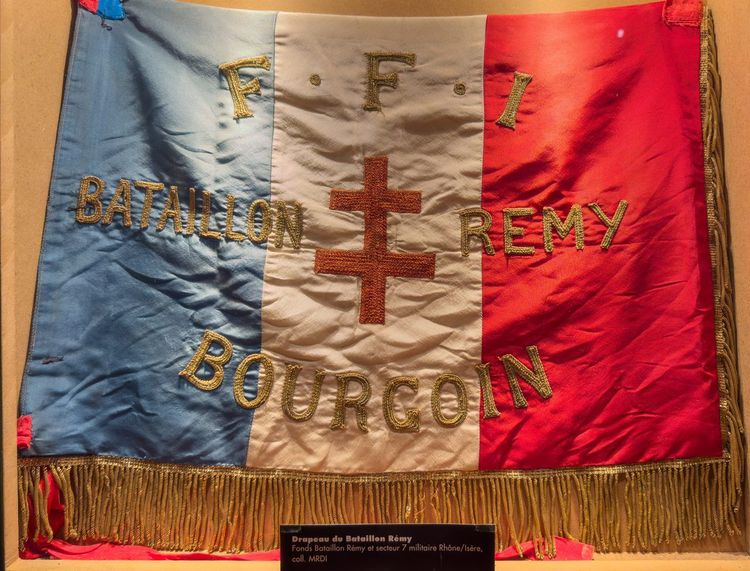
Coming back down in the late afternoon, head to the center for a museum that puts the city in perspective. The Musée de la Résistance et de la Déportation de l'Isère (14 Rue Hébert, 38000 Grenoble, rated 4.6/5 on Google with 1,037 reviews) traces the history of the Resistance in a region that paid a heavy toll during the Second World War, with archival documents and testimonies that take on particular meaning once you have seen, from the Bastille, how much the surrounding terrain could serve as a refuge for the Vercors maquis fighters.
Like all the departmental museums of the Isère, entry is free — an additional reason to fit it into the end of this second day rather than sacrifice it for lack of budget. It generally closes around 6 p.m., leaving a comfortable margin if you come down from the Bastille in the late afternoon.
The Musée de la Grande Chartreuse, dedicated to the history of the monastery and its famous liqueur, is better visited as an extension of your stay: it occupies the Correrie site at Saint-Pierre-de-Chartreuse, about 45 minutes by road from Grenoble, and pairs well with the excursion to the Chartreuse massif described later in this guide. Unlike the eleven departmental museums, this one is privately run and charges an entry fee. A useful note before you set off: the Chartreuse cellars left Voiron in 2018 and moved to Entre-deux-Guiers, where the liqueur now ages. If time is short, stick to the Musée de la Résistance, reachable on foot from the city center without any detour. And if the weather turns bad at altitude, the cable car ride is still possible but the panorama loses all its appeal: it is then better to reverse your program and spend the morning in the center's museums, keeping the afternoon for the Bastille if the sky clears — as it often does in a region where the weather changes quickly.
Where to Eat in Grenoble: Best Addresses and Local Specialties
It is impossible to visit Grenoble in 2 days without stopping at one of its historic tables. The Café de la Table Ronde, on Place Saint-André, has been serving meals since 1739 in a wood-paneled dining room whose legend was nourished by Stendhal and then Choderlos de Laclos, with a terrace perfect for watching life on the square. The Café de France, a few steps further into the pedestrian area, takes a simpler and livelier approach, very popular with Grenoble locals at the end of the day.
On the specialties side, three dishes come up consistently on local menus: gratin dauphinois, of course, made without cheese in its traditional version; ravioles du Dauphiné, tiny and melt-in-the-mouth; and the Grenoble walnut cake, made from a fruit protected by a designation of origin since 1938 — the first PDO awarded to a fruit in France — and cultivated across the surrounding plain. Chartreuse liqueur, green or yellow depending on the blend of herbs, often rounds off the meal as a digestif.
For breakfast or a morning break, the Halles Sainte-Claire, open Tuesday through Sunday morning, bring together local producers and a few quality street food stalls — a more authentic alternative to the chain bakeries in the city center. Expect roughly 15 to 20 euros for a weekday lunch special in the historic center, and closer to 25 to 35 euros in the evening at the more refined addresses around Place aux Herbes.
For a family meal, favor restaurants around Place aux Herbes or the Halles Sainte-Claire: the terraces are more spacious and the service generally more accustomed to children than in the narrowest lanes of the old town. Our Ryo article on Grenoble's culinary specialties details ten additional addresses if you are staying for more than two days.
What to Do in Grenoble with Family: Parks, Nature Activities, and Kids' Outings
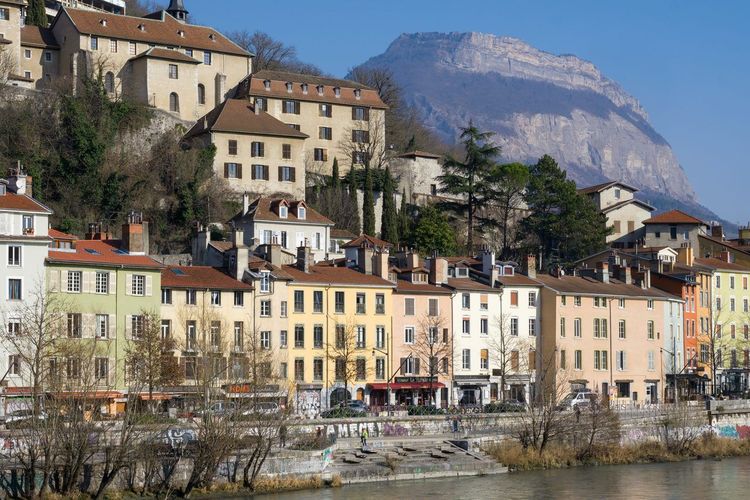
Grenoble has built a genuine reputation as a family destination, supported notably by the local tourist office, which devotes an entire section to this audience — including, for example, family-friendly guided tours in the form of treasure hunts through the old town. Three types of activities then structure the offering: parks and gardens, water and adventure, and wet-weather fallback options.
Playgrounds, Gardens, and Nature Outings with the Family
The Jardin de Ville, right in the center, remains the reliable choice for a break with young children: a shaded playground, a bandstand, and flowerbeds just steps from the cathedral. It is also where the footpath to the Bastille begins, via the Jardin des Dauphins.
The larger Parc Paul Mistral offers more space to run around and several playgrounds spread across the site. Two landmarks are impossible to miss: the Tour Perret, nearly 90 meters tall, the first reinforced concrete tower in Europe, built for the International White Coal Exhibition in 1925; and the speed ring laid out for the 1968 Winter Olympic Games. It is also where a number of municipal events are held in summer.
Other more discreet gardens, such as the Jardin Hoche between the train station and the center, complement the offering if your accommodation is on that side of the city. All are accessible on foot or by tram in under twenty minutes from the historic center.
Water Activities and Thrills
On hot days, the Jean Bron swimming pool in the city center is handy for an hour or two, while the Iles de Mars aquatic complex, in the south of the urban area, combines indoor and outdoor pools for a genuine half-day out with children. A practical option when the summer alpine heat climbs unexpectedly in the Grenoble basin.
In summer, several natural lakes within thirty minutes by car, around the Laffrey lakes in particular, offer an open-air alternative to indoor pools, with the possibility of picnicking on the banks.
On the thrills side, the Bastille site is home to Acrobastille, an aerial adventure course paired with a zip line that sweeps over the cliff toward the Jardin des Dauphins, not to mention the via ferrata that climbs the rocks below the fort. For families with teenagers looking for more physical activities, our Ryo selection of the best activities in Grenoble lists tree-top adventures and via ferratas within a thirty-minute radius.
What to Do in Grenoble When It Rains or Gets Very Hot
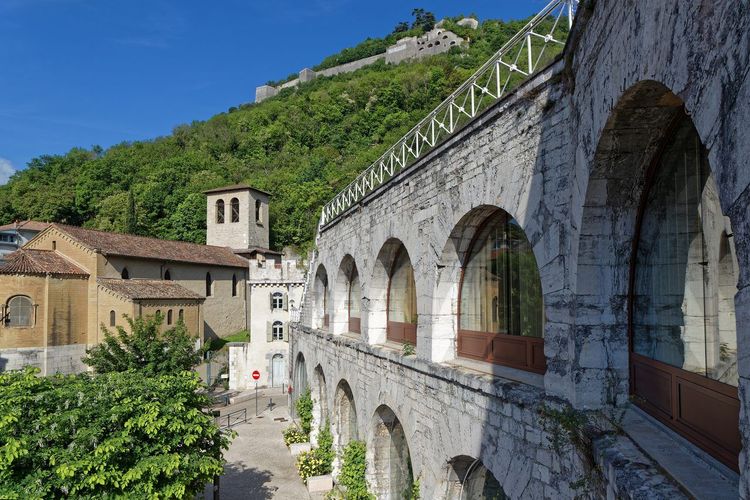
On rainy days, head to La Casemate (2 Place Saint-Laurent, 38000 Grenoble, rated 4.5/5 on Google with 194 reviews), the science and technology center installed in the old fortifications near the Musée Saint-Laurent: interactive exhibitions designed for children, often around science and digital topics, in a historic setting that adults enjoy too.
The Pôle Sud ice rink operates for a good part of the year and absorbs both rainy afternoons and summer heatwaves equally well. The Muséum de Grenoble, dedicated to natural sciences, usefully rounds out this list for truly dreary days: admission is very affordable and the collection of naturalized alpine fauna generally fascinates younger visitors.
Between the free departmental museums, the ice rink, and La Casemate, you have enough to fill an entire day regardless of the weather. Several of these family stops, including the Jardin de Ville and the Musée Dauphinois, also feature in the Ryo audio-guided tours of Grenoble — a fun way to keep children engaged while you enjoy the historical content as a backdrop.
If You Have More Time: Day Trips Around Grenoble
Two days are enough for the heart of Grenoble, but the city is only a starting point: the surrounding massifs and valleys easily justify an extended stay, and each of these options pairs well with a departure by train or car from the city center.
The Vizille Estate and Its Château
Twenty minutes south of Grenoble, the Vizille estate combines a 17th-century château built by the Connétable de Lesdiguières — today the Musée de la Révolution française — and a park of nearly one hundred hectares where deer and fallow deer roam semi-freely. It makes for an easy family outing, doable in half a day including travel. Both the park and the museum are free to enter, the latter being part of the network of eleven Isère departmental museums. A detail that could not be invented: it was here, in July 1788, that the assembly of the three orders of the Dauphiné called for the convening of the Estates-General, which is why Vizille is nicknamed the cradle of the French Revolution.
In a different vein, the climb to the Fort du Mûrier, on the heights of Gières to the east of Grenoble, offers a short hike of about one hour each way from the terminus of tram B: woodland, an old military fort, and a frontal view of the Grenoble basin. If you continue south, you are right on the Ryo Route Napoléon, which passes right through Vizille.
Toward the Vercors and the Chartreuse
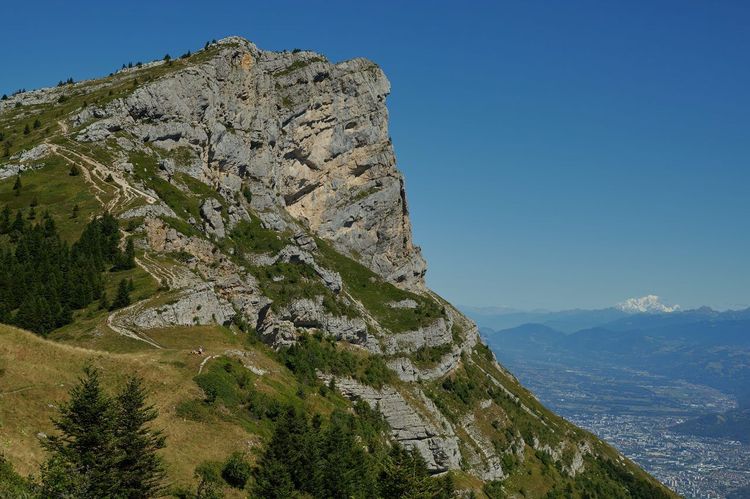
The Vercors, a vast limestone massif with spectacular cliffs, is just thirty minutes from Grenoble. Gorges, caves, and hilltop villages such as Villard-de-Lans make it a hiking destination in its own right: the Ryo guide to visiting the Vercors details the best routes according to your fitness level.
To the north, the Chartreuse massif offers a more forested landscape, dominated by the Grande Chartreuse monastery and its legendary silence. A useful note to avoid organizing your day around something you cannot visit: the monastery itself is not open to visitors — the monastic enclosure remains strictly closed — but the Musée de la Correrie, two kilometers away, tells its history and daily life. The Ryo guide to visiting the Chartreuse covers both the hiking and the sites open to the public.
Between the two massifs, several villages ranked among the most beautiful in the Isère are worth a detour if you extend your stay by a few days; the Ryo selection of the most beautiful villages around Grenoble lists about ten that are reachable in under an hour's drive.
Château du Touvet and a Getaway to Aix-les-Bains
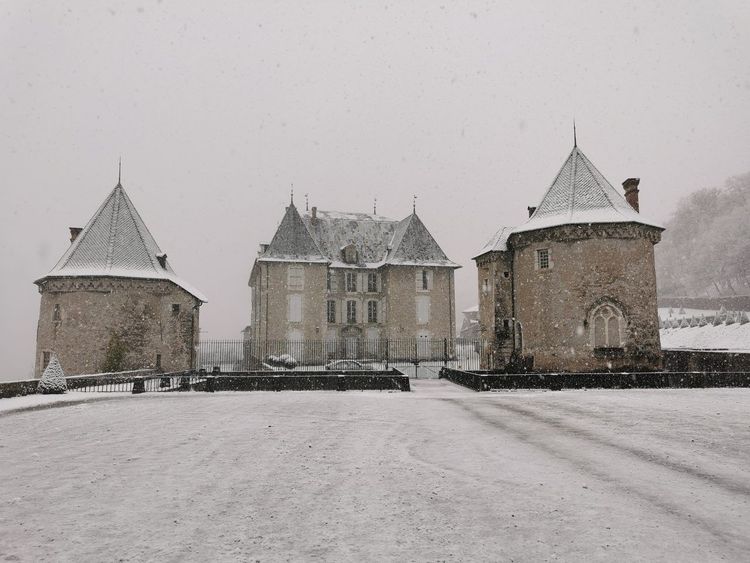
Twenty-five minutes north of Grenoble, the Château du Touvet (436 Rue du Château, 38660 Le Touvet, rated 4.3/5 on Google with 834 reviews) features Italian-style terraced gardens listed as a historic monument, with an 18th-century water staircase and an open view of the Belledonne range.
If you venture up to an hour's drive away, a final stop at Aix-les-Bains, on the shores of Lac du Bourget, rounds off an extended stay nicely: a spa town, swimming in summer, and train access from Grenoble via Chambéry without needing a car.
For hikers looking for more demanding outings, the Belledonne massif, visible from almost every high point in Grenoble, perfectly rounds out this trio of excursions with high-altitude lakes reachable in half a day's walk from the resorts on the Grenoble side. Grenoble's train station also serves several of these excursions directly without a car: Aix-les-Bains is reachable by regional train in just over an hour, while Vizille is accessible by bus from the city center in about thirty minutes.
Places to Skip in Grenoble to Avoid Wasting Time
Not every neighborhood in Grenoble is worth your time on a two-day stay, and it is better to know that upfront. The Grand'Place, a vast shopping center opened in the mid-1970s south of the historic center, has nothing of a tourist attraction: its architecture says a lot about post-war urban planning in Grenoble, but it adds nothing to a cultural visit.
The Hôtel de Ville, a municipal building inaugurated in 1967 and designed by Maurice Novarina, suffers the same comparison: the structure itself is of passing interest to a visitor, even if the Parc Paul Mistral adjoining it is worth a short break if you are already in the area.
More broadly, modern Grenoble — around the Europole business district that emerged in the 1990s and certain areas near the train station — does not match the old alpine city image that most visitors come to find. Nothing wrong with these areas in themselves, but they are clearly not where you should concentrate your time on a format as short as two days.
None of this should put you off passing through these neighborhoods if you have a reservation or appointment there: they are simply areas not to prioritize if your sole objective over two days is the heritage and panoramas that have made Grenoble's reputation. For a well-paced route instead, Ryo's audio-guided tour of Grenoble keeps you moving between the sights worth your time.
What to See in Grenoble If You Only Have One Day
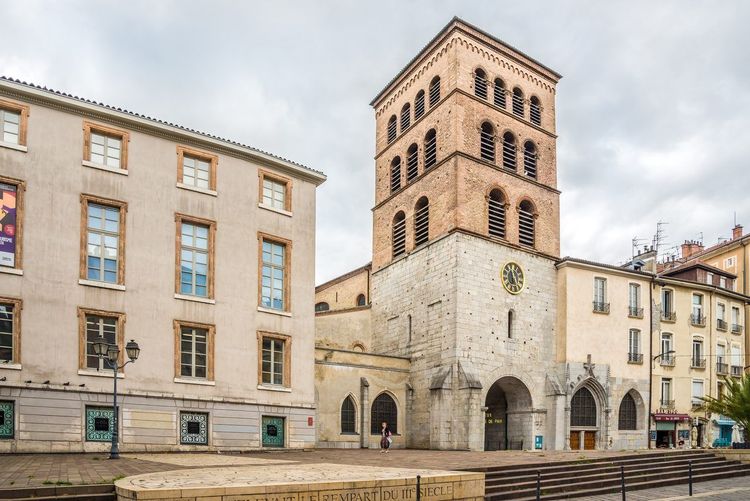
If your stay is ultimately reduced to a single day, here is how to condense the essentials without running in all directions. In the morning, focus on the walk through the historic center: the Cathédrale Notre-Dame, the Sator square, and one museum of your choice — Saint-Laurent for its originality or the Musée de Grenoble for its collections.
At midday, a quick lunch break around Place Grenette or the Halles Sainte-Claire, before tackling the afternoon with the cable car ride up to the Bastille. Allow time for the panorama, a quick look at the Musée Dauphinois if time permits, then the descent at the end of the day — on foot via the Jardin des Dauphins or by cable car.
This express format takes the backbone of the two days detailed earlier in this guide and strips out the excursions and secondary museums. It is tight, but doable, and gives a genuine feel for what makes Grenoble's character in a single day.
If the weather is uncertain, swap the Bastille ride for a run through the free departmental museums in the center: less spectacular, but just as packed into a single day, and completely sheltered from the elements.
How to Get Around Grenoble: Tram, Bike, and Car
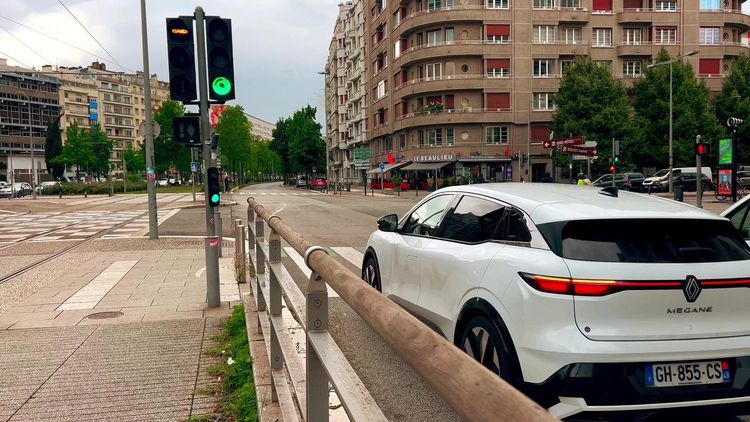
Grenoble has a logistical advantage that few French cities of this size can claim: it is reputed to be the flattest city in France, which makes an absolute difference when getting around on foot or by bike.
The Tram and Bus, Practical for Reaching the Center
The network operated by SEMITAG has five tram lines, A through E, serving the main points of tourist interest, complemented by a dense bus network. A single ticket costs approximately 1.90 euros, and a day pass around 5.30 euros if you plan several trips. A book of ten tickets also works out cheaper per unit than buying individually, an option worth considering if you plan to alternate between tram and bus over your two days rather than doing everything on foot. The Bastille cable car is paid separately.
From the train station, allow ten minutes by tram to reach the historic center. It is the simplest mode of transport if you are arriving by train and do not plan to rent a car for your two days.
On Foot or by Bike in a Flat and Compact City
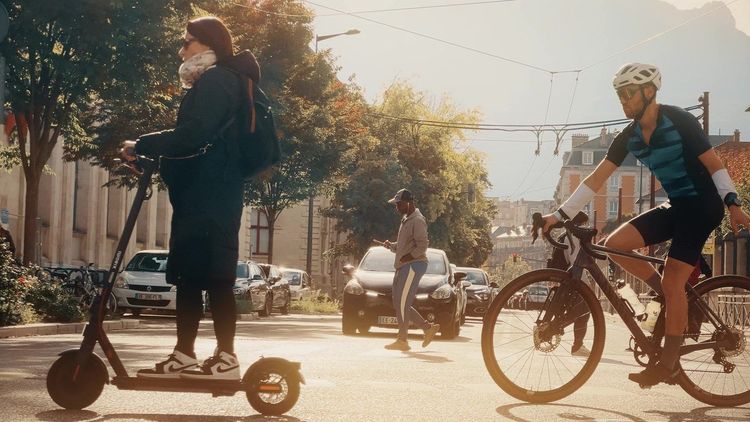
The historic center can be explored entirely on foot, with no elevation change, making it a comfortable destination even with young children or sensitive joints. The Métrovélo bike rental service complements this well for longer trips, particularly toward the Presqu'île or outlying neighborhoods.
The city's flat topography is explained by its position at the confluence of the Isère and the Drac, in a basin surrounded by mountain ranges: a direct advantage for families with pushchairs or visitors with reduced mobility, rarely highlighted in conventional guides. The only logical exception to this general flatness: the climb to the Bastille, which remains the domain of the cable car, a brisk hike, or an electric bike for the most motivated.
By Car: Access and Parking
The city center operates a low-emission zone that restricts access for older vehicles; check your car's Crit'Air sticker before you leave. If you are driving, it is better to park at one of the park-and-ride facilities at tram termini and complete the journey by public transport rather than hunting for a space in the center. Hotels in the center rarely include private parking; check when booking, or budget an additional parking fee of around 15 to 20 euros per day in a city-center underground car park.
When to Visit Grenoble and What Budget to Plan
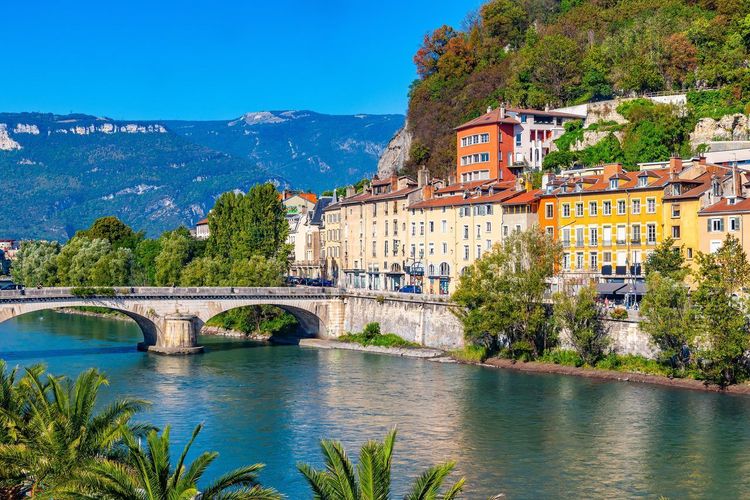
Grenoble can be visited year round, but not under the same conditions depending on the season, and the budget varies noticeably depending on your choices of accommodation and activities.
The Best Season to Visit Grenoble
Spring and early autumn, from May to September, offer the best conditions for combining city sightseeing and high-altitude hiking: mild temperatures, clear trails, and the cable car running at full capacity, with departures until midnight on some summer evenings. Winter has its own appeal, since Grenoble serves as a gateway to several Alpine ski resorts, with a lively Christmas market in December. Autumn, often underrated, delivers particularly photogenic light on the mountain ranges, with the first snows dusting the Belledonne summits as early as mid-October while the city center remains mild. One thing to know if you come in midsummer: the Grenoble basin traps heat, and peaks above 35 degrees Celsius are common in July and August.
Tourist Crowds by Season
Unlike Lyon or Annecy, Grenoble is not overwhelmed by mass tourism even in summer: the student city empties out in July and August, which makes museums and terraces noticeably more accessible. Crowd peaks are concentrated mainly around weekends at the Bastille cable car, between 11 a.m. and 3 p.m. The major public holiday weekends in spring attract a larger share of French visitors coming for hiking, without ever approaching the tourist saturation of destinations like Annecy or Chamonix.
Estimated Budget for a 2-Day Weekend
Budget roughly 15 euros per day for public transport and the cable car, 25 to 40 euros for lunch and dinner, and between 80 and 150 euros per night for a hotel depending on the neighborhood and standard chosen. The Grenoble advantage: the departmental museums in the center are free all year round, which noticeably reduces the activities budget compared to other comparable destinations — only the Musée de Grenoble adds around 8 euros per adult.
On this basis, an overall budget of 150 to 250 euros per person for two days, excluding the return journey, remains realistic for a comfortable stay without excess. For a more economical trip, lean on the free museums, buy a picnic lunch at the Halles Sainte-Claire, and only book the cable car and an evening meal in advance: a budget of 100 to 120 euros per person then holds without difficulty.
What to Book in Advance
Three things are worth locking in before you leave. Your train tickets first, as prices rise quickly on peak-season weekends and Sunday evening returns. Your accommodation next, especially if Grenoble is hosting a trade fair or a university conference — which happens regularly and drives up prices in the center. And finally your cable car time slot, bookable online, which saves you queuing on summer weekends. Beyond that, the departmental museums require no booking, and a restaurant table is still easy to find on weekdays — although a call the day before remains prudent on Friday and Saturday evenings in the old town.
Where to Stay in Grenoble for a 2-Day Visit
The choice of neighborhood depends mainly on what you value most: walking distance to the museums, or waking up to a mountain view.
The Best Neighborhoods to Sleep in Grenoble
The city center, around Place Grenette and the cathedral, remains the most practical choice for two days: everything is walkable, including the cable car departure point. The Bastille and Île Verte district, more residential, suits those looking for more peace and an open view of the mountain ranges, at the cost of a slightly longer walk.
The train station area, finally, appeals to travelers arriving by rail or making a quick connection: hotels are often more affordable, tram to the center takes ten minutes, and it is practical if you arrive late or leave early the following morning. If you are traveling by campervan or with a bulky bike, this neighborhood is also the most convenient for parking, with several dedicated car parks very close to the hotels.
Our Tested Picks, from Budget to High-End
On the budget side, the well-known chains around the train station offer good value for one or two no-frills nights. In the mid-range and for a more contemporary atmosphere, the Hôtel RockyPop Grenoble, opened on Avenue Doyen Louis Weil a short walk from the station, plays on a quirky mountain-themed design with rooms designed for families as well as groups of friends.
At the high end, several addresses in the historic center combine renovated historic buildings with views of the Bastille from some rooms on the river side. Expect generally 70 to 90 euros per night for a decent city-center address in the off-season, and up to 150 euros or more at the height of summer or during the major trade shows that Grenoble regularly hosts as a university and technology city. Whatever your budget, book the Ryo audio-guided tour of Grenoble before you leave to match your arrival and departure times.



FAQ
How Many Days Do You Need to Visit Grenoble?
Two days are enough to cover the essentials: the historic center and its free departmental museums on the first day, the Bastille and hiking on the second. If you want to add an excursion to the Vercors, the Chartreuse, or the Vizille estate, plan for a third day.
What Is the Best Way to Get Around Grenoble without a Car?
The tram and walking are more than enough: Grenoble is reputed to be the flattest city in France, and the historic center can be explored entirely on foot. The five tram lines complement this for longer journeys to the outskirts, with a single ticket costing around 1.90 euros.
What Budget Should You Plan for a 2-Day Weekend in Grenoble?
Budget between 150 and 250 euros per person, excluding the return journey, covering transport, the cable car, meals, and accommodation. Since the departmental museums in the center are free, the activities budget remains reasonable compared to other cities of equivalent size.
Should You Book the Bastille Cable Car in Advance?
It is not mandatory but strongly recommended in summer and on weekends, when waiting times get noticeably longer around midday. Booking online lets you choose a time slot and avoid queuing on site, at 9.80 euros for an adult round trip.
Is Grenoble a Good Destination for a Family Visit?
Yes: parks, playgrounds, free museums, an aquatic complex, and a fun cable car make it a complete family destination, officially recognized as such by the local tourist office, which dedicates an entire section to it with guided tours adapted for children.
What Is the Best Time to Visit Grenoble?
From May to September to combine city exploration and high-altitude hiking in good conditions. Winter is still interesting for the Christmas market atmosphere and the proximity to ski resorts, provided you accept that high-altitude trails are closed.
Two days in Grenoble are therefore enough to go from the silence of a Merovingian crypt to the breathtaking panorama at 476 meters above sea level, without ever leaving the city limits. It is this constant interplay between urban heritage and alpine nature that sets Grenoble apart from other French regional capitals, and that makes it worth a proper weekend rather than a mere stopover.
If you want to explore each stop in depth without having to pull out this guide at every street corner, the Ryo audio-guided tour of Grenoble covers the essential places mentioned here with their history narrated live, from the old town all the way to the top of the Bastille. Enjoy your stay, and don't forget to look up — the mountain ranges are never far away.
À lire également