© Shutterstock
 Votre guide Ryo
Things to Do in Le Croisic: 20 Experiences to Have in 2026
Le Croisic is no ordinary seaside resort. Wedged at the tip of a narrow strip of land, between a rocky coast battered by the Atlantic and a vast tidal inlet that empties with every tide, this former shipowners' town once lived off salt and then cod fishing off Newfoundland before becoming one of the favourite destinations of the people of Nantes. Wondering what to do at the tip of the Le Croisic peninsula means first choosing between three rhythms: that of the port, set to the beat of a fish auction starting at 4 in the morning, that of the open sea with its granite cliffs and sea spray, and that of the shipowners' alleyways of this Petite Cité de Caractère. Many visitors also open a Ryo audio guide on their phone to prepare nearby stops: the Ryo's audio-guided tour of Guérande covers the medieval town located a quarter of an hour's drive away.
In barely two days, you can watch trawlers come in at dawn, walk through an eleven-metre underwater tunnel surrounded by sharks, climb an artificial mound formed by the ballast of merchant ships, then end the day on a beach sheltered by an 858-metre granite breakwater. Add a vast maritime marsh classified as a Natura 2000 zone, a medieval town fifteen minutes away by road and a lighthouse that has guarded the harbour entrance since 1872, and the itinerary quickly goes well beyond a simple trip to the beach. Here are twenty concrete experiences, from the auction quay to the salt marshes.
1. The Fishing Port and the Fish Auction
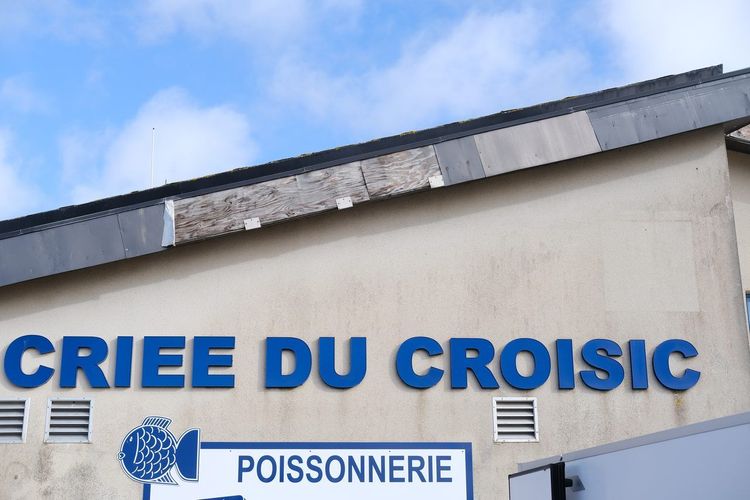
The port of Le Croisic remains one of the few genuinely active artisanal fishing ports on this stretch of the Atlantic coast. Nearly a hundred boats sell their catch to around fifty approved buyers, and the Criée du Croisic (Quai de la Petite Chambre, 44490 Le Croisic, rated 4.4/5 on Google with 448 reviews) launches its sales from 4 in the morning, with bids placed at the push of a button on electronic screens.
Don't expect to go inside: the fish market hall is a professional space closed to the public, and no viewing gallery is open on a continuous basis. The real spectacle takes place on the quays, on summer afternoons, when fishermen sell langoustines, sole, sea bass and small lots of rock fish directly to passers-by. Around the basin, the former shipowners' houses have been converted into restaurants and seafood shops, without the line of façades having changed much since the eighteenth century. A leisurely walk around the port takes about forty minutes and helps you spot the terraces facing the boats rather than the road. It is also the best place to understand the town's real economy, the one that keeps running in February when the shutters of the holiday homes stay closed.
2. The Océarium du Croisic
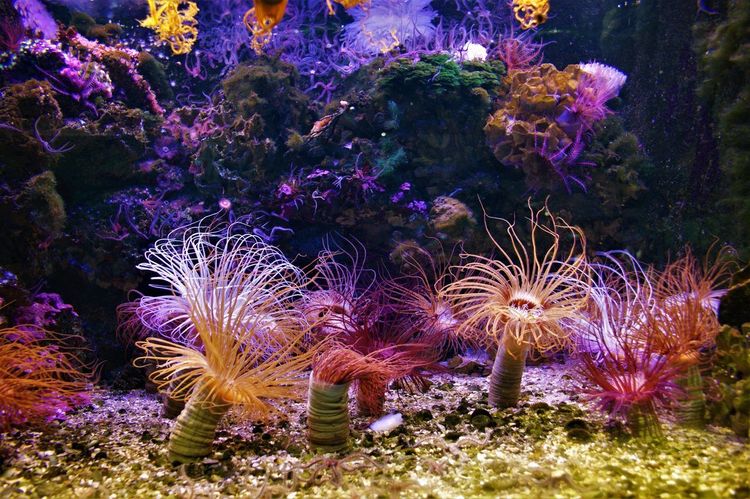
Established on its current site since 1992, the Océarium du Croisic (Avenue de Saint-Goustan, 44490 Le Croisic, rated 4.4/5 on Google with 12,535 reviews) features 56 aquariums across 1,700 m², housing nearly 4,000 animals and 600 species just four hundred metres from the ocean.
The tour is organised around themed tanks, from the Loire estuary to tropical seas, with an eleven-metre underwater tunnel as its centrepiece — the first of its kind in Europe — where sharks and rays glide above your head. The Pacific ray tank and its 800,000 litres of seawater remain unique in Europe for the diversity of species it brings together. The other star attraction is the Cape penguins, resident here since 1994: the colony now numbers over twenty individuals and births are frequent. Allow an hour and a half for the visit, longer if you time your arrival to coincide with one of the commented feeding sessions, during which keepers explain the daily lives of the sharks, turtles and rays. In terms of cost, admission in 2026 is €16.90 for an adult and €13.90 for a child aged 3 to 12, with free entry for under-3s. Watch the calendar: the Océarium closes in January and reopens in early February, with opening hours until 7 pm from April to the end of August. In high season, arrive at opening time, as groups quickly fill the tunnel and the penguin area.
3. The Wild Coast
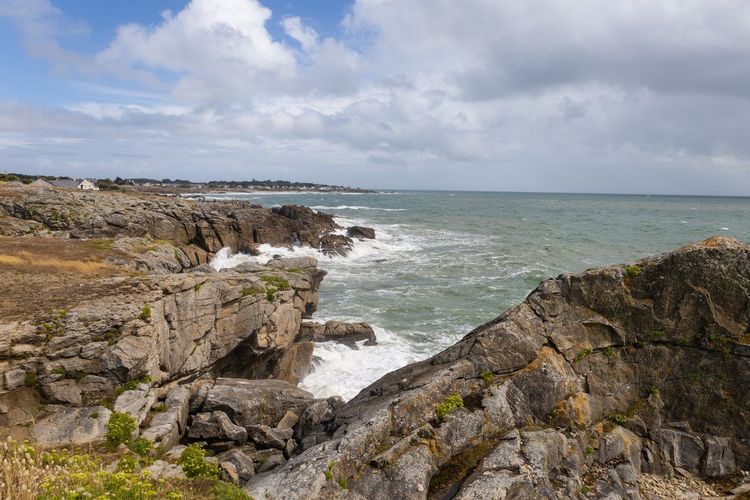
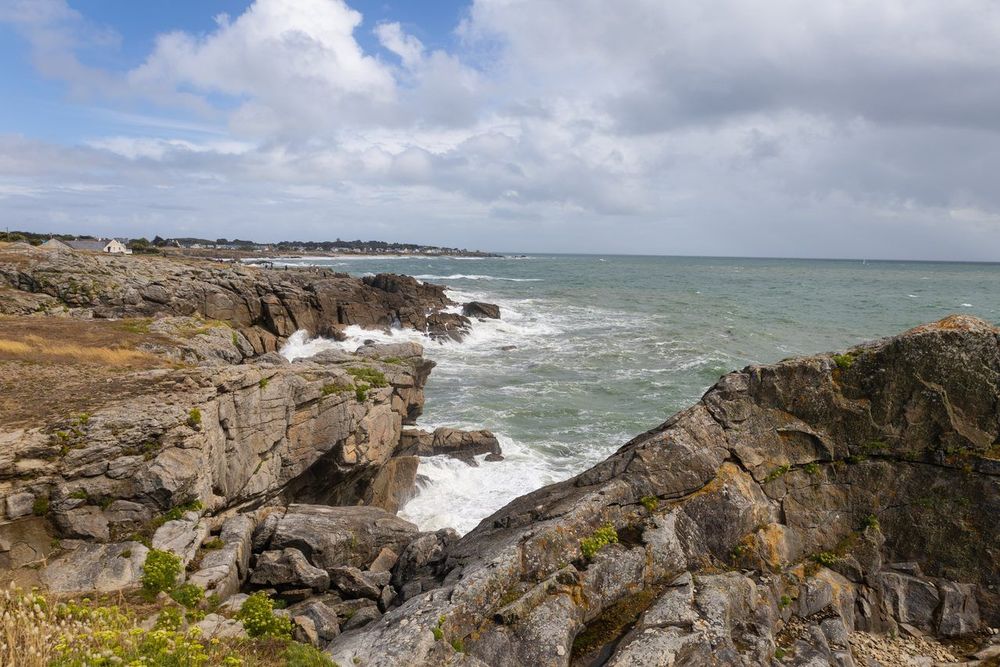
To the west of the town, the Côte Sauvage (44490 Le Croisic, rated 4.8/5 on Google with 243 reviews) unfolds a chaos of rocks battered by the Atlantic, a landscape nothing in the sheltered port prepares you for.
The name actually refers to fourteen kilometres of rocky coastline stretching all the way to the Pointe de Penchâteau at Le Pouliguen. The Le Croisic section covers the first few kilometres, starting from the Le Croisic jetty, and the département protects it as a sensitive natural area. On days of heavy swell, the ocean hurls sprays of foam several metres above the granite blocks — a spectacle some visitors seek out specifically in the aftermath of a storm. The light changes quickly on this coastline and local photographers favour late afternoon, when the sun skims the rocky crests. A marked path follows the coast along its full length, with several developed viewpoints and a few coves accessible at low tide. Check the tide times before venturing onto the lower rocks: some areas become cut off within minutes when the sea comes back in. The walk also works very well in the early evening, without a set route, simply to stroll between the rocks and watch cormorants drying their wings.
4. Le Grand Traict and the Maritime Marsh
Behind the town, invisible from the port, lies the Grand Traict, a tidal inlet connected to the Atlantic by a channel less than 500 metres wide and largely exposed at low tide.
This flat landscape, criss-crossed with former salt-working basins, is in total contrast with the rocks of the wild coast just a few hundred metres away. The whole area is part of the Natura 2000 zone "Marais salants de Guérande, traicts du Croisic et dunes de Pen Bron", created in 2004 and covering around 3,600 hectares. A corniche road allows you to drive around it with several stops to observe without disturbing the wildlife. Bring binoculars if birdwatching interests you: the distance between the road and the mudflats is considerable. The site is particularly well suited to cycling, on a loop of about an hour connecting the Grand Traict (44490 Le Croisic, rated 5/5 on Google with 1 review) to the Pointe de Pen Bron, almost entirely flat.
5. The Jetée du Tréhic and Its Lighthouse
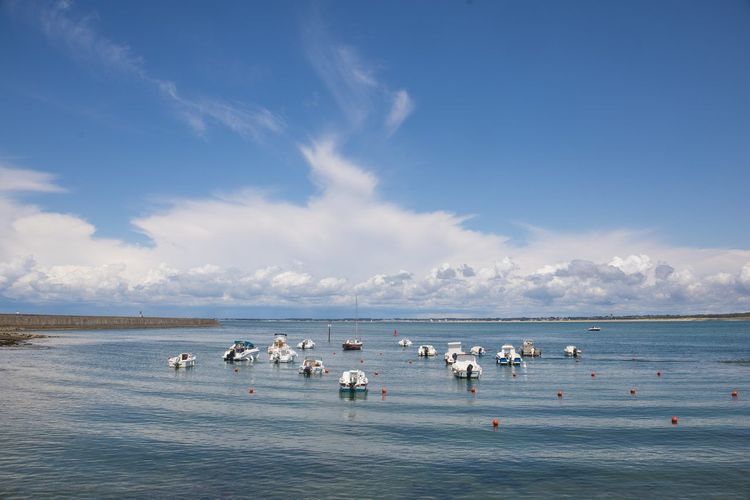
Built between 1839 and 1844 to protect the harbour entrance from westerly gales, the Jetée du Tréhic (44490 Le Croisic, rated 4.6/5 on Google with 410 reviews) stretches 858 metres of granite blocks and ends in a nine-metre turret lighthouse, put into service in 1872 and still operational today.
The return walk takes about thirty minutes, and the wind nearly always blows harder out here than in town, even in calm conditions. Yet it is one of the best viewpoints in Le Croisic: on one side the open ocean, on the other the channel and the fishing boats coming in slowly. Anglers are often found along the structure, especially during the hours of the incoming tide. Avoid the walk on days when strong westerly winds are forecast, as waves can break over the jetty without warning. The rest of the time, it makes an excellent addition to a walk around the port, in the fading light at the end of the day.
6. The Old Town and Its Shipowners' Alleyways
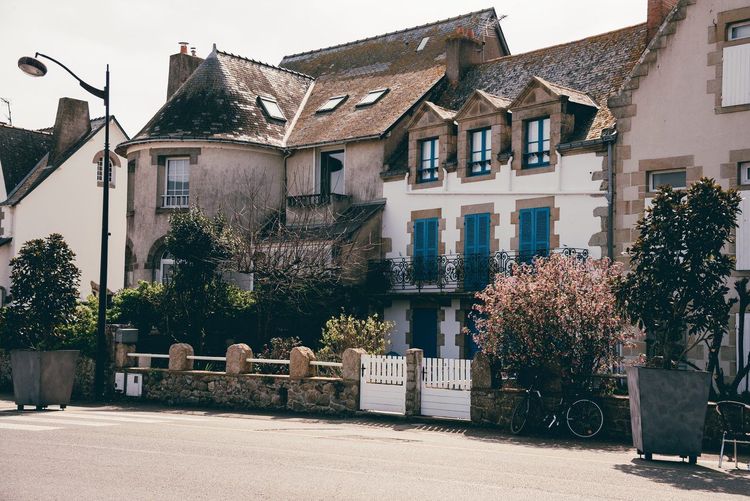
Behind the quays, a maze of narrow streets preserves the atmosphere of the Vieux Croisic (44490 Le Croisic, rated 4.2/5 on Google with 229 reviews), a quarter built in the seventeenth and eighteenth centuries by shipowners enriched by the cod-fishing trade off Newfoundland.
The granite façades, often adorned with sculpted lintels, tell of a prosperity that is now discreet but very real: some houses once belonged to families owning several ocean-going vessels. You will notice basket-handle arched doorways, cobbled inner courtyards and occasionally a date carved above a door. The Petite Cité de Caractère label awarded to the town owes much to this coherent ensemble. Get deliberately lost in the maze without following a map: it is the best way to stumble upon the details that are among Le Croisic's must-sees without appearing in any brochures. An audio guide is a useful companion for this kind of heritage walk, such as the Ryo's audio-guided tour of the medieval town of Guérande a few kilometres away. Allow an hour for a leisurely visit, more if you stop to photograph the architectural details, which are numerous and often invisible on a first pass.
7. The Église Notre-Dame-de-Pitié
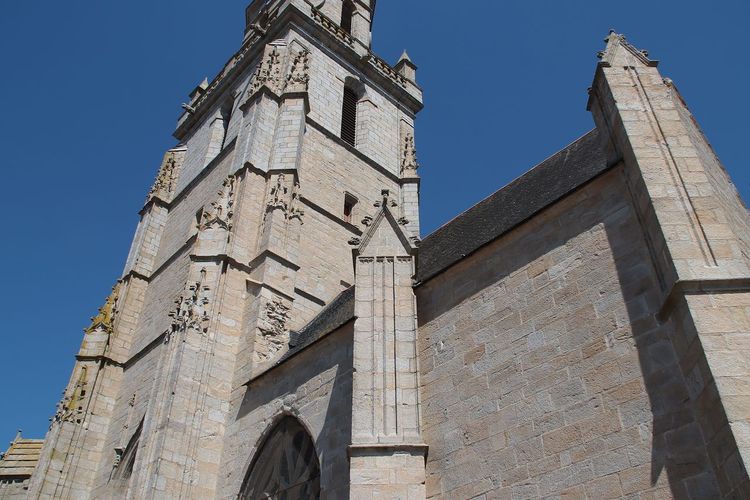
At the heart of the old quarter, the Église Notre-Dame-de-Pitié (44490 Le Croisic, rated 4.5/5 on Google with 171 reviews) dominates the rooftops with its 56-metre bell tower, a landmark visible from almost anywhere in the town.
The foundation stone was laid in 1494, at the height of local maritime prosperity, and the Flamboyant Gothic building was consecrated in 1508. The current bell tower, rebuilt between 1683 and 1700 after the original timber frame rotted away, gives it its stocky silhouette. Inside, a painting above the altar depicts a crew in distress saved by the Virgin Mary, and two nineteenth-century model boats complete this series of maritime ex-votos. Entry is free outside of services.
8. Mont Lénigo and Its Orientation Table
The Mont Lénigo (44490 Le Croisic, rated 4.5/5 on Google with 230 reviews) is no natural hill: this mound formed from the stone ballast that merchant ships unloaded at the port before setting off again laden with salt.
Its twin, the Mont Esprit, stands at the other end of the port, and both mounds remain the most visible reminders of the maritime trade that sustained the town. The name itself comes from Breton, where "lennig" means a small pond, which once occupied the site before being filled in. In the nineteenth century, a signal mast erected at the summit indicated the water depth to incoming vessels. Today, an orientation table helps visitors identify the features of the landscape: the salt marshes, the traict and, on a clear day, the horizon stretching out to sea. The climb takes just a few minutes from the town centre, making it an easy stop to slip in between two other visits. Many walkers head up at sunset, when the raking light illuminates the port and the slate rooftops at the same time.
9. The Plage de Port-Lin
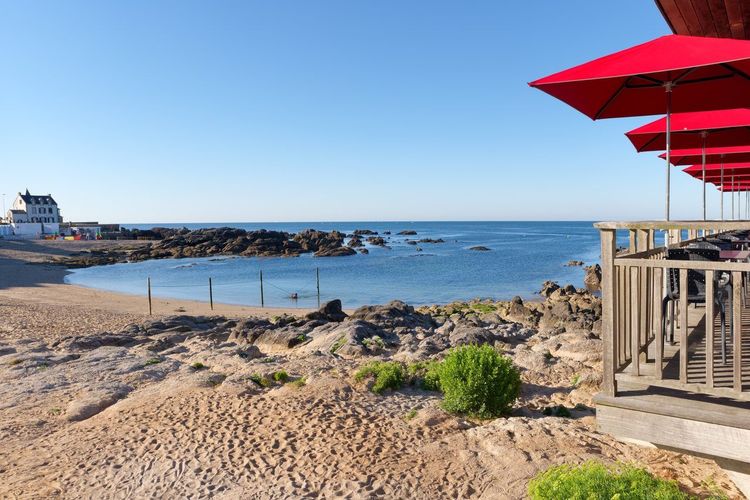
Protected by a rocky ridge, the plage de Port-Lin (44490 Le Croisic, rated 4.7/5 on Google with 21 reviews) is the town's main beach, lined with seaside villas along the southern coastal road.
Only about a hundred metres of sand, but its aspect and gentle slope make it well suited to young children, with lifeguard supervision in July and August. The rocks framing it create small pools at low tide, where crabs and anemones can be observed without any special equipment. It is easy to reach on foot from the town centre, which explains its popularity with families on short stays.
10. The Plage de Saint-Goustan
Larger than Port-Lin, the plage de Saint-Goustan (44490 Le Croisic, rated 3.4/5 on Google with 9 reviews) stretches right next to the Jetée du Tréhic, a few minutes' walk from the port.
This is the town's main sandy beach, supervised in July and August, and one of the few in the area to offer a floating wheelchair for visitors with reduced mobility during high season. Its open setting makes it popular for light water sports, with paddle boarding and school sailing leading the way. In the evening, the seafront draws families and couples alike for a walk facing the setting sun. The atmosphere here is noticeably more relaxed than on the long beach at neighbouring La Baule, fifteen minutes away by road — an argument that weighs in its favour for those seeking a quieter July and August.
11. The GR34 Coastal Path
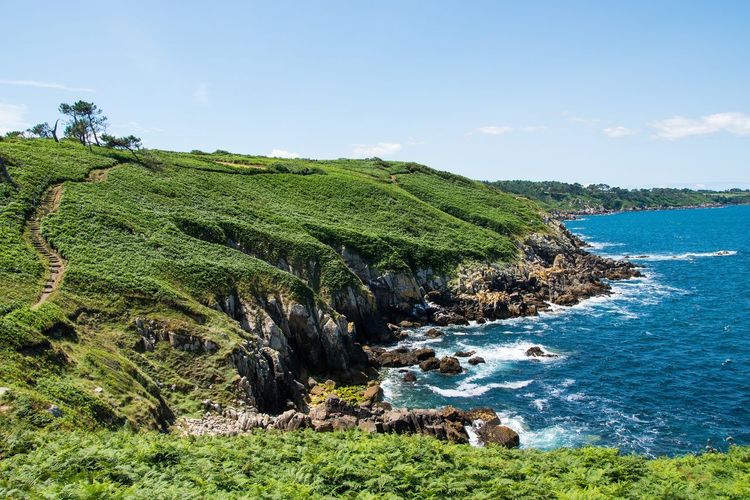
Le Croisic is a natural staging point on the GR34, the customs officers' path that follows the entire Breton coastline and ends at Saint-Nazaire, after 147 kilometres in Loire-Atlantique from the Plage de Pont-Mahé.
The local section links the wild coast to the port via Mont Lénigo, forming a loop of around eight kilometres walkable in three hours at a leisurely pace. The route alternates between coastal paths, steps cut into the rock and sections overhanging the ocean, with a generally moderate elevation gain. Good footwear is recommended: some stretches become slippery after rain, particularly on rocky sections exposed to the wind. Runners make full use of this route early in the morning, before groups of hikers arrive. If you follow the GR34 eastward to its terminus, the Ryo's audio-guided tour of Saint-Nazaire extends the walk through the estuary's port history.
12. The Le Croisic Market
The Le Croisic market (Place Dinan, 44490 Le Croisic, rated 4.3/5 on Google with 252 reviews) is held on Place Dinan, under the covered market hall on Rue des Cordiers, on Thursday and Saturday mornings year-round.
In July and August, an additional morning session is added on Tuesdays, and the stalls spill out onto the square. You will find the products expected of a seaside market: fish landed the previous day, oysters from the nearby traict, vegetables from the Nazairien countryside and semi-salted butter made with Guérande salt. Arriving before ten o'clock is the best strategy to enjoy the stalls without the summer crowds, as trading stops around 1 pm — a good cue to follow up with Guérande's audio-guided walk around the ramparts, some fifteen minutes away.
13. The Pointe de Pen Bron
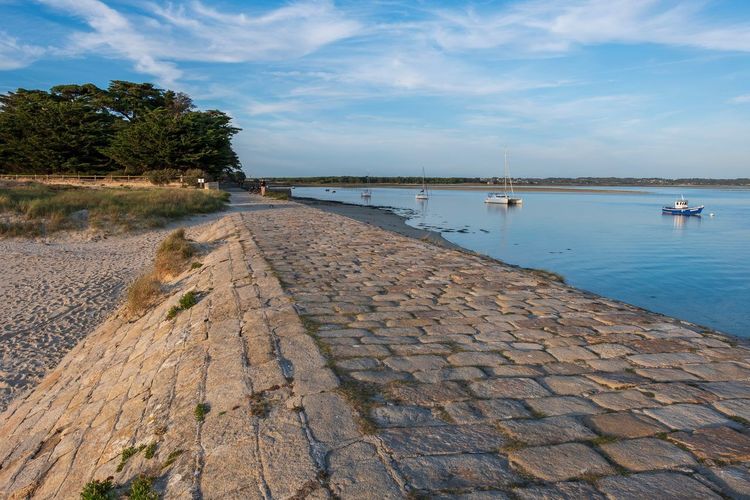
On the other side of the Grand Traict, the Pointe de Pen Bron (44420 La Turballe, rated 4.7/5 on Google with 330 reviews) closes off the maritime marsh and separates the lagoon from the open ocean along a narrow strip of sand.
Long occupied by a marine hospital and then a rehabilitation centre now closed, the site retains an isolated atmosphere despite the proximity of the seaside resorts. It can be reached on foot or by bike from the Le Croisic peninsula, following the traict along a quiet road. The point itself offers a rare view taking in both the ocean and the marsh, an angle found nowhere else in the area. Cyclists particularly appreciate this flat route, with sometimes brisk winds depending on the season. Allow about two hours for the round trip by bike from the port.
14. Birdwatching on the Traicts
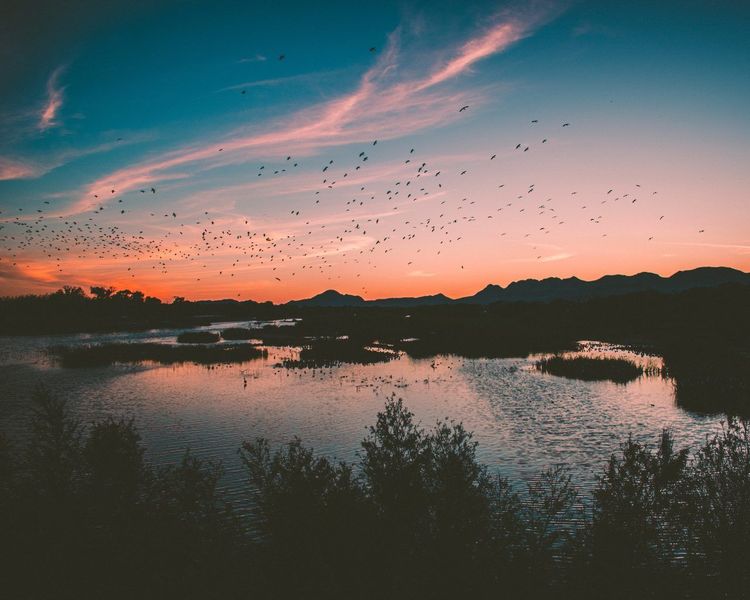
The Grand Traict area is home to an abundant bird population year-round, swelled during migration periods by species arriving from northern Europe.
The site is classified as a Special Protection Area under the Birds Directive: forty-four species listed in Annex I are regularly present, and up to 30,000 birds stop here, particularly in winter. Brent geese, avocets, dunlins and black-tailed godwits share the mudflats at low tide, when food rises to the surface on the exposed banks. Discreet observation points along the peripheral path allow you to watch without disturbing, provided you stay quiet and keep away from feeding areas. The best window is early morning, when the raking light makes identification through binoculars easier. Local naturalist associations sometimes offer guided outings, a good option for beginners.
15. Le Petit Nice and Its Rocks
At the edge of the wild coast, the Petit Nice (44490 Le Croisic, rated 4.4/5 on Google with 1,002 reviews) forms a natural amphitheatre of rocks that drops directly into the ocean.
At low tide, several pools form between the blocks, appreciated for a calm swim sheltered from the offshore currents. The spot is less frequented than Saint-Goustan, making it a good alternative for a quieter moment.
16. A Rock-Pooling or Boat Fishing Outing
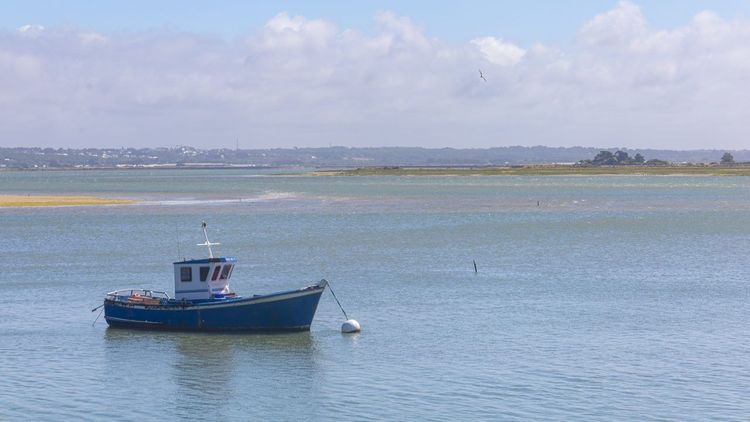
The Le Croisic coastline is among the best rock-pooling spots on the Atlantic seaboard, particularly around the spring tides with the highest coefficients.
Cockles, clams and periwinkles can be gathered on the exposed foreshore, subject to precise regulations on minimum sizes, quantities and permitted zones: check the current by-laws with the town hall or the tourist office before you go, as they change from season to season. For a guided approach, local guides offer commented outings of two to three hours, suitable for families and complete beginners. Out at sea, boat excursions depart from the port to follow the wild coast from offshore, a radically different angle from the on-foot walk. Book in advance in July and August, especially if you are planning a weekend in Le Croisic around a spring tide day: places go fast as soon as fine weather is forecast.
17. The Semaphore and the Tip of Le Croisic
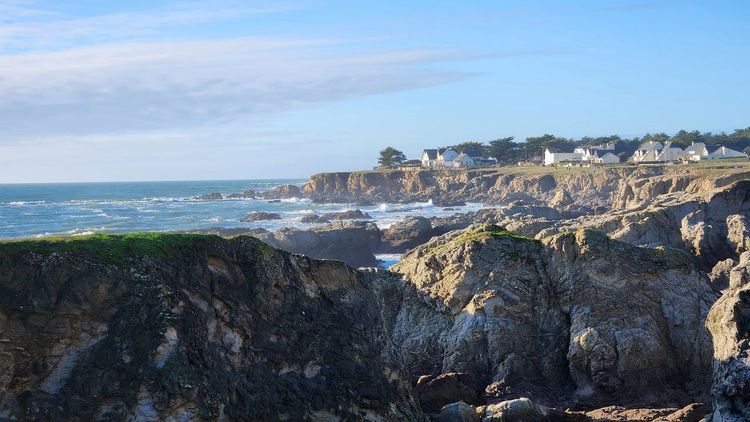
At the tip of the Le Croisic peninsula, the semaphore keeps watch over maritime traffic at the southern entrance to Brittany.
The building is not open to visitors, but its surroundings offer an unobstructed panorama over the Loire estuary horizon and the passage of merchant vessels. It is a brief stop, easy to combine with the nearby Le Croisic jetty.
18. Guérande, the Medieval Town Fifteen Minutes Away
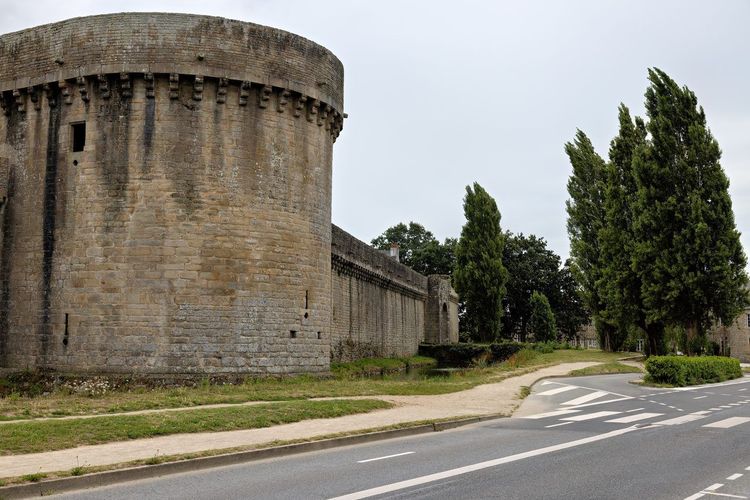
A quarter of an hour by road, Guérande (44350 Guérande) preserves one of the best-kept fortified enclosures in western France, a 1,434-metre ring pierced by four gates and flanked by six towers.
Begun in 1343 after the town was sacked, the ramparts were not completed until about a hundred and fifty years later, under the reign of Duke François II of Brittany, father of Anne de Bretagne. The Porte Saint-Michel to the east still serves as the main entrance to the walled town, and a wall walk runs along part of the fortifications. Inside, the cobbled streets lead to the Collégiale Saint-Aubin, rebuilt from 1380 after the previous building burned down: its fourteenth-century crypt and its stained-glass windows from the sixteenth and seventeenth centuries are worth stopping for. Guérande is best known above all for its salt, harvested by hand in the surrounding marshes using methods largely unchanged over the centuries; several salt farmers open their workings to visitors in spring and summer. The Ryo audio-guided tour of Guérande lets you follow the ramparts and the walled town independently, earphones in. Allow half a day to combine the ramparts, the covered market and a stop at one of the crêperies set against the fortifications.
19. Batz-sur-Mer and Its Panoramic Bell Tower
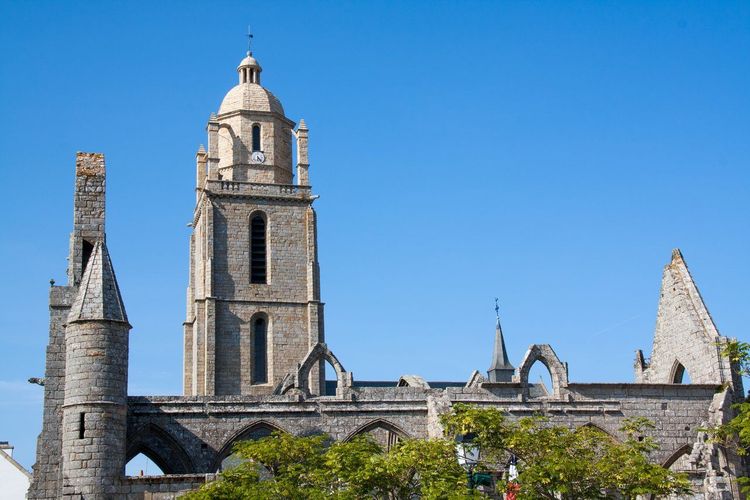
Between Le Croisic and La Baule, the village of Batz-sur-Mer (44740 Batz-sur-Mer) hides one of the region's best viewpoints, at the top of the bell tower of the Église Saint-Guénolé (Place Saint-Guénolé, 44740 Batz-sur-Mer, rated 4.5/5 on Google with 690 reviews).
The climb — 184 spiral steps up to a terrace perched at 70 metres — opens onto a panorama taking in the salt marshes, the traict and, on a clear day, the coastline from Noirmoutier to Belle-Île. The ticket costs under two euros for an adult, the tower closes in bad weather and the visit takes twenty-five minutes. The village also houses the Musée des Marais Salants, useful for understanding the work of the salt farmer before or after a walk through the salt pans. Allow a good hour on site, including the climb, more if you visit the museum in detail.
20. La Baule, the Great Beach Next Door
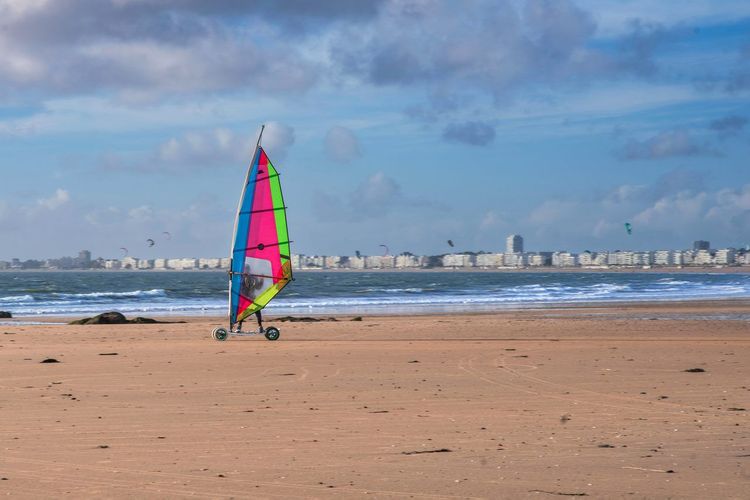
A quarter of an hour from Le Croisic, La Baule stretches a nine-kilometre bay of fine sand, often cited as one of the longest beaches in Europe, lined with a continuous promenade.
The atmosphere is markedly different: Belle Époque villas inherited from the resort that emerged at the end of the nineteenth century, lively shops and dense crowds in high season. It is a good option for an evening away from the quieter rhythm of the fishing port, or for supervised water sports, which are plentiful on this developed stretch of coastline.


FAQ
How much time should you plan to visit Le Croisic?
A full day is enough to cover the port, the Océarium, Mont Lénigo and the wild coast. A weekend in Le Croisic leaves time to add the coastal path and a morning at the market. To include Guérande and Batz-sur-Mer without rushing, plan on two to three days.
What is the best time to visit Le Croisic?
May, June and September offer the best balance between pleasant weather and moderate crowds. July and August remain lively but the beaches and car parks fill up quickly, especially around Saint-Goustan and Port-Lin. In January, note that the Océarium is closed.
Is Le Croisic suitable for children?
Yes, very much so. The Océarium, guided rock-pooling and sheltered beaches such as Port-Lin are well suited to families. The coastal path and the rocks of the wild coast, however, require more supervision due to the uneven terrain and the tides.
Where can you park in Le Croisic?
Several car parks are available near the port and the beaches, usually paid during the summer season. Near the wild coast, spaces fill up quickly in July and August: it is better to arrive early or opt for cycling from the town centre, as the relief is almost flat on the Le Croisic peninsula.
Le Croisic or La Baule: which one to choose?
Le Croisic appeals for its working fishing port and unspoilt nature, while La Baule draws visitors with its long beach and lively town atmosphere. Many visitors combine both, as they are only fifteen minutes apart by road.
How do you get around between Le Croisic, Guérande and Batz-sur-Mer?
The car remains the most flexible option, with journeys of ten to twenty minutes between each town. A local bus network serves the peninsula, the TER train connects Le Croisic to Saint-Nazaire and Nantes, and cycling is ideal for short links such as Le Croisic to Batz-sur-Mer.
Planning Your Stay in Le Croisic
Le Croisic rewards most those who take the time to venture beyond the tidal basin, photogenic as it may be. Between the auction quays in the early morning, the rocks of the wild coast and the mudflats of the Grand Traict, the Le Croisic peninsula concentrates landscapes that change radically from one shore to the other, sometimes within a few minutes' walk. If you can only pick three things to see in Le Croisic, take the Jetée du Tréhic at high tide, Mont Lénigo at sunset and the covered market hall on a Saturday morning.
For a well-calibrated weekend in Le Croisic, combine the town with Guérande and Batz-sur-Mer rather than retracing the same roads several times, and keep half a day's flexibility for the weather. The Ryo's audio-guided tour of Guérande covers the medieval town street by street, and the Nantes audio guide takes over if you head back up towards the estuary to end your stay.