© Shutterstock
 Votre guide Ryo
Visiting Le Havre in 2 Days: 2026 Itinerary Through Perret Architecture and the Seafront
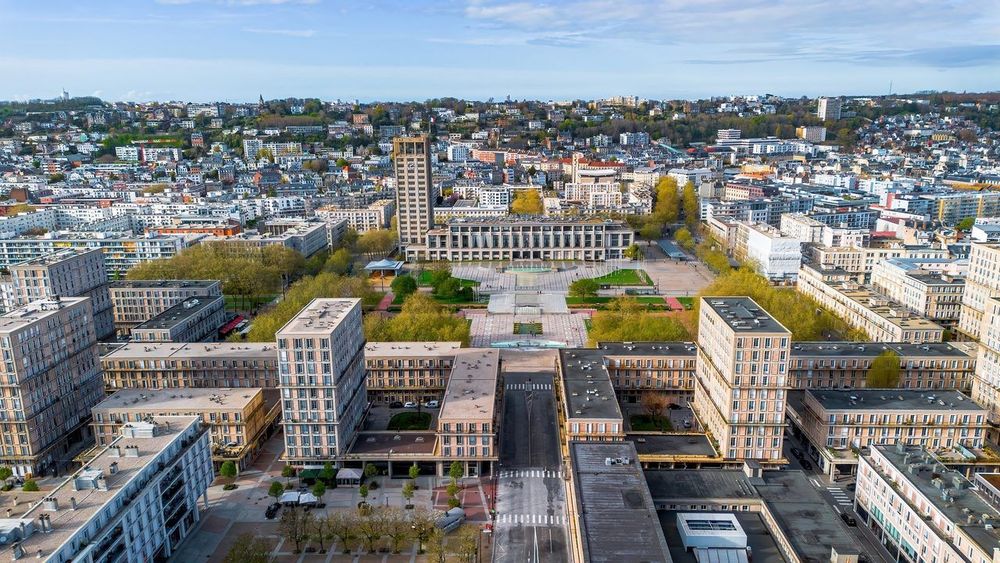
Visiting Le Havre in 2 days means accepting to be thrown off balance: walking through a city entirely rebuilt in concrete and telling yourself that UNESCO listed this as a World Heritage Site. Le Havre paid a heavy price during the Second World War, with its center razed by the bombings of September 1944, and it is precisely from these ruins that Auguste Perret built a city center so coherent that it is now protected on the same level as Mont-Saint-Michel or Versailles. This port and industrial city hides an Impressionist museum richer than many Parisian collections, hanging gardens perched on an old fort above the sea, a funicular in service since 1890 and a pebble beach where contemporary artworks settle between the beach huts. The Ryo audio-guided tour of Le Havre connects these two faces of the city, from Oscar Niemeyer's Volcan to the Porte Océane, for those who prefer to walk with headphones rather than with their nose in a paper map.
This guide details a program over two full days: a MuMa that holds one of the richest Impressionist collections in France after the Musée d'Orsay, a library housed in a white concrete volcano, and a City Hall tower from which you can take in the whole Seine bay. We also add a family option around the Montgeon forest, excursions less than an hour away to Étretat and Honfleur, and all the practical details (transport, meals, accommodation) so you can get organized without wasting time once you arrive. Plan to book the Perret show apartment a few days ahead if your weekend falls in high season: it is often the only point that gets complicated at the last minute.
Is Le Havre Worth the Detour in 2 Days?
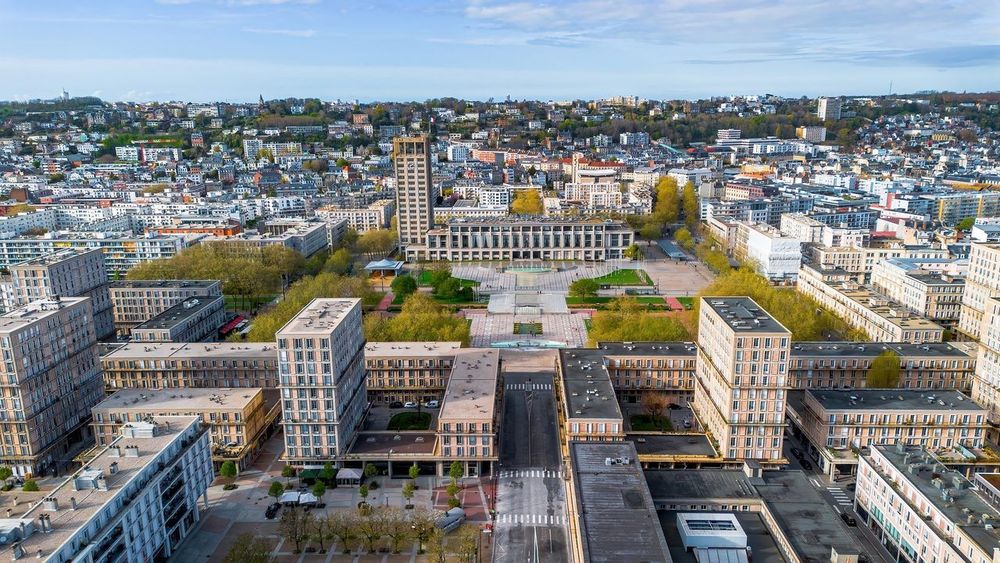
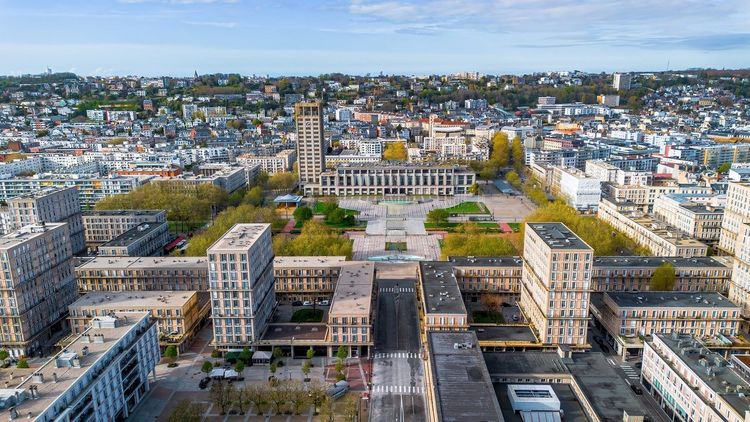
The question comes up often, and it is understandable: Le Havre doesn't have the immediate postcard look of neighboring Honfleur or Deauville, just half an hour away across the bridge. Yet it is precisely its lack of picturesque façade that makes it a unique case in France. Rebuilt between 1945 and 1964 under the direction of Auguste Perret, the city forms a coherent urban ensemble listed by UNESCO since 2005, a very rare distinction for 20th-century concrete architecture.
Two days are enough to cover the essentials without rushing: one day for the rebuilt center and its museums, a second for the seafront and the heights of the city. If you are traveling with family, you can swap half a day for the Montgeon forest; hiking enthusiasts can add an excursion to the Étretat cliffs at the end of their stay. The FAQ below returns to the reasons for this UNESCO listing, one of the least known to the general public despite its 133 protected hectares.
What strikes you on arrival is the contrast between the wide, straight avenues of the center and the constant bustle of the port, France's leading port for container traffic. Le Havre is visited like a laboratory city: every street tells a specific architectural choice, every quay keeps an active industrial function, and the two coexist without getting in each other's way. Many day-trippers leave disappointed for lack of time; over two days, the city changes its face once you get past the slightly cold first impression of the administrative center. For a first approach, our article on a first visit to Le Havre is a useful complement to this program.
Day 1 Morning: Perret Architecture and the UNESCO-Listed City Center
The Perret District and the Show Apartment
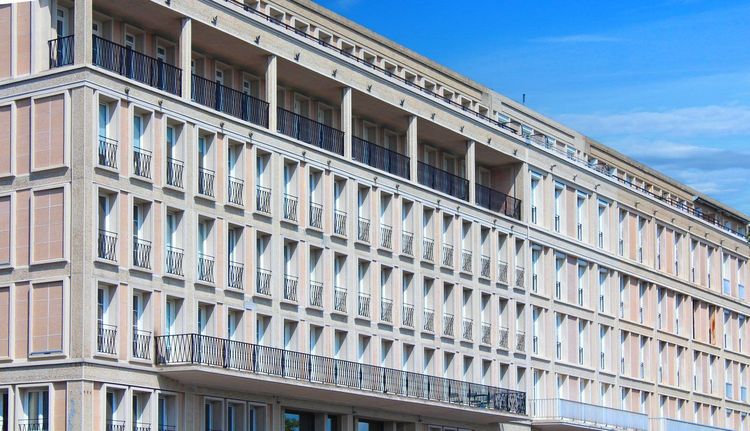
Start the day in the Perret district, the heart of the city center rebuilt between 1945 and 1964. The best way in remains the Perret show apartment, a home furnished as in the early 1950s, with its mass-produced furniture signed notably by René Gabriel and an equipped kitchen that seemed futuristic at the time, with a waste chute and central heating, both rare in the French housing stock then. The guided tour lasts about an hour and departs from the Maison du Patrimoine: book ahead in high season, as slots go quickly on weekends and many visitors discover on site that there is no space left before the next day.
Around the building, look up at the façades: prefabricated modules, a 6.24-meter grid repeated identically over kilometers, exposed concrete treated as a noble material rather than hidden behind cladding. This standard, copied all over France in the 1950s to rebuild quickly and at lower cost, finds its most accomplished and best-preserved version here. You will also notice the variations in shade and grain of the concrete from one building to the next, achieved by playing with the aggregates: it is the discreet signature of the architects associated with Perret on the site.
If you have a little time before your slot, rue de Paris deserves a stroll in its own right: it is Le Havre's historic shopping street, rebuilt in the same spirit as the rest of the center but with denser activity, shops and cafés beneath the arcades of the Perret buildings.
The Porte Océane and the Rebuilt City Center
Heading down avenue Foch, 80 meters wide and conceived as a monumental perspective, you arrive at the Porte Océane (Boulevard François 1er, 76600 Le Havre, rated 4.1/5 on Google from 22 reviews), the ensemble that symbolically opens the city to the sea. Two symmetrical tower buildings frame the perspective, a visual landmark designed by Perret to guide every visitor arriving from the center without ever losing sight of the sea horizon.
It is one of the best spots to understand at a glance the urban ambition of the project: a city laid out in a straight line, where you can sense the sea from inland. The center of Le Havre is then explored without a fixed itinerary: rue de Paris, the city hall, the buildings of avenue René-Coty form a regular grid that you can explore freely in an hour, without fear of getting lost since the perspectives remain open.
You will also come across several public sculptures scattered across this grid, often overlooked by hurried visitors: they punctuate the secondary squares and complete an urban scheme conceived from the start as a whole, not as a series of isolated buildings.
Saint-Joseph Church
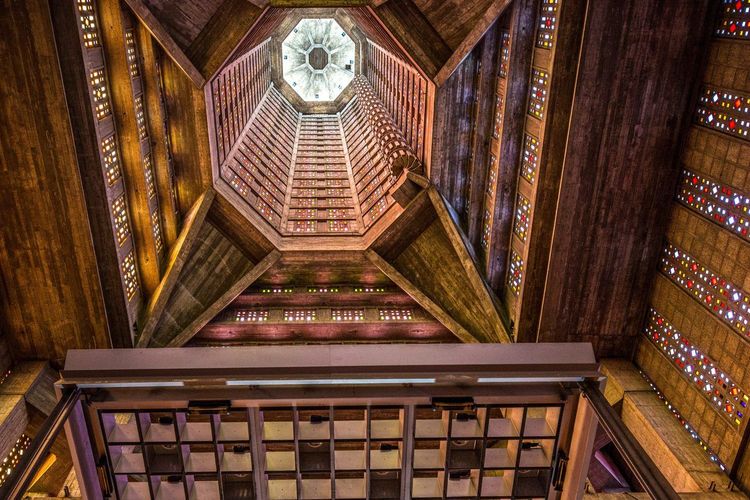
End the morning at Saint-Joseph Church, designed by Auguste Perret and completed by his team in 1957, three years after his death. Its 107-meter octagonal lantern tower dominates the whole city and serves as a landmark for sailors, a role as urban and spiritual lighthouse assumed from the design stage.
The interior surprises more than the deliberately sober exterior: 12,768 pieces of colored glass, composed by master glassmaker Marguerite Huré, line the walls of the tower and produce a light that changes with the hour and the weather. Many visitors step in for five minutes out of curiosity and come out half an hour later, sitting on a bench without quite knowing why they stayed. If your morning is constrained by an afternoon train, the short version of the Ryo audio-guided tour dedicated to the Porte Océane links the Perret district, Porte Océane and Saint-Joseph Church while telling the story of the post-war reconstruction step by step.
Day 1 Afternoon: Le Volcan, the MuMa and the Cultural Quays
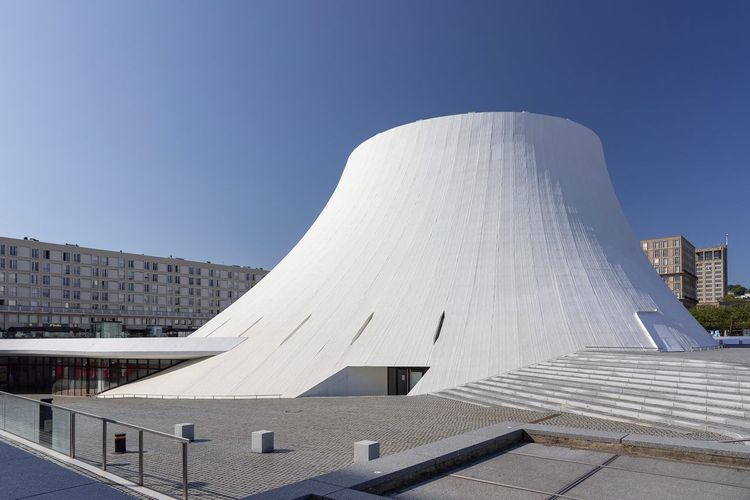
Oscar Niemeyer's Volcan and Its Library
The afternoon begins at the Volcan, the cultural center inaugurated in 1982 and designed by Oscar Niemeyer, one of his rare works in Europe along with the Communist Party headquarters in Paris. The white conical shape contrasts radically with the geometric rigor of the neighboring Perret district, a deliberate contrast between two generations of architects.
Beside the national performing arts venue housed in the large volume, the Volcan library, named after Oscar Niemeyer, has occupied the small volcano since 2015: tiered reading rooms, large windows onto the square below and free access to consult on site. Niemeyer was 75 at the inauguration; here he designed a square deliberately sunk below street level, to protect passersby from the Channel wind. The result remains one of the most photographed buildings in the city, and its silhouette appears on a good share of the souvenirs sold downtown.
The square surrounding the Volcan regularly hosts events and temporary installations, a use that extends Niemeyer's idea: an open place of passage rather than a building closed in on itself.
The MuMa, André Malraux Museum of Modern Art
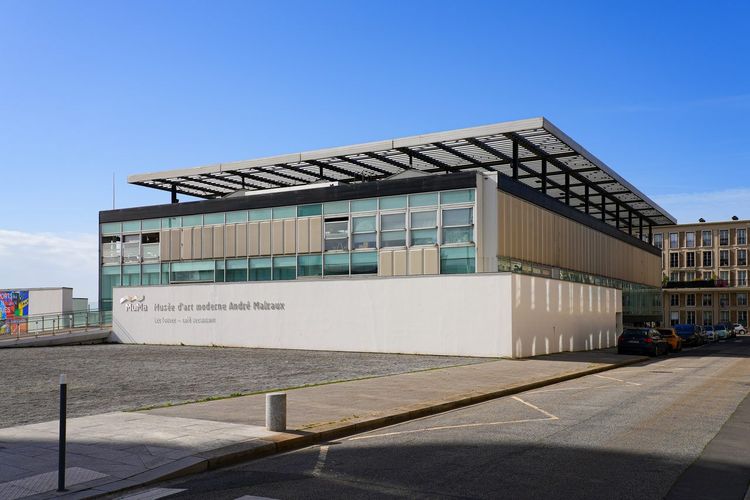
About fifteen minutes on foot away, at the entrance to the port, the MuMa houses notably the Senn collection and one of the finest Impressionist collections in France after the Musée d'Orsay: Monet, Pissarro, Renoir, Boudin (the largest ensemble in the world) and Dufy are represented in great numbers, under zenithal natural lighting that varies with the time of your visit.
Allow one to two hours depending on your pace, more if a temporary exhibition adds to the permanent tour: check the program before coming. The ticket price remains affordable and the museum offers regular free-admission days; the café, facing the estuary and the ships entering the port, deserves a quarter-hour break on its own.
The building itself, designed by Guy Lagneau with Jean Prouvé and inaugurated by André Malraux in 1961, then renovated in 1999 by Laurent and Emmanuelle Beaudouin, plays on the transparency of its glass façades: from the inside, the Impressionist canvases converse with the light of the Channel that they were precisely trying to capture.
The Bassin du Commerce, Its Footbridge and the Fish Market
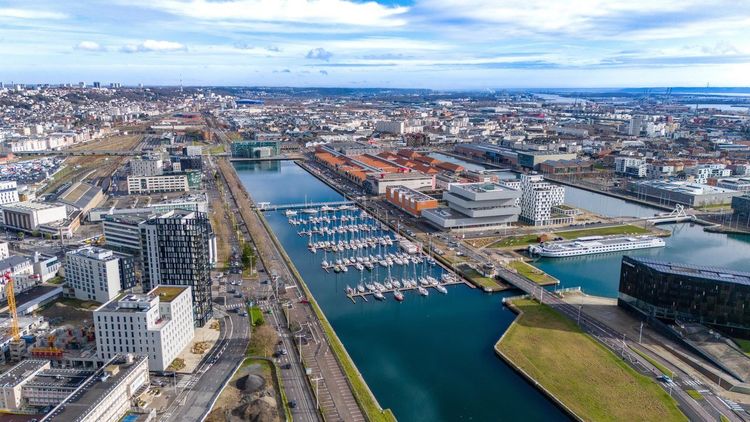
On the way back to the center, the Bassin du Commerce (Quai Georges V, 76600 Le Havre) and its footbridge connect the two banks in a few minutes' walk. It is a pleasant place to pass through in the late afternoon, when the light skims the water and the terraces fill up for the aperitif.
Further south, in the Saint-François district, the fish market sells in the morning the catch landed by the port's boats: sea bass, sole, mackerel, scallops in season, a concrete glimpse of the activity that has sustained the neighborhood for generations.
In this same Saint-François district, the Maison de l'Armateur is worth a detour if time allows: this late 18th-century private mansion, organized around an octagonal light well over five levels, is one of the rare buildings in the center to have survived the 1944 bombings. The Ryo audio-guided tour devotes several of its 18 stops to these cultural quays, with the story of the Volcan's construction to listen to while walking from one point to the next.
Day 2 Morning: The Beach, Artworks and the Seafront
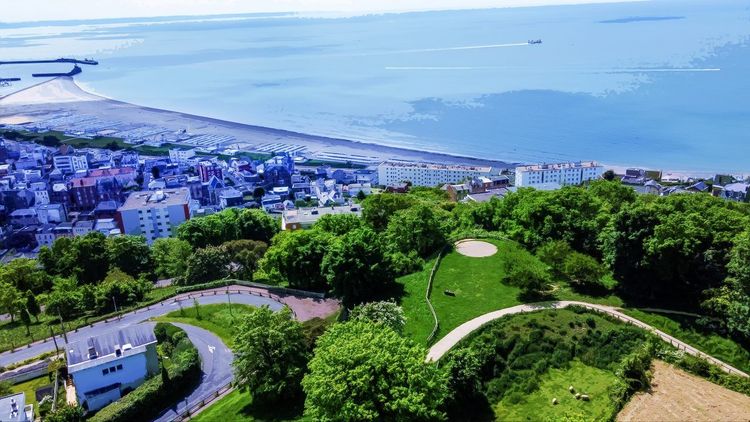
Le Havre Beach and the Works of Un Été au Havre
Start the second day at Le Havre beach, a stretch of pebbles about two kilometers long facing the Channel, lined by a long promenade. Contrary to the image you may have from Paris, it is very busy as soon as the good weather arrives, more for strolling, beach volleyball and colorful huts than for swimming, as the water stays cool even in midsummer.
Since 2017, the event Un Été au Havre has scattered contemporary artworks around the city, along the promenade and on the sand. Some have stayed permanently, like the arch of colorful containers "Catène de containers" by Vincent Ganivet, on the Southampton quay. The works are not always visible from afar: you have to walk to spot them, which turns the stroll into a treasure hunt for those who like to observe rather than follow a map.
The Jardins Suspendus
Above the city, the Jardins Suspendus occupy the old Sainte-Adresse fort, built in the mid-19th century and converted into a botanical garden open to the public in 2008. Collection greenhouses, themed gardens, a breathtaking view over the Seine estuary and the port: it is one of the places least highlighted by classic guidebooks even though it ranks among the most spectacular in Le Havre.
Access is by bus, by car or on foot via the steep streets of the hillside; to save your legs, the funicular lifts you from the center up to the upper districts, from where it is still a walk. The view amply rewards the effort, especially late in the morning when the light illuminates the estuary. The old moats and bastions, transformed into themed flowerbeds, recall the military function of the site, designed to defend the entrance to the port.
The Bains des Docks
For a more urban break, the Bains des Docks (Boulevard Amiral Mouchez, 76600 Le Havre, rated 3.8/5 on Google from 1,560 reviews), designed by Jean Nouvel in 2008, offer an all-white aquatic complex with indoor and outdoor pools, a paddling pool for the little ones, a hammam and a wellness area. The architecture of stacked cubes, inspired by the containers of the neighboring port, is worth the detour even without a swimsuit.
To chain this morning together without thinking about the order of stops, the Ryo audio-guided tour of Le Havre lines up 18 audios over 6.2 km and about 2h30 of walking: launch it on your phone, and it points out what to look at at each stop, including the details that are easy to miss along the seafront.
Day 2 Afternoon: Panoramic Views and Religious Heritage
The City Hall Tower, Panoramic View
Head back to the center to climb the City Hall tower, 72 meters and 18 floors, whose summit opens during organized visits on certain days: check with the tourist office before going.
The view covers the whole rebuilt city, the port in the background with its cranes and container ships, and on a clear day the coast as far as Honfleur and the Pont de Normandie. It is the best place to grasp the regular grid of the Perret district seen from above, an order impossible to perceive at street level.
Notre-Dame Cathedral and Square Saint-Roch
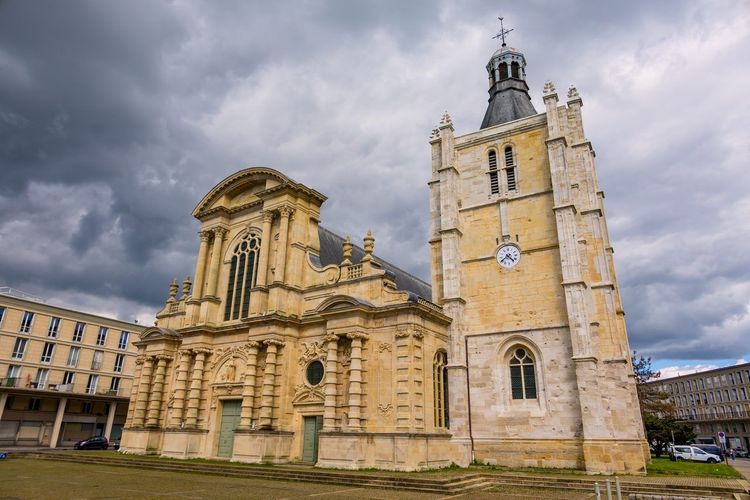
A few minutes away, Notre-Dame Cathedral of Le Havre, one of the rare old buildings in the center, partly survived the bombings: its 16th-century bell tower and classical façade recall the pre-war city, restored rather than rebuilt.
A little further on, along avenue René-Coty, the Square Saint-Roch offers a calm, shaded green space, ideal for a break. Few visitors stop there, which makes it a peaceful counterpoint after the bustle of the shopping avenues.
The Natural History Museum
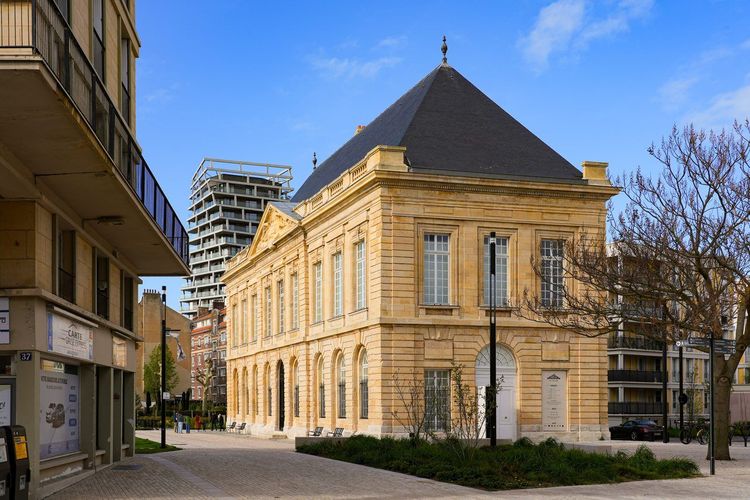
To finish in a different register, the Natural History Museum, housed in the former 18th-century courthouse spared by the bombs, on place du Vieux-Marché, holds notably the collection of Le Havre naturalist Charles-Alexandre Lesueur, drawings brought back from an expedition to Australia in the early 19th century, and galleries of paleontology, mineralogy and marine biodiversity.
A short hour is enough, and the visit completes the architectural part of these two days with a scientific angle that children enjoy. If you can, save the panoramic view for the very end of the afternoon, when the low light gilds the Perret buildings: it is the most memorable way to close the loop before dinner.
Le Havre with Family: Montgeon Forest and Activities for Kids

The Montgeon Forest
With children, replace half a day of the program with the Montgeon forest, about 270 hectares of woods, lawns and ponds on the northern heights of the city. Mini farm, play areas scattered across several sectors, marked trails of different lengths, a lake and animal parks: it is where the people of Le Havre themselves take their children on Sundays.
The forest can be explored on foot or by bike, and the picnic tables let you spend half a day there without spending much, a good compromise when the family budget starts to tighten after two days of visits.
The Bains des Docks and the Beach Skatepark
In cool weather, the paddling pool and playful pools of the Bains des Docks easily keep the youngest busy for a whole morning, with an outdoor pool open all year round. Your teenagers, meanwhile, will prefer the skatepark built on the beach, outdoors facing the sea, very lively at the end of the day.
Between the two, the tram and buses save you from taking the car again, and the beach promenade offers plenty of room to let everyone run around between two activities.
An Afternoon Snack at Calice et Mandibule
For a sweet break, the pastry shop Calice et Mandibule, often mentioned by local families, offers cakes that please children and parents alike, a good excuse to sit down after a morning of walking in the forest or on the beach.
When it comes to sightseeing, there is no point aiming for exhaustiveness with children: the short version of the Ryo audio-guided tour, centered on the Porte Océane, is limited to a few stops that you can listen to at your own pace, with no schedule or guide to follow, letting the youngest choose the next stop.
Visiting Le Havre on Foot, by Bike or Along the Port
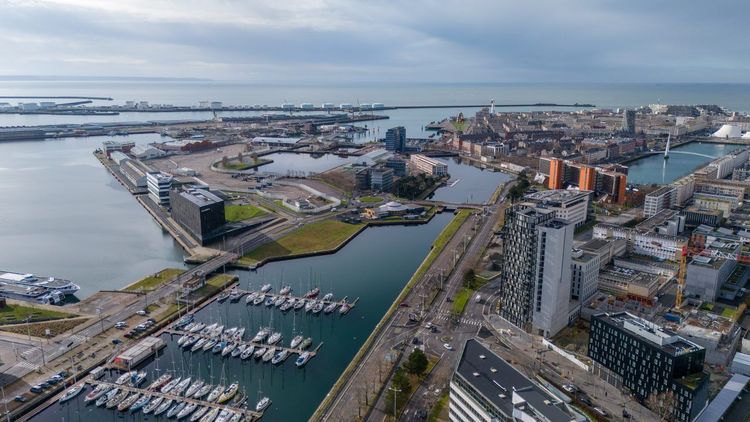
The Port of Le Havre and Its Docks
The port of Le Havre (Quai de Southampton, 76600 Le Havre), France's leading port for containers, remains a constant presence during these two days: container ships on the horizon, cranes visible from several points in the city, a briny smell mixed with industrial odors that remind you that Le Havre lives first and foremost from its maritime activity.
Guided boat tours let you see the port facilities from the water, an option to consider at the end of your stay, to complement walking on the quays open to the public.
Visiting Le Havre Without a Car, on Foot, by Bike or by Funicular
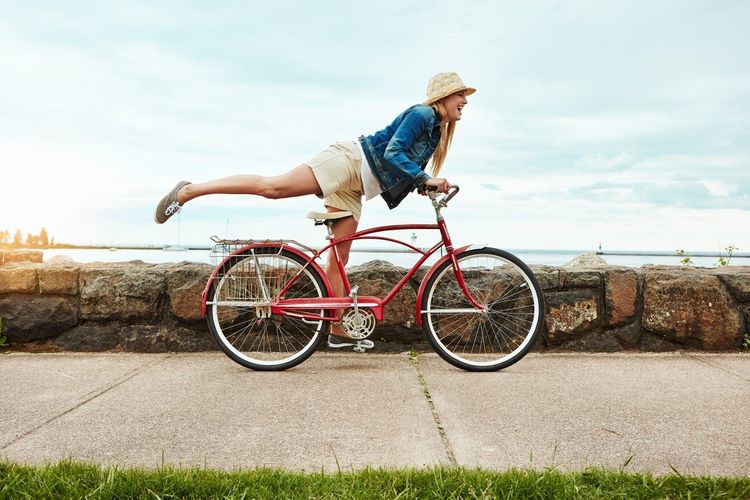
The city lends itself particularly well to walking: the UNESCO-listed center fits within a compact perimeter, and the bike lanes connect the center to the seafront with virtually no elevation, a rare asset on a rather hilly Normandy coast. The LiA network's rental bikes complement buses and trams for those who want to save time without a car.
Visiting Le Havre on foot is, moreover, the option favored by most weekend visitors: the distances between the main points of interest rarely exceed 20 minutes of walking, and the wide sidewalks inherited from Perret's urban planning make walking comfortable, even with a stroller.
The only real slope is the hillside separating the lower town from the upper districts. To climb it, take the funicular, in service since 1890 between rue Gustave-Flaubert and rue Félix-Faure: a ride of a few minutes, included in the public transport network, which drops you at the foot of the viewpoints of the upper town.
What to See Around Le Havre? The Best Excursions Within an Hour
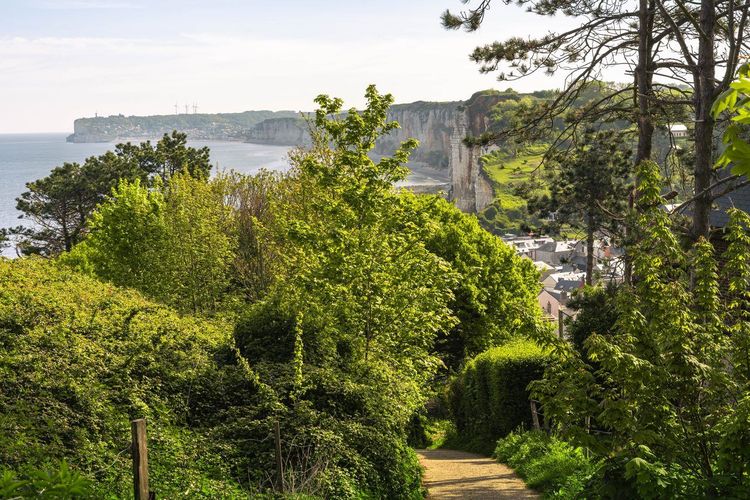
Étretat and Its Cliffs
Half an hour away by car, Étretat and its chalk cliffs are among the most photographed landscapes in Normandy, painted by Monet and Courbet, written about by Maupassant. The Manneporte arch, the Porte d'Aval and the Aiguille can be discovered via coastal paths, with two main viewpoints on either side of the beach: the Falaise d'Amont and the Falaise d'Aval.
Allow half a day round trip, more if you climb to the Notre-Dame-de-la-Garde chapel, perched on the Falaise d'Amont, from where you take in the whole bay and the Aiguille opposite. Our Ryo article on Étretat details the best viewpoints and the tide times to watch.
Honfleur and Deauville
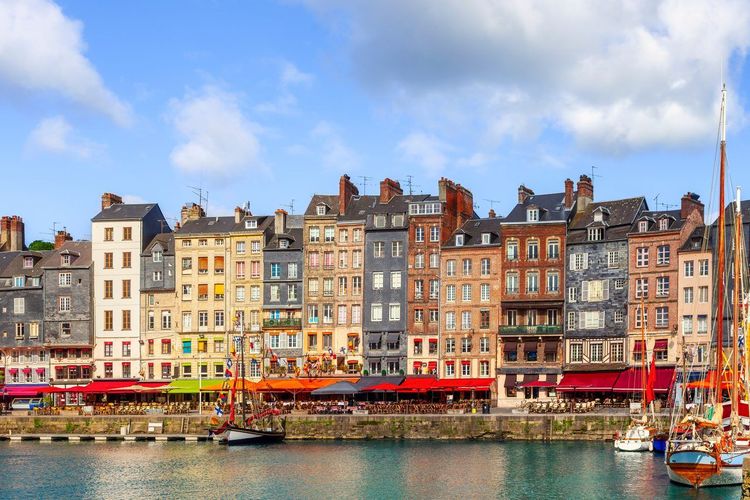
On the other side of the estuary, about 30 minutes via the Pont de Normandie, Honfleur offers its Vieux Bassin with narrow slate-clad houses, a total contrast with Le Havre's concrete reconstruction. The Sainte-Catherine church, built entirely of wood by ship carpenters, remains one of the most singular religious monuments in the region.
A little further on, Deauville and its boardwalk attract more for the chic seaside atmosphere and events, such as the American Film Festival in September, than for a dense architectural heritage. The two towns combine easily into a one-day excursion if you leave early.
Where to Eat in Le Havre

When it comes to dining, Le Havre long suffered from a reputation that was more industrial than gastronomic, unjustified today as the offering has grown denser around the quays and the rebuilt center. Local catch structures a good part of the menus, with Norman classics like sole or mussels in cream.
For a simple lunch between two visits, the area around rue de Paris and the Halles centrales concentrates several reasonably priced addresses, frequented by locals at lunchtime, a good indicator of value for money. The quays of the Bassin du Commerce gather more touristy terraces but well located for a break at the end of the day.
For a more refined dinner on the first evening, look to the Saint-François district and the surroundings of the Volcan, more varied than the strict administrative center. Our Ryo article on Le Havre's culinary specialties details seven specialties to look for on menus during your stay.
Where to Stay in Le Havre for a Weekend
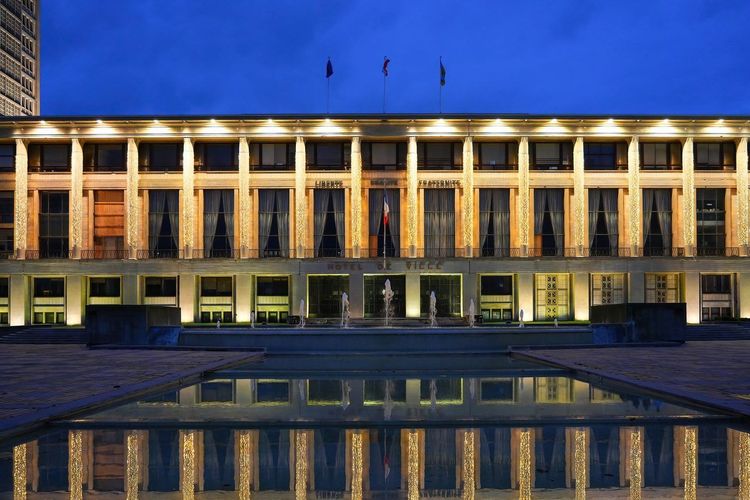
For a two-day weekend, favor accommodation in the Perret city center or near the seafront: both areas let you reach most of the visits on foot, without depending on transport in the morning.
The Perret district concentrates several mid-range hotels, often set in reconstruction-era buildings with their high ceilings and large windows, while the seafront offers establishments with views of the Channel, at rates that climb in summer and during major events. Book a few weeks ahead for these periods, as Le Havre's hotel stock remains more limited than that of cities of comparable size.
For tighter budgets, the addresses around the train station, about fifteen minutes on foot from the center and connected by tram, offer a good price-location compromise.
How to Get to and Around Le Havre
How to Get to Le Havre (Train, Car, Bus)
By train, Le Havre can be reached directly from Paris Saint-Lazare in a little over two hours, a line that serves Rouen along the way, with several daily round trips. By car, allow about 2h30 from Paris via the A13 motorway, with a toll on most of the route and traffic jams to expect during peak departure times.
Long-distance coaches complete the offer for small budgets, with longer trips but often cheaper than the train, especially if booked early. Le Havre-Octeville airport, north of the city, offers only limited service: most travelers go through Paris.
Getting Around, Parking and Driving in Le Havre
Once there, the LiA network (tram, buses and funicular) serves the whole city, useful for reaching the Montgeon forest or the Jardins Suspendus, with an inexpensive day ticket for two days of visits. The UNESCO-listed center can be explored almost entirely on foot.
For parking, several underground car parks surround the city center, preferable to street parking, which is limited and paid in the streets near the city hall. As for market days in Le Havre, Saturday morning around the Halles centrales and the place Thiers market attract a dense crowd, a chance to see the city in its daily life, far from the monuments alone.
When to Visit Le Havre: Weather and Highlights
As for the weather, be prepared: the city remains exposed to winds and quick showers from the Channel, even in midsummer, a frankly oceanic climate that sometimes surprises visitors from the south. A windbreaker will serve you better than an umbrella against the wind from the open sea. From May to September, the long days and the Un Été au Havre program offer the best conditions; winter, calmer, suits museums well.
The cultural highlight remains the Normandie Impressionniste Festival, held roughly every three or four years in several Normandy towns: exhibitions at the MuMa, events in town, and attendance well above normal. Check the dates before booking: a classic weekend can then turn into a themed visit, provided you plan accommodation ahead.
If rain shows up, Le Havre offers several sheltered options: the MuMa, the Volcan library, the Natural History Museum or the Perret show apartment fill an entire half day without setting foot outside, an advantage that few destinations on the Normandy coast can claim.
FAQ
How many days do you need to discover Le Havre?
Two full days are enough to cover the UNESCO-listed city center, the seafront and a major museum like the MuMa. A third day lets you add a relaxed excursion to Étretat or Honfleur, or a family outing to the Montgeon forest.
Is Le Havre worth the detour?
Yes, especially for the Perret architecture, a rare example of post-war reconstruction listed as a UNESCO World Heritage Site, and for a seafront that combines beach, contemporary art and buildings by renowned architects such as Niemeyer and Jean Nouvel.
How do you plan a weekend in Le Havre?
The simplest approach is to dedicate the first day to the rebuilt city center and the museums, then the second to the seafront and the heights of the city. Families can replace half a day with the Montgeon forest, and outdoor lovers can extend the trip with Étretat.
Why is Le Havre a UNESCO World Heritage Site?
The listing, granted in 2005, recognizes the urban coherence of the city center rebuilt under the direction of Auguste Perret between 1945 and 1964: prefabricated concrete, a 6.24-meter modular grid applied across 133 hectares, and a complete urban vision that is still readable today.
What is there to do in Le Havre when it rains?
The MuMa, the Volcan library, the Natural History Museum, the Bains des Docks and the Perret show apartment offer several hours of sheltered visits, enough to fill half a day without feeling like you've wasted your stay.
What is the Normandie Impressionniste Festival?
It is a regional cultural event, held every few years, that brings together several Normandy towns around the Impressionist heritage through exhibitions and events, notably at the MuMa.
How do you get to Le Havre without a car?
The train from Paris Saint-Lazare remains the most direct option, with a journey of a little over two hours. Once there, the LiA network of trams, buses and funicular serves the whole city, including the Montgeon forest and the Jardins Suspendus.
In the end, visiting Le Havre in 2 days means letting yourself be surprised by a city unlike any other stop on the Normandy coast. Between the Perret architecture, Niemeyer's Volcan, the MuMa and the Jardins Suspendus, the program fits into two days with no downtime, and you can extend it with Étretat or Honfleur if the weekend stretches. And to connect all these places without a paper map, the Ryo audio guide to Le Havre accompanies you step by step, headphones on and with no schedule to follow.