© Shutterstock
 Votre guide Ryo
Le Havre for the First Time: Complete Guide and Itinerary 2026
About to visit Le Havre for the first time and picturing a grey, industrial port city? That cliché rarely survives the first hour on the ground. Here, the flat rooftops and concrete facades of Auguste Perret form an entire city centre listed as a UNESCO World Heritage Site — a unique case in Europe for post-war reconstruction. The Ryo audio guide tour of Le Havre lets you trace that history on foot: 18 audio stops, 2h30 and 6.2 km to understand a city rebuilt block by block.
Four things surprise almost everyone discovering Le Havre: a pebble beach facing the Seine estuary, an aquatic complex designed by Jean Nouvel inside a former port warehouse, a concert hall shaped like a volcano designed by Oscar Niemeyer, and an arch of colourful containers planted on the docks. This guide covers the major sites, the seafront, the port, the arts scene, neighbourhoods to eat and sleep in, how to get here, and two day trips to extend your stay.
Le Havre at a Glance: a Rebuilt City Listed by UNESCO
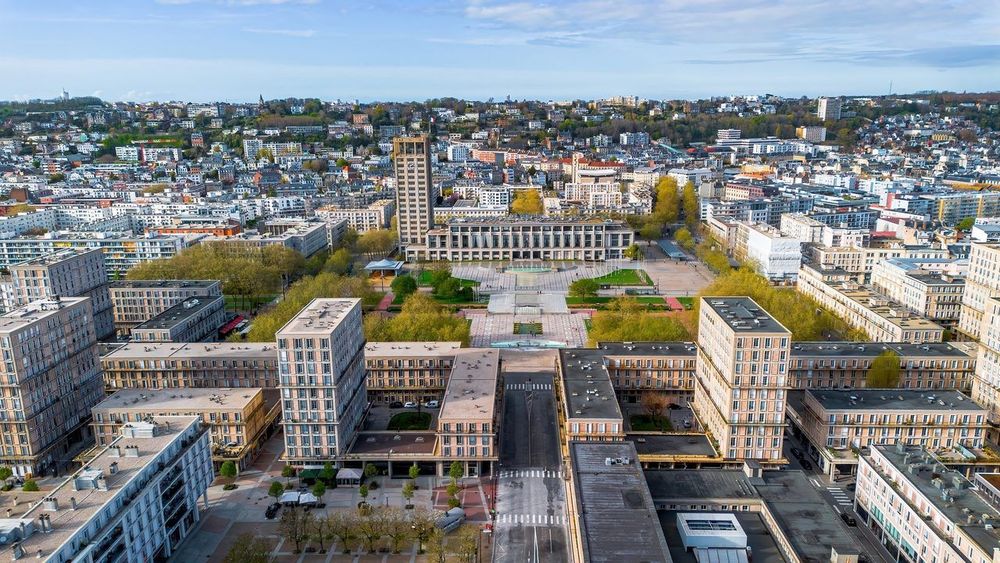
On 5 and 6 September 1944, Allied bombing raids intended to dislodge the German garrison razed approximately 150 hectares of Le Havre's city centre and killed nearly 2,000 civilians. Centuries of Norman architecture disappeared in two days. It was on these ruins that Auguste Perret, a pioneer of reinforced concrete, was commissioned to rebuild the city: the construction ran from 1945 to 1964, continued by his studio after his death in 1954. The result was a city centre conceived as a whole: an orthogonal grid of 6.24 metres, prefabricated concrete-frame buildings, and a skyline dominated by the lantern tower of Saint-Joseph Church.
This urban coherence earned Le Havre its inscription on the UNESCO World Heritage List in 2005. The city itself is young by Norman standards: founded in 1517 by François I to replace the silted-up ports of Harfleur and Honfleur, it was first named Franciscopolis, then Havre-de-Grâce. Of that royal origin, what remains above all is the founding spirit: a port facing the open sea, one the city has never lost.
Remember one thing before you arrive: Le Havre is not visited like a frozen museum city. Perret's concrete coexists with contemporary additions by Niemeyer and Jean Nouvel, and it is this layering of eras that makes the walk so interesting.
To make the most of it, start at the Maison du Patrimoine on rue de Paris: the tourist office hosts a free exhibition on the reconstruction, with scale models, archive photographs and period films. Twenty minutes are enough to understand the logic of the Perret grid, and you will then look at every facade with new eyes. It is also the starting point for guided tours of the show apartment.
The Must-See Sights in Le Havre
Four sites concentrate the bulk of Le Havre's architectural and cultural heritage, and can easily be visited in half a day on foot. A few more discreet places round out the picture.
The Perret District and the Show Apartment
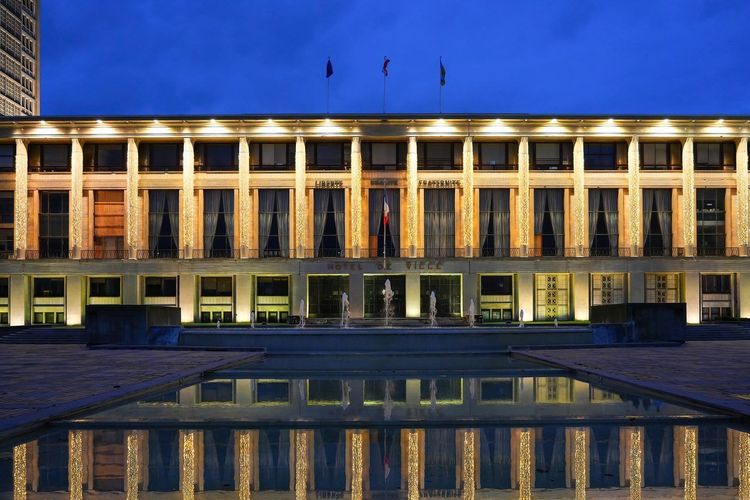
The Perret district is organised around avenue Foch, 80 metres wide, conceived as a monumental perspective linking the Hôtel de Ville to the Porte Océane facing the sea. The buildings use a concrete that Perret refused to conceal beneath a render: bush-hammered, sandblasted or tinted with aggregates, it was meant to read as a modern stone.
To see concretely how people lived in these apartments in the early 1950s, book the visit to the Perret show apartment, a flat furnished with period furniture and everyday objects, departing from the Maison du Patrimoine. Waste chute, drying room, central heating, open-plan kitchen: amenities then considered a luxury. The guided visit, lasting just under an hour, is the best way in to grasp the social ambition of the project.
Saint-Joseph Church, the City's Landmark
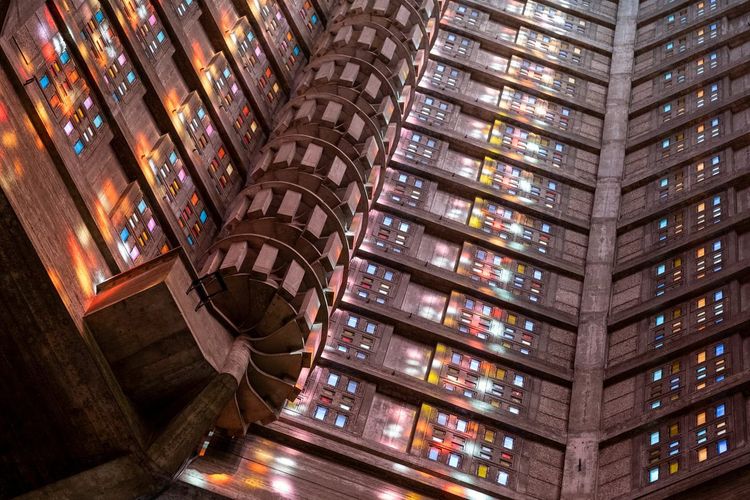
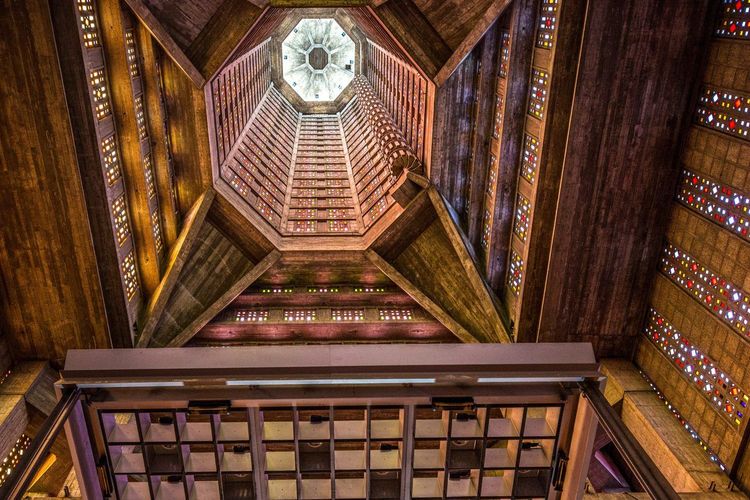
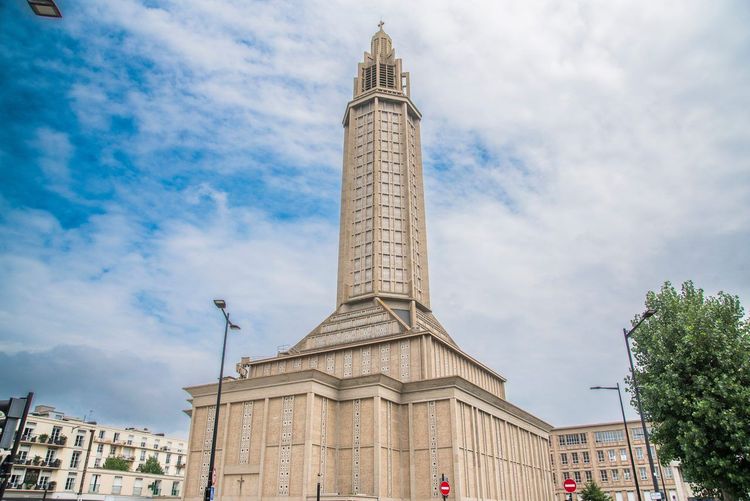
Visible from almost every point in the city centre, Saint-Joseph Church rises to 107 metres. Perret designed it as a lighthouse for sailors as much as a memorial to the victims of 1944. Its octagonal lantern tower is pierced with more than 12,000 pieces of coloured glass, composed by master glazier Marguerite Huré, which filter daylight according to the time of day.
The interior surprises with its austerity: no sculpted decoration, only the concrete and that shower of colours falling from the tower. Sit on a pew for a few minutes, long enough for your eyes to adjust to the play of the glass. Entry is free and the visit takes just a quarter of an hour.
The MuMa, France's Second Largest Impressionist Collection
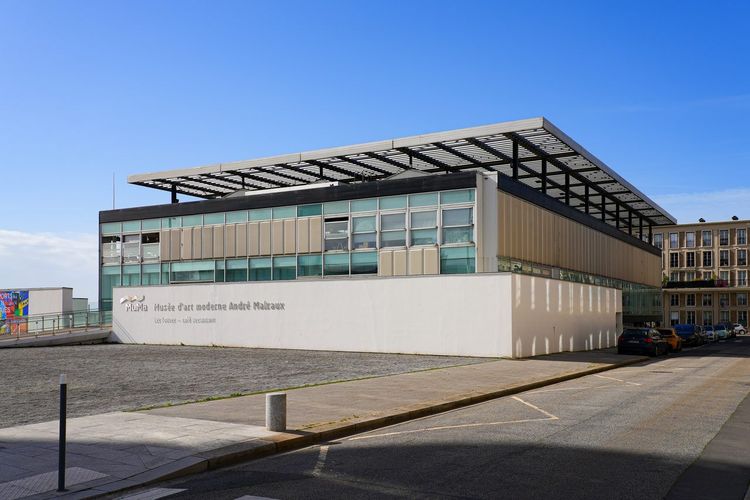
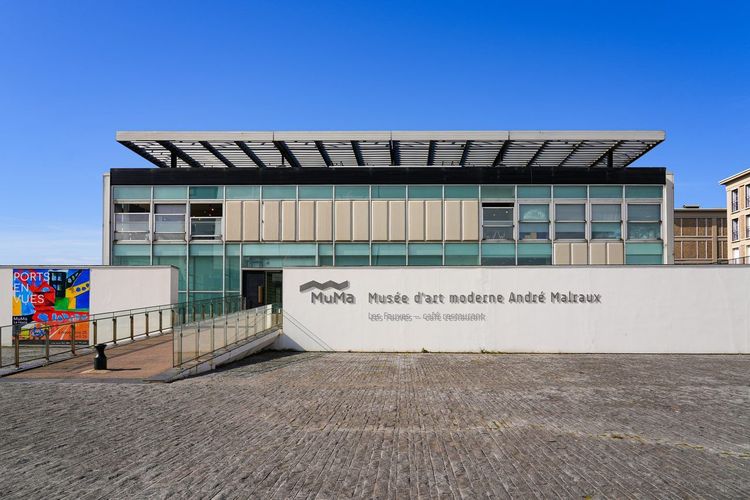
The MuMa, Musée d'Art Moderne André Malraux, holds France's second largest Impressionist collection after the Musée d'Orsay: Monet, Pissarro, Sisley, Renoir, and an exceptional holding of Eugène Boudin, born in Honfleur on the other side of the estuary. The glass-and-steel building, inaugurated in 1961 facing the port entrance, plays with natural light — a direct nod to the obsessions of the painters it houses.
It also holds a rich Raoul Dufy collection; Dufy himself was born in Le Havre. Allow an hour and a half for a full visit. Tip: entry is free on the first Saturday of each month; at other times, the fee ranges from €5 to €10 depending on the temporary exhibitions currently on.
Oscar Niemeyer's Volcan
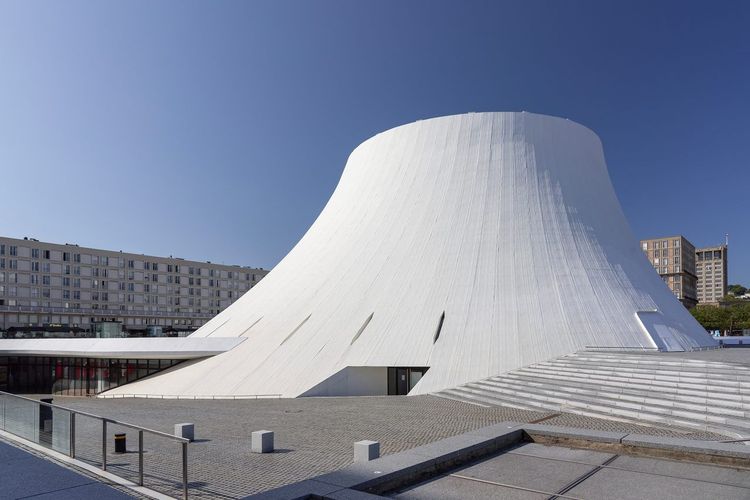
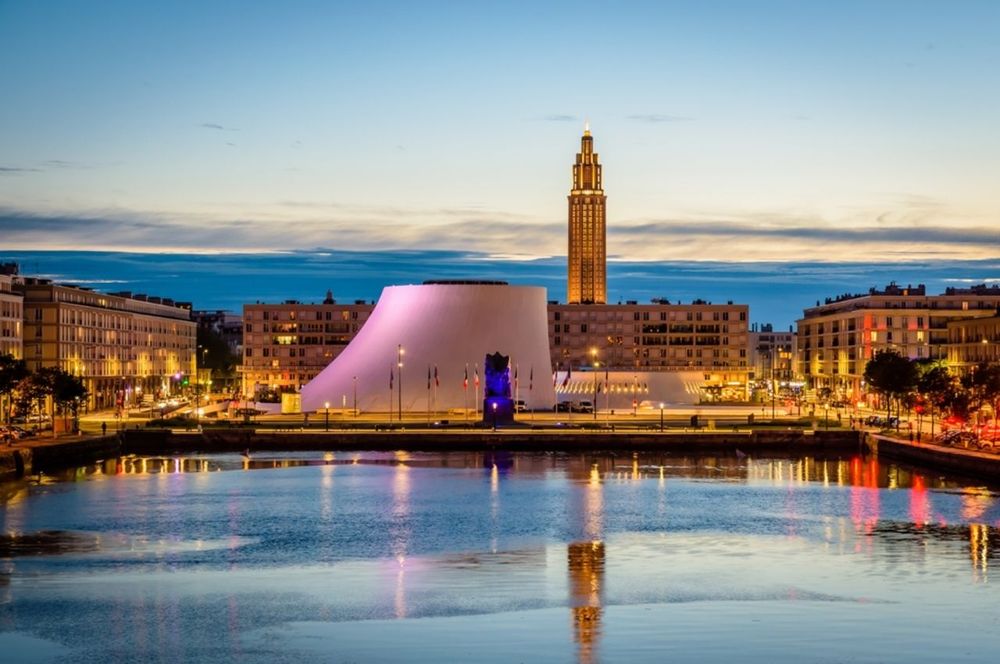
A white, curved silhouette set in the middle of Perret's rectilinear grid, the Volcan (Place Oscar Niemeyer, 76600 Le Havre, rated 4.5/5 on Google from 1,031 reviews) deliberately contrasts with the rest of the city centre. Inaugurated in 1982, it is one of the rare works by Oscar Niemeyer in France, alongside the headquarters of the Communist Party in Paris and the Bourse du travail in Bobigny. The grand Volcan houses a national stage with a multidisciplinary programme: theatre, dance, music and circus.
Its smaller sibling, the "petit Volcan", has housed the Oscar Niemeyer library since 2015, open to all and a very pleasant spot for a quiet break. Head down to the Niemeyer space, below street level: the sunken square, its white curves and walkways offer one of the best photo viewpoints in the city centre.
Saint-François, the Cathedral and the Catène de Containers
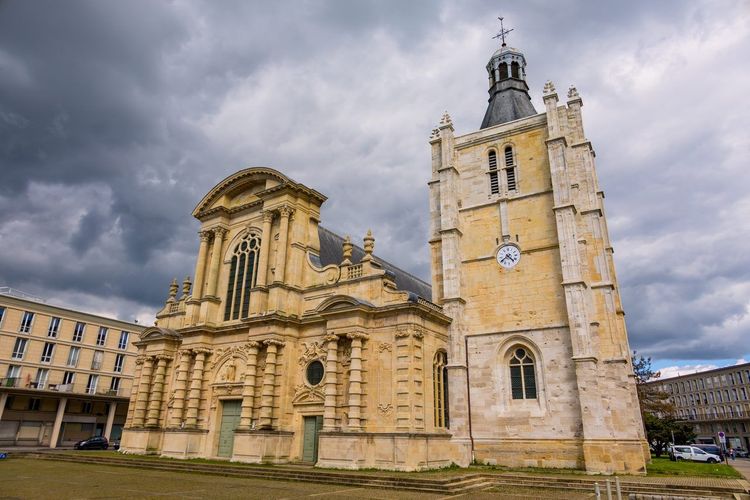
To continue your visit, head to the Saint-François district. Notre-Dame Cathedral, built in the 16th and 17th centuries, is one of the few historic buildings to have survived — albeit damaged — the bombing raids. Nearby, the Maison de l'Armateur, an 18th-century residence organised around an octagonal light well, tells the story of a Le Havre merchant in the age of sailing ships.
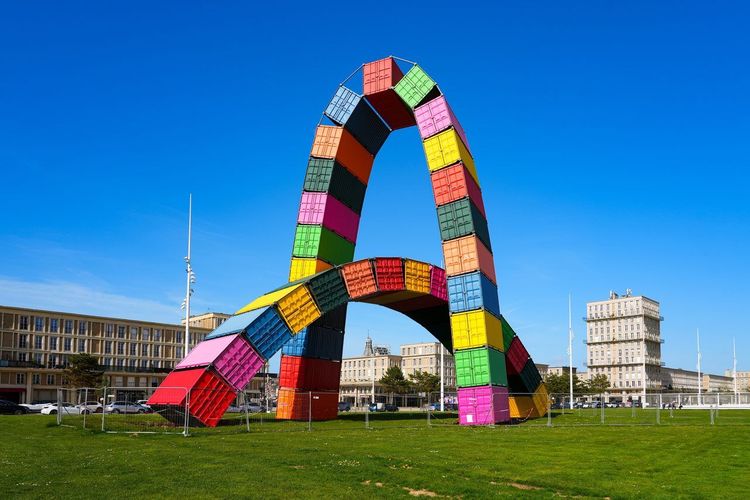
On the quai de Southampton, the Catène de Containers by Vincent Ganivet, two arches formed from 36 colourful containers, has remained in place since the city's 500th anniversary in 2017. It has become one of the most widely shared images of Le Havre.
If you prefer to be guided, the Ryo audio guide links these sites in an order designed for walking: the Perret district, Saint-Joseph Church and then the Volcan, with an anecdote about the reconstruction at each stop. Its 18 audio tracks connect the must-see sights without doubling back along the same street.
The Seafront and the Bains des Docks
The second axis, more open and airy, runs along the sea from the port basins up to the heights of Sainte-Adresse.
Swimming at the Bains des Docks
Designed by architect Jean Nouvel and opened in 2008, the Bains des Docks place an aquatic centre in the docks district, behind a dark façade that conceals a dazzling white interior styled like a contemporary bathhouse. Sports pool, leisure pools, wellness area with hammam and sauna: the complex is almost as much to admire as it is to use. The outdoor pool is heated year-round, making it possible to swim outside even in the depths of winter.
Come on a weekday or early in the morning if you visit on a summer weekend: it is the favourite facility of Le Havre families, and crowds build quickly in the afternoon.
Panoramic View from the Hôtel de Ville Tower
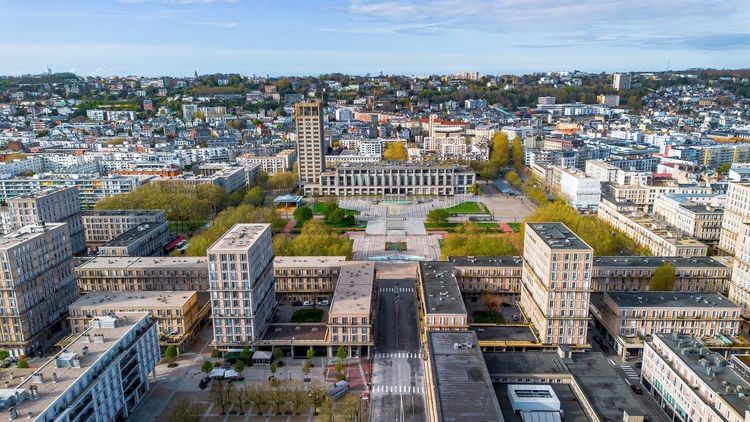
At 72 metres, the tower of the Hôtel de Ville du Havre was long one of the tallest administrative towers in France. Its summit opens periodically to the public during guided tours or the Journées du Patrimoine: from the top, you can take in the Perret grid, the port and, on a clear day, the coastline as far as the cap de la Hève.
Opening times vary by season: check with the tourist office before making it a priority. Failing that, the gardens of the Hôtel de Ville at the foot of the tower are already worth a look.
The Jardins Suspendus of Le Havre
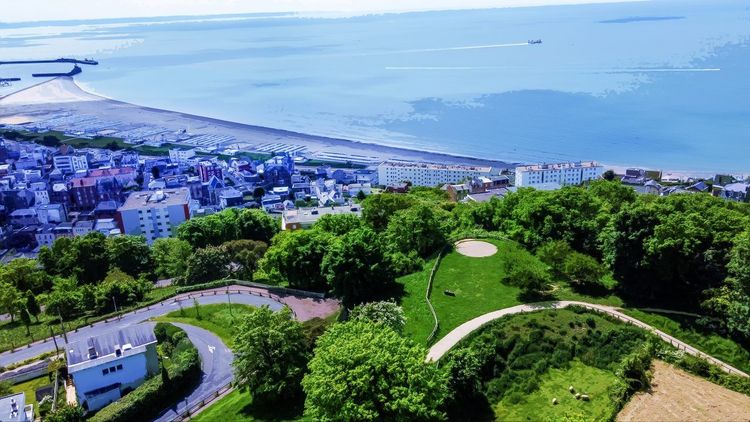
Perched on the heights of the city, on the edge of Sainte-Adresse, within the walls of a 19th-century former military fort, the Jardins Suspendus (Rue du Fort de Sainte-Adresse, 76600 Le Havre, rated 4.5/5 on Google from 5,178 reviews) offer the best panoramic view over the Seine estuary and the pont de Normandie in the distance. Botanical collection greenhouses, themed gardens and redesigned bastions make for a richly varied walk.
People come here above all for the view and to unwind, away from the bustle of the city centre. Allow a good hour to cover all the terraces, a little less if you are heading straight for the main viewpoint.
Between two terraces, put your earphones in: the Ryo audio guide follows the seafront and includes a commented stop on these gardens and the history of the fort that houses them, before heading back down towards the port.
The Port and Nautical Activities
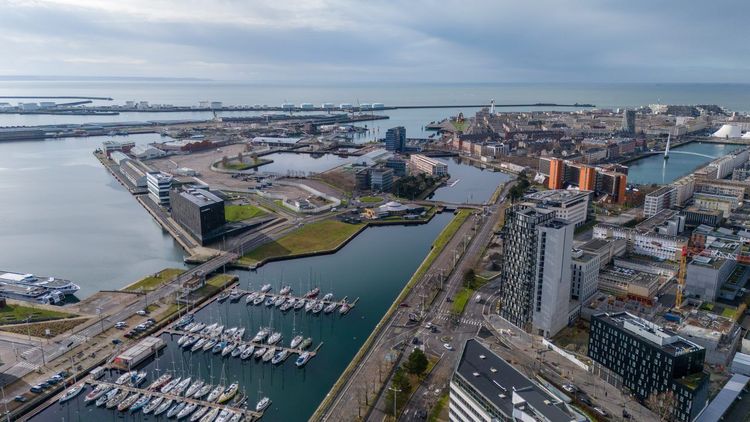
The third axis, more maritime: head for the docks and the open sea.
A Boat Trip with Vedettes Baie de Seine
Long operated by Navigation Normande, boat trips have been run since late 2021 by Vedettes Baie de Seine. From March to November, the company offers a commented port tour of around 1h30, heading towards Port 2000 or the inner harbour depending on traffic, for a close-up view of giant container ships. In July and August, a shorter cruise runs along the beach to the cap de la Hève.
If you can choose, book for late afternoon: the raking light over the estuary and the gantry cranes produces colours you simply don't see at midday.
The Port of Le Havre and Its Docks
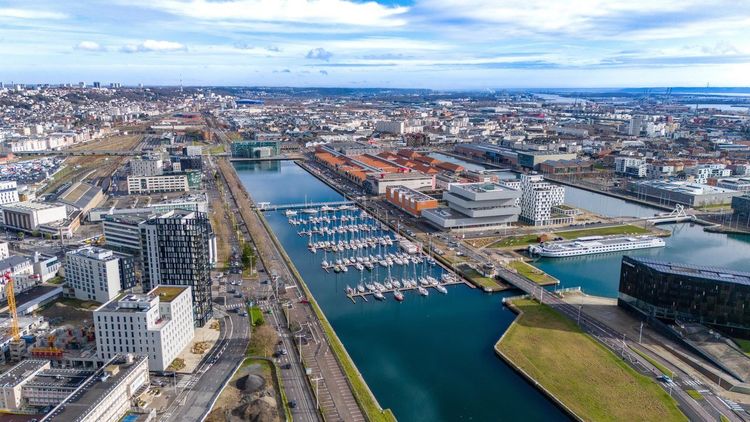
France's leading port for container traffic, the port of Le Havre was also the home port of the great transatlantic ocean liners: the Normandie and the France were both berthed here before sailing to New York, at a time when the crossing took five days.
The dockside walk, from the bassin du Commerce to the quai de Southampton where cruise ships now berth, is easily done on foot. Flat and well laid out, it takes about 40 minutes at a leisurely pace. The Port Center also organises guided tours to explain port logistics. Located in the Espace Graillot, this interpretation centre uses scale models and interactive displays to trace a container's journey from Asia to the warehouses of the Seine valley. A useful stop if you are travelling with children, or if the boat trip is fully booked that day.
Nautical Activities and Cycling
Kayaking, paddleboarding, dinghy sailing: several clubs along the beach and at the nautical base allow beginners to try without their own equipment. The wind here is often brisk, which appeals as much to experienced windsurfers as to supervised beginners.
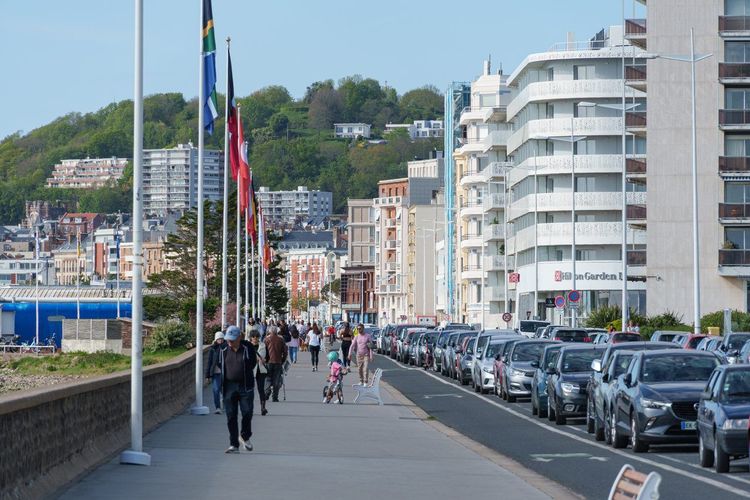
For cycling, hire shops offer day rentals to follow the seafront cycle path, which is part of La Vélomaritime (EuroVelo 4). A good option for reaching Sainte-Adresse or the Saint-François district without depending on bus timetables.
Short on time? The short version of the Ryo audio guide, the Porte Océane focuses on the sea and docks axis, with stories about maritime traffic and the great ocean liners that shaped the city.
Street Art and the Cultural Scene in Le Havre
The Un Été Au Havre Street Art Trail
Launched in 2017 for the city's 500th anniversary, the Un Été Au Havre festival left behind a collection of permanent works in public spaces: the Catène de Containers, the beach huts transformed by Karel Martens, and interventions that play with the geometry of Perret's concrete — a contrast the invited artists deliberately sought out.
Each summer, new installations are added to the trail, scattered between the city centre, the beach and the docks. Ask for the artwork map at the tourist office to plan your own itinerary, complementing the listed heritage sites.
Le Portique, Contemporary Art Centre
A regional centre for contemporary art, Le Portique programmes temporary exhibitions focused on emerging artists and hybrid forms, between installation and video. Entry is free, making it an easy stop to slip in between two more intensive visits.
To connect these works to the city's story, the Ryo audio guide of Le Havre places contemporary art within the history of the reconstruction, rather than discovering it out of context at a street corner.
Where to Eat in Le Havre: Good Addresses
Le Havre does not have the gastronomic reputation of Honfleur, but the city has a growing number of good restaurants driven by local fishing and a genuine culinary revival over the past decade.
For a meal with a view, head for the restaurants along the seafront, between the beach and boulevard Albert-Ier: catch of the day, mussels and seafood on a terrace facing the estuary. Book ahead if you come on a sunny Sunday lunchtime.
The Saint-François district gathers bistros, crêperies and wine shops in its brick-fronted streets, with a more intimate atmosphere in the evenings. Around the Halles Centrales, in the heart of the reconstructed city, fresh produce stalls and counters allow for a quick lunch between visits. Budget-wise, expect €15 to €20 for a set lunch, and €35 to €50 for a more refined dinner.
To go further on local specialities — grey shrimps, marmite dieppoise or apple tart — the article Top 7 Culinary Specialities of Le Havre details the dishes to try.
Where to Stay in Le Havre: Recommended Neighbourhoods and Hotels
Three neighbourhoods stand out for a first stay, each with a different feel. The reconstructed city centre, around avenue Foch and the place de l'Hôtel de Ville, puts everything within walking distance: shops, the Volcan, Saint-Joseph Church, the MuMa. It is the most practical choice if you plan to do everything on foot.
The seafront, on the beach and Porte Océane side, suits those who want to wake up facing the estuary, with direct access to swimming and cycle paths. Several hotels here offer sea-facing rooms.
The Saint-François district, the oldest in Le Havre, was largely destroyed in 1944 and rebuilt in a more traditional style — brick and slate roofs — around the bassin du Commerce and the cathedral. Quieter in the evenings, it is still a ten-minute walk from the city centre.
Budget-wise, expect around €80 to €110 per night for a three-star hotel in the city centre, and more like €130 to €170 for sea-view addresses in high season. Book a few weeks in advance in July and August: hotel capacity is more limited than in Deauville or Honfleur, and cruise ship stopovers as well as major events fill the city quickly.
For a two- or three-night stay, favour the reconstructed city centre or Saint-François, from which most sites in this guide can be reached on foot.
How to Get to and Get Around Le Havre
By Train, by Car or by Boat
From Paris-Saint-Lazare, direct trains reach Le Havre in just over two hours — the simplest option for a car-free stay. From Rouen, allow around 50 minutes. Book early to get the best fares, especially for Friday evenings and late Sunday afternoons.
By car, allow around 2h30 from Paris via the A13, then the A131; from the north, the A29 brings you straight in. From the Côte Fleurie, the pont de Normandie, a world record holder for cable-stayed bridges at its inauguration in 1995, offers a spectacular arrival over the estuary. Parking in the city centre can require some patience near the major sites: underground car parks remain the simplest solution.
By sea, the cross-Channel terminal links Le Havre to Portsmouth, England; check the sailing schedule with the ferry company, as departures vary by season.
Getting Around on Foot, by Bike and by Public Transport
The reconstructed city centre is very easily explored on foot: most of the major sites fall within a radius of one and a half kilometres around the Hôtel de Ville. For further afield — towards Sainte-Adresse or the Jardins Suspendus — the LiA network (buses and tram) serves the entire urban area.
The Le Havre tram, put into service in late 2012, runs from the station to the seafront through the reconstructed city centre, and a tunnel carries it up to the upper-city districts. Handy if you are staying a little off the beaten path.
Cycling remains a good option for combining several neighbourhoods in the same day: the lower city is flat and the seafront cycle paths are well laid out.
Practical Information to Plan Your Stay
For a first stay of two to three days, budget around €60 to €90 per person per day excluding accommodation, including meals, museum entries and public transport. Several sites are free: Saint-Joseph Church, Le Portique, the Jardins Suspendus (outdoor areas) and the Un Été Au Havre artworks.
The best period runs from May to September, when the light over the estuary is at its most photogenic and summer brings new Un Été Au Havre installations. Out of season, the city is just as rewarding on the heritage side — Perret architecture is not weather-dependent — but the seafront loses a little of its appeal.
Two days are enough for the essentials (Perret sites, seafront, port), but three days allow you to add Étretat or Honfleur without rushing — the most satisfying formula for visiting Le Havre for the first time.
For markets, the Halles Centrales welcome traders and producers from Tuesday to Sunday, and several neighbourhood markets enliven the week, notably at Saint-Vincent, near the beach. Check the days with the tourist office before making the trip.
A few days a year, the arrival of large cruise ships brings several thousand visitors into the city centre in a single day. If you prefer to avoid the crowds, check the port's published call schedule, available well in advance.
Finally, Normandy remains unpredictable even in summer: a cool estuary breeze often picks up in the evening. Pack a windproof jacket, especially for the climb up to the heights of Sainte-Adresse.
What to See around Le Havre: Étretat, Honfleur and Seine-Maritime
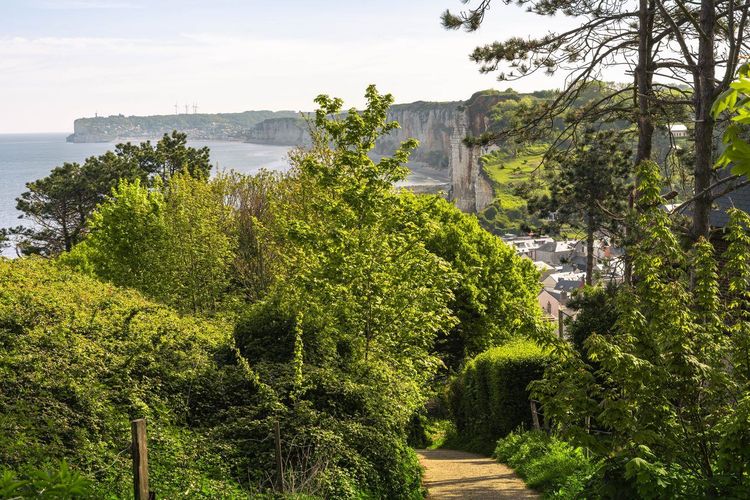
Étretat and Its Cliffs, Less than an Hour Away
About thirty kilometres from Le Havre, a 35 to 40-minute drive, Étretat lines up its white chalk cliffs among the most photographed in France. The Falaise d'Aval, pierced by a natural arch, and the Aiguille standing just in front of it in the sea, inspired Monet, Courbet and Maupassant, who spent part of his childhood in the village.
Two paths allow you to admire the site from different angles: the one that climbs towards the Falaise d'Amont, with its Notre-Dame de la Garde chapel and a bird's-eye view over the pebble beach, and the one that follows the clifftop on the Aval side — more spectacular but also more crowded.
Come early in the morning or at the end of the day to avoid the crowds, which are particularly dense at weekends between June and August. Allow a good half-day to enjoy both viewpoints without rushing.
Literature lovers will enjoy the Clos Arsène Lupin, the house of Maurice Leblanc turned into an immersive trail dedicated to the gentleman thief. If the crowds put you off, the neighbouring village of Yport, a quarter of an hour away, offers a more low-key fishing village atmosphere, with its own cliffs and a family-friendly beach.
To plan this outing in detail, the article what to do in Étretat usefully complements this guide.
Honfleur, the Norman Postcard
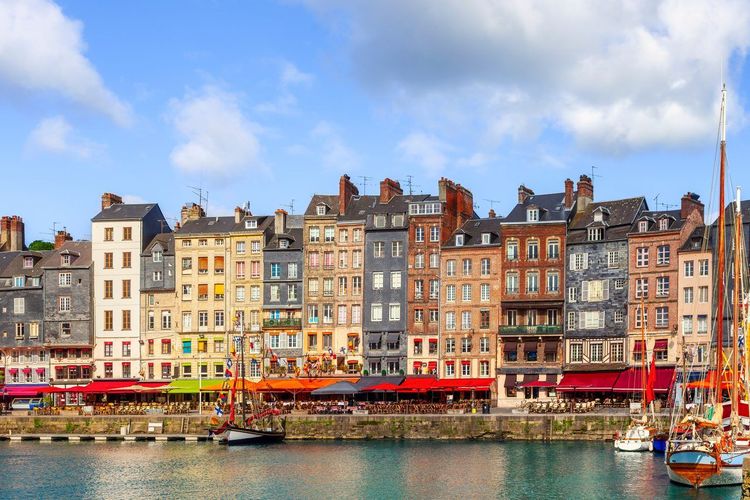
On the other side of the pont de Normandie, half an hour from Le Havre, Honfleur offers an entirely different face of the region: an ancient harbour that has remained almost intact, lined with tall, narrow houses with slate and half-timbered facades that painters and photographers have been fighting over since the 19th century.
The Vieux Bassin (Quai Sainte-Catherine, 14600 Honfleur, rated 4.8/5 on Google from 345 reviews) concentrates the essentials: café terraces, art galleries and a view of Sainte-Catherine Church, the largest wooden church in France, built by shipwrights after the Hundred Years' War. Its bell tower, built apart from the nave to limit fire risk, can be visited separately. The Musée Eugène Boudin, a stone's throw away, pays tribute to the local son who was a forerunner of Impressionism.
If Le Havre wins you over with its architectural rupture, Honfleur plays the opposite card: a city spared by the war, remaining almost unchanged for centuries. The two complement each other perfectly on the same trip.
Music lovers should push open the door of the Maisons Satie: dedicated to composer Erik Satie, born in the town, their deliberately offbeat sound scenography contrasts sharply with the classicism of the historic centre.
In summer, parking quickly becomes difficult in the city centre: park on the outskirts and walk the last ten minutes — a stroll that already gives you a first glimpse of the harbour.
FAQ
How Many Days Should I Plan to Visit Le Havre for the First Time?
Two days are enough to cover the major sites of the reconstructed city centre and the seafront, but three days allow you to add a day trip to Étretat or Honfleur without rushing. For a very first stay, this formula remains the most satisfying.
Is Le Havre Really Worth a Visit Despite Its Industrial Image?
Yes, and it is often the biggest surprise for visitors. The industrial image comes mainly from the port, which is largely separated from the tourist city centre. The core rebuilt by Perret, listed by UNESCO, the seafront and the Jardins Suspendus offer an urban and scenic experience far removed from the grey port city cliché.
What Is the Best Neighbourhood to Stay in Le Havre?
The reconstructed city centre, around avenue Foch, remains the most practical choice for exploring on foot. The Saint-François district wins over visitors with its older atmosphere and quieter feel, while the seafront suits those who prioritise swimming and cycling.
When Is the Best Time to Visit Le Havre?
From May to September, for the light over the estuary and the summer installations of Un Été Au Havre. Perret architecture, the MuMa and the Bains des Docks can, however, be visited year-round.
How Do I Get to Le Havre from Paris Without a Car?
The direct train from Paris-Saint-Lazare takes just over two hours. Once there, the city centre is easy to explore on foot or using the LiA bus and tram network.
Can You Visit Le Havre on Foot, or Do You Need a Bike?
The majority of the major sites in the city centre are very easily visited on foot, within a radius of about one and a half kilometres. A bike becomes useful for reaching Sainte-Adresse or combining several neighbourhoods in the same day.
Conclusion
Visiting Le Havre for the first time ultimately means watching a misunderstanding dissolve from the very first steps into the Perret district. The grey city of the cliché gives way to a coherent architectural grid, a vibrant seafront and a cultural scene denser than you might expect, from Niemeyer's Volcan to the Un Été Au Havre artworks.
To connect it all without consulting a map at every junction, the Ryo audio guide tour of Le Havre lets you follow the thread of the reconstruction at your own pace, between a pause on the heights of Sainte-Adresse and a stop by the bassin du Commerce.