© Shutterstock
 Votre guide Ryo
Le Touquet Beach in 2026: A Complete Guide to Discovering It
Fine sand, an endless promenade, and a distinctly British flair: Le Touquet-Paris-Plage beach has earned its reputation for over a century. Many visitors simply search for "Le Touquet beach" online before setting off, without realising they are about to discover nearly 12 kilometres of sand and one of Europe's most popular land sailing spots. If you are planning a trip to the Côte d'Opale, the Ryo audio guide tour of Le Touquet is the perfect way to connect the beach to the resort's historic neighbourhoods without losing your way.
This guide brings together everything you need to know before laying down your towel: the exact address and how to get there, the rules for dog owners, the tide schedules that dramatically change the width of the sand, and the spots where evening light turns every photo into a postcard. We also cover the activities that made this place famous, from land sailing invented right here to the Enduropale motorcycle race, as well as the best places on the seafront to round off the day after a swim.
Where Is Le Touquet Beach?
The Le Touquet beach (Digue de Mer, 62520 Le Touquet-Paris-Plage, rated 4.6/5 on Google with 606 reviews) stretches along the Atlantic façade of the town of Le Touquet-Paris-Plage, in the Pas-de-Calais department, at the precise point where the Canche river meets the English Channel. It belongs to the stretch of coastline known as the Côte d'Opale, famed for its ever-changing light and forested dunes. Allow around 30 kilometres from Boulogne-sur-Mer, 90 minutes by road from Lille, and just under three hours from Paris via the A16 motorway.
This position at a river estuary is no minor detail: it explains the exceptional width of the sand at low tide and the presence of a marina just to the north, near Étaples. The sand extends in a particularly wide band, which long favoured activities requiring space, such as land sailing or horse races held directly on the foreshore.
A Brief History: from Paris-Plage to Le Touquet-Paris-Plage
Before being known as Le Touquet, the resort was called Paris-Plage, a deliberate marketing choice from the late 19th century designed to attract Parisian visitors yearning for sea air. The name appeared as early as 1882, when the first housing development was built among the dunes, with the idea of suggesting to Parisians that this elegant beach was somehow their own. Development accelerated at the turn of the 20th century, driven by British and French entrepreneurs who saw these virgin dunes as ideal ground on which to build villas, luxury hotels, and golf courses. The English aristocracy quickly made it a holiday destination, to the point that the resort still retains a distinctly British architectural character in its villa quarter today.
The two World Wars left a deep mark on the coastline. During the Second World War, the German occupiers fortified the coast as part of the Atlantic Wall, and some bunker remains can still be found in the surrounding dunes. Post-war reconstruction restored the resort's seaside vocation. It was in 1912 that the town officially took the name Le Touquet-Paris-Plage, becoming a fully independent municipality separate from Cucq, thus preserving the memory of its past as a Parisian beach while asserting its own identity. This dual identity — at once popular and fashionable — still shapes the atmosphere of the seafront today.
Over the course of the 20th century, the beach also became a ground for sporting experimentation. It was here that land sailing truly took off in France during the 1920s, permanently reshaping the resort's image and laying the foundations of a sporting tradition that continues to this day.
How to Get to Le Touquet Beach
By car, the most direct route is via the A16 motorway then the D940 towards Le Touquet-Paris-Plage. From Paris, allow around 2h45; from Lille, the journey takes approximately 1h30 via the A25 then the A16. Once in the resort, simply follow signs for the seafront promenade (digue) or the waterfront: the beach runs along the entire western façade of the town, making navigation fairly intuitive even without GPS.
By train, the nearest station is Étaples-Le Touquet, served from Paris-Nord with a change at Boulogne or Amiens depending on the timetable. From the station, a shuttle or taxi reaches the town centre and beach in around ten minutes; some visitors also choose to hire a bicycle directly at the station to ride to the seafront along the cycle path that follows the Canche.
For those travelling from further afield, Le Touquet airport welcomes flights from London, which explains the high proportion of British visitors to this day. By bus, the regional Oscar Bus network connects Le Touquet to neighbouring towns such as Étaples and Berck, a practical option for visitors without a vehicle who are staying in the surrounding area.
Once there, it is worth knowing that the resort is very easy to explore on foot or by bike: the seafront promenade runs the full length of the beach and naturally leads to the shopping districts, hotels, and sports clubs along the waterfront. To make sure you don't miss any of the points of interest scattered between the seafront and the historic heart of the town, the Ryo audio guide offers a narrated itinerary connecting the beach to the Belle Époque villas and the town centre's shopping streets.
Where to Park Near the Beach
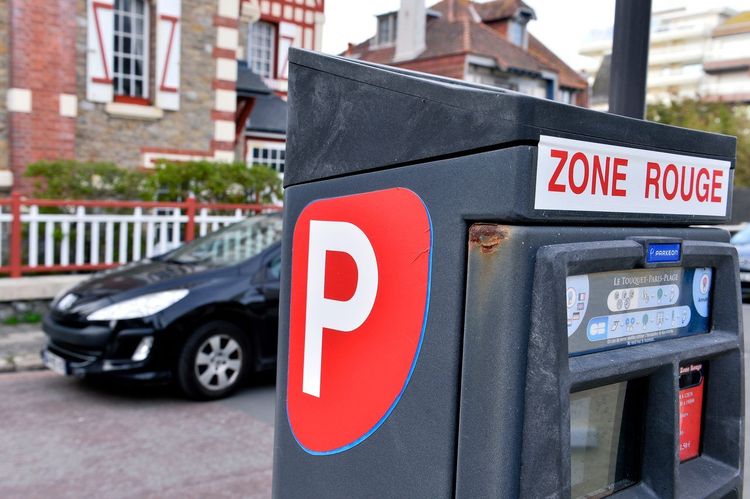
Several paid car parks line the seafront, particularly near the Palais de l'Europe and the casino, with rates that rise noticeably in high season. Expect to pay roughly between €2 and €4 per hour in July and August, with more modest rates outside the peak season. Free parking exists but becomes scarce near the beach on busy days: it is best to arrive early in the morning or look for spaces in streets a few hundred metres back from the waterfront.
If you are coming for the day, note that some car parks offer all-day flat rates that work out cheaper than cumulative hourly charges. It is also worth downloading the town's parking app or locating the pay-and-display machines, as enforcement is regular during the season and a fine can quickly eat into a beach day budget. Cyclists and pedestrians enjoy direct, free access from any point along the promenade, which often remains the most stress-free solution on a sunny weekend.
Sand, Tides, and Weather: the Beach Today
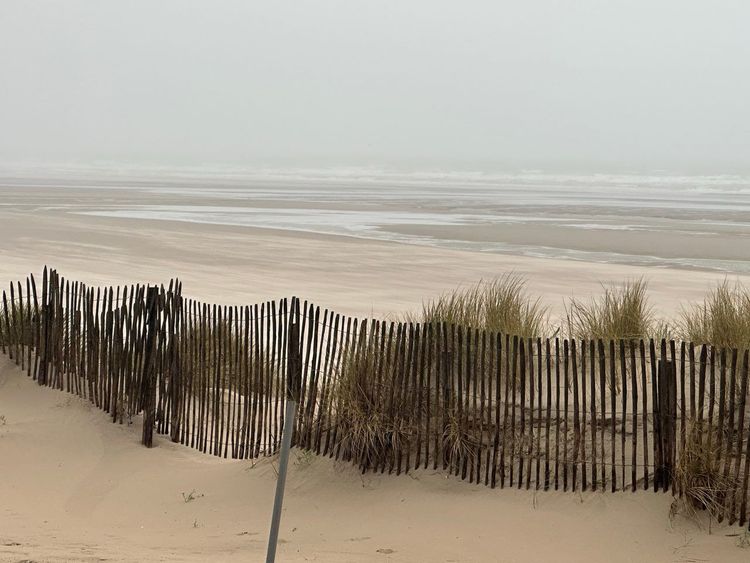
The Côte d'Opale boasts one of the most impressive tidal ranges on the French coastline, with a difference between high and low tide that can exceed 8 metres depending on the tidal coefficient. In practical terms, this means that Le Touquet beach can look radically different depending on what time you visit: at low tide, the sand is exposed over several hundred metres, offering a vast expanse for walking, running, or land sailing; at high tide, the water comes right up to the base of the promenade wall.
It is worth checking the tide times before you head out — they are displayed on notice boards along the promenade or available through standard marine apps. The tidal coefficient, expressed on a scale of 20 to 120, gives a good sense of the scale of the phenomenon: above 100, during spring tides, the retreating water reveals a spectacular expanse of sand but also requires keeping a close eye on when the tide turns. This information directly affects several activities: land sailing is ideally practised on a falling tide, when the sand is wet and firm, while swimming is more comfortable around high tide.
As for the weather, the climate is typically Channel: frequent wind, changeable skies, and temperatures that rarely exceed 24 degrees even in midsummer. This near-constant wind, far from being a drawback, is actually one of the site's greatest assets for wind and gliding sports.
The Seafront and the Promenade
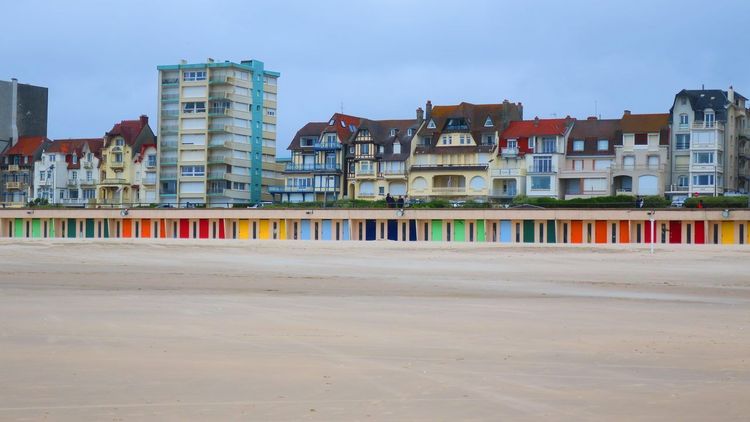
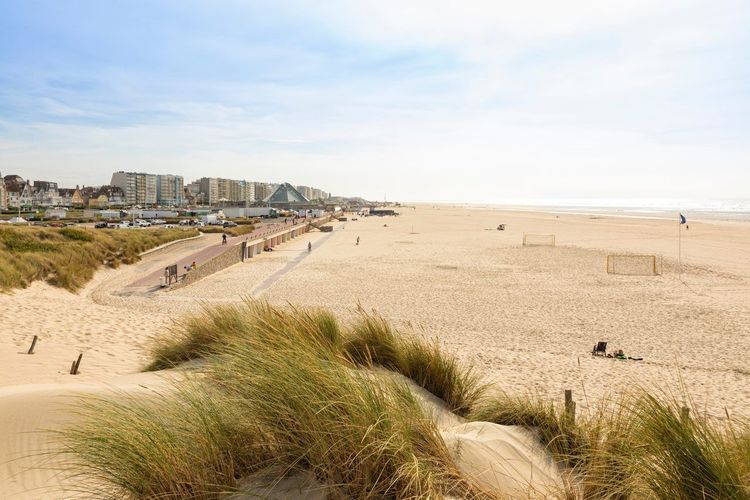
The seafront promenade (digue de mer) forms the backbone of the resort and the best starting point for discovering the beach at a leisurely pace. Several kilometres long, it can be walked, cycled, or pushed along with a pram, with uninterrupted views over the sand and, on clear days, the dunes closing the horizon to the south. In the morning, joggers and walkers cross paths in numbers; in the late afternoon, it becomes the meeting point for families heading home from the beach, boards under their arms.
At the northern end of the promenade stands the Le Touquet lighthouse, officially known as the phare de la Canche, an unmistakable landmark of the resort. Standing around 58 metres tall, it was rebuilt after its predecessors were destroyed in 1944 and returned to service in 1951. Its red and white silhouette clearly marks the boundary between the harbour and the beach proper, and its summit offers one of the most sweeping panoramas over the entire bay of the Canche.
Heading back towards the centre, the promenade passes successively by the casino, several restaurant terraces, and the imposing Westminster Hotel (Avenue du Verger, 62520 Le Touquet-Paris-Plage, rated 4.7/5 on Google with 1,109 reviews), whose Art Deco architecture recalls the resort's British golden age. Many visitors stop here for a drink on the terrace before heading to the sand, enjoying the sweeping view over the beach.
Further south, the promenade becomes gradually quieter, lined with old villas with colourful shutters that bear witness to the seaside urbanism of the early 20th century. It is also in this area that most of the beach sports clubs are concentrated, set slightly apart from the hustle of the town centre. To extend the stroll beyond the sand, the Ryo audio guide offers a route that winds up through the villa quarter and helps you understand the resort's architectural history as you walk.
Facilities, Beach Huts, and Beach Access
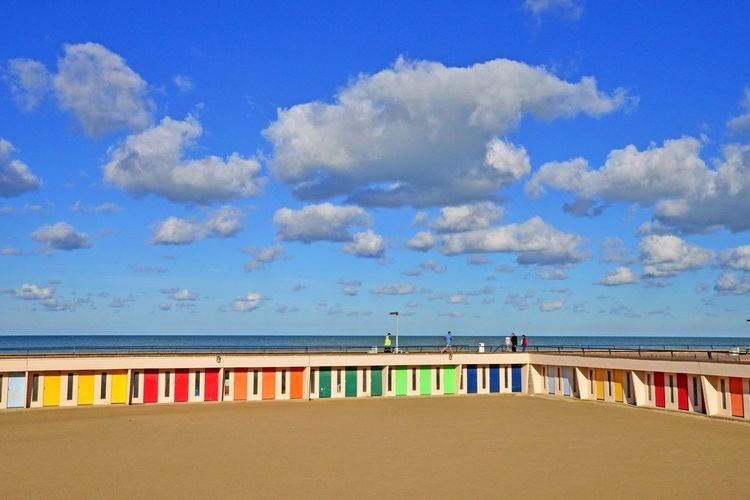
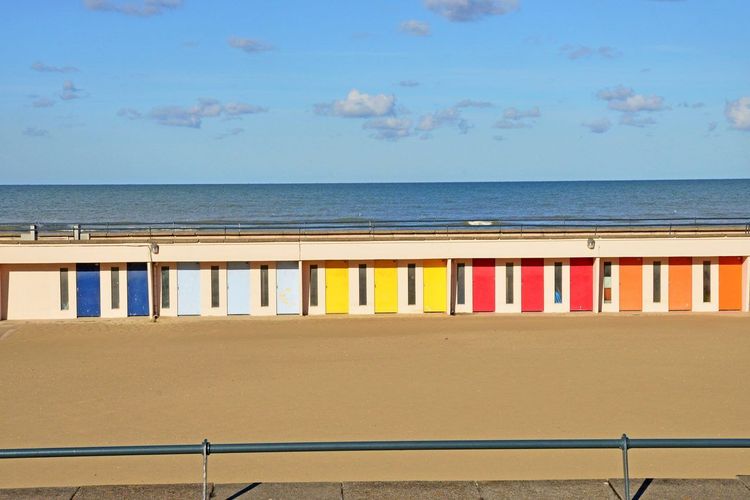
No visit to Le Touquet beach is complete without mentioning its famous beach huts, lined up along the promenade and repainted in vivid colours that have been part of the resort's scenery for generations. Rented by the week or month during the summer season, they serve as changing rooms, storage, and shady retreats, and rank among the most photographed subjects on the seafront.
In terms of practical facilities, the promenade is dotted with free outdoor showers for rinsing off after a swim, lifeguard posts open during the supervised season, and public toilets distributed along the walkway. Ramps and laid-out pathways make it easier to access the sand from the promenade, and adapted beach wheelchairs (tiralo-style) may be available in season to allow people with reduced mobility to enjoy the beach and even supervised bathing.
For equipment, several hire operators located right next to the sand offer sun loungers, parasols, bodyboards, and kites — everything you need for a day out without having to carry it all from home. In high season, it is best to book beach huts and equipment in advance, as demand often outstrips supply on fine-weather weekends.
Land Sailing, Kitesurfing, and Water Sports
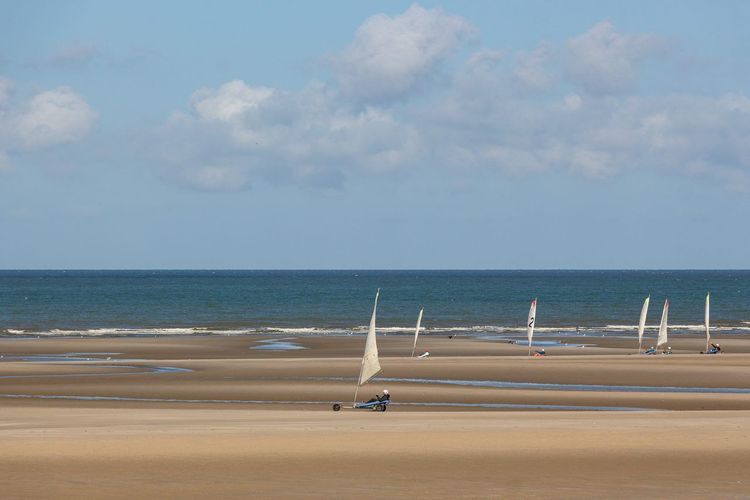
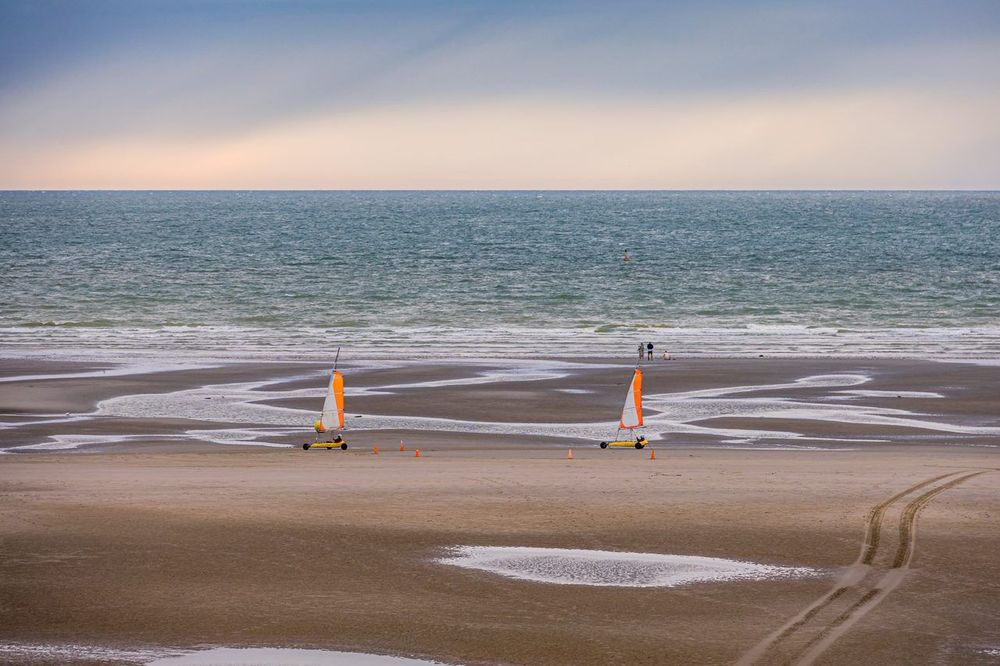
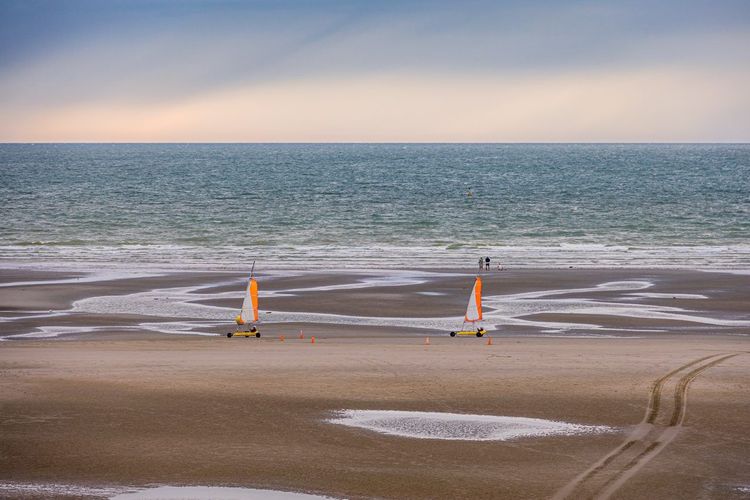
If one image were to sum up Le Touquet beach, it would undoubtedly be a land yacht racing across the wet sand, its sail filled by the Channel wind. This is no coincidence: the sport developed here from the 1920s, driven by the exceptional width of the foreshore and the consistent wind. Today, the Touquet Char à Voile Club (Plage du Touquet, 62520 Le Touquet-Paris-Plage, rated 4.2/5 on Google with 239 reviews) still offers taster sessions and rentals for all levels, often scheduled around low tide times.
A first session generally lasts about an hour and is enough to grasp the basics: steering with your feet, managing the sail with your hands, feeling the speed suddenly pick up as the wind catches. Expect around thirty euros for a guided introductory session, with higher rates for multi-day courses. Families with children aged 8 and over can generally take part, with appropriate equipment provided.
The near-constant wind along this stretch of coast has also delighted kitesurfers and side-car land sailors. Several schools offer supervised lessons, particularly in the northern part of the beach where there is more open space. Free practice remains possible for experienced riders, but it is worth checking the permitted zones with local clubs: certain sections of the sand are reserved for swimmers in summer and closed to sail-powered craft during peak hours.
Another event that has become a cult fixture is the Enduropale du Touquet, a motorcycle and quad race held every year on the sand in February, watched by tens of thousands of spectators gathered along the promenade. The event, born in the 1970s under the name Enduro des Sables, has done much to put the beach on the map beyond the regular Côte d'Opale crowd, and continues to attract an impressive turnout despite the winter cold.
For fans of more conventional sports, the beach also hosts beach volleyball sessions, kite buggying, and at low tide, long impromptu football matches between families. The available space makes it easy to run multiple activities at once without getting in each other's way — a rare luxury on France's most popular beaches.
Horse Riding on the Sand
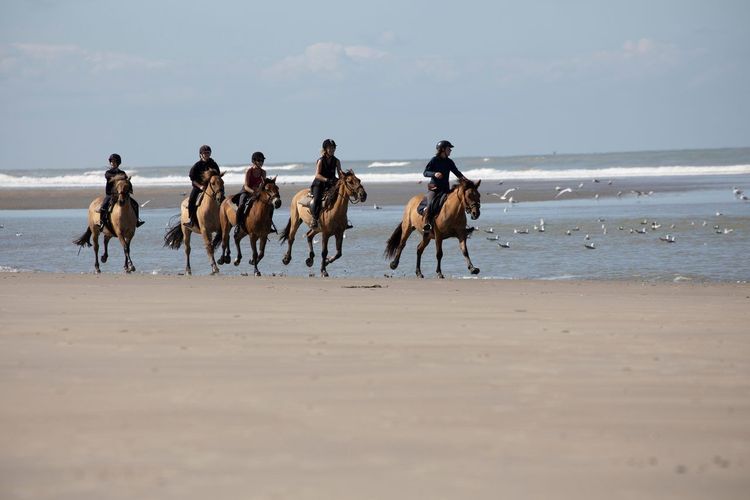
Le Touquet has long had a special relationship with equestrianism. For decades, the resort hosted horse races held directly on the sand, a tradition that left a lasting mark on the identity of the place. Today, this equestrian culture lives on through several centres offering guided rides along the coast.
The Centre Équestre du Touquet (Avenue de la Dune aux Loups, 62520 Le Touquet-Paris-Plage, rated 4.3/5 on Google with 236 reviews) organises rides lasting from one hour to half a day, generally scheduled at low tide to take advantage of firm sand and maximum space. The rides cater to both beginners and experienced riders, with routes that sometimes skirt the edge of the state forest before rejoining the beach.
Watching a horse gallop across this vast expanse of sand early in the morning, with mist still hanging over the water, remains one of the most photographed scenes at the resort. If you don't ride yourself, simply sitting on the promenade in the late afternoon is often enough to enjoy this spectacle for free.
Around the Beach: Dunes, Forest, and the Bay of the Canche
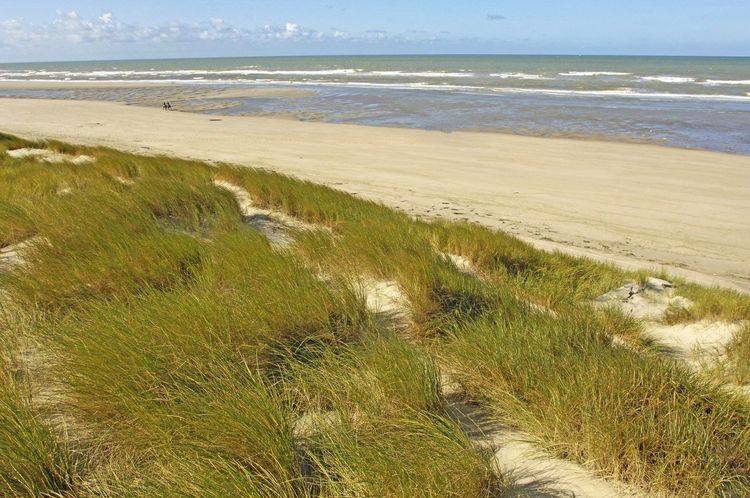
The beach is only one facet of the site: just behind the dune ridge lies a vast state forest planted in the late 19th century to stabilise the sands, criss-crossed with hiking trails and shaded cycle paths. It makes an ideal escape on windy days, when the pine canopy offers welcome shelter just a few minutes from the seafront.
To the north, the Canche estuary forms a nature reserve renowned for its migratory birds and seals, regularly spotted on the sandbanks at low tide. Several waymarked paths allow you to follow the bay on foot from Étaples, with wildlife observation points set up along the way.
This immediate proximity between beach, dunes, forest, and estuary is what makes Le Touquet so distinctive: in a single day, you can string together a land sailing session on the sand, a bike ride under the pines, and a birdwatching outing along the bay — all without ever getting back in the car.
Safety and Supervised Swimming
Swimming is supervised during the summer season in clearly marked zones indicated by flags, generally from early July to late August. A green flag means swimming is permitted, orange calls for caution, and red means it is strictly prohibited. These rules are not trivial on this coastline: the currents generated by the significant tidal range can catch less experienced swimmers off guard, particularly near the mouth of the Canche.
Outside the season or beyond supervised hours, extra care is advised, especially with children. The tide goes out and comes back in quickly along this stretch of coast, and some areas of sand can become cut off by rising water if you wander too far from the promenade without keeping an eye on the time. Once back on dry land, Ryo's audio-guided tour, 'The Pearl of the English Channel', is a good way to end the day exploring Le Touquet's streets.
Le Touquet Beach with a Dog
Dogs are generally welcome on Le Touquet beach, but seasonal restrictions apply as on most French beaches. During the summer period, dog access is usually limited to certain areas at the edges of the beach, while the rest of the sand remains reserved for swimmers. Out of season, the beach reverts to a vast playground where dogs can run freely over most of the foreshore.
A lead is recommended near busy areas and during supervised water sports activities, if only to avoid unexpected encounters with a land yacht travelling at full speed. Carrying a waste bag is also essential, as the local authority is fairly strict about cleanliness on the seafront.
The Best Spots for Photographing the Beach
The low-angled light at the end of the day, as the sun sinks towards the Channel, remains the most photogenic moment to capture Le Touquet beach. From the promenade, framing a shot that includes both the wet sand reflecting the sky and the silhouette of the lighthouse in the distance produces particularly striking images, especially on a falling tide when wide pools still lie on the sand.
On windy days, land yachts speeding across the background immediately add movement to what might otherwise be a fairly conventional beach photograph. For a wide-angle view, the top of the lighthouse offers a panorama that captures in a single frame the full expanse of sand, the promenade, and the first dunes to the south.
Finally, those who prefer more intimate photography will favour the early morning, when the beach is still almost deserted and the morning mist — common on this coastline — softens all the outlines. It is also the time when riders from the local equestrian centre sometimes come to trot their horses on the sand, a sought-after subject for many visiting photographers.
The Swimming Pool and Family Activities Nearby
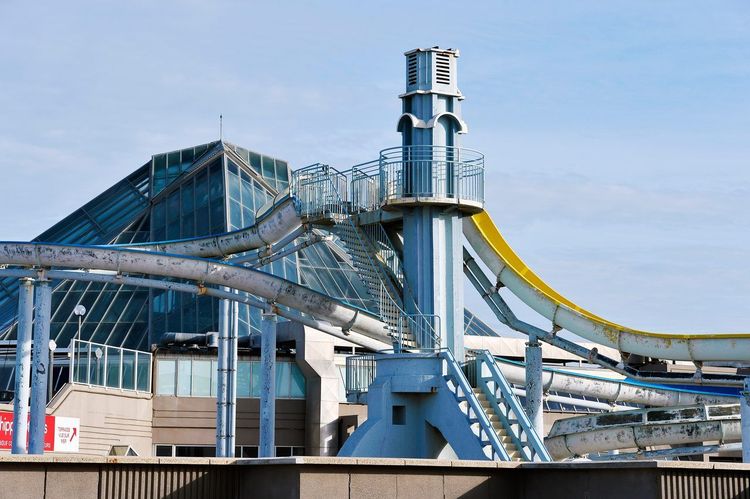
When the wind picks up too much to stay comfortable on the beach, the resort offers several indoor alternatives within a few minutes of the sand. The water park Aqualud (Digue Nord, 62520 Le Touquet-Paris-Plage, rated 4.2/5 on Google with 5,100 reviews), located directly on the northern promenade, combines slides, wave pools, and heated pools — a very popular option for families on unpredictable weather days, or simply as a change of pace after several hours on the beach.
Nearby, several mini-golf courses and play areas punctuate the promenade, ideal for keeping children entertained between swims. The town centre, a few hundred metres from the promenade, also has cinemas and leisure venues that make it easy to fill a rainy evening without leaving the resort.
Families staying for several days particularly appreciate having all these activities within easy reach: unlike some seaside resorts where you need to get back in the car, here everything is accessible on foot from the seafront, beach included.
Good Addresses: Restaurants and Cafés on the Seafront

After a day on the sand, it is hard to resist the call of local specialities, starting with the smoked seafood that has made the resort's reputation. Perard (67 Rue de Metz, 62520 Le Touquet-Paris-Plage, rated 4.2/5 on Google with 2,470 reviews), a local institution for several generations, offers herrings, salmon, and other smoked fish prepared using artisan methods passed down from generation to generation. People come as much to buy takeaway as to eat in, in an atmosphere that remains deliberately unfussy.
Directly along the promenade, several brasseries and cafés enjoy a front-row view of the beach, with menus mixing moules-frites, seafood platters, and more contemporary cuisine depending on the establishment. Prices rise noticeably on terraces facing the sand compared to streets further back in the town — a classic feature of well-positioned seaside resorts.
For a quick lunch between activities, the stalls and kiosks set up directly on the promenade offer waffles, crêpes, and hot drinks — handy for families who don't want to stray from the sand. In the evening, the pedestrianised quarter of the town centre concentrates most of the fine dining restaurants, often run by chefs who champion locally caught fish and vegetables from the surrounding market gardens.
Brunch lovers will also find plenty to enjoy on Sunday mornings in several seafront establishments, a well-established habit among the many British visitors who stay regularly at the resort. For those who want to explore the food scene beyond the beach, the Ryo article on the best things to do in Le Touquet and the surrounding area lists other recommended restaurants in the vicinity.
Where to Stay Near the Beach
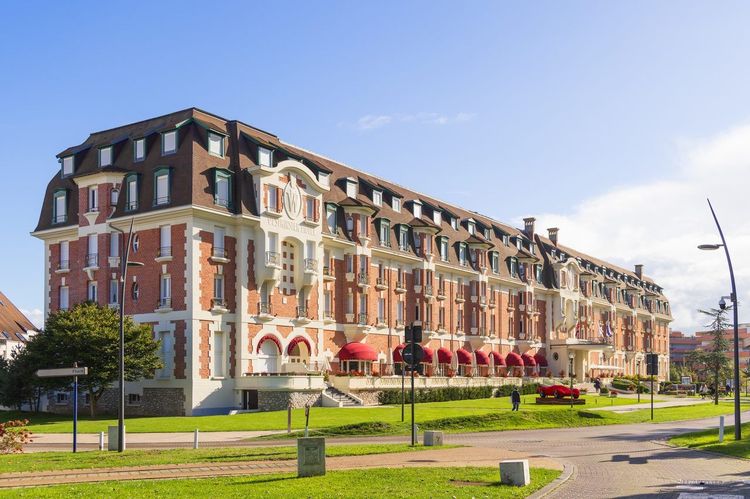
The choice of accommodation varies considerably depending on budget and how close to the sand you want to be. At the upmarket end of the spectrum, the Hôtel Barrière Le Touquet (Avenue du Verger, 62520 Le Touquet-Paris-Plage, rated 4.7/5 on Google with 1,109 reviews) occupies a prime position facing the sea, with a spa and direct views over the promenade — an address that attracts guests accustomed to high-end coastal stays.
For a more modest budget while remaining within walking distance of the sand, several holiday apartment complexes and furnished rentals are concentrated in the streets perpendicular to the promenade, often less than ten minutes on foot from the beach. Groups and families frequently opt for renting a villa in the historic quarter, an option that allows self-catering and significantly reduces meal costs over several days.
Finally, campsites in the surrounding area — particularly near Stella-Plage or Étaples — offer a budget-friendly alternative around fifteen minutes away by car, very popular in summer with families who prefer motorhomes or tents. Booking several months in advance is essential for July and August dates, as the resort regularly fills up from spring onwards.
When to Visit: Seasons and Crowds
July and August concentrate the bulk of visitor traffic, with noticeably busier streets and beaches, higher parking and accommodation prices, and a decidedly festive atmosphere from morning to evening. This is the ideal period to make the most of the water sports clubs and all the activities on offer along the seafront.
In spring and autumn, the resort returns to a quieter rhythm while often retaining decent sunshine, ideal for long walks on a near-deserted beach. The events calendar also helps in choosing your dates: the Enduropale in February, the equestrian events and sporting competitions in spring, then the summer animations and fireworks all shape the year and completely transform the resort's atmosphere from one season to the next. February deserves a special mention: it is the month of the Enduropale, which briefly turns the resort into the epicentre of motorsport despite temperatures that are far from summery.
Winter remains the quietest season, reserved for lovers of fresh air and spectacular storms along the promenade — a very different experience, but just as memorable for those who appreciate wild beaches out of season.
The Wreck of the Socotra and Other Stories of the Beach
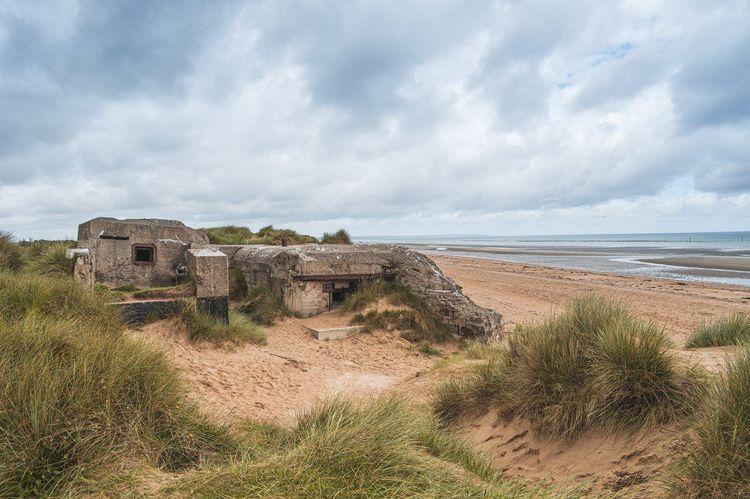
Among the episodes that have marked local history is the wreck of the SS Socotra, which ran aground off Le Touquet in the early 20th century — an event still recounted in local stories and one that attests to the dangers this coastline posed to navigation before the improvement of maritime marking. More recent vestiges still punctuate the surrounding dunes: several bunkers dating from the German occupation survive in the area, a discreet but persistent reminder of the coast's military past during the Second World War.
These traces of the past coexist today with the resolutely leisure-focused atmosphere that defines the modern resort. Many visitors stumble upon these stories by chance, chatting with a land sailing instructor or a promenade regular — proof that Le Touquet beach still holds a few secrets for those who take the time to linger beyond a simple swim.

FAQ
What is the exact address of Le Touquet beach?
The beach stretches along the seafront promenade (digue de mer), 62520 Le Touquet-Paris-Plage. There is no single address since it runs along the entire western front of the town, but targeting the digue de mer or the Palais de l'Europe on a map is more than enough to find your bearings.
Can you bring your dog to Le Touquet beach?
Yes, with standard seasonal restrictions: access is limited to certain areas in summer, while off-season dogs enjoy almost total freedom. A leash is recommended near swimming zones and water sports areas.
How do you get to Le Touquet beach by car?
Take the A16 motorway then the D940, following signs for the town centre and the seafront promenade once inside the town. Allow around 2h45 from Paris and 1h30 from Lille.
Why is Le Touquet beach so wide at low tide?
The significant tidal range of the Côte d'Opale, which can exceed 8 metres depending on the tidal coefficient, exposes a particularly wide stretch of sand at low tide. It is this width that encouraged the rise of land sailing and the historic horse races held on the beach.
What is the best time to visit Le Touquet beach?
Summer, in July and August, remains the liveliest period, with supervised swimming and water sports clubs in full swing. Spring and autumn offer a quieter beach and beautiful light for walks, while February draws curious visitors to watch the Enduropale.
Is swimming supervised at Le Touquet beach?
Yes, during the summer season, generally from early July to late August, with a flag system indicating daily conditions. Outside these hours and zones, caution is advised due to currents.
In Brief: Why Le Touquet Beach Is Worth the Trip
Ultimately, Le Touquet beach deserves more than a simple afternoon swim: between spectacular tides, land sailing invented on this very sand, and an architectural seafront inherited from the British golden age, it encapsulates much of what makes the Côte d'Opale so special. Whether you come for an early morning horse ride or to follow the Enduropale in February, take the time to walk the promenade all the way up to the lighthouse — that is often where the resort reveals itself at its best. To continue the visit beyond the sand, the Ryo audio guide tour of Le Touquet is the ideal way to connect the beach to the historic neighbourhoods without missing a thing.