© Shutterstock
 Votre guide Ryo
Unusual Visit to Limoges: 14 Secret Experiences for 2026
Few French cities hide as many secrets beneath their feet as Limoges. Planning an unusual visit to Limoges means accepting the need to dig deeper than the usual cathedral-station-museum loop: beneath the cobblestones of the city centre lie a forgotten Roman amphitheatre, an ancient necropolis, and porcelain workshops that classic tourist circuits blissfully ignore. If you are looking to go off the beaten track, this article quite literally goes underground.
Here, a railway station looks more like a secular cathedral than a transit hall, a 15th-century chapel still houses the relics of a butchers' brotherhood, and it is possible to sleep in a transparent bubble twenty minutes from the centre, under the stars of the Haute-Vienne. You can paint your own porcelain in a workshop where hand decoration has been passed down since the 19th century, sail along the Vienne at sunset, and thirty minutes away by road, the martyr village of Oradour-sur-Glane imposes a silence that few places in France can still provoke. Add to that a Thursday market where local producers mingle with curious visitors, and Limoges quickly stops resembling a mere stopover between Paris and Toulouse. The Ryo audio-guided tour of Limoges, a walk to follow with headphones on, allows you to connect several of these stops on foot without losing the thread of local history.
The Forgotten Ancient Amphitheatre beneath the Jardin d'Orsay
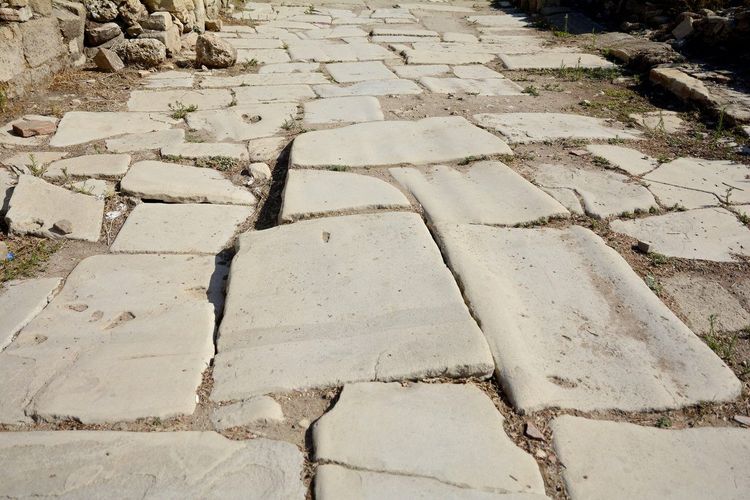
Few locals know that their city once possessed, nearly two thousand years ago, one of the largest amphitheatres in Roman Gaul, capable of accommodating several thousand spectators who came to watch gladiatorial combat. The structure was gradually dismantled over the centuries, its stones reused in surrounding houses and ramparts, before being definitively buried in the 18th century.
It is beneath the Jardin d'Orsay (87000 Limoges, rated 2.8/5 on Google with 13 reviews), a tree-lined promenade laid out directly above the ruins, that this architectural ghost lies sleeping. The garden takes its name from the intendant Boucher d'Orsay, who had the ruins covered over to create this public space in the 18th century. No colonnade protrudes from the ground, no eye-catching sign announces the amphitheatre, which makes it precisely one of the city's most secret sites — a monument you walk across without seeing it. A few sections of foundations remain visible near the southern entrance of the park, however, for those who know where to look.
In terms of size, the amphitheatre of Limoges rivalled the largest entertainment venues in the Gauls, which gives some idea of the importance of the city — then known as Augustoritum — under the Roman Empire. Archaeologists estimate that a significant portion of the seating tiers remains buried beneath neighbouring buildings, never excavated due to insufficient funding for an operation of such scale in a densely built urban area.
If you stop by, take the time to read the explanatory panels placed along the paths: they reconstruct, with diagrams, the actual dimensions of the vanished arena. An exercise in imagination that is well worth a museum visit, and costs nothing.
The best time to visit is spring, when the flowerbeds planted by the municipal gardeners frame the ruins without obscuring them. Allow around twenty minutes on site, more if you happen to meet one of the volunteers from the local archaeology association, who sometimes lead free guided tours at weekends.
The Saint-Martial Crypt, an Ancient Necropolis beneath the Place de la République
A few hundred metres away, beneath one of the busiest squares in Limoges, lies a funerary site more than seventeen hundred years old. The Saint-Martial crypt (Place de la République, 87000 Limoges, rated 4.2/5 on Google with 13 reviews) occupies the subsoil of the Place de la République, exactly where the Abbey of Saint-Martial once stood — one of the most powerful monasteries in the Western world before its destruction during the Revolution.
You descend via a discreet staircase, almost invisible from the surface, to discover Merovingian sarcophagi lined up in the half-light, along with the foundations of the vanished abbey church. The place surprises with its silence: above, trams run and café terraces hum with conversation, while below, you are literally walking over the Christian origins of the city.
The crypt was rediscovered by chance in the 19th century during road works on the square, before being systematically excavated in the following century. Archaeologists uncovered several superimposed layers of occupation, from the early Christian sanctuary to the Gothic transformations of the abbey church — a layering of eras that can be read directly in the stonework for those who take the time to observe it.
Opening hours vary by season and tourist footfall; it is best to check with the tourist office before visiting, especially outside the summer season when time slots are more limited. Access is free most of the time, making it an easy stop to combine with a stroll around the square itself.
Few hurried visitors take the time to go down, preferring to photograph the square from above. This is a mistake: the crypt alone concentrates more tangible history than many museums in the region, and its hushed atmosphere contrasts sharply with the commercial bustle of the surrounding neighbourhood.
The Musée National Adrien Dubouché, behind the Scenes
Limoges and porcelain have been inseparable since the discovery, in 1768, of a kaolin deposit at Saint-Yrieix-la-Perche. What most visitors do not know is that the Musée National Adrien Dubouché (Place Winston Churchill, 87000 Limoges, rated 4.6/5 on Google with 1,687 reviews) holds, in storage, thousands of pieces never displayed to the public, stacked in climate-controlled rooms inaccessible to ordinary visitors.
A few times a year, the museum exceptionally opens these reserves during themed days or guided tours available by reservation — an experience far rarer than the standard stroll through the permanent galleries. Visitors discover failed colour tests, royal dinner services never delivered, and prototypes abandoned mid-firing: the behind-the-scenes world of an industry that long made the city's fortune.
The Musée Adrien Dubouché remains, on a global scale, one of the reference collections for the history of ceramics, alongside the Victoria and Albert Museum in London and the Musée National de Céramique in Sèvres. This international reputation contrasts with the discreet profile of the venue, often overshadowed in tourist itineraries by more high-profile sites in the city centre, even though it deserves a half-day visit in its own right.
In the galleries open to the public, do not miss the section dedicated to manufacturing techniques: a reconstructed flame kiln, plaster moulds, and drying clay. Far more engaging than a simple display case of white tableware, it also helps to explain why Limoges porcelain conquered the world in the 19th century.
Entry to the permanent collections is free on the first Sunday of each month, and year-round for under-26s; at other times, a small fee applies — modest given the richness of the holdings. If you are travelling with curious children who enjoy hands-on activities, ask about the Wednesday educational workshops, which are often fully booked several weeks in advance.
The Jardins de l'Évêché and Their Little-Known Viewpoint
Adjoining the cathedral of Saint-Étienne, the former bishop's palace now houses the Musée des Beaux-Arts, but it is the garden that truly merits the detour. The Jardins de l'Évêché (Place de l'Évêché, 87000 Limoges, rated 4.4/5 on Google with 3,247 reviews) descend in successive terraces towards the Vienne, offering a rarely photographed viewpoint over the rooftops of the old town and the cathedral spire.
Few guides mention the small belvedere located at the northern corner of the garden — a simple stone wall from which you can glimpse the meanders of the river below. It is the ideal spot for a quiet break between two visits, away from the tourist flow concentrated around the cathedral itself.
The garden also features some remarkable trees, including a Lebanese cedar planted over a century ago, as well as a terraced kitchen garden maintained using methods close to 19th-century horticulture. Inside the palace, the Musée des Beaux-Arts holds a surprisingly extensive Egyptological collection for a city of this size, inherited from the collections of a former curator with a passion for Mediterranean archaeology.
The Bell Tower of the Cathédrale Saint-Étienne, an Overlooked Panorama
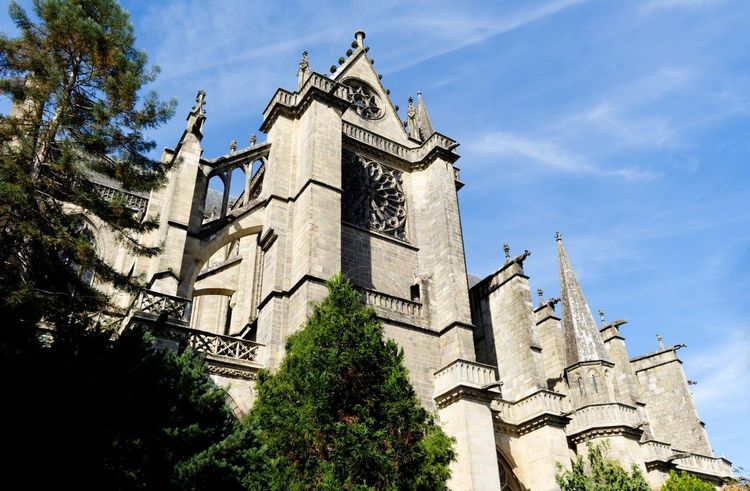
The Cathédrale Saint-Étienne has dominated the historic centre of Limoges since the 13th century, yet few visitors think to climb the staircase leading to the top of its porch tower. Restored in recent years after several decades of closure on safety grounds, access to the summit reopens intermittently during special days organised by the parish or the city's heritage services.
The climb, taxing due to its worn steps and sometimes narrow passages, opens onto a 360-degree panorama taking in the Vienne valley, the slate rooftops of the old town, and, on a clear day, the hills that herald the Massif central. Few cities of this size offer such a complete viewpoint accessible free of charge during the rare openings.
Inside, before or after the climb, take the time to observe the choir's stained-glass windows, produced in part by local Limousin master glaziers who applied to the art of stained glass certain techniques inherited from painted enamel — a historic speciality of the city on a par with porcelain. Check with the tourist office for the next opening dates for the tower, which are usually announced only a few weeks in advance.
The Heritage Days, held every third weekend of September, remain the most reliable opportunity to attempt the ascent, with queues to be expected from the moment the doors open. An alternative exists for organised groups, who can sometimes arrange access on request from the diocese outside these dates, subject to the availability of the tower keeper.
The Gare des Bénédictins, France's Most Surprising Railway Station
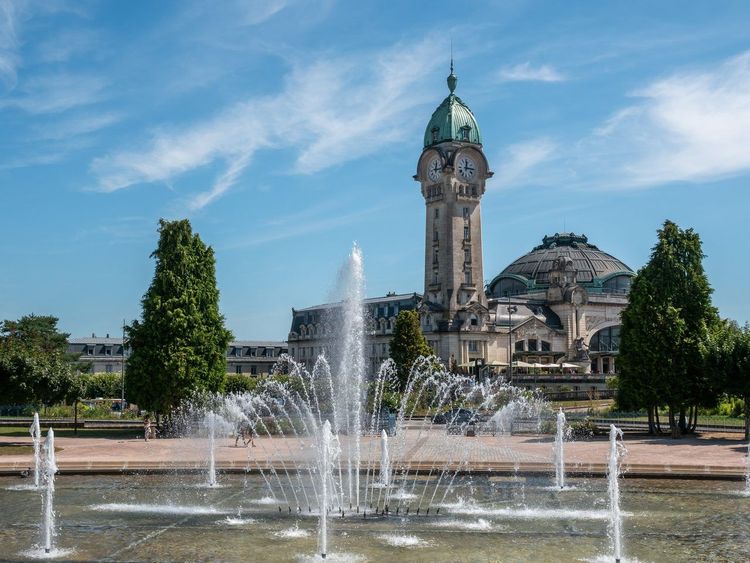
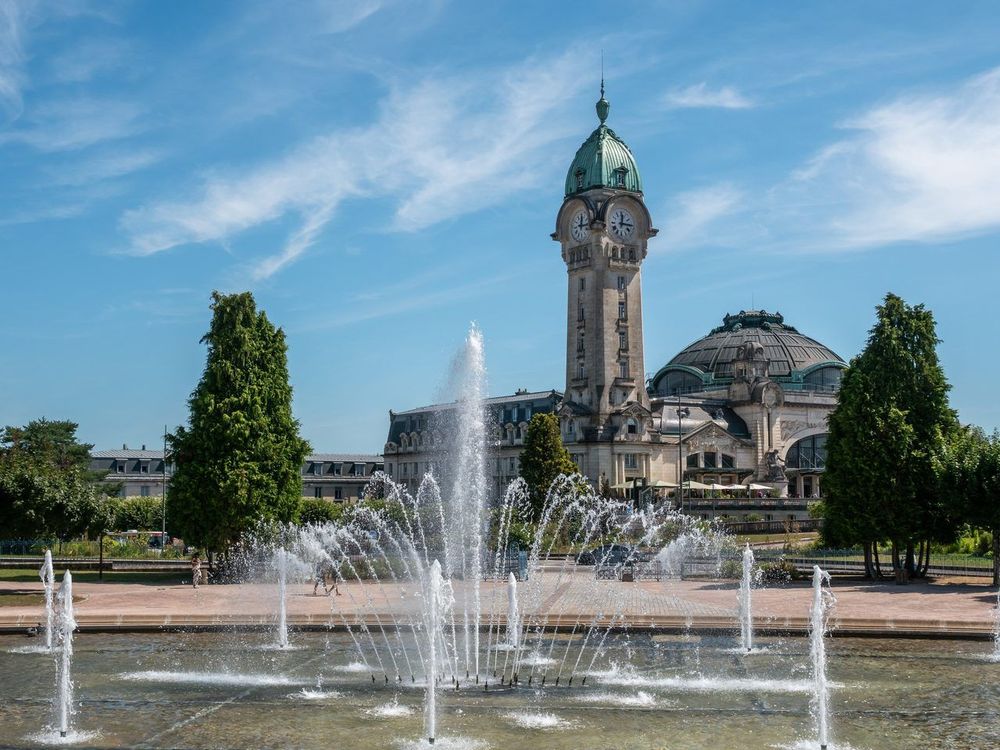
If Limoges were to choose just one monument for its postcard, it would probably be its railway station. The Gare de Limoges-Bénédictins (Place Maison Dieu, 87000 Limoges, rated 4.3/5 on Google with 695 reviews) looks more like a cathedral than a simple rail interchange, with its campanile rising to over sixty metres, its vast glass-and-steel dome, its Art Deco stained glass, and its monumental clock visible from the other end of the city.
Inaugurated in 1929 on the site of a former Benedictine abbey, the station owes its spectacular architecture to architect Roger Gonthier, who wanted to make it a true showcase for the city rather than a mere functional facility. The result, regularly ranked among the most beautiful stations in the country, continues to astonish travellers passing through.
The station welcomes a significant flow of travellers each year, far greater than its modest size might suggest for a city of this importance. A historic waiting lounge, today largely unknown to hurried travellers, retains its original furniture and light fittings just steps away from the busiest platforms.
Even without any intention of catching a train, the interior is worth visiting: a central hall bathed in light, frescoes evoking local industries such as porcelain and enamelling, and a historic buffet recently renovated while preserving its original décor. Head upstairs to view the dome from the inside — an angle that few visiting photographers think to use.
The Quartier de la Boucherie and the Chapelle Saint-Aurélien
In the very heart of Limoges, a maze of half-timbered lanes has preserved, almost intact, the medieval layout of the city. The Quartier de la Boucherie takes its name from the butchers' guild that practised its trade there, generation after generation, since the Middle Ages — a profession so powerful that it had its own chapel and its own funerary rites.
Around a corner stands the Chapelle Saint-Aurélien (Rue de la Boucherie, 87000 Limoges, rated 4.5/5 on Google with 70 reviews), a modest building in appearance that still houses the banners and emblems of the butchers' brotherhood, perpetuated without interruption since the 15th century. Local legend has it that the butchers once saved the city from an English attack by concealing their weapons beneath cuts of meat — an episode that tourist office guides enjoy recounting with details that vary from one visit to the next.
Several contemporary ceramicists have chosen to set up in these same half-timbered houses, perpetuating in their own way the artisanal spirit of the neighbourhood, even if their creations bear little resemblance to the industrial porcelain of the great manufacturers. Some workshops open their doors simply upon request — a rare opportunity to watch hand-throwing in the very centre of town.
The neighbourhood still lives off its artisanal past: timber-framed houses converted into ceramicists' studios, inner courtyards discovered by pushing an ajar carriage gate, commemorative plaques at eye level that almost no one takes the time to read. The top 6 things to do in Limoges also lists several stops in this same neighbourhood, useful if you want to extend your walk beyond the chapel.
Visit in the late afternoon, when the raking light picks out the relief of the timber framing and the terraces begin to fill. It is also the time when the artisan shops, often closed at midday, reopen their doors.
The Zoo du Reynou, Nights among the Giraffes
About twenty minutes from the city centre, the zoo du Reynou (Le Reynou, 87280 Le Vigen, rated 4.3/5 on Google with 3,473 reviews) offers an experience that few visitors spontaneously associate with Limoges: staying overnight, as close as possible to the animals, in lodges perched directly overlooking the giraffe or rhinoceros enclosures.
The park extends across several dozen hectares of landscaped grounds, inherited from a former château of which some architectural elements still survive. The overnight package, more expensive than a standard day ticket, generally includes access to the park at adjusted hours — before it opens to the public or after it closes — a time when the animals are noticeably more active than during the middle of the day.
The zoo offers several overnight packages depending on the level of immersion desired: a standard lodge with a view over an enclosure, a premium cabin as close as possible to the rhinoceroses, or a traditional African hut designed for families. A themed dinner, often included in the most comprehensive packages, is generally followed by a guided night-time outing led by a keeper to observe animal behaviour once darkness has fallen.
Book several months in advance if you are targeting a weekend or school holiday period: the most sought-after lodges, particularly those with a direct view of the giraffes, sell out as early as January for the following summer. A lesser-known alternative is to book mid-week outside the peak season, with a significant reduction on the overnight rate.
Sleeping Differently in the Haute-Vienne: Cabins, Yurts, and Bubble Domes
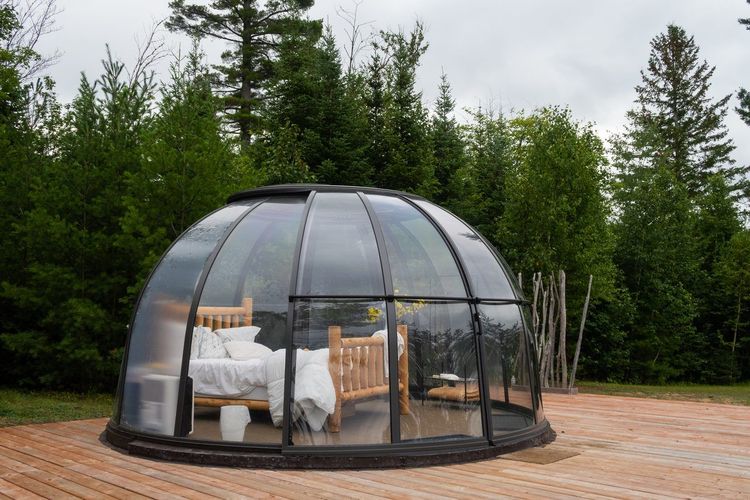
While the centre of Limoges concentrates most of the heritage, the surrounding countryside has multiplied its unusual accommodation options to such an extent that the département has become, in recent years, one of the favourite destinations for nature-sleeping enthusiasts in France. Here you will find treetop cabins, Mongolian yurts, horse-drawn caravans, and even transparent bubble domes designed for sleeping under the open sky without giving up the comfort of a double bed.
At La Croisille-sur-Briance, a site developed along a stream offers several elevated wooden cabins, each oriented to provide a different view over the surrounding forest. Some come with an outdoor Nordic bath heated by a wood fire — a particularly sought-after option between October and March, when cool nights make hot water all the more welcome.
At Dournazac, in the west of the département, an estate has specialised in transparent bubble domes equipped with private spas — a concept born in Scandinavia and adapted here to the milder climate of the Limousin. Spending the night beneath a translucent dome, surrounded by nature with no immediate neighbours, is a rare experience that few French regions offer at this level of seclusion.
At Bussière-Galant, a farm has opted for earth-and-straw construction and Mongolian yurts mounted on heated floors — a more eco-friendly alternative to classic wooden cabins. The neighbouring farm often offers, as an add-on, an introduction to milking or egg collecting, an activity appreciated by families in search of rural authenticity.
Further south, near Champnétery, a converted farm offers a range of formats: a traditional horse-drawn caravan, a themed gîte dedicated to owls, and a log chalet. Prices vary considerably from one accommodation to the next, ranging from 90 to 220 euros per night depending on the season and level of comfort sought, with breakfast generally included in the most premium packages.
Combining an original night in nature with a day of urban sightseeing remains the most popular formula among travellers discovering the region for the first time. Many organise their stay around the city centre during the day, guided by the Ryo audio-guided tour of Limoges, before heading to their cabin or bubble dome in the late afternoon for a disconnected evening. This alternation between dense urban heritage and absolute rural calm sums up rather well what an unusual visit to Limoges can offer today.
On the booking front, plan well ahead: the most original accommodations are often fully booked several months in advance, particularly for spring and summer weekends. A Tuesday or Wednesday outside school holidays, however, is often still available even a few weeks before your preferred date, leaving you time to fit in our Limoges audio-guided tour before heading back to your bubble dome for the night.
The Street Art That Tourists Miss
Far from the monumental murals of certain metropolises, Limoges cultivates a more discreet street art scene, scattered across the inner courtyards and secondary lanes of the historic centre. Several local collectives, occasionally supported by the municipality, have taken over blank gable ends and construction hoardings to paint compositions inspired by the city's porcelain heritage.
These works do not appear on any official tourist map and change regularly with construction work and new artistic projects. The best way to spot them is still to wander without a fixed itinerary through the streets around the rue Charles-Michels, camera at the ready.
One particularly striking mural, depicting a potter at the wheel in a style close to photographic realism, currently adorns a blank wall near the Place des Bancs. There is no guarantee it will still be there in a few years' time, which adds to the ephemeral and confidential character of this form of urban art in Limoges.
Oradour-sur-Glane, the Excursion That Shakes You
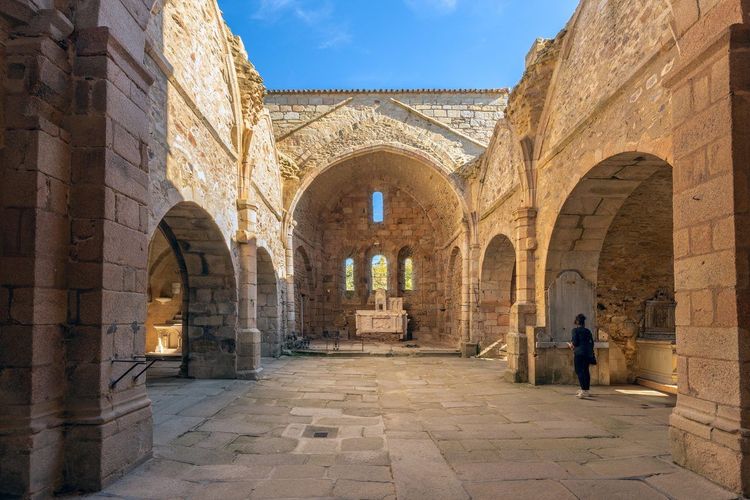
About thirty minutes by road to the north-west of Limoges, the village of Oradour-sur-Glane (87520 Oradour-sur-Glane, rated 4.8/5 on Google with 942 reviews) occupies a unique place in the regional tourist landscape. On 10 June 1944, the entire population of the village was massacred by an SS division, and the ruins have never been rebuilt since, by the express decision of General de Gaulle, who wished to make it a permanent memorial site.
One rarely speaks of a tourist visit when evoking this place, and yet the experience is radically off the beaten track: rusted car carcasses, frozen sewing machines, a gutted tram — everything has remained exactly where history left it, with no staging or reconstruction. The silence that reigns among the charred walls leaves a deeper impression than any speech.
The memorial centre, located at the entrance to the site, offers a preliminary educational trail that contextualises the visit before you enter the ruins themselves. Allow at least two hours on site, more if you take the time to read all the explanatory panels placed throughout the village.
The memorial centre offers guided tours in French and English at set times, as well as an audio guide available in several languages for visitors who prefer their own pace. A documentary space, often overlooked by hurried visitors, brings together filmed testimonies from survivors and descendants of the victims — an essential complement to the outdoor village visit.
Without a car, a regional bus service connects Limoges to the village several times a day on weekdays, with a reduced service at weekends. Many visitors prefer a rental car or a shared taxi, which is more flexible for combining the visit with a stop in one of the surrounding villages.
Access to the ruins is free; only the memorial centre charges an entry fee. Many visitors underestimate the emotional impact of the site and initially plan a quick stop on the way to something else: it is better to set aside a full half-day and avoid immediately following the visit with a festive activity.
Navigating the Vienne at Sunset
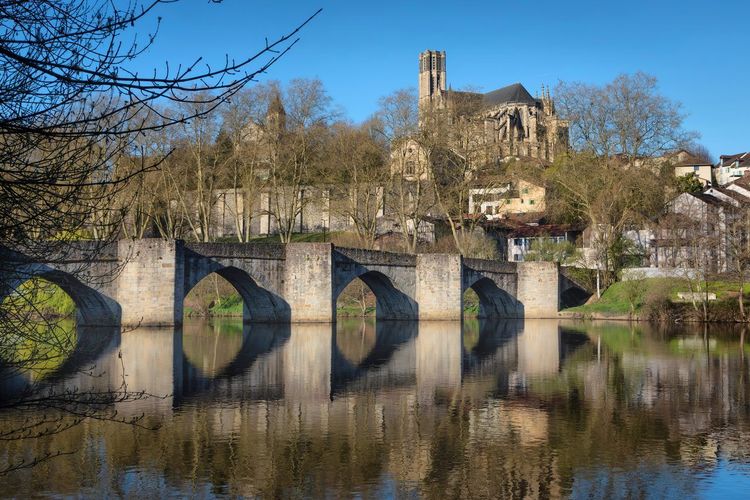
Less well known than the porcelain or the medieval heritage, the river that runs through Limoges also offers its share of overlooked experiences. A few local operators offer canoe or small electric boat trips along the Vienne, passing beneath the Pont Saint-Étienne (Pont Saint-Étienne, 87000 Limoges, rated 4.5/5 on Google with 400 reviews), one of the oldest bridges in the city, built in the 13th century.
Navigating at the end of the day, when the raking light colours the facades of the old cathedral quarter, reveals a perspective on Limoges that the vast majority of visitors never discover. Grey herons, kingfishers, and sometimes beavers frequent the quieter banks upstream of the city centre, far from the tourist activity.
On some summer evenings, nocturnal electric boat trips are organised at nightfall, accompanied by subtle lighting that enhances the riverbanks and old bridges. These outings, generally announced only a few days in advance on local operators' social media channels, remain one of the most discreet experiences the city has to offer.
Departures generally take place from a water sports base downstream of the bridge, with time slots multiplying between May and September. Booking the day before is usually sufficient, except during the busiest summer weekends.
Painting Your Own Porcelain in a Workshop
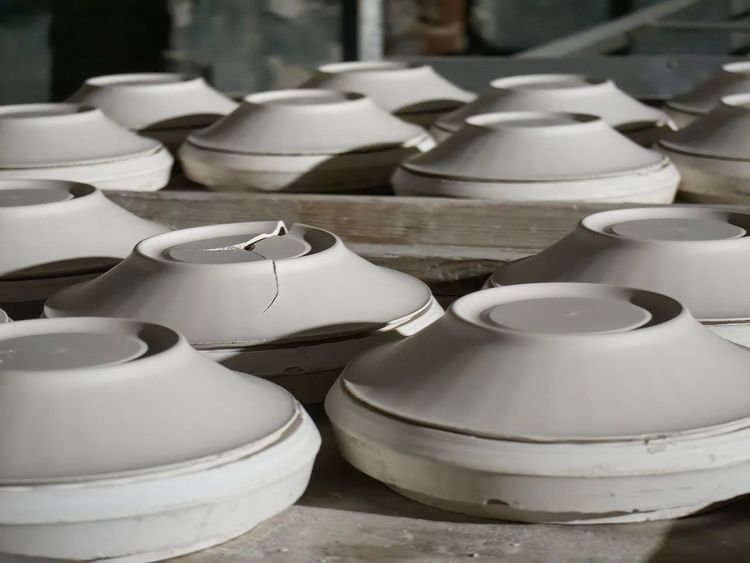
Among the city's truly hands-on experiences, few rival a porcelain painting workshop held inside a historic factory. The city still has several artisan workshops that keep alive the tradition of hand decoration, a craft passed down virtually unchanged for two centuries.
The session generally lasts one to two hours, led by a professional decorator who explains the colour-laying techniques before allowing each participant to personalise their own piece — a cup, plate, or vase depending on the chosen package. The piece, fired after your departure, is then either shipped to your home or collected a few days later on site.
For a shorter and more affordable format, a few shops in the city centre offer express thirty-minute sessions with no prior reservation required — ideal for visitors passing through with limited time. The result is less polished than in a factory setting, but the experience retains its fun, hands-on character and is accessible to the youngest visitors.
This activity is particularly popular with families and groups of friends looking for a souvenir that goes beyond the standard fridge magnet. Book in advance during the high season — Saturday afternoon slots go first, often as early as the preceding Wednesday.
The Halles Centrales, the Thursday Gourmet Market
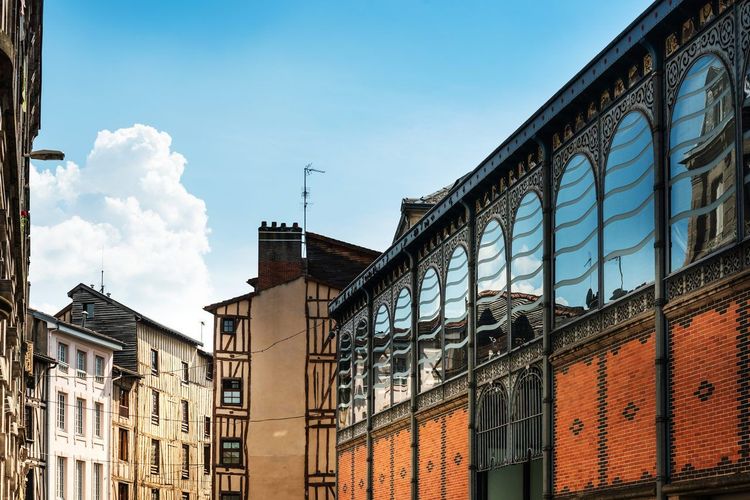
Built at the end of the 19th century in a metal structure inspired by the Parisian Baltard pavilions, the Halles Centrales of Limoges host a food market every morning that is worth the visit in itself. You will still find a few butchers directly descended from the tradition of the nearby Quartier de la Boucherie, as well as producers of farmhouse cheeses and Limousin charcuterie.
On Thursday mornings, the market spills onto the adjacent square with additional stalls dedicated to regional farm produce — a noticeably livelier atmosphere than the rest of the week. It is also one of the rare places where you still encounter locals doing their ordinary shopping alongside passing visitors, without any tourist staging.
Around the Halles, several small restaurants and wine bars have opened in recent years, taking advantage of the morning footfall to offer lunch menus based on produce bought that very morning from the stalls. A simple way to extend a market visit with a meal whose ingredients can be traced back to within a few metres.
To explore this food discovery further, the top 10 culinary specialities of Limoges details several products found precisely on the Halles stalls — useful for putting together a tasting basket before hitting the road again.
Practical Information for an Unusual Visit to Limoges
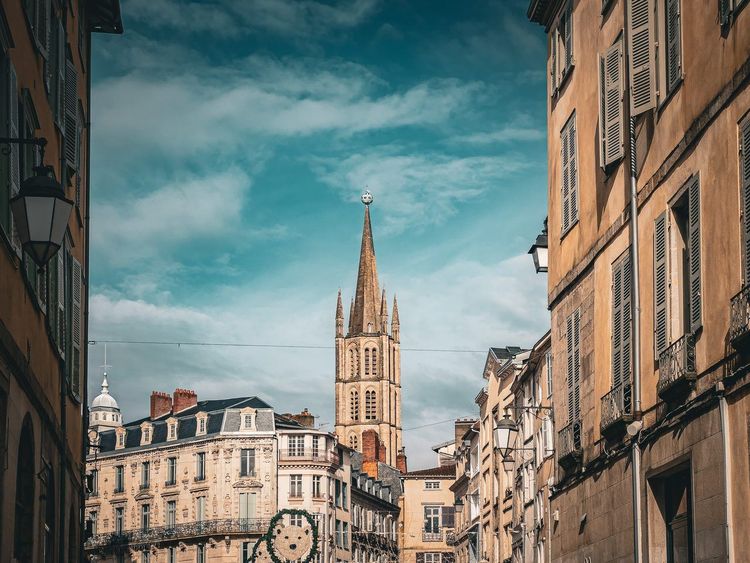
The majority of the sites described here are concentrated within walking distance of the historic centre, with the exception of the zoo du Reynou, the rural accommodations, and Oradour-sur-Glane, which require a car or a shuttle service. Allow two to three full days to cover the essentials without rushing. The Ryo app and its audio-guided tour help connect the main city-centre sites without relying on a paper map.
The Gare des Bénédictins, well served from Paris in just over three hours, is a convenient starting point for exploring the city on foot. Book the most original accommodations in the Haute-Vienne well in advance, particularly for weekends when demand is high.
The Limousin climate is generally mild but wet, with rainfall spread throughout the year. Spring and early autumn often offer the best compromise between moderate crowds and pleasant temperatures for outdoor visits such as the gardens or walks along the Vienne.
The budget varies considerably depending on the activities chosen: the city-centre heritage sites are for the most part free or inexpensive, while a night in a cabin or bubble dome represents the largest single expense of the trip.



FAQ
What is the must-see unusual attraction in Limoges?
The Saint-Martial crypt and the ancient amphitheatre buried beneath the Jardin d'Orsay are undoubtedly the most surprising pair, as they reveal a historical layer of the city that the majority of visitors completely overlook when sticking to the visible city centre.
Where can you sleep in a unique way near Limoges?
The Haute-Vienne area offers several distinctive accommodations within an hour of the centre: treetop cabins at La Croisille-sur-Briance, bubble domes with private spas at Dournazac, yurts at Bussière-Galant, or lodge stays at the zoo du Reynou for a direct immersion among the animals.
How much time should you allow for an unusual visit to Limoges?
Two to three days allow you to combine the hidden heritage of the historic centre, a trip to Oradour-sur-Glane, and at least one night in an original rural accommodation, without rushing from one stop to the next.
Is Oradour-sur-Glane part of an unusual visit to Limoges?
The site is far from light-hearted, but its status as a village frozen in time since 1944 makes it an extraordinary experience, very different from classic heritage visits, and it consistently features among the recommended excursions from Limoges.
Can you visit the ancient ruins of Limoges all year round?
The Saint-Martial crypt and the amphitheatre site at the Jardin d'Orsay are accessible for most of the year, with reduced hours in the low season. It is best to check opening times with the tourist office before visiting, especially outside the summer period.
What budget should you plan for an unusual visit to Limoges?
The city centre remains affordable, with most heritage sites being free or costing just a few euros. The biggest expense is accommodation in a cabin, yurt, or bubble dome, ranging from 90 to 220 euros per night depending on the season and level of comfort.
Is Limoges a good unusual destination for families?
Yes, between porcelain painting workshops, overnight stays at the zoo du Reynou, and canoe trips on the Vienne, several activities are directly aimed at families with children, complementing the more classic heritage visits in the city centre.
How do you get to Limoges?
The city is served by train from Paris in just over three hours, arriving directly at the Gare des Bénédictins, as well as by road via the A20 motorway. A car remains essential, however, to reach the zoo du Reynou, rural accommodations, or Oradour-sur-Glane.
Between buried ancient ruins, a butchers' chapel, and bubble domes under the stars, Limoges defies its image as a mere stopover on the road between Paris and Toulouse. The city and its surrounding countryside offer a wealth of off-the-beaten-track experiences, as long as you look beyond the most photographed facades to discover what lies beneath, behind, or just a few kilometres away. Whether you have a weekend or a full week, the region offers enough contrasts to ensure no two experiences are ever the same. To prepare your unusual visit to Limoges, the Ryo audio-guided tour of Limoges is a solid starting point, to be complemented according to your interests with a night in nature or a trip to Oradour-sur-Glane.
À lire également