© Shutterstock
 Votre guide Ryo
What to Do in Lisieux: 20 Experiences to Have in 2026
What to do in Lisieux when the city is, for many, summed up by a pilgrimage postcard? The Basilique Sainte-Thérèse dominates the city from its hilltop, visible for kilometres before you even arrive, and draws around two million visitors each year, making it one of the most visited Catholic shrines in France after Lourdes. But this Norman city also hides an old town of half-timbered houses, a bishop's garden behind the cathedral, and a river crossed by a 15th-century covered bridge. To explore this heritage at your own pace, an app like Ryo offers an audio guide that comments on every street without the need to follow a group.
In the pages that follow, you will find twenty places and activities for exploring Lisieux and its surroundings — enough to fill a full day or even a Norman weekend. There is a nearby chocolaterie that still makes its bars on 19th-century machines, a wax museum dedicated to Saint Thérèse of Lisieux, forgotten Gallo-Roman baths hidden beneath a public garden, and a chequered stone château less than ten minutes away by car. Plenty to fill a packed itinerary, even on rainy days.
1. Marvel at the Basilique Sainte-Thérèse
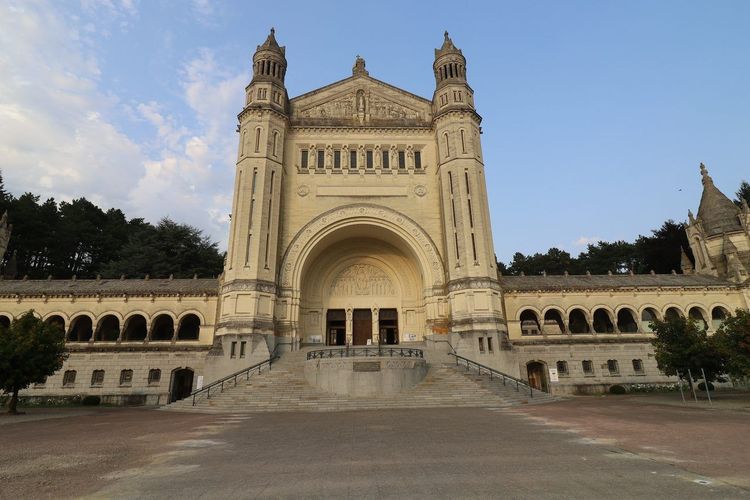
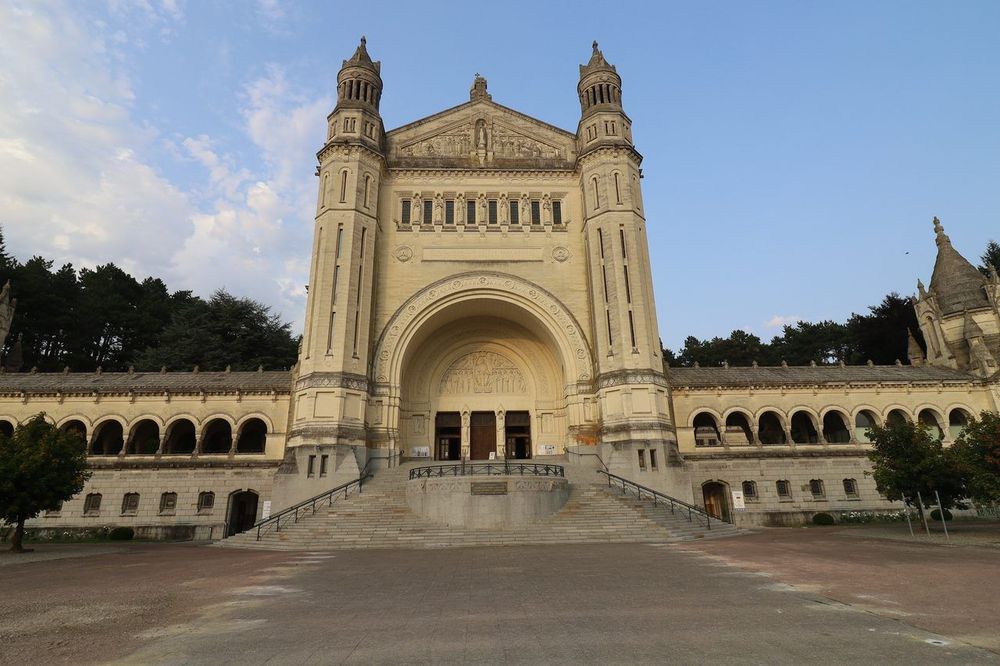
The Basilique Sainte-Thérèse de Lisieux (Avenue Sainte-Thérèse, 14100 Lisieux, rated 4.8/5 on Google from 9,721 reviews) was built between 1929 and 1954 on the heights of the city, in tribute to Saint Thérèse of Lisieux, a Carmelite nun born in Alençon and who died in Lisieux in 1897 at just 24 years old. The Neo-Byzantine building rises to over 90 metres and can hold up to 4,000 worshippers beneath its central dome, making it one of the largest basilicas built in France in the 20th century.
The interior surprises with the density of its mosaics, created over nearly ten years by the Mauméjean workshops: more than 26,000 tesserae cover the vaults, telling the life of the saint scene by scene. The crypt, more understated, houses the relics of Thérèse and her parents, Louis and Zélie Martin, who were canonised in 2015. You can descend for a quiet moment, even without religious intent: it is one of the few places in the basilica where calm prevails over the flow of organised groups.
Then head up to the outdoor esplanade: the view stretches across the entire Touques valley and, on a clear day, as far as the hills of the Pays d'Auge. An isolated campanile, completed after the nave, completes the complex and houses a carillon whose peals mark the great pilgrimages; walking around it on foot helps to grasp the true scale of the sanctuary, which is often underestimated from the forecourt. Avoid Saturday afternoons, when pilgrimage coaches converge between 2 p.m. and 5 p.m. On a weekday, early in the morning, you will have the nave almost to yourself.
2. Discover the Cathédrale Saint-Pierre
Seven centuries older than the basilica, the Cathédrale Saint-Pierre de Lisieux (Place Jean XXIII, 14100 Lisieux, rated 4.5/5 on Google from 2,727 reviews) dates largely from the 13th century and is one of the earliest Gothic buildings in Normandy, completed even before the cathedral at Coutances. Its two-tower façade — one square and austere, the other more elaborate — tells the story of several centuries of overlapping construction projects.
Inside, the side chapel known as the Chapelle Sainte-Thérèse retains the confessional where the priest Almire Pichon heard the future saint's confession as a child. The choir windows, restored in the 1990s after decades of grime, filter a particularly colourful light in the late afternoon. Take time to study the west portal: its sculpted voussures are among the few elements to have escaped the destruction of 1944, when the surrounding neighbourhood was engulfed in flames.
Entry is free all year round, and the cathedral remains far quieter than the basilica: you can linger without ever feeling the pressure of a group behind you. Allow around twenty minutes for a full tour, more if you stop to examine the recumbent effigies in the north transept.
3. Visit the Maison des Buissonnets
The Maison des Buissonnets (Chemin des Buissonnets, 14100 Lisieux, rated 4.7/5 on Google from 867 reviews) is the family home where Thérèse Martin grew up from 1877 to 1888, following her mother's death. The bourgeois house, left almost entirely intact, retains its original furnishings: her father Louis Martin's armchair, her childhood bedroom, and the garden where she played.
The guided tour, which is free of charge, lasts around 30 minutes and runs in small groups every half hour. The guides, often volunteers, share details that the display panels do not mention: how Thérèse would watch the cathedral spire from her window, or the anecdote about the bouquet of flowers she gave her father on the day of her first communion. Upstairs, the belvedere — a small glass room where Louis Martin used to receive his daughters — offers the same view over the city as in the Martin family's time.
The garden, restored to its original layout based on period photographs, is worth a moment on its own: benches, a sloping lawn, and an open view over the city below. Book your time slot in high season (July–August): pilgrimage groups sometimes reserve all afternoon visit slots.
4. Step Inside the Carmel de Lisieux
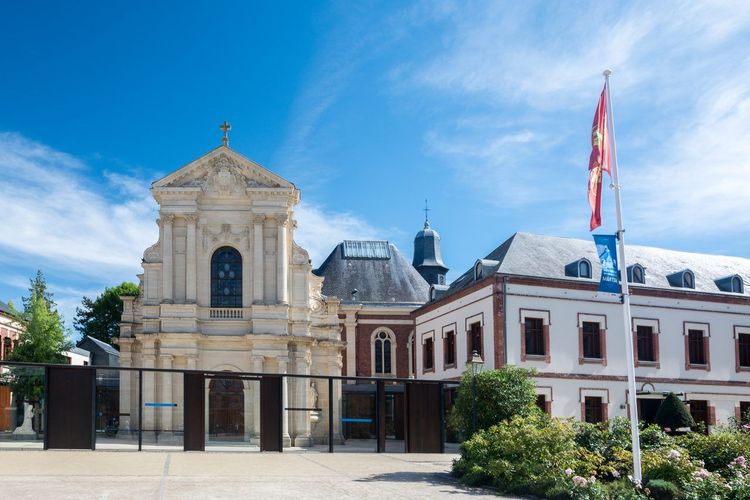
The Carmel de Lisieux (21 Rue du Carmel, 14100 Lisieux, rated 4.7/5 on Google from 2,128 reviews) is the monastery that Thérèse Martin entered at the age of 15 in 1888, and where she lived until her death. The Carmel chapel, open to the public, houses her reliquary as well as display cases containing personal objects: handwritten letters, clothing, and portraits painted by her sister Céline.
Unlike the basilica, the Carmel remains an active monastery inhabited by cloistered Carmelite nuns: only the chapel and a small exhibition are accessible, which naturally limits the crowds. You can attend sung Vespers in the late afternoon — a suspended moment, even for a non-believing visitor. Entry is free, and the visit takes 20 to 30 minutes.
5. Explore the Musée d'Art et d'Histoire
Housed in an 18th-century private mansion, the Musée d'Art et d'Histoire de Lisieux (Boulevard Pasteur, 14100 Lisieux, rated 4.4/5 on Google from 166 reviews) brings together eclectic but substantial collections: Norman ceramics, 19th-century paintings, regional furniture, and a section devoted to the city's history before its post-war reconstruction.
Lisieux was nearly 80% destroyed during the bombings of June 1944; the museum dedicates an entire room to before-and-after photographs that put the whole visit to the modern city into perspective. Allow 45 minutes for the visit, longer if you have an interest in Pays d'Auge ceramics, which are well represented in the ground-floor display cases. Do not walk past the canvases by 19th-century Norman landscape painters: they document a pre-industrial Lisieux that has since disappeared. Entry is modest in price and the museum is rarely crowded, even in summer, making it a handy refuge on days when the basilica is particularly busy.
6. Stroll Through the Jardin de l'Évêché
Behind the cathedral, the Jardin de l'Évêché (Rue du Bac, 14100 Lisieux, rated 4.4/5 on Google from 1,209 reviews) occupies the former grounds of the bishop's residence, laid out as a formal French public garden with geometric flowerbeds, sculpted yew trees, and a rose garden that blooms from June to September.
It is one of the few green spaces in the town centre where you can sit without spending anything, with a direct view of the Gothic apse of the cathedral. Locals come here far more than tourists: you will see more pushchairs than cameras. Entry is free, open from sunrise to sunset, with a dozen benches in the shade of century-old lime trees.
7. Slip into the Cour du Chapitre
Accessible via a discreet passageway from the cathedral square, the Cour du Chapitre (Rue du Chapitre, 14100 Lisieux, rated 4.1/5 on Google from 11 reviews) forms a small cobbled quadrangle bordered by 17th-century canonical buildings, where the cathedral canons once lived.
Few visitors venture this far: the passageway is not signposted and blends in with a private entrance. Yet it rewards you with five minutes of complete silence, just steps from the tourist bustle of the forecourt. Look up: a few mullioned windows and a stair turret still betray the canonical origins of the place, long reserved for the cathedral clergy. The surrounding buildings, in brick and stone, were restored in the 20th century after the upheavals of previous centuries.
8. Visit the Former Église Saint-Jacques
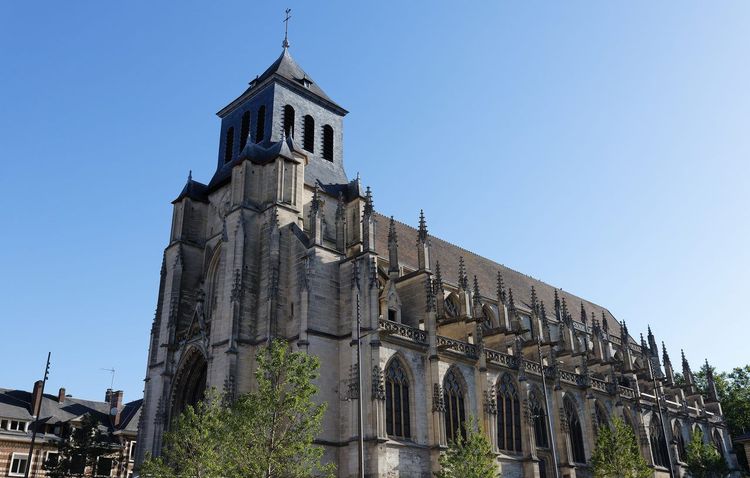
Deconsecrated, the former Église Saint-Jacques has been converted into a municipal cultural space, the Espace Saint-Jacques (Rue Henry Chéron, 14100 Lisieux, rated 4.2/5 on Google from 91 reviews), which hosts temporary exhibitions and concerts. The 16th-century Flamboyant Gothic nave has retained its net vaults, which survived intact despite the 1944 bombings that destroyed much of the surrounding neighbourhood.
The programme changes every two or three months: check on site or with the tourist office before making your way there, as access depends entirely on the current exhibition schedule.
9. Wander the Old Town and Its Half-Timbered Houses
Despite the bombings of June 1944, which razed a large part of the centre, a few pockets of Lisieux's old town (Rue aux Fèvres, 14100 Lisieux, rated 3.7/5 on Google from 93 reviews) survived, particularly around the Rue aux Fèvres and the Rue Henry Chéron. The half-timbered houses there alternate exposed timber frames, jettied upper storeys, and gabled façades, some dating back to the 15th century.
The Manoir de la Salamandre, with its façade carved with mythological figures, remains the most photographed example in this neighbourhood. You can also recognise former tanners' houses here, a legacy of an industry that drove Lisieux's prosperity until the 19th century, before the textile industry took over.
If you are wondering exactly what the term Lisieux old town covers, it is precisely this restricted perimeter — not to be confused with the post-war commercial centre rebuilt in concrete a few streets away. The contrast between the two architectural styles, one from the 15th century and the other from the 1950s, encapsulates the city's turbulent history on its own.
A walk on foot, without a fixed route, is enough to spot around ten remarkable façades in less than an hour. To avoid missing any historical detail — construction dates, former owners, stories of reconstruction — the Ryo audio guide comments on around ten of these façades directly from your phone, with no booking or set timetable required.
10. Browse Rue Pont Mortain
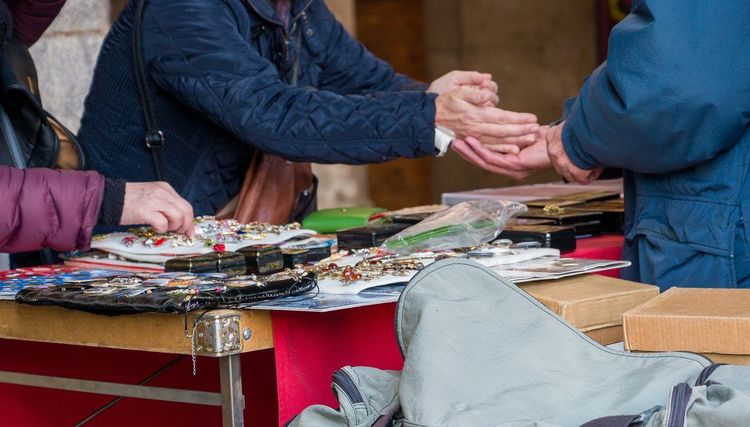
The Rue Pont Mortain (Rue Pont Mortain, 14100 Lisieux) concentrates most of the town centre's independent shops: clothing boutiques, delicatessens, and an antiquarian bookshop that has been in the same spot for over thirty years.
On Saturday mornings, the street naturally extends towards the covered market, a two-minute walk away, making it the liveliest moment of the week. Outside that window, allow thirty minutes to walk its length at a leisurely pace, including window shopping. It is also one of the best places to sample local specialities, from aged camembert to Pays d'Auge cider, in the delicatessens that line the street.
11. Stop at the Covered Bridge and Lock on the Orbiquet
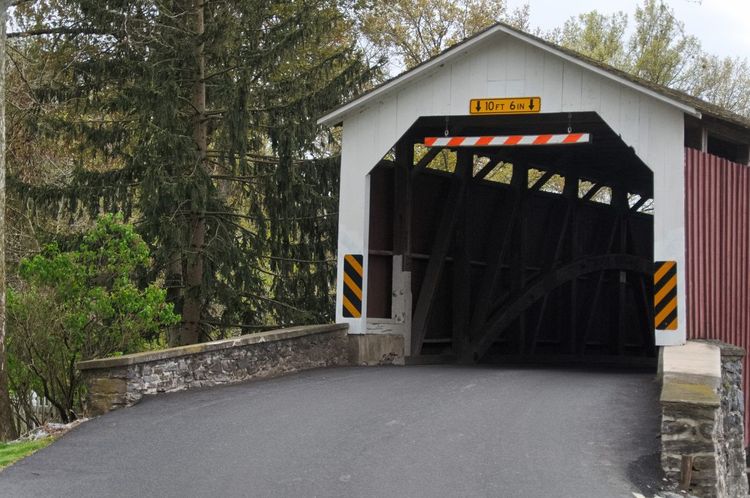
The Orbiquet, a small river that flows through Lisieux before joining the Touques, is spanned by a 19th-century wooden covered bridge, right beside a still-functioning lock.
The spot, seldom visited, offers one of the few viewpoints where water, wood, and stone interact without a single tourist sign reminding you that you are right in the town centre. The lock was once used to regulate the water flow for the mills and tanneries upstream — industries that shaped the city's economy for centuries. Today, only the sound of lapping water recalls that former bustle. A ten-minute stop is all you need, ideal between two more demanding visits.
12. Spot the Manoir Desmares
The Manoir Desmares (Rue au Char, 14100 Lisieux, rated 4/5 on Google from 6 reviews), a 16th-century half-timbered manor house, takes its name from a family of local notables who occupied it until the early 20th century.
The façade, restored in the 2000s, can only be visited from the outside: the building now houses private offices. Look closely at its carved beams: some still bear their original plant motifs, rare survivors of the Lexovian timber-framing craft largely lost in the 1944 bombings. You can take it all in within five minutes, ideally in the late afternoon when the light rakes across the façade.
13. Discover the Musée de Cire Sainte-Thérèse
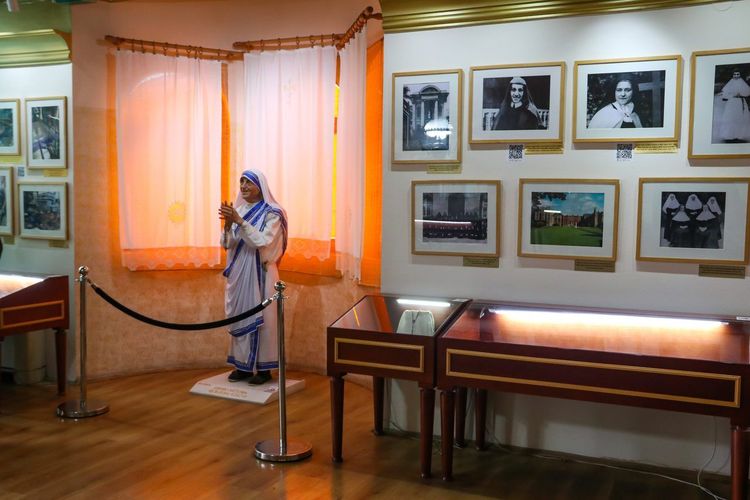
The Musée de Cire Sainte-Thérèse (Avenue Sainte-Thérèse, 14100 Lisieux, rated 4.6/5 on Google from 18 reviews), located a short walk from the basilica, retraces the life of Thérèse Martin across around thirty life-size scenes, from her childhood to her death.
The style, very much of the 1980s, will not appeal to everyone, but it offers a useful narrative complement after visiting the basilica and the Buissonnets, linking the various sites together in chronological order. Children are often more receptive than adults, drawn in by the theatrical quality of the reconstructed scenes. It also makes a convenient rainy-day option, sheltered and just steps from the basilica. Allow 30 to 40 minutes, for a modestly priced admission ticket.
14. Smell the Cacao at the Chocolaterie Mérimée
About twenty minutes by road, the Chocolaterie Mérimée, La Route du Cacao (Route du Cacao, 61120 Vimoutiers) still produces its chocolate bars on machines dating from the early 20th century, inside a listed industrial building.
The guided tour traces the full journey of cacao, from the raw bean to the wrapped bar, with a live moulding demonstration. On site, a small museum area covers the history of chocolate, from Mesoamerican civilisations to Norman production. The adjoining shop sells around thirty products, some exclusive to the site. Outside of school holidays, the tour is by reservation: check available time slots before making the trip. Allow 1.5 hours including the final tasting — a great addition if your day in Lisieux spills over into the surrounding area.
15. Breathe in the Arboretum de Lisieux
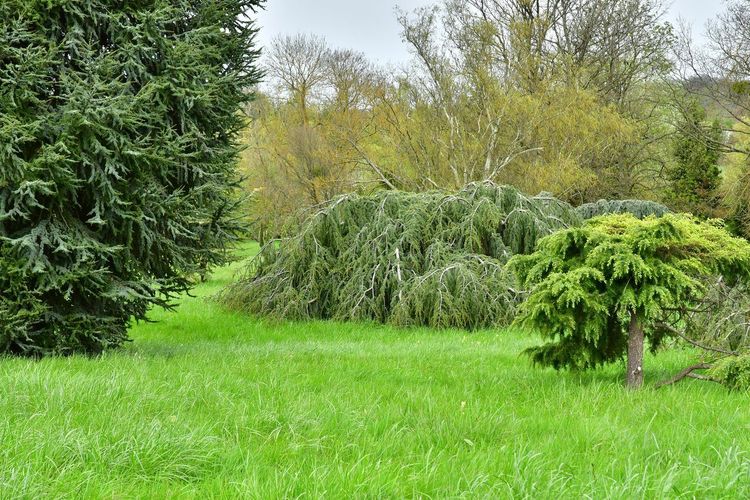
The Arboretum de Lisieux (Rue de Vimoutiers, 14100 Lisieux, rated 1.5/5 on Google from 4 reviews) brings together more than 200 species of trees and shrubs across nearly 3 hectares, arranged in a thematic collection since the 1990s: Japanese maples, rare conifers, and sequoias planted over a century ago.
Entry is free, and the place remains largely unknown even to the city's own residents. You can picnic on the grass here, unlike most central gardens where it is not permitted. Allow 45 minutes for a full circuit, longer in autumn when the colours of the maples are worth the trip in themselves.
16. Walk Above the Gallo-Roman Baths
Beneath the lawn of the Jardin archéologique de Lisieux (Rue des Boulangers, 14100 Lisieux, rated 3.4/5 on Google from 8 reviews) lie the remains of ancient Gallo-Roman baths, uncovered by successive excavations since the 1960s.
Discreet explanatory panels identify the original rooms: hypocaust, cold plunge pool, changing room. The ensemble remains modest compared to the baths at Bath or Vaison-la-Romaine, but entry is free, and you will rarely find more than two or three other visitors there at the same time.
17. Pray at the Chapelle Notre-Dame du Sourire
Integrated into the Buissonnets complex, the Chapelle Notre-Dame du Sourire (Avenue Sainte-Thérèse, 14100 Lisieux, rated 4.3/5 on Google from 3 reviews) is dedicated to the memory of the statue before which Thérèse, as a sick child, claimed to have seen the Virgin Mary smile — an episode she recounts herself in her autobiography.
The venerated statue is today kept at the Carmel, where the relic rested after the healing of 1883. The space, small and silent, contrasts with the grandeur of the neighbouring basilica. Give it five minutes: few hurried visitors stop here, making it one of the most peaceful spots on the site.
18. Glimpse the Square Tower of the Institution Frémont
From the Rue Henry Chéron, the square tower of the Institution Frémont (Rue Henry Chéron, 14100 Lisieux) marks one of the rare 19th-century school buildings to have come through the bombings without major damage.
The establishment is still an active private secondary school: you can only see the façade from the street, but it deserves a two-minute photo stop as you walk towards the old town. Its tower, visible from a distance, often serves as a landmark for finding your way on foot to the historic heart of the city.
19. Head Out to the Château de Saint-Germain-de-Livet
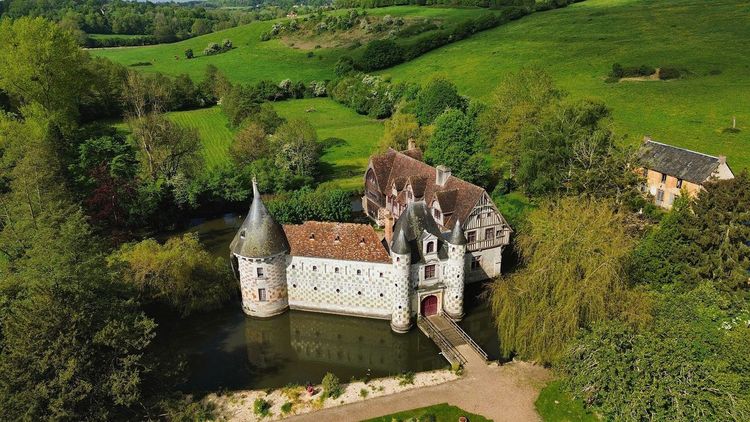
Less than ten minutes by car, the Château de Saint-Germain-de-Livet (Le Bourg, 14100 Saint-Germain-de-Livet, rated 4.5/5 on Google from 884 reviews) combines limestone and chequered pink sandstone — a material combination typical of the Pays d'Auge — across buildings dating from the 15th and 16th centuries.
The interior preserves rare Renaissance wall paintings in Normandy, uncovered beneath several layers of whitewash during a restoration in the 1970s. The park, with its water-filled moat and 16th-century dovecote, can be visited freely outside the château's opening hours.
It is one of the villages around Lisieux most frequently mentioned by locals themselves, more so than by conventional tourist guides. Allow a half-day for a return trip with a full visit, less if you limit yourself to the park and the exterior.
20. Follow the Touques Valley on Foot or by Bike
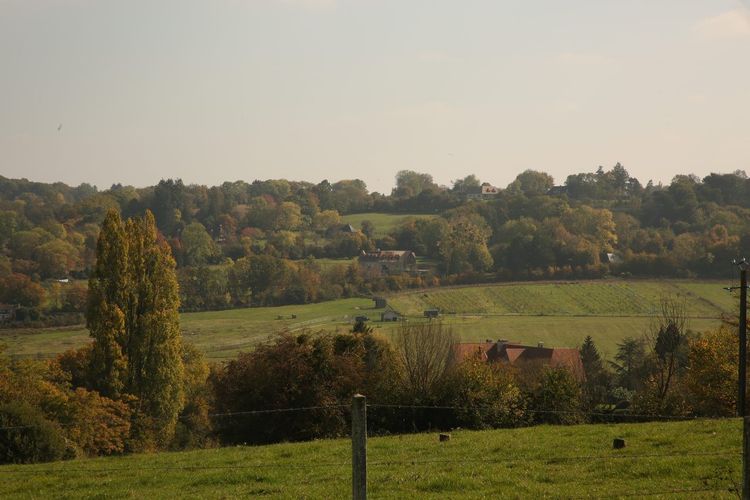
Heading south out of Lisieux, the Touques valley unfolds a classic Norman bocage landscape: damp meadows, rows of apple trees, and half-timbered houses punctuating the hamlets. A greenway laid out on former railway track beds allows you to cycle for several kilometres without encountering a single car.
If the weather turns, the area remains accessible: the gravelled paths handle Norman rain well, unlike the earth tracks that quickly turn to mud. It also provides a concrete answer to the question of what to do in Lisieux when it rains, provided you wear appropriate footwear.
Allow an hour for a short loop starting from the town centre, or a half-day if you push as far as the first cider orchards, where some producers open their doors without an appointment during the harvest season.

FAQ
How much time should you allow to visit Lisieux?
Allow a full day to cover the major religious sites (the basilica, the Buissonnets, the Carmel) and the old town. If you want to include nearby villages like Saint-Germain-de-Livet or the Chocolaterie Mérimée, plan for a two-day weekend to avoid rushing.
What can you do in Lisieux in one day?
Prioritize the Basilique Sainte-Thérèse in the morning, before the coach crowds arrive, then the Maison des Buissonnets and the Carmel late morning. In the afternoon, head to the cathedral, the Jardin de l'Évêché, and take a stroll through the old town. The Ryo audio guide can accompany you step by step if you prefer not to plan ahead.
What can you do in Lisieux this weekend?
A weekend allows you to add the immediate surroundings: the Château de Saint-Germain-de-Livet, the Arboretum, and even the Chocolaterie Mérimée in Vimoutiers. Save Saturday morning for the covered market, which is livelier than on weekdays.
What can you do in Lisieux when it rains?
The museums (Art and History, the Sainte-Thérèse wax museum), the Espace Saint-Jacques, and the interiors of the basilica and cathedral are accessible in any weather. The greenway along the Touques, on a gravelled path, remains usable even after a shower.
Which villages should you visit around Lisieux?
Saint-Germain-de-Livet, with its chequered château, is among the must-sees less than ten minutes away. The surrounding Pays d'Auge also has several typical half-timbered villages, reachable by car in under twenty minutes from the town centre.
Where can you park in Lisieux?
The town centre has several paid car parks, notably near the train station and close to the basilica, with more limited free zones on the immediate outskirts. During pilgrimage season, arrive early: spots near the basilica fill up by 9:30 a.m.
Is Lisieux worth a visit outside of pilgrimage season?
Yes: the old town, the museums, and the surrounding area (Pays d'Auge, Touques valley) are enough to fill a day with no particular religious intent. That said, the city remains strongly marked by its identity as a shrine, which is visible in its shops and hotels.
Lisieux resists being summed up in a single image. The pilgrimage city, with its basilica visible from the valley, coexists with a discreet old town and surroundings that are equally worth the journey. Whether you come for a spiritual visit or simply to discover the Pays d'Auge, the twenty experiences gathered here cover a wide range — from the most photographed monument to the most hidden inner courtyard.
To organise your route without doubling back on the same street, the Ryo app offers an audio guide that comments on the city's main sites as you walk, with no booking or fixed timetable required — turning a simple pilgrimage stopover into a full day of Norman discovery.