© Shutterstock
 Votre guide Ryo
Hiking around Deauville: 10 Walking Itineraries for 2026
At low tide, Deauville's beach stretches for nearly two kilometres of fine sand, and all it takes is turning your back on the boardwalk to understand that the real hiking around Deauville begins where the seaside resort ends. Between fossil cliffs, a 1,300-hectare forest and a chapel perched above the Seine estuary, the Pays d'Auge and the Côte Fleurie offer walking terrain as varied as it is overlooked by mainstream guides. This is not Étretat, but the Vaches Noires cliffs hide ammonites 160 million years old less than an hour's walk from the casino. This is not the forêt de Fontainebleau either, but the forêt de Saint-Gatien-des-Bois has more waymarked trails than most visitors imagine. This article details ten itineraries accessible from Deauville, from the coastal path towards Trouville and Villers-sur-Mer to short loops around the racecourses, with distances, walking times and tidal safety advice. Before lacing up your boots, a stop at the Ryo audio-guided tour of Deauville helps explain why the town was built from scratch from 1860 onwards — context that changes the way you look at every surrounding trail. You will quickly find that each itinerary tells a different story: geology for the Vaches Noires, maritime fervour for Honfleur, dairy bocage for the Touques valley.
The Coastal Path from Deauville to Trouville-sur-Mer
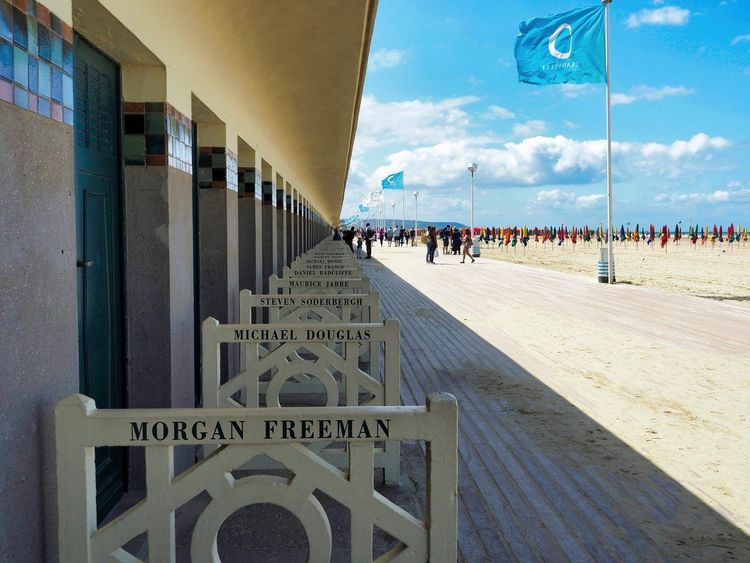
The most natural starting point is the seafront promenade itself. Deauville beach extends for around 2 kilometres of fine sand, lined by the boardwalk and its numbered cabins bearing the names of actors and directors. Built in 1923, they still serve as landmarks for anyone setting off on foot eastwards or westwards from the town.
To reach Trouville-sur-Mer, simply follow the marina as far as the pont des Belges, which spans the mouth of the Touques. The crossing takes less than ten minutes on foot, yet the scenery changes completely: on one side the grand villas of Deauville, on the other the fishermen's houses and the more down-to-earth seafront of Trouville. Ryo also offers an audio guide tracing the rivalry between the two towns, beach by beach — useful for understanding why Parisians long preferred one over the other depending on the decade.
Once across, head for the Trouville market (Rue Amiral de Maigret, 14360 Trouville-sur-Mer, rated 5/5 on Google), open every morning and known for its fishmongers set up right on the pavement for more than a century. Allow half an hour if you are setting out early: the scent of grilled grey shrimps is worth the detour, even in the middle of a walk.
From there, the path continues along the corniche, an elevated track with an unobstructed view over the estuary and, on a clear day, the cliffs of Le Havre in the distance. Allow around 5 kilometres round trip from Deauville — manageable in sandals for the urban section but better in closed shoes past the corniche, where the ground becomes uneven after rain. If you are walking with young children, note that the urban stretch as far as the market is entirely flat and safe, and a turnaround at the pont des Belges already makes for a pleasant one-hour loop, right where Ryo's Seaside Glamour and Timeless Stories audio-guided tour also loops back toward the marina and central Trouville.
Towards Villers-sur-Mer: the Longest Coastal Loop
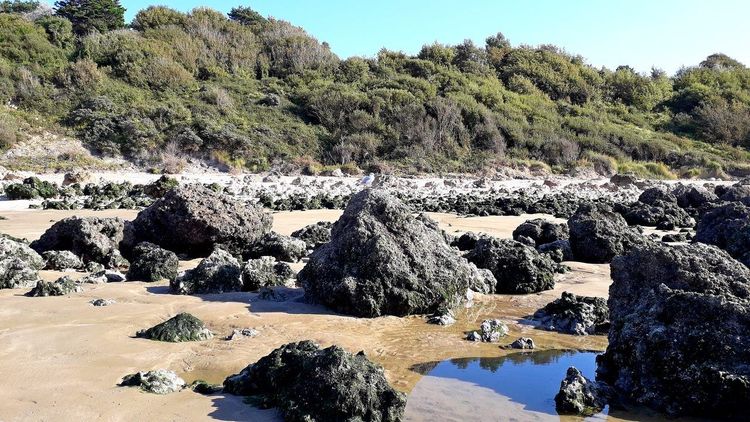
If you have half a day to spare, extend the walk to Villers-sur-Mer. From the Trouville market, the coastal path (waymarked in places with the GR223 blazes) first follows residential streets before rejoining the seafront at the promenade dyke. Allow around 9 kilometres one way from Deauville, roughly 3 hours at a leisurely pace, longer if the tide forces detours around certain sections at the base of the cliff.
The Villers-sur-Mer beach marks a clear change in mood from Deauville and Trouville: fewer villas, more low dunes and families settled in for the day. The sand here is reputed to be even finer, and the village retains a compact centre around its church and 19th-century covered market hall. A detail many visitors miss: the Greenwich meridian crosses the commune, marked by a plaque on the dyke — a fun photo opportunity to look out for along the way.
Before turning back, a stop at Paléospace l'Odyssée (Boulevard du 704e régiment du génie, 14640 Villers-sur-Mer, rated 3.8/5 on Google for 2,942 reviews) is a must for anyone who has spotted fossils along the way without knowing how to identify them. The museum displays skeletons of plesiosaurs and ichthyosaurs found in the nearby cliffs, and its planetarium fills an unexpected rain shower nicely. Admission is charged, but the permanent exhibition puts everything you will encounter on the next trail into context.
Two options for the return: retrace your steps along the coastal path, or catch the bus from the centre of Villers-sur-Mer back to Deauville-Trouville station if your legs are starting to tire. Many walkers underestimate this alternative and end up hitchhiking on the main road after dark — far from ideal with children in tow.
The Vaches Noires Cliffs: Hiking in the Footsteps of Fossils
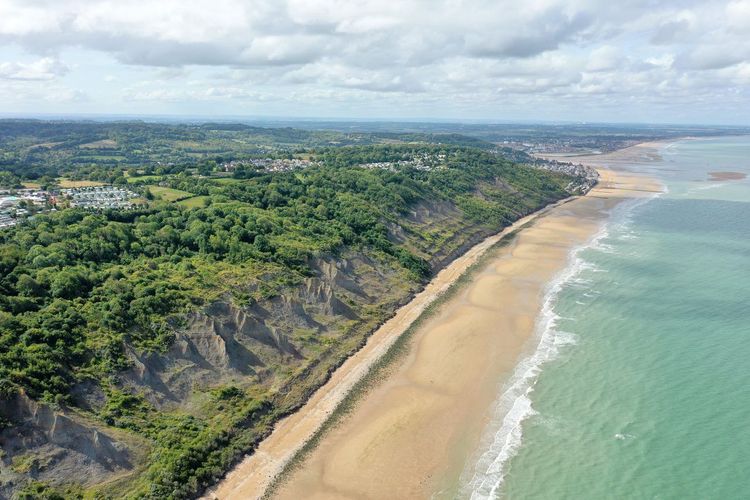
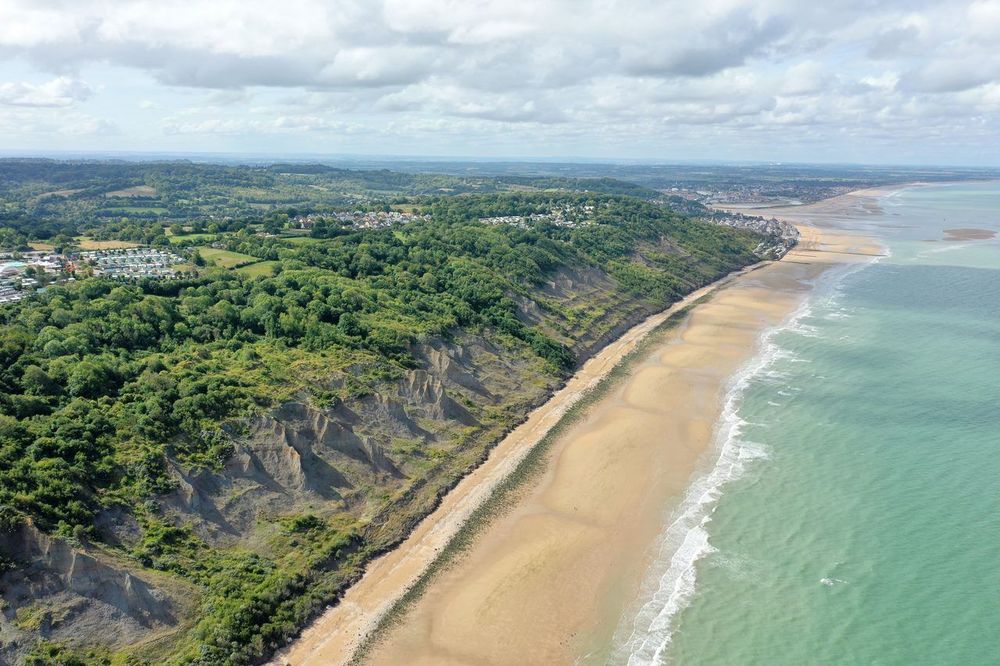
Between Villers-sur-Mer and Houlgate, the Vaches Noires cliffs (Route de la Corniche, 14640 Auberville, rated 4.7/5 on Google for 1.5K reviews) form one of the most spectacular geological sites on the entire Côte Fleurie. Rising in places to around a hundred metres, they owe their name to the blackened clay blocks that, seen from a distance, resemble a herd of cattle stranded on the foreshore. Their ongoing erosion, estimated at several tens of centimetres per year on some sections, regularly exposes ammonites, belemnites and occasionally the bones of large Jurassic marine reptiles.
Walking is done exclusively at the foot of the cliffs, never along the top, and strictly at falling or low tide. This is the single most important safety rule in this entire article: at rising tide, the foreshore can disappear completely within fifteen minutes in certain spots, and sections of cliff collapse without warning, even in fine weather. Check the tide timetable the evening before and plan to turn back at least two hours before high tide.
One practical tip before you set off: note the exact time of high tide on your phone, then set a turnaround alarm accordingly. The accidents recorded here almost never involve cautious walkers, but people who lingered at a particularly rich fossil bank and lost track of time. Bring water, a hat in summer (no shade on the foreshore whatsoever) and thin gloves if you plan to search through the rockfalls.
On the practical side, allow around 6 kilometres round trip if you start from the Auberville car park, more if you continue to Houlgate. The clay ground literally sticks to your soles after rain, which considerably slows your pace. Many walkers come here purely for fossil hunting: picking up specimens already detached on the ground is tolerated, but digging into the cliff face is both forbidden and dangerous.
For those with a deeper interest in palaeontology, the Paléospace in Villers-sur-Mer occasionally runs guided outings on this very site with a geologist who explains how to read the rock strata — an option worth considering if you are travelling with curious children who need a clear purpose to keep walking.
The Forêt de Saint-Gatien-des-Bois: among Oaks and Heather
On the opposite side from the coast, about fifteen minutes' drive south of Deauville, the forêt de Saint-Gatien-des-Bois (14130 Saint-Gatien-des-Bois, rated 3.3/5 on Google for 3 reviews) covers around 1,300 hectares of oak woodland and heathland — a landscape that is fairly unusual in Normandy, where bocage meadows typically dominate. It borders Deauville-Normandie airport, which is why part of the forest remains little visited despite its size.
The waymarked trail network is dense: short loops of 3 to 4 kilometres from the access car parks, as well as longer routes linking several clearings. The sandy soil, left over from ancient geological formations, dries quickly after rain, making this a comfortable alternative on days when the coastal path is too muddy.
In autumn, the ferns carpeting the forest floor turn russet and contrast with the dark green of the centuries-old oaks — a season many local walkers prefer to high summer. Wildlife is discreet but present: roe deer, squirrels and a forest bird population that benefits from the relative quiet of the place compared to the packed beaches of July and August.
If you want a simple reference to avoid getting lost, base your loop on the numbered forest junctions that structure the estate: each main intersection has a marker post, and following a consistent numbering sequence prevents you from going round in circles in areas where the colour waymarks have faded. A water bottle per person is sufficient; no drinking water points are provided inside the forest.
A few mountain-bike enthusiasts share the same tracks as hikers, with no real friction reported so far. That said, stay alert at poorly signed junctions, particularly near sections where several loops converge without a clear directional sign.
For those seeking complete silence, visiting on a weekday rather than a weekend remains the best advice: the forest is attracting growing numbers of families now that local accommodation providers promote it as a cool alternative to the crowded beaches of the Côte Fleurie.
Honfleur via the Bois du Breuil and the Côte de Grâce
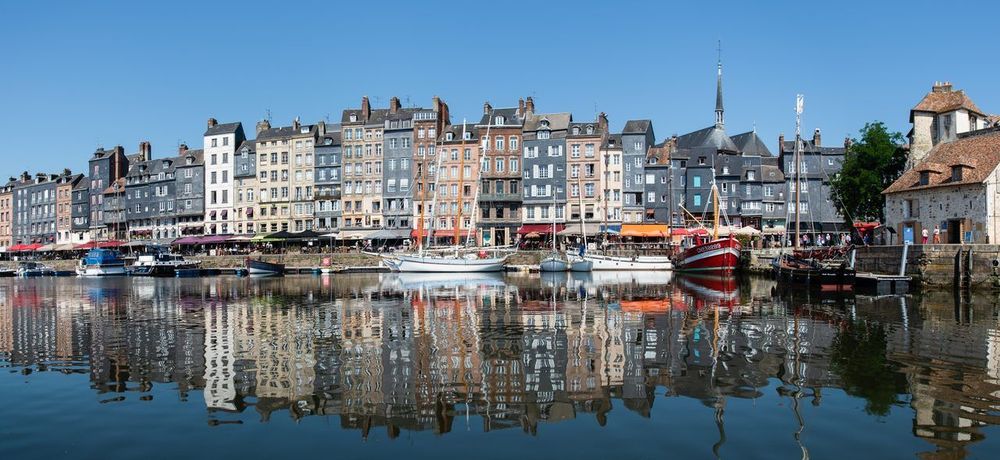
Honfleur is about twenty minutes' drive from Deauville, but reaching it on foot from the coast via the Bois du Breuil transforms the experience of the town entirely. This small municipal forest, which overlooks Honfleur on its eastern flank, conceals shaded paths that open abruptly onto sweeping views over the Seine estuary and the pont de Normandie.
Continuing uphill, you reach the chapelle Notre-Dame-de-Grâce, built at the very beginning of the 17th century on a promontory overlooking the entire Vieux Bassin. For generations, Honfleur sailors have left votive offerings here in the form of model ship replicas, hung beneath the nave vault. The forecourt offers one of the finest panoramas on the whole Côte Fleurie — free of charge and rarely crowded even in peak season.
If you visit at the end of May, ask about the fête des marins, one of the oldest local traditions, during which a procession links the town to the chapel for the blessing of the sea. Outside that event, the tranquillity of the place invites a long pause: a few benches facing the estuary make a perfect spot for lunch before the descent, and a viewing platform slightly below frames the pont de Normandie perfectly for photography enthusiasts.
Descending then to the Vieux Bassin d'Honfleur (Quai Sainte-Catherine, 14600 Honfleur, rated 4.8/5 on Google for 292 reviews) takes around twenty more minutes, along a fairly steep cobbled path that passes through a neighbourhood of half-timbered houses left almost entirely intact since the 16th century. The basin itself, surrounded by narrow slate-fronted façades, remains one of the best-preserved harbours in Normandy and deserves a stop of at least an hour, terrace included.
Allow 10 to 12 kilometres in total for the full Deauville–Honfleur round trip including the Bois du Breuil, making it the longest hike in this selection. Many walkers prefer to split the journey: walk one way, return by bus or taxi from Honfleur. To extend your exploration of the town before or after the walk, our article on the 10 must-sees of the Côte Fleurie covers the other unmissable stops along this stretch of coastline.
Pont-l'Évêque and the Touques Valley
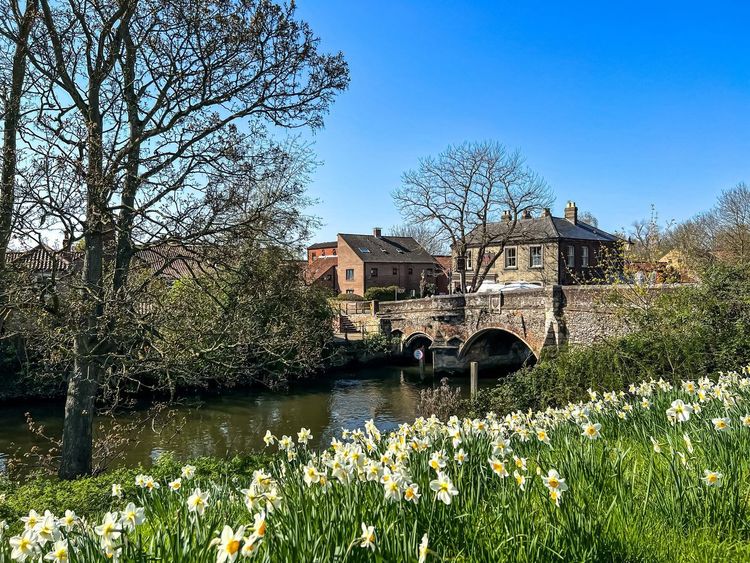
Less well known than the coast, the Touques valley leads straight inland to Pont-l'Évêque, about twelve kilometres south of Deauville. The town owes its fame to its PDO cheese, produced on surrounding farms since the Middle Ages, but its historic centre deserves equal attention.
Badly damaged during the fighting of summer 1944, during the Battle of Normandy, the town has nonetheless retained several clusters of 15th-century timber-framed houses around the église Saint-Michel, whose Flamboyant Gothic tower survived the destruction. The contrast between these vestiges and the post-war built environment gives the town centre a composite character that is quite rare in the region.
The walk itself follows the river Touques along relatively flat towpaths, suitable for families with no significant elevation gain. Allow around 8 kilometres if you set out from an intermediate point such as Saint-Étienne-la-Thillaye rather than directly from Deauville, as the full distance is long for a single day on foot. The route crosses wet meadows where herons and moorhens are commonly spotted, especially in the early morning.
Dairy farmers in the valley occasionally organise open farm visits at the end of the route — an interesting option for those who like to combine hiking with food discovery. The cheese is sold directly at the farm, often cheaper than in a Deauville shop, and the welcome is generally warm even for small passing groups.
The Racecourses and the Countryside around Saint-Arnoult
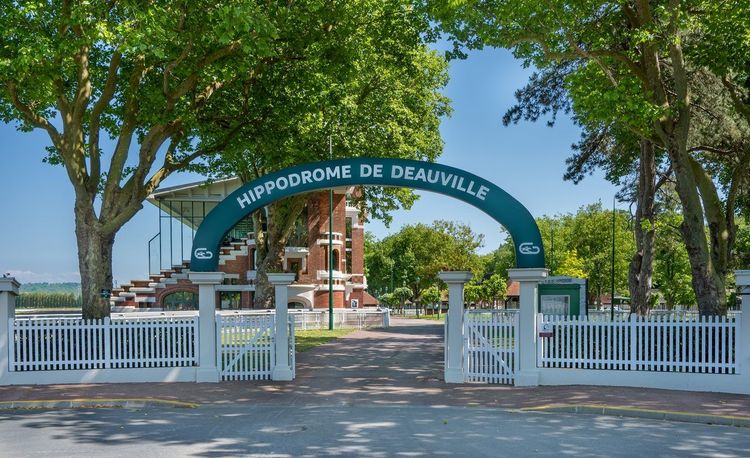
Shorter and more semi-rural, this loop suits days when time is tight. It starts from the hippodrome de Deauville-Clairefontaine (14800 Deauville, rated 4.5/5 on Google for 812 reviews), one of the town's two racecourses alongside the Touques track, surrounded by stud farms and fenced meadows where thoroughbreds graze year-round, even out of racing season.
The path circling the meadows leads to Saint-Arnoult, a small commune known for its Norman manor houses and its golf course, one of the oldest in France, dating back to 1929. The walk follows quiet rural tracks lined with the bocage hedgerows typical of the Pays d'Auge, with regular views of horses being put through their paces.
Allow around 7 kilometres for the full loop, with no significant elevation change, making it accessible even after a day on the beach. The best time is early morning, when the lads are exercising the horses and the raking light over the dew-covered meadows gives the landscape an almost dreamlike quality. In August, during the major yearling sales and the busiest race meetings, the atmosphere changes entirely — it is better to shift the outing to a weekday to regain the usual quiet of the paths.
Blonville-sur-Mer and Bénerville: the Villa Trail
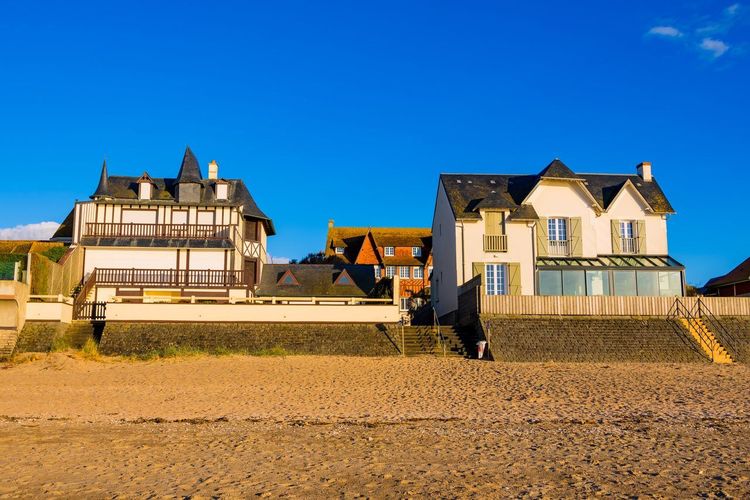
To the west of Deauville, heading in the opposite direction from Trouville, the coastline takes on yet another character. Blonville-sur-Mer and Bénerville-sur-Mer form a string of quieter seaside resorts, known for their Belle Époque villas rather than for a lively nightlife.
The promenade follows the beach along a dyke less busy than Deauville's, with an open view out to sea and, on windy days, kitesurfers making the most of the constant gusts typical of this stretch of coast. Allow around 5 kilometres round trip from Deauville's town centre via the seafront. Continuing as far as mont Canisy, the highest point in the area, rewards you with a 360-degree panorama over the whole bay and the remains of a Second World War gun battery — a short climb as a bonus.
The villas, often in painted wood and adorned with bow windows, can only be visited from the outside, but some still display plaques recording their year of construction — mostly between 1890 and 1910. A way of adding a heritage angle to the walk without any elevation or technical difficulty.
Family Hikes: Short Loops around Deauville
Not all the hikes listed above are necessarily suitable for young children, and several shorter alternatives exist for those who want to walk without turning the day into an expedition.
The parc de la Villa Strassburger (Avenue de la République, 14800 Deauville, rated 4.4/5 on Google for 570 reviews), a former private estate bequeathed to the town, remains the simplest option: its shaded paths are home to free-roaming peacocks, always a hit with the youngest visitors, and a complete circuit of the park covers no more than 2 kilometres.
The boardwalk promenade itself, at 2 kilometres, is entirely pushchair-friendly from start to finish, with enough benches and cafés to break up the effort. It is also the ideal starting point for a first outing before tackling longer itineraries on subsequent days.
For those staying for several days who want to mix walking and sightseeing, our selection of things to do in Deauville and the surrounding area usefully complements this list of hikes with less physical options — handy on rainy days or when tiredness sets in.
Finally, the forêt de Saint-Gatien-des-Bois also offers very short loops, waymarked from the main car parks, with ground stable enough for a child just starting out on longer walks.
Refuelling and Foodie Stops along the Way
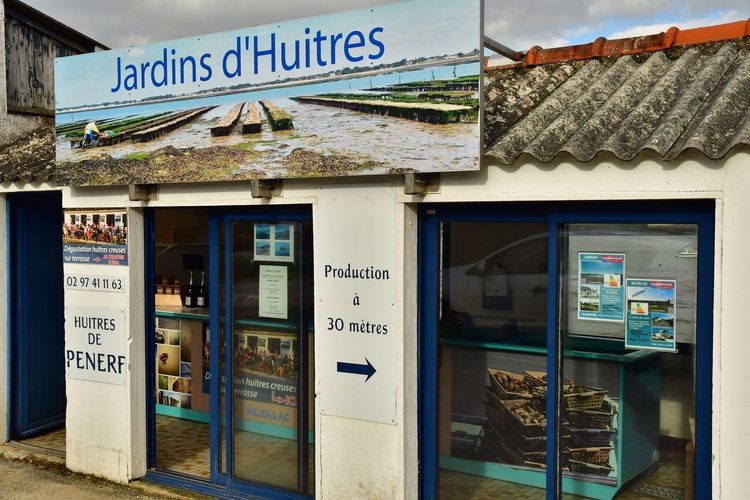
One of the pleasures of hiking around Deauville is that the route almost always crosses a worthwhile place to eat or stock up. On the coast, the oyster shacks in Trouville and the market fishmongers allow for an impromptu iodine-rich break, ideal around midday. Inland, the logic shifts to cheese and cider: the Touques valley concentrates several farms selling pont-l'évêque, livarot and bottles of farmhouse cider direct to the public.
Pack a small cool bag if you plan to bring fresh produce back after a long summer walk, especially between the Pont-l'Évêque farms and your accommodation. Picnic tables are scarce on the coastal paths, so it is worth identifying a seafront bench or a sheltered forest clearing in advance. For a longer break, the Vieux Bassin d'Honfleur and the centre of Villers-sur-Mer offer open terraces for much of the year, including out of season.
Finally, bear in mind that many seaside businesses close early outside July and August: after an autumn hike, aiming to arrive before 6 pm avoids finding shutters down. A well-filled water bottle at the start remains the best insurance — none of the major itineraries described here has a public drinking fountain anywhere along the route.
When to Go: Weather, Tides and Crowds
Spring, between April and June, remains the most comfortable period for hiking on the Côte Fleurie: moderate temperatures, long days and still-reasonable footfall on the coastal paths.
Summer brings its share of constraints, particularly on the coast where beach crowds sometimes spill onto the paths. The Vaches Noires cliffs become busier but also more hazardous, as the temptation to linger despite a rising tide is stronger in warm weather.
Autumn, often underrated, delivers particularly photogenic light in the forêt de Saint-Gatien-des-Bois and a welcome calm across all the trails. Winter remains viable but calls for greater care on the muddy inland paths, especially around Pont-l'Évêque. One often-forgotten point: the westerly wind, biting from November to February, adds noticeably to the perceived effort on exposed dyke sections — bring a windproof layer even under clear skies.
Gear, Maps and Trail Safety
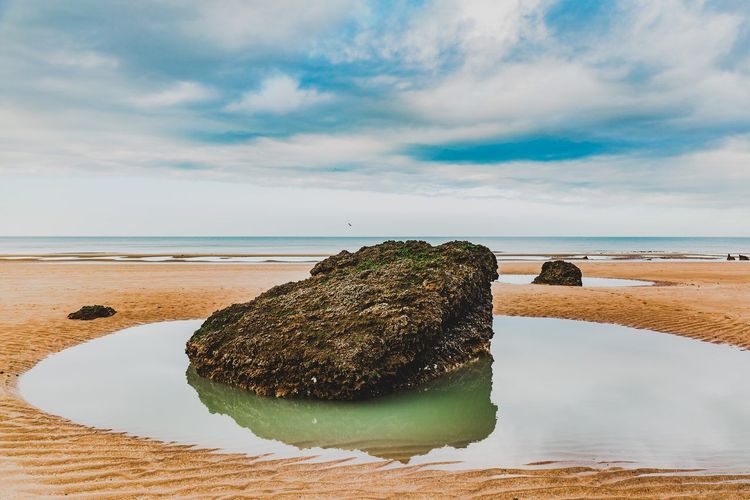
Closed walking shoes are sufficient for most of these itineraries, with the exception of the Vaches Noires where a good grip really makes a difference on wet clay. Also bring a tide timetable — available from the tourist office or via a dedicated app — which is essential for anything that follows the cliff line.
The tourist offices in Deauville and Trouville distribute free trail booklets detailing the coastal path sections with walking times per stage. These provide a reliable basis, to be supplemented by an IGN 1:25,000 map for forest itineraries where waymarking becomes less frequent.
If you are extending your stay over several days combining hiking and urban exploration, the Ryo app also helps you plan a visit to the town itself — beaches, Anglo-Norman villas and the casino — as a complement to the more rural trails. For accommodation, our guide to the best budget hotels in Deauville helps organise a multi-day stay without blowing the budget — a question that quickly comes up when you are chaining together several full-day hikes.
Finally, always keep a fallback route in mind on exposed paths, common throughout the Côte Fleurie. Gusts can pick up rapidly, particularly in autumn, and make ridge walking considerably less pleasant than the morning forecast suggested.



FAQ
What is the most beautiful hike around Deauville?
The coastal path between Trouville and Villers-sur-Mer offers the greatest variety of contrasts in a single outing: beaches, a cliff-top road, cliffs in the background, and arrival at a quieter village. For a different panorama, the climb through the Bois du Breuil to the chapelle Notre-Dame-de-Grâce above Honfleur remains the most spectacular option, with views over the Seine estuary.
How long does it take to walk from Deauville to Villers-sur-Mer?
Allow around 3 hours for the 9 kilometres separating Deauville from Villers-sur-Mer along the coastal path, a little longer if the tide forces occasional detours. Budget double for the round trip in a single day, with a proper lunch break in Villers-sur-Mer in between.
Can you go hiking in Deauville with children?
Yes, several itineraries are well suited: the boardwalk promenade, the parc de la Villa Strassburger with its peacocks, or the short waymarked loops in the forêt de Saint-Gatien-des-Bois. Avoid the Vaches Noires cliffs with very young children, however, as the unstable terrain and tidal timetables make supervision considerably more complex.
Where can you park to hike around Deauville?
The seafront car parks in Deauville and Trouville are paid during high season but free for much of the year. For the Vaches Noires, a car park can be found on the Auberville side, and for the forêt de Saint-Gatien-des-Bois, several entrances have their own free parking areas at the forest edge.
What is the best season to hike around Deauville?
Spring and early autumn offer the best balance between mild weather and low footfall on the coastal paths. Summer remains viable but requires more patience on the busiest stretches, particularly near the Vaches Noires.
Is the Vaches Noires path accessible at high tide?
No, or only very partially. The foreshore disappears almost entirely at high tide on several sections, and the risk of cliff collapse increases with humidity. It is essential to check the tide timetable before setting out and to plan your outing for a falling or low tide.
Are there easy hikes accessible by public transport from Deauville?
Yes. The bus linking Deauville to Villers-sur-Mer and Honfleur makes it possible to shorten certain itineraries by walking in one direction only, or to reach a starting point directly without setting out from the Deauville-Trouville station. It is a practical solution for families or on days when fatigue sets in before the end of the route.
Between fossil cliffs, silent forest and small Norman harbours, hiking around Deauville goes far beyond the image of a chic seaside resort the town projects at first glance. Each itinerary deserves to be adapted to the tide, the season and the fitness level of the group rather than followed to the letter, and there is nothing to stop you combining a morning on the paths with a quieter afternoon in town.
To round off these outings with a more urban reading of the destination, the Ryo audio-guided tour of Deauville puts beaches, villas and the casino into perspective — a natural way to close the loop after several days spent on the surrounding trails.