Créé par Emilie, le 17 nov. 2026
Votre guide Ryo
Deauville, France
Seaside Glamour and Timeless Stories
Parcours audioguidé pour visiter Deauville en 1 jour
Elegant and iconic, Deauville embodies Normandy’s seaside chic with its refined villas, seafront promenade, and strong ties to cinema. Founded in the 19th century, the town stylishly blends heritage, horses, beaches, and a distinct art of living.
Quand partir à Deauville ?
Jan.
6°
11
Feb.
6°
9
March
8°
10
April
10°
9
May
13°
9
June
16°
8
July
18°
7
Aug.
18°
7
Sept.
16°
8
Oct.
9°
11
Nov.
9°
11
Dec.
7°
11
The climate in Deauville is oceanic, with cool but generally moderate winters, ranging from 4 to 10°C, and mild summers, most often between 18 and 24°C, with possible variations due to winds from the English Channel; the best times to visit are typically from April to June and then from September to October, when temperatures are pleasant, the light is often beautiful over the beach and the boardwalk, and visitor numbers are lower, allowing you to fully enjoy the resort in a calmer atmosphere than at the height of summer.
Départ conseillé
We design our tours as loops so you can easily begin at the point closest to you, the navigation will automatically adjust. If you’re nearby, we suggest an ideal starting point: Place Morny.
Parking à proximité
Marché Parking — Rue Breney (city center)
In Deauville, during the summer, street parking near the town center or the beach fills up quickly and is often paid: arrive early, watch the signs carefully, and be prepared to walk a bit from less busy streets. In the off-season, many streets in the town center and residential areas become free, but some zones remain paid all year — always check the signs.
Découvrez 20 lieux d'intérêt pour visiter Deauville







What to see in Deauville on your 2h tour?
This 5 km loop takes about 2 hours and links 19 sights in Deauville. From Place Morny, the walk runs past the grand hotels and the casino, follows the Promenade des Planches to the villa district and the racecourse, then drops down to the marina and the Touques river, with a detour into Trouville before returning via the market square. With the Ryo app in your ears, every hotel and façade tells the story of cinema, horses and seaside elegance.
Information checked in November 2026 and subject to change.
1 - Place Morny
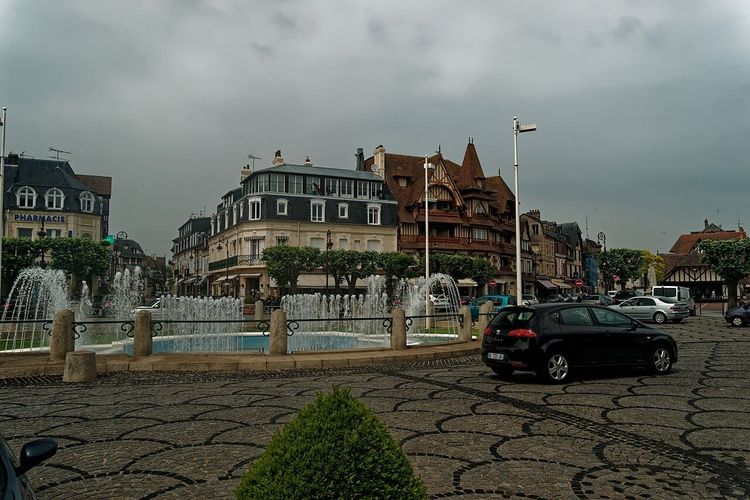
This star-shaped square, where eight streets meet, was designed by architect Breney in 1859 on land that was then nothing but dunes and marshland. It symbolically links the station, the beach, the racecourse and the casino, acting as the compass of the newborn town. Reshaped several times over the decades, it has held a garden, a market and various fountains. Its grid layout gives Deauville the distinctive look that sets it apart among seaside resorts.
Free entry
2 - Deauville Town Hall
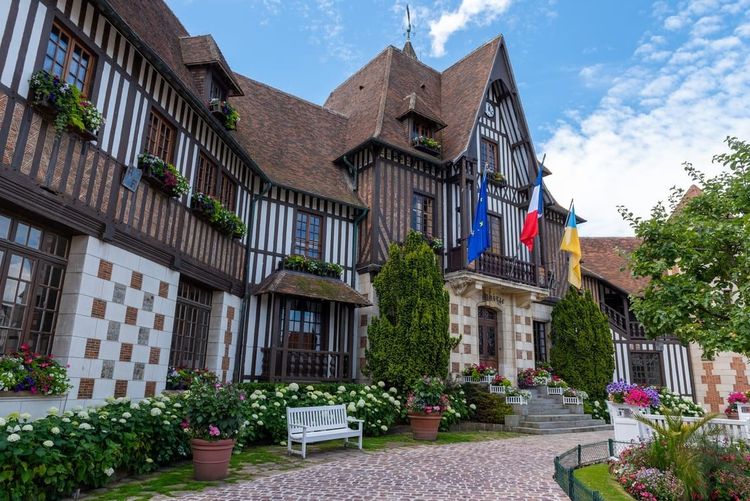
Before this building, the town hall stood on the hill, near the old church, destroyed by fire in 1840. It took until 1879 for a proper town hall to be built, first in red brick, then redesigned after the Second World War in a half-timbered Norman style. Its grand staircase is among the protected features, and its twelve-bell carillon once even chimed a tune from a film shot on the nearby beach.
Free to see from outside
3 - Hôtel Normandy Barrière
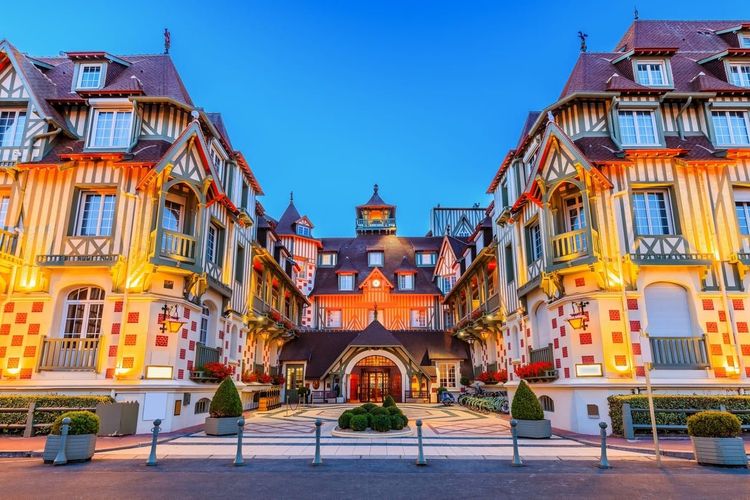
Opened in 1912, this palace shaped like a Norman manor, with its inner courtyard planted with apple trees, was designed to complement the casino next door, built by the same entrepreneur. The following year, a young hat-maker nicknamed Coco opened her first boutique under its arcades. An indoor corridor still links the hotel to the casino, and its lounges served as the backdrop for a film awarded in Cannes in 1966, which later lent its name to one of the suites.
Free to see from outside
4 - Deauville Casino
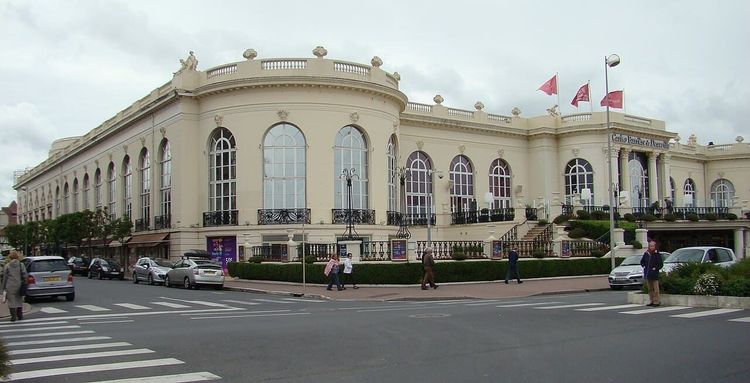
French law since the 19th century reserves casinos for spa and seaside towns: Deauville's opened as early as 1864, long before the current building, designed in 1912 by an architect inspired by the Grand Trianon. Its opening gathered fifteen hundred guests the same summer as the hotel next door, both born from the same entrepreneurial vision. Beyond the gaming tables, it houses reception rooms that host the American film festival every year.
Free to see from outside
5 - Deauville American Film Festival
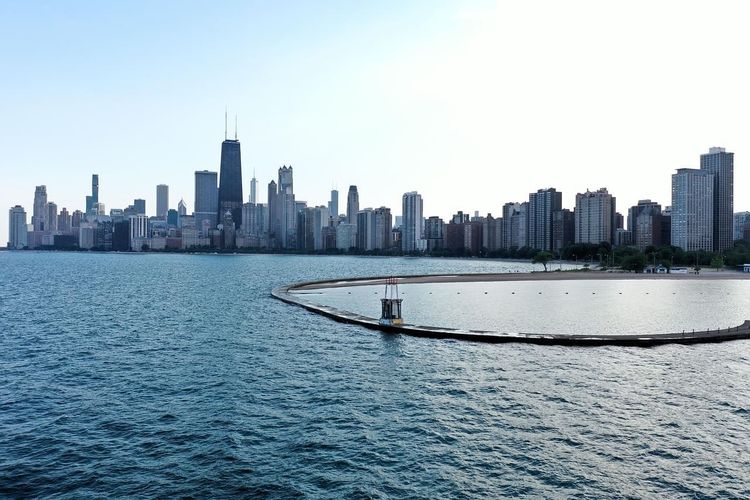
This large building, half buried in the sand to preserve the view of the sea, required moving considerable amounts of material during its construction in the late 1980s. It has hosted, since 1975, a festival founded by two journalists to open a window onto American cinema. Unlike other major film events, screenings here are open to any spectator holding a ticket.
Free to see from outside
6 - Promenade des planches
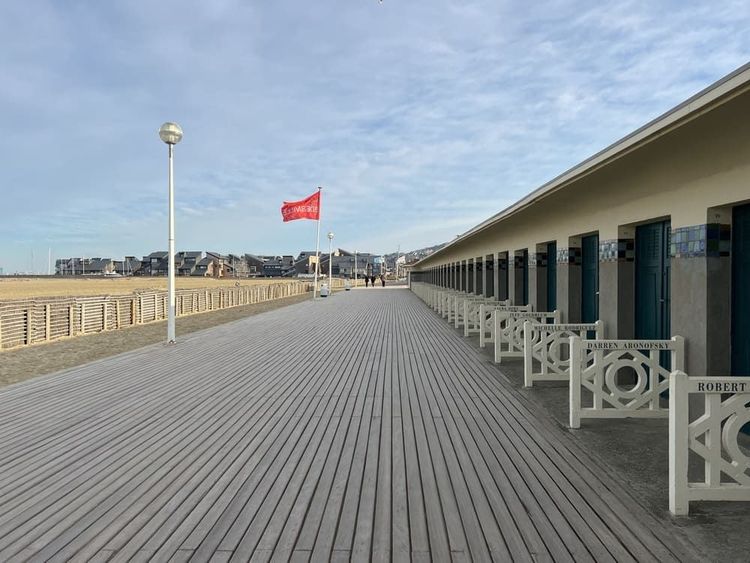
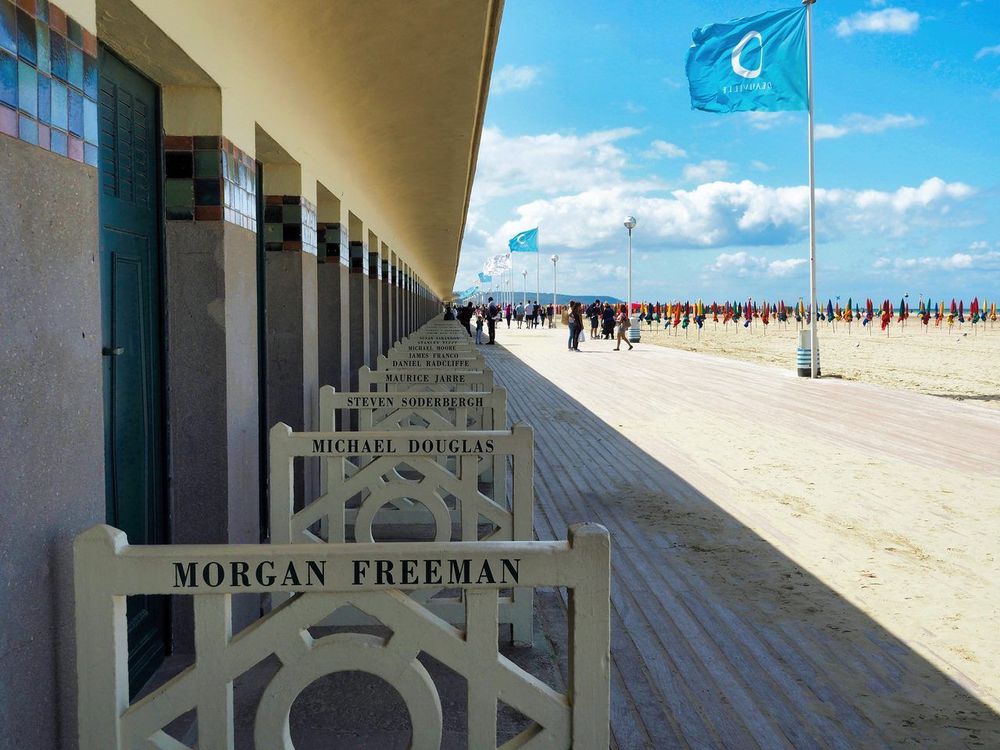
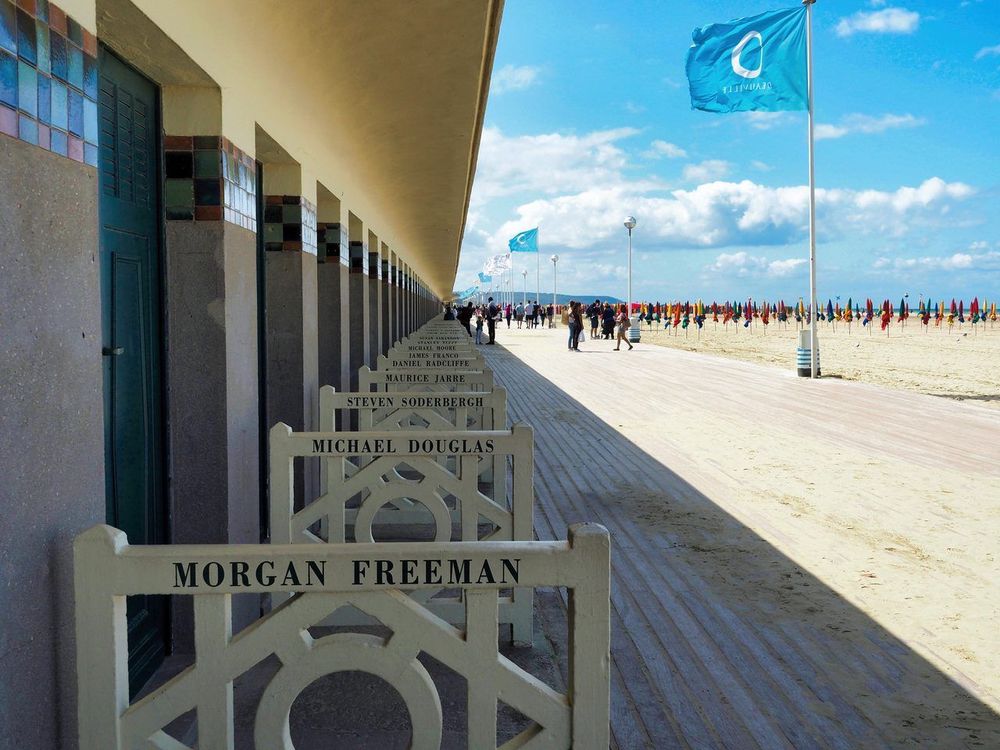
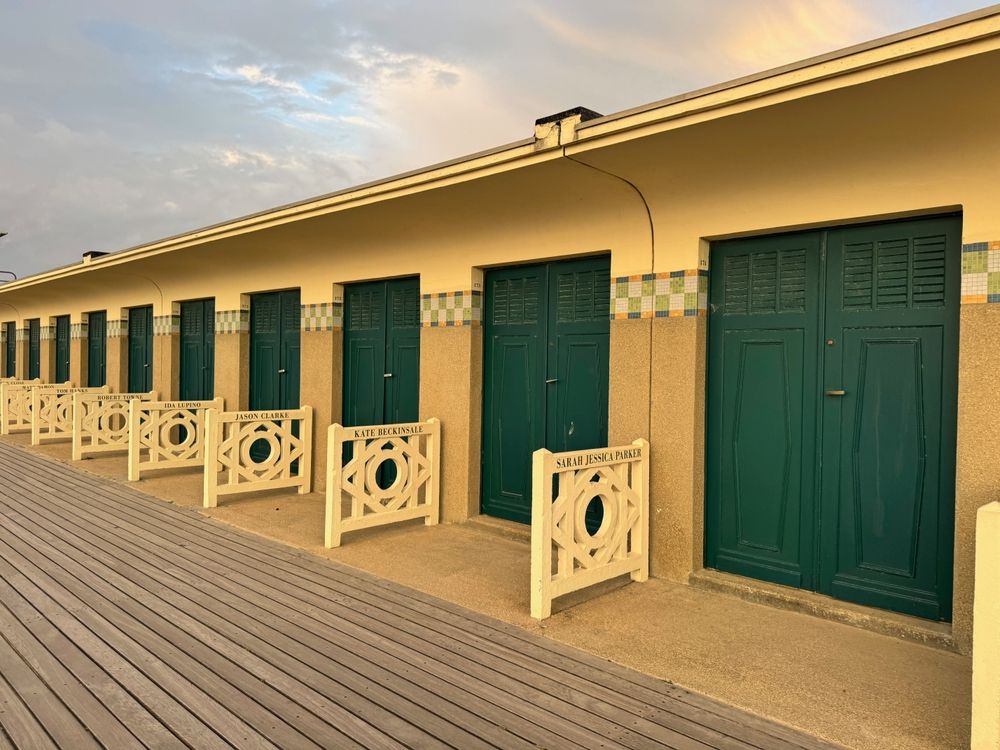
In place of simple wooden cabins lined up on the sand, the town opened an Art Deco bathing establishment in 1923, together with a boardwalk made of tropical wood able to withstand sea spray, first stretching a few hundred metres before growing far beyond that today. Its openwork concrete railings carry the names of film stars who attended the cinema festival, while its parasols, limited to just a handful of colours, have become an emblematic image. A scene from a film shot here in the 1960s changed its fate forever.
Free entry · Best in the evening
7 - Hôtel Royal-Barrière
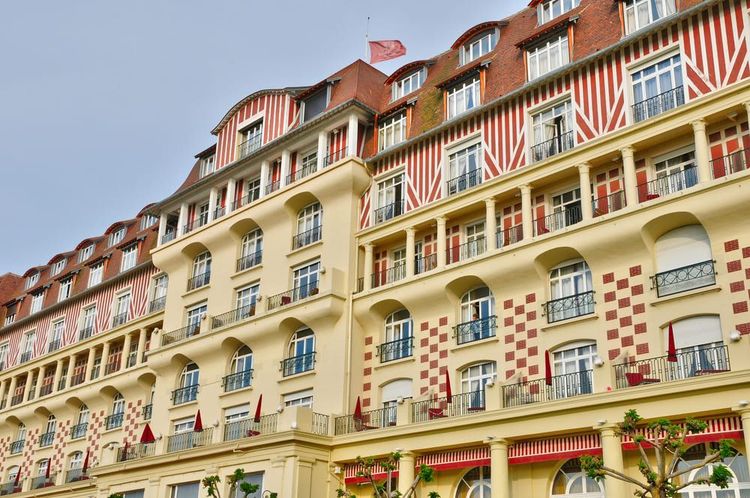
Built in record time and opened in 1913, this second palace answered the immediate success of its neighbour, which had opened the year before. Standing on the site of a former villa that once belonged to the town's founder, it boasts a vast façade facing the ocean. Every September, its rooms and lounges turn into the headquarters for guests from the film world during the festival, confirming its role as a stage for high society.
Free to see from outside
8 - Villa District
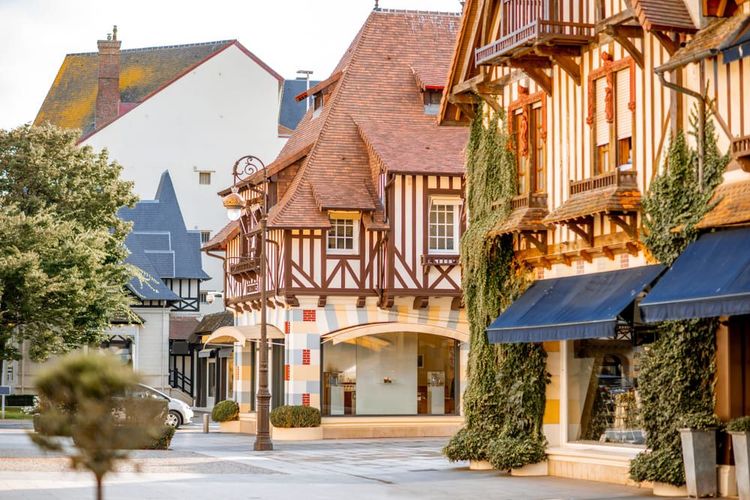
This area was set aside from the start for second homes built for Parisian aristocrats and the bourgeoisie who came to enjoy sea bathing. The houses mix typical half-timbering with Art Nouveau or Art Deco touches depending on when each was built. One of the most striking, raised for a baron in 1912 and later bought by an American industrialist keen on horse racing, can now be visited as a listed monument. Another story here links the district to early motoring and an expedition across Asia.
Free to see from outside
9 - Les Franciscaines
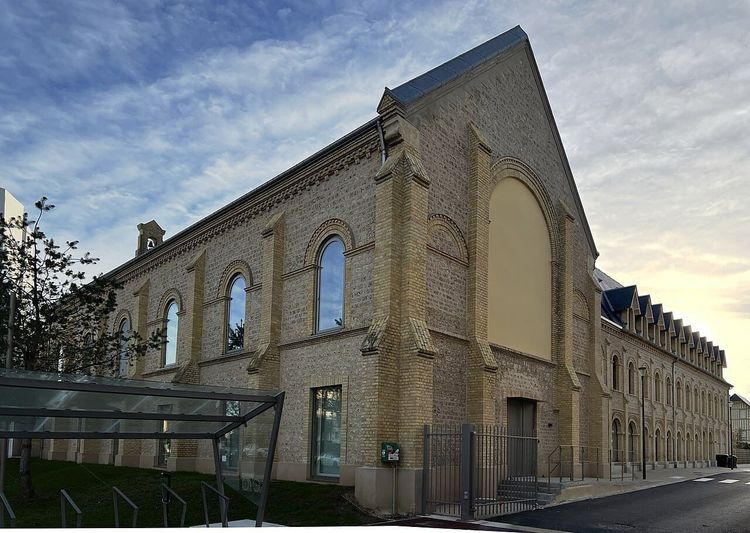
Built in 1876 as a convent, this building later served in turn as an orphanage, a military hospital and a school, before closing in 2012. Reshaped by an architect who kept its cloister while adding contemporary spaces, it reopened in 2021 as a major Norman cultural venue, built around five themes that sum up local identity: horses, cinema, photography, live performance and the art of living. Its cloister remains freely open to all.
Paid entry (about €8)
10 - Saint-Augustin Church
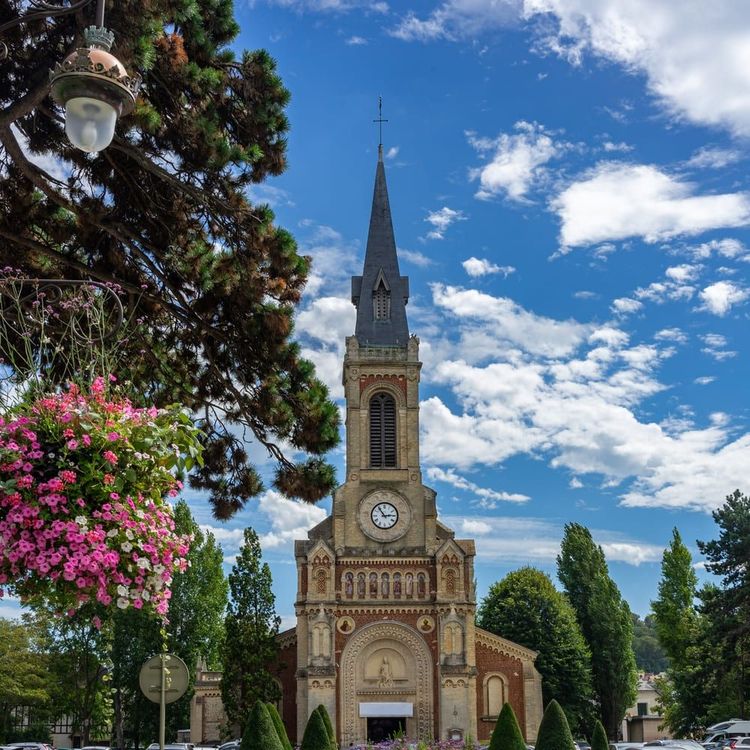
Built to replace an older parish deemed too remote, this church had its first stone laid in 1864 by the town's founder, just days after the first horse races, proof that the young resort also wanted its places of reflection. Consecrated the following year, it bears his middle name and blends Romanesque and Gothic influences in its bell tower. Its stained glass, enriched over time, recalls among other things the ceremony of its founding.
Free entry
11 - Deauville Racecourse
On this once-drained marshland, the earliest major races of the young resort were already being run by mid-August 1864. Every summer, a big meeting draws the finest horses and their owners for several weeks of prestigious competition, in an atmosphere mixing elegance and adrenaline. Modernised tracks now allow racing even in the rain, and night meetings are held under floodlights. A whole horse-related economy, from stables to young-horse auctions, revolves around this place.
Paid entry (about €5)
12 - Cryptogram and Trophies
This bronze column, given to the town in 2012 by a sculptor born in Deauville and named a few years earlier among the most promising young talents, carries universal words engraved on every face, evoking peace and the town's cultural calling. The same artist drew on it in 2017 to create the trophies awarded to winners of the film festival, then a second trophy echoing the openwork railings of the nearby boardwalk.
Free entry
13 - The Marina
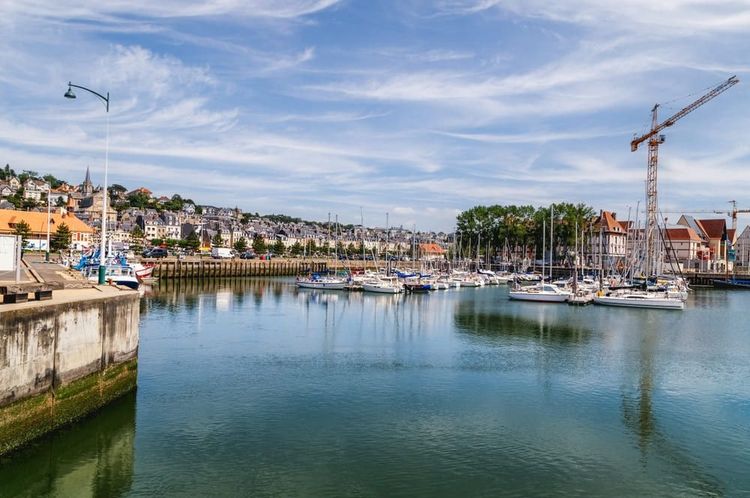
This basin already welcomed the sailing boats of the earliest holidaymakers who travelled by train from the capital in the 19th century. Extended in the 1970s by a large harbour built further along, the whole area can now hold close to a thousand boats, offering a constant display of masts and reflections on the water. The buildings set right along the pontoons give the newer section the look of a small Norman Venice. Regattas and crossings to the neighbouring town regularly enliven these quays, now recognised for their environmental quality.
Free entry
14 - Coco Chanel
It was here, just behind a grand hotel, that the young hat-maker nicknamed Coco opened her first boutique under her full name in 1913, selling hats and a new look, simple and sporty, unlike the corsets of the era. Watching the striped outfits of local fishermen, she came up with the idea of the sailor top, a piece that became a classic of French style. The venture was made possible by the financial backing of the man she loved. A plaque now marks the address.
Free entry
15 - Pont des Belges
This bridge links the town to its neighbour across the river that separates them, but its name mostly recalls an episode from the 1944 liberation. Soldiers from a neighbouring country crossed the waterway here under enemy fire, after the earlier bridge had been destroyed, and several of them lost their lives there. The bridge raised afterwards carries their name as a tribute, and a discreet memorial at its centre still recalls this chapter of history.
Free entry
16 - Trouville
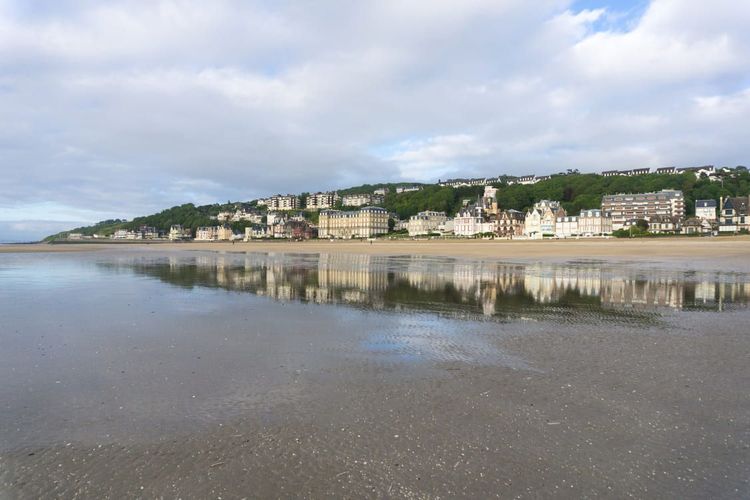
Across the river lies the elder of the two resorts, already known as a fishing harbour and a seaside destination before its neighbour even existed. Impressionist painters once set up their easels here, and Parisian high society visited from the mid-19th century onward. Today one comes for its lively quays, its fish market, its sloping lanes and a museum set in a villa overlooking the bay. A real complement to a visit on the more fashionable side of the river.
Free entry
17 - Deauville Belvedere
These two recently built towers, striped black and white, mark the entrance to the harbour peninsula: one houses the harbour master's office, the other can be climbed, by stairs or lift, to enjoy a sweeping view over both resorts, the sea and the surrounding countryside. Access to the top comes at a price, but the panorama is well worth it. Nearby, the lifting bridge rises several times each day to let vessels pass, offering a small spectacle to anyone willing to wait a few minutes.
Free entry · Best in the evening
18 - Market Square
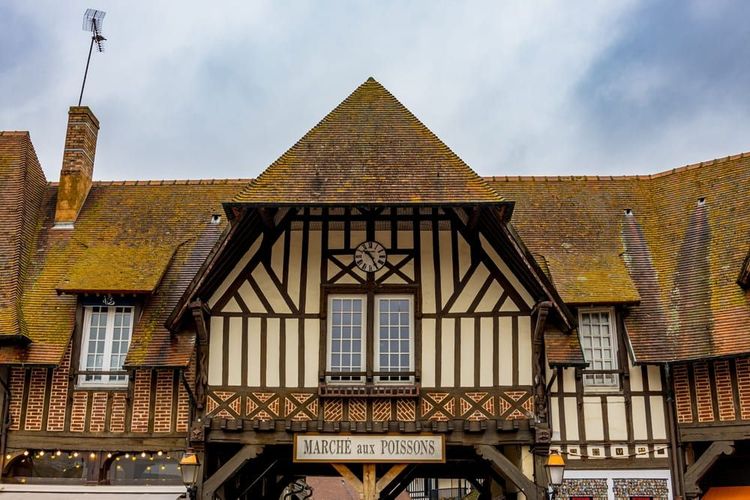
Two half-timbered market halls, built in 1923 by a local architect, give this square the look of an open-air covered market. Here one finds the region's great cheeses, from raw-milk Camembert to heart-shaped Neufchâtel, alongside butter and cream famed from a nearby town. The apple also reigns supreme, in the form of cider, pear cider or brandy, while those with a sweet tooth can try a spiced rice pudding or a generous brioche.
Free entry
19 - Charles Auguste de Morny
Half-brother of Napoleon III, this businessman invested in 1859, together with three partners, in hundreds of hectares of marshland to build a resort from scratch aimed at high society. A first statue, unveiled in 1867, was removed after the fall of the Empire and later melted down during the Second World War. It took until 1955 for a new monument, this time in stone, to honour him in the presence of a noted academic.
Free entry
What to do in Deauville in 2 or 3 days?
The audio-guided walk links 19 stops in a 5 km loop lasting about 2 hours, from Place Morny to the banks of the Touques. With 2 or 3 days to spare, Deauville is also worth exploring through its beach, the hills of the Pays d'Auge and its neighbour just across the bridge.
The next day, head up the hillside to Villa Strassburger, a Norman-revival mansion built for Baron Henri de Rothschild, mentioned on the walk but not visited, and open for guided tours from June to September. Golf fans can head to the Barrière course at Mont Canisy before renting a bike to reach the Presqu'île at a different pace. If you are leaving the following evening, our weekend in Deauville itinerary helps you make the most of it.
On the third day, cross Pont des Belges (stop 15) to actually step into Trouville, which the walk only looks at from the other bank (stop 16): stroll along its lively quays, carry on to the fish market or climb to the Villa Montebello belvedere, now a museum of seaside history. To go further, our guide to visiting Deauville in 3 days adds a calvados distillery, as well as the town where Marcel Proust imagined Balbec.
Which neighbourhoods does the tour cross?
In one loop, the walk links Deauville's historic centre to the eastern edge of town, taking in grand hotels, the racecourse and the banks of the Touques.
It starts at Place Morny, laid out as a star by the architect Breney to serve the future resort, passes the Town Hall and the Hôtel Normandy Barrière, then reaches the Casino and the International Centre, whose halls host the Deauville American Film Festival every year (stops 1 to 5). The route then joins the Promenade des Planches and the Hôtel Royal-Barrière, the town's other grand hotel (stops 6 and 7).
The walk then leaves the seafront for the Villa District, which the Duke of Morny set aside for holiday homes from the outset, all half-timbered façades and chequered brick, before passing Les Franciscaines, Saint-Augustin Church and the racecourse (stops 8 to 11).
The final stretch reaches the Marina past the Cryptogram and Trophies sculpture, passes Place Gabrielle-Chanel and pauses at Pont des Belges, facing Trouville, the sister town on the far bank, without crossing the Touques. It then skirts the belvedere and Market Square before returning almost to its starting point (stops 12 to 19).
How much does it cost to visit Deauville?
Of the 19 stops on the walk, 17 cost nothing: 11 can be visited freely, from Place Morny to the statue of the Duke of Morny, and 6 others, such as the Hôtel Normandy Barrière or the Casino, can be admired from the street. The other 2 have a paid side:
- Les Franciscaines, where the cloister and common areas are free, but the historic building tour costs €8 and temporary exhibitions €13 (€16 with a guided tour, free under 16);
- the racecourse, €5 entry on a race day, with the grounds closed when no meeting is scheduled.
At the belvedere (stop 17), climbing to the top of the tower is optional and also paid, but rewards you with a panorama over Deauville, Trouville and the sea.
Information checked in November 2026 and subject to change.
Where to stop for a bite along the tour?
The walk itself stops at the town's culinary meeting point, under the half-timbered market halls of Market Square (stop 18).
Designed by the architect Georges Madeline, these covered halls date from 1923 and bring together the great cheeses of Normandy: raw-milk camembert, soft pont-l'évêque, strong livarot and heart-shaped neufchâtel. You can also taste cider and calvados from the Pays d'Auge; on the sweet side, fallue is a generously risen brioche, teurgoule mixes rice pudding with cinnamon, and Isigny caramels round things off.
In high season, the market even spills out of the halls, with extra stands in the adjoining streets; our pick of things to do in Deauville and around explains how to put together a picnic there before heading for the beach.
What to do in Deauville with children?
Deauville works well for a family outing, especially on the half of the walk closest to the sand.
The Promenade des Planches (stop 6) runs alongside nearly 2 km of fine sand; first-aid posts and kids' clubs are covered in our guide to Deauville beach.
With young children, you can also cross Pont des Belges (stop 15) and walk on to the Trouville fish market, on the far bank of the Touques: this urban stretch stays completely flat and safe.
What should you know before visiting Deauville?
It is worth planning your day ahead, since Deauville runs on its own seasons and opening times.
In summer, spaces near the centre or the beach, often paid, fill up fast: arrive early, even if it means walking a little from quieter streets. Out of season, many streets in the centre become free, though some zones stay paid all year round. The Marché car park, on Rue Breney, is in the town centre.
The oceanic climate stays mild, between 4 and 10°C in winter and most often between 18 and 24°C in summer. From April to June and again in September and October, the light is often beautiful on the beach and the Planches, with fewer people than in high summer.
At the Casino, you can step in without playing to admire the hall and the chandeliers, but the gaming tables only open later in the day, from 4 pm on Saturdays and 7 pm the rest of the week; ID is checked at the entrance, and smart dress is required for the traditional gaming rooms. Better to check with the venue beforehand.
What to see around Deauville?
Deauville is a good base for going further, between walks along the coast and nearby towns worth exploring on foot.
The coastal path leads to Villers-sur-Mer: allow about 9 km one way, close to 3 hours of walking, for a more family-friendly beach with fewer villas. Beyond it, between Villers and Houlgate, the Vaches Noires cliffs yield ammonites and belemnites; you walk at their foot, only on a falling or low tide, for about 6 km there and back from the Auberville car park. Full details are in our hiking guide around Deauville.
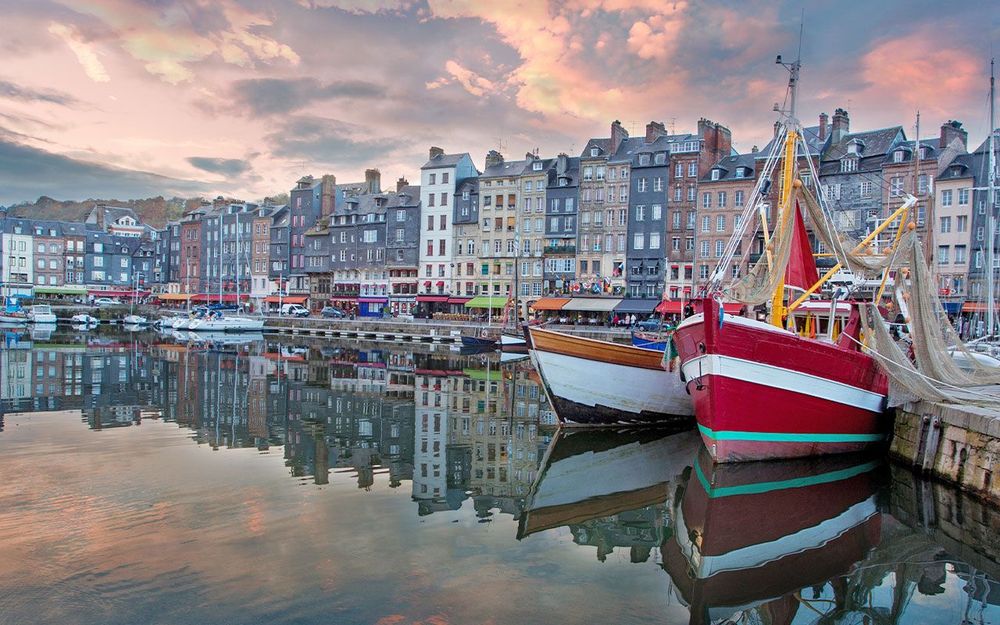
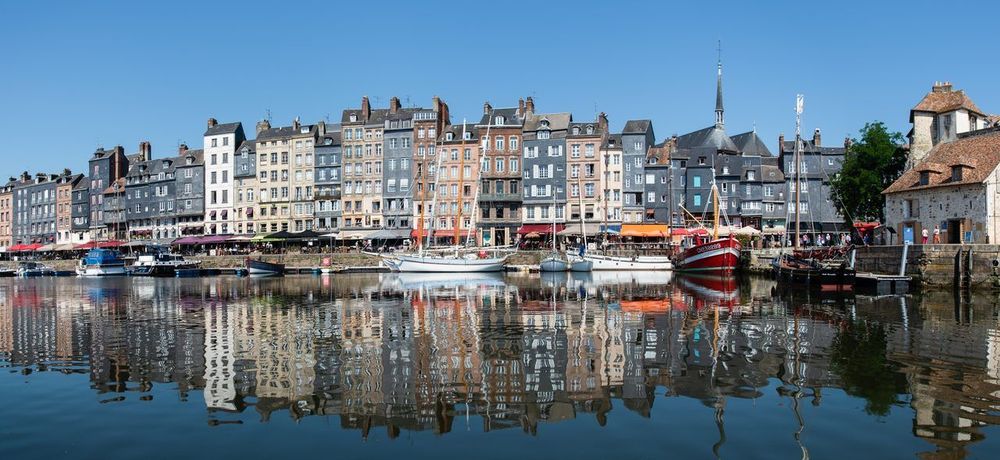
Several Norman towns can also be discovered on foot with an audio guide. Honfleur, 13 km away, charms with its picturesque harbour, cobbled streets and a light that has inspired many artists, while Le Havre, 15 km away, is built around Auguste Perret's concrete architecture.
What's on in Deauville right now?
As the year draws to a close, two events shape life in Deauville.
Until 3 January, the Planches Contact festival continues its 17th edition around the bicentenary of the invention of photography, on the theme "Generations": the exhibitions are ticketed separately at Les Franciscaines, while the outdoor installations can be admired freely on the beaches and around town.
On 24, 25 and 28 November, then on 1 and 2 December, the racecourse hosts flat race meetings, for €5 entry (€3 if booked online in advance).
Information checked in November 2026 and subject to change.
Le plein d'inspirations
Explorez le monde en totale liberté, à pied au cœur des villes ou au fil des routes. Nos guides audios transforment chaque destination en une découverte culturelle immersive et unique.










FAQ for visiting Deauville
When is the best time to visit Deauville?
The months of April to June and then September to October offer ideal conditions for discovering Deauville. During these periods, you'll enjoy pleasant temperatures and beautiful light over the beach and the famous Planches, with more moderate crowds than in high summer. The resort's oceanic climate stays mild, with summers generally between 18 and 24°C. Winter remains accessible with cool but moderate temperatures, often between 4 and 10°C, perfect if you're looking for a more intimate atmosphere. The summer high season draws more visitors but guarantees maximum liveliness, with all the events and establishments open.
How much time do you need to visit Deauville?
A weekend is enough to discover the essentials of Deauville: strolling along the Planches, admiring the Belle Époque villas, exploring the town centre with its elegant boutiques and enjoying the seaside atmosphere. In a full day, you can cover the resort's main emblematic sites. For a fuller immersion including the museums, a session at the casino, a horseback ride or a getaway to the surrounding area, plan for three to four days. This length of time will leave you room to savour the Deauville art of living, between relaxing on the beach and discovering the unique architectural heritage of this Norman seaside town.
How do you get to Deauville from Paris?
The train is the most convenient option from Paris, with direct services from Gare Saint-Lazare to Deauville-Trouville in about two hours. Departures are regular, particularly frequent at weekends and during the summer season. By car, also allow around two hours via the A13 motorway towards Caen, then the Pont-l'Évêque exit to reach the coast. Long-distance bus services also offer direct journeys. Once there, Deauville station is a few minutes' walk from the town centre and the beach, making arriving by train particularly practical for starting your stay.
What is there to do in Deauville as a family with children?
Deauville lends itself wonderfully to family stays. The fine sandy beach remains the main attraction for children, with its traditional colourful cabins and suitable water activities. The Planches make for a pleasant walk with a pushchair or by bike. The pedestrian town centre lets you stroll in complete safety, with its shops and ice-cream parlours. Pony rides on the beach or at the equestrian centre will delight the youngest. In less clement weather, the indoor swimming pools and leisure centres offer welcome alternatives. The immediate surroundings also offer educational farms and animal parks to vary the pleasures during your family stay.
What are the must-do activities in Deauville?
A stroll along the legendary Planches is a must, with their cabins bearing the names of film stars. The Belle Époque architecture of the seafront and the Norman villas are worth your attention, as is the colourful market that enlivens the Place du Marché. The Casino Barrière symbolises the elegance of the resort, even for a simple visit. Fans of horse racing won't want to miss the La Touques racecourse during the season. To discover all these emblematic places in an enriching way, the Ryo audioguide offers a narrated route that reveals the history and secrets of Deauville while guiding you through its streets steeped in history.
Can you visit Deauville without a car?
Deauville is perfectly suited to visiting on foot or by bike. The town remains compact and all the major sites are within walking distance of one another. Between the station, the town centre, the Planches and the beach, you'll get around easily without a vehicle. Bike rentals let you extend your range of exploration towards Trouville, reachable via the Pont des Belges in a few minutes. A free shuttle service usually runs in season to connect the different neighbourhoods. Taxis and ride-hailing complete the offer for occasional journeys. This pedestrian layout also contributes to the resort's charm, letting you make the most of the seaside atmosphere.
Where can you park in Deauville and how much does it cost?
Deauville has several public car parks strategically spread around the town. The main ones are located near the market, the port, the station and along the seafront. In high season, rates generally vary according to proximity to the beach and the town centre. On-street parking often follows a zone system with limited durations in the very centre. Out of season, conditions become more relaxed, with occasional partial free parking. Arriving early in the morning makes it much easier to find a space, especially on summer weekends. Some hotels offer their own car park, an option to consider when booking to avoid the constraints of public parking.
What is there to visit around Deauville in the region?
The area around Deauville is full of Norman wonders. Trouville, its immediate neighbour, offers a more authentic atmosphere with its lively fishing port. Honfleur, about twenty minutes away, charms with its old harbour basin and its half-timbered houses. The cider route takes you through the orchards of the Pays d'Auge, punctuated by tastings at traditional cider houses. Caen and its memorial make for an enriching historical excursion less than an hour away. The D-Day beaches, reachable in about an hour, let you combine seaside tourism with remembrance. This diversity makes Deauville an ideal base for exploring the cultural and gastronomic riches of Normandy.
What architectural heritage can you discover while strolling through Deauville?
Deauville was built in a single generation at the end of the nineteenth century and retains a remarkable unity of style. Along the avenues and near the racecourse, the seaside villas line up painted half-timbering, polychrome brick, turrets and verandas, in a Norman pastiche that became the resort's signature. The Villa Strassburger, once owned by an American press heir, is a fine example of this vein, as are the grand seafront hotels and the casino, with its columns and theatrical decor. Les Franciscaines, a former convent turned cultural venue, shows the town's other face. The Ryo audio guide offers a dedicated Deauville route past these façades.
Which major events punctuate the year in Deauville?
The resort lives to the rhythm of its events. Summer is dominated by horses, with racing at the Touques racecourse, polo tournaments and the famous yearling sales that attract buyers from around the world. In early September, the American film festival turns the town into a red carpet, with screenings, premieres and actors walking the boardwalk, where the beach huts carry the names of the stars who have come. Autumn brings a photography festival that installs open-air exhibitions along the beach. The covered market, for its part, enlivens the centre several mornings a week all year round.
How can you treat yourself in and around Deauville, between spa, golf and Normandy market?
Heirs to the tradition of sea bathing, the thalassotherapy centres open all year round: expect from 120 euros for a half day and 200 to 250 euros for a full day, with booking essential in July and August. On the heights of Mont-Canisy, the Golf Barrière offers 27 holes redesigned by Tom Doak with views over the Channel; an 18-hole green fee costs 75 to 110 euros.
On Tuesday, Friday and Sunday mornings, the half-timbered market halls built in 1923 host the market: camembert, livarot, pont-l'évêque, oysters, scallops and Normandy charcuterie.
Find every idea in our top 5 things to do in and around Deauville.
Where can you stay in Deauville without breaking the bank?
On a tight budget, the Première Classe in Touques, 1.5 km from the centre, offers free parking and an affordable breakfast, while the Sweet Home Appart Hôtel, 5 km away, has flats with kitchenettes for 2 to 4 people.
If you have a car, the Logis Le Clos in Saint-Gatien-des-Bois and Le Romantica in Pennedepie, 10 and 15 minutes' drive away, both have indoor and outdoor pools and a restaurant. To stay right in the centre, near the beach, casino and racecourse, the Hôtel Le Chantilly costs a little more but offers family rooms, though no private parking.
Compare the options in our selection of cheap hotels in Deauville.
What should you know before enjoying Deauville's beach and its famous boardwalk?
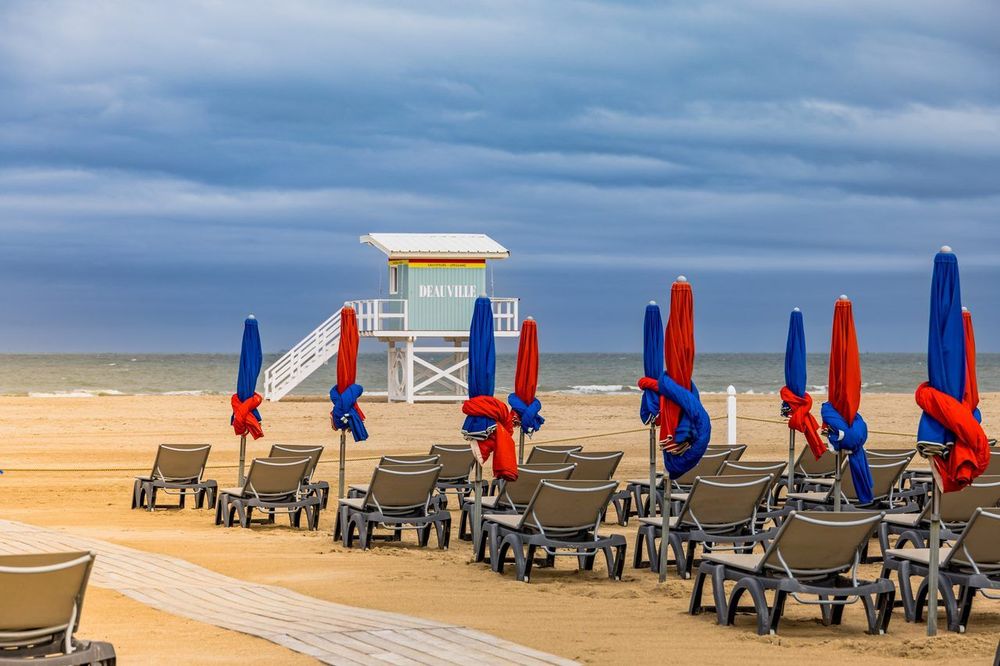
Facing Trouville across the Touques, the beach stretches for about two kilometres of fine sand, facing due west with a gentle slope and lifeguards in season. The tidal range can exceed six metres: at low tide, the beach almost doubles in width.
Les Planches, built from 1923, run along the sand for 643 metres, from the casino to the Olympic pool. Since 1987, the beach cabins have borne the names of actors and directors who attended the American Film Festival, founded in 1975: Catherine Deneuve, Jean-Paul Belmondo, Robert De Niro and more. The beach is about two hours by train from Paris.
Tides, parking and good addresses are all in our complete guide to Deauville beach.
Which hikes can you do around Deauville, from the coastal path to the Vaches Noires cliffs?
The easiest starts from Les Planches: cross the Pont des Belges to Trouville and its fish market, then follow the corniche, for about 5 kilometres there and back. With half a day, carry on to Villers-sur-Mer, 9 kilometres away, where the Greenwich meridian passes and the Paléospace displays fossil marine reptiles.
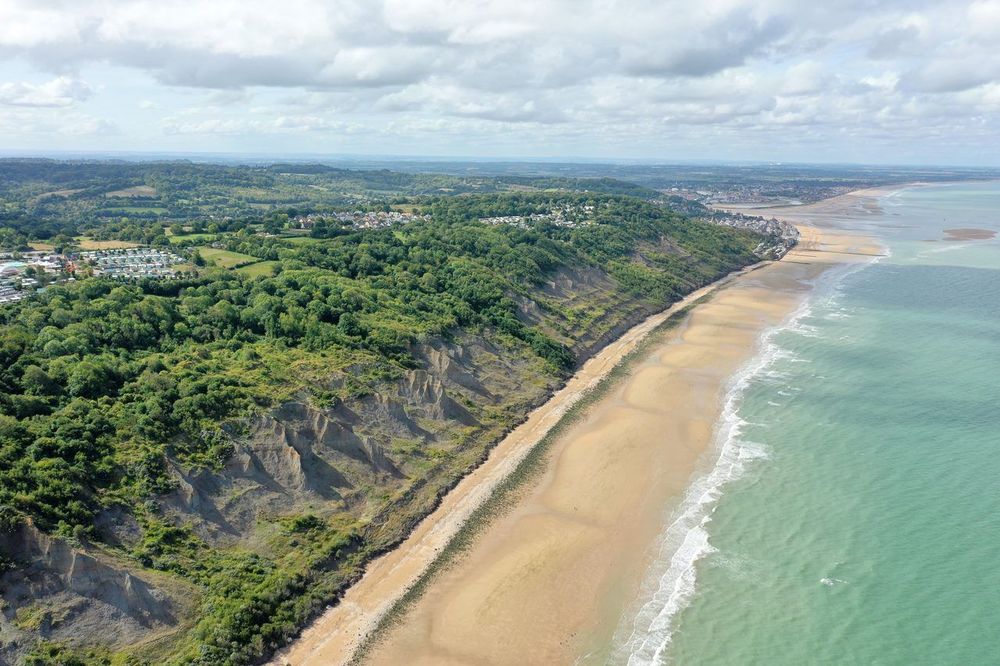
Between Villers and Houlgate, the Vaches Noires cliffs reveal ammonites and belemnites: walk only at their foot, on a falling or low tide, and head back at least two hours before high water. Inland, there is also a 1,300-hectare forest and the farmland of the Touques valley.
Distances and safety tips are detailed in our 10 hiking routes around Deauville.
How do I plan my stay in Deauville, whether it's a weekend or three days?
On day one, stroll along the Planches boardwalk and the beach, where the cabins bear the names of film stars, then wander through old Deauville and its half-timbered villas before an evening at the Casino Barrière. Day two combines Les Franciscaines, the Villa Strassburger, the racecourse opened in 1864, golf or cycling, then thalassotherapy and the 1924 Pompeian baths.
On day three, cross the Pont des Belges to Trouville's fish market, then continue on to Honfleur.
Find the detailed itinerary in our guide to visiting Deauville in 3 days and in our weekend plan.
Vos commentaires, idées et suggestions
Aucun avis pour le moment