© Shutterstock
 Votre guide Ryo
Visit Deauville in 3 Days: The Complete Itinerary Between the Planches and Heritage (2026)
All it takes is setting foot on the wooden boardwalk of the seafront to understand why Deauville built a legend for itself in less than a century and a half. Visiting Deauville in 3 days means accepting to go from swimsuit to tuxedo within a single day: in the morning on a beach where the beach cabins bear the names of American stars, in the evening in a Belle Époque casino that has seen the cream of the film world pass through its doors. To relive this history as you walk, the Ryo audio-guided tour of Deauville links beach cabins and half-timbered villas in your ears.
In three days, you have time to take in a racecourse opened in 1864 where horses worth several million euros change hands every summer, a former orphanage run by Franciscan sisters now turned cultural hub, Art Deco Pompeian baths inaugurated in 1924, and an excursion across the bridge to the Trouville fish market and then to the half-timbered lanes of Honfleur. We also slip in two or three gems that almost no one mentions: fossil cliffs, a calvados distillery and the town where Proust invented Balbec.
Day 1: The Planches, the Beach and the Historic Heart of Deauville
Morning: Deauville Beach and the Planches Promenade
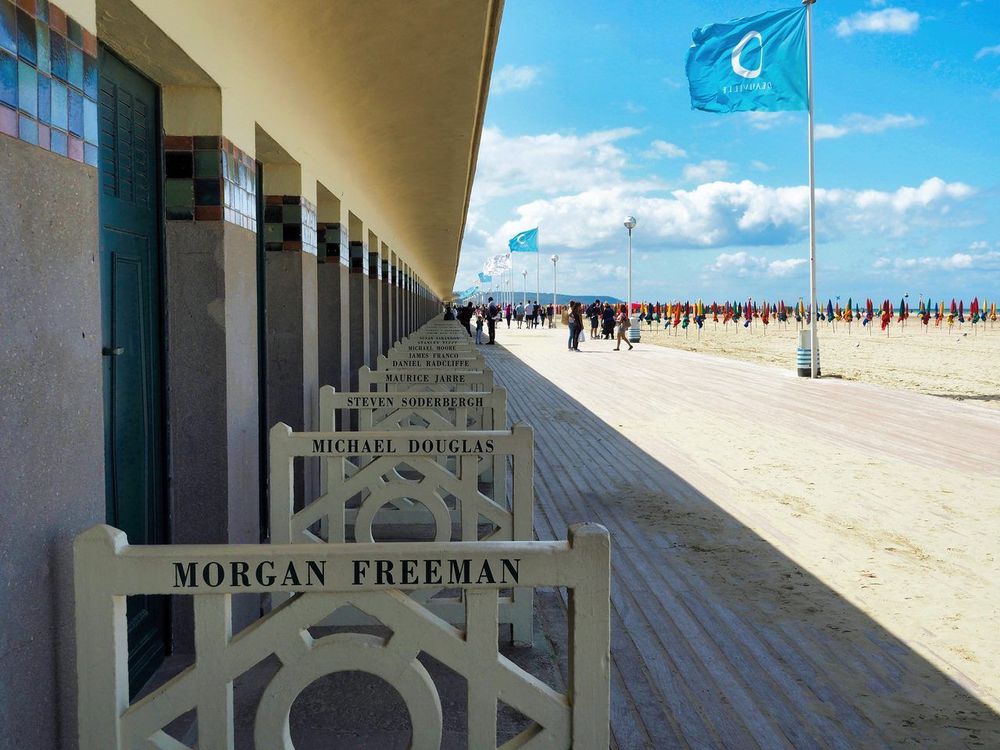
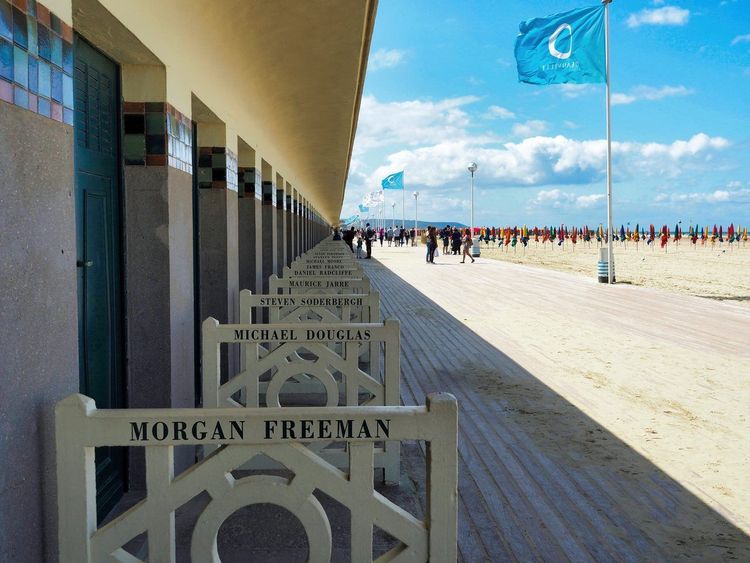
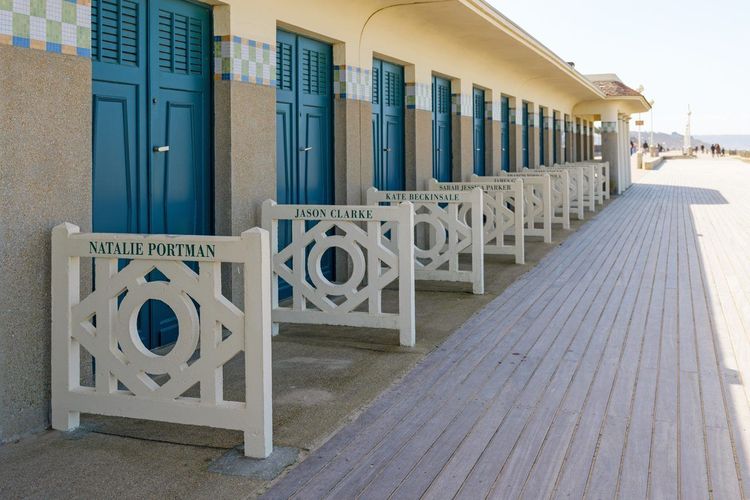
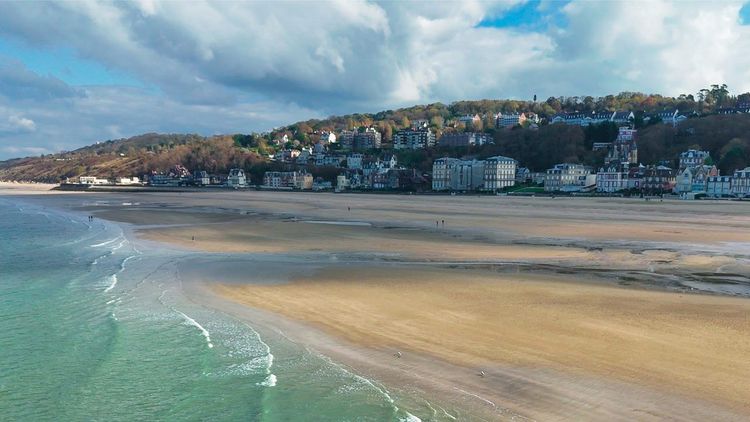
Start with the sand. The Deauville beach unfolds nearly two kilometres of wide golden strip facing the English Channel, lined by the famous Planches promenade: a wooden walkway laid in 1923 to spare the female strollers of the time from getting sand under their long dresses.
You will quickly spot the roughly 450 beach cabins lining the promenade. On the slats that separate them are painted the names of actors and directors who have attended the American Film Festival, from Clint Eastwood to Natalie Portman: a tradition launched in 1987 by mayor Anne d'Ornano, which gains new names every September. In the morning, before 10 a.m., the light skims the wood of the Planches and you will have this famous view almost to yourself, without the families who flood the sand from noon onwards.
If you plan to lay out a towel for more than an hour, consider renting a parasol directly from the beach concessions: cabin, sun lounger and parasol can be booked by the half-day or full day, a welcome option in July-August when the sand fills up from 11 a.m. At low tide, the beach widens even more and you can walk barefoot to the water over several hundred metres. Lifeguard posts, kids' clubs, swimming areas: our guide to Deauville beach covers it all.
One detail often amuses visitors: before 1923, elegant ladies had to walk through loose sand in heels and long skirts, which led the town to lay this wooden path. A century later, the walkway remains the backbone of any visit to Deauville, a landmark you will come back to at every moment of these three days.
Afternoon: Old Deauville, Its Villas and the Town Centre
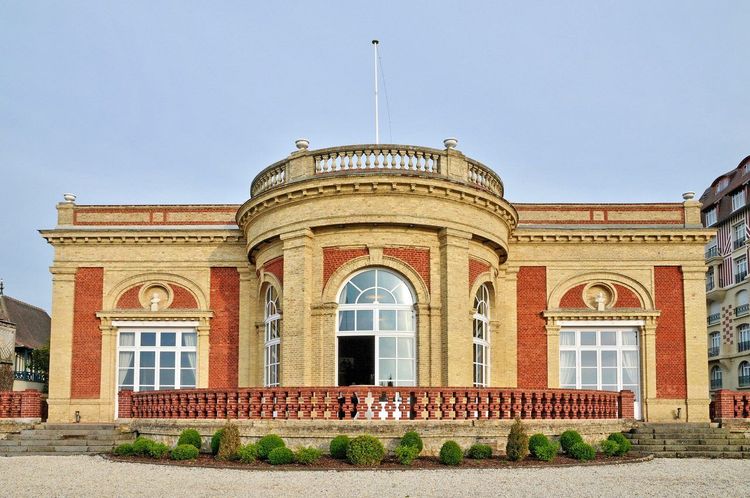
Then head up to old Deauville, the district that saw the resort born in the 1860s at the initiative of the Duke of Morny, half-brother of Napoleon III. The streets are lined with half-timbered villas with turrets, built between 1860 and 1910 for a Parisian clientele who came to seek sea air without giving up city comforts.
The painter Eugène Boudin, a forerunner of Impressionism, also had a house in Deauville, where he ended his days in 1898: his canvases already show crinoline-clad figures on the sands of Trouville and Deauville, long before the arrival of the colourful cabins. Take the time to look up at the façades: most of the villas remain private property, but they can be admired from the street, with their slate roofs and brightly painted shutters.
Continuing towards the town centre, you walk through fairly quiet shopping streets out of season, dotted with fashion boutiques and Norman pastry shops, and then you reach the Pont des Belges, which spans the Touques and links Deauville to Trouville. Its name pays tribute to the Belgian soldiers and refugees welcomed on the coast during the First World War.
For this specific stretch, the Ryo audio-guided sub-tour between beach cabins, cameras and half-timbering lines up 19 audio stops over 5 km and about 2 hours of walking, from the beach to the villas of old Deauville, without having to pull out a map at every crossroads.
Late Afternoon and Evening: Casino and Film Glamour
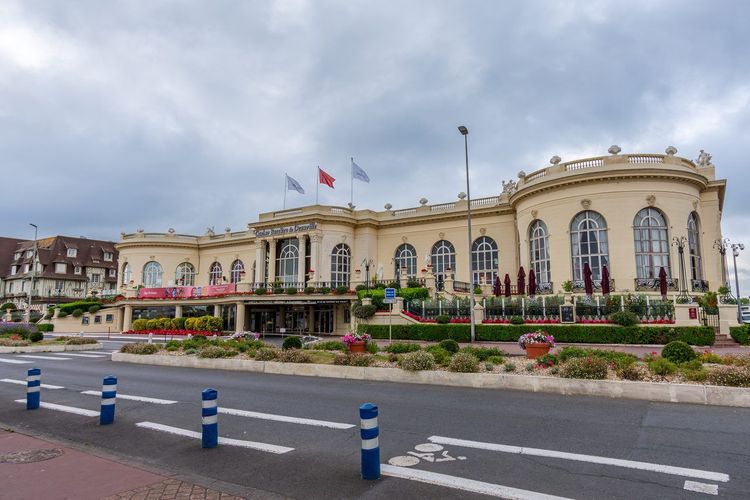
End the day at the Casino Barrière de Deauville (Rue Edmond Blanc, 14800 Deauville, rated 4.3/5 on Google from 7,929 reviews), opened in 1912 in a Belle Époque style that has crossed the century without showing a wrinkle. You can push open its doors even without gambling, if only to admire the hall, the chandeliers and the gaming rooms, whose architecture unashamedly rivals that of the great casinos of the French Riviera.
This is also the district around which, every early September, the Deauville American Film Festival is centred. Born in 1975, it draws to the Planches stars who come to present their films, under the flashes of photographers massed in front of the Centre International de Deauville (CID). Outside festival time, the atmosphere remains hushed, but the names painted on the cabins are enough to tell the story of this event, which has become one of the most sought-after in Europe for American cinema.
You may also recognise the beach and the Planches from Claude Lelouch's "A Man and a Woman", Palme d'Or winner in 1966, whose images remain inseparable from the resort.
Day 2: Cultural Heritage, Fresh Air and Deauville Relaxation
Les Franciscaines and the Villa Strassburger
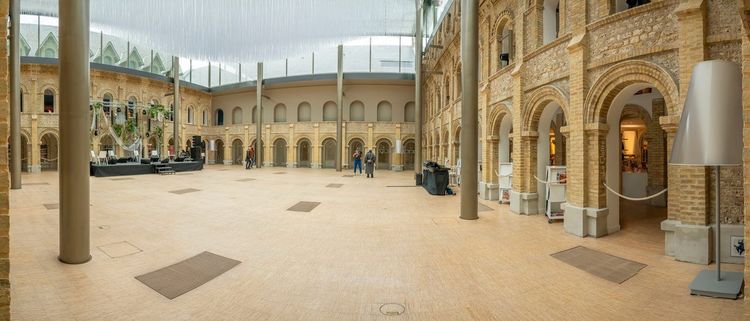
This second day begins at Les Franciscaines, one of the largest old buildings in town. Built in 1876 as an orphanage for the children of sailors lost at sea and run by Franciscan sisters, it served as an auxiliary hospital during the First World War and then as a school, before being bought by the town in 2012. Inaugurated in May 2021 after two years of works, it now brings together a museum, a media library and an auditorium under a large glass roof.
A little further out, on the hillside, the Villa Strassburger is one of the most beautiful neo-Norman villas on the coast: half-timbering, a checkerboard of brick and stone, turrets and ceramic roof finials. It was built between 1907 and 1912 for Baron Henri de Rothschild, on the former Coteau farm that had belonged to Gustave Flaubert's family, then bought in 1924 by the American Ralph Beaver Strassburger, a press magnate and horse enthusiast, before being bequeathed to the town in 1980.
The villa can be visited from June to September on guided tours, and has preserved its period furniture, its horse paintings and its caricatures of the parties held here between the wars. Allow an hour for Les Franciscaines and another hour for the villa: both fit into a morning, provided you book the guided tour in advance.
The Deauville-La Touques Racecourse and the World of Horses
Deauville wouldn't quite be Deauville without its horse races. The Deauville-La Touques racecourse, inaugurated in 1864, sees the best thoroughbreds in Europe parade every August, and right next door the town hosts the yearling sales, where some foals change hands for several million euros before they have even run a single race.
You don't need a race day to enjoy it: a horseback ride along the beach or through the surrounding countryside is easy to book with local riding centres, and remains one of the most authentic ways to understand why the Pays d'Auge has built a reputation as horse country.
If a race meeting falls during your stay, admission is affordable for all budgets and the atmosphere, between modest bets and elegant hats, is worth the detour on its own, even for those who know nothing about horse racing.
Golf, Cycling and Fresh Air
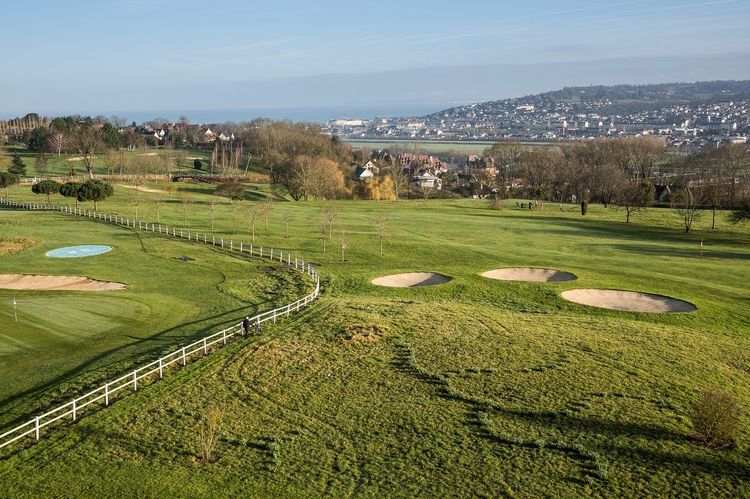
If the weather allows, the Barrière Deauville golf course (Saint-Arnoult, 14800 Deauville, rated 4.5/5 on Google from 252 reviews), a 27-hole course opened in 1929 on the heights of Mont Canisy, offers an open view of the sea from several fairways. You don't need to be an experienced golfer: hourly introductory lessons, with equipment provided, let you discover the swing with no commitment.
Cycling in Deauville also works very well: the town is flat, the cycle paths link the beach to the residential districts, and a rental shop in the town centre lets you cover in half a day most of what you saw on foot the day before, at a different pace, or reach the Presqu'île.
You can combine both in the same morning by cycling to the golf course, then leaving your bike at the club during a lesson: fewer car trips on an already busy day.
Evening: Thalassotherapy and Waterfront Spa
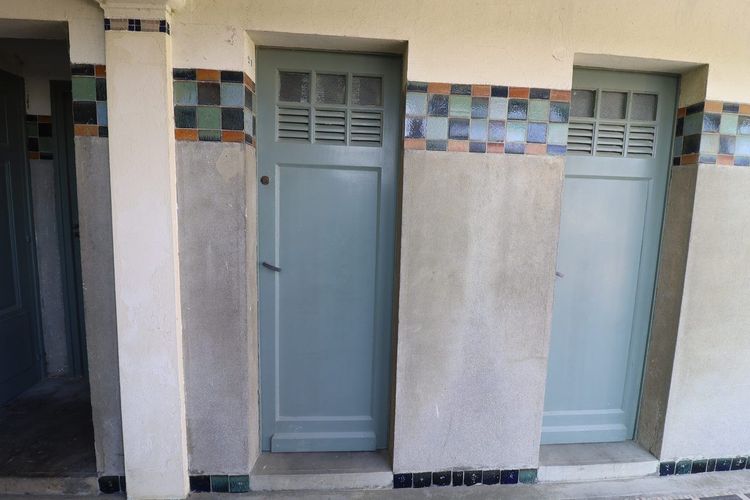
End this second day gently at the Deauville thalassotherapy centre, on the seafront, where a heated seawater pool, a hammam and marine treatments can be booked by the session. Right next door, the Pompeian baths, inaugurated in 1924 by the architect Charles Adda, stretch their colonnaded galleries and blue-and-gold mosaics over 90 metres: these former Art Deco bathing cabins, listed as historic monuments, can be freely admired from the Planches.
Want to learn the behind-the-scenes story of the resort without diving into your phone? The audio stops of the Ryo tour of Deauville tell the story of the era of the great villas and horse races while you walk, your eyes on the façades rather than on a screen.
If you haven't booked a treatment in advance, some late-day slots remain available at the last minute in low season: ask as soon as you arrive, as availability goes quickly at weekends.
Day 3, Morning: Excursion to Trouville-sur-Mer
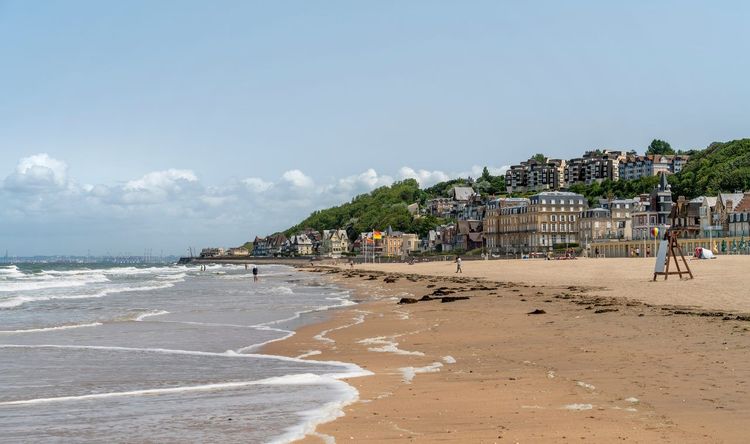
For this last morning, change banks. Deauville and Trouville-sur-Mer face each other on either side of the Touques estuary, but have taken opposite paths: Trouville, older and launched as a resort as early as the 1840s, has kept a popular, maritime character that Deauville, conceived from the outset as a luxury resort, never had. The two towns remain linked by the Pont des Belges, which you already spotted on the first day.
The Harbour, the Fish Market and the Beach of Trouville
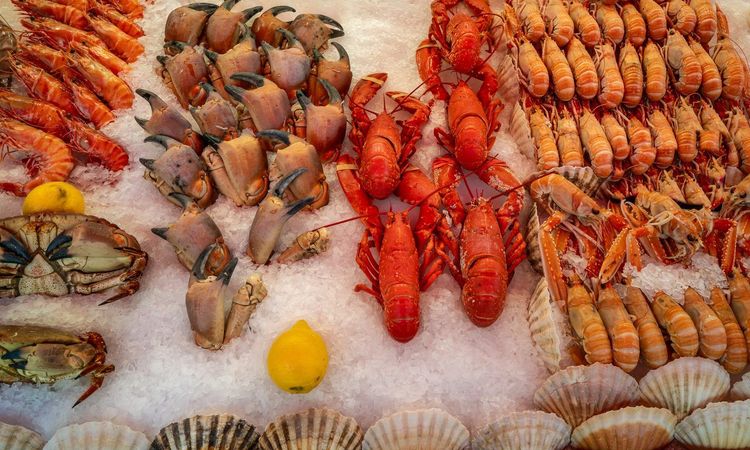
On the Trouville quay, the fish market opens every day facing the harbour: fishmongers sell the catch of the day there, from whelks to sole to scallops in season. Order a plate of brown shrimp or a dozen oysters to enjoy on the spot, or take something fresh back if your rental has a kitchen.
Just behind, the Trouville beach (Boulevard Fernand Moureaux, 14360 Trouville-sur-Mer, rated 4.5/5 on Google from 4,469 reviews) also stretches along a broad sandy front, less fashionable than Deauville's but just as pleasant for a morning walk. You will meet more local Trouville families than tourists there, especially outside the heart of summer, at the foot of the grand villas and the former Roches Noires hotel.
Allow barely ten minutes' walk between the Deauville casino and the Trouville fish market by crossing the Pont des Belges, which lets you combine both atmospheres without a car. This is also the beach painted by Claude Monet and Eugène Boudin in the second half of the 19th century, drawn by the changing light of the estuary.
In your ears, the Ryo audio guide extends the story of the twin resorts all the way to this seafront: enough to understand, as you cross the bridge, why one chose chic and the other the harbour.
Day 3, Afternoon: Honfleur and the Return
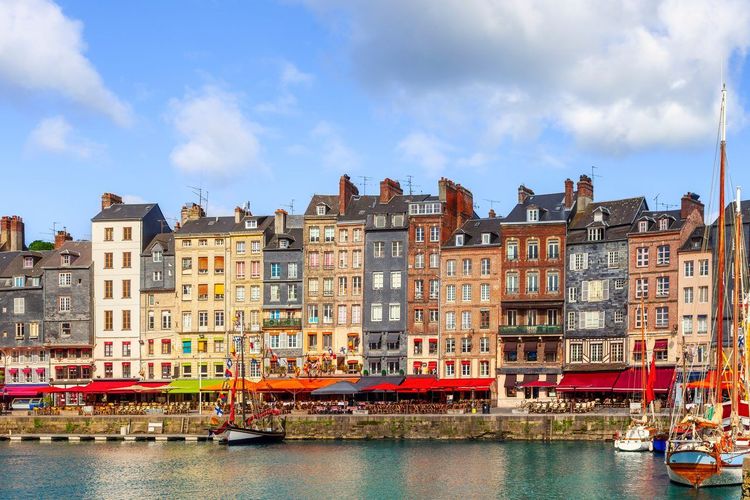
The Vieux Bassin and the Half-Timbered Lanes of Honfleur
After lunch, head for Honfleur, about twenty minutes' drive from Trouville along the coast. The Vieux Bassin (Quai Sainte-Catherine, 14600 Honfleur, rated 4.8/5 on Google from 354 reviews), lined with tall, narrow houses with slate-covered façades, remains the most reproduced image of the whole Côte Fleurie, and for good reason: the light changes there every hour, a phenomenon that fed an entire generation of painters, Eugène Boudin foremost, who was born here in 1824.
Then lose yourself in the lanes that climb up from the basin: the half-timbered façades close in, artisan shops replace the terraces, and you come almost by chance upon the Sainte-Catherine church, the largest wooden church in France, built by ship carpenters in the 15th century in the aftermath of the Hundred Years' War. Its bell tower, detached from the main building, always surprises those looking for the usual tower of a Norman church.
Keep your earphones handy: the anecdotes about Boudin you heard the day before on the Ryo audio-guided tour of Deauville take on their full meaning facing the harbour he painted so often.
For the return trip, allow about 2h15 from Honfleur to Paris via the A13 motorway, or go back through Deauville-Trouville station if you came by train. Many visitors time their departure for late afternoon, after a last coffee on a terrace at the Vieux Bassin, to close these three days on an image rather than a traffic jam.
Gems Beyond Deauville: Cliffs, Nature and Coastal Villages
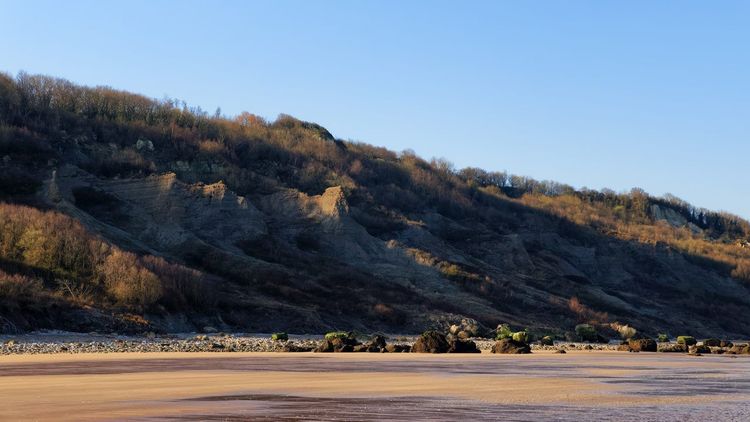
The Vaches Noires and Roches Noires Cliffs
Few visitors venture as far as the Vaches Noires cliffs (Avenue de la Brigade Piron, 14640 Villers-sur-Mer, rated 4.1/5 on Google from 492 reviews), which stretch for 4.5 km between Villers-sur-Mer and Houlgate, accessible on foot from the beach at low tide. Over 100 metres high in places, they are among the richest fossil sites in Normandy: ammonites, sea urchins and even remains of plesiosaurs and ichthyosaurs have been discovered there.
On the other side of Deauville, east of Trouville, the Roches Noires cliffs lead to Villerville and the Pointe du Heurt: a 125-hectare sensitive natural area, where the coastal path runs along layers of limestone and clay 160 million years old. On the Côte Fleurie, the Le Bouquetot eco-estate also regularly organises litter-collection operations on the foreshore with local residents, a concrete way to protect a coastline that is very busy in summer.
Bring closed shoes: on both sites, the route crosses slippery clay blocks in places, and it's best to check the tide times before setting out so you don't end up trapped against the cliff as the tide comes in.
Closer to Deauville, the Presqu'île, this tongue of land between the marina and the estuary, hides two viewpoints over the dunes: one is part of a private estate, the other remains open to the public and offers an unobstructed view of the mouth of the Touques, an angle most visitors never suspect from the beach.
Houlgate and Cabourg, Charming Stopovers
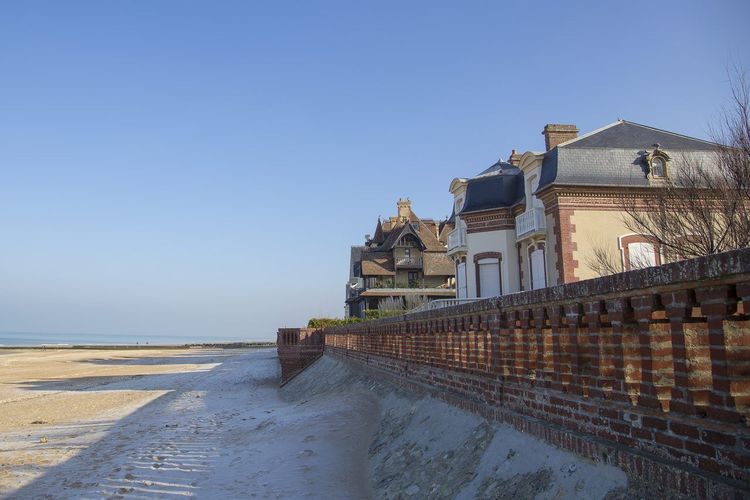
Houlgate has kept a bit of the air of a pre-war seaside resort, with its 1900s villas lined up along the seafront and a family beach far quieter than Deauville's in high summer. The village can be visited in an hour or two, enough for a coffee on the promenade and a look at the façades.
Further on, Cabourg owes its fame to Marcel Proust, who made it the Balbec of "In Search of Lost Time": the writer regularly stayed at the Grand Hôtel, whose white façade still overlooks the curved seawall, one of the most photographed on the Normandy coast. Houlgate and Cabourg combine easily in the same half-day, the two resorts being only a few kilometres apart.
The Calvados Route and Its Distilleries
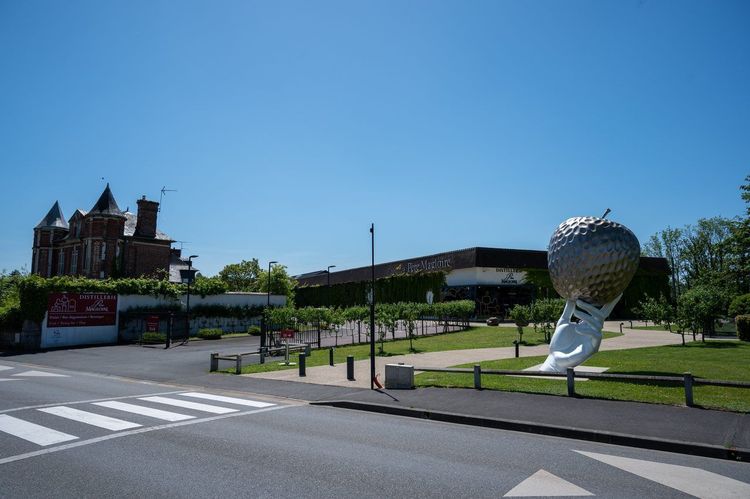
For a more earthy note, head up to the Pays d'Auge and its Calvados route: several family-run distilleries, such as the Christian Drouin estate in Coudray-Rabut near Pont-l'Évêque, open their cellars to visitors and offer tastings.
Allow a good half-day to combine two or three addresses with lunch at a local farm inn, the kind of stop that contrasts with the fashionable pace of the first two days. Many of these estates also produce cider and pommeau: come home with a few bottles rather than a mere beach souvenir.
To dig deeper into these little-known surroundings, our Ryo article on the Côte Fleurie details ten other must-sees in the region, and the Ryo hiking guide around Deauville offers several walking loops to explore the cliffs over a full day.
Where to Eat and Shop at the Market in Deauville
For meals, Deauville alternates unabashedly between good-value spots and starred tables. The Deauville market, set up under half-timbered covered halls and on the Place du Marché, is the place to spot local producers, from farmhouse Camembert to oysters and fish landed from the boats, before putting together a picnic for the beach.
The market days in Deauville are Tuesday, Friday and Saturday mornings all year round, from 8 a.m. to 1 p.m., with an additional market on Sunday from late February to mid-November and a daily market in July-August. Arrive before 11 a.m.: the best stalls empty quickly on Saturday.
For brunch, the Belle Époque and its terraces near the Planches remain a safe bet, with a view of the promenade and the beach cabins. For a lunch facing the sea, Ciro's (Promenade des Planches, 14800 Deauville, rated 4.4/5 on Google from 710 reviews), set on the Planches since 1959 and once frequented by Jean Gabin and Catherine Deneuve, showcases sole meunière, bouillabaisse and seafood platters.
If you are looking to treat yourself at a starred table, several addresses in the town centre and luxury hotels offer gourmet cuisine in the evening, with reservations several weeks in advance in high season. For the last dinner, NOTO, set in the heart of the Barrière casino, plays the Italian card with fresh pasta and seasonal produce.
For rental stays, an organic market is also held regularly not far from the centre, handy for cooking for yourself with regional produce rather than multiplying restaurant outings.
Norman cuisine deserves a meal of its own: tripes à la mode de Caen, fish in cider sauce, apple tart flambéed with calvados. Many restaurants in the town centre offer a lunch set menu that is more affordable than their evening menu, a simple tip for tasting the same tables without paying top price.
In high summer, book your tables at least a week in advance: the resort's population explodes between July and August, and the best addresses are full from Friday. To go further, the Ryo guide to the best activities in and around Deauville lists a few experiences to book before you arrive.
How to Get to Deauville and Get Around the Côte Fleurie
Deauville is about 200 km from Paris, making it a destination reachable by train or car for a 3-day trip.
By train, Deauville-Trouville station is served directly from Paris Saint-Lazare, in about 2 hours, and is a few minutes' walk from the Pont des Belges. It is probably the simplest option if you plan to stay in the centre.
By car, allow about 2h15 via the A13 motorway then the A132, a route that then lets you roam freely towards Trouville, Honfleur or the cliffs without depending on bus timetables.
The Deauville-Normandie airport, about ten minutes from the town centre, mostly handles seasonal flights whose offering varies from year to year: check the season's schedule before counting on it.
Once there, Deauville is very easy to explore on foot, with the town centre, the beach and the old quarter all within a 20-minute walk. For Trouville, Honfleur or further along the coast, the Verts du Calvados buses serve the entire Côte Fleurie, an economical solution if you are travelling without a car, even though frequencies drop out of season. Cycling, mentioned on the second day, remains a good alternative for short trips between Deauville and Trouville.
In high summer, parking in the town centre quickly becomes difficult: the paid car parks around the casino and the station fill up from the morning, and it is often simpler to park once and then do everything on foot or by bike.
If you push on to Le Havre after Honfleur, the Pont de Normandie crosses the Seine estuary just outside the city: its pylons of about 215 metres are worth a look, even if the toll makes the detour less trivial than it seems.
If you arrive on a Friday evening by car, avoid leaving Paris after 5 p.m.: the A13 concentrates a good part of the Norman weekend traffic, and a departure shifted by an hour can save you precious time.
When to Visit Deauville and How Many Days to Plan
Three days are more than enough to cover the essentials of Deauville, Trouville and Honfleur without rushing, provided you save the gems of the Côte Fleurie for a future stay or a quick trip by car.
The best period remains late spring and early autumn: May-June and September offer pleasant weather, fewer people on the Planches, and noticeably lower accommodation prices than in high summer. Early September does have its own particularity, however: it is the time of the American Film Festival, which pushes up both crowds and prices for about ten days, to aim for if you want that atmosphere or to avoid if you prefer calm.
Summer, from July to the end of August, remains the high season par excellence, with the races and the yearling sales in August and queues at the best tables. Winter, on the other hand, reveals a more intimate side of the resort: deserted Planches, low light on the sea, and hotel rates sometimes halved compared with August.
If your 3-day trip falls on a weekend, favour arriving on Friday late morning rather than in the evening: you gain half a day of sightseeing in old Deauville before the Saturday rush, the busiest day all year.
Where to Stay in Deauville: From the Normandy to Charming Addresses
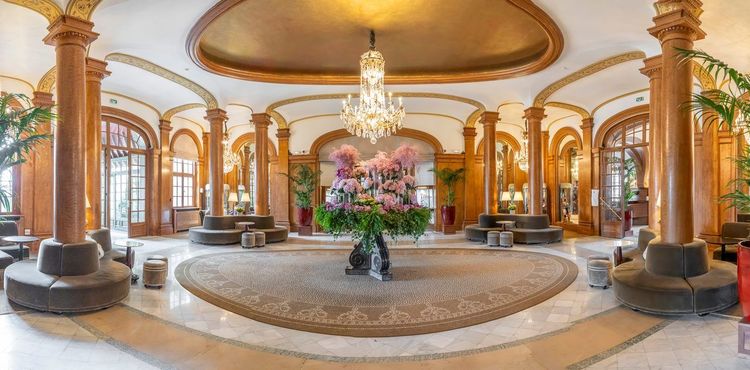
Deauville plays on several accommodation registers, from the historic palace hotel to simpler addresses.
The Normandy Barrière, with its half-timbered façade inspired by Anglo-Norman manor houses, has remained the town's most emblematic address since its opening in 1912. Staying here also means enjoying a heated indoor pool, a real plus on days of uncertain weather.
Close by, the Royal Barrière offers a fairly similar register, with a spa where you can treat yourself to a massage at the end of the day, to combine with the thalassotherapy mentioned on the second day if you want to string together moments of relaxation.
For a more modest budget, several charming addresses in the town centre and in Trouville offer a good compromise between location and price, especially outside July-August when rates can drop by 30 to 40%. The guesthouses of old Deauville, often set in former villas, also appeal to those who prefer an intimate setting to a large seaside hotel.
If Deauville is fully booked or exceeds your budget, Trouville, just across the Pont des Belges, offers noticeably cheaper hotels with equally quick access to the Planches and the casino, 10 minutes away on foot.
To compare options under €120 a night, the Ryo selection of the best cheap hotels in Deauville lists several addresses, useful for setting a realistic budget before booking.
In high season and during the film festival, book two to three months ahead: the best addresses in the centre are full from spring for September dates. If travelling as a family, explicitly request connecting rooms or family suites when booking rather than on arrival.
Finally, check the actual walking distance to the Planches: some establishments advertised as "sea view" are in reality 10 or 15 minutes from the beach, a nuance that matters on a 3-day trip.
Budget and Practical Information for Planning Your Stay
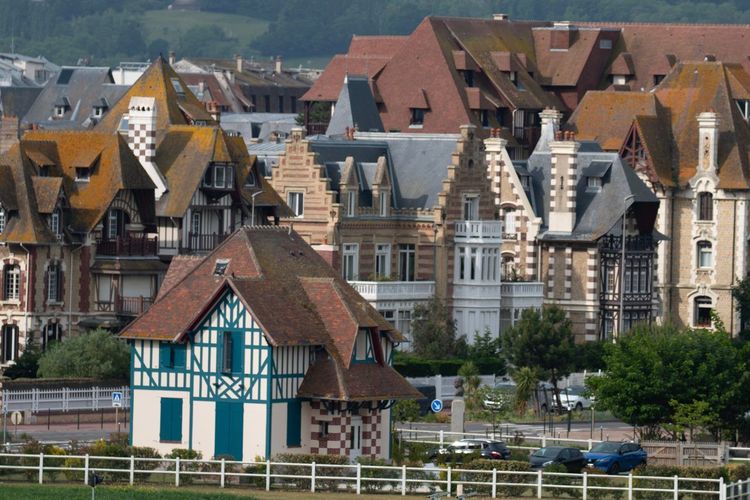
For a 3-day stay in Deauville, the budget varies greatly depending on the season and the level of comfort you want.
Allow between €90 and €150 a night for a charming address out of season, and easily double that for a palace hotel like the Normandy in high summer or during the festival. Meals range from €15-20 for a brunch or simple lunch to €60-80 per person for a gourmet table in the evening.
The main sights, meanwhile, cost almost nothing: walking on the Planches, strolling through old Deauville, walking along the Vaches Noires cliffs or going around the Vieux Bassin in Honfleur. Only a few items are paid: gambling at the casino (the hall can be visited freely), a thalassotherapy treatment, the guided tour of the Villa Strassburger, a horseback ride or a green fee at the golf course.
For an extended weekend for two, a total budget of €400 to €700 excluding transport remains realistic in low season, accommodation and meals included, and can exceed €1,000 in high summer or during the film festival.
Pack layers even in summer: the estuary wind quickly cools evenings on the Planches, and a light sweater is never superfluous on the Norman coast.
Keep a few euros for the pay-and-display car parks in the town centre, often charged even on Sundays in season, and be aware that most shops in old Deauville close earlier than in Paris, around 7 p.m. outside summer.
With children, supervised beach clubs operate by the half-day on reservation: handy for giving yourselves a moment as a couple while the little ones enjoy the sand.



FAQ
How many days do you need to visit Deauville?
Three days are enough to cover Deauville, Trouville and a trip to Honfleur without rushing. If you want to add the Vaches Noires cliffs, Houlgate, Cabourg or a Pays d'Auge distillery, plan on 4 to 5 days instead.
What is the best time to visit Deauville?
May-June and September offer the best compromise between pleasant weather, moderate crowds and reasonable prices. July-August remains the high season, while early September coincides with the American Film Festival, which is livelier but also more expensive.
How do you get to Deauville without a car?
The direct train from Paris Saint-Lazare reaches Deauville-Trouville station in about 2 hours. Once there, the town centre, the beach and the old quarter are all walkable, and the Verts du Calvados buses serve Trouville, Honfleur and the rest of the Côte Fleurie.
What is the difference between Deauville and Trouville?
Facing each other on opposite banks of the Touques, Deauville was designed from the 1860s as a luxury resort, whereas Trouville, an older fishing port that became a resort in the 1840s, has kept a more down-to-earth character, particularly around its fish market.
What budget should you plan for a 3-day weekend in Deauville?
Allow between €400 and €700 for two people in low season, accommodation and meals included, and over €1,000 in high summer or during the festival. The main sights cost almost nothing; only the casino, the thalassotherapy centre and horseback rides are paid.
What are the must-sees in Deauville in 3 days?
The beach and the Planches promenade, old Deauville and its villas, the Belle Époque casino, Les Franciscaines and the Villa Strassburger, the racecourse of Deauville-La Touques and the Pompeian baths, followed by the third-day excursion to Trouville and Honfleur.
Is Deauville a good destination for families?
Yes: the beach is supervised in season and is great for playing at low tide, beach clubs look after children for half-days, and the town's walkable layout avoids multiplying car trips with young children.
Conclusion
Three days barely suffice to exhaust what is astonishing about Deauville: a fashionable beach that turns understated out of season, villas that tell a century and a half of seaside history, and, a handful of kilometres away, two towns with opposite atmospheres, Trouville the down-to-earth and Honfleur the one painted by the Impressionists. Add to that, if time allows, the fossil cliffs of the Vaches Noires or a Pays d'Auge distillery, and you will leave with a more complete picture of the Côte Fleurie than most visitors on a classic weekend.
To concretely prepare your three days, our Ryo audio-guided tour of Deauville remains the simplest way to link the beach, the old quarter and the casino without consulting a map at every crossroads, earphones in and head held high.
À lire également