© Shutterstock
 Votre guide Ryo
Weekend in Deauville 2026: The Complete Day-by-Day Itinerary, from the Planches to the Casino
Just walk down the few steps separating the Boulevard de la Mer from the first wooden boards to understand what has drawn Parisians to Deauville for over a century: a huge beach lined with two-tone cabins, half-timbered facades repainted every spring, and a Côte Fleurie light that changes every two hours. Planning a weekend in Deauville means betting on proximity, two hours by train from Paris Saint-Lazare, and on a density of activities rare for a town of 3,500 inhabitants: a beach with century-old cabins, horse racing, a Belle Époque casino, a spa and a covered market are all within walking distance. This guide follows the rhythm of a real stay, the very one taken by the Ryo audio-guided tour of Deauville, in three typical days with a few ideas for adapting the program depending on whether you come as a couple, with family or with friends.
Why Go for a Weekend in Deauville?
Deauville owes its status as the "21st arrondissement of Paris" to a handful of Second Empire visionaries, led by the Duke of Morny, who chose this stretch of the Normandy coast to build villas, a racecourse and, later, a promenade made of wood rather than stone. A century and a half later, the result is a town covering less than four square kilometers that brings together beach, Belle Époque heritage, Norman gastronomy and nightlife in a compact format designed for short stays.
Its proximity to Paris changes everything: two hours by direct train, or just over two hours by road on the A13, are enough to go from a platform at Gare Saint-Lazare to a café terrace facing the sea. This accessibility explains why Deauville has remained, since the 1860s, the weekend destination par excellence for people from the Paris region.
You will also find a distinctive rhythm here, lively on weekends with horse racing and calm during the week, with events that structure the year (American Film Festival in September, horse racing meeting and Grand Prix in August). A weekend in Deauville works equally well for an impromptu getaway or for a stay organized around a specific event.
Day 1: Arrival and First Steps on the Planches in the Sun
The Planches and the Beach, a Must-See
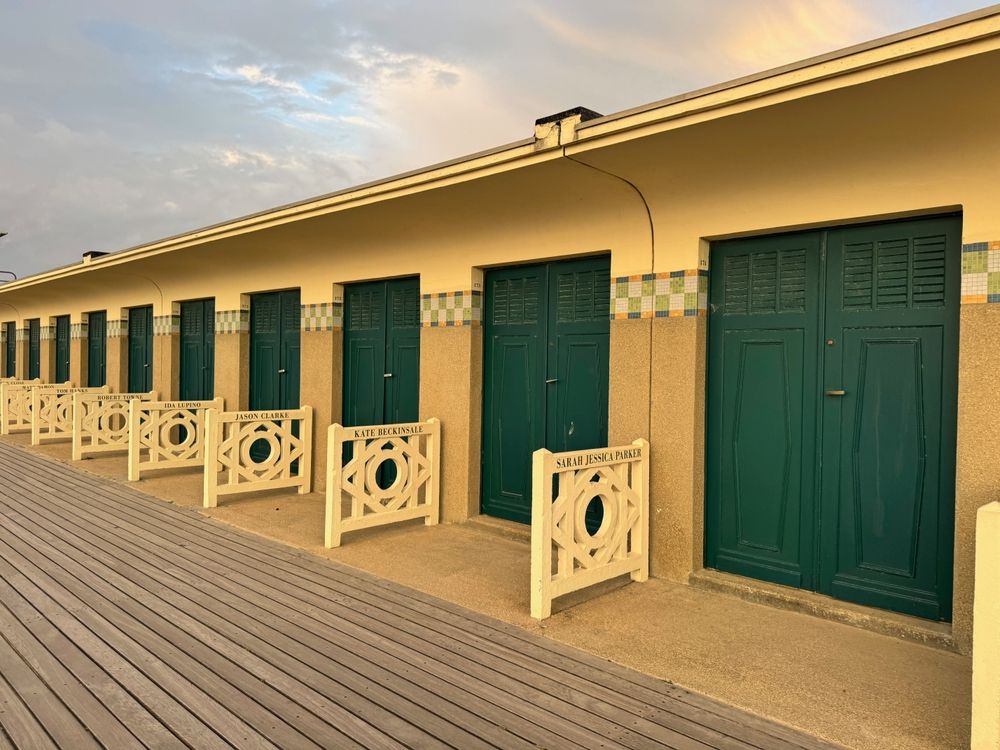
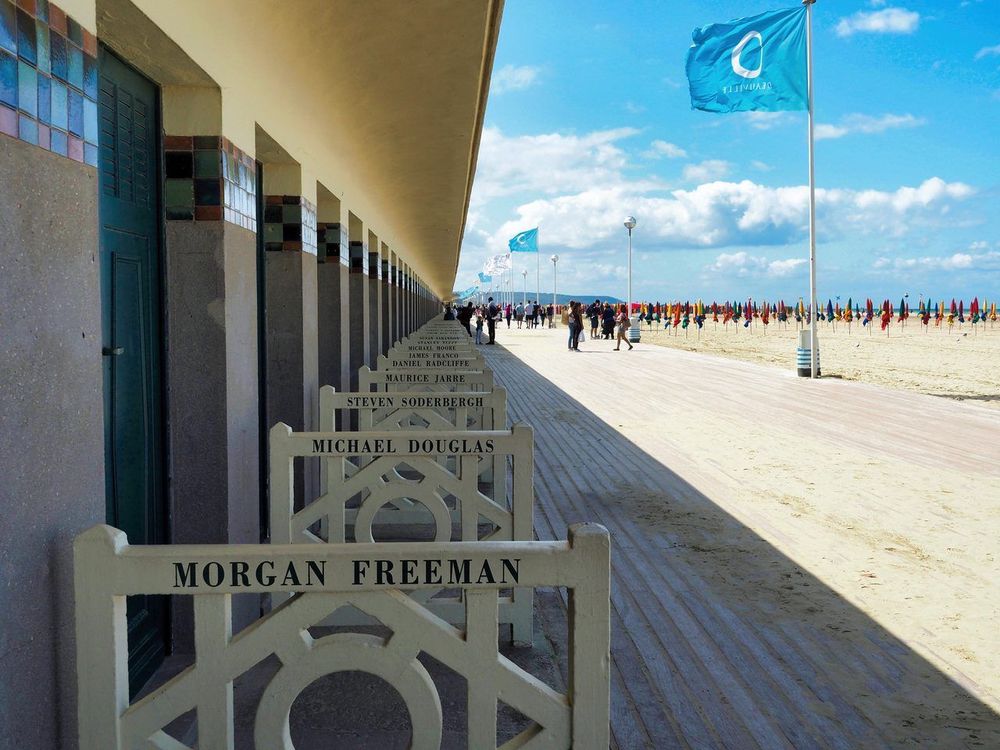
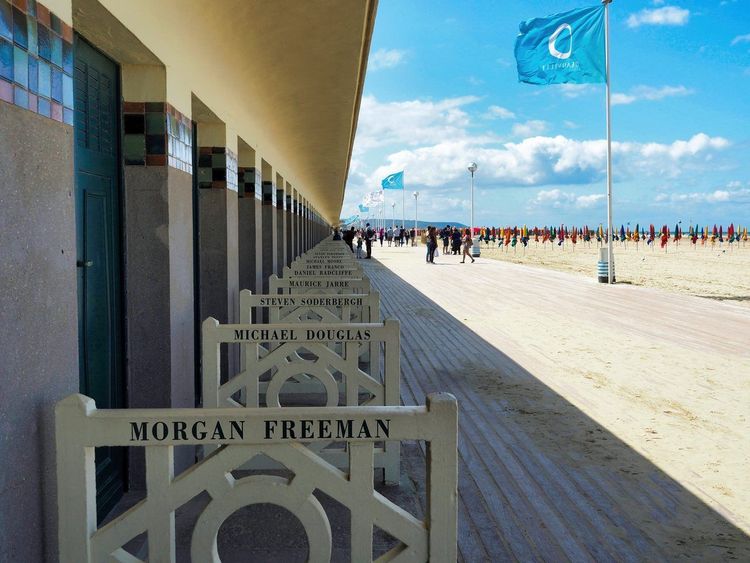
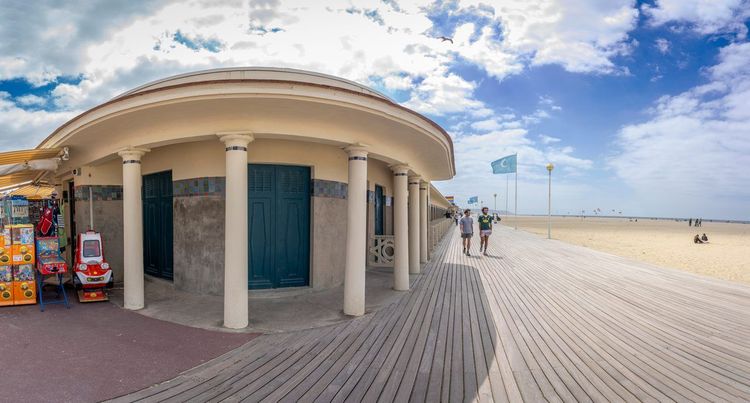
Nothing replaces the first step on the Planches, this 643-meter wooden promenade inaugurated in 1923 and now the visual symbol of Deauville. People come as much for the view over the beach as for the cabins lining it: on their backs, the names of American film stars who attended the Festival form a sort of small "Walk of Fame" facing the Channel. Have fun looking for your favorite actor, it's the game every visitor plays.
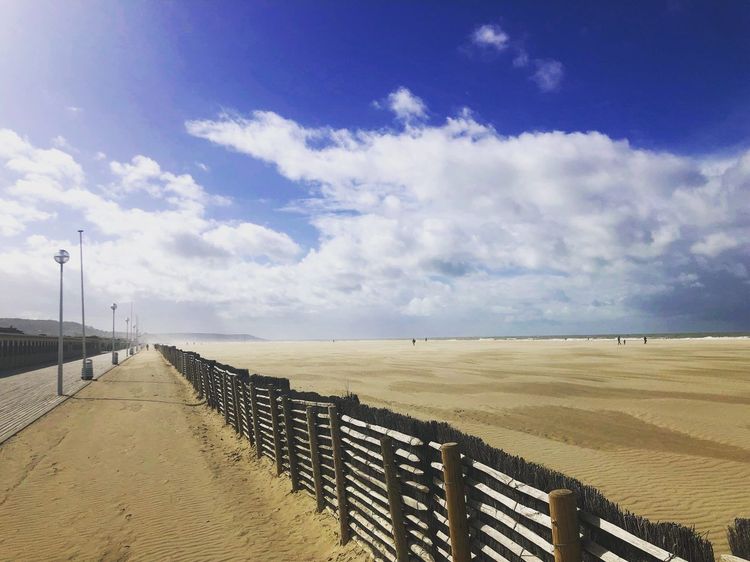
The beach itself stretches for nearly 2 kilometers of fine sand, wide enough to host early-morning horse riders, families in the middle of the day and beach volleyball players in the evening all at once. If you arrive on a Friday late afternoon, it's the ideal time to walk barefoot to the water's edge without the Saturday crowds.
Just steps from Place Morny, the Deauville market occupies two half-timbered halls built in 1923 by the architect Georges Madeline. Here you'll find the Norman products that will return on the table over the weekend: farmhouse Camembert, brut cider, Isigny butter and fish freshly landed at Trouville. The market is held on Tuesday, Thursday, Friday and Saturday (more often in summer), from 8 a.m. to 1 p.m.: a detail worth knowing if you plan to pick up a few items for an impromptu picnic on the sand.
The Ryo audio-guided tour of Deauville actually starts on this very stretch: it passes through the beach cabins before heading back up toward the town center, making it a good way to plan this first afternoon without having to look for your way.
Settling In and First Exploration of the Town Center
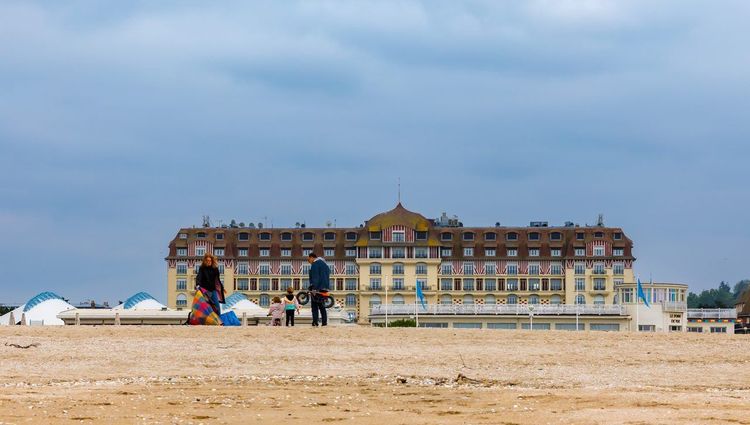
For accommodation, the Hôtel Normandy Barrière (38 Rue Jean Mermoz, 14800 Deauville, rated 4.5/5 on Google from 3,534 reviews), with its half-timbered facade and Anglo-Norman architecture opened in 1912, remains the most photographed address in town. Dropping your bags here on arrival lets you enjoy the heated indoor pool at the end of the day, a good way to recover from the journey before heading out to dinner.
Heading up toward the center, the pedestrian streets around Place Morny and Rue Désiré Le Hoc are packed with fashion boutiques, delicatessens and pastry shops. It's a good time to spot the places you'll come back to the next day, without necessarily stopping everywhere on the first evening.
For dinner, keep it simple: the brasseries in the center serve seafood platters until late, and most accept walk-ins in low season. In high season (July-August, Festival weekends), booking the day before spares you from queuing after a day of travel.
You can end this first evening with a digestive stroll on the illuminated Planches, a much calmer moment than the afternoon, when the closed cabins take on an almost cinematic look.
Day 2: Heritage, Racecourses and an Evening at the Casino
Les Franciscaines and Villa Strassburger, Two Cultural Visits
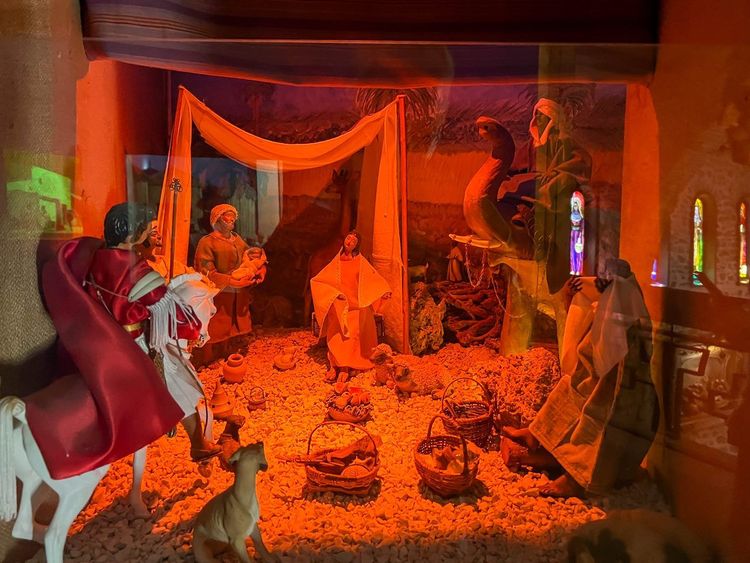
The morning of the second day is well suited to visiting Les Franciscaines, a former orphanage run by Franciscan sisters since 1877, transformed into a hybrid cultural venue opened in May 2021: a library, the André Hambourg museum and exhibition rooms now share the same walls. Access to the common areas, the café and the literature space is free; only the exhibitions require a ticket (pass at €16 full price, free for under-16s).
A little away from the center, the Villa Strassburger tells another side of the town. Built in 1907 for Henri de Rothschild on the former farm of Gustave Flaubert's family, bought in 1924 by the American press magnate Ralph Beaver Strassburger, it was donated to the town by his son in 1980 along with its furniture. Listed as a historic monument since 1975, it can only be visited on guided tours organized in season: check the dates before heading there.
The two sites complement each other well: one turned toward contemporary creation, the other toward the high-society memory of the Roaring Twenties, between private stables and paintings of horses. If your time is limited, prioritize Les Franciscaines, open year-round.
The Racecourses and Deauville's Horse-Racing Atmosphere
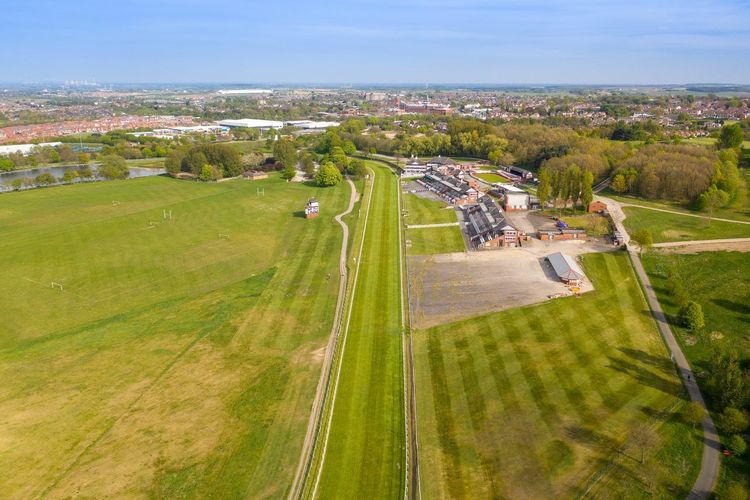
Deauville has two racecourses: La Touques, in town, which hosts the major August flat-racing meeting and winter races, and the Clairefontaine racecourse, opened in 1928 in Tourgéville, one of the most flower-filled in France. The latter is the only one in the region to offer three disciplines (flat, trotting and jumps), with a season running from mid-June to late October and themed days with free activities for children.
Even without knowing the rules of the tiercé, watching a race live, with the stands coming alive in the final seconds, remains a unique experience. Admission is free or a few euros depending on the meeting. La Touques is reachable on foot from the center, while Clairefontaine is better reached by car or bike. Remember to check the racing calendar: the racecourses stay closed on days without a scheduled meeting.
Casino Barrière and an Evening Out
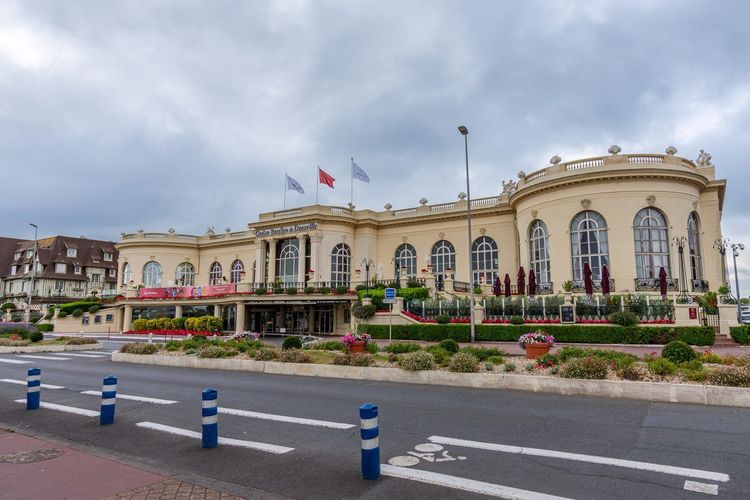
The Casino Barrière de Deauville (2 Rue Edmond Blanc, 14800 Deauville, rated 4.3/5 on Google from 7,928 reviews), opened in 1912 in a Belle Époque style, logically closes this second day. You can simply go to admire the salons and their chandeliers, without necessarily gambling, or try your luck at the slot machines before moving on to the tables.
Proper attire is required to enter the traditional gaming rooms, and ID is systematically checked at the entrance. To extend the evening without gambling, the theater adjoining the casino regularly programs shows, an alternative appreciated by families traveling with children.
The Ryo audio-guided sub-tour between beach cabins, cameras and half-timbering, 19 audios over 2 hours and 5 kilometers, tells precisely the story of Les Franciscaines, Villa Strassburger and the filming locations of the American Festival: a good way to link these visits together without spending the whole day on them.
Day 3: Brunch, Relaxation and Spa Before Departure
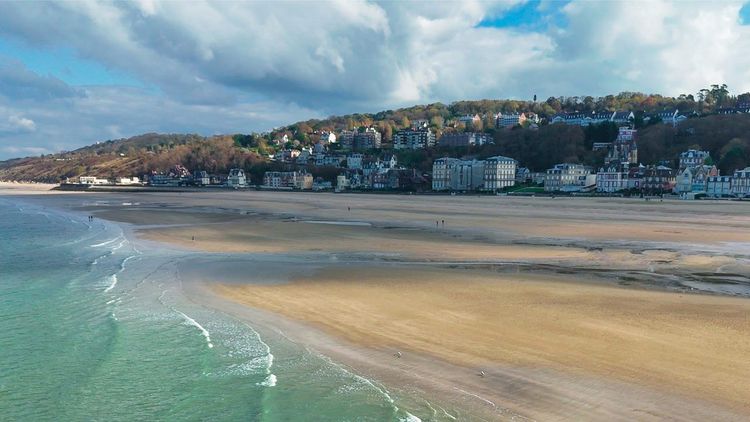
This third day is mainly for three-day weekends or stays extended to Sunday afternoon: if your schedule fits within 48 hours, the first two days are more than enough.
The Grand Brunch and Sunday's Gourmet Tables
Sunday morning in Deauville means a long brunch rather than a quick breakfast. Several hotels and brasseries offer a generous late-morning buffet, a mix of pastries, seafood and Norman desserts, designed to last until dinner.
The Ciro's, set directly on the Planches since 1959 and reopened in June 2024 after a complete renovation by the Barrière group, remains the town's institution, frequented since its beginnings by film stars. Its dining room looks straight onto the beach, making it the ideal address for a Sunday lunch that stretches on.
Booking a few days ahead is still recommended, especially in summer or on race weekends, when regulars occupy a good part of the tables as soon as it opens.
Thalasso, Spa and a Last Walk Before Leaving
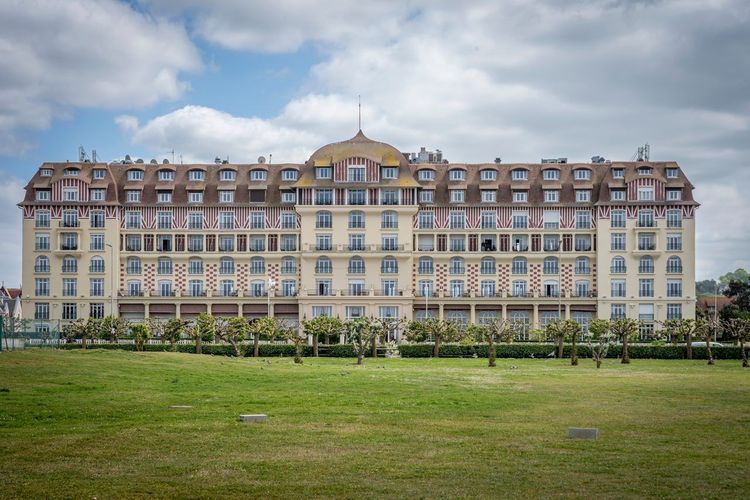
The afternoon is well suited to a visit to the spa at the Royal Barrière Deauville, a palace hotel opened in 1913, which offers treatments open to non-residents by reservation. Between baths, hammam and facials, it's a stop that helps separate the weekend's rhythm from the Monday that follows.
If you prefer the open air, a walk to Trouville-sur-Mer beach (Boulevard Fernand Moureaux, 14360 Trouville-sur-Mer, rated 4.5/5 on Google from 4,469 reviews), right across from Deauville on the other side of the Touques, offers a final different panorama: fishermen's facades rather than Belle Époque villas, a fish market rather than luxury boutiques.
Save the last stops of the Ryo audio guide to Deauville for this walk toward Trouville: a way to close the weekend with one last sea view rather than in a station waiting room.
What Other Activities to Do in Deauville Depending on Your Interests
Golf and Thrills
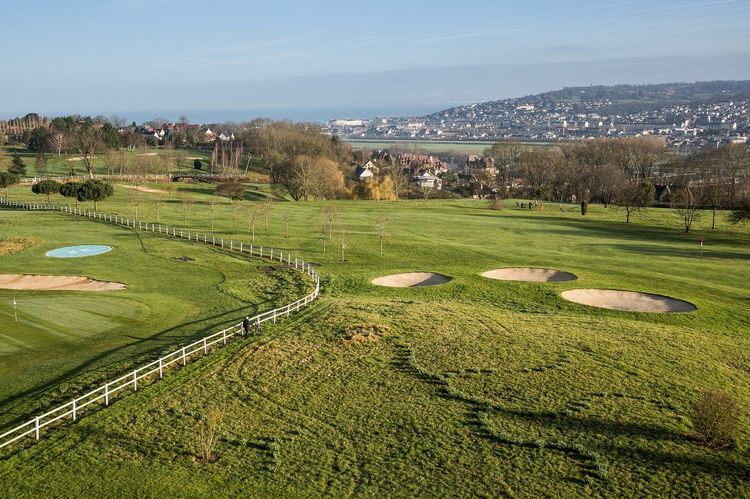
Deauville built its sporting reputation as much on horses as on golf: the Golf Barrière Deauville (Le Mont Canisy, 14800 Saint-Arnoult, rated 4.5/5 on Google from 252 reviews), opened in 1929 on Mont Canisy in Saint-Arnoult, offers 27 holes (the 18-hole Diane Barrière course designed by Tom Simpson and the 9-hole Lucien Barrière) with views over the sea and the countryside. Even without staying at the neighboring Hôtel du Golf, you can play a round or take a lesson at the driving range.
For more active tastes, riding centers offer horseback rides on the beach at low tide, and bike rental shops near the Planches let you reach Trouville or the heights of the town without a car.
Shopping, Cinema and Filming Locations
Rue Désiré Le Hoc and its surroundings host most of the fashion and leather goods stores, a must for a shopping afternoon even without any intention to buy, as some shop windows reflect the town's chic identity.
On the cultural side, Deauville has served as a backdrop for several films, including the famous "A Man and a Woman" by Claude Lelouch (1966), shot on the Planches, and the American Film Festival turns the town into an open-air film set every September. Spotting the facades used for filming is among the activities film buffs particularly enjoy.
To organize this day à la carte rather than following the day-by-day itinerary, the Ryo article on things to do in and around Deauville details other ideas for putting together a tailor-made program.
Who to Go with for a Weekend in Deauville?
As a Couple
A romantic weekend in Deauville naturally revolves around the Planches and casino duo, followed by dinner at one of the tables in the town center. Hotels with spas (Royal Barrière, Normandy) make life easier by offering couples' treatments and rooms with sea views, without having to make multiple separate bookings.
As a Family
With children, focus on the beach, supervised in summer, the covered market where they can help with the shopping, and the racecourse of Clairefontaine, whose themed days include free activities for the youngest. Les Franciscaines, free for under-16s, also has a dedicated children's area. For a weekend in Deauville with a large family, apartment-type rentals allow you to cook some meals.
With Friends
With friends, the casino evening naturally takes up more space in the program, as do sports activities (golf, cycling, horseback riding) that suit a group well. The format works particularly well in low season, when accommodation rates drop significantly compared to July-August.
Where to Stay in Deauville: Our Addresses for a Successful Weekend
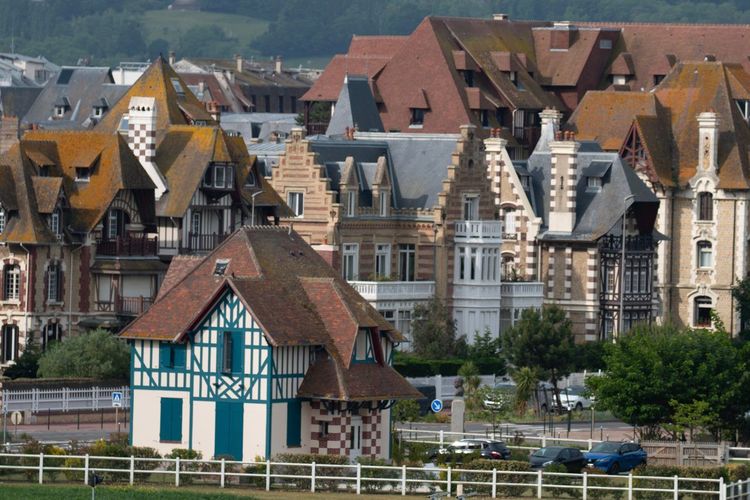
Deauville offers a range of accommodation from historic palace hotels to private rentals, with a few intermediate options for tighter budgets.
For a palace stay, the Hôtel Normandy Barrière and the Royal Barrière share the town's reputation, with a pool, spa and quick access to the Planches. Expect a high budget in high season, but much more accessible rates on weekdays between October and March. Several establishments offer night, breakfast and treatment packages, the option closest to an all-inclusive weekend in Deauville.
The boutique hotels in the town center, often set in former converted Norman villas, offer a good compromise between architectural charm and reasonable prices, generally five to ten minutes on foot from the beach.
For family stays or trips with friends, a holiday rental (apartment or house) remains the most flexible option: it lets you cook some meals, a real advantage on a three-day weekend where eating out at every meal quickly weighs on the budget.
Finally, for a cheap weekend in Deauville, look at Trouville-sur-Mer, just across the river, where accommodation rates are often lower while still being a few minutes' walk from the center of Deauville via the Pont des Belges.
You'll find a more detailed comparison in the Ryo article on the best cheap hotels in Deauville, useful if you're weighing several options before booking.
Where to Eat in Deauville: Restaurants and Good Tables
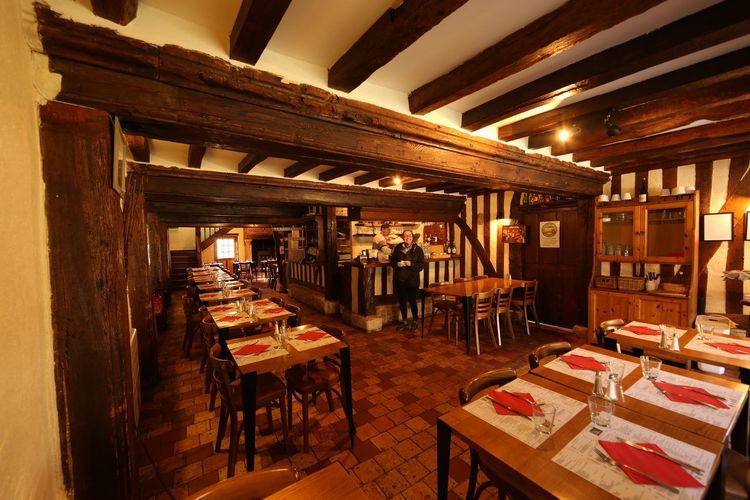
Norman cuisine shapes a good part of Deauville's dining scene: aged Camembert, brut or bouché cider, Isigny butter and seafood (oysters, sea bass, scallops in season) appear on most menus, whether at a brasserie or a more gastronomic restaurant.
In the town center, the addresses around Place Morny and Rue Eugène Colas cover a wide spectrum, from traditional Norman bistros to more creative tables. For a quick lunch between two visits, the crêperies and the covered market stalls let you eat on the go without sacrificing quality.
For a lunch with a view, the Ciro's on the Planches offers a setting hard to match elsewhere in Normandy, although prices reflect that. Book on weekends, especially for tables facing the sea. Across the Touques, the restaurants on Quai Fernand Moureaux in Trouville serve moules-frites and seafood at gentler prices.
If you're looking for specialties to bring home, the Deauville market and the delicatessens in the center sell farmhouse Camembert, cider and Calvados, handy as a gift or to extend your stay once you're back.
How to Get to and Around Deauville Without a Car
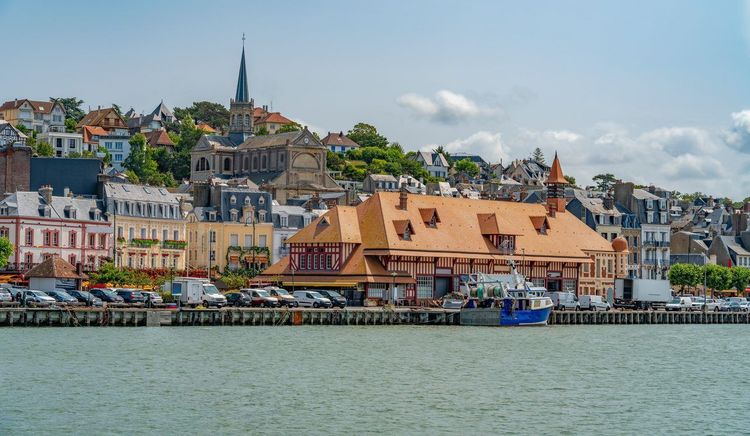
From Paris, the train remains the most direct solution: services from Gare Saint-Lazare reach Deauville-Trouville station in about two hours, with additional departures on Friday evenings and weekends. By car, allow about two hours fifteen via the A13 motorway, with much heavier traffic on Friday evenings and late Sunday afternoons.
Once there, a car becomes almost superfluous: the town center, the Planches, the casino and the station are all within an area that can be crossed on foot in twenty minutes. To reach Trouville-sur-Mer, the Pont des Belges, right next to the station, crosses the Touques in a few minutes.
Local buses serve the more remote areas (Clairefontaine racecourse, Mont Canisy golf course), a useful option if you don't want to walk half an hour. Several bike rental shops, located near the station and the seafront, offer hourly or daily rentals, handy for combining Deauville and Trouville in a single trip.
On site, the tourist office will provide a map and an events calendar, and the pedestrian signage is enough to find your way between the center and the seafront.
When to Go and How Many Days to Plan to Visit Deauville
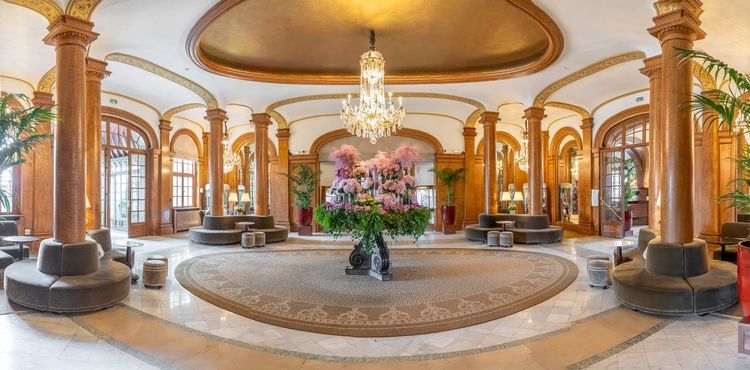
Two to three days are enough to cover the essentials of a weekend in Deauville: the Planches, a heritage visit, the racecourses depending on the racing calendar, and a casino evening. Three days let you add the spa or golf without rushing, and go on to Trouville on the last day.
As for the season, spring (May-June) and early autumn (September, outside the Festival) offer the best compromise between pleasant weather and reasonable crowds. Summer remains pleasant but much busier, especially during the August horse racing meeting and the American Film Festival in September, two periods when it's best to book accommodation and restaurants several weeks in advance.
If you have an extra day, several iconic sites in Normandy are less than an hour's drive away: Honfleur and its Vieux Bassin, Étretat and its cliffs, or Cabourg and its Marcel Proust promenade. The Ryo article on the 10 must-sees of the Côte Fleurie details these extensions.



FAQ
How many days should you plan for a weekend in Deauville?
Two days are enough for the essentials (the Planches, heritage, casino), while three days let you add a spa, golf or a stroll to Trouville without rushing.
What budget should you plan for a weekend in Deauville?
The main expense is accommodation: the Barrière palace hotels often cost several hundred euros a night in high season, while boutique hotels and rooms on the Trouville side remain much more affordable, especially between October and March. Add the train (round trip from Paris), meals and a few admissions (Les Franciscaines exhibition pass at €16).
What type of accommodation should you choose for a weekend in Deauville?
A palace hotel with a spa for a couple's stay, a holiday rental for families or groups of friends, and accommodation on the Trouville side for a tighter budget while staying close to the center.
How do you get to Deauville from Paris without a car?
The train from Gare Saint-Lazare reaches Deauville-Trouville in about two hours, with additional services on weekends.
Which Norman culinary specialties should you try in Deauville?
Farmhouse Camembert, brut or bouché cider, Calvados, Isigny butter and seafood (oysters, scallops in season) appear on most of the city's restaurant menus.
Can you visit other iconic sites in Normandy from Deauville?
Yes, Honfleur, Étretat and Cabourg are all less than an hour's drive away, a good complement if your stay extends beyond the usual three days.
Conclusion
A weekend in Deauville fits into a compact but dense format: a small town that brings together beach, Belle Époque heritage, Norman gastronomy and nightlife, accessible in two hours from Paris without needing a car once there. Whether you go as a couple for two days of disconnecting, as a family to discover the racecourses, or with friends for a casino evening, the day-by-day itinerary above can be shortened or extended depending on the time available.
To follow these same stops without juggling multiple tabs, the Ryo audio-guided tour of Deauville remains the simplest way to follow the thread from the Planches to the casino, at your own pace.