© Shutterstock
 Votre guide Ryo
Visiting Montauban as a Couple: The Pink City, the Tarn and Sweet Moments for Two in 2026
Visiting Montauban as a couple almost always starts at Place Nationale, at the hour when the brick takes on an almost coral hue. Here, there are no endless queues in front of an overcrowded monument: the pink city of Tarn-et-Garonne can be covered on foot in a good hour, leaving you time to wander under the arcades without watching the clock. The Ryo audio-guided tour of Montauban also starts from this square before crossing the Pont Vieux, built in the 14th century and still standing despite the Tarn's great floods.
On the programme: a museum holding the world's largest collection of Ingres drawings, a cathedral where you can see one of his major paintings, a Second Empire garden planted with 400 trees, a cruise gliding under the arches of the bridge and couples' massages in the heart of the pedestrian centre. Add Moissac and its UNESCO-listed abbey, half an hour away by road, Bruniquel and its castles, Cahors and its fortified bridge: the city hides far more than a simple stopover on the way to Toulouse, and a weekend for two more than holds its own here.
Place Nationale and the Pont Vieux: The Beating Heart of the Pink City
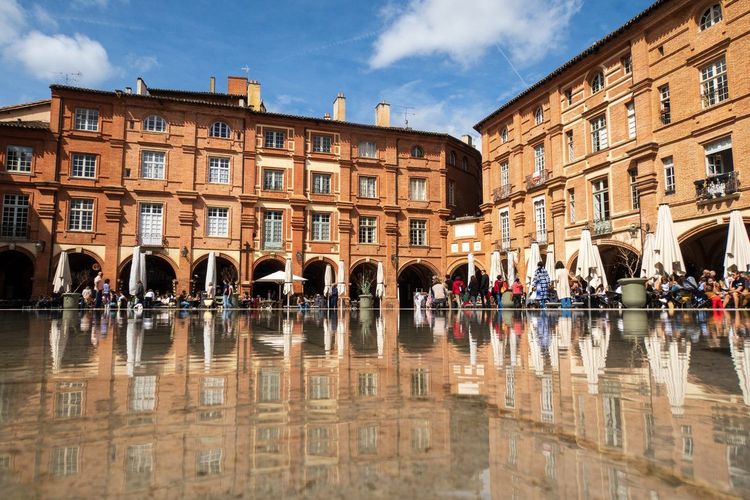
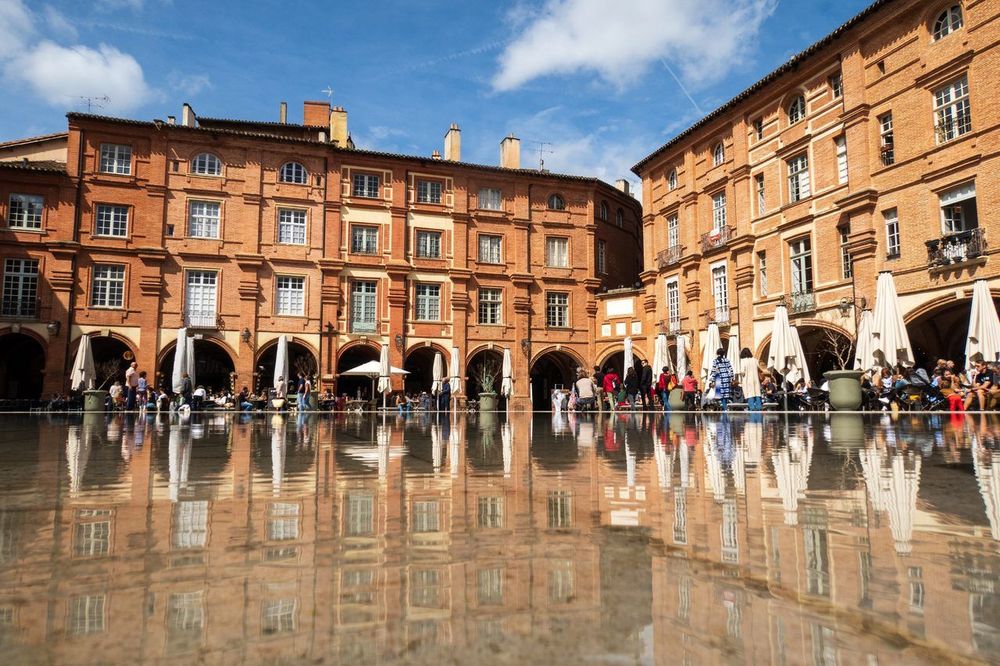
The Place Nationale is instantly recognisable by its double vaulted galleries. Ravaged by two fires, in 1614 and then in 1649, it was entirely rebuilt in brick, with monumental pilasters and rib-vaulted arcades designed to limit the spread of fire. Completed in the early 18th century and restored in 2009, it remains one of the oldest urban squares in France, and most of the streets in the centre still converge on it.
For two, the place is best enjoyed in the late afternoon, when the low sun lights up the brick and the terraces fill up. Choose a table under the arcades that hold the light the longest and let an hour slip by with a glass of Fronton, a red wine made from négrette, a grape you find almost nowhere else but in the north of the Toulouse region.
The lanes leading off the square, rue de la République or rue Notre-Dame, are also worth the detour: booksellers, designer boutiques and a more intimate atmosphere than on the square itself. It was in this neighbourhood that Jean-Auguste-Dominique Ingres was born in 1780, and you will find traces of him at the museum that bears his name.
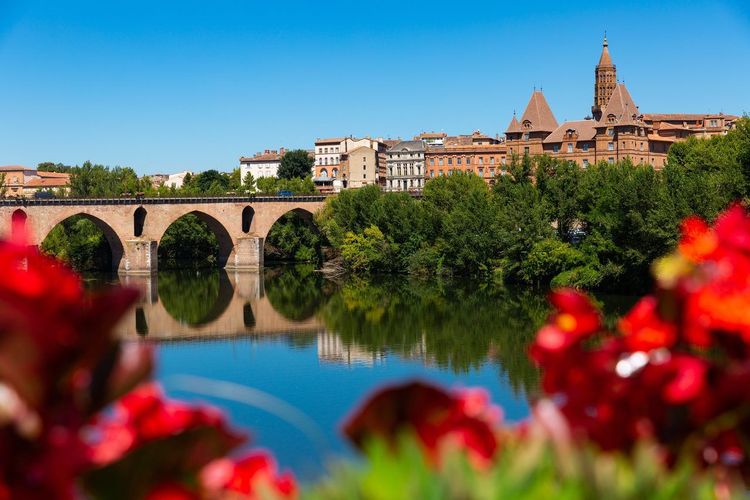
Then simply walk down to the river to reach the Pont Vieux (Pont Vieux, 82000 Montauban, rated 4.7/5 on Google from 2.1K reviews). Planned as early as the city's founding charter in 1144, it was only built at the start of the 14th century, with the backing of Philip the Fair, and completed around 1335. Built of brick on piers with cutwaters, it has withstood the Tarn's historic floods, including that of March 1930, which devastated the region.
Walking across side by side offers the best view of the pink façades lining the river, especially from the middle of the bridge. It is also the way to go if you are heading to Villebourbon, on the left bank, where a few quieter cafés welcome regulars away from the bustle of the centre.
This square-and-bridge duo is told by the Ryo audio-guided tour dedicated to the pink city in 18 audio stops spread over 1h10 and 2.8 km. You will learn why the local brick, fired with Tarn clay, took on the hue that earned the city its nickname, an anecdote better appreciated walking hand in hand than reading a sign.
Churches and Lanes of the Centre: Saint-Jacques, the Cathedral and the Mansions
A stone's throw from Place Nationale, the Saint-Jacques church raises its octagonal bell tower in the Toulouse style. Look up at the tower: it still bears the marks of cannonballs fired in 1621, during the siege of the Protestant city by Louis XIII's troops, an episode in which Montauban held out for nearly three months.
Further south, the Notre-Dame-de-l'Assomption Cathedral stands out from the rest of the city with its white stone. Built between 1692 and 1739 to assert the return of Catholicism in a long-Huguenot city, it houses The Vow of Louis XIII, a large canvas that Ingres painted for his hometown. Entry is free: ten minutes are enough to see the painting, a little longer if you enjoy the silence of grand classical naves.
Between the two, take the time to push open the half-open carriage gates. The mansions of the 17th and 18th centuries, on rue de la Comédie, rue des Carmes or in the Villebourbon quarter, hide inner courtyards and brick staircases that most visitors never notice.
Musée Ingres Bourdelle and the Jardin des Plantes: A Cultural and Natural Break for Two
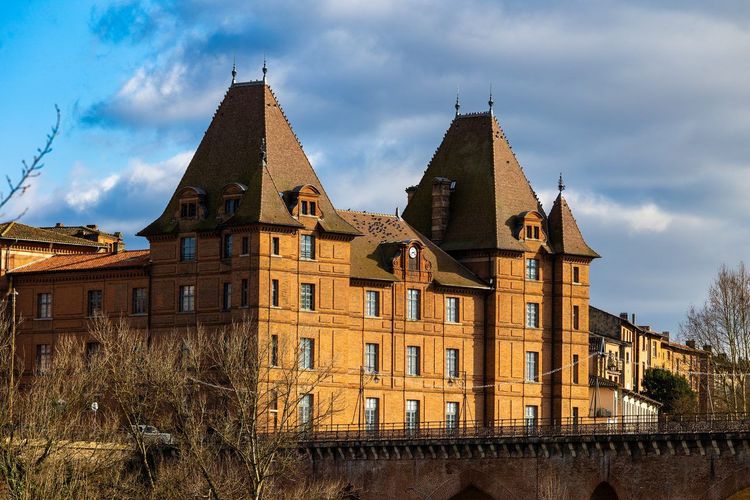
The Musée Ingres Bourdelle occupies the former episcopal palace, a 17th-century building erected on the foundations of a medieval castle, which overlooks the Tarn right next to the Pont Vieux. It holds more than 4,000 drawings by Jean-Auguste-Dominique Ingres, the artist's most important collection in the world, as well as several major paintings. The works on paper are displayed on rotation to protect them from light.
You will also come across the bronzes of Antoine Bourdelle, another native of Montauban, and the vaulted basement rooms, whose coolness is welcome in summer. Allow one to two hours for an unhurried visit. The museum is closed on Mondays, the full price is around 8 euros, and admission is free on the first Sunday of the month: a good way to fit in the visit without straining the budget.
On leaving, follow the Tarn southwards to reach the Cours Foucault, the city's oldest public promenade, planted with tall trees along the riverbank. It is one of the few places in Montauban where you can walk as a couple without meeting many people, even on a Saturday afternoon, with an open view of the opposite bank.
The Jardin des Plantes (Allées Consul Dupuy, 82000 Montauban, rated 4.3/5 on Google from 2,494 reviews) lies north of the centre, about fifteen minutes on foot. Opened in 1861, it covers 3 hectares on both sides of the Tescou, with winding paths, terraces, rock gardens and nearly 400 trees, including a giant sequoia and ginkgos. Look for the plot known as the "Land of the Indians", given in 1996 to the Osage and Cherokee nations in memory of the Osage welcomed by the people of Montauban in the 19th century.
A bench in the shade, two takeaway coffees and half an hour are enough for a parenthesis that breaks up the rhythm of sightseeing. To link the museum and the stroll without leaving the map, the 18 audio stops of the Ryo audio-guided tour follow the Tarn precisely between the episcopal palace and the Cours Foucault.
Cruise and Barge Ride on the Tarn: Seeing the Pink City from the Water
Seeing Montauban from the water completely changes the perspective. From April to October, the Compagnie fluviale du Midi runs cruises on the Tarn from Port Canal: the 1.5-hour "discovery cruise" sails between the Palisse mill and the Sapiacou mill, passing the île de la Pissotte, the Ingres museum and the mansions of Villebourbon, for an entry price of around 6 euros per person.
On board, the pace naturally slows: you talk little, watch the façades drift by, and the city takes on another colour seen at water level. This format particularly appeals to couples because it forces a pause, with no itinerary to follow and no decisions to make.
For a more intimate version, two options stand out. The gourmet barge ride takes place aboard Gaïa, a hotel barge from 1927: three hours of sailing with lunch, boarding around 11:30 am, from 110 euros per person. Electric boats can also be privately chartered for two hours with a meal on board, from around 100 euros. These services should be booked several weeks in advance for Fridays and Saturdays from May to September.
Aim for the end of the day rather than the middle of noon: summer heat washes out the colours, whereas in the late afternoon the brick shifts from pale pink to deep orange. Also check the weather the day before, as a heavy storm is enough to make the Tarn rise and cancel departures.
Before boarding, listen to the stop of the Ryo audio guide devoted to the quays: it gives you the keys to recognise from the boat what you will have seen on foot a few hours earlier.
Along the Montech Canal: Cycling and a Picnic for Two
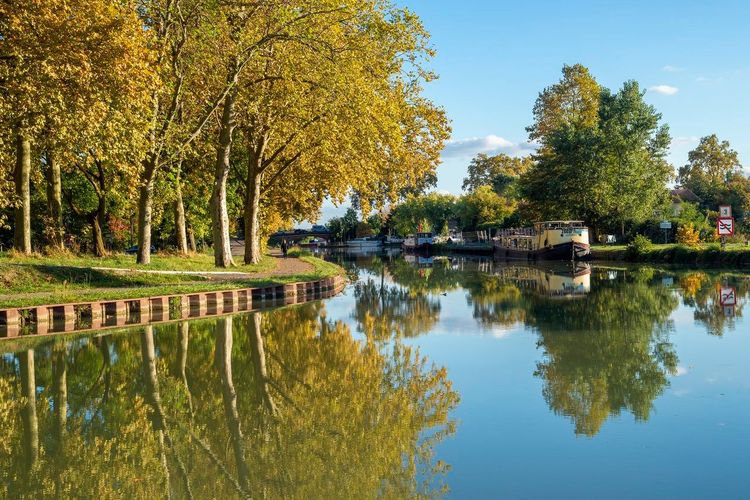
Port Canal, where the cruises depart, also marks the start of another walk. The Montech canal links Montauban to the Garonne canal, and its towpath, converted into a greenway, runs for about ten kilometres under plane trees, flat and away from cars.
Rent two bikes or simply set off on foot for an hour's round trip: the locks follow one another, pleasure barges sleep at the quay and you meet little more than anglers and cyclists. A basket put together at the market in the centre, a few slices of ham, a sheep's cheese and a punnet of chasselas in season, and you have the simplest picnic of the trip.
At the end of the greenway, in Montech, take a look at the water slope, a curious 1970s hydraulic structure that lifted boats up a ramp instead of using locks. It no longer operates, but the site is worth a short stop before heading back.
Wellness for Two: Massages, Love Rooms and Cocooning Moments

After a day of walking, Montauban offers plenty of ways to unwind together. In the heart of the pedestrian centre, Sweet Ôm Montauban (3 Rue de la République, 82000 Montauban, rated 5/5 on Google from 201 reviews) is a yoga and massage studio offering couples' massages of 45 to 90 minutes, and an original "Sonic Sauna" session with Tibetan bowls. For an individual massage, expect 50 to 90 euros depending on the duration.
For a more intimate option, several establishments in the area offer love room packages with a private jacuzzi or hammam in the room. Expect generally between 90 and 150 euros for two hours of private bubble, depending on the service and the season.
A suite with spa is better booked for a full night: a jacuzzi in the room, sometimes a private terrace, and the assurance of not putting your walking shoes back on for the evening. These rooms go quickly at weekends, especially around Valentine's Day and in summer.
A tip: call rather than booking only online. Couples' slots are not always displayed on the platforms, and a phone call the day before is often enough in low season.
Where to Dine Tête-à-Tête: Tables and Flavours of Tarn-et-Garonne
The terraces of Place Nationale, ideal for an aperitif, work just as well for dinner: tables set under the arcades, a lively atmosphere that doesn't drown out conversation.
For more calm, look for the restaurants along the Tarn, on the Villebourbon side or near the Pont Vieux. The view over the water changes with the evening light and, when the bridge is lit up, the reflections in the river serve as decoration.
The local cuisine draws on Tarn-et-Garonne: Moissac chasselas, white garlic from Lomagne, plums and melons from Quercy, wines from Fronton or the Coteaux du Quercy, and in season game and porcini mushrooms. A menu that pairs these products with a more creative dish often offers the best compromise.
For a gourmet weekend, some restaurants offer a multi-course tasting menu, designed for a dinner that takes its time. Book a little in advance at weekends: the best addresses fill up quickly between May and September.
Where to Stay as a Couple: Rooms with a View and Guesthouses
For a stay in Montauban for two, accommodation matters as much as the programme. Addresses in the historic centre, a few minutes' walk from Place Nationale, let you head back after a late dinner without relying on the car.
The rooms with a view over the Tarn, rare but precious, offer a wake-up with the Pont Vieux as a backdrop. They cost more than a standard room, but the difference is justified from the very first morning with the shutters open.
Establishments close to Place Nationale are the other strong option: you lose the view over the water, but you gain the animation of the arcades and terraces at your doorstep. A good choice if the stay remains focused on the city.
For a more rural setting, guesthouses and small estates 15 or 20 minutes away by car offer a pool or garden. This is the option to favour if Moissac or Bruniquel are on the programme, to limit travel.
Day Trips for Couples Around Montauban: Villages and Gems of Tarn-et-Garonne
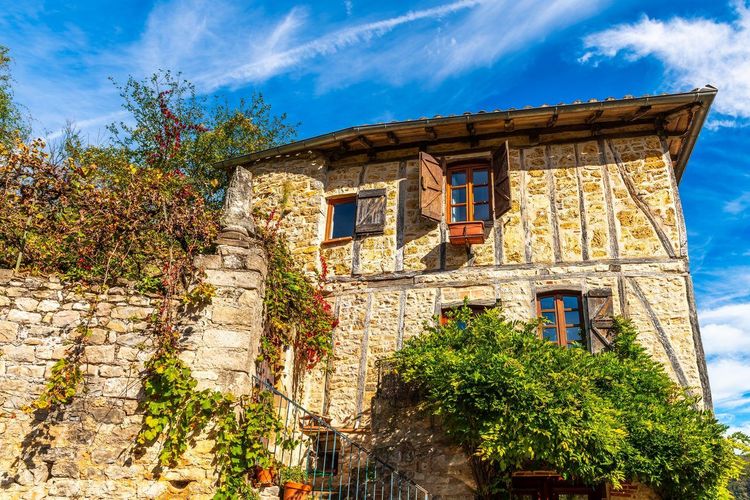
Montauban lends itself equally well to a tight programme or a day-long getaway, with the département lining up beautiful villages within an hour's drive. For a stay in Tarn-et-Garonne that extends beyond the historic centre, three directions stand out.
About thirty minutes to the west, Moissac is organised around the Saint-Pierre Abbey, listed as a UNESCO World Heritage Site as part of the Routes of Santiago de Compostela. Its Romanesque cloister, completed in 1100, and the sculpted tympanum of the portal are among the masterpieces of Romanesque art in France; come in late morning, when the light streams through the arcades.
Moissac is also one to taste: the chasselas, a golden table grape from the neighbouring hillsides, has held a protected designation of origin (AOC) since 1971. In September, some producers open their farms for tastings, a lovely stop to end the day.
To the south-east, Bruniquel, ranked among the Plus Beaux Villages de France, clings to a rocky spur above the Aveyron. Its two castles, one of which served as a set for the film Le Vieux Fusil, can be visited in a short hour, and the cobbled lanes climbing towards the keep contrast with Montauban's urban brick.
Other pleasant villages around Montauban deserve a shorter stop: Auvillar, another member of the Plus Beaux Villages de France with its circular 19th-century market hall, and Montricoux, on the banks of the Aveyron, whose castle houses the Marcel-Lenoir museum (open from May to early October). Combine them easily with Bruniquel.
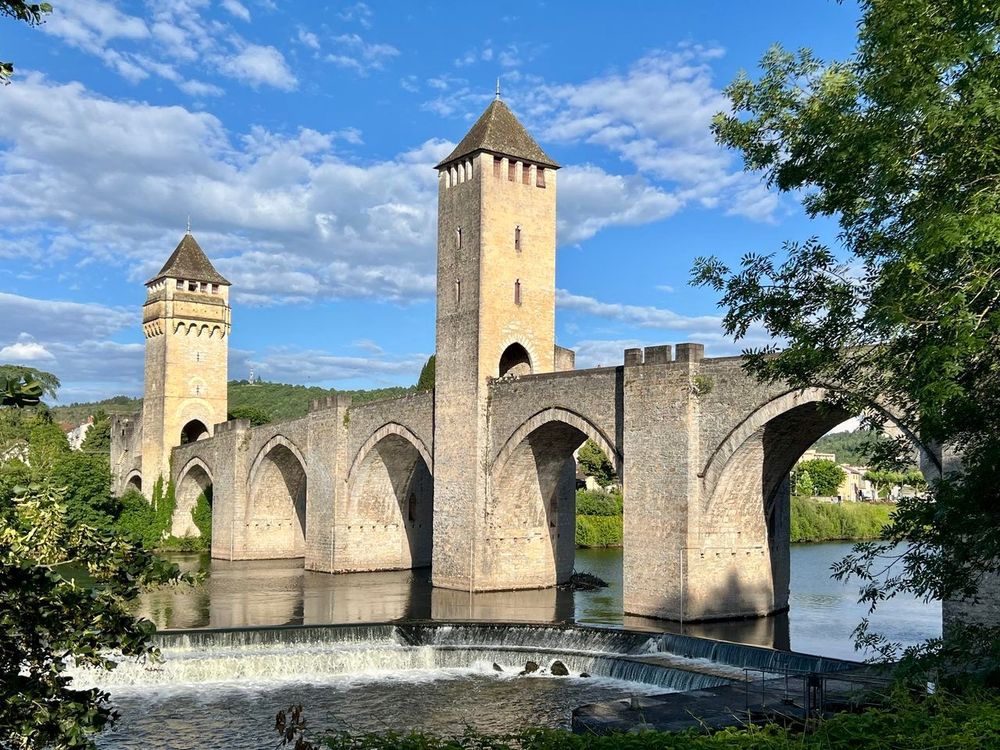
A little under an hour's drive away, Cahors deserves a full day. The old town, enclosed in a loop of the Lot, is explored on foot between medieval lanes and quays, with the Pont Valentré (Pont Valentré, 46000 Cahors, rated 4.7/5 on Google from 6,725 reviews) as its highlight, a 14th-century fortified bridge with three towers, one of the finest examples of a fortified medieval bridge preserved in France.
The Cahors vineyard, the historic birthplace of malbec long before Argentina, covers the hillsides of the Lot valley: a tasting at a winery a quarter of an hour from the centre rounds out the visit nicely.
These excursions are almost all done by car, as buses to Bruniquel or Moissac remain rare at weekends. To prepare for the stop, our article on a walk in Cahors details a walking itinerary through the old town, and the one on what to do in Moissac adds a few addresses around the abbey.
Only one getaway on the programme? Moissac remains the simplest as a round trip, with the abbey visited in half a day. And since the Ryo audio-guided walk of central Montauban takes just 1h10, you can wrap up the city in the morning and keep the afternoon for Moissac or Cahors.
Planning Your Couple's Stay: Duration, Budget and Best Season
How many days to visit Montauban as a couple? A two-night weekend is enough for the historic centre, the cruise and some relaxation, with half a day for Moissac. To add Cahors or Bruniquel, aim for three days.
As for the budget for a couple's stay, expect around 250 to 400 euros for two on a two-night weekend: city-centre accommodation, a nice dinner, the cruise and a couples' massage. The barge with lunch or a suite with spa push up the bill, but remain occasional.
When to go? Spring, from April to June, and September offer the best conditions: pleasant temperatures for walking, soft light on the brick and far fewer people than in midsummer, when the heat quickly discourages daytime walking. The cruises, for their part, only sail from April to October.
How to get to Montauban: the city is about thirty minutes from Toulouse by train and less than 40 minutes via the A62 or A20. Villebourbon station, on the left bank, is a quarter of an hour's walk from Place Nationale, crossing the Pont Vieux: an arrival that sets the tone.
So, is Montauban worth visiting? If you are looking for a human-scale city, without the crowds of the big destinations but with a real density of things to do, the answer comes down to a crossing of the Pont Vieux at sunset. To fit this visit time into your weekend, remember that the Ryo audio guide covers the centre in 18 stops over 2.8 km, at your own pace.



FAQ
Is Montauban worth visiting?
Yes, especially for a weekend. The pink city packs remarkable brick architecture, a nationally ranked museum devoted to Ingres and quick access to Moissac, Bruniquel or Cahors into a compact centre. It takes little time to give a lot.
What are the must-sees in Montauban?
Place Nationale and the Pont Vieux are the essential stops, followed by the Musée Ingres Bourdelle, the cathedral and its painting by Ingres, the Cours Foucault and the Jardin des Plantes. A cruise on the Tarn rounds out this core nicely.
What activities are there for couples in Montauban?
A stroll along the Tarn, an end-of-day cruise, lunch on a 1927 barge, a couples' massage, a bike ride along the Montech canal greenway and dinner under the arcades of Place Nationale.
What is a nice village to visit near Montauban?
Moissac, with its UNESCO-listed abbey, comes first. Bruniquel, perched above the Aveyron with its two castles, and Auvillar, with its circular market hall, can each be visited in half a day from Montauban.
How long should you plan for a romantic weekend in Montauban?
Two nights are enough for the historic centre, a cruise and some relaxation. To add Moissac or Cahors without rushing, plan on three days.
What budget should you plan for a couple's stay in Montauban?
Expect around 250 to 400 euros for two on a two-night weekend, including accommodation, meals, a cruise and a massage. The Musée Ingres Bourdelle is free on the first Sunday of the month, and the discovery cruise starts at around 6 euros.
Visiting Montauban as a couple means agreeing to slow down: a city that is truly meant to be explored on foot, where every stop, from the Pont Vieux to a terrace under the arcades, invites you to take your time rather than tick off a list. Between the brick that changes colour throughout the day, the Tarn seen from the water and the surrounding villages to extend the getaway, the itinerary easily comes together over two or three days.
To miss nothing of the historic centre without sacrificing the rest, start the Ryo audio-guided tour of Montauban when you arrive: it follows the itinerary of this article, from Place Nationale to the Pont Vieux, with no time constraints.