© Shutterstock
 Votre guide Ryo
Le Marais in Paris: Complete Guide to Visiting the Historic District in 2026
Le Marais defies easy definitions. Neither an open-air museum nor a simple trendy neighborhood, it is one of the rare places in Paris where 17th-century mansions stand alongside contemporary art galleries, where you can pass a 19th-century synagogue and a designer concept store in under fifty meters. Visiting le Marais in Paris means crossing eight centuries of urban history without leaving the 3rd and 4th arrondissements — a rather remarkable geographical feat for a Parisian neighborhood. To go further in discovering the capital, the Ryo Paris audio guide takes you beyond the neighborhood, toward the Champs-Élysées and the great monuments in a 3h40 narrated walk.
This guide offers a precise walking itinerary, museum addresses that competitors systematically overlook, the best tables without queues, and truly hidden corners that even regular visitors to the neighborhood don't know about. The Place des Vosges, built in 1612, is certainly the highlight, but the Marché des Enfants Rouges, Paris's oldest covered market (1615), remains a discovery for many visitors. The Mémorial de la Shoah, free and deeply moving, deserves an hour that no one ever regrets. And the Village Saint-Paul — a labyrinth of cobbled courtyards and antique dealers accessible through discreet carriage gates — is still overlooked by most standard tourist circuits. Le Marais is so dense that two full days there are justified without any effort.
Morning Itinerary in le Marais: From the Hôtel de Ville to the Place des Vosges
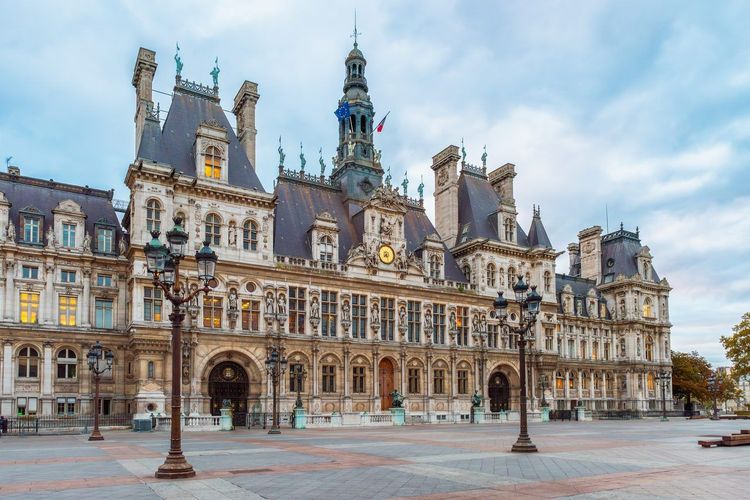
Begin at the Hôtel de Ville metro exit, lines 1 or 11. Turning to face the building, you stand before a town hall built between 1874 and 1882 on the ruins of the previous one, burned down during the Paris Commune in 1871. The vast, functional Place de l'Hôtel de Ville marks the western boundary of the historic Marais.
The Hôtel de Ville of Paris is not open for regular individual visits, but its temporary exhibitions in the salons are often free — check the City of Paris website before you go. The neo-Renaissance facade, flanked by 136 statues representing French communes and major figures in national history, is worth a few minutes of observation from the forecourt before heading north.
Head east along rue de Rivoli, then turn left onto rue du Temple. Two hundred meters along, the church and cloister of the Billettes form the only surviving medieval cloister in Paris, built in 1427. The Gothic nave is plain, almost austere, and the cloister is freely accessible during the day. It is not the most famous spot in le Marais — which is precisely why it is worth the detour, especially in the early morning before organized groups begin their day.
Continue along rue des Archives to the Hôtel de Soubise, which houses the Musée des Archives Nationales. The 18th-century mansion, with its horseshoe-shaped cour d'honneur designed by architect Delamair, is one of the finest examples of Parisian Rococo style. The permanent archives are freely accessible on weekends, and the temporary exhibitions — originals of the Declaration of the Rights of Man, autograph letters from Marie-Antoinette, Napoleon's will — are worth the €8 admission. The building alone, with its gilded salons and ceilings painted by Boucher and Van Loo, would justify the visit even without the historical documents.
Cross over to rue des Francs-Bourgeois, the central artery of the historic Marais. Its name comes from the "francs bourgeois" — the poor residents exempt from taxes who lived there in the 14th century. Today it is the commercial backbone of the lower Marais: fashion boutiques, covered arcades, and cafés line the street between historic mansions. It is packed on weekends; weekday mornings allow for a far more peaceful exploration, and the facades are much easier to read without the crowds.
The Musée Cognacq-Jay opens onto rue Elzévir, perpendicular to rue des Francs-Bourgeois. Entirely free for permanent collections, it brings together the personal collection of Ernest Cognacq, founder of La Samaritaine department store, and his wife Louise Jay: 18th-century paintings (Boucher, Fragonard, Watteau, Reynolds), Clodion terracotta sculptures, Meissen porcelain, and precious objects gathered in an intimate 17th-century mansion. On weekdays it is possible to find yourself alone in several rooms — a rarity in Paris that art lovers particularly appreciate.
Continue east along rue des Francs-Bourgeois, taking time to observe the succession of mansions: the Hôtel de Lamoignon at the corner of rue Pavée, the Hôtel Carnavalet at number 23 rue de Sévigné (entrance to the Musée Carnavalet), the Hôtel Guénégaud at the corner of rue des Archives. Each facade is a lesson in Parisian architecture from the 16th to the 18th century, compressed into 400 meters of pavement.
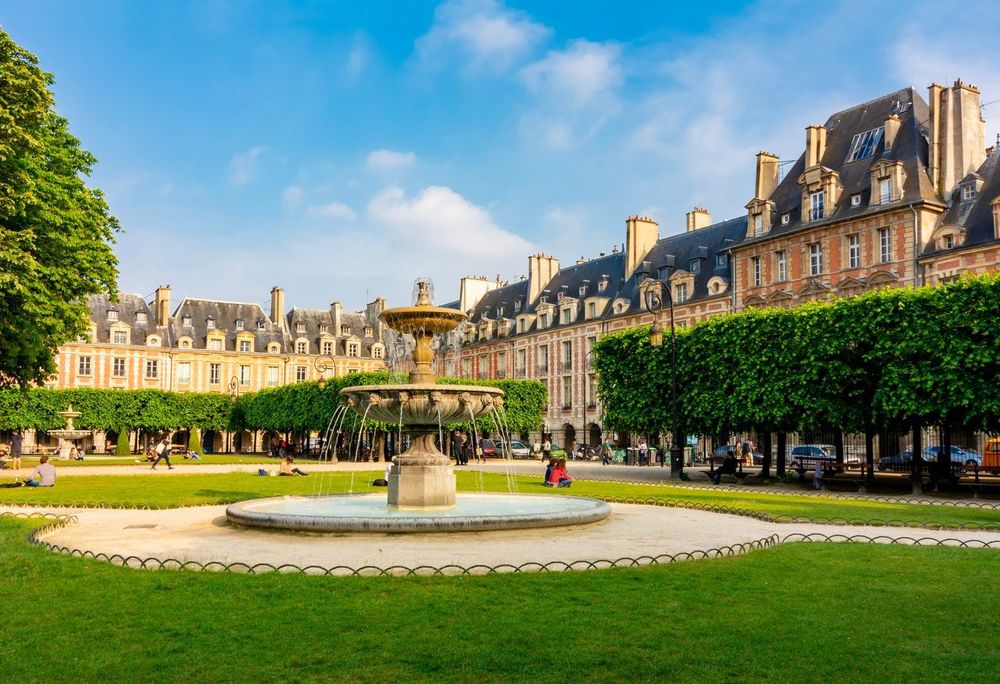
Then take rue de Turenne southward. At the end of rue des Francs-Bourgeois, pass under the arcades of the Place des Vosges (Place des Vosges, 75004 Paris, rated 4.6/5 on Google with 32,924 reviews) through the southwest corner. Allow a moment for this arrival: the first sight of the square, framed by red brick columns and the central French-style lawn, produces an effect that few visitors anticipate, even those who think they know Paris.
End the morning in the garden or under the arcades with a coffee before starting the afternoon in the Haut Marais.
The Haut Marais in the Afternoon: Creative Streets and Secret Galleries
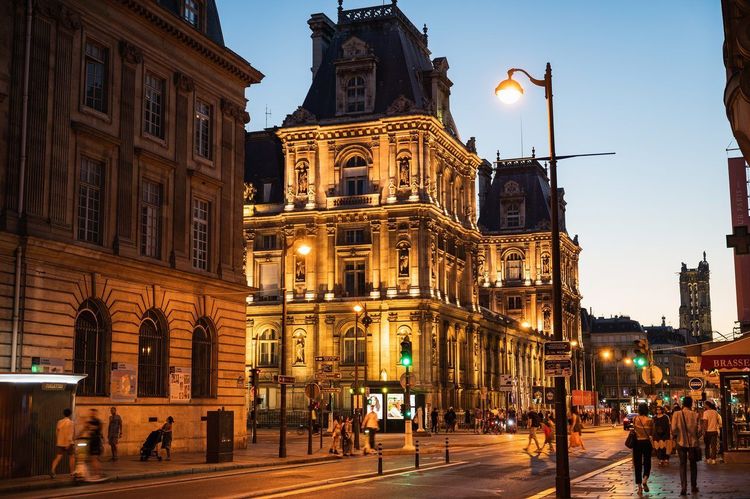
The Haut Marais is the northern part of the neighborhood, between rue de Bretagne and boulevard du Temple. Less touristy than the historic lower Marais and more residential in its Haussmann buildings and small courtyards, it has transformed since the 2000s into the epicenter of independent fashion and contemporary art galleries in Paris. Afternoons here are particularly pleasant: the late-day light falls beautifully on the brick and limestone facades.
Start with the Carreau du Temple, a former goods market inherited from the medieval Templar priory, entirely renovated in 2014. Beneath its 19th-century cast-iron and glass roof structure — a masterpiece of industrial engineering — the multipurpose hall hosts vintage markets on weekends, concerts, group fitness classes, and temporary exhibitions during the week. The Sunday designer market draws serious browsers and curated secondhand fashion enthusiasts.
From there, head south down rue de Bretagne. It is one of the liveliest streets in the 3rd arrondissement, with its award-winning bakeries, specialty grocers, and packed terraces on Saturday mornings. Halfway along, the Marché des Enfants Rouges (39 Rue de Bretagne, 75003 Paris, rated 4.4/5 on Google with 5,027 reviews) opens on your right: founded in 1615, it is Paris's oldest covered market, and it outperforms any imitator. Its name comes from the charitable orphanage whose residents wore red — the color of Christian charity — that once occupied the site. Today, the stalls are shared between organic fruit and vegetables, Japanese, Lebanese, Caribbean, Moroccan, and Brazilian food vendors, and a few shared wooden tables where lunch naturally extends into coffee time. Arrive before noon to find a seat on weekends.
Continue to rue Charlot, informally nicknamed "the gallery street" by those who walk it regularly. Around twenty contemporary art galleries have set up here since the 2000s, some in the corridors of former buildings converted into minimalist white spaces, others in ground-floor premises that seem unchanged since the 1980s. Entry is free everywhere, and Thursday or Friday evening openings are open without invitations — the best time to meet artists and Parisian collectors in a relaxed setting.
Rue du Perche and rue de Saintonge, running perpendicular, form the heart of the Haut Marais for designer shopping. Independent ready-to-wear boutiques, leather goods accessories, photography bookshops, and concept stores fill these two hundred meters. Take the time to push open a few carriage gates: the inner courtyards conceal hidden terraces, shared gardens, and artists' studios that welcome curious visitors on weekdays.
Rue de Turenne, a little further east, runs along the eastern edge of the neighborhood before opening onto the Place des Vosges. Less commercial than rue Charlot, it offers a gentle transition between the Haut and lower Marais, with well-preserved mansions on the even-numbered side.
To explore Paris beyond le Marais with the same quality of storytelling and anecdotes, the Ryo audio guide From Mona Lisa to Notre-Dame covers the journey between the Louvre and Notre-Dame in 22 audio tracks — a natural continuation after le Marais for a second day in Paris starting from the Right Bank.
The Place des Vosges: The Royal Heart of le Marais
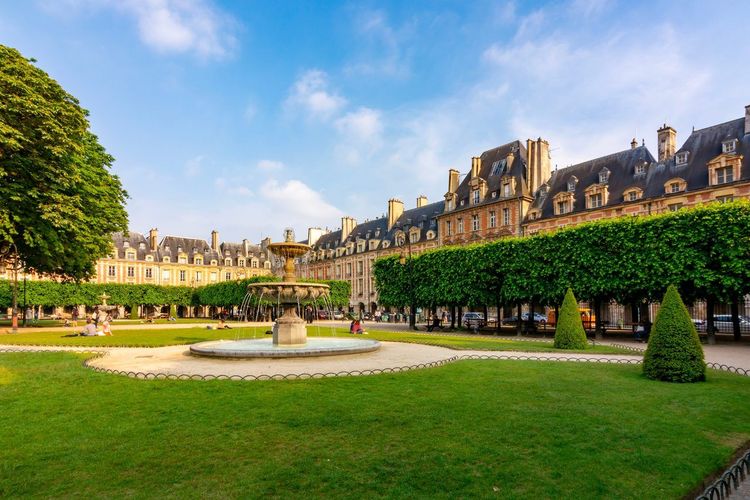
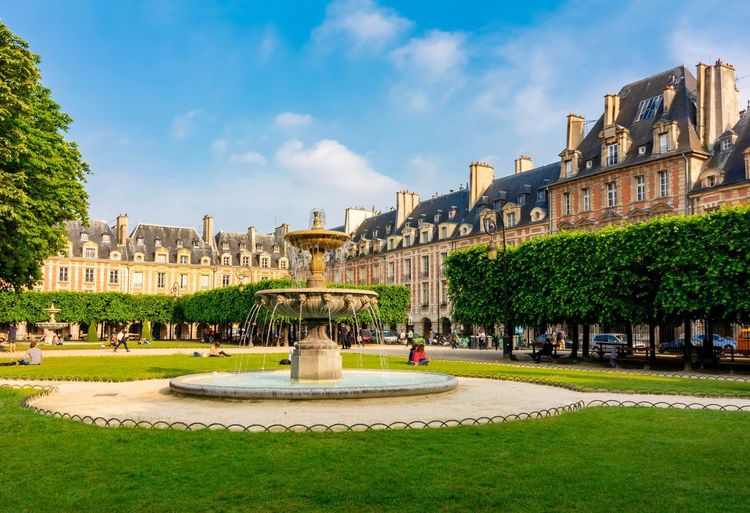
The Place des Vosges is the oldest royal square in Paris, completed in 1612 under Henri IV. Thirty-six brick and stone pavilions, identical in height and facade, line a central French-style garden. The harmony is mathematical and deliberate: Henri IV had demanded total architectural consistency to counterbalance the medieval fragmentation of the surrounding streets. No other square in Paris was designed with such homogeneity of materials and proportion, nor has any survived the centuries so intact.
Beneath the arcades running around the entire perimeter, art galleries, antique dealers, jewelers, and restaurants have occupied the ground floors for centuries. Take the time to walk the full perimeter — about 500 meters — before crossing the garden toward the central pavilion, where fountains flank an equestrian statue of Louis XIII (a 19th-century copy; the original was melted down during the Revolution to cast cannons).
At number 6, the Maison de Victor Hugo, converted into a municipal museum in 1902, is free for permanent collections. Hugo lived here from 1832 to 1848, and it was here that he wrote much of "Ruy Blas" and began "Les Misérables." The reconstructed apartments give a precise picture of bourgeois domestic life under the July Monarchy: the Orientalist hangings of the Chinese drawing room, designed by Hugo himself, reveal a painter and decorator eclipsed by his novels. The writer's original drawings, displayed on the first floor, deserve particular attention — often overlooked by visitors rushing past the furniture.
At the southeast corner of the square, the Hôtel de Sully (62 Rue Saint-Antoine, 75004 Paris, rated 4.1/5 on Google with 65 reviews) opens onto a sumptuous Louis XIII-style inner courtyard, listed as a historic monument. It houses the Jeu de Paume's off-site photography exhibition center. A door aligned with the courtyard connects directly from the Place des Vosges to the quai des Célestins through the garden — a little-signposted pedestrian shortcut known to locals but missed by the vast majority of visitors.
One often-overlooked practical tip: the square is far more beautiful outside peak tourist hours. Before 9 a.m. or after 5:30 p.m., the central garden reverts to the local neighborhood — children playing, strollers, readers on benches. The contrast with peak hours (11 a.m.–3 p.m. in summer) is striking, and photographs of the facades without parasols or selfie sticks are noticeably more successful.
Museums in le Marais: From Picasso to the History of Paris
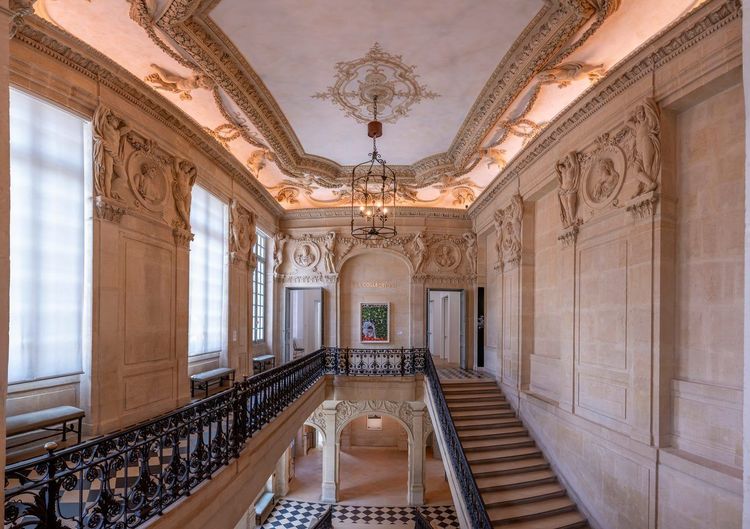
Le Marais concentrates an exceptional density of museums for a residential neighborhood. Here are those that truly justify a visit in 2026, with what you will actually find there.
The Musée National Picasso-Paris, housed in the Hôtel Salé (1659), holds the world's largest public collection of Picasso's works: over 5,000 pieces, including paintings, sculptures, ceramics, prints, and personal archives. The collection came largely from the "Picasso bequest" of 1979, when the French state accepted works in lieu of the enormous inheritance taxes owed. The rooms follow a chronological order, from the Blue Period to canvases from the 1970s. Personal objects and studio photographs interspersed among the works create an intimate portrait of the painter, very different from conventional retrospectives. Admission: €16 (reduced €12), free on the first Sunday of the month. Allow two to three hours for a thorough visit; weekend queues can exceed 45 minutes without a reservation.
The Musée Carnavalet, Histoire de Paris is the municipal museum dedicated to the history of the city from the Neolithic era to the 20th century. Housed in two interconnected mansions — the Hôtel Carnavalet (16th century, once home to Madame de Sévigné) and the Hôtel Le Peletier de Saint-Fargeau (17th century) — it was entirely renovated in 2021 and reopened with 3,000 m² of entirely free permanent exhibition space. Among the highlights: Marcel Proust's reconstructed bedroom (woodwork salvaged before his apartment on boulevard Haussmann was demolished), paintings and objects from the French Revolution of rare documentary precision, scale models of Paris at different periods, and the remains of a Neolithic dugout canoe found in the Seine in 1991. The chronological layout makes the route intuitive even without a guide. Easily two hours.
The Musée d'Art et d'Histoire du Judaïsme (MAHJ) occupies the Hôtel de Saint-Aignan, a magnificent 17th-century mansion carefully restored. Its collection traces the history of Jewish communities in Europe and North Africa through rituals, artworks, documents, and archives spanning more than twenty centuries. The permanent exhibition on the Holocaust in France is particularly rigorous in its historical treatment. Admission: €13, free for European residents under 26. Closed on Saturday and Jewish holidays.
The Musée de la Chasse et de la Nature (62 Rue des Archives, 75003 Paris, rated 4.5/5 on Google with 2,520 reviews), on rue des Archives, is one of the most original and least-known museums in Paris. A collection of hunting trophies, historical weapons, and animal paintings is spread throughout the Hôtel de Guénégaud, but presented with a deliberately offbeat perspective on the relationship between humans and wild animals. Contemporary art installations slipped between 17th-century pieces create constant surprise: a miniaturized forest in a drawer, a taxidermied wild boar observing visitors from a room corner, a room dedicated to the unicorn. Admission: €13.50 (reduced €11.50), free on the first Sunday of the month, closed Monday. It is also one of the most child-friendly museums in the neighborhood.
For visitors wishing to combine museums, architecture, and Parisian history over several days, our Ryo guide to visiting Paris in 3 days offers an extended program across the entire capital, with the best sequences between arrondissements.
Places of Memory and Spiritual Heritage in le Marais
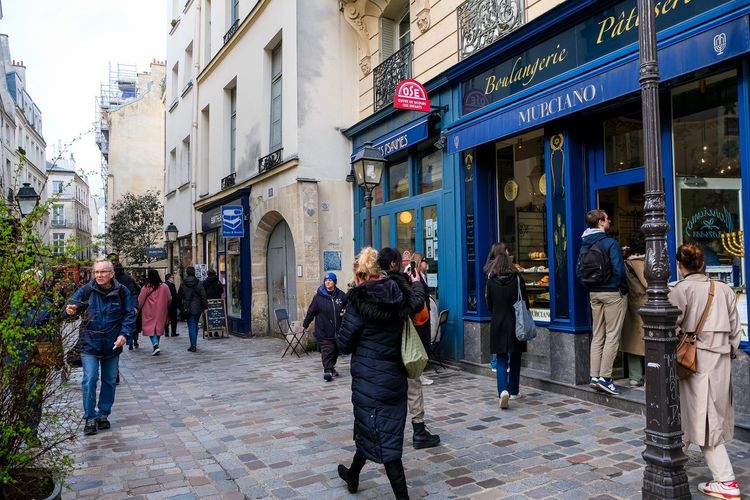
Le Marais was for centuries the Jewish quarter of Paris. This history has left architectural, cultural, and memorial traces that it would be impossible to ignore in any honest guide to the neighborhood.
The Mémorial de la Shoah, on rue Geoffroy-l'Asnier, is a space of memory and history dedicated to the deportation of Jews from France during the Second World War. Entry is entirely free. The Wall of Names — 200 meters of surface covered with the first and last names of 76,000 Jews deported from France between 1942 and 1944 — is the centerpiece and one of the most powerful commemorative works in Europe. The crypt holds an urn containing ashes from Auschwitz and Sobibor. The library and documentary archives, open to the public, constitute one of the most comprehensive resources on the persecution of Jews in France. Allow one to two hours for a visit that deserves quiet and unhurried attention. Closed on Saturday and Jewish holidays.
Rue des Rosiers is the historic heart of the Jewish quarter: kosher grocery stores, bakeries, and Ashkenazi and Sephardic restaurants line a lively pedestrianized street. The Sacha Finkelsztajn bakery, on rue des Écouffes (a side street), has been serving its strudels and herring toasts to a loyal clientele since 1946. The address has survived several waves of gentrification in the neighborhood — a sign of loyalty that is quite rare.
The church of Saint-Paul Saint-Louis, on rue Saint-Antoine, is a remarkable example of 17th-century Jesuit Baroque architecture. Built between 1627 and 1641 on the model of the Gesù in Rome, it features a vault 55 meters high and wall paintings of uncommon richness for a Parisian parish church. The shell-shaped stoups were donated by Victor Hugo — an unexpected gesture from such a secular mind.
The church of Saint-Gervais Saint-Protais (2 Rue François Miron, 75004 Paris, rated 4.6/5 on Google with 1,190 reviews), steps from the quai des Célestins, is one of the oldest churches in Paris, on a site of worship dating back to the 6th century. Its facade is the first classical-order facade — three superimposed orders (Doric, Ionic, Corinthian) — built in Paris, between 1616 and 1621. The Couperin family, including composer François Couperin known as "le Grand," served as principal organist there for over a century. A recording of organ music sometimes plays softly during open visits.
The Most Beautiful Streets in le Marais
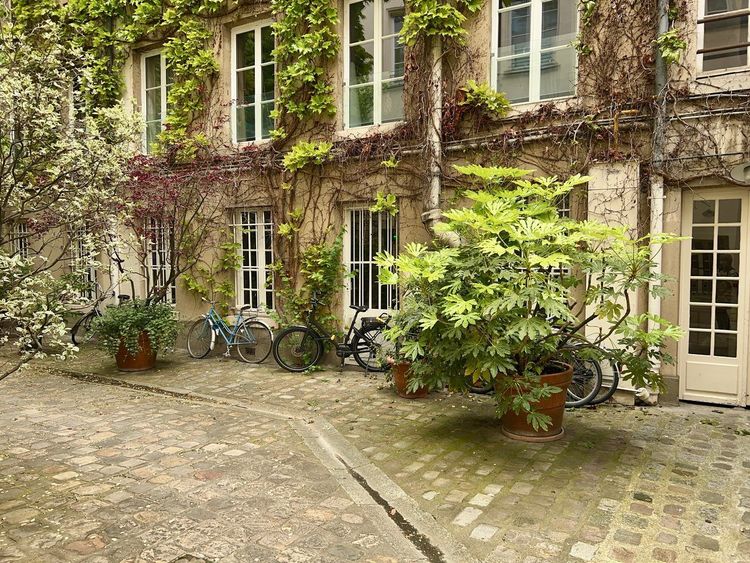
Some streets in le Marais are worth visiting in their own right, with no specific destination in mind.
Rue François Miron is one of the most picturesque streets in Paris, with its 15th-century half-timbered houses that miraculously survived the Haussmann transformations of the 19th century. At numbers 11 and 13, two medieval houses dating from around 1380 are among the oldest in the capital; the exposed timber framing and overhanging upper stories are visible from the pavement, between buildings with more modern facades. The Paris Historique association, based at 44 bis, offers themed guided tours of the medieval quarter.
Rue du Roi de Sicile connects rue des Rosiers to rue de Rivoli and runs past several 17th-century mansions. Quiet on weekdays, it is crossed by residents of the Jewish quarter heading to shops or the synagogue. The odd-numbered side often opens onto inner courtyards accessible through carriage gates: an eye slipped between two panels regularly rewards curiosity.
Rue de Bretagne remains the best place to observe the residential Marais — that of the people who actually live there rather than those who visit. On Saturday mornings between 9 a.m. and noon, local families, joggers, and early-rising tourists cross paths in a perfectly Parisian bustle.
Rue Charlot, between the Haut Marais and rue de Bretagne, concentrates contemporary art galleries in a row of 18th-century facades. It is particularly lively in the evening during openings, generally on Thursdays or Fridays.
Finally, rue des Jardins Saint-Paul runs alongside the best-preserved remnant of Philippe Auguste's city walls: a 12th-century rampart still standing between two modern buildings, accidentally preserved through successive construction phases. It gives access to the Jardins Saint-Paul, a calm green space on weekdays, appreciated by local residents.
Hidden le Marais: Secret Spots and Confidential Addresses
Le Marais is one of the few neighborhoods in Paris to have preserved a dense network of inner courtyards, passages, and semi-private spaces accessible at certain hours. Here are the best of them.
The Village Saint-Paul: between rue Saint-Paul and rue Charlemagne, a labyrinth of cobbled courtyards has housed antique dealers, print merchants, and secondhand bookshops since the 1970s. Entry is through several discreet carriage gates in the surrounding streets — no sign announces it from the pavement — which ensures a clientele of connoisseurs rather than passers-by. It is one of the most "old Paris" places there is, and among the least visited by tourists in a hurry who prefer marked-out itineraries.
The ruelle des Jardins Saint-Paul (Rue des Jardins Saint-Paul, 75004 Paris, rated 4.5/5 on Google with 1.2K reviews): a remnant of Philippe Auguste's ancient city walls (12th century), this alley lets you observe a section of medieval rampart still standing several meters high, wedged between 19th- and 20th-century buildings. A discreet but striking anachronism, whose existence few visitors suspect.
The Square du Temple Élie-Wiesel: the former Temple enclosure, a medieval Templar fortress demolished in 1808, gave way to a peaceful public garden in the Haut Marais. Louis XVI and his family were held prisoner here from 1792 to 1793 in the Tour du Temple, before his execution in January 1793. A discreet commemorative plaque recalls this episode at the northeast corner of the garden.
The courtyard of the Hôtel de Sully: accessible from rue Saint-Antoine through a carriage gate at number 62, this double-wing Louis XIII-style courtyard houses a bookshop of the Réunion des musées nationaux and hosts outdoor exhibitions in summer. The door at the far end of the courtyard connects directly to the Place des Vosges through the hotel garden — a pedestrian shortcut known to residents of the 4th arrondissement, but one that visitors discover with the satisfaction of a shared secret.
The Hôtel de Lamoignon, on rue Pavée, is one of the first Parisian mansions to feature a colossal order, built around 1584 for Diane de France, natural daughter of Henri II. Today home to the Bibliothèque Historique de la Ville de Paris, it is freely accessible on weekdays. The inner courtyard and the gallery of collections on the history of Paris are available free of charge to any visitor who pushes open the entrance door.
Gastronomy in le Marais: Markets, Bistros, and Specialties
Le Marais is not a gastronomic neighborhood in the classical sense — no concentration of historic starred restaurants, no single culinary tradition associated exclusively with this area. What it offers is a diversity and density rarely found in two such compact arrondissements of Paris.
Rue de Bretagne is the obligatory starting point for breakfast or brunch. The neighborhood bakeries compete seriously: several have won prizes in the annual Parisian competitions, and the butter croissants are at a consistent standard not found in more touristy arrondissements. The specialty grocers offer regional products for picnics in the Place des Vosges gardens.
The Marché des Enfants Rouges remains the most representative address for Marais cuisine: absolute diversity of stalls (Japanese, Lebanese, Caribbean, Moroccan, Brazilian, African), shared wooden tables, and generous opening hours Tuesday through Sunday. The caterers' prepared dishes are often better and cheaper than a nearby brasserie. The menu rarely changes, but the quality has been consistent for years. The Japanese caterer at the back of the hall draws a regular queue of loyal customers on weekdays.
For a relaxed sit-down meal, the Place du Marché Sainte-Catherine (Place du Marché Sainte-Catherine, 75004 Paris, rated 4.4/5 on Google with 3.0K reviews) groups several terraces on a small pedestrianized square framed by 18th-century houses. The cuisine of the surrounding restaurants is decent without being exceptional — it is the setting and timeless atmosphere that really count. In the evening, the soft lighting of the facades makes the little square particularly pleasant for a long dinner.
Rue des Rosiers is unmissable for Jewish cuisine: freshly fried falafels made to order, pickled herring, blintzes, and cheesecakes at several historic addresses. L'As du Fallafel, at number 34, is the absolute reference, with a queue at all hours in high season. The quality of the falafel sandwich — filled with grilled vegetables and tahini sauce — justifies the wait: it is one of the neighborhood's most consistent addresses for over thirty years.
For pastries and chocolates, Jacques Genin (rue de Turenne) is arguably Paris's finest address for chocolates and caramels — an absolute benchmark among professionals, with an adjoining tea room. The mille-feuille, assembled to order, is considered by many enthusiasts to be the best in the capital. The shop is closed on Mondays.
For dinner, the streets of the Haut Marais (rue de Bretagne, rue Commines) and the side streets toward the 11th arrondissement offer dense competition between restaurateurs that maintains a generally high quality at reasonable prices compared with the more touristy central arrondissements. A few streets away, our audio-guided tour from the Mona Lisa to Notre-Dame follows the riverside in 23 stops.
Shopping in le Marais
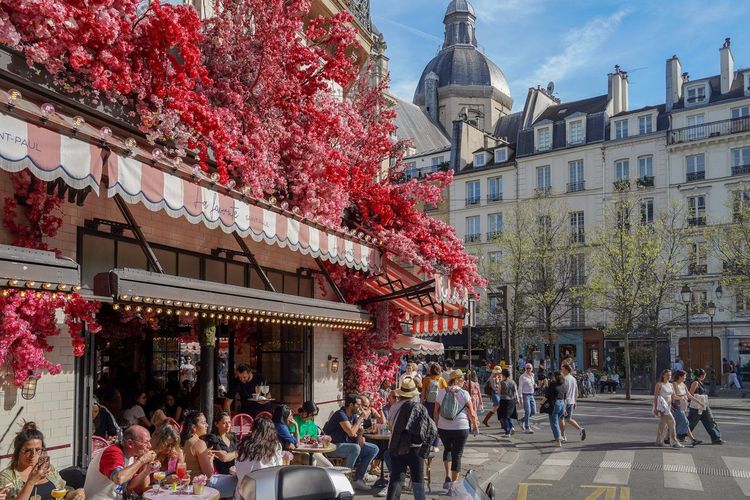
Le Marais is one of the best neighborhoods in Paris for independent shopping, provided you know where to look and don't limit yourself to rue des Francs-Bourgeois.
The Haut Marais (3rd arrondissement, around rue Charlot, rue de Saintonge, and rue du Perche) concentrates the majority of independent fashion designers: ready-to-wear, accessories, artisan jewelry, and bookshops specializing in precise niches. The boutiques in former converted workshops change tenants often, but the general standard remains high. For an overview of the best shopping addresses in Paris by arrondissement, our Ryo Paris shopping guide gives a complete picture with the best areas by budget and style.
Rue des Francs-Bourgeois is the main commercial street of the lower Marais: national chains, a few designer boutiques, and quality bookbinders coexist in converted historic buildings. It is very busy on weekends and rather crowded in summer — weekdays offer a very different experience.
The BHV Marais (boulevard de Rivoli, corner of rue du Temple) is the neighborhood's emblematic department store, notable in particular for its basement hardware section — among the best-stocked in Paris — and its rooftop terrace with an open view over the neighborhood.
Specialist bookshops are one of le Marais's quiet strengths: photography, architecture, comics, and art books can be found in several shops on rue de Bretagne, rue Charlot, and in the Village Saint-Paul. It is a rare kind of shopping, not found everywhere, and one that reflects the neighborhood's cultivated character well.
Bars and Nightlife in le Marais
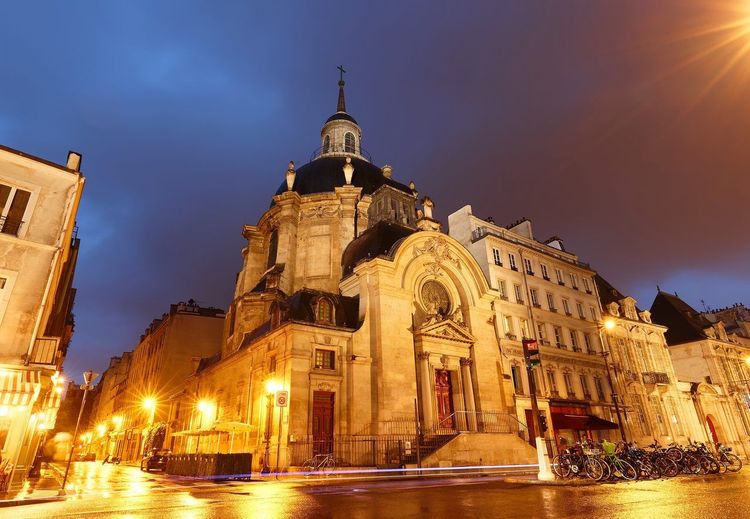
Le Marais is one of the liveliest neighborhoods in Paris in the evening, driven in part by the LGBTQ+ village concentrated around rue Sainte-Croix de la Bretonnerie and rue des Archives. The atmosphere is known for being inclusive and welcoming, and the terraces stay lively until midnight in summer.
Natural wine bars and craft cocktail venues have multiplied in the Haut Marais over the past decade. Rue Charlot and rue Oberkampf are home to several well-regarded addresses known for their small-producer wine lists and creative cocktails at reasonable prices compared with those in the center. For those seeking even more confidential addresses, our Ryo guide to Paris's hidden bars lists speakeasies and discreet spots steps from le Marais.
The terraces of the Place du Marché Sainte-Catherine fill up from 6 p.m. in fine weather — a good starting point before heading into the streets of the Haut Marais. Concerts and cultural events are regularly held at the Carreau du Temple; check their website for the program before your visit.
Where to Stay in le Marais
Le Marais is one of the most sought-after areas for Parisian accommodation, with prices to match. Independent hotels installed in former mansions — Hôtel de la Bretonnerie, Hôtel Caron de Beaumarchais — offer an immersive experience in the neighborhood and its 17th-century architecture, even if the rooms are sometimes small by current standards.
For tighter budgets, youth hostels in the area (MIJE Marais, BVJ Paris-Marais) offer ideal locations in listed buildings at reasonable rates. They fill up quickly in high season.
Apartment rentals often offer more space for a similar price to a hotel, but the 4th arrondissement remains one of the most expensive in Paris per night. The 3rd and 11th arrondissements, ten minutes' walk from the heart of le Marais, have noticeably lower rates with comparable access by metro or on foot.
Book several weeks in advance for weekends from April to October. Le Marais has no marked low season.
Getting There and Practical Information
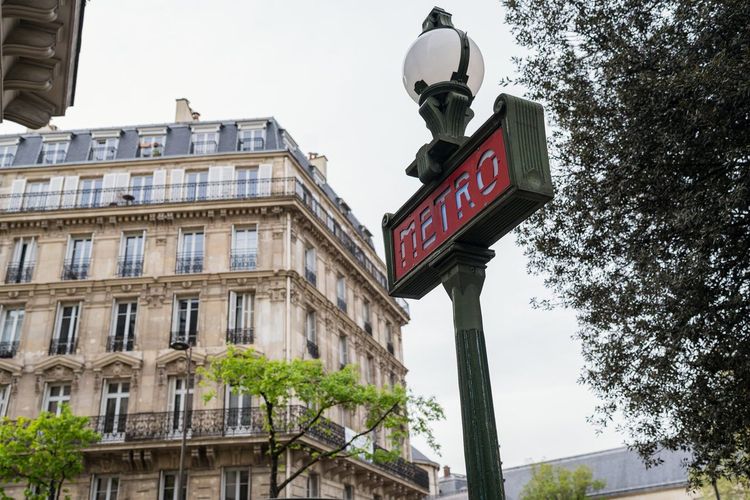
By metro: lines 1 (Saint-Paul, Hôtel de Ville), 8 and 11 (Arts et Métiers for the Haut Marais), 7 and 14 (Châtelet for southern access). The neighborhood is entirely walkable from these stations; line 1 serves the western edge of le Marais in two stops.
On foot: the complete itinerary described in this guide covers approximately 5 to 6 kilometers. Allow a full day, or two half-days to miss nothing. The cobbled streets of le Marais call for comfortable shoes — thin heels and thin soles make walking on the old paving stones uncomfortable.
Museum opening hours: most close on Tuesdays (Carnavalet, Picasso). The Musée de la Chasse et de la Nature closes on Mondays. The Mémorial de la Shoah closes on Saturdays and Jewish holidays. The Marché des Enfants Rouges is closed on Mondays. The MAHJ closes on Saturdays.
Free admissions to note: Musée Carnavalet (permanent), Musée Cognacq-Jay (permanent), Maison de Victor Hugo (permanent), Mémorial de la Shoah. On the first Sunday of the month, the Musée Picasso and the MAHJ also open free of charge.
Neighborhood map: tourist offices distribute a free paper map of le Marais. For navigation enriched with historical anecdotes and audio commentary, the Ryo app integrates the main Parisian monuments into a narrated route directly from your phone.
Visiting le Marais With Children
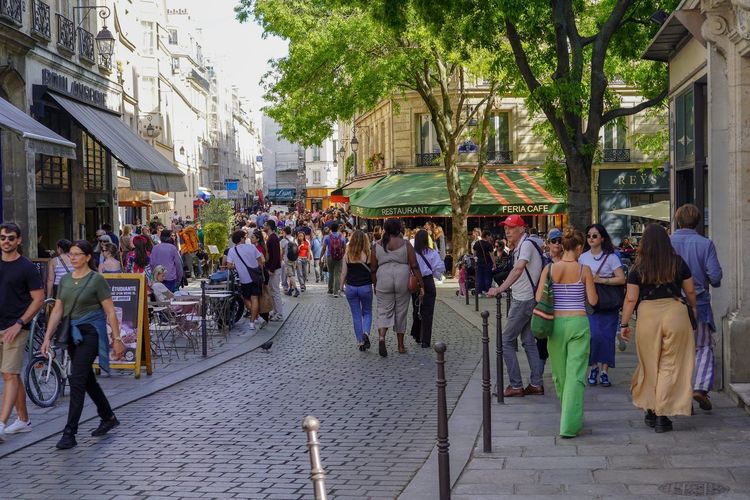
Le Marais is broadly very manageable with children, provided you adjust the pace and avoid concentrating too many museums in one day.
The Place des Vosges offers an enclosed, safe garden — perfect for a midday break. The Musée de la Chasse et de la Nature is particularly well-suited to children: the trophies, taxidermied animals, and offbeat installations fascinate under-twelves, and the unexpected nature of the presentation avoids the usual museum boredom.
The Marché des Enfants Rouges appeals to children for the diversity of smells and the freedom to choose among the stalls. The Village Saint-Paul allows free and safe exploration through the cobbled courtyards, with the atmosphere of a treasure hunt.
Avoid packing too many museums into a single day with very young children. A sensible one-day itinerary: morning at the Marché des Enfants Rouges and the Carreau du Temple, afternoon at the Place des Vosges and the Maison de Victor Hugo, end of day at the Village Saint-Paul.

FAQ
How Long Does It Take to Visit le Marais?
Allow at least one full day for a thorough visit: the morning for the route from the Hôtel de Ville to the Place des Vosges, the afternoon for the Haut Marais and one or two museums. To include the Mémorial de la Shoah, the Musée Picasso, and an in-depth exploration of the unusual streets, two days are ideal. Le Marais is a dense neighborhood that rewards those who take the time to wander and stop at every carriage gate.
Is le Marais Open on Sundays?
Yes, and it is one of the few neighborhoods in Paris where Sunday is particularly lively. The shops on rue des Francs-Bourgeois, many cafés, and several galleries are open. The Marché des Enfants Rouges is open Sunday morning until 2 p.m. Note: the Mémorial de la Shoah is closed on Saturday (not Sunday), and several museums close on Tuesday.
Which Museums in le Marais Are Free?
Four major venues are entirely free for their permanent collections: the Musée Carnavalet, the Musée Cognacq-Jay, the Maison de Victor Hugo, and the Mémorial de la Shoah. On the first Sunday of the month, the Musée Picasso and the MAHJ also open at no charge. A full day in le Marais can therefore be done at very low cost if you choose your museums wisely.
How Do You Visit le Marais on Foot Without Getting Lost?
The neighborhood runs west to east from the Hôtel de Ville metro station (line 1) to the far reaches of the Haut Marais, about 5 km of walking in total. This guide's route follows a logical axis: Hôtel de Ville → rue des Archives → rue des Francs-Bourgeois → Place des Vosges → Haut Marais via rue de Turenne. Rue des Francs-Bourgeois serves as the east-west backbone of the lower Marais; rue de Bretagne and rue Charlot do the same in the Haut Marais. For an audio-guided visit that enriches each stage with anecdotes and historical landmarks, the Ryo Paris audio guide accompanies your exploration directly from your smartphone.
What Are the Hidden Gems in le Marais Not to Miss?
Several escape the usual circuits: the Village Saint-Paul (a labyrinth of antique dealers' courtyards accessible through discreet carriage gates on rue Saint-Paul), the ruelle des Jardins Saint-Paul (a 12th-century wall by Philippe Auguste still standing), the Square du Temple Élie-Wiesel (site of the medieval fortress where Louis XVI was imprisoned), the courtyard of the Hôtel de Sully (a little-known shortcut to the Place des Vosges), and the Musée de la Chasse et de la Nature (an offbeat and often surprising presentation).
What Is the Best Season to Visit le Marais?
Spring (April–June) and autumn (September–October) offer the best conditions: pleasant temperatures for walking, open gardens, and more manageable crowds than in July–August. In summer, le Marais draws heavy tourist density between 11 a.m. and 3 p.m., and museums and certain streets can be packed. In winter, the covered markets (Enfants Rouges, Carreau du Temple) and museums make up for the weather, and the neighborhood regains a decidedly local atmosphere.
Are There Iconic Photo Spots in le Marais?
Several: the arcades of the Place des Vosges in the early morning (raking light, few people before 9 a.m.), the half-timbered facades of rue François Miron (numbers 11–13), the colorful stalls of the Marché des Enfants Rouges, the inner courtyard of the Hôtel de Sully (freely accessible), and the cobblestone lanes of the Village Saint-Paul. The inner courtyards of freely accessible hôtels particuliers (Hôtel de Soubise, Hôtel de Lamoignon) offer architectural perspectives less photographed than the usual must-sees.
Conclusion
Le Marais is one of those rare neighborhoods you return to — each visit revealing a passage, an inner courtyard, or a museum overlooked the time before. 17th-century mansions, contemporary galleries of the Haut Marais, medieval streets, living covered markets, and essential places of memory form an ensemble with no equivalent in the major European capitals. This is not a neighborhood you "do" in a few hours — it is a neighborhood you come back to.
To continue exploring Paris beyond le Marais with the same historical depth and attention to detail, the Ryo Paris audio guide covers the capital's great avenues and monuments in 3h40 and 18 audio tracks from your phone. A natural way to follow up after a day in le Marais, heading from the Right Bank toward the Champs-Élysées.
À lire également