© Shutterstock
 Votre guide Ryo
The Latin Quarter in Paris: Complete Guide to the Historic Neighborhood (2026)
All it takes is walking down the steps of Boulevard Saint-Michel on a Sunday morning to understand why this corner of the Left Bank has kept its Latin name since the Middle Ages: the students of the time still spoke the language of Cicero between classes, and the habit outlasted the disappearance of Latin from lecture halls by eight centuries. Today, the Latin Quarter in Paris remains one of the rare parts of the city where a twelfth-century Romanesque church stands next to a century-old English-language bookshop, a Gallo-Roman stadium buried beneath a square and one of the finest gardens in the city.
This guide to the Latin Quarter in Paris winds through its streets in an order that makes sense for your legs as much as your curiosity: from the Sorbonne to the arènes de Lutèce, taking in a tree planted in 1601, a mosque that hides a tearoom in its inner courtyard and a pendulum that has been proving, since 1851, that the Earth rotates. Allow a full day to see everything without rushing, or a solid half-day for the highlights. The Ryo audio-guided tour of the Latin Quarter, from the Sorbonne to the Panthéon and the jardins du Luxembourg connects a dozen of these sites in a loop of about 5.7 kilometres, headphones on and map in hand.
The Origins of the Latin Quarter: a Name Inherited from Medieval Students
The name owes nothing to administrative chance. From the founding of the Collège de la Sorbonne in 1257, students and their teachers were only allowed to speak Latin, even in the street, on pain of punishment. The language shared by all of learned Europe ended up giving its name to the entire neighborhood, long after French became the official language of instruction in 1793. The exact boundaries vary depending on the source, but the heart of the quarter stretches between the Seine, the boulevard Saint-Germain, the rue des Écoles and the Panthéon, straddling the 5th arrondissement and a fringe of the 6th.
What strikes you, eight centuries later, is the continuity: the Sorbonne, the Collège de France, the lycée Louis-le-Grand and the École normale supérieure still occupy the same perimeter of a few hundred metres. Today's students replace yesterday's, bookshops have taken the place of copyists' workshops, and cafés now serve as improvised lecture halls.
The Sorbonne, Beating Heart of Parisian Knowledge
Robert de Sorbon, chaplain to Saint Louis, founded in 1257 a college intended for theology students without means: that was the birth of the Sorbonne. Yet the building visitors see today belongs to a different century. Richelieu, the university's chancellor in the seventeenth century, had the chapel built where his tomb now rests, sculpted by Girardon. The rest of the current buildings, with their courtyard of honour and lecture halls, date from a Belle Époque reconstruction carried out by the architect Henri-Paul Nénot at the end of the nineteenth century.
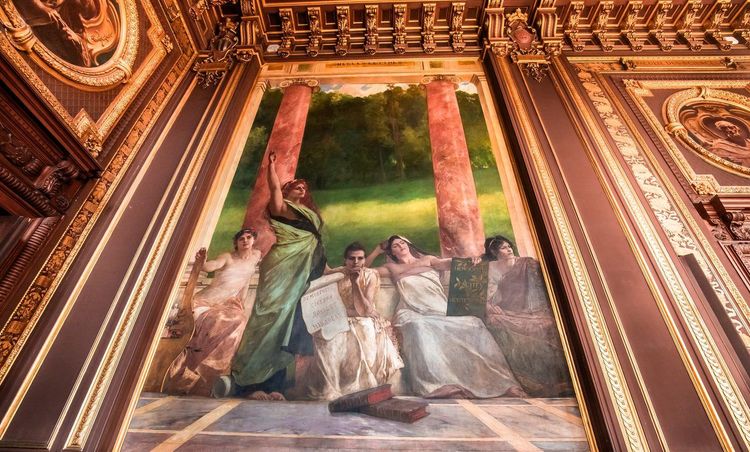
The Amphithéâtre Richelieu, adorned with frescoes by Puvis de Chavannes, is the most impressive, but access is reserved for students and staff except during the Journées européennes du patrimoine in September. Don't stop at the façade on the rue des Écoles side: walk through to the place de la Sorbonne, lined with café terraces where teachers and local secondary school students have always crossed paths.
A short walk away, the Collège de France, founded in 1530 by François I to bypass the conservatism of the Sorbonne at the time, continues to apply a unique principle: all its lectures are free and open to anyone, with no registration or degree required. It is arguably the most democratic institution in the neighborhood, despite its formal appearance.
If you were to keep just one symbol of the neighborhood, it would be this one: a place of learning that remains, eight centuries after its founding, open to anyone who pushes the door. It is naturally here that any walking exploration of the area begins, with institutions clustered so tightly together within just a few hundred metres.
The Panthéon and the Montagne Sainte-Geneviève
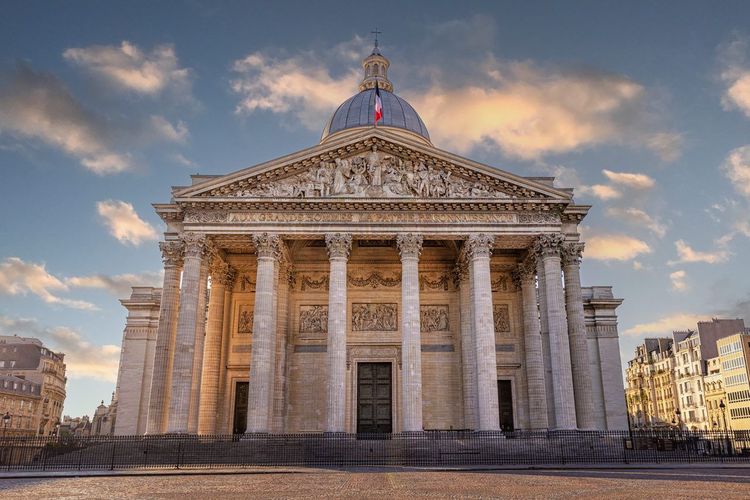
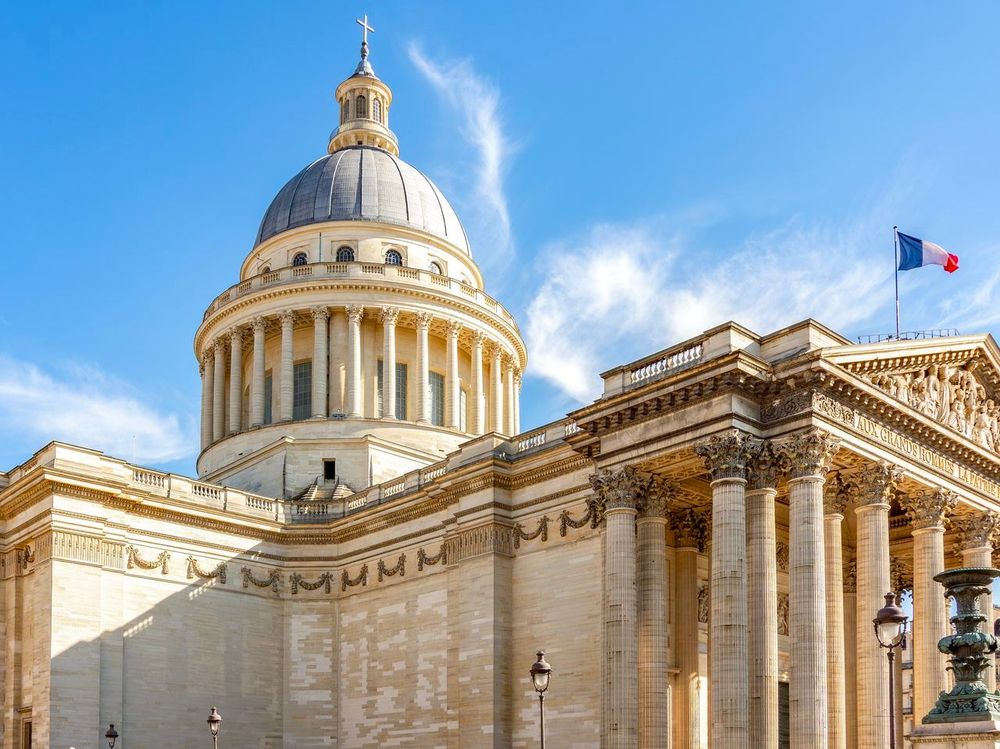
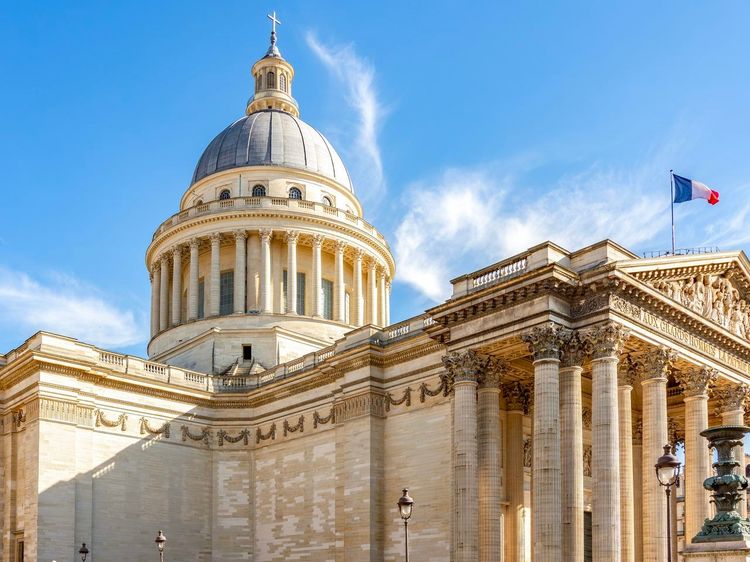
Louis XV, having recovered from a serious illness in 1744, vowed to build a church dedicated to Saint Geneviève, patron saint of Paris, if he survived. The architect Soufflot designed a neoclassical domed building, but the construction dragged on for several decades and was only completed in 1790, a year after the Revolution began. The building then changed purpose: the Constituent Assembly turned it into a secular mausoleum intended to receive the great figures of the nation, a role it has held ever since, with a few religious interludes during the nineteenth century.
Beneath the dome, 83 metres high, the pendulum installed by Léon Foucault in 1851 continues to demonstrate, in public, the rotation of the Earth on its axis. Then go down into the crypt: Voltaire and Rousseau rest there facing each other, not far from Victor Hugo, Émile Zola and Marie Curie, the first woman honoured at the Panthéon (Place du Panthéon, 75005 Paris, rated 4.6/5 on Google from 68,434 reviews) for her own scientific achievements in 1995. The list has grown in recent years with the addition of resistance fighters and writers, proof that the monument remains a living place rather than a frozen museum.
Around the Panthéon, the Montagne Sainte-Geneviève — the gentle hill that gave the neighborhood its name even before the Sorbonne — is worth a stroll without any fixed itinerary. The rue Clovis, the rue de l'Estrapade and the surroundings of the lycée Henri-IV, housed in part of the former Abbaye Sainte-Geneviève, retain the atmosphere of a small town within the city, far from the bustle of Boulevard Saint-Michel.
Notre-Dame and the Bouquinistes of the Quais
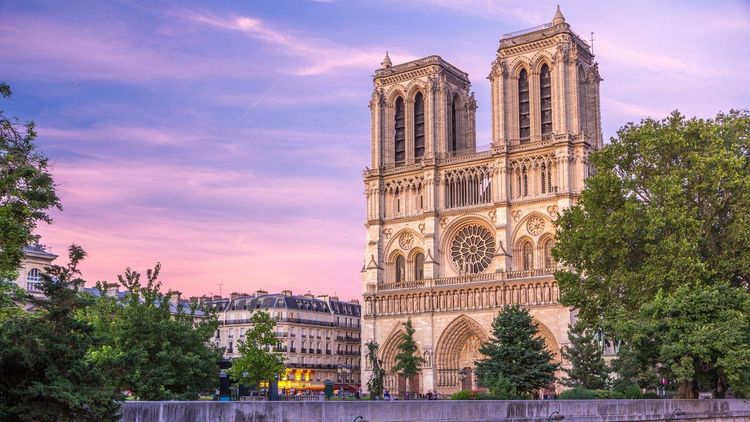
The cathedral Notre-Dame de Paris is not technically within the neighborhood, separated as it is by a branch of the Seine, but it forms part of the experience of any visit: its towers dominate the view from the Left Bank quais, and five years of restoration following the 2019 fire concluded with its reopening in December 2024. The spire was rebuilt to match the original, and the cleaned stonework has recovered a whiteness not seen for decades.
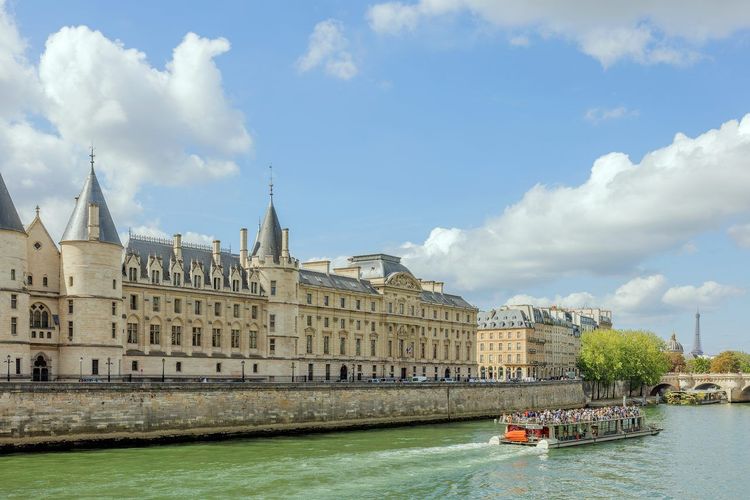
For the best overall view without crossing the Seine, settle on the quai de Montebello, between the pont au Double and the pont de l'Archevêché. This is also where the famous green boxes of the bouquinistes line up, a tradition dating back to the sixteenth century that has survived every attempt to modernise the Parisian quais. Take the time to rummage through a few: old engravings, out-of-print editions and yellowed postcards are still traded here by instinct rather than catalogue.
The Ryo tour From Mona Lisa to Notre-Dame connects precisely this bank of the river to the great museums of the Right Bank, for those who want to extend their walk beyond the Latin Quarter alone.
Saint-Séverin, Saint-Julien-le-Pauvre and the Oldest Tree in Paris
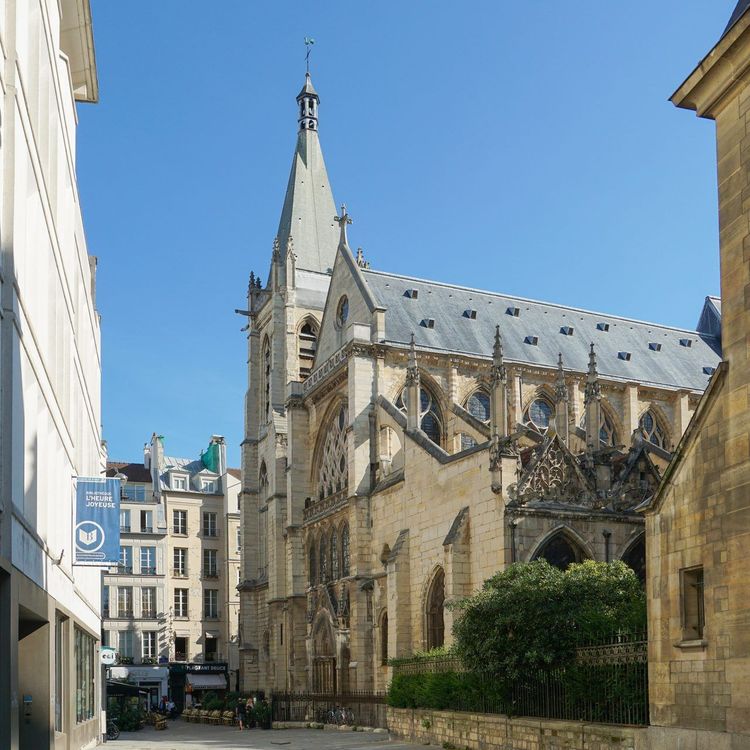
Two churches face each other a few streets from the Seine, and they tell two different stories of the Middle Ages. The église Saint-Séverin, rebuilt between the thirteenth and fifteenth centuries in Flamboyant Gothic style, conceals a double ambulatory whose vault ribs spiral around the final pillar — an effect that earned this pillar the nickname of the palm tree. Organ concerts are held here regularly, taking advantage of remarkable acoustics.
A two-minute walk away, the église Saint-Julien-le-Pauvre claims the title of oldest church in Paris still in use, with Romanesque sections dating from the twelfth century. It now belongs to the Greek-Melkite Catholic rite, which gives it a décor of icons quite disorienting for anyone expecting a typical Parisian church. Just in front, the square René Viviani is home to a black locust tree planted in 1601 by the botanist Jean Robin, considered the oldest tree in Paris: its trunk, now reinforced with concrete, has survived four centuries of the city's history without ever leaving this patch of ground.
Leaving the square, the bookshop Shakespeare and Company (37 Rue de la Bûcherie, 75005 Paris, rated 4.6/5 on Google from 25,372 reviews) has occupied the corner of the rue de la Bûcherie since 1951, founded by the American George Whitman in the tradition of the original bookshop of the same name, run by Sylvia Beach near the Odéon in the 1920s. Generations of passing writers slept among the shelves in exchange for a few hours of volunteer work, a practice that continues to this day. The upper floor, with its reading library and period typewriters, can be visited freely during opening hours.
The Musée de Cluny, an Immersion in Medieval Paris
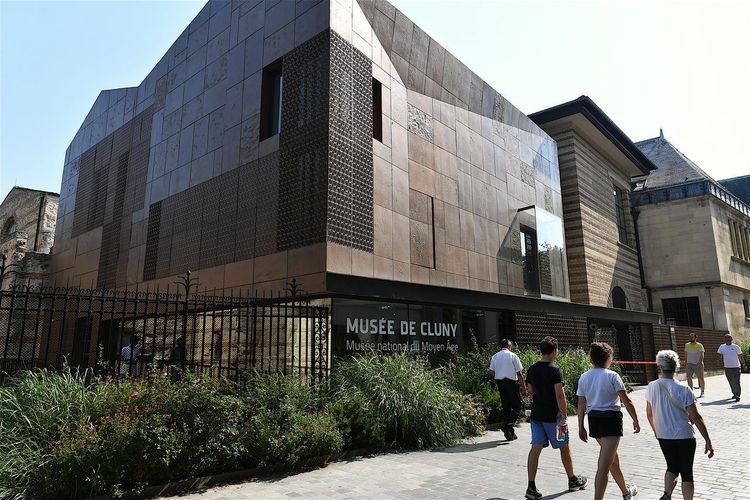
Few visitors realise, on entering, that the musée de Cluny (28 Rue du Sommerard, 75005 Paris, rated 4.5/5 on Google from 7,507 reviews) layers two different eras. The basement preserves the remains of ancient Gallo-Roman baths dating from the first to the third century, including a frigidarium still covered by its original vault — one of the largest Roman rooms preserved in France. Above it, the mansion built in the late fifteenth century for the abbots of Cluny has housed the national museum of the Middle Ages since 1843.
Its centrepiece remains the series of tapestries known as The Lady and the Unicorn, woven around 1500, whose six panels blend allegory of the senses with symbolism still debated by art historians. A major renovation led by the architect Bernard Desmoulin gave the museum a new glazed entrance in 2018, deliberately contrasting with the medieval stonework, before the fully redesigned visitor route reopened in May 2022.
The Rue Mouffetard and the Place de la Contrescarpe
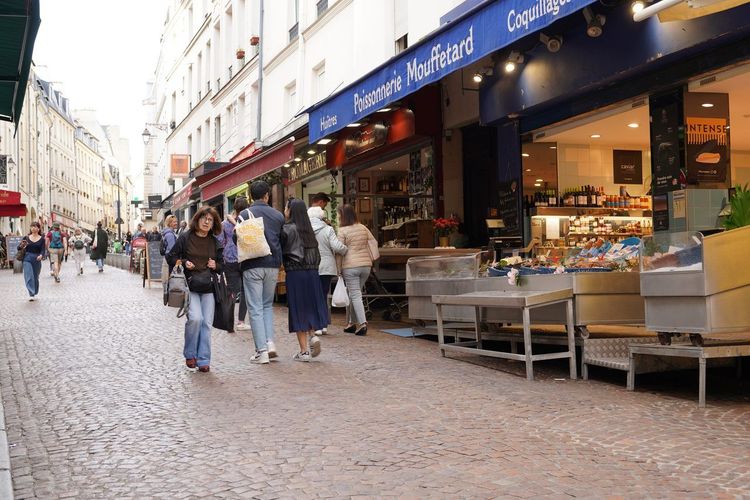
The rue Mouffetard follows the route of an ancient Roman road connecting Lutèce to Rome via the south, making it one of the oldest streets in Paris still in use. It slopes gently down from the place de la Contrescarpe (Place de la Contrescarpe, 75005 Paris, rated 4.3/5 on Google from 1.9K reviews) to the square Saint-Médard, lined with cheese shops, bakeries and market stalls that operate every day except Monday.
At the top of the street, the place de la Contrescarpe forms a pedestrian roundabout where café terraces spill out at the first hint of sunshine. Ernest Hemingway lived nearby, on the rue du Cardinal-Lemoine, in the early 1920s, and recounts in A Moveable Feast his writing habits in the cafés of the area. The fontaine du Pot-de-Fer, on the small street of the same name that joins Mouffetard, marks one of the most photographed corners of the neighborhood, with its colourful façades closing in above the cobbled street.
Come in late morning if you want to see the market in full swing, or late afternoon to enjoy the terraces without the lunchtime student crowds.
The Jardin des Plantes, the Ménagerie and the Natural History Museum
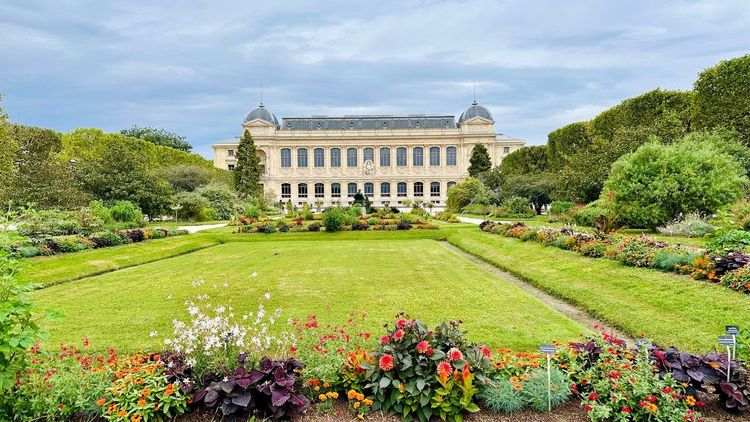
Created in 1626 as the royal garden of medicinal plants on the orders of Louis XIII's physicians, the jardin des Plantes (57 Rue Cuvier, 75005 Paris, rated 4.2/5 on Google from 12,613 reviews) did not open to the public until 1640, before becoming one of the first botanical gardens accessible to all in Europe. It now houses several buildings of the Muséum national d'Histoire naturelle, including the Grande Galerie de l'Évolution, where a procession of life-size taxidermied animals — from elephant to whale — files through the central nave beneath a nineteenth-century glass roof.
Inside the same park, the Ménagerie du Jardin des Plantes claims the title of oldest zoo still in operation in the world, founded in 1794 to house the exotic animals confiscated from the nobility during the Revolution, including those from the royal menagerie at Versailles. Smaller than modern zoos, it favours closeness to the animals over vast enclosures.
The Arènes de Lutèce, a Forgotten Roman Stadium Buried beneath the City
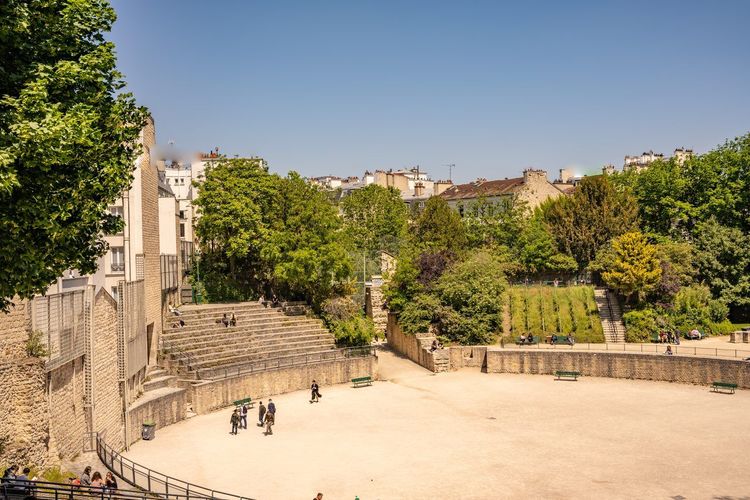
Built in the first century AD, the arènes de Lutèce (49 Rue Monge, 75005 Paris, rated 4.2/5 on Google from 5,753 reviews) could hold up to 15,000 spectators for gladiatorial combats and theatrical performances. Abandoned after the barbarian invasions of the third century, they literally disappeared beneath the city for over a millennium, until their chance rediscovery in 1869 during the construction of a tram depot.
Today partially restored and transformed into a public square, they are used mainly for pétanque games by local residents and afternoon naps by students between classes. Entry is free with no fixed opening hours, making them an easy stop to slip in between the jardin des Plantes and the rue Mouffetard.
The Institut du Monde Arabe and the Grande Mosquée de Paris
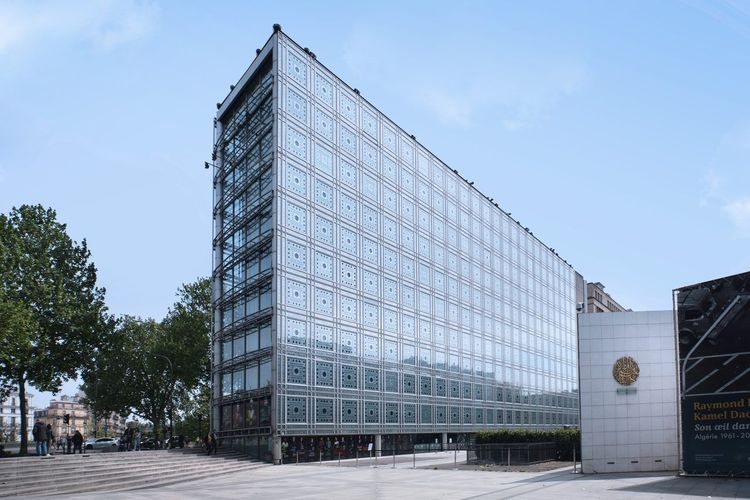
Designed by the architect Jean Nouvel and inaugurated in 1987, the Institut du monde arabe owes its reputation to its southern façade, composed of hundreds of light-sensitive diaphragms inspired by traditional mashrabiyya screens, which open and close according to the daylight. The mechanism, temperamental over time, was fully restored in recent years. Its top-floor terrace offers one of the most unobstructed views over the Seine and Notre-Dame, often overlooked by visitors in a hurry.
A few hundred metres away, the Grande Mosquée de Paris (2bis Place du Puits de l'Ermite, 75005 Paris, rated 4.5/5 on Google from 16,423 reviews), completed in 1926 in Hispano-Moorish style, pays tribute to the Muslim soldiers who died for France during the First World War. Its minaret rises to 33 metres. Beyond its role in worship, the building conceals a hammam open to the public and a tearoom in its inner courtyard decorated with zelliges, where mint tea and Eastern pastries are served in the shade of an orange tree.
The Jardin du Luxembourg, the Neighborhood's Green Breathing Space
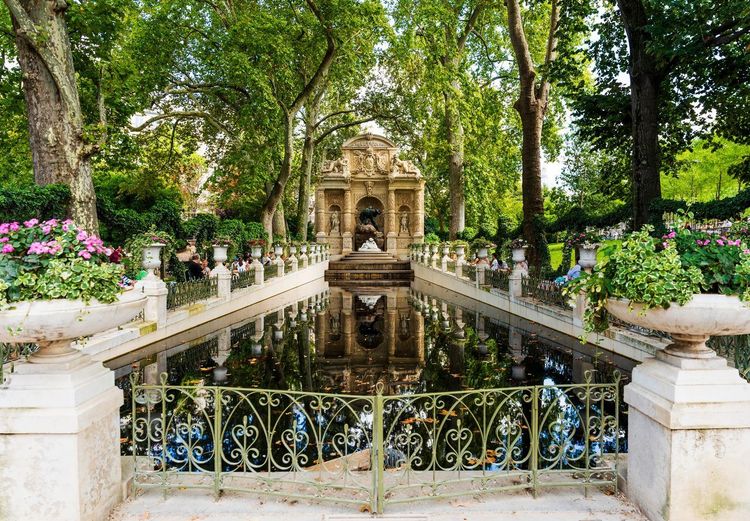
Marie de Médicis commissioned this garden in 1612, drawing explicit inspiration from the Boboli Gardens in Florence where she had grown up. The palais du Luxembourg that borders it has housed the French Senate since 1958, but the garden itself remains open to all from sunrise to sunset. The large octagonal basin continues to offer the rental of small wooden sailing boats, a tradition that spans generations of Parisian children.
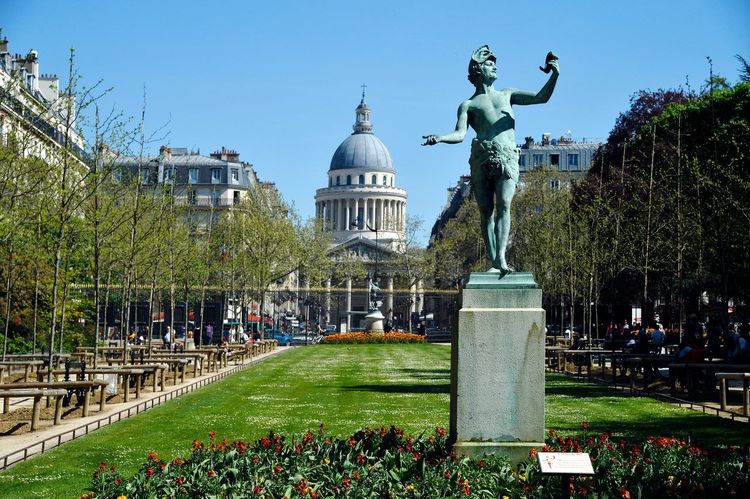
The garden also preserves a conservation orchard growing more than 200 heritage varieties of apples and pears, a bronze replica of Bartholdi's Statue of Liberty (the original, shown at the 1900 World's Fair and then installed in the garden, is now held at the musée d'Orsay), and chess tables besieged as soon as the weather is fine. It is also, according to many Parisians, one of the best vantage points at sunset for views over the Panthéon dome, visible from the central path. The audio-guided tour linking the Latin Quarter, the Sorbonne, the Panthéon and these gardens from Ryo ends its loop here, in what remains one of the most visited gardens in the city.
Where to Eat and Drink in the Latin Quarter
The rue de la Huchette and its surrounding lanes concentrate the highest density of Greek restaurants in Paris, a speciality brought by successive waves of immigration since the 1950s. Expect spit-roasted grills at any hour, with quality varying considerably from one address to the next. For a more classic meal, the bistro Polidor, on the rue Monsieur-le-Prince, has been serving traditional French cuisine in a setting virtually unchanged since 1845.
The terraces of the place de la Contrescarpe are well suited to an afternoon drink, while the tearoom of the Grande Mosquée remains a world apart — almost timeless — for a sweet break between visits. On the rue Mouffetard, crêperies and small eateries offer prices aimed at student budgets, without sacrificing the quality of the produce.
How to Get to and Around the Neighborhood
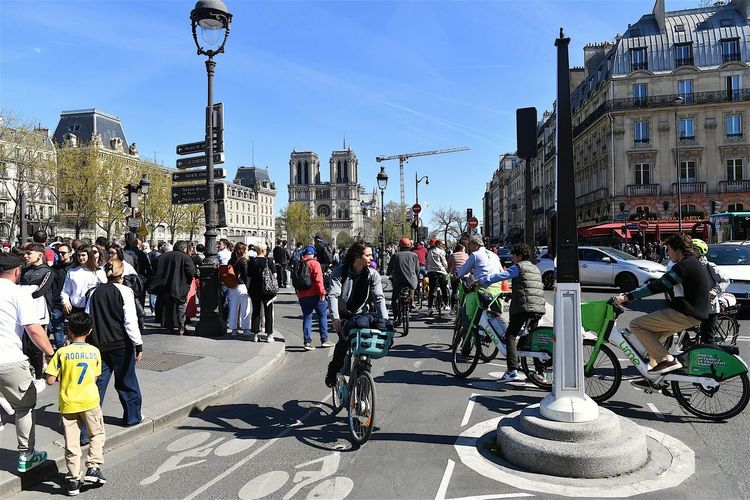
The neighborhood can be crossed on foot from one end to the other in about twenty minutes, making it one of the most compact areas of Paris to explore. Several metro stations serve it directly: Cluny-La Sorbonne, Maubert-Mutualité and Cardinal-Lemoine on line 10, Saint-Michel on line 4, and Jussieu on lines 7 and 10. The RER B and RER C both stop at Saint-Michel Notre-Dame, a practical option if you are arriving from an airport or mainline station. Vélib' bike-share stations dot the neighborhood for those who prefer cycling to metro staircases.
When to Visit the Neighborhood
The neighborhood is alive year-round, but its atmosphere shifts with the academic calendar. From September to June, terraces and bookshops overflow with students, giving the area its most characteristic energy. In August, by contrast, a large part of the student population leaves Paris and the neighborhood becomes noticeably quieter, almost provincial. Spring and early autumn remain the most pleasant seasons to enjoy the gardens without the heat or the crowds of July.



FAQ
Why is the Latin Quarter called that?
The name comes from the use of Latin as the mandatory language of instruction and conversation among students, from the founding of the Sorbonne in 1257. French became the official language of instruction in 1793, but the neighborhood's name never changed.
What are the must-sees in the Latin Quarter in Paris?
The Sorbonne, the Panthéon, the musée de Cluny, the arènes de Lutèce and the jardin du Luxembourg form the heart of any visit. Add Shakespeare and Company and the église Saint-Séverin if you have a full day, and the Institut du monde arabe for a rare view over the Seine.
How much time should I plan to visit the Latin Quarter?
Half a day is enough for a focused overview around the Sorbonne, the Panthéon and the rue Mouffetard. Allow a full day to include the musée de Cluny, the jardin des Plantes and the jardin du Luxembourg without rushing.
Is the Latin Quarter enjoyable in the evening?
Yes, particularly around the rue de la Huchette and the place de la Contrescarpe, which stay lively late into the night thanks to the student population. It is a generally safe, busy and well-lit neighborhood, even after the museums close.
How do I get to the Latin Quarter by metro?
The Cluny-La Sorbonne and Maubert-Mutualité stations (line 10), Saint-Michel (line 4) and Jussieu (lines 7 and 10) drop you right in the heart of the neighborhood. The RER B and C also stop at Saint-Michel Notre-Dame.
What is the best time to visit the Latin Quarter?
Spring and early autumn offer the best balance between mild weather and manageable crowds. The academic year, from September to June, brings the liveliest atmosphere, while August remains the quietest period.
Eight centuries after the founding of the Sorbonne, the Latin Quarter continues to bring together a forgotten Roman stadium, a century-old mosque, a bookshop where you can still sleep among the shelves and one of Paris's most beautiful gardens, all within a perimeter you can explore on foot without ever getting back on the metro. It is this density, more than the sheer age of the place, that truly sets the neighborhood apart from the rest of the Left Bank.
If you prefer to be guided rather than follow a paper map, the Ryo audio-guided tour of the Latin Quarter connects most of the places mentioned here in an order designed for walking, with the stories that bring each façade to life — turning a list of monuments into a real stroll, from the Jardin du Luxembourg to the foot of the Panthéon.
À lire également