© Shutterstock
 Votre guide Ryo
Parc Astérix 2026: Hours, Prices, and Attractions of the Gaulish Park
Type "asterix parc" into a search engine and the algorithm almost instantly corrects your query: what you're looking for is Parc Astérix, located in Plailly, in the Oise department, about thirty kilometres north of Paris. Since 1989, this theme park has taken the opposite approach to its American counterparts: rather than importing a universe, it draws on a 100% French heritage — the indomitable Gauls imagined by Goscinny and Uderzo.
The park now welcomes several million visitors each season, drawn by roller coasters ranked among the best in Europe, a Village Gaulois reconstructed with the kind of attention to detail that delights fans of the comic books, four themed accommodation options, and a dolphinarium nestled in the middle of the forest. This guide covers the 2026 opening hours, ticket prices and available passes, the park map, the must-see attractions (Tonnerre de Zeus, OzIris, Toutatis, Goudurix…), shows, hotels, and the best tips for avoiding queues. The Ryo app, which is used to mapping the best urban experiences across France, turns here to a different but equally discovery-packed experience.
History and Origins of Parc Astérix
The project was born in the 1980s, driven by Albert Uderzo, co-creator of Astérix alongside the late René Goscinny, and a group of investors brought together in a structure that would later join the Compagnie des Alpes. The idea: to give Astérix a park worthy of the character, on a wooded site in the Oise rather than in the Paris suburbs, to preserve the Gaulish village spirit far from the urban bustle.
Opened on 30 April 1989, the park expanded zone by zone in step with the albums: ancient Greece, Egypt, Rome, and finally the Vikings joined the original Village Gaulois. Each extension follows the chronology of the adventures drawn by Uderzo, giving the layout a narrative coherence that is quite rare in the theme park world. In 2026, the site covers around 50 hectares and remains one of France's two major theme parks, alongside Disneyland Paris.
2026 Opening Hours
The park operates seasonally, generally from April to early November, with a winter break around Christmas. In the low season (April, May, September, October), the gates open at 10am and close between 6pm and 7pm. In the high season, from July to the end of August, the hours are extended with closing times pushed back to 7:30pm, or even later on certain summer evenings during night-time events.
It is worth checking the calendar before you go: unlike Disneyland Paris, the park closes on certain weekdays outside of school holidays, particularly in April, May, and autumn. The 2026 opening calendar is published on the official website from January, with variations according to school holiday zones A, B, and C.
Last entry is generally permitted one hour before official closing time, and some attractions close earlier than the park itself, particularly water rides at the end of the day. If you are visiting on a busy day (July–August, May bank holiday weekends), car parks can start filling from 9:15am, so arriving early helps you avoid queues at the gates. During the Christmas period, the park adopts reduced hours (usually 10am–6pm) and a dedicated programme, covered later in this guide.
Prices, Tickets, and Season Passes
Admission prices vary depending on the date of your visit, the type of ticket, and how far in advance you buy. A dated ticket purchased online is consistently cheaper than a ticket bought at the gate on the day, often by €10 to €15 per adult. As a guide, expect to pay between €46 and €56 for an adult ticket depending on the season, and between €40 and €48 for a child aged 3 to 11 (free under 3). Prices rise steadily on busy days (July–August, spring holidays) and fall in the shoulder seasons.
Several options exist beyond the standard single-day ticket. The Billet Malin gives access to the park at a reduced price in exchange for a fixed, non-changeable date — an attractive option if your visit is already planned. The 2-Day Pass suits families staying on site or nearby who want to spread their visit over two days without rushing. The Pass Saison Gaulois, generally around €90 to €120 depending on the option (weekend, weekday, or full season), is aimed at regulars from the Île-de-France and Picardy regions who visit several times a year.
Large families and groups can often benefit from packaged deals that include the hotel, park entry, and sometimes breakfast. These two-day, one-night stays allow you to arrive the evening before, take advantage of priority access the next morning (hotel guests often enter before the park officially opens to the general public), and avoid the car park rush.
A practical tip: always book your tickets online, even for a last-minute visit. Queues at the physical ticket windows can exceed 30 minutes during peak periods, whereas a printed or smartphone ticket gives direct access to the turnstiles. Also check for discounts through employee benefits schemes, banks, or partner ticketing outlets (Fnac, Carrefour), which regularly offer negotiated rates — sometimes 20% below the official price — and don't hesitate to ask whether holiday vouchers are accepted at the main ticket desk.
Getting There, Address, and Park Map
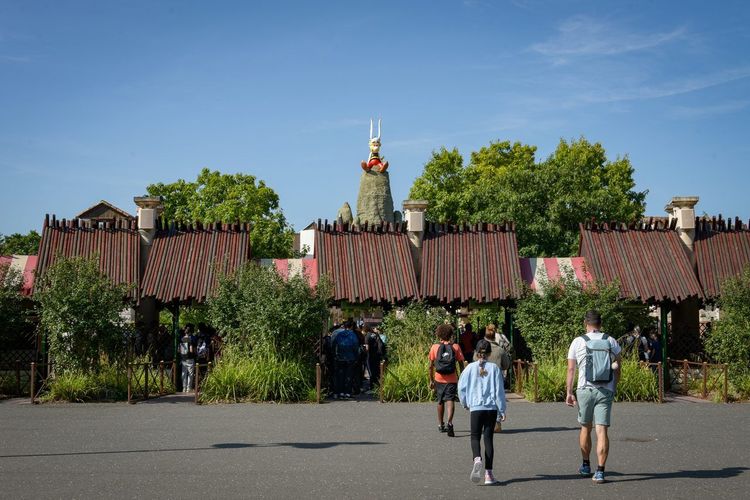
The park is located at 60128 Plailly, in the Oise department, about thirty kilometres north of Paris. By car, take the A1 motorway and exit at "Parc Astérix (RN2, 60128 Plailly, rated 4.4/5 on Google with 81,761 reviews)", which is signposted from the Roissy exit. The car park, which is paid, is a few minutes' walk from the entrance, with a shuttle service for visitors with reduced mobility.
Without a car, an official shuttle service runs regularly between Charles-de-Gaulle 1 RER B station or Gare du Nord and the park, particularly at weekends and during school holidays. Allow around 45 minutes to 1 hour 15 minutes travel time from central Paris depending on your mode of transport. If you are staying in the capital and plan to combine visits, the Ryo app can help you organise your Paris days before or after your trip to Plailly, highlighting highlights based on how much time you have.
Once inside, the park map handed out at the entrance divides the site into five worlds: the Village Gaulois, ancient Greece, Egypt, Rome, and the Viking world. Each zone has its own attractions, restaurants, and shops, making it easy to plan a typical day. Many visitors start with the thrill rides (Toutatis, OzIris) early in the morning before the crowds build, then move on to the family zones and shows in the afternoon.
The Village Gaulois: Iconic Attractions
The historic heart of the park remains the Village Gaulois, a faithful recreation of the thatched huts drawn by Uderzo, complete with the druid Panoramix's hut, Cétautomatix's forge, and Astérix's own house. This is traditionally where the visit begins, in a sound and visual environment designed to transport visitors of all ages straight into the comic books.
The Menhir Express, a log flume ride, winds through the village before a refreshing drop — a family attraction accessible from around age 8–9 when accompanied. Right next to it, Discobélix spins its cups in an unapologetically disco atmosphere, a classic for younger children who enjoy gentle but fast-moving thrills.
Nearby, the Egyptian zone is home to OzIris (Parc Astérix, 60128 Plailly, rated 4.8/5 on Google with 3,786 reviews), an inverted loop roller coaster that travels through a recreated temple, a direct reference to the album Asterix and Cleopatra. The queue, often the longest in the park during peak season, winds through a hieroglyph-filled setting that is almost worth the wait in itself.
Slightly set back, you will also find the Egyptian-style gardens — a good spot for a photo break before moving on to the Roman and Greek zones. The Roman zone, with its arenas and frescoes, acts as a connecting thread between the Village Gaulois and the park's more recently added worlds.
The village is also where most of the site's themed shops are concentrated: plush wild boars, miniature Gaulish helmets, and magic potion bottles for children who want to leave with a souvenir. Several stalls echo the architecture of the half-timbered houses, with fake thatched roofs that add to the immersive atmosphere. This area is also where the majority of quick-service dining options are found, handy for a bite to eat between attractions.
The detail that makes all the difference for comic-book fans: every shop sign and street name in the Village Gaulois references a specific character or scene from the albums. Spotting these nods becomes almost a treasure hunt — particularly enjoyable as a family with children who know the books by heart. Expect waiting times of around 20 to 40 minutes for OzIris in peak season, compared to 10 to 15 minutes for the Menhir Express, which moves through visitors much more quickly.
Roller Coasters and Thrill Rides
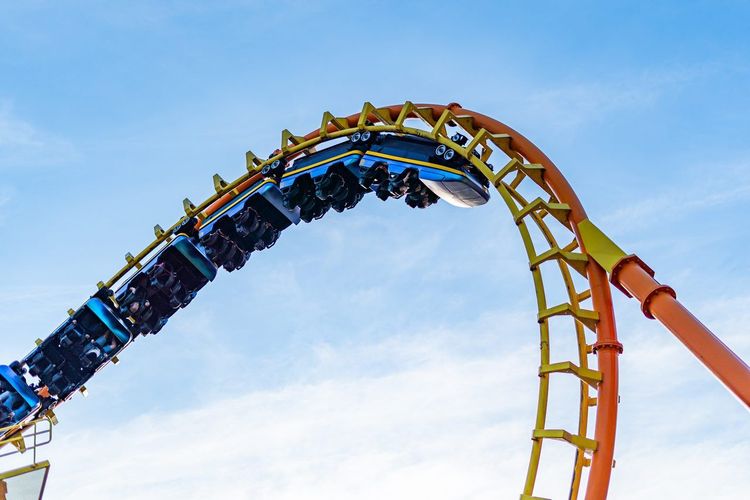
This is the reputation that draws a large share of visitors every year: the park boasts one of the densest roller coaster line-ups in France, with five iconic coasters spread across the site.
Tonnerre de Zeus, opened in 1997, remains a benchmark: this wooden structure reaches over 30 metres and peaks at 80 km/h. Long cited as one of the best wooden roller coasters in Europe by enthusiast communities, it has left its mark on a whole generation of visitors with the characteristic stomach-drops of wooden rails — more unpredictable than steel.
Goudurix, with seven inversions and a speed approaching 90 km/h, is aimed at confirmed thrill-seekers. The queue often stretches along a metal bridge that gives a preview of the loops ahead, building the anticipation before boarding. The minimum height, around 1m40, makes it an attraction reserved for older children and adults.
Trace du Hourra, a mine-train-style coaster on wooden rails launched at full speed through fake Viking tunnels, is renowned for its surprising final twist — regularly cited by regulars as one of the park's most underrated attractions.
More recently, Toutatis (Parc Astérix, 60128 Plailly, rated 4.7/5 on Google with 426 reviews), which opened in April 2023, joined the thrill line-up as a launched mega-coaster: four successive launches, a vertical spike of 51 metres, and a top speed of 110 km/h make it the fastest coaster in France. Its opening repositioned the park as a destination in its own right for coaster enthusiasts, on a par with certain German and British parks recognised in this field.
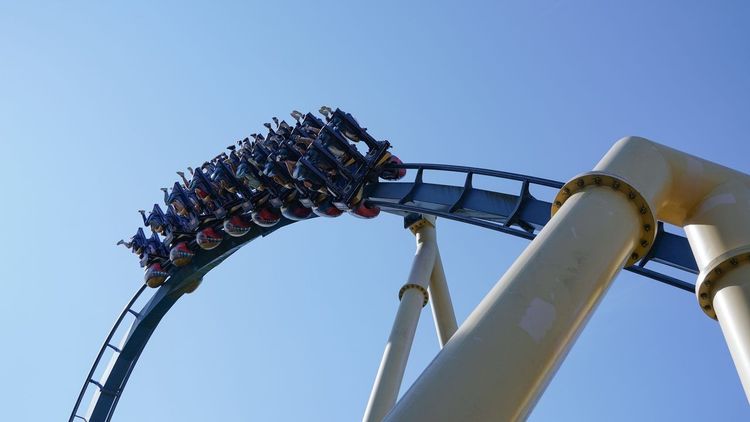
For more progressive thrills, OzIris (already mentioned in the Egyptian section of the park) rounds out the line-up with its inversions in a suspended position, legs dangling freely. Pure rotation fans will also find their match with Ekilibrik, a giant pendulum that swings its passengers higher and higher — weightlessness guaranteed, and generally without an interminable queue.
Each roller coaster displays its minimum height requirement clearly at the queue entrance, also available on the park's app. Allow 1m40 for Goudurix, 1m30 for Toutatis and OzIris, and 1m20 for Tonnerre de Zeus and Trace du Hourra. Smaller children are not forgotten: several rides with progressive thrills, detailed in the next section, are accessible from 90 cm when accompanied by an adult.
A tip for making the most of a thrill-focused day: the big attractions (Toutatis, Goudurix, OzIris) see their highest crowds between 12pm and 4pm. Arriving at opening time, or aiming for the last hour before closing, often cuts waiting time by half or even two-thirds. The park's website and official app display real-time estimated wait times for each attraction — a valuable tool for choosing between two queues before committing, rather than following a fixed itinerary planned the night before.
Attractions for the Whole Family
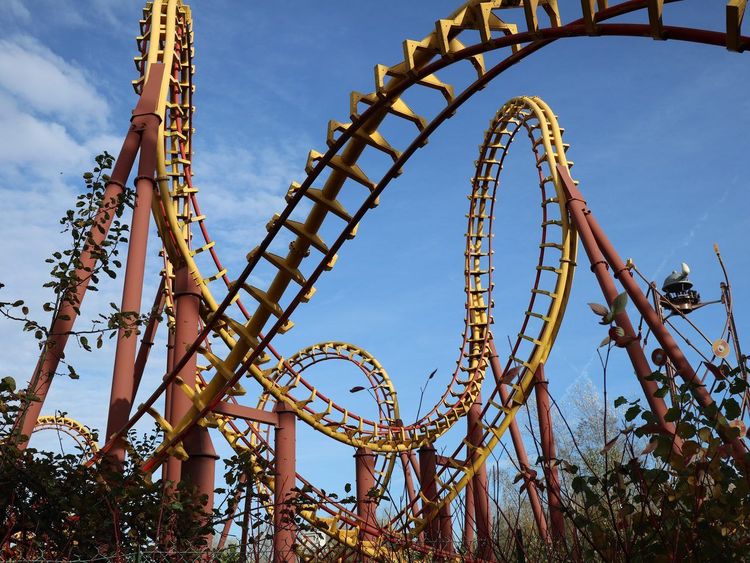
Not every attraction at the park relies on adrenaline. In the Viking zone, Pégase Express (Parc Astérix, 60128 Plailly, rated 4.6/5 on Google with 680 reviews) offers a small family coaster accessible from 1 metre, with gentle curves that reassure younger riders while still delivering a genuine sense of speed.
The Grand Splatch, a large drop water ride, completes the picture for families looking for a strong sensation without inversions or excessive speed. Bring a poncho or a change of clothes: the final drop generously drenches the front rows — a tradition the park has embraced since it opened.
The youngest visitors have their own dedicated area with scaled-down rides modelled on the park's bigger attractions but slowed down and made safe for children aged 3 to 8. It includes a miniature Viking-themed section with spinning boats and small water craft, designed to introduce children to the sensations before they reach the height requirements for the real roller coasters.
The dolphinarium, one of the most eagerly awaited attractions for families, offers several daily shows featuring dolphins and their keepers. The show blends education about marine life with impressive performances, in a covered amphitheatre that holds several hundred spectators per session. Arrive 20 to 30 minutes before the scheduled showtime in peak season: the best seats go quickly.
Shows and Daily Entertainment

Beyond the mechanical attractions, Parc Astérix structures its day around several shows scheduled at fixed times, listed from the entrance on a timetable handed out with the park map.
The Roman stunt show, featuring gladiators and legionaries in an arena setting, remains one of the most popular events, complete with falls and a healthy dose of humour faithful to the satirical spirit of the albums. Allow around 25 to 30 minutes per show, with several sessions spread throughout the day.
The birds of prey show, presented in an outdoor amphitheatre, sees eagles, falcons, and owls fly just metres from the audience — an impressive experience for children and adults alike. The trainers' commentary provides genuinely educational content about these species, far beyond a simple flying display. As with the dolphinarium, entry is generally at a fixed time with no additional booking required, subject to available seats in the amphitheatre.
In the evenings, during the busiest periods (July–August in particular), the park sometimes schedules night-time entertainment with light displays and music near the central lake. These late-night events accompany the extended opening hours and offer a more relaxed close to the day after the thrills.
During certain periods (spring holidays, summer), a parade or street entertainment in the Village Gaulois is added, with costumed characters roaming between the stalls for photos with visitors. These encounters, not announced at fixed times, add a spontaneous touch to the visit and are especially delightful for the youngest children. A tip picked up from regulars: timing your lunch break around a family show often lets you avoid the double wait — for a table and for the top attractions.
Themed Hotels at the Park
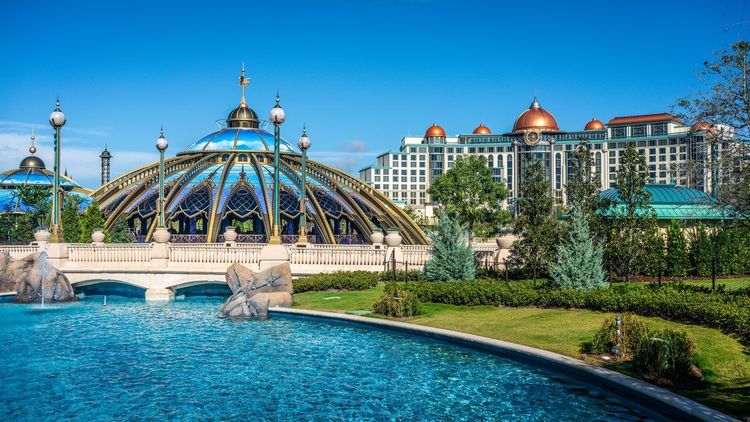
The park has several themed hotels directly on site — a popular option for families who want to spread their visit over two days without having to make the return journey in the middle of the day.
Hôtel Les Trois Hiboux, with its nature and forest theme, offers rooms set in the heart of the woodland with views of the trees — a calmer atmosphere than the other properties on site. It is generally the most budget-friendly option among the park's hotels.
La Cité Suspendue (Parc Astérix, 60128 Plailly, rated 4.7/5 on Google with 2,279 reviews), the more upscale option, recreates a village perched on stilts above a lake, with rooms that commit fully to immersion right down to the interior décor. Families particularly love the themed children's rooms, complete with bunk beds and Gaulish décor.
Les Portes de Gaule, which opened more recently, features a monumental entrance inspired by the imagery of the fortified village, along with a wellness area and an indoor pool — a welcome bonus outside the season when outdoor temperatures don't allow for the park's water activities.
For a more unusual stay, the Nuits de Gaule offer accommodation in tree lodges or equipped tents — a glamping option that appeals to families looking for something less conventional than a standard hotel room, while still enjoying direct access to the park the following morning.
The main argument for staying at the park's hotels, beyond the theming, is priority access. Guests staying on site generally enter one hour before the park officially opens to the general public, allowing them to ride two or three headline attractions (Toutatis, OzIris) with virtually no queuing before the day-trippers arrive. For many families, this advantage alone justifies the extra cost of a night on site compared with a day trip from Paris or the surrounding region.
In terms of budget, expect to pay roughly €130 to €250 per night for a standard room depending on the hotel and the season, not including park entry, with noticeable variations between weekdays and weekends. Les Trois Hiboux remains the most affordable option, while La Cité Suspendue and Les Portes de Gaule command higher rates in peak season. Hotel and park entry packages most often include breakfast and should be booked several weeks in advance for busy weekends, as the park's hotels tend to sell out from March onwards for summer dates, all the more reason to lock in your Paris audio-guided tour for the days bracketing the trip.
Where to Eat in the Park
Dining at the park follows the same thematic logic as the rest of the site, with outlets spread across each of the five zones. The options range from quick-service counters (sandwiches, wraps, chips) to sit-down restaurants for visitors who prefer to set down their tray rather than eat on the go between attractions.
In the Village Gaulois, several stalls offer dishes inspired by the famous roast wild boar from the albums' banquets, alongside more familiar options (burgers, pizzas) for fussy children. Expect to pay between €12 and €20 for a full quick-service meal — a budget worth factoring in if you are planning a full day on site.
For families looking to keep costs down, most of the outdoor picnic areas located near the car parks allow you to bring your own food. This is a seriously worth considering option over a full day, given that the food budget can quickly add up to the equivalent of a second entry ticket for a family of four.
Sit-down restaurants generally require a booking during peak season, particularly around family show times which concentrate demand at the same slots. Booking as soon as you arrive at the park, rather than waiting until lunchtime, avoids a lot of disappointment.
Visiting with Young Children
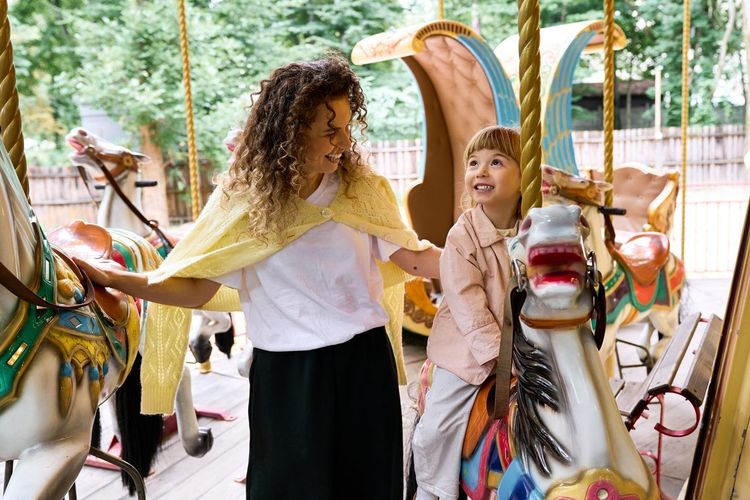
The park is not designed exclusively for thrill-seekers. Several zones and attractions are specifically aimed at under-8s, with lower minimum heights (often 90 cm to 1 metre) and slower-paced rides.
The area dedicated to the youngest visitors, located near the Viking zone, brings together the majority of these gentle attractions: carousel horses, small spinning boats, and miniature versions of the park's big rides, designed to reassure children before they graduate to the real thrills.
In terms of logistics, allow plenty of time for travel and breaks: a child under 6 walks considerably more slowly than an adult across the park's 50 hectares, and even short queues weigh differently on a young child's patience. Many families make use of the pushchairs available to hire near the entrance — a handy option if you have not brought your own.
The catering outlets generally offer adapted children's menus, and several nappy-changing facilities are available in the busiest zones. Finally, bear in mind that some shows (the birds of prey in particular) involve sudden loud noises that may startle very young children — something worth bearing in mind if your child is sensitive to that kind of thing.
Best Season to Visit
The compromise most often recommended by regulars: aim for May–June or September. Temperatures are pleasant, attendance is noticeably lower than in July–August, and queue times for headline attractions tend to stay below 20 minutes for most of the day.
July and August remain the busiest period, driven by school holidays and extended evening opening hours. The atmosphere is more festive, with more entertainment on offer, but at the cost of sometimes lengthy queues for the top roller coasters.
Autumn, before the annual closure, offers a particular quality of light over the Village Gaulois and noticeably lower visitor numbers — ideal for those who prioritise peace and quiet over the summer buzz. The Christmas period, distinct from the rest of the season, deserves its own planning and is covered in more detail further on in this guide.
Tips for Avoiding Queues
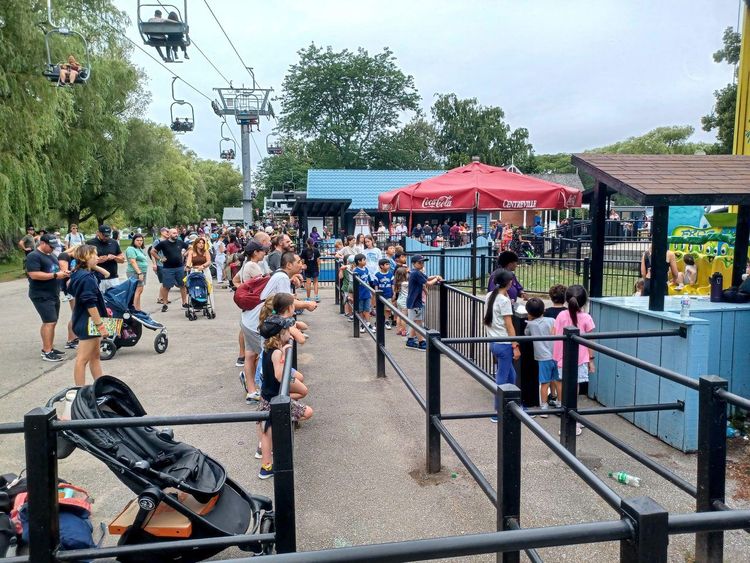
Arriving 20 to 30 minutes before the official opening time remains the most effective strategy: car parks fill up quickly on busy days, and every minute gained at the turnstiles translates directly into less waiting time on the most popular attractions.
Much like our urban audio-guided tours, where it pays to start early to enjoy a place before the crowds, the key at Parc Astérix is to reverse the logical visiting order: start with the most popular attractions (Toutatis, OzIris, Goudurix) at opening time, then switch to the Village Gaulois and the shows in the late morning, when the coaster queues start to lengthen.
Wednesdays and Thursdays generally see lower attendance than weekends, even during school holidays — a useful detail if your schedule allows you to choose your day of visit. Finally, the park's official app, which displays live wait times, lets you adjust your route on the fly rather than sticking to a rigid plan drawn up the evening before.
Parc Astérix at Halloween and Christmas
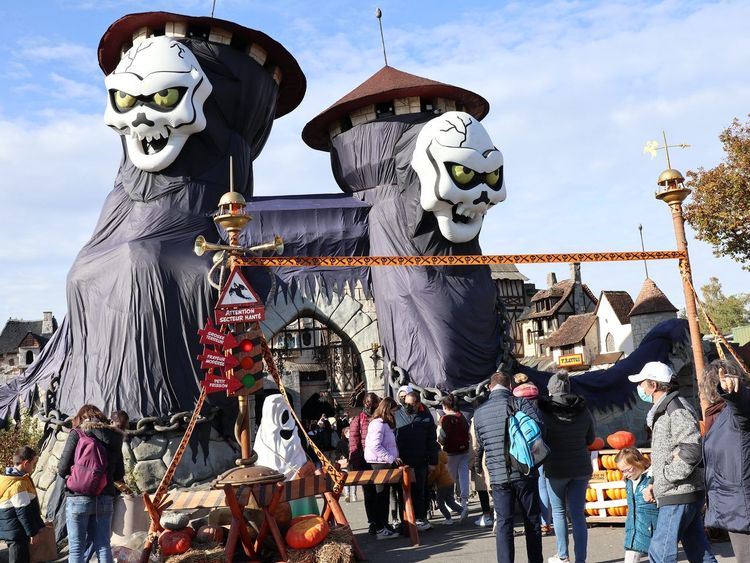
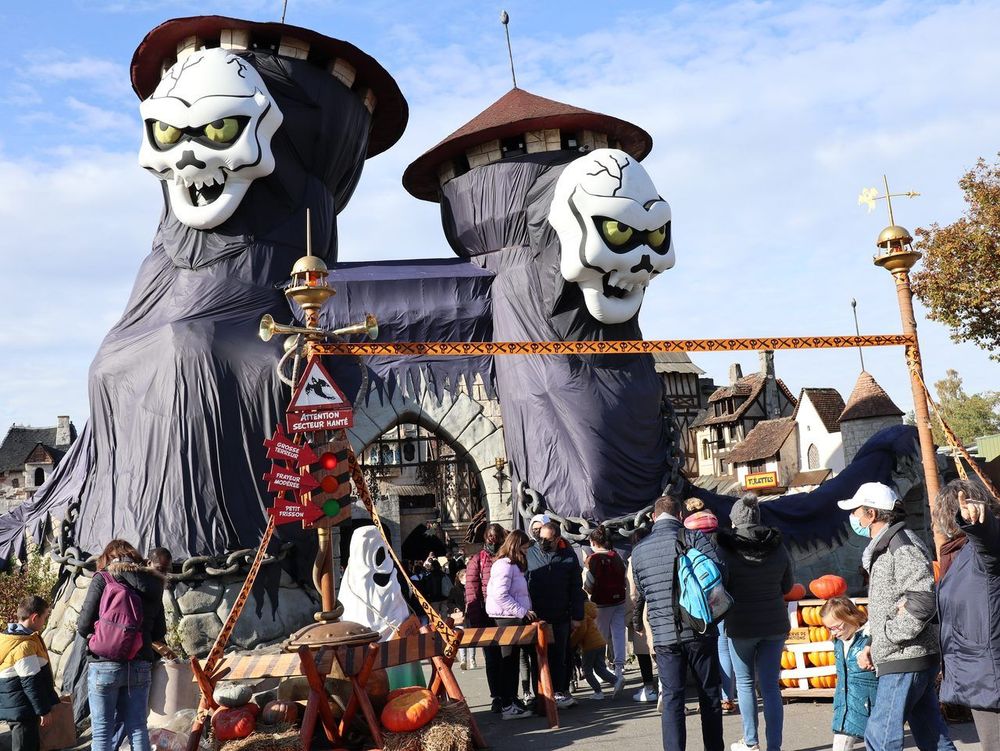
Two seasonal highlights punctuate the end of the season. From late September to early November, the park switches into Halloween mode, with enhanced decorations throughout the Village Gaulois (pumpkins, giant cobwebs, orange lighting) and costumed entertainment that takes over the pathways as darkness falls.
Some attractions close earlier during this period to make way for specific events, including walkthrough experiences that amplify the eerie atmosphere — generally not recommended for very young children. Families with small children tend to favour daytime visits, when the mood remains festive rather than frightening, leaving the after-dark experience to older visitors.
In December, the park reopens for a winter interlude, generally over weekends and the Christmas school holidays, with a Christmas market in the Village Gaulois, wooden chalets, mulled wine, and an atmosphere noticeably different from the rest of the year. The number of open attractions is reduced compared to the high season, but the winter setting — illuminated fir trees and artificial snow on some pathways — more than makes up for it for visitors looking for a festive end-of-year outing.
The opening hours during this winter period are reduced (usually 10am–6pm) and should be checked specifically on the official website, as they differ considerably from the main season calendar. Booking a dated ticket in advance is particularly recommended for December weekends, where attendance can be surprisingly high despite the winter season.
Fun Facts and Records
The park has long held a special reputation among roller coaster enthusiasts: Tonnerre de Zeus was for many years ranked among the best wooden coasters in Europe by specialist communities — rare recognition for this type of structure, which is more expensive to maintain than steel.
Another distinctive feature: unlike most major French parks, Parc Astérix has maintained a seasonal opening schedule rather than year-round operation — a choice that limits off-season attendance but concentrates the experience around key periods, from spring to autumn, then at Christmas.
The names of the attractions themselves form a running game of references to the original albums: Toutatis refers to the Gaulish god invoked by the characters in moments of surprise, while Goudurix plays on the sound of the Gaulish names invented by Goscinny, in the same vein as Abraracourcix or Assurancetourix. This attention to detail remains, for many visitors, what sets the park apart from a simple sequence of mechanical rides.
Parc Astérix or Disneyland Paris: How to Choose
This comparison comes up consistently among families planning a stay in the Île-de-France region with a budget for just one major park. The two destinations do not, however, offer the same experience.
Disneyland Paris leans into narrative immersion and characters, with two separate parks, a much larger hotel offering, and generally longer queues for headline attractions. The overall budget (tickets, accommodation, dining) is also noticeably higher, as the destination is designed for multi-day stays.
Parc Astérix, more compact at 50 hectares, can be comfortably visited in a single day — two if you stay on site. The pricing is generally more accessible, and the concentration of acclaimed roller coasters (Tonnerre de Zeus, Goudurix, Toutatis) makes it the destination of choice for families who prioritise thrills over narrative immersion.
In terms of transport, both destinations are reachable from Paris in under 1 hour 30 minutes — one via the RER A to Marne-la-Vallée, the other via the A1 motorway or a dedicated shuttle from Gare du Nord — so this criterion does not really tip the balance either way.
For families with very young children (under 6), the Disney universe — built around familiar characters from the earliest age — often has the emotional edge. For families with teenagers or adults who love coasters, Parc Astérix offers a denser thrill-ride line-up per square kilometre.
There is nothing to stop you combining both destinations on separate days during a longer stay in the Île-de-France region. Many families ultimately make the decision based on available budget: a day at Parc Astérix remains, for a comparable profile, the lighter financial option for a successful theme park outing near Paris.


FAQ
What Are the Opening Hours of Parc Astérix in 2026?
The park generally opens at 10am and closes between 6pm and 10pm depending on the season, with longer hours in July and August. The precise calendar, published in January on the official website, varies according to school holidays and includes occasional closure days outside the summer season, particularly in April, May, and autumn. Always check the exact date of your visit before you go, as opening is not guaranteed every day of the week in the low season.
How Much Does a Ticket to Parc Astérix Cost?
Expect to pay between €46 and €56 for an adult and between €40 and €48 for a child, depending on the season and how you purchase. A ticket bought online in advance is consistently cheaper than one bought at the gate on the day, with the difference potentially exceeding €10 per person in peak season. Season passes and combined packages with the hotel are also available for regular visitors or multi-day stays.
Where Exactly Is Parc Astérix Located?
The park is located in Plailly, in the Oise department, approximately 30 kilometres north of Paris, accessible via the A1 motorway (exit "Parc Astérix") or by an official shuttle from Charles-de-Gaulle 1 RER station or Gare du Nord. The journey from central Paris generally takes between 45 minutes and 1 hour 15 minutes depending on the mode of transport chosen and the time of day.
What Are the Must-See Attractions at Parc Astérix?
The roller coasters Tonnerre de Zeus, OzIris, Goudurix and Toutatis are among the most sought-after attractions, alongside the Village Gaulois with its architecture faithful to the original comic books. The dolphinarium and the birds of prey show round out a typical day, while families with young children tend to prefer the Menhir Express and the area dedicated to toddlers near the Viking section.
Can You Stay Overnight at Parc Astérix?
Yes, the park has several themed hotels on site (Les Trois Hiboux, La Cité Suspendue, Les Portes de Gaule) as well as a glamping option, les Nuits de Gaule. Staying on site gives priority access to the park, often one hour before the official opening to the general public — a notable advantage for enjoying the top attractions without queuing at the very start of the day.
Is Parc Astérix Suitable for Young Children?
Yes, a large number of attractions are accessible from 90 cm to 1 metre, particularly in the area dedicated to toddlers and on family rides such as the Menhir Express or Pégase Express. Thrill roller coasters, however, require higher minimum heights, generally between 1m20 and 1m40 — worth checking before your visit if your child is set on trying them.
What Is the Best Time to Avoid Crowds at Parc Astérix?
May, June, and September offer the best balance between pleasant weather and moderate attendance. July and August remain the busiest period despite extended hours, while Wednesdays and Thursdays are generally less crowded than weekends, even during school holidays. Arriving at opening time is, whatever season you choose, the most effective way to keep waiting times down on the most popular attractions.
Is Parc Astérix Accessible to People with Reduced Mobility?
The park offers adapted pathways between zones as well as easier parking access for visitors with reduced mobility. The majority of family attractions and shows remain accessible, while some roller coasters impose restrictions related to rail safety. It is recommended to check at the welcome desk upon arrival to find out what facilities are available that day.
Parc Astérix has built its reputation on a simple promise: to give the comic-book Gauls a setting worthy of their popularity, without copying the codes of the major American parks. With roller coasters recognised across Europe, a Village Gaulois crafted down to the smallest detail, and hotels that extend the immersive experience, the destination holds its own against its direct competitors in the Île-de-France region.
If your stay in France continues beyond Plailly, other green escapes are worth the detour: the Ryo guide to visiting the Parc naturel régional du Luberon to the south, or the Ryo guide to the Parc de la Citadelle de Lille further north — another way to combine nature and heritage away from the beaten track of the major theme parks. The Ryo app continues to map this kind of experience across France, well beyond the indomitable Gauls of Plailly.
À lire également