© Shutterstock
 Votre guide Ryo
Visiting Quimper with Family in 2026: Heritage, the Odet and Fresh Air in Cornouaille
In Quimper, nobody starts by admiring the cathedral: children look first for the king on horseback perched between the two granite spires. Visiting Quimper with family often comes down to that kind of detail. The capital of Cornouaille nestles at the confluence of the Steir and the Odet, and its historic centre can be explored on foot in half a day without ever losing sight of the water. To get your bearings before setting off to explore — cathedral, market halls, flower-lined quays, half-timbered lanes — the Ryo audio-guided tour of Quimper covers 23 audio stops over 2.5 km, about an hour of commented walking at your own pace.
Because this is not about ticking off monuments from morning to night. Here you paddle along the Odet past private gardens sloping down to the water, paint your own plate in a quarter of faience-makers born at the end of the 17th century, solve a mystery in the timber-framed streets, climb trees ten minutes from the centre, and sometimes take off in a hot-air balloon above the Cornouaille countryside. This guide goes through what actually works with young children as well as teenagers: activities, addresses, realistic durations, day trips and practical reference points for building a three-to-five-day stay without racing against the clock.
Quimper's Historic Heart, on Foot and at a Leisurely Pace
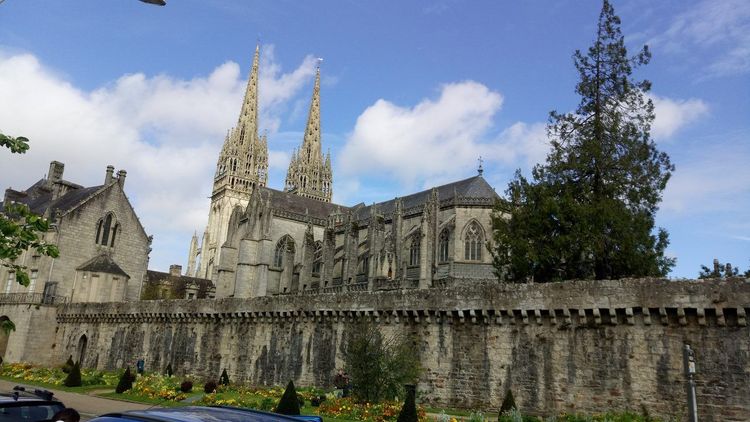
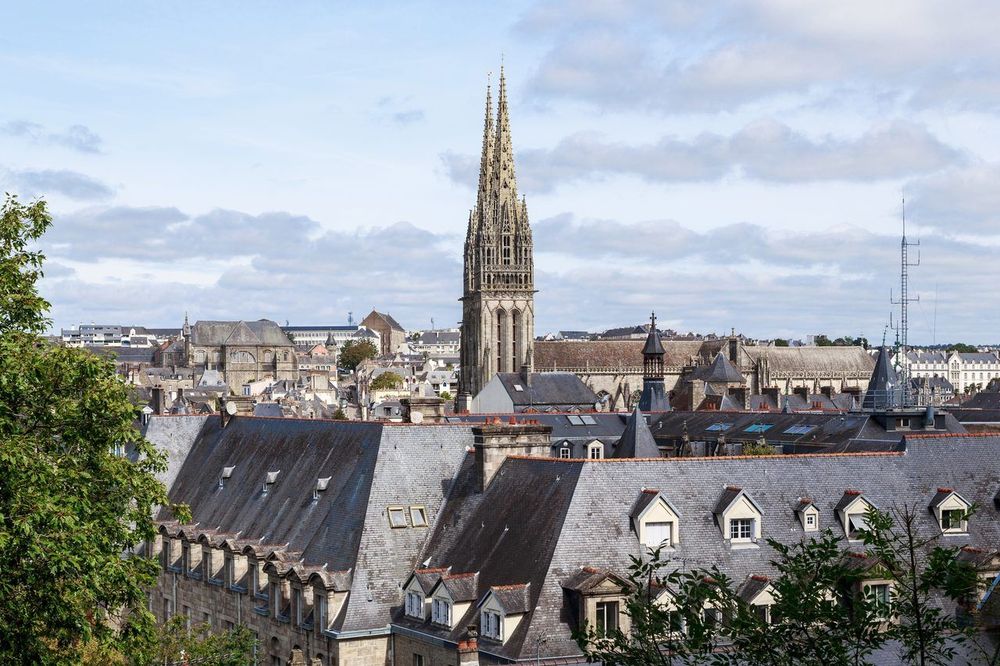
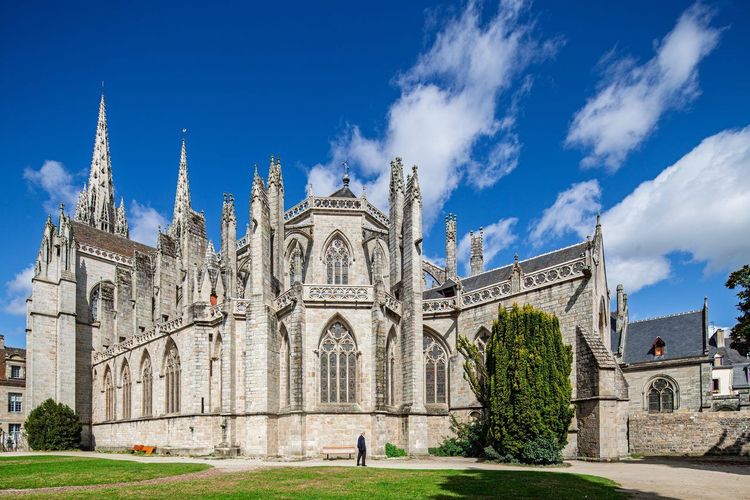
The silhouette of the Cathédrale Saint-Corentin has dominated the city since the 13th century, but it is its two granite spires, added only in 1856, that make younger visitors crane their necks. Between the two bell towers stands an equestrian statue of King Gradlon, the legendary founder of the sunken city of Ys. Tell the story before going in: the city was said to have been punished for its excesses, and only Gradlon, guided by Saint Guénolé, managed to flee on horseback before the waves closed in. The current statue dates from the 19th century, the original having disappeared during the Revolution.
Inside, the nave, slightly off-axis from the choir, intrigues every curious visitor. The explanation lies in the topography: the building project, launched in the 13th century, had to contend with marshy ground and existing structures, forcing the builders to shift the nave by several degrees. It is a perfect quirk for launching a six-year-old's observation challenge: who spots the odd angle first?
Entry is free, making it an easy stop to slot between two more physical activities. Allow fifteen to twenty minutes with young children, longer if you linger over the 15th-century stained glass, whose colours burst in the late afternoon when the sun comes round from the south.
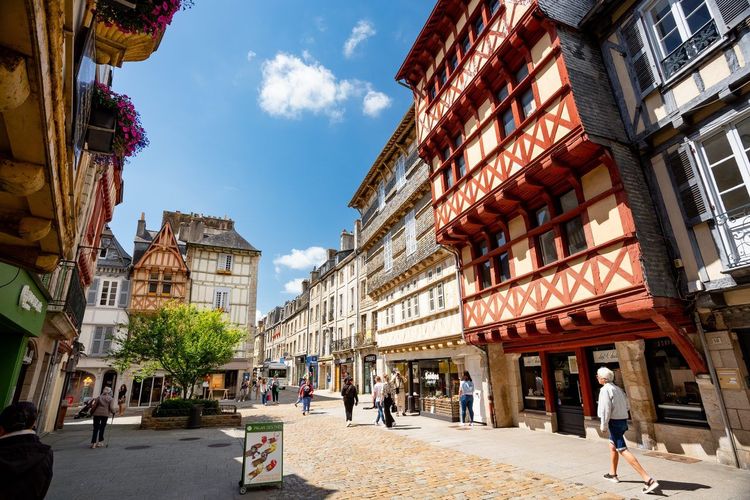
Coming out, the old town begins immediately. Rue Kéréon (Rue Kéréon, 29000 Quimper), a pedestrian street lined with half-timbered houses, leads straight to the place au Beurre and its leaning facades. The game plays itself: spot the carved beams, the jetties that push the upper floors out over the street, the grimacing faces carved in wood. Take time to look up rather than darting from one shop to the next — that is where the finest carpentry hides. From the bottom of the street, the view of the spires framed by the timber frames is the city's most-replicated photograph.
A little further on, the Halles Saint-François bring together producers, fishmongers and cheese sellers under a roof rebuilt after the fire that destroyed the original building in 1979. A good stop late in the morning: a salted-butter crêpe, a few slices of Breton pâté, and lunch is sorted. The banks of the Odet, just steps away, are dotted with flower-bedecked footbridges crossing the river in the very heart of town — a picture-postcard setting in summer, when the planters overflow above the water.
Just behind the cathedral, the Jardin de l'Évêché (Rue du Roi Gradlon, 29000 Quimper, rated 5/5 on Google from 16 reviews) offers a quieter pause. Laid out in terraces on the old ramparts, this formal garden overlooks the Odet and frames a clear view of the spires. Its geometric flower beds and shaded benches make it the ideal place to catch your breath, while the older children finish their ice cream and the parents enjoy the silence, just a hundred metres from the shopping street. Below, the quayside follows the river to the first locks without ever leaving the coolness of the water.
This entire heritage trail fits into a morning. The old town is easily walkable, including with a pushchair: the streets are flat, the paving even, and the full loop barely exceeds two and a half kilometres. The Ryo audio-guided tour of Quimper follows exactly this route, with short commentary between each point of interest and the walking time between two stops. A detail that matters when nap time is approaching and you need to choose between the garden and the market hall.
This centre alone concentrates the essence of Quimper's architectural heritage: Gothic for the cathedral, medieval timber frames for the merchant houses, formal garden for the former bishop's palace. A logical starting point before moving on to water, crafts or the great outdoors.
Locmaria and Faience: the Craft That Made Quimper
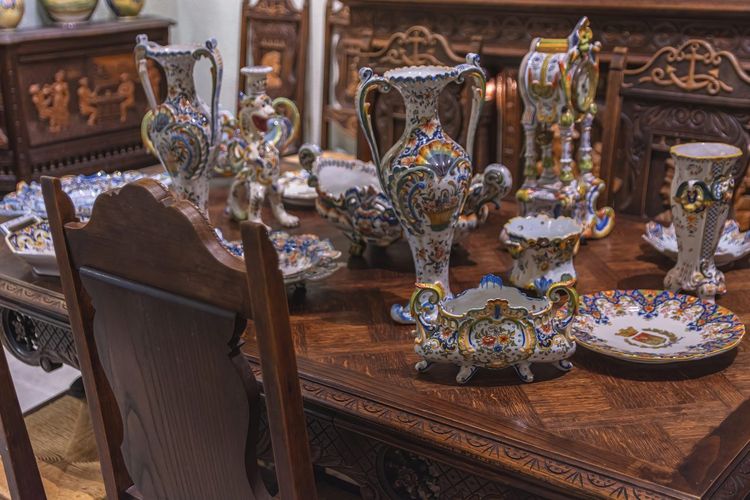
Quimper faience is not a souvenir-shelf trinket. It is a craft more than three centuries old, born in the quarter of Locmaria at the very end of the 17th century, when Jean-Baptiste Bousquet set up his kiln near the Odet to take advantage of local clay and the waterway. Hand-painted designs, Breton figures in traditional dress, floral motifs, maritime scenes: the production carried the city's name far beyond Brittany.
The Faïencerie HB-Henriot, the last manufactory still operating on site, opens its workshops for guided tours. You watch pieces being thrown on the wheel, you see the painters at work — trained for several years before mastering the traditional motifs freehand, with no room for mistakes. The part young visitors under ten love most is the freehand decoration: a flower in four flicks of the wrist, no template, no eraser.
The faience-painting workshops offered in season extend the visit to the right side of the brush: everyone decorates their own piece, which then goes into the kiln and can be collected or posted a few days later. A calm activity, perfectly suited to a drizzly day or a mid-afternoon when legs are crying for mercy. Book ahead — places go fast in July and August.
Close by, the Musée de la Faïence (14 Rue Jean-Baptiste Bousquet, 29000 Quimper, rated 4.5/5 on Google from 330 reviews) traces three centuries of local production through hundreds of pieces, from wedding plates to artists' creations of the 1920s. It only opens in season, generally from April to September: check before visiting if you come in winter.
Locmaria then deserves a wander in its own right. A former potters' village absorbed by the city's expansion, it has kept its narrow lanes, its Romanesque church from the 11th and 12th centuries, and the priory garden — a small medieval enclosure planted with herbs and dye plants. On the facades of the centre, several shops display bowls and decorated plates in the style that remains a visual signature as much as an everyday Breton object: cider is still served in a faience bolée.
Navigating the Odet: Guided Boat Trip, Kayak and Sailing
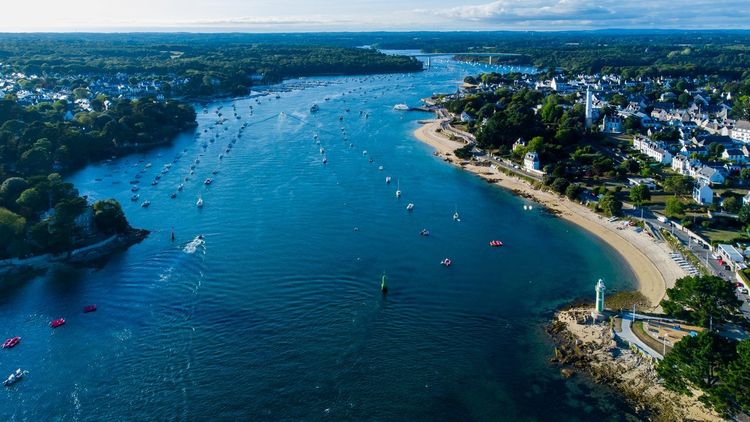
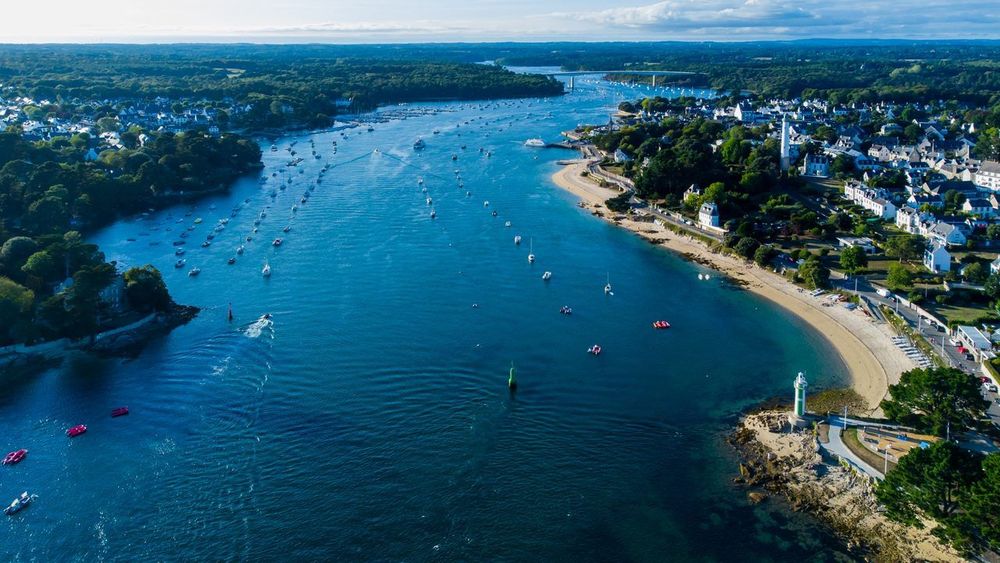
The Odet flows through Quimper and then winds about twenty kilometres before reaching the ocean near Bénodet, between wooded cliffs and manor houses invisible from the road. It is the city's strongest identity, and there are three very different ways to travel up or down it.
The guided boat cruise on the Odet vedettes (Quai de l'Odet, 29000 Quimper, rated 4.3/5 on Google from 8 reviews) remains the most comfortable option with passengers under six. The boats travel from Quimper to Bénodet following the meanders, with commentary pointing out notable properties and the names of the inlets. Allow about an hour and a half for the downstream journey. One thing to know: departures from Quimper depend on the tide, as the river is only navigable around high water. Check schedules the evening before rather than the morning of your trip, and consider taking the bus back so you do not double the journey time.
What you see from the deck alone justifies the ticket: the banks narrow into a wooded gorge after the Poulguinan bridge, manor houses appear one by one behind the oaks, and large herons take off just above the water as the boat passes. The Odet carries a flattering reputation as the most beautiful river in France, a phrase Quimper residents repeat readily and that the landscape makes hard to dispute. Sit at the bow rather than in the cabin, and keep a jumper to hand: even in August, the air turns cool once the boat approaches the estuary.
For older children, kayaking on the Odet is a completely different experience. Rental operators offer single and double kayaks departing from Quimper and further downstream, with routes accessible to beginners on the calmer stretches. Paddling past gardens that slope down to the water gives a radically different perspective on the city. Two tips that prevent tears: wear quick-drying clothes, and set off with the downstream current rather than against the tide, or you will paddle twice as hard on the way back. A buoyancy aid is always provided by reputable rental operators.
Finally, sailing is a more sporting programme, generally at the estuary, near Bénodet or Sainte-Marine, where the water and wind are better suited to the activity. Local sailing schools run introductory courses from around age 7 or 8 on light, easy-to-right dinghies, as well as supervised catamaran outings for teenagers. Best scheduled towards the end of the stay, once the group has found its sea legs.
If you can only choose one, the guided boat cruise is the most universally appealing: it suits babies and grandparents alike, and gives an overview of the valley that puts the rest of the stay into context.
Museums and Art: Two Human-Scale Collections
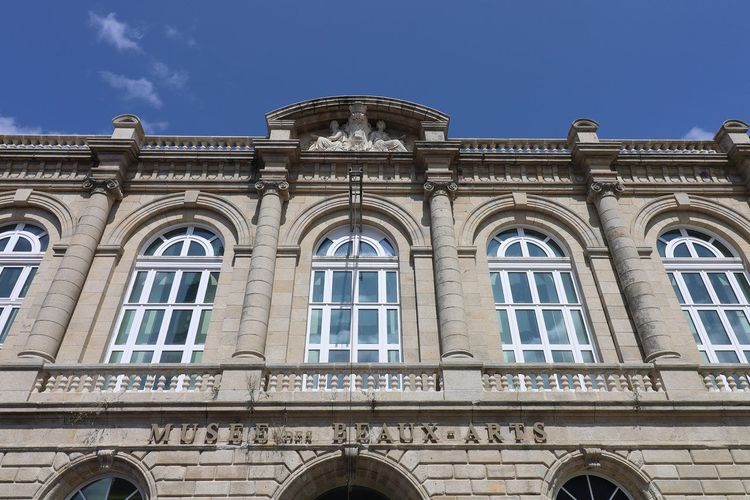
Quimper has two museums that each take about an hour to visit, a format compatible with a young audience. The Musée des Beaux-Arts de Quimper, housed opposite the cathedral, owes its existence to the bequest of Jean-Marie de Silguy in 1864: more than a thousand paintings gifted to the city, since supplemented by Breton painters and a collection dedicated to Max Jacob, poet and draughtsman born in Quimper in 1876. Activity booklets available at the desk turn the visit into a detail-spotting hunt, a format that works particularly well for children between 6 and 10.
Nearby, the Musée Départemental Breton (1 Rue du Roi Gradlon, 29000 Quimper, rated 4.6/5 on Google from 793 reviews) occupies the former bishops' palace, just behind the cathedral. Archaeology, painted furniture, costumes and headdresses from Cornouaille, and antique faience that echoes the Locmaria workshops: Brittany is told through objects rather than dates. The building's highlight is the spiral staircase in the Tour Rohan, dating from the 16th century, whose sculpted balustrade winds up to the roof space.
The two pair well with the Jardin de l'Évêché, tucked between them: half a day covers the whole lot by alternating cool rooms with outdoor breaks. Also a solid fallback plan on a day of driving rain, a statistically likely scenario in Cornouaille even in August.
Treasure Hunts, Escape Games and Photo Rallies for a Different Kind of Exploration
Some people prefer to discover a city through play rather than guided tours, and Quimper lends itself to that. The Box Escapade Game, offered by the tourist office, works like a real-life investigation through the streets of the centre: a box, clues, a map, and a series of riddles solved by observing facades, shop signs and carved details. The reversal works well — the players do the searching instead of listening. Those who normally resist historical explanations end up looking up at everything without realising it.
In the same spirit, the Archi Kurieux initiative, run by the Finistère architecture council, offers treasure hunts and photo rallies to decode urban architecture without technical vocabulary. Spot a shape, a material, a type of window, photograph a detail and find it on the map: the format suits children between 6 and 12 well, once they can read clues independently. Materials exist for several different neighbourhoods, so you can complete two trails on two separate days.
These formats are booked in advance, at the tourist office or online depending on the season, and take place without fixed opening times: you go at your own pace, snack break included, without losing the thread of the investigation. Allow one to two hours depending on the age of the players and their appetite for puzzles. A free alternative exists for the more adventurous: create your own photo rally from ten details spotted on postcards from the tourist office, then launch the hunt in the old town.
Green Space in the City: mont Frugy, Créac'h Gwen and the Banks of the Odet
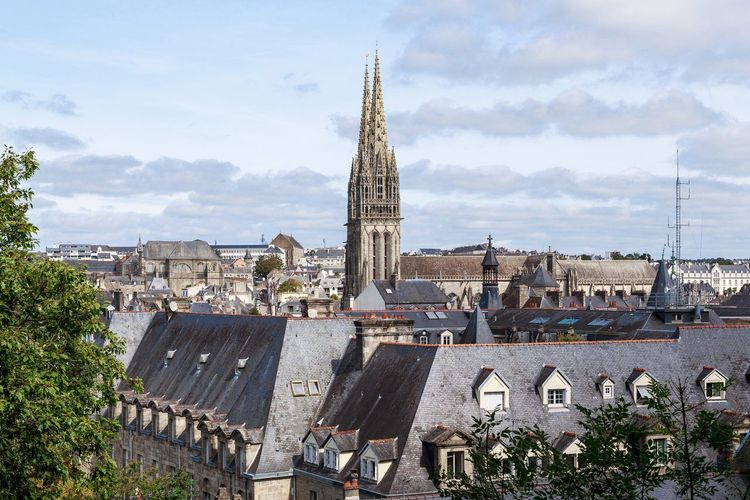
Quimper has the good fortune of having a wooded hill planted right in the centre. Mont Frugy rises just over 70 metres above the left bank of the Odet, and the path climbing it from the place de la Résistance takes a quarter of an hour, under beeches and oaks. At the top, the view plunges over the slate rooftops and the cathedral spires. The ascent is steep in places, so best reserved for already-independent walkers, but it offers the best free panorama in the city. The hillside was badly hit by the storm of 1987, which flattened much of its trees: the current woodland is largely a renaissance.
On the other side, downstream from the centre, the parc de Créac'h Gwen spreads its lawns along the Odet, with playgrounds, a boating lake, a water sports centre and walking paths. It is the Quimper residents' green lung on Sundays, and the best place to burn off energy accumulated during a morning of sightseeing. The neighbouring aquatic centre, with its leisure pools and water slide, is fallback plan number one when rain sets in for the day.
Between the two, the towpath running alongside the Odet allows you to walk or cycle on the flat, away from traffic, for several kilometres. It is the easiest outing to organise on a summer evening, with herons taking flight ahead of you and rowing boats pulling upstream. In addition, the small Locmaria priory garden and the terraced gardens of the Évêché complete a map of green spaces that is unusually dense for a city of this size.
The Great Outdoors Around Quimper: Tree Climbing, Horse Riding, Cycling and Hot-Air Ballooning
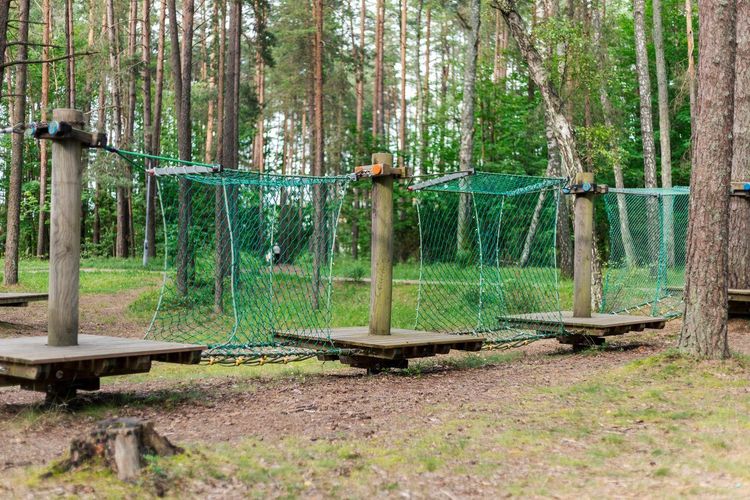
A few minutes' drive from the centre, the Cornouaille countryside opens up a far more physical playground. This is where the best memories are made for eight-year-olds and older — those who need movement after a morning of heritage.
The tree-climbing courses set up on the outskirts of town offer graded workshops by colour and height, from short zip lines accessible from age 3 or 4 to black-level courses that make teenagers work up a sweat. The format works well in the late afternoon: under the trees the heat drops quickly, and the harness channels energy better than a museum visit. Plan at least two hours; closed-toe shoes are compulsory.
For horse lovers, several equestrian centres in the surrounding area organise walking rides through the bocage on guided circuits suited to beginners. Pony rides often start from age 3 or 4, which allows the youngest to be entertained while an older sibling heads out on a longer trek. Some centres also offer beach rides out of season, when horse access is permitted.
On two wheels, cycling around Quimper starts with the Odet towpath — flat and car-free — then extends along the greenways and quiet roads of the Pays Bigouden towards Pont-l'Abbé and the coast. Hire shops in the centre offer trailers, child seats and e-bikes, which settles the question of Breton gradients, hillier than they look on a map.
Finally, for a truly unique memory, it is possible to take to the skies in a hot-air balloon over the Cornouaille countryside. Flights depart early in the morning or at the end of the day when the wind dies down, and last about an hour in the air: church steeples, valleys, meanders of the Odet and sometimes the coastline in the distance. Operators generally accept passengers from age 6 or 7, provided they can see over the edge of the basket. For more activity ideas by season, the Top 6 Things to Do in Quimper published by Ryo is a useful complement to this list.
Sea and Beaches Twenty Minutes Away: Swimming, Surfing and the Odet Ferry
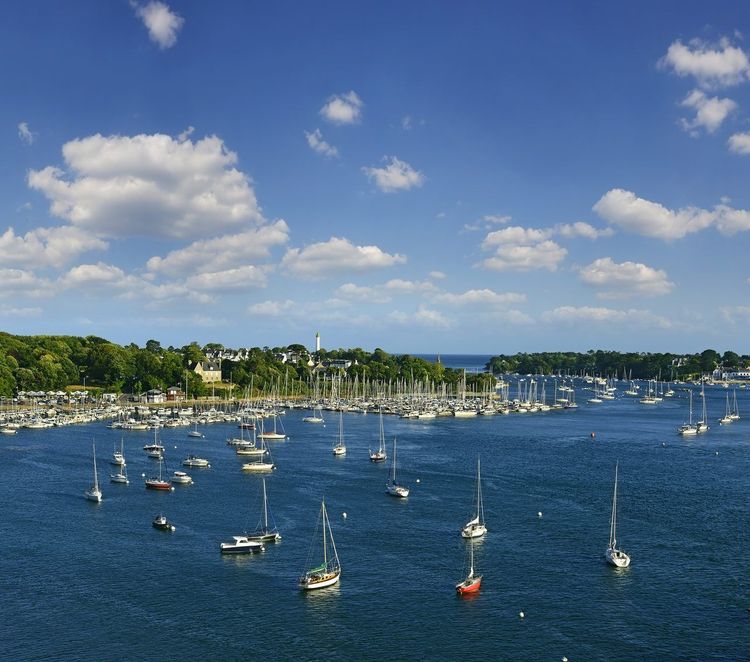
Quimper is not a seaside town, but the estuary puts the sea within immediate reach. Twenty minutes by car is enough to reach several supervised beaches, making it an ideal base for combining city and coast without changing accommodation.
For swimming, the beaches of Bénodet and Sainte-Marine, on either side of the estuary mouth, offer fine sand and relatively sheltered water, with lifeguard cover in season. The setting is reassuring: a gentle slope, shops nearby, ice cream within towel-throwing distance. Bénodet beach, known as the plage du Trez, is the busiest and best equipped, with a beach club in summer and a long stretch of sand that uncovers considerably at low tide.
Between the two banks, the ferry crossing is an attraction in itself. The crossing takes only a few minutes, but boarding a boat to change villages always makes an impression, and the view of the pont de Cornouaille, spanning the estuary in a single curve of over 600 metres, is worth the ticket alone. On the Sainte-Marine side, the small harbour, its white houses and its slipway make for a perfect late afternoon.
To learn to surf, head to the Pointe de la Torche (Pointe de la Torche, 29120 Plomeur, rated 4.8/5 on Google from 999 reviews), about thirty minutes away — one of Brittany's most renowned spots for surfing, kitesurfing and stand-up paddleboarding. Schools offer group lessons from around age 8, with wetsuits and foam boards sized to fit. Be aware of the currents and waves, which are considerably stronger than in the estuary: this spot suits those already comfortable in the water. On windy days, watching the kitesurfers from the dune is worth the drive on its own, and the site is protected as a natural heritage area.
Between sheltered estuary waters for young swimmers and proper waves for teenagers seeking a thrill, the coast near Quimper allows you to put together a tailor-made beach stay without ever straying far from the historic centre.
Five Day Trips from Quimper
Quimper makes an excellent base for exploring the south of Finistère. Here are five tried-and-tested outings, listed by travel time.
Locronan (Place de l'Église, 29180 Locronan), about twenty minutes away, lines up its 16th-century granite houses around a square with no visible overhead wires, which explains why film crews have set up their cameras there dozens of times. An hour is enough to walk around, crêpe and kouign-amann shop included. Extend the outing to the montagne de Locronan, whose summit opens up a view over the Baie de Douarnenez.
Douarnenez, twenty-five minutes away, is home to the Port-Musée and its berthed vessels that you visit by going aboard: holds, cabins, gangways — everything can be climbed. The port du Rosmeur and its canneries round off a briny morning.
Audierne, forty minutes away, has one of the area's most popular parks: an aquarium combined with seabird and free-flying raptor shows, with touch pools and sea lions. It is the go-to choice for a grey day, since a large part of the site is under cover.
Concarneau, half an hour away, offers its Ville Close, a fortified town set on a small island in the middle of the harbour. You can walk the full circuit along the ramparts, with views over the trawlers, and the Musée de la Pêche tells three centuries of tuna and sardine fishing history.
La Pointe du Raz, about an hour away, closes the loop with the open sea: seventy-metre cliffs, a marked path from the visitor centre, lighthouses in the distance and wind that blows your hair back. Bring a windproof jacket and closed-toe shoes even in July, and allow about twenty minutes' walking from the car park to the point. For a longer drive, Océanopolis in Brest is the perfect outing for an entirely rainy day.
One piece of organisational advice applies to all five outings: never plan two in the same day. The distances look short on a map, but the roads in the south of Finistère are winding and fill up quickly in July and August, especially around Concarneau and the Pointe du Raz. One trip in the morning, back by early afternoon, then a beach or a park in the evening: this pace holds up far better than chaining three towns together. Remember to bring snacks — several of these sites close their catering facilities out of season.
Eating Well in Quimper: Crêpes, Kouign-Amann and Kinkiz Cider
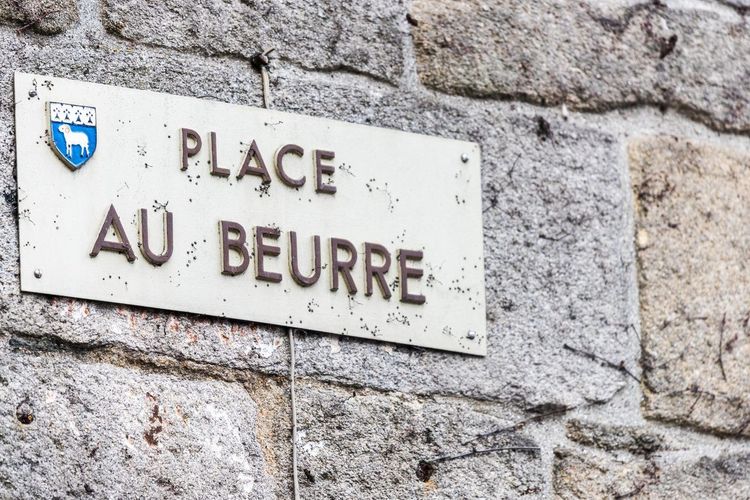
Breton cuisine lends itself particularly well to meals with a group, between simple dishes to share and a sweet course that is very easy to negotiate. In Quimper, the crêpe and the galette remain the safe bet: a buckwheat galette as a main course, a wheat crêpe for dessert, a formula that reassures even the most demanding palates. The tiny place au Beurre concentrates several historic crêperies, some of which have been turning out crêpes on cast-iron billigs for decades.
On the sweet side, kouign-amann, a flaky cake made with butter and caramelised sugar born in Douarnenez, is found in most bakeries in the centre. Far breton with prunes and palets bretons with salted butter travel better in a rucksack, making them the quintessential hiking snack. The adventurous will also want to try Kinkiz farmhouse cider, produced on the heights of the city and traditionally served in a faience bolée: the nod is hard to miss after a workshop visit. Apple juice from the farm settles the question for under-eighteens.
For shopping or simply for a browse, the Halles Saint-François remain the central landmark, with their stalls of Breton produce and counters where you can eat on the go. Around them, several crêperies happily accommodate pushchairs and offer reduced menus — a detail that matters when the meal needs to be kept short. A tip to avoid evening queues in summer: dine early, around 7 pm, before the wave of holidaymakers arrives.
To expand the list of addresses and discover other local products to try on the spot, the Top 10 Culinary Specialities in Quimper published by Ryo lists complementary options, useful for planning meals around your sightseeing programme.
Where to Stay, How to Get Around and When to Come
Quimper suits a three-to-five-day stay well: long enough to combine the historic centre, faience, a trip on the Odet and at least one day at the beach without rushing. Under three days, you have to choose between heritage and the outdoors rather than attempting everything in one exhausting day.
On accommodation, two approaches stand apart. Hotels and B&Bs in the historic centre allow you to do everything on foot — cathedral, market halls, museums — without getting back in the car, with the added advantage of going out to dinner without any logistics. Campsites and self-catering accommodation near Bénodet or Sainte-Marine, about twenty minutes away, suit larger groups and longer stays better: pools, clubs, direct beach access, and Quimper as a daily excursion. For a compromise, accommodation in the Odet valley offers the calm of the countryside ten minutes from the centre.
On the ground, a car is only needed to leave the city. The centre is pedestrianised, multi-storey car parks are in the immediate vicinity, and the urban bus network serves outlying neighbourhoods such as Locmaria and Créac'h Gwen. The station puts Quimper just under four hours from Paris by direct TGV, making a car-free stay feasible if you limit your excursions or hire a vehicle locally for a day.
On the choice between going independently or taking a guided tour, it all depends on the age of the group. With young children, full independence wins almost every time: the Ryo audio-guided tour of Quimper lets you go at your own pace, skip a stop, take a twenty-minute break without keeping a group waiting. With teenagers curious about detailed history, a tour led by a professional guide adds a depth that audio cannot replace. For technical activities — sailing, kayaking, surfing — professional supervision is non-negotiable in any case.
In terms of timing, spring and early summer offer the best compromise between decent weather and manageable crowds. At the end of July, the Festival de Cornouaille transforms the city for several days: costumed processions, Celtic circles, concerts and musicians in the streets — one of the biggest Breton cultural gatherings. Atmosphere guaranteed, but accommodation snapped up and bookings to be made months in advance. September remains the most underrated month: water still warm, beaches empty, Odet vedettes still running.
Among the favourite combinations that come up most often, the pairing of a morning cruise on the Odet with an afternoon faience-painting workshop stands out: two calm activities that leave energy for a more physical day the next day — tree climbing or beach depending on the sky. Another lesser-known gem is climbing mont Frugy at sunset, when the raking light catches the slate rooftops. In short: book ahead for anything that depends on weather and tide, keep heritage and museums as a fallback, and leave at least half a day free — that is usually the one that creates the best memories. The Ryo audio-guided tour conveniently swings by Mont Frugy on its way through town.

FAQ
How many days should you plan to visit Quimper with family?
Three days are enough for the historic centre, a trip on the Odet and a day at the beach. Four to five days allow you to add tree climbing, a horse ride, a surf session or a day trip to Locronan and the Pointe du Raz without ever rushing.
What is the best time to visit Quimper with children?
Spring and early summer offer the best balance between pleasant weather and manageable crowds. July and August concentrate open activities but also the crowds, particularly during the Festival de Cornouaille at the end of July. September remains an excellent option, with still-warm water and quiet beaches.
What free activities are there in Quimper for young children?
The Cathédrale Saint-Corentin, a stroll through the old town, the Jardin de l'Évêché, the climb up mont Frugy and the towpath along the Odet are all free. The Halles Saint-François can be explored at no cost, and the parc de Créac'h Gwen offers playgrounds and lawns with free access.
How do you get around Quimper with a pushchair?
The historic centre can be explored entirely on foot, on flat streets with even paving that works well with a pushchair. For the beaches, the Pointe de la Torche or the equestrian centres, a car remains the most practical option, as bus connections are limited outside the urban area.
Where should you stay in Quimper when travelling as a group?
The historic centre suits those who want to do everything on foot. The areas around Bénodet and Sainte-Marine, about twenty minutes away, are better suited to stays combining beach and day trips with self-catering accommodation. The Odet valley offers a quiet compromise between the two.
What budget should you plan for a four-day stay in Quimper?
Heritage costs little: the cathedral, old town, gardens and mont Frugy are free, and the two museums charge moderate prices with free entry for younger visitors. The budget hinges on guided activities — river cruises, kayaking, surfing or hot-air ballooning — and on accommodation in high season, which is significantly more expensive in July and August.
Which beaches near Quimper are suitable for young swimmers?
Bénodet and Sainte-Marine, on either side of the Odet estuary, offer sheltered waters and lifeguard supervision in season. The Trez beach in Bénodet is the best equipped. Reserve the Pointe de la Torche for confident swimmers and supervised surf lessons, as the currents there are considerably stronger.
What can you do in Quimper on a rainy day?
The two museums, a tour of the faience factory and a pottery-painting workshop can easily fill an entire day. The Créac'h Gwen aquatic centre, the Audierne aquarium forty minutes away and, for a longer outing, Océanopolis in Brest round out the list of dry-weather options.
Quimper has the rare advantage of fitting into a small area while opening onto very varied landscapes: human-scale heritage, an iconic river, living craftsmanship, countryside and beaches twenty minutes away. Whether you stay three days or a week, the Ryo audio-guided tour of Quimper remains the best companion for exploring the historic centre, to be complemented as you wish with water, faience or the fresh Cornouaille air.