© Shutterstock
 Votre guide Ryo
Rennes Neighborhoods in 2026: History, Atmosphere, and Where to Stay
Walking across Rennes on a Sunday morning means moving in twelve minutes from the hushed calm of the Thabor to the scent of crêpes at the Lices market, then, three metro stops later, reaching the renovated towers of le Blosne. How many neighborhoods does Rennes have exactly? Twelve officially, and each has its own urban grammar, its own prices, and its own rhythm. The neighborhoods of Rennes concentrate a variety of urban faces that is rare for a city of this size, on a surprisingly compact territory. For those discovering the city on foot, the Ryo audio-guided tour of Rennes gives a first glimpse of these contrasts, between half-timbered lanes in the center and large housing estates from the 1970s.
Behind the generic term lies a precise organization: twelve official neighborhoods created in 1983, each with a consultative council, an additional metro line that has reshuffled prices since 2022, and entire areas, such as Baud-Chardonnet, built from scratch on former railway brownfields. This guide covers each zone, from the historic center to the eastern fringes undergoing rapid change, with concrete benchmarks to help you choose where to stay based on your profile, whether you are a student, a family, or a newcomer.
How the Neighborhoods of Rennes Are Organized
The current division dates back to 1983, when the municipality structured the city into twelve administrative neighborhoods, each grouping several historic districts, or sub-neighborhoods, and associated with a designated elected official and civil servant. Neighborhood councils, established between 1997 and 2002, bring together local residents, associations, and randomly selected inhabitants to discuss roads, green spaces, and participatory budgets before municipal decisions are made. Since 2003, these twelve neighborhoods have themselves been grouped into six territorial directorates: Centre, Ouest, Nord-Ouest, Nord-Est, Sud-Est, and Sud-Ouest.
Here is the list of the different neighborhoods of Rennes as officially named by the city:
- Centre: historic heart, place Sainte-Anne, rue Saint-Georges, marché des Lices
- Thabor-Saint-Hélier-Alphonse Guérin: the large public garden and the bourgeois streets of the eastern center
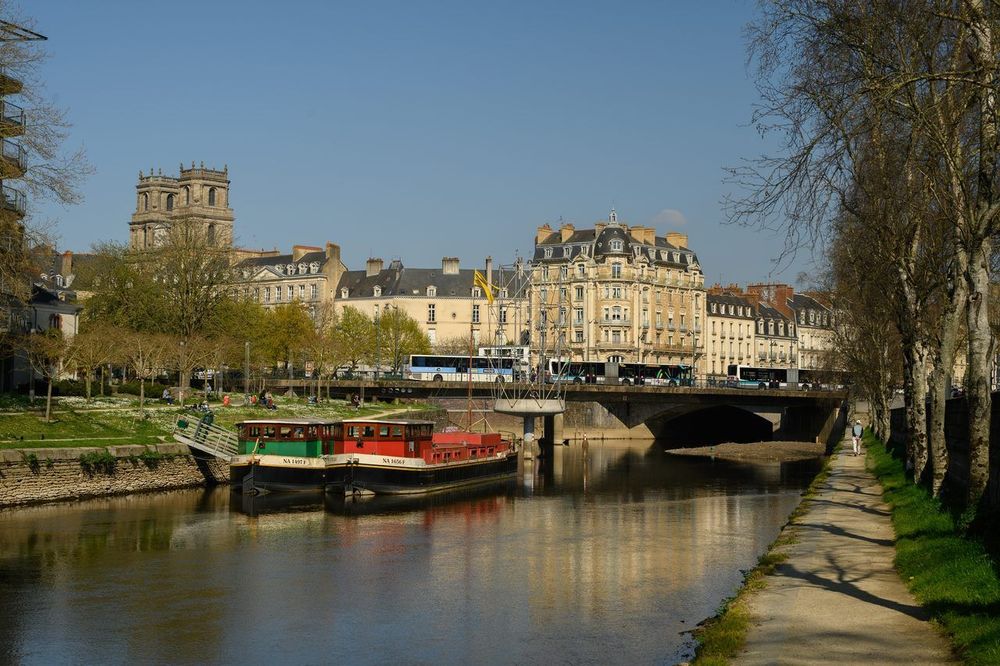
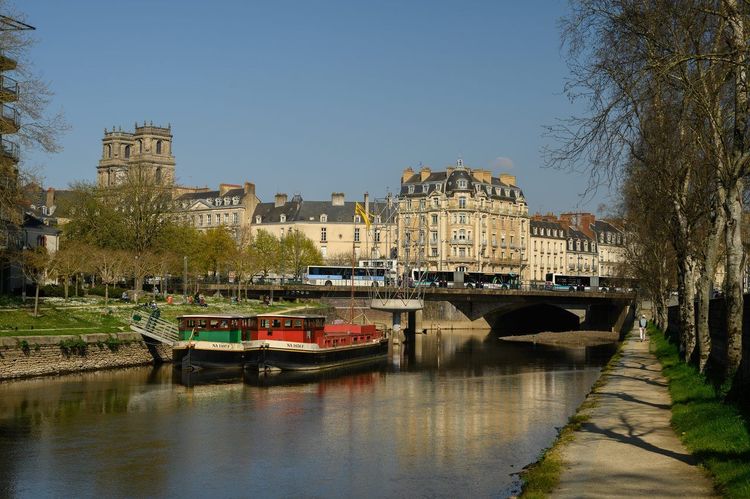
- Bourg-l'Évesque-La Touche-Moulin du Comte: residential northwest, banks of the Vilaine and the canal
- Nord-Saint-Martin: north of the center, along the Ille-et-Rance canal
- Maurepas-Patton: northeast, with the sub-neighborhoods Bellangerais, Gayeulles, Motte-Brûlon, and Saint-Laurent
- Jeanne d'Arc-Longs-Champs-Atalante Beaulieu: east, science campus, housing estates, and the Plaine de Baud (Baud-Chardonnet)
- La Pommeraie: southeast, formerly the Francisco-Ferrer-Vern-Poterie neighborhood, bringing together Francisco Ferrer, le Landry, and la Poterie
- Sud-Gare: la Binquenais, la Madeleine, Sainte-Thérèse-Quineleu, and Villeneuve, reshaped by the EuroRennes project
- Cleunay-Arsenal-Redon: west, with la Courrouze, la Mabilais, and the meadows of the Prévalaye
- Villejean-Beauregard: northwest, universities, university hospital, and newer districts
- Le Blosne: southeast, with Italie, le Landrel, Sainte-Élisabeth, and Torigné
- Bréquigny: southwest, with les Chalais and les Champs Manceaux
These administrative labels are not the ones used in everyday life. Nobody in Rennes says they live in "La Pommeraie": they say la Poterie or le Landry, just as they say Bourg-l'Évesque rather than the full neighborhood name, place names inherited from parishes and fiefdoms that predate the Revolution.
Looking for a map of Rennes neighborhoods before you start? It is available for free on the Rennes Métropole mapping portal, with the precise boundaries of each area and its sub-neighborhoods. One detail worth knowing: these administrative boundaries do not always match those used by real estate agencies, which redraw the city according to their own pricing zones.
For the rest of this guide, we have chosen to group areas by geographic orientation, from the center outward to the north, south, east, and west: a more intuitive approach than the administrative list for anyone looking to compare atmosphere and prices.
The City Center and the Thabor: The Historic Heart of Rennes
The city center of Rennes is organized around two poles inherited from the reconstruction that followed the fire of 1720: rue Saint-Georges with its half-timbered houses, and place Sainte-Anne, which comes alive in the evening with its dozen or so student bars. It has the highest density of restaurants and independent shops in the entire metropolitan area, which also makes it the most expensive area per square meter.
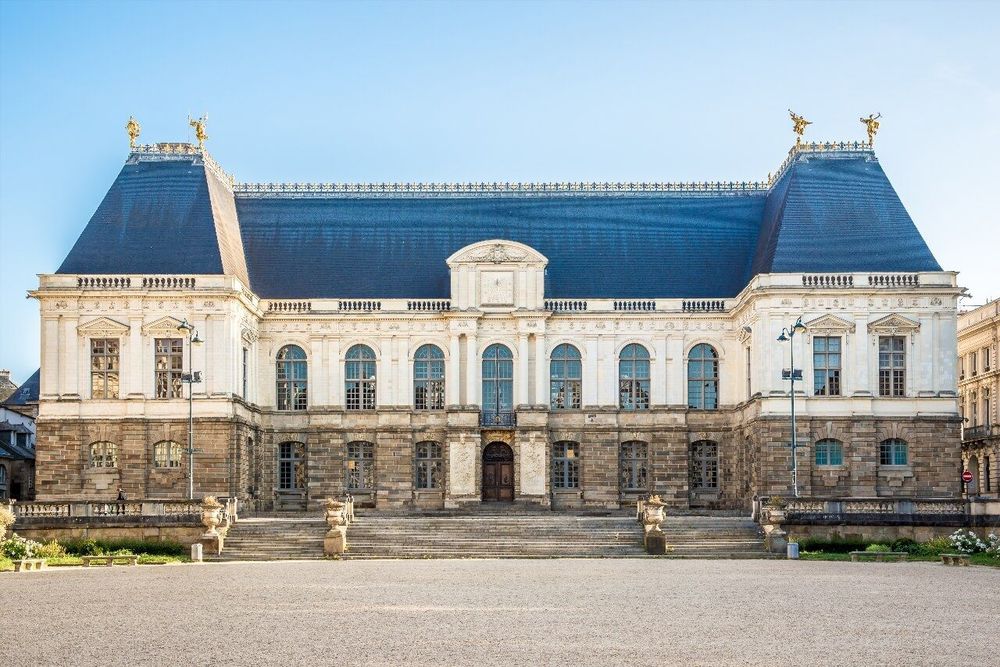
Nearby, the Parlement de Bretagne is a reminder that Rennes was long the judicial capital of the province, before the fire of February 1994 gutted its roof and required five years of restoration before it could reopen. This central Rennes neighborhood remains primarily pedestrian: most streets in the historic district are closed to traffic, making it a pleasant place to stroll but less convenient if you need to park easily.
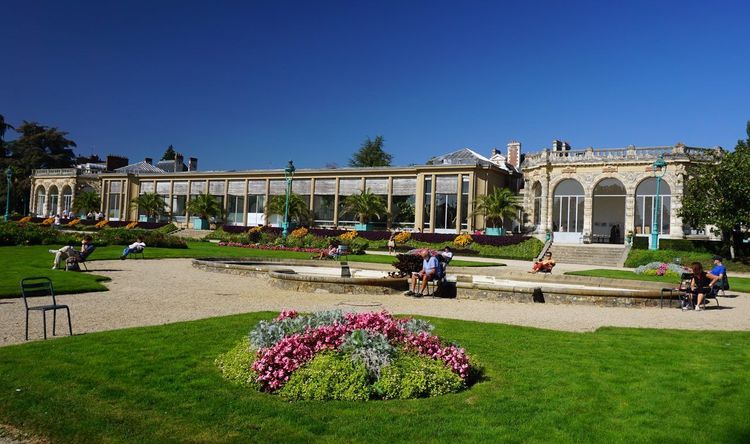
Heading east, the Thabor garden shifts to a completely different register. Its ten hectares blending a French formal garden with a free-access aviary make it one of the finest urban parks in western France, and the residential neighborhood surrounding it, officially Thabor-Saint-Hélier-Alphonse Guérin, has some of the highest property prices in the city. The streets around boulevard de la Duchesse Anne and avenue Alphonse Guérin, with their grand apartment buildings, remain the first choice for long-established families.
The Saint-Hélier area, further south, acts as a hinge between the center and Baud-Chardonnet, with a decidedly more functional than heritage-oriented feel. Right next door, the Sud-Gare neighborhood moves to the rhythm of the EuroRennes development: a rebuilt station, office towers, and new housing have pushed prices up without yet establishing a real day-to-day neighborhood life.
As for nightlife safety, the occasional incidents reported in some local media mainly concern a few streets around place Sainte-Anne on weekend nights after midnight, a pattern typical of student city centers rather than a lasting feature of the neighborhood. To explore the area further, the 6 must-do activities in Rennes listed by Ryo cover most of these addresses.
Northern and Northeastern Neighborhoods: Villejean, Maurepas, Saint-Martin
Villejean-Beauregard lives to the rhythm of Université Rennes 2 and the nearby CHU Pontchaillou hospital, two hubs that make this northwestern area the city's main student basin, with several thousand units in university residences and private shared housing. Metro line a has served the campus directly since 2002, placing the city center less than ten minutes away.
This concentration of students comes alongside a more contrasting social reality on certain fringes of the neighborhood, where several buildings from the 1960s show higher indicators of precariousness than the Rennes average. Public authorities have multiplied urban renewal operations here over the past decade, with insulated facades and redesigned public spaces, without fully erasing the area's image. Beauregard, by contrast, built later on the heights, has established itself as one of the best value-for-money options in the city for young couples.
Maurepas, officially Maurepas-Patton, presents a less homogeneous face than it might seem: the neighborhood also includes Bellangerais, Motte-Brûlon, and Saint-Laurent, residential areas very different from the large housing estates it is often reduced to. Since line b opened in 2022, the Gros-Chêne station has brought the neighborhood closer to the center, and local shops as well as the weekly market coexist with social housing towers where certain flashpoints, often linked to drug trafficking, remain confined to a few specific addresses rather than spread across the whole area. Parc des Gayeulles (Rue du Professeur Jean Pecker, 35700 Rennes, rated 4.6/5 on Google with 8,300 reviews), with its lake, leisure base, and free-access animal enclosures, remains one of the great family assets of these northern neighborhoods.
Further east, the Jeanne d'Arc-Longs-Champs-Atalante Beaulieu neighborhood plays a different tune: that of the Beaulieu science campus and the Atalante technology park, extended by the individual houses of the Longs-Champs area around their pond. It is one of the greenest areas in Rennes, also served by line b, and one of the few where students and established families cross paths on the same streets.
Nord-Saint-Martin, finally, blends a former artisan fabric converted into lofts and offices with quiet residential pockets near the Ille-et-Rance canal. It is a transitional neighborhood, less talked about than its neighbors, but where prices remain noticeably more affordable than in the center for a comparable level of connectivity.
Southern Neighborhoods: Le Blosne and Bréquigny
Le Blosne is arguably the Rennes neighborhood that has changed the most in fifteen years. Listed under the national urban renewal program, it has seen several 1970s blocks demolished to make way for lower-rise buildings, community gardens, and entirely redesigned public spaces, from Italie to Torigné via le Landrel and Sainte-Élisabeth.
Contrary to a common misconception, this area did not wait for line b to be connected: three stops on line a, Triangle, Le Blosne, and Italie, have linked it to the center since 2002, in about ten minutes door to door. Place de Zagreb (Place de Zagreb, 35200 Rennes), the redesigned heart of the neighborhood, is home to a market, public facilities, and shops.
These transformations have not erased all challenges: unemployment rates here remain above the municipal average and certain blocks still concentrate a significant share of social housing. But the neighborhood also has real assets, a strong cultural mix, a dense network of associations, and recent facilities, notably the médiathèque and the Triangle performance venue, which make it a district not to be judged solely on its past reputation.
Bréquigny occupies the southwestern corner of the city, with les Chalais and les Champs Manceaux, and shares part of this urban renewal story without experiencing exactly the same dynamics. The neighborhood benefits from a large park and a very popular municipal swimming pool, two facilities that structure everyday life for local families.
These southern neighborhoods currently have among the lowest rents in the city relative to floor area, a concrete argument for anyone who prioritizes living space over immediate proximity to the historic center.
La Poterie, Baud-Chardonnet, and the Eastern Neighborhoods in Full Renewal
If one area of Rennes deserves close attention in 2026, it is this one. Baud-Chardonnet, developed on former railway and military land along the Vilaine, in the Plaine de Baud area, is one of the largest development projects in the metropolitan area, ultimately set to include nearly 2,000 homes, offices, shops, and a green framework conceived from the very beginning of the project.
La Poterie, a little further southeast, followed a comparable trajectory a generation earlier: a new neighborhood organized around the terminus of line a, where contemporary architecture and green spaces replaced what had been semi-rural land. It now belongs to the administrative neighborhood of La Pommeraie, alongside le Landry and Francisco Ferrer, a southeastern ensemble where new program deliveries are still spread over several years and where the supply of local shops remains uneven from one street to the next.
What sets these rapidly changing Rennes neighborhoods apart is the speed of transformation. Few French cities of this size are redeveloping so much railway and military land in a single decade, and the effect is already visible in property listings for the area, which have risen sharply since the first residential buildings were delivered.
Cleunay, Bourg-l'Évesque, and the Western Neighborhoods
To the west, Cleunay runs along the banks of the Vilaine and the meadows of the Prévalaye, a vast natural area popular for running and cycling, just a short distance from the city center despite its noticeably greener atmosphere. The neighborhood, which is residential and long somewhat cut off, gained two stops on line b in 2022 and now attracts families looking for a compromise between nature and quick access to the center. Its sub-neighborhoods Arsenal-Redon and la Mabilais, closer to the railway, round out this western zone with a more urban profile, while la Courrouze, straddling Saint-Jacques-de-la-Lande, concentrates new-build programs.
Bourg-l'Évesque, closer to the historic center, retains a fabric of small streets and a well-regarded weekly market, the Mail market, where residents of Rennes have been coming for decades to buy from local producers. Prices here are intermediate between those of the pure center and the more outlying western neighborhoods. Ryo's audio-guided tour focuses on the historic center, a useful complement once you've explored this side of town.
These western areas, less covered in guides than le Blosne or Villejean, suffer mainly from a lack of visibility rather than a lack of real appeal.
The Traditional and Most Sought-After Neighborhoods to Settle in Rennes
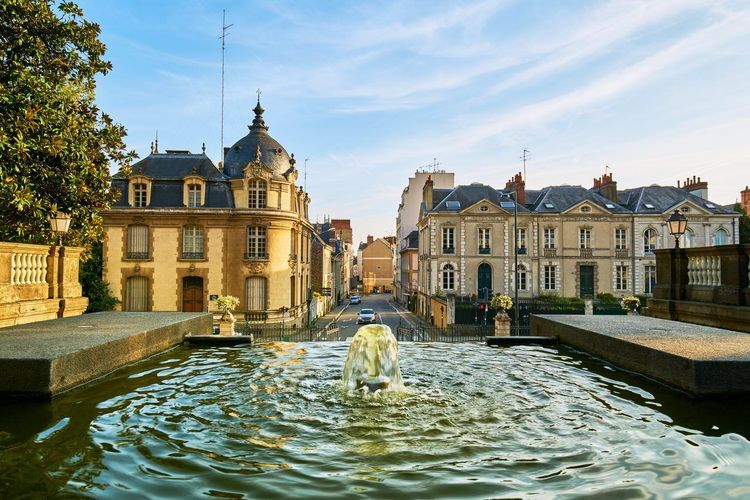
If you ask a Rennes resident which is the best neighborhood to live in, the answers often converge on the same names: the Thabor for its heritage calm, Sainte-Anne and the center for neighborhood life, and increasingly la Poterie or Beauregard for value for money.
This success is no accident. These traditional sought-after neighborhoods in Rennes generally combine three simple elements: well-regarded schools within walking distance, a lively commercial fabric that is not exclusively nocturnal, and metro or bus service that keeps commuting to less than twenty minutes from the center.
Conversely, some areas considered less prestigious have been gaining ground in preferences in recent years, precisely because they offer the same trio at still-reasonable prices. This is the case for Saint-Martin and Cleunay, two neighborhoods that buyers rarely compared to the Thabor a decade ago and that now feature prominently in the searches of first-time buyers.
Neighborhoods in Full Transformation: Rennes's New Urban Projects
The Rennes property market has been reshaped by one project in particular: metro line b, which entered service in September 2022 and crosses the city from southwest to northeast. It has brought areas that were previously poorly connected closer to the center, Cleunay and la Courrouze to the west, Maurepas to the northeast, the Beaulieu campus, and Cesson-Viasilva to the east. Prices within a 500-meter radius of the new stations have risen faster than the municipal average over the period, a phenomenon already observed twenty years earlier along line a, which has served Villejean, Le Blosne, and La Poterie since 2002.
This dynamic is compounded by a deep-seated urban transformation, particularly visible in Baud-Chardonnet, la Courrouze, and the Sud-Gare area, where former industrial, military, and railway brownfields are giving way to mixed residential, office, and retail developments. You will still see cranes in these areas for several years to come, making them zones to consider with a medium-term perspective rather than for immediate comfort.
At the city scale, this transformation benefits mostly the historically less central neighborhoods: it is there, more than in the Thabor or Sainte-Anne, that the bulk of the new housing supply in Rennes for the coming decade is concentrated.
How to Assess Safety and Choose the Right Neighborhood in Rennes
The question of which Rennes neighborhoods to avoid comes up regularly in online searches, often fueled by perceptions more than by data. The official crime figures, published annually by the Ministry of the Interior and the prefecture of Ille-et-Vilaine, paint a more nuanced picture: crime in Rennes is concentrated on property offenses in the hyper-center, with very localized variations elsewhere rather than entire areas to steer clear of.
Several parts of le Blosne, Maurepas, Villejean, and Cleunay are classified as priority neighborhoods under urban policy, a status that primarily reflects a low income level and triggers enhanced public resources, not an indicator of danger. Drug-related incidents recorded there generally remain confined to a few specific addresses. The local perception, gathered through neighborhood councils, often differs from the raw statistics: many residents of these areas describe a peaceful daily life, far from the image sometimes conveyed.
To calmly assess a neighborhood before moving in, cross-reference several sources rather than just one. Consult the prefecture's public data, but also the neighborhood council minutes available on the city's website, and if possible, walk through the area at different times of day.
A few simple precautions are sufficient in the vast majority of cases: avoid parking a visibly loaded vehicle at night, favor well-lit and busy streets after 10 p.m., and ask residents or local shopkeepers in the area you are considering, who know the real dynamics of their street better than anyone.
Getting Around and Living in Rennes: Transport, Prices, and Postal Codes
Rennes is divided among three postal codes that broadly correspond to the main zones described above: 35000 for the center, the Thabor, and part of the west; 35200 for the southern and southeastern neighborhoods (le Blosne, Bréquigny, la Poterie); 35700 for the north and northeast (Villejean, Beauregard, Saint-Martin, Maurepas, Beaulieu). This simple reference helps you quickly locate a property listing without knowing the exact neighborhood name.
In terms of mobility, the two automated metro lines, a and b, now serve virtually all major neighborhoods, significantly narrowing the travel-time gap between center and periphery. Rennes is also a particularly cycle-friendly city, flat and compact: the most beautiful cycling routes around Rennes listed by Ryo allow you to connect several neighborhoods without ever needing public transport.
On the price side, the gaps remain significant but less extreme than in a metropolis like Nantes or Bordeaux. Notary barometers place the average price per square meter for existing properties at around €4,000 in Rennes, with a roughly two-to-one ratio between the most affordable southwestern neighborhoods and the streets of the Thabor or the historic center. Students logically favor Villejean for its proximity to the campus, but increasingly also Beauregard, Beaulieu, and Cleunay, which are well served and slightly cheaper.
If you are planning a move, the ideal approach is still to match your priorities, budget, transport access, peace and quiet or lively atmosphere, with an on-the-ground visit. No online data replaces a stroll through a neighborhood's streets on a Saturday afternoon.
FAQ
How many neighborhoods are there in Rennes?
Rennes officially has twelve administrative neighborhoods since 1983, each with its own neighborhood council: Centre, Thabor-Saint-Hélier-Alphonse Guérin, Bourg-l'Évesque-La Touche-Moulin du Comte, Nord-Saint-Martin, Maurepas-Patton, Jeanne d'Arc-Longs-Champs-Atalante Beaulieu, La Pommeraie, Sud-Gare, Cleunay-Arsenal-Redon, Villejean-Beauregard, Le Blosne, and Bréquigny. In everyday speech, residents of Rennes mostly use the names of finer sub-neighborhoods.
What is the best neighborhood to live in Rennes?
It depends mostly on your profile. The Thabor and Sainte-Anne appeal for their heritage and tranquility, la Poterie and Beauregard for their value for money, and Cleunay for the balance between nature and proximity to the center. There is no universal answer.
Which neighborhoods in Rennes should be avoided?
No neighborhood in Rennes should be avoided as a whole based on official data. Certain specific streets in le Blosne, Maurepas, or Villejean see higher concentrations of drug-related incidents, but these situations remain localized and do not characterize the entire area.
Which is the most expensive neighborhood in Rennes?
The Thabor and the historic center, around place Sainte-Anne and the Parlement de Bretagne, have the highest price per square meter in the city, well above the municipal average, due to their architectural heritage and central location.
Which neighborhoods offer the most affordable prices in Rennes?
Le Blosne in the southeast and Bréquigny in the southwest remain the most accessible areas, followed by Villejean in the northwest and the fringes of Arsenal-Redon in the west.
Where should students live in Rennes?
Villejean remains the traditional choice for its immediate proximity to the Université Rennes 2, on line a. Beaulieu attracts science students, while Cleunay and la Courrouze, opened up by line b in 2022, offer an interesting compromise between budget and commute time.
Does the metro extension in Rennes impact neighborhood prices?
Yes, significantly. Areas served by line b since 2022, including Cleunay, la Courrouze, Maurepas, and Beaulieu, have seen property prices rise faster than the municipal average, just as Villejean, Le Blosne, and La Poterie did after line a opened in 2002.
Ultimately, choosing a neighborhood in Rennes rarely comes down to picking the best or the worst: it is a trade-off between budget, lifestyle, and distance from the center, in a city where the metro has considerably narrowed the gaps in recent years. The Thabor for heritage, Baud-Chardonnet to bet on the future, Villejean for student life: each area suits a different profile rather than fitting into a fixed hierarchy.
To get a real sense of these contrasts before choosing, nothing beats a walk on the ground. The Ryo audio-guided tour of Rennes offers a route designed to cross several of these atmospheres in a single outing, from the historic center to the banks of the Vilaine.
À lire également