© Shutterstock
 Votre guide Ryo
Toulouse Neighborhoods: the 2026 Guide to Exploring Every Side of the Pink City
You type “Toulouse neighborhoods” into a search engine and end up with a list of names that seem to follow no logic? That's perfectly normal. Toulouse is far more than the Place du Capitole seen from a bridge at sunset. Between the Canal du Midi running alongside the Minimes and the allotment gardens of Bagatelle, the city has around thirty official neighborhoods, divided into six sectors that bear no resemblance to Parisian arrondissements. Finding your way around Toulouse's neighborhoods therefore takes a little method: postal code, which bank of the Garonne, the history of each street. The Ryo audio-guided tour of Toulouse walks through a good portion of these areas on foot, making it a practical starting point before diving into each sector in detail.
This guide covers the eight areas that truly matter for a visitor or future resident: from les Carmes, where century-old covered markets stand alongside brick-built private mansions, to Mirail, where 1960s architecture has been reinventing itself through urban renewal programs for twenty years. You'll find out why Saint-Cyprien now commands property prices close to the city center, where to stay depending on your budget, and why the question of neighborhoods to avoid deserves a nuanced answer rather than a hasty search query. Along the way, we encounter a 47-tonne mechanical minotaur, a Unesco-listed basilica and the oldest bridge still standing over the Garonne.
Understanding Toulouse's Layout: Sectors, Postal Codes and the Arrondissement Myth
Unlike Paris, Toulouse does not operate with arrondissements numbered 1 to 20. The question comes up often nonetheless: people search for “quartier 4 Toulouse” or “quartier 10 Toulouse” imagining a similar system, whereas the Pink City divides its territory into six administrative sectors, themselves subdivided into around thirty neighborhoods recognized by the city council. This sector-based division, introduced during the 2014 municipal reform, carries straightforward geographical names: Centre, Rive Gauche, Nord, Est, Ouest and Sud-Est. The city council also publishes an official map of these neighborhoods on its citizen consultation platform, which is useful if you are planning a move rather than a simple visit.
The postal code provides a more reliable everyday reference. 31000 covers the historic center (Capitole, Carmes, Saint-Étienne, Daurade). 31100 corresponds to the west, on the left bank of the Garonne (Saint-Cyprien, Patte d'Oie, Purpan). 31200 extends to the north (Minimes, Sept Deniers, Compans-Caffarelli). 31300 covers Mirail and Bagatelle, to the southwest. 31400 brings together Rangueil, Saint-Michel and Saint-Agne, to the southeast. 31500, finally, corresponds to the east of the city, toward Jolimont and the Cité de l'Espace.
Above all, bear this in mind when building a mental map before you set off: the Garonne divides the city into two distinct logics. To the east of the river, the historic center and its affluent extensions. To the west, a bank that was long working-class but has largely gentrified since the 2000s, to the point of reversing certain property price dynamics observed just fifteen years ago.
Capitole and les Carmes: the Nerve Center
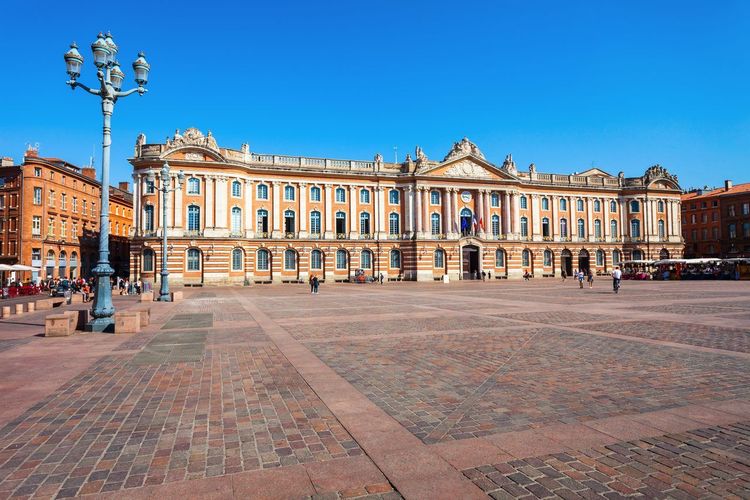
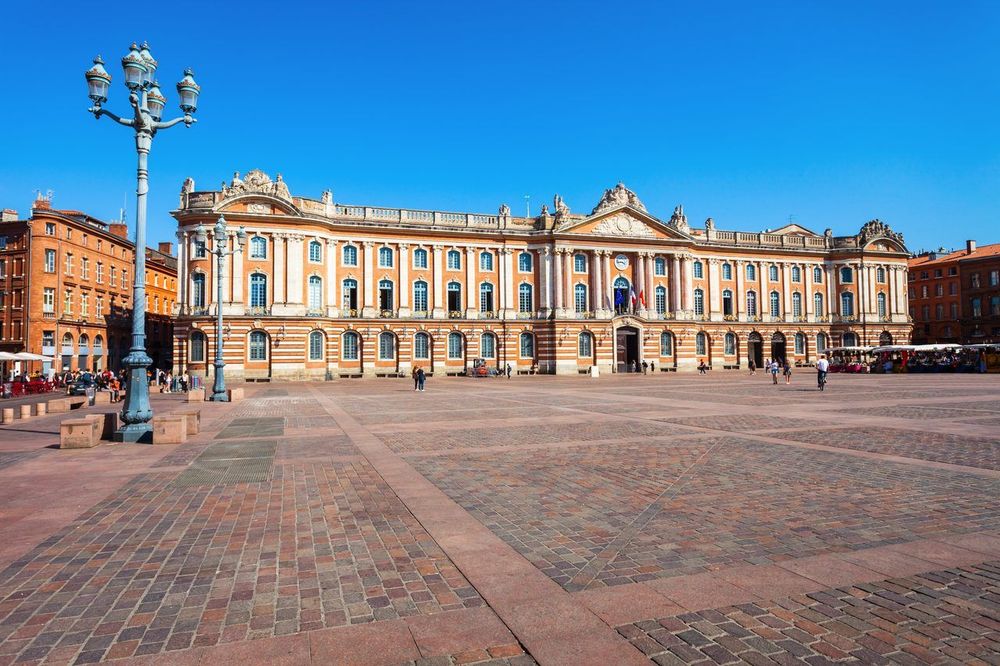
Capitole is more than just a square: it is the political face of an entire city, an 18th-century building that houses both the town hall and a listed lyric theatre. The Place du Capitole stretches across nearly a hectare and hosts an organic market on Tuesdays, Thursdays and Saturdays, as well as free outdoor concerts organized in summer.
Just behind it, heading south, the Carmes neighborhood begins at the Halle des Carmes, a covered market rebuilt in the 1980s after a fire. Local producers and a few tables where you can enjoy a cassoulet before noon can still be found there today. The surrounding streets — rue du Languedoc and rue Ozenne — are lined with pink-brick private mansions from the 16th century, often invisible from the street as their facades hide discreetly behind heavy carriage gates.
A ten-minute walk away, the Basilique Saint-Sernin commands attention with its five-storey brick bell tower and its status as the largest preserved Romanesque church in Europe, listed as a Unesco World Heritage Site as part of the routes to Santiago de Compostela. The interior, with its crypt and relics, can be visited free of charge outside of religious services.
On the border between Carmes and Saint-Étienne, the Musée des Augustins (21 Rue de Metz, 31000 Toulouse, rated 4.4/5 on Google from 3,224 reviews) occupies a former 14th-century convent and holds one of the richest collections of Romanesque sculpture in France, with over two hundred capitals from Toulouse cloisters destroyed during the Revolution. Our guide to the Musée des Augustins highlights the works to prioritize if you only have an hour to spare.
This area remains one of the most visited neighborhoods in Toulouse and logically concentrates the majority of the city's shops, terraces and hotels: expect higher prices than elsewhere, but also the guarantee of covering everything on foot in half a day. This is also where the Toulouse audio-guided tour begins, allowing you to link Capitole, Carmes and Saint-Sernin without consulting a map at every crossroads.
Saint-Étienne and la Daurade: Asymmetrical Cathedral and Garonne Riverbanks
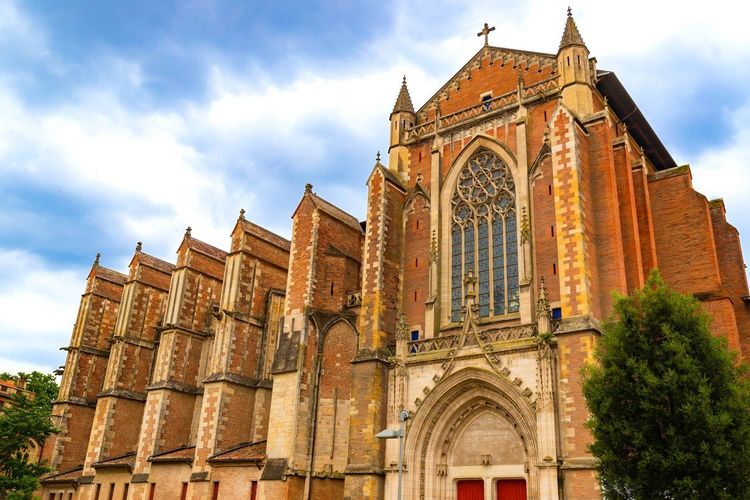
The Cathédrale Saint-Étienne surprises at first glance: its nave is offset from the choir, the result of eight centuries of construction work that was never quite completed by the book. The ensemble nonetheless provides a refined setting for organ concerts programmed on certain autumn Sundays.
Heading down toward the Garonne, the Daurade neighborhood takes its name from Notre-Dame de la Daurade, a 19th-century basilica built on a religious site dating back to the Visigothic era. The Black Virgin statue it houses is the focus of a local pilgrimage every 21 November, when the neighborhood regains an energy rarely seen at other times of year.
Just opposite, on the other bank, the Pont Neuf remains, despite its name, the oldest bridge in Toulouse still in service: its construction, begun in 1544, took nearly a century due to the repeated flooding of the Garonne. Its asymmetrical arches and discharge holes, designed precisely to let floodwater through, make it an engineering achievement as much as a photogenic viewpoint at sunset.
The quays between the Pont Saint-Pierre and the Pont Neuf have been substantially redeveloped over the past decade, with food trucks in the evenings during summer and floating pontoons where you can sit with your feet almost in the water. It is one of the rare spots in the center where you truly feel the presence of the river, rather than simply crossing it without a second glance.
Saint-Aubin and les Chalets: Sunday Market and Bourgeois Calm
On Sunday mornings, the Marché Saint-Aubin (Place Saint-Aubin, 31400 Toulouse, rated 4.6/5 on Google from 92 reviews) transforms the square of the same name into a sprawling flea market blended with a food market, where antique dealers and market gardeners share the space from 6 a.m. The atmosphere, more down-to-earth than in the rest of the center, draws both local regulars and curious visitors who have walked over from les Carmes.
The Chalets neighborhood, just to the south, ranks among the city's most affluent residential areas: it owes its name to the villas built from the Second Empire onward for the Toulouse bourgeoisie, with enclosed gardens and facades that are less uniform than elsewhere in the center. The pace is slower than in les Carmes, without the density of shops, making it a good choice for accommodation if you want peace and quiet within a fifteen-minute walk of Capitole.
The Grand Rond, a circular garden roundabout linking several alleys toward the Jardin des Plantes and the Natural History Museum, marks the southern boundary of this residential zone. Morning joggers and Wednesday afternoon families cross paths there without ever really getting in each other's way, each occupying a different path through habit more than any tacit agreement.
Compans-Caffarelli and Arnaud Bernard: Business, Japanese Garden and Saturday Market
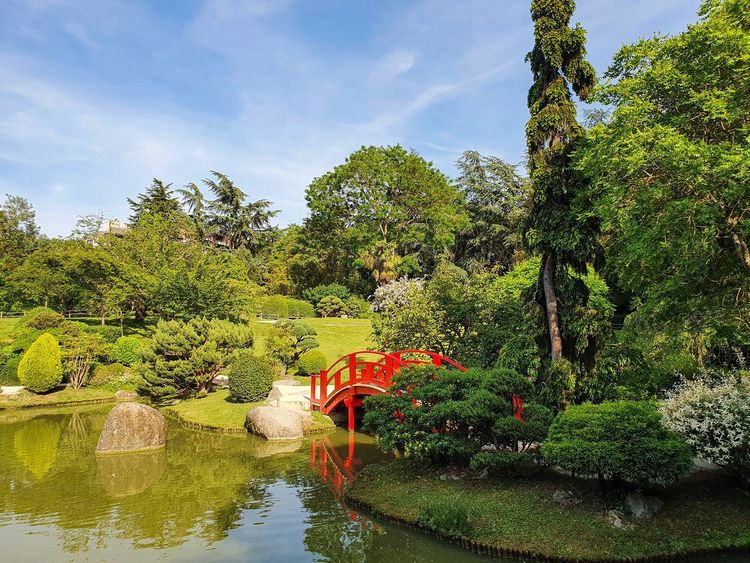
To the north of the center, Compans-Caffarelli stands apart through its architecture: 1990s office towers, the Centre de Congrès Pierre Baudis, and above all a Japanese garden inaugurated in 1981, laid out by the city's parks department to mark the twentieth anniversary of the twinning between Toulouse and Kyoto, with ponds and wooden bridges maintained by gardeners specifically trained for the purpose.
A ten-minute walk away, Arnaud Bernard retains the popular and multicultural character it has had since the arrival of Spanish and later North African immigrant communities in the 20th century. The Saturday morning market, known locally as the Arab market, sells spices, olives and Middle Eastern pastries across several streets. It was also from this neighborhood that the Rio Loco festival was born in the 1990s, before moving to the Prairie des Filtres where it has been held ever since.
Saint-Cyprien and la Patte d'Oie: the Left Bank That Has Risen in Value
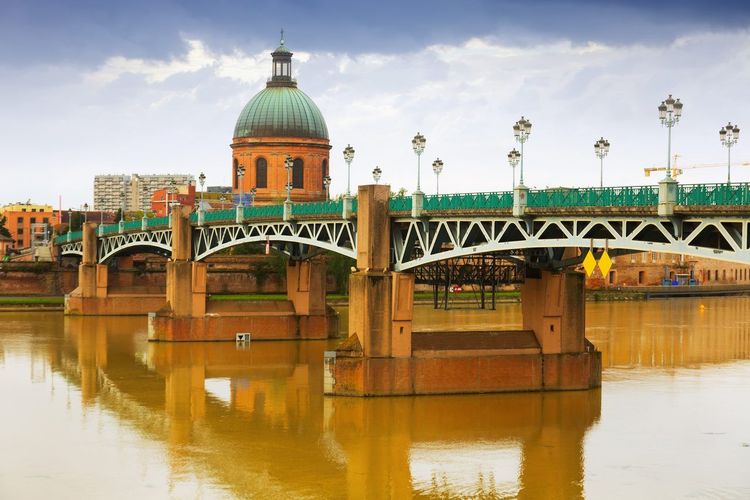
Long regarded as the wrong side of the Garonne, the left bank has changed status within a generation. Saint-Cyprien is now among Toulouse's most sought-after neighborhoods and commands some of the highest property prices per square meter in the city, driven by its immediate proximity to the historic center — just five minutes on foot via the Pont Neuf.
Les Abattoirs, a former municipal slaughterhouse converted into a museum of modern and contemporary art in 2000, displays among other works the stage curtain painted by Picasso for the ballet Le Quatorze Juillet, a 14-metre-long piece rarely visible elsewhere. The building's industrial architecture, deliberately preserved, creates a striking contrast with the contemporary installations it now houses.
Right next door, the Prairie des Filtres (Allées Charles de Fitte, 31300 Toulouse, rated 4.4/5 on Google from 6,542 reviews) stretches across several hectares along the Garonne and hosts the Rio Loco festival every summer, as well as impromptu bathers despite the absence of an official swimming area: the river's flow remains unpredictable, so it's best to stick to the lawn and just dip your feet in at the water's edge.
The memory of the 1875 flood remains alive in this neighborhood: the waters had then risen several meters along the allées Charles-de-Fitte, destroying much of the working-class housing of the time. The sturdier buildings that were subsequently reconstructed partly explain the homogeneous architecture you see along the riverfront today.
Further south, the Patte d'Oie neighborhood takes its name from the star-shaped configuration of its avenues, inherited from an early 20th-century urban plan. The local covered market, more modest than that of les Carmes, serves mainly a local clientele, far from the tourist influx of the center. Consider staying here if you are looking for a compromise between residential calm and quick access to the city center: two metro stops are enough to reach Jean Jaurès.
Les Minimes and Sept Deniers: Canal, Rugby and Neighborhood Life
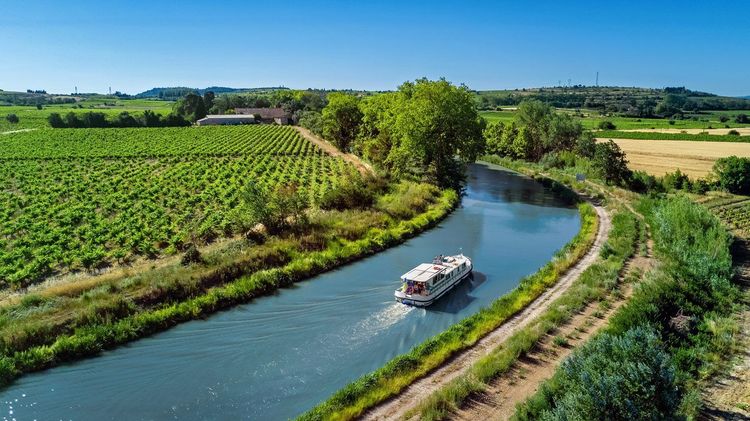
The Canal du Midi, listed by Unesco since 1996, runs along the entire northern edge of the Minimes neighborhood before meeting the Canal de Brienne at the Ponts Jumeaux. On Sunday mornings, the quays host a market for books and antiques, less well known to tourists than the one at Saint-Aubin but just as lively according to locals.
Further to the northwest, Sept Deniers remains an almost exclusively residential neighborhood, built from the 1950s onward around small detached houses. Rugby fans will find the Stade Ernest-Wallon (Chemin de Vacquiers, 31200 Toulouse, rated 4.7/5 on Google from 7,338 reviews), the historic home of Stade Toulousain, France's most trophy-laden club in the championship. On European match nights, the streets around the stadium fill with a passion found nowhere else in the city.
Neither of these two areas features on classic tourist itineraries, which makes them a good choice if you prefer to observe everyday Toulouse life rather than moving from one monument to the next all day, a rhythm you can extend afterwards on our Toulouse audio-guided tour through the historic center.
Rangueil, Saint-Michel and Montaudran: University, Giant Robots and Space
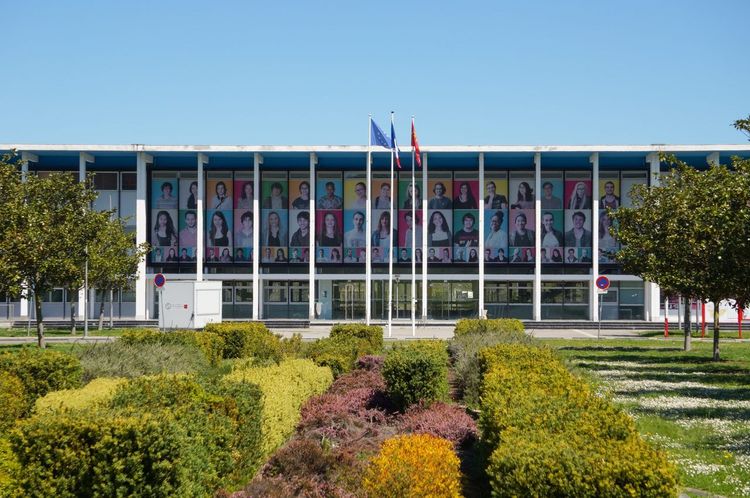
Rangueil is home to the city's main science campus, the Université Paul Sabatier, which explains the concentration of student bars and affordable rents in the surrounding streets. The neighboring area of Saint-Michel, older in character, retains a village feel with its low brick houses along the avenue de Muret.
To the east, Montaudran occupies the former runway of the Aéropostale, from which Jean Mermoz and Antoine de Saint-Exupéry took off in the 1920s to reach Africa and then South America. The site now hosts the Halle de la Machine, where Astérion, a 47-tonne articulated mechanical minotaur, roams the surrounding streets on certain weekends in front of hundreds of spectators.
A few minutes away by car, the Cité de l'Espace (Avenue Jean Gonord, 31500 Toulouse, rated 4.2/5 on Google from 8,323 reviews) completes the picture with an authentic Ariane 5 rocket laid on its side in the outdoor park and a replica of the Mir space station. Allow a full half-day to see everything, planetarium included, especially if you are travelling with children curious about all things space-related.
Mirail and Bagatelle: Toulouse's Other Face, in Full Renovation
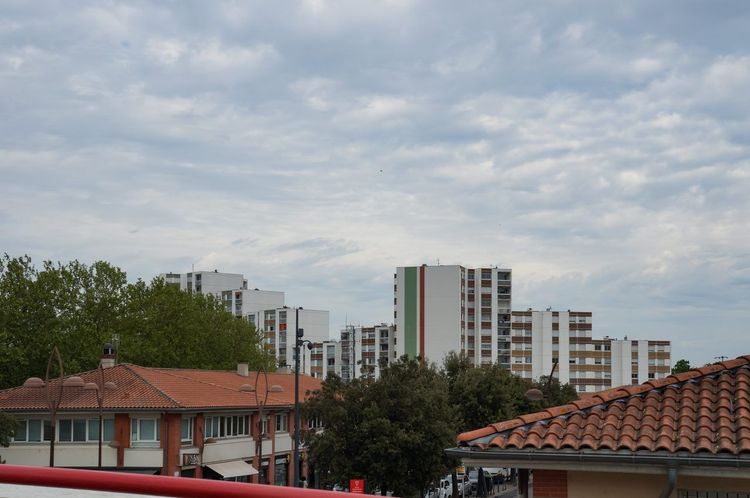
These are the neighborhoods most often singled out when people search for areas to avoid in Toulouse — a reputation that deserves serious nuance. Mirail, designed in the 1960s by architect Georges Candilis as a self-sufficient new town, did indeed experience decades of underinvestment and today concentrates several areas classified as priority zones under national urban policy.
Since the 2000s, a major urban renewal project has demolished part of the large housing blocks in Reynerie and Bellefontaine to replace them with more human-scale constructions, while preserving the Université Toulouse Jean Jaurès, which continues to attract several thousand students each year. Bagatelle, the neighboring area, is following a comparable renovation trajectory, with its century-old allotment gardens still being cultivated at the edges of the sector.
For a passing visitor, these areas have little to offer beyond the architectural and social interest of urban renewal: they are better considered as a curiosity for understanding the city as a whole rather than a must-see stop on a short trip.
Which Toulouse Neighborhood Is Right for Your Profile?
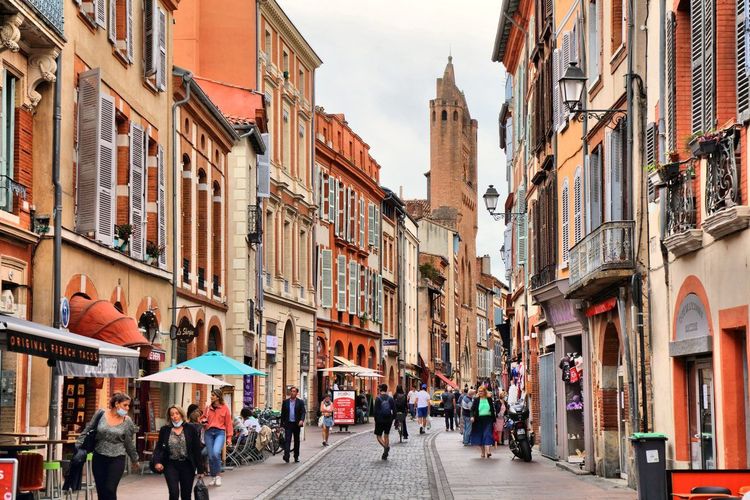
Among all Toulouse's neighborhoods, some suit certain uses better than others, and the question keeps coming up without a single answer: it all depends on what you're looking for. For a short tourist stay, the Capitole, Carmes and Saint-Étienne trio is unbeatable: everything is walkable, restaurants stay open late, and the density of monuments per street has no equivalent elsewhere in the city.
For a family settling in, Côte Pavée and Saint-Michel offer a well-regarded compromise: reputable schools, houses with gardens, and a commute to the center that remains reasonable by tram. Students, meanwhile, are spread mainly between Arnaud Bernard for its atmosphere and still-accessible rents, and Rangueil for its immediate proximity to the science campuses.
Young professionals working in the city center who do not want to pay 31000 prices are increasingly turning to Saint-Cyprien, even if it means crossing the Pont Neuf on foot or by bike morning and evening. Finally, if you are mainly looking to explore the city as a curious visitor rather than settling in, our article on the best activities in and around Toulouse usefully completes this neighborhood tour with ideas for day trips.
None of these choices is really wrong in itself: the city remains compact enough that a miscalculation can be corrected in ten minutes by metro rather than an hour stuck in traffic.
Where to Stay in Toulouse Based on Your Budget
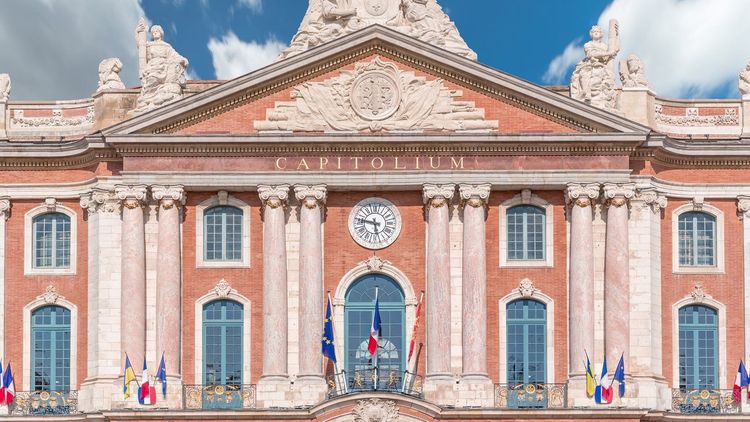
Choosing which Toulouse neighborhood to base yourself in depends above all on budget. For a first visit, aiming for the center (31000) simplifies everything: hotels within walking distance of Capitole and les Carmes, even if it means paying 20 to 30% more than elsewhere in the city. Saint-Cyprien is a credible alternative less than ten minutes on foot, with addresses that tend to be quieter at night.
For a tighter budget or a stay of several weeks, the Saint-Michel and Minimes neighborhoods offer furnished rentals at gentler prices, well served by metro line B and the tram. The Ryo app allows you to plan these journeys in advance by geolocating the main points of interest in each sector before you even arrive.
Getting Around Between Neighborhoods
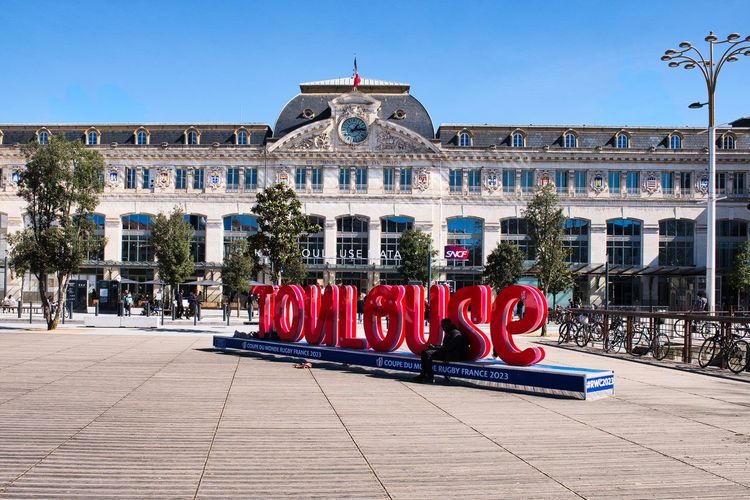
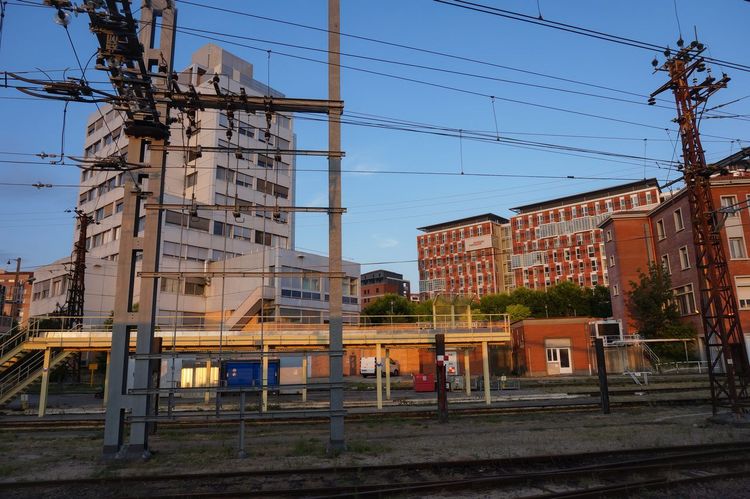
Toulouse remains a human-scale city: two metro lines (A and B), two tram lines and a bike-sharing network, VélôToulouse, are sufficient to cover most of the neighborhoods described above. Gare Matabiau (64 Boulevard Pierre Sémard, 31500 Toulouse, rated 3.4/5 on Google from 2,240 reviews), the central hub, connects trains, metro and several bus lines toward the eastern and northern sectors.
A day pass for under 6 euros covers the entire Tisséo network, with a single ticket valid across metro, tram and bus. Expect no more than 25 minutes of travel to reach any neighborhood in this guide from the city center.
FAQ
How many neighborhoods does Toulouse have?
The city officially counts around thirty neighborhoods recognized by the city council, themselves divided into six administrative sectors: Centre, Rive Gauche, Nord, Est, Ouest and Sud-Est. This division serves as the basis for neighborhood councils and municipal statistics, but remains largely invisible in everyday life for a casual visitor.
Does Toulouse have numbered arrondissements like Paris?
No. Searches like “quartier 4 Toulouse” or “quartier 10 Toulouse” stem from a confusion with the Parisian system. Toulouse operates through named sectors and postal codes, from 31000 to 31500, not through a continuous arrondissement-style numbering system.
Which neighborhoods should be avoided in Toulouse?
No neighborhood in Toulouse deserves to be written off outright. Certain areas of Mirail, Reynerie or Bellefontaine face tougher social indicators and have been subject to renovation programs for twenty years, but they simply lack particular tourist appeal rather than being dangerous in the strict sense.
Which is the most central neighborhood in Toulouse?
The Capitole neighborhood, surrounding the square of the same name, forms the geographical and symbolic heart of the city, equidistant on foot from Saint-Sernin, les Carmes and the Garonne.
What are the postal codes of Toulouse?
Toulouse uses six main postal codes, from 31000 in the center to 31500 in the east, via 31100 to the west, 31200 to the north, 31300 to the southwest toward Mirail and 31400 to the southeast toward Rangueil and Saint-Michel.
Which neighborhood should I choose for a first tourist stay?
The Capitole, Carmes and Saint-Étienne triangle remains the most suitable for a short stay: everything is walkable and accommodation options are most plentiful here. The Toulouse audio-guided tour broadly follows this same perimeter for its first tour loop.
Toulouse is rarely discovered in a single visit. The historic center impresses with its density, but it is often the more discreet neighborhoods — Sept Deniers for rugby, Montaudran for aeronautical history, Arnaud Bernard for its Saturday market — that leave the sharpest memories once you're back home.
Before you leave, keep this guide handy to choose between sectors depending on your mood: museums and shops around Capitole, peace and the river around Saint-Cyprien, urban curiosity around Mirail. The Toulouse audio-guided tour remains the simplest way to connect several of these neighborhoods in a single guided walk, without juggling paper maps and last-minute searches.
À lire également