© Shutterstock
 Votre guide Ryo
Activities in Toulouse and Surroundings: The Complete 2026 Guide
Looking for activities in Toulouse and surroundings means engaging with a city that changes color throughout the day. Its pink brick facades, which give the city its nickname, turn orange at sunset before taking on almost violet hues in the evening. But the pink city hides a depth that many visitors do not suspect: a Romanesque basilica a thousand years old, a space museum that sends ten-year-olds dreaming of stars, and a gastronomic scene that goes far beyond cassoulet.
When it comes to activities in Toulouse and surroundings, the scope is breathtaking. Within the city, you can spend an entire morning wandering between the Capitole and the Saint-Cyprien district without ever getting bored. Outside, within an hour's drive, radically different landscapes open up: the first Pyrenean ridges visible on clear days from the city's rooftops, Cathar castles rising from the rugged hills of the Aude, the garrigue and vineyards of the Gaillacois, the natural lakes of the Gers where water reaches 26°C in August. To explore the historic heart without missing anything, the Ryo audio guide tour of Toulouse covers 6.5 km in 2h40 with 23 commented stops. This guide takes you from the alleyways of the pink city all the way to the Pyrenean summits.
Toulouse on Foot: The Historic Center of the Pink City
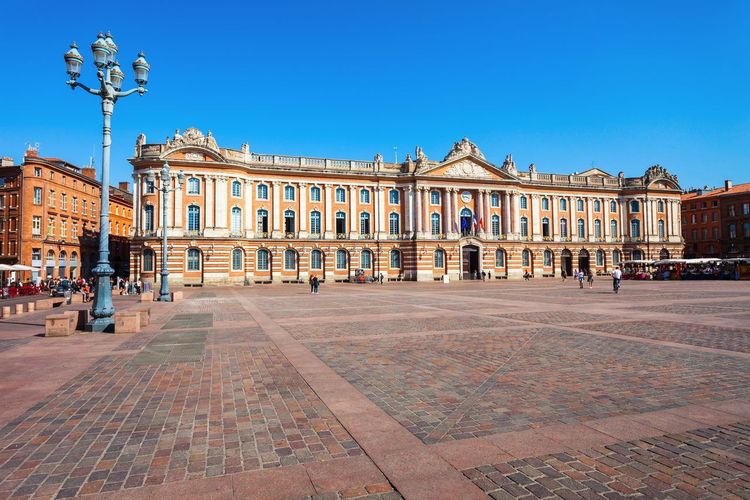
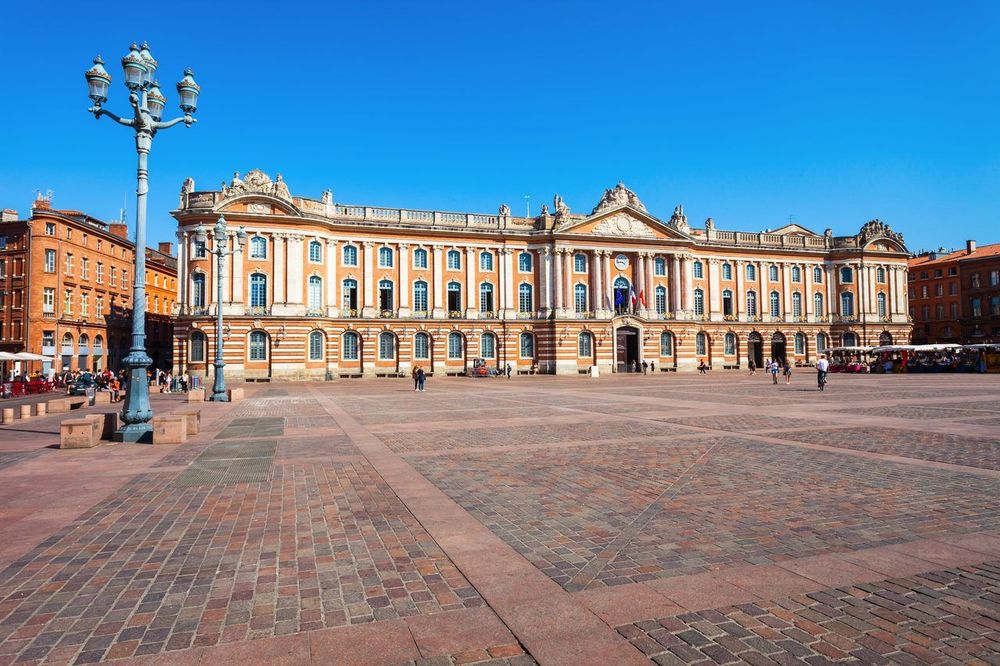
Every stroll invariably begins at the Place du Capitole. This 12,000 m² esplanade is the central stage of Toulouse life, framed by the pink facade of the Capitole, whose construction spanned from the 16th to the 18th century. Under the ground-floor arcades, restaurants and cafés occupy vaulted spaces that stay cool even in the height of July. The square hosts markets on Wednesday and Saturday mornings — vegetables from the Lauragais, Pyrenean cheeses, Gers charcuterie — and transforms into a giant ice rink from December to early January.
Heading north from the square, you reach in ten minutes the Basilique Saint-Sernin, the largest preserved Romanesque church in Europe. Construction began around 1080, and the building, listed as a UNESCO World Heritage Site as part of the Routes of Santiago de Compostela, still welcomes pilgrims on their way to Compostela. What strikes you first is the silhouette of the octagonal bell tower rising between the Haussmann-era buildings: five tiers of Romanesque galleries soaring to 65 meters. Inside, the nave measures 115 meters long. The interior walk is as striking as the exterior view, especially in the morning when light filters through the high windows, casting beams across the nave.
The Quartier des Carmes and the Marché Victor Hugo (Place Victor Hugo, 31000 Toulouse, rated 4.5/5 on Google with 6,815 reviews) deserve a longer stop. This covered market, open since 1891, brings together every morning (except Monday) the best producers from the Lauragais and the Gers. Arrive before 9:30 am to see the stalls in their full glory: farm poultry, foie gras, Pyrenean cheeses, flowers from the plain. Upstairs, a dozen bistros serve lunch menus incorporating produce directly from the stalls below. Reservations are essential on weekends.
Crossing the Garonne via the Pont Neuf, the city's oldest bridge built in the 16th century despite its name, you arrive in the Saint-Cyprien district. Long working-class and off the tourist trail, this neighborhood has been undergoing a noticeable transformation for ten years: artists' studios, trendy groceries, and cafés have moved into its streets without displacing residents. Les Abattoirs, a modern art museum installed in a 19th-century former slaughterhouse, is its most visible symbol. The permanent collection holds nearly 4,000 works, and temporary exhibitions regularly attract internationally acclaimed artists.
To end this walk, return to the right bank and head toward the Japanese Garden of Compans-Caffarelli, landscaped to celebrate the twinning between Toulouse and Kyoto — one of the metropolis's oldest twin-city relationships — and inaugurated in 1981. This 7,000 m² garden features an authentic tea house, wooden bridges, and a bonsai collection. Lesser known than other central sites, it offers a surprisingly peaceful respite five minutes from Place Wilson. In the evening, the Saint-Georges district and Rue du Taur concentrate wine bars, gastronomic restaurants, and artisan pizzerias in medieval alleyways cleared of cars after 6 pm.
The Must-See Museums of Toulouse
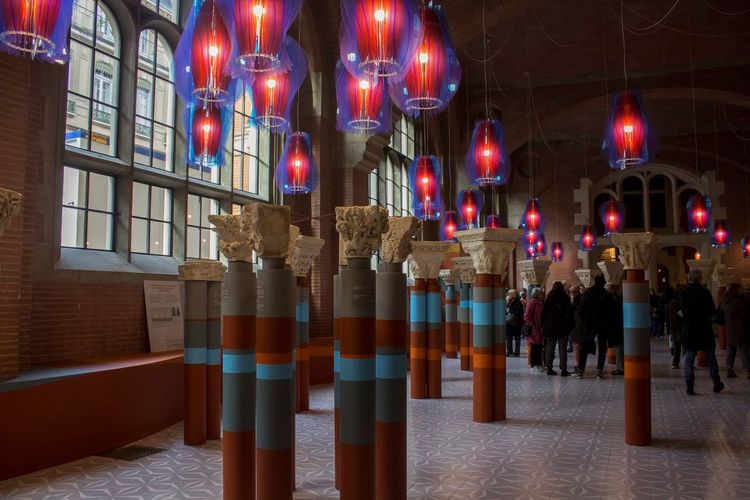
Toulouse boasts a museum scene that often surprises visitors. Three institutions deserve particular attention.
The Musée des Augustins occupies a 14th-century Gothic convent whose cloisters have been carefully preserved. Collections of medieval sculptures and 17th–19th-century paintings share space with the building itself — the Romanesque capitals displayed in the cloister rank among the finest in the entire region. Admission is free on the first Sunday of each month, and the museum remains far less crowded than its importance deserves. To prepare your visit, our Ryo guide to the Musée des Augustins details the works not to miss and the best times to visit.
The Cité de l'Espace, on the eastern outskirts of the city, is Toulouse's most visited attraction, with over 400,000 visitors per year (a record of 452,000 entries reached in 2024). The site, spread over several hectares, houses a full-scale replica of the Ariane 5 rocket, a real Mir space station module recovered after it was decommissioned, and space flight simulators. The educational dimension is genuine — the activities allow you to understand orbital physics without any prior scientific background — but the experience is just as striking for adults as for children. Allow at least three hours on site, and book your tickets online during peak season.
The Musée Saint-Raymond (Place Saint-Sernin, 31000 Toulouse, rated 4.6/5 on Google with 1,736 reviews) stands next to the Basilique Saint-Sernin and houses one of the finest collections of Roman archaeology in southern France. Sculpted portraits of Roman emperors, displayed inside a medieval student residence, create an unexpected temporal confrontation between Antiquity and the Middle Ages. Admission is free all year round, making it a natural stop on a stroll through the Saint-Sernin district.
Family Activities and Immersive Experiences
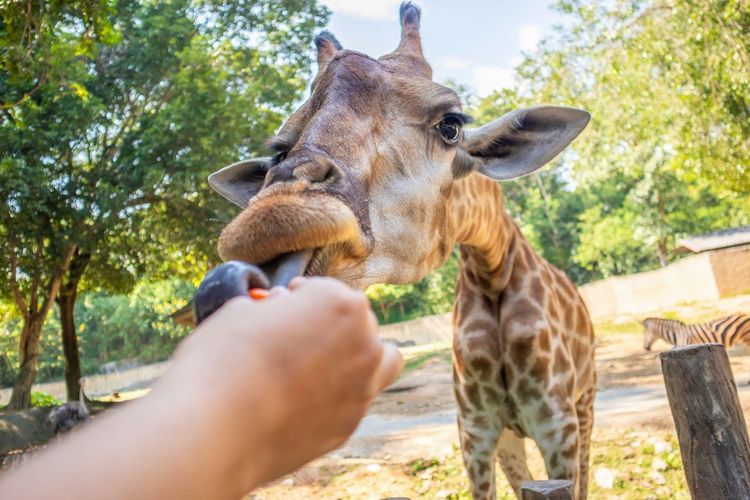
The Zoo African Safari (Route de Saint-Martory, 31830 Plaisance-du-Touch, rated 4.2/5 on Google with 7,241 reviews) in Plaisance-du-Touch, 15 minutes by car from the city center, is often described as an "ordinary wildlife park." That description sells it far short: 1,500 animals spread across 80 hectares, including Southern white rhinoceroses, African elephants, giraffes, and several species of big cats in semi-freedom. The site's distinctive feature is a drive-through section where animals roam alongside vehicles with no barriers separating the car from the herbivores. An experience that triggers fairly universal reactions, regardless of the passenger's age.
For fans of immersive experiences, several Toulouse venues offer scenarios above the national average. Virtual Room and Oxmoz have developed multiplayer virtual reality experiences that allow you to explore environments impossible in the real world — space battles, underwater explorations, cooperative missions in historical settings. Prison Island takes the serial-challenge concept: around sixty mini-cells to unlock within a set time, in an American penitentiary setting that delivers on its promise.
Quiz Room transports participants onto a full-scale game show set complete with buzzers, production booths, and live hosting. Ideal for groups looking for a team-building activity. On the more unusual side, apiaries on the outskirts of Toulouse offer half-day beekeeping workshops — suit included — to understand the workings of a hive from the inside. These sessions often sell out weeks in advance outside of the summer season.
Wine lovers will find their match in bars specializing in local grape varieties (Fronton, Gaillac, Cahors) such as La Dégust' or Les Petits Crus, which offer guided tasting workshops for small groups. The wine-tasting escape game format — where each puzzle leads to a bottle to identify — has been gaining growing enthusiasm since 2023.
Toulouse Gastronomy: Flavors of the South-West
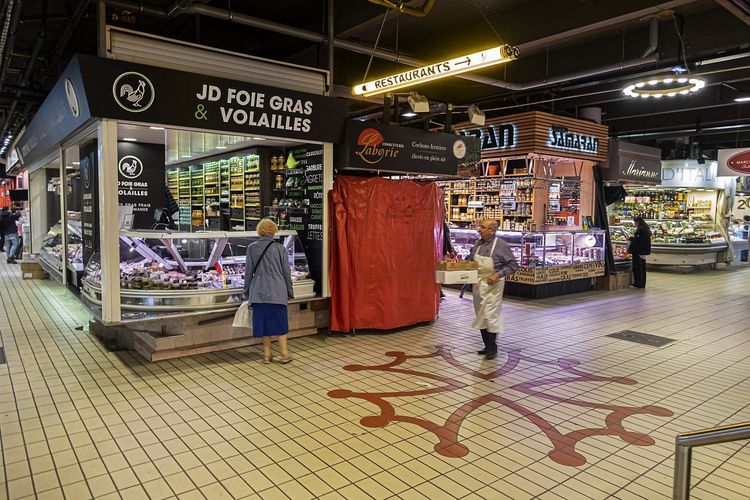
Toulouse's culinary reputation rests first and foremost on cassoulet, but reducing it to that single dish would be an injustice to a cuisine that draws on the full richness of the South-West. The Marché Victor Hugo remains the most fitting introduction. The ground-floor stalls allow you to identify the products that structure local cooking: haricots tarbais, duck fat, Pyrenean cheeses (Ossau-Iraty, Bethmale), dry sausages from the Lauragais. The upstairs bistros serve lunch menus for under €20 using produce sourced directly from the stalls below.
For a more structured experience, the Saint-Étienne district concentrates several restaurants working with local produce and precision. The saucisse de Toulouse, coarsely ground and stuffed into a long natural casing, stands out for its recipe of demanding simplicity: pork meat, salt, pepper, and nothing else. The artisan charcuteries at Marché Victor Hugo and on Rue Saint-Rome carry the real thing — very different from what you find in supermarkets.
The sweet specialties also deserve attention: crystallized violets, Toulouse's emblematic confection since the 19th century; gimblettes d'Albi (ring-shaped biscuits traditionally dipped in sweet wine); and Gascon prune flan. Several Gers farms, an hour from Toulouse, organize visits and direct foie gras sales in October–November, during the force-feeding season. To go further, Toulouse's culinary specialties on Ryo lists the addresses where you can find each product in its authentic form.
The Canal du Midi, from Toulouse and Beyond
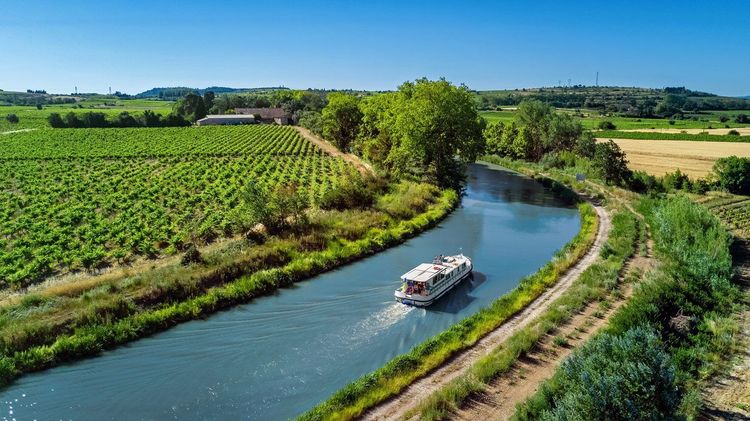
The Canal du Midi has its origins in Toulouse — it is here that it joins the Garonne via the Canal de Brienne before traversing 240 kilometers of Languedoc landscapes all the way to the Étang de Thau. Listed as a UNESCO World Heritage Site since 1996, it remains one of the most ambitious feats of 17th-century engineering: 328 hydraulic structures built between 1666 and 1681 on the orders of Louis XIV, to plans drawn up by Pierre-Paul Riquet.
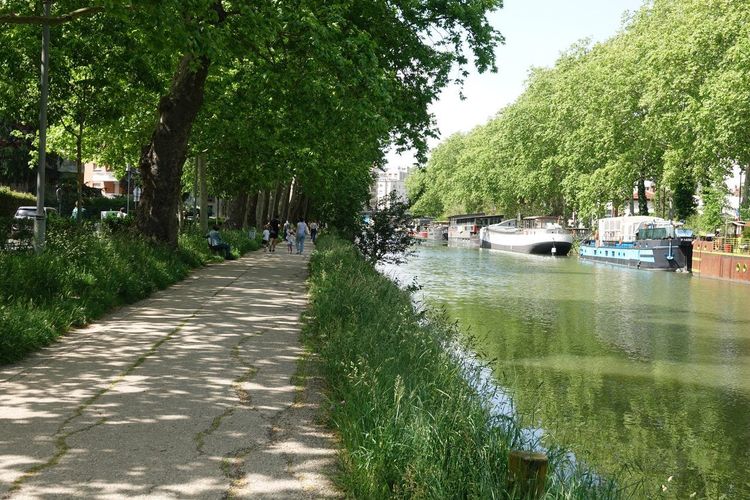
From Toulouse, the options are numerous. A cycling trip along the towpath is the most accessible: secured cycle paths follow the canal from Port Saint-Sauveur to the locks at Castanet-Tolosan — roughly twenty kilometers one way along a route shaded by century-old plane trees. Bicycle rental operators offer day packages with delivery to the port.
To venture further, license-free hire boats are available from Toulouse or Castelnaudary for cruises lasting from one day to a week. The experience of spending a night on a boat moored between two locks, in the silence of plane trees and frogs, belongs to a category of moments difficult to replicate anywhere else in France. Our Ryo guide to the Canal du Midi details navigation options and the most photogenic locks according to the season.
Charming Villages around Toulouse
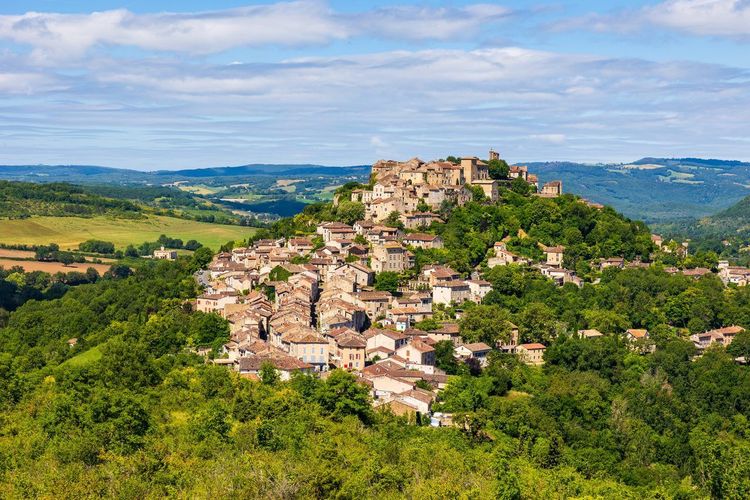
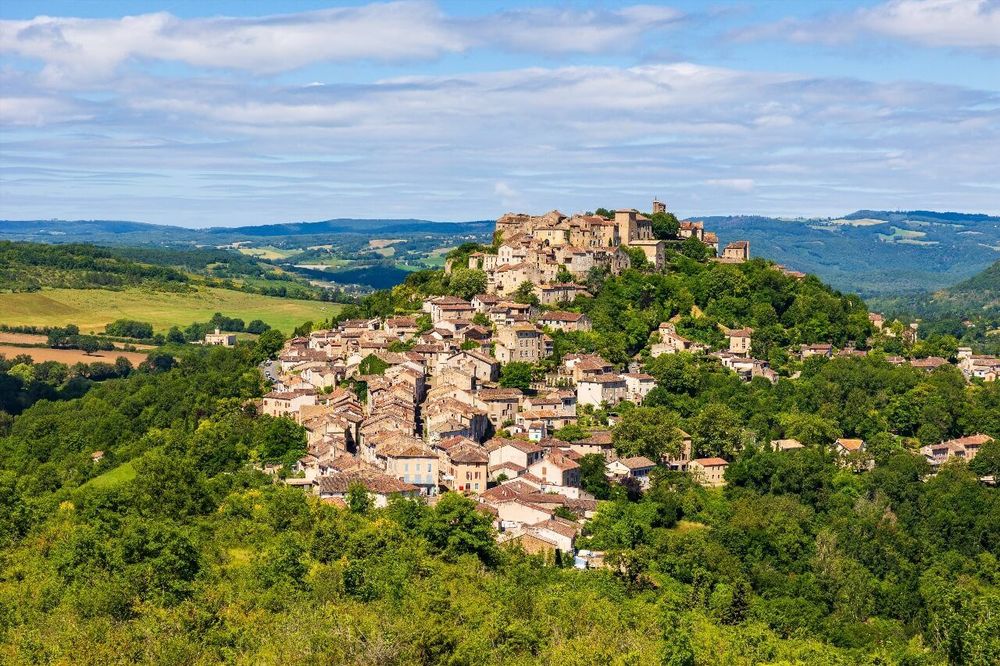
Within an hour of Toulouse, there is a remarkable concentration of medieval villages. For a full overview of the region, the most beautiful villages of Occitanie on Ryo lists the finest addresses. Cordes-sur-Ciel (Place de la Bride, 81170 Cordes-sur-Ciel, rated 4.3/5 on Google with 144 reviews) (81 km to the northeast, 1h15) is probably the most spectacular. This medieval village perched atop a hillock dominates the Cérou valley at 280 meters above sea level. Founded in 1222 by Raymond VII of Toulouse, among the first bastides of Occitanie, Cordes-sur-Ciel preserves its ramparts, Gothic townhouses, and cobbled alleyways in an exceptional state of conservation. The ascent from the lower village is made on foot or by tourist train and rewards you with a 360° view over the Tarn plain. On weekdays out of season, the village regains an atmosphere far more authentic than on an August Sunday.
Saint-Bertrand-de-Comminges (88 km to the south, 1h10) belongs to an entirely different geography: at the foot of the Pyrénées, in a meander of the Garonne, this village of 220 inhabitants houses a Romanesque and Gothic cathedral utterly out of proportion with its size. The building, begun in the 12th century and remodeled through to the 16th, was one of the most frequented pilgrimage sites in medieval southern France. The carved wooden choir stalls rank among the most elaborate in the French medieval heritage. The view from the ramparts over the Comminges plain and the first Pyrenean foothills is breathtaking.
Montauban (55 km to the north, 40 minutes) is often overlooked in favor of Toulouse. This pink city of Tarn-et-Garonne, built in brick but in a lighter shade of pink than Toulouse, houses the Musée Ingres-Bourdelle, one of the richest fine arts museums in the region, with works by Jean-Auguste-Dominique Ingres (a native of the city) and sculptures by Antoine Bourdelle. The Place Nationale, surrounded by 17th-century double arcades, is one of the most beautiful arcaded squares in France.
Lavaur (38 km to the east, 35 minutes) makes for an ideal half-day: its Cathédrale Saint-Alain dominates the Agout valley with a Gothic bell tower visible for several kilometers around. The cathedral's facade, adorned with a 15th-century jacquemart that has been striking the hours since 1523, is unique in the region.
Castles and Cathar History in Occitanie
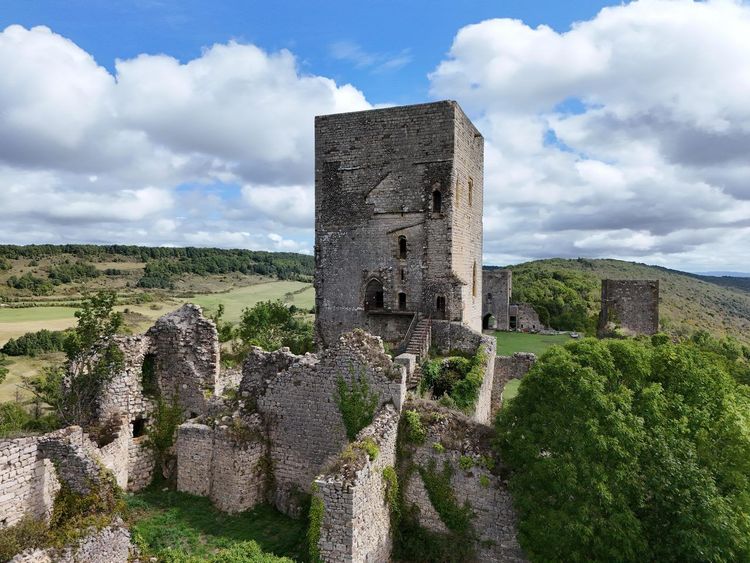
Cathar history has left a deep mark on the landscapes to the south and east of Toulouse. Between the 12th and 14th centuries, this alternative Christian religious movement experienced considerable growth throughout Occitanie before being crushed by the Albigensian Crusade (1209–1229). The fortresses dotting the ridges of the Aude and Ariège are the physical witnesses of that conflict.
Carcassonne (88 km to the southeast, 55 minutes) is the absolute must-see. The medieval Cité, enclosed by two rings of ramparts totaling nearly 3 km of walls and 52 towers, is one of the most visited sites in France, attracting millions of visitors each year. Arriving early in the morning (before 9 am in summer) or in the shoulder season allows you to recapture something of the medieval atmosphere that the summer crowds tend to dissolve. The Château Comtal, inside the walls, houses an archaeological museum that contextualizes the history of the site. The lower town, often ignored by visitors in a hurry, also deserves an hour's stroll.
The Cathar castles proper — Peyrepertuse, Quéribus, Puilaurens, Aguilar — occupy summit positions that make visits physically demanding but visually unforgettable. Peyrepertuse is the largest: nearly 300 meters in length along a ridge at 800 meters altitude in the Corbières. The climb from the car park takes 25 minutes on a rocky path — bring suitable footwear and water in summer. The view from the keep over the Corbières and, on clear days, out to the Mediterranean, makes the effort worthwhile.
Montségur (115 km to the southeast, 1h30) is the Cathar site with the most powerful symbolism: it is here that more than 200 Cathar Perfects refused to renounce their faith and were burned alive in March 1244. The current castle, built after the fall of the fortress, overlooks the village from a peak at 1,207 meters altitude. The ascent from the village takes about 45 minutes on a marked trail. Our Ryo guide to the Cathar castles of Occitanie compares the different sites with travel times from Toulouse and visit tips by season.
The Pyrénées, Two Hours from Toulouse
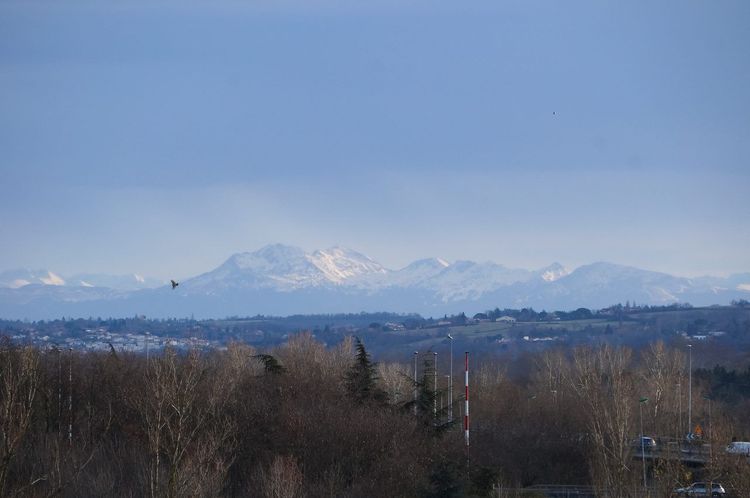
On clear days from the heights of Toulouse, the Pyrenean range carves itself against the southern horizon. It takes only two hours of driving to go from a metropolis of nearly one million inhabitants to a ski resort or a glacial cirque. This proximity is one of the pink city's most remarkable distinguishing features.
The Pic du Midi de Bigorre (La Mongie, 65200 Bagnères-de-Bigorre, rated 4.4/5 on Google with 2,211 reviews) (1h50 from Toulouse) is one of the most spectacular experiences available in the French Pyrénées without any specialist equipment. The cable car from La Mongie ascends to 2,877 meters in just a few minutes. The astronomical observatory at the summit has been in operation since 1882, and some of its instruments have contributed to major discoveries in solar physics. The panorama over the Pyrenean chain, from the Atlantic to the Andorran summits, spans more than 300 kilometers on a clear day. Overnight accommodation at the summit is possible (book very far in advance) for stargazing far from any light pollution.
Gavarnie (2h15 from Toulouse) is home to the largest glacial cirque in the Pyrénées, listed as a UNESCO World Heritage Site. The Grande Cascade de Gavarnie, at 422 meters of free fall, is one of the highest waterfalls in France. The hike from the village to the base of the waterfall takes about 2 hours round trip on a trail accessible to any reasonably fit walker. In winter, the site becomes a terrain for ski touring and snowshoeing.
The Parc National des Pyrénées covers 45,700 hectares along the Spanish border. On the Haute-Garonne and Hautes-Pyrénées side, the valleys of Aure, Louron, and Luchon offer hiking routes for all levels. For walkers who prefer trails less frequented than the great classics, the secret hikes of the Pyrénées on Ryo suggest itineraries off the usual tourist flows.
In winter, the ski resorts closest to Toulouse are Peyragudes (1h45), Le Mourtis (1h20), and Saint-Lary-Soulan (1h50). The Ryo comparison of Pyrénées ski resorts details the ski areas, lift pass prices, and accommodation options for each resort according to your level and budget. For high-altitude hikers who prefer bivouacs to ski lifts, the Pyrénées mountain refuges on Ryo are an invaluable resource for planning an independent stay. Back in the city, our audio walking tour covers the pink-brick centre in 6.5 km.
Vineyards and Wine Tourism in the Surroundings
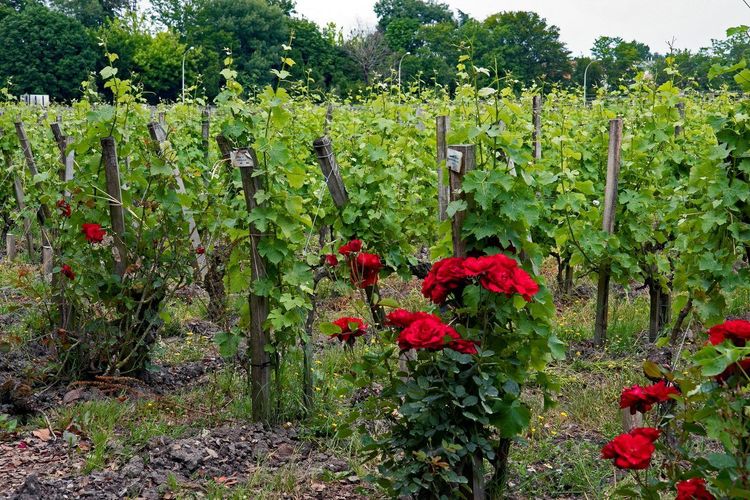
Toulouse sits at the crossroads of several major South-West wine appellations. Within less than an hour's drive, three terroirs merit a full day of exploration.
Gaillac (55 km to the east, 50 minutes) is one of France's oldest appellations — Benedictine monks were already cultivating vines on these Tarn hillsides in the Middle Ages. The AOC Gaillac appellation covers a remarkable range of styles: sparkling whites based on Mauzac and Len de l'El, age-worthy reds from Braucol and Duras, and a naturally sweet wine made by the méthode gaillacoise, one of the oldest methods of sparkling wine production in France. Domaine Rotier and Château de Candie organize cellar visits with tastings by appointment.
Fronton (25 km to the north, 25 minutes) produces distinctive reds based on Négrette, a grape variety almost exclusive to this appellation, with aromas of violet and licorice. The vineyard surrounds Toulouse like a crescent to the north and east of the city, making it the most accessible appellation from the center. Château Boujac and Domaine de Callory welcome visitors by appointment year-round.
Cahors (110 km to the northeast, 1h15) produces one of France's most tannic red wines, based on local Malbec (known here as Côt or Auxerrois). The white limestone cliffs overlooking the meander of the Lot create a spectacular vineyard landscape. The village of Saint-Cirq-Lapopie, perched above the Lot 30 km east of Cahors, regularly features in rankings of France's most beautiful villages. Our Ryo guide to the South-West vineyards details estates open to visitors with or without a reservation, and the tasting routes to follow according to the season.
Hiking, Nature, and Swimming in the Surrounding Area
The Toulouse region does not need the Pyrénées to offer remarkable natural spaces. Within 45 minutes of the city, several sites are worth the detour for a day outdoors.
The Lac de Saint-Ferréol (Route du Lac, 31250 Revel, rated 4.6/5 on Google with 1,171 reviews) (45 km to the east, 40 minutes), built in the 17th century to supply the Canal du Midi with water, is one of the oldest large dams in Europe still in service. Listed as a historic monument, its 67-hectare reservoir is a popular natural swimming spot for local families. The supervised beach area is open in July and August, and a discovery trail circles the lake in 2h30 on foot.
The Forêt de Bouconne (15 km west of Toulouse) is the most accessible peri-urban forest from the city: 1,000 hectares of oaks and hornbeams crisscrossed by 50 km of marked trails, with picnic areas and free access year-round. For hikes close to Toulouse without heading up to the Pyrénées, the Lauragais hills (between Toulouse and Carcassonne) offer routes of 8 to 15 km on marked paths with simultaneous views of both mountain ranges — the Pyrénées to the south, the Massif Central to the north. Our Ryo guide to hikes around Toulouse offers circuits classified by distance and elevation gain, with starting points accessible by public transport.
For natural swimming in summer, several supervised lakes lie within a 30 km radius: the Lac de la Ramée beach within Toulouse itself, the shores of Lac de Thoux-Saint-Cricq in the Gers, and the leisure bases at Vieille-Toulouse and Portet-sur-Garonne. Our Ryo guide to swimming spots around Toulouse lists each site with its facilities, lifeguard hours, and real-time water quality during the season.
Toulouse on the Water and Creative Experiences
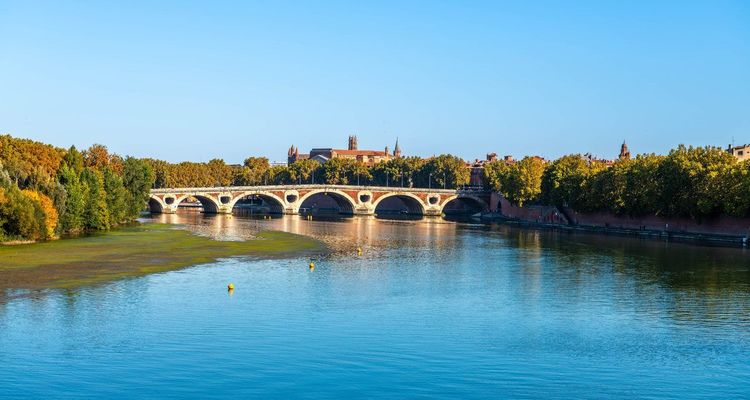
Toulouse has a particular relationship with its river. The Garonne is not a backdrop — it is a living space that comes alive differently with each season.
Several operators offer guided river cruises from the banks of La Daurade. The view of Toulouse from the water — pink facades, Saint-Sernin in silhouette, the arches of the Pont Neuf reflected in the current — offers a perspective on the city impossible to get from the streets. Evening cruises in summer, with the sun setting over the Garonne, are among the most photographed experiences in the city.
Leisure bases in the surrounding area, such as Lac de la Ramée, provide supervised swimming areas in summer with regular water quality checks. A useful reminder: swimming directly in the river itself remains prohibited in Toulouse for safety and current-related reasons. These family-friendly lakes, open from mid-June to late August, are the refreshing alternative on scorching days.
Pottery and ceramics workshops have taken root in several neighborhoods, notably Saint-Cyprien and Les Minimes. Half-day discovery sessions let you leave with a piece you have shaped and fired within 48 hours. The activity has surged in popularity since 2022, with booking lead times of two to three weeks in high season.
To explore Toulouse between activities, our audio-guided tour of Toulouse traces a 6.5 km route in 26 commented stops to discover the historic heart of the city at your own pace, with no time constraints. The Ryo audio guide works offline — handy in the city-center alleyways where the network can be unreliable.
Albi, the Red Episcopal City
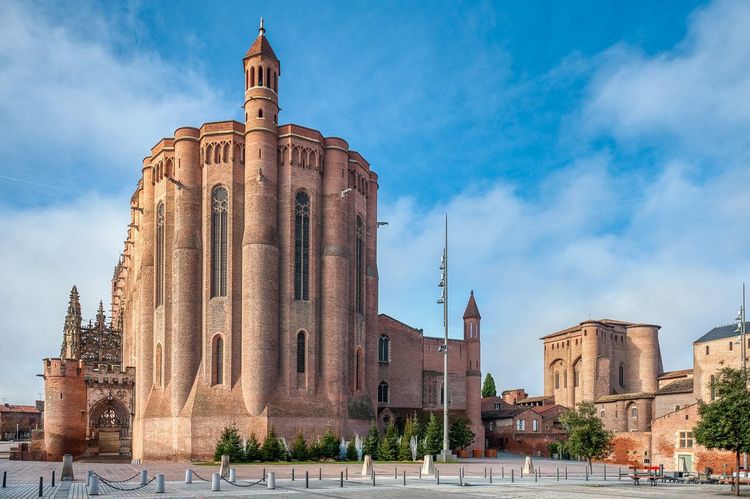
Just 80 kilometers northeast of Toulouse (1h by car, 1h05 by train from Gare Matabiau), Albi is the most compelling day trip in the immediate surroundings. The city, listed as a UNESCO World Heritage Site since 2010, owes this distinction to the exceptional ensemble formed by the Cathédrale Sainte-Cécile and the Palais de la Berbie on the banks of the Tarn.
The Cathédrale Sainte-Cécile is an architectural shock. Built between 1282 and 1480 in red Tarn bricks, this southern Gothic edifice is the largest brick cathedral in the world. Its silhouette resembles a fortress more than a church — not by accident: erected in the aftermath of the Albigensian Crusade, it was meant to proclaim the Catholic Church's victory over the Cathar heresy. The interior contrasts sharply with the austerity of the facade: a Last Judgment fresco painted at the end of the 15th century covers the western wall — around 200 m² of depictions of hell and paradise with staggering iconographic precision.
The Palais de la Berbie, former residence of the bishops of Albi, houses the Musée Toulouse-Lautrec (Palais de la Berbie, 81000 Albi, rated 4.5/5 on Google with 2,366 reviews), the world's largest collection of works by Henri de Toulouse-Lautrec (born in Albi in 1864). Over 1,000 works — paintings, posters, drawings, and prints — trace the full career of an artist whose influence on 20th-century poster art remains defining. The collection was assembled through family donations: the Toulouse-Lautrec family chose to bring the works together in Albi after the painter's death in 1901.
Albi's old town, built in red Tarn bricks like the cathedral, deserves an hour of aimless wandering. Place du Vigan, the covered market, and the alleyways around the collegiate church of Saint-Salvi concentrate local shops and cafés in an atmosphere less overtouristified than some historic centers in the region.
Practical Information for Planning Your Stay

Getting to Toulouse from Paris: TGV from Paris-Montparnasse, journey time 4h10 to 4h30 depending on the train, with around ten departures per day. Toulouse-Blagnac Airport operates direct routes to around thirty European cities; easyJet, Volotea, and Transavia operate the majority of low-cost flights.
Getting around Toulouse: the Tisséo network covers the metropolitan area with two metro lines, a tram, and bus routes. A 10-trip carnet is the most economical option for short stays, and the VélôToulouse network offers over 250 self-service bike stations, with the first fifteen minutes free.
Distances from Toulouse: Albi 80 km (1h), Carcassonne 90 km (55 min), Cordes-sur-Ciel 81 km (1h15), Pic du Midi 145 km (1h50), Gavarnie 185 km (2h15), Le Mourtis ski resort 80 km (1h20), Gaillac 55 km (50 min).
Best time to visit: spring (April–June) and autumn (September–October) offer ideal temperatures for exploring the city and its surroundings. July–August is the most touristy period, with temperatures that can exceed 38°C during the day. For the Pyrénées, summer remains the best season for high-altitude hiking, while winter opens the ski resorts closest to the city, less than two hours away by road.
FAQ
What are the best free activities in Toulouse?
Toulouse offers an unusual number of free attractions for a city of its size. The Musée des Augustins offers free admission on the first Sunday of each month. The Musée Saint-Raymond (Roman archaeology) is entirely free all year round. A stroll through the historic center — Capitole, Saint-Sernin, the banks of the Garonne, the Saint-Cyprien district — costs nothing. Toulouse's gardens, including the Jardin des Plantes and the Japanese Garden, are freely accessible. The exterior visit of the Canal du Midi and Port Saint-Sauveur, the Forêt de Bouconne, and the banks of the Garonne round out this budget-free discovery offer.
What can you do in Toulouse with children?
The Cité de l'Espace is the number one attraction for families, with its simulators, a real Ariane 5 rocket, and educational activities on astronomy and space exploration. The Zoo African Safari in Plaisance-du-Touch (20 min) offers a semi-free safari with African animals roaming freely. Trampoline parks (You Jump, Toborun) are suitable for ages 4–14. The guided cruise on the Garonne is popular with younger visitors. For families who want to explore the city at their own pace, the Ryo audio guide offers an interactive format with anecdotes suited to all ages.
How many days do you need to visit Toulouse and its surroundings?
A weekend (2 days) is enough to cover the essentials of central Toulouse: the historic district, one or two museums, and local gastronomy. To add a day trip to the surroundings — Albi or Carcassonne — plan for a third day. A full week would allow you to combine the city, the Pyrénées, the Cathar trail, and the vineyards of the Gaillacois at a leisurely pace, switching bases between Toulouse and, for example, Carcassonne or Albi.
How far are the Pyrénées from Toulouse?
The first Pyrenean passes are about 1h30 from Toulouse by car. Le Mourtis ski resort, the closest, is 1h20 away. The Pic du Midi de Bigorre (2,877 m), accessible by cable car from La Mongie, is 1h50 away. Gavarnie and its glacial cirque are 2h15 away. On clear days from certain high points in the city, the Pyrenean range is visible to the naked eye from Toulouse itself.
What is the best market to visit in Toulouse?
The Marché Victor Hugo is the most central and comprehensive, with its producers from the Lauragais and the Gers and its upstairs bistros. The Capitole market (Wednesday and Saturday mornings) is the most festive outdoor market. For organic produce, the Saint-Aubin market (Sunday morning, in the neighborhood of the same name) draws a different crowd in a more village-like setting. Every district of Toulouse has its own weekly market; the Marché des Carmes (Tuesday and Saturday) is particularly lively.
Can you visit Albi in a day from Toulouse?
Yes, easily. Albi is 80 km away (1h by car) or 1h05 by train from Gare Matabiau, with frequent connections throughout the day. A typical day: morning at the Cathédrale Sainte-Cécile and the Musée Toulouse-Lautrec, lunch in the old town, an afternoon strolling through the alleyways and walking along the Tarn. An evening return leaves plenty of time for dinner in Toulouse.
What is Toulouse's signature culinary specialty to take home?
The saucisse de Toulouse, the city's iconic charcuterie specialty, is the product to bring back — best purchased from an artisan charcuterie at the Marché Victor Hugo. Crystallized violets have been the city's historic sweet since the 19th century. Canned cassoulet from Castelnaudary (produced in the neighboring town, 55 km away) travels easily. For Gers armagnac, several fine food shops in the city center carry bottles from small producers impossible to find outside the region.
Toulouse and its surroundings form a land of contrasts that few French regions can claim: a lively pink metropolis on one side, spectacular Pyrenean nature on the other, and in between, centuries of medieval, Cathar, and Romanesque history etched into the stones of bastides and cathedrals. Whether you are looking for activities in Toulouse and surroundings for a day along the banks of the Garonne or for a week on the high-altitude trails of the Parc National des Pyrénées, the options are inexhaustible.
To explore the historic heart of the pink city in depth, the Ryo audio guide tour of Toulouse takes you across 6.5 km with 23 commented stops. The Ryo app works offline, which is handy in the city-center alleyways where the network can be unreliable.
À lire également