© Shutterstock
 Votre guide Ryo
The Most Beautiful Villages of Occitanie to Discover in 2026
Occitanie hides its most beautiful villages in unlikely places: on a limestone cliff plunging into the Lot, deep in gorges where the sun only reaches at noon, on causse plateaus where the Knights Templar built ramparts eight hundred years ago. The region spans thirteen departments and boasts a density of medieval heritage unmatched anywhere in France. And this is not about the Languedoc coastline, but the hinterland, the Cathar bastides and the millenary stone towns.
For two travellers planning a week-long itinerary, the choice can feel overwhelming. Occitanie has around fifty villages awarded the 'Most Beautiful Villages of France' label and medieval towns that the whole world comes to visit: the Ryo audio tour of Carcassonne covers 27 audio stops across 5.7 km inside the UNESCO-listed Cité, inscribed since 1997. Saint-Guilhem-le-Désert welcomes 800,000 visitors a year for just 250 permanent residents. Conques still has the same abbey church it had in 1050. And Collioure holds you for two days without effort. This guide takes you through the must-sees, territory by territory, from Lot to Pyrénées-Orientales.
Occitanie and Its Villages: a Mosaic of Thirteen Departments

Occitanie is, along with Auvergne-Rhône-Alpes, the largest administrative region in metropolitan France: approximately 72,700 km², two mountain ranges (the Pyrenees to the west, the Massif Central to the east), a Mediterranean coastline from Sète to Banyuls-sur-Mer, and an inland plain crossed by the Tarn, the Lot, the Gardon and the Orb.
This geographical diversity explains the variety of villages. In Aveyron and Lozère, buildings use dark schist or causse limestone. In Tarn-et-Garonne, pink brick dominates from Montauban to the medieval bastides. In Pyrénées-Orientales, flat roofs and arcaded bell towers immediately reveal a Catalan identity. Each department has its own colours and its own quality of light, which makes loop itineraries particularly striking: the landscapes change from one valley to the next, sometimes within an hour's drive.
For travellers arriving from Toulouse, Montpellier or Nîmes, most of the villages mentioned in this guide are less than two hours away by car. Occitanie is a region where distances look large on the map and feel short on the road.
The 'Most Beautiful Villages of France' Label: What It Guarantees in Occitanie
Founded in 1982 by the mayor of Collonges-la-Rouge, the national association 'Les Plus Beaux Villages de France' awards its label to communes of fewer than 2,000 inhabitants that have at least two listed sites or monuments and meet around thirty landscape quality criteria. In Occitanie, the label currently covers around fifty villages, making it the leading region in France by number, spread mainly across five departments: Lot, Aveyron, Tarn, Tarn-et-Garonne and Hérault.
What the label concretely guarantees: preservation of the built fabric (no visible pylons, no advertising signs on facades), quality signage and a visit that is always worth the journey. But the experience varies greatly from one place to another. Saint-Cirq-Lapopie is a destination in its own right, with hotels, restaurants and art galleries. Eus and Évol, in the Catalan Pyrenees, remain low-key and attract only a few hundred visitors a week even in July.
The label should not constrain your itinerary either. Some unlabelled villages are just as worthy of a detour: Villefranche-de-Conflent in Pyrénées-Orientales (listed as a UNESCO World Heritage Site among Vauban's Fortifications), Sainte-Énimie in Lozère and Montpeyroux in Hérault regularly appear in the same rankings without bearing the official stamp.
Saint-Cirq-Lapopie (Lot): the Village Suspended above the Lot
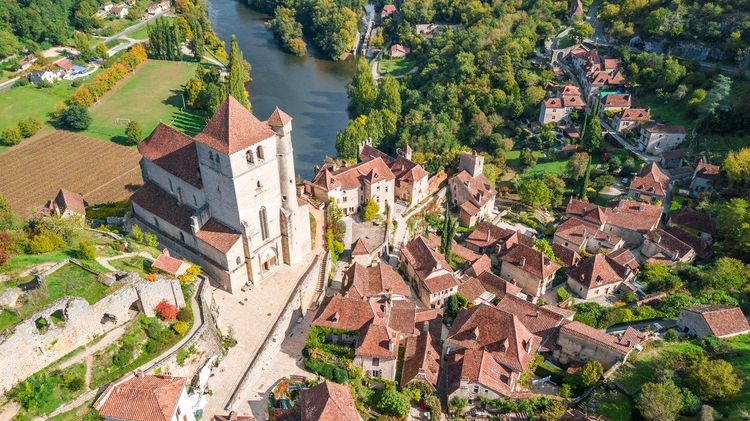
It is the most photographed village in Occitanie. Saint-Cirq-Lapopie (Place du Sombral, 46330 Saint-Cirq-Lapopie, rated 4.5/5 on Google based on 409 reviews) rises 100 metres above the Lot on a limestone spur fought over for centuries by the kings of France, the English and the counts of Toulouse. The result: half-timbered medieval houses clinging to the cliff face and a Gothic church crowning the top of the promontory.
André Breton settled here from 1950 onwards and declared he never wanted to go anywhere else again. It is easy to understand why. The sunsets over the Lot meander from the church esplanade belong to a category of their own. The village officially has fewer than 200 permanent residents but welcomes hundreds of thousands of visitors every year — an imbalance that is clearly felt in the height of August.
Arrive early in the morning (before 9am in summer) or late in the afternoon to avoid coach crowds. The car park at the bottom is paid in summer; the village itself is explored on foot in 1.5 to 2 hours. Allow a full half-day to also explore the paths descending to the banks of the Lot, with views of the meanders from the foot of the cliff.
Nearby: Autoire and Loubressac, two labelled villages less than 30 km away, fit easily into the same day. Autoire, with its waterfall and turreted Gothic castle set in a lush cirque, is particularly spectacular in spring. Carennac, on the banks of the Dordogne, preserves an 11th-century Romanesque priory where Fénelon wrote part of The Adventures of Telemachus.
Conques (Aveyron): the Romanesque Abbey Church and Pilgrim Nights
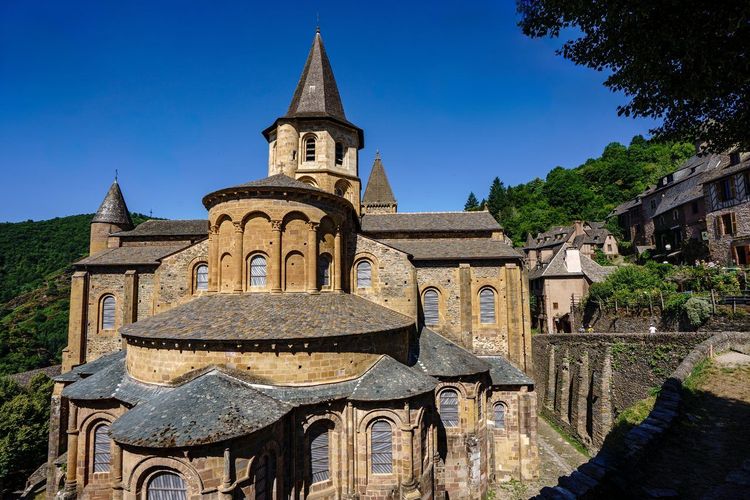
Conques is a happy anomaly. A village of 300 inhabitants endowed with an abbey church that specialists compare without hesitation to the Sainte-Chapelle in Paris. In the 11th and 12th centuries, Conques was one of the major stops on the Way of Saint James along the Le Puy route, and its abbey church of Sainte-Foy welcomed thousands of pilgrims passing through on their way to Spain.
The tympanum of the west portal, carved in the early 12th century, depicts the Last Judgement in 124 figures: a Christ in Majesty at the centre, the elect to the left, the damned delivered to demons on the right. The composition displays an iconographic density rare for an outdoor sculpture nine centuries old, and it remains perfectly readable today. The abbey treasury, housed in an adjoining museum, presents reliquaries from the 9th to the 17th century, including the reliquary of Saint Foy in its 10th-century gold bust — one of the most precious objects in French Romanesque art.
The village itself is organised along a single cobbled main street flanked by two rows of grey-brown schist houses, with no intrusive shops or visible modern architecture. When the coaches have left and night falls, Conques takes on an almost unreal quality. The contemporary stained-glass windows by Pierre Soulages, installed in the abbey church in 1994, filter white light through the windows of the apse. Soulages, a native of Rodez 30 km away, worked on this project for twenty years.
The best strategy: arrive in the late afternoon, dine in the village, sleep on site and visit the abbey church at opening time the next morning before the first coaches arrive. The GR65 footpaths descending towards the Dourdou valley are easily explored on foot from the village.
Belcastel, Estaing and the Hidden Villages of Aveyron
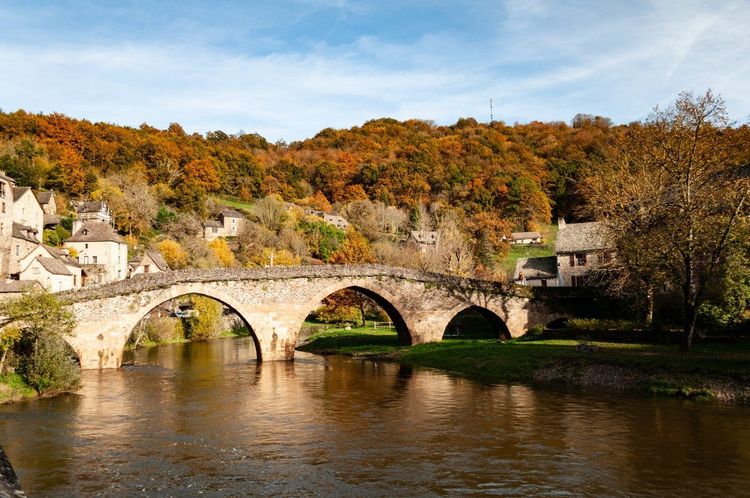
Aveyron is the department with the highest concentration of labelled villages in Occitanie, with around ten communes recognised by the national association. After Conques, three names appear in every itinerary: Belcastel, Estaing and La Couvertoirade (La Couvertoirade, 12230 La Couvertoirade, rated 4.6/5 on Google based on 2.1K reviews).
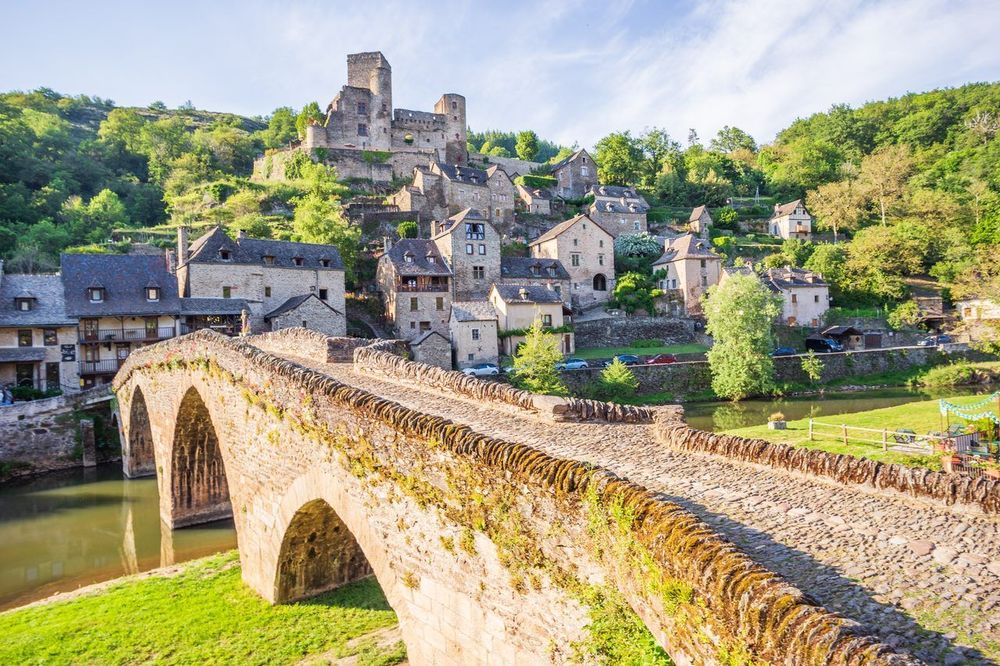
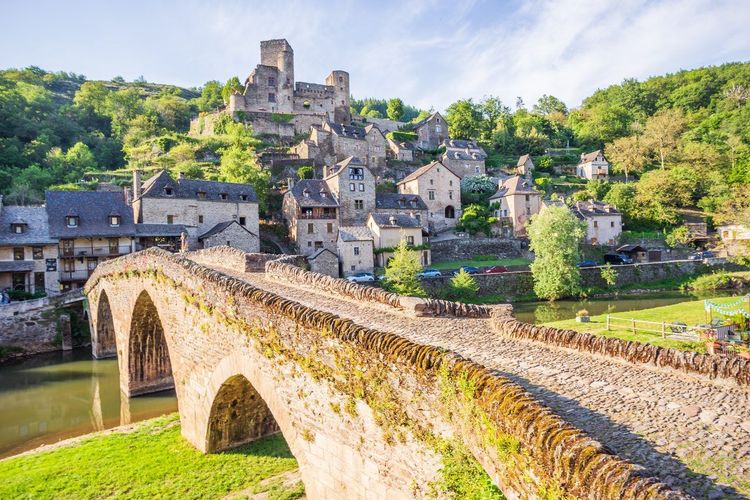
Belcastel stretches along the bottom of the Aveyron valley, in the shadow of a medieval castle restored in the 1970s by architect Fernand Pouillon. The restoration is now recognised as a model of heritage rehabilitation: the towers have regained their lauze stone roofs, and the interior walkways have been reworked in stone and wood. The village is organised around an old humpback bridge over the river.
Estaing, 30 km to the north, is a staging post on the Way of Compostela, with a 15th-century castle overlooking the Lot and an adjoining Gothic collegiate church. A small town, but its terraces overlooking the river are among the most pleasant in Aveyron.
La Couvertoirade operates on an entirely different register. This village on the Larzac causse, built by the Knights Templar in the 12th century and later passed to the Knights Hospitaller, has kept its ramparts fully intact around the entire perimeter. You enter through a fortified gate, wander through lanes where white houses are built against the enclosure walls, and exit through the opposite gate. There are almost no permanent residents in winter, and the solitude of the plateau around the village adds to the end-of-the-world atmosphere.
To complete this Aveyron circuit, Najac (a rocky spur crowned by a 13th-century royal castle) and Saint-Côme-d'Olt can easily be added to a loop from Rodez.
Saint-Guilhem-le-Désert and Minerve: Hérault's Gorges and Cathar Country
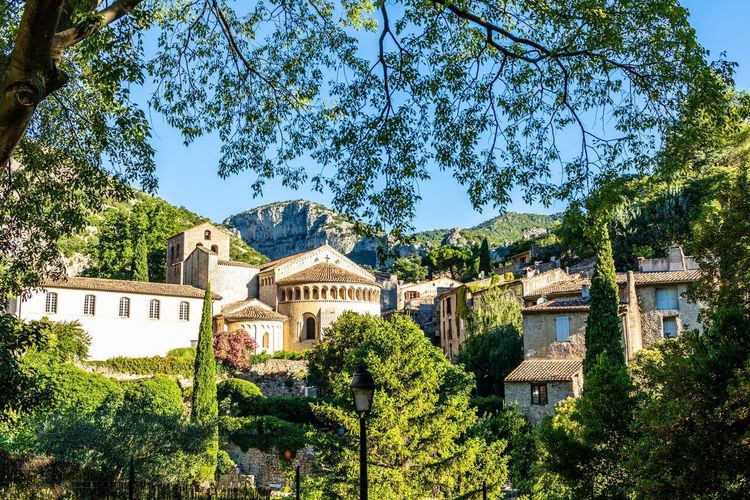
The department of Hérault is home to two villages with radically different profiles but equally striking qualities.
Saint-Guilhem-le-Désert sits at the bottom of the Hérault gorges. Around 800,000 visitors a year for 250 permanent residents: the figure speaks for itself. The village owes its existence to a Benedictine abbey founded in the 9th century by Guillaume d'Aquitaine, a companion-in-arms of Charlemagne, who retired here after a life as a warrior. The Gellone Abbey preserves a Romanesque cloister, several columns of which were purchased by American collectors in the 19th century; they are now in The Cloisters museum in New York.
For travellers using Montpellier as their base, the Ryo audio guide of Montpellier covers the city's historic centre in 19 audio stops across 3.5 km, ideal for a morning before heading to the Hérault gorges.
Some 30 km further north, Minerve occupies a limestone peninsula between two gorges (the Cesse and the Brian) so narrow that the sun only touches them at midday. In 1210, Simon de Montfort besieged the last Cathar Perfects in the area here: 140 people refused to recant and were burned alive. A sober memorial recalls this event at the heart of the village. Minerve is less visited than Saint-Guilhem but just as striking, with its natural bridges carved into the limestone rock by the river.
Cordes-sur-Ciel and the Albi Countryside (Tarn)
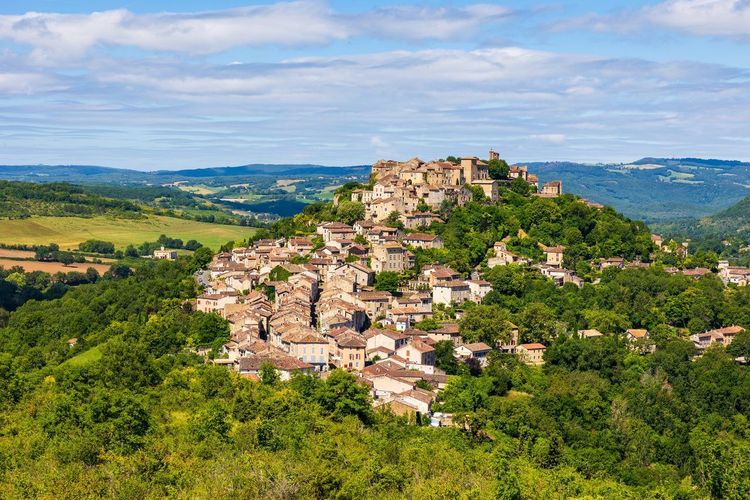
Cordes-sur-Ciel (Grand-Rue Raymond VII, 81170 Cordes-sur-Ciel, rated 4.6/5 on Google based on 3.1K reviews) owes its name to a local weather phenomenon: morning mist sometimes envelops the lower hillside and the village appears to float among the clouds. Founded in 1222 by Raymond VII of Toulouse, in the aftermath of the Albigensian Crusade, this bastide is one of the best-preserved in medieval Midi. Its 13th-century Gothic houses, with facades sculpted with hunting and game scenes, form one of the most coherent ensembles of medieval civic architecture in France.
The walk up from the bottom of the village along the main pedestrian street takes about twenty minutes and justifies every step: craftsmen's workshops, Gothic houses and terraces overlooking the Cérou valley follow one after another without interruption. An early music festival ('Musique sur Ciel') has animated the village every summer since the 1980s.
Some 25 km to the south, Albi is a completely different scale. It is not a village but a city of 50,000 inhabitants, listed by UNESCO for its episcopal city: the Sainte-Cécile Cathedral (the largest Gothic brick cathedral in the world), the adjacent Palais de la Berbie and the old Albi quarter. The Ryo audio tour of Albi covers these 3.5 km of the historic centre in 26 audio stops over approximately 1h40 — if you are short on time, it is the most efficient way to understand the history of the red city. To go deeper, the article what to see around Albi lists the villages and sites of Tarn within a 40 km radius.
Lauzerte, Bruniquel and Auvillar (Tarn-et-Garonne)
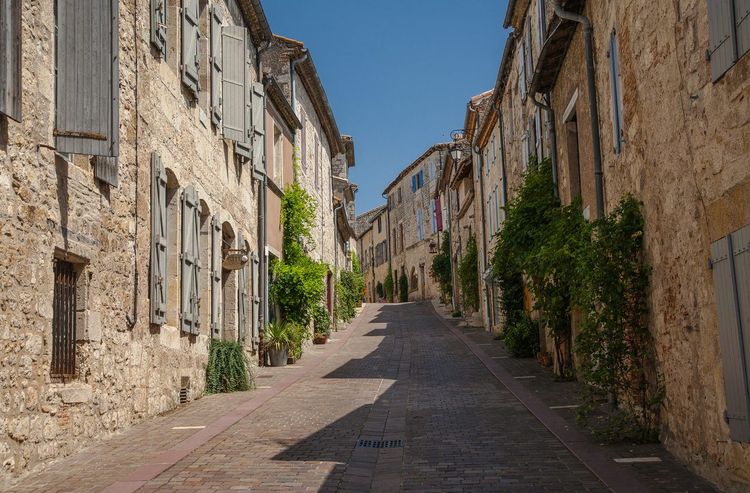
Tarn-et-Garonne is a less well-known department than its neighbours, but it concentrates several labelled communes that most itineraries overlook.
Lauzerte is a bastide perched on a hill in the Quercy Blanc, between the Tarn and Lot valleys. Its Place des Cornières, lined with arcades on two sides, looks out over a chessboard landscape of crops and vines stretching to the horizon. The bastide is also a stop on the Way of Compostela along the Tours route.
Bruniquel occupies a spectacular position at the confluence of the Aveyron and the Vère. Two adjoining castles (built centuries apart) dominate a limestone cliff plunging into the river. A little-known fact: the caves at the foot of the cliff contain structures made of stalagmites created approximately 176,000 years ago by Neanderthals, making them among the oldest constructions ever discovered by archaeology.
Auvillar (Place de la Halle, 82340 Auvillar, rated 4.5/5 on Google based on 620 reviews) rounds off this Tarn-et-Garonne selection with an architectural feature unique in France: an 18th-century circular colonnaded market hall at the centre of a triangular square. The Clock Tower at the other end of the main street opens onto an unobstructed panorama over the Garonne plain.
Montauban, 35 to 50 km from these three villages depending on the route, is the department's capital. The Ryo audio tour of Montauban explores the pink-brick historic centre in 18 audio stops over 1h10 — a good logistical base for exploring the surrounding villages.
The Catalan Villages of Pyrénées-Orientales
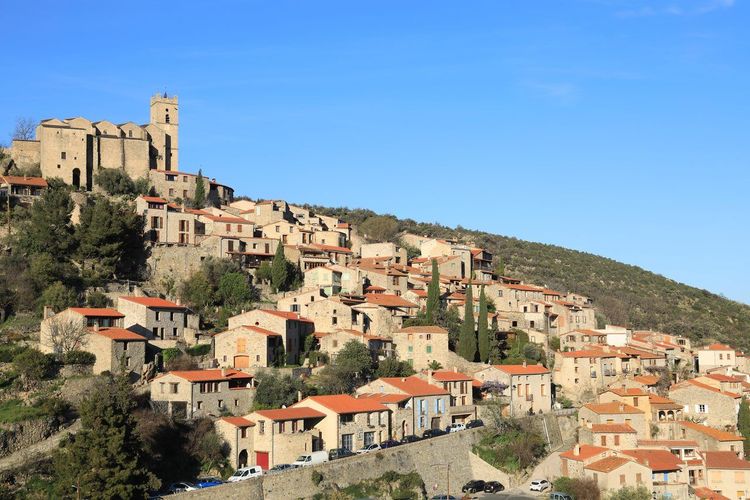
The department of Pyrénées-Orientales has its own identity: Catalan, sun-drenched, with an architecture that has nothing in common with the rest of Occitanie. Flat roofs and arcaded bell towers immediately signal that you are in French Catalonia, a territory only attached to France in 1659 by the Treaty of the Pyrenees.
Castelnou is the most emblematic of the department's labelled villages: a 10th-century feudal castle surrounded by lanes paved with river pebbles, set halfway up the Aspres massif. The view from the ramparts over the Roussillon plain and the snow-capped Canigou in winter is exceptional. The castle is open for visits year-round.
Eus and Évol, in the Conflent valley, have a wilder character. Eus clings to the side of a mountain above the Têt, facing the Canigou. Its Baroque church is one of the most ornate in Roussillon. Évol is more modest but perfectly preserved, with its black schist houses and lanes where life seems to have stopped in the 17th century.
An hour towards the coast, Collioure offers an entirely different setting. This Mediterranean port, with its royal castle on the waterfront and its colourful houses reflected in the coves, inspired Matisse and Derain in the spring of 1905 and gave birth to the Fauvist movement. The Ryo tour 'La Cité des Peintres' retraces this artistic history and the architecture of the old port in 21 audio stops across 3 km.
To prepare your stages from the regional capital, the Ryo audio tour of Perpignan offers an introduction in 20 audio stops (1 hour, 2.4 km) to the monuments of the Catalan city before setting off to discover the surrounding villages. The article villages to visit around Perpignan completes this selection. And if your route begins in Toulouse, our audio walking tour of the Pink City covers 6.5 km of the regional capital.
Villefranche-de-Conflent: the Vauban Citadel at the Foot of Canigou
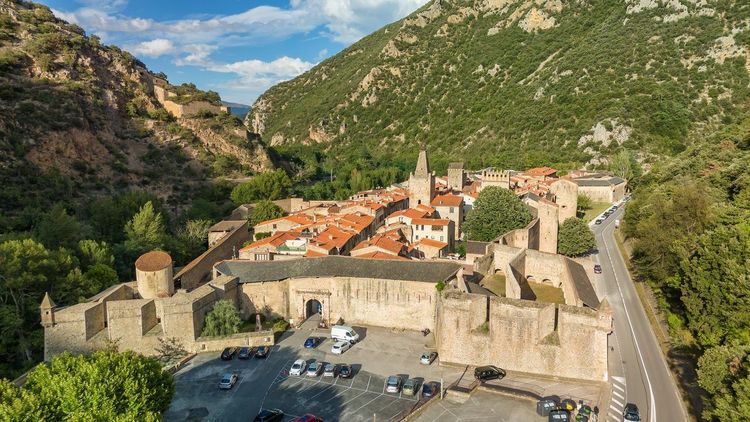
Villefranche-de-Conflent (Rue Saint-Jean, 66500 Villefranche-de-Conflent, rated 4.7/5 on Google based on 3.9K reviews) does not hold the 'Most Beautiful Villages of France' label, but it has been inscribed on the UNESCO World Heritage List as part of the 'Vauban Fortifications' site since 2008. The entire town is encircled by ramparts built or refortified by Vauban for Louis XIV after the Treaty of the Pyrenees, when the Spanish border was only a few kilometres away.
Rue Saint-Jean, the single main axis running through the citadel from gate to gate, is lined with houses built in pink Conflent marble. Fort Libéria, accessible via an underground staircase of 734 steps cut into the rock, or via a longer outdoor path, commands the citadel from the cliff above. The view over the Conflent valley with the Canigou as a backdrop is among the most spectacular in Roussillon.
A practical detail: the Petit Train Jaune (the 'Canary'), a rack-and-pinion tourist train operated by SNCF, connects Villefranche to Latour-de-Carol via the high-altitude stations of the Cerdagne plateau. The train itself is a listed historic monument and is an experience in its own right when visiting the upper Conflent valley.
La Garde-Guérin and the Gorges of Lozère
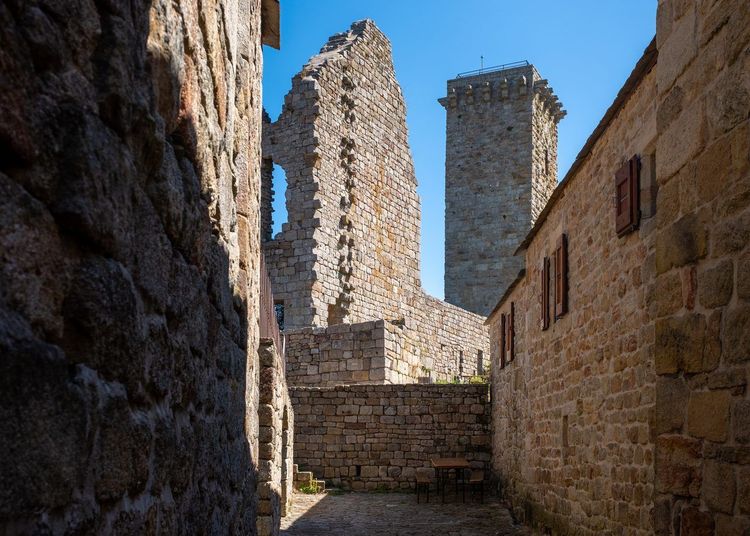
Lozère is the least populated department in France and one of its wildest. Its villages are few, its landscapes immense. La Garde-Guérin (La Garde-Guérin, 48800 Prévenchères, rated 4.5/5 on Google based on 480 reviews), perched on a granite plateau above the gorges of the Chassezac (a tributary of the Ardèche), is the department's finest surprise.
Built between the 10th and 12th centuries by pariers (associated lords tasked with protecting travellers on the medieval road to Languedoc), the village has preserved its granite houses, its keep, its Romanesque church and its entirely cobbled lanes. It is almost uninhabited in winter and welcomes a small community of residents in summer.
Sainte-Énimie, in the Tarn gorges an hour to the west, offers a radical contrast: a village huddled in a tight meander of the Tarn, between limestone cliffs rising to more than 400 metres. It is the usual starting point for canoe descents through the gorges, one of the most beautiful waterways in France.
For those ending their circuit on the Gard side, the Ryo audio tour of Nîmes opens another dimension: 26 audio stops covering the Roman arenas, the Maison Carrée and the whole of the 'French Rome'.
Carcassonne and Narbonne: Medieval Occitanie on a Grand Scale
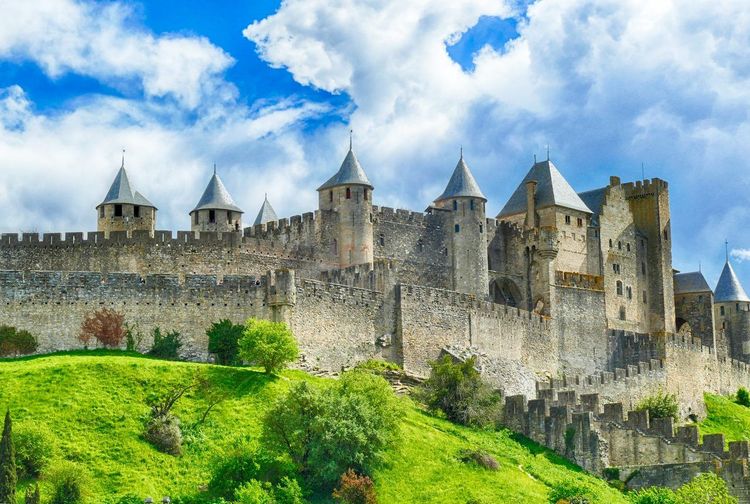
Two cities break the 'village' format but are essential to any Occitanie itinerary.
Carcassonne is the largest fortified medieval city in Western Europe. Its 52 towers and 3 km of double ramparts, restored by Eugène Viollet-le-Duc from 1853 onwards, overlook the lower town from a hill in Aude. The Cité, listed by UNESCO since 1997, welcomes more than 3 million visitors a year. It remains impressive even in high season, provided you arrive at opening time (the gates of the Cité are accessible from 7:30am). The Ryo audio tour of Carcassonne offers 27 audio stops across 5.7 km to explore the Cité and the lower town in 2h30, starting from the Pont Vieux and ending at the Château Comtal.
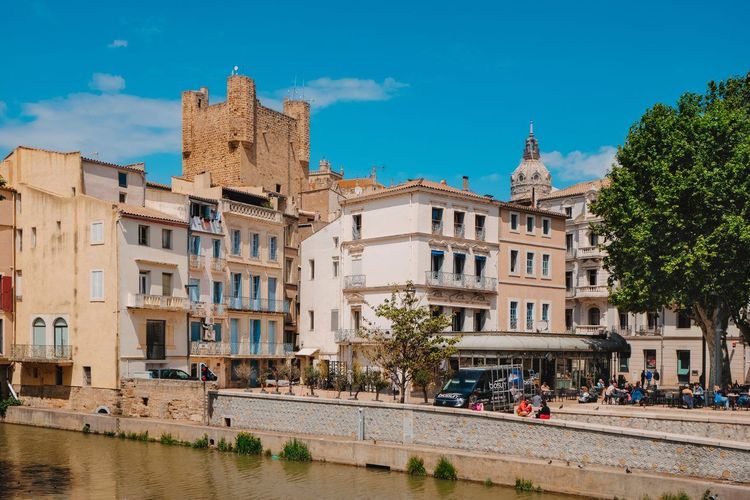
Narbonne plays a different game. The former capital of Gallia Narbonensis, founded in 118 BC, it is the oldest Roman colony in continental France. The Via Domitia, the first major Roman road built outside Italy, passed through its forum: paving stones from the road are still visible in the city centre. The Cathedral of Saint-Just-et-Saint-Pasteur (Place de l'Hôtel de Ville, 11100 Narbonne, rated 4.6/5 on Google based on 5,672 reviews), begun in 1272, was never completed (the nave would have surpassed Notre-Dame de Paris in height), but its Gothic choir at 41 metres under the vault is one of the highest in France.
The Ryo audio guide of Narbonne covers 4 km in 20 audio stops, linking these Roman and medieval traces in 1h40. The article Cathar castles of Occitanie extends this journey to the fortresses of Aude.
When to Visit the Villages of Occitanie?
In the height of August, Saint-Cirq-Lapopie can resemble a traffic jam, and the terraces of Cordes-sur-Ciel fill up two hours after opening. The timing makes all the difference.
- Spring (April–May): ideal. Long days, garrigue in bloom, full gorges, temperatures between 15 and 25°C without the July heatwave.
- Autumn (September–October): the second-best option. Golden light, vines turning red, villages returning to their regular residents. The Tarn and Lot gorges remain navigable in September.
- Winter (November–March): for travellers seeking absolute solitude. Many accommodation options close in smaller villages, but the medieval cities (Carcassonne, Albi, Narbonne) remain accessible year-round and are far less crowded.
- Summer (June–August): possible if you adjust your schedule. Leave before 8am, return after 5pm, avoid weekends in July in the most visited villages.
How to Plan Your Occitanie Itinerary
Occitanie is large and the distances between village clusters can be significant. Trying to cover everything in a week often means spending more time on the road than in the villages.
A car is essential for almost all the destinations mentioned here. A few exceptions (Villefranche-de-Conflent and Collioure by regional train from Perpignan, Carcassonne by TGV from Paris in around 3h30), but the Aveyron, Lot and Lozère hinterlands absolutely require a vehicle.
Four geographical zones naturally emerge to structure a stay:
- Lot + northern Aveyron (Saint-Cirq-Lapopie, Conques, Belcastel, Estaing): base in Figeac or Rodez, allow 2 to 3 days
- Southern Aveyron + Hérault (La Couvertoirade, Saint-Guilhem, Minerve): base in Millau or Montpellier, minimum 2 days
- Tarn + Tarn-et-Garonne (Cordes, Lauzerte, Bruniquel): base in Albi or Montauban, 2 days
- Pyrénées-Orientales (Castelnou, Collioure, Villefranche-de-Conflent): base in Perpignan, 2 days
One week allows you to cover two zones properly. Two weeks for a full grand tour. The Ryo audio tour of Toulouse is a logical entry point for those starting their circuit from the regional capital (23 audio stops, 2h40 tour, 6.5 km).
FAQ
How many 'Most Beautiful Villages of France' does Occitanie have?
Occitanie has around fifty villages awarded the 'Most Beautiful Villages of France' label, making it the leading region in the country ahead of Nouvelle-Aquitaine. The best-represented departments are Aveyron (with around ten communes), Lot, Tarn and Tarn-et-Garonne. The label is awarded by a national association following an audit and can be withdrawn if the quality standards for buildings and landscape are no longer met.
Which is the most beautiful village in Occitanie according to travellers?
Saint-Cirq-Lapopie (Lot) regularly tops the rankings. Conques (Aveyron) often challenges it for first place in specialist lists. Both are worth the trip. If you have to choose, Saint-Cirq-Lapopie fits more easily into a multi-stage Lot itinerary, while Conques justifies a specific detour.
Are Occitanie's villages accessible without a car?
Most are not, or only with great difficulty. A few exceptions: Villefranche-de-Conflent is accessible by train from Perpignan, Collioure by regional train on the Perpignan–Cerbère coastal line, Carcassonne by TGV from Paris or Montpellier. For everything else (Lot, Aveyron, Tarn, Lozère), a car is essential.
Are there entrance fees to visit these villages?
Visiting the streets of labelled villages is always free. Castles, abbeys and museums inside are, however, paid. A few indicative prices: the Château Comtal in Carcassonne (around €11.50), the treasury of Conques Abbey (around €5), Fort Libéria in Villefranche-de-Conflent (€8).
Can you combine Occitanie villages with a wine route?
Absolutely. Languedoc-Roussillon is France's largest wine-producing region by volume. Several labelled villages (Minerve, Saint-Guilhem-le-Désert) are just a few kilometres from the most renowned appellations (Faugères, Saint-Chinian, Pic Saint-Loup). The Occitanie vineyards article lists the main wine tourism circuits in the region.
Which area is recommended for a first trip to Occitanie?
Tarn is often the best starting point: Albi, UNESCO-listed, is 1 hour from Toulouse; Cordes-sur-Ciel is 25 km from Albi; Bruniquel is 40 km to the east. Three major sites within a 60 km radius, with good hotel infrastructure and pleasant roads between stops. After Tarn, the connection to Montauban and Tarn-et-Garonne (Lauzerte, Auvillar) happens naturally in a single day's drive.
Conclusion
The most beautiful villages of Occitanie do not form a homogeneous territory: they are built in schist or pink brick, perched on cliffs or huddled in gorges, Cathar or Templar, Romanesque or Gothic. What unites them is the care with which they have endured the centuries, and the conviction of those who live there that history deserves to be inhabited rather than displayed behind glass.
The Ryo app covers the essential staging cities of the region, from Toulouse and Albi to Carcassonne, Narbonne, Nîmes, Perpignan and Collioure. The villages themselves are waiting, no appointment needed.
À lire également