© Shutterstock
 Votre guide Ryo
The 8 Most Beautiful Vineyards in Occitanie to Discover
A major wine-producing region in Southern France, Occitanie is home to some of the most beautiful vineyards in the country. With more than 263,000 hectares of vineyards, three major terroir families — Languedoc, Roussillon and South-West — and no fewer than 87 recognized appellations, it's a permanent invitation to travel between fragrant garrigue, limestone hillsides and Mediterranean coasts. Whether you're a lover of powerful red wines, fresh whites or sunny rosés, this region offers an absolutely incomparable aromatic palette. The vine has been rooted here since Antiquity, and the resulting wine landscapes are well worth dedicating an escape to. Here is our selection of the 8 most beautiful vineyards in Occitanie not to be missed, between wine tourism discoveries and visits to cities steeped in history.
1. The Corbières, between Carcassonne and Narbonne
Grape varieties: grenache, mourvèdre, syrah, carignan
Denomination: AOC-AOP Corbières
Soil type: extremely varied (limestone, schist, clay)
Stretched across the hillsides that connect the gates of Carcassonne to those of Narbonne, the Corbières vineyard is one of the largest in Occitanie with nearly 9,000 hectares classified as AOC. This historic terroir, whose vine cultivation dates back to the 2nd century before our era, is rooted in a landscape of wild garrigue, limestone reliefs and deep valleys where a climate reigns that is sometimes humid and mild, sometimes harsh and dry. These thermal contrasts are fully reflected in the personality of the wines produced here, dominated by powerful reds and fruity rosés, but also by characterful whites from bourboulenc or marsanne.
To delve into the history of this Languedoc vineyard, a visit to the Abbaye de Fontfroide is absolutely essential. This 12th-century Cistercian monument, nestled in the heart of the Corbières massif, still houses a renowned wine estate today, gardens with sumptuous roses and a cellar where you can taste wines that have won awards several times (RD 613, 11100 Narbonne, rated 4.6/5 on Google for 5,668 reviews). Another must-visit address, the Château de Pennautier, classified as a Historic Monument, invites you to a refined tasting in a grandiose setting (2 boulevard Pasteur, 11610 Pennautier). Around these two gems, an ideal wine route is laid out, between Cathar castles, Romanesque abbeys and troglodyte cellars.
The Corbières vineyard is the ideal starting point for an escape to Occitanie. After exploring the vines, let yourself be guided through the streets of the medieval city of Carcassonne, a true jewel of the Middle Ages classified as UNESCO heritage. Visit Carcassonne on foot autonomously is possible thanks to the Ryo audio-guided circuit that takes you to discover its 27 unmissable points of interest.
Download the audio-guided circuit to discover Carcassonne on foot and autonomously
Want to extend your stay in the region? The Ryo app offers an audio-guided visit circuit in Carcassonne that guides you autonomously through the most beautiful monuments of the medieval citadel: the comtal castle, ramparts, Saint-Nazaire basilica… A 5.7 km route and 2h30 of discovery, ideal to complete your vineyard day. And to continue eastward, Visit Narbonne with Ryo will allow you to discover the ancient city and its 20 points of interest in complete freedom.
2. The Costières de Nîmes vineyard
Grape varieties: grenache, mourvèdre, syrah, grenache blanc, marsanne, roussanne
Denomination: AOC Costières-de-Nîmes
Soil type: marls, clays, sands and rolled pebbles
Located at the extreme southwest of the Rhône valley, at the gates of Camargue and just a stone's throw from Nîmes, the Costières de Nîmes vineyard is one of the most beautiful vineyards in Occitanie due to its exceptional geographical location. This terroir, about forty kilometers long, spreads over a plateau of pebbles reminiscent of neighboring Provence. It mainly produces structured reds and fresh rosés, which perfectly reflect the tempered Mediterranean influence of the local climate. Depending on the vine orientation — towards Camargue in the south or towards the garrigue of Nîmes in the north — the wines reveal very different profiles, from powerful reds to aromatic whites.
The appellation offers some unmissable gems. The Château Mourgues du Grès in Beaucaire is one of the absolute references of the appellation, internationally recognized for the consistent quality of its cuvées. In a more artisanal register and in organic farming, Domaine Cabanis in Vauvert offers natural cuvées that appeal to lovers of living wines. A stone's throw from the Pont du Gard and the arenas of Nîmes, this vineyard integrates perfectly into a rich cultural and wine tourism circuit. Discover the treasures of French Rome before or after your tasting!
Download the audio-guided circuit to discover Nîmes on foot and autonomously
Nîmes deserves much more than a simple stop. Ryo offers you an audio-guided visit circuit in Nîmes of 6 km over 2h45, with 26 audioguides to explore the Arena, Maison Carrée, Jardins de la Fontaine and many other wonders of this ancient city. A perfect route to complete a day in the Costières vineyards. Visit Nîmes autonomously has never been so simple and enriching.
3. La Clape, the island vineyard of Narbonne
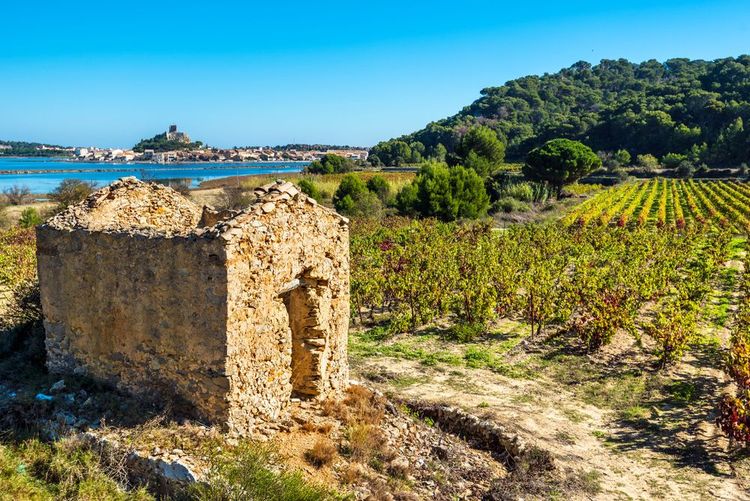
Grape varieties: grenache noir, mourvèdre, syrah (red); bourboulenc, clairette, grenache blanc (white)
Denomination: AOC La Clape
Soil type: hard limestone from Lower Cretaceous
La Clape is undoubtedly one of the most spectacular and mysterious vineyards in Occitanie. This limestone massif of 1,600 hectares rises like a rocky islet emerging from the Narbonne plain, a few kilometers from the Mediterranean Sea. And for good reason: until the 13th century, La Clape was indeed an island, before the alluvium of the Aude came to connect it to the continent. The Phoenicians anchored there to protect themselves from storms, the Romans already cultivated vines there. Today, its white limestone, pine forests and fragrant garrigue offer a grandiose setting, and its wines — particularly the whites from bourboulenc — are among the most unique in Languedoc.
To discover La Clape wines in an exceptional setting, a visit to Château l'Hospitalet is essential, an emblematic estate of the appellation that offers cellar visits, tastings and even a hotel in the middle of the vines. Vignobles Woillemont represents another beautiful address to explore the aromatic diversity of this unique terroir. During your escape, take advantage of the proximity of the Gruissan ponds and wild beaches to complete your Narbonne stay.
Narbonne, city of art and history, is the ideal base for exploring the La Clape vineyard. Visit Narbonne on foot thanks to the Ryo circuit means discovering the Archbishops' Palace, Via Domitia, Canal de la Robine and 20 other remarkable sites in 4 km of audio-guided walk. An ideal way to combine ancient culture and wine tourism.
Download the audio-guided circuit to discover Narbonne on foot and autonomously
Before or after your tasting in the heart of the La Clape vineyard, let yourself be guided through the streets of Narbonne with the Ryo audio-guided itinerary. 20 audioguides enriched with historical anecdotes and secrets of the ancient city await you for a 4 km walk. A complete experience between vines, sea and Roman heritage.
4. Gaillac, one of the oldest vineyards in France
Grape varieties: loin-de-l'œil, mauzac, duras, braucol (fer servadou), syrah, muscadelle
Denomination: AOC-AOP Gaillac
Soil type: clay-limestone on molasses, Tarn alluvium
East of Toulouse and northeast of Albi, extends one of the oldest vineyards in France and one of the most beautiful vineyards in Occitanie: Gaillac. Its history is truly multi-millennial. The Gauls cultivated vines there even before the arrival of the Romans, and it was then the monks of the Saint-Michel de Gaillac abbey who, in the 10th century, made it an excellent wine estate. The Tarn valley, which crosses this terroir from east to west, creates unique climatic conditions, mixing oceanic and Mediterranean influences, which allows for absolutely remarkable vinification diversity: dry, sweet, sparkling, effervescent white wines, but also characterful reds and rosés, from perfectly authentic grape varieties.
This vineyard can be visited in a thousand ways. Bubble lovers will appreciate the ancestral methods of mauzac perlée at Domaine Causse Marines, an organic estate recognized for its atypical cuvées and poetic names (Peyrouzelles, Rasdu…). Fans of powerful reds will head to Château de Lastours or Domaine Gayrard, two unmissable addresses to understand the richness of red Gaillac. Take advantage to visit the bastide of Cordes-sur-Ciel, classified among the most beautiful villages in France, a few kilometers away.
The Gaillac vineyard is ideally located between two major cities of Occitanie. Extend your escape by letting yourself be guided through the streets of the red city: Visit Albi on foot with Ryo means 26 audioguides to discover Sainte-Cécile cathedral, the Berbie palace and the Toulouse-Lautrec museum in complete freedom. And on the pink city side, Visit Toulouse with the Ryo circuit takes you through 23 unmissable places of the Pink City, close to this exceptional wine terroir.
Download the audio-guided circuit to discover Albi on foot and autonomously
After a morning in the Gaillac vineyards, treat yourself to an afternoon in the 'Red City'. The Ryo app in Albi offers you 26 audioguides to cover 3.5 km in the heart of this breathtaking city's UNESCO heritage. Gothic cathedral, old bridge, medieval quarters: everything flows naturally for an unforgettable day of discovery in Occitanie.
5. Pic-Saint-Loup, the jewel north of Montpellier
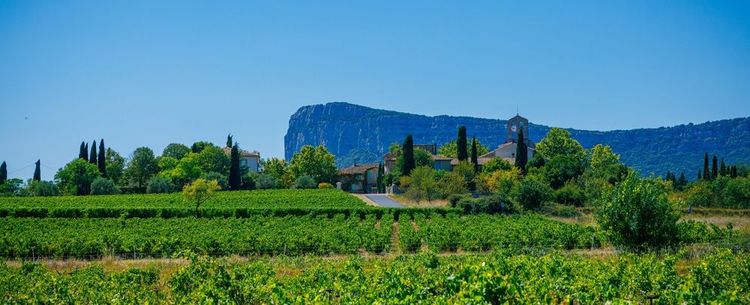
Grape varieties: grenache, syrah, mourvèdre
Denomination: AOC-AOP Languedoc Pic-Saint-Loup
Soil type: clay-limestone and alluvium
About thirty kilometers north of Montpellier, in the first foothills of the Cévennes, Pic-Saint-Loup rises like a limestone sentinel that gave its name to one of the most promising vineyards in Occitanie. The peak culminates at 658 meters and creates a remarkable cooling effect on the surrounding vineyard. This nocturnal coolness, combined with the Mediterranean heat of the day, generates strong thermal amplitudes that allow obtaining reds that are both solar and elegant, with intense aromas of black fruits, garrigue and spices. Despite its relative youth as an autonomous AOC (obtained in 2017), Pic-Saint-Loup has established itself as one of the best appellations in Languedoc.
For an authentic discovery of this terroir, head to Domaine Haut-Lirou, a true ambassador of the appellation (Dom. Haut Lirou, 34270 Le Triadou, rated 4.6/5 on Google for 66 reviews). Perched on the heights with a breathtaking view of the peak, this estate offers guided cellar tours and exceptional commented tastings. A few kilometers away, Château Lascaux in Valflaunes represents another reference address for lovers of organic and biodynamic wines. Mas de l'Oncle completes this trio of unmissable estates in the appellation.
Montpellier, university and festive city, is only 30 minutes from these vines. Visit Montpellier with Ryo means offering yourself an audio-guided route of 3.5 km through Place de la Comédie, Arc de Triomphe, Promenade du Peyrou and 19 other emblematic places of this sunny city. A perfect complement after a day of tasting in the Pic-Saint-Loup garrigue.
Download the audio-guided circuit to discover Montpellier on foot and autonomously
The Ryo audio-guided tour of Montpellier invites you to explore the 19 must-sees of the 'Gifted One' at your own pace, without a guide, without time constraints. Ideal for beautifully ending a day in the Pic-Saint-Loup vineyard before joining the lively terraces of the city center. Let yourself be carried by the immersive comments and anecdotes about this city that has never ceased to surprise since its founding in the 10th century.
6. Cahors, the kingdom of black Malbec
Grape varieties: malbec (côt) 70% minimum, merlot, tannat
Denomination: AOC-AOP Cahors
Soil type: alluvial terraces of the Lot and limestone causses of Quercy
Although located on the northern edge of Occitanie, the Cahors vineyard fully deserves its place among the most beautiful vineyards in Occitanie. This small Southwest vineyard of about 4,200 hectares extends west of the city of Cahors, straddling the Lot valley and the Quercy causses. The vine has been cultivated there since Roman Antiquity, and in the Middle Ages, 'black wine of Cahors' had already conquered the courts of England and Russia. Its emblematic grape variety, malbec (called locally côt), produces wines with deep color, powerful tannins and intense aromas of black fruits, cocoa and violet.
This unique terroir is divided into three zones: the low alluvial terraces that give supple and fruity wines, the first terraces with rolled pebbles that offer fleshy and concentrated reds, and finally the limestone causses at altitude that produce the most complex wines most suitable for aging. To discover the excellence of Cahors malbec, a visit to Château Lagrezette is essential, one of the most beautiful estates of the appellation, classified as Historic Monuments and offering tastings in a breathtaking Renaissance setting. Domaine Rességuier is another beautiful address for gently discovering this emblematic grape variety of the Southwest.
The city of Cahors is itself a jewel to explore: Pont Valentré, Saint-Étienne cathedral, medieval old town... A day in the vineyards followed by an evening by the Lot, in the heart of a city that knows how to preserve its wine traditions while opening up to gourmet tourism. This vineyard absolutely deserves spending a few days there.
7. Collioure, the city of painters and wine
Grape varieties: grenache, mourvèdre, syrah, carignan, grenache blanc
Denomination: AOC-AOP Collioure
Soil type: brown and black schists
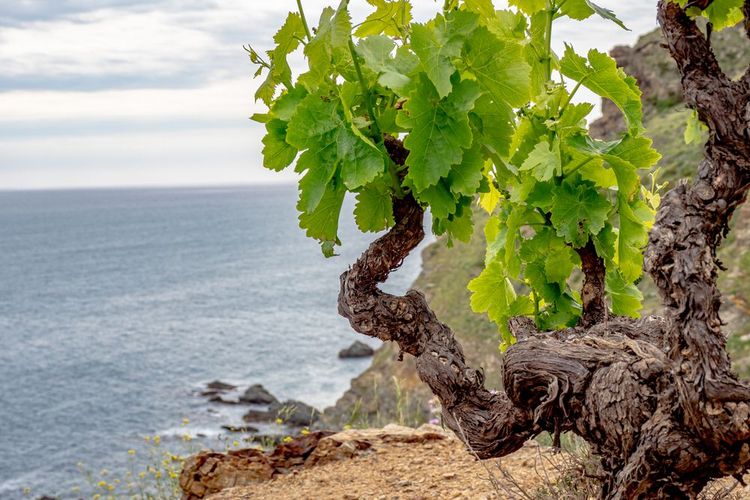
The Côte Vermeille, where the Pyrenees plunge into the Mediterranean Sea, houses one of the most spectacular and photographed vineyards in Occitanie. The Collioure vineyard, founded by the Phoenicians and developed by the Templars, clings in narrow terraces on steep schist slopes, with the turquoise waters of the Gulf of Lion as backdrop. This extreme environment — bright sun, tramontane wind, poor and draining soils — gives birth to reds of exceptional intensity and rosés that are among the most gastronomic in Languedoc-Roussillon. The appellation covers the communes of Collioure, Banyuls, Port-Vendres and Cerbère.
For an unforgettable tasting in this postcard setting, head to Cave Terres des Templiers in Banyuls, the largest cooperative on the Côte Vermeille, which vinifies most of the schist grapes of the appellation. Clos Castell, a family estate perched on the heights of Collioure, offers a more intimate discovery, with confidential cuvées and a breathtaking view of the bay. Don't miss Cave de l'Abbé Rous in Banyuls-sur-Mer, to understand how the same grape variety, grenache, can be transformed into Banyuls, this unique natural sweet wine in the world.
Collioure is much more than a vineyard: it's a dream village that inspired Matisse, Derain and the Fauves. Visit Collioure with the Ryo audio-guided circuit means offering yourself 21 audioguides to explore the royal castle, Notre-Dame-des-Anges church, colorful streets and painters' studios in 3 km of enchanting walk. And if you want to extend the Roussillon adventure, Visit Perpignan with Ryo opens the doors of the French Catalan capital and its 19 emblematic places.
Download the audio-guided circuit to discover Collioure on foot and autonomously
The Ryo app in Collioure offers you to stroll in complete freedom in the 'city of painters' through 21 captivating audioguides. From the royal castle to the lively quays, through the colorful-façade houses, every street corner tells a story between art, sea and viticulture. An ideal companion for a wine and culture weekend on the Côte Vermeille.
8. Saint-Chinian, schists and Languedoc sunshine
Grape varieties: grenache, syrah, mourvèdre, carignan
Denomination: AOC-AOP Saint-Chinian, with two crus: Saint-Chinian Berlou and Saint-Chinian Roquebrun
Soil type: schists in northern part, limestone in southern part
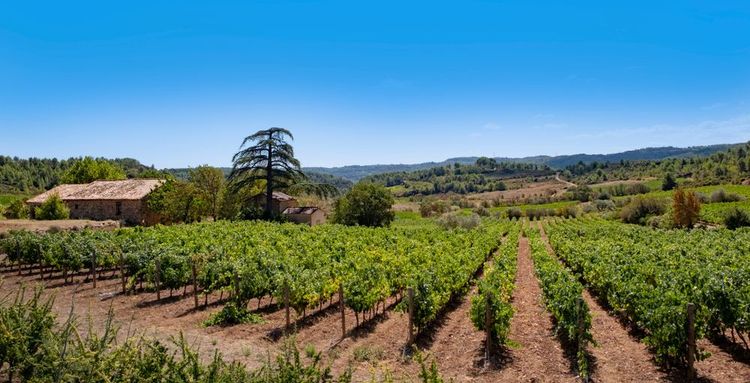
Leaning against the southern foothills of the Massif Central and open to the Béziers plain, the Saint-Chinian vineyard is one of the last emblematic terroirs of Occitanie vineyards to discover in this selection. Located in the Hérault department, about twenty kilometers west of Béziers, it extends over approximately 3,200 hectares divided between two very distinct types of terroirs: the brown and black schists of the north (around Berlou and Roquebrun), which give powerful, tannic and spicy wines, and the limestone soils of the south, producers of more supple and fruity wines. This duality makes Saint-Chinian one of the most complex and interesting appellations in all of Languedoc.
The first historical trace of viticulture in Saint-Chinian dates back to the 8th century, when monks established the first vines on this territory. The AOC was recognized in 1982 for red and rosé wines, then extended to whites in 2004. Today, about a hundred estates and cellars make up the appellation. For an initiation to the diversity of this terroir, nothing beats a visit to the Maison des Vins de Saint-Chinian, installed in Charles Trenet's former residence (1 Avenue Charles Trenet, 34360 Saint-Chinian). This associative shop brings together about a hundred winemakers and allows tasting and buying all the diversity of the appellation in one place. For lovers of exceptional organic wines, Château Maris in Félines-Minervois, the first European wine estate labeled B-Corp, is a choice address that combines wine excellence and total environmental commitment.
The Saint-Chinian region also offers beautiful opportunities for hiking and discovering the Languedoc hinterland. The Cesse gorges, perched villages of the Avant-Monts and proximity to the Canal du Midi make it an ideal territory for a multi-activity stay. And if you want to discover a city with Ryo, know that Montpellier and Narbonne are less than an hour's drive away to complete your trip with a cultural and audio-guided escape.
In conclusion, the vineyards of Occitanie form an arc of fascinating terroirs that stretch from the Nîmes garrigue to the schistose slopes of the Côte Vermeille, through the Quercy causses and Tarn hills. Whether you're lovers of great Mediterranean reds, mineral whites or sunny rosés, you'll find your happiness among these 8 most beautiful vineyards in Occitanie. And since each vineyard nestles near a city steeped in history, take advantage of each stop to let Ryo guide you on foot through the region's most beautiful heritage sites. Download for example the Carcassonne audio-guided circuit to beautifully begin your tour of Occitanie vineyards, between medieval city and Corbières hillsides.




FAQ about Occitanie vineyards
What is the largest wine region in Occitanie?
Occitanie is the first wine region in France with more than 263,000 hectares of vineyards. It represents about 33% of national wine production. Languedoc constitutes the most extensive wine area, with appellations like Corbières, La Clape, Pic-Saint-Loup and Saint-Chinian, to which are added Roussillon wines and those from the Southwest (Cahors, Gaillac...).
What is the best season to visit Occitanie vineyards?
All seasons offer their charms in Occitanie vineyards. Spring (April-May) is ideal for admiring flowering vines and enjoying mild weather before the great heat. Summer allows combining beaches and estate visits. Autumn (September-October) remains the most magical period with harvests, warm colors of the vines and animation of local festivals. Winter is quieter but perfect for intimate tastings in cellars.
What are the most emblematic wines of Occitanie?
Among the most emblematic wines of Occitanie vineyards, we can mention Cahors (malbec), renowned for its deep reds; Pic-Saint-Loup, which embodies Languedoc elegance; Corbières, with their powerful reds from grenache and syrah; Gaillac, for the singularity of its native grape varieties like loin-de-l'œil or mauzac; and Banyuls-Collioure, schist wine of rare minerality in dry red, or sweet as natural sweet wine.
How to organize a wine route in Occitanie?
To organize a wine route in Occitanie, several approaches are possible. You can focus on a single appellation (e.g.: Pic-Saint-Loup from Montpellier, with 3 to 4 estates in one day) or go on a grand tour of Occitanie vineyards over several days. The Occitanie Tourism site offers official itineraries dotted with labeled estates. Also think about combining each wine stop with an audio-guided cultural visit thanks to the Ryo app, available in all major cities of the region.
Is the Gaillac vineyard really one of the oldest in France?
Yes, Gaillac is considered one of the oldest vineyards in France. The first traces of viticulture in the region date back to the Gallo-Roman period in the 2nd century. But it was especially in the 10th century, thanks to the monks of Saint-Michel de Gaillac abbey, that viticulture experienced structured development there. Some historians even estimate that vine cultivation in Gaillac could be prior to the Roman conquest, which would potentially make it the oldest vineyard in France.
À lire également