© Shutterstock
 Votre guide Ryo
Discover the Vineyards of Southwest France: Complete Terroir Guide 2026
Discovering the vineyards of Southwest France means accepting one truth: here, the wine region is not a region — it's a constellation. Between the 60 Bordeaux appellations covering 120,000 hectares and the 250 hectares of Irouléguy clinging to the Basque Pyrenean slopes, there are entire worlds that most wine lovers have never even glimpsed. Each valley conceals its own identity: the dark tannins of Tannat in Madiran, the honeyed sweetness of Jurançon moelleux harvested in November, the 'black' reds of Cahors built on Malbec centuries before Argentina ever laid claim to the grape.
Discovering the vineyards of Southwest France means crossing five great river valleys — the Garonne, the Lot, the Tarn, the Adour, the Dordogne — and understanding how geology, grape variety and human endeavour have shaped radically different wines within less than 200 kilometres of each other. This guide takes you from the Médoc to the Pyrenean foothills, from Bergerac to Saint-Jean-Pied-de-Port, with the must-visit estates and the vintages to remember. The Ryo app will also allow you to explore the historic centres of these wine towns at your own pace: the Ryo's audio-guided tour of Bordeaux is the best starting point, with itineraries that place every château, every square and every vineyard in its proper context.
Southwest France Appellations: A Panorama of 13 Terroirs
Before setting off, it is worth understanding what the term 'wines of Southwest France' actually covers. It refers in practice to two realities that professionals carefully distinguish: Bordeaux and its satellites on one side, and the appellations of the greater Southwest on the other.
Bordeaux alone accounts for two-thirds of the region's total production. Its sixty appellations, from the simple generic AOC Bordeaux to a Pauillac Premier Grand Cru Classé, are the most famous in the world. But this media prominence leaves in the shadows wine-producing territories of comparable richness: Cahors has been producing Malbec since the early Middle Ages, several centuries before Argentina; Gaillac, established on the banks of the Tarn since Antiquity, cultivates indigenous grape varieties found nowhere else in France.
The geography divides the region into three broad groupings:
The Garonne and Dordogne basin brings together Bordeaux, the Entre-deux-Mers, Bergerac, Buzet, Duras, the Marmandais and Monbazillac. Here, the classic Bordeaux grape varieties — Merlot, Cabernet Sauvignon, Sémillon, Sauvignon Blanc — dominate. The clay-limestone and gravel soils produce structured, approachable wines shaped by Atlantic influence.
The Tarn and Lot basin encompasses Gaillac, Cahors and Fronton. This is where ampelographic diversity is at its most spectacular: Braucol and Duras in Gaillac, Négrette in Fronton, Côt (Malbec) in Cahors. These indigenous varieties produce wines of strong individual character, often little known to the general public despite their remarkable singularity.
The Pyrenean foothills, stretching from the Adour to the Spanish border, are home to Madiran, Jurançon, Pacherenc du Vic-Bilh, Irouléguy and Saint-Mont. This zone produces the most powerful wines in the Southwest: Tannat from Madiran displays one of the highest concentrations of procyanidins of any red wine in the world, according to several cardiological studies published since the 2000s.
In total: some fifteen principal appellations, approximately 200,000 hectares of vines, and around fifteen indigenous grape varieties found nowhere else in France.
Bordeaux and Its Appellations: The Empire of Wine
It would be absurd to discover the vineyards of Southwest France without beginning in Bordeaux, even though the city extends far beyond the confines of a simple wine-producing terroir. It is the nerve centre, the reference market, the place where global wine prices have been set since the 18th century.
The Cité du Vin, inaugurated in 2016 on the banks of the Garonne, is the ideal starting point. Its spiral architecture, designed to evoke the movement of wine in a glass, houses a permanent museographic journey through the history of wine civilisations across the ages and continents. The panoramic terrace offers a view over the Garonne with the Entre-deux-Mers vineyards as a backdrop. Allow 3 to 4 hours for a thorough visit.
The Médoc: The Peninsula of Legends
An hour north of Bordeaux, the Médoc peninsula is the territory of the Grands Crus Classés. The Route des Châteaux (D2) passes through the world's most celebrated communes over roughly fifty kilometres: Margaux, Saint-Julien, Pauillac, Saint-Estèphe. In Pauillac, the three châteaux classified as Premier Grand Cru — Château Mouton Rothschild, Château Lafite Rothschild and Château Latour — can be visited by reservation, sometimes several months in advance.
More accessible to non-professional visitors, Château Palmer in Margaux offers guided tours of its cellars with a dedicated tasting host. Its second wine, 'Alter Ego de Palmer', is an excellent introduction to the Margaux style at a more manageable price. The 2022 vintage is already considered one of the greatest in the château's history.
In the Pessac-Léognan area, Château Smith Haut Lafitte combines estate visits, gastronomic tastings and accommodation at a spa resort (Les Sources de Caudalie) founded in 1999, which played a major role in democratising wine tourism in the Gironde. The vinotherapy they pioneered — treatments based on grape seed and vine shoot extracts — is now sold in more than 500 spas worldwide.
Saint-Émilion and the Right Bank (Place du Clocher, 33330 Saint-Émilion, rated 4.7/5 on Google with 15,000 reviews)
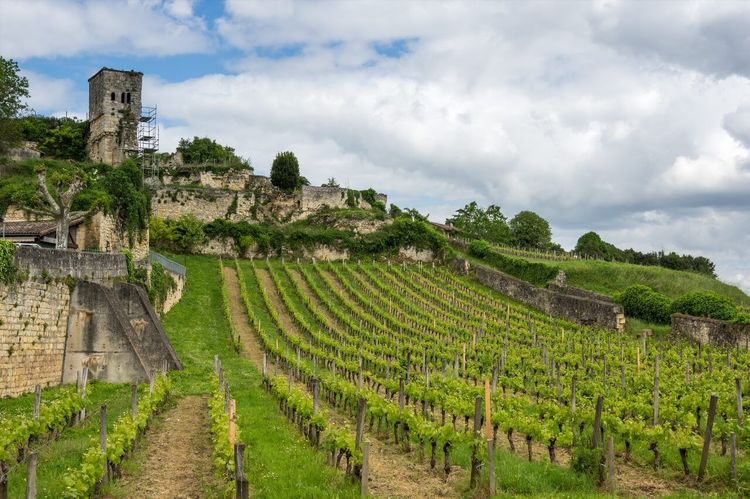
To the east of Bordeaux, the Right Bank produces radically different wines: Merlot dominates, soils are more clay-rich and properties are smaller. Saint-Émilion, listed as a UNESCO World Heritage Site since 1999, welcomes more than 850,000 tourists a year. Its medieval alleyways, its monolithic church carved into the limestone rock in the 8th century and its many wine merchants make it a destination in its own right, quite independently of the great châteaux.
Château Cheval Blanc (Saint-Émilion Premier Grand Cru Classé A) and Château Pétrus (Pomerol) represent the twin pinnacles of the Right Bank, their wines regularly ranking among the most expensive in the world. Visits are exclusive and by invitation only. To explore Saint-Émilion without a human guide, the audio tour routes in the Ryo app allow you to grasp the medieval history of the town as you wander through its alleyways.
The Entre-Deux-Mers: Dry Whites from the Hinterland
Between the Garonne and the Dordogne, the Entre-deux-Mers produces lively, aromatic dry Sauvignon Blanc whites, often the best value for money in the entire Gironde. The medieval bastide of Monségur, the villages of Cadillac and Loupiac (for sweet wines) are well worth the detour in this hinterland that standard tourist circuits tend to overlook.
Bergerac and Monbazillac: Périgord in a Bottle
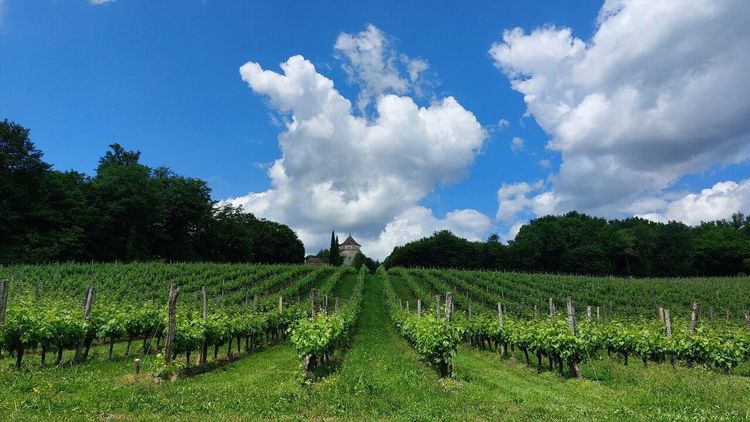
Some 90 kilometres east of Bordeaux, crossing the Dordogne marks a change of register: the wines of Bergerac set themselves apart from their Bordeaux neighbours through more accessible prices, human-scale estates and a hospitality that is far less intimidating than the grand châteaux of the Médoc.
The Bergerac appellation covers 13,000 hectares spread across red, dry white and rosé wines. Pécharmant, on the gravelly terraces northeast of the town, is the showcase red of the Bergerac area: age-worthy wines built on Merlot and Cabernet, often compared to accessible Pomerol. Château de Tiregand is one of the reference estates, offering guided vineyard tours and public cellar tastings.
The town of Bergerac itself is worth half a day, ideally explored with the Ryo's audio-guided tour of Bergerac to capture its river history: the old quarter on the banks of the Dordogne, the Musée du Vin et de la Batellerie housed in a 17th-century mansion, and the covered markets in the town centre. This museum traces the history of the river trade that built the fortune of Bergerac's winemakers for centuries — flat-bottomed boats transported wine to Bordeaux and the English markets long before the age of roads.
Monbazillac: The Château and Its Sweet Wines
Five kilometres south of Bergerac, the Monbazillac hillside produces one of France's great sweet wines. Noble rot (Botrytis cinerea) concentrates the sugars in the Sémillon, Sauvignon and Muscadelle grapes. The result: wines of complex aromatic richness that many favourably compare to Sauternes at a fraction of the price.
The Château de Monbazillac (Route de Monbazillac, 24240 Monbazillac, rated 4.2/5 on Google with 1,693 reviews), a 16th-century Renaissance building owned since 1960 by the local wine cooperative, dominates the vineyard from its crenellated towers and offers a complete château visit accompanied by a tasting of several vintages. 2018 and 2022 are considered the two benchmark vintages of the decade for Monbazillac: botrytis conditions were exceptional in both years.
For those seeking the most complex cuvées in the appellation, Château Tirecul La Gravière produces Monbazillacs of a concentration and length that rival the greatest sweet wines in the world. Visits are by appointment only, but the welcome is warm and the tasting unforgettable.
Monbazillac is classically served with Périgord foie gras, but also pairs beautifully with blue-veined cheeses or walnut tarts for dessert — a pairing that exploits the wine's sweetness without being overwhelmed by excessive complexity.
Cahors: The Original Malbec and the Cliffs of the Lot
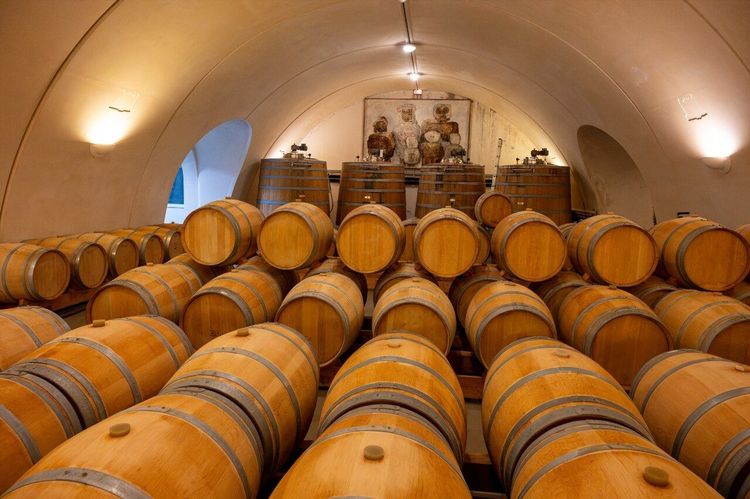
Before it became Argentina's star grape variety, Malbec was the wine of Cahors. Here it goes by the name Côt or Auxerrois, and it has grown on the limestone causses and clay-gravel terraces of the Lot since the early Middle Ages. The kings of England appreciated it in the 12th century; Pope John XXII, a native of Cahors, used it as his Mass wine in the 14th century. The legend of the 'black wine' of Cahors is no marketing pitch: it rests on seven centuries of documented reputation.
The appellation today covers 4,200 hectares spread across 45 communes in the Lot valley. The finest wines come from the three alluvial terraces that run alongside the river. The limestone of the Causse brings minerality and structure; the gravel delivers aromatic finesse; the clay of the lower terraces produces suppler, fruitier wines that reach maturity earlier. This tripartite geology is the secret behind the diversity of styles within a single appellation.
The Reference Estates
Château Lagrézette, owned by fashion designer Alain-Dominique Perrin since 1980, has transformed the image of Cahors. Its 15th-century Renaissance château, its ultra-modern cellars and its tastings led by permanently trained sommeliers make it the most complete wine tourism address in the appellation. Its 'Clos d'Exception' is regularly rated among the finest wines in France.
Clos Triguedina, in the Baldès family for six generations, produces 'Prince Probus', one of the appellation's iconic cuvées since the 1980s. The estate organises guided vineyard tours across all three terrace types — the only way to truly understand how the soil changes the texture of the same grape variety over a distance of 200 metres.
Saint-Cirq-Lapopie and the Lot Valley
Some 25 kilometres east of Cahors, perched on an 80-metre cliff overlooking the river, Saint-Cirq-Lapopie is one of the most spectacular villages in France. Its medieval corbelled houses, its active artisan workshops and its cobbled alleyways inspired André Breton, who lived there and wrote part of his works in the village. It has been a member of the 'Les Plus Beaux Villages de France' association since 1994.
The city of Cahors itself justifies a full day. The Pont Valentré (Boulevard Léon Gambetta, 46000 Cahors, rated 4.7/5 on Google with 6,557 reviews), a 14th-century fortified bridge with three square towers, is listed as a UNESCO World Heritage Site and ranks among the best-preserved medieval military monuments in France. The Cathédrale Saint-Étienne with its 12th-century Romanesque domes, the medieval Baderne quarter and the banks of the Lot together form a coherent ensemble that remains surprisingly under-visited relative to its heritage value.
Madiran and Saint-Mont: The Dark Tannins of Gascony
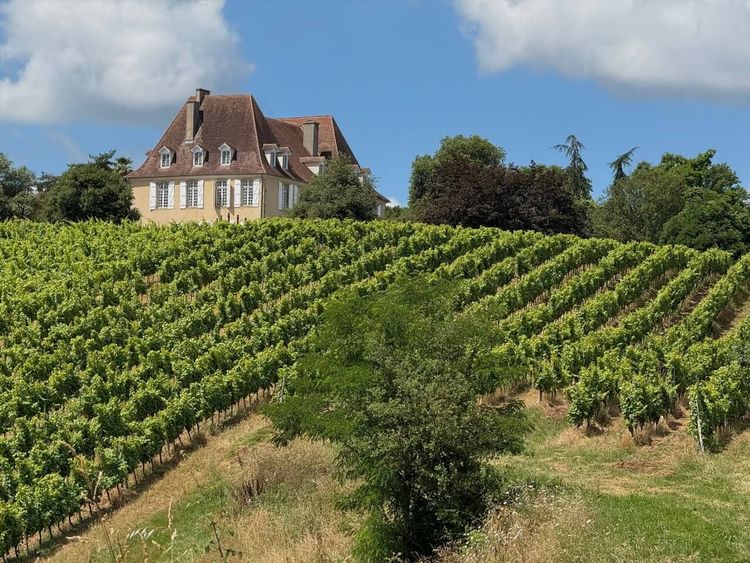
Madiran is perhaps the greatest little-known wine in France. Its principal grape variety, Tannat, produces wines of exceptional phenolic richness. Cardiological studies published in the 2000s identified in Madiran's Tannat the highest concentrations of procyanidins (antioxidants) of any red wine studied. The Gascon paradox is very real: the Gers, France's leading consumer of foie gras and duck confit, statistically records one of the lowest rates of cardiovascular disease in the country.
The appellation covers 1,300 hectares on the clay-limestone hillsides between the Hautes-Pyrénées and the Pyrénées-Atlantiques. Production is dominated by two internationally renowned estates that have transformed perceptions of this wine.
Château Montus and Château Bouscassé, owned by Alain Brumont since the 1980s, rescued Madiran from obscurity. Brumont was one of the pioneers of micro-oxygenation, an ageing technique now used worldwide to soften Tannat's tannins without sacrificing its structure. A guided visit at Brumont's estates is as much a lesson in applied oenology as it is a discovery of a great terroir.
Alongside Madiran, the Saint-Mont appellation produces slightly more approachable wines under the aegis of the cooperative Plaimont Producteurs (Route de Plaisance, 32400 Saint-Mont, rated 4.7/5 on Google with 118 reviews), which brings together more than 800 growers across 6,000 hectares. Their 'La Vigée' range is an excellent first introduction to Tannat in its less austere form.
Pacherenc du Vic-Bilh, a dry or sweet white wine from the same hillsides as Madiran, uses the Petit Courbu, Arrufiac and Petit Manseng grape varieties. Rarely distributed outside the Hautes-Pyrénées, it is one of the most original white wines in France and one of the most financially accessible for its quality level.
Jurançon and Irouléguy: The Pyrenean Vineyards
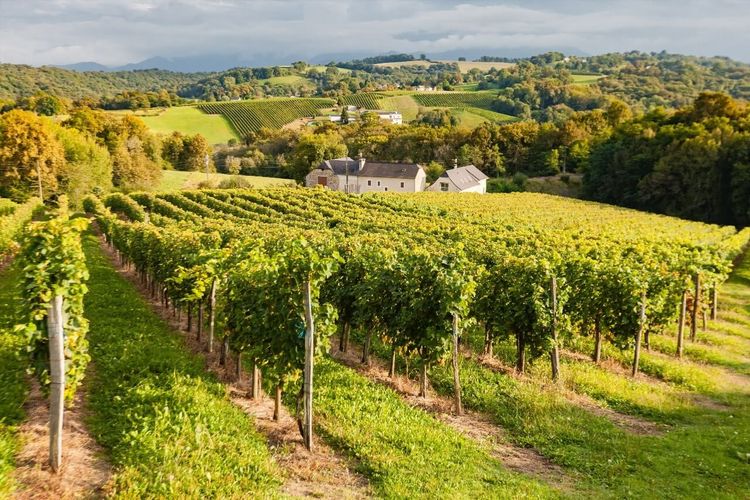
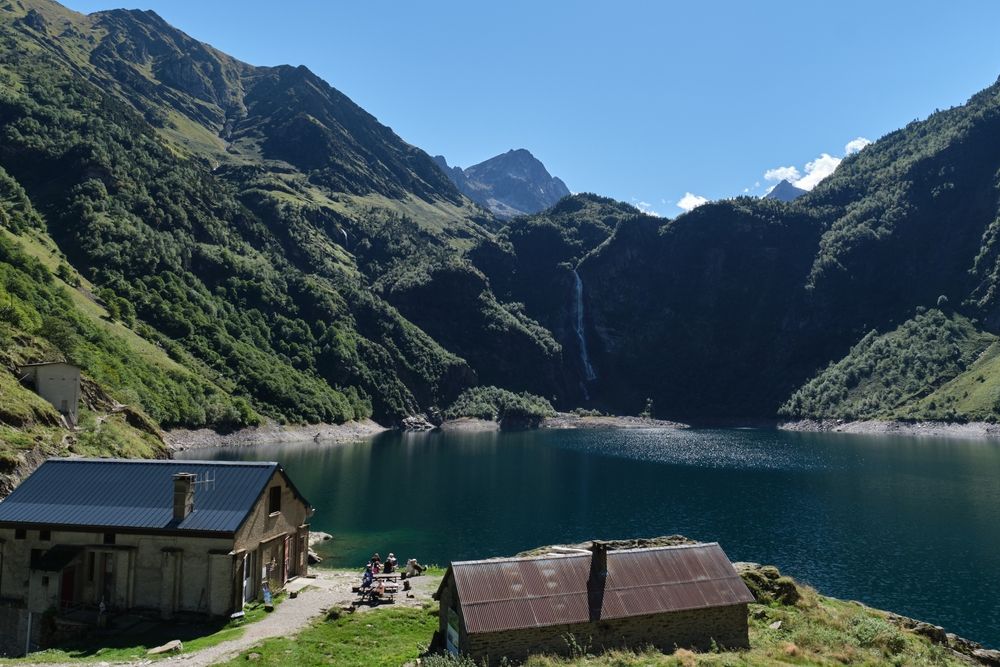
The vines climb here to altitudes of up to 400 metres. The Pyrenees close off the horizon to the south, the hillsides are steep and the harvest sometimes takes place in November, when the first snows whiten the peaks. It is these conditions that make Jurançon one of the most original and least-imitated sweet white wines in France.
Jurançon: The Wine of Henri IV's Baptism
The appellation produces two radically different styles: Jurançon Sec (Gros Manseng vinified dry, crisp and aromatic) and Jurançon doux or moelleux (passerillage-dried Petit Manseng, harvested in over-ripeness between October and December, with aromas of pineapple, quince and acacia honey). Legend has it that at the baptism of Henri IV in 1553, his father, the King of Navarre, rubbed the infant's lips with Jurançon wine to ensure him vigour and longevity.
Domaine Cauhapé, in Monein, is the absolute benchmark of the appellation. Henri Ramonteu spent thirty years crafting a collection of Petit Manseng cuvées that rival the greatest sweet wines in the world. His 'Symphonie de Novembre' and 'Noblesse du Temps' can still be purchased at surprisingly reasonable prices for their level of complexity.
The city of Pau, 10 kilometres from the vineyards, merits a detour in its own right, which the Ryo's audio-guided tour of Pau allows you to explore on foot: its Château de Pau (residence of the kings of Navarre and birthplace of Henri IV), its Boulevard des Pyrénées with its panoramic view of the snow-capped range, and its covered markets are among the finest reasons to linger.
Irouléguy: The Basque Vineyard
Some 90 kilometres west of Pau, Irouléguy is the only wine appellation in the French Basque Country. Its 250 hectares of vines clinging to the slopes between Saint-Jean-Pied-de-Port and Saint-Étienne-de-Baïgorry are among the most visually spectacular in France: stepped terraces carved into red schist, oriented due south to capture every hour of sunlight.
Domaine Arretxea (64430 Irouléguy, rated 4.6/5 on Google with 17 reviews) (Michel and Thérèse Riouspeyrous) practises biodynamic farming on these steep slopes, producing Tannat and Cabernet Franc reds of remarkable aromatic precision and tension, distributed in the finest restaurants of the region.
Saint-Jean-Pied-de-Port, the main village in the area, is also the French starting point of the Camino de Santiago. This dual identity — discreet vineyard and world-famous pilgrimage — makes it a destination in its own right: very busy in summer but serene and accessible out of season.
Gaillac, Fronton and the Wines of Southern Occitania
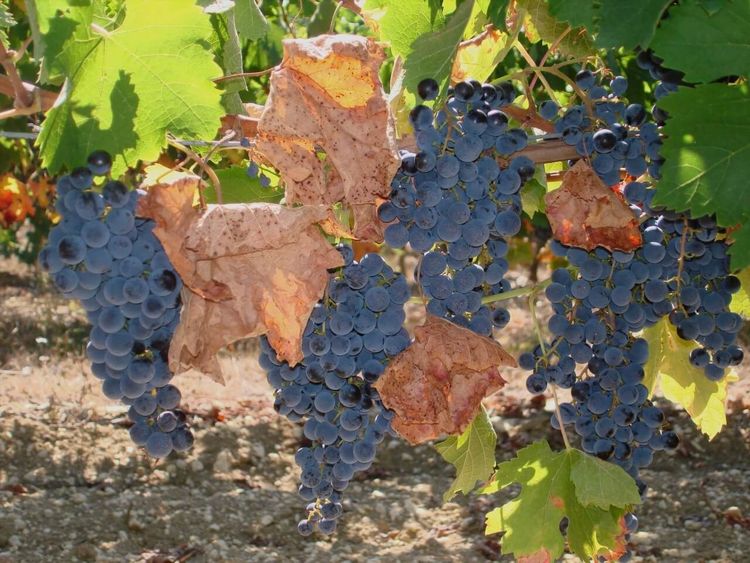
At the confluence of the two great administrative regions — Nouvelle-Aquitaine and Occitanie — lies a wine-producing zone often ignored by standard tourist circuits, yet boasting an ampelographic diversity unmatched anywhere in France. Gaillac is one of the oldest vineyards of Roman Gaul; Fronton cultivates a grape variety, Négrette, found nowhere else in the world.
Gaillac: 2,000 Years of Viticulture on the Tarn
The earliest traces of viticulture in Gaillac date back to the 1st century AD. The monks of the Abbey of Saint-Michel were already cultivating the vine in 972. Today, the appellation covers 3,800 hectares and produces a surprisingly eclectic range: age-worthy reds based on Braucol (Fer Servadou), dry whites from a unique variety called Len de l'El ('loin de l'oeil' or 'far from the eye' in Occitan), the méthode gaillacoise sparkling wine refermented on fresh grape juice, and sweet Mauzac and Ondenc wines. This diversity of styles within a single territory is unique in France.
Domaine Plageoles, in Cahuzac-sur-Vère, is the guardian of Gaillac's indigenous grape varieties. Robert and Bernard Plageoles rescued several local varieties from extinction and produce a range of wines that constitute genuine living archives of viticulture on the Tarn. Their Ondenc natural sweet wine is an absolute curiosity.
The town of Gaillac deserves a morning visit: the wine museum, housed in the 11th-century Abbey of Saint-Michel, traces the two-thousand-year history of the vineyard. The banks of the Tarn, the grand townhouses of the old quarter and the Wednesday and Friday markets are further reasons to linger.
Fronton: Négrette, a Grape Variety Unique in the World
Thirty kilometres north of Toulouse, Fronton produces reds and rosés from Négrette, whose exact origin remains mysterious (possibly brought back from Cyprus by the Knights Templar, according to an unverified historical hypothesis). Its wines display aromas of violet, liquorice and dark fruit, with fine tannins and an unexpected freshness for a southern wine.
Château Bellevue la Forêt (31340 Fronton, rated 4.5/5 on Google with 71 reviews) is the appellation's best-known estate, with an annual production of nearly 1.5 million bottles exported to around forty countries. Its cellar tours and public tastings make it an excellent, unpretentious first encounter with Négrette.
For those exploring the region from Toulouse, check out our Ryo article on the vineyards of Occitania, which offers a complete panorama of the region's appellations, from Gaillac to Fronton and across to the neighbouring Languedoc hillsides. And for Toulouse itself, our audio walking tour unfolds the historic heart of the Pink City between two tastings.
Buzet, Duras and the Marmandais: The Hidden Gems of the Lot-et-Garonne
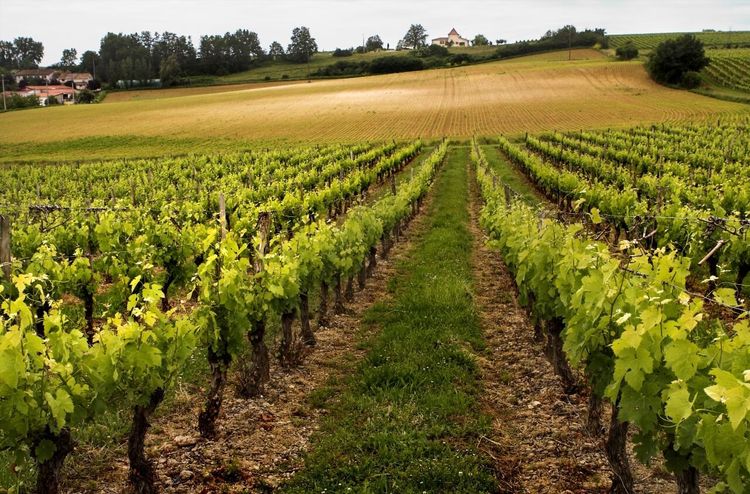
The Lot-et-Garonne is the most underestimated département in French wine production. Sandwiched between the fame of Bordeaux to the north and the charisma of Cahors to the east, it produces honest and sometimes excellent wines in appellations that few French people could locate on a map.
Buzet: the appellation is more than 98% dominated by the cooperative Les Vignerons de Buzet (Avenue des Côtes de Buzet, 47160 Buzet-sur-Baïse, rated 4.4/5 on Google with 1,349 reviews), which brings together 250 producers across 2,000 hectares. This exceptional rate of cooperation enables significant collective investment in winemaking and a broad range of wines at accessible prices. Their 'Baron d'Ardeuil' cuvée is their flagship. The cooperative, based in Buzet-sur-Baïse, offers very well-organised visits.
Duras is the appellation closest to Bordeaux, geographically and stylistically. Its 2,500 hectares produce reds (Merlot, Cabernets), lively dry Sauvignon Blanc whites and sweet wines. The small town of Duras boasts an imposing medieval château that dominates the Dropt valley and is well worth a stop quite independently of its wine.
Marmandais, lastly, centred on the town of Marmande, produces light reds in which Abouriou, an exceptionally rare Gascon grape variety, adds a floral note of character. The appellation remains very discreet, but a handful of estates deserve the attention of lovers of ampelographic curiosities.
Côtes de Gascogne: The IGP Conquering World Markets
Here lies the Gascon paradox: the most exported appellation of Southwest France is not an AOC but an IGP (Protected Geographical Indication), and its best-selling wines are light, aromatic dry whites rather than tannic reds.
The Côtes de Gascogne represent more than 15,000 hectares and around one hundred million bottles per year, a large share of which is exported to Great Britain, the United States and Germany. Their success rests on a winning formula: aromatic grape varieties (Colombard, Ugni Blanc, Gros Manseng) vinified at low temperatures to preserve fresh fruit aromas, at very accessible prices.
Domaine de Tariquet (Route de Cazaubon, 32800 Eauze, rated 4/5 on Google with 268 reviews), near Eauze, is the undisputed leader: with more than 1,000 hectares, it is one of the largest private wine estates in France. Tariquet Classic (Ugni Blanc-Colombard) and Tariquet Premières Grives (late harvest Gros Manseng) sell in the millions of bottles. A visit to the estate and its ultra-modern cellars is highly instructive for understanding how oenological technology can serve aromatic expression at scale.
The Gers wine country is best explored by combining Côtes de Gascogne, Armagnac (the regional eau-de-vie distilled since the 14th century — more than a century before Cognac) and gastronomic tourism around Auch, the département's prefecture, home to the Gothic Cathédrale Sainte-Marie and its carved wooden choir stalls — among the finest in France.
Wine Routes of Southwest France: Planning Your Circuit
With more than 200,000 hectares and a dozen appellations spread over 500 kilometres, it is impossible to discover the vineyards of Southwest France in a single trip. The smart strategy: choose one or two major zones per stay and explore in depth rather than skim the surface.
Circuit 1: The Bordeaux Route (5–7 Days)
Base yourself in Bordeaux, allowing two days for the city itself (Cité du Vin, the Saint-Pierre quarter, the redesigned quays, the Capucins market), then head out to the Médoc along the Route des Châteaux, visit Saint-Émilion with the great Right Bank châteaux, and return via the Entre-deux-Mers and its medieval bastides. The Ryo audio guide lets you explore the historic centre of Bordeaux on foot independently, uncovering the 18th-century townhouses and the stories of the triangular trade that financed their construction.
Circuit 2: The Périgord–Quercy Route (4–5 Days)
From Bergerac to Cahors following the Dordogne upstream and then the Lot. Stops: Bergerac (old quarter, Musée du Vin), Monbazillac (château and tasting), the Dordogne gorges (among the finest landscapes in France), Saint-Cirq-Lapopie, Cahors (Pont Valentré, cathedral), then the great estates on the Lot terraces. This circuit is particularly breathtaking in autumn: the colours of the oak and chestnut forests frame the vines as they turn red and gold during the harvest (mid-September to late October depending on the vintage).
Circuit 3: The Pyrenean and Gascon Route (4–5 Days)
From Pau to Saint-Jean-Pied-de-Port passing through Jurançon, Madiran and Irouléguy, with the Pyrenees as a constant backdrop. This is the most picturesque of the four circuits, ideal between May and October. A foray into the Gers for Madiran, the Côtes de Gascogne and Auch fits naturally into the itinerary.
Circuit 4: The Tarn and Occitania Route (3–4 Days)
Use Toulouse as your base (a regional metropolis well served by direct flights), then head out to Fronton (30 km), Gaillac (70 km) and the villages of the Tarn. Adding the medieval city of Albi — the Cathédrale Sainte-Cécile, the Musée Toulouse-Lautrec — blends viticulture and UNESCO heritage for an excellent discovery-to-distance ratio.
Practical Tips for Estate Visits
Always contact family estates in advance — they do not always have staff dedicated to welcoming visitors, and the winemaker may be in the middle of a technical operation (sulphating, cellar work, bottling). Larger properties and cooperatives run organised visits with online booking.
The Maison des Vins de Cahors (Les Rigalets, 46700 Puy-l'Évêque, rated 3.7/5 on Google with 3 reviews) in Puy-l'Évêque, the Maison des Vins de Bergerac and the Maison du Vin de Bordeaux (cours du 30 Juillet) are the key contacts for obtaining estate lists, detailed wine maps and personalised advice tailored to your profile.
Practical Information: When to Go, Getting Around, Where to Stay

The Best Time to Visit
There are two golden windows for visiting the vineyards of Southwest France. Mid-September to late October: the harvest is in full swing (dates vary by vintage and appellation), the vines turn red and gold, and tourist activity drops compared to the height of summer. Winemakers are available, enthusiastic and in the thick of their creative season.
May and June offer a spring alternative: the vines are in full growth, flowering brings a fleeting perfume to the vineyards for a few days, and temperatures remain pleasant for walks or cycling between the rows.
Getting Around
A car remains indispensable for travelling between estates. There is no effective public transport network connecting rural vineyards. The major cities (Bordeaux, Toulouse, Pau, Agen, Cahors) are well served by train from Paris. Local agencies offer organised minibus tours from Bordeaux, Toulouse and Pau, with a guide-sommelier.
By bicycle, the Via Garona and the Scandibérique (EuroVelo 3) cross the Garonne and the Gers respectively from north to south, with suitable accommodation at listed winemaker addresses.
Where to Stay
Wine estate gîtes — accommodation at the heart of a domaine — offer the most immersive experience. The Gîtes de France in the Gironde, Dordogne and Lot list dozens of them. For those wishing to combine hotel comfort with high-end wine tourism, Les Sources de Caudalie in Martillac (Pessac-Léognan) and La Bastide de Gaillac remain regional benchmarks.



FAQ
What are the main wine appellations of Southwest France?
The wine-producing Southwest encompasses around thirteen major AOC appellations and several IGPs. The best known are Bordeaux and its sixty sub-appellations (Médoc, Pomerol, Saint-Émilion, Pessac-Léognan...), Bergerac, Monbazillac, Cahors (Malbec-Côt), Madiran (Tannat), Jurançon (Petit Manseng), Gaillac, Fronton (Négrette) and Irouléguy. These AOCs are complemented by significant IGPs such as the Côtes de Gascogne, whose annual production exceeds one hundred million bottles and whose aromatic whites can be found on supermarket shelves across Northern Europe.
What is the iconic grape variety of Southwest France outside of Bordeaux?
It is impossible to choose just one. Tannat (Madiran, Irouléguy) and Côt/Malbec (Cahors) represent the two great identities of red wines from the greater Southwest. But the region stands out above all for the richness of its indigenous grape varieties: Négrette in Fronton, Braucol and Duras in Gaillac, Len de l'El, Arrufiac in Pacherenc, and Petit Manseng in Jurançon. None of these varieties under these names exists in any other wine region in the world.
How long does it take to visit the vineyards of Southwest France?
To cover all the major appellations, allow a minimum of two to three weeks, organized into distinct thematic circuits. If you focus your stay on one area — Bordeaux and its satellites, or Périgord-Quercy, or Gascony-Pyrénées — one week is sufficient for a thorough introduction with a few estate visits. A weekend in Cahors or Gaillac already offers a very rich experience, provided you target two or three properties rather than rushing through a dozen.
Can you visit châteaux and estates without a reservation?
It depends entirely on the property. Major cooperatives (Vignerons de Buzet, Plaimont, the Gaillac cave) and large tourist sites (Cité du Vin, Château de Monbazillac, Château Lagrézette) organize regular visits with or without prior reservation. Family estates almost always operate by appointment. A phone call the day before is the bare minimum of courtesy toward winemakers whose schedule is entirely dictated by nature and the cycles of the vine.
What is the best recent vintage in Southwest France?
2022 is unanimously regarded as one of the great vintages of the century across the entire Southwest: an early heat wave, harvests ahead of the historical calendar, and wines that are both concentrated and harmonious. 2020 and 2019 are also highly rated, particularly for Bordeaux and Cahors. For sweet wines (Monbazillac, Jurançon moelleux), 2018 and 2022 are the two benchmarks of the decade — botrytis and passerillage conditions were exceptional in both years. The 2023 vintage remains uneven depending on the zone.
Are there any unmissable wine events in Southwest France?
Several events stand out. Vinexpo Bordeaux (biennial, even-numbered years, in June) brings together the global wine industry in Bordeaux. The Portes Ouvertes des châteaux du Médoc (May) allow visitors to tour estates that are usually closed. La Fête de la Fleur in Saint-Émilion (June) celebrates the flowering of the vines with gala dinners in classified châteaux. In Gaillac, the wine festival (first weekend of August) brings together dozens of winemakers around open-air concerts and tastings. In Marciac (Gers), the August jazz festival attracts more than 250,000 visitors — the ideal occasion to combine live music with a discovery of Gascon wines.
Is Southwest France wine easy to find outside of France?
Yes, several appellations export a significant share of their production. The Côtes de Gascogne (Tariquet and its competitors) can be found in British, Dutch and American supermarkets. Cahors enjoys good visibility in the United States and Scandinavia, driven by the worldwide enthusiasm for Malbec. Bordeaux no longer needs to prove its international reach. The Pyrenean appellations (Jurançon, Madiran, Irouléguy) remain more discreet in export markets despite their often remarkable quality, which means their wines are still available on the French market at very reasonable prices.
The vineyards of Southwest France form one of the richest and least-known wine regions in Europe. Exploring them appellation by appellation, you will discover identities without equal: from the dark Tannat of Madiran to the November sweet wines of Jurançon, from the limestone reds of Cahors to the sparkling wines of Gaillac made using a method older than Champagne. At every estate visited, a conversation with a winemaker; at every shared glass, a territory.
To extend the discovery by walking through the streets of these wine towns, the Ryo audio guide offers tours that tell the story of the cities, their architecture, and the people who shaped these terroirs: start with the Ryo's audio-guided tour of Cahors, at the foot of the Pont Valentré. Because wine is never fully understood without its territory.