© Shutterstock
 Votre guide Ryo
What to Do in Vernon in 2026: 15 Experiences along the Seine
An hour from Paris, Vernon stretches along the Seine with its half-timbered houses leaning over the water and its old mill, which has become one of the most photographed sites in Normandy. Many visitors merely pass through on their way to Giverny, missing a 12th-century collegiate church, a museum devoted to Bonnard and Monet, and a château that once hosted Louis XV and the Duke of Orléans. What is there to do in Vernon when you have more than an hour to spare? This sub-prefecture of the Eure département, home to around 25,000 inhabitants, packs a wealth of heritage into a compact area.
Here you will find a 16th-century watermill that literally straddles the river, a watchtower that has survived seven centuries of flooding, a château long owned by the Orléans family, and nearly 30 kilometres of cycle paths connected to the Seine à Vélo route. Add a century-old market held three mornings a week, Norman eateries tucked into the cobbled lanes of old Vernon, and, fifteen minutes' drive away, the gardens where Claude Monet painted his water lilies for more than forty years: everything you need for a two-to-three-day touring circuit without ever retracing your steps. Keep your phone handy: the Ryo app is preparing an audio guide to explore these half-timbered façades without missing a single anecdote.
1. The Collégiale Notre-Dame de Vernon
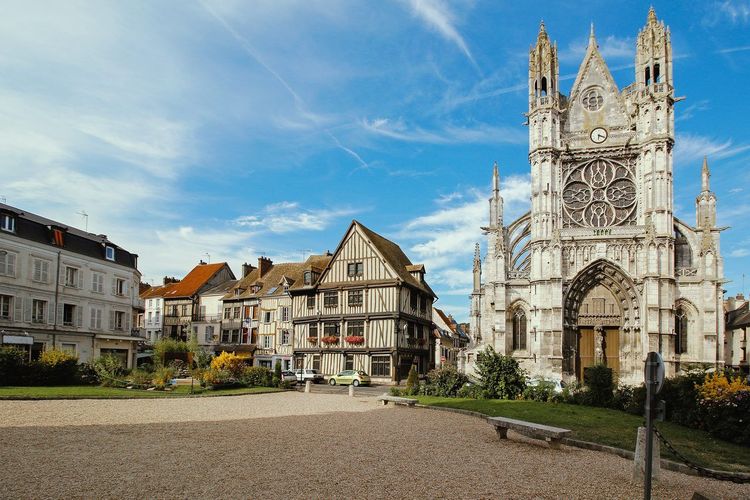
The Collégiale Notre-Dame (Place Ursin Scheid, 27200 Vernon, rated 4.4/5 on Google from 646 reviews) has dominated the historic centre since the 12th century, with Flamboyant Gothic additions made through to the 16th. Stretching 55 metres in length, it required nearly four centuries of construction before reaching its final form. Its west façade, pierced by a rose window more than seven metres in diameter, layers different styles: the Romanesque arches of the south portal survive beneath the Gothic vaulting of the main nave, a rare contrast for a Norman building of this scale.
The interior deserves a twenty-minute pause, particularly for the chancel's stained-glass windows, some dating from the 16th century, and for the listed organ case installed in the 17th. Sunday morning services are still held here, which restricts free visits during that time slot. The transept pillars bear medieval stonemasons' marks, visible at eye level for anyone who takes the time to look.
From the forecourt, you enjoy one of the finest views over the half-timbered rooftops of old Vernon. Come in the late afternoon: the setting sun bathes the limestone in a golden hue that contrasts sharply with the slate-grey of the surrounding timber-framed buildings, a contrast actively sought out by local photographers.
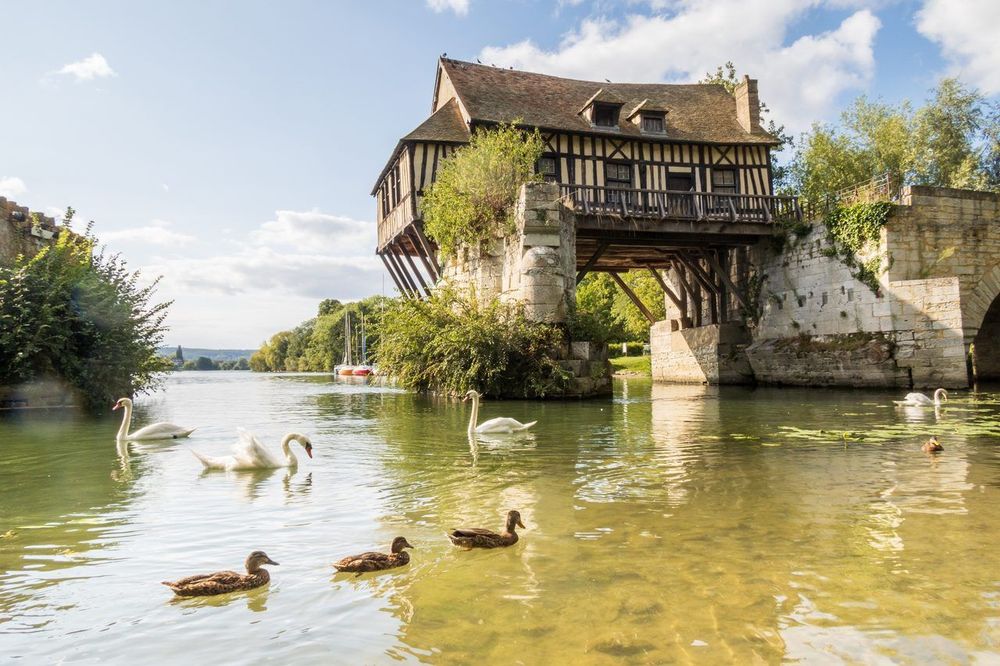
2. The Vieux Moulin de Vernon, the Town's Most Iconic Image
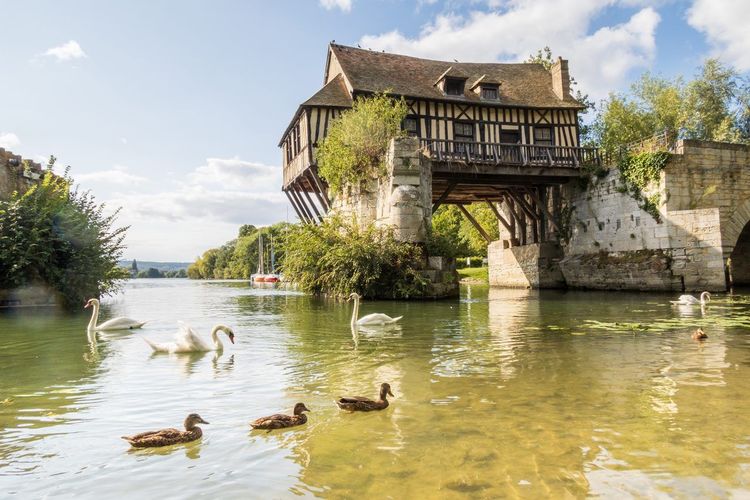
Built in the 16th century on the remains of a medieval bridge, the Vieux Moulin de Vernon (Rue du Vieux Moulin, 27200 Vernon, rated 4.5/5 on Google from 2,380 reviews) literally straddles the Seine on two stone piers inherited from the original bridge. Claude Monet painted it several times in the 1880s, when the morning light still caught its working paddle wheels. The half-timbered house resting on the water measures barely fifteen metres across, yet its silhouette alone has defined the town's visual identity on postcards for more than a century.
The mill ceased its milling activity in the early 20th century, but its stilted structure has been restored several times after Seine floods, including the great flood of 1910 that nearly swept it away. The interior is not open to visitors, as the building is private property, but the view from the left bank at the Pont Clemenceau remains one of the most sought-after vantage points in Normandy.
You can reach the Vernonnet district on the opposite bank by crossing the bridge: the lanes there are quieter than on the town-centre side, and a few benches facing the mill allow for an unhurried photo stop away from the crowds that can gather at peak times in summer. The best slot is early morning, between 8 and 10 am, when the raking light catches the timber frames and organised coach groups have not yet arrived.
Finally, take time to linger over the remains of the medieval bridge itself: several arches upstream of the present mill testify to the scale of this now-ruined structure, which once linked Vernon to Vernonnet and was guarded by the Château des Tourelles. This is a slice of history that most hurried visitors overlook entirely, even though it explains precisely why the mill stands in the middle of the river.
3. The Musée Alphonse-Georges Poulain
Housed in an 18th-century townhouse, the Musée Alphonse-Georges Poulain (12 Rue du Pont, 27200 Vernon, rated 4.3/5 on Google from 370 reviews) brings together a collection dedicated to the Giverny school and the painters who gravitated around Claude Monet at the end of the 19th century. It holds canvases by Pierre Bonnard, who lived for many years just a few kilometres away, as well as works by American artists who settled in the region to paint in the same light as Monet.
The museum also holds a local archaeological collection, with Gallo-Roman artefacts unearthed during excavations in the Seine valley, and a section devoted to the town's history from the Middle Ages onwards. The displays are modest compared to major Parisian institutions, but admission is affordable and a full tour takes about an hour.
A practical tip: the museum closes on Mondays and Tuesdays, as do most Norman cultural institutions, so check the opening hours before planning a visit at the start of the week. Temporary rehangings also mean that a room may occasionally be closed: a quick call to reception beforehand avoids disappointment if you are coming specifically to see a particular work.
4. The Château des Tourelles
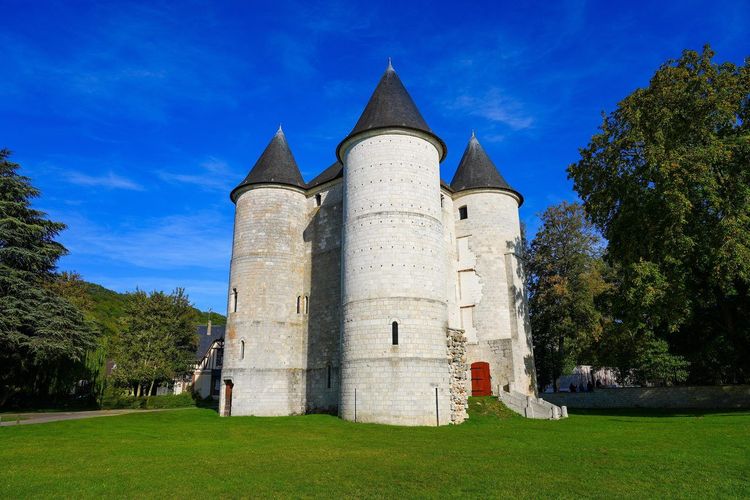
A stone's throw from the Vieux Moulin, the Château des Tourelles (Rue du Vieux Pont, 27200 Vernon) is a fortified keep built at the end of the 12th century by Philippe Auguste to control the crossing of the Seine. Its strategic position at the end of the medieval bridge made it an essential checkpoint between Normandy and the Île-de-France at a time when the river marked a major political boundary between the royal domain and the Norman duchy.
The building is visited mainly from the outside today, its round limestone towers having retained their original machicolations. The river-facing façade offers a different angle on the mill, less photographed than the classic view from the Pont Clemenceau but equally interesting for anyone seeking an original shot.
Allow about twenty minutes to walk around it, taking in the panorama over both banks and the wooded hills framing the valley. If you follow on with the Vieux Moulin and the quays, you have a compact walking circuit of just under an hour that encapsulates Vernon's entire river history: the watchtower, the vanished bridge, the mill and the river, all within less than three hundred metres. It is the best vantage point for understanding why the town grew up at precisely this bend in the river.
5. Old Vernon and Its Half-Timbered Houses
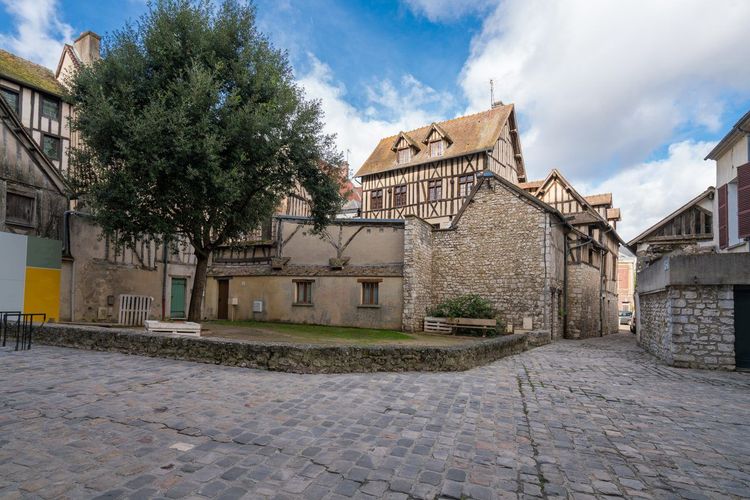
Vernon's historic centre contains one of the highest concentrations of half-timbered houses in the Eure département, particularly along Rue Carnot and Rue du Vieux Rempart, two pedestrian streets that form a tourist circuit of under an hour. Some façades date from the 15th century, featuring carved wooden figures — grotesque faces or biblical scenes — still legible despite centuries of weathering.
The neighbourhood is organised around narrow lanes where independent shops survive: artisan bakeries, Norman wine merchants and antique dealers occupying the ground floors of these medieval buildings. Unlike other Norman historic centres that have become purely tourist zones, old Vernon remains lived-in and lively all year round, giving it an atmosphere less frozen in time than some nearby villages entirely geared towards visitors.
To spot the finest carved details, bring binoculars or zoom in with your phone: several corner posts bear motifs invisible to the naked eye from street level. The best starting point is the square in front of the collegiate church, from which most of the timber-framed streets in the centre radiate.
6. The Seine Quays and the Riverside Walk
The quayside promenade, laid out along the left bank between the Pont Clemenceau and the marina, offers several kilometres of shaded walking facing the river. River cruise barges moor here regularly, particularly in spring and summer, bringing extra life to the immediate surroundings of the town centre.
Benches and picnic areas are dotted along the route, with open views of the Vieux Moulin and the wooded slopes on the far side of the Seine. It is also one of the few places where you can watch grey herons fishing along the grassy riverbanks in the late afternoon.
Families particularly appreciate this stretch for its flatness: no steps or gradients, making it an accessible route for pushchairs or cyclists of any level. It also serves as the natural link between the train station, the historic centre and the start of the Seine à Vélo route towards Giverny: in a single stroll, you connect the essential highlights of Vernon without ever leaving the waterfront. Consider picking up an ice cream or a coffee to go — several town-centre spots are less than two minutes from the quays.
7. The Vernon Market
The Vernon market (Place Barette, 27200 Vernon, rated 3.6/5 on Google from 128 reviews) is held three mornings a week — Wednesday, Friday and Sunday — on Place Barette, right at the foot of the old quarter. Local producers offer Norman cheeses, farm cider and vegetables from the Seine valley, in an atmosphere that feels more authentic than the purely tourist markets of Giverny.
Arrive before 10:30 am for the best choice, especially on Sundays when crowds build quickly during the summer season. It is also a great opportunity to put together a picnic to take down to the Seine quays or out to Giverny. Beyond the food stalls, the market often spills into adjacent streets with flower, clothing and regional-produce stands, making it an outing in its own right rather than a simple shopping stop. Sunday morning is the best time to take the pulse of local life, with regulars from surrounding villages mingling with passing visitors.
8. The Tour des Archives
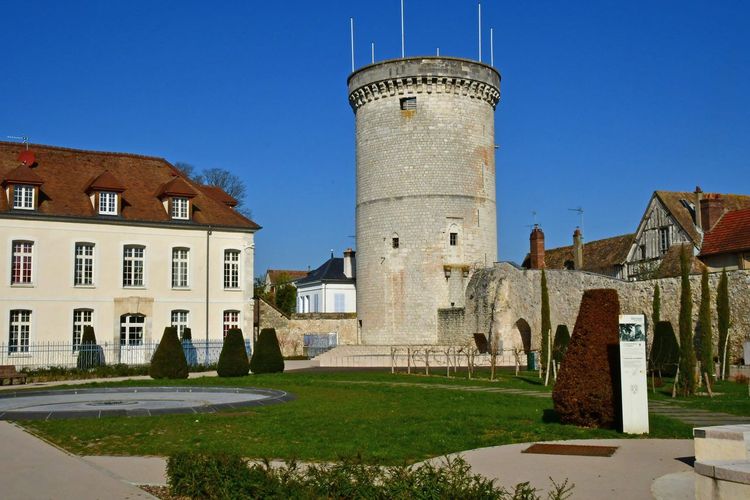
Discreet yet steeped in history, the Tour des Archives (Place Barette, 27200 Vernon) is a remnant of the town's medieval fortifications, built in the 12th century to protect the urban enclosure. Its name derives from its former function as a municipal records store, a role it retained until the early 20th century.
The tower is not open to visitors inside, but its massive silhouette, wedged between more recent buildings, surprises visitors who were not expecting to find such a well-preserved defensive remnant in the middle of a shopping street. Take the time to walk around it: the arrow slits and stone foundations still visible are a reminder that, before storing registers, the tower kept watch over the approaches to the river. It is an excellent prompt to look up and identify, all around, traces of the old town wall that the modern town has gradually absorbed.
9. The Château de Bizy
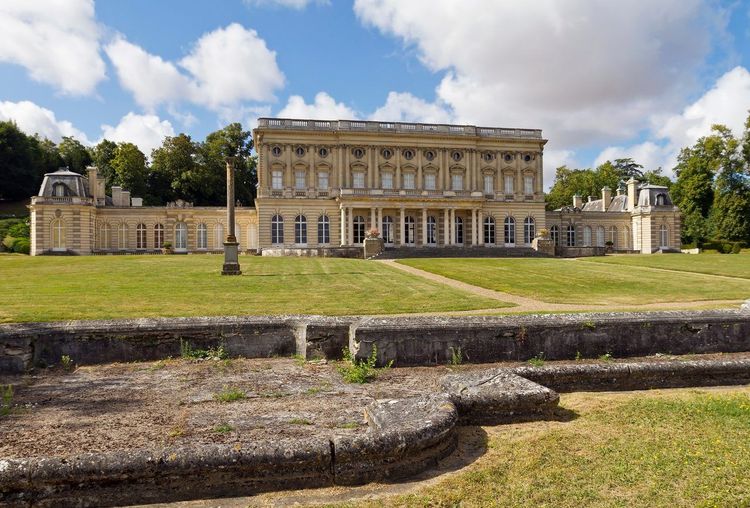
Less than three kilometres from the town centre, the Château de Bizy (Avenue du Maréchal Foch, 27200 Vernon, rated 4.3/5 on Google from 1,427 reviews) was built around 1740 for the Maréchal de Belle-Isle before being purchased by Louis XV, passing into the hands of the Orléans family, and later belonging to the Dukes of Albufera, the Suchet family who still own it today. Nicknamed the "Norman little Versailles", the estate extends over several dozen hectares of formal French gardens, complete with pools and an orangery.
The interiors preserve an impressive collection of period furniture, including pieces related to the military past of the Suchet family — marshals of the Empire under Napoleon. The grand stables, among the largest in Normandy, also house horse-drawn carriages rarely on display elsewhere in France.
The park is freely accessible during certain periods of the year, while the château itself opens on more restricted schedules, generally from April to October. Allow a good hour and a half for a complete tour of the estate, more if you linger in the English-style garden below the terraces.
School groups and families particularly enjoy the shaded avenues and the perspectives drawn towards the façade, ideal for a break away from the bustle of the centre. In spring, the climb from the pools back up to the terrace offers one of the finest views across the entire estate, a fitting prelude to Rouen's own audio-guided tour back along the Seine.
10. Giverny: Claude Monet's House and Gardens
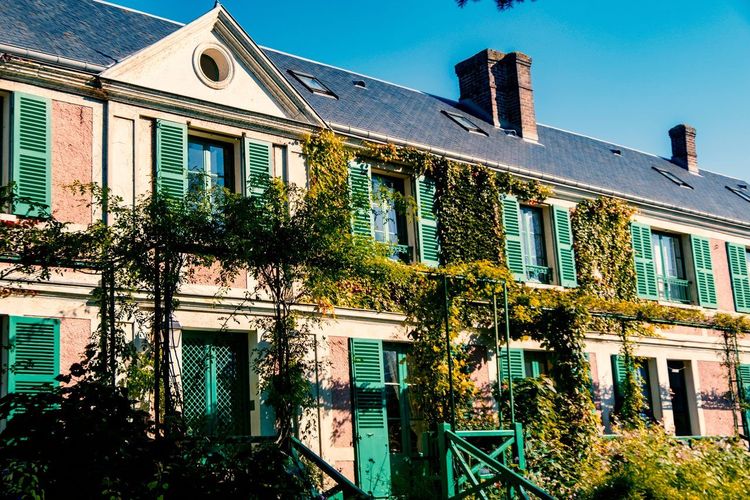
A quarter of an hour's drive from Vernon, Giverny is home to the house where Claude Monet lived for 43 years, from 1883 until his death in 1926. The Fondation Claude Monet (84 Rue Claude Monet, 27620 Giverny, rated 4.6/5 on Google from 25,964 reviews) opens the painter's pink-and-green house, his studio and above all the two gardens he designed himself: the Clos Normand, planted with colourful geometric beds, and the water garden, famous for its Japanese bridge and the water lilies he depicted in more than 250 canvases.
The water garden was created in 1893 after Monet obtained permission to divert a branch of the Epte river to feed his pond. The water lilies currently on view descend from the varieties the painter had planted, tended using methods close to those of his era. The visit changes radically with the season: irises dominate in May, water lilies bloom in full splendour from June to August, and autumn colours completely transform the atmosphere of the Clos Normand in September and October.
The site is among the most visited gardens in France, welcoming several hundred thousand visitors each year. To avoid the crowds, aim to arrive at opening time at 9:30 am, or visit late in the day once organised groups have already left. Online booking, compulsory in high season, allows you to reserve a specific time slot and avoid a long queue at the ticket desk. Note that the Fondation closes in winter, generally from November to March: it is best to plan your visit between early spring and late autumn.
Ryo is also planning to add a future audio-guided tour dedicated to Giverny to its app, to extend the visit with stories about the paintings produced at every corner of the garden.
11. The Musée des impressionnismes Giverny
A few hundred metres from Monet's house, the Musée des impressionnismes Giverny (99 Rue Claude Monet, 27620 Giverny, rated 4.2/5 on Google from 3,211 reviews) hosts temporary exhibitions devoted to Impressionism and its legacy, with regular loans from major international collections. The building itself blends discreetly into the landscape thanks to its low stone-and-timber architecture, half-sunken into the hillside.
Unlike the Fondation Monet, the museum changes its theme two to three times a year, which justifies a return visit for regular visitors to the area. Its artists' garden, planted according to horticultural principles of the late 19th century, rounds off the botanical walk that began at Monet's house.
A combined ticket with Monet's house offers a worthwhile saving and streamlines the day's planning, provided you book both time slots in advance during peak season.
12. The Seine à Vélo from Vernon
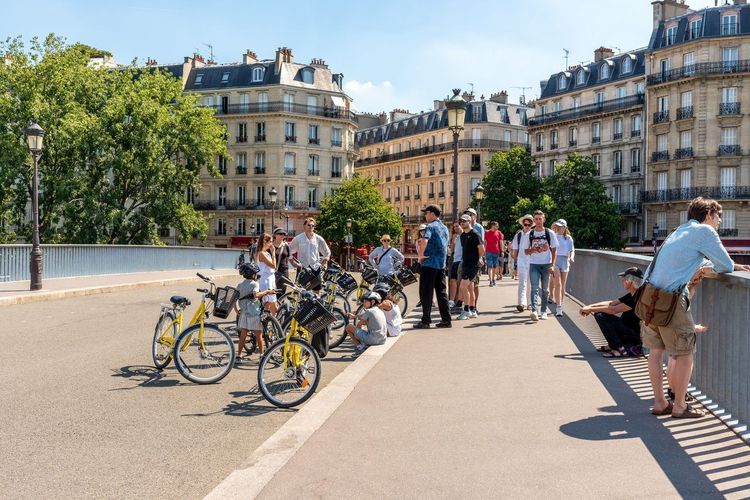
Vernon is a key staging point on the Seine à Vélo cycle route, which links Paris to Le Havre over nearly 420 kilometres. The local section runs directly alongside the river and reaches Giverny in about fifteen minutes of easy pedalling, well away from the main road used by cars.
Several bike hire operators, including electric models, operate from the train station and town centre, with half-day rates particularly well suited to a Vernon-Giverny round trip. The path is largely flat, making it accessible to inexperienced cyclists and families with children alike.
Beyond Giverny, the route continues towards Les Andelys and its famous Château Gaillard, an option for visitors with a full day and a little more stamina.
13. The Vernon State Forest
To the south of the town, the Vernon state forest covers several hundred hectares of beech and oak woodland, crossed by a network of waymarked paths suitable for hiking as well as mountain biking. The atmosphere contrasts sharply with the bustle of the historic centre, a ten-minute drive being enough to switch completely to another world.
Those seeking tranquillity particularly appreciate the paths leading up to the high points of the massif, from where the Seine valley is sometimes visible through the canopy. Wear sturdy shoes: some tracks become muddy after the frequent rainfall in autumn and winter.
If you are visiting Vernon and its surroundings as a family, this is the ideal spot to let children burn off energy after a morning of museums: several short loops of under five kilometres make for an easy walk. Mushroom enthusiasts also come here in autumn, provided they are familiar with local foraging rules.
14. Vernon in the Evening: Restaurants and Atmosphere
What is there to do in Vernon in the evening once the museums have closed? The historic centre retains a handful of Norman restaurants focusing on local produce — farm cider, aged camembert — with terraces that come alive along Rue Carnot on summer evenings. The atmosphere is quieter than in more tourist-heavy towns, but lively enough for a relaxed dinner followed by a digestive stroll down to the quays.
A few wine bars and wine merchants offer tastings at weekends, an option appreciated by visitors extending their stay to two days. Nightlife remains modest compared to Rouen or Le Havre, as Vernon places greater emphasis on its daytime heritage than on an extensive evening offering.
If you are looking for a livelier evening, several regulars recommend pushing on to Les Andelys or treating yourself to a dinner cruise on the Seine, which combines a meal with views of the illuminated banks. For a simple sunset drink, settle onto a terrace facing the Vieux Moulin: it is free, and the spectacle of the fading light on the timber frames is worth more than many paid attractions.
15. A Cruise or Boat Trip on the Seine
Local companies offer guided boat trips on the Seine departing from Vernon's marina, generally from April to October. The journey allows you to see the Vieux Moulin and the Château des Tourelles from an angle inaccessible from the quays, while discovering the wooded meanders separating Vernon from Giverny by water.
Some packages combine the cruise with a stop at Giverny, a pleasant alternative to cycling or driving for those who prefer to let the current carry them. A round trip generally takes two to three hours, with a snack or Norman tasting often included depending on the package chosen.
Book in advance in July and August: weekend slots fill quickly, and some companies run only one or two departures per day out of season. It is the most restful way to end a stay, watching the banks drift by while a guide narrates the landscape that Monet painted so many times.



FAQ
What can you do in Vernon over a weekend?
A weekend allows you to combine Vernon's historic centre, the Vieux Moulin and the collegiate church on the first day, then Giverny and the Château de Bizy on the second. You save a good hour of driving compared to a single-day trip, which leaves plenty of time to wander at a leisurely pace.
What is there to do in Vernon in the evening?
In the evening, opt for dinner at a Norman restaurant in the historic centre followed by a stroll along the illuminated quays facing the Vieux Moulin. The nightlife remains limited compared to Rouen, but is perfectly adequate for a quiet evening with a partner or family.
How do you get from Vernon to Giverny?
Giverny is about 5 kilometres from Vernon, reachable in 15 minutes by bike via the Seine à Vélo route, by seasonal shuttle from the train station, or by car in under ten minutes. Cycling remains the most pleasant option outside the winter months.
Is there any area to avoid in Vernon?
Vernon is generally a quiet town with no particularly dangerous areas for visitors. As in any medium-sized town, normal vigilance is sufficient around the train station in the evening, and no neighbourhood warrants a genuine tourist safety warning.
How much time should you allow to visit Vernon and Giverny?
A full day is enough to cover Vernon in the morning and Giverny in the afternoon, but two days offer more comfort to include the Château de Bizy, the state forest and a ride along the Seine à Vélo without rushing from one sight to the next.
Is Vernon worth visiting without going to Giverny?
Yes: old Vernon, the Vieux Moulin, the collegiate church and the Château de Bizy are enough to fill a packed half-day, even without pushing on to Giverny. The town deserves a visit for its own heritage, independently of its Impressionist neighbour.
In Summary
Vernon richly rewards visitors who give it more than a mere stopover on the way to Giverny. Between the Vieux Moulin suspended above the Seine, a Gothic collegiate church that required four centuries to complete, and a château that holds its own against the great houses of France, the town packs a heritage that few Norman sub-prefectures can claim within such a compact area.
Whether you come for a day or a full weekend, keep time to wander without a fixed itinerary through the half-timbered lanes, alternate between heritage sites, the Seine quays and a trip to Giverny, and consider the Ryo app to turn every façade you pass into a story you would never have discovered on your own.
À lire également