© Shutterstock
 Votre guide Ryo
The Best Beaches of Palermo: Complete Guide 2026
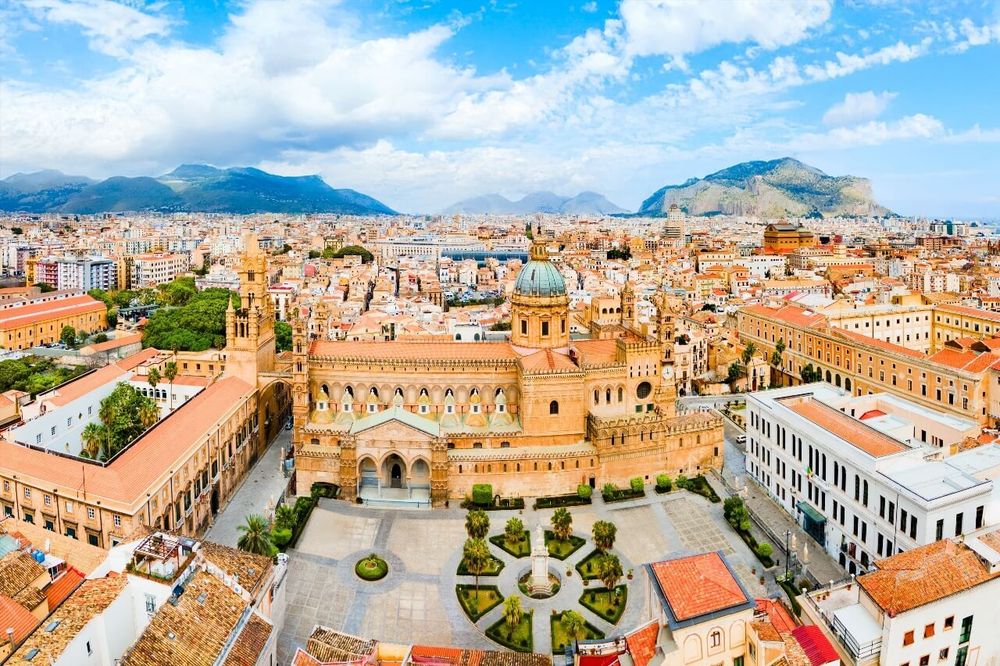
Searching “Palermo beach” in a search engine only gives you part of the answer: the Sicilian capital that people come to for its Arab-Norman architecture, its thundering markets, and its Baroque palaces hides, just twenty minutes from the center, water that turns lagoon blue and sand as fine as sugar. The Palermo audio-guided tour begins in the city, but the Sicilian coastline stretching around the capital deserves a guide all its own. From Mondello, the island's most famous beach, to the wild coves of Isola delle Femmine, and the medieval seaside town of Cefalù less than an hour away: here are ten beaches to know before laying down your towel on the Palermo coastline in 2026.
Mondello: Palermo's Beach par Excellence
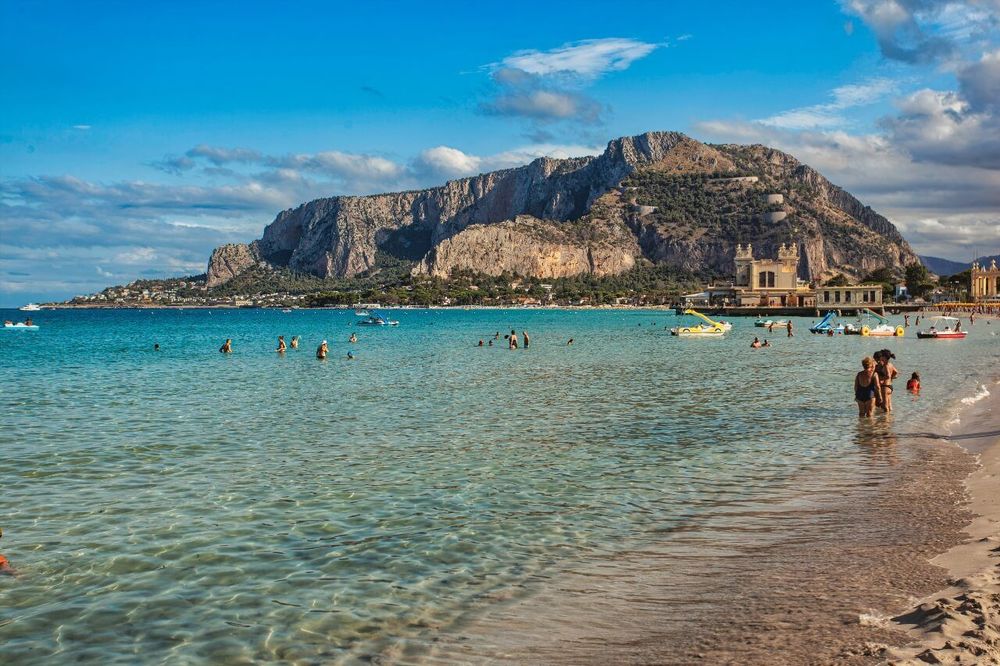
Saying that Mondello is Palermo's beach par excellence is a bit like saying the sea is salty: everyone knows it, yet no one ever tires of it. This sweeping bay of white sand, framed by two rocky headlands, has been building its reputation as a seaside resort since the Belle Époque — the Art Nouveau villas lining the seafront still bear witness, slightly weathered by salt and sun.
The main seafront, nearly 2 kilometres long, is divided into two distinct zones. To the north, private beach clubs follow one another in succession: sun loungers, parasols, showers, and bars — the comfort of Italian-style organised beach life, from €8 to €15 per day depending on the season. To the south, a wide free public beach welcomes Palermo families who come here on weekends as others would go to a park. This coexistence between paid lidos and free access is typical of Palermo's beach: you choose your level of comfort. Parking is virtually impossible between June and August; the bus is strongly recommended.
The water is shallow over most of the bay, making Mondello particularly popular with families with young children. Visibility is good from mid-May onward. Crowds, however, peak between mid-July and mid-August: Mondello is the Palermitans' lido, and they come in large numbers. To enjoy the beach without fighting for space, aim for weekday mornings or the first and last weeks of June and September.
Behind the beach, the small lanes of Mondello village are worth a detour: a few trattorias serve grilled stigghiole and baskets of seafood at still-reasonable prices, far from the seafront establishments. The kiosk at the end of the pier has become a local landmark almost as photographed as the beach itself.
Capo Gallo and the Nature Reserve
Just north of Mondello, the Capo Gallo Headland closes the bay like a cork. This is where the oriented nature reserve of the same name begins — a protected area that prohibits any new construction and preserves limestone coves of an almost brutal beauty.
Access is on foot from Mondello, via a marked coastal path that follows the cliff face for about 4 kilometres. Along the way, several small pebble and coarse-sand beaches nestle between the rocks: no sun loungers, no bar, just transparent water and the relative silence of the Mediterranean scrubland. These unnamed coves are the favourites of free divers; the seabed, though irregular, harbours sea fans and groupers between two and ten metres depth.
Practical tip: bring closed-toe shoes for the path (the limestone rocks are sharp), plenty of water, and high-SPF sunscreen. There are no supply points in the reserve. The beach at Barcarello, accessible by car via a partly paved track, offers a less strenuous alternative with a few rentable parasols in summer.
Addaura: Prehistoric Rock Carvings and Turquoise Sea
Between Mondello and Palermo, the seaside neighbourhood of Addaura is known to two very different types of visitor: archaeologists, for the rock carvings dating back around 12,000 years discovered in its caves, and affluent Palermitans, for its holiday residences and its semi-private upscale beach atmosphere.
The beach itself is a succession of rocky platforms and small patches of fine sand in between. The water is crystal clear — among the best visibility on the Palermo coastline — and the seabed drops fairly quickly, making this a beach better suited to confident swimmers than families with very young children. In return, the spot is less crowded than Mondello, even in the height of August.
The Addaura Caves, listed as national heritage, are not open to the public without authorisation, but their existence gives the coastal walk a rather dizzying sense of time: swimming here means sharing a space with Upper Palaeolithic hunters who carved scenes of dance and ritual into the limestone rock just a few dozen metres from the shoreline.
Sferracavallo: The Forgotten Fishing Village
About ten kilometres west of Mondello, Sferracavallo (Via Barcarello, 90147 Palermo, rated 4.4/5 on Google with 1.5K reviews) has so far resisted transformation into a beach resort. The small fishing port retains its colourful boats, its nets spread out on the quay, and its handful of trattorias serving the morning's catch. The beach itself is modest — mostly pebbles and a strip of sand at the edge of the harbour — but the atmosphere is authentically Sicilian, far from the bustle of Mondello.
It's a good choice for a seafood lunch by the water followed by a swim in the coves east of the village, where the seabed turns sandy again and the water is perfectly clear. Accessible by bus from Palermo (line 628), Sferracavallo suits travellers who want the sea without the crowds and prefer feet in the water to a towel on the sand.
Isola delle Femmine: The Island of Wild Beaches
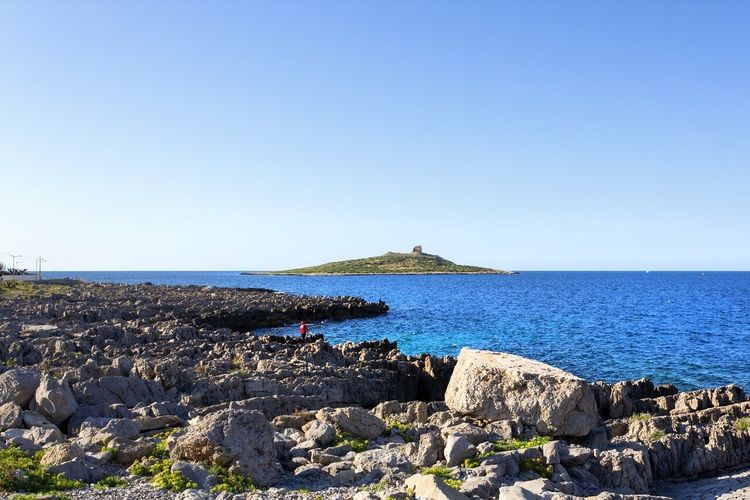
Isola delle Femmine is not an island you reach by boat — it is a small coastal town 15 kilometres west of Palermo whose name most likely comes from a corruption of Insula Fimi (island of the Fimi river), rather than from the legend of Saracen slave women said to have been held there in the Middle Ages. The reality is far more peaceful: a protected marine reserve, Blue Flag-awarded waters, and a small uninhabited islet visible from the shore.
The town's beaches alternate between private areas with full services and free public stretches accessible at no cost. The northern section of the seafront, known as the Spiaggia della Riserva, offers the clearest water in the entire Palermo area according to several bathing water quality surveys. Kayak and paddleboard trips to the islet are organised by local nautical clubs from €15 per session.
Isola delle Femmine is easily reached by train from Palermo's central station: 20 minutes on the Palermo–Trapani line, with frequent trains throughout the day in season. It is one of the few beaches in the area that can be comfortably reached without a car, which explains its growing popularity among travellers in transit who only have half a day to spend by the sea.
Cefalù: The Cathedral and the Sea in a Single Glance
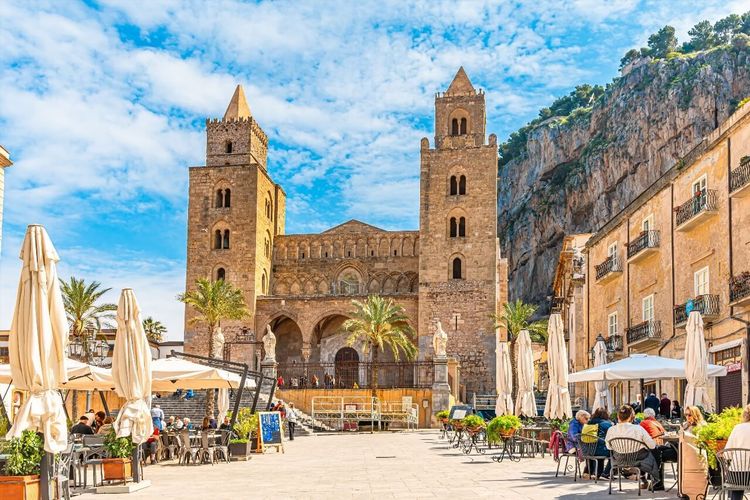
At 70 kilometres east of Palermo, Cefalù is technically a day trip rather than a Palermo beach in the strict sense, but no honest guide can ignore it. The town combines a 12th-century Norman cathedral listed by UNESCO, a rock that towers nearly 270 metres above the sea, and a fine sandy beach lined with palm trees that Giuseppe Tornatore's Cinema Paradiso made famous around the world. Cefalù is, in many people's view, the most beautiful town in Sicily.
The main beach runs along the seafront for about 300 metres, separated from the medieval old town by a row of fishermen's palaces. The water is a deep blue from the start of the season, the seabed drops more steeply than at Mondello, and bathing quality is regularly rewarded with the Blue Flag label. In July and August, the beach is densely occupied between 10am and 5pm: the combination of sea, medieval village, and international tourists creates heavy footfall that is worth anticipating.
Practical tip: Cefalù is accessible by train from Palermo in 45 minutes (departures every hour in summer from the central station). The station is a five-minute walk from the beach. If you're coming for the day, arrive in the morning to visit the cathedral and the lanes before the heat sets in, then head to the sea in the early afternoon. Half an extra day can be enough; an overnight stay lets you discover the village once the tour buses have gone.
To extend the visit, the Palermo audio walking tour includes several keys to understanding Norman architecture that you will also encounter in Cefalù — the cathedral, the Byzantine mosaics, and the vision of the Norman kings who made Sicily a laboratory of civilisations form a thread that the Ryo audio guide to Palermo develops across 24 stops in the city.
Terrasini and the Rocca Rossa Cliffs
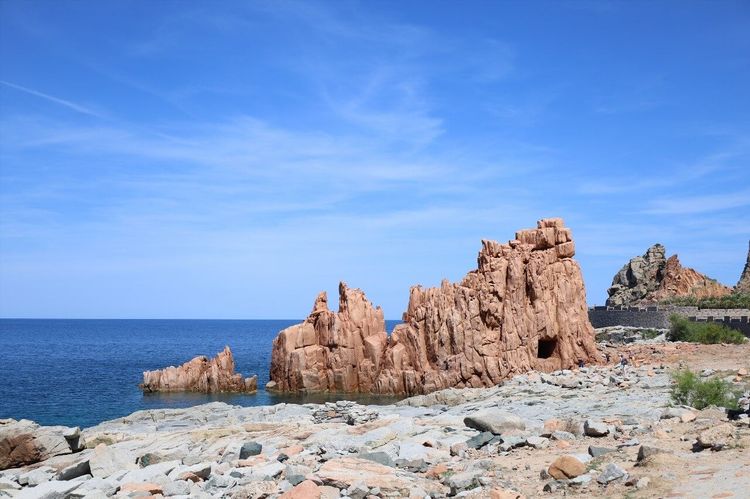
Some 35 kilometres west of Palermo, Terrasini is a small seaside town known for its glowing red volcanic tuff cliffs that plunge directly into the sea. The colour of the rocks, particularly striking in the evening light, has earned the place several comparisons with the Irish coast — in a Sicilian version, under 30 degrees of sunshine.
The beaches are mixed: patches of fine sand alternate with rocky platforms. Baia di Guidaloca, just east of Terrasini, is often cited as one of the finest coves on the north-west Sicilian coast — emerald-green water, sandy bottom, free access. Snorkellers will find parrotfish and sea urchins in the rock crevices. Back in Palermo, Ryo's 24-stop audio walking tour through the historic centre (about 7.7 km) rounds out a day at the beach nicely.
Getting there: bus from Palermo (line 101 or regional coach), or by car from Palermo airport in under 30 minutes.
Santa Flavia and Solunto: Swimming with a View of the Ruins
Some 20 kilometres east of Palermo, Santa Flavia is the ideal base for combining a morning of archaeology with an afternoon by the sea. The town is home to the ruins of Solunto, a Punic city founded in the 4th century BC on the heights of Monte Catalfano, with a view that sweeps across the entire Bay of Palermo on a clear day.
Below, the small beach at Porticello — Santa Flavia's fishing harbour — offers clean water that sees few foreign tourists. A handful of fresh fish restaurants have set up along the harbour. It is a good alternative to Mondello for those seeking a beach accessible from Palermo without the tourist density, reachable by train in 20 minutes from the central station.
Beaches Close to Palermo City Centre
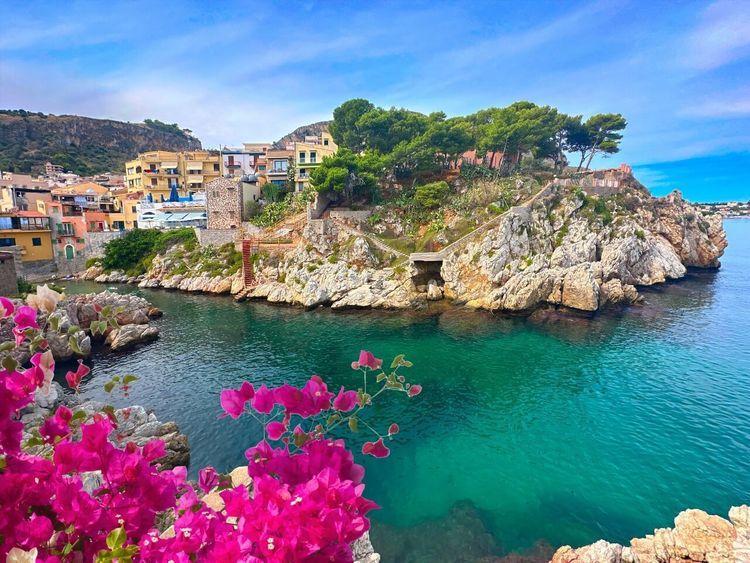
If you're staying in the heart of Palermo and don't want to take public transport, it's worth knowing that the city has a few sea-access points directly reachable on foot or by bus in under 30 minutes.
The Rotonda di Via Messina Marine (Via Messina Marine, 90123 Palermo, rated 3.8/5 on Google with 1.2K reviews), south of the port, is an unpretentious rocky swimming spot that is regularly used by locals. Water quality there varies with the season and the wind — check bathing water quality bulletins before swimming here in high season.
For a proper sandy beach just minutes from the centre, Mondello remains the most sensible choice: 25 minutes by bus (line 806 from Piazza Sturzo) or 30 minutes by bike via Via Libertà. The article on things to do in Palermo offers further ideas for planning your day between the city and the sea.
How to Reach Palermo's Beaches without a Car
Good news for car-free travellers: most of the best beaches around Palermo are accessible by public transport or regional train.
Mondello: bus no. 806 from Piazza Castelnuovo (city centre), frequent departures from May to September, journey time 25 minutes, fare €1.40. In high season, additional buses run at weekends.
Isola delle Femmine: train from Palermo central station, direction Trapani, 20 minutes, around €3 one way. The station is a 10-minute walk from the beaches.
Cefalù: train from the central station, direction Messina, 45 minutes, €5 to €7 depending on train type. Cefalù station is a 5-minute walk from the main beach.
Santa Flavia / Porticello: train from the central station, direction Messina, 20 minutes, around €2.50.
Terrasini: regional coach from Palermo bus station, or train on the Palermo–Trapani line, 35 to 45 minutes.
For Sferracavallo and Capo Gallo, city buses run less frequently outside the season. In summer, special shuttles are organised from the city centre. If you're planning to visit several beaches in one day, renting a scooter (from €30/day in the city) remains the most flexible option.
For logistical planning from the airport, consult the guide on Palermo airport transfers, which details all connection options.
Which Beach to Choose Based on Your Profile?
Not all beaches are alike, and the right choice depends on what you're looking for.
Travelling with young children: Mondello (shallow water, sandy beach, full services) or Isola delle Femmine (Blue Flag, train access).
Looking for peace and quiet: Sferracavallo on a weekday, the Capo Gallo coves on foot, or Santa Flavia outside the weekend.
Wanting the best scenery and swimming combo: Cefalù, without hesitation, paired with a visit to the Norman village.
Travelling without a car: Isola delle Femmine or Cefalù by train, Mondello by bus from the centre.
Into diving and free diving: the Capo Gallo coves and the waters off Addaura, for their visibility and rocky seabeds.
FAQ
Which is the most beautiful beach near Palermo?
Mondello is the best-known and most complete beach, with its fine sand, full services, and Sicilian atmosphere. But if you're looking for the most scenic, Cefalù, with its Norman cathedral towering over the sea, is hard to beat. For a wild cove, the coves along Capo Gallo are unbeatable.
Can you swim in central Palermo?
Technically yes, on the rocks at the Rotonda di Via Messina Marine. But for a proper sandy beach, Mondello at 25 minutes by bus is the obvious choice. Water quality near the port of Palermo varies with the season; Mondello and Isola delle Femmine consistently rank higher.
How do you get to Mondello without a car from central Palermo?
Take bus no. 806 from Piazza Castelnuovo: 25 minutes, €1.40. Departures are frequent from May to September. By bike, allow 30 minutes via Via Libertà. By Uber or taxi, around €15 depending on the time of day.
When is the best time to go to the beach in Palermo?
The beach season runs from mid-May to late September. June and September offer the best balance of warm water and manageable crowds: the sea reaches 22–24 °C and the beaches are not yet (or no longer) packed. July and August are the warmest months (28–30 °C in the water) but also the busiest.
Is Isola delle Femmine really an island?
Isola delle Femmine is both a coastal town on the mainland and a small uninhabited islet visible from the shore. The town itself is not an island — you can reach it by train or car from Palermo in 20 minutes. Kayak trips allow you to reach the actual islet from the town's beaches.
Is Cefalù worth the trip from Palermo?
Yes, without hesitation. Cefalù combines one of Sicily's most beautiful beaches with a UNESCO-listed Norman medieval village. By train from Palermo, it's a 45-minute one-way journey for a day that blends archaeology, swimming, and Sicilian gastronomy. Plan at least a full day, ideally with an overnight stay.
Conclusion
The Palermo coastline is a succession of faces: the celebrity beach of Mondello, the unspoilt coves of Capo Gallo, the fishing-village charm of Sferracavallo, the Blue Flag waters of Isola delle Femmine, and the almost otherworldly beauty of Cefalù. Whether you have half a day or a full week, the beaches of Palermo and its surroundings offer very different experiences depending on where you lay your towel.
To explore Palermo beyond the shoreline, the Ryo audio-guided tour of Palermo — 23 stops, 3 hours of walking, 7.7 km through the Sicilian capital — will guide you through the markets, the palaces, and the mosque-cathedrals of the Mediterranean's most culturally layered city.
À lire également