© Shutterstock
 Votre guide Ryo
Visiting Palermo with Family: The Complete 2026 Guide
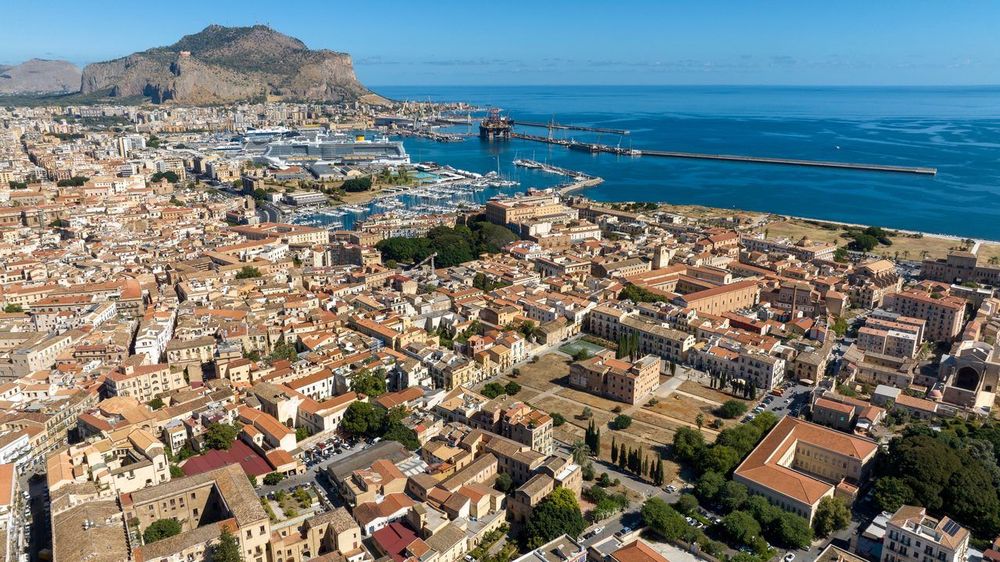
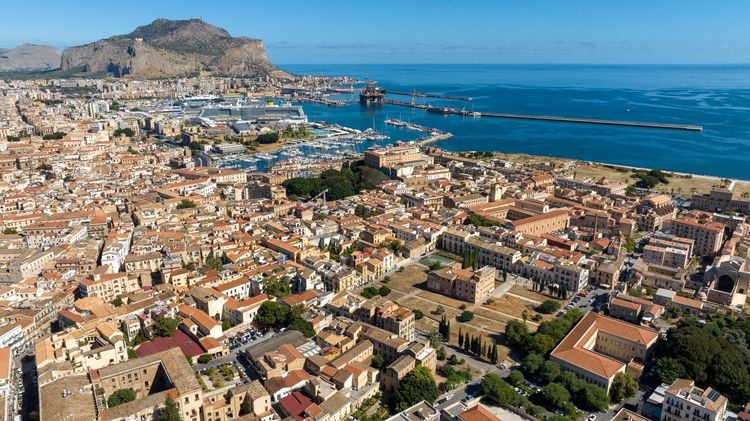
Palermo has a reputation that almost always precedes the visit: a mafia city, noisy, a little rough for young children. Visiting Palermo with family, however, means watching that image collapse within ten minutes: spend a morning at the Ballarò market, stroller weaving between the stalls, while vendors sing out the price of eggplants at the top of their lungs, and you'll understand. To get a feel for the city from the moment you arrive, the Ryo audio guide tour of Palermo winds through these very neighborhoods in 23 stops, headphones on, without having to decipher a map at every intersection.
On the agenda: a Byzantine chapel that leaves children speechless before walls entirely covered in gold, a market where you taste pane e panelle before noon, a pastry shop hidden inside a convent, a beach twenty minutes from the center by bus, and catacombs best reserved for older children. This guide details, neighborhood by neighborhood, what truly works with 4-year-olds, curious 8-year-olds, or 14-year-old teenagers, along with practical information (transport, accommodation, budget, safety, season) to plan a two-to-five-day stay with no unpleasant surprises.
The Palace of the Normans and the Palatine Chapel
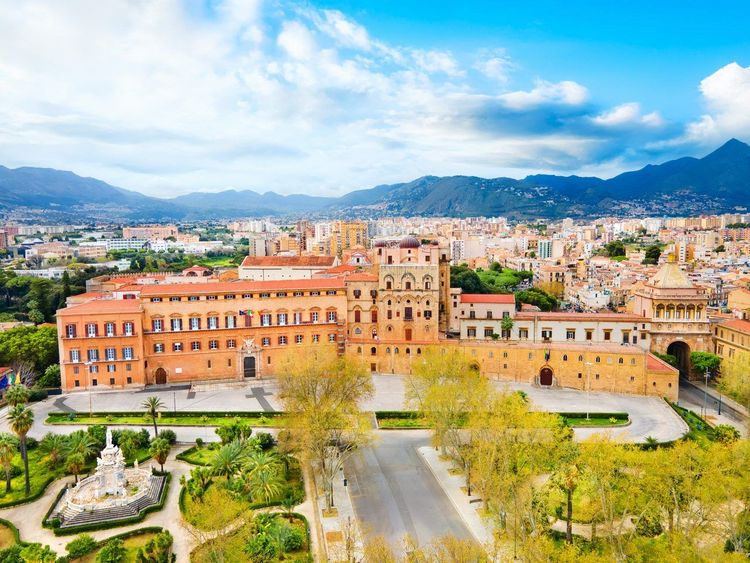
The Palace of the Normans has stood on the hill overlooking old Palermo for over a thousand years, and it is probably the monument your children will gaze at with the most wonder during the entire stay. Once the seat of Arab and then Norman power, it now houses the Sicilian Regional Assembly and, above all, a treasure that few European cities can match.
The Palatine Chapel and Its Byzantine Mosaics
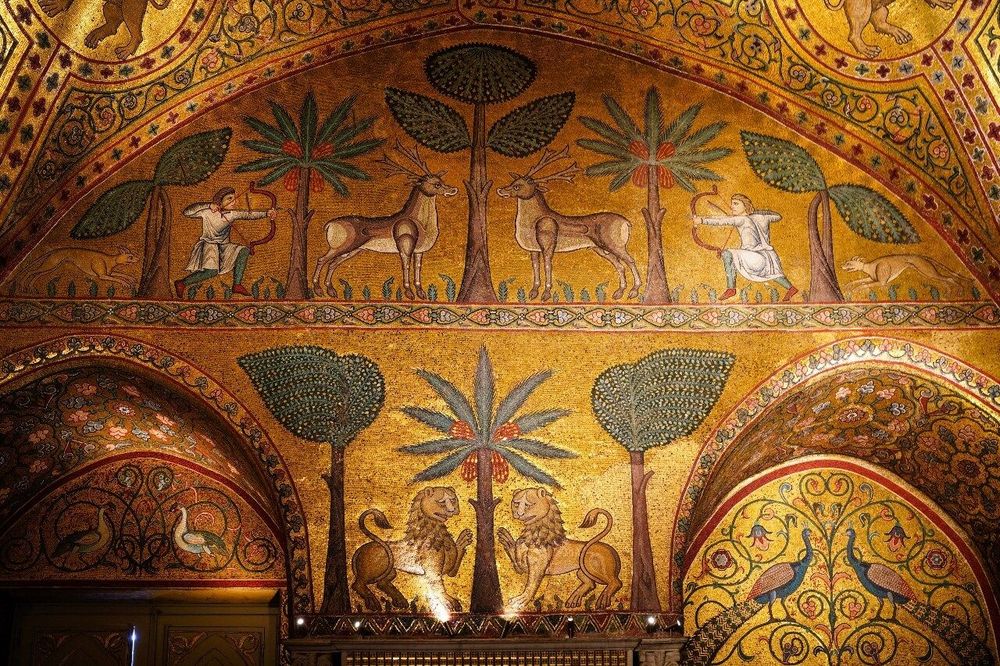
The Palatine Chapel (Piazza Indipendenza 1, 90129 Palermo, rated 4.7/5 on Google from 12,451 reviews), commissioned by King Roger II in 1132 and consecrated in 1140, is a tiny space on the scale of the palace yet entirely covered in golden mosaics. The Christ Pantocrator in the dome has been looking visitors straight in the eye for nearly nine centuries, and the biblical scenes lining the walls read almost like a comic strip: the creation of the world, Noah's Ark, the Tower of Babel. Look up too at the muqarnas wooden ceiling, painted by Arab craftsmen: you can spot musicians, dancers, and chess players.
No scholarly explanation is needed to captivate a 6-to-12-year-old: simply set them off on a hunt for characters they recognize. Allow 45 minutes on site, avoiding if possible the 11 a.m. to 1 p.m. slot when cruise ship groups fill the space. The full-price ticket is around €19 (royal apartments and chapel), with free entry for children under 14 and a reduced rate for those aged 14–17. Booking online avoids a good part of the queue — precious when little legs don't cope well with standing in the sun.
To prepare for the visit without spending an evening doing research, our Ryo article on the Palace of the Normans details the history of the site room by room.
Visiting the Palace of the Normans with Children
Beyond the chapel, only part of the palace can be visited: the royal apartments close on certain days according to the assembly's calendar. Check the opening hours before you go — nothing is more frustrating than a locked room when you already have a tired group after the climb from the center.
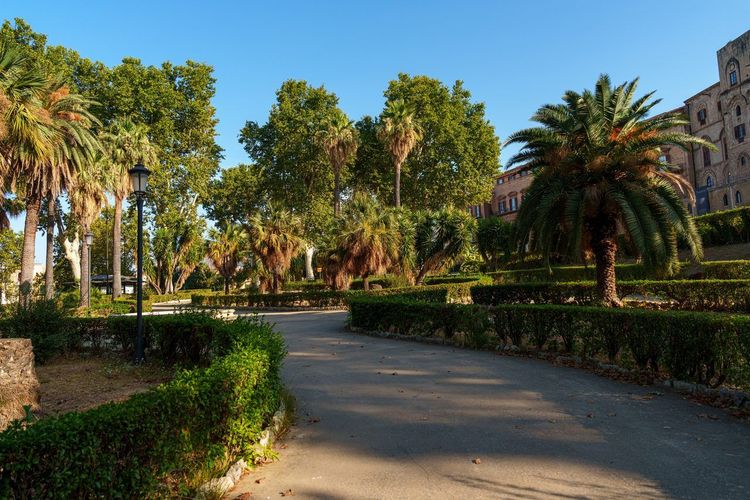
The Room of King Roger, with its animal mosaics (leopards, peacocks, palm trees), often appeals to younger children more than the chapel itself: less impressive in scale, but more fun to study up close. On the way out, the gardens bordering the palace offer a little shade and a welcome bench before moving on to the rest of the historic center.
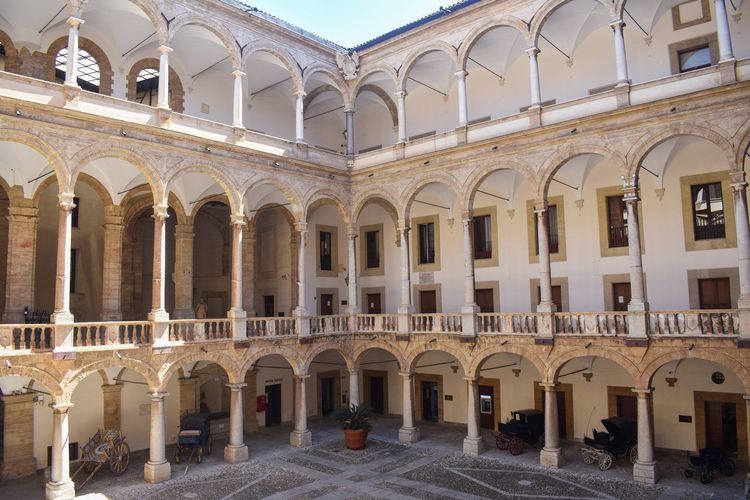
The Ryo audio guide tour of Palermo (23 audios, 3 hrs, 7.7 km) starts right in front of the courtyard of the Palace of the Normans, with commentary on the Byzantine mosaics that you listen to at your own pace, without depending on the schedule of a traditional guided tour.
The Baroque Squares and Monuments of the Historic Center
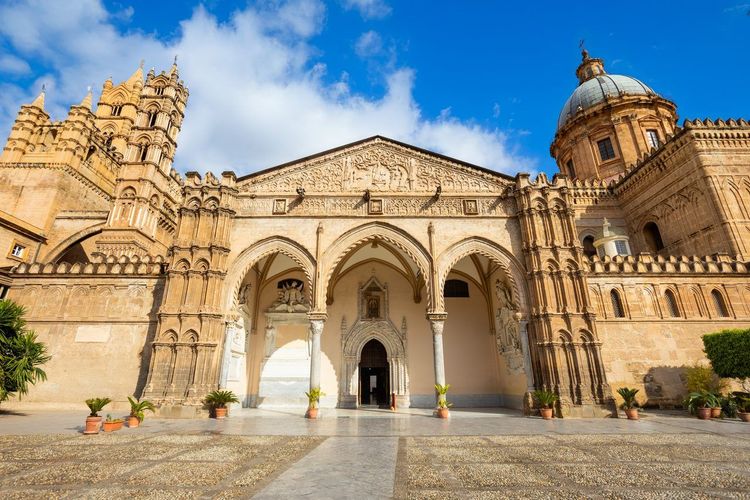
Walking back down from the palace along the Corso Vittorio Emanuele, the historic center is organized around a handful of squares that concentrate most of the city's Baroque and Byzantine heritage. This is the densest area to explore on foot: a compact neighborhood, shaded in places, where each monument is five minutes from the next.
The Quattro Canti and the Fontana Pretoria
The Quattro Canti mark the historic crossroads where the city's two main arteries meet — Via Maqueda and Corso Vittorio Emanuele. The four curved facades, adorned with statues representing the seasons, the Spanish kings, and the patron saints of Palermo, form an open-air theatrical backdrop that children immediately notice when they look up. A fun challenge to give them: find which facade corresponds to summer, autumn, or winter.
Thirty meters away, the Fontana Pretoria is even more surprising: around fifty nude marble statues surround the basin, earning it the nickname "fountain of shame" in the days of the nuns from the neighboring convent. Told to an 8-year-old, the anecdote always makes quite an impression.
La Martorana and the Church of San Cataldo
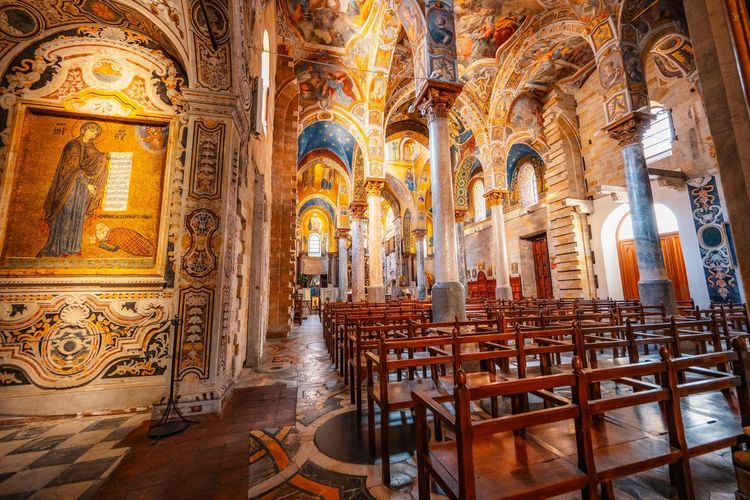
Just behind the fountain, two churches face each other and tell, by themselves, the story of the cultural blend that shaped Palermo. La Martorana (Santa Maria dell'Ammiraglio), founded in 1143, preserves Byzantine mosaics almost as impressive as those of the Palatine Chapel, including a famous depiction of King Roger II being crowned by Christ.
Next door, the church of San Cataldo is recognizable by its three red Arab-Norman domes, a striking contrast to the golden richness of its neighbor. Comparing the two styles side by side makes the visit more engaging than any long commentary, and the "who can spot the most differences" game works from age 5.
Santa Caterina, the Nuns' Hidden Pastry Shop
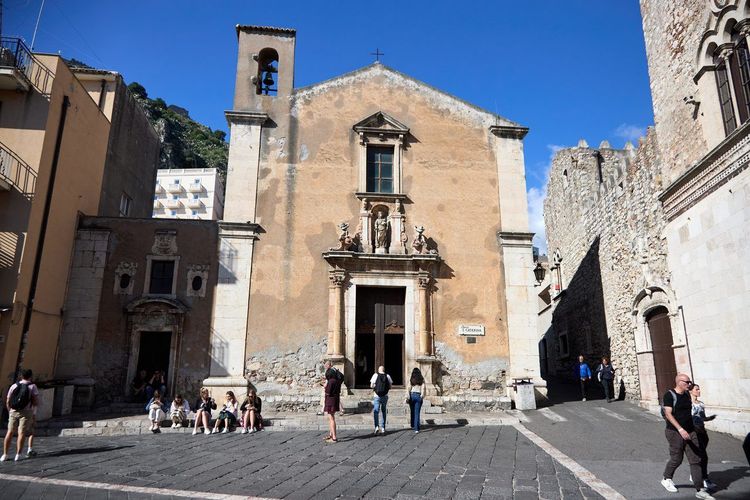
Facing the Fontana Pretoria, the chiesa di Santa Caterina conceals behind its sober facade one of the most exuberant Baroque interiors in the city: polychrome marbles, putti, lions, and sculpted scenes cover every centimeter. The adjoining monastery, long cloistered, is now open to the public with its cloister centered on a fountain and its rooftop terraces, from which the view plunges down onto Piazza Bellini and the domes of San Cataldo.
The real draw for your sweet-toothed travelers is I Segreti del Chiostro, the pastry shop set up in the former convent. It revives the nuns' recipes: cannoli filled to order, marzipan fruits (the famous frutta martorana), cassatelle, and almond cookies. Access to the shop is free; only the visit to the cells and terraces is ticketed. A perfect stop for an afternoon snack.
Piazza Marina, Giardino Garibaldi, and the Back Streets of the Center
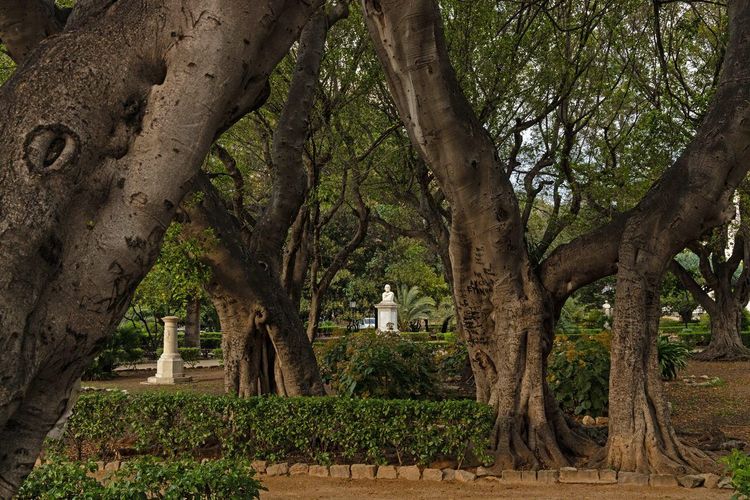
Heading east, Piazza Marina opens up a welcome green space after the stone density of the center. At its heart, the Giardino Garibaldi (Piazza Marina, 90133 Palermo, rated 4.5/5 on Google from 5,876 reviews) is home to enormous ficus magnolioides with spectacular aerial roots — a natural playground where little ones happily climb while parents catch their breath on a bench.
From there, the back streets leading to the Vucciria or the Kalsa reveal Palermo's working-class face: laundry strung between buildings, weathered facades, a morning fish market. It is in these streets, more than on the monumental squares, that the city tells its story best at stroller height.
Climbing onto the Roof of Palermo Cathedral
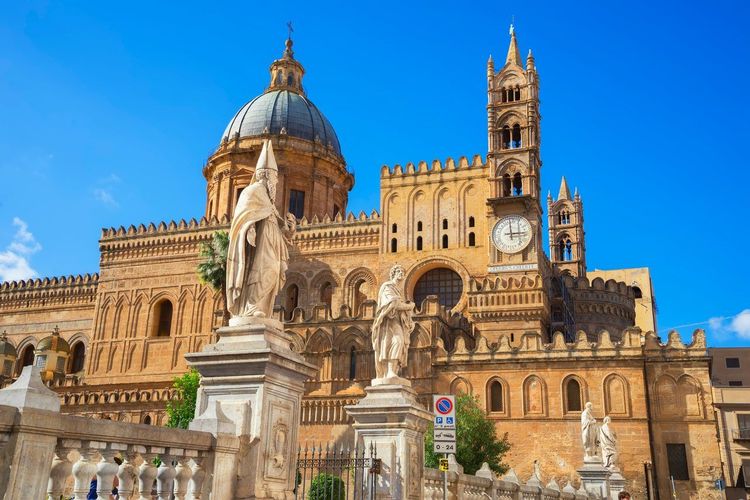
The Palermo Cathedral, an imposing crenellated silhouette blending Norman and Neoclassical styles, hides one of the best experiences in the city for teenagers and younger children alike: the chance to climb up onto its roofs. Entry to the nave is free, but the "rooftop" circuit is ticketed at around €7 (€4 for ages 11–17), with a more complete package including the crypt, royal tombs, and treasury. From the top, a 360° view takes in the city, Monte Pellegrino, and the gulf.
Allow about an hour including the stairs, and wear good shoes: the circuit uses outdoor walkways and narrow staircases, not recommended for baby carriers.
To visualize the sequence of these monuments before you leave, our Ryo article on the best things to do in Palermo covers this itinerary in detail. On the ground, the Ryo audio guide leads you step by step to the Quattro Canti and then to the Fontana Pretoria, with a dedicated stop on the Baroque history of the square — so you don't miss a thing without keeping your nose buried in a map.
Palermo's Lively Markets and Street Food
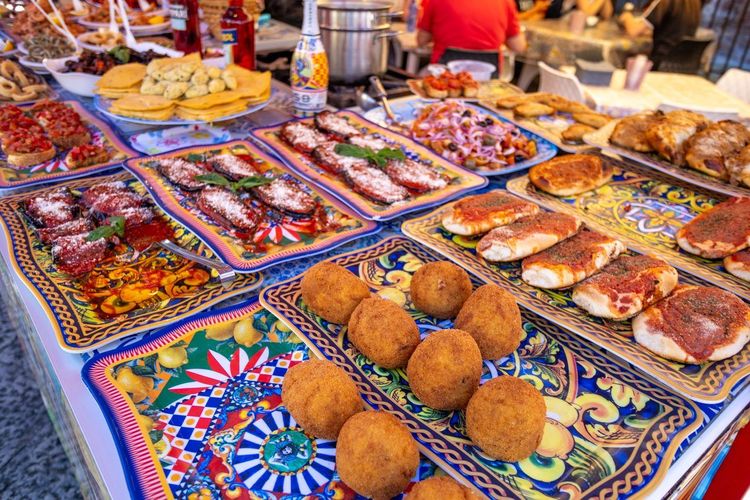
In Palermo, markets are not a dressed-up tourist attraction: they are genuine daily supply hubs. Go early in the morning, when the bustle is at its peak and the heat is still bearable.
The Ballarò Market
The Ballarò market stretches across several streets in the Albergheria neighborhood, one of the oldest in the city. Stalls piled with vegetables arranged into pyramids, fishmongers slicing swordfish to order, vendors crying out (here they call it "abbanniare") the day's prices at the top of their lungs: the sound alone makes the detour worthwhile.
It is also the ideal spot to sample Palermo street food without looking for a restaurant: arancine, panelle (fried chickpea fritters), potato crocchè, and pane e panelle are eaten standing up, for just a few euros, straight from the counter of the stalls. Keep a firm hold of the little ones' hands in the narrow alleys, where three-wheelers squeeze through without slowing down.
One of the audio stops on the Ryo tour winds through Ballarò stall by stall, with anecdotes about the vendors' cries and Sicilian products you wouldn't hear about otherwise.
The Capo Market: More Authentic
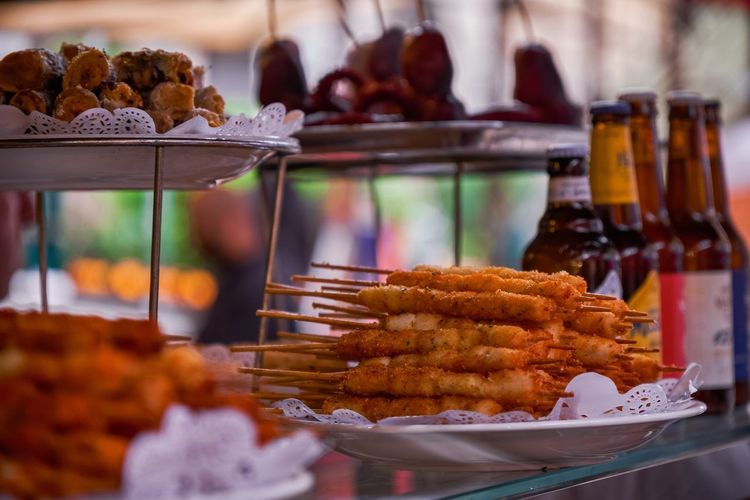
Less well known to visitors than Ballarò, the Capo market plunges into a maze of lanes covered with colorful awnings, even denser and more authentic. You encounter far more Palermitans than tourists here — a good option if you are looking for a less crowded experience. It opens out near the Porta Carini, convenient for continuing on to the nearby Teatro Massimo.
Where to Find the Best Ice Cream in Palermo
After walking between the stalls, a cold break is in order: Sicily practically invented granita, and here people eat ice cream in a brioche bun for breakfast. The Antica Gelateria Ilardo (Foro Italico Umberto I 11, 90133 Palermo, rated 3.9/5 on Google from 1,184 reviews), founded in 1860 on the Foro Italico facing the sea, is the oldest ice cream parlor in the city; its Sicilian flavors (pistachio, almond, cannolo) are best savored while watching the boats, with a large pedestrian area where little ones can stretch their legs.
In the late afternoon, Palermitans slow down for aperitivo. Adopt the habit, junior style: a lemon granita and a warm brioche rather than a spritz, to keep going until dinner, which is rarely served before 8:30 p.m. For more on the food side, our selection of Palermo's culinary specialties lists the must-tries.
Culture, Theaters, and Catacombs with Family
Palermo packs a dense cultural offer for a city of its size. The secret: choose the right times, and tailor certain experiences to each child's age.
The Antonio Salinas Regional Archaeological Museum and the Modern Art Gallery
The Antonio Salinas Regional Archaeological Museum brings together the finest pieces recovered from Sicily's Greek sites, including the famous metopes from the Temple of Selinunte where Perseus cuts off Medusa's head — a scene that speaks to mythology fans from age 8. The rooms, arranged around cloisters, remain on a human scale, without the fatigue of an endless museum.
Nearby, the Palermo Museum of Modern Art (GAM), housed in a former convent on Via Sant'Anna, offers a shorter circuit that is often less crowded — a good option if the archaeological museum has already been enough for the day.
The Teatro Massimo and the Teatro Politeama Garibaldi
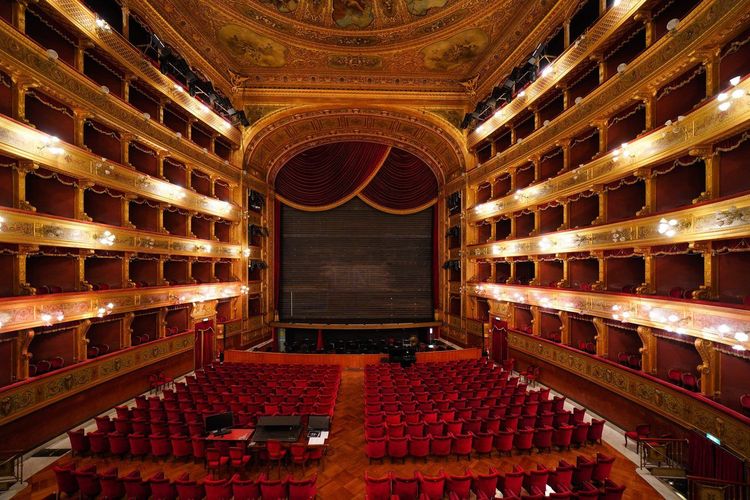
With its Neoclassical facade and bronze lions standing guard on the steps, the Teatro Massimo is the largest opera house in Italy and a familiar silhouette for anyone who has seen The Godfather Part III. The approximately 30-minute guided tour lets you discover the auditorium, the boxes, and the famous "Pompeian room" with its astonishing acoustics: whisper at the center and your voice echoes like a microphone. Children love testing it.
For a real evening of opera or ballet, some performances offer reduced rates for under-18s and last-minute seats at cut prices.
Ten minutes' walk away, the Teatro Politeama Garibaldi (Piazza Ruggero Settimo, 90139 Palermo, rated 4.6/5 on Google from 12,874 reviews) impresses with its triumphal arch topped by a bronze quadriga. Less visited than the Massimo, it is worth an exterior glance on the way along Via Libertà.
Among the 23 stops of the Ryo audio guide tour, the Teatro Massimo stop tells the story of the building and its lions — enough to captivate younger visitors without having to book a timed visit.
The Capuchin Catacombs: Adjust According to Children's Ages
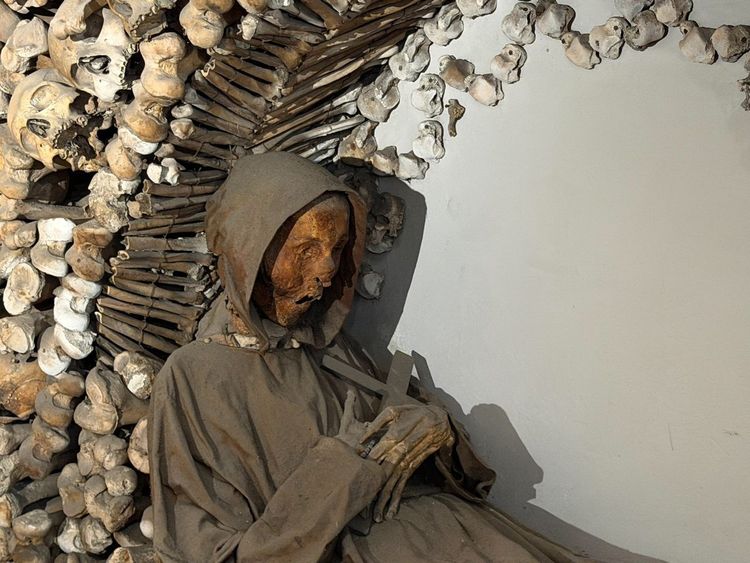
The Capuchin Catacombs display thousands of mummified bodies (up to 8,000 by some estimates, never fully catalogued), dressed in period clothes and lined up in underground corridors used from the late 16th century. The entrance fee is modest — a few euros per person. It is a fascinating experience from a historical standpoint, but clearly not for all ages: most local guides advise against it for children under 10–12, and some teenagers themselves come out feeling unsettled.
If you attempt it with older children, warn them before entering rather than surprising them, and be prepared to cut the visit short: the corridors are organized by category (monks, priests, professions, women, children) and can be walked in part. Little Rosalia Lombardo, mummified in 1920 and nicknamed "Sleeping Beauty," is often the most difficult passage.
Joining an Anti-Mafia Guided Tour with Family
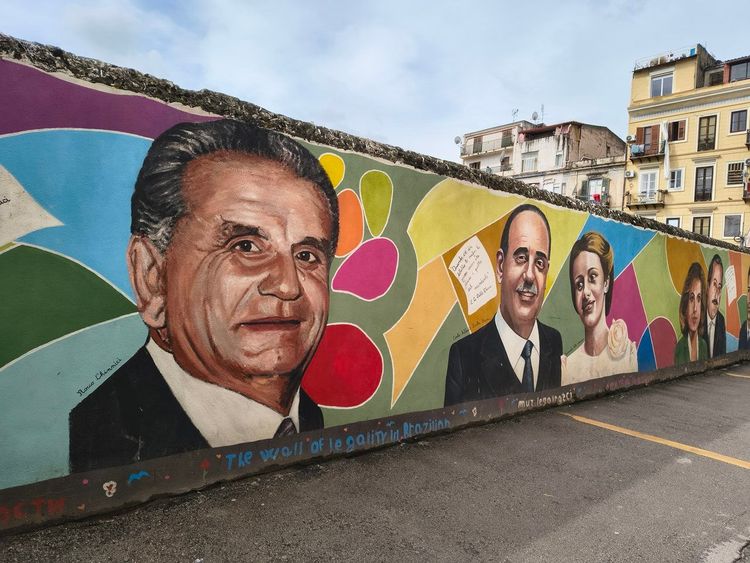
Less expected, the anti-mafia guided tour retraces the history of the Addiopizzo movement and the judges Falcone and Borsellino, assassinated in 1992. Several local associations offer walking routes through the historic center, punctuated with stories about Palermo's civil resistance and stops at shopkeepers who refuse to pay the "pizzo."
Better suited to teenagers than to young children, this tour offers a radically different reading of the city from the Baroque monuments. Many parents cite it as a highlight of the stay, provided the context is explained beforehand.
The Botanical Garden, the Zisa Palace, and the Norman Churches
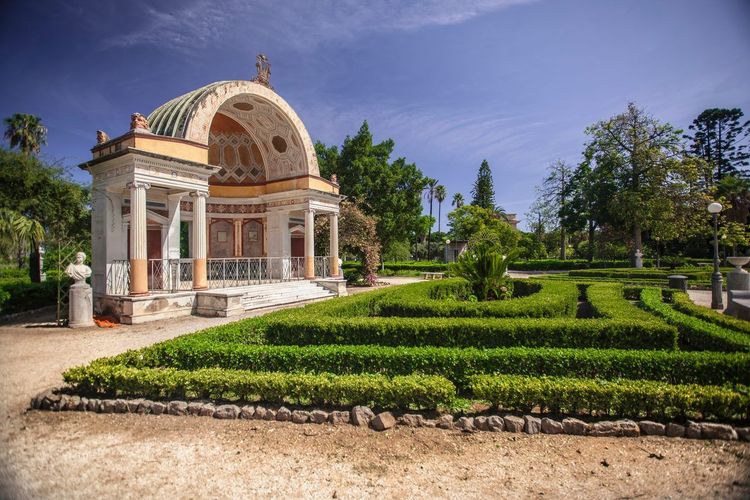
Away from the frenzy of the center, this trio of sites offers a welcome breathing space mid-stay, when the youngest children start to tire of squares and churches.
The Botanical Garden (Orto Botanico)
The Palermo Botanical Garden, founded in 1789, spreads over around ten hectares and is home to a giant ficus magnolioides whose aerial roots form a genuine labyrinth. Shaded paths, giant water lily ponds, tropical greenhouses: it is one of the rare places in the city where little ones can run freely.
Allow an hour on site, longer if you bring a picnic in the shade. Benches are plentiful and the entrance fee is reasonable.
The Zisa Palace and the Church of San Giovanni degli Eremiti
The Zisa Palace, a summer residence commissioned by the Norman king William I in the 12th century and completed under William II with Arab craftsmen, stands out for its natural ventilation system: air conditioning ahead of its time, designed to counter the Sicilian heat. The indoor fountain and the trickle of water that cooled the main hall always amuse younger visitors.
Closer to the center, the church of San Giovanni degli Eremiti is immediately recognizable by its five vivid red domes. Its cloister, planted with palm trees and orange trees, is one of the most peaceful corners of Palermo.
Climbing the Bell Tower of the Santissimo Salvatore Church
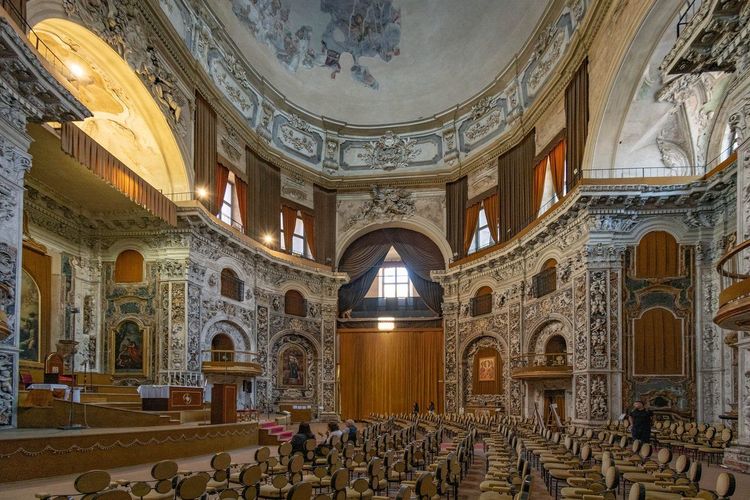
Less well known than the cathedral, the Santissimo Salvatore church on Corso Vittorio Emanuele hides a panoramic terrace at the top of its dome, reached by a spiral staircase. The unobstructed view over the nearby cathedral often makes it a better photo vantage point than the cathedral itself, and the shorter climb suits smaller legs better.
Between these three sites, you can slot in listens to the Ryo audio guide: short commentaries, easy to follow as a group, that don't lose younger listeners' attention along the way.
The Mondello Beach and the Surroundings of Palermo
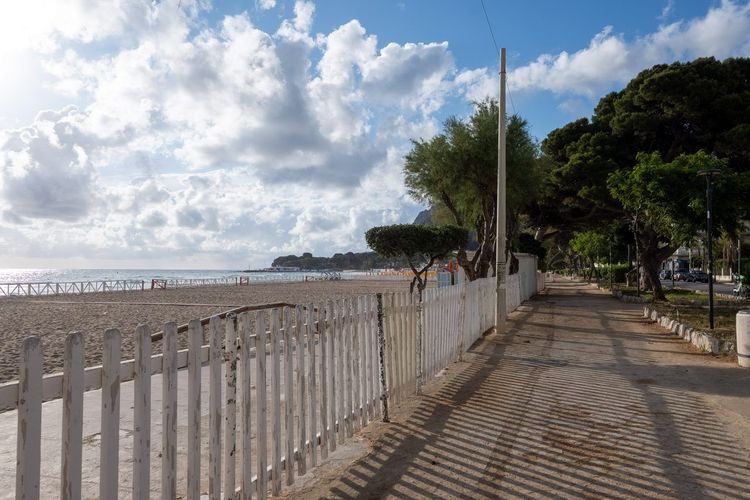
After several days of sightseeing, the sea is never far — a real advantage for alternating culture and swimming without changing cities.
Mondello Beach with Family
The Mondello beach, about twenty minutes from the center by bus (line 806 from the Politeama) or by car, stretches roughly one kilometer of fine sand bordered by an Art Nouveau bathing establishment that has become one of the city's symbols. The turquoise water, shallow for a good distance, is particularly well suited to young swimmers, unlike the rocky coves found along part of the coastline.
In summer, the beach fills up quickly: arriving before 10 a.m. allows you to find a good spot on the free section, even though several lidos rent umbrellas and sun loungers by the day. Along the seafront, the ice cream parlors and fish fryers are well suited to a relaxed lunch after a swim.
To compare Mondello with the other beaches accessible from the city, our Ryo article on the most beautiful beaches near Palermo details the options by age and travel time.
Day Trips from Palermo: Monreale, Cefalù, and the Surroundings
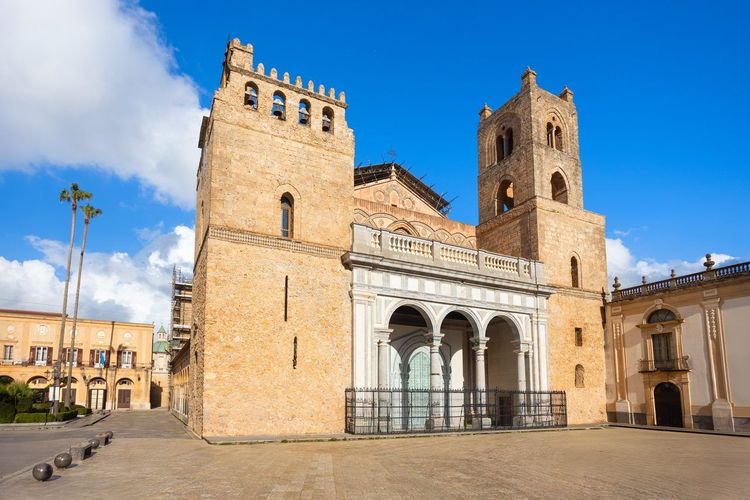
Less than thirty minutes by road, Monreale is home to a cathedral whose interior rivals the Palatine Chapel in its expanse of golden mosaics, with the added bonus of a cloister featuring 228 paired columns, all different — a perfect observation game
Further along the coast, about an hour by road or train, Cefalù combines a Norman cathedral, a fishermen's old town, and a beach right in the center. It is the day trip that pleases everyone, parents and children alike.
These two excursions do not combine well in a single day with young children: choose one and save the other for a future trip or an extra day. And if Sicily tempts you beyond Palermo, our guide to the must-sees of Sicily will help you extend the trip.
Planning Your Family Stay in Palermo
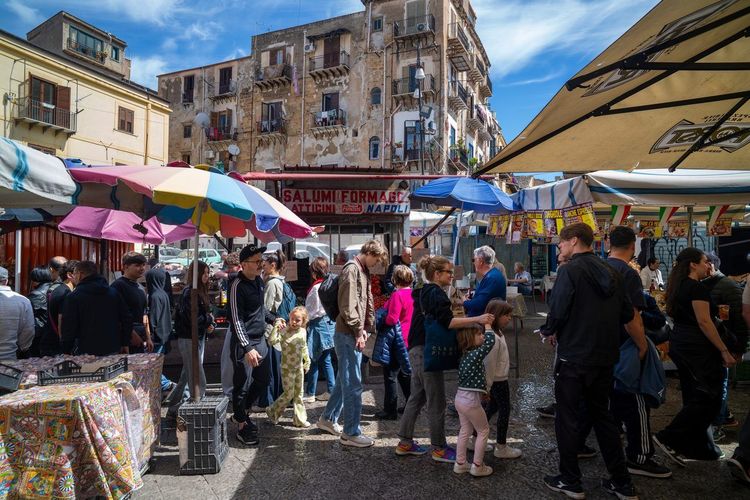
Beyond the sightseeing, a few practical questions come up consistently: length of stay, transport from the airport, getting around, accommodation, budget, and season.
How Many Days to Allow Depending on Children's Ages
Two days are enough for an overview of the historic center (Palace of the Normans, Quattro Canti, markets). Three to four days allow you to add Mondello and a day trip to Monreale or Cefalù without rushing. With children under 6, aim for four to five days to include calm afternoons; with teenagers, three full days pass without difficulty.
In any case, avoid more than two major visits per day: between the summer heat and the density of the center, fatigue accumulates quickly.
How to Get to Palermo and from the Airport
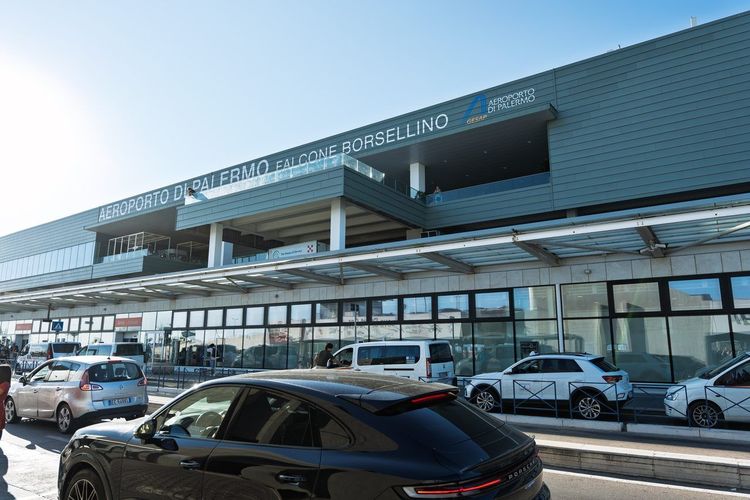
Palermo is served by Falcone-Borsellino airport, about 35 kilometers from the center, with direct flights from several French cities. From the terminal, a Trenitalia rail link reaches the central station in about an hour for around €7 (check schedules, as services vary by season). The Prestia e Comandè bus, which also stops at the Politeama, is a straightforward alternative.
Private shuttles and taxis, more expensive, are often preferable with strollers or little ones who fall asleep on public transport. Our Ryo article on transfers from Palermo airport compares the options by budget and number of bags.
Getting Around, Renting a Car, and Parking
The historic center can be explored entirely on foot, which limits the usefulness of a car during the first few days. However, for venturing out to Mondello, Monreale, or Cefalù with car seats and beach bags, renting a car quickly becomes practical — provided you book in advance.
Parking in the center remains complicated and often costly, not to mention the limited traffic zones (ZTL) that land distracted drivers with fines. Opt for a car park on the outskirts or accommodation with a parking space included. Palermo's traffic, dense and sometimes chaotic, demands vigilance, especially around the Quattro Canti at peak hours.
Where to Stay and Where to Eat with Family
For a first stay, the Kalsa or the area around Via Roma offers a good compromise between proximity to the monuments and relative calm in the evenings. Apartments with kitchens, widely available on rental platforms, simplify mealtimes for younger children. The Politeama and Via Libertà neighborhood, more modern, appeals to those who want wide pavements for the stroller.
For dining, the trattorias of the Kalsa or around Piazza Marina serve simple pasta and pizza alongside Sicilian specialties — a safe bet for picky eaters. For a tight itinerary with several tried-and-tested addresses, read our article "visiting Palermo in 2 days".
Budget, Safety, and Best Season
On the budget side, Palermo remains one of the most affordable major Italian cities. Budget €120 to €180 per day for four people in an apartment, including meals at a trattoria and street food. Entrance fees weigh little thanks to the many free admissions for minors (Palace of the Normans free for under-14s, reduced rates for the cathedral rooftops), and a good part of the itinerary costs nothing: markets, squares, Giardino Garibaldi, the free section of Mondello beach.
On the safety side, the center is busy during the day with many Palermitans and visitors. Watch your bags in crowded markets, keep little ones' hands held in streets without pavements, and avoid the deserted lanes of the Albergheria late at night: the usual precautions of any large city are sufficient.
For the season, spring (April–May) and September–October offer the best compromise, with mild temperatures for walking and a sea that is already warm enough to swim in September. July and August regularly exceed 35 °C: in that case, plan visits for the morning and afternoons at the beach.
FAQ
How many days do you need to visit Palermo with family?
Allow at least two days for the historic center, three to four days if you add Mondello, and five days to include a day trip to Monreale or Cefalù without rushing the children.
How do you get from the airport to Palermo with children?
A Trenitalia train connects Falcone-Borsellino airport to the center in about an hour, and the Prestia e Comandè bus serves the Politeama, but a private shuttle or taxi remains more comfortable with luggage and a stroller.
Where should you stay in Palermo when traveling with family?
The Kalsa and the area around Via Roma offer a good balance between proximity to the sights and relative calm in the evenings, with many apartments equipped with a kitchen.
What can you do around Palermo with children?
The beach at Mondello, twenty minutes from the center, and day trips to Monreale or Cefalù are the most suitable options for a day out of the city.
Is Palermo a safe city for family travel?
Yes: the historic center is very busy during the day. The usual precautions (watching your bags, being careful in heavy traffic) are sufficient; the city's notorious reputation is largely rooted in its history.
What budget should you plan for visiting Palermo with family?
Budget 120 to 180 euros per day for four people, including apartment accommodation, simple meals, and entrance fees — children under 14 get in free at several sites.
What is the best time to visit Palermo with family?
April–May and September–October offer pleasant temperatures for walking all day, while July–August work best if the Mondello beach is the priority.
Ultimately, visiting Palermo with family is mostly about accepting a slower pace: between two monuments, an ice cream on the Foro Italico or a stroll through the Botanical Garden is enough to recharge everyone's batteries. To connect these stops without losing time, the Ryo audio guide tour of Palermo (23 audios, 3 hrs, 7.7 km) tells the city's story at your own pace, with no reservation needed.
À lire également