© Shutterstock
 Votre guide Ryo
Visit Rome in 3 Days: The Complete Itinerary for 2026
Visiting Rome in 3 days means accepting that a single crossroads can line up a baroque basilica, a marble fountain, and an ancient column without transition. You'll realize it quickly on the ground: Italy's capital concentrates more open-air ruins than any other city in Europe, and getting lost in the tangle of alleyways in the historic center can easily eat up precious hours. Over three well-structured days, you can still see the essentials without rushing in every direction: the Colosseum and the Roman Forum at opening time, water that has flowed for twenty centuries at the Trevi Fountain, Michelangelo's frescoes beneath the vault of the Sistine Chapel, or a crispy supplì eaten standing up in a Trastevere trattoria. This guide walks you through a day-by-day itinerary, the passes to compare before booking, the best restaurants, and the neighborhoods where to drop your bags. The Ryo audio-guided tour of Rome follows exactly this kind of itinerary step by step, so you can move through the city at your own pace rather than at the pace of a group.
Rome in 3 Days: The Essentials at a Glance
Three days in Rome is enough to cover the three poles that structure the city: antiquity around the Colosseum and the Roman Forum, the baroque historic center between the Pantheon, Piazza Navona and the Trevi Fountain, and then the Vatican and its museums extended by a stroll through Trastevere. In between, a few foodie stops, a square or two for shopping, and if the schedule allows, a break in the gardens of Villa Borghese.
Is 3 days in Rome enough? Yes, if you're willing to make choices. Regular visitors tend to recommend 5 to 7 days for a more leisurely pace, but a 3-day stay lets you see all the major sites if each day follows a geographically coherent itinerary rather than a list of monuments scattered across the four corners of the capital. That's the principle behind the three days detailed below.
To navigate without endless back-and-forth, the Ryo audio-guided tour of Rome offers a complete framework from the historic center to the ancient sites, as well as a short version called the Immortal City, designed for visitors who only have two or three days. Following its steps in order means you won't cross the same piazza twice.
Day 1: Colosseum, Roman Forum, and Ancient Rome
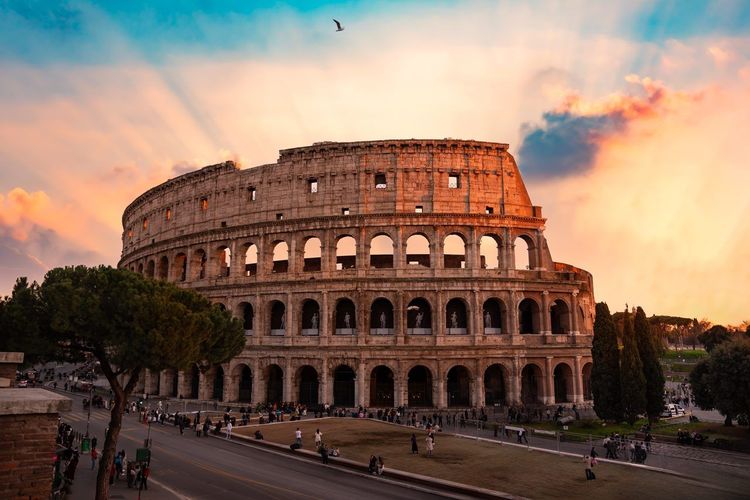
The best way to kick off a stay in Rome is to start with the densest area: the archaeological zone that links the Colosseum to the Capitoline Hill in a short morning's walk.
Colosseum, Roman Forum, and Palatine Hill
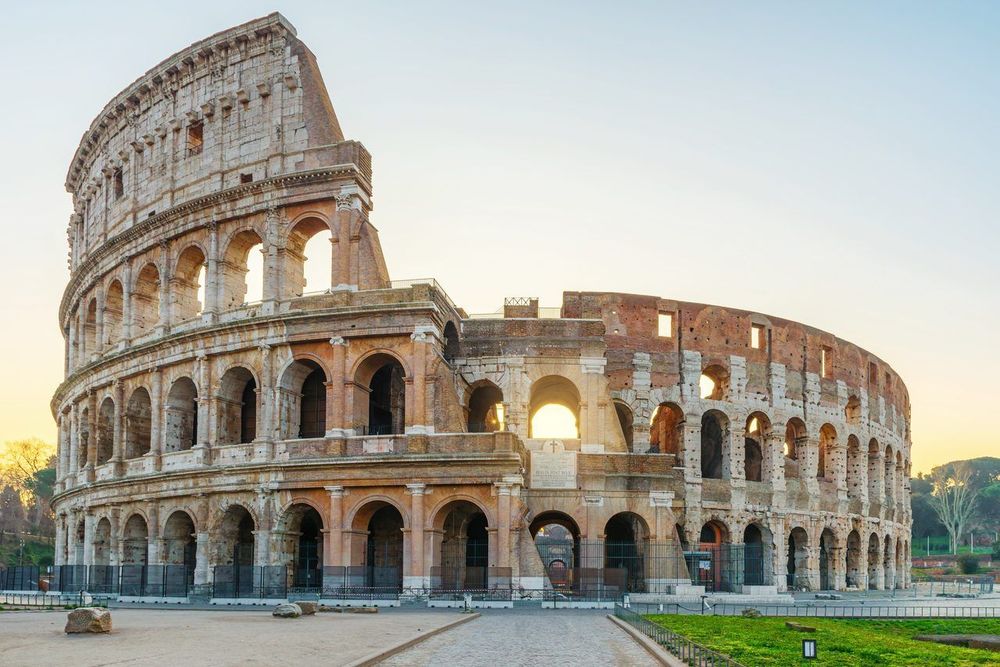
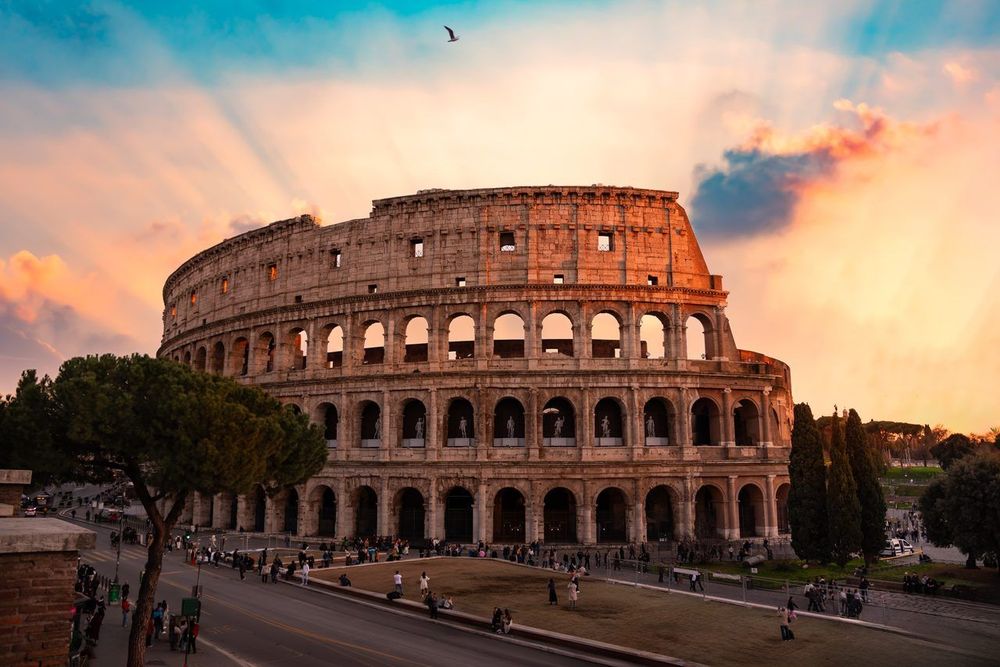
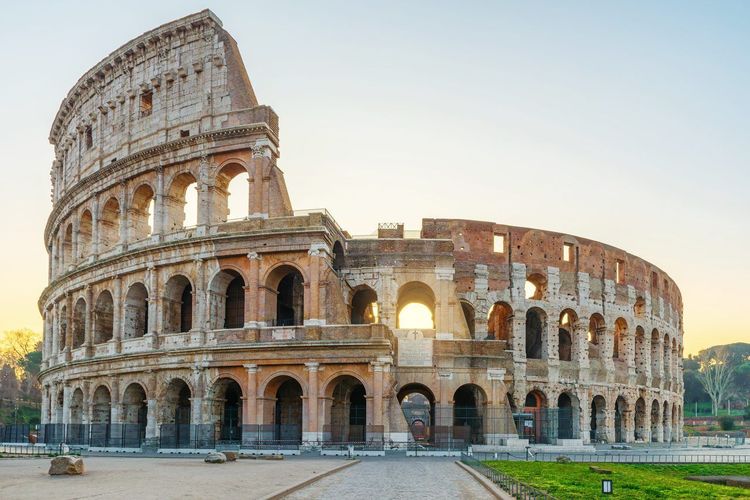
The Colosseum opens at 8:30 a.m. year-round, and that's the moment to prioritize before tour groups arrive mid-morning. Inaugurated in 80 AD under Emperor Titus, the amphitheater could hold up to 50,000 spectators who came to watch gladiatorial combats and wild animal hunts. The standard ticket gives access to the Colosseum, the Roman Forum and Palatine Hill (Via di San Gregorio 30, 00186 Roma, rated 4.7/5 on Google from 14,668 reviews) (open from 9 a.m.) with a single reservation valid for 24 hours, which avoids paying three separate entry fees for the same archaeological site.
The combined ticket costs around €18 at full price and remains valid for 24 hours, but only for one entry per site: don't expect to come back the next day with the same ticket. Audio guides rented on site cost extra, whereas booking a French-language guided tour in advance often helps avoid a double queue — first at the ticket office, then at the security check.
To skip the queue at the main entrance, book a timed slot online several weeks in advance, especially between May and September. Note that the standard ticket includes neither the arena floor nor the underground chambers: you need to choose a dedicated package ("Full Experience") or a guided tour of the Colosseum arena to walk where the fighters stood and descend into the hypogeum, understanding the trap-door system that sent scenery and wild animals surging into the middle of the action.
Leaving the Colosseum, the Roman Forum stretches out right opposite: it was the political, religious, and commercial heart of ancient Rome, with its collapsed temples, solitary columns, and the Sacred Way once used by triumphal processions. Allow a good hour and a half to explore it before climbing up to Palatine Hill, the hill where Rome is said to have been founded and where the emperors built their palaces. The view from the top, taking in the entire Forum on one side and the Circus Maximus on the other, is worth the climb on its own.
Capitoline Museums and Piazza Venezia
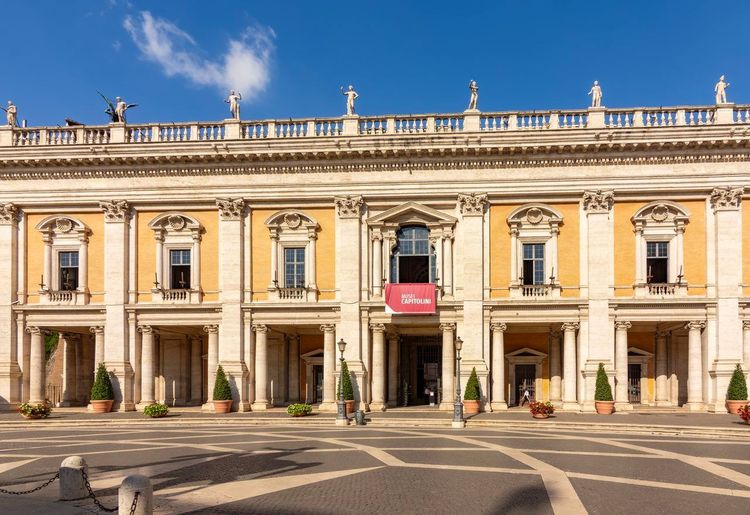
Coming down from the Palatine toward the neighboring hill, you reach the Piazza del Campidoglio, designed by Michelangelo, where the Capitoline Museums are located. This is the world's oldest public museum, opened in 1471, housing the equestrian statue of Marcus Aurelius and the famous Capitoline Wolf suckling Romulus and Remus. Allow 1.5 to 2 hours if antiquity fascinates you, or just one hour to see the highlights.
Inside the Capitoline Museums, the Hall of the Horatii and Curiatii features 16th-century frescoes, while the underground Tabularium gallery, included in the ticket, opens a spectacular window onto the Forum below. If you have a soft spot for panoramas, it's one of the finest vantage points in the archaeological zone.
Just steps away, Piazza Venezia (Piazza Venezia, 00186 Roma) opens onto a perspective that's hard to miss in Rome: the enormous Vittoriano monument, nicknamed locally the "typewriter" for its whiteness and massive forms. The panoramic terrace, accessible by a paid elevator, offers one of the finest 360° views over the city, Colosseum included.
Reaching the top of the Vittoriano takes about ten minutes of elevator and stairs, but it's a great way to end the morning by gaining some height before coming back down for lunch. Many hurried visitors skip this stop in favor of the Colosseum alone: yet it's one of the least crowded viewpoints in the historic center.
Prefer exploring this area without keeping your nose in a map? The short version of the Ryo audio-guided tour, "the Immortal City," runs through the Roman Forum and Palatine Hill with commentary triggered at each stop: handy for understanding what each ruin once was without relying on a human guide or hunting for an explanatory panel worn away by time.
Day 2: Pantheon, Fountains, and Piazzas of the Historic Center
The second day focuses on the baroque historic center, entirely pedestrian and compact enough to cover entirely on foot.
Pantheon and Piazza Navona
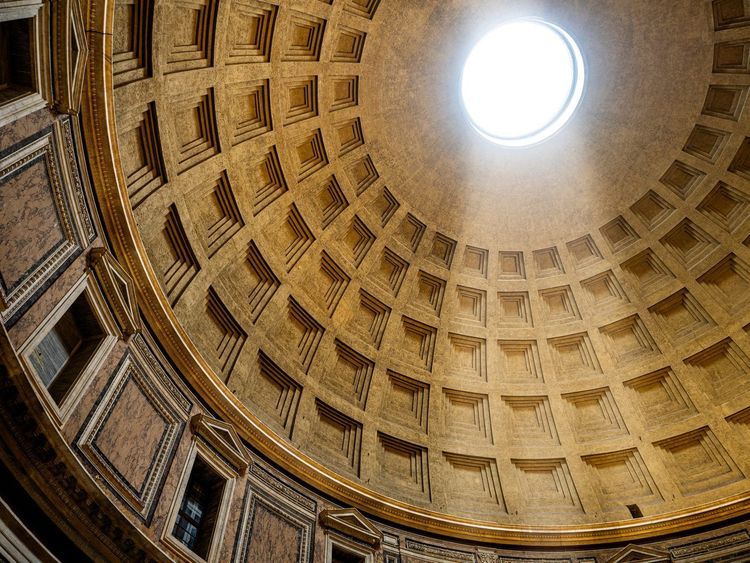
The Pantheon is arguably the best-preserved ancient monument in Rome: completed under Hadrian around 126 AD, its dome remains, nearly two thousand years later, the world's largest unreinforced concrete dome. Entry now requires a timed slot reservation, even for individual visitors, since the site introduced a paid ticket in 2023 (€5 at launch). The oculus at the top, the only source of natural light, sometimes lets rain fall directly onto the marble floor below.
A guided tour of Rome's Pantheon, even a short one, helps you spot details invisible at first glance: the perfect proportions of the dome, whose height equals exactly its diameter, the tombs of Raphael and the kings of Italy, or the bronze doors, whose analysis confirmed they are the original Roman panels — an extremely rare case.
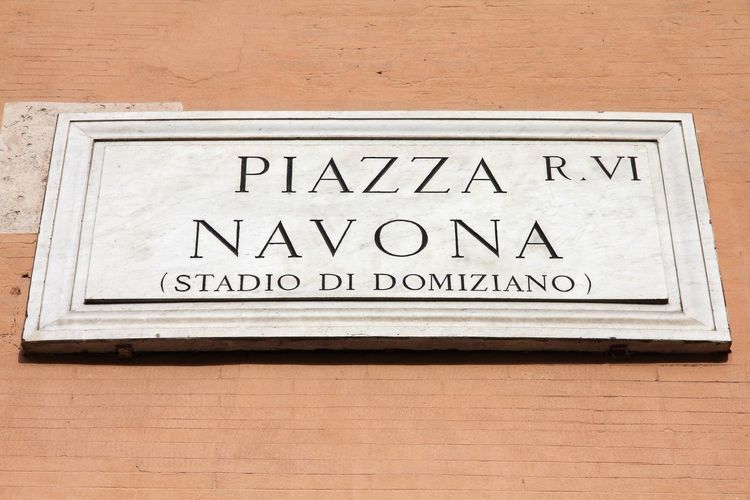
Five minutes' walk away, Piazza Navona still follows the oval shape of an ancient stadium — Domitian's stadium — where athletic competitions took place in Roman times. Today the square is dominated by Bernini's Fountain of the Four Rivers, surrounded by café terraces where the price of an espresso climbs quickly due to the location. Street performers and the illuminated fountains in the evening make it a more pleasant stop at the end of the day than in the heat of midday.
Trevi Fountain, Piazza di Spagna, and Shopping
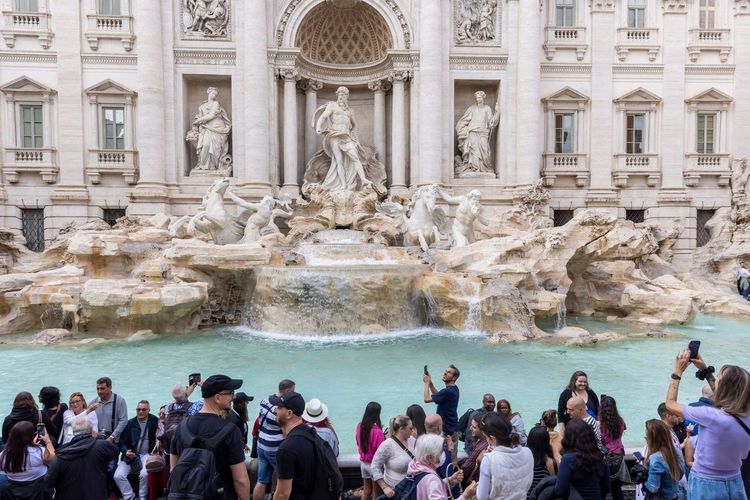
Heading east, the Trevi Fountain is probably the most photographed monument in Rome, and for good reason: at nearly 50 meters wide and 26 meters tall, it is the world's largest baroque fountain, dominated by the figure of Oceanus on his chariot pulled by sea-horses, and fed by the Acqua Vergine, heir to the ancient Aqua Virgo aqueduct. Tradition holds that throwing a coin over your left shoulder into the basin guarantees you'll return to Rome one day. More than one million euros are collected from the basin each year and donated to Caritas.
Since 2026, non-residents pay a €2 ticket to approach the basin (from 9 a.m. to 10 p.m., from 11 a.m. on Mondays and Fridays). After 10 p.m., the barriers open and access becomes free again: it's also the best time to have the fountain almost to yourself, since during the day the small square fills up quickly. Ice cream shops in the area often display tourist prices significantly higher than elsewhere in the neighborhood.
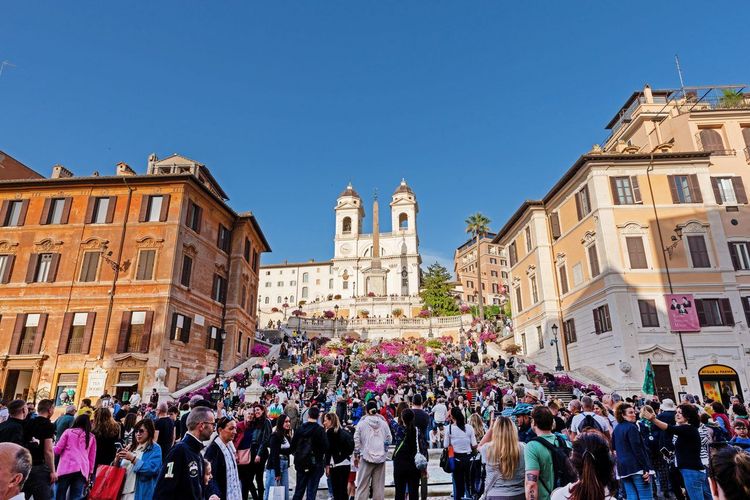
A little further north, Piazza di Spagna is crowned by the Spanish Steps, 135 steps climbed every year by millions of visitors, even though sitting on them is now prohibited under penalty of a fine. At the foot of the steps, Via dei Condotti (Via dei Condotti, 00187 Roma, rated 4.7/5 on Google from 776 reviews) lines up Italy's top luxury boutiques — Gucci, Prada, and Bulgari leading the way — all the way to the Via del Corso, a more accessible shopping street home to mid-range brands. Even without any intention to buy, strolling between these two commercial atmospheres gives a good sense of the contrast between upscale Rome and everyday Rome.
This is precisely the stretch covered by the Ryo audio-guided sub-tour from Trevi to the Vatican: it connects the Trevi Fountain to this shopping district and then extends the walk toward the Vatican, with an anecdote told at each piazza along the way. A great way to move from one spot to the next without retracing your steps, one audio clip at a time.
Piazza del Popolo and Villa Borghese
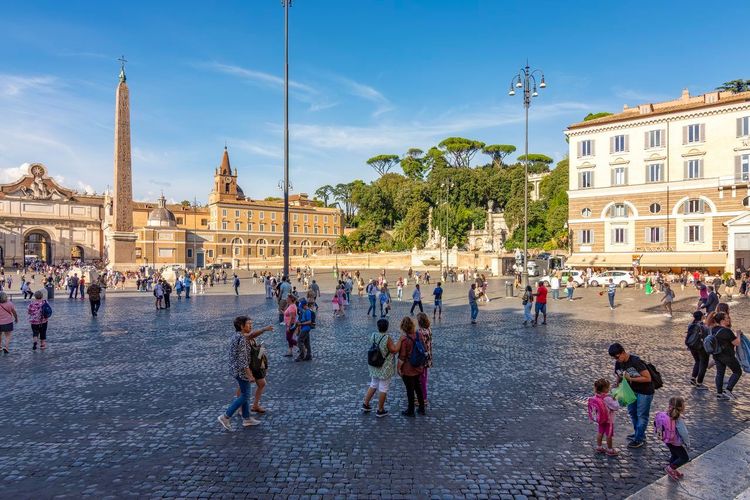
At the very end of Via del Corso, Piazza del Popolo fans out, framed by two twin churches and an Egyptian obelisk brought back by Augustus. It's a good turning point in the day: the square marks the northern limit of the baroque historic center, and discreet staircases on its eastern flank climb directly toward the gardens of the next hill.
Those stairs lead to Villa Borghese, one of Rome's largest public parks (80 hectares, the third largest after Villa Doria Pamphili and Villa Ada), with its shaded paths, small rowing lake, and an open view over the city's rooftops from the Pincio terrace. It's the perfect place to catch your breath for an hour after two days of Roman cobblestones, especially in the late afternoon when the low light catches the characteristic stone pines of the local landscape.
At the heart of the park, visiting the Borghese Gallery requires a mandatory reservation in two-hour time slots, often fully booked one to two weeks in advance during high season. The collection brings together Bernini sculptures of rare virtuosity — the marble of The Rape of Proserpina seems to literally yield under Pluto's fingers — and paintings by Caravaggio. Without a reservation, the park is still a pleasant place to walk through.
For an afternoon snack, head to Il Gelato di San Crispino, a Roman institution known for serving its ice cream in cups only, never in cones: quality is judged by taste, not portion size. Its honey gelato is the most celebrated. The shop has reduced the number of its locations in recent years, so check which one is open before making the detour.
Day 3: Vatican, St. Peter's Basilica, and Trastevere
The last day steps into another country, literally: Vatican City, before ending the day in the most vibrant neighborhood on the west bank of the Tiber.
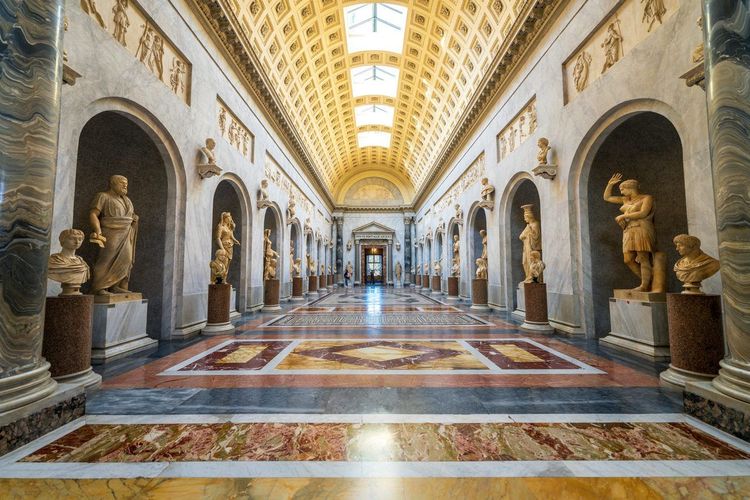
Vatican Museums and Sistine Chapel
The Vatican Museums rank among the largest museum complexes in the world, with tens of thousands of works spread across several kilometers of combined galleries. Seeing everything in a single morning is impossible: better to focus on the Gallery of Maps, the Raphael Rooms, and then the Sistine Chapel, whose ceiling, painted by Michelangelo between 1508 and 1512, tells the story of Genesis — including the Creation of Adam — while the Last Judgment, painted by the same artist between 1536 and 1541, covers the altar wall.
Booking an online ticket with a timed slot is essential: without a reservation, the wait can exceed two hours, especially on Saturdays and on the last Sunday of the month, the only Sunday with free admission. The museums are closed on all other Sundays. A guided tour of the Vatican Museums also allows you to take less-crowded passages to reach the Sistine Chapel without fighting through the main gallery crowds.
Inside the Sistine Chapel, silence is theoretically required and photography is forbidden, even though staff remind visitors of both rules out loud throughout the day. Allow at least 2.5 to 3 hours to move through the galleries before reaching the chapel, which is located at the very end of the route.
St. Peter's Basilica and Castel Sant'Angelo
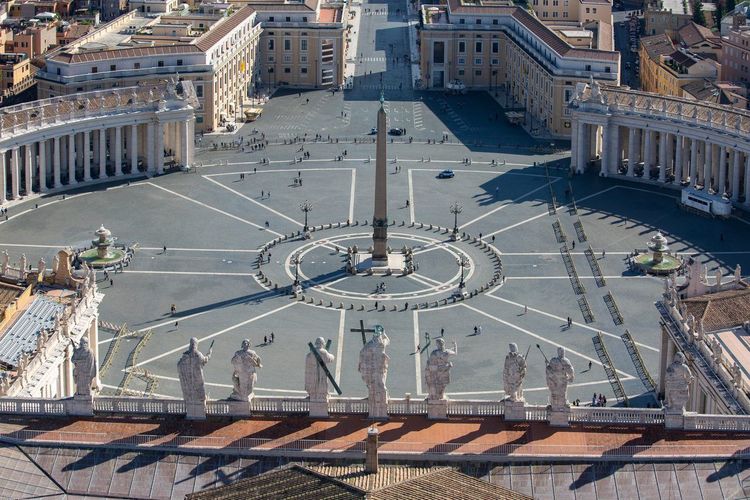
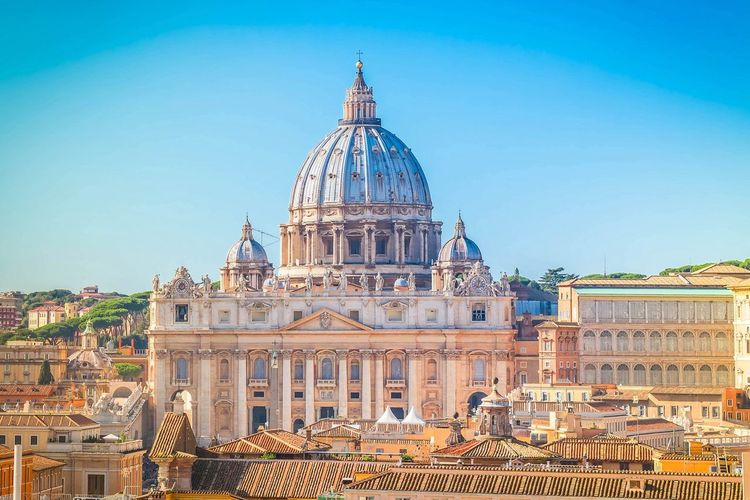
A direct passage connects the Sistine Chapel to St. Peter's Basilica, but it is only open to guided groups: without a reservation, you'll need to exit and rejoin the main queue at the entrance on St. Peter's Square. Entry to St. Peter's Basilica is free, but the airport-style security check can take 30 to 45 minutes in peak season. Inside, Michelangelo's Pietà, protected since 1972 behind bulletproof glass following a vandalism attempt, is the first work most visitors instinctively look for.
Climbing the basilica's dome requires a degree of fitness: 551 steps in total, the last 320 of which wind through a spiral staircase that narrows progressively, with no elevator on this final stretch. In return, the 360° view over St. Peter's Square and all of Rome more than justifies the effort, especially in the late afternoon, shortly before the dome closes, when the low light skims the tiled rooftops.
On the way out, head to Castel Sant'Angelo, a ten-minute walk along the Tiber via the eponymous bridge lined with angels sculpted after Bernini's designs. Originally built as a mausoleum for Emperor Hadrian, it later served as a papal fortress, connected to the Vatican by a fortified corridor still visible today — the famous passetto, used by popes during sieges.
Before leaving St. Peter's Square, a fun detail if you enjoy sending postcards: the Vatican has its own stamps and a reputation for faster delivery than the Italian postal service. A card posted here has a good chance of arriving before you do.
The Trastevere Neighborhood
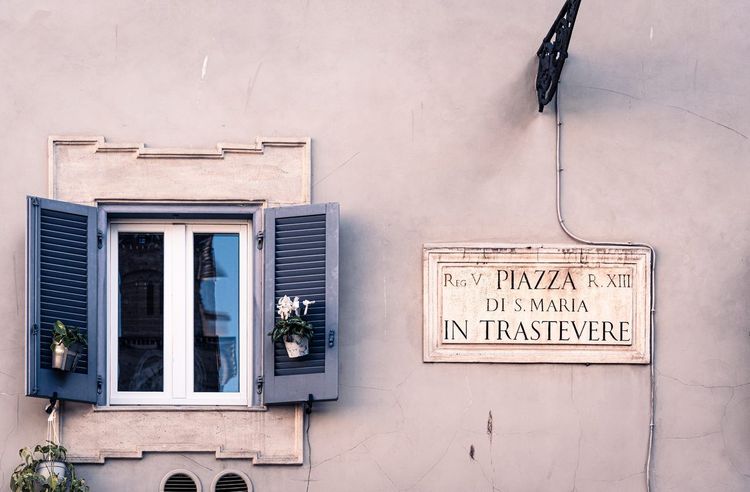
To wind down gently, Trastevere — literally "across the Tiber" — is Rome's most photogenic neighborhood for aimless wandering: cobblestone alleyways, ochre façades draped in ivy, and laundry drying at the windows. Strolling through Trastevere at the end of the day, when the terraces come alive and golden light hits the façades, remains one of the best moments of the stay. The Basilica of Santa Cecilia in Trastevere (Piazza di Santa Cecilia 22, 00153 Roma, rated 4.7/5 on Google from 4,570 reviews) is worth a detour for its Byzantine mosaic and a paid underground level that reveals the foundations of an ancient Roman house.
This kind of detail is exactly what the Ryo audio-guided tour shares at the foot of St. Peter's Basilica: an anecdote slipped between two historical commentaries, listened to without ever looking up from a paper guidebook.
Which Pass Should You Choose to Visit Rome in 3 Days?
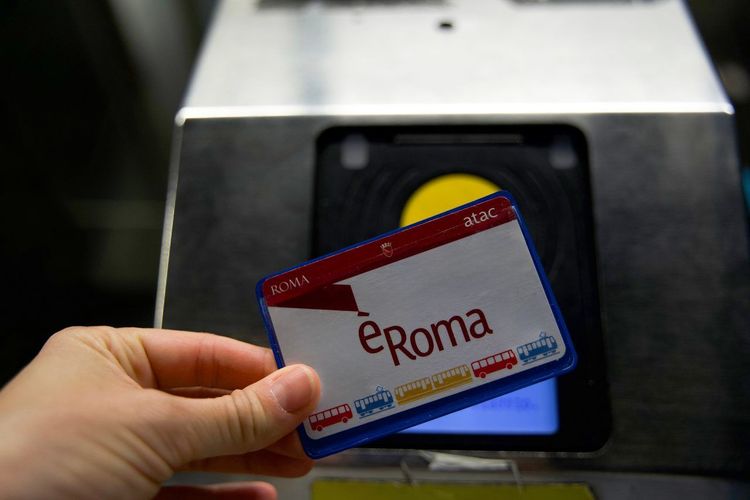
With so many paid sites on such a packed itinerary, the question of a tourist pass comes up quickly. Saving money on activities in Rome with a pass is mainly about saving time at ticket offices — skip-the-line access is included in most packages — rather than actually halving the bill. Three options dominate the market: the Roma Pass, the Omnia Card, and the Rome Tourist Card, each with its own inclusions. The GoCity Rome pass, more recent, works differently: it offers a choice of a set number of attractions rather than a fixed list, making it interesting for a bespoke itinerary rather than a classic 3-day route.
Roma Pass 48h / 72h
The Roma Pass, one of the oldest and most widely used by visitors, comes in two formats. The 48-hour version costs around €32 and includes free entry to one site of your choice — ideally the Colosseum given its price — plus a reduced rate on subsequent sites, along with unlimited public transport for 48 hours. The 72-hour version, around €52, adds a second free site and extends transport access to 72 hours. In both cases, the priority booking for the Colosseum is the main selling point: it bypasses the standard ticket office, often swamped from 9 a.m. onward in high season.
Omnia Card and Rome Tourist Card
The Omnia Card, offered as a 72-hour package, targets visitors who also want to cover the Vatican without queuing separately: it combines the Roma Pass with priority access to the Vatican Museums and St. Peter's Basilica in a single pass, at a price significantly higher than the Roma Pass alone (over €100 — check at the time of booking). It's often the most comfortable option for a 3-day stay that includes both ancient Rome and the Vatican, provided you plan your timed slots well in advance.
The Rome Tourist Card, sold online, focuses on a bundled Colosseum and Vatican ticket without transport included, for travelers who prefer walking to taking the metro. The GoCity Rome pass works on a credit basis: you choose a number of attractions — three, four, or five — from a list of sites and guided tours, the Colosseum included. Its value depends entirely on which activities you pick: run the numbers against individual prices before buying.
Ultimately, no pass is mandatory to visit Rome in 3 days: booking each ticket directly online as you plan your itinerary often remains the cheapest solution for a tight budget, at the cost of a little more advance organization. For a quick decision: the Roma Pass 72h suits those prioritizing antiquity and municipal museums; the Omnia Card is for those who absolutely want to pair the Vatican and the Colosseum without replanning; and the Rome Tourist Card is for those who prefer to build their own activity list.
How to Get to and Around Rome
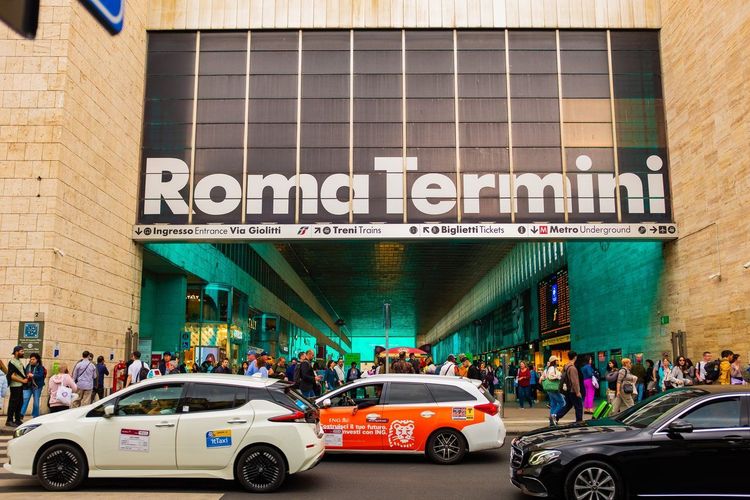
From the Airport to the City Center
How you get to Rome depends mainly on which airport you arrive at. The majority of international flights land at Fiumicino, 30 km southwest of the center. The Leonardo Express connects Fiumicino directly to Termini station in 32 minutes, non-stop, for around €14 per person. Low-cost flights — notably Ryanair — often land at Ciampino, smaller and closer to the center at about 15 km, but with no direct rail link: you'll need to take a shuttle bus to Termini or to the Anagnina metro station, in around 40 minutes.
Want to reach the city center from Rome's airport without any stress? Booking a private transfer in advance remains the simplest option for a group or family with luggage — around €50 to €60 per ride regardless of the number of passengers — worth comparing against the combined cost of individual train tickets. Official taxis apply a regulated flat fare between Fiumicino and the city center, around €55, and can be found at their dedicated queue in front of the terminal: always preferable to drivers who approach travelers directly at the exit.
Public Transport, Walking, and Driving
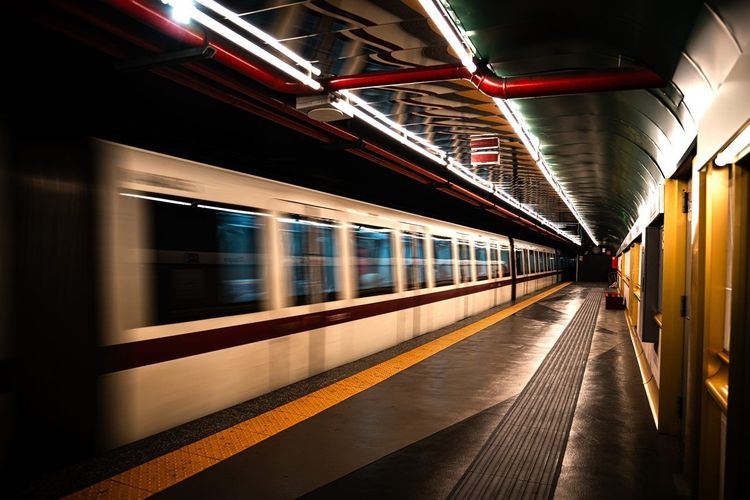
How do you get around Rome once you're there? The historic center is very largely walkable: most sites on Day 1 and Day 2 are 10 to 20 minutes apart on foot. For longer journeys — to the Vatican or Trastevere — the metro has three lines: A and B, which intersect at Termini, and line C, which serves the Colosseo station since December 2025. The network is supplemented by a tram and a dense bus network that can be slow during rush hour. A single ticket costs €1.50 and is valid for 100 minutes on all modes of transport.
To give a sense of scale, allow about 25 minutes on foot between the Colosseum and the Pantheon, 15 minutes between the Pantheon and the Trevi Fountain, and nearly 40 minutes between the historic center and St. Peter's Basilica — which justifies taking the metro or bus for that last stretch rather than wearing yourself out on foot first thing in the morning.
Where can you rent a car in Rome? The question is worth reframing: renting a car to visit Rome's historic center is almost always a bad idea. Much of the center falls within a Limited Traffic Zone, closed to unauthorized vehicles under penalty of automatic camera fines, and parking is scarce and expensive. Where do you park in Rome if you arrive by car for a day trip outside the city? Park-and-ride facilities near metro stations on the outskirts are the best option — far more affordable than the center.
In short, a multi-day transport pass combined with walking is more than sufficient for the three days of sightseeing described above: a car only becomes useful for extending the trip into the Roman countryside or toward the coast, never for getting around the historic center itself.
Practical Tips: Budget, Best Time to Visit, and Planning
When should you visit Rome? Spring — April and May — and autumn — September and October — offer the best compromise between pleasant weather and moderate crowds, with temperatures around 20–24°C. In summer, July and August, the heat regularly exceeds 35°C during the day, making queues in full sun hard to endure. Winter is an underrated option: fewer tourists, lower hotel rates, and far more accessible museums, at the cost of shorter days and occasional rain.
Mobile phones and SIM cards: European travelers benefit from free roaming included in their standard plan under EU regulations, and Italy is no exception. For everyone else, an Italian eSIM activated before departure avoids hunting for a physical store on arrival and generally costs less than €15 for a few gigabytes.
Planning ahead remains the best way to avoid blowing your Rome trip budget: tickets for the Colosseum, Vatican Museums, and Borghese Gallery are the same price online and on the door, but time slots fill up quickly in high season, forcing you to piece together a less optimal itinerary if you leave it to the last minute. Booking activities in advance also lets you spread costs over several weeks rather than paying for everything at once on the ground.
One classic trap to know about: on the first Sunday of every month, entry to many state museums becomes free — Colosseum and Roman Forum included. It sounds appealing on paper, but in practice, it's best to avoid the major tourist sites that day if your trip only lasts three days: crowds surge, queues can exceed two hours, and the visit suffers far more than what the free admission saves.
Another useful habit: the most touristy areas — Colosseum, Trevi, Termini — also concentrate the majority of pickpocketing incidents reported to local authorities. Keeping valuables in a closed inside pocket and staying alert on packed public transport avoids the kind of incident that can ruin an entire morning of sightseeing. Free wi-fi is available in most cafés and on the main squares through the city's municipal network — a handy option for checking a museum's opening hours without using mobile data. All practical information for organizing and booking activities in Rome can be found directly on the official monument websites, which are more reliable than third-party resellers who sometimes charge a 15–20% commission on top of the ticket price.
Where to Eat in Rome: Best Spots and Local Specialties

Savoring Italian food in Rome means focusing above all on four iconic pasta dishes born in the capital: carbonara — egg, guanciale, pecorino, never cream despite what you may read — cacio e pepe, just pecorino and pepper, deceptively simple, amatriciana with tomato and guanciale, and gricia, its tomato-free counterpart. For a quick snack between sights, the supplì — a fried rice ball stuffed with mozzarella — serves as the local street food, not to be confused with the Sicilian arancino, which is rounder and usually filled differently.
Near the Pantheon, having lunch at Armando al Pantheon means tasting traditional Roman cooking in a family dining room, open since 1961 and still run by the same family: reservations are strongly recommended, as the small room is fully booked from opening on some days.
In Trastevere, Da Enzo al 29 serves no-frills trattoria cooking, with carbonara and Jewish-style artichokes leading the menu. No reservations for small tables: arrive early or be prepared to wait in the alley. A great option for dinner on the third evening, after a stroll through the neighborhood.
In the Prati neighborhood near the Vatican, Panino Divino (Via dei Gracchi 11A, 00192 Roma, rated 4.7/5 on Google from 2,354 reviews) serves made-to-order sandwiches from a long list of Italian ingredients — a quick and affordable option after a morning in the museums. For travelers who want to take home more than a photo, a half-day cooking class — fresh pasta preparation followed by lunch on the premises — lets you bring back the carbonara recipe rather than just a fridge magnet.
Budget-wise, allow around €15 to €20 for a simple trattoria lunch, and closer to €30 to €40 for dinner with wine at a tourist-friendly address in the center. Slightly off-center neighborhoods — Trastevere or Prati — generally offer better value than the immediate surroundings of the Trevi Fountain or the Pantheon.
Where to Stay in Rome: Recommended Neighborhoods and Hotels
If you want to do everything on foot, booking a hotel in the historic center — between the Pantheon and Piazza Navona — remains the most practical option for a 3-day stay: everything is walkable without relying on transport, at the cost of a higher accommodation budget and a fairly limited choice of large hotel chains. It's the neighborhood to prioritize for those who want to maximize sightseeing time, even if it means trimming the nightly budget.
Trastevere appeals to travelers who prefer a more local and lively atmosphere in the evening, with its trattorias and wine bars open late: allow 15 to 20 minutes' walk to the historic center, a little more to the Vatican. It's also one of the most photogenic neighborhoods to stay in, between colorful façades and cobblestone lanes.
The Prati neighborhood, just north of the Vatican, offers a great compromise for the third day of the itinerary: more residential, with prices slightly lower than the historic center, while still within walking distance of the Vatican Museums and St. Peter's Basilica.
Finally, the Termini station area remains the most affordable, with the best transport connections — metro, train, long-distance buses — but also the most impersonal and sometimes less reassuring at night for some travelers. It's a pragmatic option for a tight budget, as long as you accept a few extra minutes on the metro each morning.
Whatever neighborhood you choose, the Ryo audio-guided tour of Rome works from any starting point: just make your way to the first stop on foot or by metro to pick up the visit right where you left off the day before.
What to Do around Rome If You Have More Time
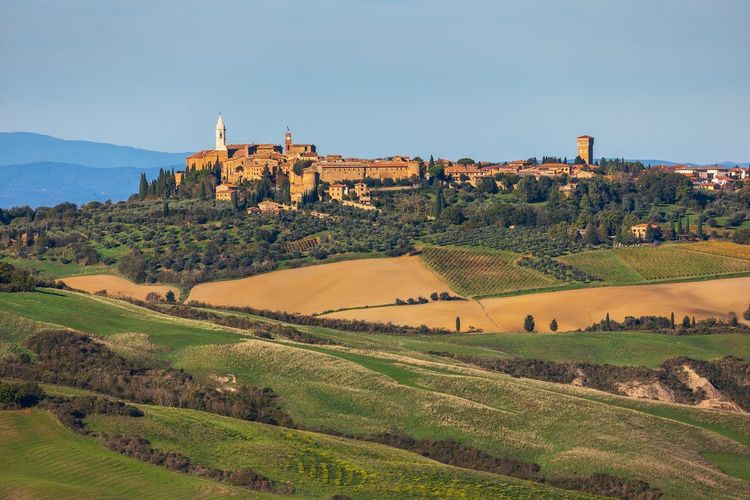
With an extra day or two, several day trips from Rome let you step outside the urban setting without changing accommodation.
Pompeii, Vesuvius, and the Amalfi Coast
Pompeii and Vesuvius can be visited in a long day from Rome — about 1 hour 10 minutes by high-speed train to Naples, then around 40 minutes on the Circumvesuviana, or as part of an organized excursion with bus transport directly from Rome. The ancient city, buried under Vesuvius's ash in 79 AD, offers a frozen snapshot of daily Roman life, from frescoes to plaster casts of figures preserved in their final moments. Climbing to the crater of Vesuvius — still considered an active volcano — adds about 1.5 hours of walking round trip from the upper car park, but remains manageable at a moderate pace.
Positano and the Amalfi Coast are farther still and really deserve an overnight stay to be fully enjoyed: the steep cliffs plunging into the Tyrrhenian Sea and the colorful villages clinging to the rock deserve more than a rushed day trip from Rome. For a simple taste on a day excursion, it's better to target just one village — Positano or Amalfi — rather than trying to tick off the entire coast in a few hours.
Tuscany and the Vineyards
Tuscany is reachable in 1.5 hours by train to Florence, or by rental car for exploring the hills and their vineyards. From Rome, southern Tuscany is the most accessible for a day trip: Montepulciano and the Val d'Orcia are about 2 hours by road, while Chianti or San Gimignano call for an overnight stay. Budget for one or two hilltop villages paired with a wine tasting at a local estate. This is the kind of excursion that requires a car — unlike the rest of the Rome itinerary, which works perfectly well without one.
For these more distant excursions, it's best to plan them at the very beginning or end of your stay, never sandwiched between two intense days in the city center: the shift between the urban buzz of Rome and the slower rhythm of the Tuscan countryside or Amalfi Coast calls for a little breathing room to be fully appreciated.
These excursions don't replace the three core days in Rome described above: they extend the trip for those with a full week rather than just a weekend. Many travelers choose to combine their arrival or departure with one of these destinations — flying into Naples for Pompeii and Vesuvius, or into Florence for Tuscany — rather than heading back to Rome for every day trip.



FAQ
Is 3 Days Enough to Visit Rome?
Yes, as long as you follow an itinerary organized by geographic area rather than a scattered list of monuments. Three days allow you to cover ancient Rome — Colosseum, Forum, Palatine — the baroque historic center — Pantheon, Trevi, Piazza Navona — and the Vatican along with Trastevere. For leisurely strolling or adding day trips, 5 to 7 days are more comfortable.
Should You Buy a Roma Pass to Visit Rome in 3 Days?
Not mandatory, but often worth it if your itinerary includes the Colosseum and at least two or three other paid municipal sites: the priority booking saves you from queues more than it generates real savings on ticket prices. For an itinerary that also includes the Vatican, the Omnia Card — which combines both worlds — is often more advantageous than the Roma Pass alone.
How Do You Get Around Rome Without a Car?
On foot for the historic center, which is largely pedestrian between the main sites, and by metro or bus for longer journeys to the Vatican or outside the center. A single ticket at €1.50 is valid for 100 minutes on all modes of transport, and a daily or 72-hour pass quickly pays off from three or four journeys onward.
How Do You Get from Rome's Airport to the City Center?
From Fiumicino, the Leonardo Express connects directly to Termini station in 32 minutes for around €14. From Ciampino, a shuttle bus to Termini or the Anagnina metro station takes about 40 minutes. A private transfer booked in advance remains the most comfortable option for a group traveling with luggage.
What Is the Best Neighborhood to Stay in Rome?
The historic center, between the Pantheon and Piazza Navona, remains the most convenient for a 3-day stay since everything is walkable. Trastevere suits those looking for a more local atmosphere in the evening, and the Prati neighborhood, close to the Vatican, offers a good price-to-location balance for the last day of sightseeing.
What Is the Best Time to Visit Rome?
Spring — April and May — and autumn — September and October — offer the best balance between pleasant weather and moderate crowds. In summer, temperatures often exceed 35°C during the day, making queues in full sun hard to bear. Winter, less crowded and cheaper, remains a good option for those who prefer museums to outdoor terraces.
Three days in Rome are never enough to see the whole city: it would be more accurate to say three days to understand why so many travelers keep coming back. Between the Colosseum at dawn, the Trevi Fountain flowing since antiquity, and a last supplì eaten in Trastevere, this itinerary covers the essentials without rushing from one end of the city to the other. Choose the right pass, book your time slots in advance, and leave a little room for spontaneity: a square discovered by chance down a side street is sometimes worth more than a site checked off a list.
To keep pace on the ground without worrying about the map, the Ryo audio-guided tour of Rome accompanies this kind of itinerary day by day, all the way to the last stop in front of St. Peter's Basilica.
À lire également