© Shutterstock
 Votre guide Ryo
Visit Bergen Without a Car: The Complete Guide for 2026
Visiting Bergen without a car is no stretch: it's actually the most logical way to discover a city that fits entirely within a twenty-minute walk of the central station, wedged between seven hills and a narrow fjord. To explore its historic centre at your own pace, the Ryo audio-guided tour of Bergen connects on foot the wooden alleys of Bryggen, the ramparts of the Bergenhus fortress and the foot of the Fløibanen funicular, without ever needing to take out a map. In this guide, you'll see where the shuttle to the Ulriken cable car departs from, how much a Skyss ticket really costs in 2026, and how to link Hardangerfjord, Voss and Flåm using only trains and boats. Most guides to Norway assume you need to rent a vehicle to see the country; Bergen is an exception, and that's precisely what makes it an ideal destination for a city trip of two to four days, fjords included.
Why Visiting Bergen Without a Car Is a Great Idea
The question comes up on almost every travel forum dedicated to Norway: can you really visit the country without a car? For the Lofoten Islands or Jotunheimen, the answer is nuanced and often means dealing with infrequent buses. For Bergen, it's much simpler: not only is it possible, it's often the best option.
The city has just under 300,000 inhabitants, but its historic centre can be covered almost entirely on foot. Bryggen, the cathedral, the fortress and the foot of the funicular are all within fifteen minutes' walk of one another. Add one of the densest bus and tram networks in Norway, and a car quickly becomes a handicap rather than an asset: parking in the centre is expensive and limited, an urban toll applies at the city entrance, and the cobbled alleys of Bryggen aren't designed for car traffic anyway.
Organising a car-free trip to Bergen simply requires reversing a reflex. Rather than building your itinerary around a vehicle, you build it around bus, tram and boat timetables, which are frequent and reliable during the tourist season. You also gain real comfort: no parking to look for after a day of sightseeing, no mountain road to negotiate in the rain, and the freedom to enjoy a drink on a terrace without watching the clock for the return trip.
Getting Around Bergen Without a Car: Bus, Tram and on Foot
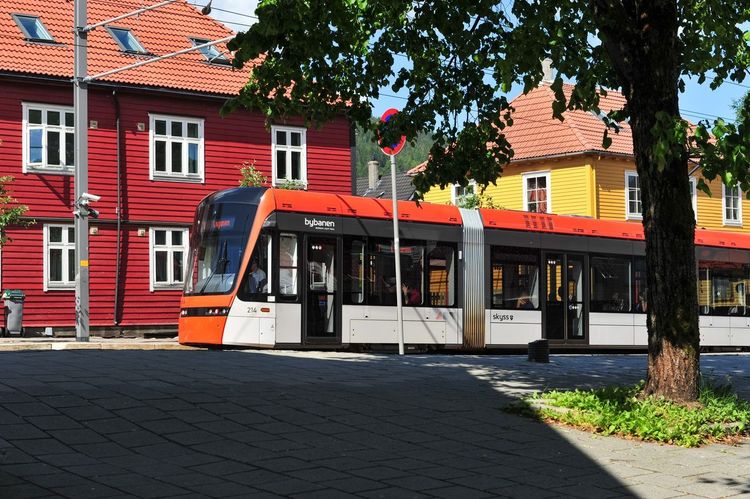
Bergen's public transport network is run by Skyss, the regional transport authority for Vestland. It rests on three complementary pillars: the Bybanen (light rail), a dense network of city buses, and a good dose of walking, since the city centre is compact.
The Bybanen connects Flesland airport to the city centre (terminus at Byparken, a stone's throw from Lille Lungegårdsvann lake) via several residential neighbourhoods, with a tram every 5 to 10 minutes during the day. It's the simplest way to arrive in the city without a car, and it also serves stops useful to visitors, such as the Hop stop, the starting point for the walk to Grieg's house at Troldhaugen. The bus network covers the neighbourhoods the tram doesn't reach, notably the hillsides and the outlying municipalities.
For buying tickets, the Skyss Billett app remains the most practical option: it lets you buy a single ticket, a 24-hour ticket or a long-term pass directly from your phone, without going through a ticket machine. Since 1 May 2026, a single adult fare costs 51 NOK in zone A (the centre and the airport), and the 24-hour ticket costs 136 NOK, valid on buses and trams. If you're unsure, do the maths: the 24-hour ticket pays for itself from the third trip of the day, which happens quickly between the airport, the centre and a visit to Troldhaugen.
One detail that often surprises visitors: you can't pay with cash on board the buses. It's better to install the app before you even land, and link it to a bank card. The ticket is activated when you board, and it's what you show in case of inspection.
On foot, the historic centre can be covered in a leisurely half-day walk. The pavements are generally in good condition, although some alleys in Bryggen remain cobbled and slippery in the rain, which is frequent in Bergen. Bring shoes with good grip rather than smooth soles, especially outside summer.
The Bryggen District, the Hanseatic Heart of Bergen
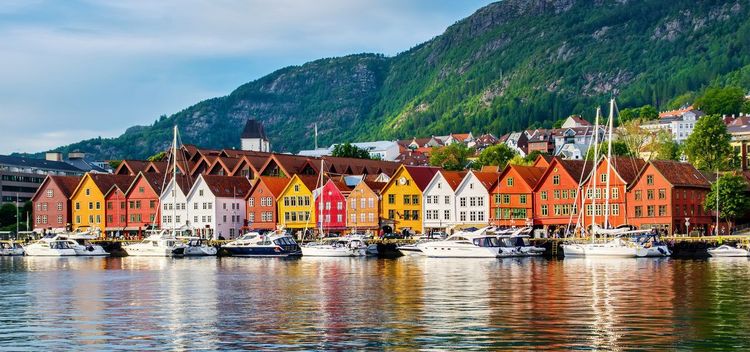
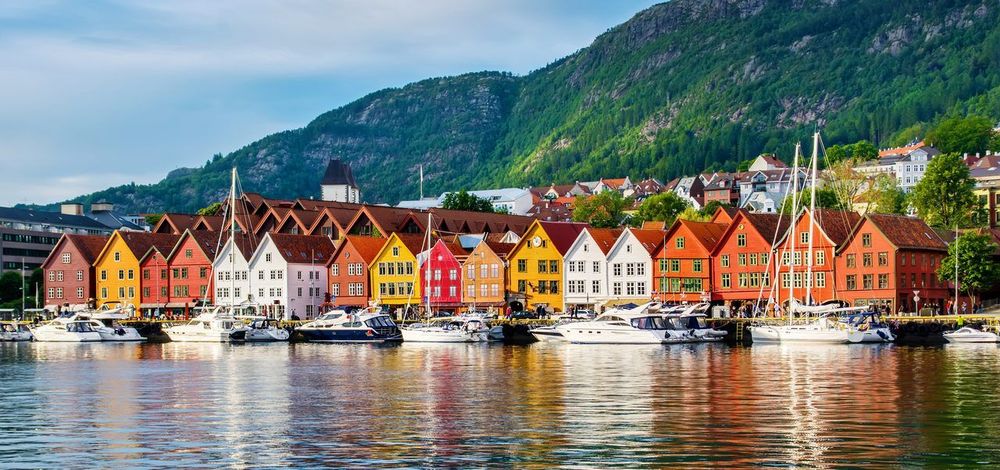
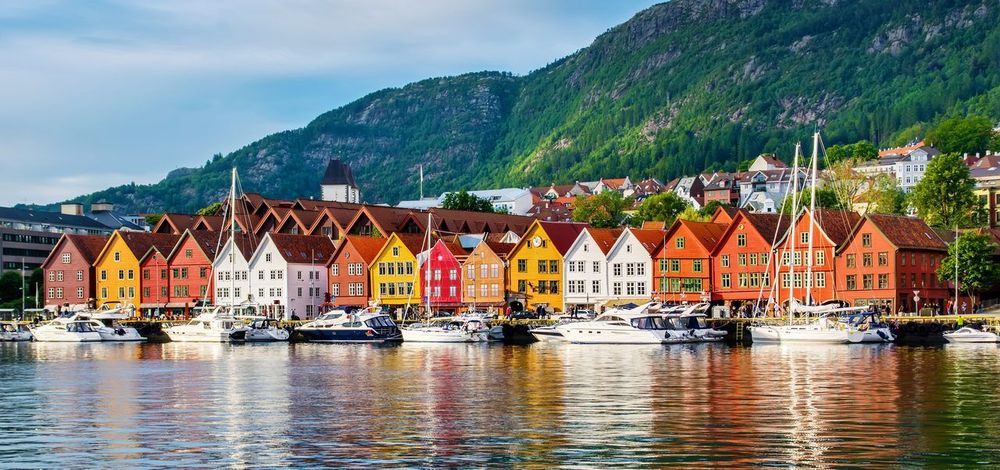
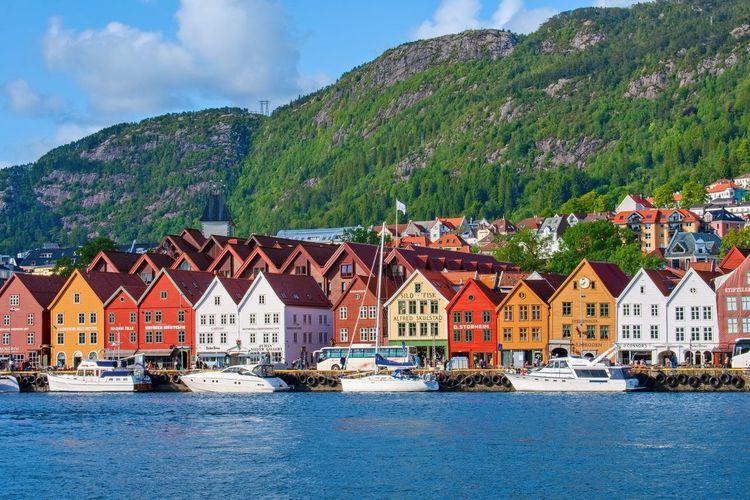
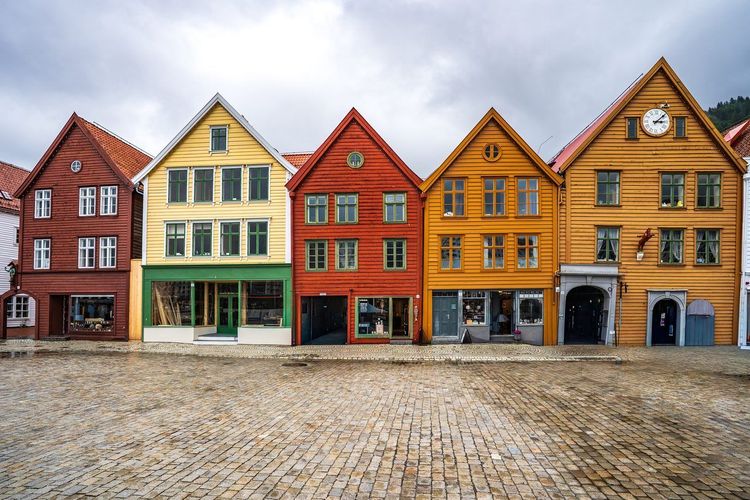
Bryggen is probably the most reproduced image of Bergen: a row of colourful wooden façades, leaning in places, packed tightly against one another along the harbour. This UNESCO World Heritage district, listed since 1979, tells the story of the merchants of the Hanseatic League, who made Bergen a major trading post of northern Europe from the mid-14th century to the mid-18th.
The current buildings largely date from the reconstruction that followed the fire of 1702: the original timber burned several times over the centuries, but the structure of narrow alleys running perpendicular to the harbour has always been respected. As you venture into these passages, you discover inner courtyards housing craftsmen's workshops, art galleries and small ceramics shops.
As for museums, one clarification is needed for 2026. The historic building of the Hanseatic Museum, Finnegården, is closed for major restoration (replacement of the timber foundations) and its reopening is announced for 16 April 2027. In the meantime, the offering has moved to Schøtstuene (Øvregaten 50, 5003 Bergen, rated 4.3/5 on Google from 362 reviews), the merchants' former communal assembly rooms, where the exhibitions tell the story of daily life in Bryggen and let you follow the progress of the works. The Bryggens Museum, very close by, displays the archaeological remains uncovered beneath the district during the excavations that followed the fire of 1955.
It is precisely through these wooden alleys that the Ryo audio-guided tour of Bergen begins, telling the story of the Hanseatic merchants step by step, on the very spot where it was written. A good way to bring depth to what, from a distance, is just a row of picturesque façades on postcards.
The Bergenhus Fortress
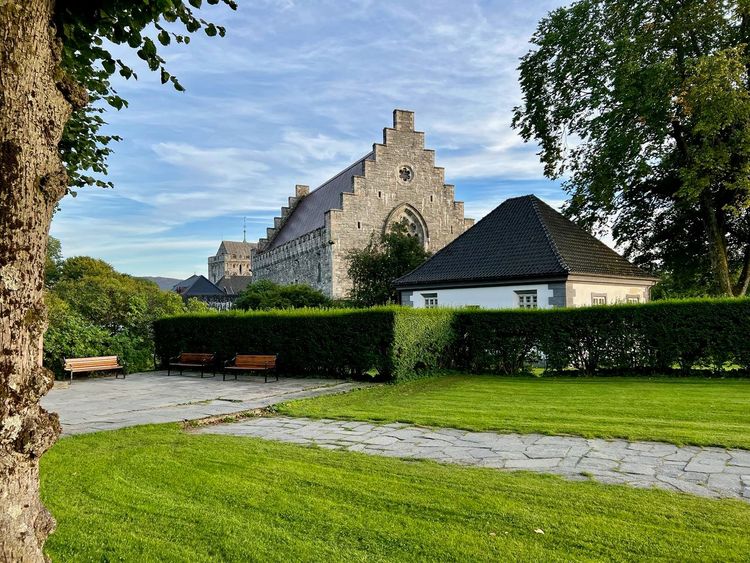
A few minutes' walk from Bryggen, at the tip of the peninsula that closes off the harbour, stands the Bergenhus fortress. It is one of the oldest fortified complexes in Norway still standing, with parts dating from the 13th century, when Bergen was the capital of the kingdom.
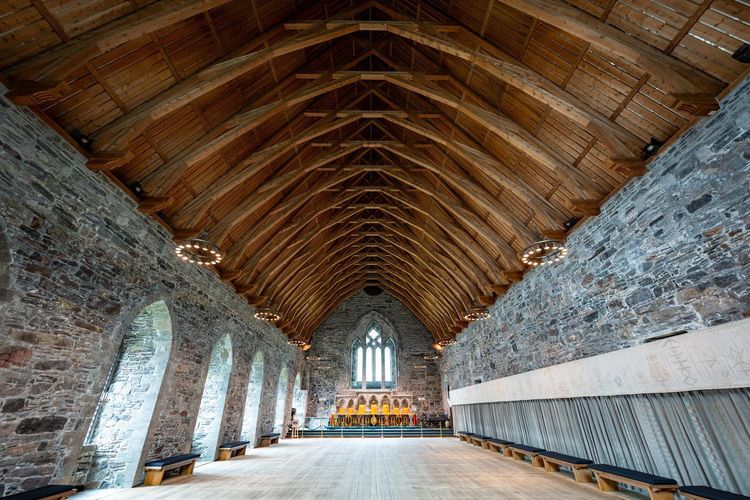
Two features deserve a stop. Håkonshallen, the great hall built around 1261 for King Håkon Håkonsson, was used for royal ceremonies and banquets; it was restored after being severely damaged by a ship explosion in the harbour in 1944. Right next to it, the Rosenkrantz Tower (Rosenkrantztårnet (Bergenhus, 5003 Bergen, rated 4.4/5 on Google from 599 reviews)) combines a medieval keep with a Renaissance residence, with a spiral staircase leading up to a wall walk offering an open view over the harbour entrance.
You can wander freely around the grounds and their lawns, where locals come to picnic as soon as a ray of sunshine breaks through. Access requires neither a car nor any particular effort: allow five to eight minutes on foot from the last houses of Bryggen, along the quay. The two most history-rich sites in the city almost touch, which sums up the appeal of a stay on foot rather well. The same audio-guided tour that starts at Bryggen devotes several stops to the ramparts and the Rosenkrantz Tower, so you can link the two visits without worrying about the route.
The Fløibanen Funicular and Mount Fløyen
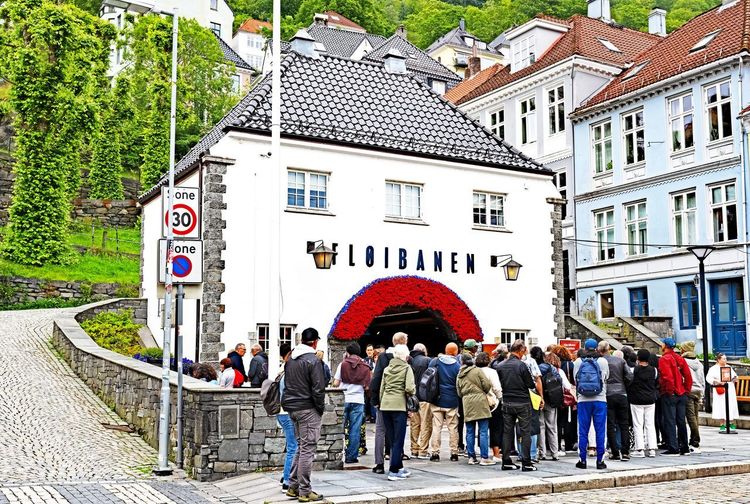
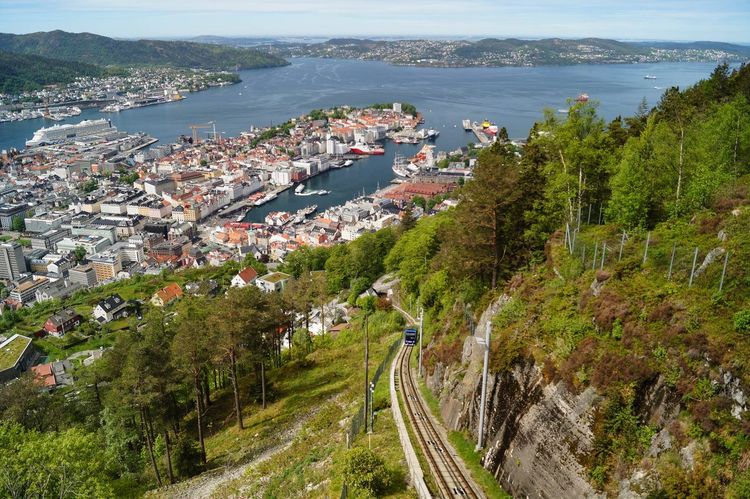
If you could do only one thing at altitude in Bergen, this would be it. The Fløibanen (Vetrlidsallmenningen 21, 5014 Bergen, rated 4.7/5 on Google from 5,686 reviews) is a funicular that climbs from the city centre to the summit of Mount Fløyen, at 320 metres above sea level, in just six to eight minutes.
Opened in 1918, it departs from a station five minutes' walk from the fish market, making it one of the easiest excursions in the whole city when you're getting around on foot. Departures are frequent (about every 15 minutes during the day) and the ride alone justifies the trip: the view from the top of Mount Fløyen takes in the whole historic centre, the harbour and the surrounding hills. If you have a Bergen Card, the return ticket is half price.
Once at the top, several marked trails lead into the forest, from a short 20-minute family loop to the Vidden route that reaches Ulriken after several hours of walking. Children particularly enjoy the troll trail, dotted with wooden sculptures hidden in the undergrowth, and Lake Skomakerdiket, where you can rent canoes in summer.
Got good legs? The walk down via the Fløysvingane switchbacks takes about 40 minutes and offers changing views of the city at every bend. A good compromise is to take the funicular up and walk back down, which also avoids the queue for the return in late afternoon.
The Ryo audio-guided tour passes very close to the funicular's lower station: you can continue straight on to the climb up Mount Fløyen without having to find your way between two visits.
The Ulriken Cable Car (Ulriken643)
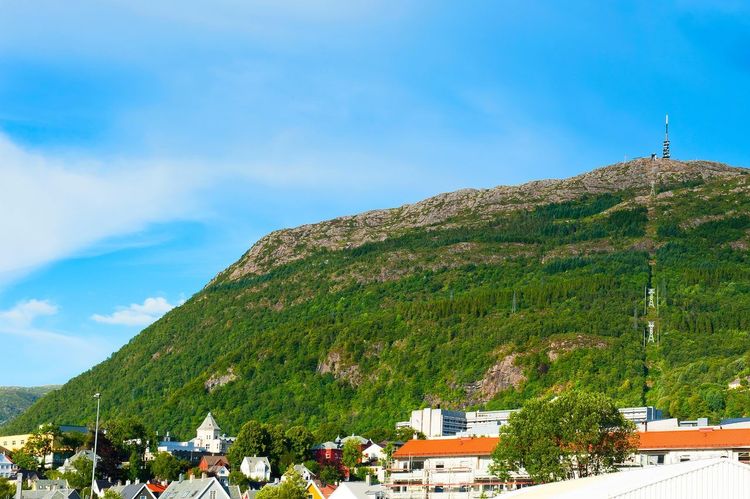
Less well known to passing visitors than the Fløibanen, the cable car up Ulriken643 (Ulriksbanen 1, 5009 Bergen, rated 4.7/5 on Google from 4,363 reviews) is nonetheless worth the detour, especially if you did Fløyen the day before. Ulriken is the highest of Bergen's seven hills, with the 643 metres that give it its commercial name.
Unlike the Fløibanen, the departure station isn't in the historic centre. The simplest solution is the Ulriken Express shuttle, which leaves from Torgallmenningen 1A, near the tourist office: one departure every 30 minutes between 9am and 6:30pm from 1 April to 15 October, for a journey of about 10 minutes. No need to book; tickets are bought at the stop, online or on board by card. Note that the last return to the centre leaves Ulriken at 6:15pm. Out of season, Skyss city buses to the Haukeland district stop about ten minutes' walk from the station.
Once at the top, the panorama rivals that of Fløyen, only wilder: you see the fjords stretching to the horizon on one side, and the archipelago off Bergen on the other. The more athletic can try the via ferrata or the zip line installed on the site, while hikers can continue on the Vidden trail towards Fløyen. Allow a full day and good shoes for this crossing, which advantageously ends with the descent by funicular.
Fjord Cruise from Bergen: Mostraumen and Surroundings
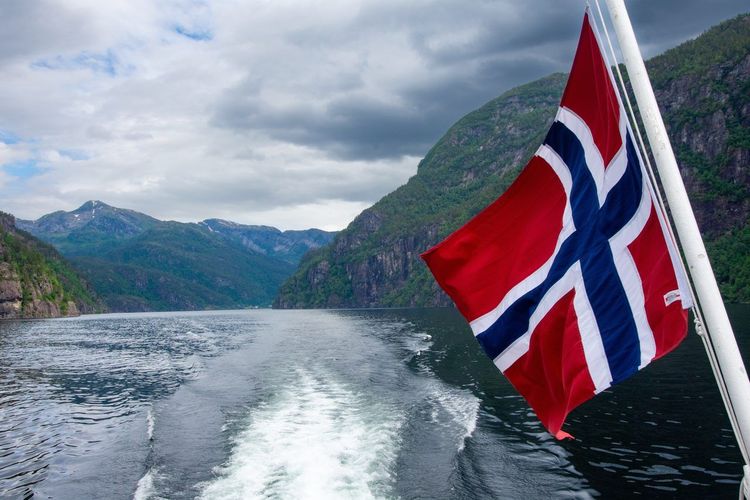
Bergen opens directly onto the network of fjords surrounding the city, and that's precisely one of the big advantages of a car-free stay: boats leave from the harbour, right in the centre, with no approach journey.
The most accessible cruise heads towards Mostraumen, a narrow passage of the Osterfjord where tidal currents create real whirlpools visible from the boat's deck. With the company Rødne, the round trip lasts 3 to 3.5 hours, departing from Strandkaien, between the terminal and the Mathallen building of the fish market. The boat follows a fjord lined with steep cliffs, waterfalls and small isolated farms, then slips into the strait, so narrow that the hull seems to brush the rock. Tickets can be bought online, at the tourist office or directly at the quay.
For a shorter version, our Ryo audio-guided tour La Princesse des Fjords is available in a shorter format, ideal if you only have half a day or if you're travelling with young children not used to long outings.
These excursions depart several times a day in summer, leaving time to combine the cruise with a visit to the city centre on the same day. No vehicle to book, no parking to manage: you simply step off the boat at the exact spot where you boarded. A tip: bring a warm layer even in July, as the wind on deck quickly lowers the felt temperature.
The Fish Market (Fisketorget) and Local Gastronomy
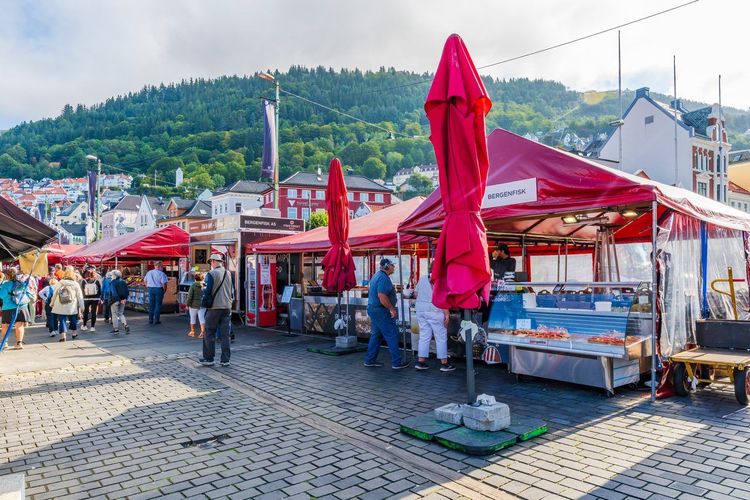
The Fisketorget (Zachariasbryggen, 5004 Bergen, rated 3.8/5 on Google from 660 reviews), Bergen's fish market, has occupied the same spot on the harbour since the Middle Ages, even though the current covered building, Mathallen, dates from 2012.
You'll find stalls of fresh fish, but also several counters where you can eat on the spot: creamy fish soup (fiskesuppe), salmon tartare, whelks and peeled shrimp prepared to order. Prices are high, as everywhere in Norway, but it's one of the rare places to taste several local specialities in a single stop, without booking a table. Always ask the price by weight before ordering a platter: that's where the unpleasant surprises lurk.
Around the market, several restaurants offer fuller menus, often centred on seafood. Don't leave without trying the skillingsbolle, the cinnamon bun that is a local speciality in the bakeries of the centre. If your budget is tight, the Rema 1000 or Kiwi supermarkets, found throughout the centre, let you put together a decent meal for a fraction of the price of a tourist restaurant. This advice applies to the entire stay, not just this stop at the market.
Museums Not to Miss in Bergen
Bergen packs a dense museum offering into a small area, making it a particularly pleasant city to explore on foot, especially on rainy days.
KODE (Rasmus Meyers allé 3, 5015 Bergen, rated 4.3/5 on Google from 587 reviews) brings together four buildings lined up along Lille Lungegårdsvann lake, devoted to art, design and music. There you'll see one of the finest collections of works by Edvard Munch outside Oslo, assembled by the collector Rasmus Meyer, as well as a vast collection of 19th-century Norwegian painting. KODE also manages the composers' houses, including Troldhaugen.
For music lovers, Edvard Grieg's home, Troldhaugen, can be visited on a short excursion from the centre: it is served by the Bybanen to the Hop stop, followed by a twenty-minute walk. Maritime history enthusiasts will find what they're looking for at the Bergen Maritime Museum (Bergens Sjøfartsmuseum), which traces the history of Norwegian navigation since the Viking era. With children, the Bergen Aquarium, at the tip of Nordnes, makes a good end-of-day outing: you can walk back to the centre in about twenty minutes.
None of these museums requires more than 20 minutes of public transport from Bryggen, which lets you slip in one or two between showers without upsetting your schedule. Most are free or discounted with the Bergen Card.
Fjord Excursions Without a Car: Hardangerfjord, Voss and Flåm

This is often the question that holds travellers back: do you need to rent a car to visit the fjords around Bergen? The short answer is no, provided you accept building your schedule around train, bus and ferry timetables rather than your own driving. It's often even more comfortable, since the lines serving the fjords are designed for tourism and offer viewpoints that no road could allow you to enjoy as well.
The classic starting point is the Bergen–Oslo train (the Bergensbanen), which you leave at the station of Myrdal to take the Flåm line, considered one of the most spectacular railway journeys in the world, with its 20 km descent and 866 metres of elevation drop in under an hour, waterfalls and spiral tunnels included. This route is marketed as Norway in a Nutshell, which combines train, bus and boat over a single day or several days.
Going to Flåm and sleeping there completely changes the experience compared to a day trip. You avoid the crowds of organised groups heading back down in late afternoon, and you can continue the next morning with a cruise on the Nærøyfjord, a UNESCO-listed site whose walls drop almost vertically into the water. Book early: the village has few accommodations and they go quickly in July.
Ferries are literally indispensable for this type of trip: without a car, they replace the roads running along the fjords and let you reach villages that no bus line serves directly. Between Flåm, Gudvangen and Balestrand, several companies, including express boats, run daily rotations in high season, less frequent in winter. They are the centrepiece of any car-free trip in this region, far more than the train or the bus.
Voss (Voss, 5700 Voss), halfway between Bergen and Myrdal on the train line, is a good alternative base for outdoor sports enthusiasts: mountain scenery, hiking, paragliding, and easy access to the Hardangerfjord by regional bus. The Hardangerfjord itself, renowned for its blossoming orchards in spring and its local cider, can be reached from Voss or Bergen by a bus-ferry combination, with stops in villages such as Norheimsund or Ulvik.
Further north, getting to Fjærland without a car takes a bit more organisation: you need to reach Sogndal by bus or express boat from Bergen, then take a local connection. The village, framed by arms of the Jostedalsbreen glacier, is worth the effort for lovers of glacial landscapes, but it's clearly an option to reserve for a stay of five days or more.
And if you feel like going further, towards Geiranger, Ålesund or even the Lofoten Islands? It's doable without a car, but on a different scale: regional buses, the Hurtigruten along the coast and domestic flights then replace the train-ferry duo. Allow one to two weeks and a good dose of planning.
To sum up unambiguously: renting a car to visit the fjords around Bergen offers almost no practical advantage, unless you plan to explore very remote valleys away from the classic tourist routes. For Flåm, Voss, the Hardangerfjord and even the Nærøyfjord, trains, buses and ferries are more than enough, and our Ryo audio-guided tour La Norvège des Fjords follows precisely this logic, step by step.
Where to Stay in Bergen Without a Car: The Best Neighbourhoods
For this car-free itinerary, your choice of accommodation directly determines your day-to-day comfort. It's better to choose a place in or immediately next to the historic centre, even if it means paying a little more per night.
The area around Bryggen and the cathedral puts everything within walking distance: Bergenhus, the fish market and the railway station are all less than ten minutes away. The Nordnes peninsula, just to the west, offers a quieter, more residential atmosphere, with quick walking access to the centre and the aquarium. The Sandviken district, north of Bergenhus, lines up pretty white wooden houses and often gentler prices, fifteen minutes' walk from Bryggen.
If you plan a fjord excursion at the start or end of your stay, sleeping near the station or the Byparken stop simplifies early-morning connections to Myrdal, Voss or the airport. On the other hand, avoid remote accommodations in outlying residential areas, designed for motorised visitors: you would depend on a bus with a much less convenient frequency than in the centre.
Budget and Transport Passes in Bergen
How much does a car-free trip to Bergen cost? Here are the 2026 benchmarks for transport and the main visits:
- Skyss single ticket (zone A): 51 NOK per adult
- Skyss 24-hour ticket (zone A): 136 NOK, unlimited bus and Bybanen
- Bergen Card 24 h: 400 NOK per adult, 100 NOK per child aged 3 to 15 (48, 72 and 96-hour options available)
- Cruise to Mostraumen: allow half a day and a budget to check with Rødne depending on the season
The Bergen Card is an interesting alternative for a stay of two or three days: it includes Skyss buses and the Bybanen in zone A, airport trip included, as well as free or discounted entry to most of the city's museums, including KODE and the Hanseatic Museum, plus 50% off the Fløibanen return trip. On a sightseeing-heavy schedule, it quickly becomes cheaper than individual tickets. On a more contemplative stay, the simple 24-hour ticket is enough.
For the overall budget, plan a wide range: accommodation and dining remain expensive in Norway, often 30 to 40% above Western European standards. In return, the absence of car rental, fuel, tolls and parking offsets a significant part of this extra cost over a stay of several days.
When to Go to Visit Bergen Without a Car
The period between May and September remains the most comfortable for a stay on foot and by public transport, for a very concrete reason: that's when boats to the fjords, the Ulriken shuttle and tourist buses run at maximum frequency. Outside this window, some services reduce their rotations, or even stop until spring.
Bergen has the reputation, deserved, of being one of the rainiest cities in Europe, with rain more than 200 days a year. So how should you dress in Norway in summer? A light waterproof jacket and shoes with grippy soles are enough most of the time; summer temperatures hover around 14 to 18°C, rarely higher. Layer several thin garments rather than one thick sweater: the weather can change several times in the same day. Locals even have a saying for it: there's no such thing as bad weather, only bad clothing.
The Flåm line and fjord cruises remain accessible for part of the winter, but with restricted schedules and a snowy landscape different from that of the summer brochures. If your priority is fjord navigation, summer is clearly preferable. In late May, you also enjoy very long days and the Bergen International Festival, before the July influx.
Recommended Itinerary: 2 Days in Bergen Without a Car
Here is a breakdown that works well for a first stay, grouping the places already detailed above without repeating all the practical details.
Day 1: discovering Bergen's main sights. Start early at Bryggen and its wooden alleys, before the cruise groups arrive. Continue to the Bergenhus fortress, five minutes' walk away, to visit Håkonshallen and the Rosenkrantz Tower. Late in the morning, head to the Fisketorget for a fish soup lunch facing the harbour. In the afternoon, go up Mount Fløyen on the Fløibanen: allow a good two hours between the ride up, the walk at the summit and the descent, panorama included.
Day 2: Bergen seen from above and from the water. Devote the morning to the Ulriken643 cable car, reached by the Ulriken Express shuttle from Torgallmenningen, for a wilder viewpoint over the seven hills. If the weather allows, extend with a short walk along the first kilometres of the Vidden trail. In the afternoon, board a cruise towards Mostraumen: it's a chance to see Bergen from the water, from the other side of the scenery. If rain sets in, switch to KODE and Schøtstuene, a few minutes from each other.
If you have a third day, this is the time to extend the itinerary towards Flåm or the Hardangerfjord, as a full day trip with a return to Bergen in the evening, or by spending a night there to enjoy the Nærøyfjord in peace, away from the day-trip groups.
For the first day, the Ryo audio-guided tour of Bergen follows almost the same thread, from Bryggen to the ramparts and then to the foot of the funicular, with an audio stop at each key place. A good way to link your visits without taking out your phone at every crossroads to check your route.
Getting to Bergen Without a Car: Plane, Train and Bus
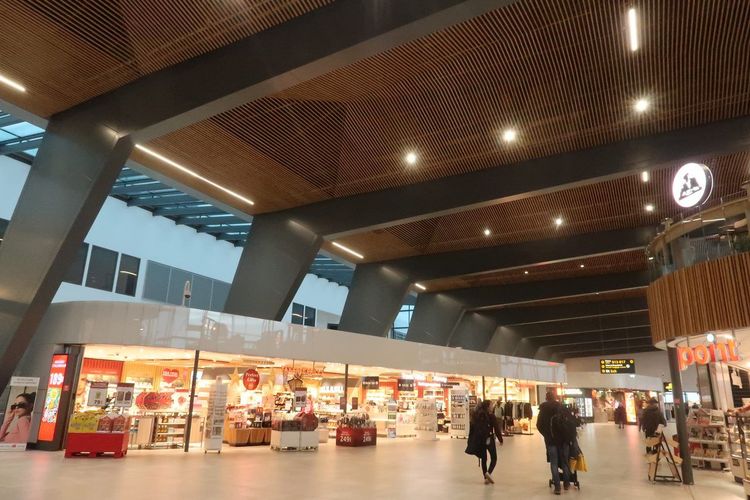
The most common way to arrive in Bergen is still by plane. Flesland airport, about twenty kilometres south of the centre, is connected to the city by the Bybanen (about 45 minutes, at the price of a single Skyss ticket) and by the Flybussen shuttle, which is faster but more expensive. Domestic flights from Oslo, Stavanger or Tromsø are frequent, operated notably by SAS, Norwegian and Widerøe, the latter also serving smaller airfields in western Norway.
For a slower but spectacular arrival, the Norwegian rail network offers the Bergensbanen, the line linking Oslo to Bergen in six and a half to seven hours, crossing the Hardangervidda plateau. It is one of the country's main railway lines, alongside the Dovrebanen (Oslo–Trondheim) and the Flåmsbana for its most touristic section. Booking your seat a few weeks in advance on the Vy website gets you significantly lower fares than those bought at the last minute.
Long-distance buses also link Bergen to Oslo or to the cities of the west coast, for a longer journey than the train but often cheaper. Finally, for travellers arriving from the coast, express boats serve the port of Bergen directly from several villages on the Sognefjord, an option to consider if your stay already includes a stop in the fjords before arriving in the city. The Hurtigruten, which runs along the coast to Kirkenes, also departs from Bergen.


FAQ
Can you visit Bergen without renting a car?
Yes, easily. The historic centre is walkable, and outlying sites such as Ulriken or Troldhaugen are served by shuttle, bus and tram. It's actually the most practical option, given the cost and scarcity of parking in the city centre.
How many days do you need to visit Bergen without a car?
Two days are enough to cover Bryggen, Bergenhus, Fløyen and the fish market. Allow three to four days if you want to add an excursion to the fjords, Flåm or the Hardangerfjord, with or without an overnight stay.
How do you get from Bergen airport to the city centre without a car?
The Bybanen links Flesland airport to the centre in about 45 minutes, with frequent trams throughout the day, for 51 NOK. The Flybussen shuttle makes the trip faster, at a higher fare.
Do you need a car to visit the fjords around Bergen?
No. Trains to Myrdal or Voss, the Flåm line, regional buses and ferries cover most destinations, including the Nærøyfjord and the Hardangerfjord. A car only offers a real advantage for very remote valleys, away from the classic tourist routes.
What is the best transport pass in Bergen?
The Skyss 24-hour ticket (136 NOK in zone A) is fine for standard city use. If your stay includes several museums, the Bergen Card (400 NOK for 24 hours) quickly becomes more economical, as it combines public transport with access to most cultural sites.
What is the best time of year for a car-free stay in Bergen?
Between May and September, when boats to the fjords, the Ulriken shuttle and tourist buses run at full frequency. The rest of the year is still accessible, but with reduced schedules on some routes.
Bergen remains one of the few major Norwegian cities where giving up the idea of a car genuinely simplifies the trip rather than complicating it. Between the alleys of Bryggen, the climb up Mount Fløyen and the boats heading out to the fjords, every journey becomes part of the trip rather than a logistical constraint. If you want to turn this list of places into a continuous route, without spending hours on preparation, the Ryo audio-guided tour La Princesse des Fjords traces the thread between the historic centre and the first panoramas over the water, for a stay enjoyed on foot and by boat, without ever looking for a parking space.