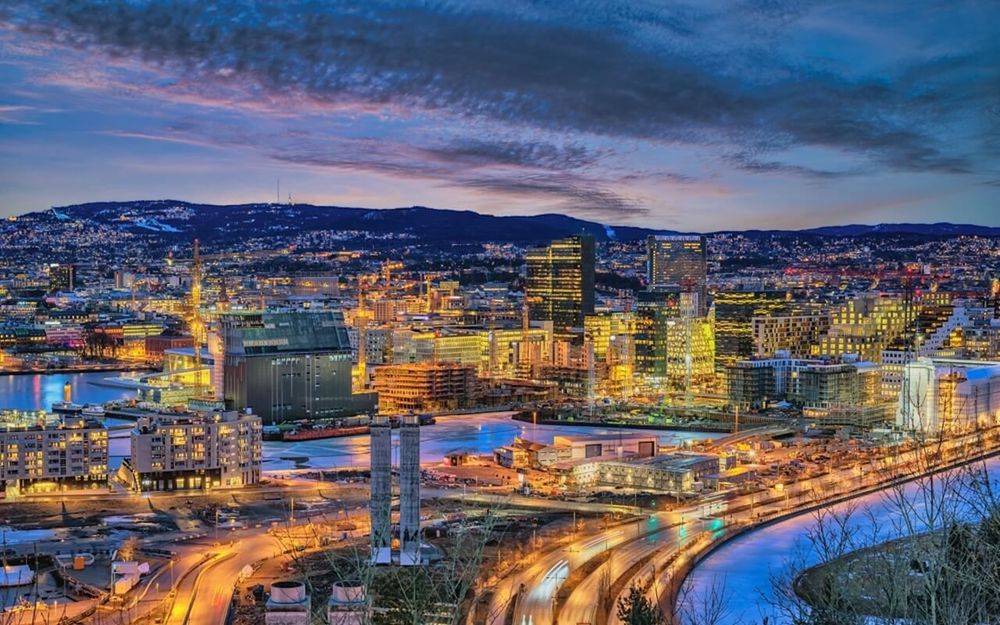
© Shutterstock
 Votre guide Ryo
Visiting Oslo with Family: The Complete Guide for 2026
A six-year-old can feel a ski jumper's thrill without ever leaving the ground: at Holmenkollen, a simulator recreates the sensation of the jump in complete safety, straps included. Visiting Oslo with family often holds this kind of surprise for parents who came for the fjords, who discover a capital designed for all ages. On the program: polar ships you can climb aboard, a park with more than 200 bronze and granite sculptures, free swimming in the heart of the city, and kayaking without ever straying far from the historic center. The Ryo audio-guided tour of Oslo links a good number of these stops on foot, from the Opera House to the royal palace, with 23 audio tracks over 7.6 km. Here you will find the places that really matter, an honest update on the museums closed in 2026, and then all the practical questions to settle before booking: budget, season, transport and accommodation.
Oslo's Historic Center: Royal Palace, Cathedral and Karl Johans gate
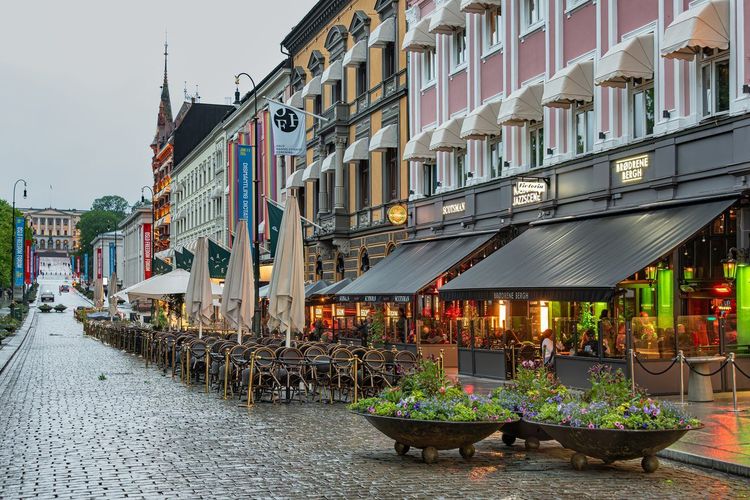
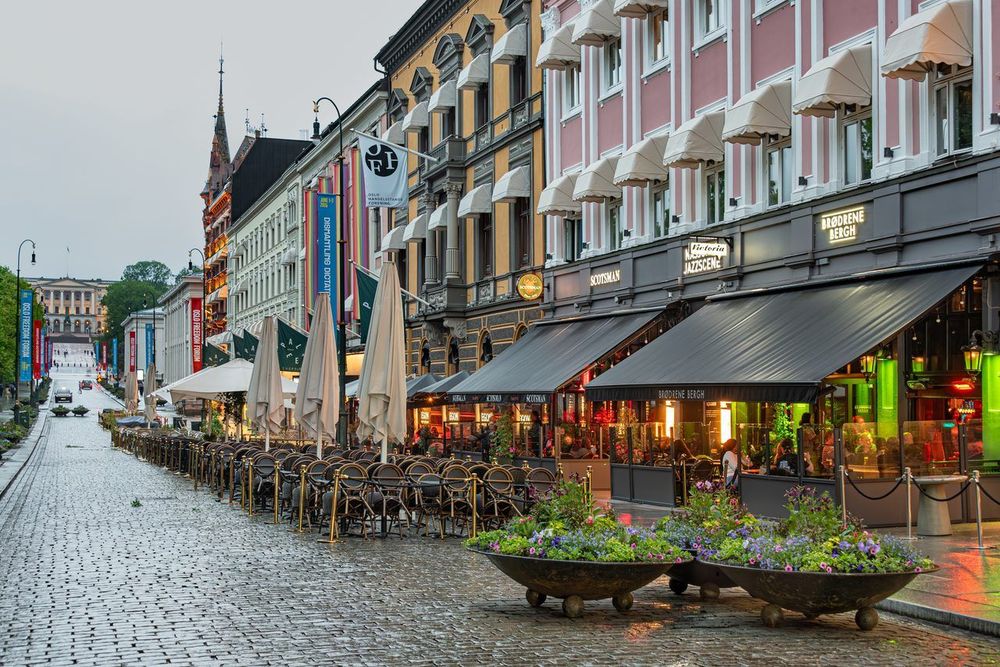
Oslo's center is flat to walk around, which makes it an excellent starting point with a stroller or with little legs that prefer to walk at their own pace. Two landmarks frame this stroll: the royal palace to the west, the cathedral and the shopping street to the east.
The Royal Palace and Its Park
The Royal Palace of Oslo (Det Kongelige Slott) overlooks the city from a gentle hill, at the end of Karl Johans gate (Karl Johans gate, 0154 Oslo). Built between 1824 and 1849 for King Charles XIV John (Karl Johan), who then ruled over Sweden and Norway, it can only be visited in summer, on a guided tour. Its park, the Slottsparken, remains open all year and is free.
It is this park that interests the little ones most: lawns for picnics, a pond with ducks, and above all the changing of the guard, every day at 1:30 pm, which lasts about fifteen minutes and generally fascinates the youngest more than the adults. Arrive ten minutes early to get a spot in the front row; perched on your shoulders, little ones will see the uniforms and the rifles carried on the shoulder better.
If everyone needs to burn off energy, let them run down the sloping lawns while you admire the neoclassical facade. No fence separates the park from the city: you enter and leave as in any public space, which makes short visits between two stops easy.
Oslo Cathedral and Karl Johans gate
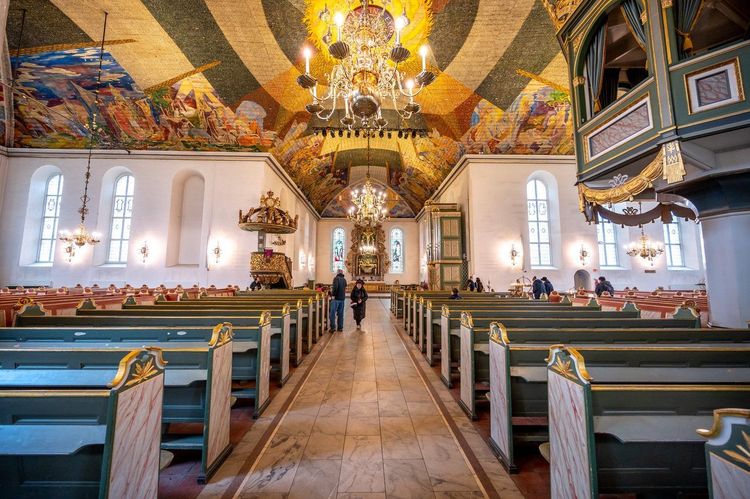
Ten minutes on foot from the palace, going back down the avenue, Oslo Cathedral (Oslo domkirke) closes off the other end of Karl Johans gate. Consecrated in 1697, after the great fire of 1624 that led to the city being rebuilt further north, it houses an impressive painted ceiling and an organ that can sometimes be heard during daytime concerts.
Between the two monuments stretches Karl Johans gate, the capital's pedestrian shopping street. You quickly spot the ice cream vendors and the street artists who set up in the afternoon, jugglers or musicians depending on the day. The Parliament (Storting), the National Theatre and the historic university line the route.
The Ryo audio guide stops in front of the royal palace, the Parliament and then the cathedral, with a short anecdote at each stop: enough to answer "what is that building?" without improvising on the sidewalk. Allow a good hour for the area if you stop at every shop window, two hours with the changing of the guard.
Just behind the palace, the Historical Museum (Frederiks gate 2, 0164 Oslo, rated 4.2/5 on Google from 3,417 reviews) (Historisk museum) deserves half an hour: while waiting for the Viking Ship Museum to reopen, this is where the University of Oslo displays helmets, jewelry and weapons from the Viking era. The rooms are compact, ideal when attention fades quickly.
Akershus Fortress and the Aker Brygge Harbor
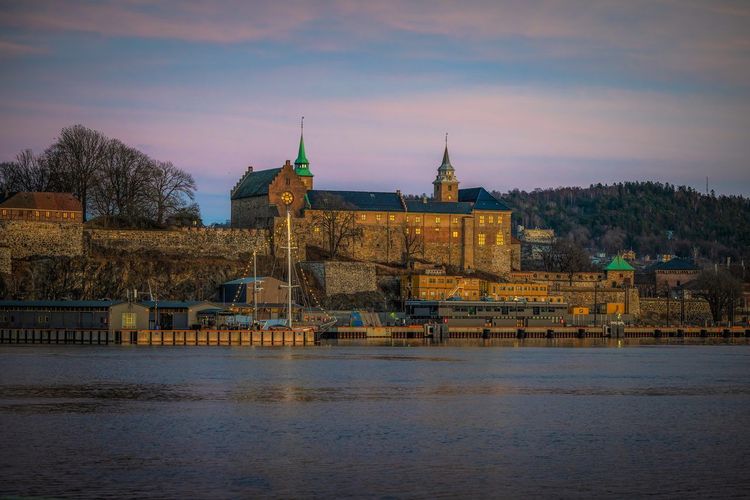
From Karl Johans gate, you just need to head down toward the fjord to move between two very different atmospheres: a medieval fortress and then a resolutely contemporary waterfront.
Akershus Fortress and Castle
The Akershus Fortress (Akershus Festning) has occupied a rocky point on the edge of the fjord since the end of the 13th century. The ramparts can be visited freely and at no cost for a good part of the day, an easy stop to fit between two meals, with no reservation or ticket.
The youngest mostly love scrambling over the old bastions and watching the cannons pointed at the fjord. In good weather, the view over the water from the ramparts is worth the climb on its own. The military museum inside the grounds will appeal more to children over eight, curious about the armor and uniforms on display.
Avoid late winter afternoons: night falls early on the uneven cobblestones, which are impractical with a stroller in the dark. Favor the morning or early afternoon. In summer, the fortress's changing of the guard and picnics on the bastion lawns pleasantly round off the visit.
Before leaving the area, make a detour to Oslo's City Hall (Rådhuset), with its two brick towers and huge murals. Entry is free, and it is in its great hall that the Nobel Peace Prize is awarded every December 10: an anecdote that often impresses schoolchildren. The Nobel Peace Center, right across the way, offers exhibitions accessible from age ten.
Aker Brygge, the Opera House and the Bjørvika District
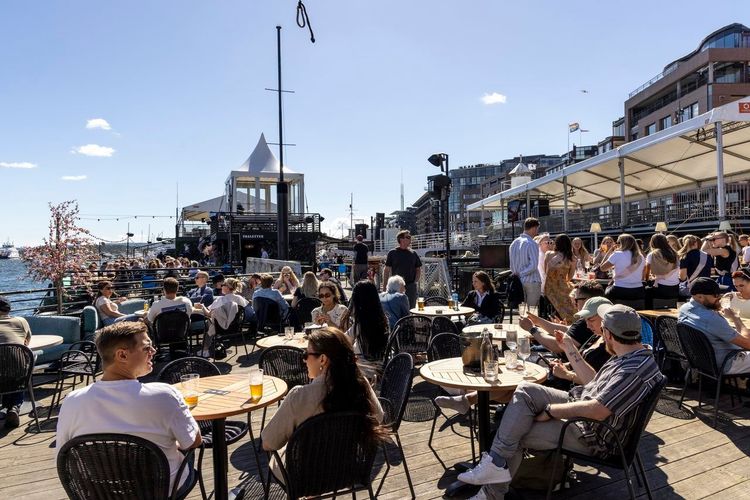
Following the fjord from the fortress, you reach Aker Brygge to the west, a former shipyard converted into a promenade with restaurants, terraces and a pier where ferries to the islands dock. Nearby, the National Museum of art, architecture and design, opened in 2022, is the largest art museum in the Nordic countries: you can see a version of The Scream by Edvard Munch, and its Scandinavian design rooms appeal to teenagers with an eye for aesthetics.
East of the fortress stands the Oslo Opera House, a white marble building whose sloping roof can be climbed freely, without a ticket: you run up it like an artificial dune, with an open view over the fjord.
Right next door, the Bjørvika district brings together recent buildings, an urban beach and outdoor play areas. The Munch Museum (Edvard Munchs plass 1, 0194 Oslo, rated 4.5/5 on Google from 18,576 reviews), a 13-story tower inaugurated in 2021, displays the work of the painter of The Scream; the upper floors offer one of the finest panoramas of the harbor. If you want to link this whole waterfront without searching for your way, the short version of the Ryo audio-guided tour links the Opera House, the Munch Museum, the Akershus Fortress and City Hall in 20 audio tracks and about two hours over 5.1 km, a format well suited to eight-year-old legs.
The Bygdøy Peninsula and Its Museums
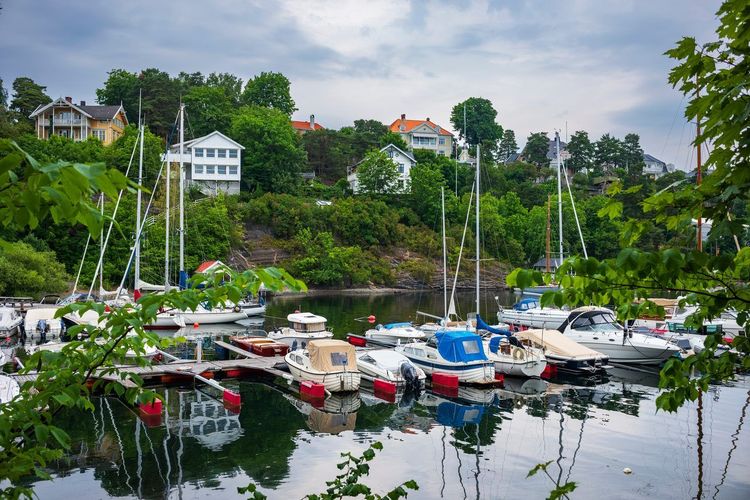
Reachable in about ten minutes by ferry from Aker Brygge harbor in the warmer season, or all year by bus (line 30), the Bygdøy peninsula concentrates several major museums in a single green area, lined with beaches.
The Viking Ship Museum and the Fram Museum
Before planning anything, know that the Viking Ship Museum (Vikingskipshuset) is closed: the building is under full reconstruction and will reopen as the Museum of the Viking Age, an opening announced for 2027 by the University of Oslo. The Oseberg and Gokstad ships, more than a thousand years old, are therefore not on view in 2026; to see Viking objects, fall back on the Historical Museum in the city center.
Good news, the neighboring Fram Museum more than compensates. It tells the Norwegian polar epic around the Fram, a wooden ship that sailed farther north and farther south than any other vessel of its time. You climb straight onto the deck, squeeze into the cramped cabins of Amundsen's crew and try a polar cold simulator: probably the most physical museum on the peninsula.
Across the way, the Kon-Tiki Museum displays the balsa raft on which Thor Heyerdahl crossed the Pacific in 1947. Visitors love going down beneath the raft to discover a life-size whale shark. Allow a good hour per museum if your tribe likes handling interactive displays, less if you hurry on to the next one.
After the museums, keep an hour for the Bygdøy beaches: Huk, at the southern tip, and the little cove of Paradisbukta offer flat rocks, calm water and shady lawns, the ideal spot to picnic facing the fjord before taking the ferry back.
The Norwegian Museum of Cultural History (Norsk Folkemuseum)
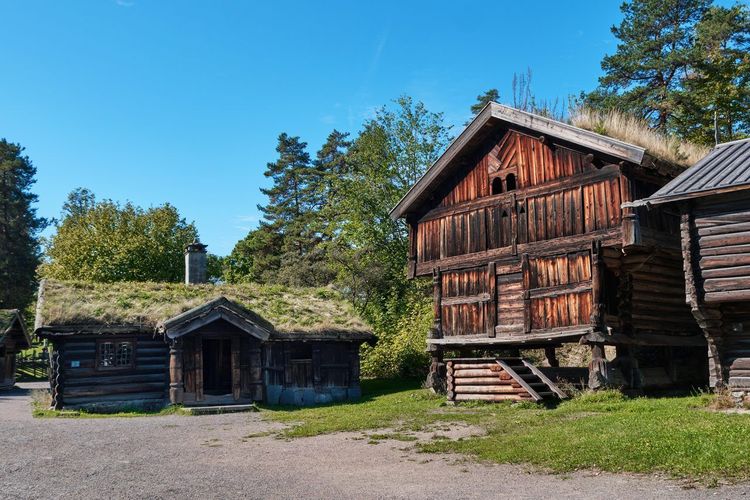
The Norsk Folkemuseum (Museumsveien 10, 0287 Oslo, rated 4.7/5 on Google from 12,651 reviews) recreates a life-size Norwegian village: more than 160 old buildings moved from across the country, including the Gol stave church, more than 800 years old. In summer, costumed guides cook flatbreads (lefse) on a wood stove and let visitors watch, or even taste.
The animals of the educational farm, goats and sheep above all, often hold attention longer than the historic buildings. If time is short, keep at least half an hour for this part of the site.
Vigeland Sculpture Park, the Must-See Open-Air Attraction
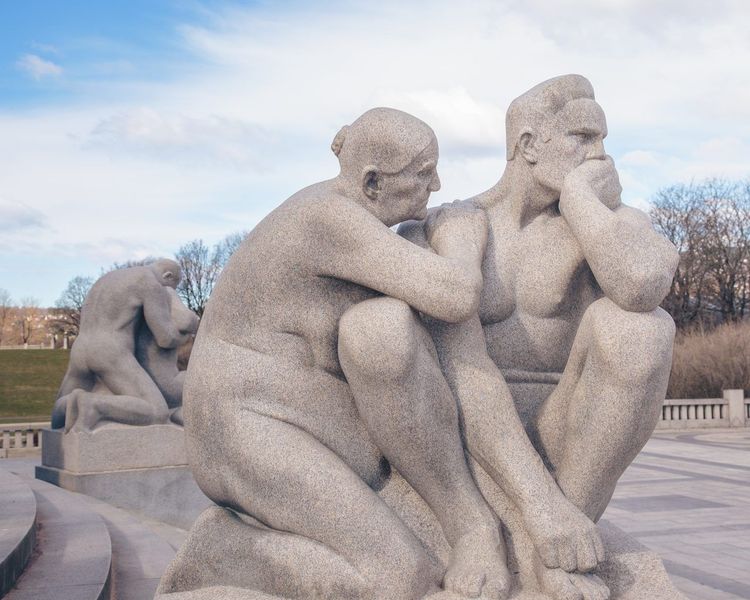
In the heart of Frognerpark, the Vigeland Sculpture Park (Nobels gate 32, 0268 Oslo, rated 4.7/5 on Google from 25,522 reviews) (Vigelandsparken) gathers more than 200 works in bronze, granite and wrought iron, all by a single artist, Gustav Vigeland, who worked on it from the 1920s to the 1940s. The whole park is free, open day and night, and remains one of the rare open-air museums where you move freely among the works.
Two statues are a unanimous hit with little ones: the angry baby (Sinnataggen), which everyone photographs while imitating its grimace, and the central monolith, a 14-meter-high granite column carved with 121 intertwined human figures. Take the bridge with its 58 bronze sculptures before reaching the monolith: it is the most logical visiting order from the main entrance.
Challenge your explorers: count the babies hidden in the bronze groups, or find the sculpture that looks most like them. Around the works, the Frognerpark lawns are perfect for a picnic or a game of ball, and a large playground awaits a few minutes' walk away for those who still need to burn off energy.
Museums and Activities Designed for Young Visitors
Beyond Bygdøy, several places specifically target under-15s and save a rainy afternoon.
The Paradox Museum and the Museum of Science and Technology
The Paradox Museum lines up dozens of optical illusions and interactive installations: an anti-gravity room, distorting mirrors, an infinity room. Everything is designed to be handled and photographed, with no display cases and no rule against touching.
Allow one to two hours on site, more if your tribe wants to redo each illusion for the perfect photo. The place is particularly suited to rainy days, which are frequent in Oslo outside of summer.
Further north, in Kjelsås, the Norwegian Museum of Science and Technology (Norsk Teknisk Museum) is one of the great favorites of Norwegian schoolchildren: a science center where you experiment with electricity and mechanics, plus old planes, trains and cars. Plan for half a day; it is the kind of place you struggle to leave before closing time.
On the nature side, the Natural History Museum, nestled in the Tøyen botanical garden, presents dinosaur skeletons, stuffed Arctic animals and mineral collections; the adjoining garden, free, offers a green break right afterward.
The Ski Museum and the Holmenkollbakken Ski Jump
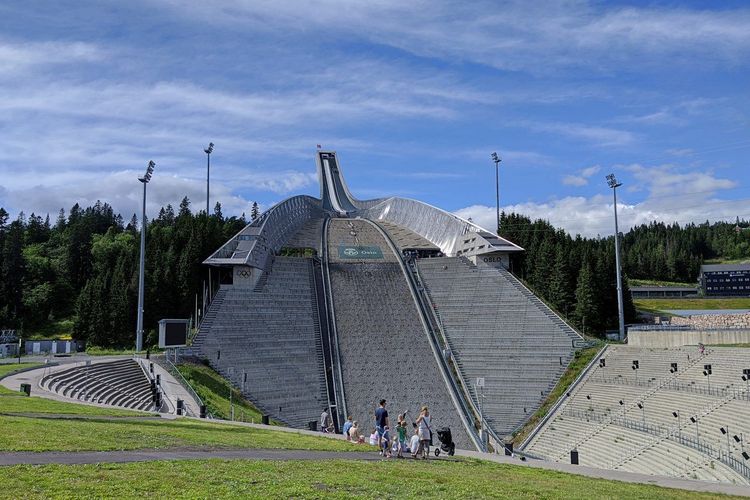
On the heights of the city, the Holmenkollbakken ski jump has overlooked Oslo for over a century and still hosts ski jumping competitions. Built beneath the jump, the ski museum traces more than 4,000 years of skiing history, from the first skis to the polar expeditions of Nansen and Amundsen.
The ticket gives access to the panoramic platform at the top of the jump, reached by elevator and then a few steps: one of the best views of Oslo and its fjord. The jump simulator and the zipline that rushes down the slope of the jump (for older visitors, with height and weight conditions) can be booked for an extra fee. The site is reached by metro (line 1, Holmenkollen stop) in about twenty minutes from the center.
If the weather turns in midwinter, Holmenkollen remains the starting point of the Korketrekkeren, a toboggan run of about 2 km that descends from Frognerseteren to Midtstuen: you rent the sled at the top, race down, then ride the metro back up with the same ticket. Thrills guaranteed, but reserved for accompanied children over seven or eight.
In terms of organization, most main sites remain stroller-accessible, except for the uneven cobblestones of the fortress and some alleys of the historic center. For a day of pure fun, the TusenFryd amusement park, south of the city and connected by bus in summer, completes the program with rides and a water park.
Trendy Neighborhoods to Explore: Grünerløkka and Vulkan
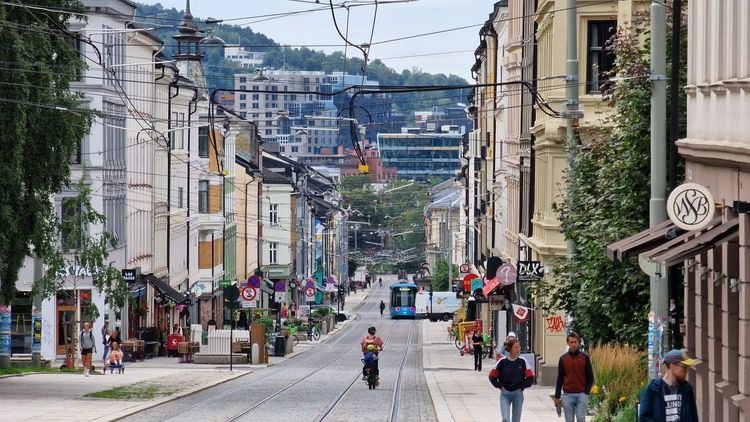
East of the center, along the Akerselva river, two neighboring districts concentrate the best spots for a coffee break or a relaxed meal between visits.
Grünerløkka, Its Cafés and Its Parks
Grünerløkka is the former working-class district turned Oslo's trendiest, with streets lined with colorful buildings, thrift shops and independent cafés. Birkelunden park (Birkelunden, 0455 Oslo, rated 4.3/5 on Google from 1,568 reviews), at its heart, has a playground and hosts a flea market on Sundays.
People come mostly to wander with no precise goal: terraces readily welcome strollers and the residential streets remain calm. It is also the neighborhood to find a heart-shaped Norwegian waffle, topped with jam and brown cheese, a sweet break that almost always meets with unanimous approval.
Vulkan and Its Food Halls
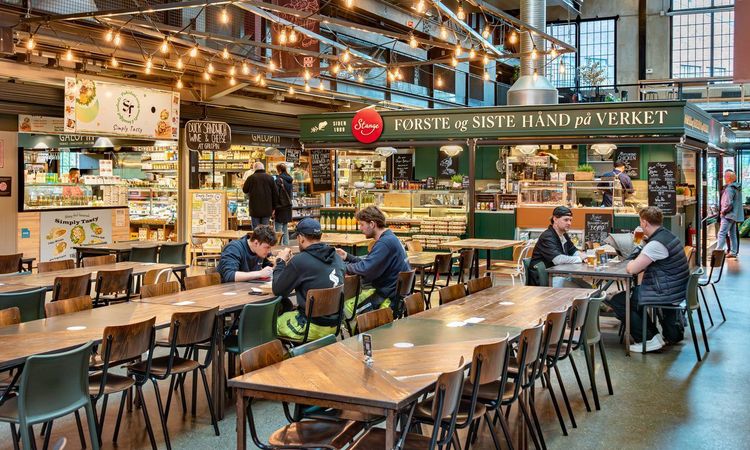
Ten minutes on foot along the river, Vulkan occupies a former industrial zone converted into food halls, a hotel and urban gardens. Mathallen, the main hall, brings together about thirty stalls where everyone picks their dish without a shared menu constraint, handy when tastes at the table differ.
Between the two districts, the banks of the Akerselva offer shaded benches to catch your breath if the day's pace flags. The route is flat, cobbled in places, and generally practicable with a stroller.
Oslo's Offbeat and Hidden Places
Beyond the must-sees, a few gems deserve a detour, especially for curious people who like stories and out-of-the-ordinary places.
The colorful houses of Damstredet form a sloping cobbled lane, lined with small 18th- and 19th-century wooden houses painted in bright colors. Once home to modest workers, it is now among Oslo's most photographed corners: have the kids guess the color of the next facade.
Just above, Telthusbakken street extends the walk with another row of colorful wooden houses, backing onto the medieval Gamle Aker church, the oldest building still in use in Oslo. The whole area can be visited in twenty minutes, without crowds, and offers a striking contrast with the glass towers of Bjørvika visible below.
On the way back down toward the center, the Akerselva waterfall surprises with its flow in the middle of the city: the river tumbles down several successive falls among converted former textile factories. The path along the water can be walked for a few hundred meters, flat enough for an all-terrain stroller.
Finally, the Deichman Bjørvika library (Anne-Cath. Vestlys plass 1, 0150 Oslo, rated 4.7/5 on Google from 3,206 reviews), facing the Opera House, is worth the detour for its futuristic architecture as much as for its ground-floor café. Free and open to all, it offers the youngest a children's area with cushions, games and books, ideal for a quiet break between outdoor visits.
Nature and Outdoor Fun Around the Oslo Fjord
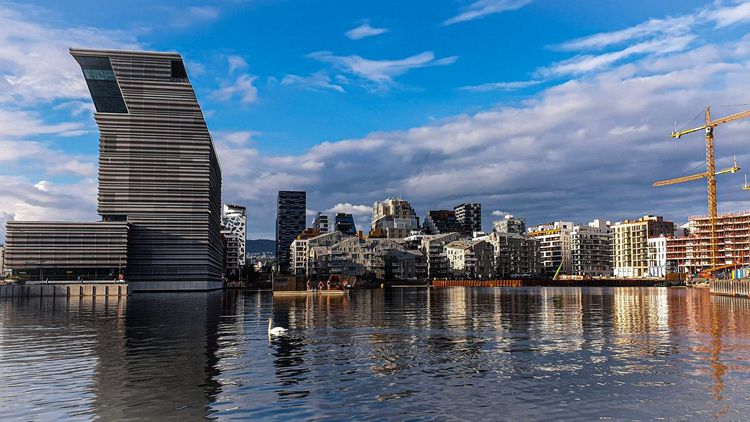
Oslo combines a compact capital with immediately accessible nature, forest and fjord alike, with no need for a car.
Hiking and Boat Rides on the Fjord
From the harbor, near Aker Brygge, public ferries serve several fjord islands in a few minutes, with the same ticket as the bus or metro. Hovedøya, the closest, combines the ruins of a medieval Cistercian monastery, pebble beaches and shaded trails, a good compromise for a half-day with no special planning.
On the forest side, Nordmarka extends just north of the city and offers marked trails of all levels, reachable by metro to the Frognerseteren or Sognsvann terminus. With walkers under six, favor the flat loop around Lake Sognsvann, about 3.5 km in the shade of pines, rather than the routes that climb toward the summits.
Good to know: our audio tour passes by Oslo harbor and the statue of Roosevelt, at the water's edge: a good starting point to board for the islands once the listening is over.
Kayaking and Swimming Around Oslo
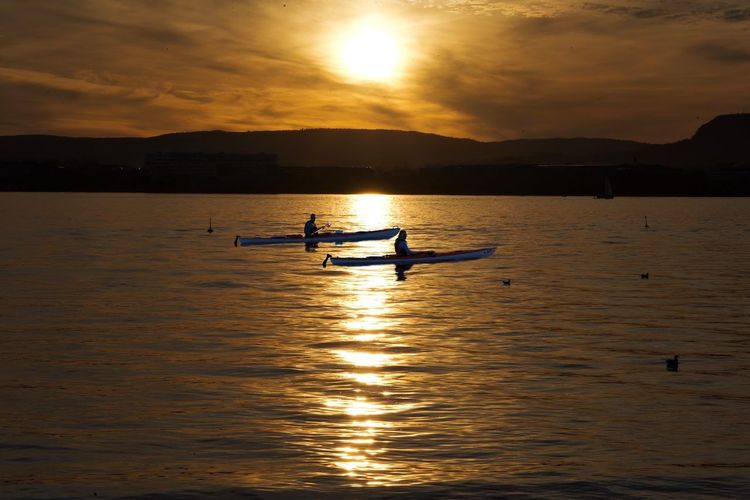
Several rental operators along the fjord offer two-seater kayaks, with no prior experience required on the calm waters near the harbor. One hour of rental is generally enough for a first outing from around age eight, life jackets provided.
To swim without a kayak, several developed beaches line the fjord less than twenty minutes from the center: Sørenga, right behind the Opera House, even has a diving board and a shallow pool suited to the smallest. The water stays cool, rarely above 18 to 20 degrees even in midsummer, but Norwegians swim there without hesitation from the first sunny days.
Free Outings and Activities in Oslo
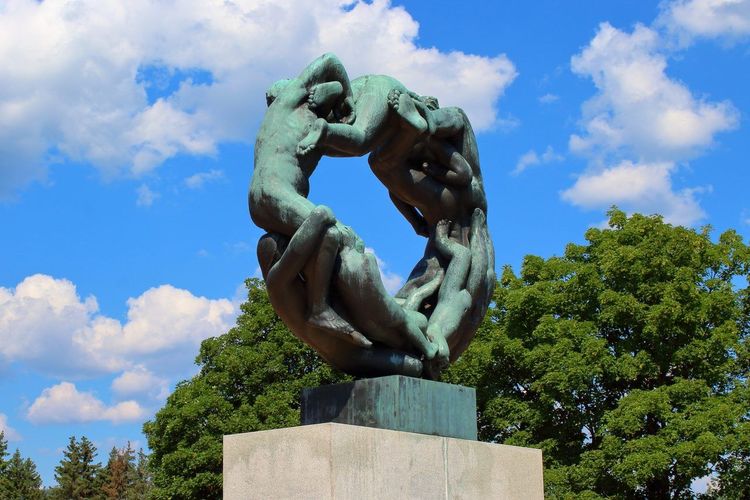
Oslo offsets its high cost of living with a fairly generous free offering. The urban beaches of Sørenga and the fjord cost nothing, just like the Opera House roof, the Akershus ramparts or the Vigeland park already mentioned.
In summer, concerts and street shows follow one another in the central parks, notably in Frognerpark and Grünerløkka, where sunny days attract musicians and jugglers. The sculptures in public spaces, scattered all over the city beyond Vigeland park alone, also lend themselves to an improvised treasure hunt, map in hand: the Ekeberg sculpture park, on the hill overlooking Bjørvika, adds contemporary works and forest trails.
Winter also has its free outings: from late November to March, the Spikersuppa ice rink sets up on Karl Johans gate, between the Parliament and the National Theatre. Access to the ice is free, only skates are rented on site if you don't have your own. In the evening, under the Christmas lights, it is one of the warmest atmospheres in the city, and a good excuse for a hot chocolate at the nearby market.
Finally, several museums offer free admission to under-18s or one day a week: always check this condition before buying tickets, as it changes from one venue to another.
Excursions and Visit Ideas from Oslo
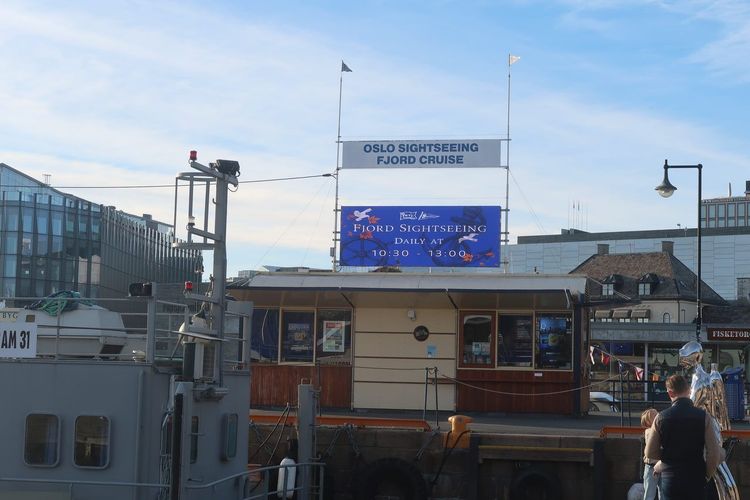
If your stay exceeds three or four days, two excursions naturally complement the visit to Oslo without renting a car.
The train to Bergen, often cited among the most beautiful rail journeys in Europe, crosses the Hardangervidda plateau, sometimes snow-covered until June. Allow about seven hours each way: plan at least one night in Bergen, or even a stopover to continue toward the western fjords. Young travelers generally appreciate the large panoramic windows and the tunnels that follow one another on the most spectacular stretch.
Want a longer trip to the fjords? The Ryo audio-guided road trip Norway of the Fjords links several emblematic stops of the country by car, with audio commentary at each stop: an option to consider if Oslo is only the starting point of a broader Norwegian stay.
Where to Stay in Oslo
The center, between the central station and the royal palace, remains the most practical area: most sites can be reached on foot and public transport all converges there.
Quadruple or connecting rooms are less common than elsewhere in Europe, so it is best to book early in high season, especially in July. The big Scandinavian hotel chains almost always include a generous buffet breakfast, often better value than eating out every morning.
For longer stays, apartments with kitchenettes, plentiful in Grünerløkka or toward Majorstuen, let you prepare some meals on site, a weighty argument given restaurant prices in Norway.
Where to Eat in Oslo with Young Children
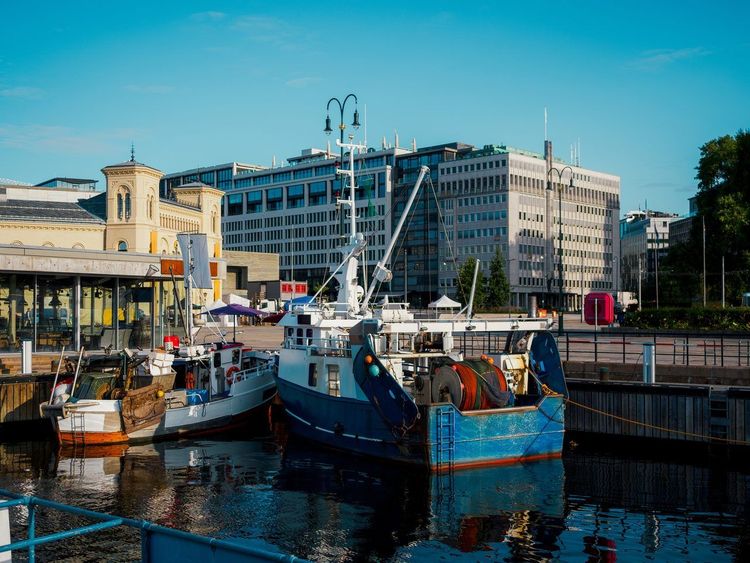
Norwegian cuisine relies heavily on fish, sometimes bewildering for young palates. Salmon, fish balls or shrimp to peel at the harbor are nevertheless safe bets; to go further, our selection of Oslo's culinary specialties details what to taste.
The food halls, at Mathallen as at Vippa near the fortress, remain the simplest option when everyone has different cravings: everyone chooses their stall, from burgers to noodles to vegetarian options, with no negotiation over a single menu. Many central cafés also offer a kids' menu, or even high chairs and coloring sheets.
For a quick, inexpensive meal, bakeries sell kanelboller (cinnamon buns) and sandwiches all day. Supermarkets also offer salads and ready-made dishes: a picnic in the park costs far less than a sit-down lunch, given that restaurant prices remain high, even for simple food.
How to Get to and Around Oslo
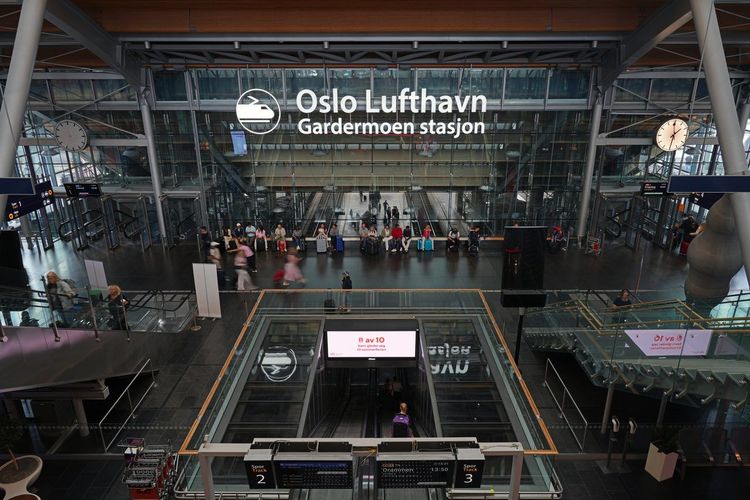
From France, Oslo can be reached by direct flight from Paris in a little over two hours, as well as from several large provincial cities depending on the season. Oslo-Gardermoen airport connects to the center in about twenty minutes thanks to the Flytoget express train, comfortable with luggage and strollers; regional trains are a little slower but cheaper. Night trains also link Oslo to Bergen, Trondheim or Stavanger to combine several Norwegian cities.
Once there, public transport in Oslo covers the whole city via a combined network of metro, tram, bus and ferries, with a single ticket for all these modes, to be bought in the Ruter app. Children under six travel for free, those aged 6-17 at a reduced fare.
The Oslo Pass, a tourist card valid for 24, 48 or 72 hours, includes all public transport as well as free or reduced admission to most of the museums mentioned here. It becomes worthwhile as soon as you plan three or more paid museums in one day; otherwise, individual tickets often work out cheaper for a lighter schedule.
When to Go and How Many Days to Plan
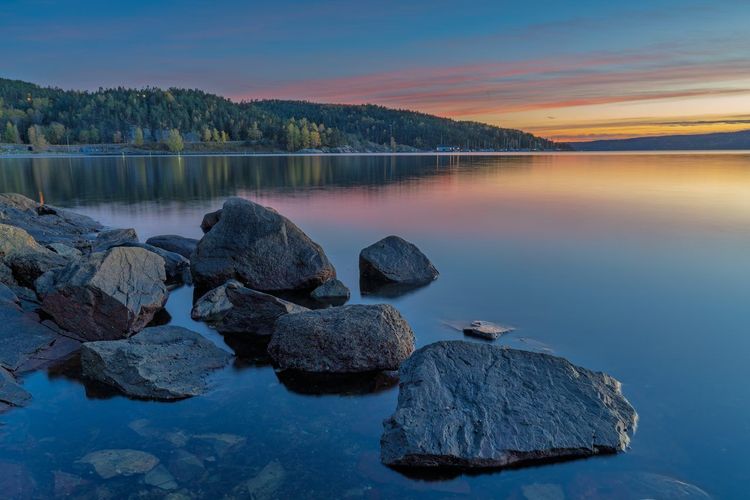
From June to August, Oslo offers the longest days, up to 18 hours of daylight around the solstice, and highs around 20 to 22 degrees. It is the most comfortable period to enjoy the beaches and parks, but also the busiest and the most expensive for accommodation.
Spring and early autumn remain a good alternative, with gentler prices and less crowded museums, at the cost of cooler temperatures. As for packing: layers, waterproof clothing and good walking shoes are useful all year, including in summer when showers are frequent. Winter, from December to February, appeals to fans of sledding and cross-country skiing, provided you accept very short days.
An example three-day program: on the first day, the historic center, the changing of the guard, then the fortress and the Opera House roof; on the second, a ferry to Bygdøy for the Fram, the Kon-Tiki and the Folkemuseum, with a swim at Huk at the end of the day; on the third, a morning at Vigeland park then an afternoon at Holmenkollen, or at the science museum if it rains. In the evening, Grünerløkka and Mathallen make a relaxed finale.
For a first stay, three full days allow you to cover the historic center, Bygdøy and a trendy neighborhood without rushing. Four to five days leave time to add the fjord and Holmenkollen, while a full week lets you push on to Bergen by train without pressing anyone's pace.
Budget for a Stay in Oslo
Oslo regularly ranks among the most expensive European capitals, a point to anticipate. A simple restaurant meal easily exceeds 20 euros per adult, and a hotel night for four people often runs around 150 to 250 euros in high season.
The good news partly offsets this: a large share of the activities detailed above, from Vigeland park to the fjord beaches and the Opera House roof, cost absolutely nothing. By combining an apartment and free visits, a controlled budget remains achievable, even in Oslo. For more outing ideas, see our top activities to do in Oslo.


FAQ
How many days do you need to visit Oslo with family?
Three full days are enough to cover the historic center, the Bygdøy peninsula and Vigeland Park without rushing. Allow one more day for the fjord and its beaches, and a week if you want to continue to Bergen by train.
What budget should you plan for a stay in Oslo for four?
Oslo remains one of the most expensive capitals in Europe, with hotel nights often between 150 and 250 euros and restaurant meals around 20 euros per adult. However, many activities are still free, which helps balance the overall budget.
What is the best time to visit Oslo with children?
Summer, from June to August, offers the longest days and the mildest temperatures. Spring and early autumn appeal with lower prices and fewer crowds, at the cost of cooler temperatures.
Is the Viking Ship Museum open in 2026?
No. It is closed for reconstruction and is due to reopen in 2027 as the Museum of the Viking Age. In the meantime, the Historical Museum, near the royal palace, displays objects from the Viking era.
Is the Oslo Pass worth it?
It becomes worthwhile as soon as you plan at least three paid museums in one day, since it also includes public transport. For a lighter schedule, individual tickets often work out cheaper.
How do you get around Oslo with a stroller?
The combined network of metro, tram, bus and ferries uses a single ticket and covers all the neighborhoods mentioned in this guide. Children under six travel for free.
What free activities can you do in Oslo?
Vigeland Sculpture Park, the Opera House roof, the Akershus ramparts, fjord beaches such as Sørenga and many urban parks cost nothing. Several museums also offer free admission on certain days or for minors.
Oslo at Kid Height: A Summary
At the end of this tour of Oslo, it is hard to pick a single favorite moment, so quickly do the contrasts follow one another: a polar ship in the morning, granite sculptures in the afternoon, a swim at Sørenga at the end of the day. It is this variety that makes the Norwegian capital so comfortable, with each generation finding its own pace.
One last tip: download the Ryo audio-guided tour of Oslo: 23 audio stops, about three hours of walking in a loop, from the Opera House to the royal palace, to follow at your own pace and without booking a guide, to turn this list into a concrete itinerary.