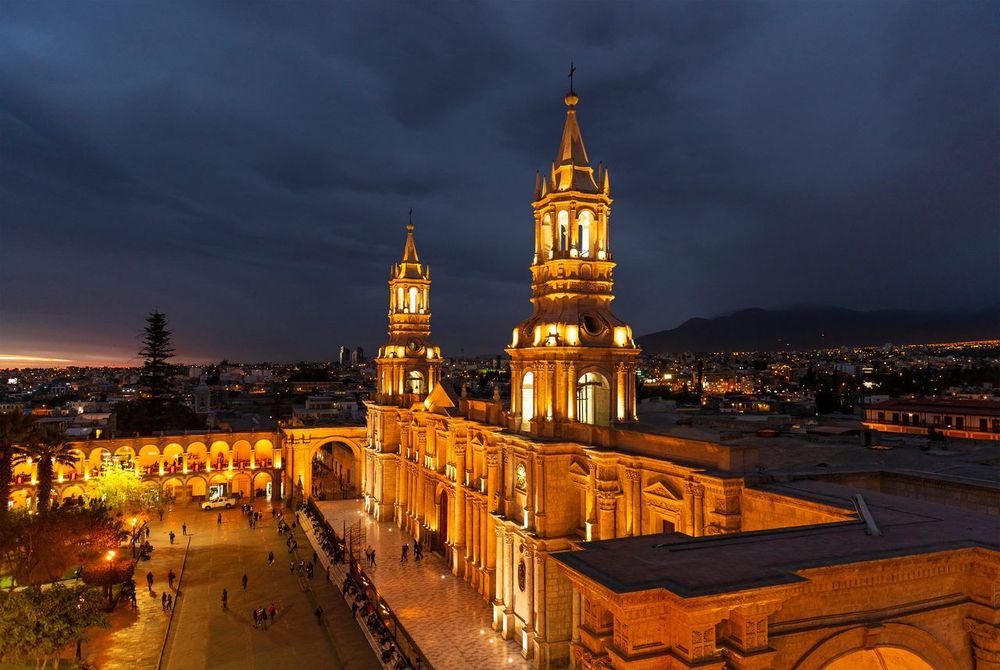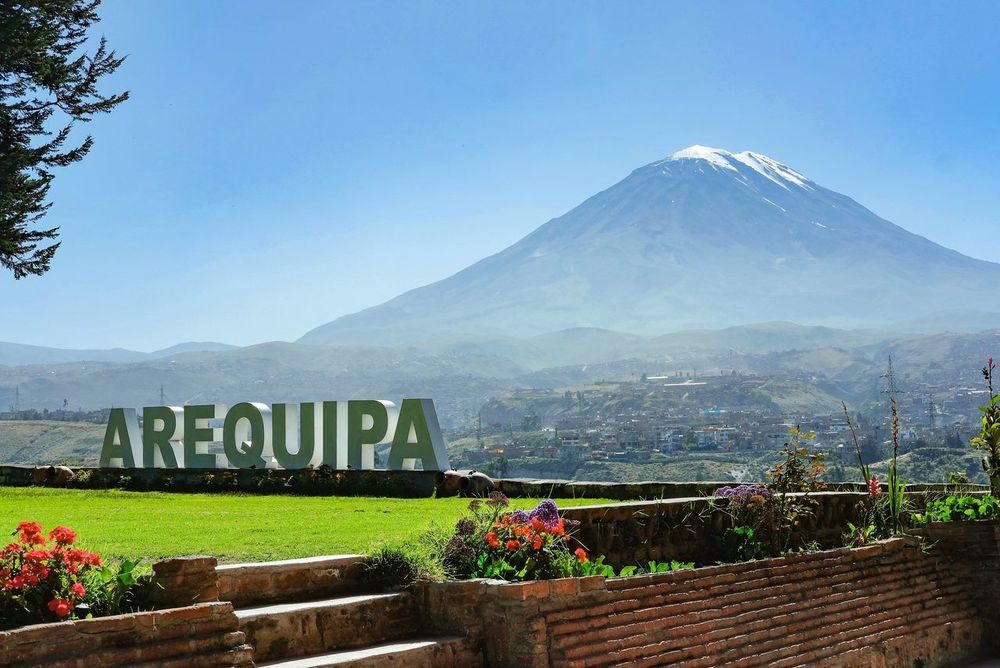
© Shutterstock
 Votre guide Ryo
Free Things to Do in Arequipa, Peru: The Complete 2026 Guide
Arequipa's nickname, the White City, has little to do with money and everything to do with geology: nearly every church, archway and courtyard around the Plaza de Armas is built from pale volcanic sillar stone, quarried just outside town, and it is one of the reasons free things to do in Arequipa outnumber the paid ones almost everywhere you look. Stand in the main square after the afternoon light turns gold and you will understand why locals treat the cathedral steps as a living room. Ryo's self-guided audio tour of Arequipa starts right there, which makes the plaza a natural first stop whether or not you book anything else.
A market built in 1881 still sells a notoriously pungent frog juice at the counter next to fresh papaya. A colonial stone bridge begun in 1577 and its 1880s neighbor cross the Chili River for nothing but the view of El Misti at dusk. An alpaca center in San Lázaro, a ten-minute walk from the cathedral, lets you watch weavers work raw fiber into cloth, free of charge. And the neighborhood where the city's founders first settled in 1540 still has grandmothers selling warm bread from their doorways. None of it requires a single sol at an entrance gate.
1. Plaza de Armas and Arequipa's White Colonial Heart
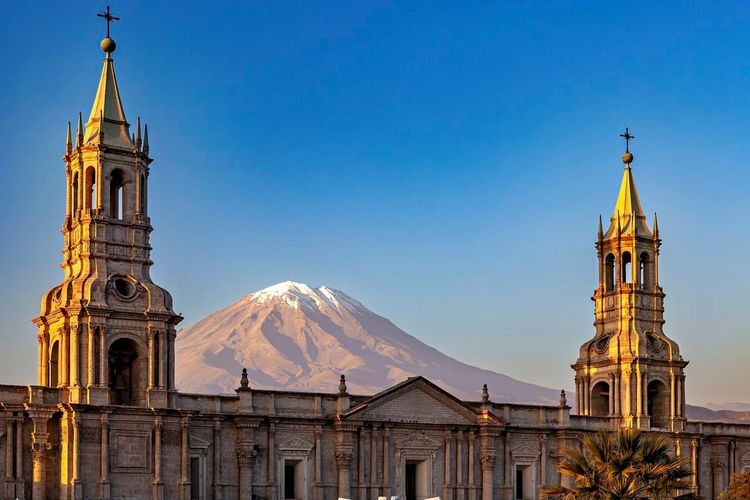
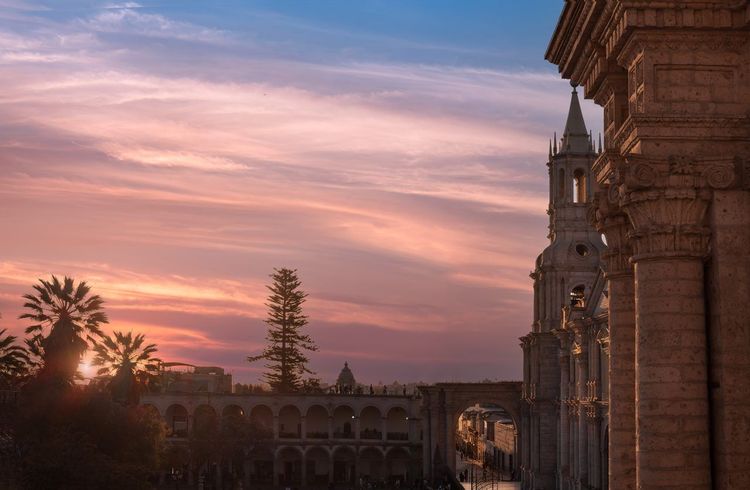
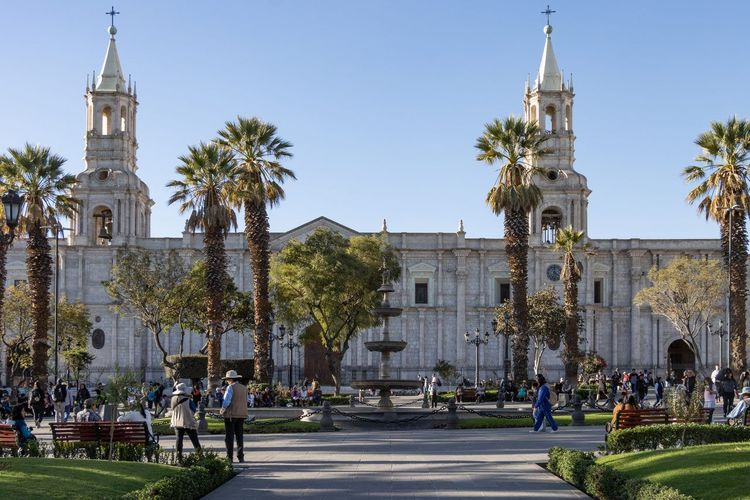
The Plaza de Armas) sits at the exact center of colonial Arequipa, framed on three sides by two-story stone arcades and anchored on the fourth by the cathedral. Unlike many Latin American main squares, this one keeps its palm trees, cast-iron lampposts and a working fountain without charging anyone to sit on a bench and watch the afternoon unfold.
The pale stone underfoot and overhead is sillar, a lightweight volcanic rock formed by eruptions from the nearby Chachani and Misti volcanoes. Early Spanish builders favored it because it was easy to carve and resisted earthquakes better than brick, which is why so much of the historic center survived tremors that leveled other colonial cities. You can still see tool marks from colonial-era stonemasons on the arcade columns if you look closely, a detail most visitors walk past without noticing. For the history explained out loud rather than read off a plaque, Ryo's audio-guided walk through Arequipa's historic center begins on this exact plaza, so the commentary on the cathedral and the Compañía facade reaches you while you are standing in front of them.
The Basilica Cathedral of Arequipa
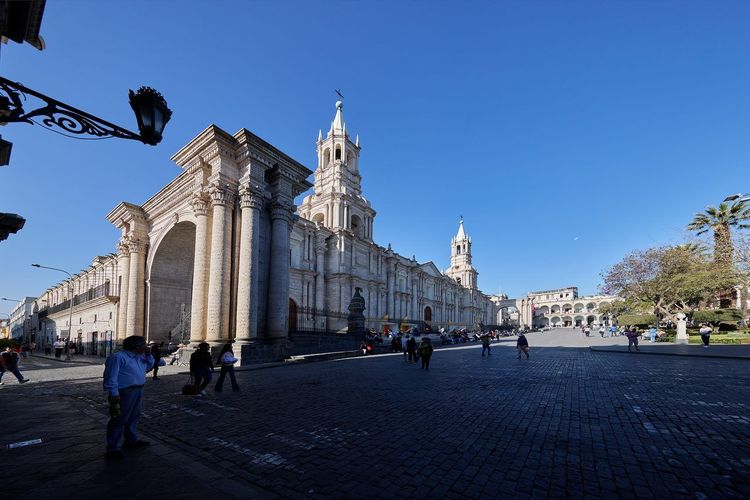
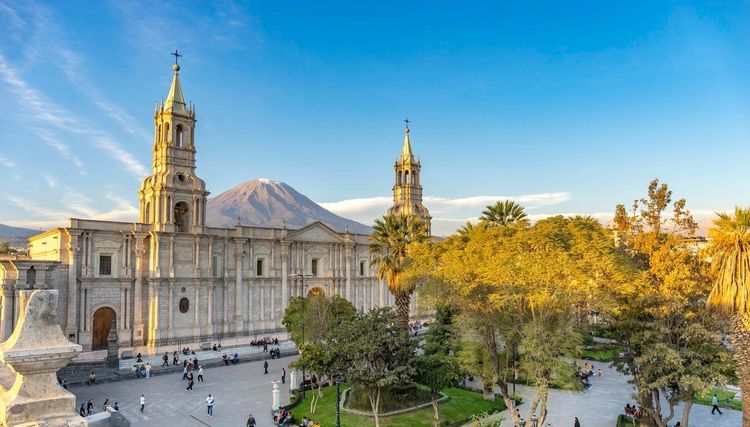
The Basilica Cathedral of Arequipa) dominates the north side of the square, and its current Neo-Renaissance facade is actually a reconstruction. Fire gutted the original 17th-century building in 1844, and a powerful earthquake brought down what had been rebuilt in 1868, so the long, pale nave you see today dates mostly from the following decades. The twin towers have their own story: the July 2001 earthquake partly toppled the left one, and what you see now was rebuilt in the years that followed.
Entry to the main nave is free during open hours, which generally run through the morning and again in the late afternoon; only the attached religious museum, with its silverwork and colonial paintings, charges a small fee. Walk the center aisle toward the altar and you will find a huge organ built in Belgium by the Loret workshop, and a carved wooden pulpit made in Lille, France, and installed in 1879, with the devil writhing at its base. Arrive on a weekday morning if you want the nave mostly to yourself. Weekend mass draws a crowd, and tour groups tend to funnel through between 10am and noon.
Climbing the towers is not usually allowed, but you can get a near-identical angle for free from the arcade balconies on the plaza's west side, where several cafés let you step out briefly to take photos. Locals still refer to the cathedral simply as la Catedral, and it anchors every major procession in the city, including the Semana Santa processions that fill the square each Easter week.
The Church of the Society of Jesus and Its Cloisters
A block from the cathedral, the Church of the Society of Jesus (Plaza de Armas, Arequipa, rated 4.6/5 on Google (581 avis)), known locally as La Compañía, has arguably the most elaborate sillar facade in the city. Jesuit masons dated it 1698, carving indigenous motifs like pumas and tropical fruit into the stone alongside European religious symbols, an early example of what art historians call mestizo Baroque style.
Stepping inside costs nothing. The nave is covered almost floor to ceiling in gold-leaf altarpieces, dim enough that your eyes need a minute to adjust after the bright plaza outside. Behind the church, the Claustros de la Compañía (the cloisters) are open to the public free of charge during the day, even though most of the arcaded courtyard now houses jewelry shops and a café rather than monks. Wander the two-story corridors anyway. The carved pillars and the quiet, shaded courtyard are worth five minutes even if you have no interest in buying anything, and they make a good rest stop out of the midday sun before you continue toward San Lázaro.
2. Wander San Lázaro, Arequipa's Oldest Neighborhood
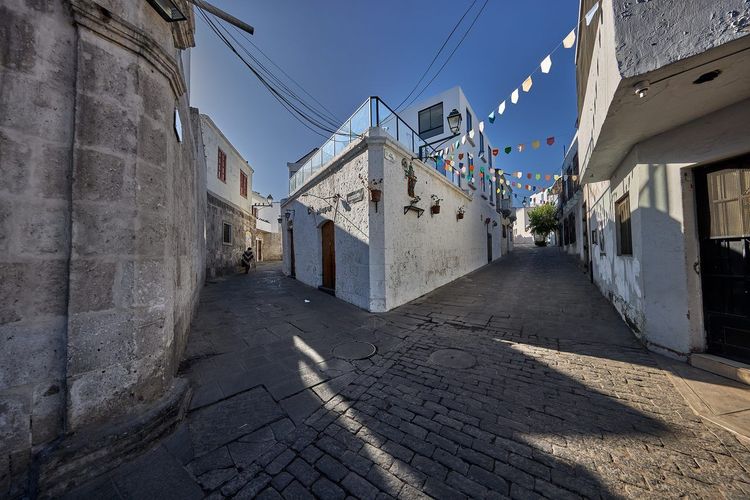
San Lázaro is where Arequipa began. Tradition holds that the Spanish founders first settled here in 1540, before the formal city grid went up around the Plaza de Armas, and its street pattern still reflects that older, more organic layout. Narrow lanes twist instead of running in straight blocks, and the scale feels almost village-like compared to the grand arcades a ten-minute walk away.
If you prefer having the history in your ears, Ryo's audio guide narrates the historic center as you walk, which is handy here since there are almost no plaques explaining what you are looking at.
Cobblestone Alleys and Colorful Facades
Wander in from Calle Ejercicios and the cobblestones underfoot get rougher and the sillar walls shift from white to mustard yellow, deep blue and faded pink, a contrast with the uniform white of the historic center. Small chapels appear every block or two, including the San Lázaro chapel that gave the neighborhood its name.
Mornings are the best time to visit. Doors stand open while residents sweep their stoops or sell bread and cheese from front windows, and the light through the narrow lanes is softer before 10am. Afternoons bring more foot traffic from tour groups, though the neighborhood never feels crowded the way the Plaza de Armas can. Budget half an hour just to walk without a fixed route. Getting pleasantly lost is part of the point, and the area is small enough that you will not actually lose your way for long. Mundo Alpaca, covered further down, sits on the edge of the neighborhood, so you can fold it into the same morning.
Mirador Carmen Alto and Other Hidden Viewpoints
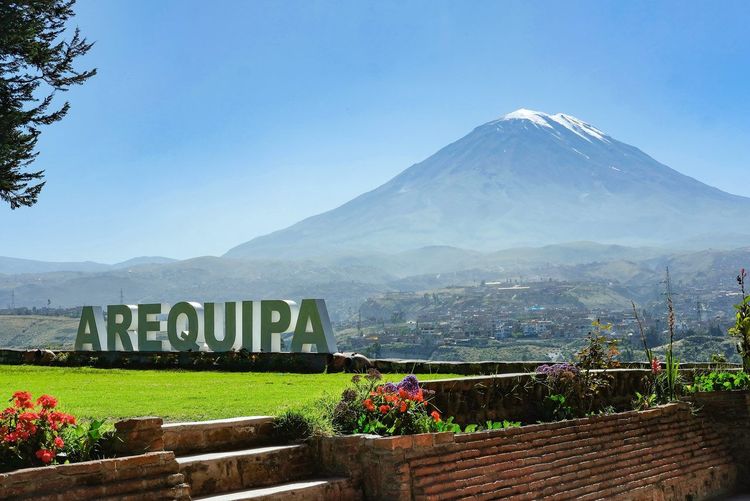
North of the center, above the Chilina valley, Mirador Carmen Alto (Carmen Alto, Arequipa, rated 4.3/5 on Google (3 551 avis)) overlooks the terraced farmland below the city.
It is nowhere near as photographed as Yanahuara, which works in its favor. Expect to share the railing with a handful of other visitors rather than a crowd, and on clear mornings you can pick out the snow line on Chachani to the north. A few smaller, unnamed viewpoints line the river valley closer to San Lázaro, little more than a widened sidewalk with a low wall, but they offer a similar valley view without the short wait that sometimes builds at Carmen Alto around sunset. None of these spots charge an entrance fee or close at a set hour. Carmen Alto itself is a short taxi ride from San Lázaro, so most visitors pair it with a morning in the neighborhood.
3. Cross Puente Grau and Puente Bolognesi to Mirador de Yanahuara
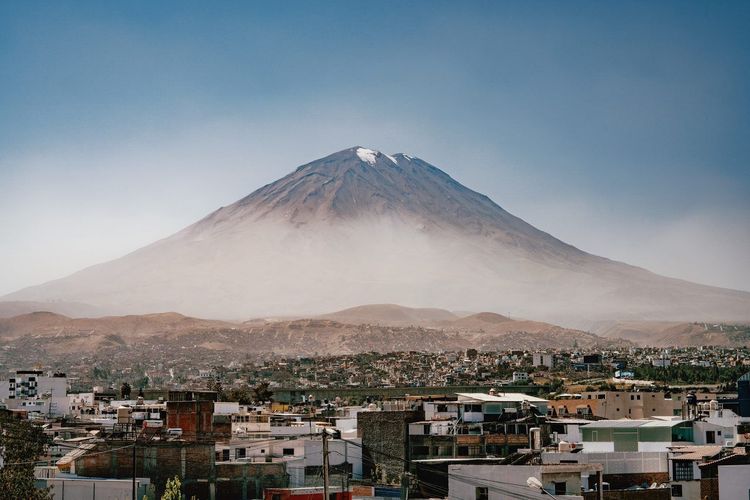
From the historic center, the walk toward Yanahuara crosses the Chili River on one of two historic bridges, both more interesting than a simple river crossing, and you can use one going out and the other coming back.
Walking the Historic Bridges Over the Chili River
Puente Bolognesi (Puente Bolognesi, Arequipa) and Puente Grau (Puente Grau, Arequipa) sit a few blocks apart and both carry pedestrians and traffic across the Chili River toward the Yanahuara district.
Puente Bolognesi is the old one. Construction started in 1577 under the architect Juan de Aldana and dragged on into the early 1600s, and locals long called it the Puente Real or simply the Puente Viejo. Its sillar arches have survived centuries of earthquakes, which is remarkable when you consider how often the cathedral had to be rebuilt.
Puente Grau came much later, built between 1884 and 1888, also in sillar, with a series of tall arches spanning the riverbed. Its sidewalks are wide enough to stop and look down at the river without dodging traffic, and the bridge frames the volcano better than any other spot near the center.
Either bridge gives you a clean sightline to El Misti on a clear day, and late afternoon light tends to catch the volcano's snow cap in a way that is hard to photograph badly. The river itself runs low and rocky for much of the year, so do not expect a dramatic torrent outside the summer rains. Crossing on foot takes about five minutes per bridge.
Mirador de Yanahuara and Its Views of Volcán Misti
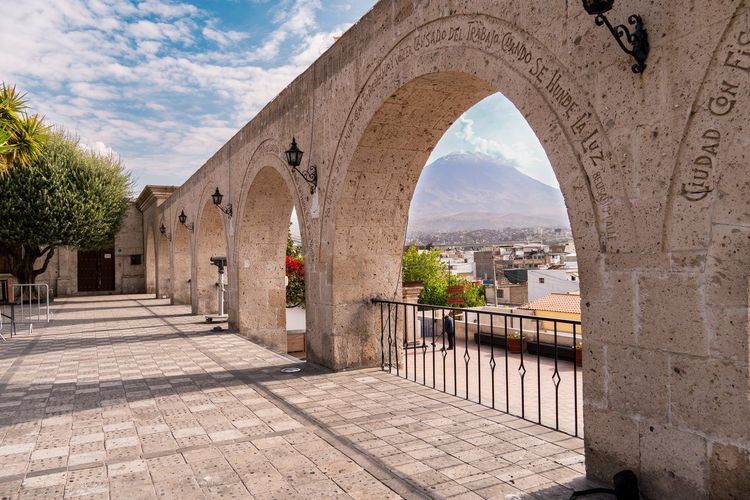
On the far side of the river, a short walk uphill leads to the Mirador de Yanahuara (Yanahuara, Arequipa, rated 4.5/5 on Google (19 637 avis)), a colonnaded viewpoint built from the same sillar stone as the Plaza de Armas, with a row of carved stone arches framing the view of Volcán Misti.
Verses by Arequipa poets are carved into several of the arches, a detail easy to miss if you are focused only on the volcano photo. The mirador sits beside the Yanahuara church plaza, so you can combine both in one stop without backtracking. Sunset here draws the largest crowd of any free viewpoint in the city, and arriving thirty minutes early secures a spot at the central arch, the one lined up best with Misti's summit. If you started the day with Ryo's Arequipa audio guide in the historic center, ending it here gives the walk a natural finale, with the volcano you have been hearing about finally filling the frame.
4. Join a Free, Tip-Based Walking Tour of the Historic Center
A handful of local guides run tip-based walking tours of the historic center most mornings, usually starting from a corner of the Plaza de Armas around 10am. You pay only what you think the two-hour walk was worth, commonly somewhere between 15 and 30 soles per person, though there is no fixed rate and no obligation.
These tours cover much of the same ground described above: the cathedral, La Compañía, San Lázaro and sometimes a stretch toward Yanahuara, but with a guide answering questions in real time, which suits travelers who would rather ask than read. Group sizes tend to stay small, often under ten people, since most of these operators rely on word of mouth rather than big marketing budgets.
If you would rather skip the schedule and the group entirely, simply walking the same route alone with a camera works just as well for soaking in the architecture, and several of the guides are happy to point newcomers toward a self-guided version of their route if you ask at the start rather than the end of the walk. Either approach costs nothing beyond whatever tip you choose to leave, and both are a reasonable way to get oriented on your first morning in the city.
Ask your hostel reception for the current meeting point and guide name before you go. These informal tours shift operators every year or two, and a two-minute check the night before saves you from standing on the wrong corner at 10am wondering if anyone is coming.
5. Browse the Stalls of Mercado San Camilo
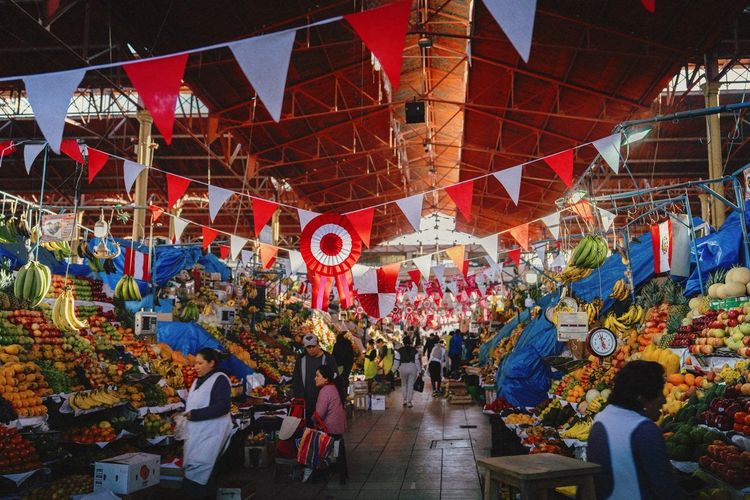
Built in 1881 and still the city's main produce market, Mercado San Camilo (Calle San Camilo, Arequipa, rated 4.2/5 on Google (6 018 avis)) fills a full block near the historic center with stalls selling fruit, cheese, bread, flowers and prepared food under a vaulted iron roof.
Walking the aisles costs nothing, and there is enough variety here to spend a full hour without buying a thing. Juice stalls occupy one long row, blending fresh fruit into drinks for a few soles each, and a handful of vendors still sell the local specialty jugo de rana, a frog-based drink marketed as a tonic, which draws curious tourists and skeptical looks in roughly equal measure.
Produce stalls stack regional staples: rocoto peppers, native potato varieties by the dozen, and giant white Peruvian corn sold by the ear. Further in, a cheese section sells queso paria and other mountain cheeses cut to order, and a flower section near the main entrance supplies much of the city's cut flowers daily.
The market's cast-iron structure is often attributed to Gustave Eiffel. Historians have never found firm proof of his involvement, and the design is more likely the work of engineers following the European industrial style popular across Latin America at the time, though the story persists in enough tour scripts that you will likely hear it repeated at least once during your stay.
Early morning, before 9am, is when the market runs at full capacity and vendors are most willing to let you sample before buying. By early afternoon some stalls close, particularly the flower and bread sections, so a mid-morning visit gets you the fullest picture. The market is only a few blocks south of the Plaza de Armas, an easy add-on once you finish Ryo's audio-guided route through the center. Bring small bills; few stalls can make change for anything larger than a 20-sol note.
6. Make Furry Friends: Free Alpaca and Llama Encounters
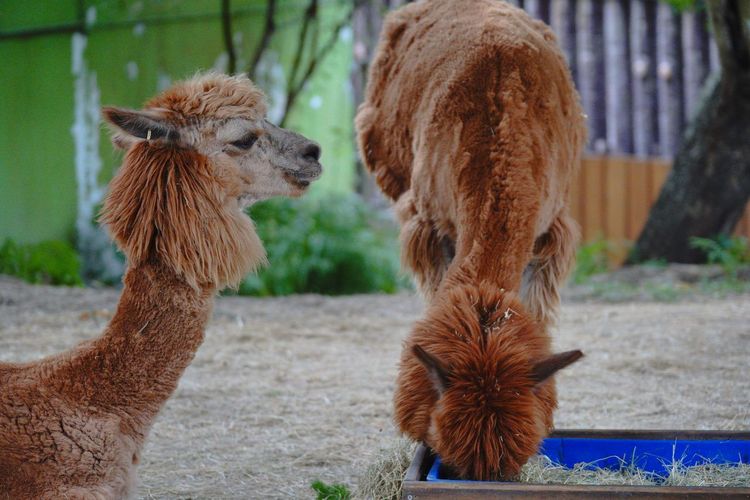
Mundo Alpaca (Alameda San Lázaro 101, Arequipa, rated 4.5/5 on Google (2 527 avis)), run by a long-established Arequipa textile company on the edge of San Lázaro, lets visitors walk through a small garden with alpacas, llamas and vicuñas at close range, free of charge.
Entry includes a self-guided path past the pens, a textile area where weavers demonstrate traditional looms, and a small shop at the end, which you can skip entirely without anyone pressuring you to buy. Staff are generally happy to let you approach the animals slowly for photos, though vicuñas tend to keep more distance than the friendlier alpacas and llamas. The complex opens Monday to Saturday, roughly 8:30am to 6:30pm, so plan around Sundays.
Feeding the animals is sometimes allowed with the fodder staff hand out, but do not bring your own, since their diet is carefully managed. Standing at the fence for ten or fifteen minutes is enough for most visitors to get a close look and a decent photo. The weaving demonstration runs on a loose schedule through the day rather than fixed showtimes, so you may need to wait a few minutes or simply walk in on one already in progress.
Because it sits right on San Lázaro's doorstep, the easiest plan is to pair it with your morning in the old neighborhood: walk the alleys first, then finish here before heading back to the plaza for lunch, all without paying for a single taxi.
7. Chase Sunset from a Free Rooftop or City Viewpoint
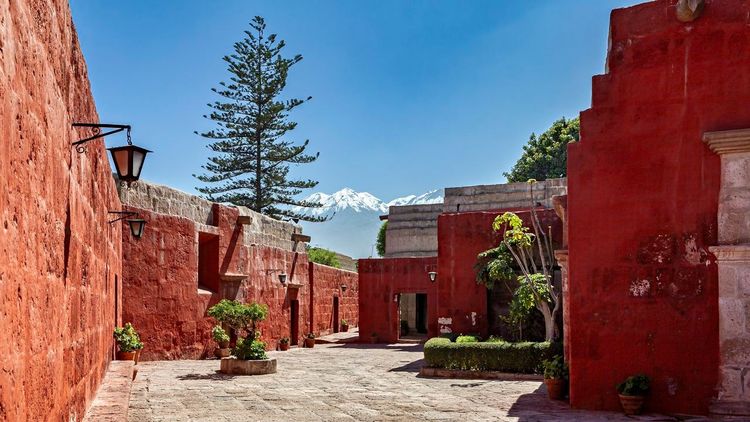
Plenty of rooftop bars around the Plaza de Armas advertise sunset views, but most require a minimum drink purchase, sometimes a steep one, before they let you onto the terrace. If you want the view without the markup, the public miradors already covered in this guide do the job just as well.
Mirador de Yanahuara remains the single best free sunset spot in the city, and arriving by 5:30pm in the dry season secures a good position before the crowd thickens. Mirador Carmen Alto is a reasonable second choice on evenings when Yanahuara feels too busy, with a wide view over the valley and noticeably fewer people.
A third, less obvious option sits right on Puente Grau. The bridge looks straight up the valley toward Misti, and standing at the midpoint as the light fades gives you the volcano glowing pink above the river, with none of the arches or crowd you get at the two miradors.
If you do want a rooftop with a drink in hand, several bars along the arcade on the Plaza de Armas and on Calle Ugarte let you sit at an outdoor table for the cost of a coffee or a beer rather than a formal minimum spend, which splits the difference between free and full price. Ask before you sit down. Policies vary by season and by how busy the terrace already is that evening.
Whichever option you choose, check the sunset time before heading out. Arequipa sits in the tropics, so sunset barely shifts across the year, landing roughly between 5:40pm and 6:20pm, and you rarely need to guess.
8. Free Tastings: Coffee, Chocolate and Craft Beer Workshops
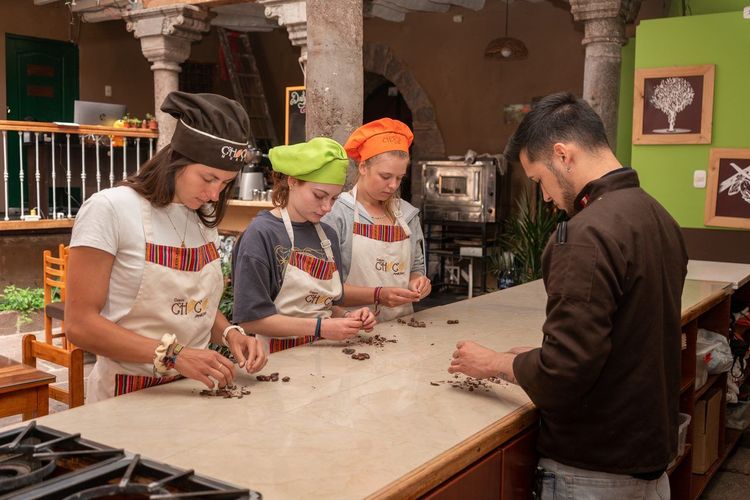
Two chocolate spots near the historic center are worth knowing about, even if only one of them hands out samples for free.
Chaqchao Organic Chocolate) runs a small bean-to-bar factory, museum corner and shop a block from the Monasterio de Santa Catalina. Browsing the shop and its displays about cacao costs nothing, while the guided tastings and the hands-on workshop, where you make your own bar from bean to finished product, are paid experiences that usually need booking.
On Calle Ugarte, Mi Kcao (Calle Ugarte 314, Arequipa, rated 4.8/5 on Google (988 avis)) is a chocolate and specialty coffee café with a rooftop terrace facing the volcanoes. It sources its cacao and coffee from Quillabamba, in the jungle of the Cusco region, and staff regularly offer a complimentary chocolate tasting to visitors who come up to the roof, which makes it the most reliable free sample in town.
Treat Mi Kcao as a free sample stop and Chaqchao as a browse-and-learn visit, and you will leave with a decent understanding of Peruvian cacao without spending a sol. If you do want the complete workshop experience, book a day ahead since group sizes are kept small.
Craft beer is a newer addition to Arequipa's tasting scene. A handful of small breweries near the center will sometimes pour a complimentary taster of their current batch if you ask at the bar during a slow afternoon, though this is informal and depends entirely on the staff on duty that day, not a guaranteed house policy. Do not expect a full flight for nothing, but a single small sample before you commit to a pint is rarely refused.
Coffee drinkers should also know that Arequipa is not a coffee-growing region itself. The beans used locally come from the jungle valleys of Cusco, Puno or northern Peru, so the tastings here are more about roasting and presentation than local terroir, a detail that surprises visitors who expect an Arequipa-specific coffee origin story.
9. Explore the Ruta del Sillar and Other Self-Guided Day Trips
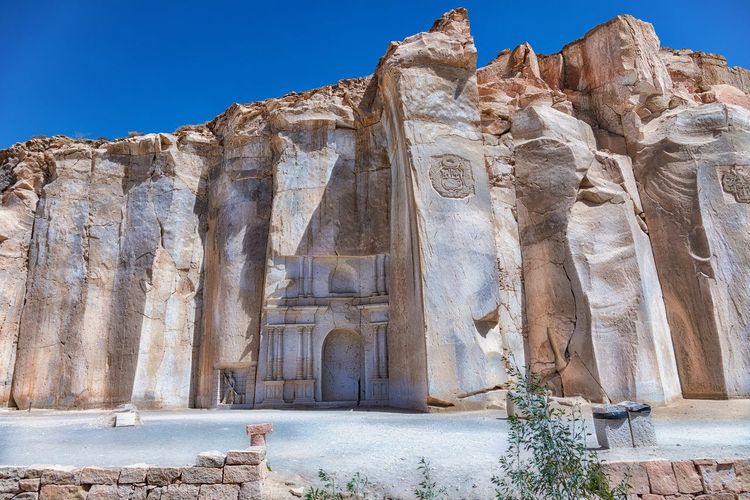
Arequipa's most famous day trip, the Colca Canyon, is not free. A one-day tour runs roughly 90 to 120 soles per person including transport and a guide, plus the separate tourist ticket for the canyon, and a two-day version with an overnight stay typically costs 180 to 350 soles depending on season and group size. If your budget is tight, three other excursions around the city deliver a similar sense of scale and landscape without the tour-bus price tag.
Walking the Sillar Quarries
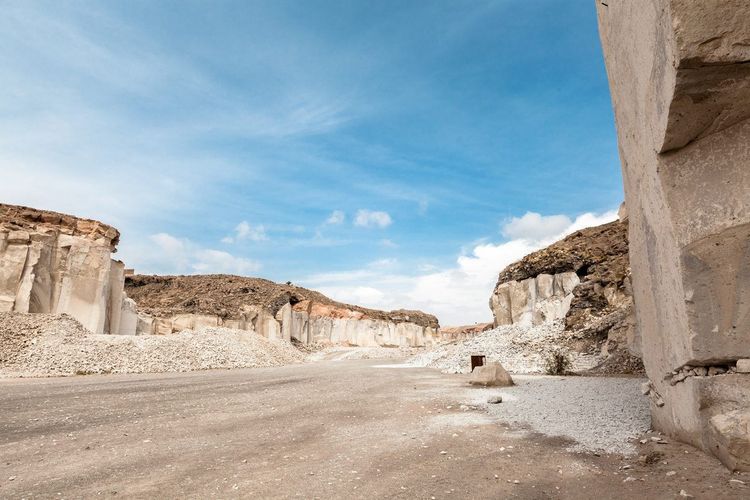
The Canteras de Sillar (Añashuayco, Arequipa) of Añashuayco, in the Cerro Colorado district about 14 km north of the center, are the quarries that supplied the stone for countless buildings described earlier in this guide.
Workers still cut blocks by hand using techniques that have barely changed for generations, and the carved canyon walls are among the most photogenic spots around the city. This one is nearly free rather than free: expect a small entrance fee of about 5 to 10 soles, paid in cash, with the site usually open from 8:30am to 4:30pm, plus the taxi fare to get there. Informal local guides sometimes approach visitors at the entrance offering a short walkthrough for a tip; accepting one is optional but often worthwhile, since the site has little signage explaining what you are looking at. Wear closed shoes, since loose stone dust covers the quarry floor and some of the taller cut faces have no safety barrier.
Laguna de Salinas and the Salinas y Aguada Blanca Reserve
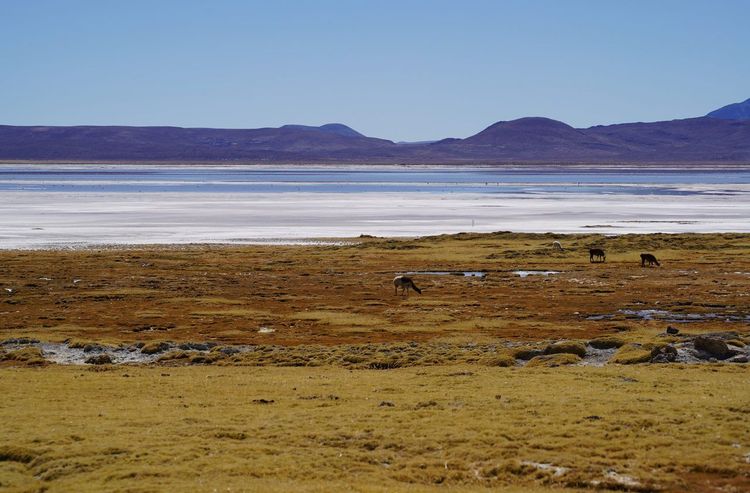
At roughly 4,300 meters, Laguna de Salinas (Salinas y Aguada Blanca National Reserve, Arequipa, rated 4.5/5 on Google (59 avis)) sits inside the Salinas y Aguada Blanca National Reserve, about two to three hours from the city by car.
The lake turns into a wide salt flat for part of the year and a shallow lagoon full of flamingos and other high-altitude birds during wetter months, so check conditions before committing to the drive. Entrance to the reserve is typically free or involves only a small fee, nothing close to the cost of a Colca Canyon tour. The altitude here sits nearly two kilometers above the city itself, so this trip works best after a day or two acclimatizing rather than as your very first outing. A rented car or a private driver arranged the day before are the two realistic ways to reach it.
Half-Day Hike Toward Volcán Misti
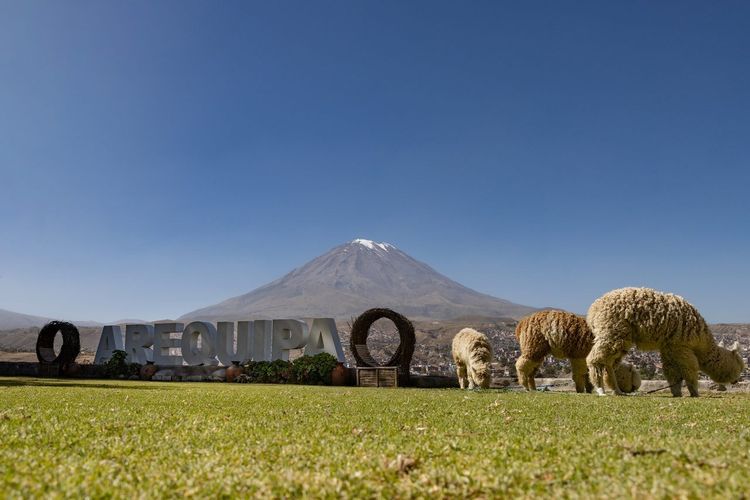
You do not need a full two-day summit expedition to get a sense of Volcán Misti's scale. A half-day walk on the lower slopes above Chiguata, on the mountain's eastern approach, climbs through dry scrubland and volcanic rock without technical gear or an overnight camp.
Most visitors arrange a taxi to the start and walk up and back over three or four hours, gaining a few hundred meters of elevation and views back over the city. This is not the same as summiting Misti, which requires a guide and typically two days, but it gives a genuine taste of the volcanic landscape for a fraction of the cost. Start early, ideally by 7am, to avoid the stronger midday sun, and carry more water than you think you need; there is no shade along most of the route.
10. Watch the Evening Crowd on Calle Ugarte
Calle Ugarte (Calle Ugarte, Arequipa), a short stretch running off the Plaza de Armas past the Monasterio de Santa Catalina, turns into one of the busiest nightlife streets in the historic center after dark, lined with bars, cheap eateries and a steady flow of both locals and travelers.
You do not need to spend anything to enjoy it. Walking the length of the street between roughly 9pm and midnight on a Friday or Saturday gives you a decent read on Arequipa's nightlife without sitting down anywhere, from street musicians working the crowd for tips to small groups spilling out of bar doorways between rounds.
Weeknights are quieter, closer to a normal residential street with a handful of open bars rather than a party scene, so time your visit around the weekend if people-watching is the goal. If you followed Ryo's audio-guided route through the center during the day, the street is only a few minutes from where it ends, an easy loop back after dinner to see the same colonial facades lit up at night.
Keep valuables close in the busier stretches, as you would on any crowded nightlife street, though the area is generally well-trafficked and reasonably well-lit compared to quieter parts of the city after dark.
11. Eat Well Without Spending Much: Menu del Día and Picanterías

Free sightseeing only gets you so far if lunch wipes out your daily budget, so it is worth knowing how Arequipa eats cheaply without sacrificing quality.
Most restaurants in the historic center and surrounding neighborhoods offer a menu del día at lunch, a fixed set menu usually including a soup, a main course and sometimes a small dessert or drink, priced between 10 and 18 soles depending on the neighborhood. This is the meal locals actually eat on a weekday, not a tourist discount, so quality tends to be solid even at the cheapest spots. Look for menus del día posted on a chalkboard or printed sheet outside; if a restaurant does not advertise one, it likely does not offer one.
For something more traditional, a picantería serves hearty regional dishes in generous portions, usually at lunch only, in an informal, often family-run setting. These restaurants specialize in dishes like rocoto relleno, chupe de camarones and adobo, and a full meal typically runs 20 to 35 soles, more than a menu del día but still modest by most travelers' standards.
Drinks follow a similar pattern. A pisco sour, Peru's signature cocktail, or a glass of chicha morada, a sweet purple-corn drink with no alcohol, both cost a fraction of what you would pay for an equivalent drink at a rooftop bar, and ordering either at a local picantería rather than a tourist-oriented bar generally cuts the price further.
Do not skip helado de queso, Arequipa's signature cheese ice cream. It tastes less strange than it sounds, closer to a creamy, cinnamon-dusted custard than actual cheese, and a scoop from a street cart rarely costs more than a few soles. None of this is technically free, but it rounds out a day built mostly around no-cost sightseeing without forcing you into expensive restaurants simply because you do not know where else to eat.
12. Decide Whether Monasterio de Santa Catalina Is Worth the Entrance Fee
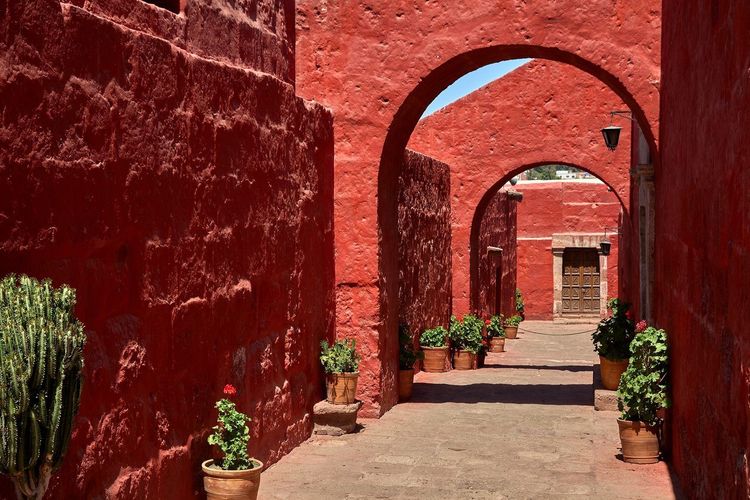
The Monasterio de Santa Catalina de Siena (Calle Santa Catalina 301, Arequipa, rated 4.7/5 on Google (10 631 avis)) is the one major historic-center attraction in this guide that is not free, and it is worth addressing directly rather than skipping past it.
Entrance runs 50 soles for adults in 2026, with students paying 25 soles and children under seven entering free. Inside, you get a self-guided walk through a convent founded in 1579, closed to outsiders for nearly four centuries until it opened to visitors in 1970, with narrow painted streets, a working chapel and kitchens that still show soot stains from centuries of use. On Tuesday and Thursday evenings it stays open later, and the candlelit atmosphere is worth timing your visit around.
Whether it is worth the fee depends on how deep your interest in colonial religious history runs. If you have already spent a morning inside the cathedral and La Compañía for free, the Monasterio offers a noticeably more immersive version of the same period, since you are walking through actual living quarters rather than a single nave. If you are simply ticking off photo stops, the exterior walls along Calle Santa Catalina give a decent sense of the building's scale for free, and you can reasonably skip the interior without missing the city's main highlights.
Budget at least 90 minutes if you do go in. The complex covers a whole city block, with several interior streets and courtyards that are easy to wander through slowly, and rushing it defeats the purpose of paying the fee in the first place.
13. Getting To and Around Arequipa
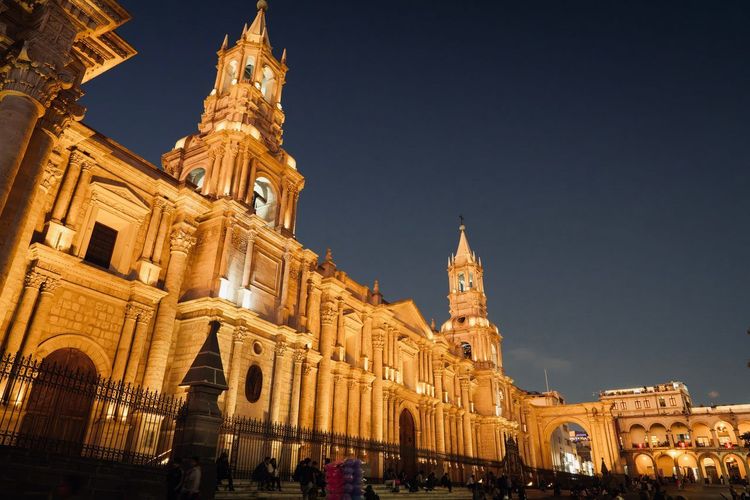
Arequipa is well connected by both air and long-distance bus, and once you are in the city, getting around rarely costs more than a few soles at a time.
From the Airport and Bus Terminal
Rodríguez Ballón International Airport sits about 20 minutes from the historic center by car, and most domestic flights from Lima or Cusco land here in under two hours. A taxi into town from the airport typically costs 20 to 25 soles if negotiated at the curb, or slightly less if booked through an app like inDriver or Uber before walking outside, which also avoids haggling altogether.
Long-distance buses arrive at one of two neighboring terminals on the city's southern edge, Terminal Terrestre or Terrapuerto, both a short taxi ride from downtown for roughly 10 to 15 soles. Overnight buses from Lima take around 15 to 16 hours, while buses from Cusco or Puno run considerably shorter, usually 5 to 10 hours depending on the route and operator. Book a seat on a reputable company rather than the cheapest option available, particularly for overnight routes; the price difference between a budget and a mid-tier operator is often small, but the gap in comfort and reliability on long hauls is not.
Walking and Cheap Transport Around the City
The historic center is compact enough to cover almost entirely on foot. Plaza de Armas, San Lázaro, Mundo Alpaca, Mercado San Camilo and the walk toward Yanahuara all sit within roughly a 20-minute radius of each other, which is part of why this guide clusters so many free activities so close together.
For anything farther out, like Mirador Carmen Alto or the Sillar quarries, a taxi is the simplest option, and fares within the city rarely exceed 10 to 15 soles for most crosstown trips. Shared combis, the small local buses that run fixed routes through the city, cost around 1 to 1.50 soles per ride and are the cheapest way to move longer distances, though routes are not always clearly marked for visitors unfamiliar with the system. Traffic in the historic center is heavy enough that walking often beats a taxi for short hops. Comfortable shoes matter more than any transport app here; cobblestones throughout the colonial core are uneven, and a short walk can feel longer than the distance suggests.
14. Where to Stay in Arequipa on a Budget
Budget travelers generally split between two areas: the blocks immediately around the Plaza de Armas, and the quieter streets of San Lázaro, a few minutes' walk away.
Staying near the Plaza de Armas puts you within walking distance of the cathedral, La Compañía, Mercado San Camilo and Calle Ugarte, which covers a large share of this guide's free activities without needing transport at all. Hostels and budget guesthouses in this area run anywhere from 30 to 70 soles per night for a dorm bed, with private rooms starting noticeably higher, particularly in rooms with a plaza view.
San Lázaro offers a quieter alternative at a similar price point, with the added benefit of waking up inside one of the neighborhoods covered earlier in this guide. Several small guesthouses here occupy converted colonial homes, and the short walk into the main plaza each morning is part of the appeal rather than a drawback.
Airbnbs are widely available across both areas and tend to make more financial sense for stays of four nights or longer, or for groups of three or more splitting a private apartment. For shorter stays, a hostel or guesthouse usually works out cheaper once cleaning fees are factored in.
Travelers who book a room near San Lázaro or the Plaza de Armas are also closest to the starting point of Ryo's audio-guided tour of the city, handy if you want to begin walking the morning you land rather than spending your first hours figuring out transport. Whichever area you choose, avoid booking anything more than a 15-minute walk from the Plaza de Armas unless the price difference is significant; nearly everything free in this guide clusters within that radius.
15. Practical Tips Before You Go
A few practical details make free sightseeing in Arequipa easier, and most of them come down to altitude, timing and basic safety.
Arequipa sits at roughly 2,335 meters, noticeably lower than Cusco or Puno, which means most visitors feel only mild effects, if any, like slight shortness of breath on steep hills or a headache the first night. Drink more water than usual for the first day or two, skip alcohol the first evening if you can, and treat any trip up toward Laguna de Salinas or Volcán Misti as a reason to spend at least one full day acclimatizing in the city first.
The dry season, roughly May through October, brings the most reliable sunny days and clearest volcano views, ideal conditions for the walking and viewpoint-heavy activities in this guide. Nights get genuinely cold during this period, sometimes dropping close to freezing, so pack layers even if daytime temperatures feel warm. The wetter months, mainly January to March, bring occasional afternoon rain but rarely disrupt a full day of sightseeing.
The historic center is generally safe to explore on foot during the day, including alone, though standard city precautions apply after dark, particularly around Calle Ugarte and the streets leading toward the bus terminals. Keep valuables out of sight rather than assuming the city's reputation as one of Peru's safer destinations means you can be careless.
Basic travel insurance is worth having before any of the day trips described earlier in this guide, particularly the hike toward Misti or a visit to the high-altitude Salinas reserve, less for theft and more for the remote medical evacuation costs that a twisted ankle two hours from the city can otherwise produce.



FAQ
How many days do you need to see the free things to do in Arequipa?
Three full days cover nearly everything in this guide at a comfortable pace: one day for the Plaza de Armas, La Compañía, San Lázaro and Mundo Alpaca, one for Mercado San Camilo, the bridges and Yanahuara at sunset, and one for a half-day excursion like the Sillar quarries followed by Calle Ugarte in the evening. Two days works if you move faster and skip the day trips.
Is Arequipa safe to explore on foot for free sightseeing?
Yes, the historic center and the neighborhoods covered in this guide are generally safe to walk during the day, including alone. Standard precautions apply after dark, especially around nightlife areas like Calle Ugarte and near the bus terminals, where it is worth keeping valuables out of sight rather than assuming the city's relatively good safety reputation removes all risk.
How much should I budget per day in Arequipa if I stick mostly to free activities?
Travelers sticking to the free sightseeing in this guide, plus a budget hostel bed, a menu del día lunch and a modest dinner, can reasonably get by on 60 to 90 soles per day, excluding any paid day trips to the Colca Canyon or a full Monasterio de Santa Catalina ticket, which add to that baseline.
Is Monasterio de Santa Catalina worth paying for, or can it be skipped?
It is worth paying for if you want a deeper look at colonial religious life than the cathedral or La Compañía provide for free. If you are mainly collecting photo stops, the exterior walls along Calle Santa Catalina give a reasonable sense of the building's scale without paying the 50-sol entrance fee.
What is the best time of year to visit Arequipa for walking and viewpoints?
The dry season, from May through October, offers the most consistent sunny days and clearest volcano views for the walking-heavy activities described throughout this guide. Nights turn cold during these months, so pack layers. The wetter season brings occasional afternoon showers but rarely cancels a full day of sightseeing outright.
Do I need to worry about altitude sickness in Arequipa?
Arequipa sits at roughly 2,335 meters, lower than Cusco or Puno, so most visitors feel only mild effects like slight breathlessness on steep streets. Drink extra water the first day or two and treat higher-altitude excursions, like Laguna de Salinas or Volcán Misti, as reasons to acclimatize in the city first rather than attempting them immediately after arrival.
How do I get from the airport to the historic center cheaply?
A taxi from Rodríguez Ballón Airport to the historic center costs roughly 20 to 25 soles if negotiated at the curb, or slightly less booked through an app like inDriver or Uber before leaving the terminal. Either option takes about 20 minutes and is far cheaper than any hotel-arranged transfer.
Arequipa rewards a slow, mostly on-foot approach more than almost any other Peruvian city. The free things to do in Arequipa covered here, from the cathedral and La Compañía on the Plaza de Armas to the quieter corners of San Lázaro, the bridges toward Yanahuara, Mercado San Camilo and the day trips out past the city limits, add up to several full days of genuine sightseeing without a single entrance fee weighing down your budget.
Treat the handful of paid attractions, the Monasterio de Santa Catalina and a proper Colca Canyon tour, as optional additions once the free itinerary is covered, not prerequisites for a good trip. If you want the historic center narrated as you walk rather than pieced together from guidebooks, Ryo's full audio-guided tour of Arequipa starts on the Plaza de Armas and works through the colonial core, which makes it a natural companion for your first morning in the city rather than a separate activity to schedule around.