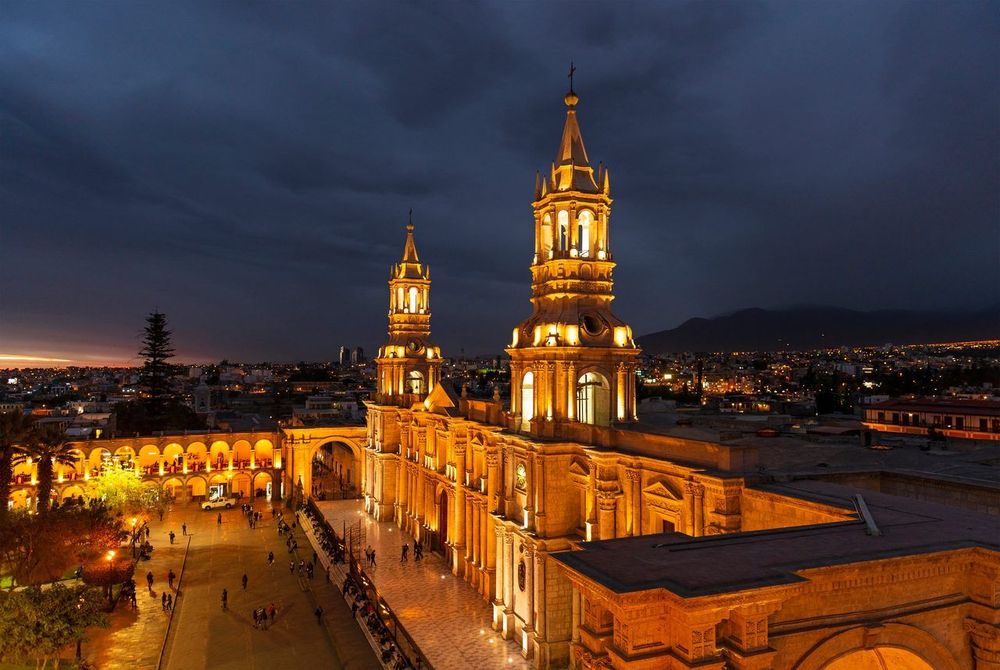
© Shutterstock
 Votre guide Ryo
Solo Travel in Arequipa: A Complete Guide to Peru's White City in 2026
At 2,335 meters above sea level, the air over Arequipa is thin enough that you'll feel it on the cathedral's rooftop stairs, but the light is what stops most visitors first: sillar, the pale volcanic stone quarried from the slopes around El Misti and Chachani, turns entire blocks of the historic center the color of bone at sunset. Ryo's audio-guided tour of Arequipa starts right there, in the Plaza de Armas, and lets you set your own pace through the colonial core, which matters more for solo travel in Arequipa than almost anything else on this trip.
This guide covers what a first-time solo traveler actually needs: which of Arequipa's three most reassuring neighborhoods to book a room in, why the Colca Canyon trek is one of the few multi-day hikes in Peru you can comfortably join without arriving with a group, where a full three-course lunch costs less than a coffee back home, and how to find other travelers to split a canyon tour with. Arequipa has a reputation as one of Peru's safer big cities, a walkable colonial core built almost entirely from pale volcanic rock, and a hostel scene that has grown considerably since the pandemic. In 2026, that means fewer crowds than Cusco, better food than almost anywhere else in southern Peru, and several days of confident, unhurried exploring before the canyon pulls you out of town.
Top Things to Do in Arequipa on a Solo Trip
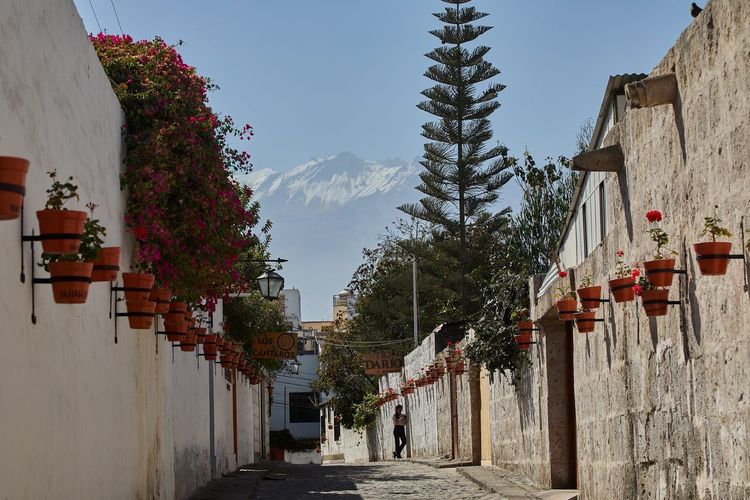
Arequipa's compact colonial center means you can walk to nearly everything on this list: no taxi, no waiting on anyone else's schedule.
Historic Center Icons: Plaza de Armas and the Cathedral
The Plaza de Armas) is where almost every Arequipa itinerary begins, and for solo travelers it doubles as an easy orientation point: three sides are lined with two-story sillar arcades, and the fourth is taken up entirely by the cathedral. Locals treat it as a living room as much as a landmark, students on the benches, shoe-shiners working the perimeter, so it's a comfortable spot to sit alone with a coffee and watch the city move without feeling conspicuous.
The Basilica Cathedral of Arequipa) anchors the square's north side and has been rebuilt more than once: a fire gutted it in 1844, the 1868 earthquake brought down its towers and part of the facade, and the 2001 quake partly toppled the left tower again, which was rebuilt in 2002. The guided visit includes the small museum and the rooftop, where you stand between the bell towers with El Misti straight ahead. It's one of the few paid attractions in the center that you'll enjoy just as much on your own.
Santa Catalina Monastery and Juanita the Ice Maiden
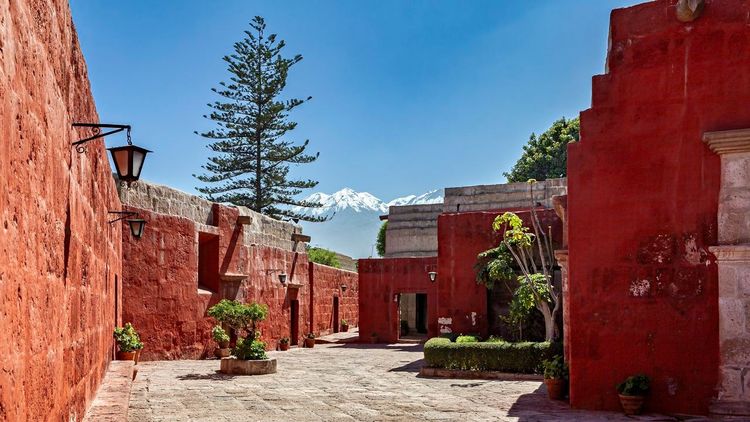
Budget at least two hours for Santa Catalina Monastery), a walled citadel-within-a-city founded in 1579 that stayed closed to outsiders until 1970. A small community of nuns still lives in the northern section today, while the rest is open to visitors. Its streets are named after Spanish cities (Málaga, Granada, Sevilla) and painted in ochre and Arequipa blue, and since you can explore without a guide, it's one of the best solo activities in the city: linger in the kitchen courtyards or the laundry area as long as you like without holding up a group.
A ten-minute walk away, the Museum of Andean Sanctuaries) holds Juanita, the mummified Inca girl found frozen near the summit of Ampato in 1995. The museum shows a short documentary before you see her (she's rotated off display for part of the year for preservation, with another child mummy taking her place), and the context it gives, the Inca practice of high-altitude sacrifice tied to mountain worship, makes this one of the more sobering stops on a solo day in Arequipa. Go in the morning if you can; tour groups tend to arrive after 11am.
Yanahuara and the City's Best Viewpoints
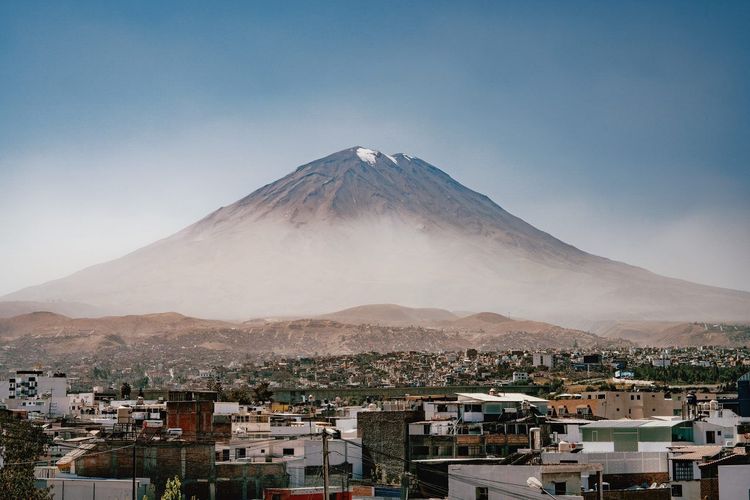
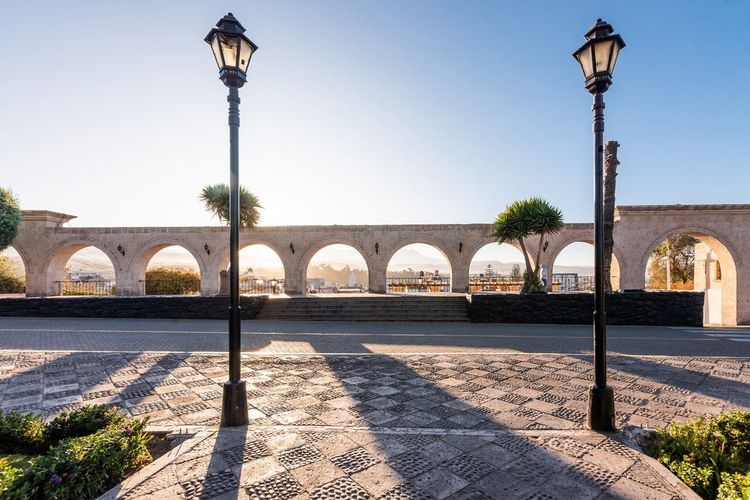
Cross the Chili River and climb gently for about twenty minutes and you'll reach Yanahuara, a quiet neighborhood whose main draw is the Mirador de Yanahuara), a lookout framed by sillar arches, each one carved with lines of verse about the city. El Misti fills the skyline directly ahead, and on clear mornings you can also pick out Chachani and Pichu Pichu, the other two volcanoes that ring Arequipa.
For a less touristed version of the same view, walk or take a short taxi to Mirador Carmen Alto) in nearby Cayma, which looks down over the terraced Chilina valley instead of the city itself. It makes a good half-day loop when you're traveling alone: two viewpoints and a coffee stop in Yanahuara's plaza in between.
San Camilo Market and Alpaca Encounters
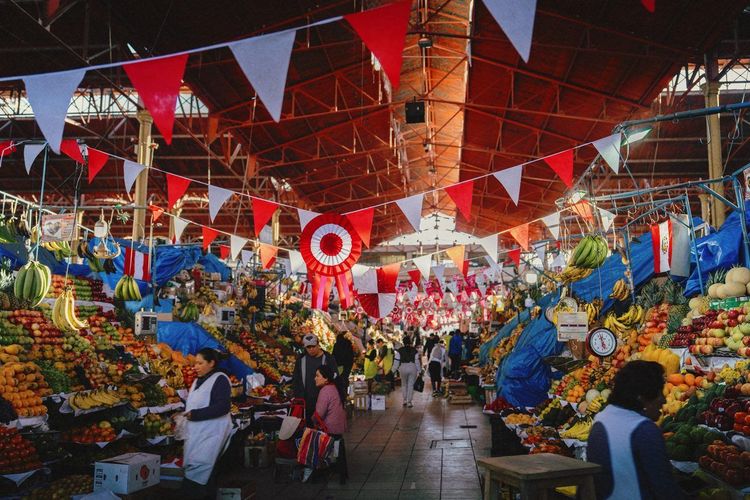
San Camilo Market) is Arequipa's answer to a farmers' market crossed with a food court: juice stalls stacked with a dozen Amazonian fruits, and a back section selling everything from herbal remedies to alpaca wool sweaters. It's an easy, low-stakes place to practice a bit of Spanish (ordering a jugo surtido is a good opener), and prices are usually posted, so haggling anxiety isn't much of a factor.
If the market gets you curious about the wool everyone's selling, Mundo Alpaca (Av. Juan de la Torre 101, San Lázaro, Arequipa, Peru, rated 4.5/5 on Google (2 492 avis)) (Alpaca World), in the San Lázaro district a short walk north of the plaza, lets you get closer to the source: a working textile showroom with a courtyard of alpacas, llamas, and vicuñas you can walk right up to, plus weavers demonstrating traditional techniques. Entry is free, and the on-site shop is one of the more reliable places in town to buy alpaca knitwear without wondering whether it's actually acrylic.
Between the cathedral, the monastery, and the market, Ryo's self-guided walk through Arequipa's historic center strings most of these stops into a single route, with a short audio story unlocking at each one, so there's no need to book a group city tour just to get the context behind what you're looking at.
Day Trip to Colca Canyon
Preparing for the Altitude and the Trek
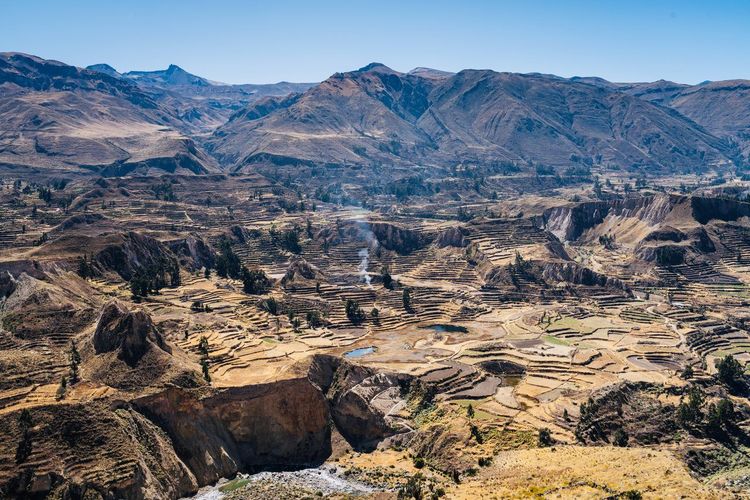
Colca Canyon is one of the deepest canyons in the world, over twice the depth of the Grand Canyon in places, and it's the most common excursion for solo travelers based in Arequipa. The catch is altitude: Chivay (Chivay, Arequipa, Peru) sits at roughly 3,600 meters and the Patapampa pass on the way goes above 4,800, so spend at least two full days acclimatizing in Arequipa before attempting it. Altitude sickness doesn't care how fit you are, and traveling solo means there's no one else to notice if you're pushing through a bad headache instead of resting.
Pack layers rather than a single heavy jacket: mornings on the rim can be near freezing while afternoons in canyon-floor villages like Sangalle turn properly hot. The canyon entrance ticket, the boleto turístico, costs 70 soles for foreign visitors and is checked at the Chivay checkpoint, which only takes cash in soles. You can also buy it in advance at the tourist information office on Arequipa's Plaza de Armas, so keep it on you rather than buried in a hostel locker.
If you're weighing whether to hike independently, most guides advise against it for first-timers: trail markings are inconsistent below Cabanaconde and cell signal disappears almost entirely once you're past the rim. A twisted ankle alone on a switchback trail is a bad place to be without a group.
Hiking the Canyon and Visiting Chivay
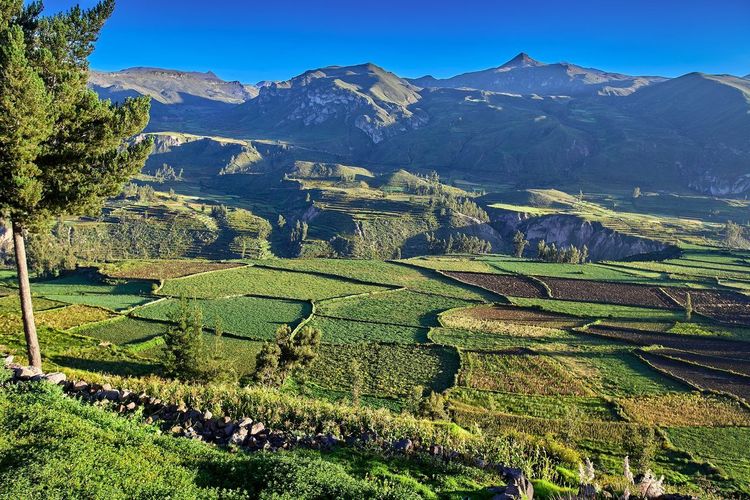
Most solo travelers join a two- or three-day shared tour rather than arranging transport independently, and this is one of the easier calls to make on this trip: a group bus to Chivay, a shared guide for the descent, and a set itinerary remove most of the logistics without forcing constant socializing, since the actual hiking happens at your own pace within the group.
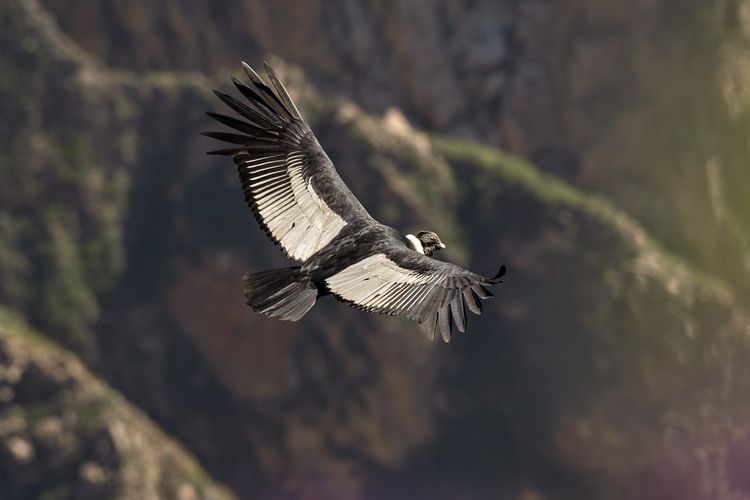
The classic route descends roughly 1,100 meters from Cabanaconde into the canyon on day one, overnights near the oasis village of Sangalle, and climbs back out before dawn on day two, a punishing but manageable trek for anyone with average fitness and a couple of acclimatization days behind them. Along the way, keep an eye on the thermal updrafts near Cruz del Cóndor: this is one of the more reliable spots in South America to watch Andean condors ride the canyon walls, usually between 8 and 10am.
A two-day, one-night shared tour from Arequipa typically runs USD 35 to 60, including transport, a shared room in Sangalle, and a guide; three-day versions that add a soak in the La Calera hot springs near Chivay cost a little more but feel well earned after the climb back out. Chivay itself deserves an afternoon beyond being a transit point: its market draws vendors from surrounding villages, and the plaza fills with women wearing the elaborately embroidered hats specific to the Colca Valley.
Going solo doesn't mean going alone: hostels in Arequipa sell shuttle-and-guide combos to Colca that cost far less than a private tour and put you in a small group of other travelers for two days, often the easiest way to make friends on this trip without any extra effort. If you'd rather skip the overnight hike entirely, a one-day cruising tour of the canyon rim covers Cruz del Cóndor and most of the same viewpoints by van, with a 3am pickup as the price of admission.
Where to Eat: Local Food Worth Trying Solo
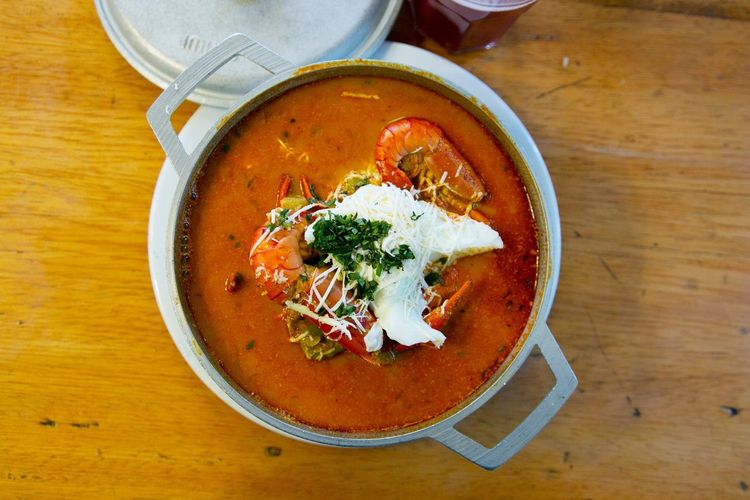
Eating alone is where Arequipa quietly wins over travelers who've spent weeks skipping restaurants out of solo-dining awkwardness. Picanterías, traditional Arequipeño restaurants, are built around shared tables and long lunches, so a table for one barely registers.
Menu del Día and Trying Cuy (Guinea Pig)
The menu del día is the backbone of eating solo and cheap in Arequipa: a fixed two- or three-course lunch, soup, a main, and a small drink, for around 10 to 15 soles, roughly USD 3 to 4. Small restaurants near the market districts tend to do this best, and ordering one requires almost no Spanish beyond « menu, por favor. »
If you're going to try cuy (guinea pig) anywhere in Peru, Arequipa is a strong candidate: it's a regional specialty here, usually served chactado, fried whole under a flat stone, rather than roasted. It's not for everyone, and it can be an awkward dish to order for one person since portions are often built for sharing, but some picanterías serve half portions. Ask before ordering if you're unsure.
Beyond cuy, look for rocoto relleno, a stuffed, fiery pepper that's one of the city's signature dishes, and adobo arequipeño, a slow-cooked pork stew traditionally eaten on Sunday mornings. Vegetarian travelers won't struggle either: quinoa soups appear on nearly every menu del día, and the market's juice stalls make an easy, filling breakfast on their own.
Coffee, Chocolate and Craft Beer Spots
Arequipa's café scene has grown fast, and it's one of the most solo-friendly parts of the food scene since cafés naturally cater to people working or reading alone. Mi Kcao Chocolates y Café (Calle Ugarte, Arequipa, Peru, rated 4.8/5 on Google (960 avis)), on Calle Ugarte, roasts coffee and makes chocolate from its own family farm near Quillabamba, in the Cusco region, and serves it on a rooftop with a straight view of the volcanoes. A free chocolate tasting comes with the visit, which makes it an easy afternoon stop on your own.
For evenings, Arequipa's craft beer bars cluster around Calle San Francisco and Calle Santa Catalina, several with rooftop or courtyard seating that make ordering a single beer and people-watching feel entirely normal. Expect to pay 12 to 20 soles for a craft beer in the historic center, more than a whole menu del día, which is part of why so many solo travelers eat lunch at a picantería and save the splurging for evening drinks. A few of these bars double as informal meeting points for the hostel crowd, worth checking if you're hoping to find company for the next day's plans.
Nightlife and Sunset Spots for Solo Travelers
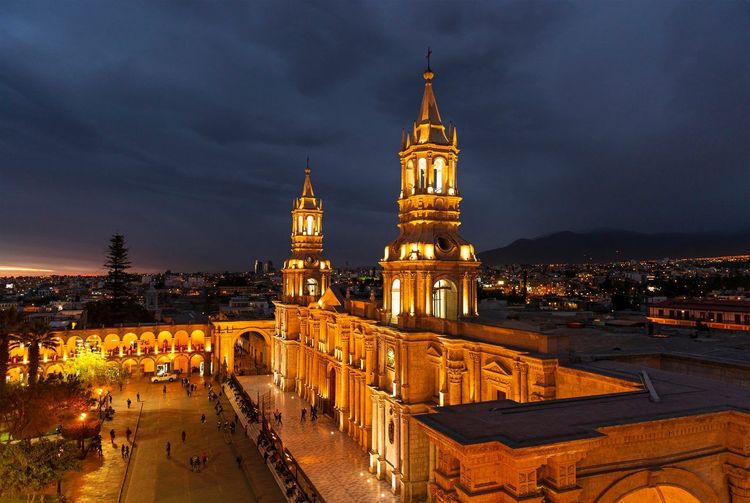
Calle Ugarte and neighboring Calle San Francisco form Arequipa's most concentrated nightlife strip, a run of bars and a couple of small clubs a few blocks from the Plaza de Armas that fills up with a mixed crowd of backpackers and locals from Thursday through Saturday. It's an easy place to go solo early in the evening, since most bars are small enough that striking up a conversation at the counter doesn't take much effort, but it gets rowdier after midnight, so most solo travelers treat it as a start-of-the-night stop rather than the whole plan.
For a lower-key alternative, Arequipa's rooftop bars offer some of the best sunset views in the city, El Misti and the sillar rooftops turning gold together as the light drops. Several cluster around the Plaza de Armas and Santa Catalina, and ordering a pisco sour alone while the sky changes color is, for a lot of travelers, one of the more memorable evenings of an Arequipa trip. Arrive by 5:30pm in the dry season, May to September, to get a table before the after-work crowd does.
If you'd rather ease into the evening than commit to either scene, a few hostels run their own rooftop happy hours specifically to get guests mingling before anyone heads out; ask at check-in. Whichever you choose, stick to well-lit streets on the walk back and split a taxi with anyone from your hostel heading the same direction; it rarely costs more than 5 to 7 soles across the historic center.
Is Arequipa Safe for Solo Travelers?
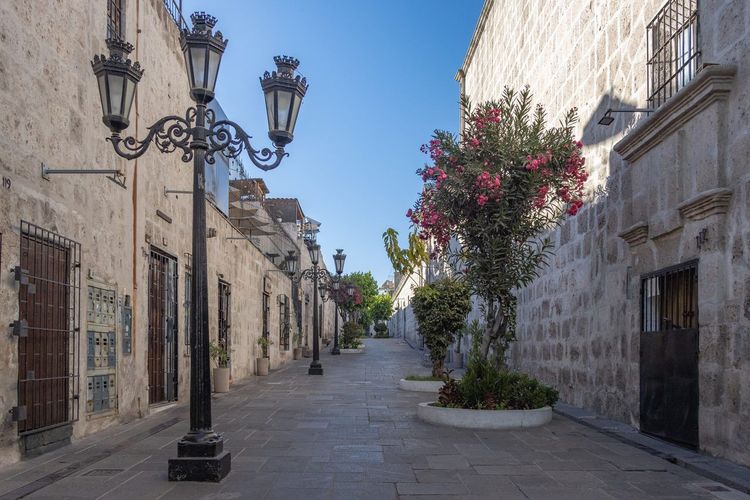
Arequipa is widely considered one of the safer major cities in Peru for solo travelers, including solo women, though safer doesn't mean risk-free. Petty theft, sometimes via a staged distraction, and the occasional overpriced taxi are the realistic concerns here, not violent crime, which is rare in the tourist areas of the historic center.
The most common piece of Arequipa safety advice from travelers who've spent time here is also the most boring one: keep your phone in a zipped pocket rather than in your hand while walking, especially around the Plaza de Armas and San Camilo Market, where crowds make it easy for someone to bump into you and disappear. Bag snatching from café tables happens occasionally around the busier plazas, so loop a strap around a chair leg rather than leaving a bag on an empty seat.
At night, the historic center and Yanahuara stay reasonably busy and well-lit until fairly late, but the streets immediately south and east of the center thin out fast after dark and are worth avoiding on foot alone. Use taxi apps (InDriver and Uber both operate in Arequipa) rather than hailing a cab off the street, particularly after 10pm; a ride typically costs 5 to 10 soles across most of the tourist zone, a small price for the peace of mind.
Cash and cards work differently here than a lot of travelers expect: many picanterías, markets, and smaller hostels are cash-only, and so is the Colca ticket, so carry small bills and use ATMs inside banks during daylight hours rather than standalone street machines. Card skimming isn't common but isn't unheard of either, so a quick balance check every few days is a reasonable habit.
Altitude is arguably a bigger practical risk than crime for most solo travelers here: Arequipa itself sits well below Cusco, but the jump to Colca Canyon or onward to Puno catches people off guard. Spend a couple of unhurried days in the city before any high-altitude excursion, and don't be shy about turning back from a hike if a headache turns into nausea.
The tourist police (Policía de Turismo) keep a visible presence around the Plaza de Armas and are used to fielding lost-passport and pickpocketing reports from foreign visitors, generally the fastest starting point if something does go wrong. Registering with your embassy's traveler program costs nothing and matters little day to day, but it's a sensible task to knock out before you land.
For solo women specifically, catcalling happens but is generally verbal rather than physical, and dressing modestly around religious sites avoids most unwanted attention there. Sticking to well-reviewed hostels with 24-hour reception, sharing your Colca Canyon itinerary with someone back home, and trusting your instincts about which streets feel too quiet are the same rules that apply across most of South America, and they hold up well in Arequipa.
Safest Neighborhoods to Base Yourself
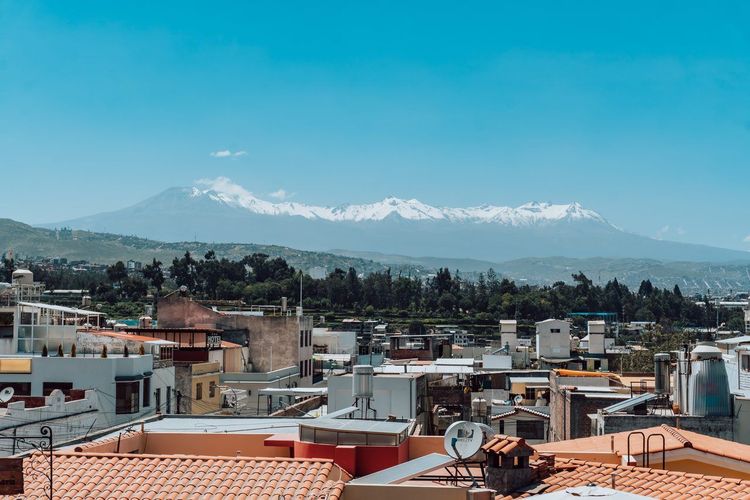
Where you sleep does more for how safe and easy a solo trip feels than almost any other decision, and Arequipa gives you three different options within a short taxi ride of each other.
Centro Histórico: Central and Walkable
Centro Histórico is the obvious base for a first solo trip to Arequipa: the Plaza de Armas, Santa Catalina Monastery, and most of the restaurants and hostels in this guide sit within a fifteen-minute walk of each other, so you can do almost everything on foot without relying on taxis after dark. It's also the most touristed and policed part of the city, which cuts both ways: safer streets, but also higher prices and more persistent street vendors near the plaza. Walking distance to nearly everything is the trade-off worth making, at least for your first few nights.
Yanahuara and Cayma: Quiet and Scenic
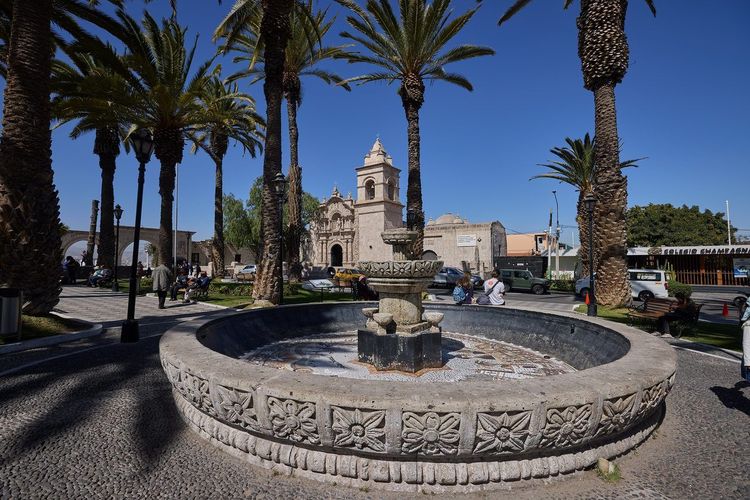
Across the river, Yanahuara and Cayma trade a bit of that walkability for quiet, residential streets and some of the best volcano views in the city. Both feel noticeably calmer at night than the historic center, good if you've already spent a few nights downtown and want a change of pace, or if you prefer working from a café over crowded plazas. The trade-off is that you'll walk twenty to thirty minutes, or take a short, cheap taxi, to reach most of the city's attractions and nightlife.
Sachaca: Budget-Friendly and Local
Sachaca, further out on the southwestern edge of the city, is known for its countryside feel, the Mansión del Fundador nearby and the Sachaca viewpoint tower. Guesthouses and longer-stay rentals here are priced well below the historic center. It's a residential district with few tourist services of its own, which means lower prices and a slice of Arequipeño daily life, but also a longer commute into the center and fewer people around late at night. It suits travelers staying for weeks rather than days, often for Spanish classes or volunteering, more than a quick three-night visit.
Across all three, the same safety features hold up: main streets stay well-lit and taxis are cheap and easy to app-book. Hostel staff in each neighborhood are also used to giving specific, current advice about which blocks to avoid after dark, rather than generic warnings. If in doubt about walking distance from a listing, ask the hostel directly before booking; Google Maps times on Arequipa's hilly streets tend to run a little optimistic.
If you base yourself in Centro Histórico or Yanahuara, Ryo's audio-guided walking route covers much of the ground between the two in a single loop, with an audio stop at each landmark along the way, so you get to know the streets you'll be walking home on during your very first morning.
Where to Stay: Best Hostels and Hotels for Solo Travelers
Arequipa's accommodation scene splits cleanly by traveler type: social hostels built around communal kitchens and rooftop bars for people looking to meet other travelers, and quieter boutique hotels and guesthouses for anyone prioritizing sleep and a bit of privacy after weeks on the road. Dorm beds in the social hostels below run roughly USD 10 to 18 a night depending on season, while boutique hotels and guesthouses mostly land in the USD 35 to 80 range, still cheaper than equivalent stays in Cusco or Lima's Miraflores.
Social Hostels for Meeting Fellow Travelers
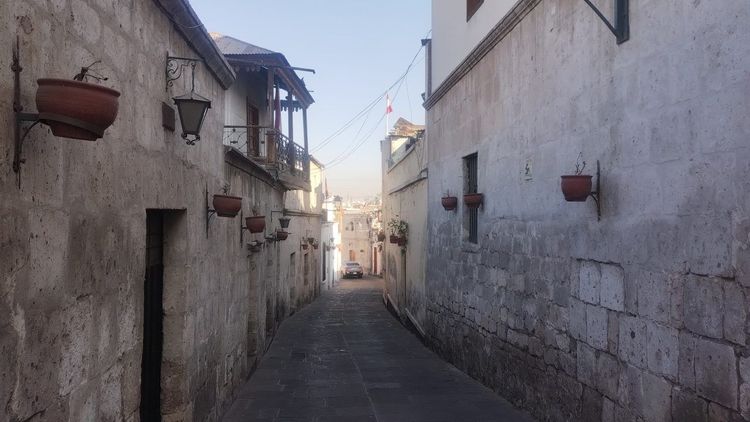
Way Kap Hostel Arequipa) comes up again and again as one of the better social options in the historic center, with a garden, a shared lounge, a terrace bar, free breakfast, and a 24-hour front desk. Staff help with group dinners and Colca Canyon tour sign-ups, useful shortcuts when you're trying to split costs or just find dinner company on your first night. Expect a lively but not chaotic dorm scene; most guests are in their twenties and thirties and out exploring during the day.
La Puerta del Sol) takes a slightly calmer approach, with private rooms alongside shared options and rooftop views that guests single out in reviews, in a location close enough to the plaza that you can walk to most of the historic-center sights covered earlier. Whatever you book, check for 24-hour reception, since it means someone's always around if a flight lands at an odd hour or a Colca tour drops you back late.
Boutique Hotels and Quiet Guesthouses
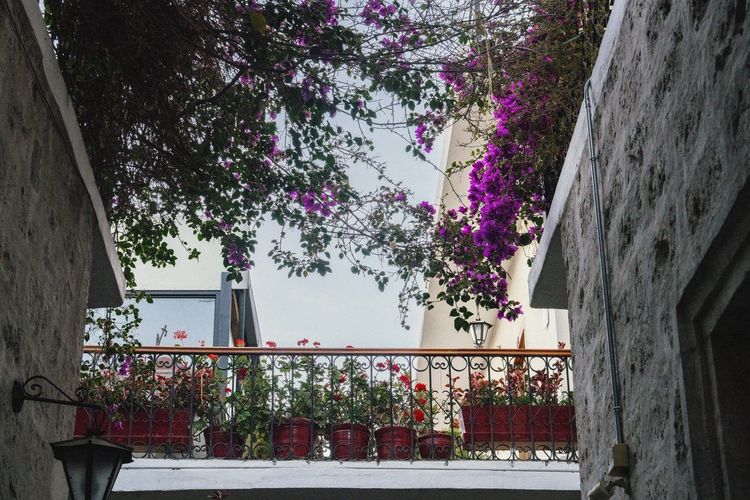
If dorm life isn't for you, Acolpacha Tambo Boutique) offers a smaller, quieter alternative in a restored colonial casona in the historic center, about five minutes on foot from the Recoleta monastery and under ten from the Museum of Andean Sanctuaries. It's the kind of place solo travelers book for a night or two to recharge after a stretch of hostels, and the buffet breakfast is included, a small but useful detail when you'd rather not think about where to eat alone first thing.
Palla Boutique Hotel) is the more polished pick, with an outdoor pool and a fitness center, a rare combination in a city where most boutique stays are small converted houses. La Posada del Puente (Arequipa, Peru, rated 4.5/5 on Google (170 avis)) sits right on the Chili River next to the Grau bridge, with garden views toward the water, a scenic but slightly less central location that works well if you don't mind a ten-minute walk into the Plaza de Armas.
Airbnbs in Arequipa are worth considering for stays longer than four or five nights, particularly in Yanahuara or Cayma, where a private apartment with a kitchen often costs less per night than a hotel room once you factor in cooking a few meals yourself. The trade-off is the social side: an apartment won't hand you the built-in dinner company a hostel does, so it suits travelers who've already met people or are in town to study.
Whichever type you book, check for safe accommodations basics before confirming: lockers in shared rooms, a front desk that's staffed around the clock, and reviews that specifically mention solo travelers rather than just couples or groups, a good filter for judging the real social atmosphere of a place versus its marketing. Book a few days ahead in the dry season, June through August, when Colca Canyon tour groups fill the social hostels fastest; the rest of the year, walking in same-day is usually fine outside of Semana Santa, the week around July 28 (Fiestas Patrias), and the city's anniversary celebrations around August 15.
For a low-effort way to structure a first solo day, Ryo's audio-guided route through Arequipa starts within walking distance of most of the hostels listed here, so you can step out the door in the morning and start the route without booking a group tour, then come back whenever you're done.
How to Meet Other Travelers in Arequipa
Is Arequipa a good place to solo travel if meeting people matters to you? Yes, more than most Peruvian cities outside Cusco, largely because the hostel and Spanish-school scene here is dense enough that you'll keep running into the same faces at the same few spots.
The most reliable way to find solo travelers in Arequipa is still the obvious one: hostel common areas, especially around dinnertime or at the Colca Canyon sign-up sheet that most social hostels keep at reception. Family-style dinners, when a hostel offers them, are worth prioritizing over eating out alone at least once or twice, less for the food than for the people you'll likely end up splitting a Colca tour with by dessert.
To connect with travelers beyond your own hostel, Facebook and WhatsApp groups for backpackers in southern Peru are active enough to be useful: people post spare spots on shared transport to Colca, meetup times for hikes, and language exchange nights at specific bars. Apps built for solo travelers let you plan and chat with people heading to Arequipa on the same dates before you even arrive. A quick search before you land usually turns up something happening within a day or two.
Taking Spanish classes is one of the better-kept secrets if you plan to stay more than a few days: several schools in the historic center run group classes aimed at travelers, a few hours in the morning, free afternoons, and classmates who are almost always also traveling solo and looking for dinner plans. It's a structured, low-pressure way to see the same people day after day rather than starting from scratch at every hostel.
If you'd rather join something more organized, a handful of solo travel groups and small-group tour operators run Peru itineraries built for independent travelers, often including Arequipa and Colca between Cusco and Lake Titicaca, without the commitment of a fully escorted trip. If you want to travel and explore with occasional company rather than constant company, that middle ground tends to work better in Arequipa than either extreme.
Even if you prefer your own company, you'll probably end up with a loose crew by the second or third day, simply because the city funnels everyone through the same handful of viewpoints, picanterías, and Colca Canyon shuttle vans. Staying a beat longer than planned, four or five nights instead of two, tends to be what turns a passing hello into an actual travel friendship.
Getting To and Around Arequipa

Getting to Arequipa by air is the fastest option: Rodríguez Ballón International Airport sits about twenty to thirty minutes from the historic center and receives regular domestic flights from Lima and Cusco. Taxis and rideshare apps both operate from Arequipa airport, and the fare into the historic center typically runs 25 to 35 soles, worth pre-arranging through your hostel if you're landing after dark on your own.
Travelling to and from Arequipa by bus is the budget option, and Peru's long-distance bus network is comfortable by regional standards; overnight buses from Lima (around 16 hours) and Cusco (around 10 hours) run with reclining « cama » seats that make solo overnight travel reasonably painless, as long as you book with a reputable company like Cruz del Sur or Oltursa rather than the cheapest option available. Bus terminals warrant a bit more street awareness than the airport, so plan to arrive during daylight where possible.
Getting around Arequipa rarely requires more than your own feet and the occasional taxi: the historic center, Yanahuara, and most attractions in this guide sit within a compact, walkable radius, and app-booked taxis rarely cost more than 10 to 15 soles across town. For longer trips to Sachaca or the outskirts, using the colectivos, shared minivans that run fixed routes for a couple of soles, is the cheapest option once you've figured out the routes, though it's admittedly not the easiest system to navigate solo on your first day.
Renting a car solo is rarely worth it inside the city: parking is scarce in the historic center, the one-way grid around the plaza is confusing for first-time drivers, and taxis are cheap enough that the math doesn't favor self-driving. If you're curious about where the city's building material comes from, a half-day trip along the Ruta del Sillar takes you to the Añashuayco quarries, where the pale volcanic stone covering Santa Catalina and the cathedral is still cut by hand, with giant carvings in the canyon walls, a quieter, more industrial counterpoint to the polished historic center.
How to get around the wider Arequipa region for day trips, such as Sabandía's colonial mill or the Yura hot springs, usually means either a shared tour from a hostel or a private taxi arranged for a half or full day, since public transport thins out fast outside the city itself. Location matters more here than most travelers expect: a room in Centro Histórico or Yanahuara can save you real money and hassle on taxis over a multi-day stay.
One advantage of doing all this alone: nothing here runs on a fixed schedule. Ryo's audio-guided walk through Arequipa works the same way: start whenever you're ready, pause for a coffee, pick it back up an hour later, with no group bus to catch and no guide waiting on you to finish photographing the cathedral.
Money-Saving Tips for Solo Travelers
Solo travel carries a built-in cost penalty, no one to split a room or a taxi with, but Arequipa is cheap enough by international standards that even paying the full solo tax rarely breaks a modest budget. Here are the Arequipa money saving tips that make the biggest difference.
Booking accommodation with kitchens, whether a hostel's shared kitchen or a private Airbnb, is probably the single biggest lever you have: cooking even half your meals cuts a daily budget noticeably, especially once you've stocked up on San Camilo Market produce at local prices rather than tourist-zone grocery prices.
For longer stays, saving money on accommodation using Worldpackers or similar work-exchange platforms, trading a few hours of hostel reception or social media help for a free bed, is a viable option in Arequipa's dense hostel scene, particularly if you plan to stick around for Spanish classes or volunteering.
Don't buy bottled water by the case if you can help it: a reusable bottle with a filter or purification tablets pays for itself within a week or two, and many hostels now offer filtered water refills to cut down on plastic waste, a small habit that adds up over a multi-week trip through Peru.
A few smaller habits stack up too. Eat your main meal at lunch via the menu del día rather than at dinner, since the same kind of meal costs noticeably more after dark. Use colectivos instead of taxis for any trip you're not in a rush for. And buy alpaca knitwear directly from Mundo Alpaca's shop or the San Camilo stalls rather than the tourist boutiques ringing the Plaza de Armas, where similar items often cost far more.
So, is Arequipa expensive for solo travel? Not really, by most benchmarks. A frugal solo traveler covering accommodation, food, and local transport can get by on USD 25 to 35 a day outside of the Colca Canyon tour itself, and even a more comfortable budget with private rooms and a few sit-down dinners rarely climbs past USD 60 to 70. The canyon trip, plus its 70-sol entry ticket, is the one line item worth budgeting separately.
Two last habits round things out. Withdraw larger amounts less often, since many Peruvian ATMs charge a flat foreign-card fee regardless of amount. And save the haggling energy for artisan stalls and taxi fares agreed before getting in, not for restaurant bills or posted hostel rates, where negotiating isn't really expected.
Best Time to Visit and What to Pack
The best time to visit Arequipa, Peru for most solo travelers is the dry season, May through September, when clear skies make the surrounding volcanoes visible almost every day and the Colca Canyon trails are at their most manageable. June through August overlaps with Peru's main tourism season, so hostels fill faster and Colca tours book up further ahead, but the weather is usually worth the extra planning.
The wet season, roughly December through March, brings afternoon showers more than constant downpours, and Arequipa, unlike the Amazon or even Cusco, stays relatively dry through most of the year thanks to its desert setting, which makes it an underrated option for dodging peak-season crowds.
Arequipa's packing advice comes down to one central fact: it's a high-desert city with big daily temperature swings, warm by midday, chilly after dark, year-round. Layers matter more than any single piece of gear. A base layer plus a warm mid-layer (fleece or light down) covers most days; add a windproof outer shell once the sun drops, and serious warm layers for Colca, where nights drop below freezing.
Add sun protection that works at altitude, a wide-brim hat and SPF 50, since UV exposure is noticeably stronger above 2,000 meters, plus sturdy shoes for uneven cobblestones and any Colca Canyon hiking. Pack a headlamp too if you're doing the canyon trek, since the pre-dawn climb out happens largely in the dark.
On language: Spanish is the default here, and English is spoken reliably in hostels, at major attractions, and by most tour guides, but far less so at picanterías, local markets, or on public transport. Even basic Spanish (greetings, numbers, and a handful of food and direction phrases) will make your trip noticeably easier and warmer, if only because it opens up the eating and shopping options that cater to locals first.
Give yourself at least 24 to 48 hours in Arequipa before attempting anything strenuous. Even though the city sits lower than Cusco or Puno, it's still high enough to cause mild headaches or breathlessness on stairs for the first day or two, especially if you've flown in directly from sea level. A compact daypack for day trips, a portable charger for long bus rides, and a couple of photocopies of your passport, kept separate from the original, round out what most solo travelers wish they'd brought from day one.

FAQ
Is Arequipa a good place to solo travel?
Yes. Arequipa combines a walkable, well-preserved historic center, a dense and social hostel scene, and one of Peru's best-value food scenes, a combination that makes it easier than most cities in the country to fill several days solo without feeling isolated or spending heavily.
Is Arequipa safe for solo travelers, especially women?
Generally yes, particularly compared to other major Peruvian cities. Petty theft rather than violent crime is the main realistic risk, and standard precautions, taxi apps at night, a zipped bag in crowds, sticking to well-lit streets after dark, cover most of what solo female travelers need to know.
Is Arequipa expensive for solo travel?
No. A frugal solo budget covering accommodation, food, and local transport typically runs USD 25 to 35 a day, with the Colca Canyon tour as the main separate expense most travelers budget for on top of that.
How many days do you need in Arequipa?
Three to four days covers the historic center, a couple of viewpoints, and acclimatization time comfortably; add two more if you're doing the classic Colca Canyon overnight trek, which most solo travelers treat as a separate leg of the trip rather than a day trip.
Do I need a guide to hike Colca Canyon solo?
It's not strictly required, but most hostels and guides recommend against hiking it independently as a first-timer: trail markers thin out below Cabanaconde and cell signal disappears past the rim, while a shared tour costs relatively little for the safety net and group company it provides.
What language is spoken in Arequipa, and do I need to speak Spanish?
Spanish is the primary language. English covers most hostels, attractions, and tours, but basic Spanish makes eating at local picanterías, shopping at markets, and getting around by colectivo noticeably easier.
What's the best time of year to visit Arequipa?
May through September, the dry season, offers the clearest skies and easiest Colca Canyon conditions, though the wet season, December to March, brings mostly afternoon rain rather than constant downpours and can be a good option for fewer crowds.
Solo Travel in Arequipa: Getting Started
Three or four days is enough to see why Arequipa turns so many quick stopovers into week-long stays: a historic center you can walk end to end and food cheap enough to eat out for every meal. It's also the gateway to a canyon trip you can join without bringing a group of your own. Base yourself in Centro Histórico or Yanahuara for your first nights, book a social hostel if meeting people matters to you, and give yourself at least two full days before heading up to Colca Canyon.
For your first morning in the city, the audio-guided tour of Arequipa from Ryo is worth starting with: it covers the Plaza de Armas, the cathedral, and Santa Catalina Monastery at your own pace, with an audio story unlocking at each stop, so you walk away with the context behind what you've just seen before deciding where the rest of your solo trip in Arequipa takes you next.