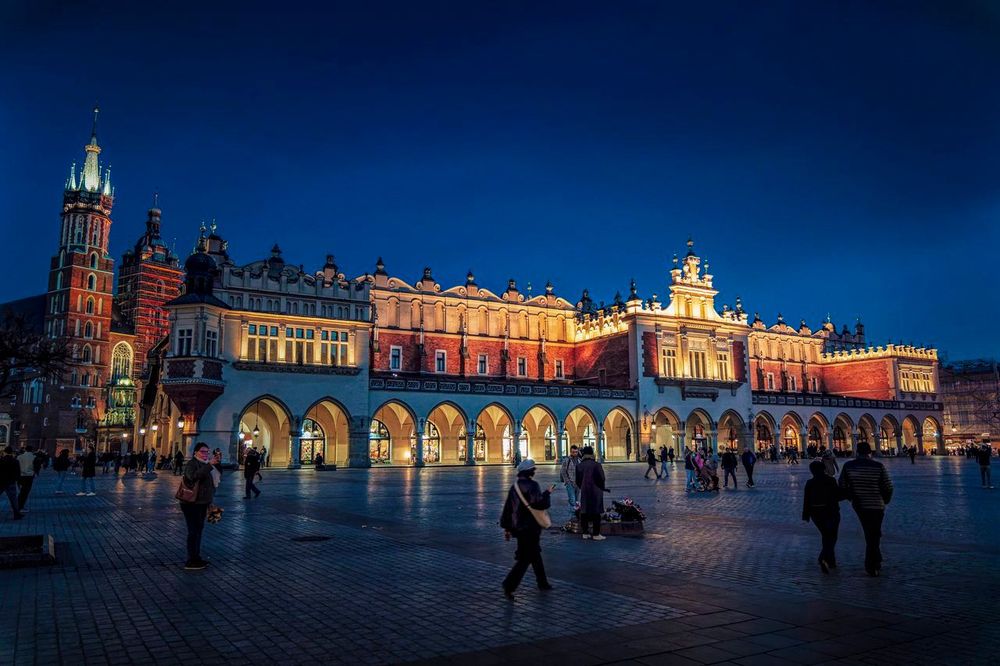
© Shutterstock
 Votre guide Ryo
Visiting Krakow at Christmas 2026: Markets, Wawel and Polish Traditions
In mid-December, the Rynek Główny square smells of gingerbread and mulled wine long before the first snowflakes fall. Visiting Krakow at Christmas means trading the lively summer terraces for frosty lanes where every shop window looks like it came out of a Polish fairy tale. The city then organizes itself around precise rituals: a market set up on one of the largest medieval squares in Europe, a miniature nativity scene competition on UNESCO's intangible heritage list, and tables filling up with pierogi and red borscht from the evening of December 24. Between the frost-covered Wawel Hill, the lanes of Kazimierz where candles glow in the windows and the chalets of the Rynek, you will discover a city very different from its summer version. To connect these places without wasting time in the cold, the Ryo audio-guided tour of Krakow offers a 5.6 km loop to follow at your own pace, between two warm breaks.
Why Spend Christmas in Krakow?
Many travelers discover Krakow in summer, when the Rynek Główny overflows with café terraces. The city's winter version tells a different story. From late November, lights replace parasols, wooden chalets line up on the cobblestones, and the dry cold of Lesser Poland gives the stones of the Old Town an almost silvery tint.
December's climate remains continental and pronounced: temperatures generally hover between -5 °C and 2 °C, and snow becomes more likely as the month goes on. The days are short, with the sun setting around 3:30 pm, which still leaves you time to enjoy the markets in the late afternoon under the glow of the garlands. Plan for several warm layers and waterproof shoes: the cobblestones of the Rynek become slippery at the first frosts.
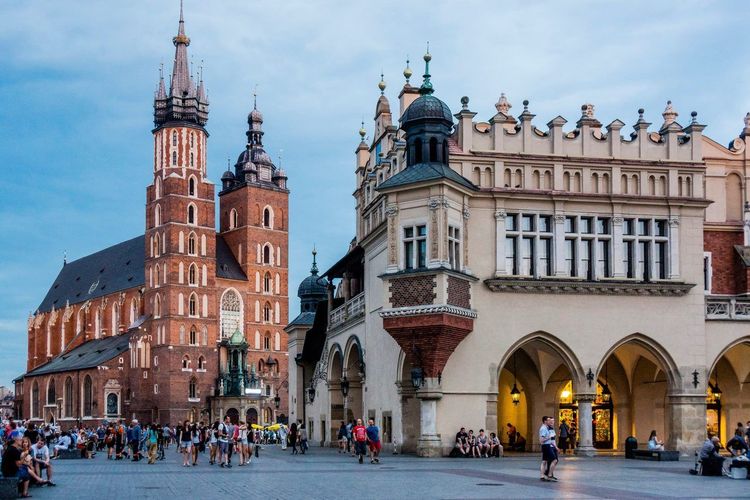
Beyond the weather, it is above all the atmosphere that justifies the trip. Krakow escaped the major destruction of World War II, and its historic center, a UNESCO World Heritage Site since 1978, has kept its medieval layout. Under the snow, the colorful facades of the Main Square, the bell towers of the basilica and the arcades of the Cloth Hall make up a scene that photographers wait for all year.
If you are unsure about dates, aim for the second half of December: the market is then at its peak, and Christmas Eve empties the streets at the end of the day, offering a surprisingly calm interlude to admire the decorations without the crowds.
The Christmas Market on the Rynek Główny Square
The Chalets, Polish Crafts and Market Decorations
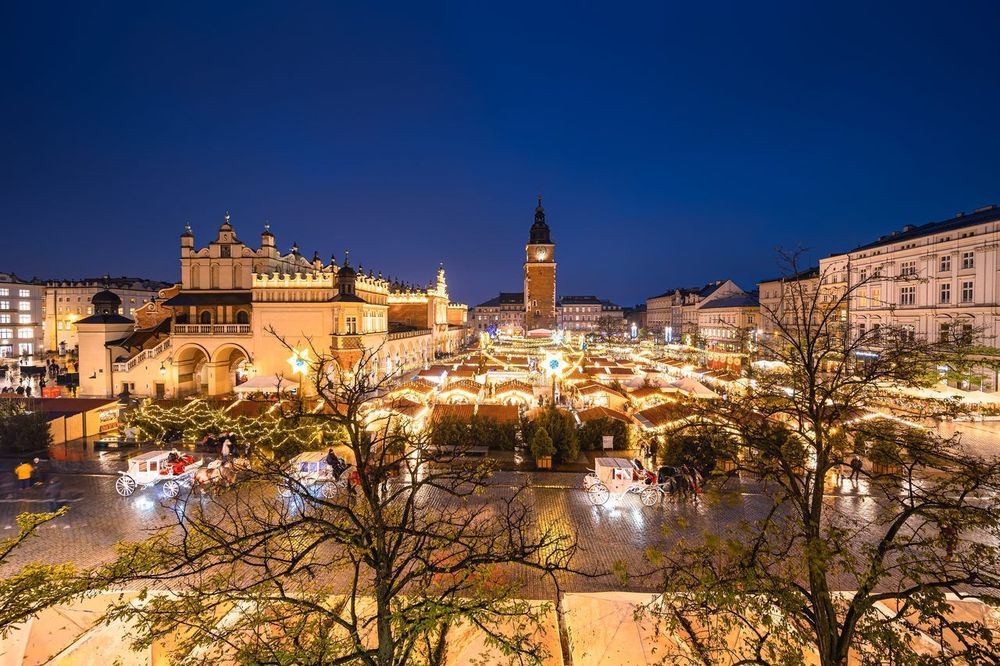
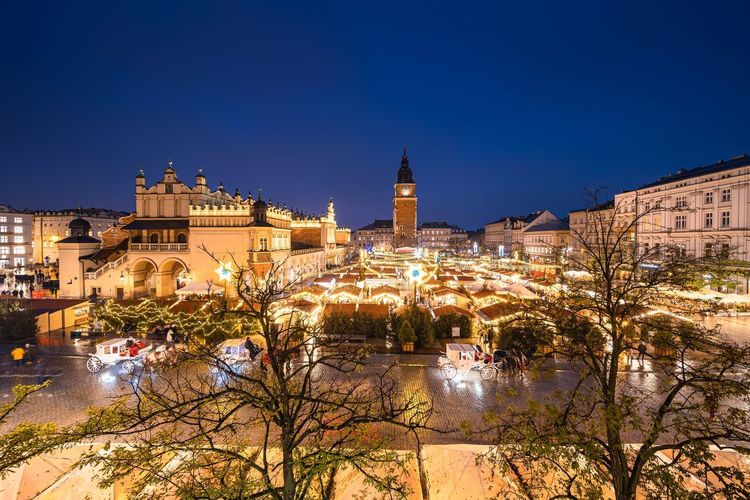
The Christmas market is set up every year on the Rynek Główny (Rynek Główny, 31-042 Kraków, rated 4.9/5 on Google from 1,129 reviews), one of the largest medieval squares in Europe at around 4 hectares. The 2026 edition is announced from November 27, 2026 to January 6, 2027, with chalets open at least from 10 am to 8 pm.
About a hundred wooden chalets (105 in the previous edition) are arranged in rows around the statue of Adam Mickiewicz and the Town Hall Tower. There you will find hand-blown and hand-painted glass baubles, embroidered tablecloths, carved wooden figurines, Baltic amber jewelry, Poland's signature stone, and miniature nativity scenes inspired by the famous Krakow szopki.
At nightfall, a large illuminated fir tree stands on the square, surrounded by garlands running along the facades. Children gladly stop in front of the animated displays at some stalls, while parents compare the price of a Tatra wool blanket or a jar of buckwheat honey.
A practical tip: come in the late morning on a weekday if you want to photograph the chalets without the evening crowds. The market peaks between 5 pm and 8 pm, when locals leave work and groups flock in from the hotels in the center. Our Ryo audio guide starts precisely on the Market Square: it is the first of its 20 stops, enough to understand the history of the square before losing yourself among the chalets.
Grzaniec Galicyjski, Oscypek and Treats to Enjoy on the Spot
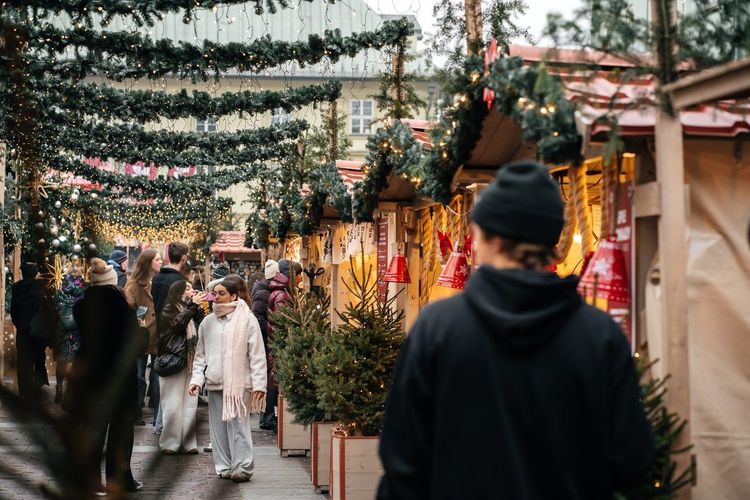
Street food occupies a good share of the chalets. The grzaniec galicyjski, a mulled wine spiced with cinnamon and clove, is served in ceramic mugs that you can keep as a souvenir for a small deposit. Each stand has its own recipe, some adding honey, others a touch of red fruit juice that softens the alcohol.
Next door, the oscypek catches the eye as much as the nose: this smoked sheep's milk cheese, made in the Tatras and protected by a European designation, is eaten grilled with a spoonful of cranberry jam. The caramelized crust contrasts with the still-melting inside, and the smell of wood smoke will guide you to the right chalet without even looking.
Sweet-toothed visitors are not left out. The makowiec, a poppy seed roll also found on family Christmas tables, sits alongside gingerbread from Toruń and pierogi served piping hot in cardboard trays. For a more savory option, large grilled sausages (kiełbasa) and cabbage soup served in a hollowed-out bread loaf make a quick meal between two visits.
A tip shared by locals: avoid the very first chalets near the entrances of the square, often geared to hurried groups, and take a full lap before choosing. Expect to pay ten to twenty złotys for a portion of grilled oscypek, and 20 to 30 PLN for a grzaniec (about 4.70 to 7 euros), mug deposit not included.
Wieliczka salt, mined about fifteen kilometers from the city, even turns up in some chalets, sold in small bags or carved into figurines. It is a chance to spot in advance an excursion we discuss further on.
If you are traveling with family, note that most chalets accept bank cards, but keep a few small bills: some craftspeople still prefer cash for small amounts.
Krakow's Old Town and St. Mary's Basilica
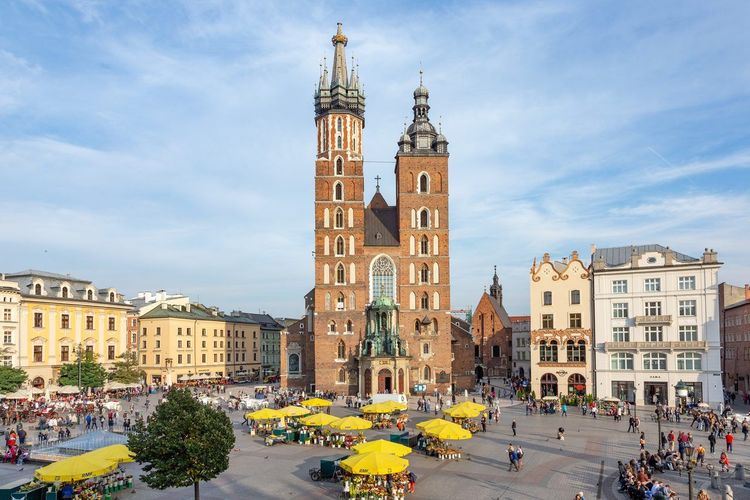
St. Mary's Basilica and Its Gothic Altarpiece
You cannot miss St. Mary's Basilica (Kościół Mariacki), which dominates the northeast corner of the Rynek with its two asymmetrical towers.
Inside, the altarpiece carved by Veit Stoss between 1477 and 1489 remains one of the largest wooden Gothic altarpieces in Europe: about thirteen meters high, with more than two hundred carved figures telling the life of the Virgin, and shutters that are opened every day shortly before noon in a short ceremony.
The tallest tower still serves as a lookout post, following a tradition dating back to the Middle Ages: every hour, a trumpeter plays the hejnał, a tune abruptly cut short in memory of a watchman said to have been struck by an arrow while sounding the alarm. In December, listen closely at nightfall, when the square gradually empties: the melody then rings out much more clearly.
Access to the nave requires a ticket for visitors outside of services, which remain open to worshippers. The ticket is bought at the ticket office facing the tourist entrance, on the small Mariacki square; during the holidays, the wait can get longer in the middle of the afternoon.
The Cloth Hall, the Barbican and the Ramparts
Coming down from the basilica's forecourt, you come straight upon the Cloth Hall), a 14th-century merchant hall remodeled in the Renaissance style in the 16th century, which occupies the center of the square.
Its ground floor houses a gallery of craft stalls, calmer than the outdoor chalets: amber, lace, embroidered linen and small wooden icons are sold there year-round. Upstairs, the National Museum displays a collection of 19th-century Polish painting, a welcome warm break when the thermometer drops below zero.
Heading north along Floriańska Street, the former Royal Road, you reach St. Florian's Gate and then the Barbican (Barbakan). This circular red-brick fortification from the late 15th century, one of the best preserved in Europe, once protected access to the gate.
The Planty gardens, laid out along the line of the old ramparts, form a green belt of nearly 4 kilometers. Frosted in December, they offer a pleasant pedestrian loop to connect several monuments without encountering car traffic.
Jagiellonian University and the Memory of Copernicus
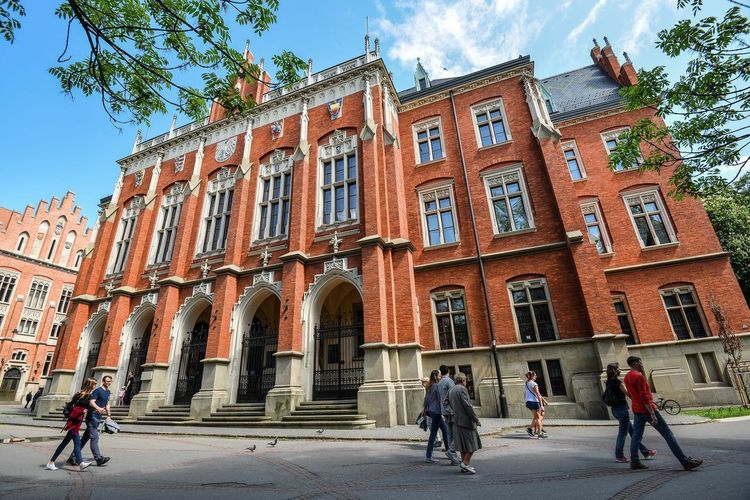
A few streets from the Rynek, the Collegium Maius (ul. Jagiellońska 15, 31-010 Kraków, rated 4.7/5 on Google from 1,647 reviews) houses the historic heart of Jagiellonian University, founded in 1364 and the oldest in Poland.
Nicolaus Copernicus studied there between 1491 and 1495, long before formulating his heliocentric theory. The museum holds antique scientific instruments, including Renaissance globes, and you can freely enter the arcaded inner courtyard, whose animated clock parades its figurines several times a day.
The guided tour of the interior lasts about 45 minutes and includes the library, the aula and the university's treasury room.
If you prefer archaeology, the Rynek Underground, a museum opened in 2010 beneath the square, on the north side of the Cloth Hall, tells eight centuries of commercial history through the remains uncovered during the excavations of 2005-2010. You walk among the foundations of former stalls, about four meters below the current level of the cobblestones, dry and warm.
The Ryo audio-guided tour crosses this Old Town in 2h15: from Floriańska Street to the Barbican, then through the university quarter, each audio stop tells the story of the facades you walk past.
Wawel Castle and Its Cathedral
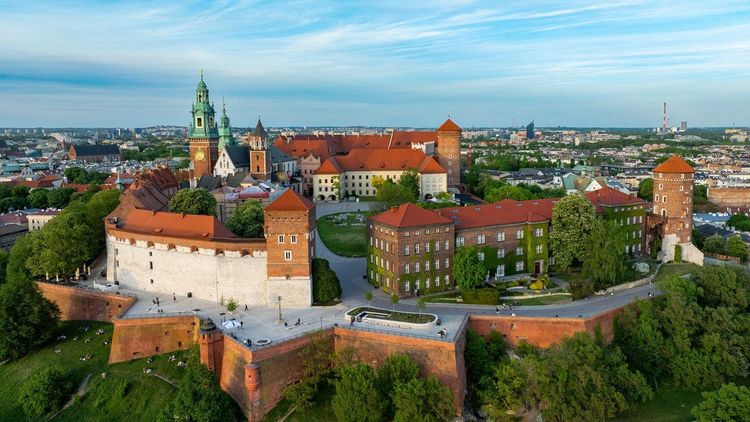
Wawel Hill and the Royal Cathedral
The Wawel hill has overlooked the Vistula for more than a thousand years and brings together the royal castle, cathedral and gardens on a single promontory.
Residence of the kings of Poland until the court moved to Warsaw in the late 16th century, the castle blends Gothic, Renaissance and Baroque architecture depending on the wing. Its Italianate arcaded courtyard, under the snow, is a radical change from the summer crowds. A good tip to know: entry to the castle is free on Sundays from December to March, from 10 am to 4 pm, for some of the exhibitions.
Right next door, the Wawel Cathedral witnessed the coronation of most Polish monarchs from the 14th century onward.
Its royal crypt holds the tombs of kings, national heroes and poets. In the Sigismund Tower, the bell of the same name, cast in 1520, weighs nearly 13 tons with its fittings and requires a dozen bell ringers. It rings only for major religious feasts and national events, including Christmas, a deep sound that many Krakovians associate with the real start of the festivities.
Come in the mid-morning: castle tickets are sold by time slot and the most in-demand ones go quickly during school holidays.
The Dragon's Den and John Paul II's Papal Window
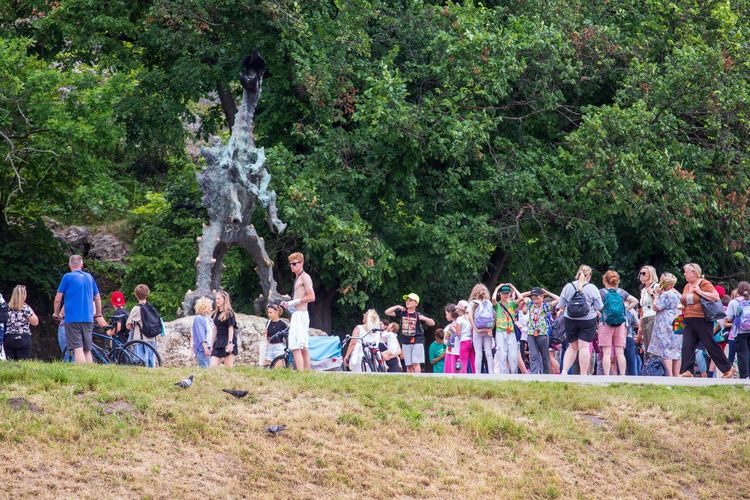
Beneath the hill, the Dragon's Den (Smocza Jama) extends a founding legend of the city: a dragon is said to have terrorized Krakow until a young cobbler trapped it with a sheepskin stuffed with sulfur.
A word of caution if you come at Christmas: the cave is closed from November to March and can only be visited from April to October. However, the bronze statue of the dragon, which actually breathes fire at regular intervals, remains visible all year on the banks of the Vistula, at the foot of the hill.
On Franciszkańska Street, about ten minutes' walk from the castle, the papal window of the Archbishop's Palace is a reminder that John Paul II, Archbishop of Krakow before his election, would greet the crowd from this window during his stays in the city. A photograph of the pope is still displayed there, and candles left by Polish visitors mark this place of remembrance, even in the depths of winter.
Right opposite, the Franciscan Basilica (Plac Wszystkich Świętych 5, 31-004 Kraków, rated 4.8/5 on Google from 5,838 reviews) deserves a detour for its Art Nouveau stained-glass windows by Stanisław Wyspiański, including the spectacular "God the Father, Let It Be" above the entrance.
The Ryo audio-guided tour also runs along the Vistula facing Wawel, with one stop devoted to the legend of the dragon and another at the castle, before heading back up via Grodzka Street to this basilica: handy for connecting all these places without getting lost in the lanes around the hill.
The Kazimierz District, the Jewish Soul of Krakow
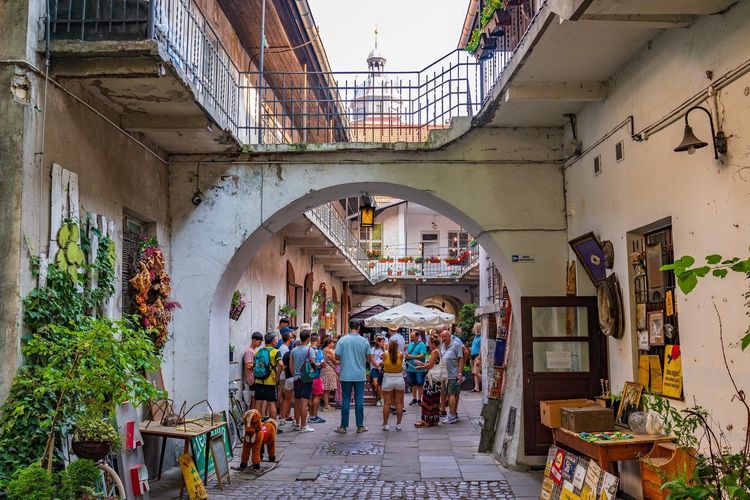
History, Synagogues and the Remuh Cemetery
The Kazimierz district, founded in 1335 as a separate royal city and then attached to Krakow in 1800, was home for centuries to one of the most important Jewish communities in Europe.
Before World War II, Krakow had about sixty thousand Jewish residents, a large share of whom lived in Kazimierz, around a dozen synagogues. The Remuh Synagogue, built in the 16th century, is today one of the two still used for worship, along with the Tempel Synagogue.
Its adjoining cemetery, one of the oldest Jewish cemeteries in Europe still visible, preserves Renaissance gravestones. Ransacked during the occupation, it was restored after the war, and the fragments of headstones found during the work now form a striking wailing wall. Remember to cover your head to enter, and visit in silence: the atmosphere contrasts sharply with the bustle of the Rynek, a few hundred meters away.
In December, Szeroka Street remains subdued, far from the main market: depending on the year, Hanukkah falls at the same time and candles are lit in the windows of the neighborhood's restaurants.
The Old Synagogue, the oldest in Poland, houses a branch of the Krakow Museum devoted to the history of the city's Jews; the Tempel and Izaak synagogues can each be visited with their own ticket. To put each building in context before wandering, the Galicia Jewish Museum, housed in a former factory, helps you gauge the scale of this history.
Street Art, Food Trucks and Great Addresses in Kazimierz
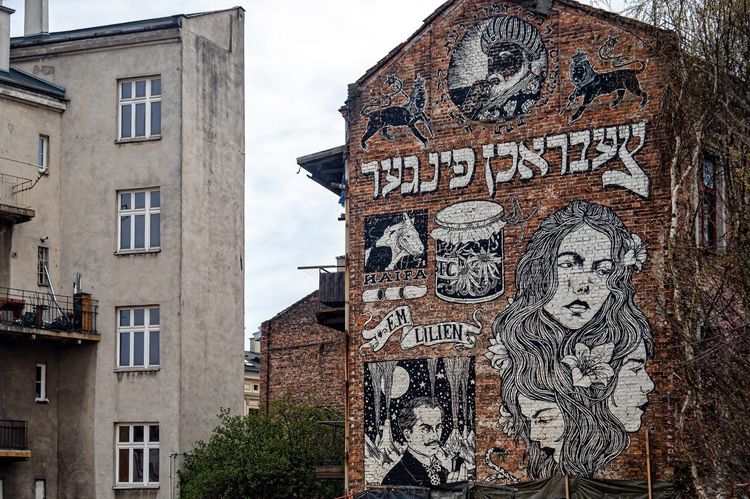
For about fifteen years, Kazimierz has also become a showcase for Krakow street art. The gable walls of former workshops and buildings, especially around Józefa and Dajwór streets, carry large murals created by local and international artists.
The square Plac Nowy (Plac Nowy, 31-059 Kraków, rated 4.5/5 on Google from 5K reviews), a former poultry market, has become the epicenter of the district's street food.
Its circular pavilion, the Okrąglak, nicknamed "the Round" by locals, lines up counters serving zapiekanka, that half-baguette baked with cheese and mushrooms that has become a classic of Krakow nightlife. Several stay open late, holidays included, although the hours on December 24 and 25 are worth checking on the spot.
For a more leisurely meal, the Jewish cuisine restaurants lining Szeroka Street serve gefilte fish, eggplant caviar or chopped liver, often accompanied by klezmer music in the evening. Several bars set up in former vaulted cellars also make Kazimierz a welcome place to land after a day of sightseeing in the cold.
The neighborhood's cafés, decorated with mismatched furniture and archive photographs, stay open late. You will drink better coffee there than on the main square, for less.
The Ryo audio-guided sub-tour of the Jewish quarter tells the story of Kazimierz step by step, from the synagogues of Szeroka Street to the squares of the district, a good way to miss nothing of its two faces.
Podgórze and the History of the Jewish Ghetto
The Ghetto Wall and Ghetto Heroes Square
On the other side of the Vistula, the Podgórze district was turned into a ghetto by the Nazi occupier between March 1941 and March 1943, confining between fifteen and twenty thousand people in an area where about three thousand residents had previously lived.
A fragment of the ghetto wall, recognizable by its rounded top evoking Jewish gravestones, survives on Lwowska Street.
A commemorative plaque in Polish and Hebrew recalls the fate of the inhabitants. Allow ten minutes on foot from the central square of the ghetto.
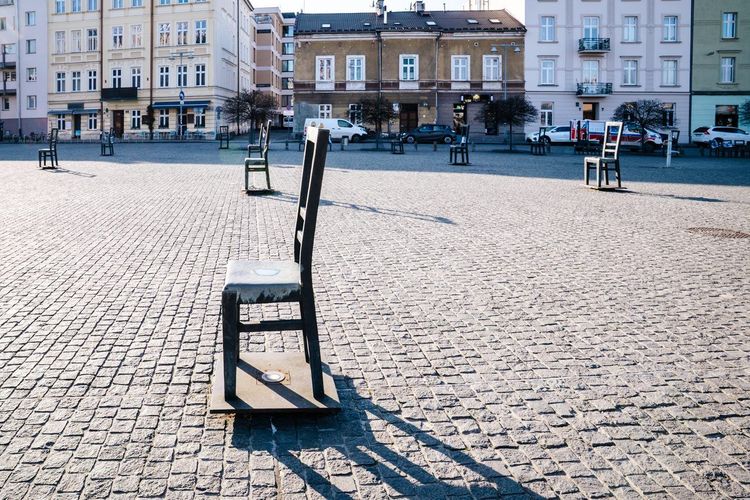
The Ghetto Heroes Square, a former assembly point before the deportations, has housed since 2005 an installation of seventy bronze chairs scattered across the public space.
Each chair symbolizes a thousand victims, echoing the furniture abandoned on the square during the liquidation of the ghetto. In December, the square remains soberly lit: come in the daytime instead, when the low winter light stretches the shadows of the chairs across the frozen ground.
The Eagle Pharmacy and the Schindler Factory
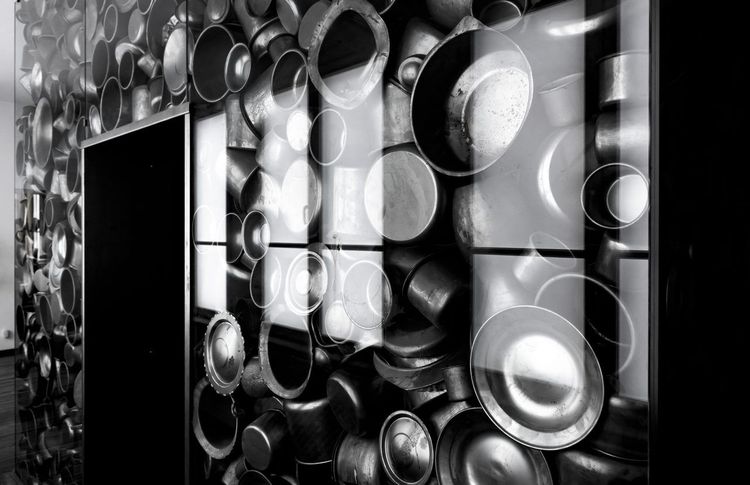
On the corner of the square, the Eagle Pharmacy (Apteka pod Orłem) played a little-known role during the occupation.
Its owner, Tadeusz Pankiewicz, the only non-Jewish pharmacist allowed to remain in the ghetto, supplied medicine there, hid people and passed messages to the outside. The site now houses a branch of the Krakow Museum devoted to this period, with testimonies and period objects.
About ten minutes away on foot, the Schindler Factory (ul. Lipowa 4, 30-702 Kraków, rated 4.5/5 on Google from 26,597 reviews) (Fabryka Schindlera) occupies the former enamel factory where the German industrialist Oskar Schindler employed more than a thousand Jewish workers, sparing them deportation.
The permanent exhibition, "Krakow under Occupation 1939-1945," traces the city's daily life through an immersive scenography, with reconstructed streets, a period apartment and Schindler's office. Allow at least two hours: the visit is dense and sometimes trying.
Book your ticket online several days ahead during the holidays: slots are limited and go quickly between Christmas and New Year.
Experiencing Christmas Traditions in Krakow
The UNESCO-Listed Nativity Scene Competition and Christmas Concerts
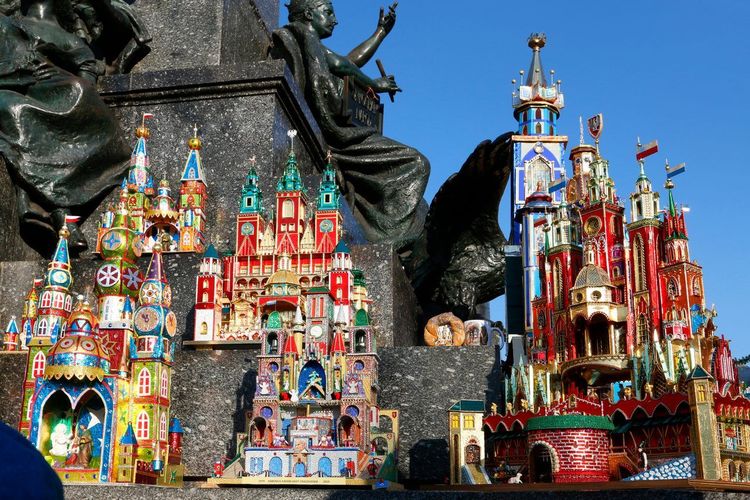
On the first Thursday of December, the foot of the Adam Mickiewicz monument hosts the result of a unique tradition: Krakow's nativity scene competition (szopki), added in 2018 to UNESCO's list of intangible cultural heritage. From 9 am, the makers present their works to the public, then at noon form a procession to carry them to the Krakow Museum.
Unlike classic nativity scenes, Krakow's creations miniaturize the city's monuments: the towers of St. Mary's Basilica, Wawel Castle (Wawel 5, 31-001 Kraków, rated 4.7/5 on Google from 168,877 reviews) or the Cloth Hall are reproduced in cardboard, metallic paper and colored aluminum foil, with the Nativity built into the architecture. This tradition dates back to the 19th century, when masons and carpenters left without work on construction sites during winter made these nativity scenes to supplement their income.
Missed the day of the competition? No worries: all the selected nativity scenes are displayed at the Krzysztofory Palace, on the Rynek, home of the Krakow Museum. In 2026, the exhibition is scheduled from December 9 to February 28, 2027, which lets you examine them up close, in peace.
At the same time, the city's churches host a growing number of classical music and Christmas carol concerts throughout December. The Church of Saints Peter and Paul, renowned for its acoustics, and several more modest chapels offer programs of Polish carols, often with a small string ensemble or an organ. Tickets, generally between 40 and 80 PLN, can be booked on site or online, and the dates closest to Christmas are often sold out.
Some concerts offer short formats in the late afternoon, better suited to children, with kolędy, the Polish Christmas carols, such as "Bóg się rodzi" or "Dzisiaj w Betlejem," which Krakovians gladly sing.
Locals also use this period to make the rounds of the nativity scenes set up in the churches, a stroll you can replicate: you walk in, take in the decoration for a few minutes, then head off to the next church, keeping quiet during services.
The Shepherds' Mass and Christmas Flavors: Pierogi, Borscht, Makowiec
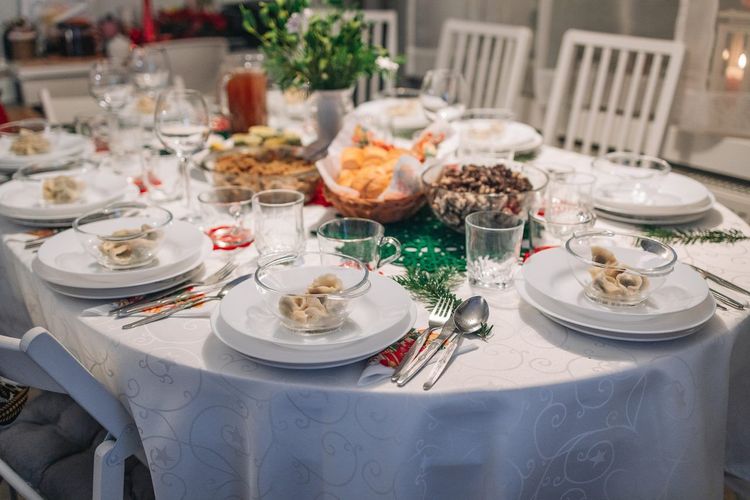
The evening of December 24, called Wigilia in Polish, follows a precise routine in most families. The meal traditionally begins at the appearance of the first star, in memory of the Star of Bethlehem, with the sharing of a thin unconsecrated wafer, the opłatek, over which everyone exchanges good wishes before sitting down to eat. An extra plate is often set for the stray traveler.
The dinner traditionally has twelve dishes, one for each apostle, all meatless: red borscht served with small mushroom dumplings (uszka), pierogi filled with cabbage and mushrooms, fried or jellied carp, and for dessert makowiec, a soft poppy seed roll, sometimes accompanied by kutia, a wheat dish with poppy seeds, walnuts and honey, most common in the east of the country.
At midnight, the shepherds' Mass (Pasterka) fills the city's churches, with St. Mary's Basilica and Wawel Cathedral drawing the biggest crowds. Visitors are welcome: arrive at least thirty minutes before the service if you want a seat, otherwise expect to stand in the side aisles.
Not invited to a Krakovian home? Several traditional restaurants in the Old Town and Kazimierz offer Wigilia menus in the days leading up to Christmas, sometimes with explanations of the symbolism of each dish.
The restaurants of the Rynek list these specialties on the menu all year, but it is in December that you will taste the most faithful versions, prepared for the season with the same recipes as in family homes.
Excursions Around Krakow: Salt Mine and Wadowice
Two excursions naturally complete a several-day stay in Krakow in December.
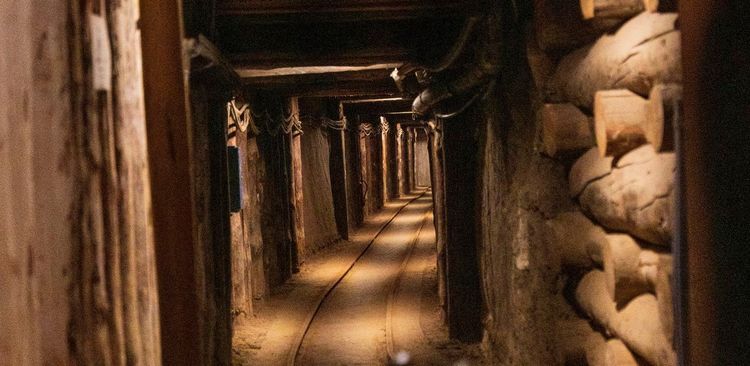
The Wieliczka Salt Mine (ul. Daniłowicza 10, 32-020 Wieliczka, rated 4.6/5 on Google from 40,660 reviews), UNESCO-listed since 1978 and about thirty minutes from the city center, can be visited all year. Underground, the temperature stays stable around 14 °C, a real relief after a day in the cold on the surface.
The guided tour, which is mandatory, descends to about 135 meters underground through carved galleries, including the famous St. Kinga's Chapel, entirely hewn from salt, with its salt-crystal chandeliers and religious bas-reliefs. Allow two to three hours, and book online several days ahead during the holidays: French-language slots go quickly.
Further southwest, about an hour's drive away, Wadowice, the birthplace of John Paul II, can be visited in half a day from Krakow. The pope's family home, turned into a museum, and the neighboring basilica attract pilgrims all year.
Nearby, the Kalwaria Zebrzydowska sanctuary, a UNESCO site since 1999 for its ensemble of Mannerist chapels scattered across the hills, completes the visit if you have a full day. The two sites can be reached by car, regional bus or private minibus from Krakow: set off early, as the light fades from mid-afternoon.
If you want to keep the inspiration going, our article on visiting Krakow as a couple and our account of the Krakow Dragon Parade give more ideas for stays at different times of the year.
Where to Stay and Eat in Krakow for the Holidays
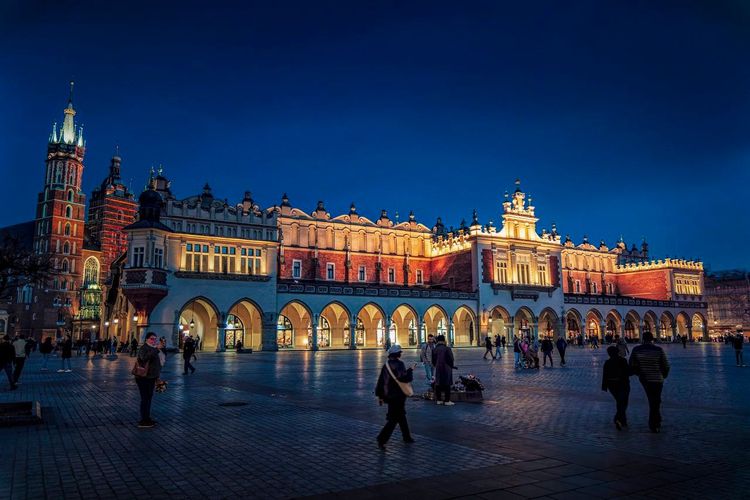
For accommodation, two neighborhoods stand out clearly during the Christmas period. The Old Town, inside the Planty, puts everything within walking distance: the Rynek, the basilica, the Cloth Hall and even Wawel can all be reached in under twenty minutes on foot. Prices climb noticeably there between December 15 and January 2, and it is best to book one to two months ahead for the best-located places.
Kazimierz, fifteen minutes on foot from the Rynek, offers a quieter and often cheaper alternative, with genuine neighborhood life, between independent cafés and small guesthouses set up in old buildings. It is also the right choice if you favor restaurants frequented by locals.
As for dining, traditional Polish cuisine restaurants, with homemade pierogi, żurek served in a bread bowl and slow-cooked dishes, are plentiful in Kazimierz and in the streets around the Rynek, a bit away from the square where prices are inflated. Milk bars (bar mleczny), popular canteens inherited from the communist era, let you taste the same dishes for a few złotys.
For a more refined dinner, several fine-dining restaurants in the center offer year-end menus, often by reservation only from mid-December. The historic cafés of the Rynek, with their Belle Époque interiors, remain a pleasant option for a hot chocolate at the end of a visit, even if the bill is steeper than in a side street.
On budget, expect on average 60 to 100 PLN per person for a full traditional meal with a drink in a family-run restaurant, and significantly more on the main square. Breakfasts included in Kazimierz guesthouses help limit spending over a stay of several days.
Choosing accommodation close to the route of the Ryo audio-guided tour, which forms a loop around the Old Town, simplifies your trips between visits and your return to the warmth at the end of the day, especially when the thermometer drops below zero in the evening.
Practical Info: Climate, Transport and Budget for Christmas in Krakow
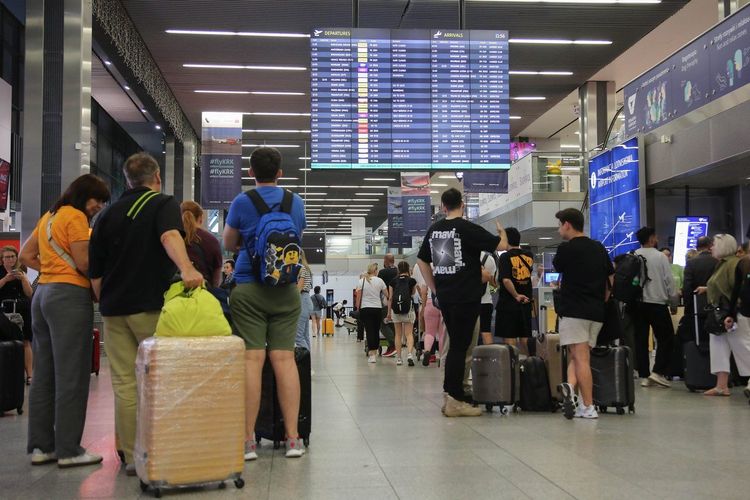
To get to Krakow, John Paul II Kraków-Balice Airport receives direct flights from several French cities, with a train ride of about twenty minutes to the central station, or a bit longer by bus. Expect roughly two to two and a half hours of direct flight from Paris, Lyon or Marseille depending on the airline.
As for formalities, Poland is part of the Schengen area: a valid ID card or passport is enough for European citizens. The currency remains the złoty (PLN), and travel insurance is recommended in winter, as the weather can occasionally disrupt flights.
On site, the center is covered on foot, and the tram network takes over to reach Podgórze or the Schindler Factory. Tickets are bought from machines, often installed directly in the trams, or via a mobile app.
Traveling with a baby or young child poses no particular difficulty: the Old Town's cobblestones, slippery in winter, are easier to manage with a baby carrier than with a standard stroller, and most restaurants have high chairs on request.
On crowds, Krakow is noticeably busier in December than the rest of the low season, without reaching summer levels. Advent weekends and the period between Christmas and New Year are the busiest on the Rynek, while the morning of December 25 offers an unexpected calm.
Shops and supermarkets generally close in the early afternoon on December 24 and stay closed on the 25th and 26th, the latter also being a public holiday in Poland. Restaurants follow variable hours: some close on Christmas Eve so their staff can spend it with family, while others offer a Wigilia menu to travelers.
On budget, a four- to five-day stay in Krakow at Christmas, with decent accommodation and meals included, generally costs less than an equivalent weekend in a major Western European capital, even with the seasonal rise in prices at hotels in the center.



FAQ
Is Christmas a good time to visit Krakow?
Yes, if you enjoy the cold and a strong winter atmosphere. The Christmas market, the nativity scene competition and the concerts in the churches offer a rich cultural experience, different from the classic summer visit. Just pack warm clothes and plan visits suited to short days, as the sun sets around 3:30 pm in December.
Is Krakow crowded at Christmas?
Visitor numbers rise noticeably compared with the rest of winter, especially around the Rynek Główny on December weekends and between Christmas and New Year. Paradoxically, the morning of December 25 remains calm. To avoid the crowds, favor morning visits and weekdays.
What is open in Krakow at Christmas, and are restaurants open on Christmas Day?
Most shops close on the afternoon of the 24th as well as on December 25 and 26, but many restaurants, especially in Kazimierz and around the Rynek, stay open for visitors. Museums, including Wawel Castle and the Schindler Factory, reduce or suspend their hours around Christmas: check their official website before heading out.
What are the best places to stay in Krakow for Christmas?
The Old Town, inside the Planty, puts everything within walking distance, from the market to Wawel Castle. Kazimierz offers a quieter and often more affordable alternative, with a genuine neighborhood feel. Ideally, book one to two months ahead, as prices climb noticeably between December 15 and January 2.
What should you eat in Krakow at Christmas?
The traditional December 24 meal features twelve meatless dishes, including red borscht with uszka, pierogi with cabbage and mushrooms, and makowiec for dessert. At the Christmas market, grilled oscypek and grzaniec galicyjski, a spiced mulled wine, are the must-tries to enjoy standing up, between two stalls.
What are the best restaurants for Christmas in Krakow?
The family-run restaurants of Kazimierz and the streets around the Rynek serve the most authentic traditional cuisine, at more reasonable prices than on the main square. On a tight budget, milk bars offer pierogi and soups for a few złotys, while the fine-dining restaurants in the center post year-end menus that should be booked from mid-December.
What are the Christmas traditions in Krakow?
The miniature nativity scene competition on the first Thursday of December, listed by UNESCO, the Rynek Główny market, the concerts in the churches and the shepherds' Mass at midnight are among the most striking traditions. The Wigilia meal, on the evening of December 24, remains the central moment, opened by the sharing of the opłatek among all the guests.
Conclusion
Between the Rynek market, the frosty lanes of Kazimierz and midnight Mass at Wawel Cathedral, visiting Krakow at Christmas is mostly about dividing your time well between monuments, religious traditions and indulgent warm breaks. The city rewards those who take the time to stop, rather than those who tick off a list in a hurry.
To plan your first day without getting lost in the maze of the historic center, the Ryo audio-guided tour of Krakow remains the simplest starting point: 20 audio stops, 5.6 km and a 2h15 loop from the Market Square to the Cloth Hall, to follow with headphones on, between two sips of mulled wine.