© Shutterstock
 Votre guide Ryo
Lisbon in 2, 3, or 4 Days: The Itinerary That Actually Works (2026)
Visiting Lisbon in 2 days means capturing the essence of one of Europe's rare capitals where you can spend two hours getting lost in dead-end alleys and return to your hotel feeling like you actually accomplished something. The city sprawls across seven hills; every descent reveals a viewpoint, every viewpoint a story. Whether you are planning a 2-day visit to Lisbon or intend to visit Lisbon over 3 days by adding Sintra, start with the Ryo audio-guided tour of Lisbon to get your bearings between Alfama, Chiado, and Belém without wasting an hour deciding where to begin.
This guide covers four trip lengths. In 48 hours, you will cross through Saint George's Castle, the azulejos of Belém, and an impromptu fado concert in a tasca in the Mouraria. With 3 days, you can add Sintra and its palimpsest palaces. With 4 days, Cascais, the Arrábida beaches, or the vineyards of the Setúbal peninsula come into the picture. Each length is planned to avoid the most common mistakes: heading to Belém in the late afternoon when the light fades, missing the Mosteiro dos Jerónimos because the Tuesday morning queue already exceeds the closing time, or hunting for a decent restaurant in the touristy Baixa rather than walking ten minutes up to the Mouraria.
Day 1 Morning: Alfama, the Castle, and the Mouraria
Start at the top. Alfama is Lisbon's oldest neighborhood, the one that survived the 1755 earthquake because its winding alleyways absorbed the shockwaves rather than collapsing in blocks. Early in the morning, before 9 am if possible, the cobblestones are still damp and the cats outnumber the tourists.
Walking up from Martim Moniz metro station takes about twenty minutes. You will pass by the Largo do Intendente Pina Manique (Largo do Intendente Pina Manique, 1100-285 Lisboa, rated 4.4/5 on Google from 1.2K reviews), a square that was long avoided by tourist guides and is now one of the most lively in the city, with its ceramic-tiled walls and cafés that serve breakfast until noon.
From there, head up to the Mouraria, the birthplace of fado. This neighborhood was created in the 13th century when King Afonso Henriques pushed the Moors outside the city walls; the mouraria literally means the 'Moorish quarter.' Today it is one of the few places in Lisbon that is both authentic and alive, inhabited by a mixed population of native Portuguese, Cape Verdean immigrants, and South Asian families. The Largo da Mouraria hosts spontaneous fado concerts in the evening, but in the morning it belongs to the locals.
From the Mouraria, a ten-minute walk brings you to the Castelo de São Jorge. The castle has dominated the city since the 1st century BC; the Visigoths expanded it, the Moors fortified it, and the Portuguese reclaimed it in 1147. Admission costs €15 in 2026 (reduced with the Lisbon Card). From the ramparts, the view stretches to the Tagus estuary and, on a clear day, all the way to the far bank at Setúbal. Take time to walk along the northern walls: that is where the crowd thins out and the view is widest. Archaeological excavations carried out since the 1990s have uncovered Phoenician, Moorish, and medieval remains layered on the same ground — a 3,000-year stratigraphic record of continuous occupation.
Heading back down from the castle, take Rua do Milagre de Santo António toward the cathedral. The Sé de Lisboa (Largo da Sé, 1100-585 Lisboa, rated 4.4/5 on Google from 34,779 reviews) is the city's oldest monument, begun in 1147 on the site of a mosque. Its Romanesque interior is austere — the azulejos and Baroque gilding that adorn most Portuguese churches are absent here. The cloister houses Roman excavations still open to the public. Cloister admission costs €4; the nave is free.
Just below the cathedral, the Largo de Santo António marks the presumed birthplace of Saint Anthony of Padua, who, though venerated in Padua, was born in Lisbon in 1195. Every 13 June, the entire city celebrates his feast with sardine grills on every street. For the rest of the year, a modest church is dedicated to him on that very spot.
Morning plan: allow 3 hours for this itinerary. If you only have 2 days, this is the morning you cannot cut. The castle alone takes 1.5 hours for anyone who is not rushing.
Day 1 Afternoon: Chiado, the Baixa, and the Tagus
Walking down from Alfama to the Baixa takes a quarter of an hour along Rua Augusta. The Baixa is the neoclassical district laid out after the 1755 earthquake by the Marquis of Pombal — an early-modern urban planning project featuring perpendicular streets and an underground drainage system. Today it is the most touristy area of the city, which means that restaurants here are mediocre and prices are high. Cross it quickly toward the Tagus.
The Praça do Comércio opens onto the river with a grandeur unusual for a European capital. The square was once Lisbon's maritime gateway; Portugal's kings welcomed ambassadors and merchants from around the world here. The royal palace that once stood on this spot was destroyed by the earthquake. In its place, Pombal had this horseshoe-shaped square built, open to the water, with the Rua Augusta triumphal arch as the backdrop. Take time to walk to the Tagus waterfront: the estuary is 15 kilometres wide at this point and, seen from the banks, the far shore looks like a distant coastline.
From the Praça do Comércio, head up to Chiado by elevator or on foot up the steep streets. The Elevador de Santa Justa is the most spectacular — a 45-metre cast-iron tower built in 1902 by a student of Gustave Eiffel, with a walkway that opens onto the ruins of the Carmo Convent. The elevator costs €5.80 for a return trip, but the walkway alone is worth the price.
The Chiado is Lisbon's literary and intellectual quarter. Fernando Pessoa was a regular here, and the Bertrand bookshop, founded in 1732, is the oldest bookshop still in operation in the world. It still sells books, but now also luxury editions and postcards. Nearby, Café A Brasileira — with its bronze statue of Pessoa on the pavement — welcomed the entire Portuguese modernist generation of the early 20th century. The café serves an excellent bica (Portuguese espresso) for under €2 at the counter.
For lunch in Chiado without paying tourist prices, head up to the Mercado de Campo de Ourique (accessible by tram 28 from Chiado, 10 minutes) or stay in the neighborhood for a pastel de bacalhau at a tasca on Rua do Carmo. The Mercado da Ribeira (Time Out Market) is a practical option but very busy, with stalls from well-regarded restaurateurs at reasonable prices.
In the afternoon, if time allows, take tram 28 in the opposite direction to the Miradouro da Graça (Largo da Graça, 1170-165 Lisboa, rated 4.7/5 on Google from 12,710 reviews), the least known of Lisbon's three great viewpoints. Less crowded than the Miradouro da Senhora do Monte or Santa Catarina, it nonetheless offers the most complete view over Alfama and the castle.
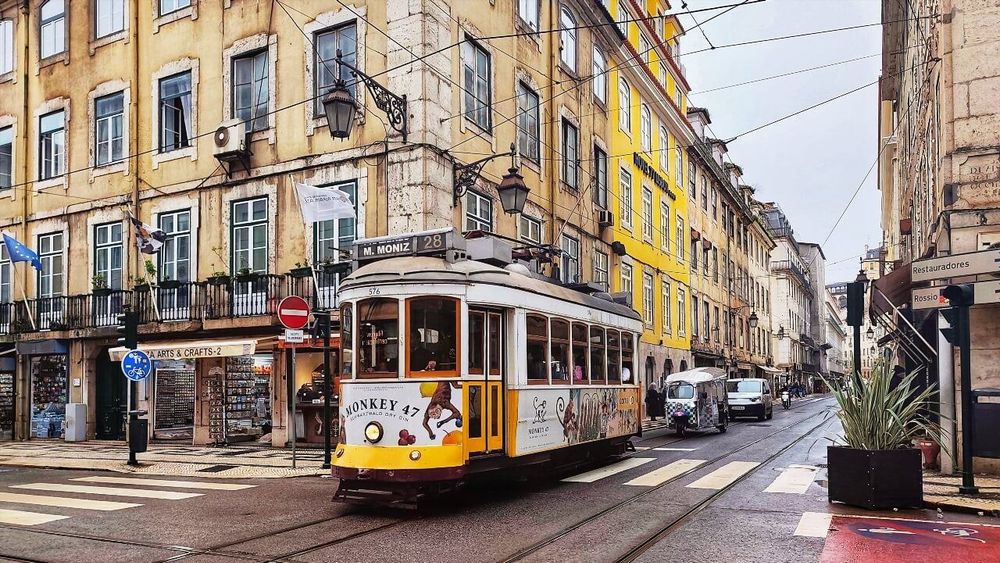
Allow 4 hours for this afternoon. If the hills are wearing you out, tram 28 makes an excellent summary of the city in half an hour — it passes through Alfama, Chiado, and Estrela in a single journey.
Day 1 Evening: Bairro Alto, Fado, and Hidden Restaurants
The Bairro Alto comes alive after 7 pm. The neighborhood is compact — a dozen grid-like streets between Chiado and the Aterro — and every closed door hides a bar, a tasca, or a fado house. This is where Lisbon invents its nights.
For a fado experience that was not designed for tourists, look toward the Mouraria rather than the Bairro Alto. The fado houses on Rua do Capelão or Largo da Severa are smaller, less expensive, and the fadistas who perform there have often not yet signed with a record label. Expect to pay €20 to €35 per person including drinks and light food.
If you prefer to eat first, Zé da Mouraria on Rua João do Outeiro is a tasca with no tourist menu, offering small daily dishes for under €12. Cozido à portuguesa (a meat and vegetable stew) is served on Thursdays. Reservations are advisable but not always necessary on weekdays.
For wine, the Bairro Alto Hotel Bar serves an impressive selection of Douro and Alentejo wines by the glass. The rooftop terrace overlooking Chiado is worth the bill on its own. A cheaper alternative: the small wine bars on Rua do Norte, where vinho verde from the Minho and whites from the Alentejo cost between €3 and €6 a glass.
If you are staying more than 2 days in Lisbon, set aside an evening for the Museu do Fado (Largo do Chafariz de Dentro 1, 1100-139 Lisboa, rated 4.4/5 on Google from 5,941 reviews) in Alfama — it is one of the best introductions to the history of the genre, with sound archives ranging from the early recordings of Amália Rodrigues to contemporary artists like Mariza.
Day 2 Morning: Belém and Its Monuments on the Tagus
Belém deserves a full half-day. The neighborhood is 6 kilometres west of the city centre, easily reached by tram 15E from the Praça do Comércio (25 minutes, €2 with the Lisboa Viva pass). Avoid going on Mondays: the Mosteiro dos Jerónimos is closed. And if you can, arrive before 9:30 am — organised groups start arriving from 10 am.
The Mosteiro dos Jerónimos is Portugal's most impressive monument, listed as a UNESCO World Heritage Site since 1983. Begun in 1501 under the reign of Manuel I to commemorate Vasco da Gama's return from India, it took a century to complete. The Manueline style — an exclusively Portuguese architectural invention blending Flamboyant Gothic with maritime motifs brought back from Asia — reaches its fullest expression here. The cloister columns are carved with ropes, seaweed, armillary spheres, and crosses of the Order of Christ. Admission to the monastery (cloister and exhibition) costs around €16, and the Igreja de Santa Maria de Belém is free. Inside the church, Vasco da Gama's tomb is supported by stone elephants.
A 10-minute walk toward the river brings you to the Torre de Belém, standing on a small island in the Tagus, built between 1516 and 1521 to defend the harbour entrance and also listed by UNESCO since 1983. Its architecture is even more Manueline than the monastery — the terraces are adorned with limestone turrets, marine-knot balustrades, and a Venetian loggia. Admission costs around €8; climbing to the top takes about twenty minutes. The view over the river from the fifth floor is worth the trip even though the tower itself is more beautiful from the outside.
Between the two monuments, the Padrão dos Descobrimentos is worth a stop. This white concrete monument erected in 1960 depicts Henry the Navigator at the prow of a caravel, surrounded by 33 figures from the Age of Discovery. Admission costs €10, and the panoramic terrace over the Tagus costs an additional €6. On the ground in front of the monument, a 50-metre marble compass rose was donated by the South African government in 1960; it depicts the maritime routes explored by the Portuguese between the 15th and 16th centuries.
Before leaving Belém, queue up for the Pastéis de Belém. The recipe for the pastéis de nata served here has been kept secret since 1837, when the monks of the Mosteiro dos Jerónimos sold it to a family on Rua de Belém to survive after the monasteries were dissolved by the liberal government. The queue often extends past the door, but the seats inside allow you to enjoy them at leisure. Expect to pay €1.40 per pastel, dusted with cinnamon and icing sugar.
Just behind Rua de Belém, the Museu Nacional dos Coches (Av. da Índia 136, 1300-300 Lisboa, rated 4.6/5 on Google from 10,606 reviews) houses the world's largest collection of royal carriages. The 17th- and 18th-century coaches, with their gilded sculptures and embroidered silk interiors, give a very concrete sense of the grandeur of the Portuguese monarchy. Admission: €8.
Morning plan for Belém: allow 3 to 4 hours depending on which museums you choose. If you only have 2 days, choose between the Mosteiro dos Jerónimos (absolute priority) and the Torre de Belém — attempting both plus the museums in a single morning is possible but exhausting.
Day 2 Afternoon: LX Factory, Alcântara, and the Contemporary Tagus
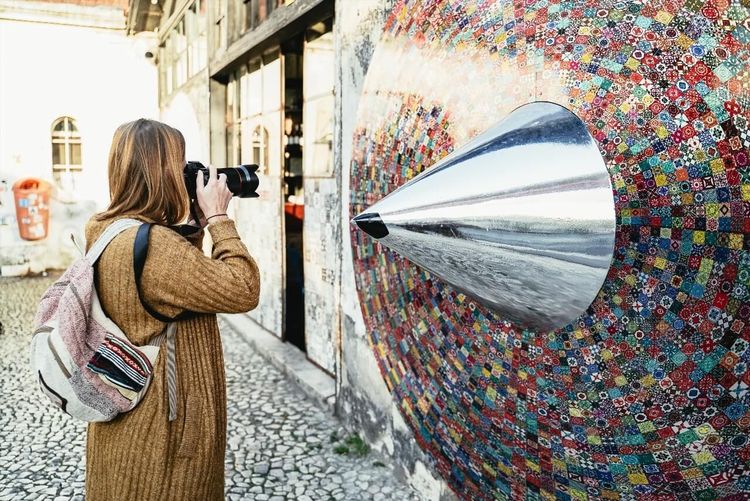
On your way back toward the centre from Belém, stop at LX Factory, a 19th-century industrial complex converted into a creative hub on Rua Rodrigues de Faria. The place hosts design studios, restaurants, independent bookshops, and an open-air Sunday market (the best day to visit). The rest of the week, the atmosphere is calmer but the shops remain open.
If your stay exceeds 2 days, use this afternoon to explore the Museu Coleção Berardo at the Centro Cultural de Belém, a short walk from the monastery. The collection, entirely free on Sunday mornings, brings together modern and contemporary artworks ranging from Picasso to Jeff Koons — one of Europe's most comprehensive collections with free public access.
For the afternoon, the Museu Nacional de Arte Antiga (R. das Janelas Verdes, 1249-017 Lisboa, rated 4.6/5 on Google from 7,472 reviews) (MNAA) is Portugal's main art gallery, housed in a 17th-century palace on Rua das Janelas Verdes. The collection spans Portuguese and Flemish painting from the 15th to the 19th century, with major works including the Triptych of the Temptation of Saint Anthony by Hieronymus Bosch and the panels of Nuno Gonçalves (c. 1470). Admission: €10 (free on Sunday mornings until 2 pm).
To return to the centre from Alcântara or LX Factory, tram 25E follows the Tagus for 20 minutes — a view of the estuary offered as an afternoon conclusion.
Day 2 Evening: Intendente and the Mouraria, Lisbon off the Beaten Path
On the second evening, avoid going back to the usual circuits of Chiado or the Baixa. Instead, head up toward Intendente and the Mouraria, which together make up one of the most vibrant areas of working-class Lisbon today.
The Largo do Intendente was redesigned between 2012 and 2014; previously considered one of the most unsafe spots in the centre, it has become a meeting point for the communities of this multicultural neighborhood. The azulejo façades of Viúva Lamego (a ceramic manufacturer founded in 1849 that still occupies its original building) frame one side of the square. On the other side, cafés and grocery shops run by Bangladeshi and Pakistani families sit alongside traditional Portuguese restaurants.
For dinner in this neighborhood, O Corvo on Rua do Corvo is a modern taberna with a short menu built around the day's market produce. One of Lisbon's most honest addresses for value, with a bill of around €25–30 per person for two courses and a glass of wine. Reservations are almost essential.
End the evening by heading down to Cais do Sodré for a drink on the Pink Street (Rua Nova do Carvalho), this former sailors' bar strip now reborn as a festive pink-painted thoroughfare. The vibe is young and cosmopolitan; bars stay open until 4 am. If you prefer a quieter end to the evening, the Rua Cor de Rosa in Alfama offers the calm of the hillside in exchange for ten more minutes of walking.
Day 3: Sintra, Its Palaces, and the Pena
If your stay lasts 3 or 4 days, the third day should be dedicated to Sintra. A 40-minute train ride from Rossio station (Lisbon), Sintra is a UNESCO World Heritage Site and clusters within a few kilometres an improbable concentration of 19th-century palaces — the Palácio da Pena, the Palácio dos Mouros, the Quinta da Regaleira, and the Palácio de Monserrate form a unique ensemble in Europe.
Comboios de Portugal trains depart every 20 minutes from Rossio (€2.30 one way, or €4.60 return). Upon arrival at Sintra-Estoril, a shuttle (434) runs up to the palaces, but if you have the energy, the walk up takes 30 minutes through cork oak and eucalyptus woodland.
The Palácio Nacional da Pena is Sintra's iconic monument. Commissioned by King Fernando II in 1838 on the ruins of a former Hieronymite monastery, it blends Neo-Gothic, Neo-Manueline, Neo-Moorish, and Neo-Renaissance in a composition that seems drawn from a fairy tale — the façades are painted in vivid yellow and ochre, the balustrades are adorned with maritime motifs, and the domed towers face the Atlantic. The full ticket (palace and park) costs €20 (park only: €10). From the terrace on a clear day, you can see both the Atlantic and the Tagus simultaneously.
A 15-minute walk from the Palácio da Pena, the Castelo dos Mouros offers a panoramic view from Moorish walls built between the 8th and 9th centuries, largely restored in the 19th century. Admission costs €10 and a full walk along the ramparts takes about an hour. The rampart path can be vertiginous in places — wear shoes with good grip.
For your second priority in Sintra, choose between the Quinta da Regaleira and the Palácio de Monserrate according to your taste. The Quinta da Regaleira is an esoteric fantasy built between 1904 and 1910 by a wealthy patron, featuring underground tunnels and Masonic iconography — very photogenic, and therefore very crowded. The Palácio de Monserrate, visited far less, is a 19th-century Orientalist palace surrounded by a subtropical botanical garden with species brought back from across Asia.
For lunch in Sintra, the historic village offers decent but pricey restaurants. An alternative: buy a travesseiro (a puff pastry filled with almond cream) from the Casa Piriquita (founded in 1862) and eat in the gardens.
Day plan for Sintra: arrive before 9:30 am to avoid the midday crowds. Prioritise the Palácio da Pena and a second site of your choosing. Return to Lisbon before 7 pm — the last trains are packed.
If your 3rd day falls on a Sunday, you have an extra option: continuing the train journey from Sintra to Cascais (Cascais, 2750 Cascais, rated 4.6/5 on Google from 12K reviews) follows the Atlantic coastline for 40 minutes. Cascais is an elegant seaside town with a preserved old fishing quarter and white-sand beaches within walking distance of the station.
Day 4: The Setúbal Peninsula, Arrábida, and Vineyards
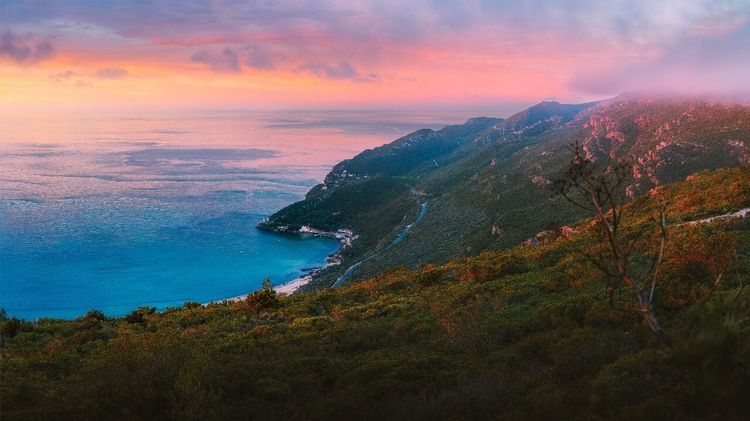
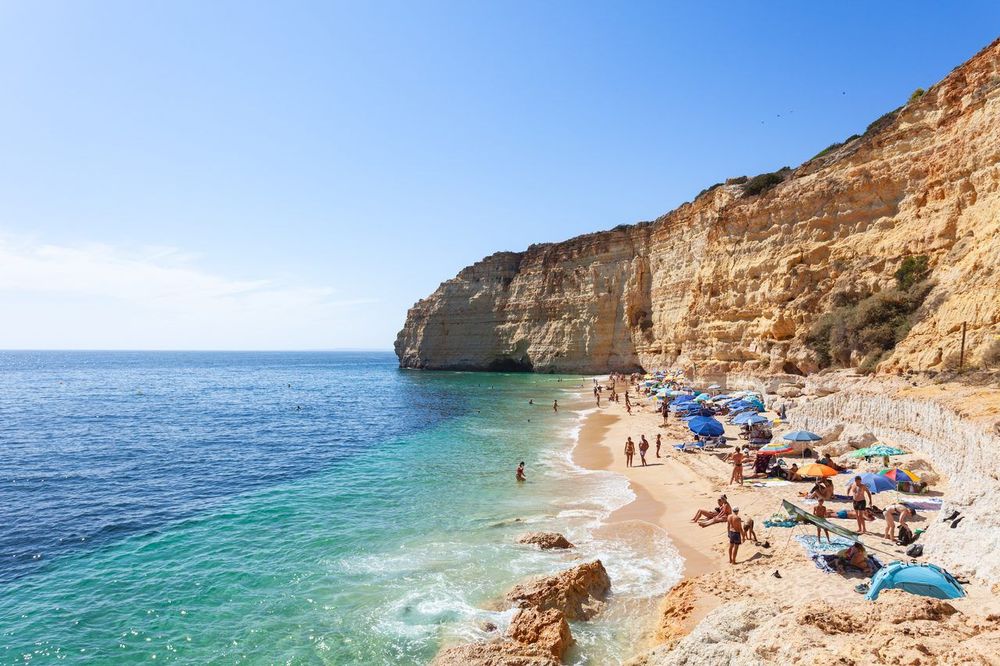
For a 4-day stay, the final day can turn south of the Tagus — a landscape radically different from Lisbon and Sintra. The Setúbal peninsula is home to the Arrábida natural park, a limestone massif that drops straight into the Atlantic with 500-metre cliffs and turquoise waters of a clarity surprising for Western Europe.
The best way to explore this area without a car is to take the ferry from Cais do Sodré to Setúbal (1h30 crossing, €3.50 with Transado). From Setúbal, shuttles and shared taxis serve the Arrábida beaches in season.
The Praia de Galapinhos is the most spectacular beach in the Arrábida, accessible only on foot from the Portinho da Arrábida car park (a 3 km trail). The water is remarkably transparent even in June, with the seabed visible several metres down.
If you prefer a less strenuous day, the vineyards of the Serra da Arrábida produce saline whites of an underappreciated quality. José Maria da Fonseca in Azeitão offers guided cellar tours with tasting (€12); the house has been producing Moscatel de Setúbal — an amber dessert wine well worth trying — since 1834.
An alternative for Day 4: stay in Lisbon for museums you have not yet visited. The Museu Nacional do Azulejo in the Convento da Madre de Deus is essential if you have not yet had the chance to understand the history of azulejos — those ceramic tiles covering Lisbon's façades are not a trivial decorative tradition but a 5-century story of Islamic, Flemish, Dutch, and Portuguese influence. Admission costs €10 (free on Sunday mornings until 2 pm).
The Parque das Nações, created for the 1998 World Exposition, is Lisbon's modern district — glass towers, a riverfront promenade, and the Oceanário de Lisboa (Esplanada Dom Carlos I, 1990-005 Lisboa, rated 4.7/5 on Google from 101,448 reviews), one of Europe's finest aquariums, with a large central tank inhabited by hammerhead sharks and a pair of sea otters. Admission: €22 for adults. For the older Lisbon, the Ryo audio-guided tour picks up the thread, from Praça do Comércio to Bairro Alto.
Getting Around Lisbon: Practical Transport
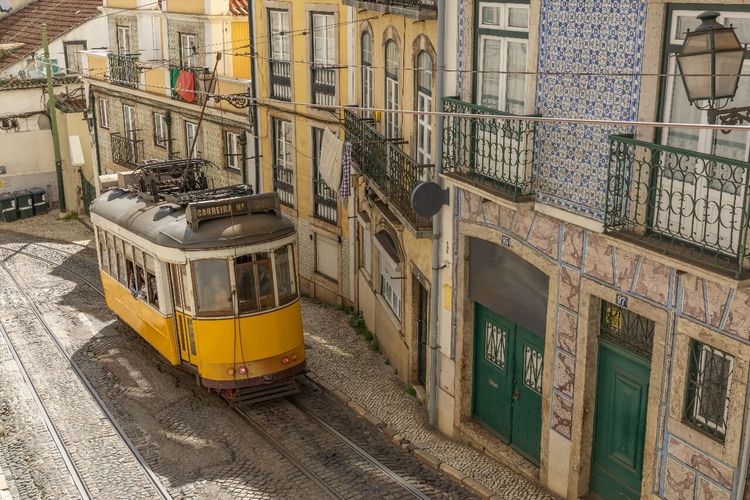
Lisbon is compact but hilly. The combination of tram + metro + walking covers 95% of the visits described in this guide.
The Lisbon Card is useful if you plan to visit more than 3 national museums. It comes in 24h (€22), 48h (€37), and 72h (€45) versions and includes public transport (except the Humberto Delgado Airport to the city centre). Without the card, buy a rechargeable Viva Viagem card (€0.50 for the card itself) and load a daily pass (€6.40/day).
Tram 28E is the iconic tourist route running through Alfama, Chiado, and Estrela — very busy, so avoid peak hours (9–11 am and 5–7 pm) if you want to board. The metro (4 lines) covers the Parque das Nações, Belém (via a connection with tram 15E), and the main train stations. The airport is accessible via the red line in 20 minutes from Rossio.
For Sintra and Cascais: CP (Comboios de Portugal) trains are the only reliable option. A one-way ticket to Sintra costs around €2.30 from Rossio (€4.60 return) — a journey not covered by the standard Lisbon Card; check whether the version you purchase includes the train.
Where to Stay in Lisbon: a Neighborhood Guide
Your choice of neighborhood directly shapes the rhythm of your stay.
Alfama is the romantic choice — cobblestone lanes, rooftop terraces, and fado 50 metres from your door in the evening. The downside: the uphill streets become a chore if you return laden with bags, and accommodation is limited to guesthouses and independent apartments. Expect to pay €80 to €140 per night for a double room in a quality guesthouse.
The Chiado and Príncipe Real offer the most central position — 15 minutes on foot from everything — with a high concentration of shops and restaurants. Boutique hotels are plentiful: budget €120 to €200 per night. The Bairro Alto Hotel is the most acclaimed, with its panoramic terrace.
The Baixa is convenient but soulless — chain hotels, standardised Airbnbs, traffic under the windows. If you want a good balance between price and location, look toward Cais do Sodré or Intendente, areas that offer a genuine neighborhood atmosphere 10 minutes on foot from the centre.
For the Parque das Nações: cheaper, more modern, but 20 minutes by metro from the historic sites. Recommended only if your budget is tight or your flight departs early from the nearby airport.
Budget for a Trip to Lisbon
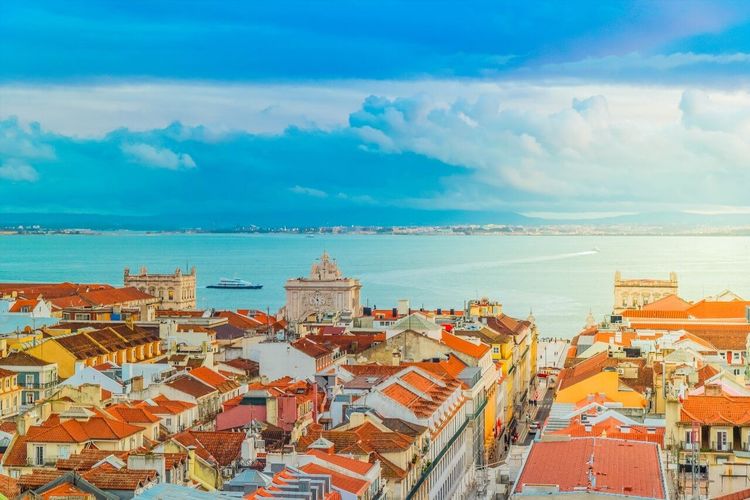
Lisbon remains one of Europe's most affordable capitals for visitors. Here are the 2026 ballpark figures:
Main monument admissions (per person): Mosteiro dos Jerónimos €16, Torre de Belém €8, Castelo de São Jorge €15, Palácio da Pena in Sintra €20, Oceanário €22. With the 48h Lisbon Card at €37, you break even from the Mosteiro + the castle alone.
Restaurants: lunch at a tasca with a prato do dia (daily special) including soup, main course, dessert, and a drink runs around €10–12 per person. Dinner at a non-touristy neighborhood restaurant costs €20–30 for two courses and wine. Avoid the terraces of the Praça do Comércio — the bills are double for lesser quality.
Transport: the airport-to-centre metro journey costs €1.85 (red line to Alameda, then green line to Rossio). A taxi or Uber costs €12–18 depending on the time of day.
Estimated total budget per person for 2 days (accommodation €100/night, main admissions, 2 meals/day): €320–380. For 3 days including Sintra: €450–520.
Lisbon Food: What You Must Try

Lisbon's cuisine is one of the most underrated in Europe, perhaps because it relies on simple techniques applied to outstanding produce rather than on elaborate preparations.
The bacalhau (dried salted cod) is the central ingredient of Portuguese cuisine, with a legend claiming there are 365 ways to cook it. The most common preparations in Lisbon are bacalhau à brás (shredded with scrambled eggs and shoestring potatoes), bacalhau com natas (baked in a cream gratin), and pastéis de bacalhau (fried fritters served as a starter). Almost every tasca serves at least one version.
The petiscos are the Portuguese equivalent of tapas — a culture of small shared plates enjoyed over a glass of vinho verde. In the bars of the Mouraria or Chiado, expect to pay €3–6 per petisco: prawn rissóis, bolinhos de bacalhau, chouriço grilled in wine.
The pastel de nata has spread around the world but remains better in Lisbon than anywhere else. The debate between the pastéis from Pastéis de Belém and those from Chiado's pastry shops is long-standing, and both camps have their arguments. What is certain: eaten warm with coffee and cinnamon, the pastel de nata is one of the simplest and most perfect gastronomic experiences in European cuisine.
Portuguese tinned fish is a recent but very real trend. Specialist grocers such as The Fantastic World of Portuguese Sardines on Rua do Arsenal sell vintage-labelled sardines, mackerel, and eels in tins with carefully designed graphic packaging — ideal as souvenirs.
For a more formal dining experience, the Mercado de Campo de Ourique offers a selection of food stalls at honest prices in a 19th-century covered market — preferable to the Time Out Market for its less touristy atmosphere and slightly lower prices.
Restaurants that Lisbon locals recommend to visiting friends:
- O Prego da Peixaria (Rua da Escola Politécnica): marinated meat sandwiches, inevitable queue but it moves fast
- Taberna da Rua das Flores: reinvented traditional cuisine in a square room with 10 tables
- Cervejaria Ramiro: grand seafood brasserie open since 1956 — the percebes (barnacles) and wild prawns justify the evening wait
FAQ
How many days do you need to visit Lisbon?
A 2-day visit to Lisbon covers the essentials: Alfama, Chiado, Belém, and an evening of fado. Three days add Sintra or an in-depth exploration of the museums. Four days allow you to venture out of the city toward Cascais or the Setúbal peninsula. Under 48 hours, the visits come too fast to truly soak up the atmosphere of each neighborhood.
What is the best time to visit Lisbon?
March to May and September to November are the ideal periods, with temperatures between 18 and 25°C, great photographic light in the late afternoon, and significantly lower tourist crowds than in summer. July and August are very hot (up to 35°C), with peak tourist flows especially in Sintra. Winter (December to February) is mild but rainy; Lisbon then takes on a more melancholic and authentic atmosphere, and accommodation prices drop by 30 to 40%.
Should you book tickets in advance for Belém?
Yes, strongly recommended for the Mosteiro dos Jerónimos in high season (June–September). Online tickets cost the same as at the door but spare you a queue that can exceed one hour on weekday mornings. The Torre de Belém also sells out on summer Sundays. Book through official websites at least 48 hours in advance.
Can you visit Lisbon without a car?
Absolutely. The public transport network covers every site described in this guide. The metro, the historic trams, and CP trains (for Sintra and Cascais) are enough to see everything without ever calling a taxi — except for the Arrábida beaches, which require a shuttle or a car rental from Setúbal.
Is it worth buying the Lisbon Card?
The Lisbon Card pays off from 3 national museums and 2 days of transport. Over 2 days with the Mosteiro dos Jerónimos (€16), the Torre de Belém (€8), and the Castelo de São Jorge (€15), the 48h card at €37 is already covered by those three admissions alone. Unlimited transport does the rest. If your schedule is lighter (1–2 museums), paying individually makes more sense.
Are there free things to do in Lisbon?
Plenty. Entry to the nave of the Sé de Lisboa is free. The viewpoints (miradouros) cost nothing; the Miradouro da Graça and Santa Catarina are the most spectacular. The gardens of the Palácio dos Marqueses de Fronteira and the Parque Florestal de Monsanto (Lisbon's 'green lung') are also free. National museums, including the MNAA and the Museu Nacional do Azulejo, are free on Sunday mornings until 2 pm.
Lisbon Is Waiting — Where Do You Start?
Whether you have 48 hours or 4 days ahead of you, Lisbon is best earned on foot. The calcosada portuguesa cobblestones — those small black and white limestone cubes that form the mosaic pavements of Lisbon's sidewalks — were laid by hand by teams of calceteiros whose craft dates back to the 16th century. Walking on them is already a little piece of history.
Before you go, download the Ryo audio guide for Lisbon to make the most of the commentary on the monuments, neighborhoods, and anecdotes that printed guides never tell. This audio guide accompanies you from Alfama to Belém with English commentary, at your own pace and without any group.
To go further in planning your trip, Ryo's articles on the culinary specialities of Lisbon, the must-see museums of Lisbon, and the Belém neighborhood complement this guide with up-to-date practical information.
À lire également