© Shutterstock
 Votre guide Ryo
Discovering the Belém District in Lisbon: Complete Guide 2026
The Belém district in Lisbon is worth the journey. You have to leave the city center, follow the Tagus westward for about an hour by tram, and suddenly the landscape shifts: apartment buildings give way to gardens, a river almost motionless in the morning light, and two UNESCO World Heritage monuments that rank among the most impressive in Portugal. It was from this riverbank that Vasco de Gama set sail in 1497, carrying with him the hope of a maritime route to the Indies. Lisbon still holds, in this district, the physical memory of that audacity. To explore Belém in depth and give context to each location as you walk, the Ryo audio guide to Lisbon is an excellent starting point.
This guide covers everything you need to know: the Jerónimos Monastery with its hundreds of meters of sculpted stone, the Torre de Belém perched on the Tagus like a fairytale backdrop, the National Carriage Museum with its world-unique collection of over 70 royal vehicles, and a pastry shop founded in 1837 that produces up to 20,000 pastéis a day. Belém is also home to the MAAT, a contemporary art museum whose undulating aluminum roof has become, within just a few years, one of the defining images of 21st-century Lisbon. All the more reason to set aside a full day for a district that deserves far more than a rushed half-morning.
Belém, between River and Epic: the History and Character of the District
About 6 km west of the Chiado, Belém is technically a district within the borough of Ajuda. But it feels more like an enclave: a long strip of land wedged between the Tagus and the first hills of the northern bank, with generous green spaces, little traffic in its pedestrianized section, and a tourist concentration unlike anything else in the city.
The name itself comes from the Portuguese word «Belém», a transcription of «Bethlehem». A chapel dedicated to the Virgin had stood here since the 13th century, taken over by the Order of Christ in the late 15th century. It was here that Vasco de Gama's sailors spent their night in prayer before setting sail on 8 July 1497. That date is foundational: the voyage opened the maritime spice route between Europe and South Asia, transforming Portugal into the world's leading commercial power for several decades.
The gold and spices brought back from the Indies then funded the construction of a monastery on these very banks: the Jerónimos, begun in 1501 under the reign of Manuel I. This colonial trade financing explains the decorative richness of the Manueline style — Portugal's answer to late Gothic — with its omnipresent maritime motifs, sculpted rope-work, and allusions to the exotic flora brought back from the voyages.
This layering of the sacred and the maritime explains the particular texture of Belém. You won't find everyday Lisbon life here — no early-morning local market, no ordinary residential neighborhood. What you will find is the ambition of an era condensed in stone and open space: two UNESCO-listed monuments, three national museums, gardens laid out in the 19th century, and a promenade along the Tagus that Lisbon residents use as much for their Sunday jog as for watching the ferries cross.
Plan a full day to take in Belém without rushing. Some visitors make the round trip in half a day, but they invariably miss the monastery cloister, the rooms of the Carriage Museum, or simply the pleasure of sitting by the river with a coffee. For those visiting Lisbon over a weekend, Belém is often the best choice for a second day after the Alfama and the historic center — Ryo's tips for a stay in Lisbon over 2 to 4 days will help you build your itinerary.
The Jerónimos Monastery, Jewel of the Manueline Style
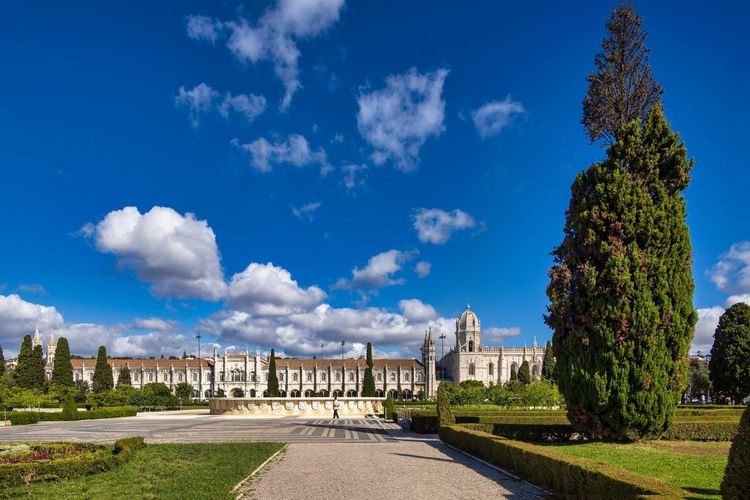
The Mosteiro dos Jerónimos (Praça do Império, 1400-206 Lisboa, rated 4.5/5 on Google across 61,448 reviews) is the first thing you see when you step off the tram. The south façade opens directly onto the Praça do Império, and the effect is immediate: a honey-colored limestone surface stretching nearly 300 meters, carved with the precision of a goldsmith. The Manueline sculptures — this Portuguese late-Gothic style blending maritime ropes, armillary spheres, and exotic flowers — cover every centimeter of the portals and mullioned windows.
The monastery was commissioned by Manuel I to celebrate Vasco de Gama's return from the Indies in 1499. Work began in 1501, under master builder Diogo Boytac, then João de Castilho. Construction lasted nearly a full century. The funding came directly from the «Casa da Índia»: a tax levied on spices and precious metals brought back from the East was, quite literally, carved into the lioz stone — the golden limestone typical of the Lisbon region.
The interior of the Igreja de Santa Maria de Belém deserves as much attention as the façade. Octagonal pillars rise to the vault in a forest of ribs more reminiscent of tropical vegetation than of northern Gothic tradition. Light filters through the apse stained-glass windows and bathes the royal tombs — Manuel I, John III, Sebastian I — placed directly beneath the nave in white marble sarcophagi carved with heraldic beasts. Vasco de Gama also rests here, since 1898, in a tomb at the entrance to the church, opposite that of the poet Luís de Camões: two figures of the Portuguese epic contemplating each other beneath the vaults, six centuries apart.
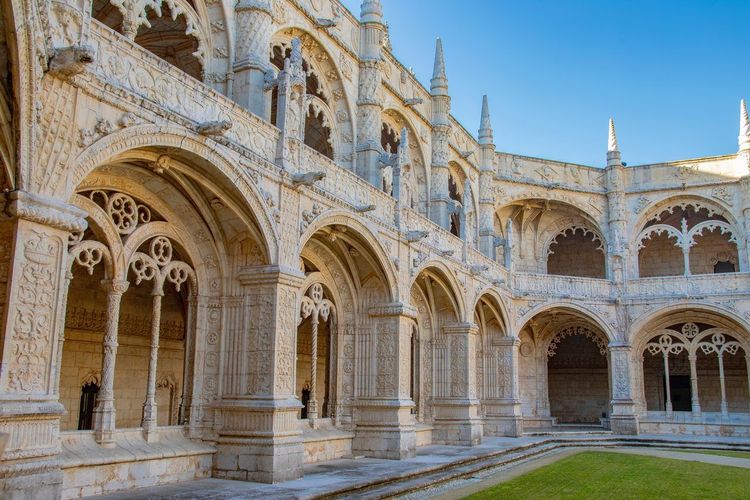
The cloister is the centerpiece. Built on two levels, each arcade differs from the others in detail: heads, foliage, and figures emerge from the pillars and capitals in a calculated abundance. The central space is a square, silent garden where the noise of outside traffic vanishes entirely. The floor is laid with a black-and-white checkerboard of encaustic tiles. In the early morning, before the tour groups arrive, the Jerónimos cloister is one of the most peaceful places in all of Lisbon. The upper gallery offers a bird's-eye view of the central garden that reveals the geometric balance of the whole.
The National Museum of Archaeology occupies the monastery's west wing with collections on prehistory and the Roman period in Portuguese territory. Visitors in a hurry often skip it, but the Bronze Age gold jewelry collection is worth twenty minutes.
Practical access: entry to the Igreja de Santa Maria is free. Visiting the monastery, including the cloister, costs €12; a combined ticket with the Torre de Belém works out cheaper than two separate entries and is strongly recommended. Open Tuesday to Sunday from 10 a.m. to 5:30 p.m. (until 6:30 p.m. from April to September). Closed on 1 January, 1 May, and 25 December. Allow 45 minutes to 1.5 hours depending on your pace. The ticket office queue can reach 40 minutes in July–August; online booking is strongly advised.
The Torre de Belém: Sentinel of the Tagus and Icon of the Age of Discovery
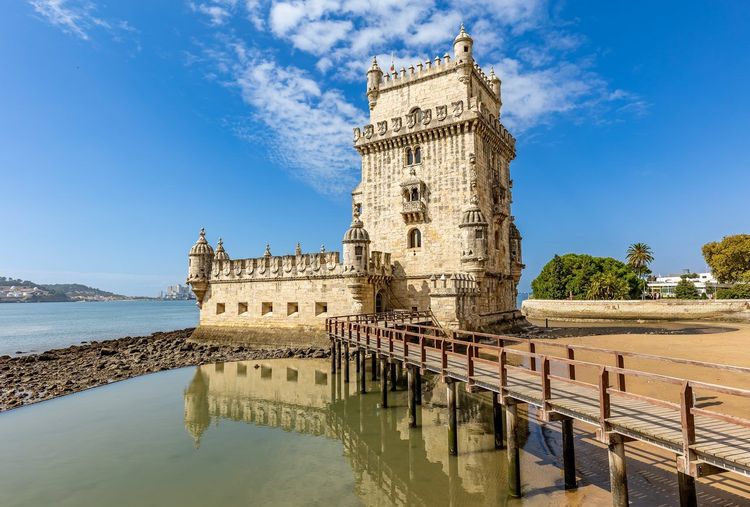
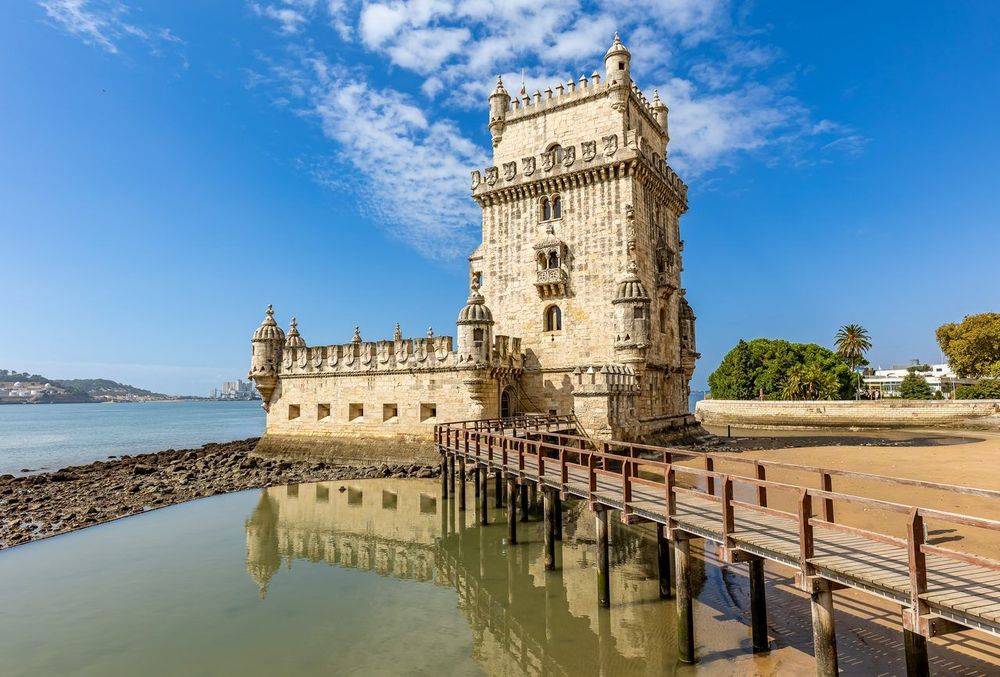
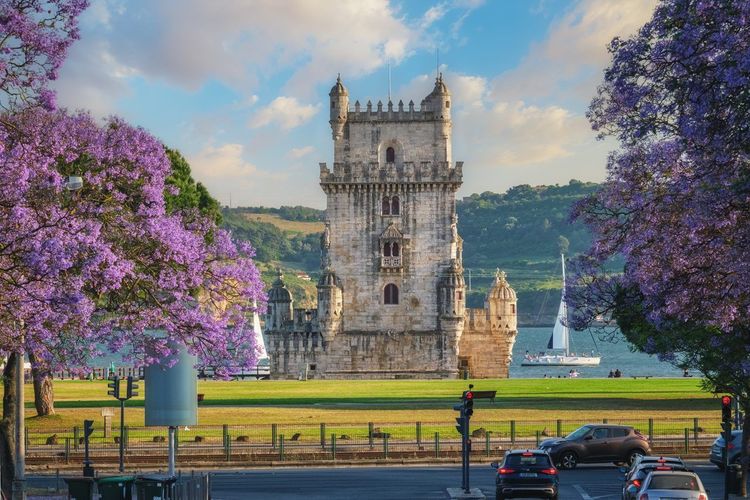
If the monastery is the monument of the interior, the Torre de Belém (Av. Brasília, 1400-038 Lisboa, rated 4.5/5 on Google across 113,997 reviews) is the monument of the river. Built in the middle of the Tagus — or what was its middle in 1515 when construction began under Francisco de Arruda — it still gives the impression of being set upon the water, connected to the bank by a metal footbridge. Changes to the shoreline over the centuries have brought it closer to the northern bank, but the magic of its silhouette remains intact.
The tower served simultaneously as a watchtower guarding the entrance to the Tagus, a customs collection point for ships entering the harbor, and a state prison. Its form is particularly elaborate for a fortification: a hexagonal bastion at the base, topped by a four-story square tower, the whole covered in Manueline motifs. Among the most singular elements, a sculpted rhinoceros adorns the northern bastion — one of the earliest representations of this animal in Western Europe, inspired by an Indian rhinoceros gifted to Manuel I in 1515 by the Sultan of Cambay (present-day Gujarat), via governor Afonso de Albuquerque, which had caused a sensation at the Lisbon court.
The loggias adorning three upper façades once gave access to the cannons, but their aesthetic treatment goes far beyond military function. The balustrade of the upper terrace is decorated with crosses of the Order of Christ, recalling the religious dimension of Portuguese expansion. From this terrace, the view over the Tagus and the Almada bank to the south is breathtaking — on a clear day, the silhouette of the Ponte 25 de Abril cuts across the horizon.
The interior surprises with its narrowness: the spiral staircases are very tight, the rooms follow one another across five levels without much usable floor space, but each level reveals a new detail. The governor's chamber, the dungeon on the ground floor accessible only at low tide, and the throne room with its ornate vaults each deserve a few minutes of attention.
Listed as a UNESCO World Heritage Site in 1983 alongside the monastery, the tower is often described as the ultimate symbol of Lisbon. No other building so directly embodies the union of the maritime and the monumental that defines the identity of Belém.
Practical visit: entry €8 (a combined ticket with the monastery, better value than two separate entries, is available). Without a reservation, queues reach 45 to 60 minutes between 10 a.m. and 4 p.m. in high season. Arriving at opening time (10 a.m.) or late afternoon (after 4 p.m.) considerably reduces the wait. The staircases are steep and very narrow — poorly suited to strollers and people with reduced mobility. Allow 30 to 45 minutes for the visit. Often overlooked tip: the tower is perfectly admirable from the Tagus promenade, free of charge — at sunset, the raking light turns the limestone orange and the silhouette reflects in the river's waters.
The Monument to the Discoveries: 33 Figures Facing the River
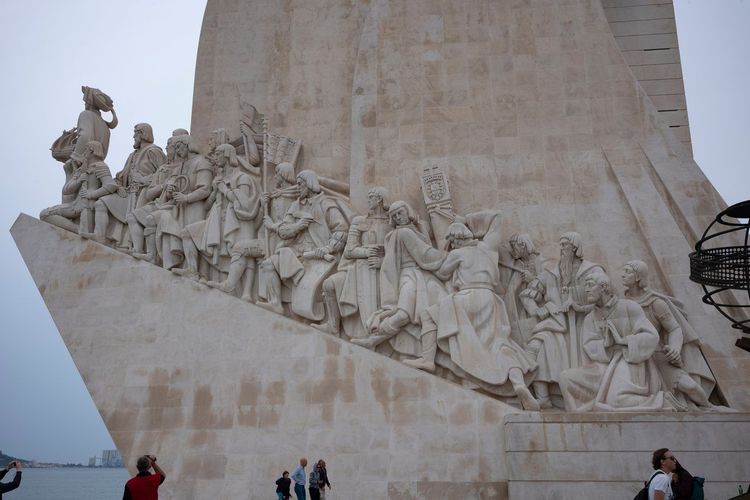
Inaugurated in 1960 to mark the 500th anniversary of the death of Prince Henry the Navigator, the Padrão dos Descobrimentos (Av. Brasília, 1400-038 Lisboa, rated 4.6/5 on Google across 28K reviews) is the most «readable» monument in Belém: a stone-clad concrete caravel prow, 52 meters tall, each flank bearing 16 relief statues representing the key figures of Portuguese expansion.
At the top of the prow, Prince Henry the Navigator holds a miniature caravel. Behind him, the figures follow in hierarchical order: Vasco de Gama carrying his map, Pedro Álvares Cabral (discoverer of Brazil in 1500), Fernão de Magalhães (first circumnavigation of the globe, 1519–1522), the poet Luís de Camões with his maritime epic, Bartolomeu Dias who rounded the Cape of Good Hope in 1488, and other navigators, cartographers, missionaries, and chroniclers.
The interior houses a permanent museum on the great discoveries and a room for temporary exhibitions. But the main attraction remains the panoramic lift that rises to the terrace at 52 meters, offering a bird's-eye view of the 50-meter marble wind rose laid on the ground in front of the monument. This wind rose, gifted by South Africa in 1960, depicts Portuguese maritime routes with the dates of arrival on each continent — a historical world map meant to be read from above.
The structure was originally built in 1940 as a temporary construction for the Exhibition of the Portuguese World, then rebuilt in permanent materials twenty years later. This double birth leaves an ambiguity about its symbolic meaning: a monument to the greatness of the Discoveries, or an assertion of Salazar's Estado Novo propaganda? Both interpretations coexist, giving it a historical depth that strictly heroic monuments lack.
Entry: €10 for adults, including access to the terrace and permanent exhibitions. Open Tuesday to Sunday from 10 a.m. to 7 p.m. (until 6 p.m. from October to March). The visit takes 30 to 45 minutes. The view from the terrace is worth the ticket, especially on a clear day.
The National Carriage Museum: the World's Most Complete Collection
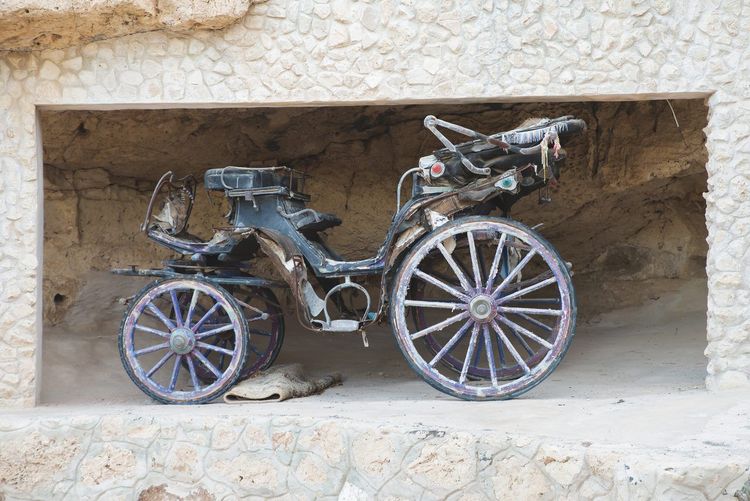
Even visitors with little interest in equestrian history leave the Museu Nacional dos Coches (Av. da Índia 136, 1300-300 Lisboa, rated 4.6/5 on Google across 10,649 reviews) in astonishment. The collection brings together more than 70 royal carriages and ceremonial vehicles from the 17th to the 19th century, drawn from the courts of Portugal, Spain, and the Vatican. It is the largest and richest collection of its kind in the world, and visitor numbers make it one of the three most-visited museums in all of Portugal.
The main building is remarkable in its own right: inaugurated in 2015 and designed by Brazilian architect Paulo Mendes da Rocha (Pritzker Prize 2006), it is a large white hall with 12-meter-high ceilings that allows the carriages to be admired bathed in natural zenithal light. The older vehicles in the collection are displayed in the adjacent royal riding school, built in 1787 — a sumptuous baroque space whose painted walls and gilded ceilings once sheltered the Portuguese royal cavalry.
Among the most impressive pieces: the Ambassadors' Coaches, three identical coaches sent by John V to Rome in 1716 for the investiture of a papal ambassador. Their level of decoration is truly staggering — panels painted in gold leaf, sculpted cherubs and sea deities, baldachins in red brocade velvet. The Coach of Philip II dates from 1619 and is believed to be one of the oldest in the collection. Hunting berlins, pilgrimage litters, and royal funeral carriages complete a panorama of aristocratic mobility that exists nowhere else at this level of preservation.
This museum is often underestimated in express Lisbon itineraries, because it does not fit into the immediate narrative of the maritime Discoveries. That is a mistake. It represents another dimension of Portuguese power — diplomacy, ceremony, and the assertion of a European court capable of rivaling Versailles or Madrid symbolically. Admission: €8 per adult, free for under-17s. Allow 1 to 1.5 hours. Closed on Mondays.
The MAAT: when Contemporary Architecture Dialogues with the Tagus
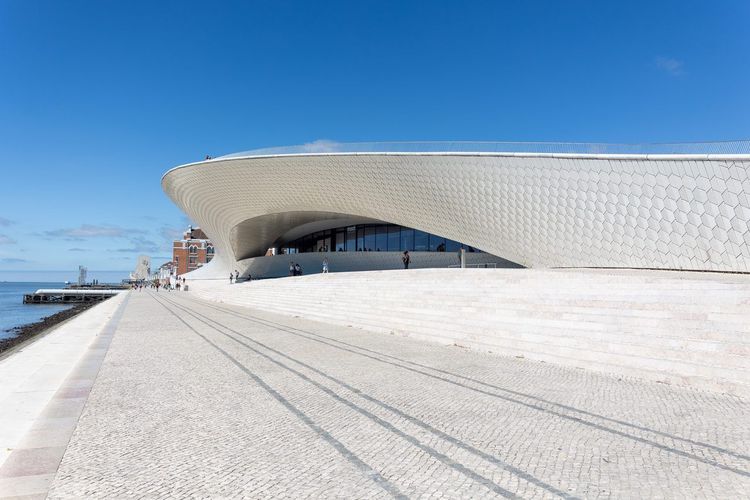
The MAAT (Museum of Art, Architecture and Technology) is the most recent construction on the Tagus waterfront in Belém, opened in 2016 on the riverbanks just east of the district's historic core. British architect Amanda Levete designed a shell of undulating aluminum tiles evoking a low wave resting on the shore. The roof, accessible from the pedestrian promenade, is walkable and offers a 180° view over the Tagus and the Ponte 25 de Abril.
The museum comprises two distinct spaces. The new contemporary annex hosts international-level temporary exhibitions of art and technology — digital installations, video, performance. The former Tejo Power Station, a red-brick industrial building from 1908 integrated into the complex, has been converted into a high-ceilinged exhibition hall with its period turbines and boilers partially preserved and visible. The contrast between the early-20th-century industrial architecture and the aluminum extension creates a particularly successful dialogue.
The MAAT is not solely a box-ticking museum. Walking across the undulating roof with views over the Tagus, lingering in the nave of the former power station, or sitting at the riverside café between two exhibitions — these are often where the place gives the best of itself. Admission: €7 for current exhibitions. The rooftop is accessible free of charge from the promenade.
The Naval Museum: Five Centuries of Navigation in Pictures
Housed in the west wing of the Mosteiro dos Jerónimos, the Museu de Marinha (Praça do Império, 1400-206 Lisboa, rated 4.5/5 on Google across 13,731 reviews) is often skipped by visitors in a hurry who prioritize the cloister. A pity: its collections trace five centuries of Portuguese navigation through ship models at every scale, navigational instruments, uniforms, and ancient maps.
The most remarkable pieces are the 18th-century royal galleys, displayed in an adjacent hangar — vessels over 30 meters long with sculpted prows and decorated interior cabins, used for official ceremonies on the Tagus. The collection of 16th- and 17th-century maps impresses enthusiasts of historical cartography: some show how Portuguese navigators depicted Africa, India, or Brazil as explorations progressed. An entire room is dedicated to early-20th-century military hydroaviation, with cockpit reconstructions from the 1922 South Atlantic air crossing.
Admission: €6.50, free for under-18s. Closed on Tuesdays. Allow 45 minutes to 1 hour. The museum shares the building's entrance with the monastery, but tickets are separate.
Pastéis de Belém: the Sweet Break You Can't Skip

No visit to the district is complete without stopping at Pastéis de Belém (R. de Belém 84-92, 1300-085 Lisboa, rated 4.6/5 on Google across 98,898 reviews). The pastry shop founded in 1837, on the corner of the Rua de Belém, is the original establishment — the one that holds the secret recipe passed down since the closure of the Jerónimos convent. The monks of the order sold pastéis to fund the monastery; when religious orders were dissolved in 1834, the recipe was transferred to a family that has run the shop ever since under the same name.
The building is a series of rooms tiled with blue azulejos, with tightly packed tables and waiters navigating the rows at full speed. Production can reach 20,000 pastéis per day in high season. The pastel itself: a caramelized puff pastry shell, filled with a vanilla egg custard whose surface is scorched in the oven at very high temperature. It is eaten hot, dusted with cinnamon and powdered sugar, alongside a bica — the strong short espresso typical of Lisbon.
The queue at the entrance can be off-putting. Two options: arrive before 9 a.m. (the pastry shop opens at 8 a.m., and the flow is still manageable) or order at the standing counter to take away rather than waiting for a table. Take-away pastéis are just as good — you can enjoy them sitting on the monastery steps or on a bench in the Praça do Império, with the façade as your backdrop.
Worth knowing: the «pastéis de nata» you will find throughout Lisbon are the generic version of the recipe. «Pastéis de Belém» (with a capital B, marked on the red cardboard boxes) refers exclusively to those made at this pastry shop, whose custard texture and baking temperature differ slightly. The experience of eating in these tiled rooms — the noise, the smell of burnt sugar, the azulejos — is part of the journey. For a deeper dive into the capital's gastronomy, our Ryo article on Lisbon's culinary specialties covers all the essential dishes and addresses. And to walk it off afterwards, our audio walking tour unfolds the city in 25 stops, from the Tagus waterfront up to the hills.
Gardens, the Tagus Promenade, and Open Spaces
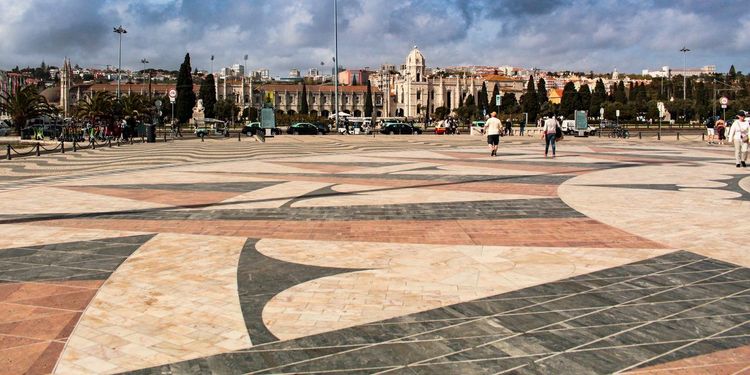
Belém enjoys a generosity of open spaces that the rest of Lisbon cannot match. The Praça do Império, facing the monastery, is one of the city's largest open squares: a vast lawn framed by geometric flowerbeds, with a central fountain and, in the background, the golden façade of the monastery. On weekdays out of season, people read on the grass. In high season, the square sometimes hosts open-air concerts and markets.
The Jardim Afonso de Albuquerque, behind the Palácio de Belém, is more intimate and family-friendly: palm trees, a 19th-century fountain, shaded benches, children on gravel paths. It is the ideal spot to catch your breath between visits. The Jardim Botânico Tropical, a few hundred meters away and managed by the University of Lisbon, houses a collection of plants from the former overseas territories — giant bamboo, tree ferns, Canary Island dragon trees. Entry costs €2.50 and the visit takes 30 to 40 minutes.
The pedestrian and cycling promenade along the Tagus, from the Torre de Belém to the MAAT and beyond, is walkable for several kilometers. Benches facing the water, an unobstructed view of the Almada bank and the orange cables of the Ponte 25 de Abril — built in 1966 by the American Bridge Company, the same firm that built San Francisco's Bay Bridge — which provokes the same reaction at first sight. The bridge connects Lisbon to Almada and spans the Tagus as a backdrop to almost every photo taken from Belém.
The Palácio de Belém (R. de Belém, 1300-023 Lisboa, rated 4.5/5 on Google across 1,815 reviews), the official residence of the President of the Portuguese Republic, is visible from the Rua de Belém but not normally open to visitors. Its 17th-century pink façade lends an elegant tone to the district's main street. The palace gardens open during certain cultural weekends organized by the presidency.
Where to Eat in Belém
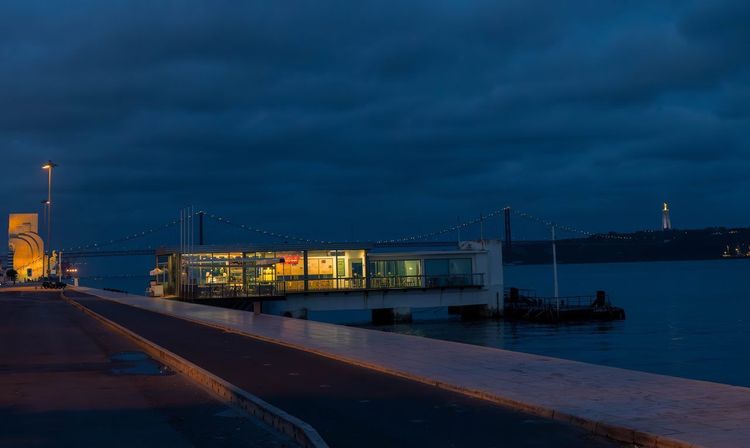
Dining in Belém was long the district's weak point — tourist canteens with inflated prices around the monastery, few serious alternatives. The situation has improved markedly since 2018, notably with the opening of several good restaurants on the Tagus waterfront and in the surrounding streets.
Doca de Belém (Doca de Belém, 1300-038 Lisboa, rated 4.5/5 on Google across 705 reviews) is the liveliest address: a row of restaurants set in converted warehouses directly on the riverbank, east of the MAAT. The terraces overlook the water, the choice ranges from grilled fish to modern petiscos, and prices remain reasonable (€14–22 for a main course). The view of the Ponte 25 de Abril at sunset makes it a good choice for dinner.
For a light daytime break, the MAAT café offers sandwiches and salads in a carefully designed architectural setting, with a terrace on the Tagus. Fábrica da Nata (Rua Bartolomeu Dias), a credible alternative to the Pastéis de Belém pastry shop, produces comparable-quality pastéis with generally shorter queues.
Along the Rua de Belém itself, a few tascas offer an affordable daily set menu ranging from €9 to €13 — roast chicken, Portuguese-style cod, bacalhau com natas. These unpretentious little restaurants serve the district's workers and a handful of savvy tourists. Establishments displaying laminated photo menus outside are, by contrast, aimed exclusively at the hurried tourist.
The LX Factory, a former industrial complex converted into a creative space about 10 minutes' walk to the east, brings together restaurants, cafés, and trendy bars that are very popular with Lisbon residents at weekends. It is not strictly Belém, but the place is worth a detour to extend the day along the Tagus waterfront. Our Ryo guide to activities around Lisbon will give you more ideas to extend your exploration well beyond the district.
How to Get to Belém from Lisbon
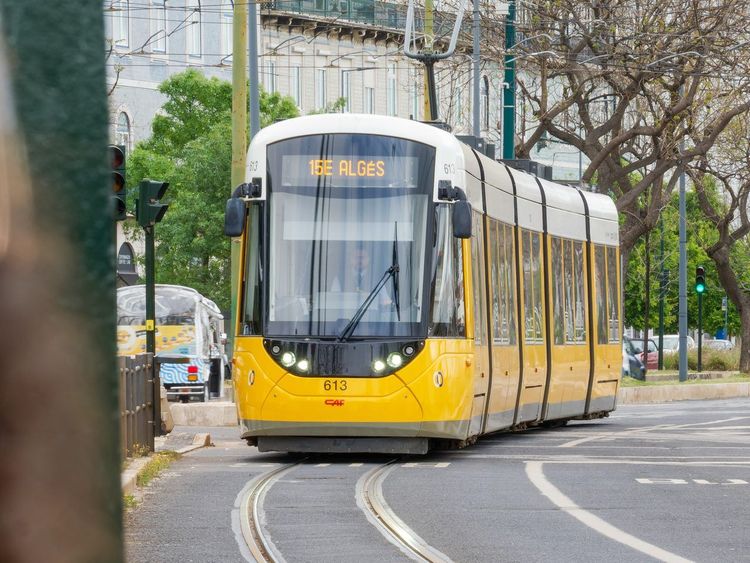
The tram 15E is the most direct and most popular option. It departs from the Praça da Figueira (or the Praça do Comércio), follows the Tagus westward, and serves several stops in Belém, including the two main ones: Mosteiro dos Jerónimos and Torre de Belém. The journey takes approximately 25 to 35 minutes depending on traffic. A ticket bought on board costs €3.30; with a rechargeable Navegante card (the «zapping» option), the journey comes to around €1.72, and it is included in the Lisboa Card.
One practical detail often overlooked: tram 15E is one of Lisbon's busiest lines between 10 a.m. and 1 p.m. in summer. If you have large luggage or are traveling with young children, wait for the next tram or opt for the bus instead.
The bus 728 or 729 from the Praça do Comércio is slightly faster at peak times, as it uses routes less subject to congestion in the historic center. Allow 20 to 25 minutes.
By boat, the crossing from the Cais do Sodré to Belém is possible on certain weekends and public holidays via the Transtejo company (around 15 minutes). It is more expensive and less frequent than the tram, but a wonderful way to arrive with the monuments unfolding before you from the river.
By car, parking in the district is difficult and paid during the day. The underground car park beneath the Praça do Império is the most central, but fills up by 10 a.m. in summer. Driving creates more complications than it solves.
The Lisboa Card (available in 24h, 48h, or 72h versions) covers all public transport and offers free or reduced entry to the majority of Belém's monuments — monastery, tower, Monument to the Discoveries, Carriage Museum. If you plan to visit several sites in one day, the card pays for itself quickly.
Planning Your Visit: Practical Tips and a Suggested Itinerary
How much time to allow: a half-day (3–4 hours) lets you see the exteriors and enter one or two monuments. A full day, from 8 a.m. to 6 p.m., allows you to visit everything at a relaxed pace, with a lunch break and time by the river. Don't rush: Belém is one of the rare places in Lisbon where tourist fatigue fades if you give it enough time.
Suggested itinerary for a full day:
- 8 a.m.: pastéis de Belém at opening time, before the queues
- 9–10:30 a.m.: visit the cloister and church of the Jerónimos Monastery
- 10:30–11:15 a.m.: Naval Museum (in the same building)
- 11:30 a.m.–12:15 p.m.: Monument to the Discoveries, including the terrace ascent
- 12:30–1:30 p.m.: lunch at the Doca de Belém or along the Rua de Belém
- 2–3 p.m.: Torre de Belém (arrive early if you have no reservation)
- 3:30–5 p.m.: National Carriage Museum
- 5–6 p.m.: stroll along the Tagus, MAAT rooftop
High season (June–September) calls for a few precautions: the district is very busy Wednesday to Sunday between 10 a.m. and 4 p.m. Online tickets for the monastery and the tower allow you to bypass the queues. Outside July–August, a Tuesday or Wednesday morning will give you Belém almost to yourself.
Closing days: the monastery, the Torre de Belém, the Monument to the Discoveries, the MAAT, and the Carriage Museum all close on Mondays. The Naval Museum closes on Tuesdays. On a Monday in Belém, you can walk around and enter the monastery church (free of charge), but all museums will be closed.
To explore Lisbon with a narrative perspective that brings meaning to every location, the Ryo audio-guided tour of Lisbon offers an immersive approach that goes far beyond simply reading information panels.
FAQ
How long does it take to visit Belém?
Allow a full day to enjoy Belém without rushing. In 4 hours, you can see the exteriors and enter one or two sites, but you will miss the Jerónimos cloister, the rooms of the Carriage Museum, or simply the pleasure of sitting by the Tagus. For families with young children, a half-day in the morning — monastery, pastéis, and a stroll — is often the right compromise.
Is Belém far from the center of Lisbon?
About 6 km from the Chiado, Belém is reachable in 25 to 35 minutes by tram 15E or bus 728 from the Praça do Comércio. It is not in the historic center, but the distance is entirely manageable from any hotel in the heart of Lisbon. The tram ride follows the Tagus and already offers lovely views.
Should you book Belém's monuments in advance?
In high season (June–September), online booking is strongly recommended for the Jerónimos Monastery and the Torre de Belém. Queues without a reservation can reach 40 to 60 minutes at peak hours. The rest of the year, buying on-site is generally possible without a long wait. The combined monastery + tower ticket is available online on the official monuments website and is better value than two separate entries.
Is Belém suitable for families with children?
Yes, Belém is very family-friendly. The Tagus promenade, the gardens of the Praça do Império, and the green spaces offer plenty of room for children. The Carriage Museum often impresses younger visitors with its extravagant décor. The Naval Museum, with its large ship models and royal galleys, generally appeals to children aged 8–14. However, the very narrow spiral staircases of the Torre de Belém are not suitable for strollers or very young children.
When is the best time to visit Belém?
Spring (March–May) and autumn (October–November) are the best periods: pleasant temperatures (18–24°C), moderate crowds, and quality photographic light. Summer is hot (often 30°C and above) and very busy. In winter, the district is quiet and the monuments nearly empty, but a cool breeze off the Tagus can make the riverside walk less pleasant in January–February. For any visit, arriving at opening time (9–10 a.m.) remains the best way to avoid queues and enjoy the morning light on the façades.
What can you eat in Belém besides pastéis?
The restaurants of the Doca de Belém serve bacalhau (cod) in all its forms, peixe espada (fried scabbardfish), a variety of petiscos, and grilled dishes. In the tascas along the Rua de Belém, the daily set menu (€9–13) offers simple, honest cooking. If you want to explore Lisbon's gastronomy more broadly, our Ryo article on Lisbon's culinary specialties covers all the essential dishes and addresses in the Portuguese capital.
Are Belém's monuments accessible to people with reduced mobility?
The Tagus promenade and the Praça do Império are wheelchair accessible. The Jerónimos Monastery has a disabled-access entrance through its modern wing. The Torre de Belém, with its very narrow spiral staircases, is not accessible to people with reduced mobility or with strollers. The Carriage Museum, the MAAT, and the Monument to the Discoveries (with a lift) are fully accessible.
Is Belém really worth the trip from central Lisbon?
Without hesitation. No other district in Lisbon concentrates such a density of UNESCO monuments, world-class museums, and open riverside spaces within such a small area. Even if you only visit one site — the Jerónimos cloister, or simply the tower's façade from the promenade — the journey is worthwhile. Most visitors who plan two hours in Belém end up spending the whole day there.
Belém at Your Own Pace
Belém should be experienced slowly. It is not a district where you tick off boxes — it is a place to be read while walking, where every façade detail tells something of the ambitions of the 16th and 17th centuries, and where the Tagus, always present in the background, reminds you that all this grandeur was born from a desire to take to the sea.
Whether you come for the UNESCO-listed monuments, for the pastéis, or for an exhibition at the MAAT, leave time for the in-between moments: the gardens, the benches on the promenade, a coffee by the water between visits. It is often there, away from the queues and the air-conditioned rooms, that Belém gives the best of itself. To continue exploring Lisbon well beyond this district, Ryo's audio-guided tour of Lisbon accompanies you with a narrative audio guide to discover the city at your own pace, from the Alfama to the Chiado. With Ryo, every place becomes a story.
À lire également