© Shutterstock
 Votre guide Ryo
Activities in Lisbon and Surroundings: The Complete 2026 Guide
Activities in Lisbon and surroundings are endless, and the city challenges travelers who think they've seen it all. The oldest capital in Western Europe after Athens, it juxtaposes a Moorish fortress overlooking the Tagus, century-old trams creaking through cobbled alleyways, and neighborhoods reinvented by a creative generation that chose to stay. To explore the city at your own pace, the Ryo audio-guided tour of Lisbon takes you through its most beautiful corners, from Alfama to Belém.
What you'll find in this guide goes beyond the usual postcards. A castle where peacocks roam freely among the ruins of a 14th-century royal palace; a Manueline monastery financed by a tax on pepper from the Indies whose construction took an entire century; surroundings that hide fairy-tale palaces in the forests of Sintra, improbably turquoise waters at Arrábida, and medieval villages ringed by intact ramparts like Óbidos. Lisbon and its region form one of Europe's most experience-dense destinations, and among the most accessible for the depth of immersion they offer.
Alfama and the Castelo de São Jorge
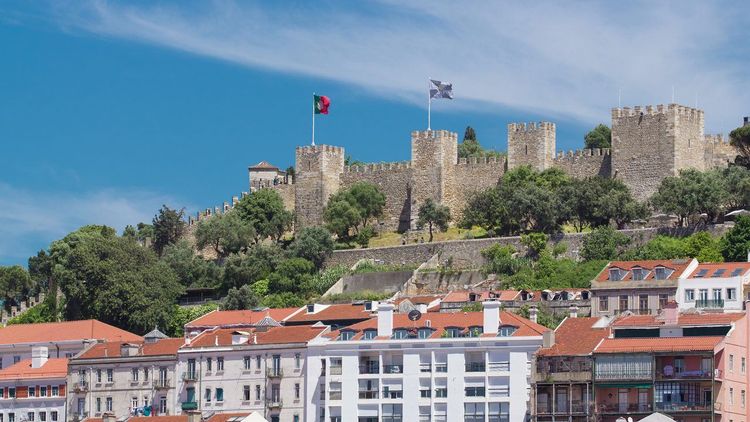
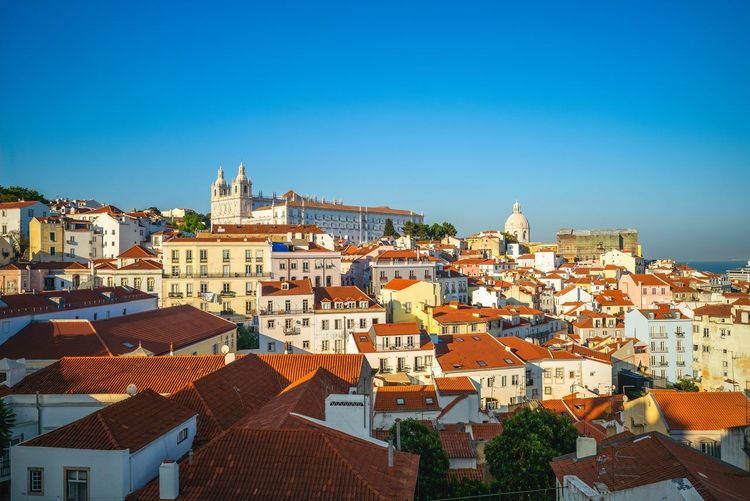
Alfama holds its ground. While other districts of Lisbon modernized, reshaped, and gentrified, this maze of gently sloping alleyways has preserved a village soul that even the tourist flows of 2026 have failed to dissolve. The voices drifting from open windows, the smell of grilled bacalhau wafting from tascas at noon, the cats dozing on limestone steps: Alfama is best savored on foot, without a fixed itinerary, by accepting the pleasure of getting lost.
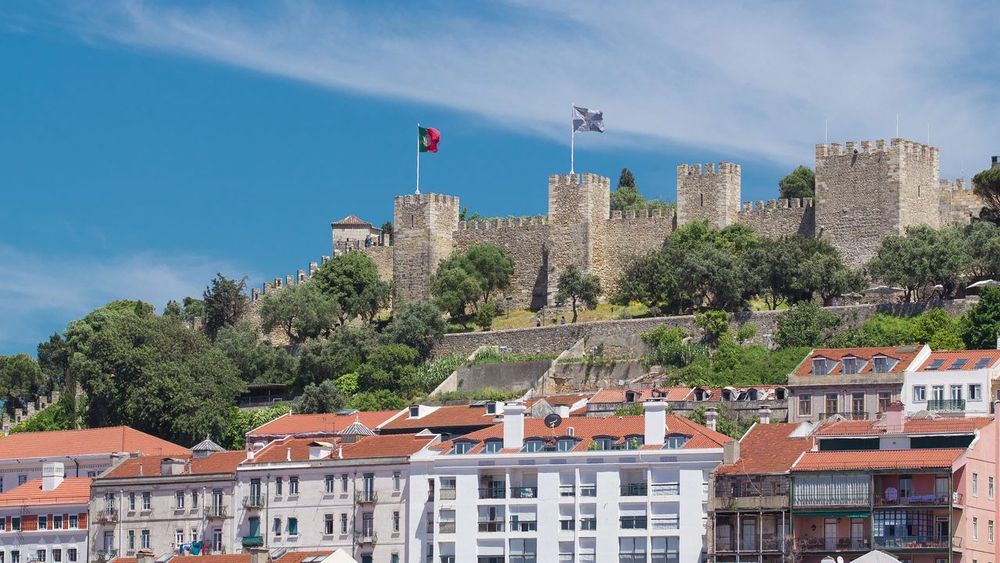
The Castelo de São Jorge has always dominated the skyline. The Moors fortified it from the 10th century onwards (the current layout of the ramparts dates from the mid-11th century), the Crusaders captured it in 1147 alongside Afonso Henriques, the first king of Portugal. For two centuries, kings resided here before descending toward the river. Today, the ruins of the royal palace shelter freely roaming peacocks strolling among the stones, and the terraces offer the widest panorama over Lisbon — from the Tagus to the hills of the north, across the white domes of the Baixa. Allow at least two hours to walk around it and absorb the historical explanations carved into every rampart.
Heading down toward the river, the Miradouro de Santa Luzia offers a first moment of contemplation. Two large blue-and-white azulejo murals depict the Praça do Comércio before the 1755 earthquake and the corsair attack of 1147 — a double window onto Lisbon's history, framed by bougainvillea. In summer, pink flower boxes spill over the low walls; a wrought-iron bench facing the Tagus completes the scene.
A few streets further down, the Sé de Lisboa (Largo da Sé, 1100-585 Lisboa, rated 4.4/5 on Google with 35,128 reviews) imposes its two austere Romanesque towers, built on the site of a mosque reconquered in 1147. The interior is understated, but the 13th-century Gothic cloister preserves Roman mosaics uncovered during archaeological excavations, still visible from the upper gallery. The side chapels house noble tombs from the 14th and 15th centuries, including that of the knight Lopo Fernandes Pacheco.
In the evening, Alfama transforms into a fado stage. This musical genre born in this neighborhood in the 19th century — this sung melancholy known as saudade — resonates through a dozen fado houses between 8 pm and midnight. The best venues require a minimum spend (a meal or drinks) that is often worthwhile in itself: salt cod in olive oil, grilled chouriço, small wines from the Alentejo. Book in advance during high season, particularly July and August. To prepare your visit to the castle with all the historical details, see the Ryo article on the Castelo de São Jorge.
Belém: The Shore of the Great Discoveries
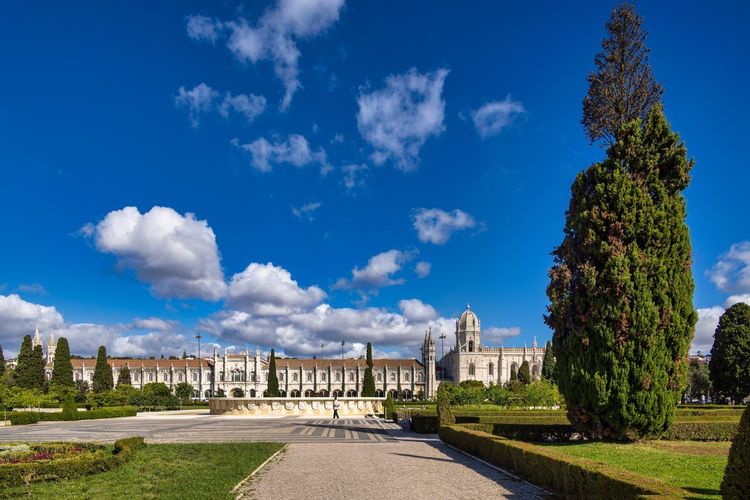
The Belém neighborhood stretches westward along the Tagus, 7 km from the historic center. It was from here that Vasco de Gama set sail in 1497 to reach India by sea, and it is here that Portugal erected its most ambitious monuments to celebrate an epic that changed the world. A bus (line 727 or 728 from Praça do Comércio) or an Uber will drop you there in about 20 minutes depending on traffic.
The Torre de Belém is the ultimate icon. This fortified tower built between 1516 and 1521 on the riverbank — it was surrounded by water at high tide at the time — concentrates every element of the Manueline style: slender turrets, a stone rhinoceros on the north platform (the first sculpted rhinoceros in Europe, a tribute to the animal offered to King Manuel I by the Sultan of Cambay in 1515), scallop shells, and twisted rope motifs. Listed as a UNESCO World Heritage Site in 1983, it welcomes more than a million visitors a year. Arrive before 10 am or after 4 pm to avoid the longest queues.
800 meters on foot to the east, the Mosteiro dos Jerónimos is probably the most impressive monument in Portugal. Begun in 1501 by Manuel I to give thanks to God for the success of the India route, financed by the royal 5% tax on the spice trade, it required a century of uninterrupted construction. The 55-meter south façade is an open-air manual of Manueline sculpture: dolphins, coral, armillary spheres, and in the central nave the tomb of Vasco de Gama himself. The cloister, with its two levels of arcades decorated with obsessive precision, ranks among the most beautiful on the entire Iberian Peninsula. The church is free (open 10 am–5:30 pm in winter, 10 am–6:30 pm in summer); the cloister is paid entry (€10).
The Padrão dos Descobrimentos, the Monument to the Discoveries, stands 50 meters from the bank of the Tagus, inaugurated in 1960 to mark the 500th anniversary of the death of Prince Henry the Navigator. The prow of the concrete ship bears 33 sculpted figures from Portuguese maritime history, with Vasco de Gama and Magellan at the fore. From the terrace at the top (internal elevator, €4), the marble wind rose paved into the ground represents the routes followed by navigators from the 15th to the 17th century — a 50-meter-diameter map gifted by South Africa in 1960.
Don't leave Belém without stopping at Pastéis de Belém (Rua de Belém 84-92, 1300-085 Lisboa, rated 4.6/5 on Google with 99,155 reviews), the pastry shop founded in 1837 whose pastel de nata recipe, kept secret ever since by three successive families, is the absolute benchmark. The queue can exceed one hour in July and August; order to take away and eat on the terrace facing the river. The address is a 5-minute walk from the monastery. For everything Belém has to offer, the Ryo guide to the Belém neighborhood details every site with opening hours and visit tips.
Baixa, Chiado, and Praça do Comércio
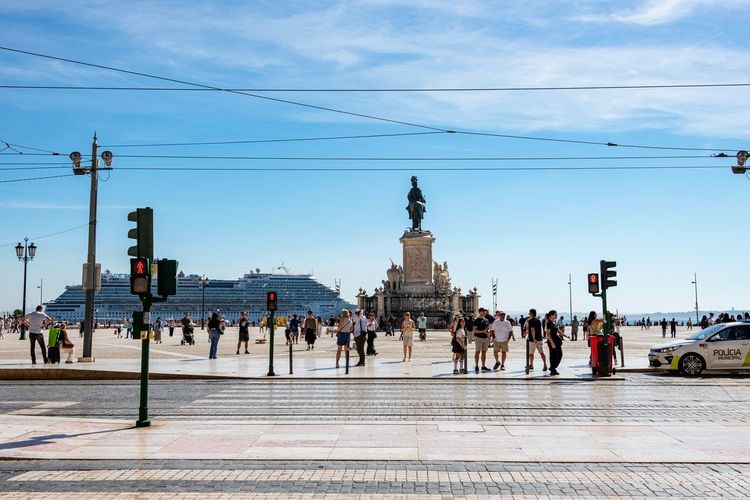
The Baixa, the "lower city," is the geometric heart of Lisbon, rebuilt from scratch after the devastating 1755 earthquake according to the rational plan of the Marquis of Pombal. Streets cross at right angles, façades are uniform in calculated height, and street names recall the trades once practiced there: Rua do Ouro (gold), Rua da Prata (silver), Rua dos Sapateiros (cobblers).
The Praça do Comércio closes the Baixa on the riverside. This open space of more than 100,000 m² on the Tagus was long the arrival point for merchants from around the world by sea — it was then called Terreiro do Paço, the palace courtyard. At the center stands the equestrian statue of King José I; to the east, the Arco da Rua Augusta, listed as a national monument in 2013, with its allegorical figures of Glory crowning Valor and Genius. Climb the arch (€3) for a narrow but vertiginous panorama over the square and the river.
Heading north along the pedestrianized Rua Augusta, you emerge onto the Praça do Rossio, the quintessential popular square since the Middle Ages. Its two bronze fountains, its cafés with gilded woodwork, and its black-and-white mosaic floor (the Portuguese wave) have formed the daily backdrop of Lisbon residents for centuries. Just next door, the Praça da Figueira offers an unobstructed view of the silhouette of the Castelo de São Jorge.
The Elevador de Santa Justa (Rua do Ouro, 1150-060 Lisboa, rated 4.1/5 on Google with 57,964 reviews) has connected the Baixa to Chiado since 1902. Designed by Raoul Mesnier de Ponsard, long described as a student of Gustave Eiffel, this 45-meter neo-Gothic elevator is as much an architectural curiosity as a functional means of transport. The panoramic terrace at the top (€5 one way, or included in the Viva Viagem pass for holders with sufficient credit) offers a bird's-eye view over the red rooftops of the Baixa and onto the ruins of the Convento do Carmo at the upper exit level.
The Chiado adjoins the Baixa to the west: it is the neighborhood of booksellers, art galleries, and literary cafés. The Livraria Bertrand, founded in 1732, is the oldest bookshop in the world still in operation according to the Guinness Book of Records. Café A Brasileira, further along Rua Garrett, welcomed Fernando Pessoa, and the bronze statue of him outside the terrace is one of the most photographed images in Lisbon. The Chiado almost entirely burned down in 1988; architect Álvaro Siza Vieira led the reconstruction, preserving the façades while reinventing the interiors.
The Miradouros and Tram 28
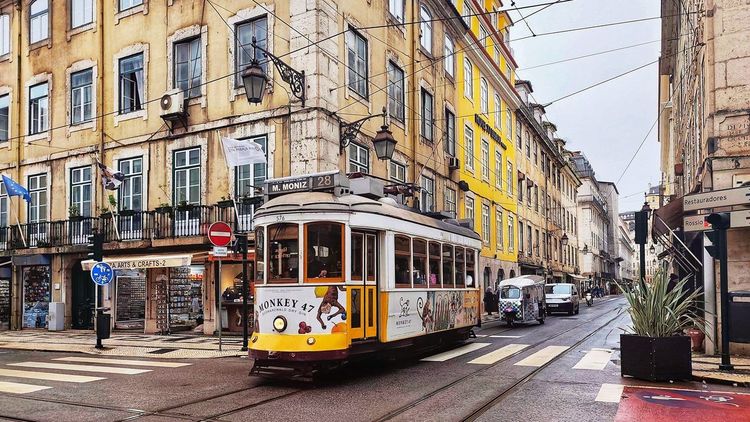
Lisbon officially has seven hills, but the miradouros — landscaped viewpoints — number around twenty, scattered across the entire city. Every neighborhood has at least one, some with beer kiosks and wooden tables, others with simple stone benches. They are not interchangeable: each offers a radically different angle on the city depending on the time of day and the quality of the light.
The Miradouro da Graça is the locals' favorite. Less well known than Portas do Sol or Senhora do Monte, it stretches across a tree-lined esplanade where ping-pong tables sit alongside benches facing the castle. The view looks directly over Alfama and the white domes of the Igreja São Vicente de Fora, with the Tagus as a backdrop. A kiosk serves cold beers and breakfasts from 9 am.
The Miradouro da Senhora do Monte (Rua da Senhora do Monte, 1170-250 Lisboa, rated 4.8/5 on Google with 28,824 reviews) is the highest in Lisbon. From this quiet square in the Graça neighborhood, a 10-minute walk from the Miradouro da Graça, you can simultaneously see the castle, the Ponte 25 de Abril, the Cristo Rei on the opposite bank, and the Monsanto hill to the west. At sunset, the long shadows stretching across the slate rooftops of Alfama create an image that no filter can improve.
The Miradouro do Adamastor in Bairro Alto (also known as São Pedro de Alcântara-bas) offers a practical alternative accessible from Chiado on foot in 10 minutes: views over the Tagus, the bridge, and the Cristo Rei, with a bar that also serves as an after-work gathering spot for locals from the neighborhood.
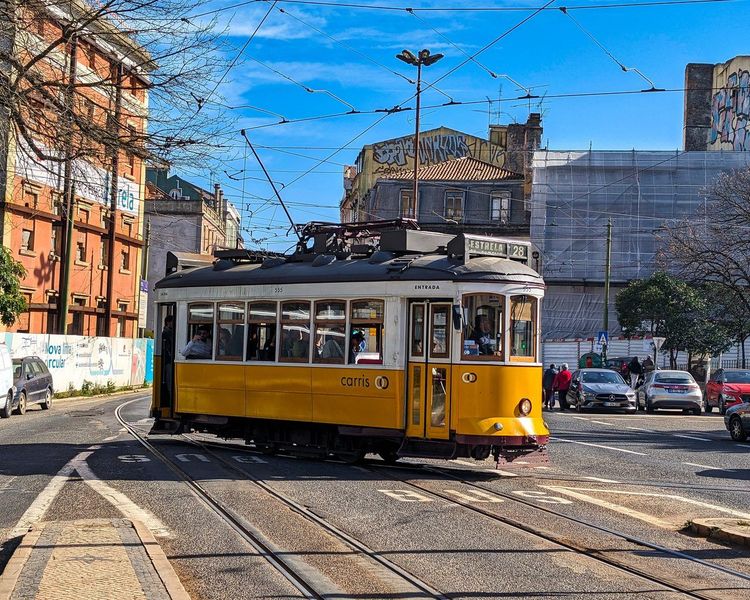
The tram 28 deserves its legendary status. Since 1914, this electric line has wound through Lisbon's hilliest neighborhoods — Martim Moniz, Graça, Alfama, Baixa, Estrela — snaking through alleyways so narrow that the yellow carriages sometimes brush the façades. In practice: in high season, it is packed with tourists. Board at the Campo de Ourique stop (western terminus) in the morning to get a seat and travel the entire route from start to finish. Pickpockets are active here: keep your bag in front of you and your phone in a zipped pocket.
For a different kind of evening, Rua Nova do Carvalho, nicknamed Pink Street since it was painted bright pink as part of a regeneration project, is the epicenter of nightlife in Cais do Sodré. Bars, jazz clubs, and restaurants open until dawn line this short street, which alone concentrates Lisbon's energy after dark.
The Must-See Museums of Lisbon
Lisbon has a remarkable concentration of museums for a capital of 550,000 inhabitants. Art and history enthusiasts can spend two full days in the permanent collections without ever visiting the same place twice. For a curated selection, the must-see museums of Lisbon according to Ryo details each address with opening hours, admission prices, and visit tips.
The Museu Nacional do Azulejo is a must-visit. Housed in a 16th-century convent to the east of the center, it traces the history of the painted ceramic tile from its introduction to Portugal by the Arabs through to contemporary creations. The centerpiece is a panorama of Lisbon before the 1755 earthquake, rendered in 23 meters of blue-and-white tiles between 1700 and 1725: it is the only precise, large-scale representation of the city before its destruction. The convent chapels, entirely clad in baroque azulejos, are themselves as beautiful as museum pieces. Open Tuesday to Sunday, 10 am–6 pm; admission €5.
The Museu Nacional de Arte Antiga holds the most important collection of Portuguese and European art from the 15th to the 19th century. Its treasure: the Saint Vincent Panels by Nuno Gonçalves, painted around 1470, considered the pinnacle of medieval Portuguese painting, and a collection of Manueline goldsmithery that illustrates the wealth accumulated during the Age of Discovery.
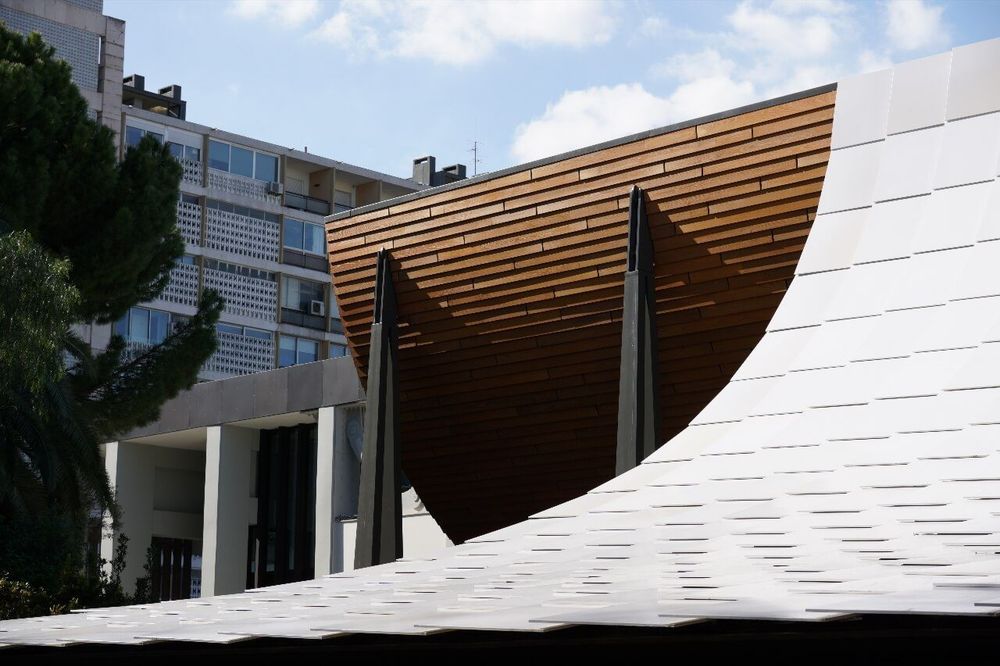
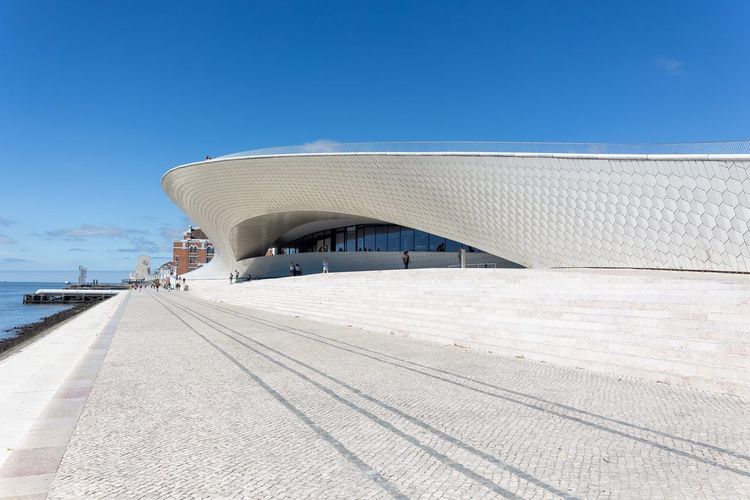
The MAAT (Museum of Art, Architecture and Technology) is Lisbon's leading contemporary address. Sitting on the banks of the Tagus in Belém, it brings together two buildings: the former Tejo Power Station (early 20th-century industrial red brick converted into an exhibition gallery) and a contemporary building designed by AL_A (2016), whose white-tiled roof forms a walkway accessible from the riverfront. Temporary exhibitions change every four to six months.
The Museu Calouste Gulbenkian (Avenida de Berna 45A, 1067-001 Lisboa, rated 4.7/5 on Google with 17,721 reviews) deserves a full half-day. The Gulbenkian Foundation holds one of the most comprehensive private collections in Europe, bequeathed to the Portuguese state upon the death of oil magnate Calouste Gulbenkian in 1955. Egyptian, Islamic, Greek, and Roman art, together with canvases by Rembrandt, Rubens, Monet, and Renoir, coexist in spaces designed for contemplation. The adjoining garden, with its ponds and century-old trees, is one of the most pleasant in the city for a break between rooms.
Mouraria, Intendente, and LX Factory
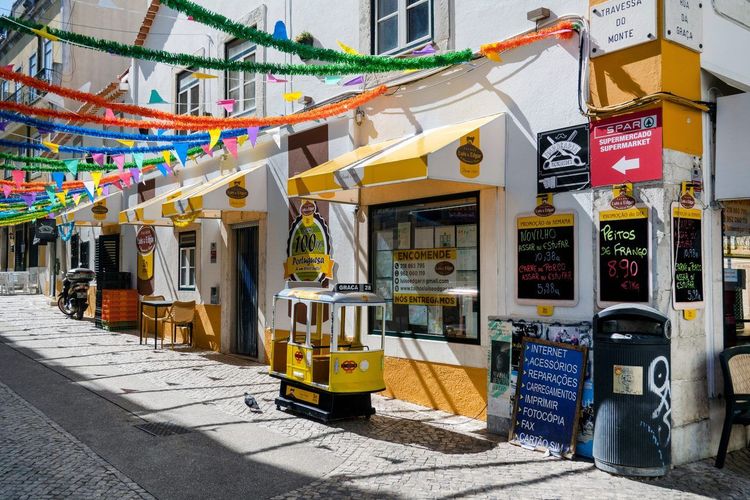
Behind the tourist façade lie neighborhoods that a changing Lisbon reveals slowly to those who venture off the beaten track.
The Mouraria is the Moorish quarter — home to those who remained after the Reconquista of 1147, relegated outside the castle walls by the new Christian rulers. Today it is one of Lisbon's most multicultural neighborhoods, with a large South Asian community, restaurants blending Indian, Bangladeshi, and Portuguese cuisines, and the redeveloped Praça Martim Moniz transformed into an esplanade with food trucks serving world flavors. Mouraria is also the historical birthplace of fado: it was here that the singer María Severa lived in the 19th century.
The Intendente adjoins Mouraria to the north. A decade ago, this neighborhood had a poor reputation. The regeneration projects carried out in the 2010s attracted artists, designers, and restaurateurs without entirely displacing the original residents — a rare balance in a city that gentrifies quickly. The Praça do Intendente Pina Manique with its Art Nouveau fountain and its azulejo-covered façades is the heart of the neighborhood. Artisan ceramics shops, small-plates cafés, and emerging designers' studios sit alongside neighborhood grocery stores that haven't changed.
LX Factory (Rua Rodrigues de Faria 103, 1300-501 Lisboa, rated 4.5/5 on Google with 65,699 reviews), on the banks of the Tagus in Alcântara, is the emblem of Lisbon's industrial conversion. A 19th-century former textile mill transformed into a 23,000 m² creative village: design studios, independent bookshops with terraces, restaurants with pop-up concepts, nightclubs beneath steel beams. The LX Factory Market (every Sunday from 10 am to 6 pm) is one of the most vibrant markets in the city, with around a hundred stalls selling artisan products, vinyl records, plants, and street food. For all the best addresses of this kind, the best markets in Lisbon on Ryo compiles the most unmissable ones. The historic centre itself unfolds over 25 stops on our audio-guided tour of the city of seven hills.
Gastronomy: Pastéis, Tascas, and Modern Tables

Eating in Lisbon is one of the city's most accessible pleasures. Portuguese cuisine rests on excellent raw ingredients — Atlantic fish, olive oil, Setúbal salt, Alentejo wines — transformed with an economy of means that baffles purists: little technical sophistication, but a precision of flavor that is hard to match. To delve deeper into local flavors, our guide to Lisbon's culinary specialties details the dishes you absolutely must try.
The pastéis de nata are ubiquitous but not equal. The original recipe belongs to Pastéis de Belém (1837), but the Manteigaria pastry shops (Chiado and Mercado da Ribeira) and Aloma (Campo de Ourique) are cited by many Lisbon locals as superior. The secret: the cream must be warm (out of the oven less than 30 minutes ago), the puff pastry still crispily warm, the whole thing dusted with cinnamon and powdered sugar.
The bacalhau, dried salted cod, is the true national dish, with more than 365 recorded recipes according to popular tradition — one for every day of the year. Bacalhau à Brás (flaked cod sautéed with scrambled eggs and potato chips) is the most widespread. The best tascas serve it at lunch alongside tomato rice and a glass of chilled vinho verde.
The Time Out Market at Cais do Sodré brings together Lisbon's best chefs under one roof at affordable prices. A concept launched in 2014 and since copied around the world, it is here that you will eat ameijoas à bulhão pato (clams with garlic and coriander), a grilled octopus sandwich, or a fleur de sel gelato. Noisy in the evenings, but the buzz is part of the experience.
The ginjinha is the essential local aperitif: a wild cherry liqueur served cold in a tiny glass, averaging €1.50 at traditional addresses. Ginjinha Sem Rival (Rua das Portas de Santo Antão 7, 1150-267 Lisboa, rated 4.7/5 on Google with 2,126 reviews), founded in 1890 on Rua das Portas de Santo Antão, is one of the oldest addresses (the very first, A Ginjinha, opened in 1840 a few meters away). It is drunk standing in the doorway, as Lisbon residents have done for generations — one glass, a conversation, and on your way.
For dinner, the Príncipe Real neighborhood concentrates Lisbon's most interesting tables in 2026: hidden gardens, thoughtful vegetarian restaurants, wine cellars with a warm welcome. The Mercado de Campo de Ourique, in a residential neighborhood off the tourist trail, offers an alternative to the Time Out Market with a more local atmosphere and noticeably lower prices.
Around Lisbon: Must-Do Day Trips
The Lisbon region is one of the rare places in the world where a mid-sized capital gives access, in under an hour, to radically different landscapes and heritage sites. Among the activities in Lisbon and surroundings, these escapes rank among the most memorable; here they are, listed by distance.
Sintra: Palaces and Enchanted Forests (40 km, 40 min by Train)
Sintra is the top day trip from Lisbon, by far. Listed as a UNESCO World Heritage Site in 1995, this fairy-tale town nestled in the foothills of the Serra de Sintra accumulates palaces, romantic quintas, and castle ruins lost in a forest of cork oaks, tree ferns, and century-old pines. The train from Rossio Station is the simplest way to get there: 40 minutes, departures every 30 minutes, approximately €2.25 one way with a Viva Viagem card.
The Palácio Nacional da Pena is the most famous monument. Built in the 19th century at the request of King Ferdinand II on the ruins of a medieval convent, this neo-Romantic red and yellow castle — part Moorish, part Manueline, part German — overlooks the town from an altitude of 450 meters. The interior preserves the royal apartments exactly as they were on 4 October 1910, the last day of the Portuguese monarchy before the royal family went into exile. Tickets must be booked online (€14), as queues can exceed two hours in July and August without prior reservation.
The Palácio Nacional de Sintra, right in the town center and recognizable by its two white conical chimneys visible from across the region, is the oldest royal residence in Portugal still in its original state. The rooms from the 14th to the 16th century are among the best-preserved royal interiors on the peninsula: the Hall of Coats of Arms (featuring the heraldic arms of the 72 noble families who sat at court) and the Hall of Swans (ceiling painted with 27 golden swans, each wearing a different collar) are worth the visit on their own.
The Quinta da Regaleira is Sintra's absolute eccentricity. A private estate from the early 20th century commissioned by António Augusto Carvalho Monteiro, an eccentric millionaire, featuring labyrinthine gardens, an initiation well 27 meters deep sunk into the ground (accessible via a spiral of 9 landings, a Masonic reference according to guides), an artificial grotto, a waterfall, and a Manueline-style chapel. Less solemn than the Pena, more mysterious, and paradoxically less crowded.
Practical tip: avoid Sintra on weekends in July and August between 10 am and 4 pm. Queues outside the Palácio da Pena can reach 3 hours. On weekdays in May, June, or September, you visit the same sites with half the crowds and a softer light on the palaces.
Cascais: The Atlantic Coast 30 Minutes Away
West of Lisbon, the Cascais train line follows the Tagus and then the estuary before reaching the Atlantic coast. Cascais is the former summer residence of the Portuguese royal family, a fishing village that became a chic seaside resort at the end of the 19th century, retaining its pedestrianized historic center, white-painted palácetes, and lively waterfront.
The beaches of Estoril and Cascais are directly accessible from the station (10 minutes on foot at most). For wilder waves, continue to Praia do Guincho: 2 km of blonde sand facing the open Atlantic, with a constant wind that makes it a paradise for kitesurfers but also a spectacular walking spot when the sea is rough.
Serra de Arrábida: Mediterranean in the Atlantic (50 km, 1h by Car)
The Arrábida Natural Reserve is the best-kept secret in the surroundings of Lisbon. The limestone range plunging into the Sado estuary produces waters of a genuinely improbable turquoise blue for an Atlantic coastline, and sheltered beaches nestled between white cliffs rising to 500 meters. It feels like Corsica, 50 km south of Lisbon.
The Praia de Portinho da Arrábida is the most beautiful and the most accessible by car. The beaches of Galapinhos and Coelhos are protected by the natural park, with car access limited in summer (a daily quota of around 1,000 vehicles on the ridge road, bookable on the park's website). Getting there by ferry from Setúbal is often simpler in July and August. The water, between 20 and 23°C in summer, rivals any Mediterranean beach. For hikers, Portugal's natural parks according to Ryo offers detailed walking itineraries in Arrábida.
Óbidos: The Intact Medieval Village (80 km, 1h by Car)
Óbidos is one of the rare medieval towns whose ramparts are not only intact but walkable in their entirety around the full perimeter. The 12th-century walls encircle a village of white houses with blue and yellow trim, rising cobbled streets, and a royal church. Tradition holds that King Denis I gave the town to his wife Isabel of Aragon as a wedding gift in 1282, and the custom of gifting it to the queens of Portugal continued until the 19th century.
Buy a ginjinha from Óbidos served in a chocolate cup: an unusual local specialty — you drink the cherry liqueur and then eat the container. The pastry shops lining Rua Direita serve it for €1 to €1.50.
Setúbal and the Tróia Peninsula (50 km, 45 min by Car)
Setúbal is the region's fishing port and industrial town — less photographed but genuinely appealing, with its lively fish market and museums devoted to local archaeology. From the port, ferries reach the Tróia peninsula in 15 minutes: an 18 km sandbar between the Atlantic and the Sado estuary, with almost deserted beaches off-season and a resident dolphin colony in the estuary. Boat trips to observe them are organized from Setúbal (2 to 3 hours, approximately €40 per person).
Évora: The Capital of Alentejo (130 km, 1h30 by Car)
If you have a full day to spare, Évora is worth the journey. The capital of Alentejo, listed as a UNESCO World Heritage Site, it preserves a 1st-century Roman temple (one of the best-preserved on the entire peninsula), a 13th-century Gothic cathedral, and the formidable Igreja de São Francisco, whose Chapel of Bones is entirely decorated with the skulls and bones of 5,000 Franciscan monks, adorned with the inscription «Nós ossos que aqui estamos, pelos vossos esperamos» ("We, the bones that lie here, await yours"). Évora is also a vibrant university city, where the terraces of Praça do Giraldo come alive in the evenings. For travelers with a car, our guide visiting Portugal by car with Ryo offers an itinerary combining Évora and Estremoz.
Where to Stay in Lisbon: Which Neighborhood to Choose
Having reviewed the activities in Lisbon and surroundings, the next step is choosing your base. The choice of neighborhood shapes your experience of the city just as much as your budget. Lisbon offers very different atmospheres depending on where you set down your bags.
Alfama is the most picturesque choice, and the most physically demanding. The sloping alleyways are not accessible by car, and wheeled suitcases become a struggle on the uneven cobblestones. If you love waking up to the sound of bells and fado rising from basements, and stairs don't deter you, the guesthouses in Alfama are among the most charming in the city. Prices are often competitive despite the location.
Baixa and Chiado offer maximum centrality. The Baixa is practical and well-connected, but quiet in the evenings — the streets empty out after 10 pm. The Chiado combines shops, restaurants, and bars within walking distance; most of the upper-category hotels are concentrated here, with prices to match.
Príncipe Real is Lisbon's bobo-chic neighborhood: designer boutiques, shady gardens, organic farmers' markets on Saturdays. The most appealing palacetes converted into boutique hotels (former 19th-century mansions) in the city are found within this perimeter. A 10-minute walk from Chiado.
Belém is quiet, green, and accessible by public transport (bus 15E or 727 from the center). Ideal if you plan several visits in the area or want to avoid the bustle and noise of the city center. Prices are generally lower than in the Chiado for equivalent accommodation.
Mouraria and Intendente represent the frontier for curious travelers: the neighborhood has transformed, but retains a day-to-day authenticity that the Chiado has largely lost. Expect some of the most competitive prices within a reasonable distance of all the major attractions.
Indicative budget for 2026: between €80 and €130 per night for a decent double room in the city center during high season (July–August), between €50 and €80 off-season (November–March). Hostels go as low as €25–35/night for a dorm bed, with some of the best-rated establishments in Europe in this category.
Practical Information and Transport
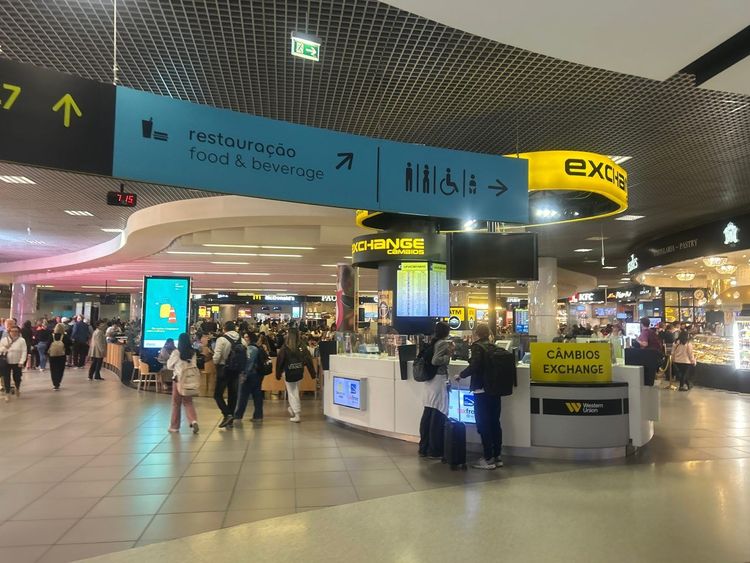
Getting there. Lisbon airport (Humberto Delgado, IATA code: LIS) is 7 km from the center. The metro (red line) reaches Baixa-Chiado station in 20 minutes for €1.99 with a Viva Viagem card. A taxi or Uber costs €10 to €15 at normal hours, €20 to €25 during peak times.
The Viva Viagem card is the essential tool for every traveler in Lisbon. This rechargeable plastic card (€0.50 to purchase, available at all metro ticket offices and machines) allows you to load individual credits or 24-hour (€6.80), 72-hour (€18.85), or weekly passes. It covers the metro, buses, historic trams (including the 28), mechanical elevators, and Tagus ferries.
Getting around the city. The metro network covers the main arteries but not the hilly neighborhoods. The historic trams (12E for Belém from the center, 15E westward, 28 for the hills of Alfama) and mechanical elevators (Santa Justa, Bica, Glória) complete the network. Uber works everywhere and remains cheaper than conventional taxis. On foot, the distances between Alfama, Baixa, Chiado, and Bairro Alto do not exceed 20 minutes.
Best time to visit. May–June and September–October are ideal: stable weather (22–26°C), exceptional light, moderate crowds. November to April: a few rainy days, but prices halved and monument queues nonexistent. July–August: hot (30–35°C), very touristy, but the atmosphere of the Santos Populares (12–13 June) — the night of Saint Anthony with grilled sardines, street fado, and neighborhood dances — is worth the trip in itself if you enjoy authentic popular celebrations.
Daily budget. An average traveler spends between €80 and €120 per day including accommodation, meals, and museum entry. A tight budget is possible at €50–60/day in a hostel, eating in neighborhood tascas, and focusing mainly on outdoor sights — the miradouros, walking through Alfama, Belém seen from the waterfront, and the Igreja dos Jerónimos (free entry) are all free.
The Christ the King Statue (Cristo Rei (Alto do Pragal, 2800-058 Almada, rated 4.6/5 on Google with 46,521 reviews)), on the other side of the Ponte 25 de Abril in Almada, is accessible by ferry from Belém to Cacilhas, then by bus or on foot (30 minutes from the landing stage). The 28-meter statue, inaugurated in 1959 as a thanksgiving for Portugal's neutrality during World War II, offers from its belvedere the widest possible panorama over Lisbon, the bridge, and the Tagus.
FAQ
How Many Days Do You Need to Visit Lisbon and Its Surroundings?
Allow a minimum of 3 days for Lisbon itself: one day for Alfama, the castle, and the miradouros; another for Belém and its monuments; the third for Chiado, Baixa, and neighborhoods like Mouraria or LX Factory. Add 1 to 2 extra days for the surroundings if you want to visit Sintra and Arrábida. For a complete immersion — Cascais, Óbidos, Évora, and a night in Sintra — allow 5 to 6 days. The Ryo guide on a weekend in Lisbon in 2, 3, or 4 days details itineraries based on the length of your stay.
What Are the Most Visited Monuments, and Should You Book in Advance?
The Palácio da Pena in Sintra and the Mosteiro dos Jerónimos in Belém are the two sites where online booking is strongly recommended in July and August — expect 1.5 to 2 hours of queuing without a pre-purchased ticket. For the Castelo de São Jorge, lines are more manageable but booking is still advisable in high season. The Torre de Belém operates with limited time slots; plan to book at least 48 hours in advance in summer.
Is Lisbon Accessible for Travelers with Reduced Mobility?
Partially. The Baixa, rebuilt by Pombal, is flat and largely accessible. Belém, along the waterfront, is also manageable without major difficulties. However, Alfama, Mouraria, Graça, and the hilltop neighborhoods are largely inaccessible by wheelchair — cobbled alleyways, unequipped stairways, and steep slopes. The main public transport options (metro, large buses) are equipped with elevators and ramps, but the historic trams (notably the 28) are not.
What Is the Best Way to Get to Sintra from Lisbon?
The train from Rossio Station is the simplest, fastest, and cheapest option: departures every 30 minutes, a 40-minute journey, approximately €2.25 one way with a Viva Viagem card. Once in Sintra, buses 434 and 435 serve the Palácio da Pena, the Quinta da Regaleira, and the Castelo dos Mouros. Renting a car is only worthwhile if you want to combine Sintra and the Cascais coast in the same day, or venture into areas not served by public transport.
Can You Swim near Lisbon?
Yes, and often in excellent conditions. The beaches along the Cascais line (Estoril, São João do Estoril, Cascais, Guincho) are directly accessible by train in under 40 minutes. Arrábida, further south, offers the warmest and clearest waters in the region, but requires a car or an organized tour from Lisbon. The Tróia peninsula, accessible by ferry from Setúbal, offers 18 km of virtually deserted beaches off-season, in a spectacular setting between dunes and estuary.
Are There Free Activities in Lisbon?
Many. The miradouros are all freely accessible; strolling through Alfama, Mouraria, and the Belém waterfront costs nothing. The Igreja São Roque in Bairro Alto has one of the most ornate chapels in Europe (18th-century baroque inlaid with marble, lapis lazuli, and gilded bronzes) and entry is entirely free. The Gulbenkian garden and Parque Eduardo VII are always open. On the first Sunday of the month, national museums are free — the Tile Museum, the Museu Nacional de Arte Antiga, and the Mosteiro dos Jerónimos included.
Lisbon and its surroundings make up a territory of unusual richness for a destination of modest size. From the Castelo de São Jorge overlooking the Tagus to the romantic forest of Sintra, from the turquoise waters of Arrábida to the tascas of Chiado that have been serving bacalhau à Brás for decades, each day layers history, gastronomy, and landscapes that few other European regions can match. Few destinations offer so many activities in Lisbon and surroundings within such a small radius.
To make sure you miss nothing of this city and its lesser-visited corners, the Lisbon audio walking tour guides you through the streets of Alfama, Belém, and the historic center with immersive audio commentary on every monument and neighborhood — turning a good visit into a memorable experience.
À lire également