© Shutterstock
 Votre guide Ryo
Visiting Lisbon in 2 Days: The Complete Neighborhood-by-Neighborhood Itinerary (2026)
Lisbon is as much a city to climb as it is to explore. Seven hills, yellow trams creaking around 15% bends, and light that shifts color every hour between the Tagus and the Atlantic: the Portuguese capital does not reveal itself in a single morning. Yet visiting Lisbon in 2 days is more than enough to cover the essentials, provided you have an itinerary planned neighborhood by neighborhood rather than a random checklist of monuments. The Ryo audio-guided tour of Lisbon follows exactly this logic: tracing the historic neighborhoods on foot, without depending on a human guide or an air-conditioned bus.
In 48 well-organized hours, you can descend the hill separating São Jorge Castle from the Tagus, pass a metal elevator designed by an engineer trained in the school of Gustave Eiffel, eat a still-warm pastel de nata less than 200 meters from the bakery that invented it in 1837, and end the day facing a 28-meter-tall Christ that gazes over the city from the opposite bank. This day-by-day itinerary covers Baixa, Alfama, Belém, the Park of Nations, and the best options for sleeping, eating, and getting around, with addresses and updated opening times for 2026.
How Much Time Do You Need to Discover Lisbon?
Two full days form the most efficient format for a first visit: enough to cover Baixa, Alfama, São Jorge Castle, and Belém without rushing, not enough to scatter your time across day trips. This is the pace this itinerary is built on, designed as a packed weekend rather than a tourist marathon.
If you have three days, add a morning in Sintra: the Pena Palace and the direct train from Rossio station alone justify the extra night. Over four days, Cascais and its beaches naturally complete the program. The Ryo guide dedicated to a weekend in Lisbon details these options for 2, 3, and 4 days if you are still deciding on the length of your stay.
For a first visit, keep one simple rule in mind: with fewer than two full days, you will have to sacrifice either Belém or Alfama, which would be a shame since these two neighborhoods tell very different stories about the city. Two days remain the comfortable minimum, and three days the ideal format if your schedule allows.
Day 1, Morning: Baixa, the Historic Heart of Lisbon
After the 1755 earthquake, the Marquis of Pombal redesigned this neighborhood on an almost perfect grid, a rational urban plan that is rare in such a hilly city. Starting the day here makes sense: Baixa is flat, central, and concentrates several of the monuments most frequently cited in guides to Lisbon.
Praça do Comércio and the Arco da Rua Augusta
Head down to Praça do Comércio, the former royal palace square destroyed by the earthquake, opening onto the Tagus through a monumental arch.
The equestrian statue of Dom José I stands at the center of this pale yellow esplanade, lined with arcades that today house cafés and government offices. Just to the north, the Arco da Rua Augusta marks the entrance to the commercial street of the same name.
Climb up to its terrace (around €3, a few minutes' wait) for a first 360° panorama over the orange rooftops of Baixa and the hills of Alfama and Bairro Alto that frame it. This is the ideal vantage point to understand the city's topography before getting wonderfully lost in it. If you want to explore the history of the earthquake and the reconstruction in depth, the Lisboa Story Centre, housed under the square's arcades, offers an immersive visit of about 45 minutes that puts everything you will see afterward into context.
Walking up Rua Augusta, a pedestrianized street buzzing from morning to night, you reach Praça Dom Pedro IV, known to locals as Rossio, with its undulating mosaic paving that is almost dizzying to look at and its 19th-century fountain.
The Elevador de Santa Justa and the Sé Cathedral
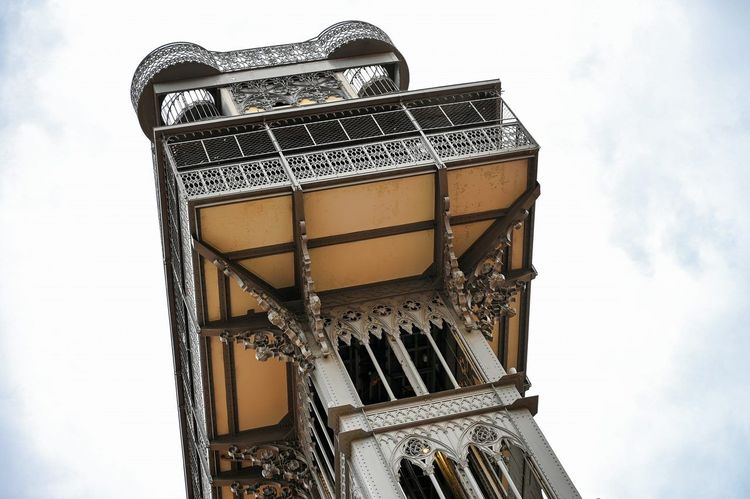
A short walk from Rossio stands the Elevador de Santa Justa, a 45-meter neo-Gothic metal elevator built in 1902 by Raoul Mesnier du Ponsard, a Portuguese engineer often described as a disciple of Gustave Eiffel, even though he was never directly his student. The aesthetic kinship with the Eiffel Tower, however, is immediately apparent.
Budget around €6 for a return trip and a queue that can exceed 30 minutes in high season. Practical tip: if you have loaded a daily Carris/Metro pass onto your Viva Viagem card, the elevator is included (this is not the case with simple zapping credit), and the queue for pass holders is often shorter. The top platform offers an unobstructed view of the castle, without paying for the terrace at Arco da Rua Augusta.
Continuing east, a ten-minute walk with a gentle uphill brings you to the Sé Cathedral of Lisbon (Largo da Sé, 1100-585 Lisboa, rated 4.4/5 on Google with 35,660 reviews), the oldest church in the city, founded in 1147 on the site of a mosque after the Christian reconquest.
Its two crenellated towers give it the appearance of a fortress rather than a sanctuary, an architectural choice that responded to a genuine defensive necessity in the 12th century. Entry to the nave is free; only the Romanesque cloister, with its archaeological remains visible underfoot, requires a ticket at €2.50. It is a good transition point toward Alfama: the Sé marks the boundary between the organized Baixa and the labyrinth of alleys climbing toward the castle.
Day 1, Afternoon: Alfama and São Jorge Castle
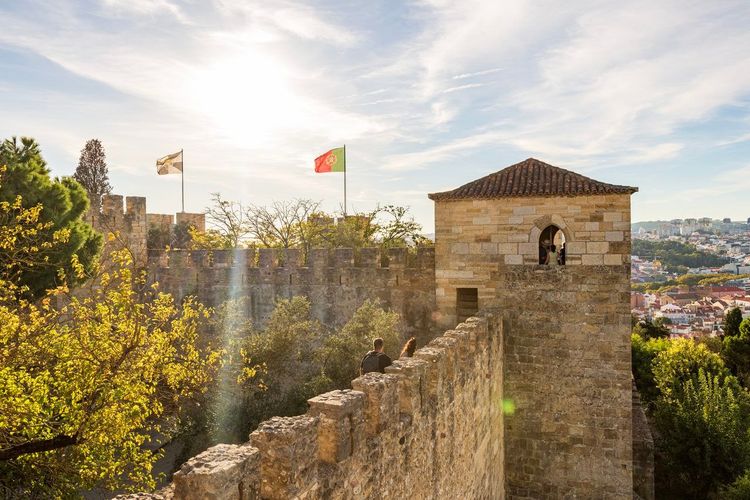
From the Sé, about fifteen minutes of walking uphill, sometimes steeply, is enough to reach the top of the hill where the castle stands. This is one of the rare sections of the itinerary where the physical effort is immediately rewarded by the visual payoff.
São Jorge Castle and Its Miradouros
The Castelo de São Jorge has occupied the hilltop since the 6th century: Visigothic fortifications first, then a Moorish citadel, followed by the Christian reconquest in 1147. The crenellated silhouette you photograph today owes much to medieval modifications and a major restoration carried out in the 1940s.
Budget around €15 for adult admission and a good hour of visiting between the ramparts, the eleven towers, and the camera obscura that projects the surrounding monuments live onto a circular screen. Book your ticket online if you are visiting between June and September: on-site queues can easily exceed 45 minutes in the middle of the day.
The neighborhood around the castle also concentrates some of the city's best miradouros, those panoramic terraces that punctuate Lisbon at every hilltop. Miradouro das Portas do Sol (Largo Portas do Sol, 1100-411 Lisboa, rated 4.7/5 on Google with 5,624 reviews) and Miradouro de Santa Luzia, just a few meters apart, offer the most photographed view over the rooftops of Alfama and the Tagus in the distance.
A little further north, crossing the Graça neighborhood, Miradouro da Graça and Miradouro da Senhora do Monte attract fewer tourists but offer a more open viewpoint, often preferred by locals for watching the sunset with a beer bought at a nearby kiosk. If your afternoon is tight, prioritize Portas do Sol and Santa Luzia, closer to the castle; save Graça and Senhora do Monte for a second visit or a more determined pair of legs.
Alleyways, Azulejos, and Fado Atmosphere in Alfama
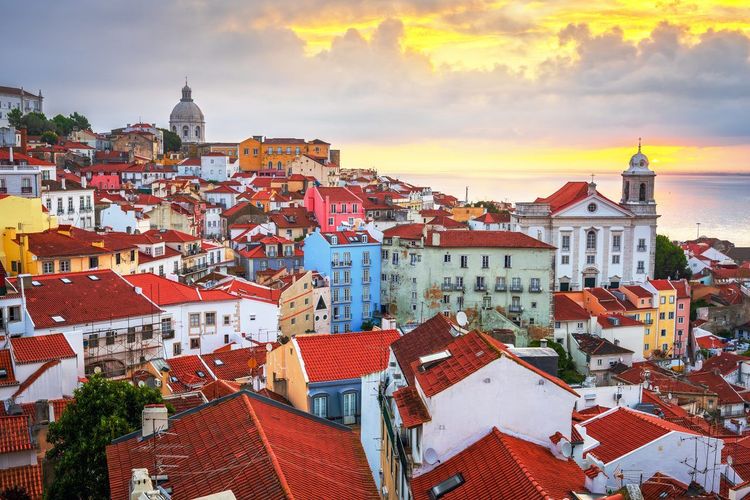
Head back down into Alfama, Lisbon's oldest neighborhood, spared by the 1755 earthquake thanks to its rocky ground. The result: a maze of alleys too narrow for cars, staircases that open onto private courtyards, and laundry drying between two facades covered in weathered azulejos.
Do not try to follow a precise route through Alfama: it is a neighborhood best discovered by getting deliberately lost, camera in hand, listening to Portuguese conversations drifting from open windows. You will inevitably come across small tascas with no sign outside, where grilled fish is served on formica tables.
As evening falls, Alfama changes its face. The first notes of fado drift out from traditional fado houses, often simple dining rooms where a singer and two guitarists — a classical guitar and a twelve-string Portuguese guitarra — create a particular atmosphere of respectful silence between songs. This is a good option for closing out this first half-day before heading back toward the center, or you can save the fado evening for the second day if you prefer to move directly toward Chiado. The Ryo guide to São Jorge Castle details opening times and the best slots to avoid the crowds.
Day 1, Late Afternoon: Tram 28, Chiado, and Bairro Alto

Tram 28: a Mythical Ride Through the Historic Neighborhoods
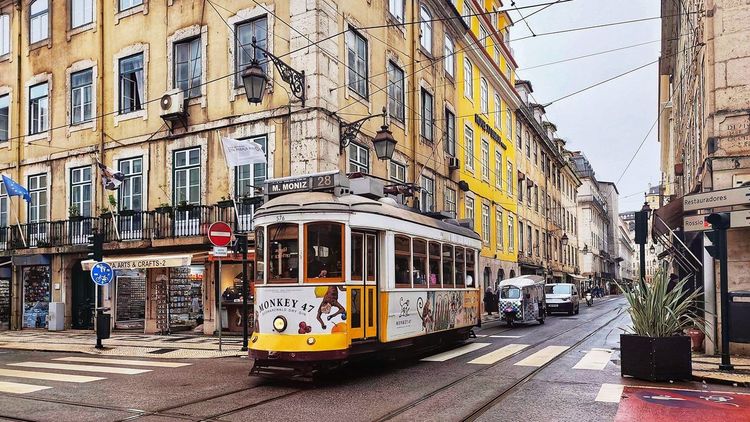
The tram 28 has long been embraced by tourism, but it remains an authentic way to connect several of today's neighborhoods without climbing back up every hill on foot. Its yellow line runs through Graça, Alfama, Baixa, Chiado, and then Estrela, in small 1930s wooden cars that sometimes brush past facades by just a few centimeters.
Board preferably at the terminus of Martim Moniz or Graça rather than at Rossio: you will have a seat for the entire journey, whereas at intermediate stops the trams are often full from 9am in high season. A single ticket costs around €3 on board, but if you already have a Viva Viagem pass or a Lisboa Card, the journey is included. Beware of pickpockets, a well-earned reputation on this specific line: keep bags and pockets closed.
Chiado and Bairro Alto: Terraces, Funicular, and Nightlife
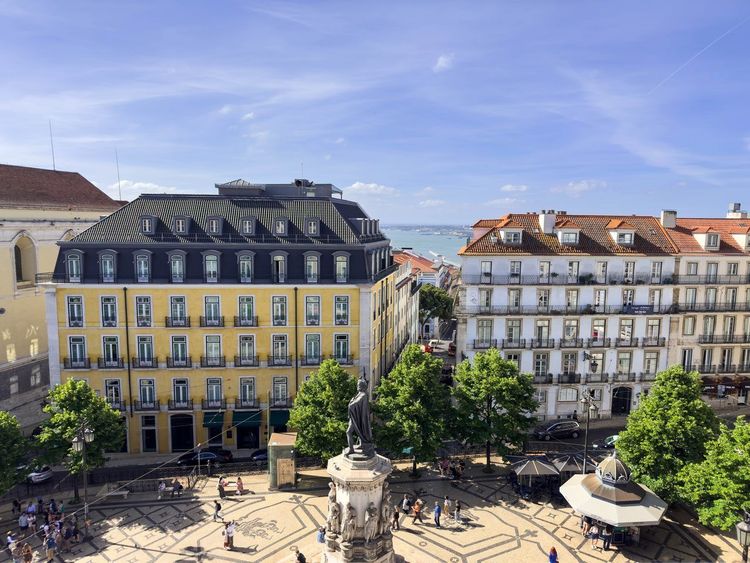
Get off the tram toward Chiado, a more elegant neighborhood than Alfama, rebuilt after a fire in 1988 while retaining its century-old bookshops and literary cafés. Praça Luís de Camões marks the natural boundary between Chiado and Bairro Alto.
From there, a short walk leads to Miradouro de São Pedro de Alcântara, one of the most beautiful viewpoints over the castle and Alfama, particularly photogenic at sunset when the low light rakes across the facades.
Just below, the Funicular da Bica (R. de São Paulo 234, 1200-425 Lisboa, rated 4.3/5 on Google with 5,928 reviews) climbs a steep cobbled alley between two rows of colorful houses, one of the most reproduced images of Lisbon on social media.
The ride lasts less than three minutes but is worth the detour for the photo, even if you prefer to walk back down afterward.
As evening comes, Bairro Alto takes over: this is where Lisboetas themselves go out for a drink, between miniature bars spilling onto the pavement and small tascas where a glass of vinho verde never exceeds €3. The atmosphere builds steadily from 10pm, without ever becoming as loud as a typical nightlife district in a European capital. If you are traveling with family, a fado evening remains a calmer alternative to Bairro Alto: several fado houses offer adapted menus and welcome children from 7:30pm, before the later service reserved for more festive groups.
Day 2, Morning: Belém and Portugal's Glorious Maritime Past

A complete change of scenery for this second morning: head to Belém, west of the center, along the Tagus estuary. Take tram 15E from Praça da Figueira, about 30 minutes, or, faster, the suburban train from Cais do Sodré station, 8 minutes, with a train every 20 minutes. Belém alone concentrates four of the monuments most cited by guides to Lisbon, making it the most packed morning of the entire stay.
The Jerónimos Monastery and the Tower of Belém
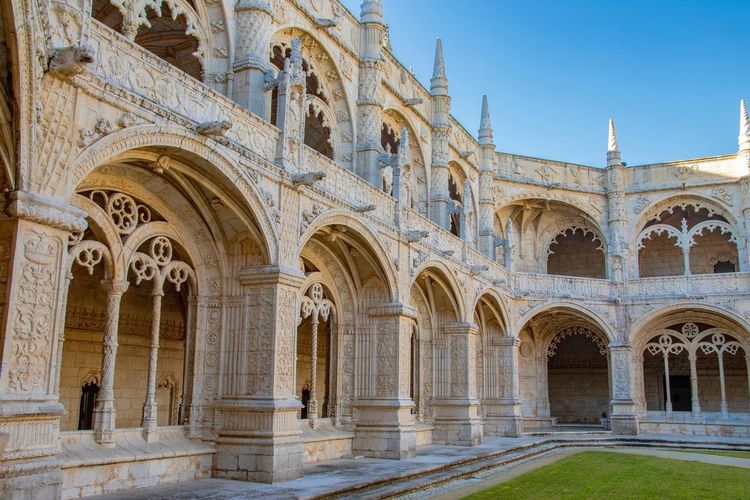
The Jerónimos Monastery was financed in the 16th century by a tax on spices brought back from India, at a time when Portugal controlled a large share of global maritime trade.
The two-story cloister, carved in limestone that has taken on a honey hue over time, is considered the pinnacle of the Manueline style, that distinctly Portuguese late Gothic loaded with ropes, corals, and maritime motifs sculpted in stone. Admission costs around €12 and queues start forming at the 10am opening; book online to skip the line, which can reach an hour in summer. The adjoining church, meanwhile, remains free and houses the tomb of Vasco da Gama.
A fifteen-minute walk along the river brings you to the Tower of Belém, a 16th-century fortress built on a rocky islet to guard the harbor entrance, today connected to the shore by the progressive silting of the Tagus.
Its architecture blends Manueline elements with Moorish influences, visible in the domed bartizans adorning its corners. The interior, compact, can be visited in 20 to 30 minutes via a narrow spiral staircase; a combined ticket with the monastery, around €20, saves a few euros if you plan to do both. A practical tip: if time is short, the exterior view from the promenade is more than enough to appreciate the monument, whose silhouette matters far more than the interior.
Padrão dos Descobrimentos and the Pastéis de Belém
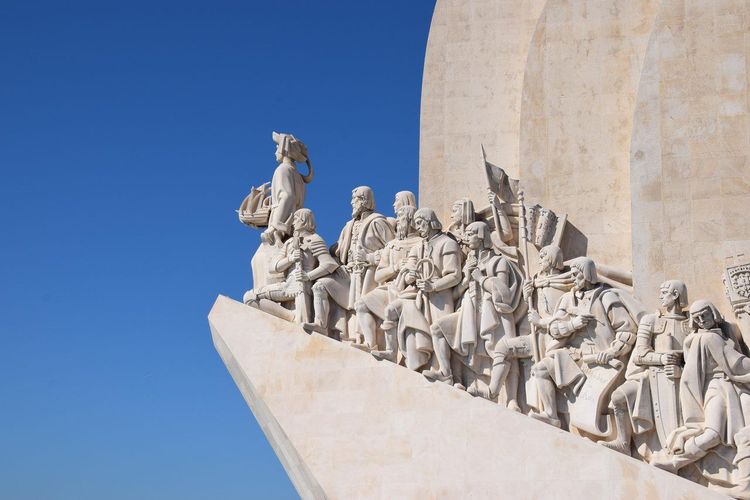
Between the two preceding monuments stands the Padrão dos Descobrimentos, a 52-meter monument shaped like the prow of a caravel, erected in 1960 for the fifth centenary of the death of Henry the Navigator.
Thirty-three sculpted figures, from navigators to cartographers, line its flanks. Climb to the top, accessible by a paid elevator followed by a few steps, for a view that takes in both the monastery and the tower, as well as the Ponte 25 de Abril, whose red silhouette deliberately evokes San Francisco's Golden Gate.
End this morning with the most anticipated stop: the pastéis de Belém (R. de Belém 84-92, 1300-085 Lisboa, rated 4.6/5 on Google with 99,825 reviews), the bakery that invented the original pastel de nata recipe in 1837, still prepared according to a formula kept secret by a handful of pastry chefs.
Inside, a labyrinth of azulejo-tiled rooms can accommodate several hundred customers at once, which keeps waits short even at peak hours. Order at least two, around €1.40 each, dust them with cinnamon and icing sugar, and eat them warm, straight from the oven: that is literally the whole difference from the standard pastéis de nata found elsewhere in the city. Young and old keep asking for more: it is probably the only queue in Lisbon where nobody complains. The Ryo guide dedicated to the Belém neighborhood details other addresses and updated opening times for each monument.
Day 2, Afternoon: the Park of Nations and LX Factory
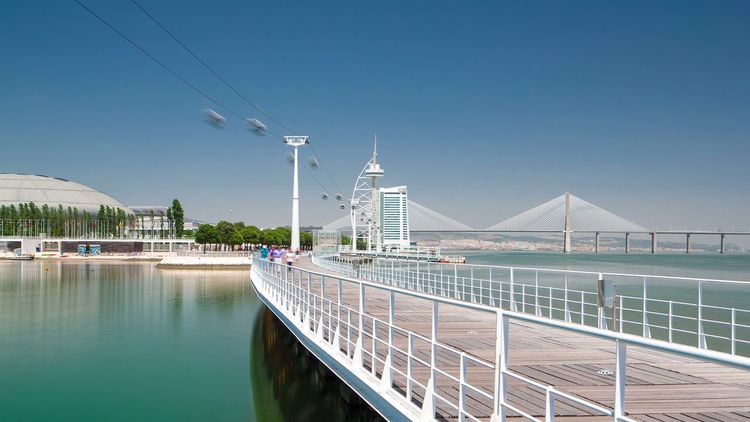
The Park of Nations: Lisbon's Futuristic District
Take the metro, red line, direction Airport, to Oriente station for a complete contrast with the Manueline morning: the Park of Nations was entirely rebuilt for the 1998 World Exposition, on former industrial land and a decommissioned oil refinery along the Tagus.
Contemporary architecture dominates, from the Oriente train station designed by Santiago Calatrava, whose metal framework evokes a forest of concrete and steel, to the Oceanário de Lisboa, one of Europe's largest aquariums with its 8,000 marine animals arranged around a five-million-liter central tank. Budget around €22 for admission and a good hour and a half of visiting if you are traveling with children curious about sea otters and rays. The Park of Nations cable car, running 1,230 meters along the river at a height of 20 meters, offers a lesser-known alternative for gaining some altitude without climbing a hill.
LX Factory: a Former Industrial Site Turned Creative Quarter
Head back west for a less classic but increasingly talked-about stop among recent travelers: LX Factory (R. Rodrigues de Faria 103, 1300-501 Lisboa, rated 4.5/5 on Google with 66,620 reviews), a former 19th-century textile and industrial site converted since 2008 into a creative hub, tucked under the deck of the Ponte 25 de Abril.
Art galleries, designer workshops, the Ler Devagar bookshop set up in a former three-story printing house with a bicycle suspended from the ceiling: the place is best explored without a fixed route, a little like Alfama but in an industrial, street-art version. On Saturdays, a local makers' market sets up in the central courtyard, a great opportunity to bring back a souvenir that did not come from a tourist shop. This is a differentiator that few 2-day Lisbon guides mention, even though the place is easily visited in the late afternoon between two bus connections. The Ryo guide to activities around Lisbon lists other addresses of this kind, off the most beaten paths.
Day 2, Late Afternoon: Tagus River Cruise and Cristo Rei
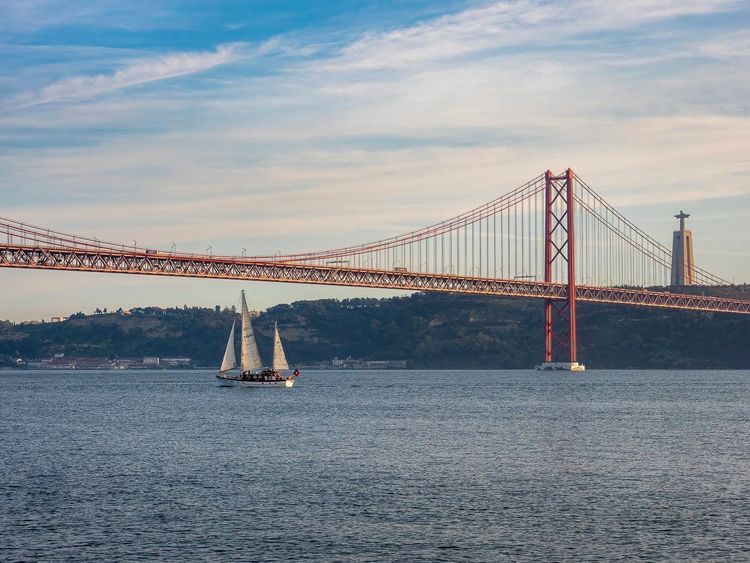
End the stay on the water rather than on foot: several companies offer a sunset cruise on the Tagus departing from the quay near Praça do Comércio, generally 1.5 to 2 hours of sailing, between €20 and €35 depending on the season and whether a glass of Port wine is included. The view from the river completely transforms your perception of the city: all at once you see the alignment of the seven hills, the castle dominating above, and the Ponte 25 de Abril framing the horizon.
On the far side of the Tagus stands Cristo Rei (Alto do Pragal, 2800-058 Almada, rated 4.6/5 on Google with 121 reviews), a 28-meter statue inaugurated in 1959 in gratitude for Portugal being spared during the Second World War, directly inspired by Christ the Redeemer in Rio de Janeiro.
From Belém or the center, a ferry connects to Cacilhas in about ten minutes, then a local bus or taxi climbs up to the foot of the monument. The elevator up to the observation platform, 82 meters high, costs around €8 and offers arguably the best panorama over Lisbon, precisely because you are looking at the city from the outside rather than from one of its own hills.
If the schedule is tight, visiting Almada at the end of the day remains optional: the sunset cruise alone is more than enough to close out these 48 hours on a memorable note, with a view of the city's lights switching on one by one along the quays.
Want to Stay Longer? Half-Day Trips from Lisbon

If your stay extends to three or four days, two half-day trips naturally complement this itinerary without undermining the weekend format.
Sintra: a Fairytale Palace
Sintra is 40 minutes by train from Rossio station, around €2.50 one way, a journey best made early in the morning to avoid the tourist buses that arrive en masse from 10:30am. The Pena Palace, with its towers painted in bright yellow and brick red perched atop a hill draped in mist most mornings, encapsulates in itself the romantic aesthetic of 19th-century Portugal. Budget €20 for admission and an entire morning if you add the Quinta da Regaleira, with its spiral initiatic well descending nine levels.
Cascais and Carcavelos: the Beach Near Lisbon
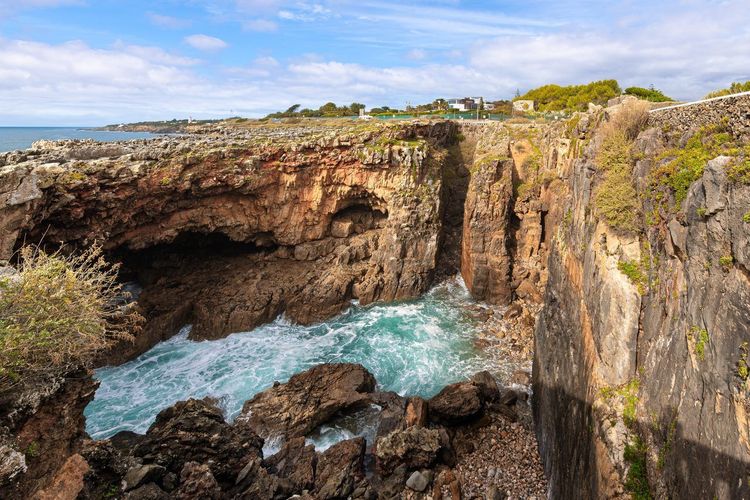
In the opposite direction for a coastal atmosphere: Cascais, a former fishing village turned chic resort, is reached in 40 minutes by train from Cais do Sodré, with a journey that runs along the coast and already offers beautiful views of the Atlantic. The marina, the cobbled streets of the historic center, and the Boca do Inferno, a rock formation where waves crash in with a roar, can be visited in a relaxed half-day.
On the return journey, the stop at Carcavelos suits those who simply want to lay down a towel: it is the most accessible beach from central Lisbon, wide enough never to feel crowded even in midsummer, and popular with a thriving community of beginner surfers taking advantage of the consistent waves. Neither Sintra nor Cascais is essential for a strict 2-day format, but one or the other transforms a classic weekend into a longer stay if you have the option of an extra night. The Ryo guide to the most beautiful beaches in Portugal broadens the selection beyond Carcavelos if swimming is a priority. Before chasing the coast, the Lisbon audio-guided tour, the city of seven hills, is worth wrapping up the historic centre with first.
Going Further: the National Azulejo Museum and Hidden Gems off the Beaten Path
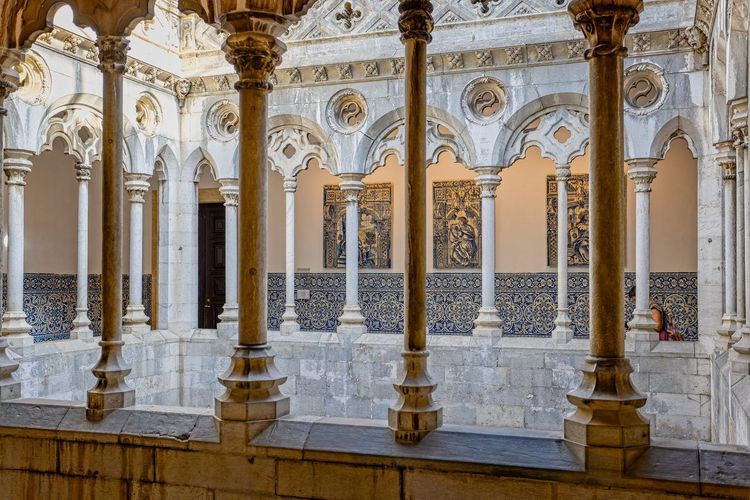
One subject runs through the entire city without ever getting its own stop in most itineraries: azulejos, those painted ceramic tiles that have covered facades, train stations, and church interiors since the 15th century. The National Azulejo Museum, housed in a former convent east of Alfama, traces five centuries of this craft through a collection that ranges from Moorish geometric patterns to 18th-century narrative frescoes, including a 23-meter panorama depicting Lisbon before the 1755 earthquake, one of the rare visual documents of the pre-disaster city.
Budget around €8 for admission and one hour to visit; the museum remains underattended compared to the castle or Belém, making it a good option if you want to catch your breath between two crowded stops.
For those who want to leave with more than monument photos, three lesser-known viewpoints are worth the detour if time allows: the Jardim do Torel, a tiny shaded terrace above Avenida da Liberdade, the Miradouro de Santa Catarina near Bairro Alto with its statue of the giant Adamastor, and the top of Parque Eduardo VII for a head-on view down the main avenue all the way to the Tagus. The Ryo guide to Lisbon's markets rounds out this list of hidden gems if you prefer browsing stalls to taking photographs.
Where to Stay in Lisbon for a 2-Day Trip
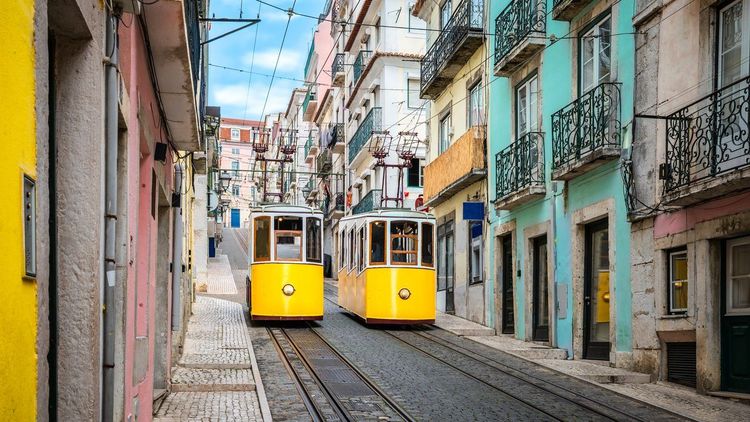
Which Neighborhood to Sleep in: Baixa, Chiado, or Alfama?
On such a short stay, where every hour of travel counts, it is better to sleep in the center rather than hunt for a cheaper hotel on the outskirts. Three neighborhoods compete for travelers' preference.
The Baixa remains the most practical choice: flat, central, within walking distance of Praça do Comércio and tram 28. It is the safest option for a first visit, even if it sacrifices a little architectural charm for the sake of logistics. Chiado, right next door, adds a more elegant dimension with its historic cafés and boutiques, at a slightly higher price point. Alfama, finally, appeals to those seeking authenticity: sleeping in an alley where laundry hangs from windows has its charm, but expect smaller rooms, steep staircases, and sometimes the sound of a fado tavern in the evenings.
Our Top Picks in Lisbon
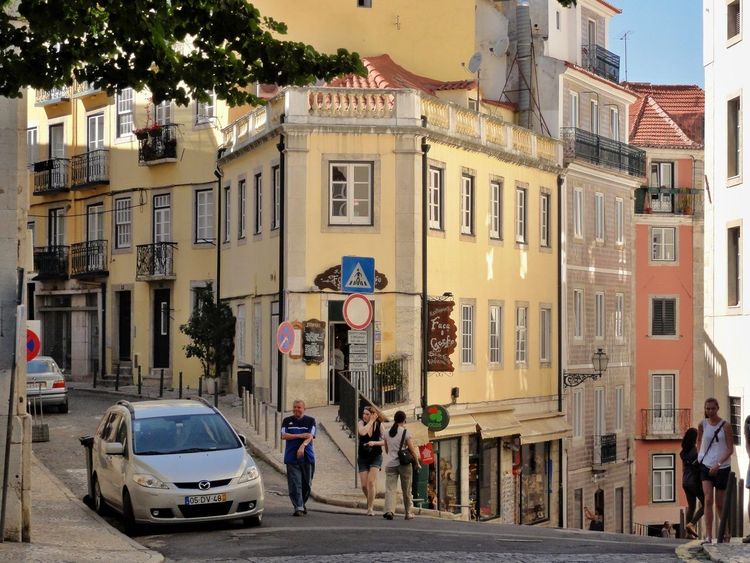
For a budget-conscious stay, hostels in the Baixa offer private double rooms for around €60 to €80 per night, often with breakfast included and a shared terrace overlooking the rooftops. In the mid-range, budget €100 to €150 for a boutique hotel in Chiado, where rooms often play the azulejo-and-restored-vintage-furniture card. At the upper end, several addresses installed in former Baixa palaces offer views of the castle or the Tagus from €200, with a spa and rooftop to enjoy the sunset without leaving the hotel.
Book at least one month in advance if your stay falls between May and September: demand regularly exceeds available supply across these three neighborhoods during high season, and prices climb by 30 to 50% compared to winter. The Ryo audio-guided tour of Lisbon lets you explore on foot from any of these three neighborhoods without depending on public transport for your day of discovery.
How to Get Around Lisbon in 2 Days
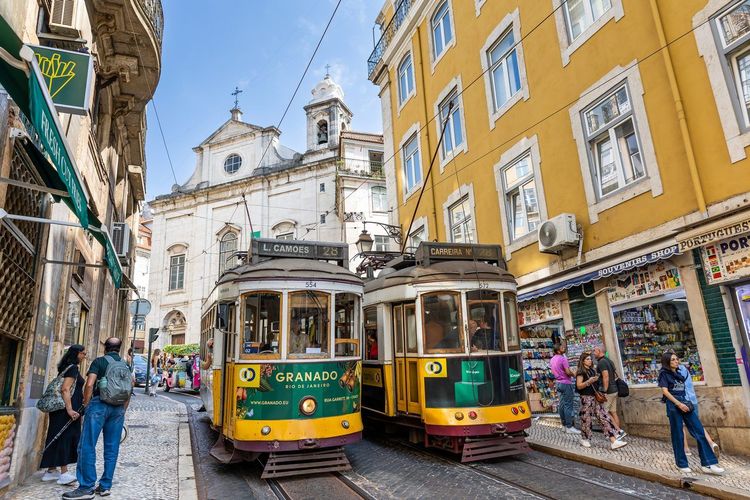
Lisbon is best navigated on foot and by tram, provided you are willing to tackle some elevation changes. The transport network combines a metro with four lines, practical for reaching Belém, the Park of Nations, or the airport, historic trams including line 28, funiculars (Bica, Glória, Lavra), and buses.
The simplest option remains the Viva Viagem card, €0.50 to purchase, rechargeable, covering all modes of transport in the urban zone. Budget around €1.65 per single metro or tram trip, or opt for a daily pass at €6.80 if you plan more than four journeys in a day, which happens quickly with tram 28, a funicular, and the metro to Belém.
The Lisboa Card goes further: in addition to unlimited transport, it includes free or discounted admission to around thirty sites, including the Jerónimos Monastery, the Tower of Belém, and the National Azulejo Museum. Budget around €27 for 24 hours, €44 for 48 hours, and €54 for 72 hours. On a 2-day stay that includes Belém and the castle, the 48-hour card generally pays for itself from the third paid admission of the day, not counting the time saved at ticket desks thanks to priority queues.
One last practical tip: always keep your validated ticket visible, as inspections are frequent on tourist lines, particularly tram 28, and the fine for travelling without a valid ticket far exceeds the price of a daily pass.
Food in Lisbon: What to Eat During Your Stay

Beyond the pastéis de nata already mentioned in Belém, Lisbon's cuisine deserves a proper sit-down meal each day rather than snacking between sights. Fish and seafood dominate the menu: bacalhau à Brás, shredded salt cod mixed with scrambled eggs, thin matchstick potatoes, and black olives, is found in virtually every tasca in the country, each claiming its own family recipe.
Grilled sardines, served whole with bread and a pepper salad, remain a reliable choice in summer, particularly during the popular June festivals when the smell of charcoal fills the alleys of Alfama and Graça. For a more filling lunch, the bifana, a marinated pork sandwich served hot in a small roll, rarely costs more than €4 and can be found in any neighborhood café.
Do not leave Lisbon without trying vinho verde, lightly sparkling and served very cold, ideal with seafood, nor without testing a ginjinha, a sour cherry liqueur served in a small take-away glass, sold right on the pavement near Rossio for around €1.50 a shot.
For the full experience, book a table at a fado house in Alfama or Bairro Alto rather than settling for a standard tourist menu: a fado evening with a tasting menu accompanying the traditional songs generally costs between €35 and €55 per person, drinks included. The Ryo guide to Lisbon's culinary specialties lists more addresses organized by neighborhood and budget.
Budget and Money-Saving Tips for a Weekend in Lisbon

Lisbon remains one of the most affordable capitals in Western Europe, which makes a comfortable weekend possible without a hefty budget. Over 48 hours, budget approximately €150 to €200 per person, including mid-range accommodation, meals in tascas rather than tourist restaurants, public transport, and admission to the main monuments.
The daily breakdown looks roughly like this: €60 to €90 for a double room shared between two, €25 to €35 for meals (light breakfast, lunch in a tasca, dinner with a glass of wine), €7 for transport with a daily pass, and €20 to €30 for admissions if you visit the castle, the Jerónimos Monastery, and the Tower of Belém without using the Lisboa Card.
A few smart moves can significantly trim the bill. Most municipal museums, including the National Azulejo Museum, are free on the first Sunday of the month until 2pm. The miradouros never cost anything: use them to fill end-of-day slots rather than paying for redundant attractions. Finally, booking tickets for the Jerónimos Monastery and the Tower of Belém online a few days in advance not only avoids the queue but also sidesteps the price markups sometimes charged by resellers.
For families, note that admission to most monuments is free for children under 12, and that senior rates (65 and over) often reduce the total bill by 30 to 50%.
When to Go and How to Arrive in Lisbon

When to Go for the Best Weather
Spring, April to June, and early autumn, September–October, offer the best compromise: temperatures around 20–25°C, moderate tourist crowds, and a soft light that is particularly flattering for miradouro shots at the end of the day. July and August regularly climb above 30°C, with doubled queues at Belém and the castle. Winter remains mild compared to the rest of Europe, 12–15°C during the day, but rainy spells can compromise a trip to Sintra or a Tagus cruise.
Flights and Getting into the City from the Airport
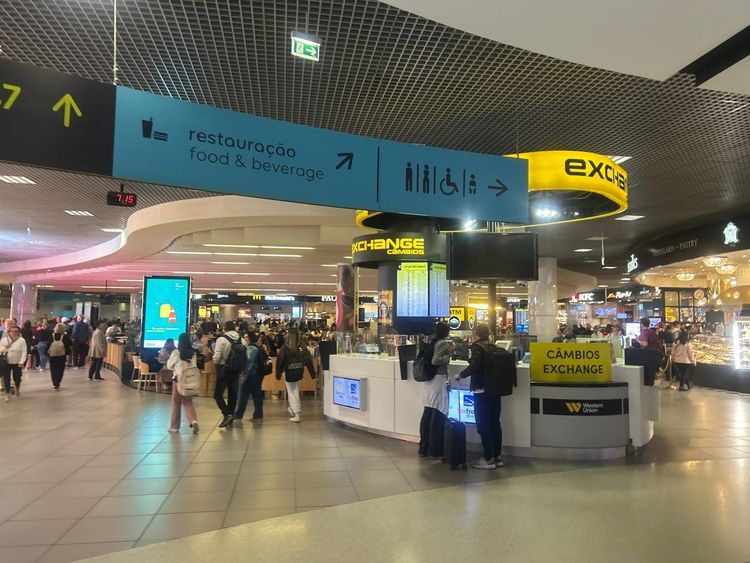
Humberto Delgado Airport is just 7 kilometers from the city center, one of the closest airports to a historic center in Europe. The metro, red line, connects the terminal directly to Alameda station in 20 minutes for around €1.65, a far more economical option than a taxi or ride-hailing service, which typically charges €15 to €20 for the same journey.
From France, allow around 2 hours 30 minutes for a direct flight from Paris, Lyon, Marseille, or Toulouse, with return fares starting at around €60 off-season on low-cost carriers and climbing to €150–€200 in July–August. Booking two to three months in advance remains the best strategy for a short weekend break, where date flexibility matters even more than on a longer trip.




FAQ
How Many Days Do You Need to Visit Lisbon?
Two full days are enough for a first visit focused on the highlights: Baixa, Alfama, São Jorge Castle, and Belém. Three days allow you to add Sintra, and four days to include Cascais or a longer excursion along the Atlantic coast.
Is It Better to Plan 2, 3, or 4 Days in Lisbon?
It mostly depends on your appetite for day trips. Two days cover the city itself; three days add Sintra under comfortable conditions; four days let you combine Sintra and Cascais without rushing, with a real breathing space between two packed days of sightseeing.
What Is the Best Neighborhood to Stay in Lisbon for a Short Trip?
Baixa remains the most practical choice for a 2-day stay: flat, central, within walking distance of tram 28 and Praça do Comércio. Chiado offers more charm for a slightly higher budget, and Alfama more authenticity at the cost of steep streets.
How to Get Around Lisbon in 2 Days (Tram 28, Metro, Lisboa Card)?
The trio of metro, tram, and funicular covers most of the city. A daily Viva Viagem pass at €6.80 is sufficient for 2 days of standard sightseeing; the Lisboa Card becomes worthwhile as soon as you plan three or more paid admissions per day, such as Belém and the castle.
What Budget Should You Plan for a 2-Day Stay in Lisbon?
Budget between €150 and €200 per person over 48 hours, including mid-range accommodation, meals in tascas, public transport, and admission to the main monuments. Free municipal museums on the first Sunday of the month can help trim costs further.
When Is the Best Time to Visit Lisbon for Good Weather?
Spring, April to June, and early autumn, September–October, offer the best balance between pleasant weather and manageable crowds. July–August remain hot and busy, while winter, mild but sometimes rainy, is best suited to museum visits and indoor sightseeing.
Should You Book the Jerónimos Monastery and the Tower of Belém in Advance?
Yes, especially between June and September when on-site queues can exceed one hour for each monument. Booking a time-stamped ticket online a few days before your visit guarantees fast entry and a fixed price, without the markups sometimes charged by third-party resellers.
Two days in Lisbon don't leave time to see everything, and that's perfectly fine. This itinerary favors depth across four or five neighborhoods rather than a frantic dash to fifteen monuments checked off without truly understanding them. Baixa, Alfama, Belém, and the Park of Nations each tell a different story about the same city: colonial and commercial, working-class and steep, imperial and maritime, contemporary and outward-looking toward Europe.
If this first visit makes you want to explore certain neighborhoods at your own pace, the Ryo audio-guided tour of Lisbon covers the essentials of this itinerary with neighborhood-by-neighborhood audio commentary, without depending on a guide's schedule or a group. A perfect reason to return to this tour on a future trip, this time digging into the excursions to Sintra or Cascais that two days never quite manage to include.
À lire également