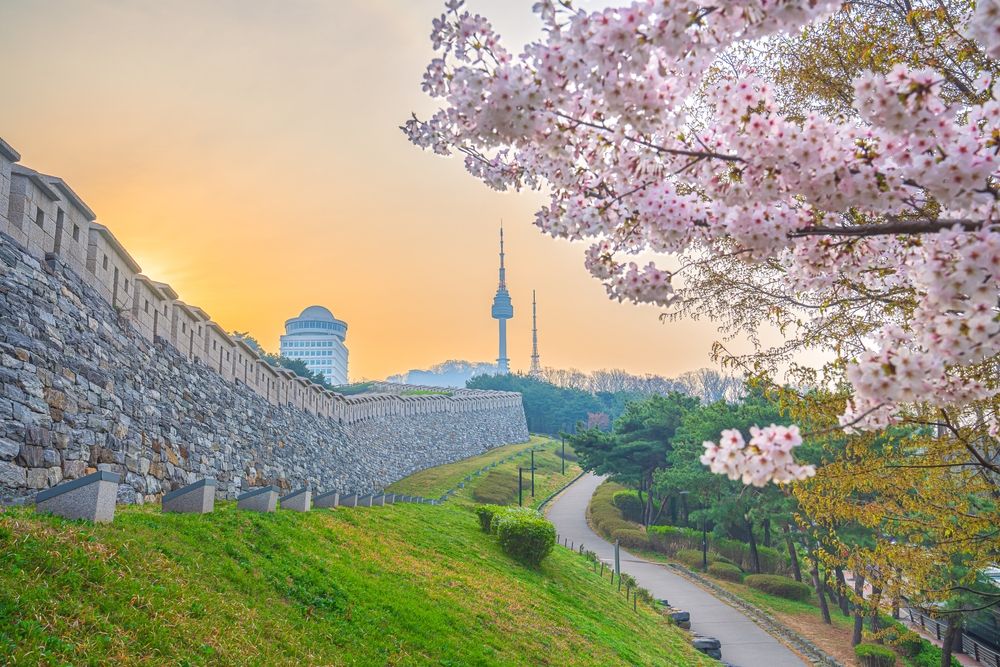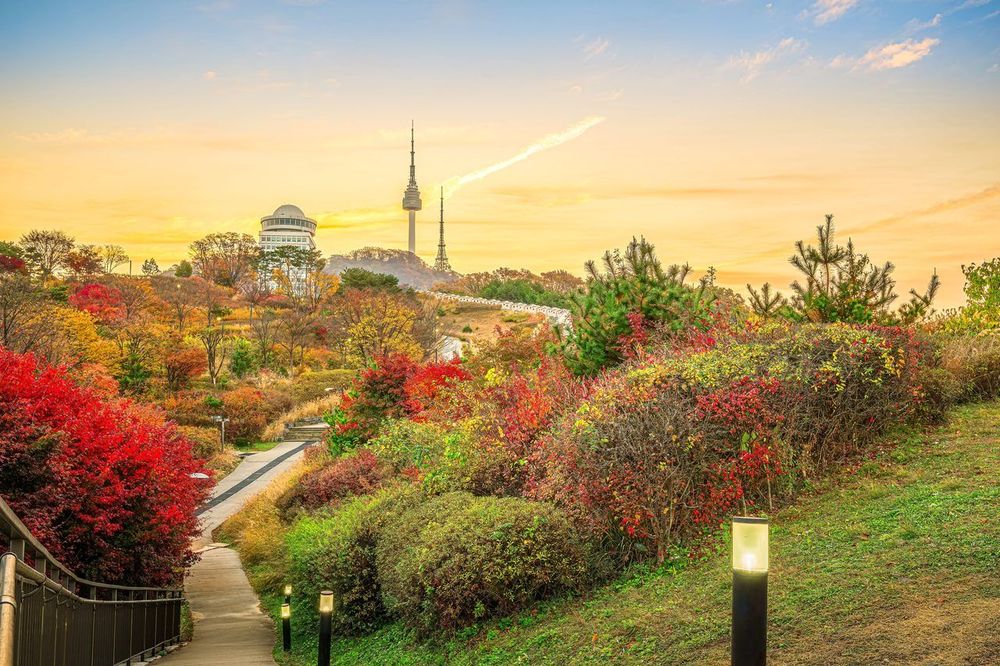
© Shutterstock
 Votre guide Ryo
20 Romantic Things to Do in Seoul in 2026: A Neighborhood Guide for Couples
Namsan Mountain looks different after 6 p.m. The cable car cabins sway slightly in the evening wind, the skyline below switches on its lights block by block, and near the summit, thousands of padlocks click against a steel fence that couples have been adding to for over a decade. That is just the opening scene. Romantic things to do in Seoul rarely announce themselves with candlelight and roses the way a European capital might; this city's romance tends to live in specific, findable spots, a fountain that only performs after dark, a stream that cuts straight through downtown, a market alley that has not changed much since the 1960s. This guide walks through 20 of them, grouped by neighborhood so you can actually link a few together into one afternoon or evening instead of crossing the subway map four times. Some cost nothing at all. Others, like the Han River cruise or a day trip to Nami Island, are worth planning around. Ryo's Seoul audio-guided tour threads together many of the stops below, so you can walk at your own pace while the history plays in your ear rather than trailing a guide holding up a flag. Where it helps, we have added the practical details too: which viewpoints are worth the wait, which entrance fees are worth paying, and which stops work just as well for free if your trip has a tighter budget.
1. Watch the Sunset from Namsan Mountain and N Seoul Tower
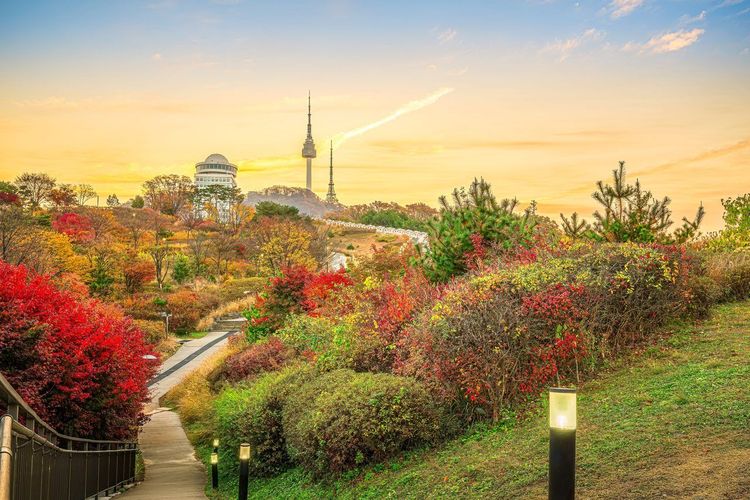
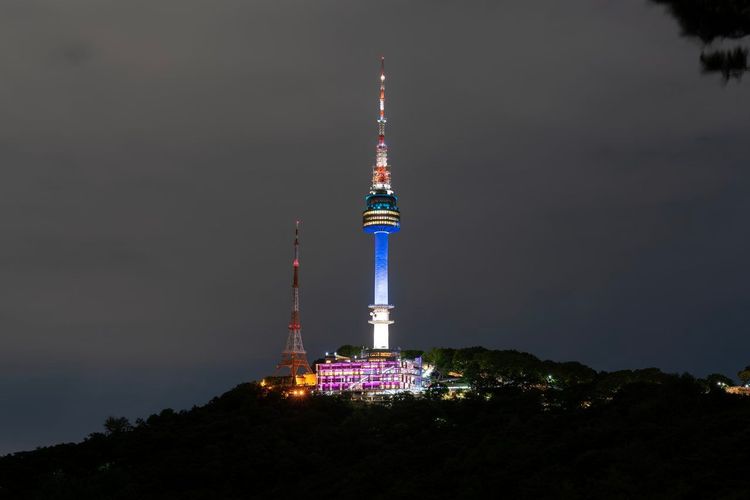
Namsan Mountain) sits almost exactly at the center of Seoul, a wedge of pine forest the city grew up around rather than over, and it remains the single most-cited answer to where couples should watch the sun go down here. At 262 meters it is not especially tall, but the summit delivers a 360-degree view that swings from the glass towers of Gangnam to the Han River's bridges lighting up one after another. Locals will tell you to arrive about 40 minutes before sunset: early enough to find a spot along the railing, late enough that you are not just staring at haze.
N Seoul Tower and the Locks of Love Fence
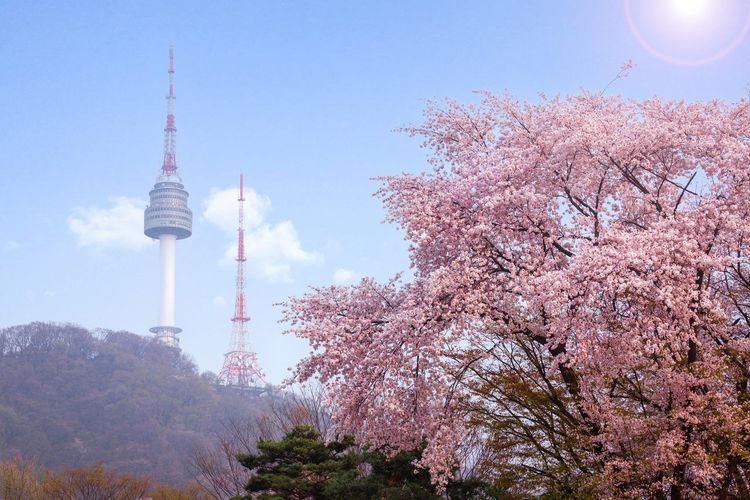
Construction of the tower began in 1969 as a broadcasting mast; it only opened to the public in 1980, and what you see today, its observation deck and restaurant, dates from a 2005 renovation. N Seoul Tower) rises another 236 meters above the summit, which puts its top deck at close to 480 meters above sea level, high enough that Incheon's coastline is sometimes visible to the west on a clear evening. Observatory tickets cost around 21,000 won per adult, and the queue moves faster after dark than most visitors expect, since the daytime crowds thin out considerably by early evening.
What most first-time visitors do not expect is the fence. The so-called Locks of Love fence wraps around the tower's outdoor terrace, and it is covered in padlocks that couples have written their names on and clipped shut. Some are rusted from years outside; others are fresh, still shiny, dated with last week's visit. Vendors near the entrance sell blank locks and paint pens if you want to add your own, and the ritual costs less than the price of two coffees. It is a little kitschy. It is also one of the few Seoul traditions couples actually take part in rather than just photograph.
Namsan Mountain's Cable Car and Sunset Walk
You have three ways up. The Namsan Cable Car (1 Sopa-ro, Yongsan-gu, Seoul, rated 4.3/5 on Google (17 468 avis)) is a short ride that has been running since 1962 and still gets a small ovation from first-timers when the city opens up below the cabin. The stairs and switchback paths climbing from Myeongdong take about 30 to 40 minutes at a comfortable pace. Or hop on the yellow Namsan circulation buses (01A and 01B), which drop you a short walk below the tower. Whichever way you choose, budget extra time for the walk back down after dark, when the lit paths through the forest turn into their own kind of date. Couples with a car who want a second viewpoint often add the Bugak Skyway, a scenic ridge road on the opposite side of downtown, winding along Bugaksan behind Gyeongbokgung, with the Palgakjeong pavilion lookout at the top.
Want someone to narrate the climb instead of reading up on your phone between switchbacks? Ryo's audio-guided route up Namsan times its stops to land right at the Locks of Love fence and the tower entrance, telling the story behind the padlocks as you reach them rather than after the fact.
2. Cruise the Han River at Night
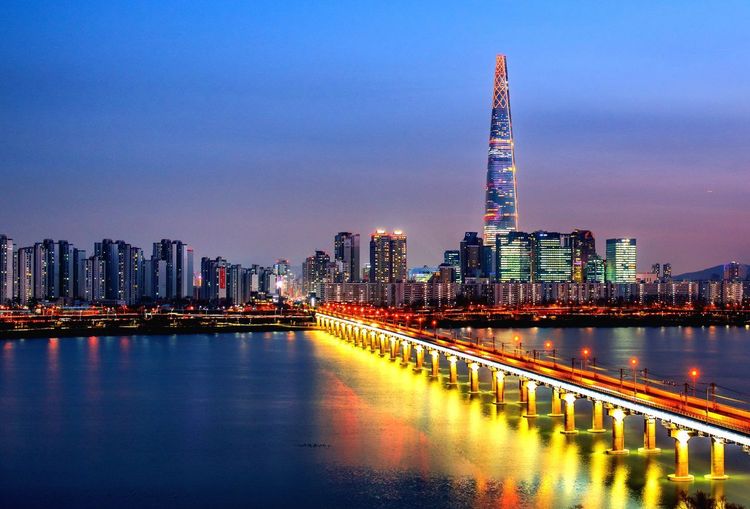
The Han River splits Seoul almost evenly between its northern and southern halves, and after dark it becomes the backdrop for most of the city's classic date-night moves: a walk along the promenade, a bottle of makgeolli shared on the grass, or a boat ride that turns the skyline into something close to a postcard. Locals rarely call it romantic out loud, but ask anyone in Seoul where they took their first date and the river comes up more often than any restaurant.
The E-Land Hangang Cruise
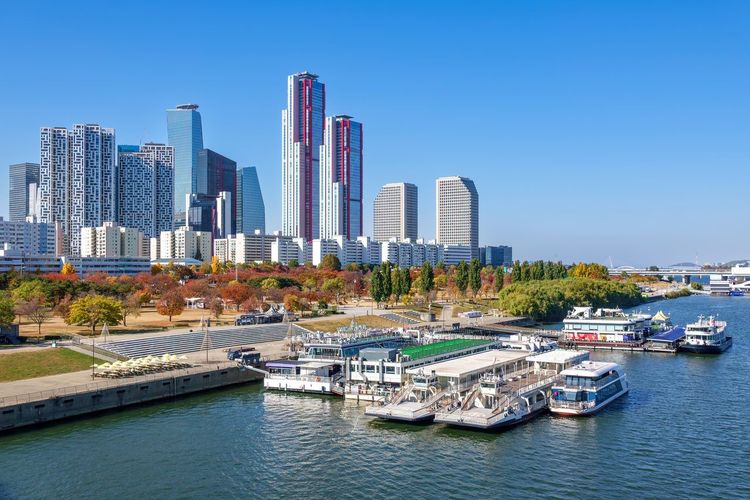
The E-Land Hangang Cruise (Yeouido Hangang Park, Yeongdeungpo-gu, Seoul, rated 4.2/5 on Google (4 738 avis)) departs from piers near Yeouido and runs a handful of routes, from a 40-minute loop past the Sebitseom floating islands to longer evening sailings timed to catch the Banpo Bridge fountain show mid-river. Prices vary by route and season, typically landing between 15,000 and 30,000 won per person, and the sunset and night departures sell out first on weekends, so booking a day or two ahead is worth it if you have a specific evening in mind. Onboard, there is a small deck bar and, on select sailings, live music, though most couples end up at the railing regardless, phones out, watching Seoul Tower and the bridges strobe past.
Banpo Bridge's Moonlight Rainbow Fountain
A few kilometers upriver, Banpo Bridge does something no other bridge in the city does: it shoots water from 380 nozzles along both sides, lit in rotating colors, in a show called the Moonlight Rainbow Fountain that Guinness recognizes as the longest bridge fountain in the world. Shows run several times an evening from April through October, weather permitting, each lasting about 20 minutes, and the best view is not on the bridge itself but from Banpo Hangang Park below, where you can sit on the grass with the whole span lit up in front of you. Arrive early for a good spot; this is one of the few free things in this guide that draws a real crowd.
A separate stretch of Ryo's Seoul audio route follows the river promenade near Banpo, so you reach the fountain as the show starts instead of waiting around guessing at the schedule.
3. Picnic and Cycle Along the Han River Parks
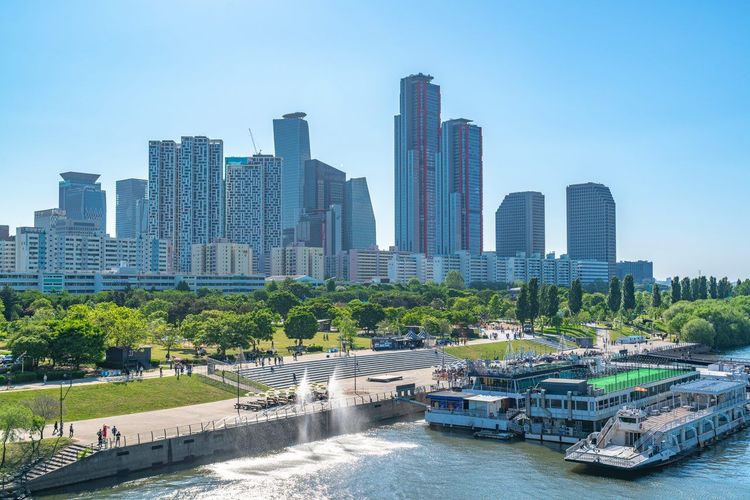
Not every Han River evening needs a boat ticket. The river is flanked by eleven connected parks, and on a warm weekend afternoon they fill with couples doing exactly what you would expect: spreading a blanket, splitting delivery food on the grass, and watching the water go by.
Yeouido Hangang Park's Riverside Picnic Spots
Yeouido Hangang Park is the most popular of the eleven for a first date or a lazy afternoon, thanks to its proximity to the cherry blossom road along Yunjungno and a strip of convenience stores with instant ramen machines that boil your noodles on the spot. Grab a spot near the water rather than closer to the road; it is quieter and the view of passing boats is better.
Renting Tandem Bikes Together
Most parks along the river, Yeouido included, rent bikes by the hour, and tandem bikes are a real option here, not just a novelty prop. Expect to pay around 6,000 to 8,000 won an hour for a two-seater, with the paved riverside path stretching far enough in either direction that you can ride for 20 minutes before turning back without ever leaving the water's edge. Go slightly before sunset if you want the ride and the light to line up.
Spring and early autumn are the sweet spot: summer humidity makes the ride sweaty by the halfway point, and winter wind off the water cuts through gloves fast. In July or August, aim for early morning or after 8 p.m., when the heat breaks.
4. Wander the Hanok Villages of Bukchon and Seochon
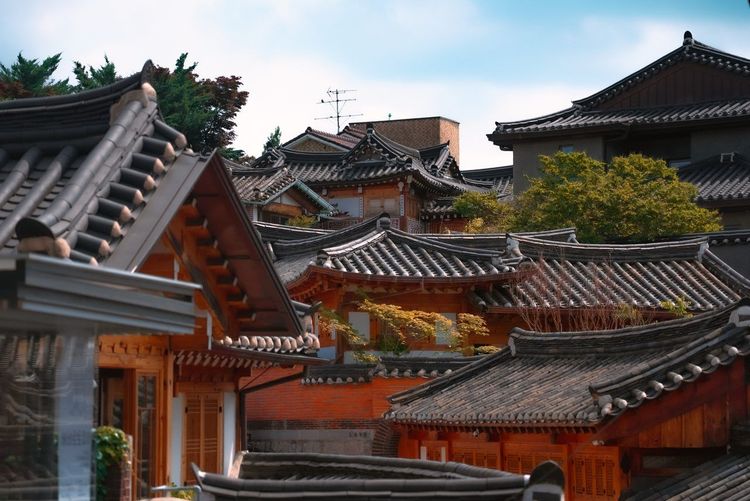
Seoul's hanok villages are what is left of the traditional wooden neighborhoods that once surrounded the royal palaces, and two of them, on opposite sides of Gyeongbokgung, have become the closest thing the city has to a postcard backdrop for couples.
Bukchon Hanok Village's Photogenic Alleys
Bukchon Hanok Village (37 Gyedong-gil, Jongno-gu, Seoul, rated 4.4/5 on Google (24 602 avis)) sits on the hillside between Gyeongbokgung and Changdeokgung, hundreds of traditional hanok houses arranged along narrow, sloping lanes. Most of these homes are private residences, and the neighborhood has pushed back against overtourism: since November 2024, visitors who are not staying in a local guesthouse may only enter the designated « red zone », which includes the famous Bukchon-ro 11-gil, between 10 a.m. and 5 p.m. The trick for quieter photos is therefore a weekday arrival right at 10 a.m., before the tour buses unload, and keeping your voices low; people really do live behind those doors.
Seochon and Samcheong-dong's Quiet Cafes
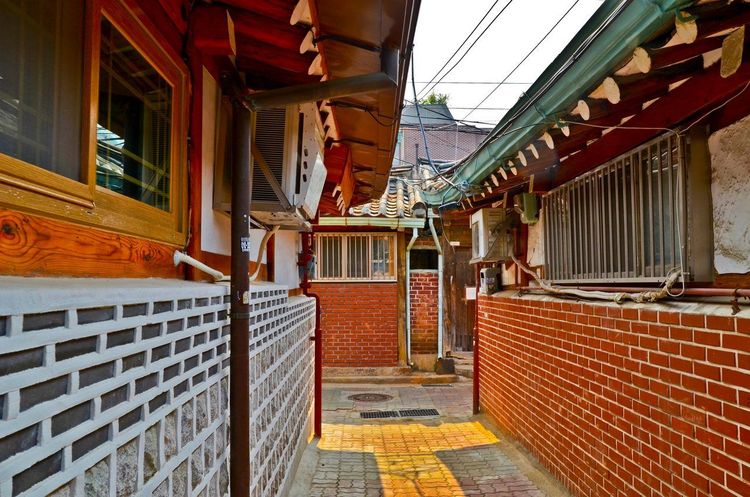
On the other side of Gyeongbokgung, Seochon gets a fraction of Bukchon's foot traffic despite having its own share of hanok-lined alleys, low-rise galleries, and secondhand bookshops. It is the better choice if you would rather talk than take photos. A short walk east of the palace brings you to Samcheong-dong, where the hanok aesthetic continues but the ground floors have filled in with small cafes, several of them built inside converted traditional houses with courtyard seating. Order slowly here; the point of Samcheong-dong is sitting still for an hour, not checking off a list.
Renting a hanbok for the afternoon is a common add-on in both neighborhoods, and it is not purely for photos: wearing one gets you free entry to Gyeongbokgung and Changdeokgung, which more than covers the rental cost of around 15,000 to 25,000 won for a few hours. Shops cluster near Bukchon's entrance and along Samcheong-ro, most offering matching or coordinated styles for couples.
For context rather than guesswork while you wander, Ryo's Seoul audio tour threads through Bukchon's alleys and flags which lanes stay quietest for photos, well away from the groups clustering around the main viewpoint.
5. Step Into Royal Romance at Seoul's Palaces
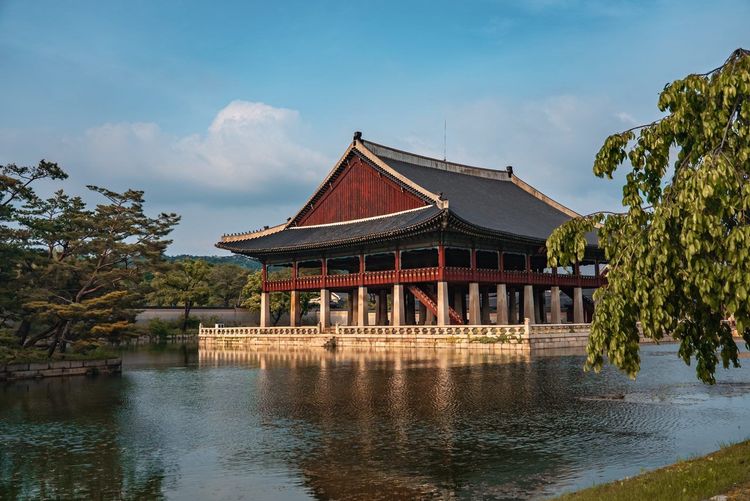
Seoul's five grand palaces, built and rebuilt across five centuries of Joseon dynasty rule, are the city's most obvious historical backdrop, and two of them in particular reward an unhurried, hand-in-hand visit.
Gyeongbokgung Palace's Changing of the Guard
Gyeongbokgung Palace (161 Sajik-ro, Jongno-gu, Seoul, rated 4.6/5 on Google (46 923 avis)), the largest and most visited of the five, sits at the northern end of Sejong-daero, its main gate framed by Bugaksan mountain behind it, one of the most photographed views in the country. The Royal Guard Changing Ceremony, a reenactment of the Joseon gate guard rotation, takes place in front of Gwanghwamun Gate at 10 a.m. and 2 p.m., drums and all, and it is free to watch. Arrive at the 9 a.m. opening if you want the throne hall courtyard without three tour groups in the frame, and note that the palace closes on Tuesdays.
Changdeokgung's Secret Garden
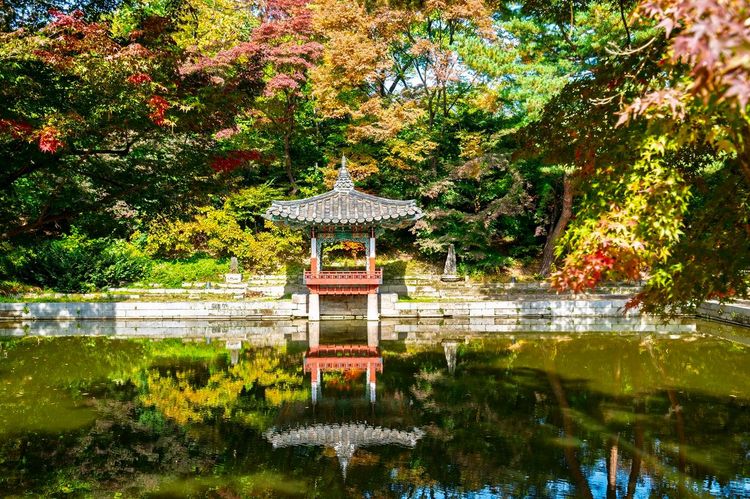
A 15-minute walk east, Changdeokgung is the palace locals tend to recommend for couples, largely because of the Secret Garden, or Huwon, at its rear: a walled, forested compound of ponds, pavilions, and centuries-old trees that can only be visited on a timed, guided tour, which caps numbers and, as a side effect, keeps it quiet. Tours sell out on weekends, so booking online ahead is worth the effort. The palace has been a UNESCO World Heritage Site since 1997, and its layout, built to follow the natural contours of the land rather than a strict grid, feels noticeably less formal than Gyeongbokgung's.
There is something different about walking a six-hundred-year-old courtyard dressed for the part instead of in hiking sandals, and the hanbok pays for itself at the ticket gate. Ryo's audio guide narrates Gyeongbokgung's history stop by stop as you cross the grounds, so neither of you has to keep pulling out a phone to figure out which hall you are standing in front of.
6. Discover Seoul's Colorful Art Villages
East of Bukchon, on the slopes below Naksan, a working-class hillside neighborhood was repainted, mural by mural, into one of Seoul's more unusual date spots, part open-air gallery, part still-functioning residential street.
Ihwa-dong Mural Village's Painted Stairs
Ihwa-dong Mural Village started as a 2006 public arts project meant to revitalize a rundown hillside district, and it worked almost too well: a set of stairs painted with koi fish became so popular that some residents eventually painted over it to reclaim some quiet. What is left is still striking, narrow staircases and alley walls covered in changing street art, though signs around the village remind you, politely but firmly, that people live here.
Naksan Park and the Seoul Fortress Wall
Climb another ten minutes from the top of the mural village and you reach Naksan Park (Naksan-gil, Jongno-gu, Seoul, rated 4.6/5 on Google (6 128 avis)), built along a restored stretch of the Seoul Fortress Wall, the roughly 18.6-kilometer defensive wall that once ringed the entire city. This section is one of the easiest to walk, and the park's elevated position gives a wide sunset view back over the Ihwa rooftops toward Namsan, without the crowds or ticket line of N Seoul Tower. It is free, it is open late, and on a clear evening it rivals the more famous viewpoint for a fraction of the effort.
Together, the two make an easy hour-long loop: mural alleys on the way up, fortress wall and skyline on the way down, with a few small cafes near the park entrance if you want to sit down before heading back into the city.
7. Escape Into Seoul's Green Spaces Together
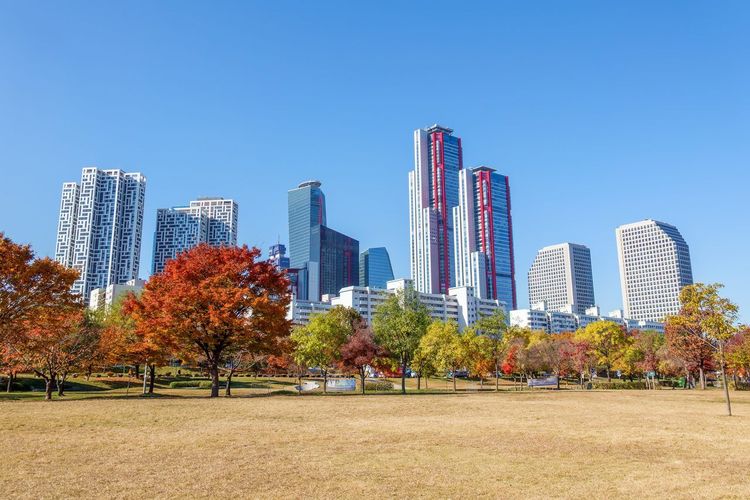
Seoul's parks do not get grouped together as often as they should. Put them side by side, though, and they cover three distinct moods for three distinct kinds of date.
Seoul Forest's Picnic Meadows
Seoul Forest), along the river's northern bank in Seongdong-gu, is the closest thing the city has to New York's Central Park: open meadows, a small deer enclosure you can walk right up to, and a butterfly garden, spread across roughly 1.2 square kilometers. Weekday mornings here are close to empty even in peak season, which makes it the better choice if Yeouido's picnic spots sound too crowded. The cafe-lined streets of Seongsu-dong start just outside the park gates.
Haneul Park and the Cheonggyecheon Stream
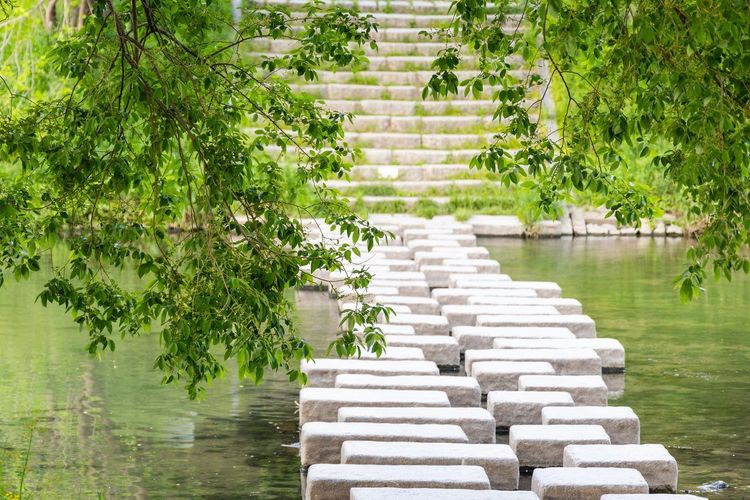
Haneul Park), meaning sky park, sits atop a former landfill on the western edge of the city and has one unusual feature: fields of silver grass that turn gold-pink at sunset each October, drawing couples up its 291 steps specifically for the light. On the opposite end of the scale, downtown, the Cheonggyecheon stream runs for about eleven kilometers through the financial district, a restored waterway lined with stepping stones and willow trees that turns a five-minute walk into an actual date if you take the water-level path instead of the sidewalk above it.
For a fourth option with climate control built in, Seoul Botanic Park out in Magok combines a domed greenhouse with themed outdoor gardens, useful on the days when Seoul's humidity makes an outdoor picnic feel like a bad idea.
8. Fall for Hongdae's Youthful Energy
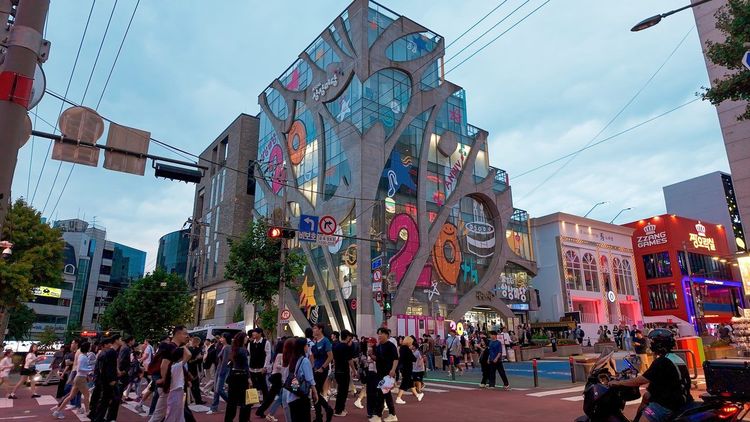
If the hanok villages are Seoul's past, Hongdae (Hongdae, Mapo-gu, Seoul, rated 4.6/5 on Google (9 555 avis)) is unmistakably its present. Centered around Hongik University, the neighborhood built its identity on the students who have filled its streets for decades, and after dark it turns into one of the densest concentrations of bars, live venues, and street performance in the country.
Street Performances and Live Music Nights
On weekend evenings, Hongdae Street and the small plaza known as Playground fill with buskers, dance crews, and pop-up performances that start informally and sometimes draw a crowd within minutes. You will not find a schedule online, so the move is to walk the main strip after 7 p.m. and follow whichever crowd looks biggest. A few streets over, small live music venues host everything from indie rock to jazz most nights of the week, several with no cover charge before a certain hour.
Theme Cafes and the Love Shop
Hongdae also has Seoul's highest concentration of theme cafes, spaces built entirely around one idea: animal cafes, character cafes, one styled like a spaceship interior. That is exactly the appeal for a lighthearted date. For something aimed at couples, the Love Shop, a quirky boutique selling relationship-themed gifts and novelty items, is more of a browse-and-laugh stop than a serious shopping trip. Below street level, the underground shopping arcades and basement cafes offer a rainy-day alternative that keeps the atmosphere.
Show up at 4 p.m. and you will mostly find shuttered storefronts and students studying in coffee shops. Arrive by early evening and stay past 9 for the version of Hongdae everyone talks about. The Hongdae stretch of Ryo's audio-guided walk points out the street-art corners and live-music courtyards worth lingering in once the sun goes down.
9. Get Playful at Seoul's Quirky Attractions
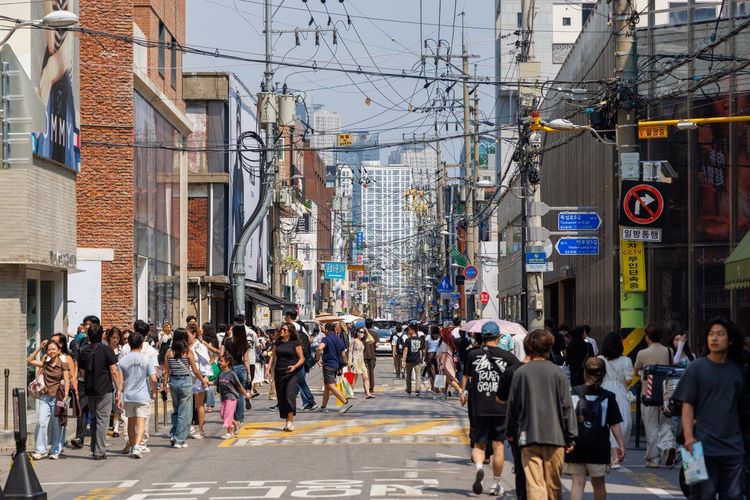
Not every date in Seoul needs a view or a history lesson. The city has built an entire micro-industry around playful, slightly absurd date formats, and couples who skip them miss one of the more distinctly Korean parts of dating culture.
Trick Eye Museum's Interactive Art
The Trick Eye Museum (World Cup buk-ro 4-gil, Mapo-gu, Seoul, rated 4.2/5 on Google (4 391 avis)) in Hongdae is built around 3D murals designed to be photographed with you inside them: you will appear to dangle off a cliff, get chased by a dinosaur, or sink into a painted ocean, all through forced perspective. It is unapologetically silly and works best if you commit to it. Tickets run around 20,000 to 23,000 won and a full visit takes about an hour.
Noraebang Karaoke and Multi-Room Dates
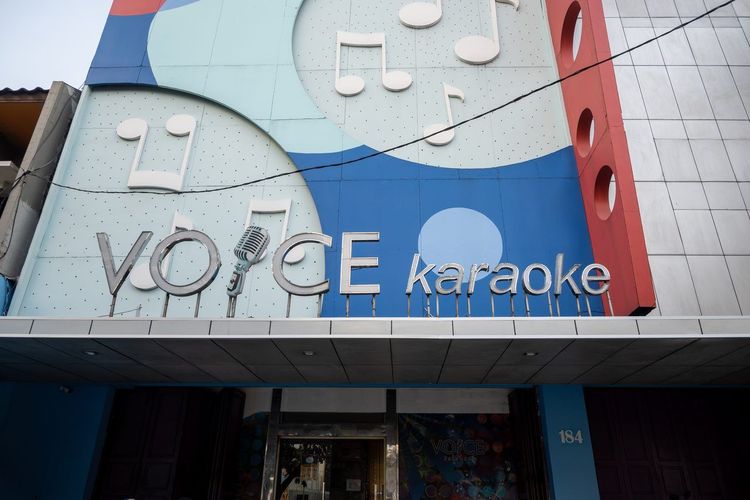
Few date formats are more distinctly Korean than the noraebang, a private karaoke room rented by the hour, usually for somewhere between 15,000 and 25,000 won for a couple's room. Singing love songs to each other in a soundproofed booth, badly, is a rite of passage here. A step up, multi-rooms combine a private karaoke booth with a small screening room and game consoles, rented for a few hours as a self-contained night out. For a lower-key version, cinemas across the city offer couple seats, wide reclining pairs with no armrest in between, good for catching a flick. Some neighborhoods also have themed hotels built around the idea of a night that feels like an event rather than an errand.
No advance planning needed: noraebang and multi-room venues cluster densely enough in Hongdae and Gangnam that you can usually walk in and get a room within ten minutes, even on a Friday night.
10. Shop and Stroll in Insa-dong and Dongdaemun
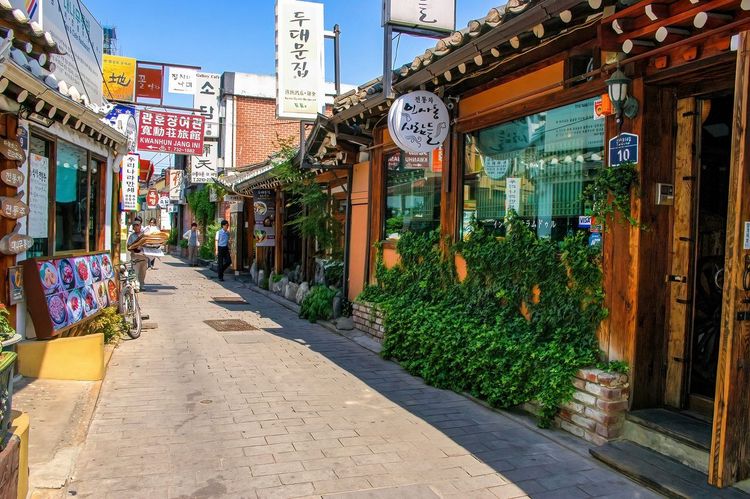
Seoul's shopping streets split roughly into old and new, and both versions make for a good couple's afternoon if you pick the right one for your mood.
Insa-dong's Ssamziegil Complex
Insa-dong has been Seoul's antiques-and-traditional-crafts street for decades, lined with tea houses and calligraphy shops, with galleries selling everything from hanji paper lamps to hand-thrown ceramics. At its center, Ssamziegil) is a spiraling four-story complex built around a courtyard, its ramp designed so you walk a continuous loop past dozens of small, independent shops. It is a good place to buy a unique souvenir together rather than the mass-produced keychains sold near the palace gates.
Dongdaemun Design Plaza's Night Market
A short subway ride away, Dongdaemun Design Plaza (281 Eulji-ro, Jung-gu, Seoul, rated 4.4/5 on Google (32 056 avis)), known as DDP, is Zaha Hadid's curving, neofuturistic building of aluminum panels, which looks like it landed from somewhere else entirely. It is lit in shifting colors after dark, and the LED rose garden installation beside it has become a minor photo pilgrimage. The surrounding Dongdaemun district runs wholesale fashion markets that stay lively well past midnight, an entirely different energy from Insa-dong's tea houses. On the way, Gwangjang Market pairs naturally with an Insa-dong afternoon: a century-old covered market known for bindaetteok, or mung bean pancakes, best eaten at a counter, shoulder to shoulder, off a shared plate.
11. Spend a Playful Day at Lotte World or Everland
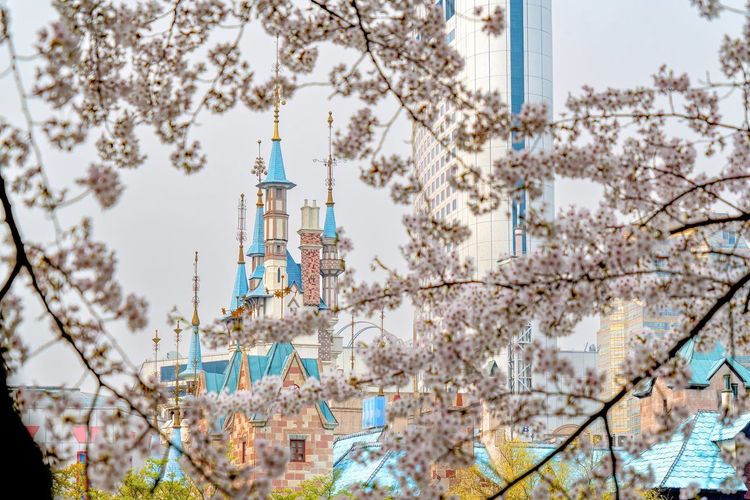
For a full day rather than an evening, Seoul's two big theme parks give couples an easy, if crowded, itinerary: rides, shows, and enough walking to justify the fried chicken afterward.
Lotte World's Rides and Ice Rink
Lotte World, largely indoors under a glass dome with an outdoor lakeside section called Magic Island, has the advantage of being weatherproof and centrally located in Jamsil. Beyond the rides, it houses an indoor ice rink open year-round, which makes for a different date than most theme park visits: skating hand in hand with the roller coaster running overhead. Day passes run in the 60,000-won range, and afternoon passes cost noticeably less if you are arriving after lunch.
Everland's Gardens and Attractions
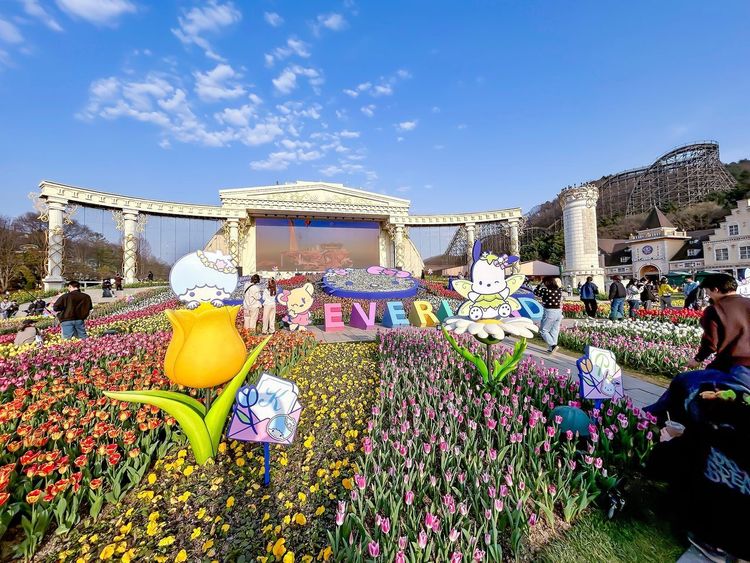
Everland, about an hour outside the city near Yongin, trades Lotte World's compact indoor layout for sprawling themed gardens, a safari zone with lions and tigers seen from a bus, and T Express, one of the world's steepest wooden roller coasters. It is the better pick if you want a full outdoor day and do not mind the commute; Lotte World wins if you would rather stay in the city. Most couples pick one and treat it as the day's single plan.
If neither fits your schedule, the seasonal outdoor rink at the Grand Hyatt Seoul offers a scaled-down skating date with a hillside view over Itaewon. Whichever you choose, weekday visits cut wait times dramatically; Saturdays at either park routinely mean 40-minute-plus queues for the headline rides.
12. Dine and Drink With a View
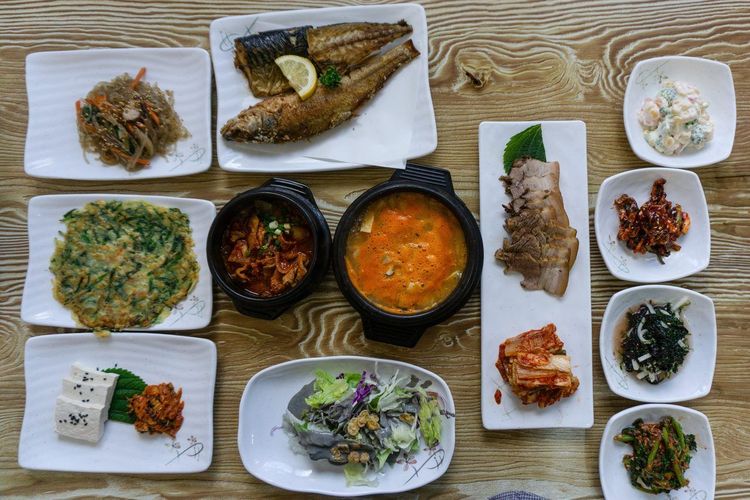
Seoul's restaurant scene rewards couples who chase a view as much as a menu, and the city has no shortage of rooftop bars, hidden speakeasies, and traditional dining rooms built for exactly that.
Rooftop Restaurants and Secret Bars
Rooftop dining with a city view has become its own category in Seoul, with hotel bars in Gangnam and Jongno competing for the best Namsan or Han River sightline, usually with a cocktail menu priced accordingly. For something less polished, secret rooftop bars, reached through unmarked doors or freight elevators, have opened across Itaewon and Euljiro, drawing couples who like the small thrill of not being sure they are in the right building until the door opens. Hidden gem cafes and bars tucked into basements and converted hanoks round out the scene for a lower-key evening.
Traditional Korean Dining Experiences
For something closer to a traditional Korean date, a hanjeongsik meal, a set table of a dozen or more small banchan dishes arriving alongside the main course, turns dinner into an event. Several restaurants near Insa-dong and Bukchon serve it in converted hanok dining rooms with floor seating. Korean barbecue remains the default date-night choice for a reason: grilling your own meat over shared tongs, at a table small enough that conversation stays easy, is built for two. To go deeper into what to order, Ryo's guide to Seoul's best food runs through the ten dishes worth prioritizing.
If you are hunting specifically for romantic restaurants in Seoul rather than a rooftop view, look toward Cheongdam and Hannam-dong, where a cluster of fine-dining rooms, several with tasting menus that run three hours or longer, have built reputations as proposal-dinner destinations. Reserve at least a week out for weekend tables; walk-ins are realistic on weeknights but rarely on Friday or Saturday.
13. Take a Romantic Day Trip to Nami Island and the Garden of the Morning Calm
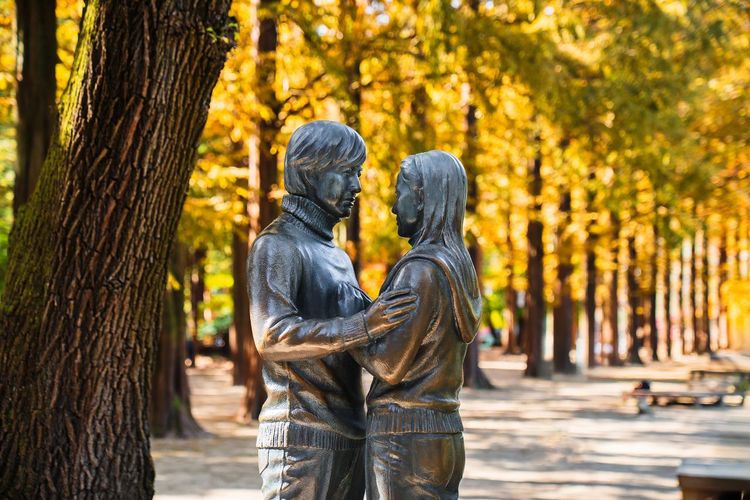
About an hour and a half outside Seoul by car, or by ITX train to Gapyeong plus a shuttle, this pairing has become the default couples' day trip, largely thanks to the 2002 drama « Winter Sonata », filmed on Nami Island, which never quite lost its pull.
Garden of the Morning Calm
The Garden of the Morning Calm), a botanical garden in the hills near Gapyeong, changes character completely by season: spring brings its flower beds, autumn turns the maple-lined paths red and gold, and winter transforms the whole thing into a lighting festival strung with millions of bulbs after dark. It is a two-to-three-hour visit at a relaxed pace, and the winter festival draws couples willing to bundle up for a walk unlike anything inside the city.
Namiseom Island's Tree-Lined Paths
A short drive away, Namiseom Island (Namisum-gil, Chuncheon-si, Gangwon-do, rated 4.4/5 on Google (37 663 avis)), commonly called Nami Island, is a half-moon-shaped island reached by a five-minute ferry, or by a zip line from the Gapyeong wharf if you want a more dramatic arrival. Its avenue of towering metasequoia trees has become one of the most photographed stretches of nature in the country, particularly under snow or autumn color. Cars stay on the mainland, so the whole visit happens on foot or by rented bike, with enough quiet side paths to put distance between yourselves and the groups clustered near the ferry dock.
Most couples combine both stops into one long day, starting at the garden in the morning before the tour buses arrive and saving Nami Island for the golden hour, when the tree-lined avenue empties out.
14. Explore the Countryside: Suwon, Pocheon, and the Wine Train
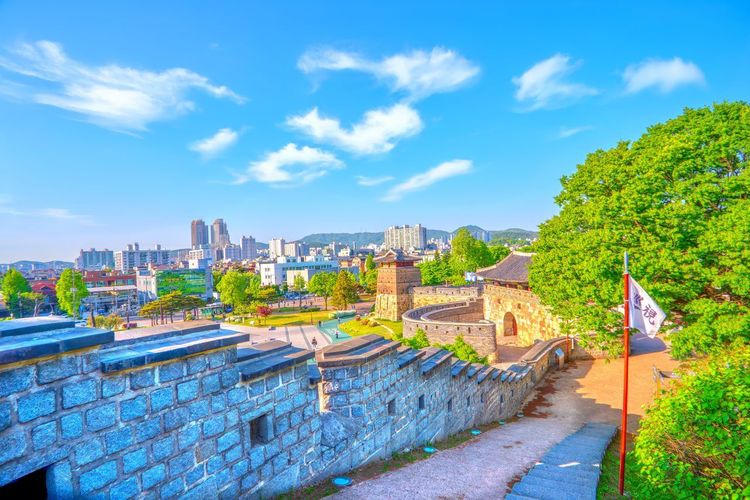
For a day trip with more variety than a single garden or island, a few options just outside Seoul cover very different ground.
Suwon Hwaseong Fortress
South of the city, Suwon Hwaseong Fortress (Jangan-ro, Suwon-si, Gyeonggi-do, rated 4.6/5 on Google (9 186 avis)), a UNESCO World Heritage Site built in the 1790s, rings the old town with 5.7 kilometers of stone wall studded with watchtowers and gates, and you can walk the full loop in about two to three hours. The Hwaseong Trolley, a small tourist train with a dragon-head locomotive, runs part of the route if you would rather split the walking, and the fortress walls are lit at night for a quieter atmosphere than the daytime crowds.
Pocheon's Herb Island and Art Valley
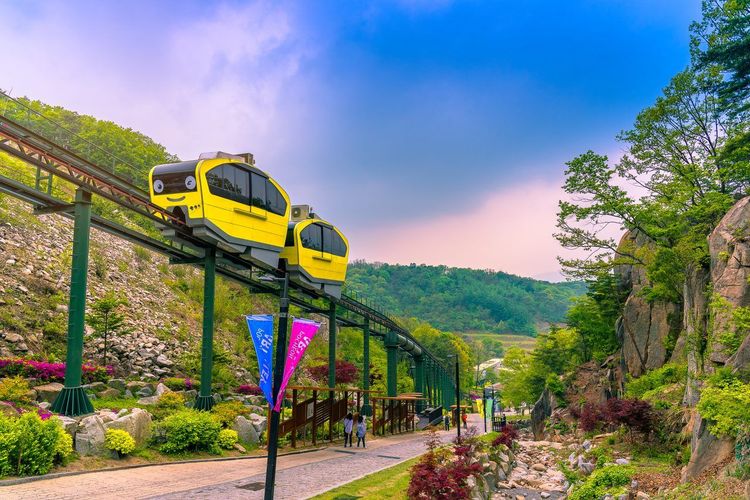
North of Seoul, Pocheon Herb Island combines greenhouses of fragrant plants with a small European-village aesthetic, popular for its evening light displays as much as the herbs themselves. Nearby, Pocheon Art Valley occupies a former granite quarry turned sculpture park around an emerald lake, reached by a monorail up the hillside. Further west near Paju, Heyri Art Village, a planned community of galleries, studios, and quirky architecture, suits a slower, browsing-focused afternoon.
The Wine Train to Yeongdong
The Wine Train is a themed Korail excursion that leaves Seoul for Yeongdong, Korea's grape-growing heartland in North Chungcheong Province, with tastings on board and a visit to a local winery. It packages a whole day into one ticket for couples who would rather not drive.
Pick one direction per day, Suwon to the south, Pocheon or Heyri to the north, or the Wine Train; the travel time between them eats into the visit far more than it looks on a map.
15. Learn Seoul's History Together
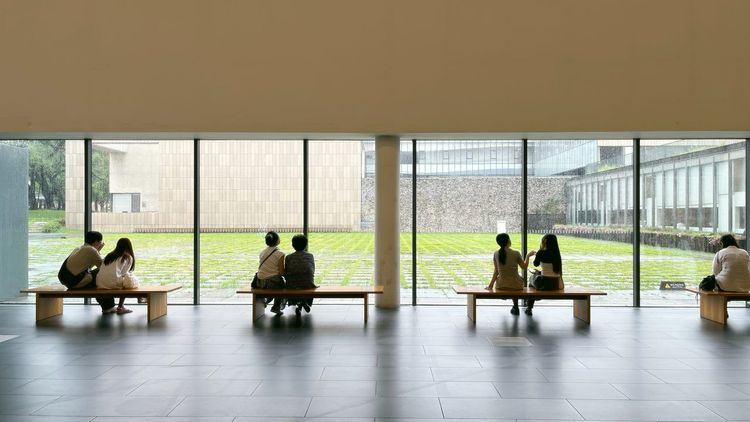
Not every date needs to be lighthearted, and two of the city's major museums reward a slower, conversation-heavy visit.
National Museum of Korea
The National Museum of Korea), the country's largest museum, sits in a riverside complex near Yongsan Family Park, its central hall famous for the ten-story Gyeongcheonsa stone pagoda at the far end of a long corridor, a deliberate sightline that has become one of the most photographed interior shots in Seoul. Admission to the permanent collection is free, and a couple of hours covers the highlights without museum fatigue setting in.
War Memorial of Korea
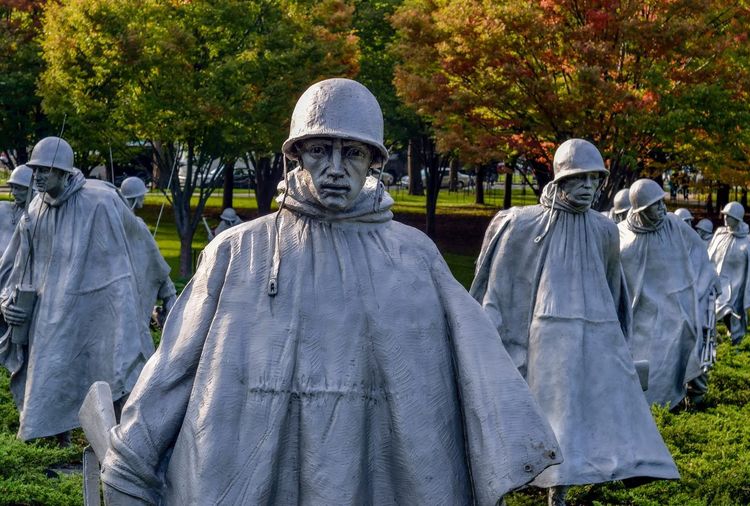
A short distance away, the War Memorial of Korea (Itaewon-ro, Yongsan-gu, Seoul, rated 4.6/5 on Google (18 208 avis)) covers the Korean War and the country's broader military history across indoor galleries and an outdoor plaza lined with retired aircraft and tanks, a heavier visit than most entries on this list but a meaningful one for understanding the country you are exploring together. Give it at least ninety minutes. Admission is free here too, so both museums add depth to your trip without denting the budget.
16. Celebrate Anniversaries and Proposals in Style
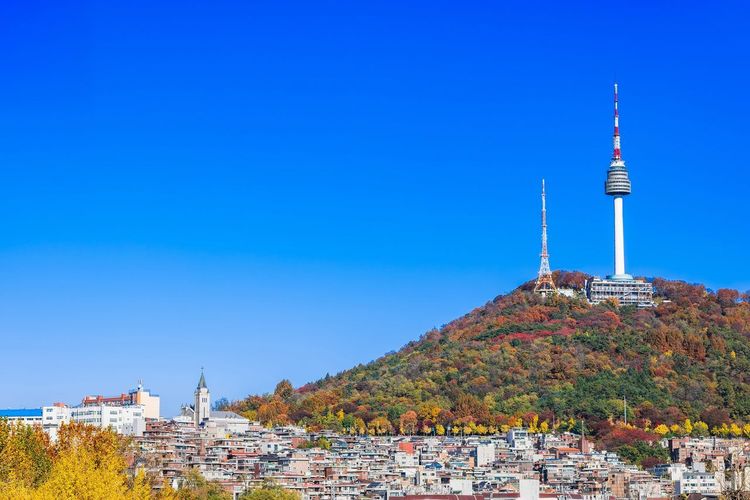
Seoul has built up a small industry around milestone dates. Proposal spots and engagement photography cluster around the most photogenic viewpoints covered above, Namsan's observation deck and Naksan Park especially, and several photography studios in Gangnam specialize in engagement shoots booked around a proposal, arriving discreetly to capture the moment.
Anniversary celebrations in Seoul lean toward the rooftop restaurants and hanjeongsik dining rooms covered above, many of which offer a small dessert or flower arrangement if you mention the occasion when booking. Korean couples also celebrate their own calendar: the 100th day of a relationship, Pepero Day on November 11th, when couples exchange the cookie-stick snack the date resembles, and White Day on March 14th. If your trip lines up with one of them, you will see the whole city lean into it.
17. Time Your Date Around Seoul's Seasons
Seoul's romantic calendar shifts hard by season, and when you visit changes what is worth prioritizing.
Cherry Blossoms and Spring Picnics
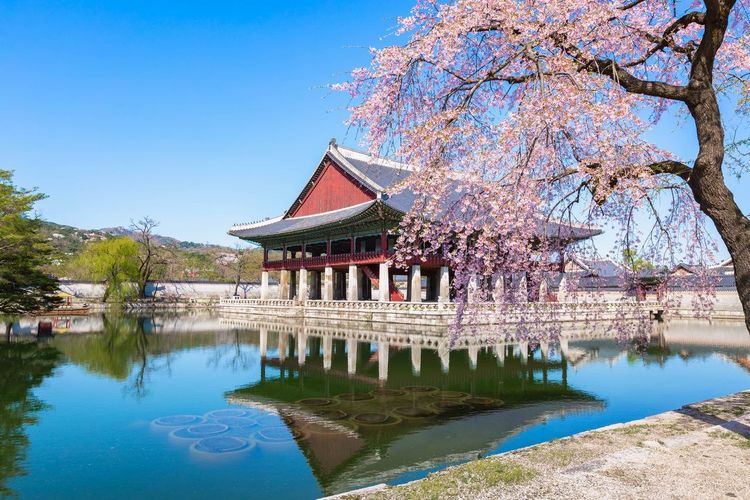
Spring, roughly late March through mid-April, brings the cherry blossoms that line Yeouido's Yunjungno road, Seokchon Lake and much of the Han River parks in white and pink for about ten days, a narrow window worth checking forecasts for. Ryo's guide to Seoul's cherry blossom season tracks the festival dates and the quieter viewing spots away from the Yeouido crowds.
Winter Lights and Ice Rinks
Winter brings the opposite mood: Lotte World's indoor rink, the Grand Hyatt's seasonal outdoor one, a public rink that usually opens each December in front of Seoul City Hall, and light festivals like the one at the Garden of the Morning Calm. Day trips run year-round, though Art Valley's monorail and some excursions adjust hours in the coldest months, so confirm ahead.
Summer trades crowds for humidity: the Han River parks and rooftop bars stay lively past 10 p.m. because the heat does not break until then. Autumn, October into early November, turns Naksan Park, Nami Island, and the Garden of the Morning Calm into some of the best foliage viewing in the country, generally with smaller crowds than spring.
18. Get Around Seoul Easily as a Couple
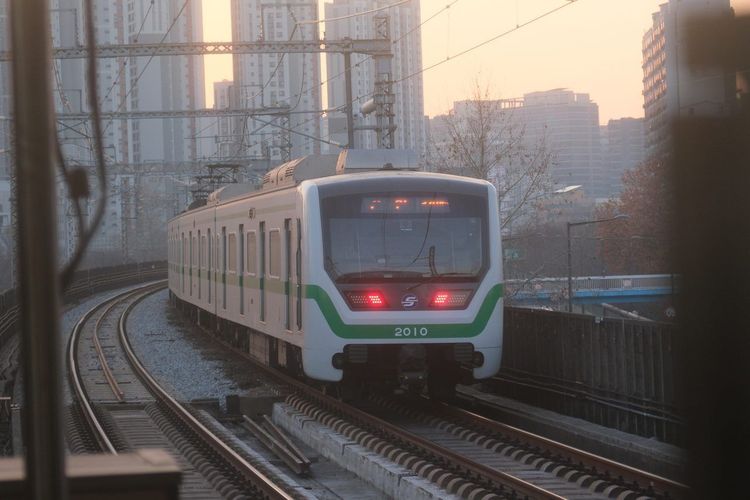
Using public transportation for date nights in Seoul is simpler than most first-time visitors expect: a T-money card, sold at any convenience store and topped up the same way, covers the subway, city buses, and most taxis, and transfers between subway and bus within 30 minutes are free. The subway runs until around midnight, which covers nearly every evening itinerary in this guide without a car.
For destinations outside the subway grid, Nami Island, Pocheon, Everland, a rental car or a scheduled tour shuttle covers the gap; taxi apps work reliably within the city but get expensive once you head out of greater Seoul. To figure out which neighborhoods pair naturally, Ryo's guide to Seoul by district breaks the city down by area, useful for grouping a few stops from this list into a single walkable loop.
19. Find Free and Budget-Friendly Romantic Spots
If you are planning around free things to do in Seoul, more than half of this list costs nothing at all: Namsan's summit and the walk up to it, Naksan Park's fortress-wall sunset, the Banpo Bridge fountain show, Cheonggyecheon's stepping stones, Bukchon and Seochon's alleys, Ihwa's mural staircases, the National Museum of Korea, and Gyeongbokgung's guard ceremony.
Among the best date spots in Seoul for a tight budget, a Han River picnic with convenience-store food and a bike rental rarely runs past 15,000 won for two, and a noraebang room splits down to a few thousand won per person. Save the entrance fees, N Seoul Tower, the palaces, the theme parks, for the one or two experiences that matter most to you, and build the rest of the day around what is already free.
20. Look Down on the City From Lotte World Tower's Seoul Sky
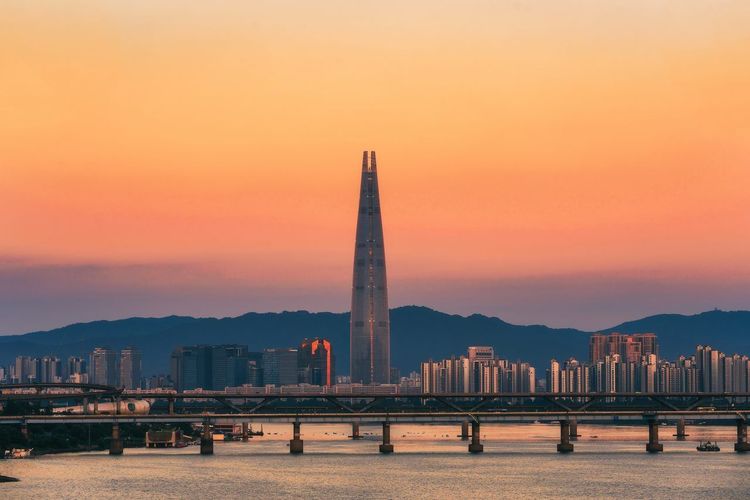
Namsan has the history; Lotte World Tower (300 Olympic-ro, Songpa-gu, Seoul, rated 4.4/5 on Google (51 242 avis)) has the height. At 555 meters and 123 floors, it is the tallest building in Korea, and its Seoul Sky observatory occupies the top floors, from 117 up. The attraction couples queue for is the glass-floored Sky Deck, where you stand, or try to, with nothing but a transparent panel between you and the Jamsil streets roughly 500 meters below.
Tickets cost around 30,000 won per adult, and the sweet spot is the last hour before sunset, when you watch the Han River bridges switch on from above. A cafe near the top lets you stay through dusk without rushing. At the foot of the tower, Seokchon Lake loops for about 2.5 kilometers around the Lotte World theme park and is one of the city's prettiest cherry blossom walks in early April, a free epilogue after the paid view.



FAQ
Where can couples go for a romantic evening in Seoul?
Namsan Mountain and N Seoul Tower cover the classic version: sunset views followed by dinner or drinks with the skyline in view. For something less crowded, Naksan Park's sunset over the fortress wall or a Banpo Bridge fountain show followed by a riverside walk both deliver the same mood with a fraction of the queue, and neither requires a ticket.
Is Han River romantic at night?
Yes, and it is arguably the most locally popular answer on this whole list. Between the E-Land cruise, the Banpo Bridge fountain show, and the string of riverside parks lit up after dark, the Han River draws more first dates and anniversary walks than any single landmark in the city.
What are the best views for a date in Seoul?
Lotte World Tower's Seoul Sky is the highest and N Seoul Tower the most famous, but Naksan Park, the Han River promenade near Banpo, and the rooftop bars of Itaewon and Euljiro all offer strong alternatives without the ticket line, several of them free and open later into the evening.
How do couples get around Seoul for romantic dates?
A T-money card covers the subway and buses for nearly everything within the city, with the subway running until close to midnight. For day trips like Nami Island or Pocheon, a rental car or a scheduled shuttle tour is more reliable, since public transit connections out that far are slower and less frequent.
What traditional Korean experiences work well for couples?
Renting a hanbok for a palace visit, sharing a hanjeongsik set meal, and grilling Korean barbecue over shared tongs all work well because they are built around two people. A noraebang session afterward, singing badly in a private room, rounds out a distinctly local evening.
Are there romantic activities in Seoul during different seasons?
Very much so. Spring brings a narrow cherry blossom window along the Han River, summer keeps rooftop bars and river parks lively past 10 p.m., autumn turns Naksan Park and Nami Island into prime foliage viewing, and winter brings ice rinks and light festivals like the one at the Garden of the Morning Calm.
What does Hongdae girl mean?
It is a slang term, mostly used online, describing a style associated with the art-school crowd around Hongdae: often streetwear-influenced, a little edgier than the polished Gangnam look. It is more cultural shorthand than an official category, and it says more about the neighborhood's youthful energy, the same energy that fills its streets with buskers after dark, than about any one person.
Planning Your Romantic Seoul Trip
Twenty entries is a lot for one trip, and that is rather the point: Seoul does not reward couples who try to see everything in three days, it rewards the ones who pick a neighborhood, slow down, and let an afternoon run long. Start with whichever mix suits your pace, a sunset from Namsan, a quiet hanok alley, a river picnic, and build outward from there.
To hear the history and legends as you walk instead of stopping to read plaques, the Ryo Seoul audio-guided tour covers many of the stops above in a single self-paced route, no group to keep up with, no schedule to match beyond your own. However you piece the city together, Seoul's version of romance tends to reward the couples who wander a little further than the itinerary suggests.
À lire également