© Shutterstock
 Votre guide Ryo
Visiting Valencia (Spain) in 3 Days: Complete 2026 Itinerary
Visiting Valencia in 3 days — Valencia as the Spanish call it, and València in Catalan — is the ideal format for moving from the flamboyant Gothic of the Lonja de la Seda to the futuristic curves of the City of Arts and Sciences without ever racing against the clock. The former riverbed of the Turia, diverted after the devastating flood of 1957, now runs through the city as a 9-kilometer garden that seamlessly connects the old town to Santiago Calatrava's white towers. To frame each stage, the Ryo audio-guided tour of Valencia maps out this very itinerary between medieval heritage and contemporary architecture, with commentary in your ear.
Three days is plenty. A covered Art Nouveau market where fish is still auctioned before 10 a.m. An aquarium home to the largest dolphinarium in Europe. A rice-growing lagoon classified as a nature reserve where the real paella was born, just a stone's throw from the city center. Two urban beaches connected by over 8 kilometers of pedestrian seafront. Add a cathedral that claims to hold the Holy Chalice used at the Last Supper, 14th-century defensive towers still pitted with cannonball marks, and a neighborhood — Ruzafa — where tapas bars rub shoulders with delicatessens. Here, day by day, is everything you need to fill a stay in Valencia with no dead time and no box ticked just for the sake of it.
Day 1: The Historic Center of Valencia
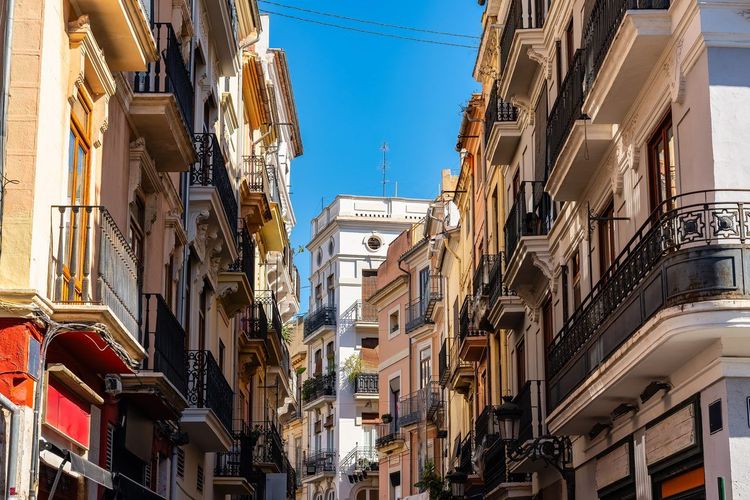
Dedicate this first day to the medieval core of the city, a compact area you can cover entirely on foot, with four stops that follow one another in under ten minutes' walk. The Ryo audio guide comments on each stop in the logical order of a stroll, avoiding unnecessary back-and-forth between monuments just three streets apart.
Mercado Central and Lonja de la Seda
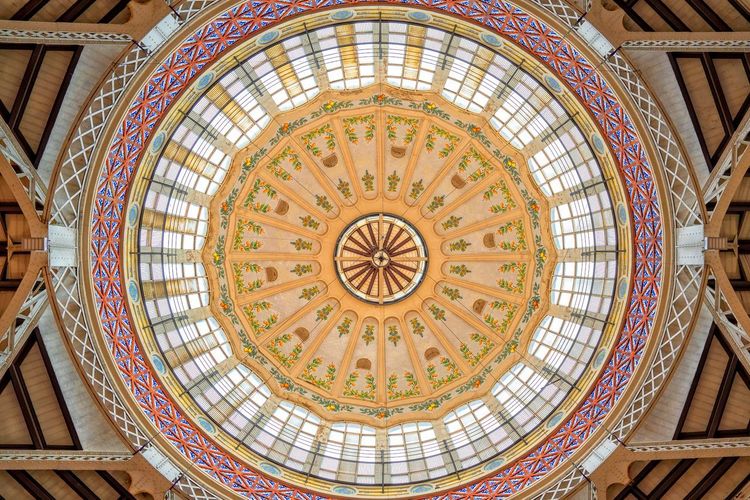
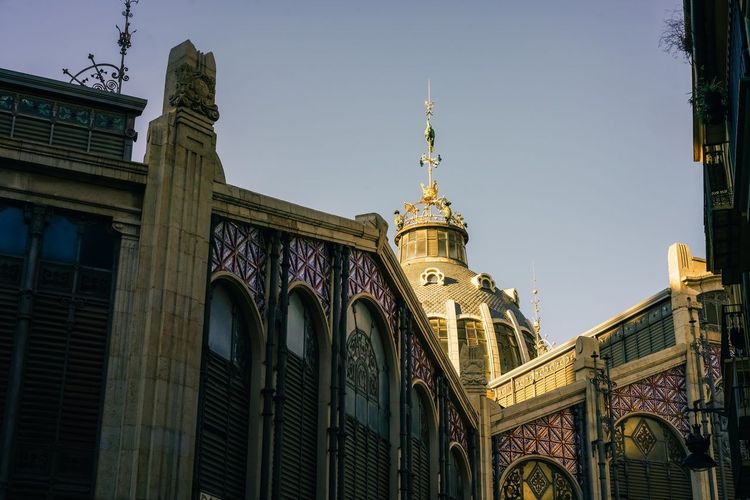
The Mercado Central opened its doors in 1928 beneath an Art Nouveau roof of iron and colored glass, one of the largest covered market halls in Europe with more than 900 stalls. The fishmongers are still calling out the day's prices around 9:30 a.m., before tourist groups invade the central aisles. Plan to spend thirty minutes there, basket or not: it's also the best place to taste a freshly squeezed orange juice for under 2 euros or a slice of Iberian ham straight from the producer. The market is closed on Sundays and in the early afternoon — schedule your visit between 8 a.m. and 2 p.m. to see it in full swing.
Just across the street, the Lonja de la Seda (Silk Exchange), a UNESCO World Heritage Site since 1996, impresses with its trading hall — a forest of twisted columns 17 meters high that once presided over the transactions of silk merchants. The visit takes about twenty minutes and costs 2 euros, with free entry on Saturday afternoons and Sundays, as with most of the city's municipal monuments. Just behind it, the Church of Sant Joan del Mercat completes this merchant triangle with its 18th-century Baroque façade and its interior restored after a fire during the Civil War — less visited than its neighbors but just as steeped in commercial history.
Valencia Cathedral, Micalet Tower, and the Holy Chalice
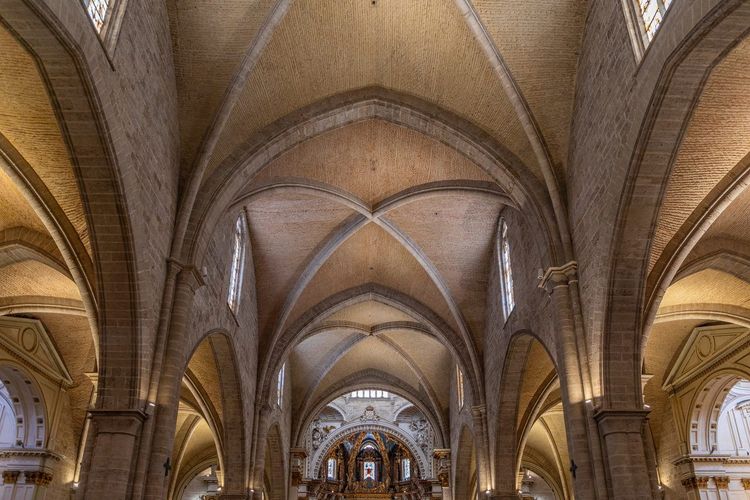
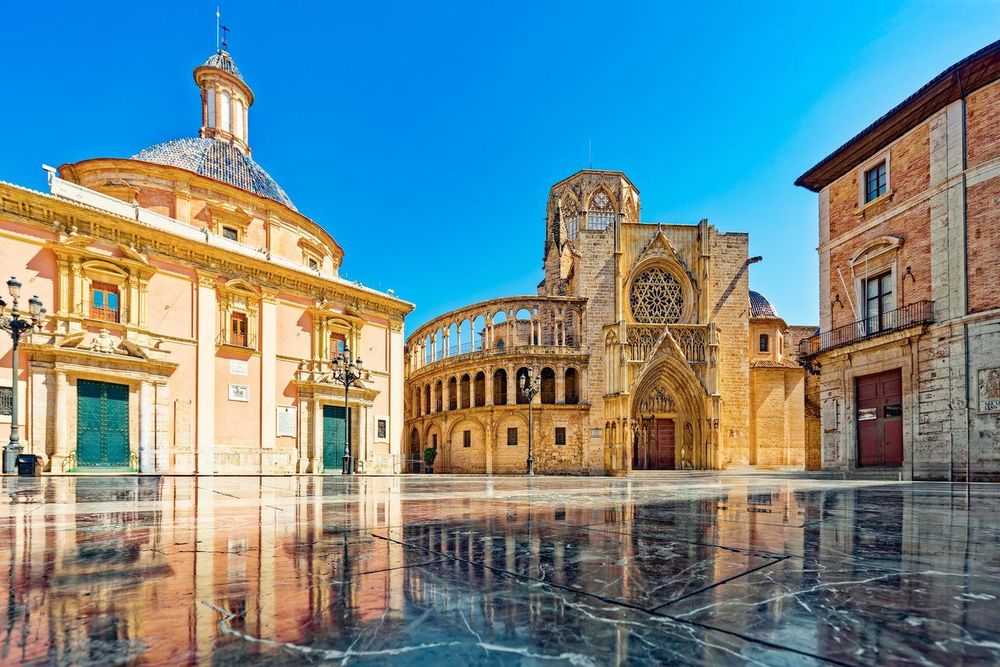
Ten minutes' walk away, Valencia Cathedral blends Romanesque, Gothic, and Baroque styles across eight centuries of successive construction phases, built on the site of a former mosque that itself stood on a Roman temple. Its Chapel of the Holy Chalice houses an agate cup that tradition identifies as the chalice used at the Last Supper. The Vatican has never ruled on its authenticity, but two popes used it during celebrations in Valencia — John Paul II in 1982 and Benedict XVI in 2006 — which is enough to draw pilgrims to its display case year-round.
Then climb the 207 steps of the Micalet tower (also known as the Miguelete), the octagonal bell tower attached to the cathedral: the panoramic view over the tiled rooftops and, on a clear day, the sea and surrounding mountains, is well worth the effort and the few euros for the ticket, purchased separately from the cathedral entrance. The spiral staircase is narrow and awkward to pass through during peak hours — another good reason to head up early in the morning. Nearby, the Church of San Nicolás de Bari y San Pedro Mártir, nicknamed the Valencian Sistine Chapel since the restoration of its Baroque frescoes completed in 2016, is worth a ten-minute detour despite its separate entrance fee.
Plaza de la Virgen and Plaza del Ayuntamiento
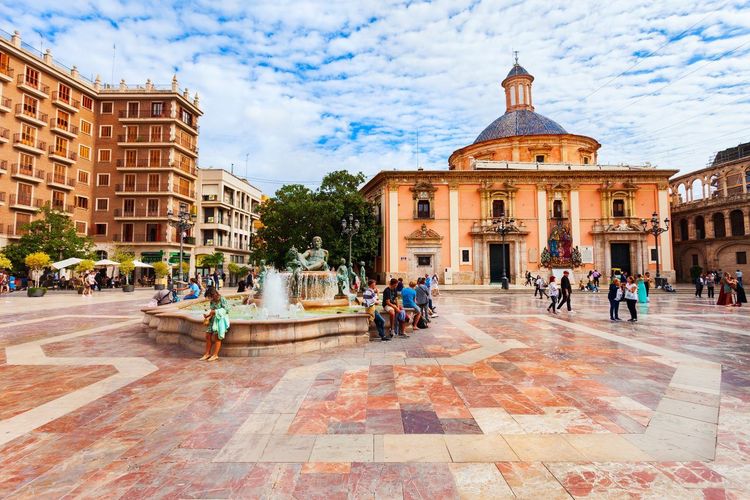
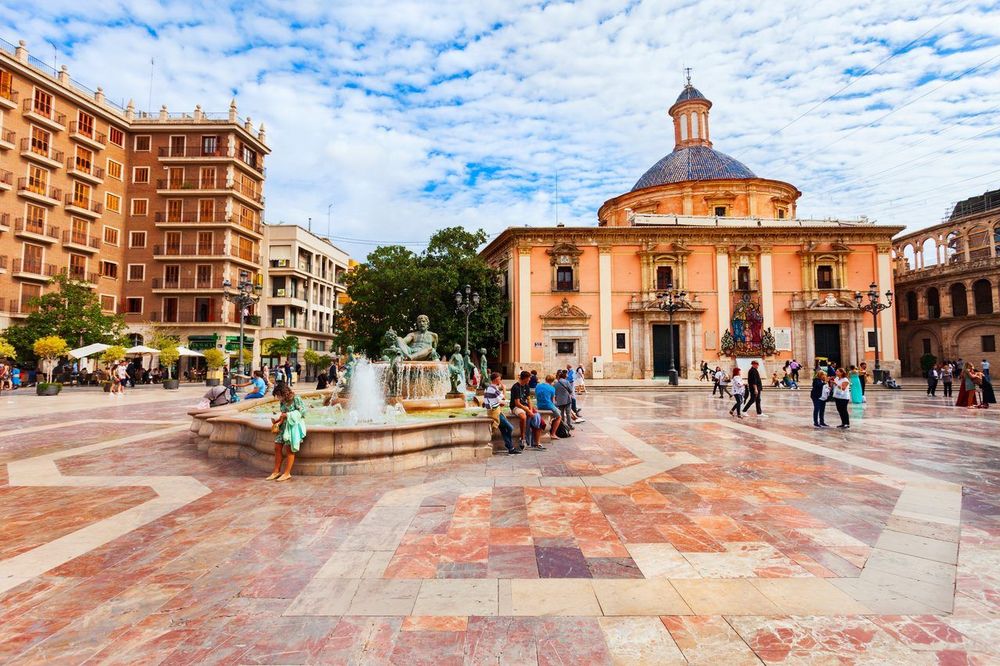
The Plaza de la Virgen, paved and lined with terraces, takes its name from the Basilica of the Virgin of the Forsaken that closes one side of it. This is where the Water Tribunal meets every Thursday at noon — the oldest court still in active operation in Europe, which has been settling irrigation disputes among farmers of the huerta since the Middle Ages without ever leaving a written record, relying solely on oral tradition. The session rarely lasts more than a few minutes and takes place in front of the Cathedral's Apostles' Door: arrive around 11:45 a.m. if you want to watch up close; it is listed as UNESCO Intangible Cultural Heritage.
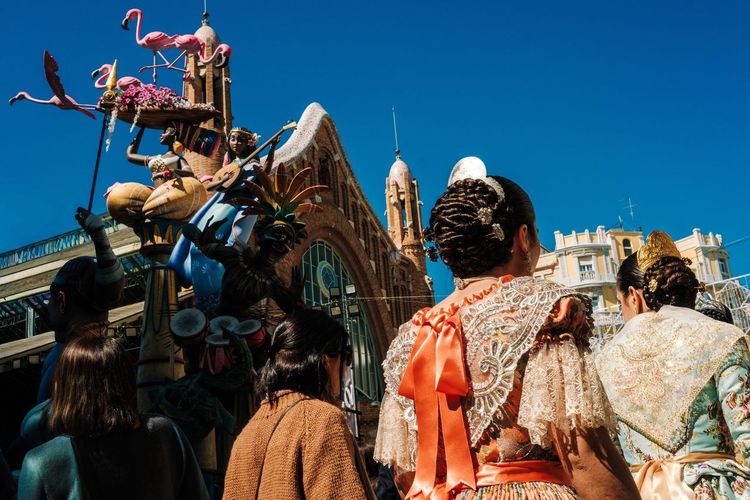
Heading south, the Plaza del Ayuntamiento, a vast square flanked by the city hall and its iconic clock, serves as the backdrop for the Fallas every March, when it hosts the mascletà — a firecracker concert set off every day at 2 p.m. from March 1 to 19. Along the way, a detour through the Plaza Redonda (Plaça Redona, 46001 Valencia, rated 4.3/5 on Google with 5K reviews), this circular square covered in the 19th century and long reserved for the sale of fabrics, offers a shady pause to browse souvenir shops, lace, and local ceramics before heading on to the city hall.
Barrio del Carmen: Historic Lanes, Torres de Serranos, and Torres de Quart
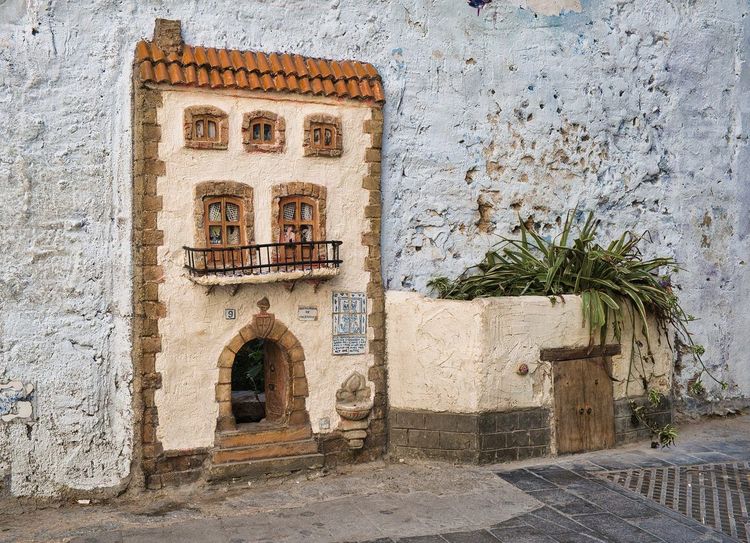
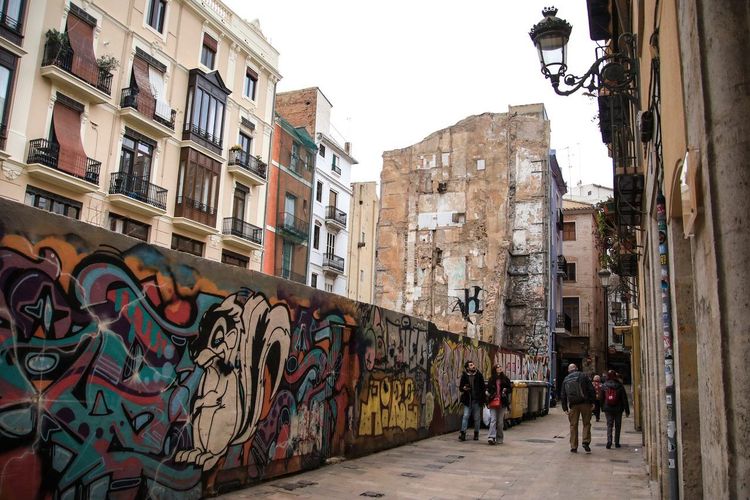
The Barrio del Carmen rounds off this first day. Its maze of narrow lanes, inherited from the city's Muslim street layout, alternates crumbling façades covered in street art with Gothic palaces restored as contemporary art galleries. Get lost in it without a set route in the late afternoon: it's the best way to find the finest vermouth bars, where vermouth is traditionally served with an olive and a dash of soda.
At either end of the neighborhood stand the Torres de Serranos, a fortified city gate built from 1392 and one of the best-preserved in Spain, and the Torres de Quart, riddled with cannonball marks dating from Napoleon's 1808 siege. Both can be visited for a few euros — free at weekends like the other municipal monuments — and offer an unobstructed view from the top over the Turia garden below and the rooftops of the historic quarter. Allow a good hour for both, at the end of the day when the low-angled light flatters the ramparts. The Ryo audio-guided tour links these towers with Plaza Redonda a short walk further into the old town.
Day 2: City of Arts and Sciences, Marina, and Beaches
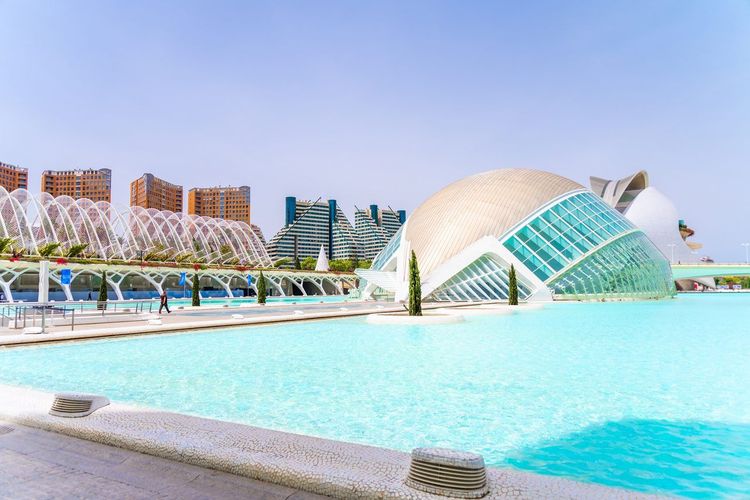
Second day, head southeast into 21st-century architecture. Allow a full day if you're visiting the Oceanogràfic in detail, or half a day if you'd rather focus on the exteriors, the marina, and the coastline.
The City of Arts and Sciences: Oceanogràfic, Hemisfèric, and Umbracle
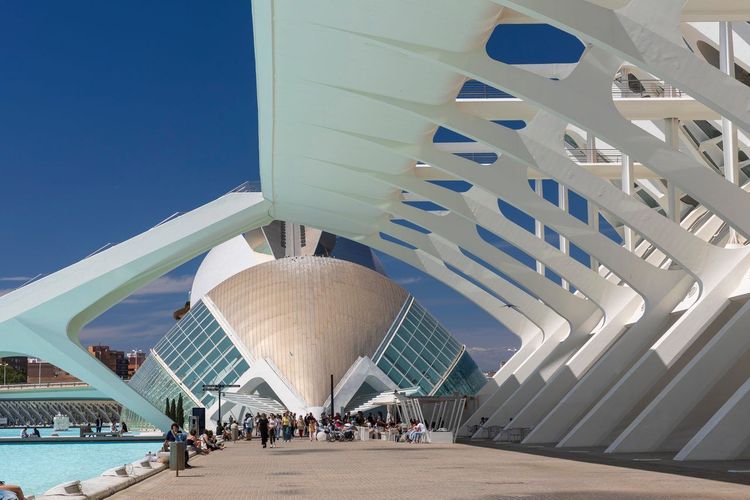
The City of Arts and Sciences, designed by Santiago Calatrava and Félix Candela, spreads across around 350,000 m² at the end of the Turia garden, on the exact course of the former riverbed. The complex brings together several futuristically designed buildings: the Hemisfèric, a giant eye-shaped planetarium inaugurated in 1998; the Palau de les Arts Reina Sofía dedicated to opera, whose structure rises over 70 meters; the Museu de les Ciències, whose framework evokes a whale skeleton; and the Umbracle, a raised landscaped walkway from which you can photograph the entire complex without buying a single ticket.
The highlight of the visit remains the Oceanogràfic, the largest aquarium in Europe with around 45,000 marine animals spread across some ten distinct ecosystems, from the Arctic to the Red Sea via tropical mangroves. Its dolphinarium, the largest on the continent, holds several daily presentations whose schedules vary by season. Allow a full half-day to explore it at a leisurely pace, and book your tickets online: queues at the physical ticket offices in high season can easily exceed an hour, especially between 11 a.m. and 1 p.m. A combined ticket for the whole complex (Oceanogràfic, Hemisfèric, Science Museum) saves around twenty euros compared to separate entries — a worthwhile calculation as soon as you visit two out of three buildings.
For more ideas around this neighborhood, the Ryo article Top 6 Things to Do in Valencia details complementary ways to fill an entire day in the area.
Marina de Valencia and Veles e Vents
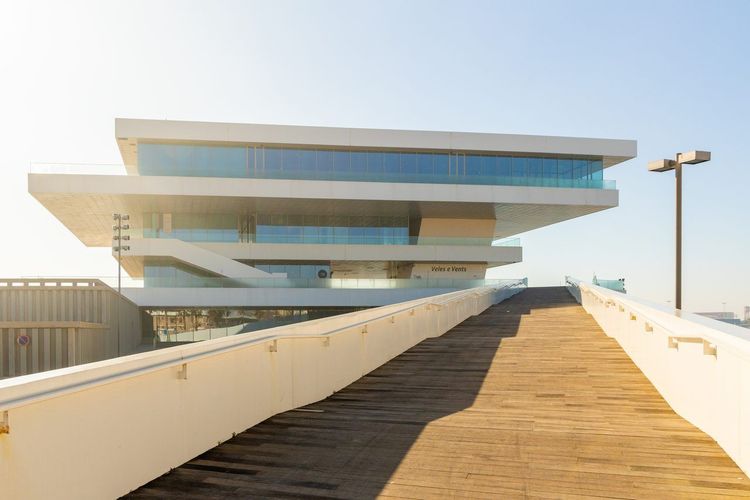
A 15-minute walk from the complex, the Marina de Valencia, a former industrial port redeveloped for the America's Cup hosted in 2007 and again in 2010, now lines up restaurants and pleasure yachts along wide wooden pontoons. The Veles e Vents building (Camí de les Moreres, s/n, 46024 Valencia, rated 4.3/5 on Google with 10,318 reviews), a structure with cantilevered floors designed by David Chipperfield and Fermín Vázquez for that same America's Cup, serves as a free lookout point over the bay: head up to the top level in the late afternoon for the low light playing on the water and the boats moored below.
In season, several operators offer one-hour catamaran trips out into the bay — a pleasant alternative if the beach feels too predictable. Restaurants at the marina charge higher prices than in the historic center: save them for dinner rather than a quick lunch between visits.
Urban Beaches: Malvarrosa and Las Arenas
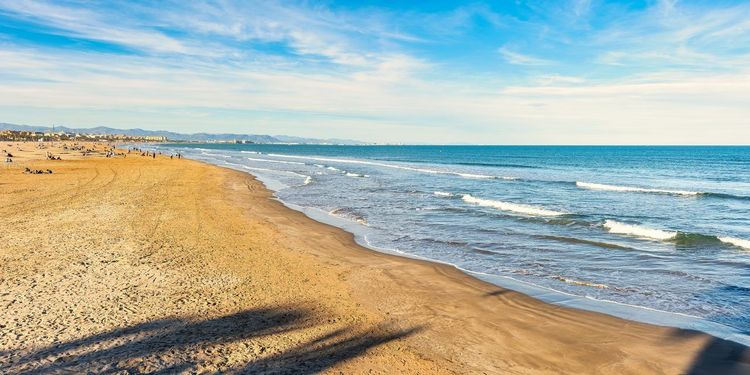
Continuing on foot or by tram along the seafront, you reach Valencia's urban beaches. Malvarrosa beach, over 3 kilometers of fine sand lined with chiringuitos, retains the laid-back atmosphere inherited from the fishing families who occupied it last century, before seaside tourism transformed the seafront. Just to the south, Las Arenas beach concentrates the city's most acclaimed hotels and paella restaurants, with a long promenade ideal for a sunset stroll away from the crowds of the historic center.
Both beaches have showers, staffed lifeguard posts in season, and a continuous cycle path. You can reach this stretch of coastline directly from the historic center by cycling through the Turia garden — about 25 minutes of easy pedaling along the former riverbed turned into the city's green lung. Occasional surfers will also appreciate the few paddle schools set up at the far end of the beach on the Las Arenas side.
Day 3: Albufera Natural Park and Bioparc
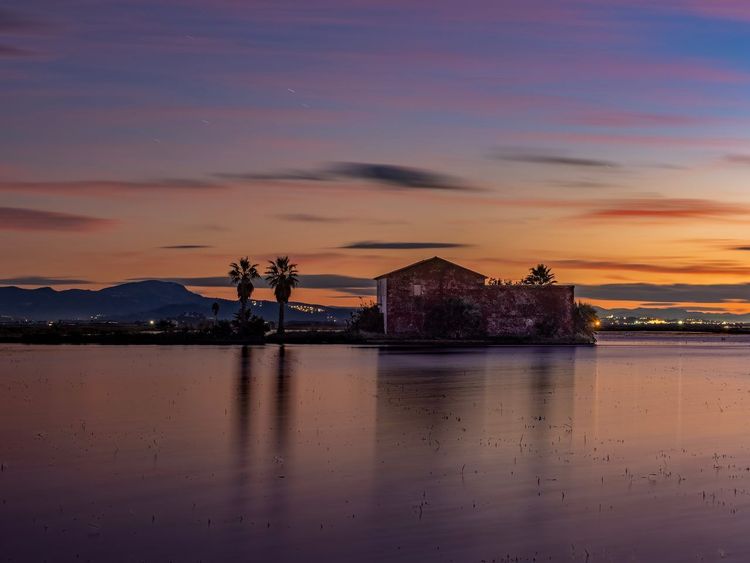
Third and final day, head out to the countryside, about thirty minutes from the center by bus, to discover the rural, agricultural side of Valencia.
Boat Trip on the Albufera and Sunset
The Albufera Natural Park, Spain's largest freshwater lake and a wetland of international importance under the Ramsar Convention since 1989, extends over more than 21,000 hectares south of the city, separated from the sea by a strip of wooded dunes known as the Devesa. A trip in a traditional flat-bottomed boat — the albuferenc used by the lake's fishermen — lets you glide silently through the reed beds where herons, coots, and occasionally flamingos stop during migration. Book your slot several days in advance in high season: the evening departures, timed to the sunset that has made the spot famous among photographers, fill up first and are sold out by midday.
Allow about an hour on the water for between 8 and 12 euros per person depending on the embarkation point — El Palmar being the most popular — while the free Racó de l'Olla interpretation center usefully rounds out the outing with its ornithological observatory on stilts. The Albufera Bus Turístic connects the city center to the main boat departure points — a practical option if you're traveling without a car and don't want to rely on standard bus schedules, which are less frequent on Sundays.
El Palmar and the Original Paella Valenciana
The village of El Palmar, set on the lakeside amid rice fields, claims to be the birthplace of paella valenciana, prepared here for generations using rice grown on the surrounding plots and harvested each autumn. The family-run restaurants lining the main street serve the traditional recipe with rabbit and chicken, sometimes with snails — a far cry from the seafood versions found elsewhere in Spain, which carry no historical legitimacy here.
Beyond paella, some addresses also offer all i pebre, a lake eel stew flavored with garlic and mild chili — a more rustic dish but equally representative of Albufera cooking. Book a table in the late morning to combine lunch with an afternoon boat trip: the best spots are fully booked by 1 p.m. on weekend lunchtimes in season.
Bioparc Valencia
On the way back to the center, Bioparc Valencia (Av. Pio Baroja, 3, 46015 Valencia, rated 4.6/5 on Google with 59,656 reviews) takes an immersive zoo approach: around ten hectares with no visible bars or ditches, where African animals roam enclosures recreating savannas, tropical forests, and wetlands with no apparent barrier between them and visitors. The park participates in several European breeding programs for endangered species, notably lowland gorillas and Madagascar lemurs.
Allow three hours for the visit, more with children who will want to linger by the hippo viewing window or the semi-free-roaming lemur enclosure. Book your ticket online to avoid the summer queue, which is particularly long in the morning between opening time and noon. The park closes earlier out of season — check the opening hours before planning your entire afternoon around the visit.
Parks and Gardens of Valencia
Turia Garden and the Bridge of Flowers
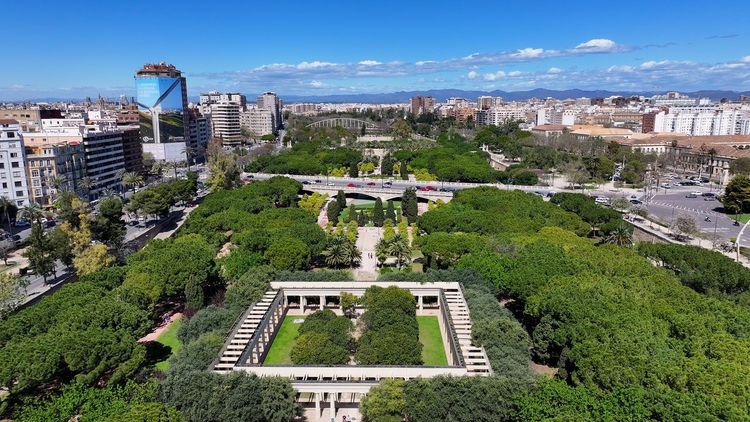
Nine kilometers long, the Turia garden occupies the former riverbed diverted after the 1957 flood that submerged much of the city and claimed dozens of lives. Runners, cyclists, and families cross paths here from morning to evening on lawns dotted with playgrounds, sports courts, fountains, and a botanical garden near the university. The Bridge of Flowers (Puente de las Flores), permanently decorated with seasonal flower beds renewed several times a year, remains one of the most photographed spots along the route, halfway between the Aragón bridge and the Real bridge, a few minutes' walk from the Mercado de Colón.
Jardines del Real and Jardin de Monforte
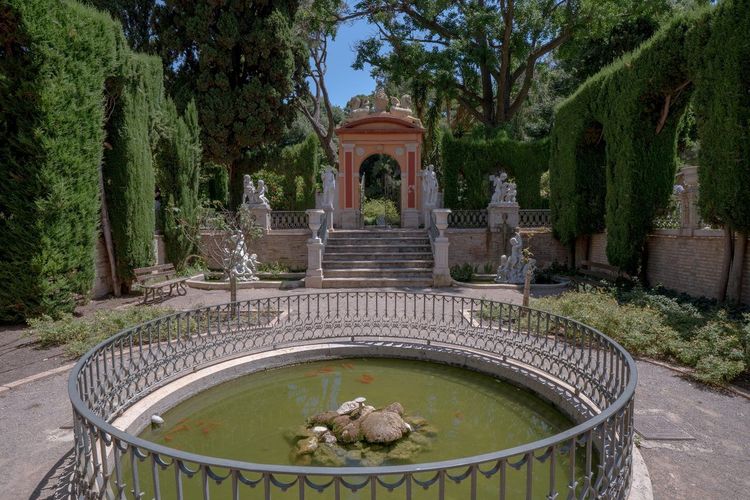
North of the historic center, the Jardines del Real, also known as Viveros, form the city's oldest public garden, with its avenues of century-old trees, rose garden, and small aviary, all free to visit. Ten minutes' walk away, the Jardin de Monforte (C/ de Monforte, 4, 46010 Valencia, rated 4.7/5 on Google with 7,303 reviews), more intimate and in neoclassical style, lines up marble statues, topiary cypresses, and ornamental pools in a spirit directly inspired by 19th-century Italian gardens. Free entry to both gardens makes them a pleasant break between museum visits, especially during the hottest hours of the afternoon thanks to the shade of the canopies. Do check the Monforte's opening hours though — they are more restricted than those of the Viveros and often shortened late in the day.
Parc de Cabecera
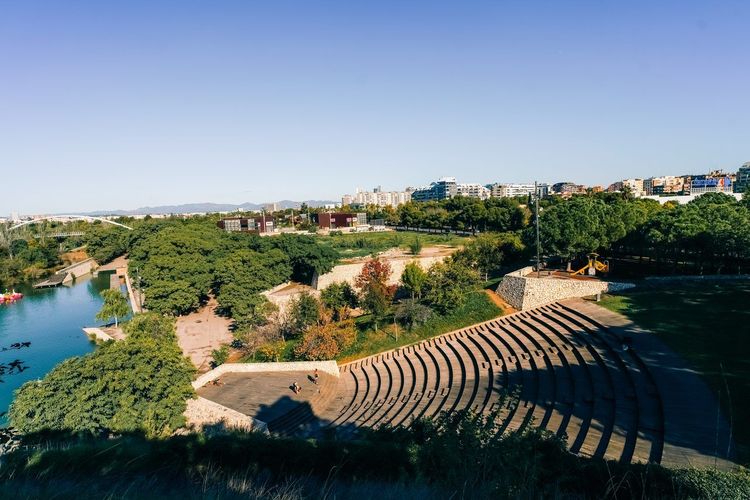
Further out, Parc de Cabecera marks the western end of the Turia garden, where the diverted river used to flow before entering the city, centered on a large artificial lake created on former gravel pits. Rowboats and pedalos can be hired to drift across the water, dominated by an artificial hill developed as a viewpoint from which you can see across the entire western part of the city. The Bioparc sits directly next to the site: the two can easily be combined in the same half-day if you're traveling with family and want to avoid an extra metro round trip.
Neighborhoods to Explore: Ruzafa and El Cabanyal
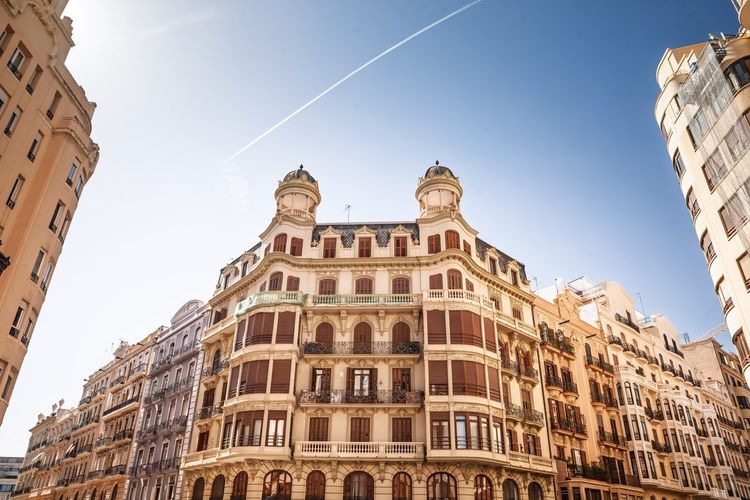
Beyond the must-see sights, two neighborhoods concentrate Valencia's contemporary energy and each deserve a free half-day in your itinerary. The Ryo audio-guided tour of Valencia also covers these more residential areas, often overlooked by express visits that focus solely on the tourist triangle.
Ruzafa, the Trendy Neighborhood and Its Addresses
Ruzafa, a former farming village absorbed into the city in the 19th century, has transformed over the past decade into one of Valencia's most creative neighborhoods. Its grid of streets, away from the main tourist thoroughfares, houses a record density of art galleries, independent bookshops, and natural wine bars that didn't exist ten years ago. The Mercado de Colón (C/ Jorge Juan, 19, 46004 Valencia, rated 4.5/5 on Google with 47,453 reviews), a Modernista market built in 1916 by architect Francisco Mora, now serves as a gourmet hall where you can nibble tapas and sip a horchata beneath a listed glass roof — a far more elegant setting than a typical neighborhood market.
The Mercado de Ruzafa, a much more modest and far less touristy neighborhood market, remains the best place to watch local life in the morning, between fruit stalls and fish counters. Come back to Ruzafa in the late afternoon rather than at lunchtime: the terraces fill up after 7 p.m. and the atmosphere builds steadily into the night, with a noticeably more local crowd than in the historic center.
El Cabanyal, Former Fishing Village
On the opposite side of the center, El Cabanyal retains the street layout of a fishing village also annexed to Valencia, recognizable by its low houses covered in colorful azulejos, each one decorated differently from its neighbor according to an early-20th-century working-class tradition. Long threatened with demolition by an avenue extension project eventually abandoned after fifteen years of residents' campaigning, the neighborhood has since been largely renovated without losing its character: artists' studios, specialty coffee shops, and old fishermen's taverns still coexist in the same narrow lanes.
It's also the most direct gateway to the urban beaches mentioned on Day 2, less than ten minutes' walk from the sand. The Cabanyal market, more modest than the Mercado Central, is still a good place to observe neighborhood life away from organized tours.
What to Eat in Valencia: Paella and Local Specialties
Paella Valenciana and Agua de Valencia
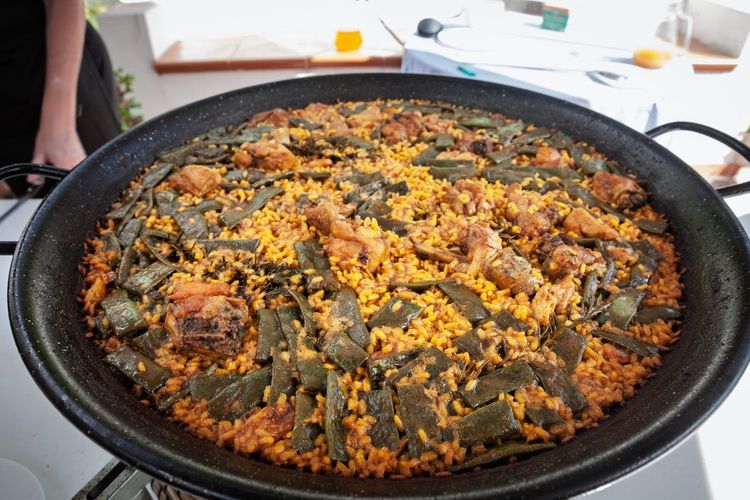
The authentic paella valenciana is made with rabbit, chicken, flat green beans (ferradura), and large white beans (garrofón) — never with seafood, contrary to a misconception widely held outside Spain. It is traditionally cooked at lunchtime over an orange-wood fire, in a wide, shallow pan that gives the dish its name, and finished with the socarrat, the thin caramelized rice crust at the bottom of the pan that aficionados fight over. Be wary of restaurants serving it in individual pre-plated portions: it's often a sign that it was prepared in advance for tourists rather than made to order, which normally takes at least twenty minutes.
For aperitif, agua de Valencia blends cava, freshly squeezed orange juice, vodka, and gin in proportions kept secret by each bar. Born in the late 1950s at the Café Madrid, it's ordered by the pitcher to share rather than by the glass, and goes well with a first round of tapas before dinner. It goes down fast and is stronger than it seems: a pitcher for two is more than enough before a night out in Ruzafa.
Tapas and Markets (Mercado Central, Mercado de Colón)
Between sightseeing, Spanish-style tapas are eaten standing at the counter in bars across the center or in Ruzafa. Order individually rather than from a set menu: it's the most economical way to sample several specialties without overspending — budget 2 to 4 euros per tapa depending on the place and the neighborhood. Esgarraet (roasted red peppers with shredded salt cod) and clóchinas (small local mussels, in season from May to August) are among the lesser-known must-tries for passing visitors.
The Mercado Central and the Mercado de Colón, already encountered along the way, also stock the finest local products to take away: hand-carved Iberian ham, huerta cheeses, citrus fruit picked the day before from nearby groves. A smart move to put together a picnic before heading to the Turia garden or a beach rather than sitting down in a tourist restaurant.
Horchata and Sweet Treats
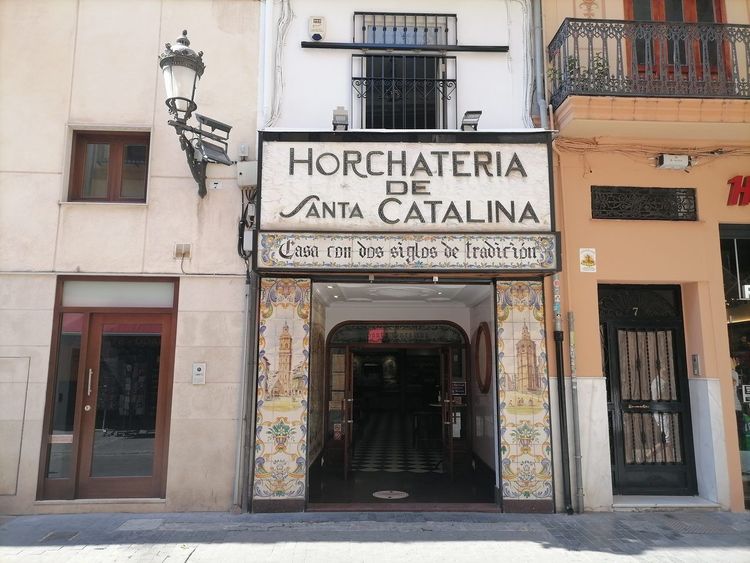
Horchata, a refreshing drink made from tiger nuts (chufa) grown in the Alboraya area just north of the city, is served ice-cold with fartons — lightly sweetened, elongated pastries made for dipping. The historic Horchatería Santa Catalina, near the cathedral, has been serving it since the 19th century in a setting of period tilework. On the sweet side, don't miss the buñuelos de calabaza, pumpkin fritters sold in the street in winter and especially during the Fallas, or the almond turrones available year-round at covered market stalls.
Where to Stay in Valencia
Historic Center (Ciutat Vella)
Staying in the historic center puts all of Day 1's sights within walking distance — a real time-saver on a three-day trip. It's also the liveliest area in the evening, and potentially noisy on weekend nights: opt for a higher floor or a courtyard-facing room if you're sensitive to the sound of terrace crowds. Expect to pay between 70 and 130 euros a night for a well-located 3- to 4-star hotel outside high season — slightly less in the Xerea area, quieter than Carmen while remaining central.
Ruzafa and City of Arts and Sciences
For a more local atmosphere and affordable bar prices, Ruzafa offers an excellent compromise: ten minutes by metro from the historic center, around twenty on foot from the City of Arts and Sciences. Families with children may prefer to stay near the Marina or the beaches, accepting a few extra minutes' travel to the old town each morning in exchange for direct beach access at the end of the day. Ruzafa rates are generally lower than those in the historic center for comparable quality — a difference that adds up over three nights. Avoid last-minute bookings in March though: during the Fallas, prices double and availability evaporates weeks in advance.
How to Get Around Valencia

Metro, Tram, and City Buses
Valencia's metro and tram network, operated by Metrovalencia, runs around ten lines covering most points of interest, including the airport in about 25 minutes from the center via lines 3 and 5. A single ticket costs between 1.50 and 2 euros in Zone A, but the rechargeable 10-journey pass, around 8 euros, quickly pays off from the second day of intensive sightseeing. City buses fill the gaps, particularly toward the Albufera — not served directly by any metro line — and certain residential neighborhoods poorly covered by rail. Worth noting: the historic center is entirely walkable, so you'll likely only need public transport for the City of Arts and Sciences, the beaches, and the Albufera.
Bike Sharing and Valencia Tourist Card
Valencia ranks among the most cycle-friendly cities in Spain thanks to its protected lane network, largely inherited from the Turia garden path that crosses the city from west to east. The Valenbisi service offers short-term bike hire with a week-long subscription costing around 13 euros, with rides under 30 minutes included — a worthwhile option if your hotel is out of the way or you'd rather avoid metro connections. To optimize your budget over 3 days, the Valencia Tourist Card comes in 24-, 48-, or 72-hour versions and combines unlimited transport with discounts or included entry to the main paid attractions, including the Oceanogràfic and Bioparc depending on the version chosen. Compare before buying: the card only makes financial sense if you visit at least two paid sites per day.
Budget and Best Time to Visit Valencia
Estimated Daily Budget
For a 3-day stay in Valencia, budget on average between 90 and 150 euros per day per person including accommodation, traveling as a couple or with friends in a 3- to 4-star hotel in the center. This range covers accommodation at around 80 euros a night for two, two meals including a paella and some tapas (30 to 40 euros per person), public transport for the day, and entry to one or two paid sites such as the Oceanogràfic, whose adult ticket runs around 40 euros. Hostel travelers eating on the go can easily stay under 60 euros a day, while a luxury stay in a 5-star hotel with fine dining restaurants can effortlessly exceed 250 euros per day. Good news for tight budgets: the Turia garden, the Umbracle, the municipal gardens, the Museum of Fine Arts, and the beaches are all free, and municipal monuments open without charge at weekends.
When to Go: Climate and Crowds
The best time to visit Valencia runs from April to June and September to October, when temperatures most often sit between 18 and 26°C without the oppressive heat of July and August, which regularly exceeds 32°C and makes outdoor sightseeing uncomfortable in the middle of the day. March remains a worthwhile option for the Fallas, Spain's most spectacular pyrotechnic festival with its firecrackers and papier-mâché monuments burned in public squares, provided you accept noticeably higher crowds and hotel prices than the rest of the year. In late October and November, keep an eye out for DANA-type torrential rain episodes, common along the Valencian coast at this time of year: the one on 29 October 2024 badly hit several municipalities on the southern outskirts, such as Paiporta or Catarroja, without affecting the historic center or the main tourist sites, which are functioning normally. If your trip falls in this season, monitor weather alerts and keep an indoor back-up day in reserve, between museums and covered markets.
To plan each stage of your stay with ease, the Ryo audio-guided tour of Valencia helps pace visits according to the city's actual geography rather than a theoretical order, avoiding unnecessary back-and-forth in the heat.
Museums, Family Activities, and Day Trips
Museum of Fine Arts and National Ceramics Museum
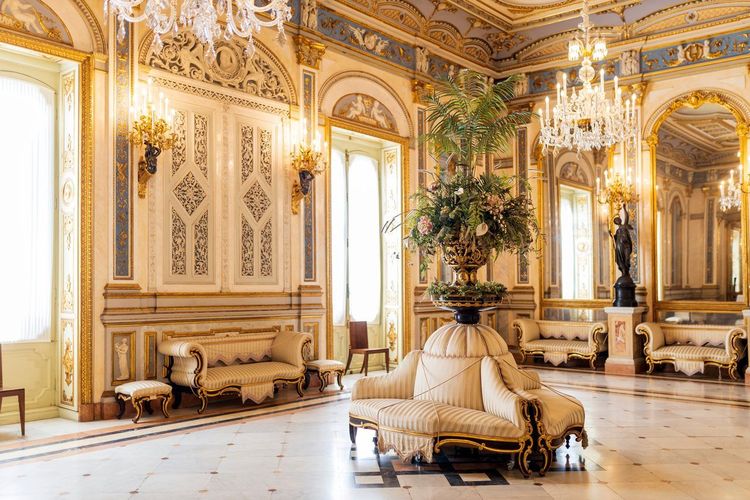
Valencia's Museum of Fine Arts, free and largely under-visited relative to the richness of its collection, holds paintings by Velázquez, Goya, El Greco, and a remarkable set of Valencian primitives, housed in a 17th-century former seminary right next to the Jardines del Real. A few streets from the Plaza de la Virgen, the National Ceramics Museum (C/ Poeta Querol, 2, 46002 Valencia, rated 4.5/5 on Google with 11,547 reviews) (González Martí), housed in the Palace of the Marquis of Dos Aguas with its spectacular sculpted façade, traces five centuries of Valencian ceramic production, from Manises earthenware to early-20th-century Art Nouveau tiles.
Activities for Families with Children
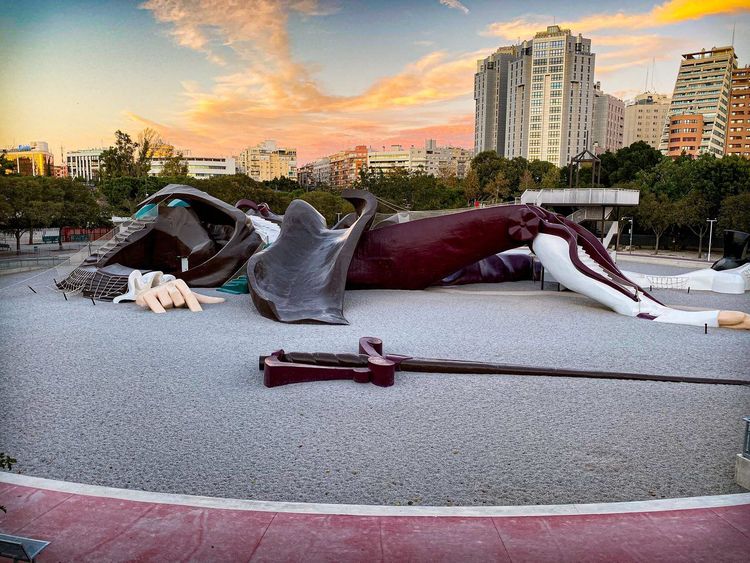
Beyond the Oceanogràfic and Bioparc, already reliable choices with children, Gulliver Park offers an enormous slide in the shape of a reclining character — free and in the open air in the Turia garden — where kids can climb and slide across the figure for hours. Families traveling with young children will also appreciate the small tourist train linking the main sights of the historic center, a restful option after a morning of walking, or the interactive exhibits at the science museum, one of the few museums where children are actively encouraged to touch rather than just look.
Day Trip Ideas from Valencia
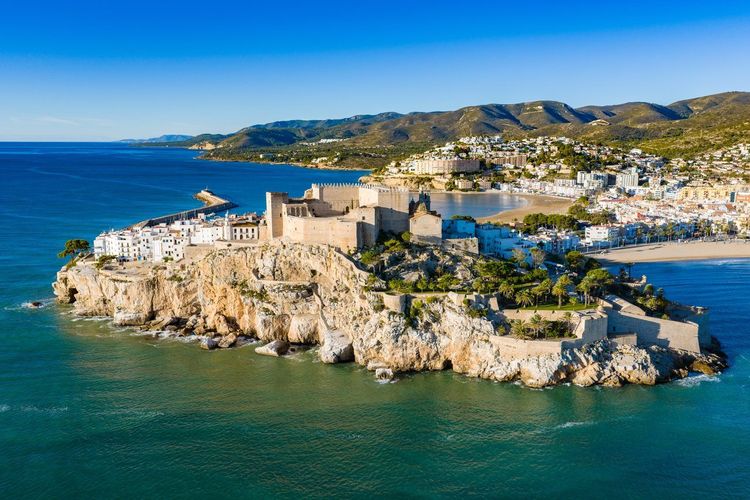
For those extending beyond 3 days, several excursions are doable in a day: Peñíscola and its medieval castle perched by the sea, about 1h30 by road; the Coves de Sant Josep in Vall d'Uixó for a boat ride through one of Europe's longest navigable underground rivers; or Xàtiva and its hilltop fortress overlooking the Valencian plain. Sagunto, with its Roman theater and castle layered along the ridge, can also be reached in around forty minutes by train from the city center for those who prefer a car-free excursion.

FAQ
How Many Days Do You Need to Visit Valencia?
Three days are enough to cover the historic center, the City of Arts and Sciences, and a trip to the Albufera without rushing. With two extra days, add Ruzafa, El Cabanyal, and a day trip to Peñíscola or Xàtiva.
What Budget Should You Plan for 3 Days in Valencia?
Budget between 90 and 150 euros per day per person, including accommodation, meals, and main entrance fees, for a comfortable stay in a 3- to 4-star hotel. Budget travelers can easily stay under 60 euros per day in a hostel eating on the go.
What Is the Best Time to Visit Valencia?
April–June and September–October offer the best weather, with temperatures between 18 and 26°C. March is interesting for the Fallas, provided you accept heavy crowds and higher hotel prices.
Should You Book the Oceanogràfic and the City of Arts and Sciences in Advance?
Yes, especially in high season: online tickets avoid queues that easily exceed an hour at the physical ticket offices, and combined tickets for the whole complex save around twenty euros.
How Do You Get Around Valencia Without a Car?
The metro, tram, and bus network covers most of the city, complemented by the Valenbisi bike-sharing service. The Valencia Tourist Card combines unlimited transport with discounts on the main paid attractions.
Where Should You Stay in Valencia for a 3-Day Trip?
The historic center puts all the main sights within walking distance. Ruzafa offers a more local atmosphere at slightly lower prices, while the Marina area is better suited to families who want the beach nearby.
What Should You Absolutely Eat in Valencia?
Paella valenciana with rabbit and chicken, agua de Valencia served by the pitcher to share, and horchata with fartons are the three unmissable culinary highlights of the city.
Three days in Valencia are enough to understand why the city is increasingly rivaling Barcelona or Seville in travel itineraries: a dense historic center, architecture unique in Europe, and nature less than half an hour away, between beaches and rice fields. Take the time to follow the local pace rather than ticking off every box at full speed, even if it means keeping a free morning to wander without a set goal in Ruzafa or the Turia garden.
To organize each stage effortlessly, the Ryo audio-guided tour of Valencia is the most practical resource once you're there: historical commentary at hand, an itinerary mapped to the city's actual geography, and suggestions for adapting the program to the day's weather or crowds.