© Shutterstock
 Votre guide Ryo
Visiting Geneva Solo in 2026: Itinerary, Neighborhoods, and Tips for Solo Travelers
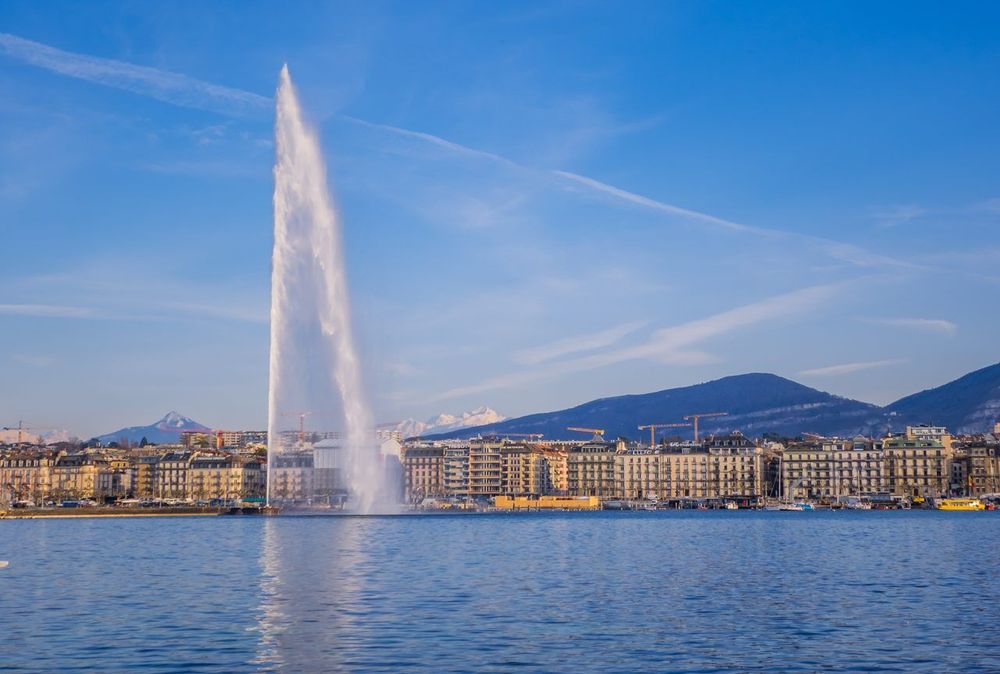
Standing on Quai du Mont-Blanc at 7am, alone with a coffee in one hand and the Jet d'Eau barely waking on the other side of the lake, you quickly realize that visiting Geneva solo is far from a risky bet. A city of about 200,000 inhabitants squeezed between the lake and the Jura, it can be explored largely on foot, which changes everything when you travel without a companion. You'll come across cobbled lanes climbing toward a cathedral that looks like an architectural millefeuille, a public bath where locals dive in during their lunch break, a CERN where you can visit one of the world's largest scientific laboratories for free, and markets where a sandwich costs less than a terrace seat on the harbor.
The Ryo audio-guided tour of Geneva follows a good part of this itinerary and frees your hands and eyes so you can enjoy the scenery rather than a screen. Between tailor-made itineraries, neighborhoods to explore on foot, tourist passes that are genuinely worth it and easy getaways nearby, here is everything you need to build a solo stay at your own pace, without missing anything essential.
Geneva Solo: Who This Trip Is For and What to Expect
Geneva is not the liveliest solo destination in Europe, and that is exactly what makes it a good training ground for anyone starting out with this kind of trip. A calm, safe city where you can get around on foot or by tram without ever feeling lost, it is particularly suited to travelers who prefer observing to partying, to nature lovers (lake, mountains, parks) and to those who want to test a short format before a longer solo trip. If you are looking for a wild party scene, you will be a little disappointed: the city goes to sleep relatively early on weekdays, outside the Pâquis district and a few bars in the center.
Three concerns come up often before traveling alone to Geneva. Safety first: the city is known to be very safe, and walking alone in the evening in the center or around the lake is not a particular problem, with the usual caution around Cornavin station late at night. Loneliness next: hostels (detailed below) and the communal tables at the Bains des Pâquis offer opportunities to chat without forcing anything. Finally, cost, and it is very real: Geneva remains one of the most expensive cities in Europe, with a simple meal easily exceeding 20 CHF.
That leaves the question of the weekend: is it worth it for just two or three days? Yes, as long as you don't aim to see everything. A weekend lets you cover the Old Town, one or two neighborhoods and a break by the lake, without rushing from museum to museum. That is precisely one of the advantages of visiting Geneva solo: nobody to answer to about the pace you choose.
Geneva in 1, 2 or 3 Days: Which Itinerary to Choose When Traveling Alone
How many days do you need to visit Geneva alone? It all depends on what you are looking for: a quick overview fits into one day, while a real breath of fresh air takes three. The three versions below deliberately overlap, adding layers rather than starting from scratch each time, so you can set your own pace without rereading a minute-by-minute schedule.
Geneva in 1 Day: The Essentials on Foot from the Center
A single day is enough to grasp the essentials if you stay focused on the center. The logical route starts at Cornavin station, heads down to the lake in a ten to fifteen minute walk, then reaches the English Garden and its flower clock, a landmark photographed since 1955. From there, you cross over to the Old Town by heading up the rue de la Croix-d'Or: allow a good hour for Saint-Pierre Cathedral, its viewpoints and the surrounding lanes.
In the early afternoon, head to the Bains des Pâquis for a break by the water, whether or not you swim, before making your way to the Jet d'Eau and the harbor for the end of the day. This Cornavin, Old Town, Pâquis triangle fits within six to seven kilometers of walking, easily doable without transport, although the TPG trams let you catch your breath between stops when the heat or fatigue kicks in. For lunch, aim for the Rues Basses or a market rather than a harbor restaurant: prices are a little easier on a solo traveler counting their francs.
Geneva in 2 Days: Neighborhoods, Lake and Time for Yourself
The second day lets you widen the circle without rushing. Keep the day 1 route for the morning (or reverse it if you arrive in the afternoon), then devote the rest of the time to the neighborhoods: the Pâquis at wake-up for a coffee away from the crowds, then the Jonction in late morning for the street art and the view over the mingled waters of the Rhône and the Arve. The afternoon is a good time to shift over to Eaux-Vives and Parc La Grange, where benches in the shade of tall trees invite you to stop with no particular purpose.
Two days also leave room for a free museum (Natural History Museum, or CERN by reservation) and for returning to the Bains des Pâquis at the end of the day, when the light skims the lake and the atmosphere becomes more local. It is the most comfortable option if you are still unsure about your walking endurance: it spreads out what the 1-day version compresses.
Geneva in 3 Days: A Slower Pace and an Excursion Nearby
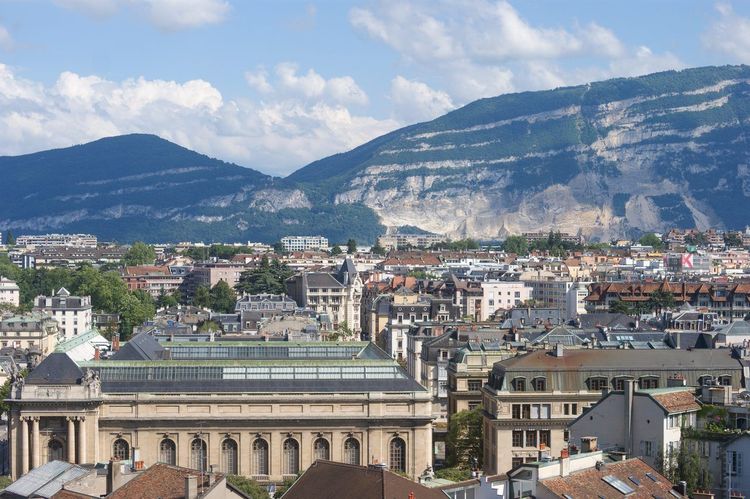
The third day is different in nature: rather than adding neighborhoods, the idea is to leave the city. Save this day for one of the excursions detailed below: Mont Salève for a panorama over the lake and Mont Blanc, or Nyon for its castle and market if you prefer to stay in Switzerland. CERN, the Botanical Garden and the Nations district also fit in on this day if you haven't done them before: they are all on the right bank, north of the center, and can be combined without rushing.
And if you feel like planning nothing at all, that is precisely the privilege of a three-day solo stay.
To pace one of these days without pulling out the map every ten minutes, the Ryo audio guide of Geneva unfolds a 5.3 km loop with 25 audio clips and about 2h10 of walking that largely overlaps with the one-day itinerary. Handy for moving at your own pace without replanning everything alone.
The Old Town and Saint-Pierre Cathedral
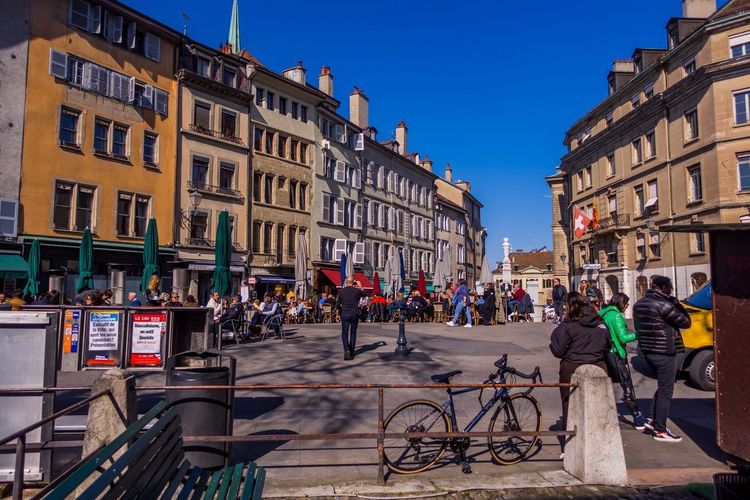
The Old Town alone concentrates a good part of what makes Geneva charming for anyone who likes to wander without a fixed itinerary: cobblestones, vaulted passages, old facades and a cathedral that mixes styles without any complex.
Saint-Pierre Cathedral and Its Viewpoints
The Saint-Pierre Cathedral has dominated the Old Town since the 12th century, but its current look owes a great deal to the 18th: the neoclassical columned facade deliberately contrasts with the Romanesque and Gothic sides of the building. Having become a Protestant church during the Reformation, it still houses the chair attributed to Calvin.
You can climb the 157 steps of the north tower for a 360-degree panorama over the rooftops of the Old Town, the lake and, on a clear day, the Mont Blanc range. The climb costs 7 CHF (5 CHF reduced rate), and a late weekday morning avoids the groups that fill the staircase in summer.
Beneath the building, the archaeological site deserves the detour that it is rarely given: an underground route takes you through the foundations of religious buildings layered on top of each other since late Antiquity, with mosaics and baptisteries you would never guess from the street. The combined ticket for the towers and archaeological site costs 12 CHF. Through your headphones, the Ryo audio guide of Geneva tells this story layer by layer, including the anecdote of the excavations launched in the 1970s that uncovered this underground space. Enough to understand what you are looking at without juggling a leaflet and your phone.
Historic Lanes, Small Squares and Treat Breaks When Traveling Solo
Beyond the cathedral, the charm of the Old Town lies mostly in its detours: the rue des Granges and its mansions, the Hôtel de Ville and its cobbled ramp, or the Place du Bourg-de-Four (Place du Bourg-de-Four, 1204 Genève, rated 4.5/5 on Google from 3K reviews), the oldest square in the city, where an 18th-century fountain serves as an informal meeting point for locals at the end of the day.
For a solo meal without feeling watched, the terraces on this square work well: quick service, and enough foot traffic to never feel isolated without having to make conversation. Allow 18 to 25 CHF for a dish of the day, which remains reasonable by Geneva standards.
The cobbled lanes between the cathedral and the place du Grand-Mézel are perfect for wandering without a map: the Old Town can be crossed from end to end in under thirty minutes, leaving time to stop at every antique dealer's or secondhand bookseller's window.
Neighborhoods to Explore on Foot: Pâquis, Eaux-Vives, Jonction, Nations
Beyond the historic center, Geneva is truly discovered neighborhood by neighborhood, each with a strong identity despite the city's modest size. The four areas below can be covered on foot or in a few tram stops, in whatever order you like.
Les Pâquis: Local Atmosphere and Cornavin Station
The Pâquis district, between Cornavin station and the lake, is probably the most cosmopolitan in Geneva: dozens of nationalities mingle over just a few streets, among Turkish grocery stores, Eritrean restaurants and small Portuguese cafés. It is also, historically, the most affordable area of the center, which explains the concentration of hostels discussed further below.
In the evening, the atmosphere changes register around rue de Berne and rue de Zurich, without becoming hostile for a solo traveler who prefers to observe. Just behind the station, the Grottes district, with its rounded buildings nicknamed "Smurfs," is worth a quick detour if you like alternative architecture, even without devoting half a day to it.
Eaux-Vives and Parc La Grange: Calm by the Lake
On the left bank, the Eaux-Vives district breathes more easily, with its bourgeois buildings and streets that slope gently down to the lake. Parc La Grange is its green heart: about 25 hectares of lawns and tall trees, and a recently redeveloped rose garden with nearly 180 varieties, in bloom from June to autumn.
Settling on a bench facing the lake with a book, or simply to watch the boats, requires neither a ticket nor a reservation: the ideal break when, traveling solo, you need a moment free of demands. The neighboring Eaux-Vives park extends the walk, and the public beach of Genève-Plage or the more recent Eaux-Vives beach offer another way to reach the water in summer.
La Jonction: Street Art and the Meeting of the Rhône and the Arve
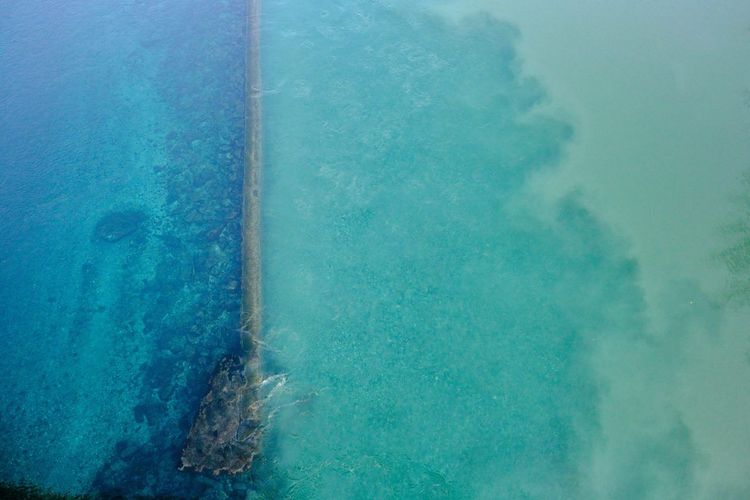
Further southwest, the Jonction district owes its name to the visible meeting of the blue-green waters of the Rhône and the gray, silt-laden waters of the Arve, which flow side by side without mixing right away. The best vantage point remains the tip of the Jonction, or the viaduct that spans the river just downstream.
The area has also built a reputation as an alternative hub: artists' studios, converted former industrial buildings and murals along the Rhône, as far as the Usine, a self-managed cultural hotspot on the edge of the district. Allow one to two hours to spot the main murals on foot, phone in hand to note the ones that strike you. The small local spots charge noticeably lower prices than the center, handy for a quick lunch.
Les Nations and the International Quarter: Diplomatic Geneva
To the north, the International Quarter brings together the United Nations Office, the International Committee of the Red Cross and dozens of organizations recognizable by the flags lined up in front of their headquarters. The place des Nations (Place des Nations, 1202 Genève, rated 4.5/5 on Google from 2K reviews), with Broken Chair, the giant chair with a broken leg raised against anti-personnel mines, remains the most photographed landmark in the area.
The district can be seen quickly from the outside, but the International Red Cross and Red Crescent Museum, just opposite the Palais des Nations, is worth an hour if the subject interests you. For a solo traveler who likes to understand how a city works, this area offers a different key to reading it: here, Geneva shows itself as a diplomatic capital rather than a historic town.
Not sure about the order of your visit? The 24 narrated sites of the Ryo audio-guided tour form a loop that moves from the Old Town to the harbor and the Pâquis, which avoids backtracking between neighborhoods.
Swimming and Unwinding by Lake Geneva
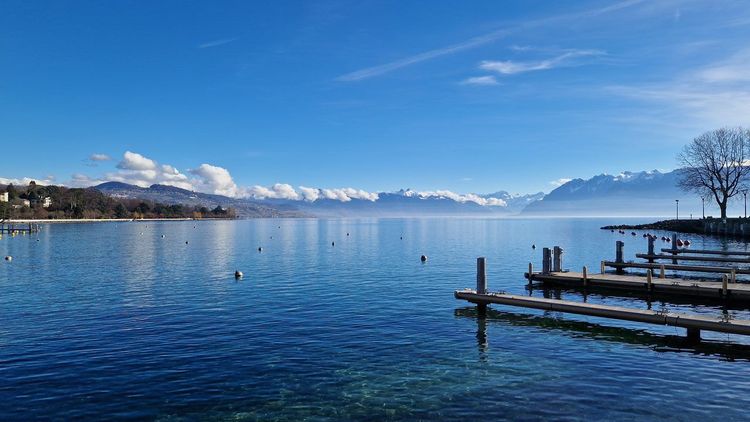
Between two neighborhoods, the lake remains Geneva's best selling point when you travel alone and are looking for a break with no big plan: all you have to do is sit by it, or jump in.
Bains des Pâquis, the Must-Do Urban Swim
Opened in 1932 on a pier, the Bains des Pâquis are much more than a beach: a diving board, a popular snack bar, a sauna and hammam in winter, and a swim in the lake just steps from downtown, frequented as much by office workers on their lunch break as by early-morning regulars.
Admission costs about 2 CHF in season, making it one of the cheapest and most memorable activities in the city. For a solo traveler, it is also an easy social setting: the communal tables at the snack bar invite conversation without imposing it, and the fondue served in winter attracts Genevans and visitors alike. If you are looking for other ideas by the water, our Ryo article on the best things to do in Geneva complements this selection well.
English Garden and the Lakeside for a Solo Break
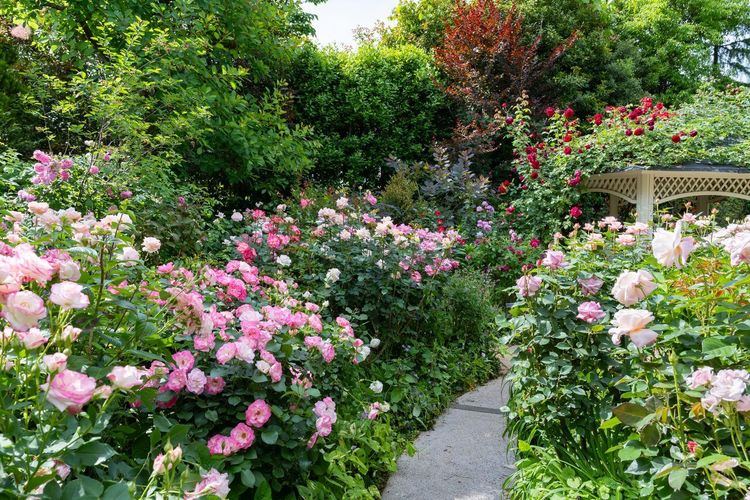
At the other end of the harbor, the English Garden (Quai du Général-Guisan, 1204 Genève, rated 4.5/5 on Google from 20,853 reviews) and its flower clock, installed in 1955, remain a postcard classic, but the real break is taken a little further on, on the lawns lining quai Gustave-Ador.
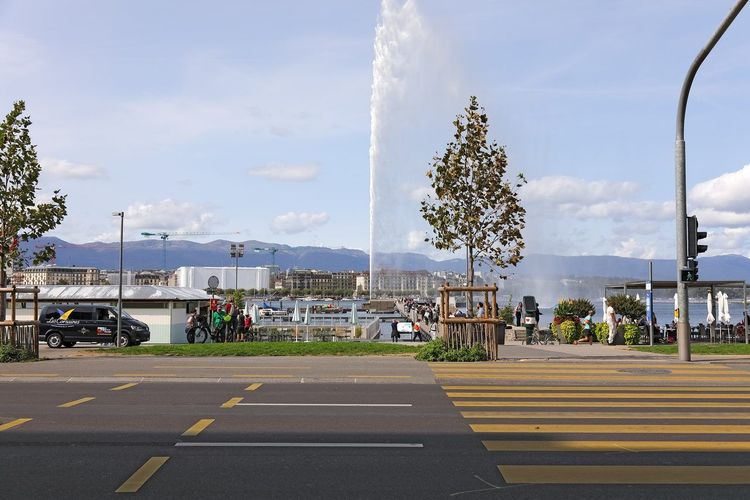
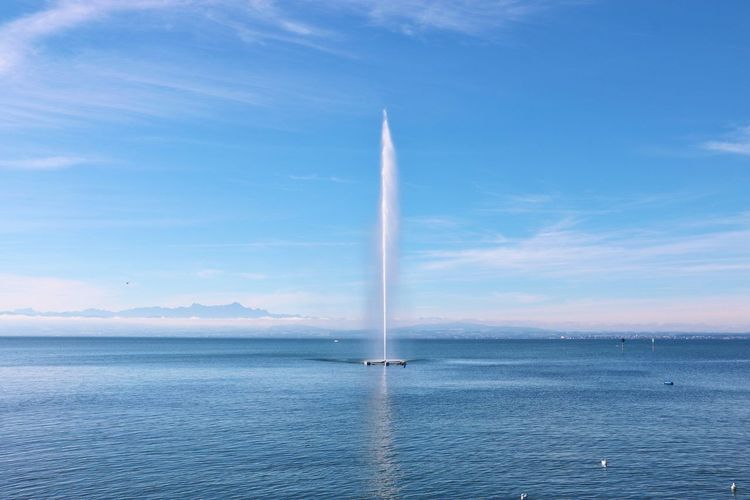
In front of you, the Jet d'Eau sends its plume about 140 meters high, at nearly 200 km/h as it leaves the nozzle. You can walk to its base along the Eaux-Vives pier, as long as you accept a shower if the wind shifts. In the late afternoon, the benches facing the harbor offer a moment of calm that requires nothing more than a bit of time ahead of you. The Ryo audio guide also stops at the English Garden and tells how this former hydraulic plant pressure valve became the emblem of the city.
Museums, CERN and Tourist Passes: Visiting Smart
Geneva has several free museums and passes that can quickly pay for themselves if you plan to combine paid visits and tastings.
CERN: A Free Scientific Visit
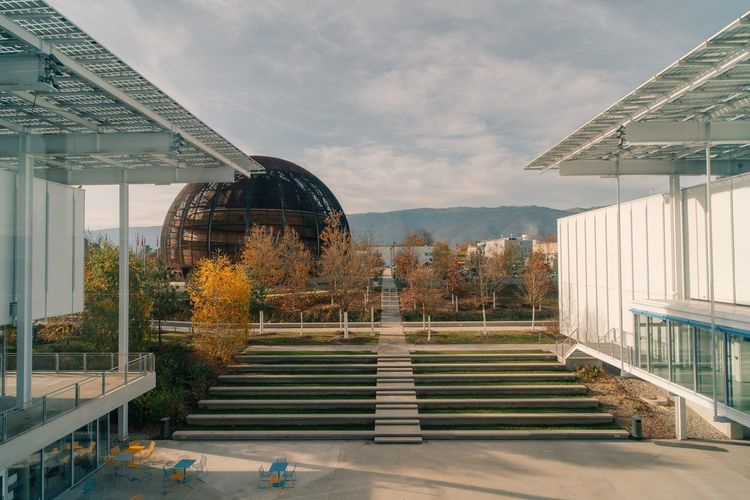
The CERN, in Meyrin, on the Franco-Swiss border northwest of the city, welcomes the public at the Science Gateway, its visitor center opened at the end of 2023 which replaced the former Microcosm exhibition. Admission is free, Tuesday to Sunday, and the building can be spotted from afar thanks to the Globe of Science and Innovation, right opposite.
Book online, ideally several weeks in advance: registration guarantees entry, and guided tours fill up quickly in high season. The exhibitions can be explored alone at your own pace in two to three hours, and tram 18 drops you at the "CERN" terminus from the center in about twenty minutes.
Natural History Museum and Botanical Garden
The Geneva Natural History Museum, free all year round, lines up minerals, local fauna and giant skeletons in a 1960s building in the Malagnou district. Its dioramas appeal as much to solo adults as to families, without the crowds of Europe's major museums.
On the other side of the harbor, a stone's throw from the Nations district, the Geneva Botanical Garden (Chemin de l'Impératrice 1, 1292 Chambésy, rated 4.7/5 on Google from 9,017 reviews), also free, spreads over 28 hectares with tropical greenhouses, an arboretum and a small animal park home to flamingos.
The two sites are not neighbors: pair the Museum with a stroll in Eaux-Vives, and the Botanical Garden with a morning in the International Quarter.
Geneva City Pass and Chocopass: Which Discounts Are Worth It
The Geneva City Pass, sold in 24, 48 or 72-hour versions, gives free or discounted access to more than 60 activities, museums, cruises and tours. Allow 30, 40 or 50 CHF without transport, 35, 50 or 65 CHF with it. If you are staying in a hotel or hostel, take the version without transport: the Geneva Transport Card, provided by your accommodation, already covers trams and buses (see below).
The Choco Pass, sold by the tourist office, targets a more specific pleasure. The Discovery option (40 CHF) opens the doors of five partner chocolatiers for 24 hours, while the Unlimited option (75 CHF) gives access to all of them for 48 hours, with a tasting at each stop and a voucher included. It is a good excuse to step into houses like Favarger or Du Rhône, where you might not dare to push open the door alone without a pretext.
What to Do for Free in Geneva to Travel Light on Budget
Beyond the free museums already mentioned, Geneva offers enough ticket-free activities to fill an entire day on a near-zero budget. A few concrete ideas:
- The Plainpalais flea market, often described as the largest in Switzerland, takes place on Wednesdays and Saturdays on the plain of the same name: secondhand clothes, bric-a-brac and inexpensive snacks, ideal for browsing with no obligation to buy.
- Carouge, a separate municipality attached to the urban area, cultivates a Mediterranean atmosphere inherited from its Sardinian past: low facades, inner courtyards, artisan workshops and a Wednesday and Saturday morning market renowned for its fresh produce. Strolling its streets, fifteen minutes by tram from the center, costs nothing and completely changes the mood.
- The free events punctuate the Geneva calendar: the Fête de la Musique in June, summer concerts and entertainment along the harbor, and above all the Fête de l'Escalade in December, which celebrates the 1602 victory over the Savoyard troops with a large historical costume parade in the Old Town, followed by the Christmas markets.
- To eat on the cheap, head to bakeries for a sandwich (8 to 10 CHF), the food trucks set up at lunchtime around Plainpalais, or the deli sections of supermarkets, with decent ready-made meals for 6 to 9 CHF, far from the 25 CHF of a restaurant dish.
Combined, a market, Carouge (Place du Marché, 1227 Carouge, rated 4.6/5 on Google from 2K reviews), a seasonal event and a few free museums are enough to fill an entire day without spending a franc on transport if you have your accommodation card. For the food side, our Ryo article on Geneva's culinary specialties details what to taste, from longeole to perch fillets, without blowing the budget.
Day Trips from Geneva: Mont Salève, Nyon, Yvoire, Lausanne, Montreux
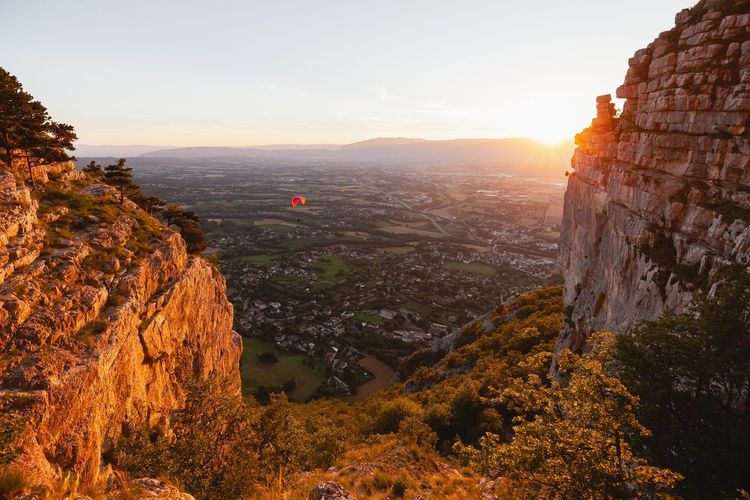
This is probably what most distinguishes a well-planned solo stay from a mere flying visit: Geneva is surrounded by easy excursions, often less than an hour away, that completely change the scenery without complicated logistics.
Mont Salève and Nyon: Panorama and Castle Close By
The Mont Salève, in Haute-Savoie, rises to 1,379 meters and directly overlooks the city. From the center, bus 8 takes you to Veyrier-Douane, from where a five-minute walk gets you to the cable car on the French side: allow about forty minutes door to door, and €18 round trip. On a clear day, the view takes in the entire Geneva basin, the lake and, in the distance, the Mont Blanc massif. The Salève is also a popular hiking spot among Genevans if you prefer to walk back down.
Nyon, in the other direction, is reached in fifteen to twenty minutes by direct train from Cornavin. The town preserves a castle with white towers converted into a museum, a compact old town that can be explored in an hour, Roman remains and a lively market on Saturday mornings.
The two excursions combine poorly on the same day, as they lie in opposite directions, but each fits into half a day.
Yvoire and Divonne-les-Bains: Lakeside Village and a Nature Break
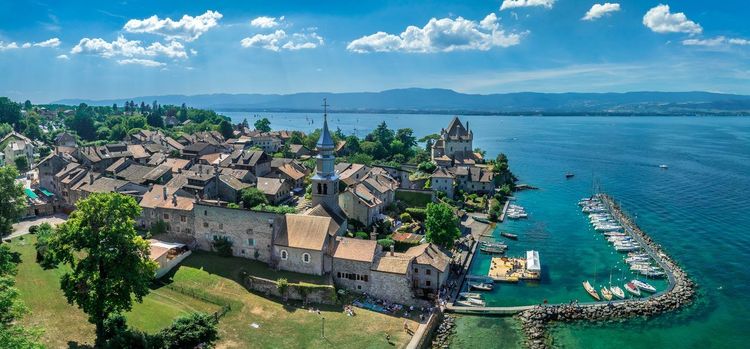
Yvoire, a medieval village set on the French shore of the lake, can be reached in summer by CGN boats, allow between an hour and a half and two hours for the crossing, or by car and bus via Douvaine. Flower-lined lanes, 14th-century ramparts and the Garden of Five Senses make it a photogenic stop, as long as you accept the crowds in midsummer.
Divonne-les-Bains, in the Pays de Gex, is reached in about twenty minutes by bus or car. A spa town with a casino, it is above all its artificial lake surrounded by a walking path that appeals to visitors seeking nature without straying far from the urban area.
Each can be visited in half a day, perfect if you want a change of pace without complicated organization.
Lausanne and Montreux: The Swiss Riviera in Under an Hour
Lausanne, 40 minutes by train, deserves more than a quick round trip: a Gothic cathedral perched on the hill, the Flon district converted into a lively pedestrian zone, and the Olympic Museum by the lake at Ouchy.
If you extend your visit, our Ryo article on what to do in Lausanne details a good circuit starting from the station.
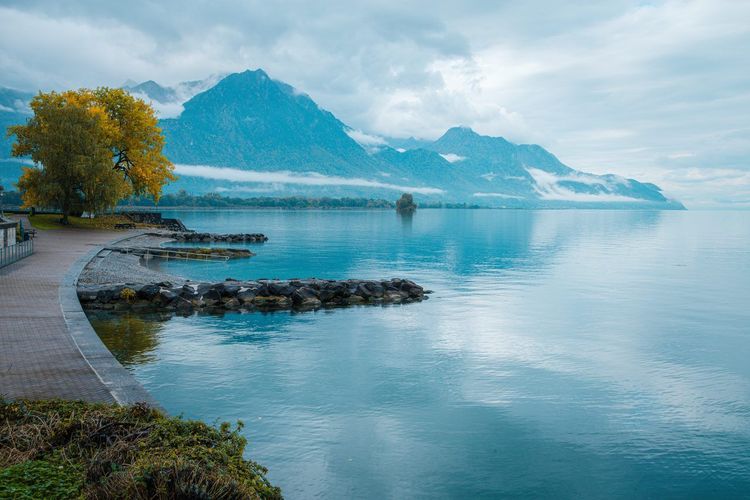
Montreux, a little over an hour away, completely changes the landscape: the Riviera softens the climate, palm trees line the quay and the Chillon Castle (Avenue de Chillon 21, 1820 Veytaux, rated 4.7/5 on Google from 25,232 reviews), set on a rocky islet at the water's edge, remains one of the most visited medieval castles in Switzerland.
Combining Lausanne and Montreux on the same day is possible, with about twenty minutes of train separating the two cities, but it requires leaving Geneva early to fully enjoy both stops.
Where to Stay in Geneva Alone: Neighborhoods, Budget and Meeting People
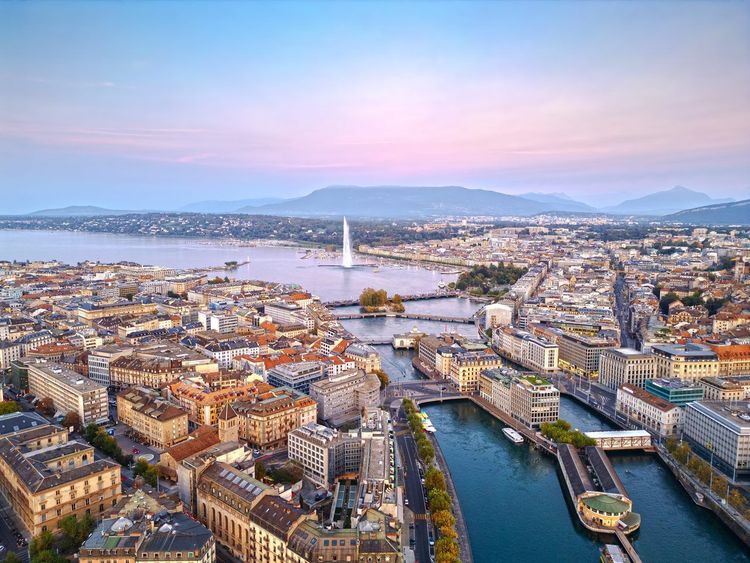
For a solo stay, the choice of neighborhood matters as much as the type of accommodation: atmosphere, budget and ease of meeting people vary greatly from one area to another.
Old Town and Rues Basses: Historic Charm, Higher Budget
Staying in the Old Town or along the Rues Basses puts you in the historic and commercial heart, in boutique hotels often set in old buildings. It is the most expensive option, allow 180 to 300 CHF a night in a three or four-star hotel, but also the most convenient if you want to do everything on foot.
Pâquis and Cornavin Station: Practical and More Affordable
The Pâquis district, around Cornavin station, remains the most affordable in the center for a standard hotel, between 120 and 180 CHF, and the most practical for arriving or leaving by train. The more working-class and cosmopolitan atmosphere suits a solo traveler who enjoys a bit of street life without seeking out partying at all costs.
Hostels: Controlled Budget and Meeting Other Solo Travelers
For a truly controlled budget, Geneva's hostels, concentrated in the Pâquis and around the station, offer dorm beds from about 40 CHF, with shared kitchens and common lounges that make it easy to meet other solo travelers without imposing anything.
Private when you need it, social when you want it: that is what seasoned solo travelers come looking for in a hostel. A significant bonus: these establishments also give the Geneva Transport Card to their guests.
Transport, Safety and Overall Budget for a Solo Stay
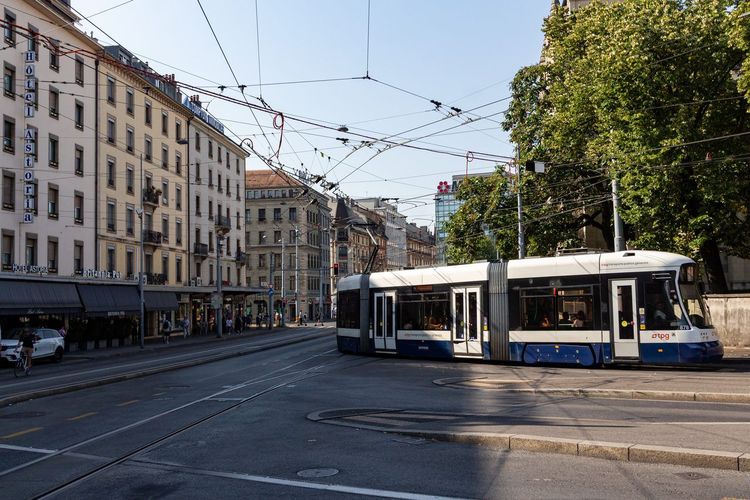
Can you visit Geneva without a car? Without hesitation, yes, and it is even the most comfortable option for a solo traveler. The center can be crossed on foot in under an hour, and the TPG tram and bus network efficiently serves everything else, CERN and Nations included. A single ticket valid across Geneva costs around 3 CHF, and a day pass around 10 CHF.
The best tip, which many visitors overlook: if you sleep in a hotel, hostel or campsite in the canton, your accommodation gives you the Geneva Transport Card, which makes trams, buses, regional trains and Mouettes (the little yellow water taxis of the harbor) free in the urban area for your entire stay. When you arrive at the airport, a machine in the baggage claim area also issues a free ticket to get to the center.
On foot, most of the center (Old Town, Pâquis, harbor, English Garden) fits within a two-kilometer radius. Only excursions or more outlying areas like the Jonction, the Nations or CERN require a ten to twenty minute tram ride.
On budget, it is better to be realistic: Geneva regularly ranks among the most expensive cities in the world, alongside Zurich and Singapore. Per day as a solo traveler, allow about 80 to 100 CHF for the hostel version with low-cost meals, and 200 to 300 CHF for a more comfortable version with a mid-range hotel and one restaurant meal a day. Free museums, the complimentary transport card and the Bains des Pâquis help limit the damage on the rest.
On safety, few surprises: Geneva remains one of the safest cities in Europe for a solo traveler, day and night, with the usual vigilance around Cornavin station late at night and against pickpockets at rush hour. As for the season, spring and early autumn offer the best compromise between temperature and crowds; summer draws crowds around the lake and pushes prices up, while winter works well if you mainly aim for museums, chocolatiers, Escalade and Christmas markets.



FAQ
What can I do in Geneva in just one day?
In one day, the most efficient route is the Cornavin, Old Town, lake triangle: Saint-Pierre Cathedral and the historic lanes in the morning, Bains des Pâquis and the lakeside in the early afternoon, then the English Garden and the Jet d'Eau at the end of the day. Allow six to seven kilometers of walking, easily done without any transport.
Is it possible to visit Geneva on foot?
Yes, absolutely. The city center fits within a two-kilometer radius, and most of the main neighborhoods are connected on foot in twenty to thirty minutes. Only excursions to the surrounding area or the most outlying districts require a tram or bus.
Is Geneva worth visiting?
Yes, if you enjoy quiet cities, waterside activities and easy excursions nearby. Travelers looking for intense nightlife or a total change of scenery will be less satisfied than those who enjoy walking, nature and unplanned breaks.
How long does it take to visit Geneva?
One day covers the essentials of the center, two days let you add the neighborhoods and the lake, and three days leave room for an excursion to the surrounding area (Mont Salève, Nyon, Lausanne). Beyond that, it is better to move on to another destination on Lake Geneva.
Is Geneva an expensive city?
Yes, Geneva is among the most expensive cities in the world. A simple meal often costs more than 20 CHF, and a night in a standard hotel runs around 150 CHF. However, hostels, the Geneva Transport Card given to guests staying in accommodation, free museums and the Bains des Pâquis can significantly reduce your daily budget.
Can you visit Geneva without a car?
Yes, without any difficulty. The TPG tram and bus network efficiently serves the entire urban area, including CERN and the International Quarter, and excursions to the surrounding area (Nyon, Lausanne, Montreux) can all be made by train from Cornavin station.
Is Geneva suitable for a solo traveler?
Yes, it is a fairly easy destination for a first solo trip: a safe, compact city that can be explored on foot, with hostels that are great for meeting people and plenty of free activities to build a stay without breaking the bank.
Conclusion
Ultimately, visiting Geneva solo is less about a list of things to see than a balance between walking, breaks by the lake and small excursions nearby. The city lends itself well to this rhythm, compact enough to be covered on foot, rich enough in neighborhood nuances not to feel repetitive after two days.
To tie it all together without thinking about it, the Ryo audio-guided tour of Geneva has you follow a coherent thread between the Old Town, the harbor and the Pâquis, headphones on, at your own pace.
À lire également